1. Introduction
Gliomas are among the most common primary tumors of the central nervous system, with glioblastoma (GBM) representing the most aggressive subtype, characterized by highly infiltrative growth, frequent recurrence, and dismal prognosis [
1,
2,
3,
4]. Although a standard multimodal treatment strategy based on maximal safe resection, radiotherapy, and temozolomide chemotherapy has been established, clinical outcomes remain markedly heterogeneous. Even among patients who receive comparable standard-of-care treatment and share the same integrated diagnosis under the 2021 World Health Organization Classification of Tumors of the Central Nervous System (WHO CNS), substantial differences can still be observed in treatment response, time to recurrence, and overall survival [
1,
4,
5]. These observations suggest that conventional clinicopathological stratification is insufficient to fully explain the biological complexity of glioma, highlighting the urgent need for novel biomarkers that better reflect key tumor functional states and microenvironmental features.
The 2021 WHO CNS has substantially improved the accuracy and consistency of glioma classification by emphasizing integrated diagnosis based on both histological and molecular information [
1]. Molecular markers such as
IDH status,
1p/19q codeletion, and TERT promoter mutation have become essential components of clinical decision-making [
1]. However, in real-world practice, molecular testing remains constrained by cost, sample quality, platform variability, and regional accessibility. More importantly, significant prognostic heterogeneity persists even among patients with the same WHO CNS integrated diagnosis [
4,
5,
6,
7]. Therefore, there is clear clinical value in developing a novel stratification tool derived from routinely available clinical materials that can complement molecular classification while also reflecting the functional state of the tumor. With the rapid development of digital pathology and computational pathology, hematoxylin and eosin (H&E) whole-slide images (WSIs) are no longer merely substrates for morphological assessment, but are increasingly recognized as valuable data sources for extracting molecular features, microenvironmental characteristics, and prognostic information [
8].
In recent years, cancer neuroscience has emerged as a rapidly evolving field, with accumulating evidence indicating that neurons are not merely passive targets of tumor growth, but can actively regulate tumor initiation, progression, and therapeutic response through multilevel and multiscale mechanisms [
2,
9,
10]. Although neuron–glioma interaction has become a major focus of brain tumor research, most existing evidence has relied on transcriptomics, spatial omics, electrophysiological recordings, animal models, or complex in vitro co-culture systems [
2,
9,
10,
11,
12,
13,
14]. A simple surrogate that can directly capture these neural interaction-related biological states from routine clinical pathology specimens is still lacking. In other words, a key unresolved question is whether the molecular states associated with neuron–glioma interaction, particularly those related to synaptogenesis and neuronal activity-dependent programs, leave quantifiable and reproducible histomorphologic footprints in routine H&E morphology. If so, computational histomorphologic features derived from WSIs may serve as a practical bridge linking tissue morphology, neural-related molecular programs, and clinical outcomes.
Based on this rationale, the present study integrated H&E WSIs, transcriptomic profiles, and survival outcomes from The cancer genome atlas (TCGA) glioma cohort to construct a pathology-derived risk score (PRS) centered on synaptogenesis-related gene sets. We first extracted both deep learning-derived features and interpretable quantitative histomorphologic features from routine WSIs, and then quantified synaptogenesis-related molecular activity using Gene Set Variation Analysis (GSVA)/single-sample gene set enrichment analysis (ssGSEA). Through correlation analysis, regularized feature selection, and survival modeling, we developed a synaptogenesis-associated histomorphologic signature capable of predicting glioma prognosis. Furthermore, by integrating differential expression analysis, tumor immune microenvironment assessment, Human Protein Atlas (HPA) immunohistochemical validation, and single-nucleus transcriptomic cell–cell communication analysis, we identified an EFNB2-related signaling network and explored the potential hub role of EFNB2-positive malignant cells in neuron–tumor communication.
Accordingly, this study focused on three major questions. First, can synaptogenesis-related molecular programs be effectively identified through computational histomorphologic features derived from routine H&E slides? Second, can this synaptogenesis-associated histomorphologic signature provide additional prognostic stratification beyond current WHO-related classification frameworks? Third, what are the key genes and intercellular communication networks underlying this morphology–molecular coupling, and do they point to neuron–tumor interaction axes that merit further mechanistic validation and potential therapeutic targeting?
3. Discussion
The present study addressed a central question: whether routine H&E histomorphology can capture synaptogenesis-related molecular programs and, in turn, be leveraged for prognostic stratification and mechanistic discovery in glioma. To this end, we integrated TCGA whole-slide images, bulk RNA-seq data, and clinical follow-up information, and further incorporated immunohistochemical validation from the Human Protein Atlas as well as two independent snRNA-seq datasets. By doing so, we established a multilayered analytical framework linking digital histomorphologic features, transcriptomic programs, tumor microenvironmental states, and cell–cell communication mechanisms. Within this framework, our main findings were threefold. First, computational histomorphologic features extracted from routine H&E slides were able to effectively capture synaptogenesis-related molecular activity. Second, the PRS model provided additional prognostic stratification beyond established clinicopathological variables. Third, multi-omic integration and single-nucleus analyses identified EFNB2 as a key candidate linking histomorphology, risk status, and neuron–tumor interaction, while EFNB2-positive malignant cells emerged as a putative communication hub within the glioma microenvironment.
Our findings further support the increasingly recognized concept that key molecular programs can leave quantifiable phenotypic projections in routine histopathology. The 2021 WHO CNS reinforced the central role of molecular information in glioma diagnosis while still preserving histology as a foundational layer of classification, underscoring that morphology and molecular biology are complementary rather than mutually exclusive [
1]. Recent advances in computational pathology have shown that H&E images contain rich biological information beyond morphology alone. Deep learning approaches have already demonstrated that histology images can be combined with genomic features to improve survival prediction in brain tumors [
15], and more recent studies have shown that spatial cellular architecture and localized digital histomorphologic phenotypes can reflect transcriptomic subtypes and clinical outcomes in glioblastoma [
16,
17]. In contrast to studies that directly model survival or single molecular alterations, our approach used a synaptogenesis-related factor gene set as a functional anchor and then traced back to the histomorphologic features most strongly linked to that program. This strategy not only yielded a prognostic model but also enhanced biological interpretability by connecting morphological signals to a defined neural-related molecular program.
The biological rationale for this work is closely aligned with the rapidly expanding field of cancer neuroscience. Neurons are not merely passive bystanders in the presence of brain tumors, but active regulators of tumor initiation, progression, and treatment response [
18]. In glioma, neuronal activity promotes high-grade glioma growth through activity-dependent release of neuroligin-3 (NLGN3), which activates tumor-promoting pathways including PI3K–mTOR signaling [
19]. High-grade glioma cells can form bona fide AMPAR-dependent neuron-to-glioma synapses, directly converting neuronal electrical activity into depolarization and proliferative signaling within tumor cells [
14]. Glutamatergic synaptic input itself is sufficient to drive glioma progression [
13]. In parallel, tumor microtubes (TMs) and tumor cell networks have been identified as important structural substrates of glioma invasion, growth, and therapy resistance [
20]. More recently, human studies have shown that glioblastoma can remodel neural circuits, and that stronger tumor–brain functional connectivity is associated with worse survival and greater cognitive impairment [
21], whereas BDNF-TrkB signaling further promotes malignant synaptic plasticity and tumor progression [
22]. Within this conceptual framework, the PRS established here is unlikely to represent a purely morphological risk pattern. It more likely captures the integrated histomorphologic output of neuronal activity-dependent tumor programs, including synapse-like integration, networked tumor behavior, and microenvironmental remodeling.
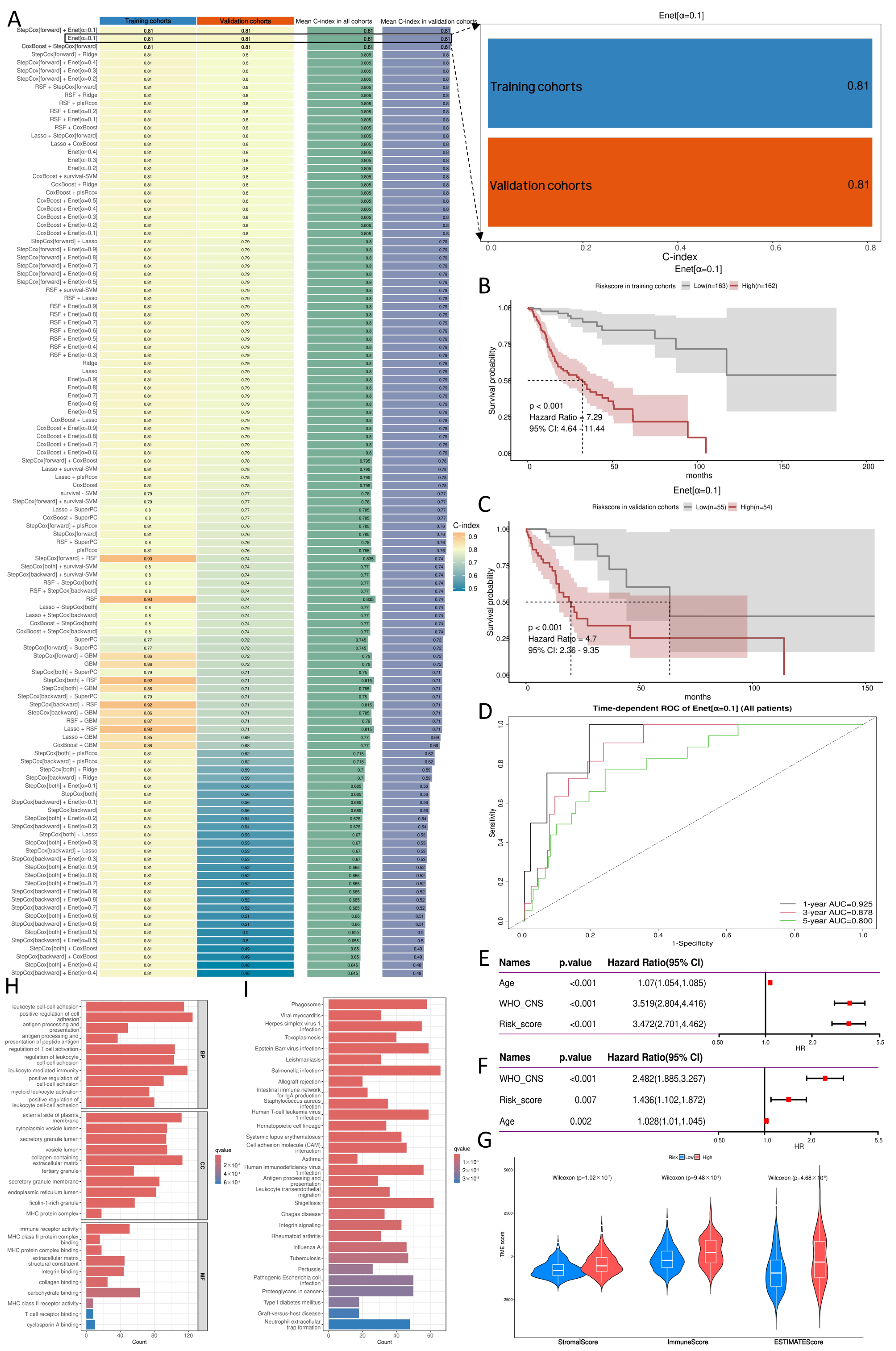
Another important finding of this study is that high-PRS tumors exhibited significantly higher StromalScore, ImmuneScore, and ESTIMATEScore, together with enrichment of pathways such as phagosome, antigen processing and presentation, cell adhesion molecules, and leukocyte transendothelial migration. This should not be interpreted as evidence of a more effective anti-tumor immune response. Instead, these results likely reflect a more complex, immune-enriched, but potentially immunosuppressive and stromally remodeled microenvironment. Recent reviews have emphasized that glioblastoma is embedded within a highly dynamic ecosystem composed of neurons, astrocytes, oligodendrocyte-lineage cells, endothelial cells, immune cells, and extracellular matrix components, all of which can be reprogrammed by tumor cells to support growth, invasion, and treatment resistance [
23]. Therefore, the increased immune and stromal scores observed in the high-risk group likely indicate not enhanced anti-tumor immunity, but rather a more inflammatory, more remodeled, and potentially more immune-suppressive microenvironmental state, which is consistent with the extensive interactions we observed between
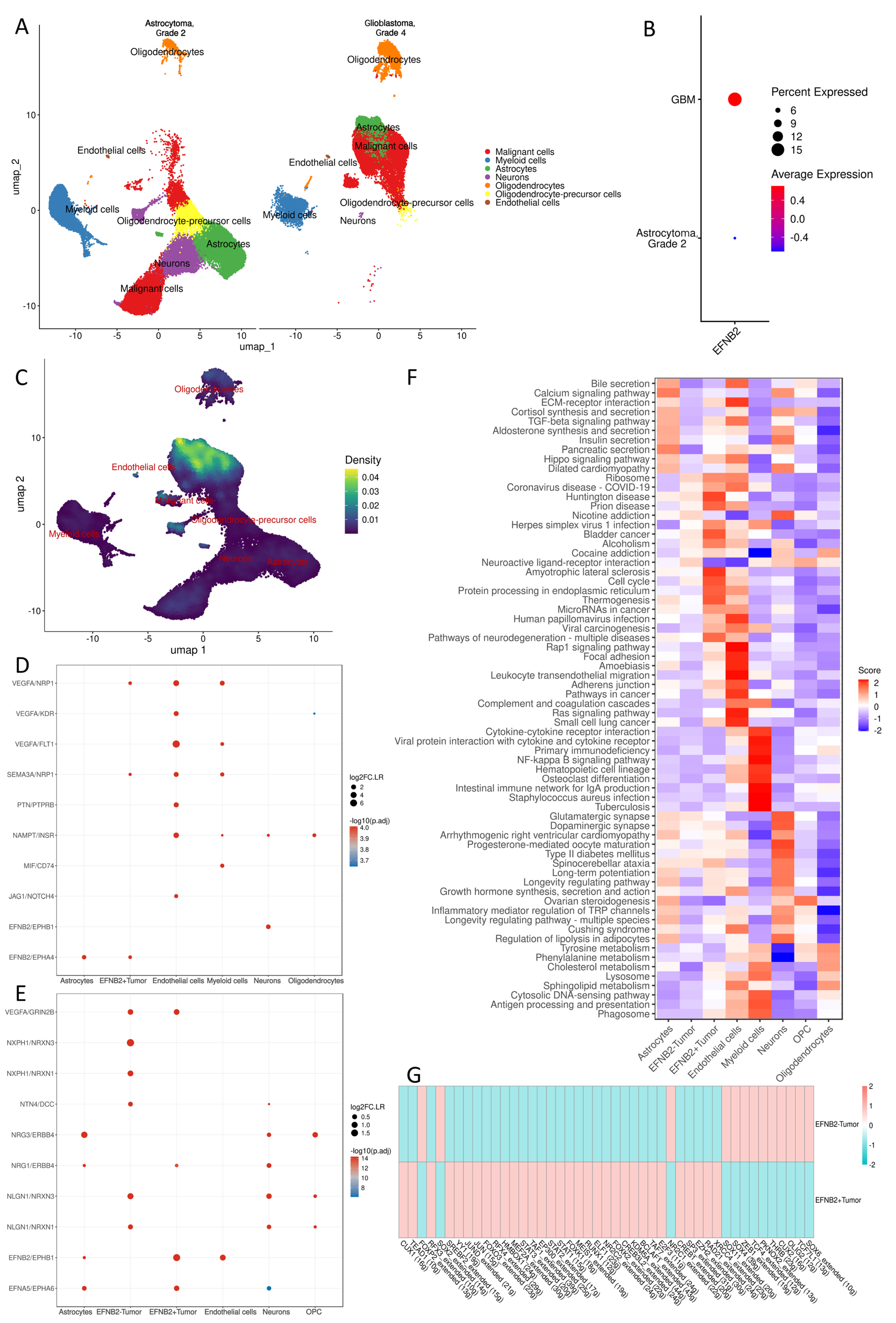
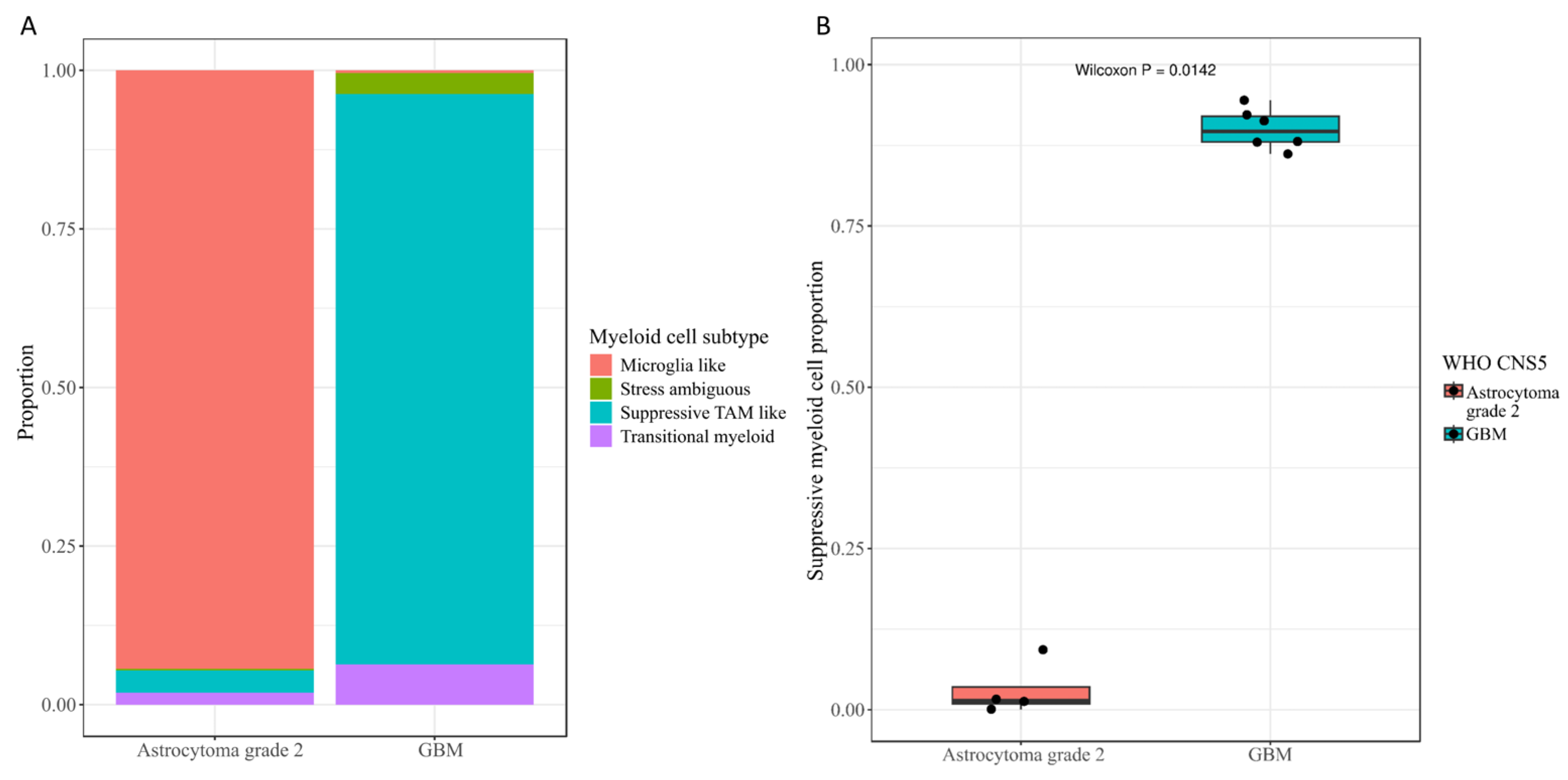
EFNB2-positive malignant cells and myeloid, endothelial, and astrocytic populations at the single-nucleus level. Our additional myeloid-focused single-nucleus analysis provides preliminary cellular support for this interpretation. After re-annotation of the myeloid compartment, astrocytoma grade 2 samples were found to be dominated by Microglia-like cells, whereas glioblastoma samples were markedly enriched for operationally defined Suppressive TAM-like cells. At the sample level, the suppressive myeloid proportion was significantly higher in GBM than in astrocytoma grade 2 (Wilcoxon
p = 0.0142), whereas the
EFNB2-context analysis showed only a non-significant trend toward higher suppressive myeloid proportions in
EFNB2-high malignant contexts (Wilcoxon
p = 0.144). Together, these findings suggest that the biological significance of our pathology-derived risk score is not confined to malignant cells alone, but extends to a dynamically remodeled tumor ecosystem that includes distinct myeloid states. Future studies integrating larger single-cell cohorts with spatial transcriptomics, multiplex immunofluorescence, or CITE-seq will be necessary to define how these suppressive myeloid populations are spatially organized relative to
EFNB2-positive malignant cells and which stromal and immune subpopulations contribute most strongly to the high-risk state.
A key strength of this study is the identification of
EFNB2 as a candidate molecular hub linking histomorphologic phenotype, risk state, and neuron–tumor interaction.
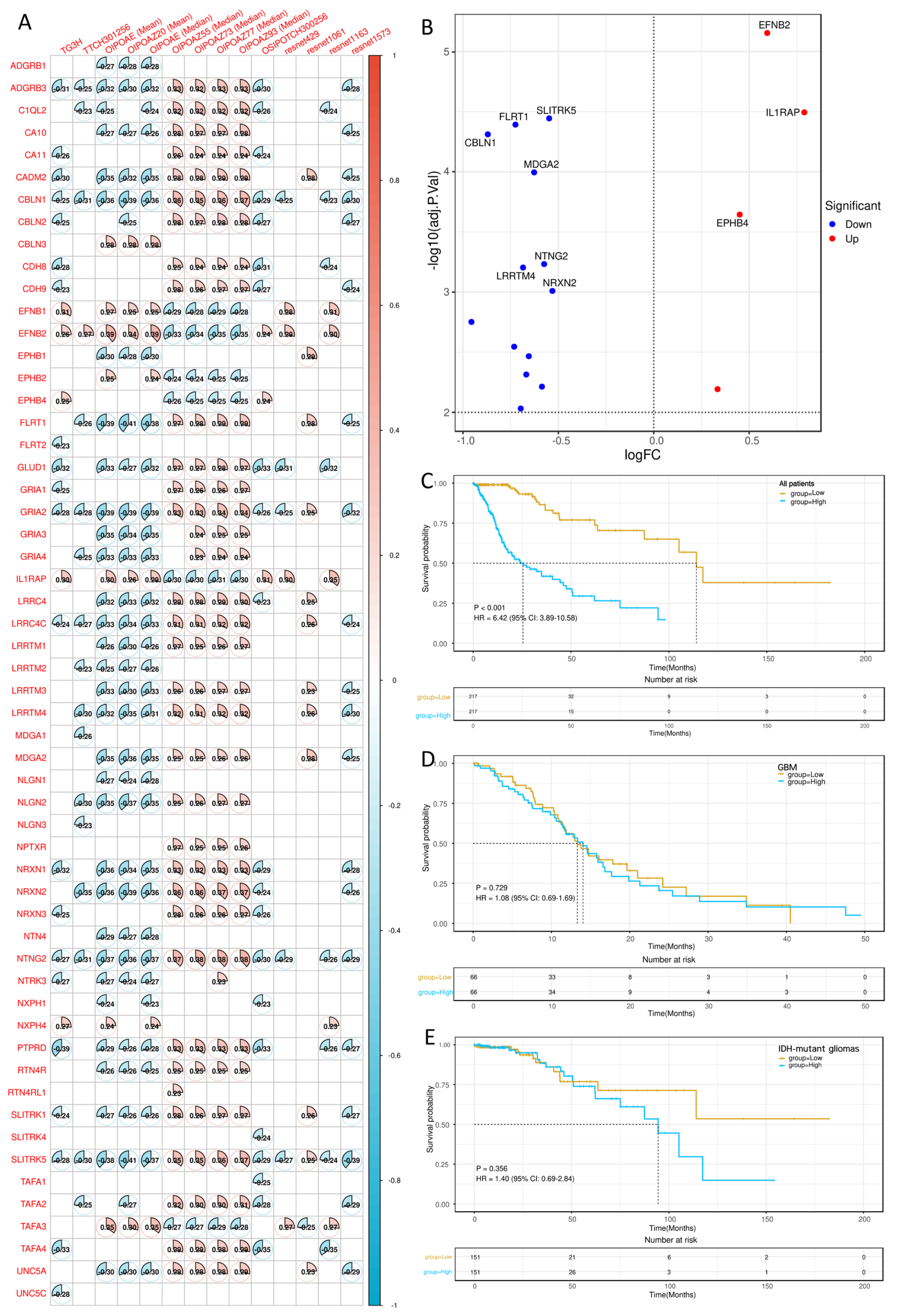
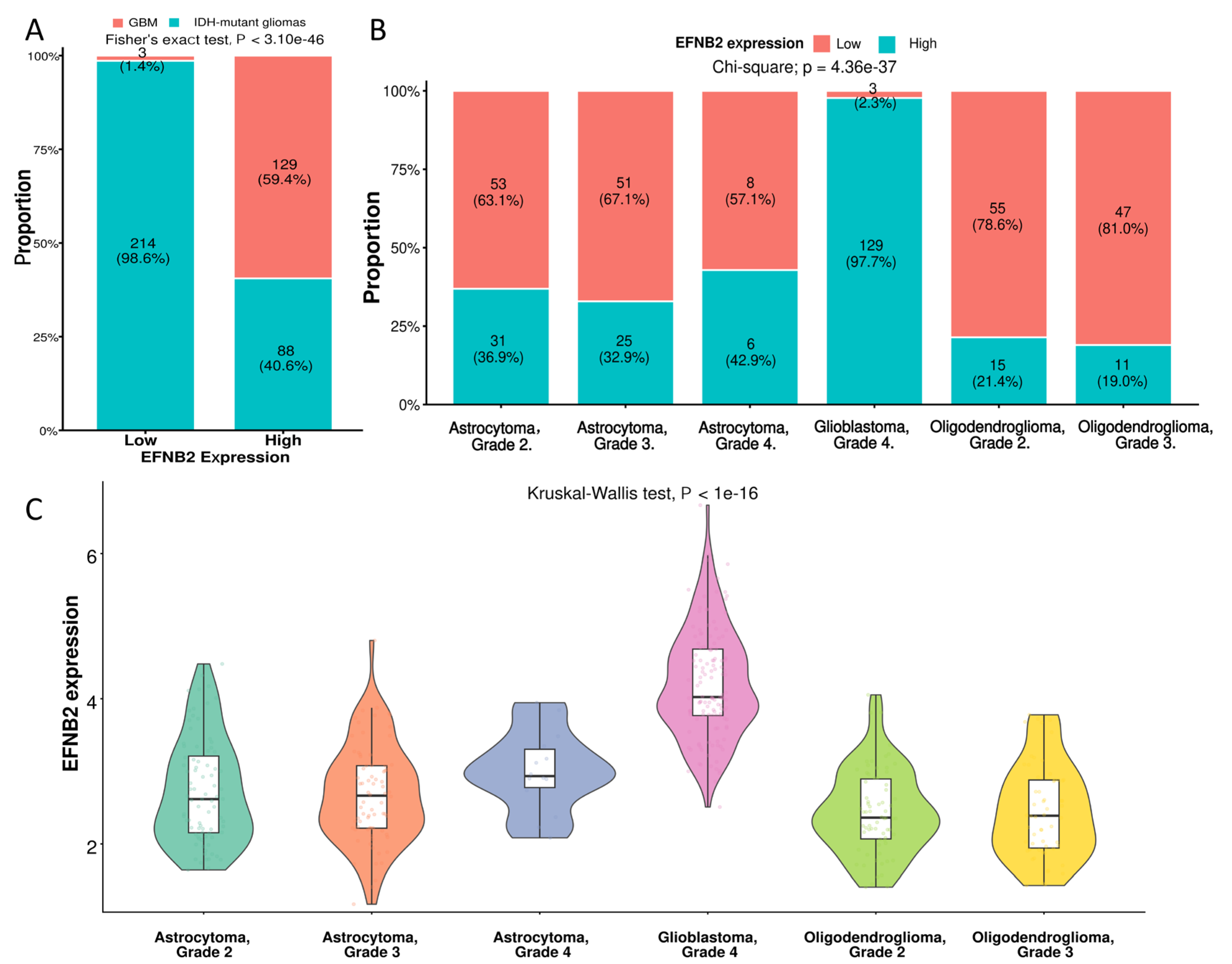
EFNB2 was significantly associated with worse survival in the overall cohort, was markedly enriched in glioblastoma, and showed the highest continuous expression level in
IDH-wildtype GBM across WHO-defined glioma subtypes. Previous work has implicated the EFNB2/Eph receptor axis in glioma progression. Phosphorylation of ephrin-B2 promotes glioma cell migration and invasion [
24]. EFNB2 and its receptor EphB4 are increasingly expressed with higher glioma grade and are associated with poor prognosis in GBM patients [
25]. In addition, high
EFNB2 expression and low methylation are associated with adverse outcome in GBM [
26]. However, Teng et al. found that EPHB1 ligand-dependent signaling suppresses glioma invasion and correlates with improved patient survival [
27]. Recently, Piffko et al. emphasized that ephrinB2-EphB4 signaling has context-dependent and even Janus-faced functions in neuro-oncological disease, depending on cell type, receptor–ligand pairing, and microenvironmental context [
28]. This interpretation fits well with our findings. Although
EFNB2 was prognostically significant in the entire cohort, its prognostic effect disappeared within the GBM and
IDH-mutant subgroups, indicating that
EFNB2 may primarily represent a GBM-enriched malignant cell state rather than a universal subtype-independent prognostic gene. This point is particularly important because it shifts the interpretation of
EFNB2 away from that of a simple single-gene prognostic biomarker. Instead,
EFNB2 appears to be a marker of a specific malignant ecological state closely coupled to glioblastoma biology. In this context, its value lies less in universal prognostic prediction and more in its ability to connect histomorphologic phenotype, WHO-defined subtype composition, and a candidate mechanism of neural interaction. Therefore, the translational value of
EFNB2 at the current stage lies mainly in mechanistic positioning and candidate pathway prioritization, rather than immediate use as a universal prognostic biomarker or therapeutic target. Given that Eph/ephrin signaling is fundamentally involved in developmental processes such as axon guidance and tissue patterning, and also in tumor invasion, angiogenesis, and cell–cell signaling [
24,
26,
27,
28], it is biologically plausible that
EFNB2 occupies a meaningful position at the neuron–tumor interface.
The implication of EFNB2 being identified as a key hub gene is not merely that it is enriched in glioblastoma, but that it appears to represent a biologically informative communication node linking histomorphology, high-risk state, and neuron–tumor interaction. EFNB2 emerged from the intersection of the synaptogenesis-associated histomorphologic signature, transcriptomic differential analysis, and single-nucleus communication analysis. At the single-cell level, EFNB2-positive malignant cells showed the highest node strength in the inferred communication network, and the EFNB2/EPHB1 axis was repeatedly identified between EFNB2-positive malignant cells and neurons. Together with the enrichment of additional synapse-related signaling pairs, these findings suggest that EFNB2 may mark a malignant cell state that is particularly active in neuron-related communication and capable of translating neuronal inputs into tumor-promoting programs.
From a translational perspective, the EFNB2/EPHB1 axis may represent a candidate therapeutic pathway through which EFNB2-positive malignant cells engage in neuron–tumor communication. In principle, therapeutic intervention could be envisioned at multiple levels, including disruption of ligand/receptor interactions, attenuation of downstream signaling consequences, or combination with existing treatment strategies to suppress communication-driven tumor-promoting effects. However, such implications should be interpreted cautiously. Eph/ephrin signaling is highly context-dependent, and its biological effects may vary according to cell type, receptor–ligand pairing, and microenvironmental context. Moreover, because this signaling system also participates in normal developmental and neural processes, therapeutic targeting may face specificity and safety challenges. In addition, the marked intertumoral and intratumoral heterogeneity of glioblastoma suggests that dependency on this axis is unlikely to be uniform across all tumors. Therefore, the EFNB2/EPHB1 pathway should currently be regarded as a context-dependent candidate therapeutic axis rather than an immediately actionable target, and its translational relevance remains to be established through direct functional validation.
The single-nucleus analyses provide more direct cellular support for this hypothesis.
EFNB2 was expressed in malignant cells, astrocytes, neurons, and endothelial cells, but
EFNB2-positive malignant cells displayed the highest node strength in the functionally filtered communication network, indicating a central role in microenvironmental signaling. Importantly,
EFNB2-positive and
EFNB2-negative malignant cells were not merely the same malignant population with different
EFNB2 expression levels; rather, they represented distinct functional states.
EFNB2-positive malignant cells were more strongly enriched in pathways related to cell cycle, Ras/Rap1 signaling, focal adhesion, adherens junction, protein processing in the endoplasmic reticulum, and complement and coagulation cascades, all of which are associated with growth, migration, stress adaptation, and microenvironmental remodeling. In contrast, neurons were enriched in glutamatergic synapse, dopaminergic synapse, and long-term potentiation, consistent with a role in neural transmission and synaptic plasticity. Taken together with prior work showing that neuronal activity drives glioma growth through NLGN3 [
19], synaptic integration [
13,
14], tumor networking [
20], and human circuit remodeling [
21], these findings support a model in which neurons provide activity- and synapse-related input, whereas
EFNB2-positive malignant cells may be particularly well positioned to translate such neural cues into pro-tumor programs.
Of particular interest, the ligand-receptor analyses repeatedly identified the EFNB2-EPHB1 axis when EFNB2-positive malignant cells and neurons were analyzed as either upstream or downstream clusters. In addition, several signaling pairs closely related to neural development and synaptic function—such as NLGN1/NRXN1, NLGN1/NRXN3, NRG1/ERBB4, NRG3/ERBB4, NXPH1/NRXN1, and NXPH1/NRXN3—were also enriched in the communication network linking EFNB2-positive malignant cells and neurons. These observations suggest that the signaling state represented by EFNB2-positive malignant cells is not simply a generic malignant–microenvironment interaction pattern, but rather one with developmental-like or synapse-like properties.
SCENIC analysis further supports the idea that EFNB2-positive malignant cells are defined by a broader regulatory state, rather than by expression of a single marker gene. It is important to note that the SCENIC heatmap reflects regulon activity, not average gene expression. In our data, JUN, JUND, STAT1, STAT2, STAT3, FOXO3, EP300, RUNX1, and ELK4 regulons were more active in EFNB2-positive malignant cells, whereas SOX4, SOX11, TCF4, PBX3, and related regulons were relatively more active in EFNB2-negative malignant cells. Although these regulatory patterns require functional validation, they suggest that EFNB2-positive malignant cells are characterized by a program combining inflammatory signaling, stress adaptation, cellular activation, and tumor-associated remodeling, rather than merely reflecting lineage identity. Such a regulatory landscape is consistent with the enhanced communication activity and tumor-promoting pathway enrichment observed in these cells.
The value of integrating H&E histomorphology, transcriptomic programs, and clinical outcome data lies in the fact that these three layers contribute complementary information to survival modeling. Histomorphology provides clinically accessible tissue-level information, including nuclear morphology, tissue architecture, and microenvironment-related patterns, but is also highly complex and potentially noisy when used alone. Transcriptomic data in our framework did not serve merely as an additional predictive modality; rather, they acted as a biological anchor that enabled us to identify histomorphologic features specifically linked to synaptogenesis-related molecular activity. Clinical follow-up data then provided the prognostic endpoint needed to refine these biologically informed features into a survival-relevant risk model. Therefore, this integrative strategy improved not only predictive robustness but also interpretability, by linking the final pathology-derived risk score to a defined biological program and validated clinical outcomes.
Several limitations should be acknowledged. First, the PRS was developed and validated within the TCGA framework, and its generalizability remains to be tested in independent external whole-slide image cohorts. Second, the present study provides primarily mechanistic clues rather than causal proof: the proposed role of the EFNB2-EPHB1 axis and the central position of
EFNB2-positive malignant cells are supported by correlation, cross-platform consistency, and ligand–receptor inference, but still require direct validation through neuron–tumor co-culture systems, electrophysiological assays, spatial profiling, and genetic perturbation experiments. Third, although ESTIMATE and bulk transcriptomic analyses suggested substantial microenvironmental remodeling in the high-risk group, these approaches remain relatively coarse. To partially address this issue, we performed an additional exploratory single-nucleus analysis focused on the myeloid compartment, which provided preliminary cellular support for a shift toward suppressive TAM-like states in GBM. However, this analysis was based on a limited number of samples and was restricted to myeloid cells; therefore, it does not fully resolve how malignant, immune, and stromal subpopulations collectively contribute to the histomorphologic signature, nor does it define their spatial organization within the tumor ecosystem. Consequently, the current study remains limited in its ability to determine whether the biological and prognostic significance of the PRS varies across all cellular compartments or to make robust cell-type-specific therapeutic predictions. Recent studies in other tumor types have similarly underscored that integrating cellular heterogeneity with immunophenotyping, as well as resolving tumor microenvironment heterogeneity, is important for improving biological interpretation and treatment-response prediction [
29,
30]. Future studies incorporating larger single-cell cohorts together with spatial transcriptomics, multiplex immunofluorescence, CITE-seq, or other spatially resolved multi-omic approaches will be necessary to define the precise cellular composition, functional states, and spatial interactions underlying the
EFNB2-associated microenvironment and the histomorphologic signature.
4. Materials and Methods
4.1. Data Source and Preprocessing
Histopathological WSIs of glioma were obtained from the Genomic Data Commons (GDC) portal (
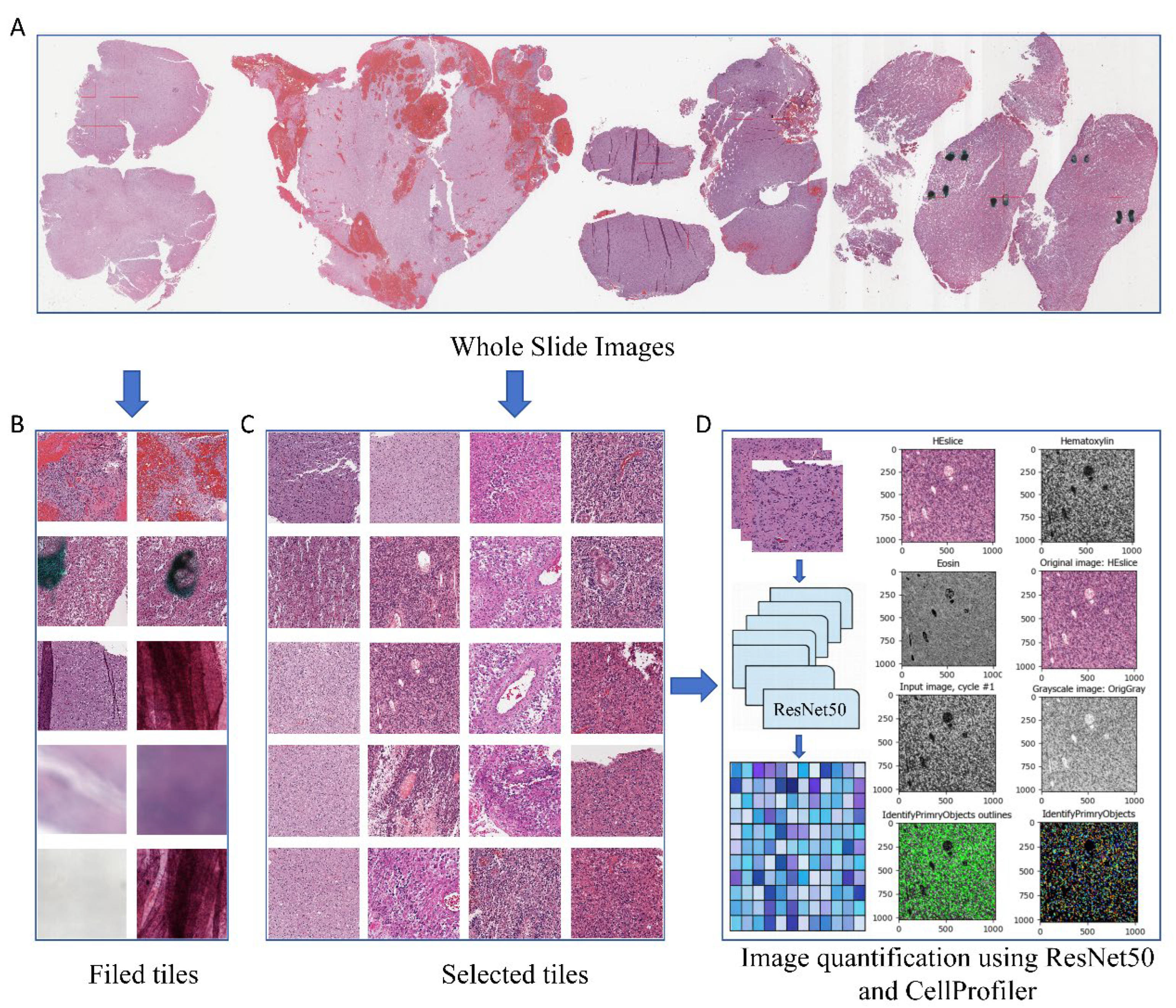
https://portal.gdc.cancer.gov/, accessed on 1 November 2025). WSI preprocessing included identification of usable tissue regions and generation of image tiles for downstream analysis. Briefly, 10 non-overlapping image tiles (512 × 512 pixels) were extracted from each WSI. Tiles were excluded if tissue coverage was <75%. To ensure image quality, all candidate tiles were jointly reviewed by two clinicians and two pathologists, and low-quality tiles were removed if they contained bubbles, blur, handwriting marks, tissue folds, or excessive blank background (
Figure 1A–C).
Transcriptomic and clinical data for TCGA glioma, including RNA-seq expression profiles from both GBM and lower-grade glioma (LGG), as well as OS and progression-free survival (PFS) data, were obtained from the UCSC Xena platform (
https://xena.ucsc.edu/, accessed on 29 December 2022). Molecular alteration data were collected from a previously published study [
6]. In addition, the updated 2021 WHO CNS classification information matched to the TCGA glioma transcriptomic samples was curated from another published study [
31] and used for subsequent subtype-based analyses. Single-nucleus transcriptomic data used for validation were obtained from two previously published datasets. The GBM dataset was downloaded from Gene Expression Omnibus (GSE274987) [
32], whereas the astrocytoma grade 2 dataset was obtained from Zenodo (
https://zenodo.org/records/10435521, accessed on 4 October 2025).
The gene set used in this study consisted of synaptogenesis-related genes, which was curated through a systematic summary of previously published studies [
33,
34,
35,
36,
37,
38,
39,
40,
41,
42,
43,
44,
45,
46].
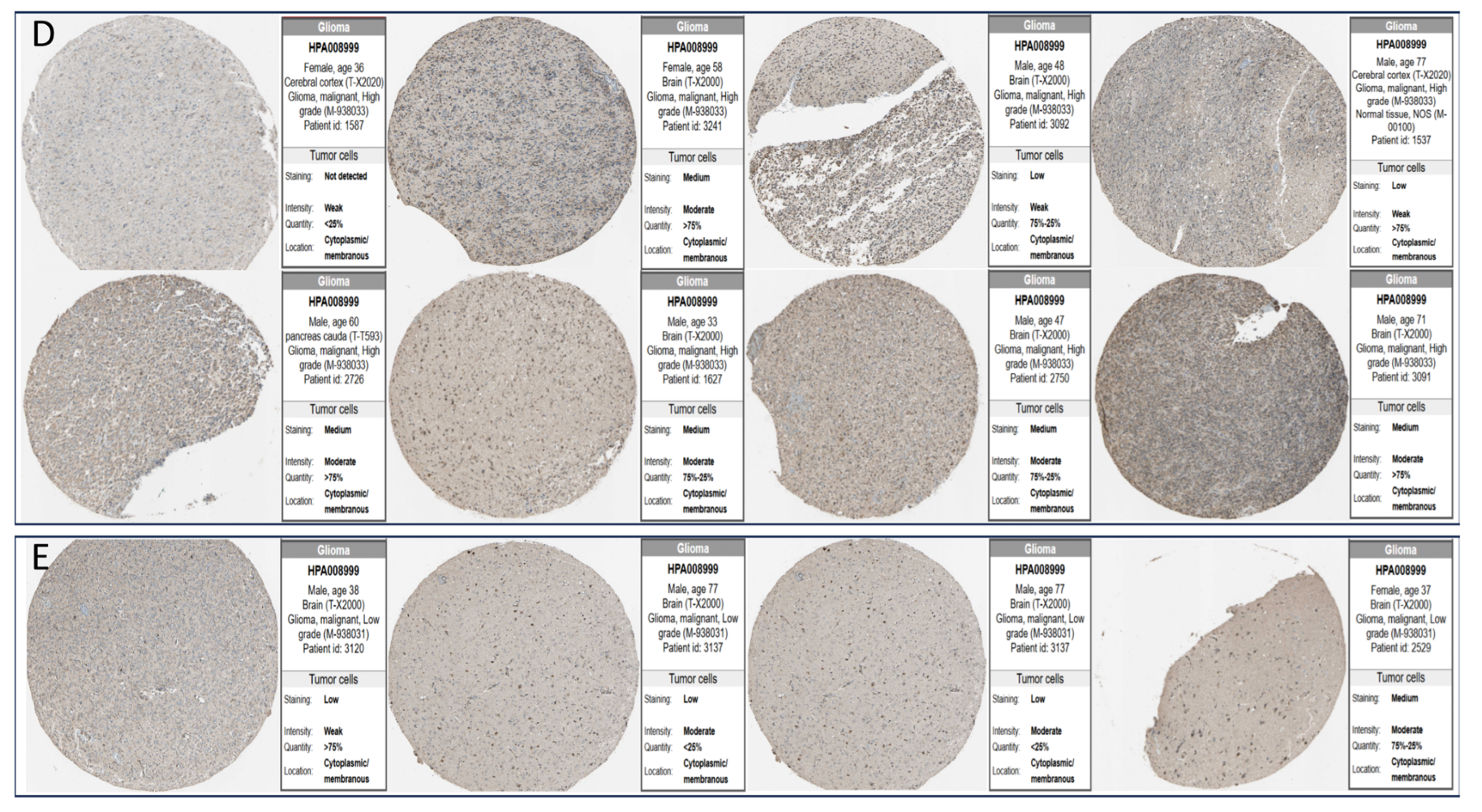
To further validate the expression patterns of candidate genes across glioma grades at the protein level, immunohistochemical staining data were retrieved from the HPA database. Representative staining images were reviewed to assess expression trends of the target genes across gliomas of different WHO-defined grades.
4.2. Feature Extraction from Histopathological Tiles
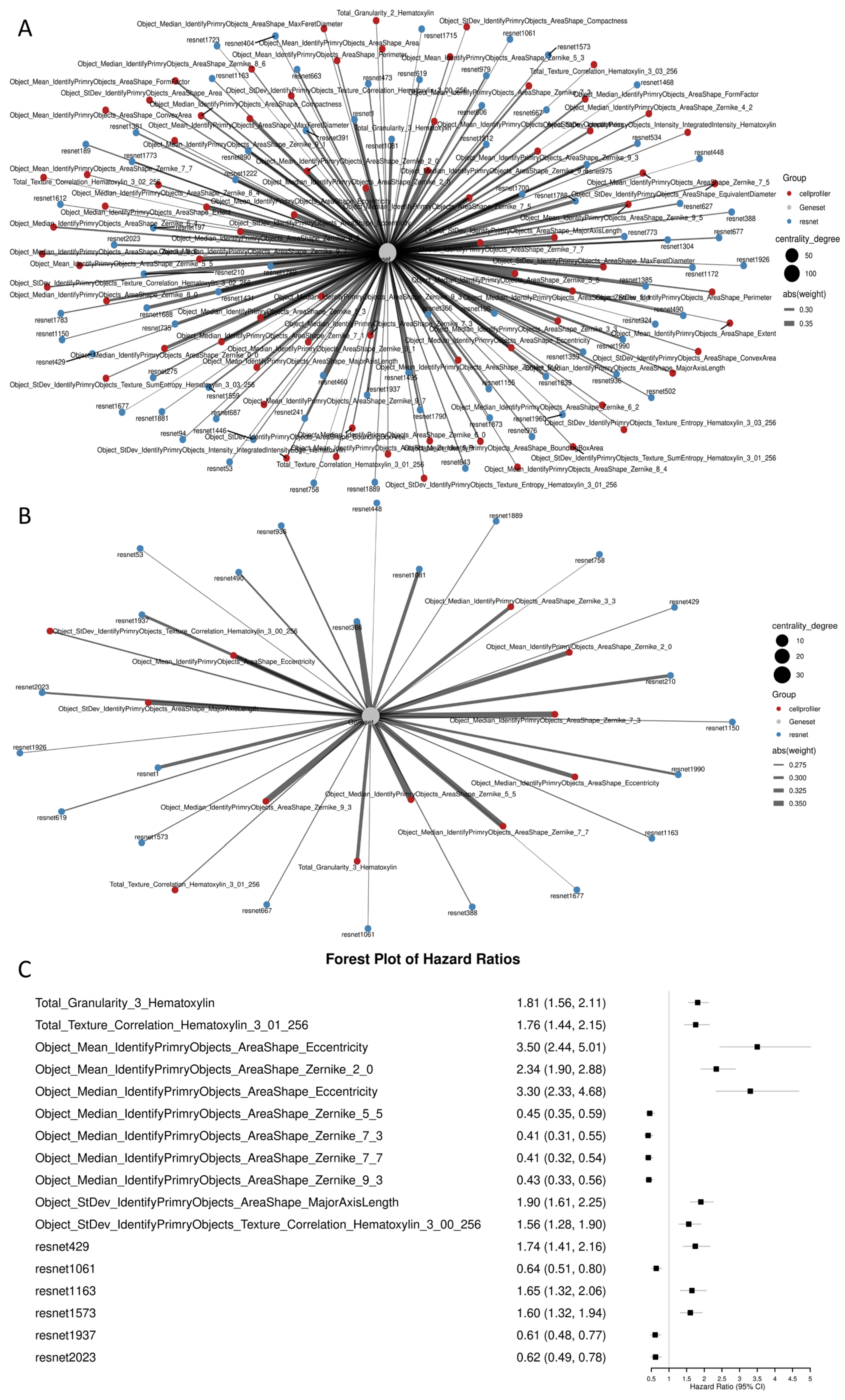
After WSI preprocessing and selection of high-quality tiles, histomorphologic feature extraction was performed for each tile. To comprehensively characterize glioma histomorphology, we extracted both 2048 ResNet50-derived deep learning features and 630 CellProfiler-derived quantitative histomorphologic features. For deep learning-based feature extraction, a pretrained ResNet50 network was used to encode each tile, generating a 2048-dimensional feature vector. These tile-level deep learning features were then averaged across all tiles from the same case. For quantitative histomorphologic feature extraction, each tile was analyzed using CellProfiler (version 4.2.4). Briefly, hematoxylin and eosin staining signals were used to identify and segment nuclei and tissue regions, followed by extraction of multiple interpretable histomorphologic features, including intensity, texture, granularity, size and shape descriptors, object adjacency measurements, and nuclear morphology-related metrics. At the case level, the mean, median, and standard deviation of each CellProfiler-derived feature across all tiles were calculated to summarize both the overall level and spatial heterogeneity of the histomorphologic characteristics. Together, the 2048 ResNet50-derived deep learning features and 630 CellProfiler-derived quantitative histomorphologic features constituted an integrated histomorphologic feature set of 2678 features for downstream analyses.
4.3. Histomorphologic Feature Selection and Association with Synaptogenesis-Related Gene Programs
To link histomorphologic features with synaptogenesis-related molecular activity, we first quantified the activity of a synaptogenesis-related gene set in the TCGA glioma transcriptomic dataset using ssGSEA implemented in the GSVA package (Version 2.0.7). This approach generated a sample-wise enrichment score for each tumor, providing a quantitative estimate of synaptogenesis-related biological activity at the transcriptomic level. The resulting gene set scores were then correlated with the case-level integrated histomorphologic feature set. For each histomorphologic feature, Spearman’s rank correlation analysis was performed to assess its association with the synaptogenesis-related enrichment score, and features showing significant correlations were retained as candidate histomorphologic features. To further refine the feature set and reduce redundancy, the candidate features were subjected to elastic net regularization using the glmnet package (Version 4.1-10) with α = 0.2. This procedure allowed us to retain a compact set of representative and robust histomorphologic features associated with synaptogenesis-related gene programs for subsequent survival modeling and biological interpretation.
4.4. Prognostic Feature Selection and Machine Learning Model Construction
After identifying histomorphologic features associated with synaptogenesis-related gene programs, the features retained by elastic net regularization (glmnet, α = 0.2) were further subjected to univariate Cox proportional hazards regression analysis to identify candidate variables significantly associated with patient survival. Only histomorphologic features showing statistical significance in the univariate analysis, together with the corresponding survival information, were then incorporated into the MIME1 framework to develop machine learning-based survival models. C-index was used as the primary performance metric to evaluate model discrimination, and the model with the best overall performance was selected as the final prognostic model.
After the optimal model was selected, a risk score was calculated for each sample according to the corresponding model coefficients. Patients were then stratified into high-risk and low-risk groups using the median PRS as the cutoff. Kaplan–Meier survival curves were generated to compare survival outcomes between the two groups, and differences were assessed using the log-rank test. In parallel, for key genes of interest, patients were also divided into high-expression and low-expression groups based on the median expression level, followed by survival analysis using the same approach. To further assess time-dependent predictive performance, the AUC values for 1-, 3-, and 5-year survival were calculated, and time-dependent ROC curves were plotted.
To determine whether PRS could serve as an independent predictor of patient survival, both univariate and multivariate Cox regression analyses were performed. Univariate analysis was used to evaluate the association between each clinicopathological variable, including PRS, and survival outcome. Multivariate analysis was then conducted by incorporating PRS together with other major clinical covariates to determine whether it retained prognostic significance after adjustment for potential confounding factors.
4.5. Differential Expression Analysis, Functional Enrichment Analysis, and Immune Microenvironment Assessment Between Risk Groups
To investigate the molecular differences associated with distinct risk states, patients were stratified into high-risk and low-risk groups according to PRS. Differential gene expression analysis between the two groups was then performed using the limma package (Version 3.62.2). Significantly differentially expressed genes were identified to characterize the molecular alterations associated with risk stratification.
After identifying differentially expressed genes between the high- and low-risk groups, functional enrichment analysis was conducted to clarify the biological processes and signaling pathways represented by these genes. Specifically, both Gene Ontology (GO) enrichment analysis and KEGG pathway analysis were performed to identify key biological functions, molecular mechanisms, and pathway alterations associated with the risk phenotype.
To assess differences in tumor microenvironment composition between the two risk groups, the estimate package (Version 1.0.13) was applied to the TCGA glioma transcriptomic dataset. This method was used to calculate the ImmuneScore, StromalScore, and ESTIMATEScore, which reflect the relative abundance of immune components, stromal components, and overall non-tumor microenvironmental infiltration within each sample. These scores were then compared between the high-risk and low-risk groups to evaluate the relationship between PRS and the immune microenvironmental landscape.
4.6. Correlation Analysis Between Histomorphologic Features and Synaptogenesis-Related Genes and Identification of the Hub Gene
To further connect histomorphologic features with synaptogenesis-related molecular characteristics, correlation analysis was performed between the selected key histomorphologic features and the expression levels of synaptogenesis-related genes. Based on the TCGA glioma transcriptomic dataset, the expression matrix of synaptogenesis-related genes was extracted and matched to the case-level histomorphologic feature matrix. Spearman’s rank correlation analysis was then used to evaluate the strength of association between each histomorphologic feature and each synaptogenesis-related gene. The resulting correlations were used to generate a histomorphologic feature–gene association matrix and served as the basis for subsequent hub gene identification.
To identify key molecules associated with both histomorphologic features and risk stratification, we intersected the candidate genes derived from the histomorphologic feature-synaptogenesis gene correlation analysis with the significantly differentially expressed genes identified between the high- and low-risk groups. Among the overlapping genes, candidates were ranked according to the adjusted p values from the differential expression analysis, and the gene with the smallest adjusted p value was defined as the hub gene. This gene was considered the most representative candidate linking histomorphologic, synaptogenesis-related molecular programs, and prognostic risk status, and was selected for downstream survival analysis, biological validation, and mechanistic investigation.
4.7. snRNA-seq Data Analysis
The overall workflow for snRNA-seq data processing is summarized in
Supplementary Figure S4. Cell types were manually annotated according to the expression patterns of canonical marker genes. The marker genes used for annotation were collected from multiple previously published studies and interpreted in conjunction with their expression distributions in the present dataset (
Supplementary Figures S5 and S6). To investigate intercellular signaling interactions among different cell populations, CommPath was used for cell–cell communication analysis. This method infers potential signaling relationships based on ligand–receptor expression patterns and further evaluates the relative communication strength of specific cell populations within the global interaction network. To further characterize the transcriptional regulatory programs underlying
EFNB2-associated malignant cell states, SCENIC was performed for transcription factor network inference. Given the substantial computational demand of this analysis, 2000 cells were randomly sampled from the integrated snRNA-seq dataset for SCENIC analysis. This approach was used to identify regulons composed of transcription factors and their putative target genes and to compare regulon activity across different cell populations, thereby providing insight into the potential upstream regulatory mechanisms associated with
EFNB2-related cellular states.
4.8. Exploratory Re-Analysis of the Myeloid Compartment
To further investigate myeloid heterogeneity in relation to glioma grade and EFNB2-associated malignant context, we performed an exploratory re-analysis of the myeloid compartment in the integrated snRNA-seq dataset. Cells annotated as myeloid cells were subset from the integrated object and reprocessed, including normalization, identification of highly variable genes, scaling, principal component analysis, Harmony-based batch correction using patient identity, graph-based clustering, and UMAP visualization. Clustering resolution was set to 0.4 for the final exploratory analysis. Based on clustering pattern, canonical marker expression, and module scores for APOE/C1QC-like, SPP1-associated, M2-like, and homeostatic microglial programs, myeloid cells were re-annotated into four major states: Microglia-like, Suppressive TAM-like, Transitional myeloid, and Stress-ambiguous populations. The Suppressive TAM-like population was defined as the major tumor-associated suppressive myeloid state for downstream quantitative analysis. To compare myeloid composition across biological groups, cell-state proportions were calculated at the sample level within the myeloid compartment. Two-group comparisons, including astrocytoma grade 2 versus GBM and EFNB2-high versus EFNB2-low malignant contexts, were performed using the Wilcoxon rank-sum test at the sample level because of the limited number of independent samples and the non-Gaussian nature of proportion data. For EFNB2-context analysis, malignant cells were extracted from the integrated snRNA-seq object, and sample-level EFNB2 context was defined according to the sample-wise mean EFNB2 expression in malignant cells, dichotomized by the median value.