Host Determinants of Immune Checkpoint Inhibitor Efficacy: Immune, Genetic, Metabolic, and Lifestyle Factors
 , , , , , ,
Abstract
1. Introduction
2. Immune System Factors
2.1. Baseline Immune Competence
2.2. T-Cell Repertoire Diversity and Clonal Expansion
2.3. NK Cells and Innate Immunity Contributions
2.4. Cytokine Profile and Systemic Inflammation
2.5. Peripheral Blood Biomarkers
3. Genetics and Epigenetics
3.1. Germline Variants in Immune Checkpoints
3.2. HLA Genotype and Antigen Presentation
3.3. Epigenetic Regulation of Immune Cells
3.4. Pharmacogenomics and Personalized Immunotherapy
4. Microbiome and Metabolome
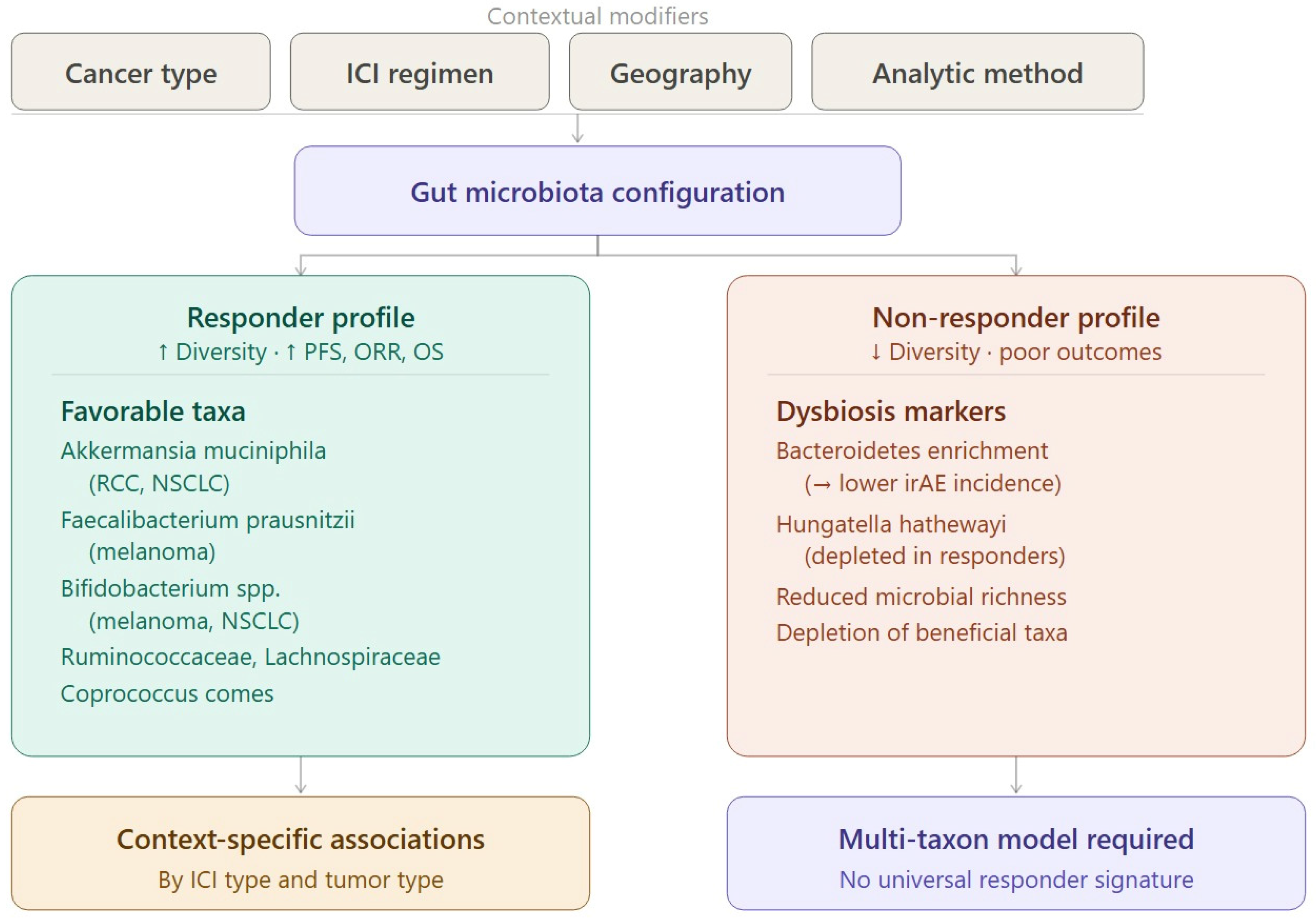
4.1. Gut Microbiota Composition
4.2. Microbial Metabolites
4.3. Microbiome Modifying Agents and Mechanistic Effects on ICI Response
4.4. Dietary and Lifestyle Influences
4.5. Mechanistic Links to T-Cell Activation
5. Metabolic and Lifestyle Factors
5.1. Obesity, Adipokines, and the Obesity Paradox
5.2. Glucose and Lipid Metabolism in Immune Regulation
5.3. Exercise, Circadian Rhythm, and Immune Function
5.4. Nutrition and Micronutrients
6. Co-Medications and Comorbidities
6.1. Medications Affecting ICI Efficacy
6.2. Chronic Comorbidities
6.3. Interactions Between Drugs, Comorbidities, and Immune Response
7. Translational Applications: Host Targeted Interventions
7.1. Microbiome-Based Therapeutic Strategies
7.1.1. Fecal Microbiota Transplantation (FMT) and Immunotherapy Synergy
7.1.2. Clinical Trials of FMT in Cancer Immunotherapy
7.1.3. Microbiome Modulation in Treatment-Related Toxicity
7.2. Antibiotics and Microbiota Disruption
7.3. Metabolism
7.4. Cytokine Modulation
7.5. Biomarkers for Patient Stratification
7.6. Future Research Directions
8. Conclusions
Author Contributions
Funding
Institutional Review Board Statement
Informed Consent Statement
Data Availability Statement
Conflicts of Interest
Abbreviations
| ORR | objective response rate |
| CR | complete response |
| FMT | fecal microbiota transplantation |
| NSCLC | non-small cell lung cancer |
| PD-1 | programmed cell death protein 1 |
| PD-(L)1 | programmed death (ligand) 1 |
| GI | gastrointestinal |
| ICI | immune checkpoint inhibitor |
| CD8+ T cells | cytotoxic T lymphocytes |
| NLR | neutrophil-to-lymphocyte ratio |
| HLA | human leukocyte antigen |
| SNP | single nucleotide polymorphism |
| MMR | mismatch repair |
| SCFA | short-chain fatty acid |
| PPI | proton pump inhibitor |
References
- Arafat Hossain, M. A comprehensive review of immune checkpoint inhibitors for cancer treatment. Int. Immunopharmacol. 2024, 143, 113365. [Google Scholar] [CrossRef]
- Mejía-Guarnizo, L.V.; Monroy-Camacho, P.S.; Turizo-Smith, A.D.; Rodríguez-García, J.A. The role of immune checkpoints in antitumor response: A potential antitumor immunotherapy. Front. Immunol. 2023, 14, 1298571. [Google Scholar] [CrossRef]
- Shiravand, Y.; Khodadadi, F.; Kashani, S.M.A.; Hosseini-Fard, S.R.; Hosseini, S.; Sadeghirad, H.; Ladwa, R.; O’Byrne, K.; Kulasinghe, A. Immune Checkpoint Inhibitors in Cancer Therapy. Curr. Oncol. 2022, 29, 3044–3060. [Google Scholar] [CrossRef] [PubMed]
- Twomey, J.D.; Zhang, B. Cancer Immunotherapy Update: FDA-Approved Checkpoint Inhibitors and Companion Diagnostics. AAPS J. 2021, 23, 39. [Google Scholar] [CrossRef] [PubMed]
- Cogdill, A.P.; Andrews, M.C.; Wargo, J.A. Hallmarks of response to immune checkpoint blockade. Br. J. Cancer 2017, 117, 1–7. [Google Scholar] [CrossRef]
- Liu, J.; Cai, Y.; Liu, J.; Chen, D.; Wu, X. Immunotherapy Resistance and Therapeutic Strategies in PD-L1 High Expression Non-Small Cell Lung Cancer. OncoTargets Ther. 2025, 18, 953–966. [Google Scholar] [CrossRef]
- Shields, B.D.; Mahmoud, F.; Taylor, E.M.; Byrum, S.D.; Sengupta, D.; Koss, B.; Baldini, G.; Ransom, S.; Cline, K.; Mackintosh, S.G.; et al. Indicators of responsiveness to immune checkpoint inhibitors. Sci. Rep. 2017, 7, 807. [Google Scholar] [CrossRef]
- Gunjur, A.; Manrique-Rincón, A.J.; Klein, O.; Behren, A.; Lawley, T.D.; Welsh, S.J.; Adams, D.J. ‘Know thyself’—Host factors influencing cancer response to immune checkpoint inhibitors. J. Pathol. 2022, 257, 513–525. [Google Scholar] [CrossRef]
- Shim, J.A.; Ryu, J.H.; Jo, Y.; Hong, C. The role of gut microbiota in T cell immunity and immune mediated disorders. Int. J. Biol. Sci. 2023, 19, 1178–1191. [Google Scholar] [CrossRef]
- Tsurui, T.; Hamada, K.; Mura, E.; Suzuki, R.; Iriguchi, N.; Ishiguro, T.; Hirasawa, Y.; Ohkuma, R.; Shimokawa, M.; Ariizumi, H.; et al. Evaluation of patient immunocompetence for immune checkpoint inhibitor therapy using the psoas muscle index: A retrospective cohort study. Front. Oncol. 2025, 15, 1499650. [Google Scholar] [CrossRef] [PubMed]
- Lee, Y.J.; Park, Y.S.; Lee, H.W.; Park, T.Y.; Lee, J.K.; Heo, E.Y. Peripheral lymphocyte count as a surrogate marker of immune checkpoint inhibitor therapy outcomes in patients with non-small-cell lung cancer. Sci. Rep. 2022, 12, 626. [Google Scholar] [CrossRef] [PubMed]
- Montauti, E.; Oh, D.Y.; Fong, L. CD4+ T cells in antitumor immunity. Trends Cancer 2024, 10, 969–985. [Google Scholar] [CrossRef]
- Zhang, A.; Fan, T.; Liu, Y.; Yu, G.; Li, C.; Jiang, Z. Regulatory T cells in immune checkpoint blockade antitumor therapy. Mol. Cancer 2024, 23, 251. [Google Scholar] [CrossRef]
- Kong, Y.; Chen, R.; Zhang, J.; Zhang, L. Circulating T-lymphocyte subsets as biomarkers for immune checkpoint inhibitors in solid tumors. Clin. Exp. Immunol. 2026, 220, uxag002. [Google Scholar] [CrossRef]
- Kidman, J.; Principe, N.; Watson, M.; Lassmann, T.; Holt, R.A.; Nowak, A.K.; Lesterhuis, W.J.; Lake, R.A.; Chee, J. Characteristics of TCR Repertoire Associated with Successful Immune Checkpoint Therapy Responses. Front. Immunol. 2020, 11, 587014. [Google Scholar] [CrossRef]
- Bortone, D.S.; Woodcock, M.G.; Parker, J.S.; Vincent, B.G. Improved T-cell Receptor Diversity Estimates Associate with Survival and Response to Anti-PD-1 Therapy. Cancer Immunol. Res. 2021, 9, 103–112. [Google Scholar] [CrossRef]
- Kidman, J.; Zemek, R.M.; Sidhom, J.W.; Correa, D.; Principe, N.; Sheikh, F.; Fear, V.S.; Forbes, C.A.; Chopra, A.; Boon, L.; et al. Immune checkpoint therapy responders display early clonal expansion of tumor infiltrating lymphocytes. Oncoimmunology 2024, 13, 2345859. [Google Scholar] [CrossRef]
- Simoni, Y.; Becht, E.; Fehlings, M.; Loh, C.Y.; Koo, S.L.; Teng, K.W.W.; Yeong, J.P.S.; Nahar, R.; Zhang, T.; Kared, H.; et al. Bystander CD8(+) T cells are abundant and phenotypically distinct in human tumour infiltrates. Nature 2018, 557, 575–579. [Google Scholar] [CrossRef] [PubMed]
- Malhotra, A.; Shanker, A. NK cells: Immune cross-talk and therapeutic implications. Immunotherapy 2011, 3, 1143–1166. [Google Scholar] [CrossRef] [PubMed]
- Chu, J.; Gao, F.; Yan, M.; Zhao, S.; Yan, Z.; Shi, B.; Liu, Y. Natural killer cells: A promising immunotherapy for cancer. J. Transl. Med. 2022, 20, 240. [Google Scholar] [CrossRef]
- Li, X.; Zhong, J.; Deng, X.; Guo, X.; Lu, Y.; Lin, J.; Huang, X.; Wang, C. Targeting Myeloid-Derived Suppressor Cells to Enhance the Antitumor Efficacy of Immune Checkpoint Blockade Therapy. Front. Immunol. 2021, 12, 754196. [Google Scholar] [CrossRef]
- Soler, M.F.; Abaurrea, A.; Azcoaga, P.; Araujo, A.M.; Caffarel, M.M. New perspectives in cancer immunotherapy: Targeting IL-6 cytokine family. J. Immunother. Cancer 2023, 11, e007530. [Google Scholar] [CrossRef]
- Ali, A.; Caldwell, R.; Pina, G.; Beinart, N.; Jensen, G.; Yusuf, S.W.; Koutroumpakis, E.; Hamzeh, I.; Khalaf, S.; Iliescu, C.; et al. Elevated IL-6 and Tumor Necrosis Factor-α in Immune Checkpoint Inhibitor Myocarditis. Diseases 2024, 12, 88. [Google Scholar] [CrossRef]
- Wang, X.; Wang, J.; Wang, Q.; Ding, G.; Huang, Y.; Feng, Y. Precision cytokine modulation to overcome tumor microenvironment-driven resistance to immune checkpoint blockade. Biochim. Biophys. Acta Rev. Cancer 2026, 1881, 189536. [Google Scholar] [CrossRef] [PubMed]
- Pei, B.; Zhang, J.; Lai, L.; Chen, H. Neutrophil-to-lymphocyte ratio as a predictive biomarker for hyperprogressive disease mediated by immune checkpoint inhibitors: A systematic review and meta-analysis. Front. Immunol. 2024, 15, 1393925. [Google Scholar] [CrossRef]
- Wang, M.; Dong, W.; Chen, J.; Wu, P.; Wang, Y.; Zhang, X.; Cao, Y.; Wang, Z.; Zhong, Z.; Zhong, Y. Platelet-to-lymphocyte ratio for prognostication in immune checkpoint inhibitor-treated cancer patients: A meta-analysis of 13027 patients highlighting nivolumab-responsive renal cell carcinoma. Front. Immunol. 2026, 17, 1732790. [Google Scholar] [CrossRef]
- Chin, I.S.; Khan, A.; Olsson-Brown, A.; Papa, S.; Middleton, G.; Palles, C. Germline genetic variation and predicting immune checkpoint inhibitor induced toxicity. npj Genom. Med. 2022, 7, 73. [Google Scholar] [CrossRef] [PubMed]
- Groha, S.; Alaiwi, S.A.; Xu, W.; Naranbhai, V.; Nassar, A.H.; Bakouny, Z.; El Zarif, T.; Saliby, R.M.; Wan, G.; Rajeh, A.; et al. Germline variants associated with toxicity to immune checkpoint blockade. Nat. Med. 2022, 28, 2584–2591. [Google Scholar] [CrossRef]
- Issaoui, H.; Ricci, J.-E. IL-7 germline variant: Setting the stage for immune-related adverse events. Mol. Oncol. 2023, 17, 384–386. [Google Scholar] [CrossRef] [PubMed]
- Shen, A.; Arbesman, M.; Newell, D.; Chen, J.; Arbesman, J.; Funchain, P.; Kennedy, L.B. Germline pathogenic variants and immune-related adverse events in patients with melanoma receiving immune checkpoint inhibitors. J. Am. Acad. Dermatol. 2026, 94, 264–267. [Google Scholar] [CrossRef]
- Chatrath, A.; Ratan, A.; Dutta, A. Germline variants predictive of tumor mutational burden and immune checkpoint inhibitor efficacy. iScience 2021, 24, 102248. [Google Scholar] [CrossRef] [PubMed]
- Cesano, A.; Augustin, R.; Barrea, L.; Bedognetti, D.; Bruno, T.C.; Carturan, A.; Hammer, C.; Ho, W.S.; Kather, J.N.; Kirchhoff, T.; et al. Advances in the understanding and therapeutic manipulation of cancer immune responsiveness: A Society for Immunotherapy of Cancer (SITC) review. J. Immunother. Cancer 2025, 13, e008876. [Google Scholar] [CrossRef]
- Jiang, C.Y.; Zhao, L.; Green, M.D.; Ravishankar, S.; Towlerton, A.M.H.; Scott, A.J.; Raghavan, M.; Cusick, M.F.; Warren, E.H.; Ramnath, N. Class II HLA-DRB4 is a predictive biomarker for survival following immunotherapy in metastatic non-small cell lung cancer. Sci. Rep. 2024, 14, 345. [Google Scholar] [CrossRef]
- Manger, I.; Schmitt, C.; Berking, C.; French, L.E.; Vera-Gonzalez, J.; Heinzerling, L. Association of HLA-A*02:01 type with efficacy and toxicity of immune checkpoint inhibitor therapy in melanoma patients: A retrospective cohort study. BMC Cancer 2025, 25, 565. [Google Scholar] [CrossRef] [PubMed]
- Yang, Y.; Wang, Y. Role of Epigenetic Regulation in Plasticity of Tumor Immune Microenvironment. Front. Immunol. 2021, 12, 640369. [Google Scholar] [CrossRef]
- Saleh, R.; Toor, S.M.; Sasidharan Nair, V.; Elkord, E. Role of Epigenetic Modifications in Inhibitory Immune Checkpoints in Cancer Development and Progression. Front. Immunol. 2020, 11, 1469. [Google Scholar] [CrossRef]
- Zhang, H.; Pang, Y.; Yi, L.; Wang, X.; Wei, P.; Wang, H.; Lin, S. Epigenetic regulators combined with tumour immunotherapy: Current status and perspectives. Clin. Epigenetics 2025, 17, 51. [Google Scholar] [CrossRef]
- Fernandez-Barrena, M.G.; Uriarte, I.; Sarobe, P.; Avila, M.A. Epigenetic mechanisms in HCC immune landscape: Therapeutic implications. Semin. Immunol. 2025, 79, 101980. [Google Scholar] [CrossRef]
- Terranova-Barberio, M.; Thomas, S.; Munster, P.N. Epigenetic modifiers in immunotherapy: A focus on checkpoint inhibitors. Immunotherapy 2016, 8, 705–719. [Google Scholar] [CrossRef] [PubMed]
- Dai, E.; Zhu, Z.; Wahed, S.; Qu, Z.; Storkus, W.J.; Guo, Z.S. Epigenetic modulation of antitumor immunity for improved cancer immunotherapy. Mol. Cancer 2021, 20, 171. [Google Scholar] [CrossRef]
- Perrier, A.; Didelot, A.; Laurent-Puig, P.; Blons, H.; Garinet, S. Epigenetic Mechanisms of Resistance to Immune Checkpoint Inhibitors. Biomolecules 2020, 10, 1061. [Google Scholar] [CrossRef] [PubMed]
- Castrillon, J.A.; Eng, C.; Cheng, F. Pharmacogenomics for immunotherapy and immune-related cardiotoxicity. Hum. Mol. Genet. 2020, 29, R186–R196. [Google Scholar] [CrossRef]
- Yin, J.; Gu, T.; Chaudhry, N.; Davidson, N.E.; Huang, Y. Epigenetic modulation of antitumor immunity and immunotherapy response in breast cancer: Biological mechanisms and clinical implications. Front. Immunol. 2023, 14, 1325615. [Google Scholar] [CrossRef]
- Zervanos, D.-I.; Galatou, E.; Miliotou, A.N.; Theodoroula, N.F.; Grigoriadis, N.; Vizirianakis, I.S. Assessing the Pharmacological and Pharmacogenomic Data of PD-1/PD-L1 Inhibitors to Enhance Cancer Immunotherapy Outcomes in the Clinical Setting. Future Pharmacol. 2025, 5, 43. [Google Scholar] [CrossRef]
- Middha, P.; Thummalapalli, R.; Quandt, Z.; Balaratnam, K.; Cardenas, E.; Falcon, C.J.; Princess Margaret Lung Group; Gubens, M.A.; Huntsman, S.; Khan, K.; et al. Germline prediction of immune checkpoint inhibitor discontinuation for immune-related adverse events. J. Immunother. Cancer 2025, 13, e011273. [Google Scholar] [CrossRef]
- Chen, D.S.; Mellman, I. Elements of cancer immunity and the cancer-immune set point. Nature 2017, 541, 321–330. [Google Scholar] [CrossRef]
- Gopalakrishnan, V.; Spencer, C.N.; Nezi, L.; Reuben, A.; Andrews, M.C.; Karpinets, T.V.; Prieto, P.A.; Vicente, D.; Hoffman, K.; Wei, S.C.; et al. Gut microbiome modulates response to anti-PD-1 immunotherapy in melanoma patients. Science 2018, 359, 97–103. [Google Scholar] [CrossRef]
- Binnewies, M.; Roberts, E.W.; Kersten, K.; Chan, V.; Fearon, D.F.; Merad, M.; Coussens, L.M.; Gabrilovich, D.I.; Ostrand-Rosenberg, S.; Hedrick, C.C.; et al. Understanding the tumor immune microenvironment (TIME) for effective therapy. Nat. Med. 2018, 24, 541–550. [Google Scholar] [CrossRef]
- Rizvi, N.A.; Hellmann, M.D.; Snyder, A.; Kvistborg, P.; Makarov, V.; Havel, J.J.; Lee, W.; Yuan, J.; Wong, P.; Ho, T.S.; et al. Cancer immunology. Mutational landscape determines sensitivity to PD-1 blockade in non-small cell lung cancer. Science 2015, 348, 124–128. [Google Scholar] [CrossRef] [PubMed]
- Song, K.J.; Choi, S.; Kim, K.; Hwang, H.S.; Chang, E.; Park, J.S.; Shim, S.B.; Choi, S.; Heo, Y.J.; An, W.J.; et al. Proteogenomic analysis reveals non-small cell lung cancer subtypes predicting chromosome instability, and tumor microenvironment. Nat. Commun. 2024, 15, 10164. [Google Scholar] [CrossRef]
- Schmiechen, Z.C.; Stromnes, I.M. Mechanisms Governing Immunotherapy Resistance in Pancreatic Ductal Adenocarcinoma. Front. Immunol. 2020, 11, 613815. [Google Scholar] [CrossRef]
- Huang, L.; Li, Y.; Zhang, C.; Jiang, A.; Zhu, L.; Mou, W.; Li, K.; Zhang, J.; Cui, C.; Cui, X.; et al. Microbiome meets immunotherapy: Unlocking the hidden predictors of immune checkpoint inhibitors. npj Biofilms Microbiomes 2025, 11, 180. [Google Scholar] [CrossRef]
- Lin, Y.; Xie, M.; Lau, H.C.; Zeng, R.; Zhang, R.; Wang, L.; Li, Q.; Wang, Y.; Chen, D.; Jiang, L.; et al. Effects of gut microbiota on immune checkpoint inhibitors in multi-cancer and as microbial biomarkers for predicting therapeutic response. Med 2025, 6, 100530. [Google Scholar] [CrossRef] [PubMed]
- Susiriwatananont, T.; Eiamprapaporn, P.; Vazquez Roque, M.; Farraye, F.A.; Perlman, A.; Chumsri, S. The Gut Microbiome as a Biomarker and Therapeutic Target of Immune Checkpoint Inhibitors: A Review for Oncologists. Cells 2025, 14, 1779. [Google Scholar] [CrossRef]
- Pei, B.; Ma, X.; Wu, N.; Wang, C.; Yang, W. Effect of microbiome group on immune checkpoint inhibitors in treatment of gastrointestinal tumors. Chin. J. Cancer Res. 2023, 35, 252–265. [Google Scholar] [CrossRef]
- Lei, W.; Zhou, K.; Lei, Y.; Li, Q.; Zhu, H. Gut microbiota shapes cancer immunotherapy responses. npj Biofilms Microbiomes 2025, 11, 143. [Google Scholar] [CrossRef] [PubMed]
- Sawada, K.; Yamashita, R.; Sakai, S.A.; Horasawa, S.; Yoshikawa, A.; Fujisawa, T.; Kadowaki, S.; Kato, K.; Ueno, M.; Oki, E.; et al. Microbiome Landscape and Association with Response to Immune Checkpoint Inhibitors in Advanced Solid Tumors: A SCRUM-Japan MONSTAR-SCREEN Study. Cancer Res. Commun. 2025, 5, 857–870. [Google Scholar] [CrossRef]
- Ryan, T.; Ling, S.; Trinh, A.; Segal, J.P. The role of the microbiome in immune checkpoint inhibitor colitis and hepatitis. Best Pract. Res. Clin. Gastroenterol. 2024, 72, 101945. [Google Scholar] [CrossRef]
- Li, H.; Zhao, A.; Li, M.; Shi, L.; Han, Q.; Hou, Z. Targeting T-cell metabolism to boost immune checkpoint inhibitor therapy. Front. Immunol. 2022, 13, 1046755. [Google Scholar] [CrossRef] [PubMed]
- Naqash, A.R.; Kihn-Alarcón, A.J.; Stavraka, C.; Kerrigan, K.; Maleki Vareki, S.; Pinato, D.J.; Puri, S. The role of gut microbiome in modulating response to immune checkpoint inhibitor therapy in cancer. Ann. Transl. Med. 2021, 9, 1034. [Google Scholar] [CrossRef]
- Shaikh, F.Y.; Gills, J.J.; Sears, C.L. Impact of the microbiome on checkpoint inhibitor treatment in patients with non-small cell lung cancer and melanoma. eBioMedicine 2019, 48, 642–647. [Google Scholar] [CrossRef]
- Park, J.; Euhus, D.M.; Scherer, P.E. Paracrine and endocrine effects of adipose tissue on cancer development and progression. Endocr. Rev. 2011, 32, 550–570. [Google Scholar] [CrossRef]
- Yuan, L.; Wang, Q.; Sun, F.; Yang, W.; Lei, J.; Liu, J.; Fan, Y.; Shan, Y.; Lu, Y.; Zhang, Y.; et al. Inferring tumor immune microenvironment -related risk states from pretreatment H&E pathomics and clinical biomarkers to predict checkpoint inhibitor pneumonitis in advanced NSCLC: A multicenter multimodal study. Front. Immunol. 2026, 17, 1792179. [Google Scholar] [CrossRef] [PubMed]
- McQuade, J.L.; Daniel, C.R.; Hess, K.R.; Mak, C.; Wang, D.Y.; Rai, R.R.; Park, J.J.; Haydu, L.E.; Spencer, C.; Wongchenko, M.; et al. Association of body-mass index and outcomes in patients with metastatic melanoma treated with targeted therapy, immunotherapy, or chemotherapy: A retrospective, multicohort analysis. Lancet Oncol. 2018, 19, 310–322. [Google Scholar] [CrossRef]
- Mattavelli, E.; Agustoni, F.; Tartara, A.; De Simeis, F.; Perrone, L.; Caccialanza, R.; Pedrazzoli, P.; Da Prat, V. Nutritional status, immunonutrition, and gut microbiome: A coming of age for immunotherapy? Front. Immunol. 2025, 16, 1612567. [Google Scholar] [CrossRef]
- Pan, B.S.; Hsu, C.C.; Wu, H.E.; Chen, Y.R.; Zhou, X.; Wang, S.C.; Li, C.Y.; Lin, H.K. Glucose metabolism and its direct action in cancer and immune regulation: Opportunities and challenges for metabolic targeting. J. Biomed. Sci. 2025, 32, 71. [Google Scholar] [CrossRef] [PubMed]
- Grafanaki, K.; Maniatis, A.; Anastogianni, A.; Bania, A.; Pasmatzi, E.; Stathopoulos, C. Nutrition and Diet Patterns as Key Modulators of Metabolic Reprogramming in Melanoma Immunotherapy. J. Clin. Med. 2025, 14, 4193. [Google Scholar] [CrossRef]
- Donath, M.Y.; Shoelson, S.E. Type 2 diabetes as an inflammatory disease. Nat. Rev. Immunol. 2011, 11, 98–107. [Google Scholar] [CrossRef] [PubMed]
- Pearce, E.L.; Pearce, E.J. Metabolic pathways in immune cell activation and quiescence. Immunity 2013, 38, 633–643. [Google Scholar] [CrossRef] [PubMed]
- Pacella, I.; Procaccini, C.; Focaccetti, C.; Miacci, S.; Timperi, E.; Faicchia, D.; Severa, M.; Rizzo, F.; Coccia, E.M.; Bonacina, F.; et al. Fatty acid metabolism complements glycolysis in the selective regulatory T cell expansion during tumor growth. Proc. Natl. Acad. Sci. USA 2018, 115, E6546–E6555. [Google Scholar] [CrossRef]
- Zhao, D.; Wu, L.; Li, Y. Targeting lipid metabolism to enhance cancer immunotherapy. Biochim. Biophys. Acta Rev. Cancer 2025, 1880, 189416. [Google Scholar] [CrossRef] [PubMed]
- Scheiermann, C.; Kunisaki, Y.; Frenette, P.S. Circadian control of the immune system. Nat. Rev. Immunol. 2013, 13, 190–198. [Google Scholar] [CrossRef]
- Szredzka, A.; Chwastowicz, A.; Pergoł, J.; Matryba, P. Circadian clocks and adaptive immune function: From mechanisms to therapeutic applications. Front. Immunol. 2025, 16, 1697854. [Google Scholar] [CrossRef]
- Hopkins, B.D.; Goncalves, M.D.; Cantley, L.C. Obesity and Cancer Mechanisms: Cancer Metabolism. J. Clin. Oncol. 2016, 34, 4277–4283. [Google Scholar] [CrossRef]
- Zhang, L.; Zhang, Q.; Ling, T.; Huang, L. Controlling nutritional status score predicts clinical outcome in cancer patients treated with immune checkpoint inhibitor: A systematic review and meta-analysis. Front. Immunol. 2026, 17, 1751492. [Google Scholar] [CrossRef] [PubMed]
- Chen, N.; Yu, Y.; Shen, W.; Xu, X.; Fan, Y. Nutritional status as prognostic factor of advanced oesophageal cancer patients treated with immune checkpoint inhibitors. Clin. Nutr. 2024, 43, 142–153. [Google Scholar] [CrossRef]
- Fuller-Shavel, N.; Davies, E.J.; Peleg Hasson, S. Nutritional strategies in supporting immune checkpoint inhibitor, PI3K inhibitor, and tyrosine kinase inhibitor cancer therapies. Front. Nutr. 2025, 12, 1670598. [Google Scholar] [CrossRef] [PubMed]
- Golonko, A.; Pienkowski, T.; Swislocka, R.; Orzechowska, S.; Marszalek, K.; Szczerbinski, L.; Swiergiel, A.H.; Lewandowski, W. Dietary factors and their influence on immunotherapy strategies in oncology: A comprehensive review. Cell Death Dis. 2024, 15, 254. [Google Scholar] [CrossRef]
- Elkrief, A.; Derosa, L.; Kroemer, G.; Zitvogel, L.; Routy, B. The negative impact of antibiotics on outcomes in cancer patients treated with immunotherapy: A new independent prognostic factor? Ann. Oncol. 2019, 30, 1572–1579. [Google Scholar] [CrossRef]
- Fucà, G.; Galli, G.; Poggi, M.; Lo Russo, G.; Proto, C.; Imbimbo, M.; Ferrara, R.; Zilembo, N.; Ganzinelli, M.; Sica, A.; et al. Modulation of peripheral blood immune cells by early use of steroids and its association with clinical outcomes in patients with metastatic non-small cell lung cancer treated with immune checkpoint inhibitors. ESMO Open 2019, 4, e000457. [Google Scholar] [CrossRef]
- Cortellini, A.; Tucci, M.; Adamo, V.; Stucci, L.S.; Russo, A.; Tanda, E.T.; Spagnolo, F.; Rastelli, F.; Bisonni, R.; Santini, D.; et al. Integrated analysis of concomitant medications and oncological outcomes from PD-1/PD-L1 checkpoint inhibitors in clinical practice. J. Immunother. Cancer 2020, 8, e001361. [Google Scholar] [CrossRef]
- Lurienne, L.; Cervesi, J.; Duhalde, L.; de Gunzburg, J.; Andremont, A.; Zalcman, G.; Buffet, R.; Bandinelli, P.A. NSCLC Immunotherapy Efficacy and Antibiotic Use: A Systematic Review and Meta-Analysis. J. Thorac. Oncol. 2020, 15, 1147–1159. [Google Scholar] [CrossRef]
- Pinato, D.J.; Howlett, S.; Ottaviani, D.; Urus, H.; Patel, A.; Mineo, T.; Brock, C.; Power, D.; Hatcher, O.; Falconer, A.; et al. Association of Prior Antibiotic Treatment with Survival and Response to Immune Checkpoint Inhibitor Therapy in Patients with Cancer. JAMA Oncol. 2019, 5, 1774–1778, Erratum in JAMA Oncol. 2020, 6, 302. https://doi.org/10.1001/jamaoncol.2019.6921. [Google Scholar] [CrossRef]
- Eng, L.; Sutradhar, R.; Niu, Y.; Liu, N.; Liu, Y.; Kaliwal, Y.; Powis, M.L.; Liu, G.; Peppercorn, J.M.; Bedard, P.L.; et al. Impact of Antibiotic Exposure Before Immune Checkpoint Inhibitor Treatment on Overall Survival in Older Adults with Cancer: A Population-Based Study. J. Clin. Oncol. 2023, 41, 3122–3134. [Google Scholar] [CrossRef]
- Hussain, N.; Naeem, M.; Pinato, D.J. Concomitant medications and immune checkpoint inhibitor therapy for cancer: Causation or association? Hum. Vaccines Immunother. 2021, 17, 55–61. [Google Scholar] [CrossRef]
- Stone, S.; McPherson, J.P.; Kulkarni, R.P.; Young, A. The impact of concomitant medications on treatment outcomes in patients with cancer receiving immune checkpoint inhibitors. Nat. Rev. Cancer 2026, 26, 137–158. [Google Scholar] [CrossRef] [PubMed]
- Hakozaki, T.; Richard, C.; Elkrief, A.; Hosomi, Y.; Benlaïfaoui, M.; Mimpen, I.; Terrisse, S.; Derosa, L.; Zitvogel, L.; Routy, B.; et al. The Gut Microbiome Associates with Immune Checkpoint Inhibition Outcomes in Patients with Advanced Non-Small Cell Lung Cancer. Cancer Immunol. Res. 2020, 8, 1243–1250. [Google Scholar] [CrossRef] [PubMed]
- Choi, Y.; Lichterman, J.N.; Coughlin, L.A.; Poulides, N.; Li, W.; Del Valle, P.; Palmer, S.N.; Gan, S.; Kim, J.; Zhan, X.; et al. Immune checkpoint blockade induces gut microbiota translocation that augments extraintestinal antitumor immunity. Sci. Immunol. 2023, 8, eabo2003. [Google Scholar] [CrossRef] [PubMed]
- Raoul, J.L.; Moreau-Bachelard, C.; Gilabert, M.; Edeline, J.; Frénel, J.S. Drug-drug interactions with proton pump inhibitors in cancer patients: An underrecognized cause of treatment failure. ESMO Open 2023, 8, 100880. [Google Scholar] [CrossRef]
- Rousseau, A.; Simon-Tillaux, N.; Michiels, S.; Derosa, L.; Laparra, A.; Planchard, D.; Remon, J.; Barlesi, F.; Lavaud, P.; Frelaut, M.; et al. Concomitant Comedications and Survival with First-Line Pembrolizumab in Advanced Non-Small-Cell Lung Cancer. JAMA Netw. Open 2025, 8, e2529225. [Google Scholar] [CrossRef] [PubMed]
- Arbour, K.C.; Mezquita, L.; Long, N.; Rizvi, H.; Auclin, E.; Ni, A.; Martínez-Bernal, G.; Ferrara, R.; Lai, W.V.; Hendriks, L.E.L.; et al. Impact of Baseline Steroids on Efficacy of Programmed Cell Death-1 and Programmed Death-Ligand 1 Blockade in Patients with Non-Small-Cell Lung Cancer. J. Clin. Oncol. 2018, 36, 2872–2878. [Google Scholar] [CrossRef] [PubMed]
- Cook, S.; Samuel, V.; Meyers, D.E.; Stukalin, I.; Litt, I.; Sangha, R.; Morris, D.G.; Heng, D.Y.C.; Pabani, A.; Dean, M.; et al. Immune-Related Adverse Events and Survival Among Patients with Metastatic NSCLC Treated with Immune Checkpoint Inhibitors. JAMA Netw. Open 2024, 7, e2352302. [Google Scholar] [CrossRef]
- Quandt, Z.; Lucas, A.; Liang, S.I.; Yang, E.; Stone, S.; Fadlullah, M.Z.H.; Bayless, N.L.; Marr, S.S.; Thompson, M.A.; Padron, L.J.; et al. Associations between immune checkpoint inhibitor response, immune-related adverse events, and steroid use in RADIOHEAD: A prospective pan-tumor cohort study. J. Immunother. Cancer 2025, 13, e011545. [Google Scholar] [CrossRef]
- Nara, K.; Taguchi, S.; Buti, S.; Kawai, T.; Uemura, Y.; Yamamoto, T.; Kume, H.; Takada, T. Associations of concomitant medications with immune-related adverse events and survival in advanced cancers treated with immune checkpoint inhibitors: A comprehensive pan-cancer analysis. J. Immunother. Cancer 2024, 12, e008806, Correction in J. Immuno. Ther. Cancer 2024, 12, e008806. https://doi.org/10.1136/jitc-2024-008806corr1. [Google Scholar] [CrossRef] [PubMed]
- Jayathilaka, B.; Mian, F.; Franchini, F.; Au-Yeung, G.; Ijzerman, M. Cancer and treatment specific incidence rates of immune-related adverse events induced by immune checkpoint inhibitors: A systematic review. Br. J. Cancer 2025, 132, 51–57, Correction in Br. J. Cancer 2025, 132, 137. https://doi.org/10.1038/s41416-024-02920-3. [Google Scholar] [CrossRef]
- Oliveira, R.F.; Oliveira, A.I.; Cruz, A.S.; Ribeiro, O.; Afreixo, V.; Pimentel, F. Polypharmacy and drug interactions in older patients with cancer receiving chemotherapy: Associated factors. BMC Geriatr. 2024, 24, 557. [Google Scholar] [CrossRef]
- Kleinhans, M.; Lissen, A.; Hewitson, L.; Rijkers, G.T. From fecal microbiota transplants to targeted intervention for improvement of immune checkpoint inhibition therapy: How far down the road are we? Expert Rev. Anticancer Ther. 2026, 1–8. [Google Scholar] [CrossRef]
- Baruch, E.N.; Youngster, I.; Ben-Betzalel, G.; Ortenberg, R.; Lahat, A.; Katz, L.; Adler, K.; Dick-Necula, D.; Raskin, S.; Bloch, N.; et al. Fecal microbiota transplant promotes response in immunotherapy-refractory melanoma patients. Science 2021, 371, 602–609. [Google Scholar] [CrossRef]
- Davar, D.; Dzutsev, A.K.; McCulloch, J.A.; Rodrigues, R.R.; Chauvin, J.M.; Morrison, R.M.; Deblasio, R.N.; Menna, C.; Ding, Q.; Pagliano, O.; et al. Fecal microbiota transplant overcomes resistance to anti-PD-1 therapy in melanoma patients. Science 2021, 371, 595–602. [Google Scholar] [CrossRef]
- Routy, B.; Lenehan, J.G.; Miller, W.H., Jr.; Jamal, R.; Messaoudene, M.; Daisley, B.A.; Hes, C.; Al, K.F.; Martinez-Gili, L.; Punčochář, M.; et al. Fecal microbiota transplantation plus anti-PD-1 immunotherapy in advanced melanoma: A phase I trial. Nat. Med. 2023, 29, 2121–2132, Correction in Nat. Med. 2024, 30, 604. https://doi.org/10.1038/s41591-023-02650-8. [Google Scholar] [CrossRef] [PubMed]
- Duttagupta, S.; Messaoudene, M.; Hunter, S.; Desilets, A.; Jamal, R.; Mihalcioiu, C.; Belkaid, W.; Marcoux, N.; Fidelle, M.; Suissa, D.; et al. Fecal microbiota transplantation plus immunotherapy in non-small cell lung cancer and melanoma: The phase 2 FMT-LUMINate trial. Nat. Med. 2026, 32, 1337–1350. [Google Scholar] [CrossRef] [PubMed]
- Kim, Y.; Kim, G.; Kim, S.; Cho, B.; Kim, S.Y.; Do, E.J.; Bae, D.J.; Kim, S.; Kweon, M.N.; Song, J.S.; et al. Fecal microbiota transplantation improves anti-PD-1 inhibitor efficacy in unresectable or metastatic solid cancers refractory to anti-PD-1 inhibitor. Cell Host Microbe 2024, 32, 1380–1393.e9. [Google Scholar] [CrossRef]
- Borgers, J.S.W.; Burgers, F.H.; Terveer, E.M.; van Leerdam, M.E.; Korse, C.M.; Kessels, R.; Flohil, C.C.; Blank, C.U.; Schumacher, T.N.; van Dijk, M.; et al. Conversion of unresponsiveness to immune checkpoint inhibition by fecal microbiota transplantation in patients with metastatic melanoma: Study protocol for a randomized phase Ib/IIa trial. BMC Cancer 2022, 22, 1366. [Google Scholar] [CrossRef]
- Zhang, Y.; Xu, X.; Wang, S.; Yin, X.; Zhang, B.; Zhu, Z.; Ji, R.; Zhu, J.; He, H.; Cheng, S.; et al. Fecal microbiota transplantation combined with anti-PD-1 therapy in refractory microsatellite-stable gastric cancer: A phase I feasibility and safety study. J. Immunother. Cancer 2026, 14, e013823. [Google Scholar] [CrossRef]
- Huang, H.; Peng, S.; Liu, Y.; Chen, L.; Wu, F. Fecal microbiota transplantation for advanced non-small cell lung cancer with secondary PD-1 resistance efficacy prognostic factors and microbiome diversity analysis. J. Transl. Med. 2026, 24, 447. [Google Scholar] [CrossRef]
- Park, R.; Umar, S.; Kasi, A. Immunotherapy in Colorectal Cancer: Potential of Fecal Transplant and Microbiota-augmented Clinical Trials. Curr. Color. Cancer Rep. 2020, 16, 81–88. [Google Scholar] [CrossRef]
- Ramesh, A.; Subbarayan, R.; Shrestha, R.; Adtani, P.N. Exploring Fecal Microbiota Transplantation: Potential Benefits, Associated Risks, and Challenges in Cancer Treatment. Cancer Rep. 2026, 9, e70455. [Google Scholar] [CrossRef]
- Wekking, D.; Ende, T.V.D.; Bijlsma, M.F.; Vidal-Itriago, A.; Nieuwdorp, M.; van Laarhoven, H.W.M. Fecal microbiota transplantation to enhance cancer treatment outcomes across different cancer types: A systematic literature review. Cancer Treat. Rev. 2025, 140, 103025. [Google Scholar] [CrossRef] [PubMed]
- Ubeda, C.; Pamer, E.G. Antibiotics, microbiota, and immune defense. Trends Immunol. 2012, 33, 459–466. [Google Scholar] [CrossRef]
- Konstantinidis, T.; Tsigalou, C.; Karvelas, A.; Stavropoulou, E.; Voidarou, C.; Bezirtzoglou, E. Effects of Antibiotics upon the Gut Microbiome: A Review of the Literature. Biomedicines 2020, 8, 502. [Google Scholar] [CrossRef] [PubMed]
- Manuzak, J.A.; Zevin, A.S.; Cheu, R.; Richardson, B.; Modesitt, J.; Hensley-McBain, T.; Miller, C.; Gustin, A.T.; Coronado, E.; Gott, T.; et al. Antibiotic-induced microbiome perturbations are associated with significant alterations to colonic mucosal immunity in rhesus macaques. Mucosal Immunol. 2020, 13, 471–480, Erratum in Mucosal Immunol. 2020, 13, 558. https://doi.org/10.1038/s41385-020-0274-x. [Google Scholar] [CrossRef]
- Vliex, L.M.M.; Penders, J.; Nauta, A.; Zoetendal, E.G.; Blaak, E.E. The individual response to antibiotics and diet—Insights into gut microbial resilience and host metabolism. Nat. Rev. Endocrinol. 2024, 20, 387–398. [Google Scholar] [CrossRef] [PubMed]
- Relman, D.A.; Lipsitch, M. Microbiome as a tool and a target in the effort to address antimicrobial resistance. Proc. Natl. Acad. Sci. USA 2018, 115, 12902–12910. [Google Scholar] [CrossRef]
- Patangia, D.V.; Anthony Ryan, C.; Dempsey, E.; Paul Ross, R.; Stanton, C. Impact of antibiotics on the human microbiome and consequences for host health. MicrobiologyOpen 2022, 11, e1260. [Google Scholar] [CrossRef]
- Feng, Y.; de Jong, S.E.; Oliveira, A.; Samaha, H.; Yang, F.; Hu, M.; Wang, Y.; Beydoun, N.; Xie, X.; Zhang, H.; et al. Antibiotic-induced gut microbiome perturbation alters the immune responses to the rabies vaccine. Cell Host Microbe 2025, 33, 705–718.e5. [Google Scholar] [CrossRef] [PubMed]
- Ozkul, C.; Ruiz, V.E.; Battaglia, T.; Xu, J.; Roubaud-Baudron, C.; Cadwell, K.; Perez-Perez, G.I.; Blaser, M.J. A single early-in-life antibiotic course increases susceptibility to DSS-induced colitis. Genome Med. 2020, 12, 65. [Google Scholar] [CrossRef]
- Shekhar, S.; Petersen, F.C. The Dark Side of Antibiotics: Adverse Effects on the Infant Immune Defense Against Infection. Front. Pediatr. 2020, 8, 544460. [Google Scholar] [CrossRef] [PubMed]
- Shi, Y.; Luo, J.; Narbad, A.; Chen, Q. Advances in Lactobacillus Restoration for β-Lactam Antibiotic-Induced Dysbiosis: A System Review in Intestinal Microbiota and Immune Homeostasis. Microorganisms 2023, 11, 179. [Google Scholar] [CrossRef]
- Lim, S.; Phillips, J.B.; Madeira da Silva, L.; Zhou, M.; Fodstad, O.; Owen, L.B.; Tan, M. Interplay between Immune Checkpoint Proteins and Cellular Metabolism. Cancer Res. 2017, 77, 1245–1249. [Google Scholar] [CrossRef]
- Chalmin, F.; Bruchard, M.; Vegran, F.; Ghiringhelli, F. Regulation of T cell antitumor immune response by tumor induced metabolic stress. Cell Stress. 2018, 3, 9–18. [Google Scholar] [CrossRef]
- Baci, D.; Cekani, E.; Imperatori, A.; Ribatti, D.; Mortara, L. Host-Related Factors as Targetable Drivers of Immunotherapy Response in Non-Small Cell Lung Cancer Patients. Front. Immunol. 2022, 13, 914890. [Google Scholar] [CrossRef]
- Almawash, S. Revolutionary Cancer Therapy for Personalization and Improved Efficacy: Strategies to Overcome Resistance to Immune Checkpoint Inhibitor Therapy. Cancers 2025, 17, 880. [Google Scholar] [CrossRef]
- Barroso-Sousa, R.; Ott, P.A. Transformation of Old Concepts for a New Era of Cancer Immunotherapy: Cytokine Therapy and Cancer Vaccines as Combination Partners of PD1/PD-L1 Inhibitors. Curr. Oncol. Rep. 2018, 21, 1. [Google Scholar] [CrossRef]
- De Luca, A.J.; Lyons, A.B.; Flies, A.S. Cytokines: Signalling Improved Immunotherapy? Curr. Oncol. Rep. 2021, 23, 103. [Google Scholar] [CrossRef]
- Bai, R.; Lv, Z.; Xu, D.; Cui, J. Predictive biomarkers for cancer immunotherapy with immune checkpoint inhibitors. Biomark. Res. 2020, 8, 34. [Google Scholar] [CrossRef]
- Chen, H.; Yang, H.; Guo, L.; Sun, Q. The Role of Immune Checkpoint Inhibitors in Cancer Therapy: Mechanism and Therapeutic Advances. MedComm 2025, 6, e70412. [Google Scholar] [CrossRef] [PubMed]
- Sharma, P.; Allison, J.P. Immune checkpoint targeting in cancer therapy: Toward combination strategies with curative potential. Cell 2015, 161, 205–214. [Google Scholar] [CrossRef] [PubMed]
- Szałata, A.; Hrovatin, K.; Becker, S.; Tejada-Lapuerta, A.; Cui, H.; Wang, B.; Theis, F.J. Transformers in single-cell omics: A review and new perspectives. Nat. Methods 2024, 21, 1430–1443. [Google Scholar] [CrossRef] [PubMed]
- Li, G.; Shi, Q.; Wu, Q.; Sui, X. Target identification of natural products in cancer with chemical proteomics and artificial intelligence approaches. Cancer Biol. Med. 2025, 22, 549–597. [Google Scholar] [CrossRef]
- Yan, S.; Zhang, G.; Luo, W.; Xu, M.; Peng, R.; Du, Z.; Liu, Y.; Bai, Z.; Xiao, X.; Qin, S. PROTAC technology: From drug development to probe technology for target deconvolution. Eur. J. Med. Chem. 2024, 276, 116725. [Google Scholar] [CrossRef]


| Category | Factor | Effect on ICI Response | Mechanism | Clinical Relevance |
|---|---|---|---|---|
| (A) | ||||
| Immune System | High CD8+ T-cell levels | ↑ Improved response [10,12,14] | Enhanced cytotoxic tumor cell killing | Predictive biomarker |
| Immune System | High neutrophil-to-lymphocyte ratio (NLR) | ↓ Reduced response [25] | Systemic inflammation and immune suppression | Prognostic marker |
| Immune System | Expansion of regulatory T cells (Tregs) | ↓ Reduced response [13] | Suppression of effector T-cell activity | Potential therapeutic target |
| Immune System | Favorable cytokine profile (low IL-6, balanced immune signaling) | ↑ Improved response [22,24] | Promotes effective T-cell activation and function | Potential biomarker |
| Genetics | HLA diversity | ↑ Improved response [32,34] | Broader antigen presentation to T cells | Patient stratification |
| Genetics | Germline variants (e.g., IL-7 SNPs, MMR genes) | ↑/↓ Variable [27,31] | Modulation of immune response and tumor immunogenicity | Predictive of efficacy and toxicity |
| Epigenetics | DNA methylation and histone modification | ↑ Potential improvement [35,43] | Regulation of immune-related gene expression | Target for combination therapy |
| (B) | ||||
| Microbiome | Akkermansia muciniphila enrichment | ↑ Improved response [54,56] | Enhanced immune activation and T-cell priming | Modifiable biomarker |
| Microbiome | High microbial diversity | ↑ Potentially improved response (context-dependent) [54,56] | Enhanced immune modulation | Potential predictive marker |
| Microbiome | Dysbiosis (e.g., antibiotic-induced) | ↓ Reduced response [79,88] | Impaired microbial metabolite production and immune signaling | Avoidable risk factor |
| Metabolism | Obesity | Mixed effects (Obesity Pradox) [63,65] | Chronic inflammation and PD-1 upregulation | Context-dependent predictor |
| Metabolism | Hyperglycemia/diabetes | ↓ Reduced response [66,68] | Immune dysfunction and systemic inflammation | Modifiable risk factor |
| Lifestyle | High-fiber diet | ↑ Improved response [56,77] | Increased short-chain fatty acid (SCFA) production | Modifiable factor |
| Lifestyle | Physical activity | ↑ Potential benefit [73] | Enhanced immune cell function and trafficking | Supportive intervention |
| Pharmacologic | Antibiotic use | ↓ Reduced response [79,88] | Disruption of gut microbiota (dysbiosis) | Avoid near ICI initiation if possible |
| Pharmacologic | Baseline corticosteroid use | ↓ Reduced response [91,93] | Systemic immunosuppression | Use cautiously |
| Pharmacologic | Proton pump inhibitor (PPI) use | ↓ Potentially reduced response [81,89,90] | Altered gut microbiota composition | Monitor use |
| Trial/Study | Cancer Type | Patient Population | Intervention | Key Outcomes | Key Findings |
|---|---|---|---|---|---|
| Phase I (early landmark, NCT not reported) | Melanoma | Anti-PD-1-refractory | FMT from responders + anti-PD-1 | 30% ORR (3/10), 1 CR | Microbiome modulation and increased tumor immune activation |
| NCT03341143 | Melanoma | Anti-PD-1-refractory | FMT from responders | ~20% ORR, ~40% disease control | Microbiota engraftment; increased CD8+ T-cell activity |
| NCT03772899 | Advanced melanoma | Treatment-naïve | FMT from healthy donors + nivolumab/pembrolizumab | 65% ORR, 20% CR | Safe; beneficial microbiome changes |
| NCT0495158 | NSCLC & Melanoma | Advanced disease | FMT + anti-PD-1 | 80% ORR (NSCLC), 75% (melanoma) | Reduced harmful taxa; improved outcomes |
| NCT04264975 | Advanced solid tumors | Anti-PD-1-refractory | FMT from responders | 46.2% disease control | Increased cytotoxic T-cell activity |
| NCT05251389 | Melanoma | Anti-PD-1-refractory | FMT from responders vs. non-responders | Ongoing | Evaluating differential clinical benefit |
| NCT04130763 | GI cancers | PDL-1-resistant | FMT from healthy donors + anti-PD-1 | 20% ORR | Donor microbes linked to immune activation |
| MR3622010054 | NSCLC | PD-1 secondary resistance | FMT + PD-1 rechallenge + chemotherapy | 29.6% ORR | Increased microbial diversity and CD8+ T-cell infiltration |
Disclaimer/Publisher’s Note: The statements, opinions and data contained in all publications are solely those of the individual author(s) and contributor(s) and not of MDPI and/or the editor(s). MDPI and/or the editor(s) disclaim responsibility for any injury to people or property resulting from any ideas, methods, instructions or products referred to in the content. |
© 2026 by the authors. Licensee MDPI, Basel, Switzerland. This article is an open access article distributed under the terms and conditions of the Creative Commons Attribution (CC BY) license.
Share and Cite
Awada, A.; Charbel, N.; Faraj, S.; Hassan, M.; Awada, D.; Issa, A.; Nasr, W.; El Meski, S.; Hatahet, Z.; Tarhini, A.; et al. Host Determinants of Immune Checkpoint Inhibitor Efficacy: Immune, Genetic, Metabolic, and Lifestyle Factors. Int. J. Mol. Sci. 2026, 27, 4178. https://doi.org/10.3390/ijms27104178
Awada A, Charbel N, Faraj S, Hassan M, Awada D, Issa A, Nasr W, El Meski S, Hatahet Z, Tarhini A, et al. Host Determinants of Immune Checkpoint Inhibitor Efficacy: Immune, Genetic, Metabolic, and Lifestyle Factors. International Journal of Molecular Sciences. 2026; 27(10):4178. https://doi.org/10.3390/ijms27104178
Chicago/Turabian StyleAwada, Ali, Nicole Charbel, Sary Faraj, Mohammad Hassan, Duha Awada, Andrea Issa, Wajih Nasr, Sara El Meski, Zuhair Hatahet, Ali Tarhini, and et al. 2026. "Host Determinants of Immune Checkpoint Inhibitor Efficacy: Immune, Genetic, Metabolic, and Lifestyle Factors" International Journal of Molecular Sciences 27, no. 10: 4178. https://doi.org/10.3390/ijms27104178
APA StyleAwada, A., Charbel, N., Faraj, S., Hassan, M., Awada, D., Issa, A., Nasr, W., El Meski, S., Hatahet, Z., Tarhini, A., Rizkallah, J., & Kreidieh, F. (2026). Host Determinants of Immune Checkpoint Inhibitor Efficacy: Immune, Genetic, Metabolic, and Lifestyle Factors. International Journal of Molecular Sciences, 27(10), 4178. https://doi.org/10.3390/ijms27104178