

Effects of Rapid Weight Loss on the Immune System in Combat Sports Athletes: A Systematic Review


Abstract
1. Introduction
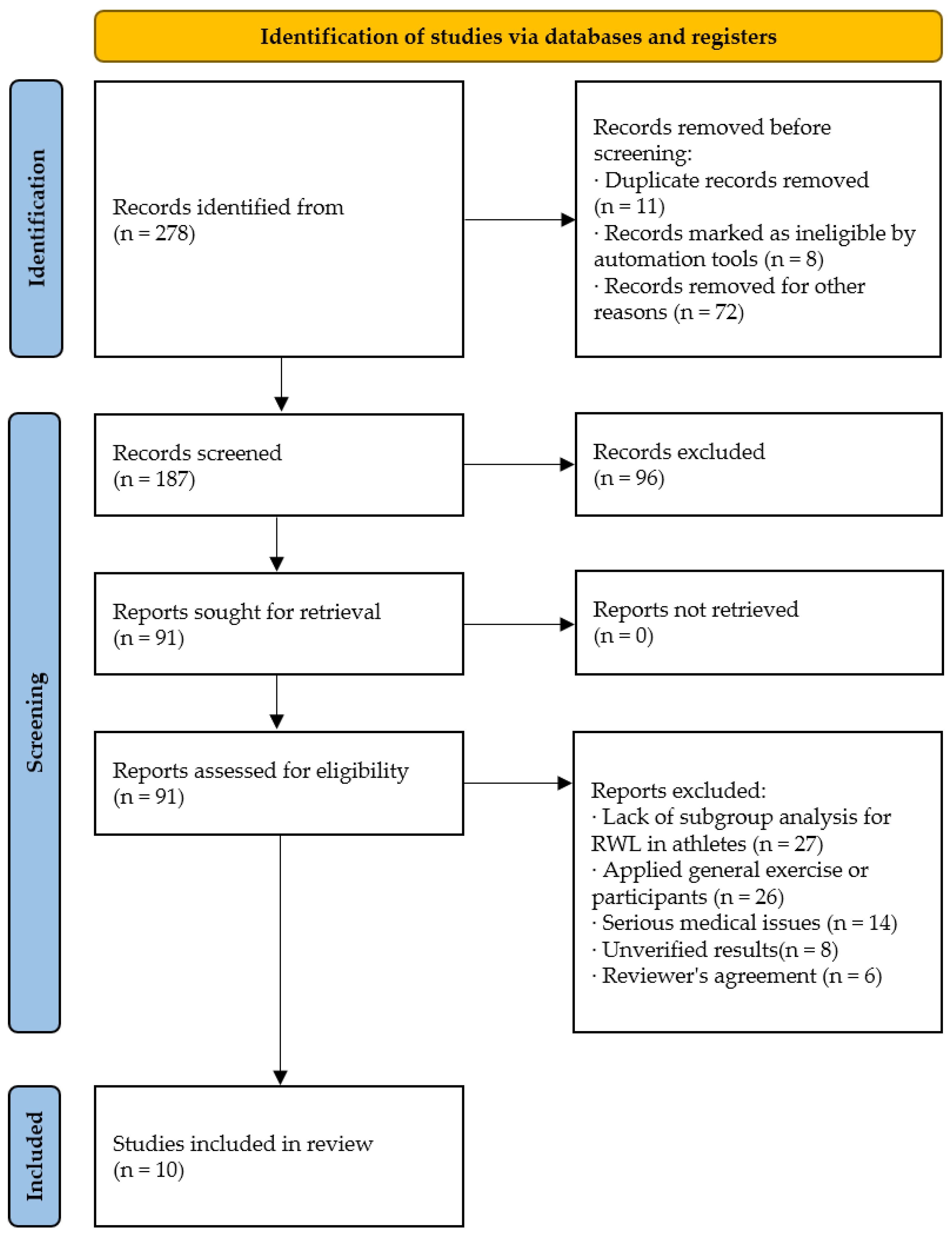
2. Methods
2.1. Search Strategy and Selection Criteria
2.2. Eligibility Criteria for Study Selection
- Population: Active combat sports athletes (e.g., taekwondo, judo, wrestling, boxing).
- Intervention: Exposure to RWL protocols, customarily defined as ≥3% body mass reduction over a 7-day or shorter period.
- Comparator: Pre-intervention baseline measurements, control groups, or longitudinal repeated measures.
- Outcomes: Immune function parameters measured directly (e.g., immune cell counts, cytokine profiles, mucosal immunity markers) or inferred from related biomolecular indicators.
- Study Design: Peer-reviewed randomized controlled trials, quasi-experimental studies, pre-post intervention designs, and observational cohorts.
- Language: English.
2.3. Multi-Level Reviews and Cross-Checks
2.4. Quality Assessment and Risk of Bias
3. Results
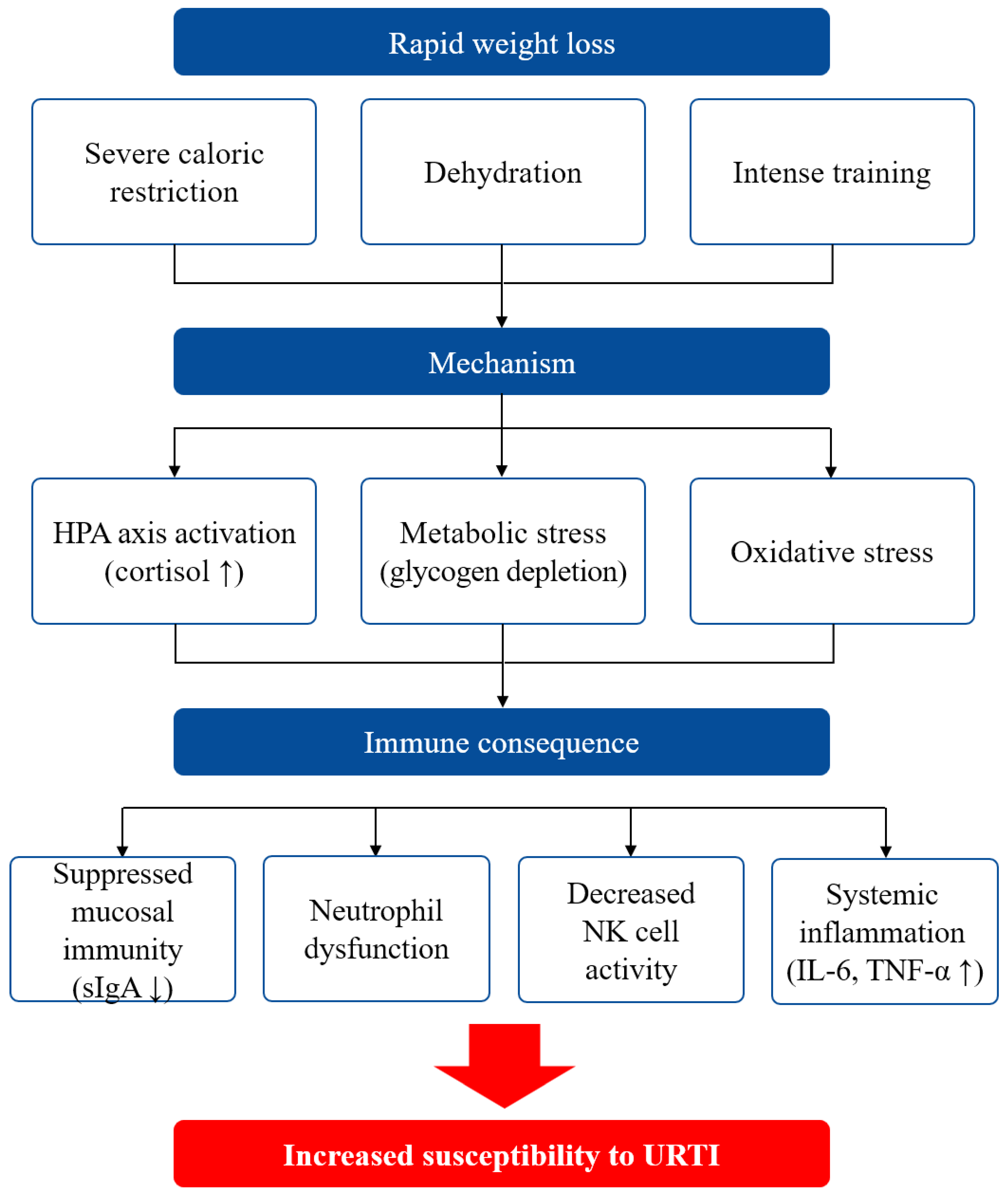
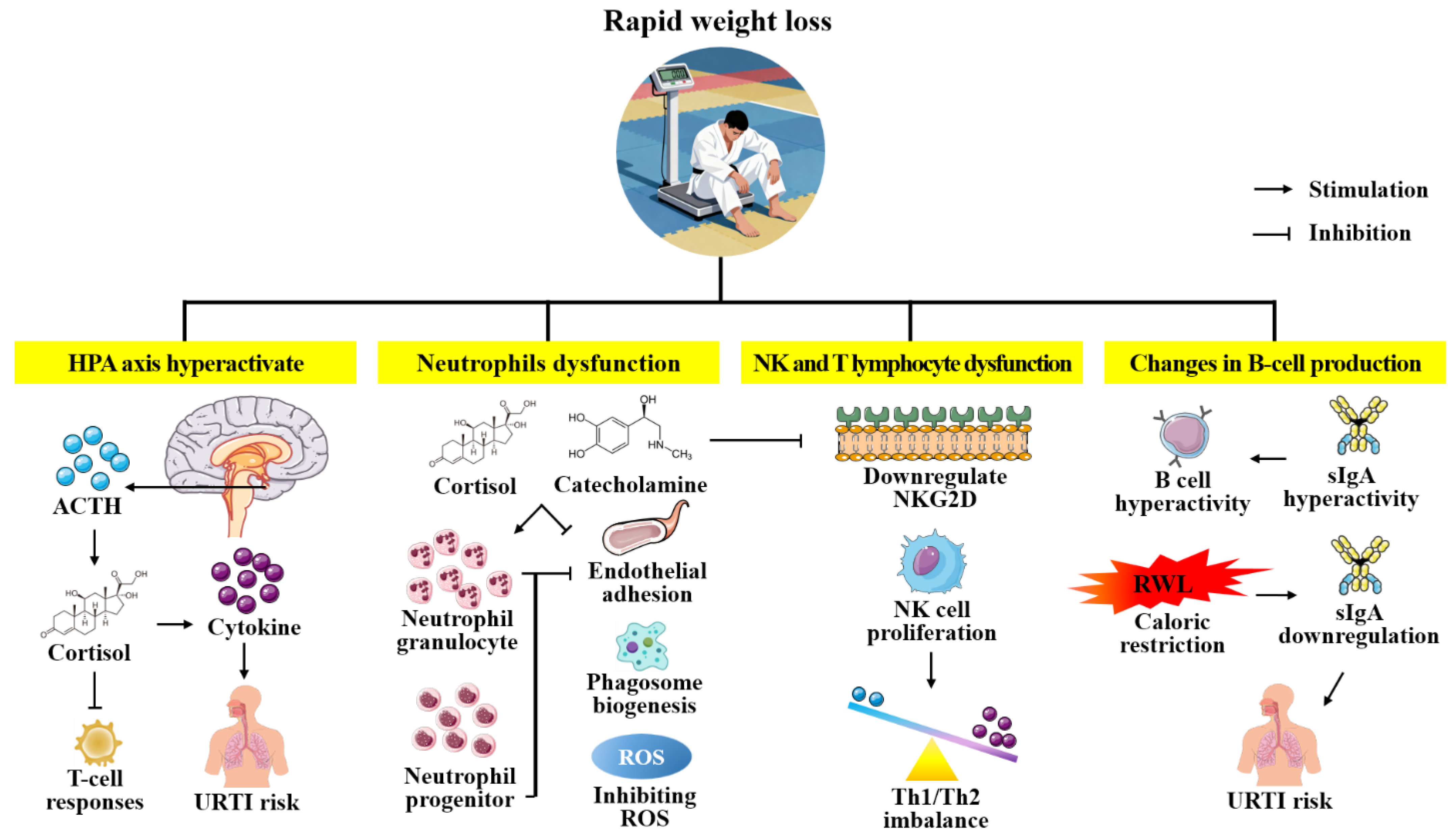
Changes in the Immune System Due to Rapid Weight Loss
4. Discussion
4.1. Hypothalamic–Pituitary–Adrenal Axis Activation and Immune Function
4.2. Neutrophils and Rapid Weight Loss
4.3. Monocyte and Macrophage System Alterations
4.4. Changes in NK Cell Activity and Functionality of T Cell Subpopulations
4.5. Acute-Phase Response of Complement Systems and Changes in Inflammatory Cytokines
4.6. Changes in B-Cell and Antibody Production and Anti-Inflammatory Cytokine Responses
4.7. Practical Implications and Evidence-Based Strategies
4.8. Integrated Recommendations for Coaches and Athletes: Weight Loss Strategy
- Rate of Loss: Coaches and athletes should strictly adhere to a weekly weight loss rate of less than 1% of total body mass. This gradual approach allows for metabolic and immune adaptation, minimizing the catabolic stress (HPA axis activation) typically seen in RWL.
- Critical Threshold: Immunological risks escalate significantly when athletes target a body mass reduction exceeding 5% in the final 72 h before competition. Protocols that necessitate such acute reductions should be avoided entirely due to the documented severe decline in lymphocyte function and sIgA levels.
- Hydration: While mild dehydration is common, severe water restriction should be minimized. Fluid intake should be closely monitored using urine specific gravity to ensure hydration status remains within safe clinical thresholds, especially in the final days leading up to the weigh-in.
4.9. Integrated Recommendations for Coaches and Athletes: Nutrition Intake Strategy
- Carbohydrate Intake: Even during energy restriction, the protocol should maintain a minimal carbohydrate intake (5 g/kg/day) to protect glycogen stores and prevent excessive cortisol elevation [89]. Furthermore, the 48-h post-weigh-in period is crucial for immune recovery; carbohydrate loading (e.g., 8–10 g/kg/day) should be initiated immediately after weigh-in to accelerate glycogen and immune cell recovery.
- Protein and Micronutrients: Consistent protein intake (1.4–2.0 g/kg/day) is essential to prevent lean mass loss and provide the necessary amino acids (e.g., BCAA’s) for immune cell synthesis [86]. Furthermore, attention must be paid to micronutrients critical for immune function, including Vitamins C, E, and Zinc, which should be supplemented if dietary intake is compromised [96,97,99].
4.10. Integrated Recommendations for Coaches and Athletes: Real-Time Feedback
- Primary Biomarkers: sIgA and salivary cortisol are cost-effective, non-invasive indicators of mucosal immune integrity and HPA axis activity, respectively. A significant decrease in sIgA concentration or a sustained elevation in resting cortisol levels should signal a mandatory halt or severe adjustment of the weight loss protocol.
- Clinical Oversight: Coaches and athletic trainers should collaborate with a sports physician or dietitian to periodically assess complete blood count CBC to monitor lymphocyte and neutrophil counts and interpret these biomarker results within the context of the athlete’s training load and diet.
4.11. Integrated Recommendations: Author-Derived Guidelines with Limitations
4.12. Limitations and Future Directions
5. Conclusions
Supplementary Materials
Funding
Institutional Review Board Statement
Informed Consent Statement
Data Availability Statement
Conflicts of Interest
Abbreviations
| RWL | rapid weight loss |
| URTI | upper respiratory tract infections |
| ROS | reactive oxygen species |
| NKG2D | natural killer group 2, member D |
| HPA | hypothalamic–pituitary–adrenal |
| sIgA | secretory immunoglobulin A |
| NK | natural killer |
| TNF | tumor necrosis factor |
| IL | interleukin |
| ACTH | adrenocorticotropic hormone |
| IFN | interferon |
| NADPH | nicotinamide adenine dinucleotide phosphate |
| ATP | adenosine triphosphate |
| TGF | transforming growth factors |
| APR | acute-phase response |
| APPs | acute-phase proteins |
| β2-AR | β2-adrenergic receptors |
| CR | caloric restriction |
References
- Barley, O.R.; Chapman, D.W.; Abbiss, C.R. Weight Loss Strategies in Combat Sports and Concerning Habits in Mixed Martial Arts. Int. J. Sports Physiol. Perform. 2018, 13, 933–939. [Google Scholar] [CrossRef]
- Kazemi, M.; Rahman, A.; De Ciantis, M. Weight cycling in adolescent Taekwondo athletes. J. Can. Chiropr. Assoc. 2011, 55, 318–324. [Google Scholar]
- Chandra, R.K. 1990 McCollum Award lecture. Nutrition and immunity: Lessons from the past and new insights into the future. Am. J. Clin. Nutr. 1991, 53, 1087–1101. [Google Scholar] [CrossRef] [PubMed]
- Abedelmalek, S.; Chtourou, H.; Souissi, N.; Tabka, Z. Caloric Restriction Effect on Proinflammatory Cytokines, Growth Hormone, and Steroid Hormone Concentrations during Exercise in Judokas. Oxidative Med. Cell. Longev. 2015, 2015, 809492. [Google Scholar] [CrossRef]
- Tsai, M.-L.; Chou, K.-M.; Chang, C.-K.; Fang, S.-H. Changes of mucosal immunity and antioxidation activity in elite male Taiwanese taekwondo athletes associated with intensive training and rapid weight loss. Br. J. Sports Med. 2009, 45, 729–734. [Google Scholar] [CrossRef]
- Lee, Y.W.; Shin, K.W.; Paik, I.-Y.; Jung, W.M.; Cho, S.-Y.; Choi, S.T.; Kim, H.D.; Kim, J.Y. Immunological impact of Taekwondo competitions. Int. J. Sports Med. 2012, 33, 58–66. [Google Scholar] [CrossRef] [PubMed]
- Carmo de Carvalho e Martins, M.d.; da Silva Santos Oliveira, A.S.; da Silva, L.A.A.; Primo, M.G.S.; de Carvalho Lira, V.B. Biological indicators of oxidative stress [malondialdehyde, catalase, glutathione peroxidase, and superoxide dismutase] and their application in nutrition. In Biomarkers in Nutrition; Springer: New York, NY, USA, 2022; pp. 833–856. [Google Scholar]
- Mauricio, C.D.A.; Merino, P.; Merlo, R.; Vargas, J.J.N.; Chávez, J.Á.R.; Pérez, D.V.; Aedo-Muñoz, E.A.; Slimani, M.; Brito, C.J.; Bragazzi, N.L.; et al. Rapid weight loss of up to five percent of the body mass in less than 7 days does not affect physical performance in official Olympic combat athletes with weight classes: A systematic review with meta-analysis. Front. Physiol. 2022, 13, 830229. [Google Scholar] [CrossRef]
- Tsai, M.; Ko, M.; Chang, C.; Chou, K.; Fang, S. Impact of intense training and rapid weight changes on salivary parameters in elite female Taekwondo athletes. Scand. J. Med. Sci. Sports 2011, 21, 758–764. [Google Scholar] [CrossRef] [PubMed]
- Tritto, A.C.C.; Amano, M.T.; De Cillo, M.E.; Oliveira, V.A.; Mendes, S.H.; Yoshioka, C.; Roschel, H.; Camara, N.O.S.; Gualano, B.; Artioli, G.G. Effect of rapid weight loss and glutamine supplementation on immunosuppression of combat athletes: A double-blind, placebo-controlled study. J. Exerc. Rehabil. 2018, 14, 83–92. [Google Scholar] [CrossRef]
- Kowatari, K.; Umeda, T.; Shimoyama, T.; Nakaji, S.; Yamamoto, Y.; Sugawara, K. Exercise training and energy restriction decrease neutrophil phagocytic activity in judoists. Med. Sci. Sports Exerc. 2001, 33, 519–524. [Google Scholar] [CrossRef]
- Hiraoka, H.; Hanaoka, Y.; Jesmin, S.; Kimura, F.; Matsuish, Y.; Shimizu, K.; Watanabe, K. Variation of salivary IgA during weight loss period before a competition among university judo players. J. Clin. Med. Res. 2019, 11, 798–806. [Google Scholar] [CrossRef]
- Shimizu, K.; Aizawa, K.; Suzuki, N.; Masuchi, K.; Okada, H.; Akimoto, T.; Mesaki, N.; Kono, I.; Akama, T. Influences of weight loss on monocytes and t-cell subpopulations in male judo athletes. J. Strength Cond. Res. 2011, 25, 1943–1950. [Google Scholar] [CrossRef]
- Kaya, O. Effect of a four-week exercise program on the secretion of IFN-γ, TNF-α, IL-2 and IL-6 cytokines in elite Taekwondo athletes. Biomed. Rep. 2016, 5, 367–370. [Google Scholar] [CrossRef]
- Yang, W.H.; Heine, O.; Pauly, S.; Kim, P.; Bloch, W.; Mester, J.; Grau, M. Rapid Rather than Gradual Weight Reduction Impairs Hemorheological Parameters of Taekwondo Athletes through Reduction in RBC-NOS Activation. PLoS ONE 2015, 10, e0123767. [Google Scholar] [CrossRef]
- Pedersen, B.K. Skeletal Muscle as an Endocrine Organ: The Role of Myokines in Muscle-Fat Cross-Talk. Inflamm. Res. 2010, 59, S275–S276. [Google Scholar]
- Anderson, D.A.; Shapiro, J.R.; Lundgren, J.D.; Spataro, L.E.; Frye, C.A. Self-reported dietary restraint is associated with elevated levels of salivary cortisol. Appetite 2002, 38, 13–17. [Google Scholar] [CrossRef] [PubMed]
- Anderson, R.A.; Bryden, N.A.; Polansky, M.M.; Thorp, J.W. Effects of carbohydrate loading and underwater exercise on circulating cortisol, insulin and urinary losses of chromium and zinc. Eur. J. Appl. Physiol. Occup. Physiol. 1991, 63, 146–150. [Google Scholar] [CrossRef] [PubMed]
- Strauss, R.H.; Lanese, R.R.; Malarkey, W.B. Weight loss in amateur wrestlers and its effect on serum testosterone levels. JAMA 1985, 254, 3337–3338. [Google Scholar] [CrossRef]
- Trigunaite, A.; Dimo, J.; Jørgensen, T.N. Suppressive effects of androgens on the immune system. Cell. Immunol. 2015, 294, 87–94. [Google Scholar] [CrossRef]
- Papacosta, E.; Gleeson, M. Effects of intensified training and taper on immune function. Rev. Bras. Educ. Física E Esporte 2013, 27, 159–176. [Google Scholar] [CrossRef]
- Beck, J.M.; Blackmon, M.B.; Rose, C.M.; Kimzey, S.L.; Preston, A.M.; Green, J.M. T Cell costimulatory molecule function determines susceptibility to infection with Pneumocystis carinii in mice. J. Immunol. 2003, 171, 1969–1977. [Google Scholar] [CrossRef]
- Coles, N.; Johnstone, R. Glutamine metabolism in Ehrlich ascites-carcinoma cells. Biochem. J. 1962, 83, 284–291. [Google Scholar] [CrossRef] [PubMed]
- Suzuki, M.; Nakaji, S.; Umeda, T.; Shimoyama, T.; Mochida, N.; Kojima, A.; Mashiko, T.; Sugawara, K. Effects of weight reduction on neutrophil phagocytic activity and oxidative burst activity in female judoists. Luminescence 2003, 18, 214–217. [Google Scholar] [CrossRef] [PubMed]
- Sarin, H.V.; Gudelj, I.; Honkanen, J.; Ihalainen, J.K.; Vuorela, A.; Lee, J.H.; Jin, Z.; Terwilliger, J.D.; Isola, V.; Ahtiainen, J.P.; et al. Molecular Pathways Mediating Immunosuppression in Response to Prolonged Intensive Physical Training, Low-Energy Availability, and Intensive Weight Loss. Front. Immunol. 2019, 10, 907. [Google Scholar] [CrossRef]
- Gleeson, M. Immune function in sport and exercise. J. Appl. Physiol. 2007, 103, 693–699. [Google Scholar] [CrossRef]
- Nieman, D.C. Risk of upper respiratory tract infection in athletes: An epidemiologic and immunologic perspective. J. Athl. Train. 1997, 32, 344–349. [Google Scholar] [PubMed]
- Grainger, J.R.; Wohlfert, E.A.; Fuss, I.J.; Bouladoux, N.; Askenase, M.H.; Legrand, F.; Koo, L.Y.; Brenchley, J.M.; Fraser, I.D.C.; Belkaid, Y. Inflammatory monocytes regulate pathologic responses to commensals during acute gastrointestinal infection. Nat. Med. 2013, 19, 713–721. [Google Scholar] [CrossRef]
- Kapellos, T.S.; Bonaguro, L.; Gemünd, I.; Reusch, N.; Saglam, A.; Hinkley, E.R.; Schultze, J.L. Human Monocyte Subsets and Phenotypes in Major Chronic Inflammatory Diseases. Front. Immunol. 2019, 10, 2035. [Google Scholar] [CrossRef]
- Jang, P.-G.; Namkoong, C.; Kang, G.M.; Hur, M.-W.; Kim, S.-W.; Kim, G.H.; Kang, Y.; Jeon, M.-J.; Kim, E.H.; Lee, M.-S.; et al. NF-κB activation in hypothalamic pro-opiomelanocortin neurons is essential in illness- and leptin-induced anorexia. J. Biol. Chem. 2010, 285, 9706–9715. [Google Scholar] [CrossRef]
- Hill, E.E.; Zack, E.; Battaglini, C.; Viru, M.; Viru, A.; Hackney, A.C. Exercise and circulating cortisol levels: The intensity threshold effect. J. Endocrinol. Investig. 2008, 31, 587–591. [Google Scholar] [CrossRef]
- Cari, L.; De Rosa, F.; Nocentini, G.; Riccardi, C. Context-Dependent Effect of Glucocorticoids on the Proliferation, Differentiation, and Apoptosis of Regulatory T Cells: A Review of the Empirical Evidence and Clinical Applications. Int. J. Mol. Sci. 2019, 20, 1142. [Google Scholar] [CrossRef]
- Ng, T.H.S.; Britton, G.J.; Hill, E.V.; Verhagen, J.; Burton, B.R.; Wraith, D.C. Regulation of adaptive immunity; the role of interleukin-10. Front. Immunol. 2013, 4, 129. [Google Scholar] [CrossRef]
- Woods, J.A.; Davis, J.M.; Smith, J.A.; Nieman, D.C. Exercise and cellular innate immune function. Med. Sci. Sports Exerc. 1999, 31, 57–66. [Google Scholar] [CrossRef]
- Huntington, N.D.; Vosshenrich, C.A.J.; Di Santo, J.P. Developmental pathways that generate natural-killer-cell diversity in mice and humans. Nat. Rev. Immunol. 2007, 7, 703–714. [Google Scholar] [CrossRef]
- Kim, S.; Iizuka, K.; Kang, H.-S.P.; Dokun, A.; French, A.R.; Greco, S.; Yokoyama, W.M. In vivo developmental stages in murine natural killer cell maturation. Nat. Immunol. 2002, 3, 523–528. [Google Scholar] [CrossRef] [PubMed]
- Coplan, J.D.; Gopinath, S.; Abdallah, C.G.; Margolis, J.; Chen, W.; Scharf, B.A.; Rosenblum, L.A.; Batuman, O.A.; Smith, E.L. Effects of acute confinement stress-induced hypothalamic-pituitary adrenal Axis Activation and concomitant peripheral and central transforming growth factor-β1 measures in nonhuman primates. Chronic Stress 2017, 1, 2470547016688693. [Google Scholar] [CrossRef] [PubMed]
- Huo, Y.Z.; Chu, Y.; Guo, L.X.; Liu, L.L.; Xia, X.J.; Wang, T.R. Cortisol is associated with low frequency of interleukin 10-producing B cells in patients with atherosclerosis. Cell Biochem. Funct. 2017, 35, 178–183. [Google Scholar] [CrossRef] [PubMed]
- Heikura, I.A.; Uusitalo, A.L.T.; Stellingwerff, T.; Bergland, D.; Mero, A.A.; Burke, L.M. Low Energy Availability Is Difficult to Assess but Outcomes Have Large Impact on Bone Injury Rates in Elite Distance Athletes. Int. J. Sport Nutr. Exerc. Metab. 2018, 28, 403–411. [Google Scholar] [CrossRef]
- Wang, C.-M.; Chen, Y.-J.; Yang, B.-C.; Yang, J.-W.; Wang, W.; Zeng, Y.; Jiang, J. Supplementation with active vitamin D3 ameliorates experimental autoimmune thyroiditis in mice by modulating the differentiation and functionality of intrathyroidal T-cell subsets. Front. Immunol. 2025, 16, 1528707. [Google Scholar] [CrossRef]
- Betiati Dda, S.; de Oliveira, P.F.; Camargo Cde, Q.; Nunes, E.A.; Trindade, E.B. Effects of omega-3 fatty acids on regulatory T cells in hematologic neoplasms. Rev. Bras. Hematol. Hemoter. 2013, 35, 119–125. [Google Scholar] [CrossRef]
- Ryan, K.K.; Packard, A.E.B.; Larson, K.R.; Stout, J.; Fourman, S.M.; Thompson, A.M.K.; Ludwick, K.; Habegger, K.M.; Stemmer, K.; Itoh, N.; et al. Dietary Manipulations That Induce Ketosis Activate the HPA Axis in Male Rats and Mice: A Potential Role for Fibroblast Growth Factor-21. Endocrinology 2018, 159, 400–413. [Google Scholar] [CrossRef] [PubMed]
- Lu, J.; Liu, J.; Li, A. Roles of neutrophil reactive oxygen species (ROS) generation in organ function impairment in sepsis. J. Zhejiang Univ. Sci. B 2022, 23, 437–450. [Google Scholar] [CrossRef]
- Jie, H.P.; Zhang, J.J.; Wu, S.Z.; Yu, L.Y.; Li, S.N.; Dong, B.; Yan, F. Interplay between energy metabolism and NADPH oxidase-mediated pathophysiology in cardiovascular diseases. Front. Pharmacol. 2025, 15, 1503824. [Google Scholar] [CrossRef] [PubMed]
- Chen, H.; Wu, X.; Xu, C.; Lin, J.; Liu, Z. Dichotomous roles of neutrophils in modulating pathogenic and repair processes of inflammatory bowel diseases. Precis. Clin. Med. 2021, 4, 246–257. [Google Scholar] [CrossRef] [PubMed]
- Riaz, B.; Sohn, S. Neutrophils in inflammatory diseases: Unraveling the impact of their derived molecules and heterogeneity. Cells 2023, 12, 2621. [Google Scholar] [CrossRef]
- Peake, J.; Suzuki, K. Neutrophil activation, antioxidant supplements and exercise-induced oxidative stress. Exerc. Immunol. Rev. 2004, 10, 129–141. [Google Scholar]
- Syu, G.-D.; Chen, H.-I.; Jen, C.J. Severe exercise and exercise training exert opposite effects on human neutrophil apoptosis via altering the redox status. PLoS ONE 2011, 6, e24385. [Google Scholar] [CrossRef]
- Isik, O.; Cicioglu, H.I. Dehydration, skeletal muscle damage and inflammation before the competitions among the elite wrestlers. J. Phys. Ther. Sci. 2016, 28, 162–168. [Google Scholar] [CrossRef]
- Ranisavljev, M.; Kuzmanovic, J.; Todorovic, N.; Roklicer, R.; Dokmanac, M.; Baic, M.; Stajer, V.; Ostojic, S.M.; Drid, P. Rapid Weight Loss Practices in Grapplers Competing in Combat Sports. Front. Physiol. 2022, 13, 842992. [Google Scholar] [CrossRef]
- da Silva, T.A.; Roque-Barreira, M.C.; Casadevall, A.; Almeida, F. Extracellular vesicles from Paracoccidioides brasiliensis induced M1 polarization in vitro. Sci. Rep. 2016, 6, 35867. [Google Scholar] [CrossRef]
- Murray, P.J. Macrophage Polarization. Annu. Rev. Physiol. 2017, 79, 541–566. [Google Scholar] [CrossRef]
- Izuka, S.; Komai, T.; Tsuchida, Y.; Tsuchiya, H.; Okamura, T.; Fujio, K. The role of monocytes and macrophages in idiopathic inflammatory myopathies: Insights into pathogenesis and potential targets. Front. Immunol. 2025, 16, 1567833. [Google Scholar] [CrossRef]
- Hussell, T.; Bell, T.J. Alveolar macrophages: Plasticity in a tissue-specific context. Nat. Rev. Immunol. 2014, 14, 81–93. [Google Scholar] [CrossRef]
- Cancello, R.; Henegar, C.; Viguerie, N.; Taleb, S.; Poitou, C.; Rouault, C.; Coupaye, M.; Pelloux, V.; Hugol, D.; Bouillot, J.-L.; et al. Reduction of macrophage infiltration and chemoattractant gene expression changes in white adipose tissue of morbidly obese subjects after surgery-induced weight loss. Diabetes 2005, 54, 2277–2286. [Google Scholar] [CrossRef]
- Kosteli, A.; Sugaru, E.; Haemmerle, G.; Martin, J.F.; Lei, J.; Zechner, R.; Ferrante, A.W., Jr. Weight loss and lipolysis promote a dynamic immune response in murine adipose tissue. J. Clin. Investig. 2010, 120, 3466–3479. [Google Scholar] [CrossRef]
- Sohn, H.; Cooper, M.A. Metabolic regulation of NK cell function: Implications for immunotherapy. Immunometabolism 2023, 5, e00020. [Google Scholar] [CrossRef] [PubMed]
- Assmann, N.; O’Brien, K.L.; Donnelly, R.P.; Dyck, L.; Zaiatz-Bittencourt, V.; Loftus, R.M.; Heinrich, P.; Oefner, P.J.; Lynch, L.; Gardiner, C.M.; et al. Srebp-controlled glucose metabolism is essential for NK cell functional responses. Nat. Immunol. 2017, 18, 1197–1206. [Google Scholar] [CrossRef] [PubMed]
- Song, Y.; Gan, Y.; Wang, Q.; Meng, Z.; Li, G.; Shen, Y.; Wu, Y.; Li, P.; Yao, M.; Gu, J.; et al. Enriching the housing environment for mice enhances their NK cell antitumor immunity via sympathetic nerve–dependent regulation of NKG2D and CCR5. Cancer Res. 2017, 77, 1611–1622. [Google Scholar] [CrossRef]
- González-Torres, C.; González-Martínez, H.; Miliar, A.; Nájera, O.; Graniel, J.; Firo, V.; Alvarez, C.; Bonilla, E.; Rodríguez, L. Effect of malnutrition on the expression of cytokines involved in Th1 cell differentiation. Nutrients 2013, 5, 579–593. [Google Scholar] [CrossRef]
- de Candia, P.; Procaccini, C.; Russo, C.; Lepore, M.T.; Matarese, G. Regulatory T cells as metabolic sensors. Immunity 2022, 55, 1981–1992. [Google Scholar] [CrossRef] [PubMed]
- Beier, U.H.; Angelin, A.; Akimova, T.; Wang, L.Q.; Liu, Y.J.; Xiao, H.Y.; Koike, M.A.; Hancock, S.A.; Bhatti, T.R.; Han, R.X.; et al. Essential role of mitochondrial energy metabolism in Foxp3+ T-regulatory cell function and allograft survival. FASEB J. 2015, 29, 2315–2326. [Google Scholar] [CrossRef] [PubMed]
- Oh, S.; Chun, S.; Hwang, S.; Kim, J.; Cho, Y.; Lee, J.; Kwack, K.; Choi, S.-W. Vitamin D and Exercise Are Major Determinants of Natural Killer Cell Activity, Which Is Age- and Gender-Specific. Front. Immunol. 2021, 12, 594356. [Google Scholar] [CrossRef]
- Barra, N.G.; Fan, I.Y.; Gillen, J.B.; Chew, M.; Marcinko, K.; Steinberg, G.R.; Gibala, M.J.; Ashkar, A.A. High Intensity Interval Training Increases Natural Killer Cell Number and Function in Obese Breast Cancer-challenged Mice and Obese Women. J. Cancer Prev. 2017, 22, 260–266. [Google Scholar] [CrossRef]
- Ramaekers, L.H.; Theunissen, P.M.; Went, K. Acute lymphopenia, stress, and plasma cortisol. Arch. Dis. Child. 1975, 50, 555–559. [Google Scholar] [CrossRef]
- Viallard, J.F.; Pellegrin, J.; Ranchin, V.; Schaeverbeke, T.; Dehais, J.; Longy-Boursier, M.; Ragnaud, J.; Leng, B.; Moreau, J.J.C.; Immunology, E. Th1 (IL-2, interferon-gamma (IFN-γ)) and Th2 (IL-10, IL-4) cytokine production by peripheral blood mononuclear cells (PBMC) from patients with systemic lupus erythematosus (SLE). Clin. Exp. Immunol. 1999, 115, 189–195. [Google Scholar] [CrossRef]
- Aragon, A.A.; Schoenfeld, B.J.; Wildman, R.; Kleiner, S.; VanDusseldorp, T.; Taylor, L.; Earnest, C.P.; Arciero, P.J.; Wilborn, C.; Kalman, D.S.; et al. International society of sports nutrition position stand: Diets and body composition. J. Int. Soc. Sports Nutr. 2017, 14, 16. [Google Scholar] [CrossRef] [PubMed]
- Chennaoui, M.; Desgorces, F.; Drogou, C.; Boudjemaa, B.; Tomaszewski, A.; Depiesse, F.; Burnat, P.; Chalabi, H.; Gomez-Merino, D. Effects of Ramadan fasting on physical performance and metabolic, hormonal, and inflammatory parameters in middle-distance runners. Appl. Physiol. Nutr. Metab. 2009, 34, 587–594. [Google Scholar] [CrossRef]
- Weight, L.M.; Alexander, D.; Jacobs, P. Strenuous exercise: Analogous to the acute-phase response? Clin. Sci. 1991, 81, 677–683. [Google Scholar] [CrossRef]
- Foghmar, C.; Brøns, C.; Pilely, K.; Vaag, A.; Garred, P. Complement factors C4 and C3 are down regulated in response to short term overfeeding in healthy young men. Sci. Rep. 2017, 7, 1235. [Google Scholar] [CrossRef]
- Kasapis, C.; Thompson, P.D. The effects of physical activity on serum C-reactive protein and inflammatory markers: A systematic review. J. Am. Coll. Cardiol. 2005, 45, 1563–1569. [Google Scholar] [CrossRef] [PubMed]
- Shushimita, S.; Van der Pol, P.; de Bruin, R.W.F.; IJzermans, J.N.M.; Van Kooten, C.; Dor, F.J.M.F. Dietary Restriction and Fasting Downregulate Complement Activity. Transplantation 2012, 94, 1133. [Google Scholar] [CrossRef]
- Spence, L.; Brown, W.J.; Pyne, D.B.; Nissen, M.D.; Sloots, T.P.; Mccormack, J.G.; Locke, A.S.; Fricker, P.A. Incidence, etiology, and symptomatology of upper respiratory illness in elite athletes. Med. Sci. Sports Exerc. 2007, 39, 577–586. [Google Scholar] [CrossRef]
- Jung, Y. The Effects of Short-Term Weight Loss on Body Composition, Blood Electrolytes, and Immunoglobulin Concentrations among Ordinary Judo Athletes and Excellent Judo Athletes. Int. J. Martial Arts 2022, 7, 47–56. [Google Scholar] [CrossRef]
- Pedersen, B.K.; Hoffman-Goetz, L. Exercise and the immune system: Regulation, integration, and adaptation. Physiol. Rev. 2000, 80, 1055–1081. [Google Scholar] [CrossRef] [PubMed]
- Carlson, S.L.; Brooks, W.H.; Roszman, T.L. Neurotransmitter-lymphocyte interactions: Dual receptor modulation of lymphocyte proliferation and cAMP production. J. Neuroimmunol. 1989, 24, 155–162. [Google Scholar] [CrossRef]
- Scheffer, D.d.L.; Latini, A. Exercise-induced immune system response: Anti-inflammatory status on peripheral and central organs. Biochim. Biophys. Acta Mol. Basis Dis. 2020, 1866, 165823. [Google Scholar] [CrossRef] [PubMed]
- Strle, K.; McCusker, R.H.; Johnson, R.W.; Zunich, S.M.; Dantzer, R.; Kelley, K.W. Prototypical anti-inflammatory cytokine IL-10 prevents loss of IGF-I-induced myogenin protein expression caused by IL-1β. Am. J. Physiol.-Endocrinol. Metab. 2008, 294, E709–E718. [Google Scholar] [CrossRef]
- Martínez-Aranda, L.M.; Sanz-Matesanz, M.; Orozco-Durán, G.; González-Fernández, F.T.; Rodríguez-García, L.; Guadalupe-Grau, A. Effects of Different Rapid Weight Loss Strategies and Percentages on Performance-Related Parameters in Combat Sports: An Updated Systematic Review. Int. J. Environ. Res. Public Health 2023, 20, 5158. [Google Scholar] [CrossRef] [PubMed]
- Reed, G.W.; Hill, J.O. Measuring the thermic effect of food. Am. J. Clin. Nutr. 1996, 63, 164–169. [Google Scholar] [CrossRef]
- Williams, N.C.; Killer, S.C.; Svendsen, I.S.; Jones, A.W. Immune nutrition and exercise: Narrative review and practical recommendations. Eur. J. Sport Sci. 2019, 19, 49–61. [Google Scholar] [CrossRef]
- Nilsson, L.H. Liver glycogen content in man in the postabsorptive state. Scand. J. Clin. Lab. Investig. 1973, 32, 317–323. [Google Scholar] [CrossRef]
- Hultman, E. Muscle glycogen in man determined in needle biopsy specimens method and normal values. Scand. J. Clin. Lab. Investig. 1967, 19, 209–217. [Google Scholar] [CrossRef] [PubMed]
- Sawyer, J.C.; Wood, R.J.; Davidson, P.W.; Collins, S.M.; Matthews, T.D.; Gregory, S.M.; Paolone, V.J. Effects of a short-term carbohydrate-restricted diet on strength and power performance. J. Strength Cond. Res. 2013, 27, 2255–2262. [Google Scholar] [CrossRef]
- Scanga, C.B.; Verde, T.J.; Paolone, A.M.; Andersen, R.E.; Wadden, T.A. Effects of weight loss and exercise training on natural killer cell activity in obese women. Med. Sci. Sports Exerc. 1998, 30, 1666–1671. [Google Scholar] [CrossRef]
- Campbell, B.; Kreider, R.B.; Ziegenfuss, T.; La Bounty, P.; Roberts, M.; Burke, D.; Landis, J.; Lopez, H.; Antonio, J. International Society of Sports Nutrition position stand: Protein and exercise. J. Int. Soc. Sports Nutr. 2007, 4, 8. [Google Scholar] [CrossRef]
- Churchward-Venne, T.A.; Burd, N.A.; Phillips, S.M. Nutritional regulation of muscle protein synthesis with resistance exercise: Strategies to enhance anabolism. Nutr. Metab. 2012, 9, 40. [Google Scholar] [CrossRef]
- Flakoll, P.J.; Judy, T.; Flinn, K.; Carr, C.; Flinn, S. Postexercise protein supplementation improves health and muscle soreness during basic military training in Marine recruits. J. Appl. Physiol. 2004, 96, 951–956. [Google Scholar] [CrossRef]
- Bishop, N.C.; Walsh, N.P.; Haines, D.L.; Richards, E.E.; Gleeson, M. Pre-exercise carbohydrate status and immune responses to prolonged cycling: II. effect on plasma cytokine concentration. Int. J. Sport Nutr. Exerc. Metab. 2001, 11, 503–512. [Google Scholar] [CrossRef] [PubMed]
- Lee, J.Y.; Plakidas, A.; Lee, W.H.; Heikkinen, A.; Chanmugam, P.; Bray, G.; Hwang, D.H. Differential modulation of Toll-like receptors by fatty acids: Preferential inhibition by n-3 polyunsaturated fatty acids. J. Lipid Res. 2003, 44, 479–486. [Google Scholar] [CrossRef] [PubMed]
- Honda, K.L.; Lamon-Fava, S.; Matthan, N.R.; Wu, D.; Lichtenstein, A.H. EPA and DHA exposure alters the inflammatory response but not the surface expression of toll-like receptor 4 in macrophages. Lipids 2015, 50, 121–129. [Google Scholar] [CrossRef]
- Chaari, A.; Bendriss, G.; Zakaria, D.; McVeigh, C. Importance of Dietary Changes During the Coronavirus Pandemic: How to Upgrade Your Immune Response. Front. Public Health 2020, 8, 476. [Google Scholar] [CrossRef]
- Watson, R.R.; Preedy, V.R.; Zibadi, S. Polyphenols in Human Health and Disease; Academic Press: London, UK, 2013. [Google Scholar]
- Hellmich, C.; Wojtowicz, E. You are what you eat: How to best fuel your immune system. Front. Immunol. 2022, 13, 1003006. [Google Scholar] [CrossRef]
- Yoshii, K.; Hosomi, K.; Sawane, K.; Kunisawa, J. Metabolism of Dietary and Microbial Vitamin B Family in the Regulation of Host Immunity. Front. Nutr. 2019, 6, 48. [Google Scholar] [CrossRef] [PubMed]
- Colunga Biancatelli, R.M.L.; Berrill, M.; Catravas, J.D.; Marik, P.E. Quercetin and Vitamin C: An Experimental, Synergistic Therapy for the Prevention and Treatment of SARS-CoV-2 Related Disease (COVID-19). Front. Immunol. 2020, 11, 1451. [Google Scholar] [CrossRef]
- Kim, M.; Eo, H.; Lim, J.G.; Lim, H.; Lim, Y. Can low-dose of dietary vitamin e supplementation reduce exercise-induced muscle damage and oxidative stress? A meta-analysis of randomized controlled trials. Nutrients 2022, 14, 1599. [Google Scholar] [CrossRef]
- Alshammari, M.K.; Fatima, W.; Alraya, R.A.; Khuzaim Alzahrani, A.; Kamal, M.; Alshammari, R.S.; Alshammari, S.A.; Alharbi, L.M.; Alsubaie, N.S.; Alosaimi, R.B.; et al. Selenium and COVID-19: A spotlight on the clinical trials, inventive compositions, and patent literature. J. Infect. Public Health 2022, 15, 1225–1233. [Google Scholar] [CrossRef]
- McCarty, M.F.; DiNicolantonio, J.J. Nutraceuticals have potential for boosting the type 1 interferon response to RNA viruses including influenza and coronavirus. Prog. Cardiovasc. Dis. 2020, 63, 383–385. [Google Scholar] [CrossRef]
- Goulet, E.D.; Aubertin-Leheudre, M.; Plante, G.E.; Dionne, I.J. A Meta-analysis of the effects of glycerol-induced hyperhydration on fluid retention and endurance performance. Int. J. Sport Nutr. Exerc. Metab. 2007, 17, 391–410. [Google Scholar] [CrossRef] [PubMed]
- Veniamakis, E.; Kaplanis, G.; Voulgaris, P.; Nikolaidis, P.T. Effects of Sodium Intake on Health and Performance in Endurance and Ultra-Endurance Sports. Int. J. Environ. Res. Public Health 2022, 19, 3651. [Google Scholar] [CrossRef]
- Mujika, I. Intense training: The key to optimal performance before and during the taper. Scand. J. Med. Sci. Sports 2010, 20, 24–31. [Google Scholar] [CrossRef] [PubMed]
- Xiao, F.; Kabachkova, A.V.; Jiao, L.; Zhao, H.; Kapilevich, L.V. Effects of cold water immersion after exercise on fatigue recovery and exercise performance--meta analysis. Front. Physiol. 2023, 14, 1006512. [Google Scholar] [CrossRef]
- Millour, G.; Lepers, R.; Coste, A.; Hausswirth, C. Effects of combining cold exposure and compression on muscle recovery: A randomized crossover study. Front. Physiol. 2025, 16, 1598075. [Google Scholar] [CrossRef]
- Dattilo, M.; Antunes, H.K.; Medeiros, A.; Monico Neto, M.; Souza, H.S.; Tufik, S.; de Mello, M.T. Sleep and muscle recovery: Endocrinological and molecular basis for a new and promising hypothesis. Med. Hypotheses 2011, 77, 220–222. [Google Scholar] [CrossRef] [PubMed]
- Dattilo, M.; Antunes, H.K.M.; Galbes, N.M.N.; Monico-Neto, M.; De Sá Souza, H.; Dos Santos Quaresma, M.V.L.; Lee, K.S.; Ugrinowitsch, C.; Tufik, S.; MT, D.E.M. Effects of Sleep Deprivation on Acute Skeletal Muscle Recovery after Exercise. Med. Sci. Sports Exerc. 2019, 52, 507–514. [Google Scholar] [CrossRef]
- Lee, E.C.; Fragala, M.S.; Kavouras, S.A.; Queen, R.M.; Pryor, J.L.; Casa, D.J. Biomarkers in Sports and Exercise: Tracking Health, Performance, and Recovery in Athletes. J. Strength Cond. Res. 2017, 31, 2920–2937. [Google Scholar] [CrossRef] [PubMed]
- Haller, N.; Blumkaitis, J.C.; Strepp, T.; Schmuttermair, A.; Aglas, L.; Simon, P.; Neuberger, E.; Kranzinger, C.; Kranzinger, S.; O’bRien, J.; et al. Comprehensive training load monitoring with biomarkers, performance testing, local positioning data, and questionnaires—First results from elite youth soccer. Front. Physiol. 2022, 13, 1000898. [Google Scholar] [CrossRef] [PubMed]
- Page, M.J.; McKenzie, J.E.; Bossuyt, P.M.; Boutron, I.; Hoffmann, T.C.; Mulrow, C.D.; Shamseer, L.; Tetzlaff, J.M.; Akl, E.A.; Brennan, S.E.; et al. The PRISMA 2020 statement: An updated guideline for reporting systematic reviews. BMJ 2021, 372, n71. [Google Scholar] [CrossRef] [PubMed]



| Database | Search Query String |
|---|---|
| PubMed | (“rapid weight loss” OR “weight reduction” OR “weight cutting” OR “weight loss”) AND (“combat sports” OR “taekwondo” OR “judo” OR “wrestling” OR “boxing”) AND (“immune system” OR “immune response” OR “cytokines” OR “inflammation” OR “sIgA” OR “natural killer cells”) |
| Web of Science | (“rapid weight loss” OR “weight reduction” OR “weight cutting”) AND (“combat sports” OR “taekwondo” OR “judo” OR “wrestling”) AND (“immune system” OR “immune response” OR “cytokines” OR “inflammation” OR “sIgA”) |
| Scopus | (“rapid weight loss” OR “weight reduction”) AND (“combat sports” OR “taekwondo” OR “judo”) AND (“immune system” OR “cytokines” OR “sIgA”) |
| Study | Participants | RWL Intervention | Measures | Results | Quality |
|---|---|---|---|---|---|
| Abedelmalek et al. 2015 [4] | 11 male Judo athletes (20.45 ± 0.51 years) | 7-day caloric restriction (−6 MJ/day) - Only one glass of water (15 to 20 cL) | - BMI * - HR ** - Performance - Blood collection | - BW *** ↓ - Performance ↓ - TNF-α ↑ - IL-6 ↑ - Cortisol ↑ - GH **** ↑ - Testosterone ↓ | NOS Score: 8/9 |
| Shimizu et al. 2011 [13] | 6 male Judo athletes (20.3 ± 0.4 years) | Self-determined weight loss programs (dietary energy restriction, fluid restriction, bicycle exercise in the dry room, wearing sauna suits during training, and sauna) | - BMI - Blood collection - URTI symptoms | - CD3 ↓ - CD4 ↓ - CD8 ↓ - CD28CD4 ↓ - TLR-4CD14 ↓ - URTI symptoms ↑ | NOS Score: 7/9 |
| Kaya et al. 2016 [14] | 10 male Taekwondo athletes (20.67 ± 0.24 years) | 4-week Taekwondo exercise program + exhaustion exercise (Bruce protocol) | - Blood collection - ELISA ***** | - IFN-γ – - TNF-α – - IL-2 ↑ - IL-6 ↓ | NOS Score: 7/9 |
| Lee et al. 2012 [6] | 6 female Taekwondo athletes (16.07 ± 0.8 years) | 5 bouts of Taekwondo competitions (maximal heart rate 92.2 ± 3.8%) | - Blood collection - Flow-cytometry | - NK cells ↑ - B cells ↑ - T cells ↑ - CD4/CD8 ratio ↓ - Lactate ↑ - ROS # ↑ | NOS Score: 8/9 |
| Tsai et al. 2011a [5] | 16 male Taekwondo athletes (21.6 ± 1.3 years) | 7-week training, competition, and recovery period → included RWL immediately 1-week pre-competition | - Body composition - Blood collection - Saliva sampling - URTI incidence | - BW ↓ - sIgA ↑ - Cortisol – - URTI incidence ↑ | NOS Score: 8/9 |
| Yang et al. 2015 [15] | 10 male Taekwondo athletes (21.1 ± 5.48 years) | Group A: 5% BW reduction within 4 days vs. Group B: 5% BW reduction within 4 weeks | - Body composition - Blood collection - Immunohistochemical staining | Compared to Group B, - RBC ##-NO ### activation ↓ - RBC Nitrite/NO ↓ - RD #### ↓ - RA ##### ↑ - DT ###### ↑ | NOS Score: 8/9 |
| Tsai et al. 2011b [9] | 10 female Taekwondo athletes (21.3 ± 1.2 years) | Intense Taekwondo training + Group A: RWL vs. Group B: non-RWL | - Saliva sampling | Compared to Group B, - sIgA ↓ - Cortisol ↑ Compared to Group A, - Lactoferrin ↓ | Low Risk of Bias |
| Tritto et al. 2018 [10] | Mixed combat sports (judo, wrestling, taekwondo)/Group A: 23 male athletes, Group B: 6 male athletes (20 ± 2 years) | Group A: 5–10% BW reduction within 21 days + supplementation glutamine vs. Group B: 5–10% BW reduction within 21 days + supplementation placebo | - Body composition - Blood collection - URTI symptoms | - Body composition – Compared to Group B, - CK ↑ - Phagocytic activity ↑ Compared to Group A, - URTI incidence ↑ | Low Risk of Bias |
| Kowatari et al. 2001 [11] | 22 male Judo athletes (18–21 years) | Intense Judo training + Group A: RWL within 20 days vs. Group B: non-RWL | - Body composition - Blood collection - Phagocytosis assays - Flow-cytometry | - BM ↓ - Body fat ↓ Compared to Group B, - Phagocytic Activity ↓ | Low Risk of Bias |
| Hiraoka et al. 2019 [12] | 30 male Judo athletes | Intense Judo training + Group A: 5% BW reduction within 3 weeks vs. Group B: 5% BW reduction within 3 weeks | - Body composition - Saliva sampling - URTI symptoms - Profile of mood states | - BM ↓ - BMI ↓ - Total body water ↑ Compared to Group B, - sIgA ↓ - URTI symptoms ↑ - Mood states ↓ | Low Risk of Bias |
| Immune Cell Type | Observed Change | Potential Mechanisms | Clinical Implications | Ref. |
|---|---|---|---|---|
| Neutrophils | Count: Increase Function: Decrease | - Demargination: Cortisol and catecholamine surges mobilize neutrophils from bone marrow and vascular walls. - Functional impairment: Reduced oxidative burst capacity and phagocytic activity due to glycolytic ATP depletion and NADPH oxidase inhibition. | - False security: Elevated counts do not reflect functional competence. - Bacterial susceptibility: Diminished ability to clear extracellular bacteria, prolonging infection risk despite high cell numbers. | [4,10,11,24,25] |
| Lymphocytes (T-cells, B-cells) | Count: Decrease Proliferation: Decrease | - Apoptosis and redistribution: Glucocorticoids induce lymphocyte apoptosis and redistribution to lymphoid tissues. - Suppression: Downregulation of IL-2 and IFN-γ synthesis impairs clonal expansion upon antigen challenge. | - Adaptive immunity deficit: compromised long-term immunity and antibody response. - Viral risk: Increased vulnerability to viral pathogens and delayed recovery from viral infections. | [4,13,26,27] |
| NK cells | Cytotoxicity: Decrease | - Receptor downregulation: Cortisol suppresses activating receptors (e.g., NKG2D). - Energy deficit: lack of glucose/glutamine substrates impairs cytolytic granule exocytosis. | - Impaired surveillance: Reduced capacity to eliminate virally infected or stressed cells. - Early defense failure: Weakened first-line defense against intracellular pathogens. | [3,6,13] |
| Monocytes and Macrophages | Phenotype: Pro-inflammatory TLR Expression: Decrease | - M1 polarization: Stress hormones and metabolic endotoxemia drive monocytes toward inflammatory phenotypes (IL-6, TNF-α ↑). - TLR-4 suppression: Reduced expression of pathogen-recognition receptors (e.g., TLR-4) on monocytes. | - Systemic Inflammation: Promotion of a chronic, low-grade inflammatory state (sterile inflammation). - Delayed Repair: Impaired transition to M2 (anti-inflammatory) phenotype delays muscle tissue repair and resolution of inflammation. | [4,13,28,29] |
| Immune Parameter | Consistent Findings | Effect Size/Threshold | Clinical Outcome | Ref. |
|---|---|---|---|---|
| Suppressed mucosal immunity (sIgA ↓) | sIgA secretion rate ↓ + parallel saliva flow ↓ = dehydration-mediated | >5% BW loss in 3–5 days | URTI symptoms ↑ (runny nose, sore throat, etc.) | [4,10,12] |
| Neutrophil dysfunction | - Count ↑ - Phagocytic activity ↓ - Oxidative burst ↓ | All RWL protocols | Bacterial susceptibility ↑ (false security from elevated counts) | [4,10,11,13] |
| Decreased NK cell activity | - Cytotoxicity ↓ (cortisol-mediated receptor downregulation) | >5% BW loss | Viral surveillance failure ↑ (impaired early defense) | [3,13] |
| Systemic inflammation | IL-6, TNF-α ↑ (glycogen depletion → muscle IL-6 release) | Caloric restriction + dehydration | URTI risk ↑ (chronic dysregulation; delayed recovery) | [4,13,30] |
Disclaimer/Publisher’s Note: The statements, opinions and data contained in all publications are solely those of the individual author(s) and contributor(s) and not of MDPI and/or the editor(s). MDPI and/or the editor(s) disclaim responsibility for any injury to people or property resulting from any ideas, methods, instructions or products referred to in the content. |
© 2026 by the author. Licensee MDPI, Basel, Switzerland. This article is an open access article distributed under the terms and conditions of the Creative Commons Attribution (CC BY) license.
Share and Cite
Lee, H.S. Effects of Rapid Weight Loss on the Immune System in Combat Sports Athletes: A Systematic Review. Int. J. Mol. Sci. 2026, 27, 508. https://doi.org/10.3390/ijms27010508
Lee HS. Effects of Rapid Weight Loss on the Immune System in Combat Sports Athletes: A Systematic Review. International Journal of Molecular Sciences. 2026; 27(1):508. https://doi.org/10.3390/ijms27010508
Chicago/Turabian StyleLee, Hae Sung. 2026. "Effects of Rapid Weight Loss on the Immune System in Combat Sports Athletes: A Systematic Review" International Journal of Molecular Sciences 27, no. 1: 508. https://doi.org/10.3390/ijms27010508
APA StyleLee, H. S. (2026). Effects of Rapid Weight Loss on the Immune System in Combat Sports Athletes: A Systematic Review. International Journal of Molecular Sciences, 27(1), 508. https://doi.org/10.3390/ijms27010508