Article

Candida albicans Extracellular Vesicles Upregulate Nrg1 Transcription Repressor to Inhibit Self-Hyphal Development and Candidemia

1
State Key Laboratory of Oral Diseases, National Clinical Research Center for Oral Diseases, West China School of Stomatology, Sichuan University, Chengdu 610041, China
2
Guangdong Provincial Key Laboratory of Stomatology, Guanghua School of Stomatology, Sun Yat-Sen University, Guangzhou 510055, China
3
Tianfu Jiangxi Laboratory, Chengdu 641419, China
*
Authors to whom correspondence should be addressed.
These authors contributed equally to this work.
Int. J. Mol. Sci. 2026, 27(1), 495; https://doi.org/10.3390/ijms27010495
Submission received: 19 November 2025 / Revised: 28 December 2025 / Accepted: 30 December 2025 / Published: 3 January 2026
(This article belongs to the Special Issue Extracellular Vesicles in Microorganisms)

Abstract

Candida albicans is the most prevalent opportunistic pathogenic fungus in humans, and its extracellular vesicles (EVs) play crucial roles in its growth and pathogenesis. Previously, we found that C. albicans EVs at low levels could promote its growth. However, the effects of EVs when accumulated at high concentrations in C. albicans remain unclear. This study revealed that a high concentration of EVs inhibited hyphal development in C. albicans in a time-dependent manner. Transcriptome and RT-qPCR analyses showed that EVs significantly upregulated the transcription repressor NRG1 and downregulated hyphal-specific genes in a laboratory strain and five clinical isolates, while EVs failed to repress nrg1Δ/Δ hyphae. Further experiments confirmed that EVs upregulated the upstream transcription factor SKO1 (but downregulated BRG1) to increase NRG1 expression, thereby inhibiting hyphal formation. Cargo proteins in EVs were key components that inhibited C. albicans hyphal growth. Additionally, EV-treated C. albicans showed improved mouse survival and reduced organ fungal burden in candidemia, but EVs did not attenuate virulence in nrg1Δ/Δ-infected mice. These results reveal that C. albicans EVs at high levels play an important role in its pathogenicity and highlight the potential for novel therapeutic strategies.

1. Introduction

Candidiasis and candidemia, predominantly caused by Candida albicans [1], represent major fungal infections. C. albicans ranks as the most prevalent opportunistic fungal pathogen [2,3,4], being designated a priority pathogen in the WHO’s first Fungal Priority Pathogens List (FPPL) [5]. It colonizes mucosal surfaces (oral, vaginal, gastrointestinal) as a commensal but transitions from a yeast to invasive hyphae in immunocompromised hosts (e.g., those with AIDS or undergoing chemotherapy), causing superficial or systemic infections [6,7].
This morphological plasticity, as a hallmark of C. albicans virulence, is regulated by a network of signaling pathways and transcription factors [7]. The regulation of hyphal development in C. albicans involves several pathways, such as the Cek-MAPK, cAMP-PKA, and Hog-MAPK pathways [8]. Key repressors of hyphal morphogenesis include the transcription factors Nrg1 and Sko1 [9,10]. NRG1 binds to hyphal-specific gene promoters to suppress their expression during yeast-phase growth, but rapidly dissociates under hyphal-inducing conditions [11,12]. The overexpression of NRG1 blocks germ tube formation, even under strong induction [13,14,15]. SKO1 is also a yeast-to-hyphal transition-repressive transcription factor of C. albicans, and Sko1 may be regulated via the cAMP-PKA signaling pathway [16]. Sko1 was also reported to mediate the recruitment of the Tup1-Ssn6/Cyc8 complex to the promoter regions of certain Hog1-dependent genes in response to oxidative stress [17]. Active Hog1 represses the expression of BRG1 via the transcriptional repressor Sko1; conversely, reduced BRG1 expression promotes the expression of NRG1, a key repressor of C. albicans hyphal growth [9,10]. These regulatory cascades indicate the positive regulatory ability of SKO1 on NRG1 during hyphal development in C. albicans.
EVs are lipid-bilayer-enclosed nanoparticles (50–500 nm in diameter) secreted by all domains of life and carry proteins, lipids, nucleic acids, and metabolites [18,19]. In fungi, EVs are generated through endosomal sorting complex (ESCRT)-dependent and -independent pathways, with their cargoes varying under different environmental conditions [20,21]. Fungal EVs are typically isolated via differential ultracentrifugation, followed by characterization using nanoparticle tracking analysis (NTA), transmission electron microscopy (TEM), and proteomic profiling [22,23,24].
Fungal EVs have been shown to play important roles in pathogenesis [25,26]. Fungal-secreted EVs have been shown to be capable of modulating host innate immune responses by either activating the innate immune system to eliminate fungal infections or inhibiting macrophage phagocytosis and intracellular yeast killing by innate immune cells, thereby promoting the survival of fungal pathogens and persistent infections [27,28,29,30,31,32]. Some fungal EVs have been explored as vaccine formulations against fungal keratitis and systemic candidiasis, possibly due to the immunogenic components and proteins present in these EVs [22,33,34,35]. Beyond their protective actions against fungal infections, they have also been reported to promote fungal infections [36,37]. Cryptococcus neoformans EVs facilitate fungal cell crossing of the blood–brain barrier (BBB), thereby promoting brain infection [38]. EVs derived from Sporothrix brasiliensis induced an increase in the phagocytic index and fungal load in dendritic cells [39]. Current studies on fungal EVs have proven their important role in fungal infections and their interactions with host cells. However, these interactions, such as the balance between their dual roles in promoting fungal infection and activating the immune system, are complex, and many details remain unclear.
C. albicans EVs have critical impacts on growth and pathogenesis [24,40,41]. They could deliver the virulence factor candidalysin [42] and modulate fungal pathogenesis by regulating host immunity, activating macrophage cytokine production (IL-12, TGF-β, NO) and epithelial delivery of candidalysin [29,43], while potentially triggering cGAS-STING-mediated antifungal responses [44,45] and serving as vaccine candidates [34,46]. They also mediate interspecies interactions, such as enhancing stress tolerance in Aspergillus and Paracoccidioides [47], suppressing bacterial virulence (e.g., E. faecalis) [48], and facilitating inter-Candida biofilm formation through conserved proteins [49]. These EVs could also enhance the integrity of biofilm and the ability of drug isolation by delivering extracellular matrix components (such as dextran and manannan), and mediate the drug resistance of strains [21,50]. Recent studies have shown that EVs can inhibit biofilm formation via germ tube suppression (mediated through sesquiterpenes/fatty acids) [51]. We previously demonstrated that low concentrations of C. albicans EVs (15 μg/mL) strongly promoted the proliferation of yeast-form cells by activating the L-arginine/nitric oxide (NO) signaling pathway, which reduced intracellular reactive oxygen species (ROS) accumulation [52]. Despite these roles, the effects of C. albicans EVs accumulated at high levels on its pathogenesis remain unclear. Here, we identify a novel mechanism whereby EVs attenuate hyphal development by activating Nrg1 and reducing its pathogenicity in murine systemic candidiasis, advancing EV-based therapeutic strategies.

2. Results

2.1. Extracellular Vesicles Inhibited C. albicans Hyphal Development

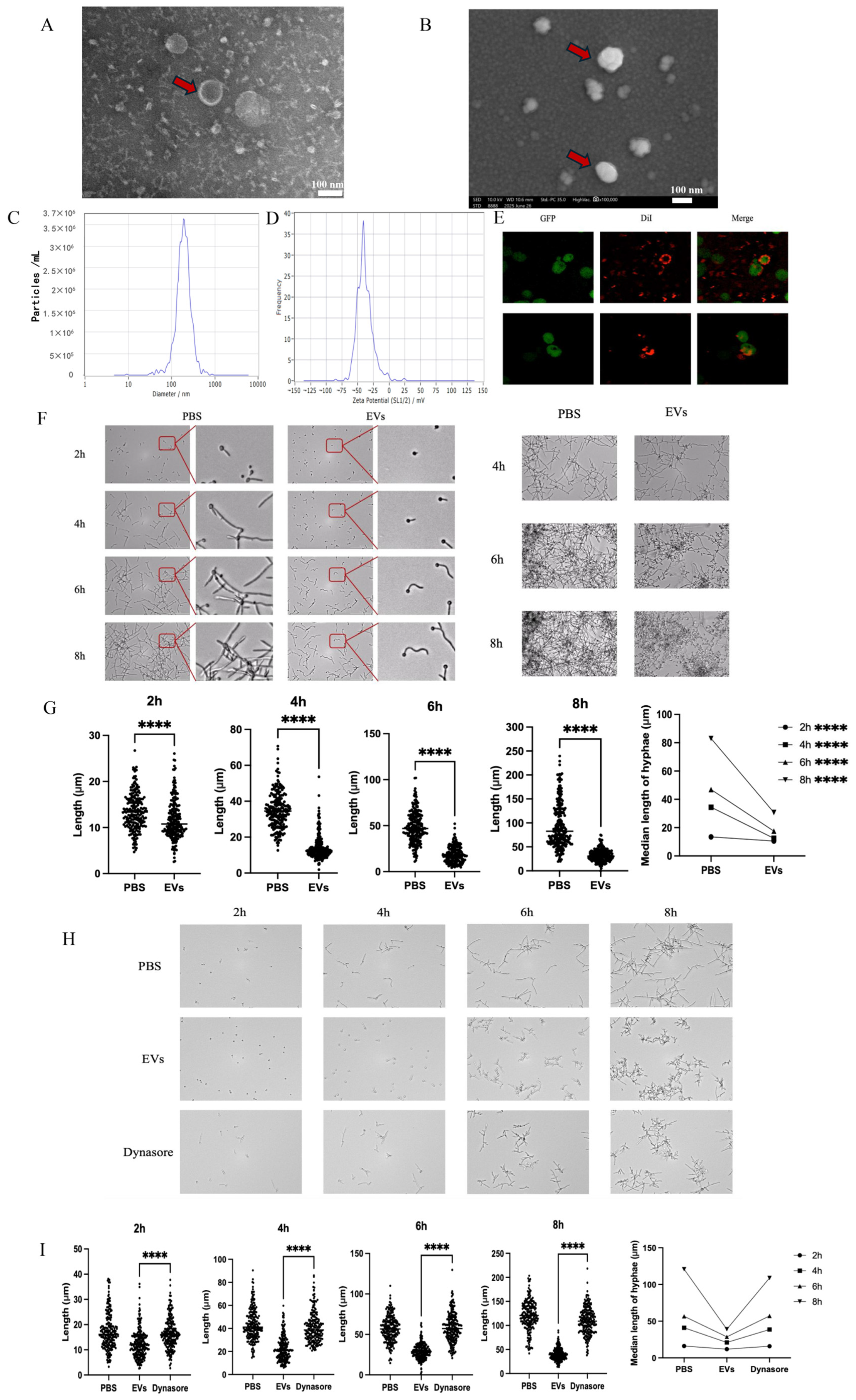
According to observations made via transmission electron microscopy (TEM) and scanning electron microscopy (SEM), C. albicans EVs were confirmed as spherical nanoscale particles with a bilayer lipid membrane (Figure 1A,B). Nanoparticle tracking analysis (NTA) indicated that the major population of EV diameters ranged from 180 to 500 nm, with a small subpopulation up to nearly 1 μm (Figure 1C). Zeta potential analysis showed that EV potential was concentrated between −80 and 25 mV, with a peak value of −35.84 mV (Figure 1D).
When treating C. albicans cells with EVs, these EVs can contact the cell surface and enter the cells (Figure 1E). Moreover, hyphal development of C. albicans cells was significantly inhibited at all tested time points (Figure 1F). Hyphal length and distribution showed that hyphae were markedly repressed at 2 h, and the inhibitory effects became more pronounced with increasing treatment time (Figure 1G). Importantly, after 8 h treatment, most C. albicans cells were in yeast form (Figure 1F), indicating the strong and persistent inhibition of EVs on C. albicans hyphal development. Pretreating C. albicans with Dynasore to inhibit EV endocytosis significantly reversed hyphal inhibition by EVs (Figure 1H,I), suggesting that EV entry into fungal cells is critical for hyphal repression.

2.2. Extracellular Vesicles Shifted the Expression of Hyphal-Related Genes from C. albicans Transcriptome

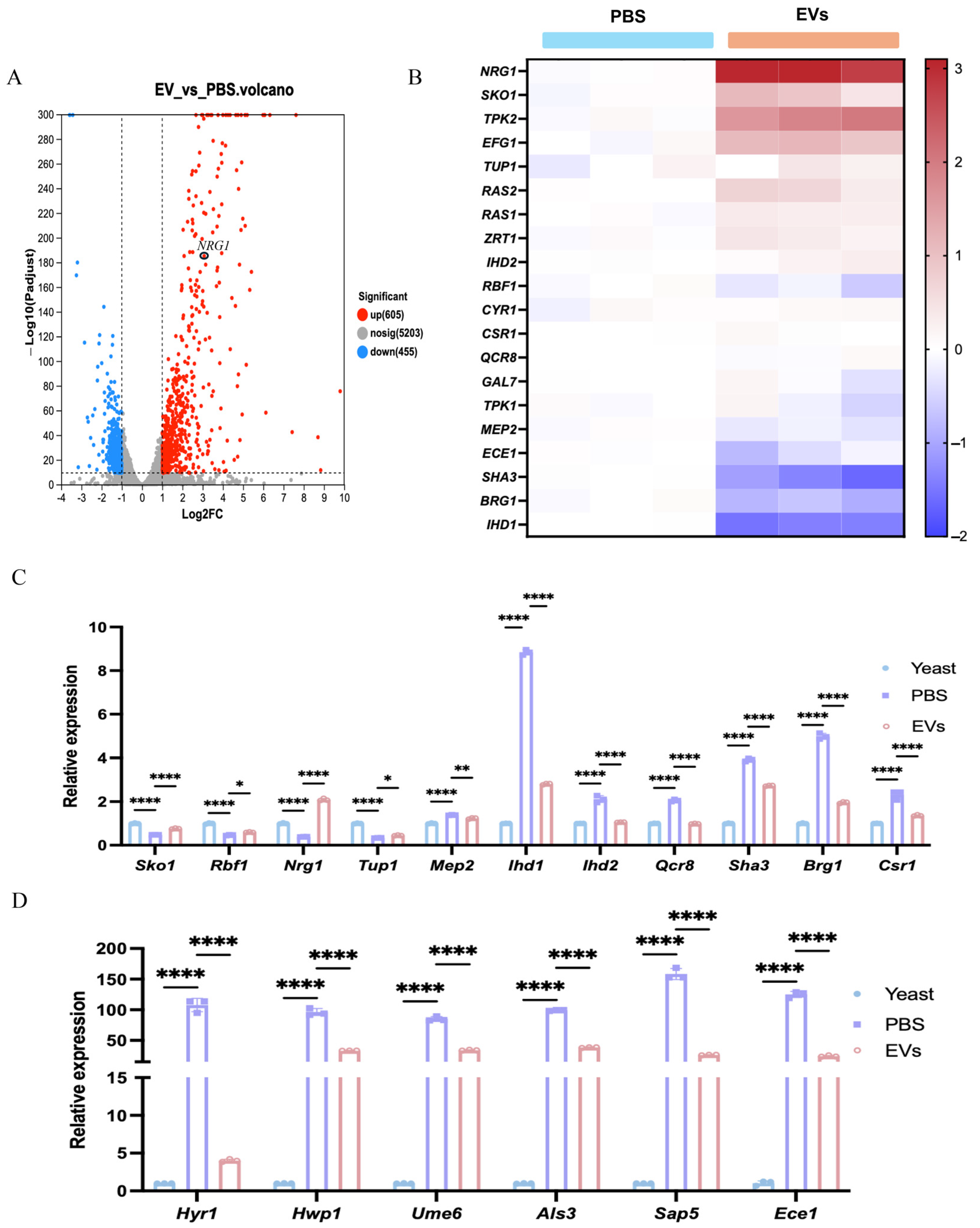
To reveal the mechanisms by which C. albicans EVs impact hyphal development, the transcriptome of EV-treated C. albicans was sequenced and analyzed. According to the transcriptome analysis, C. albicans EVs upregulated 605 genes and downregulated 455 genes (Figure 2A). Notably, a majority of hyphal-negative regulatory genes, including NRG1 and SKO1, were significantly upregulated, while hyphal-positive regulatory genes, such as BRG1 and IHD1, were significantly downregulated (Figure 2B). RT-qPCR analysis also indicated that, along with the hyphal formation, hyphal- and virulence-related genes were significantly upregulated (PBS group vs. yeast), while EV treatment significantly reduced the expression of these genes due to its inhibitory effects on hyphal development (Figure 2C,D). These results suggest that EVs enhanced the expression of hyphal-negative regulatory genes while suppressing positive regulatory genes, thereby inhibiting C. albicans hyphal development. NRG1, a transcription repressor of C. albicans hyphal formation, was significantly upregulated among these genes (Figure 2B,C), indicating that EVs might mainly upregulate NRG1 to repress C. albicans hyphal development. Compared to the PBS group, the upregulation of NRG1 via C. albicans EVs then caused significant downregulation of several NRG1-repressed virulence genes, including ALS3, SAP5, HWP1, HYR1, ECE1, and UME6 (Figure 2D), suggesting that EVs inhibited C. albicans hyphal development and reduced virulence.

2.3. Extracellular Vesicles Inhibited C. albicans Hyphal Development Through the Upregulation of NRG1

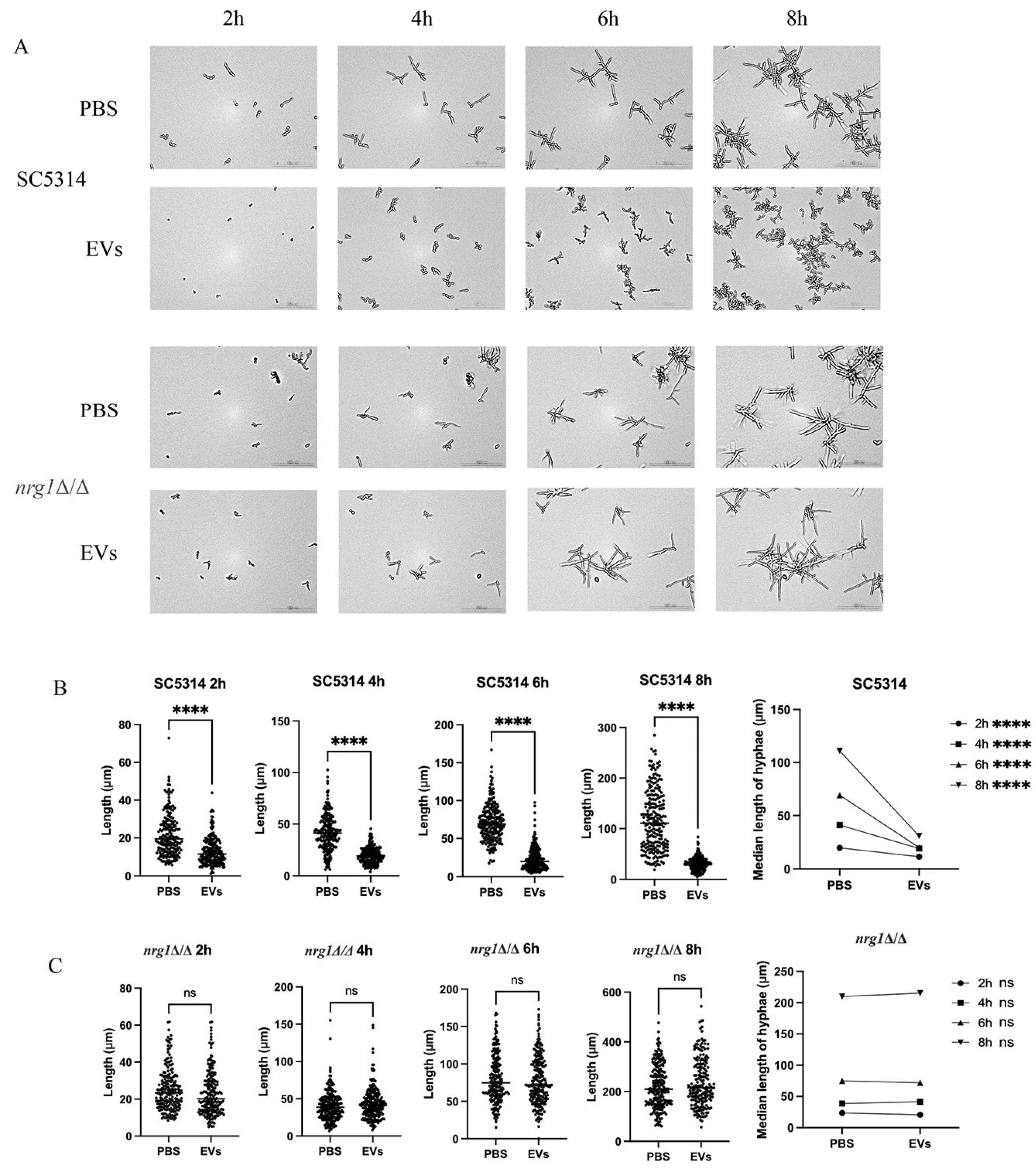
An NRG1 null mutant was then employed to validate the effects of C. albicans EVs on hyphal development through this transcription repressor. EVs were able to repress the hyphae of SC5314 (NRG1/NRG1) but failed to inhibit mycelial growth of nrg1Δ/Δ at different time points (Figure 3A). EVs also showed no significant effects on the hyphal length of nrg1Δ/Δ at different time points (Figure 3B,C), indicating that EVs upregulated NRG1 to repress C. albicans hyphal development.

2.4. Extracellular Vesicles Upregulated NRG1 to Inhibit the Hyphal Development of Clinical C. albicans Isolates

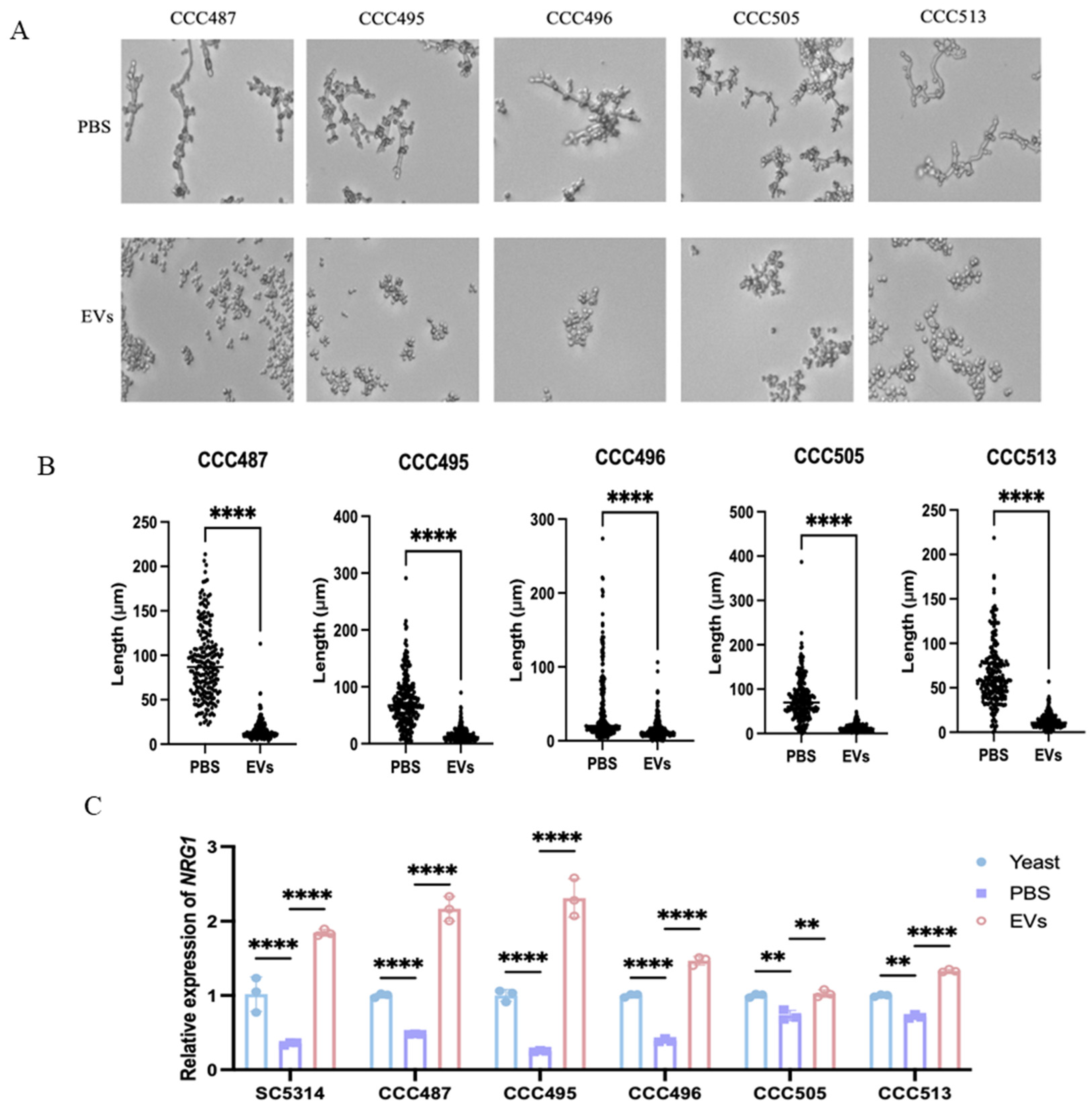
To further evaluate the hyphal-inhibitory effects of EVs, five clinical C. albicans isolates were then employed. C. albicans SC5314 EVs effectively inhibited hyphal development of all clinical isolates, including CCC487, CCC495, CCC496, CCC505, and CCC513 (Figure 4A), while their hyphal lengths were also significantly decreased by EVs (Figure 4B). RT-qPCR revealed that compared to the PBS group, EVs could also increase NRG1 expression in these clinical isolates, similar to the laboratory strain SC5314 (Figure 4C). This suggests that EVs could repress the hyphal development of clinical C. albicans isolates by upregulating the transcription repressor NRG1.

2.5. Extracellular Vesicles Mediated Upregulation of SKO1 Correlates with Enhanced NRG1 Expression

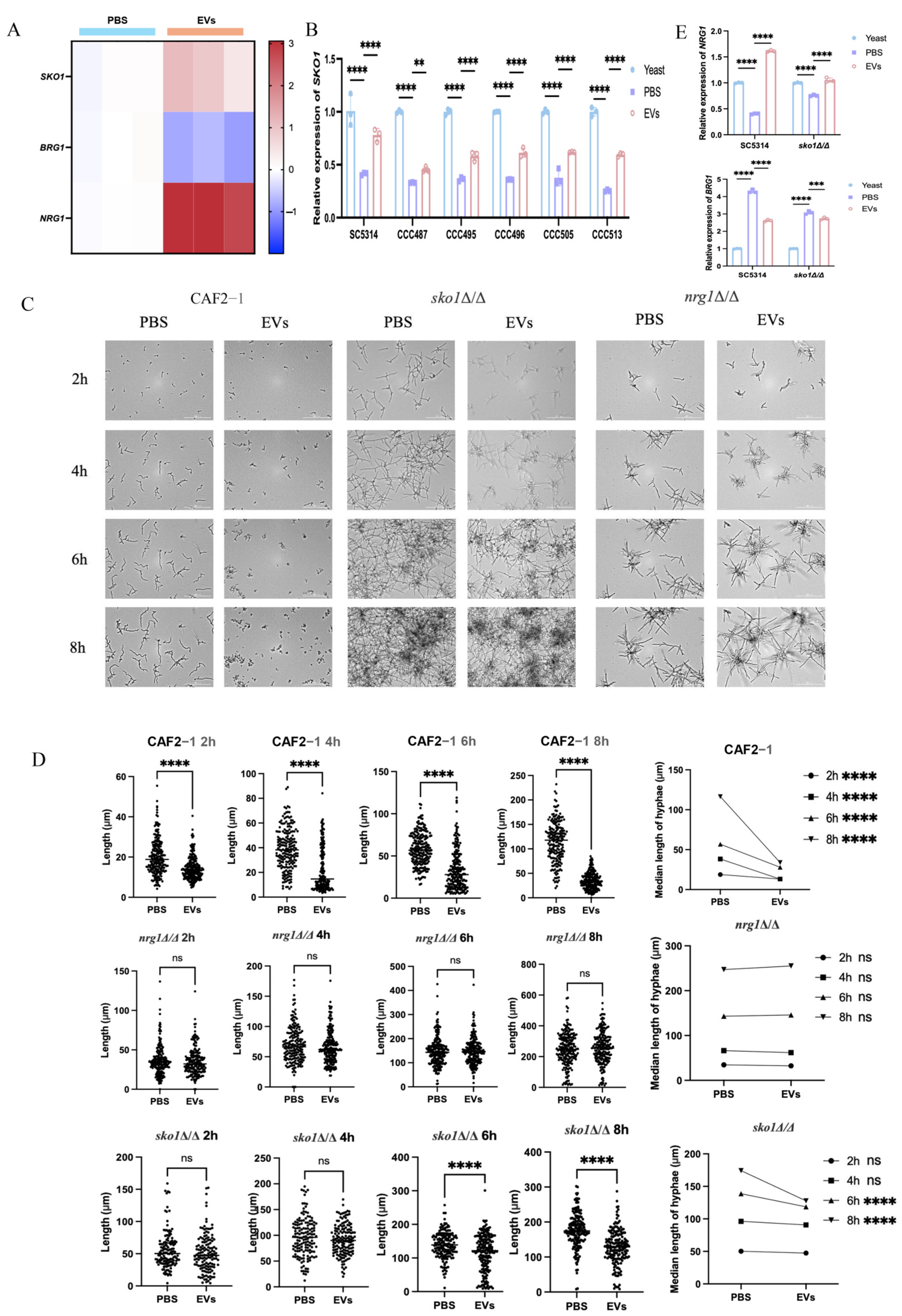
To further investigate the mechanism by which EVs upregulate NRG1 expression, we found that the expression of the transcription factor SKO1 was also significantly upregulated, while the transcription factor BRG1 was significantly downregulated, according to transcriptome analysis (Figure 5A). Since NRG1 could be downregulated via BRG1 and Sko1 could downregulate BRG1, as previously reported [9,53], we proposed that EVs possibly upregulated SKO1 to increase NRG1 expression. To confirm this hypothesis, SKO1 expression from C. albicans SC5314 and clinical isolates was first measured. The results showed that compared to the PBS group, EVs significantly increased SKO1 expression in these strains (Figure 5B). We then employed the sko1Δ/Δ mutant and observed that EVs significantly attenuated their hyphal-inhibitory effects—a phenotype similar to that seen in nrg1Δ/Δ mutants (Figure 5C). EVs also reduced inhibitory effects on sko1Δ/Δ hyphal lengths at different time points (Figure 5D). Moreover, EVs significantly increased the expression of NRG1 in the wild-type strain SC5314 but significantly reduced NRG1 upregulation in sko1Δ/Δ. EVs also significantly inhibited BRG1 expression in the wild-type strain SC5314 but reduced BRG1 downregulation in sko1Δ/Δ (Figure 5E). These results suggest that EVs could upregulate SKO1 to enhance the expression of the NRG1 repressor and subsequently inhibit C. albicans hyphal growth.

2.6. Protein Components Within EVs Contributed to Hyphal-Inhibitory Effects

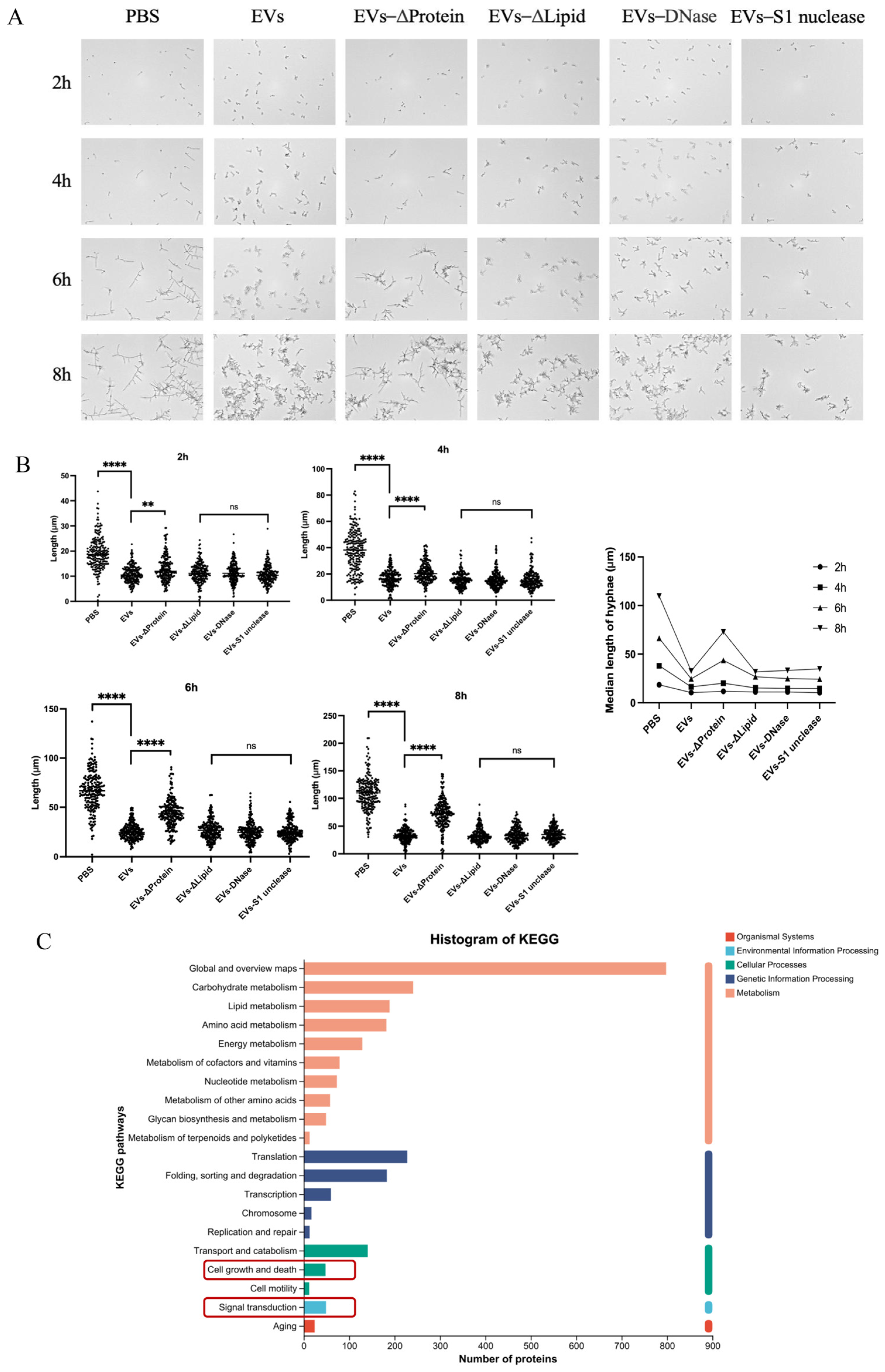
To identify the key components of EVs that mediated hyphal development suppression, we selectively depleted different EV constituents using the following enzymatic treatments: protease K (to degrade proteins), sodium deoxycholate (to disrupt lipids), dsDNase (to digest double-stranded DNA), and S1 nuclease (to remove single-stranded DNA and non-dsRNA). Protein depletion significantly reduced the inhibitory effect of C. albicans EVs on hyphal development (Figure 6A,B). By sequencing the global proteomic profiling of EVs and conducting KEGG pathway enrichment analysis (Figure 6C), notably, proteins associated with hyphal regulation, including Efg1, Ras1, Tup1, Cdc42, Cdc28, Gpa2, Yck2, Rho1, and Ndt80, were identified (Table S2) and enriched in the “cell growth and death” and “signal transduction” pathways (Figure 6C). Additionally, some other hyphal-related proteins, such as Hyr1, Ihd1, Mep2, and Gal7, were also identified in EVs (Table S2), while their corresponding expressions were significantly downregulated according to the C. albicans transcriptome (Figure 2B). Based on the observed downregulation of hyphal-regulatory transcripts and the proteomic identification of their fragmented counterparts in EVs, we infer that EVs may deliver fragmented peptides derived from these proteins to competitively inhibit the transcription of their endogenous counterparts, thereby disrupting hyphal morphogenesis in C. albicans.

2.7. Extracellular Vesicles Reduced the Pathogenesis of C. albicans Through NRG1 in Candidemia Mice

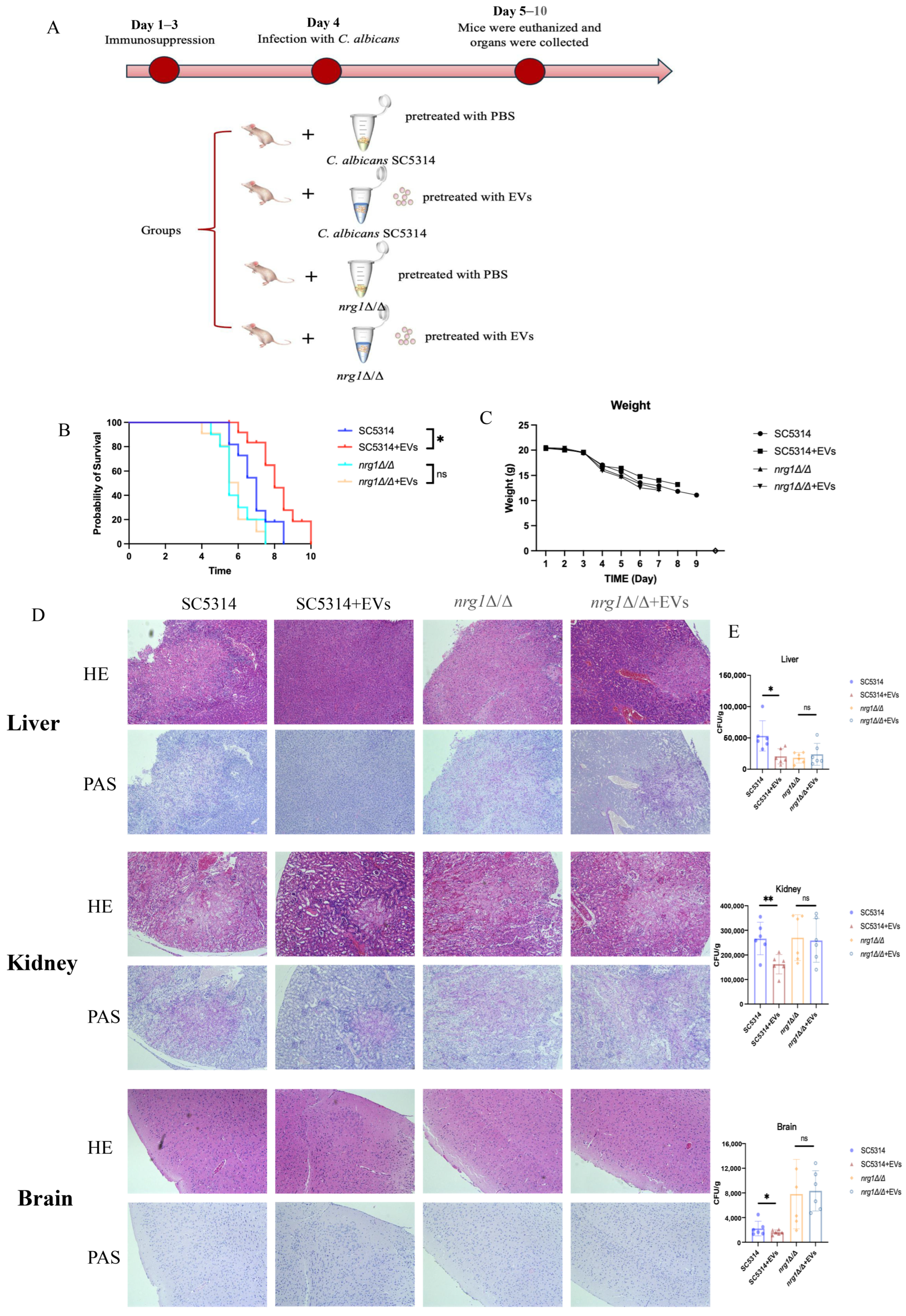
Since EVs were able to inhibit C. albicans hyphae, a candidemia murine model was then established to further investigate the impact of EVs on C. albicans pathogenesis. Both SC5314 and nrg1Δ/Δ strains were pretreated with either PBS or EVs before being used to infect mice (Figure 7A). Mice infected with nrg1Δ/Δ mutants began to die on day 5, and none survived beyond day 8; EVs showed no effects on nrg1Δ/Δ mutant pathogenesis (Figure 7B). In contrast, mice infected with the SC5314 strain showed prolonged survival compared to those infected with nrg1Δ/Δ mutants; notably, mice infected with EV-pretreated SC5314 showed the longest survival (Figure 7B), although their weight did not show a significant difference during infection (Figure 7C). Afterward, liver, kidney, and brain tissues were collected for histological and CFU analysis. Histological analyses using HE and PAS illustrated significant reductions in inflammation and diminished fungal invasion in liver, kidney, and brain tissues of mice infected with EV-treated SC5314 (Figure 7D). Briefly, in the liver tissues of mice infected with EV-treated C. albicans SC5314, the contours of the liver lobules were largely preserved, with only small abscesses occasionally observed (Figure 7D). In contrast, the liver tissue structures of mice in the other groups exhibited disordered abscess structures and extensive infiltration of inflammatory cells (Figure 7D). PAS staining of the liver indicated that EV-treated SC5314 infection reduced fungal invasion (Figure 7D). Similarly, in the kidney tissues of mice infected with EV-treated SC5314, glomeruli and renal tubules remained clearly visible, while the kidney tissues of mice in the other groups exhibited abscesses, tissue rupture, and necrosis (Figure 7D). PAS staining of the kidneys also indicated that EV-treated SC5314 infection reduced the fungal invasion (Figure 7D). This is possibly due to the presence of the blood–brain barrier. In the brain tissue, there were no significant differences in inflammation; however, PAS staining indicated fungal invasion in the brain tissues of mice infected with SC5314 treated with or without EVs (Figure 7D). By directly counting C. albicans CFUs in tissues, EV treatment significantly reduced fungal burdens in the liver, kidneys, and brain (Figure 7E). Compared with SC5314-infected mice, EV treatment showed no significant impact on mice infected with the nrg1Δ/Δ strain, including liver, kidney, and brain inflammation and fungal invasion (Figure 7D). Moreover, CFU counts also showed that EVs did not affect fungal burden in nrg1Δ/Δ-infected tissues (Figure 7E), indicating that EVs reduce C. albicans pathogenesis by inhibiting hyphal development through the upregulation of NRG1 repressor.

3. Discussion

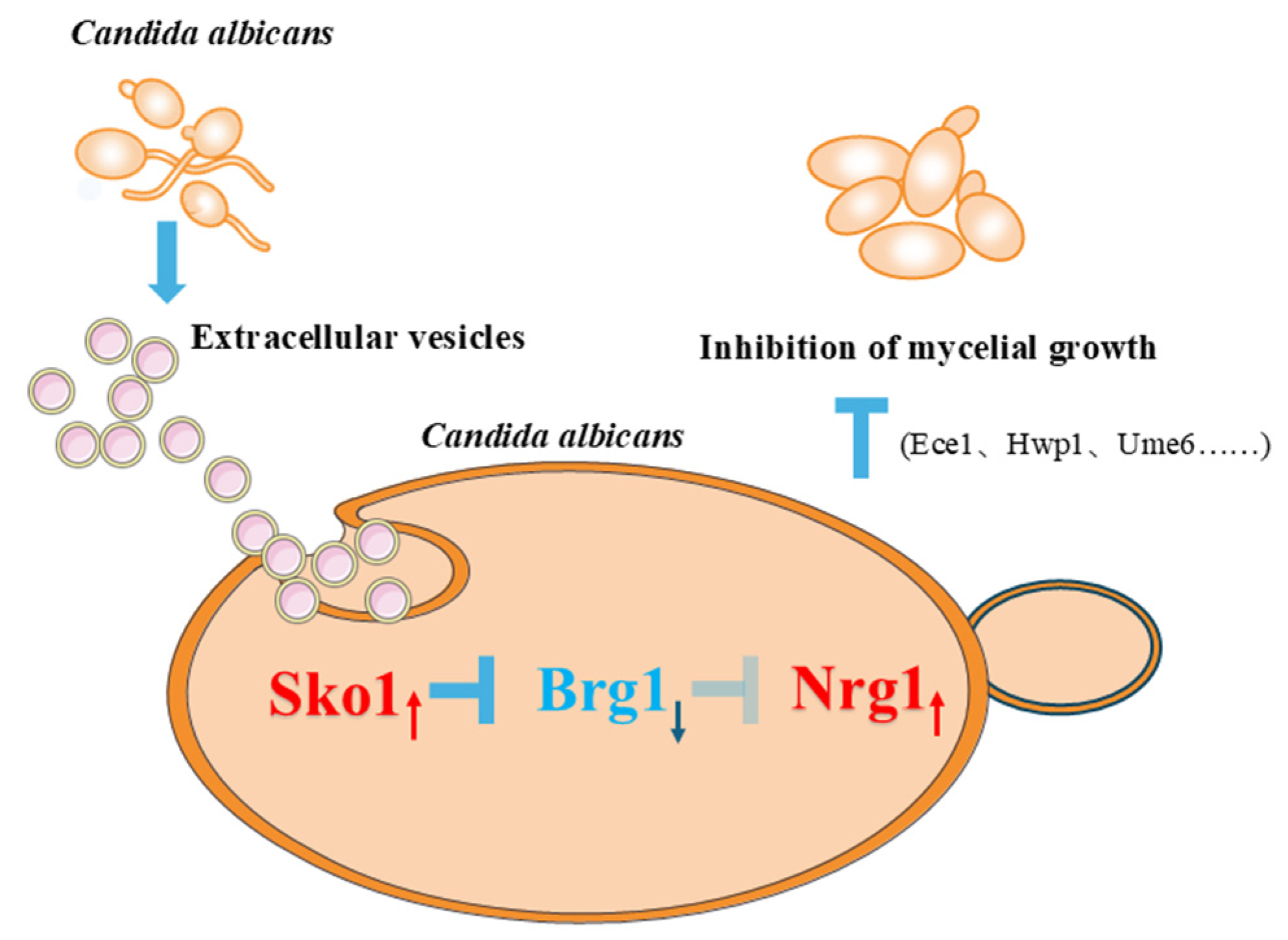
C. albicans, a predominant opportunistic pathogen, causes superficial infections (oral mucositis, vaginitis) and systemic candidemia [54]. Its extracellular vesicles (EVs) critically regulate interspecies communication and pathogenesis [24]. Building on our prior discovery that EVs promote fungal proliferation via L-arginine/NO-mediated reduction of ROS and apoptosis [52], this study elucidates a counter-regulatory mechanism: EVs suppress hyphal morphogenesis and systemic virulence by upregulating SKO1 to enhance the repressor activity of Nrg1, ultimately attenuating candidemia (Figure 8). Combined with our previous study, EVs at different levels could show varied actions. EVs at low levels (15 μg/mL) mainly promote fungal cell proliferation by upregulating the L-arginine-NO pathway, while at high levels (60 μg/mL), C. albicans EVs primarily repress hyphal development by upregulating the NRG1 transcriptional repressor. These mechanisms suggest the important role EVs play in C. albicans growth and pathogenesis. Currently, there are no reports about the accurate concentrations of C. albicans EVs in normal states or during systemic candidiasis due to the limitations of quantitation technology on C. albicans EVs in vivo, while the EV concentrations (15 and 60 μg/mL) used in our studies were rationally selected based on the reported range (5–80 μg/mL) in published fungal EV studies, and the fungal inoculum for EV extraction was consistent with that of mouse systemic candidiasis models, which alleviates the current limitation as much as possible.
Hyphal morphogenesis is essential for C. albicans virulence, enabling nutrient acquisition, tissue invasion, and expression of adhesins/hydrolases (Als3, Sap5, Hwp1) [55,56,57,58]. While polysaccharides inhibit hyphae via Nrg1 transcriptional control [59], we demonstrate that C. albicans EVs suppress hyphal development primarily through cargo-protein-mediated NRG1 upregulation. Crucially, EVs concurrently downregulate virulence effectors—including candidalysin (ECE1-encoded) [42,60]—and enhance Nrg1 repressor activity in clinical isolates, attenuating systemic pathogenicity. Although EVs harbor polysaccharides [29,61], their role in hyphal inhibition remains uncharacterized; further investigation may elucidate interactions with the Nrg1 pathway, thereby informing the development of novel anti-virulence strategies.
SKO1 is also a hyphal-negative regulatory gene. Additionally, active Hog1 represses BRG1 gene expression via the transcriptional repressor Sko1; in turn, decreased BRG1 expression can promote NRG1 gene expression [8,9,10,53]. Our results indicated that C. albicans EVs upregulated SKO1 and downregulated BRG1, thereby activating the NRG1 repressor and inhibiting C. albicans hyphal development and pathogenesis (Figure 8). However, EVs failed to inhibit hyphal growth and pathogenesis in sko1Δ/Δ and nrg1Δ/Δ, indicating the critical role of this pathway in EV-mediated inhibition. These results also indicate that the SKO1 and NRG1 regulatory pathway is a promising target for developing anti-virulence agents against C. albicans infections. The inhibitory effect of EVs may involve multiple pathways because, unlike nrg1Δ/Δ, EVs also inhibited sko1Δ/Δ hyphal length at 6 and 8h. This suggests that SKO1 knock-out partially restored the effects of EVs, and NRG1 plays a stronger regulatory role. Other factors may regulate BRG1 and NRG1 beyond SKO1, such as Ngs1 [62] and cross-regulation between BRG1 and NRG1. Previous studies have shown that active Hog1 represses BRG1 expression through the transcriptional repressor Sko1 [9]; however, our transcriptomic data showed no significant change in HOG1 expression (fold change = 0.97, p = 0.68) after treatment with EVs, suggesting that HOG1 may not be a key factor in the impact of EVs on hyphal development. Other pathways, such as the cAMP-PKA [16] and Psk1-Rlm1 pathways [63,64], could activate SKO1 expression independently of HOG1, potentially contributing to the actions of EVs.
In the current study, hyphal induction was performed at 30 °C, as our preliminary experiments revealed that the hyphal-inhibitory effect of EVs was stronger at this temperature than at 37 °C. This phenomenon might be partially due to temperature-dependent effects on BRG1 expression. Lu et al. showed that induction at 37 °C activates BRG1 expression, which may reduce NRG1-mediated downregulation of BRG1 [53]. In contrast, at 30 °C, BRG1 is expressed at low levels, which may promote the downregulation of BRG1 through EV-activated NRG1.
EVs contain various components, and our findings highlight that the protein components within C. albicans EVs contribute to their hyphal repression activity. The major bioactive components responsible for hyphal inhibition may vary due to the different host strains and their respective culture media. For example, Honorato et al. found that nonpolar lipids from C. albicans 90,028 EVs cultured in a Sabouraud medium (a complex medium containing peptone and 4% glucose) repressed the yeast-to-hypha transition [51], while in our study, proteins from the C. albicans SC5314 EVs cultured in a YNB medium (a chemically defined medium with 2% glucose) showed strong inhibition of hyphal development. Despite this, both studies collectively demonstrated that C. albicans EVs inhibit its own hyphal growth, highlighting the important roles of EVs in C. albicans growth and pathogenesis. Our proteomic analysis revealed an enrichment of hyphal regulatory proteins, including Efg1, Ras1, and Tup1, which are central proteins from the cAMP-PKA and MAPK signaling pathways [65]. Nrg1 is known to inhibit hyphal genes by recruiting the Tup1-Cyc8 complex [66,67]. Sko1 modulates cellular responses to osmotic stress, which can intersect with morphogenetic signaling [68]. Based on the proteomic identification of Tup1 fragments within C. albicans EVs and the concomitant downregulation of hyphal-related transcripts (EFG1, RAS1), EV-delivered Tup1 peptides might competitively disrupt Nrg1-Tup1 complex formation. This interference would destabilize transcriptional repression circuits, thereby triggering suppression of hyphal-specific genes. Concomitantly, the observed downregulation of SKO1-associated transcripts (GPA2, YCK2) in the fungal transcriptome and the proteomic detection of Gpa2/Yck2 within EVs suggest that EV cargo containing these proteins might interfere with stress-responsive pathways converging on Sko1-mediated morphogenesis. These findings indicate that EVs may act as decoys that deliver various proteins or peptides from critical hyphal regulators, thereby affecting the hyphal differentiation network. Future studies should validate the direct interactions between EV-derived peptides and the hyphal differentiation network to elucidate their role in fungal pathogenesis.
It is well known that hyphae are important for host immune cells to recognize C. albicans and activate host antifungal immunity [69]. C. albicans secretes a large number of EVs during the infection process, which can regulate yeast proliferation [52] and hyphal development, potentially promoting yeast cell colonization and the escape of C. albicans from immune cells. This may be a protective, fitness-enhancing strategy that promotes C. albicans survival in hosts. However, the effects of C. albicans EVs on fitness require further evaluation. The ability of C. albicans EVs to reduce C. albicans virulence and pathogenesis—especially in clinical isolates—combined with their previously reported potential to act as vaccines against fungal infections [34,46] indicate their dual roles and practical applications in combating fungal infections.

4. Materials and Methods

4.1. Strains and Cultural Conditions

Candida albicans SC5314 (ATCC MYA-2876), wild-type strain (CAF2-1, WT) with ura3 knocked out from C. albicans SC5314 [70], sko1Δ/Δ [71], and GFP-labeled C. albicans [72] were stored in the State Key Laboratory of Oral Diseases. C. albicans clinical strains were isolated from patients in the Department of Respiratory Medicine, West China School, Sichuan University.
CRISPR/Cas9 and the plasmid pV1524 [73] (Addgene, Watertown, MA, USA) were employed to construct the C. albicans NRG1 gene deletion strain (nrg1Δ/Δ). Briefly, 20 bp sgRNA primers (sgRNA/F-ACTTTAGAAGCTTCACATGT and sgRNA/R-GTAAGAAGTTCGTTAAACGA) were ligated into the Esp3I restriction site of the pV1524 vector. The respective 500 bp upstream and downstream homology arms of the NRG1 gene, which served as repair templates for CRISPR/Cas9-mediated gene editing, were introduced into the SacII restriction site of pV1524. A PacI restriction site was included in the repair template to facilitate linearization. The resulting plasmid was then transformed into C. albicans SC5314 via the LiAc/SS carrier DNA/PEG method [74,75]. C. albicans SC5314 cells and linearized plasmid (via PacI enzyme) were added to the prepared transformation Master Mix and incubated at 30 °C for 1 h, followed by a 15 min heat shock at 42 °C. The transformed cells were placed in YPD media containing 250 µg/mL nourseothricin (Werner BioAgents, Jena, Germany) and grown at 30 °C for 48 h to obtain the nrg1Δ/Δ strain. Subsequently, the nrg1Δ/Δ strain was verified via PCR (Figure S1).
All strains were grown on YPD plates (4 g yeast extract, 8 g anhydrous glucose, 8 g peptone, 8 g agar dissolved in 400 mL deionized water) at 35 °C overnight. For treatment with EVs, colonies of all strains were taken separately, placed in PBS, adjusted to a final concentration of 1 × 10⁶ CFU/mL, placed in RPMI 1640 (Gibco, Shanghai, China), and incubated at 30 °C for 24 h.

4.2. Isolation of Extracellular Vesicles

EVs from C. albicans were isolated using the ultracentrifugation method as reported before [21,35,52]. Briefly, C. albicans was inoculated on YPD plates for 24 h and incubated overnight at 30 °C. Then, fungal cells were seeded in 1 L of YNB (Solarbio, Beijing, China) medium at a final concentration of 1 × 10⁶ CFU/mL in conical flasks and incubated in a shaking incubator at 30 °C with agitation at 150 rpm for 72 h. Following cultivation, the supernatant was collected via centrifugation at 15,000× g for 30 min at 4 °C using a high-speed centrifuge (JA-10 rotor, Beckman, Fullerton, CA, USA). The supernatant was filtered through a 0.45 μm filter (Millipore, MA, USA) and concentrated to 100 mL through a VIVAFLOW 200 ultrafiltration membrane (Sartorius, Goettingen, Germany). The concentrated solution underwent additional centrifugation for 120 min at 100,000× g and 4 °C (JA-24.38 rotor, Beckman, Fullerton, CA, USA), yielding precipitates identified as EVs. Finally, after the EV precipitate was resuspended in PBS, it was filtered through a 0.22 µm filter (Millipore, Billerica, MA, USA) to ensure that all fungal cells were removed.

4.3. Characterization of EVs

Scanning electron microscopy: EVs were immobilized on glass slides (4 °C, overnight), gradient-dehydrated in an ethanol series, sputter-coated with a Au/Pd alloy, and subsequently visualized via microscopy (FEI Company, Hillsboro, OR, USA) [52]. Transmission electron microscopy: EVs were adsorbed on copper grids (10 min), negatively stained with 1% phosphotungstic acid (2 min), and imaged (FEI Company, Hillsboro, OR, USA) [76].
Particle size distribution of EVs: EVs were diluted 1:1000 in PBS (pH 7.4) to obtain 20–100 particles/frame and analyzed using a Malvern NanoSight (Malvern Panalytical, Malvern, Worcestershire, UK) (camera level 16, threshold 5; 25 ± 0.5 °C) with 5 × 60 s videos. Data were processed via NTA v3.4 and calibrated with 100 nm standards [51].
Zeta potential: EVs were diluted to 0.1 mg/mL in 1 mM NaCl (pH 7.0) and measured on ZetaView PMX120 (Particle Metrix GmbH, Memmingen, Germany) (488 nm laser; 25 ± 0.1 °C) using the Smoluchowski model. Three replicates (fifteen cycles each) were performed in folded capillary cells and calibrated with a −50 mV standard.

4.4. Confocal Imaging

EVs were labeled with 20 μM DiI (APExBIO, Houston, TX, USA) in PBS (RT, 2 h; 37 °C, 30 min, dark), then ultracentrifuged (100,000× g, 2 h) to remove excess dye. GFP-expressing C. albicans (1 × 10⁵ CFU/mL) was co-cultured with DiI-EVs (60 μg/mL) in RPMI 1640 (30 °C, 6 h). Cells were fixed with 4% PFA and imaged via confocal microscopy (Leica TCS SP8, Leica Microsystems GmbH, Wetzlar, Germany, 60× oil objective) with dual-channel acquisition: GFP 488 nm/500–550 nm, DiI 561 nm/570–620 nm, Z-stacks acquired at 0.5 μm intervals.

4.5. Real-Time Imaging and Distribution of C. albicans Hyphal Length

C. albicans at 1 × 10⁵ CFU/mL in RPMI 1640 (Gibco, Shanghai, China) were treated with 60 μg/mL EVs at the same time in a 96-well plate and incubated on a Cytation™ 5 Cell imaging multimodal detector (Biotek, VT, USA). The temperature was set to 30 °C, and continuous operation was maintained for 24 h, capturing images every 15 min. Hyphal length and distribution were determined using ImageJ software (Version 1.8.0.172, National Institutes of Health, Bethesda, MD, USA) for pixel quantification. More than 200 single cells were counted for each sample.

4.6. Dynasore-Treated C. albicans

C. albicans (1 × 10⁵ CFU/mL) were pre-incubated with 80 μM Dynasore (APExBIO, Houston, TX, USA, dissolved in 0.1% DMSO) in RPMI 1640 medium for 30 min (37 °C). This was followed by centrifugation to remove the effects of Dynasore in the supernatant. A vehicle control (0.1% DMSO alone) and an untreated group (no Dynasore/DMSO) were included. Then, C. albicans were treated with EVs for the real-time imaging shots described above.

4.7. Transcriptome Analysis

Transcriptome sequencing was performed as previously reported [52,77]. Total RNA was extracted from C. albicans cells (1 × 10⁶ CFU/mL) treated with 60 μg/mL EVs or the PBS control (RPMI 1640, 30 °C, 6 h) using TRIzol Reagent (Invitrogen, Carlsbad, CA, USA), followed by DNase I (Takara, Tokyo, Japan) digestion. RNA quality was verified (Agilent 2100 Bioanalyzer; NanoDrop ND-2000) with the following criteria: OD260/280 = 1.8–2.2, OD260/230 ≥ 2.0, RIN ≥ 6.5, 28S:18S ≥ 1.0, >1 μg. Libraries were sequenced on Illumina Novaseq 6000 (Majorbio) [78].
Differential expression (adjusted p < 0.05, |FC| > 1) was analyzed via volcano plots/heatmaps on Majorbio Cloud Platform (cloud.majorbio.com). Functional enrichment (GO/KEGG) was performed using gene clustering. Data are deposited in the National Genomics Data Center (NGDC) GRA (PRJCA048076/CRA031275).

4.8. Real-Time RT-PCR

C. albicans at 1 × 10⁵ CFU/mL were treated with 60 μg/mL EV or PBS for 6 h, 30 °C, in RPMI 1640. Fungal cells were collected via centrifugation at 4000 rpm for 5 min at 4 °C and were subsequently resuspended in TRIzol reagent (Invitrogen, CA, USA). RNA extraction was performed using a TaKaRa MiniBEST Universal RNA Extraction kit (Takara, Tokyo, Japan) according to the manufacturer’s instructions. Reverse transcription was conducted according to protocols to yield double-stranded cDNA [78,79]. Real-time RT-PCR (RT-qPCR) analysis was then carried out utilizing the primers listed in Table S1. Gene amplification employed a two-step method as reported previously [80].

4.9. Selective Depletion of EV Components

Protein Removal: A volume of 60 μL EVs was incubated with 1 μL Proteinase K (APExBIO, Houston, TX, USA) at 37 °C for 1.5 h, followed by inactivation with 1 μL phenylmethylsulfonyl fluoride (APExBIO, Houston, TX, USA) at room temperature for 30 min. Proteinase K was then inactivated by adding 1 mM phenylmethanesulfonyl fluoride (Sigma-Aldrich, St. Louis, MO, USA) and incubating the tube at room temperature for 30 min.
Lipid Removal: A volume of 60 μL EVs was treated with 0.25% sodium deoxycholate (Solarbio, Beijing, China) at 4 °C for 24 h.
Nucleic Acid Removal: Double-stranded DNA—1.2 μL DNase I (Thermo Fisher Scientific, Waltham, MA, USA) was added to 60 μL EVs, followed by incubation at 37 °C for 15 min. Single-stranded DNA/RNA—1.2 μL S1 Nuclease (Thermo Fisher Scientific, Waltham, MA, USA) was mixed with 60 μL EVs and incubated at room temperature for 30 min.

4.10. EV Cargo Protein Profiling

EVs were lysed with RIPA buffer (containing 1% protease inhibitor; Thermo Fisher, Waltham, MA, USA) on ice (30 min), followed by centrifugation (12,000× g, 4 °C, 15 min). Proteins were quantified via BCA assay (PierceTM Kit; Thermo Fisher, Waltham, MA, USA). Aliquots (100 μg) were reduced with 10 mM TCEP (37 °C, 60 min), alkylated with 40 mM iodoacetamide (RT, 40 min), and acetone-precipitated. Pellets were dissolved in 100 mM TEAB (Sigma-Aldrich, St. Louis, MO, USA) and digested with trypsin (MS-grade, Promega; 1:50 enzyme/protein, 37 °C, overnight). Peptides were desalted (Oasis® HLB/MCX plates; Waters Corporation, Milford, MA, USA) and analyzed via LC-MS/MS on a timsTOF_HT mass spectrometer (Bruker, Bremen, Germany) coupled to a VanquishNeo UHPLC (Thermo Fisher, Waltham, MA, USA). Separation incorporated a homemade column (15 cm × 100 μm, 1.7 μm) with an 8–99% acetonitrile/0.1% formic acid gradient (300 nL/min, 8 min). Data acquisition was performed using Compass HyStar (Version 5.0, Bruker Daltonics, Billerica, MA, USA) and Xcalibur (Version 4.4, Thermo Fisher Scientific, Waltham, MA, USA). Proteomics data are deposited in ProteomeXchange (PXD063088) via iProX [81,82].

4.11. Murine Model of Systemic Infection

The candidemia mouse model was established as previously reported [83]. Female BALB/c mice (6–8 weeks old) with body weights ranging from 18 to 20 g were obtained from the Laboratory Animal Center of Sichuan University (China). The mice were divided into four groups, with a minimum of fifteen mice in each group. Briefly, the mice received intraperitoneal injections of cyclophosphamide (Solarbio, Beijing, China) at a dosage of 100 mg/kg from the first day to the third day. On the 4th day, the mice were stratified into four groups and administered intravenous injections of one of the following solutions: 100 μL (60 μg/mL) EVs or PBS-pretreated C. albicans SC5314 (1 × 10⁶ CFU/mL), and 100 μL (60 μg/mL) EVs or PBS-pretreated nrg1Δ/Δ mutants (1 × 10⁶ CFU/mL). All groups were pretreated for 24 h, and all strains were centrifuged to remove unbound EVs prior to injection. Mice were closely monitored for the probability of survival in all groups, with daily recordings of time to death and body weight. On the 5th day, six mice from each group were euthanized via ketamine/xylazine overdose, and tissue samples of the liver, brain, and kidneys were harvested. The tissues were longitudinally bisected; one half was immersed in 4% paraformaldehyde (Beyotime, Chengdu, China) for fixation, while the other half was preserved in PBS solution for subsequent analyses. The remaining mice were used to observe survival. Tissue samples were weighed after immersion in PBS solution, then homogenized in a mortar until no visible particles remained. The normalized index is expressed as CFU/tissue weight. After the remaining half of the tissue was used for fixation, it was analyzed via hematoxylin–eosin (HE) and periodic acid–Schiff (PAS) staining.

4.12. Statistical Analysis

All experiments were performed in triplicate with ≥3 biological replicates. Data are expressed as mean ± SD. Statistical significance was determined using one-way ANOVA with Student’s t-test or Dunnett’s T3 test for parametric data. The Kruskal–Wallis test with the Mann–Whitney U test was used for non-parametric data. Survival analysis was analyzed using the Kaplan–Meier method. Significance thresholds were set at * p < 0.05, **** p < 0.0001, ns (p > 0.05). Analyses were performed using GraphPad Prism 8.3.1.

5. Conclusions

In conclusion, C. albicans EVs were identified for the first time to repress self-hyphal development and pathogenesis by upregulating SKO1, thereby increasing NRG1 expression. These results indicate new functions of C. albicans EVs and provide novel insights into the mechanisms of C. albicans infection, commensalism, and potential therapeutic strategies.

Supplementary Materials

The following supporting information can be downloaded at: https://www.mdpi.com/article/10.3390/ijms27010495/s1.

Author Contributions

Conceptualization, B.R., Z.Z. and L.C.; methodology, G.L., X.Z. and L.G.; investigation, Y.W. and J.Z.; data curation, Z.W., J.W., B.L. (Bolei Li), B.L. (Binyou Liao), Y.S., Y.Z. (Yawen Zong), J.S. and D.C.; writing—original draft preparation, Y.W. and Y.Z. (Yujie Zhou); writing—review and editing, B.R.; funding acquisition, Y.Z. (Yujie Zhou). All authors have read and agreed to the published version of the manuscript.

Funding

This research was funded by National Natural Science Foundation of China (grant numbers: 32470205, 82401116, 32071462, 82201046), the Natural Science Foundation of Sichuan Province (grant number: 2024NSFSC0546), the Sichuan Science and Technology Program (grant number: 2022YFS0285), the Technology Innovation R&D Project of Chengdu (grant number: 2022-YF05-01415-SN), the West China School of Stomatology, Sichuan University (grant number: RCDWJS2021-19), the Fund of the State Key Laboratory of Orals Diseases (grant number: SKLOD-2025RD008), the Health Commission of Sichuan Province (grant number: chuanganyan 2024-901), the Guangdong Basic and Applied Basic Research Foundation (Grant No. 2022A1515110846), and the Natural Science Foundation of Guangdong Province (Grant No. 2023A1515012257). The APC was funded by the National Natural Science Foundation of China (grant number: 82401116).

Institutional Review Board Statement

The animal study protocol was approved by the Ethics Committee of West China School of Stomatology, Sichuan University (protocol code: WCHSIRB-D-2022-629; approval date: 10 November 2022).

Informed Consent Statement

Not applicable.

Data Availability Statement

All data and materials are available. All data generated or analyzed during this study are included in this published article. The raw transcriptomic sequencing data generated in this study have been deposited in the National Center for Biotechnology Information (NCBI) database (BioProject accession number: PRJNA877381/CRA031275). The mass spectrometry proteomics data have been deposited in the ProteomeXchange Consortium via the iProX partner repository (dataset identifier: PXD063088).

Acknowledgments

The authors are grateful to Shiping Liao, Animal Experiment Center, West China Yifu Building, Sichuan University, and the Center for Analysis and Testing, Sichuan University, for supporting this study. We thank Jesús Pla for kindly providing the sko1Δ/Δ strain.

Conflicts of Interest

The authors declare no conflicts of interest.

References

  1. Schroeder, J.A.; Wilson, C.M.; Pappas, P.G. Invasive Candidiasis. Infect. Dis. Clin. N. Am. 2025, 39, 93–119. [Google Scholar] [CrossRef]
  2. Ho, J.; Camilli, G.; Griffiths, J.S.; Richardson, J.P.; Kichik, N.; Naglik, J.R. Candida albicans and candidalysin in inflammatory disorders and cancer. Immunology 2021, 162, 11–16. [Google Scholar] [CrossRef]
  3. Brown, G.D.; Denning, D.W.; Gow, N.A.; Levitz, S.M.; Netea, M.G.; White, T.C. Hidden killers: Human fungal infections. Sci. Transl. Med. 2012, 4, 165rv13. [Google Scholar] [CrossRef] [PubMed]
  4. Sharma, K.; Parmanu, P.K.; Sharma, M. Mechanisms of antifungal resistance and developments in alternative strategies to combat Candida albicans infection. Arch. Microbiol. 2024, 206, 95. [Google Scholar] [CrossRef] [PubMed]
  5. WHO. WHO Fungal Priority Pathogens List to Guide Research, Development and Public Health Action; World Health Organization: Geneva, Switzerland, 2022. [Google Scholar]
  6. Chow, E.W.L.; Pang, L.M.; Wang, Y. From Jekyll to Hyde: The Yeast-Hyphal Transition of Candida albicans. Pathogens 2021, 10, 859. [Google Scholar] [CrossRef]
  7. Gow, N.A.; van de Veerdonk, F.L.; Brown, A.J.; Netea, M.G. Candida albicans morphogenesis and host defence: Discriminating invasion from colonization. Nat. Rev. Microbiol. 2011, 10, 112–122. [Google Scholar] [CrossRef]
  8. Chen, H.; Zhou, X.; Ren, B.; Cheng, L. The regulation of hyphae growth in Candida albicans. Virulence 2020, 11, 337–348. [Google Scholar] [CrossRef] [PubMed]
  9. Su, C.; Lu, Y.; Liu, H. Reduced TOR signaling sustains hyphal development in Candida albicans by lowering Hog1 basal activity. Mol. Biol. Cell 2013, 24, 385–397. [Google Scholar] [CrossRef]
  10. Su, C.; Yu, J.; Sun, Q.; Liu, Q.; Lu, Y. Hyphal induction under the condition without inoculation in Candida albicans is triggered by Brg1-mediated removal of NRG1 inhibition. Mol. Microbiol. 2018, 108, 410–423. [Google Scholar] [CrossRef]
  11. Uppuluri, P.; Pierce, C.G.; Thomas, D.P.; Bubeck, S.S.; Saville, S.P.; Lopez-Ribot, J.L. The transcriptional regulator Nrg1p controls Candida albicans biofilm formation and dispersion. Eukaryot. Cell 2010, 9, 1531–1537. [Google Scholar] [CrossRef]
  12. Kim, S.; Kim, S.H.; Kweon, E.; Kim, J. Apoptotic Factors, CaNma111 and CaYbh3, Function in Candida albicans Filamentation by Regulating the Hyphal Suppressors, Nrg1 and Tup1. J. Microbiol. 2023, 61, 403–409. [Google Scholar] [CrossRef]
  13. Lu, Y.; Su, C.; Liu, H. Candida albicans hyphal initiation and elongation. Trends Microbiol. 2014, 22, 707–714. [Google Scholar] [CrossRef]
  14. Gavandi, T.; Patil, S.; Basrani, S.; Yankanchi, S.; Chougule, S.; Karuppayil, S.M.; Jadhav, A. MIG1, TUP1 and NRG1 mediated yeast to hyphal morphogenesis inhibition in Candida albicans by ganciclovir. Braz. J. Microbiol. 2024, 55, 2047–2056. [Google Scholar] [CrossRef]
  15. Lu, Y.; Su, C.; Wang, A.; Liu, H. Hyphal development in Candida albicans requires two temporally linked changes in promoter chromatin for initiation and maintenance. PLoS Biol. 2011, 9, e1001105, Correction in PLoS Biol. 2011, 9, 10.1371/annotation/7b97b9ec-881a-4940-83ab-01f5318fd819. [Google Scholar] [CrossRef]
  16. Pascual-Ahuir, A.; Posas, F.; Serrano, R.; Proft, M. Multiple levels of control regulate the yeast cAMP-response element-binding protein repressor Sko1p in response to stress. J. Biol. Chem. 2001, 276, 37373–37378. [Google Scholar] [CrossRef]
  17. Tomás-Cobos, L.; Casadomé, L.; Mas, G.; Sanz, P.; Posas, F. Expression of the HXT1 low affinity glucose transporter requires the coordinated activities of the HOG and glucose signalling pathways. J. Biol. Chem. 2004, 279, 22010–22019. [Google Scholar] [CrossRef]
  18. van Niel, G.; D’Angelo, G.; Raposo, G. Shedding light on the cell biology of extracellular vesicles. Nat. Rev. Mol. Cell Biol. 2018, 19, 213–228. [Google Scholar] [CrossRef]
  19. Welsh, J.A.; Goberdhan, D.C.I.; O’Driscoll, L.; Buzas, E.I.; Blenkiron, C.; Bussolati, B.; Cai, H.; Di Vizio, D.; Driedonks, T.A.P.; Erdbrügger, U.; et al. Minimal information for studies of extracellular vesicles (MISEV2023): From basic to advanced approaches. J. Extracell. Vesicles 2024, 13, e12404, Correction in J. Extracell. Vesicles 2024, 13, e12451. [Google Scholar] [CrossRef]
  20. Oliveira, D.L.; Nakayasu, E.S.; Joffe, L.S.; Guimarães, A.J.; Sobreira, T.J.; Nosanchuk, J.D.; Cordero, R.J.; Frases, S.; Casadevall, A.; Almeida, I.C.; et al. Characterization of yeast extracellular vesicles: Evidence for the participation of different pathways of cellular traffic in vesicle biogenesis. PLoS ONE 2010, 5, e11113. [Google Scholar] [CrossRef]
  21. Kulig, K.; Rudolphi-Szydlo, E.; Barbasz, A.; Surowiec, M.; Wronowska, E.; Kowalik, K.; Satala, D.; Bras, G.; Barczyk-Woznicka, O.; Karnas, E.; et al. Functional properties of Candida albicans extracellular vesicles released in the presence of the antifungal drugs amphotericin B, fluconazole and caspofungin. Microbiology 2025, 171, 001565. [Google Scholar] [CrossRef]
  22. Rodrigues, M.L.; Nakayasu, E.S.; Oliveira, D.L.; Nimrichter, L.; Nosanchuk, J.D.; Almeida, I.C.; Casadevall, A. Extracellular vesicles produced by Cryptococcus neoformans contain protein components associated with virulence. Eukaryot. Cell 2008, 7, 58–67. [Google Scholar] [CrossRef]
  23. Bielska, E.; May, R.C. Extracellular vesicles of human pathogenic fungi. Curr Opin. Microbiol. 2019, 52, 90–99. [Google Scholar] [CrossRef]
  24. Kulig, K.; Wronowska, E.; Juszczak, M.; Zawrotniak, M.; Karkowska-Kuleta, J.; Rapala-Kozik, M. Host cell responses to Candida albicans biofilm-derived extracellular vesicles. Front. Cell Infect. Microbiol. 2024, 14, 1499461. [Google Scholar] [CrossRef]
  25. Kabani, M.; Melki, R. Sup35p in Its Soluble and Prion States Is Packaged inside Extracellular Vesicles. mBio 2015, 6, e01017-15. [Google Scholar] [CrossRef]
  26. Zhang, L.; Chi, J.; Wu, H.; Xia, X.; Xu, C.; Hao, H.; Liu, Z. Extracellular vesicles and endothelial dysfunction in infectious diseases. J. Extracell. Biol. 2024, 3, e148, Correction in J. Extracell. Biol. 2025, 4, e70070. [Google Scholar] [CrossRef]
  27. Oliveira, D.L.; Freire-de-Lima, C.G.; Nosanchuk, J.D.; Casadevall, A.; Rodrigues, M.L.; Nimrichter, L. Extracellular vesicles from Cryptococcus neoformans modulate macrophage functions. Infect. Immun. 2010, 78, 1601–1609. [Google Scholar] [CrossRef]
  28. Kuhn, D.A.; Vanhecke, D.; Michen, B.; Blank, F.; Gehr, P.; Petri-Fink, A.; Rothen-Rutishauser, B. Different endocytotic uptake mechanisms for nanoparticles in epithelial cells and macrophages. Beilstein J. Nanotechnol. 2014, 5, 1625–1636. [Google Scholar] [CrossRef]
  29. Vargas, G.; Rocha, J.D.; Oliveira, D.L.; Albuquerque, P.C.; Frases, S.; Santos, S.S.; Nosanchuk, J.D.; Gomes, A.M.; Medeiros, L.C.; Miranda, K.; et al. Compositional and immunobiological analyses of extracellular vesicles released by Candida albicans. Cell. Microbiol. 2015, 17, 389–407. [Google Scholar] [CrossRef]
  30. Bitencourt, T.A.; Rezende, C.P.; Quaresemin, N.R.; Moreno, P.; Hatanaka, O.; Rossi, A.; Martinez-Rossi, N.M.; Almeida, F. Extracellular Vesicles from the Dermatophyte Trichophyton interdigitale Modulate Macrophage and Keratinocyte Functions. Front. Immunol. 2018, 9, 2343. [Google Scholar] [CrossRef]
  31. Bielska, E.; Sisquella, M.A.; Aldeieg, M.; Birch, C.; O’Donoghue, E.J.; May, R.C. Pathogen-derived extracellular vesicles mediate virulence in the fatal human pathogen Cryptococcus gattii. Nat. Commun. 2018, 9, 1556. [Google Scholar] [CrossRef]
  32. Baltazar, L.M.; Zamith-Miranda, D.; Burnet, M.C.; Choi, H.; Nimrichter, L.; Nakayasu, E.S.; Nosanchuk, J.D. Concentration-dependent protein loading of extracellular vesicles released by Histoplasma capsulatum after antibody treatment and its modulatory action upon macrophages. Sci. Rep. 2018, 8, 8065. [Google Scholar] [CrossRef]
  33. Monari, C.; Bistoni, F.; Vecchiarelli, A. Glucuronoxylomannan exhibits potent immunosuppressive properties. FEMS Yeast Res. 2006, 6, 537–542. [Google Scholar] [CrossRef]
  34. Yu, B.; Wang, Q.; Zhang, L.; Lin, J.; Feng, Z.; Wang, Z.; Gu, L.; Tian, X.; Luan, S.; Li, C.; et al. Ebselen improves fungal keratitis through exerting anti-inflammation, anti-oxidative stress, and antifungal effects. Redox Biol. 2024, 73, 103206. [Google Scholar] [CrossRef]
  35. Martínez-López, R.; Hernáez, M.L.; Redondo, E.; Calvo, G.; Radau, S.; Pardo, M.; Gil, C.; Monteoliva, L. Candida albicans Hyphal Extracellular Vesicles Are Different from Yeast Ones, Carrying an Active Proteasome Complex and Showing a Different Role in Host Immune Response. Microbiol. Spectr. 2022, 10, e0069822. [Google Scholar] [CrossRef]
  36. Kulig, K.; Rapala-Kozik, M.; Karkowska-Kuleta, J. Extracellular vesicle production: A bidirectional effect in the interplay between host and Candida fungi. Curr. Res. Microb. Sci. 2024, 7, 100255. [Google Scholar] [CrossRef]
  37. Brown, L.; Wolf, J.M.; Prados-Rosales, R.; Casadevall, A. Through the wall: Extracellular vesicles in Gram-positive bacteria, mycobacteria and fungi. Nat. Rev. Microbiol. 2015, 13, 620–630. [Google Scholar] [CrossRef]
  38. Huang, S.H.; Wu, C.H.; Chang, Y.C.; Kwon-Chung, K.J.; Brown, R.J.; Jong, A. Cryptococcus neoformans-derived microvesicles enhance the pathogenesis of fungal brain infection. PLoS ONE 2012, 7, e48570. [Google Scholar] [CrossRef]
  39. Ikeda, M.A.K.; de Almeida, J.R.F.; Jannuzzi, G.P.; Cronemberger-Andrade, A.; Torrecilhas, A.C.T.; Moretti, N.S.; da Cunha, J.P.C.; de Almeida, S.R.; Ferreira, K.S. Extracellular Vesicles From Sporothrix brasiliensis Are an Important Virulence Factor That Induce an Increase in Fungal Burden in Experimental Sporotrichosis. Front. Microbiol. 2018, 9, 2286. [Google Scholar] [CrossRef]
  40. Xu, Z.; Qiao, S.; Wang, Z.; Peng, C.; Hou, Y.; Liu, B.; Cao, G.; Wang, T. PMA1-containing extracellular vesicles of Candida albicans triggers immune responses and colitis progression. Gut Microbes 2025, 17, 2455508. [Google Scholar] [CrossRef]
  41. Trentin, G.; Bitencourt, T.A.; Guedes, A.; Pessoni, A.M.; Brauer, V.S.; Pereira, A.K.; Costa, J.H.; Fill, T.P.; Almeida, F. Mass Spectrometry Analysis Reveals Lipids Induced by Oxidative Stress in Candida albicans Extracellular Vesicles. Microorganisms 2023, 11, 1669. [Google Scholar] [CrossRef]
  42. Lee, S.; Tsavou, A.; Zarnowski, R.; Pforte, R.; Allert, S.; Krüger, T.; Kniemeyer, O.; Brakhage, A.A.; Bui, T.T.T.; Andes, D.R.; et al. Candida albicans biofilm extracellular vesicles deliver candidalysin to epithelial cell membranes and induce host cell responses. Infect. Immun. 2025, 93, e0040424. [Google Scholar] [CrossRef]
  43. Chen, T.; Feng, Y.; Sun, W.; Zhao, G.; Wu, H.; Cheng, X.; Zhao, F.; Zhang, L.; Zheng, Y.; Zhan, P.; et al. The nucleotide receptor STING translocates to the phagosomes to negatively regulate anti-fungal immunity. Immunity 2023, 56, 1727–1742.e6. [Google Scholar] [CrossRef] [PubMed]
  44. Kwaku, G.N.; Jensen, K.N.; Simaku, P.; Floyd, D.J.; Saelens, J.W.; Reardon, C.M.; Ward, R.A.; Basham, K.J.; Hepworth, O.W.; Vyas, T.D.; et al. Extracellular vesicles from diverse fungal pathogens induce species-specific and endocytosis-dependent immunomodulation. PLoS Pathog. 2025, 21, e1012879. [Google Scholar] [CrossRef]
  45. Brown Harding, H.; Kwaku, G.N.; Reardon, C.M.; Khan, N.S.; Zamith-Miranda, D.; Zarnowski, R.; Tam, J.M.; Bohaen, C.K.; Richey, L.; Mosallanejad, K.; et al. Candida albicans extracellular vesicles trigger type I IFN signalling via cGAS and STING. Nat. Microbiol. 2024, 9, 95–107. [Google Scholar] [CrossRef]
  46. Vargas, G.; Honorato, L.; Guimarães, A.J.; Rodrigues, M.L.; Reis, F.C.G.; Vale, A.M.; Ray, A.; Nosanchuk, J.D.; Nimrichter, L. Protective effect of fungal extracellular vesicles against murine candidiasis. Cell. Microbiol. 2020, 22, e13238. [Google Scholar] [CrossRef]
  47. Bitencourt, T.A.; Hatanaka, O.; Pessoni, A.M.; Freitas, M.S.; Trentin, G.; Santos, P.; Rossi, A.; Martinez-Rossi, N.M.; Alves, L.L.; Casadevall, A.; et al. Fungal Extracellular Vesicles Are Involved in Intraspecies Intracellular Communication. mBio 2022, 13, e0327221. [Google Scholar] [CrossRef]
  48. Yang, S.; Li, N.; Wu, H.; Zhang, M.; Wang, L.; Xiao, M.; Cheng, X.; Yu, Q. Extracellular vesicles of Candida albicans show dual effects on Enterococcus faecalis growth and virulence: A laboratory-based investigation. Int. Endod. J. 2025, 58, 613–626. [Google Scholar] [CrossRef]
  49. Zarnowski, R.; Sanchez, H.; Jaromin, A.; Zarnowska, U.J.; Nett, J.E.; Mitchell, A.P.; Andes, D. A common vesicle proteome drives fungal biofilm development. Proc. Natl. Acad. Sci. USA 2022, 119, e2211424119. [Google Scholar] [CrossRef]
  50. Zarnowski, R.; Sanchez, H.; Covelli, A.S.; Dominguez, E.; Jaromin, A.; Bernhardt, J.; Mitchell, K.F.; Heiss, C.; Azadi, P.; Mitchell, A.; et al. Candida albicans biofilm-induced vesicles confer drug resistance through matrix biogenesis. PLoS Biol. 2018, 16, e2006872. [Google Scholar] [CrossRef]
  51. Honorato, L.; de Araujo, J.F.D.; Ellis, C.C.; Piffer, A.C.; Pereira, Y.; Frases, S.; de Sousa Araújo, G.R.; Pontes, B.; Mendes, M.T.; Pereira, M.D.; et al. Extracellular Vesicles Regulate Biofilm Formation and Yeast-to-Hypha Differentiation in Candida albicans. mBio 2022, 13, e0030122. [Google Scholar] [CrossRef]
  52. Wei, Y.; Wang, Z.; Liu, Y.; Liao, B.; Zong, Y.; Shi, Y.; Liao, M.; Wang, J.; Zhou, X.; Cheng, L.; et al. Extracellular vesicles of Candida albicans regulate its own growth through the L-arginine/nitric oxide pathway. Appl. Microbiol. Biotechnol. 2023, 107, 355–367. [Google Scholar] [CrossRef]
  53. Cleary, I.A.; Lazzell, A.L.; Monteagudo, C.; Thomas, D.P.; Saville, S.P. BRG1 and NRG1 form a novel feedback circuit regulating Candida albicans hypha formation and virulence. Mol. Microbiol. 2012, 85, 557–573. [Google Scholar] [CrossRef]
  54. Talapko, J.; Juzbašić, M.; Matijević, T.; Pustijanac, E.; Bekić, S.; Kotris, I.; Škrlec, I. Candida albicans-The Virulence Factors and Clinical Manifestations of Infection. J. Fungi 2021, 7, 79. [Google Scholar] [CrossRef] [PubMed]
  55. Witchley, J.N.; Penumetcha, P.; Abon, N.V.; Woolford, C.A.; Mitchell, A.P.; Noble, S.M. Candida albicans Morphogenesis Programs Control the Balance between Gut Commensalism and Invasive Infection. Cell Host Microbe 2019, 25, 432–443.e6. [Google Scholar] [CrossRef] [PubMed]
  56. Mao, Y.; Solis, N.V.; Filler, S.G.; Mitchell, A.P. Functional Dichotomy for a Hyphal Repressor in Candida albicans. mBio 2023, 14, e0013423. [Google Scholar] [CrossRef] [PubMed]
  57. Dwivedi, P.; Thompson, A.; Xie, Z.; Kashleva, H.; Ganguly, S.; Mitchell, A.P.; Dongari-Bagtzoglou, A. Role of Bcr1-activated genes Hwp1 and Hyr1 in Candida albicans oral mucosal biofilms and neutrophil evasion. PLoS ONE 2011, 6, e16218. [Google Scholar] [CrossRef]
  58. Childers, D.S.; Kadosh, D. Filament condition-specific response elements control the expression of NRG1 and UME6, key transcriptional regulators of morphology and virulence in Candida albicans. PLoS ONE 2015, 10, e0122775. [Google Scholar] [CrossRef]
  59. Takagi, J.; Aoki, K.; Turner, B.S.; Lamont, S.; Lehoux, S.; Kavanaugh, N.; Gulati, M.; Valle Arevalo, A.; Lawrence, T.J.; Kim, C.Y.; et al. Mucin O-glycans are natural inhibitors of Candida albicans pathogenicity. Nat. Chem. Biol. 2022, 18, 762–773. [Google Scholar] [CrossRef]
  60. Liu, J.; Willems, H.M.E.; Sansevere, E.A.; Allert, S.; Barker, K.S.; Lowes, D.J.; Dixson, A.C.; Xu, Z.; Miao, J.; DeJarnette, C.; et al. A variant ECE1 allele contributes to reduced pathogenicity of Candida albicans during vulvovaginal candidiasis. PLoS Pathog. 2021, 17, e1009884. [Google Scholar] [CrossRef]
  61. Pourtalebi Jahromi, L.; Rothammer, M.; Fuhrmann, G. Polysaccharide hydrogel platforms as suitable carriers of liposomes and extracellular vesicles for dermal applications. Adv. Drug Deliv. Rev. 2023, 200, 115028. [Google Scholar] [CrossRef]
  62. Hanumantha Rao, K.; Paul, S.; Ghosh, S. N-acetylglucosamine Signaling: Transcriptional Dynamics of a Novel Sugar Sensing Cascade in a Model Pathogenic Yeast, Candida albicans. J. Fungi 2021, 7, 65. [Google Scholar] [CrossRef]
  63. Rauceo, J.M.; Blankenship, J.R.; Fanning, S.; Hamaker, J.J.; Deneault, J.S.; Smith, F.J.; Nantel, A.; Mitchell, A.P. Regulation of the Candida albicans cell wall damage response by transcription factor Sko1 and PAS kinase Psk1. Mol. Biol. Cell 2008, 19, 2741–2751. [Google Scholar] [CrossRef]
  64. Heredia, M.Y.; Ikeh, M.A.C.; Gunasekaran, D.; Conrad, K.A.; Filimonava, S.; Marotta, D.H.; Nobile, C.J.; Rauceo, J.M. An expanded cell wall damage signaling network is comprised of the transcription factors Rlm1 and Sko1 in Candida albicans. PLoS Genet. 2020, 16, e1008908. [Google Scholar] [CrossRef]
  65. Wakade, R.S.; Kramara, J.; Wellington, M.; Krysan, D.J. Candida albicans Filamentation Does Not Require the cAMP-PKA Pathway In Vivo. mBio 2022, 13, e0085122. [Google Scholar] [CrossRef] [PubMed]
  66. García-Sánchez, S.; Mavor, A.L.; Russell, C.L.; Argimon, S.; Dennison, P.; Enjalbert, B.; Brown, A.J. Global roles of Ssn6 in Tup1- and Nrg1-dependent gene regulation in the fungal pathogen, Candida albicans. Mol. Biol. Cell 2005, 16, 2913–2925. [Google Scholar] [CrossRef]
  67. Ruben, S.; Garbe, E.; Mogavero, S.; Albrecht-Eckardt, D.; Hellwig, D.; Häder, A.; Krüger, T.; Gerth, K.; Jacobsen, I.D.; Elshafee, O.; et al. Ahr1 and Tup1 Contribute to the Transcriptional Control of Virulence-Associated Genes in Candida albicans. mBio 2020, 11, e00206-20. [Google Scholar] [CrossRef] [PubMed]
  68. Proft, M.; Struhl, K. Hog1 kinase converts the Sko1-Cyc8-Tup1 repressor complex into an activator that recruits SAGA and SWI/SNF in response to osmotic stress. Mol. Cell 2002, 9, 1307–1317. [Google Scholar] [CrossRef] [PubMed]
  69. Verma, A.H.; Zafar, H.; Ponde, N.O.; Hepworth, O.W.; Sihra, D.; Aggor, F.E.Y.; Ainscough, J.S.; Ho, J.; Richardson, J.P.; Coleman, B.M.; et al. IL-36 and IL-1/IL-17 Drive Immunity to Oral Candidiasis via Parallel Mechanisms. J. Immunol. 2018, 201, 627–634. [Google Scholar] [CrossRef]
  70. Ye, X.; Liu, Y.; Chen, D.; Liao, B.; Wang, J.; Shen, J.; Gou, L.; Zhou, Y.; Zhou, X.; Liao, G.; et al. Moxidectin elevates Candida albicans ergosterol levels to synergize with polyenes against oral candidiasis. Appl. Microbiol. Biotechnol. 2024, 108, 509. [Google Scholar] [CrossRef]
  71. Alonso-Monge, R.; Román, E.; Arana, D.M.; Prieto, D.; Urrialde, V.; Nombela, C.; Pla, J. The Sko1 protein represses the yeast-to-hypha transition and regulates the oxidative stress response in Candida albicans. Fungal Genet. Biol. 2010, 47, 587–601. [Google Scholar] [CrossRef]
  72. Gerami-Nejad, M.; Berman, J.; Gale, C.A. Cassettes for PCR-mediated construction of green, yellow, and cyan fluorescent protein fusions in Candida albicans. Yeast 2001, 18, 859–864. [Google Scholar] [CrossRef]
  73. Vyas, V.K.; Bushkin, G.G.; Bernstein, D.A.; Getz, M.A.; Sewastianik, M.; Barrasa, M.I.; Bartel, D.P.; Fink, G.R. New CRISPR Mutagenesis Strategies Reveal Variation in Repair Mechanisms among Fungi. mSphere 2018, 3, e00154-18. [Google Scholar] [CrossRef] [PubMed]
  74. Gietz, R.D. Yeast transformation by the LiAc/SS carrier DNA/PEG method. Methods Mol. Biol. 2014, 1163, 33–44. [Google Scholar] [CrossRef] [PubMed]
  75. Halder, V.; Porter, C.B.M.; Chavez, A.; Shapiro, R.S. Design, execution, and analysis of CRISPR-Cas9-based deletions and genetic interaction networks in the fungal pathogen Candida albicans. Nat. Protoc. 2019, 14, 955–975, Correction in Nat. Protoc. 2019, 14, 2595. [Google Scholar] [CrossRef]
  76. Karkowska-Kuleta, J.; Kulig, K.; Karnas, E.; Zuba-Surma, E.; Woznicka, O.; Pyza, E.; Kuleta, P.; Osyczka, A.; Rapala-Kozik, M.; Kozik, A. Characteristics of Extracellular Vesicles Released by the Pathogenic Yeast-Like Fungi Candida glabrata, Candida parapsilosis and Candida tropicalis. Cells 2020, 9, 1722. [Google Scholar] [CrossRef]
  77. Zong, Y.W.; Cheng, X.Y.; Liao, B.Y.; Ye, X.C.; Liu, T.P.; Zhou, X.D.; Li, J.Y.; Cheng, L.; Xu, W.Y.; Ren, B. The dynamic landscape of parasitemia dependent intestinal microbiota shifting and the correlated gut transcriptome during Plasmodium yoelii infection. Microbiol. Res. 2022, 258, 126994. [Google Scholar] [CrossRef]
  78. Hu, Y.; Niu, Y.; Ye, X.; Zhu, C.; Tong, T.; Zhou, Y.; Zhou, X.; Cheng, L.; Ren, B. Staphylococcus aureus Synergized with Candida albicans to Increase the Pathogenesis and Drug Resistance in Cutaneous Abscess and Peritonitis Murine Models. Pathogens 2021, 10, 1036. [Google Scholar] [CrossRef]
  79. Kong, L.X.; Wang, Z.; Shou, Y.K.; Zhou, X.D.; Zong, Y.W.; Tong, T.; Liao, M.; Han, Q.; Li, Y.; Cheng, L.; et al. The FnBPA from methicillin-resistant Staphylococcus aureus promoted development of oral squamous cell carcinoma. J. Oral Microbiol. 2022, 14, 2098644. [Google Scholar] [CrossRef]
  80. Zhou, Y.; Yang, H.; Zhou, X.; Luo, H.; Tang, F.; Yang, J.; Alterovitz, G.; Cheng, L.; Ren, B. Lovastatin synergizes with itraconazole against planktonic cells and biofilms of Candida albicans through the regulation on ergosterol biosynthesis pathway. Appl. Microbiol. Biotechnol. 2018, 102, 5255–5264. [Google Scholar] [CrossRef]
  81. Ma, J.; Chen, T.; Wu, S.; Yang, C.; Bai, M.; Shu, K.; Li, K.; Zhang, G.; Jin, Z.; He, F.; et al. iProX: An integrated proteome resource. Nucleic Acids Res. 2019, 47, D1211–D1217. [Google Scholar] [CrossRef] [PubMed]
  82. Chen, T.; Ma, J.; Liu, Y.; Chen, Z.; Xiao, N.; Lu, Y.; Fu, Y.; Yang, C.; Li, M.; Wu, S.; et al. iProX in 2021: Connecting proteomics data sharing with big data. Nucleic Acids Res. 2022, 50, D1522–D1527. [Google Scholar] [CrossRef] [PubMed]
  83. Lu, Y.; Zhou, Z.; Mo, L.; Guo, Q.; Peng, X.; Hu, T.; Zhou, X.; Ren, B.; Xu, X. Fluphenazine antagonizes with fluconazole but synergizes with amphotericin B in the treatment of candidiasis. Appl. Microbiol. Biotechnol. 2019, 103, 6701–6709. [Google Scholar] [CrossRef] [PubMed]
Figure 1. EVs inhibited the hyphal development of C. albicans. (A) TEM of C. albicans EVs. Scale bar, 1 μm. Red arrows indicate EVs with bilayer lipid membrane structure. (B) SEM of C. albicans EVs. Scale bar, 100 nm. Red arrows indicate EVs with bilayer lipid membrane structure. (C) Range of size distribution of C. albicans EVs measured by nanoparticle tracking analysis (NTA). (D) Zeta potential analysis of C. albicans EVs. (E) Confocal imaging of GFP-C. albicans incubated with EVs (C. albicans is labeled green, and EVs are labeled red). (F) The inhibitory effect of 60 μg/mL EVs on C. albicans hyphae was observed under a CytationTM 5 Cell imaging multimodal detector (BioTek Instruments, Inc., Winooski, VT, USA) at different time points (two left panels: 20×; two right panels: 10×, 30 °C). PBS served as the control. (G) Hyphal length was quantified at each time point. (H) Effect of 60 μg/mL EVs on hyphal development after inhibition of C. albicans endocytosis using Dynasore (30 °C). (I) Hyphal length was quantified at each time point after inhibition of C. albicans endocytosis using Dynasore (**** p < 0.0001).
Ijms 27 00495 g001
Figure 2. EVs regulated the expression of hyphal- and virulence-related genes in C. albicans. (A) Volcano plots of differentially expressed genes between 60 μg/mL EVs and PBS treatments (30 °C). (B) Heatmap of C. albicans hyphal-related gene expression from transcriptomics. (C) Differential expression of C. albicans hyphal-related genes analyzed via RT-qPCR. (D) EVs decreased the expression of C. albicans NRG1-regulated virulence genes, analyzed via RT-qPCR (**** p < 0.0001, ** p < 0.01, * p < 0.05).
Ijms 27 00495 g002
Figure 3. EVs upregulated NRG1 to inhibit C. albicans hyphal development. (A) The inhibitory effects of 60 μg/mL EVs on wild-type strain (SC5314) and nrg1Δ/Δ hyphae were observed under a Cytation™ 5 Cell imaging multimodal detector at different time points (20×, 30 °C). (B,C) Hyphal length was quantified at each time point (**** p < 0.0001, ns: p > 0.05).
Ijms 27 00495 g003
Figure 4. EVs inhibited the hyphal development of clinical C. albicans isolates. (A) The hyphal-inhibitory effects of 60 μg/mL C. albicans SC5314 EVs on clinical C. albicans isolates were observed under a Cytation™ 5 Cell imaging multimodal detector (20×, 30 °C). (B) Hyphal lengths were quantified from different clinical isolates treated with C. albicans SC5314 EVs or PBS. (C) Expression of NRG1 in clinical C. albicans isolates after C. albicans SC5314 EV treatment via RT-qPCR (**** p < 0.0001, ** p < 0.01).
Ijms 27 00495 g004
Figure 5. EVs upregulated SKO1 to increase the expression of NRG1 and repress C. albicans hyphal development. (A) Heatmap of SKO1, BRG1, and NRG1 expression based on transcriptomics. (B) Relative expression of SKO1 in C. albicans laboratory strain SC5314 and clinical isolates. (C) The inhibitory effects of 60 μg/mL EVs on the hyphae of wild-type CAF2-1, sko1Δ/Δ, and nrg1Δ/Δ, observed under a Cytation™ 5 Cell imaging multimodal detector at different time points (20×, 30 °C). (D) Hyphal lengths of wild-type CAF2-1, sko1Δ/Δ, and nrg1Δ/Δ, quantified at different time points. (E) Relative expression of NRG1 and BRG1 in wild-type SC5314 and sko1Δ/Δ via RT-qPCR (**** p < 0.0001, *** p < 0.001, ** p < 0.01, ns: p > 0.05).
Ijms 27 00495 g005
Figure 6. Protein components within EVs inhibit hyphal growth. (A) The inhibitory effects of 60 μg/mL EVs with depletion of different components on hyphae observed under a Cytation™ 5 Cell imaging multimodal detector at different time points (20×, 30 °C). (B) Hyphal lengths quantified at different time points (**** p < 0.0001, ** p < 0.01, ns: p > 0.05). (C) KEGG analysis of EV proteins identified via full-spectrum sequencing.
Ijms 27 00495 g006
Figure 7. EVs reduced C. albicans pathogenesis in mice with candidemia. (A) Procedures for animal experiments on candidemia. (B) Survival curves of mice infected with C. albicans SC5314 and nrg1Δ/Δ pretreated with PBS or EVs. (C) Body weight changes in mice infected with C. albicans SC5314 and nrg1Δ/Δ pretreated with PBS or EVs. (D) Histopathologic assessment of liver, kidney, and brain tissues via H&E and PAS staining. (E) Fungal burden in liver, kidney, and brain tissues of C. albicans-infected mice (** p < 0.01, * p < 0.05, ns: p > 0.05).
Ijms 27 00495 g007
Figure 8. EV-mediated inhibition of hyphal development involves SKO1, BRG1, and NRG1 regulators. Red arrows represent up-regulated genes and blue arrows represent down-regulated genes.
Ijms 27 00495 g008
Disclaimer/Publisher’s Note: The statements, opinions and data contained in all publications are solely those of the individual author(s) and contributor(s) and not of MDPI and/or the editor(s). MDPI and/or the editor(s) disclaim responsibility for any injury to people or property resulting from any ideas, methods, instructions or products referred to in the content.