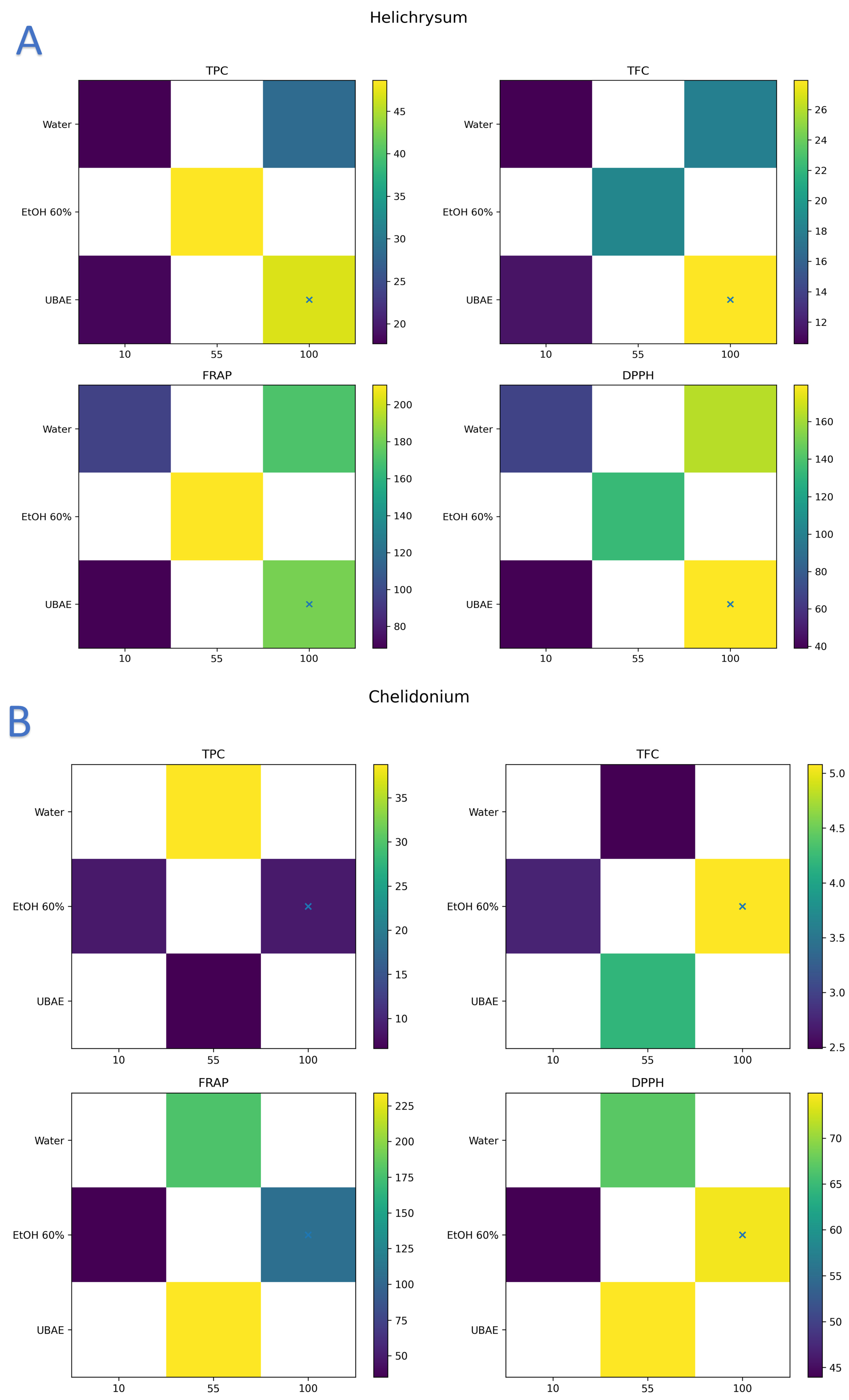
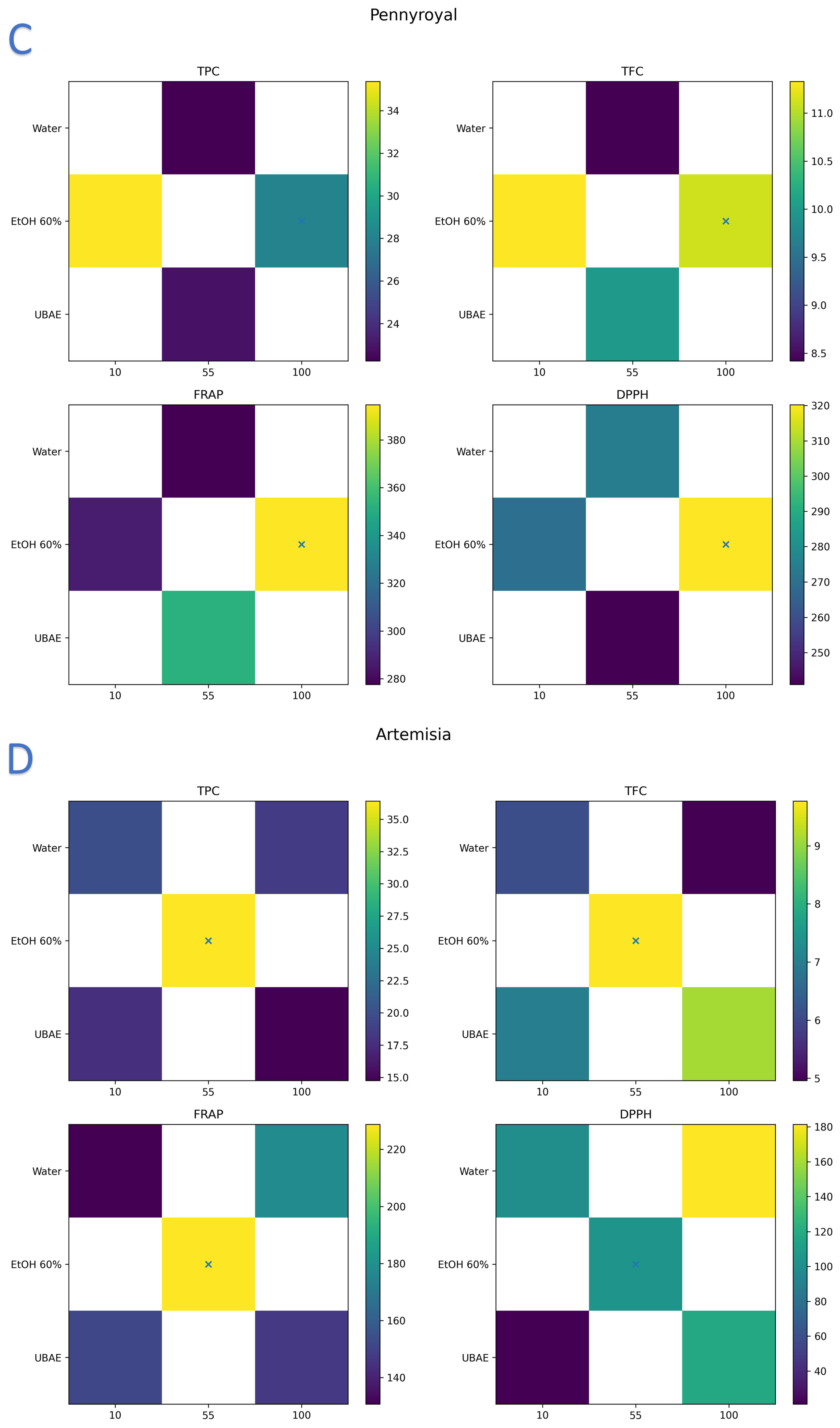
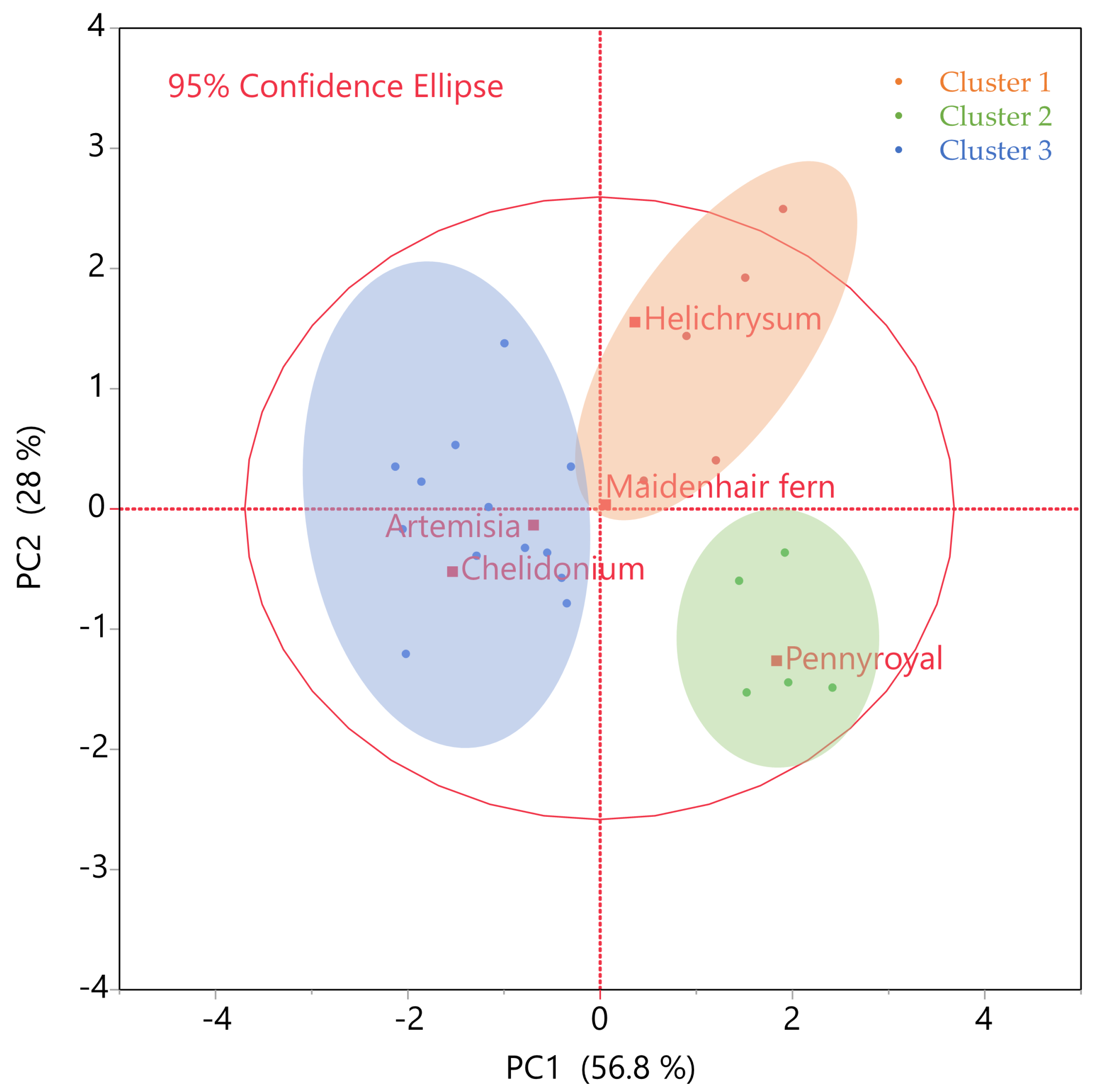
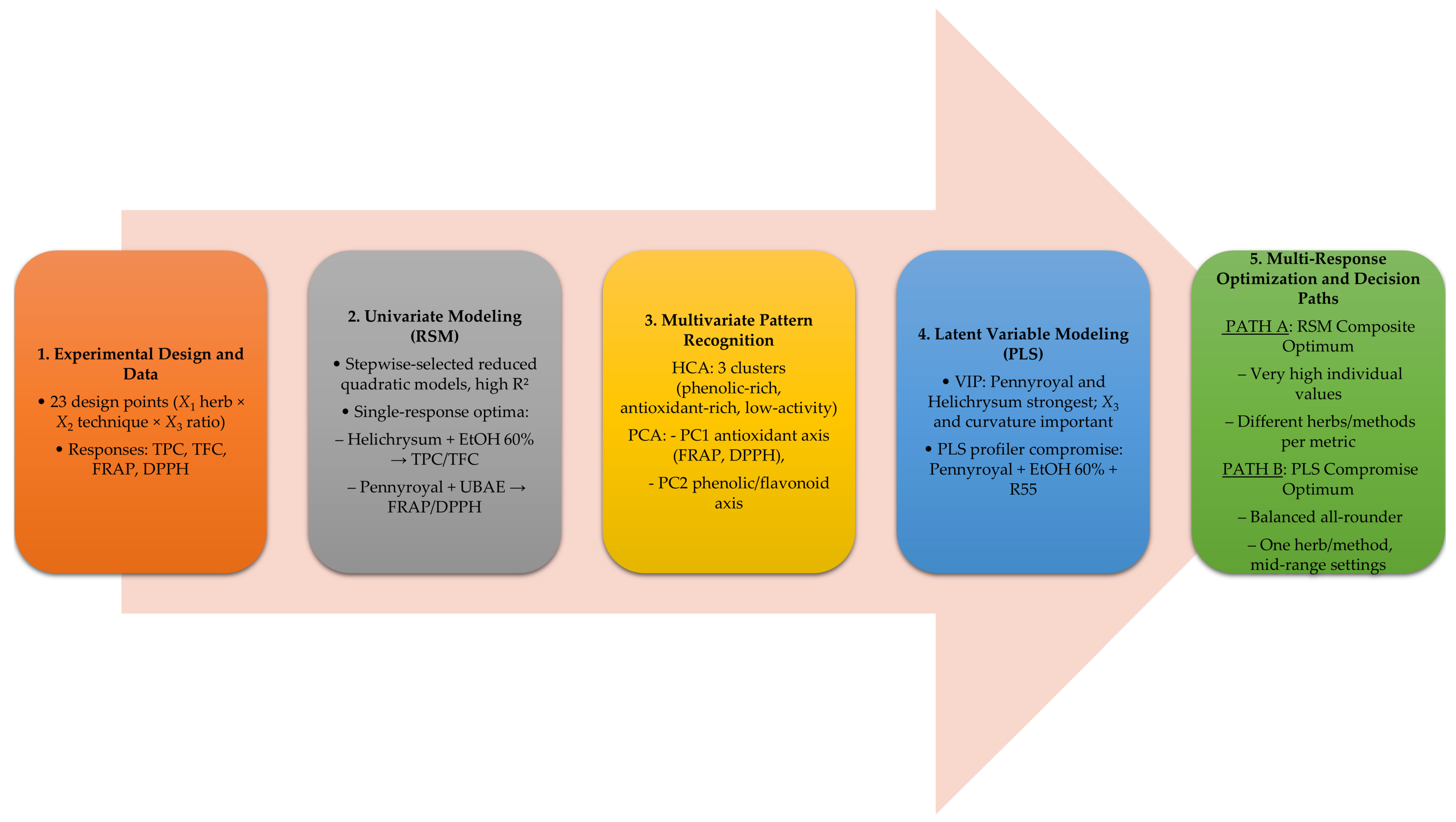
Data-Driven Optimization of Polyphenol Recovery and Antioxidant Capacity from Medicinal Herbs Using Chemometrics and HPLC Profiling for Functional Food Applications

 ,
, 
 and
and 
Abstract
1. Introduction
2. Results and Discussion
2.1. RSM Modeling and ANOVA
2.2. Regression Equations and Factor Effects
2.2.1. Total Polyphenolic Content (TPC)
2.2.2. Total Flavonoid Content (TFC)
2.2.3. Ferric Reducing Antioxidant Power (FRAP)
2.2.4. DPPH Radical Scavenging Activity
2.3. Multivariate Analyses (HCA, PCA, PLS)
2.3.1. Hierarchical Cluster Analysis (HCA)
2.3.2. Principal Component Analysis (PCA)
2.3.3. Partial Least Squares (PLS)
2.4. Multi-Response Optimization
2.5. HPLC Profiling of PLS Optimum
2.6. Molecular Mechanisms of Selected Polyphenols
3. Materials and Methods
3.1. Reagents and Solvents
3.2. Plant Materials
3.3. Instruments and Statistical Software
3.4. Experimental Design
3.5. Bioactive Compounds’ Determinations
3.5.1. Total Polyphenols Analysis
3.5.2. Total Flavonoids Analysis
3.5.3. Individual Polyphenols Quantification
3.6. Antioxidant Capacity Assays
3.6.1. Electron-Transfer Antioxidant Activity
3.6.2. Radical Scavenging Activity
3.7. Statistical Analysis
4. Conclusions and Practical Implications
Author Contributions
Funding
Institutional Review Board Statement
Informed Consent Statement
Data Availability Statement
Conflicts of Interest
Appendix A

| Assay | Substance | Linear Equation | R2 | Range | LOD | LOQ |
|---|---|---|---|---|---|---|
| TPC (mg GAE/L) | Gallic acid | y = 0.0138x − 0.0044 | 0.9996 | 10–100 | 1.75 | 5.29 |
| TFC (mg RtE/L) | Rutin | y = 0.0029x + 0.0053 | 0.9966 | 30–300 | 4.42 | 14.58 |
| FRAP (μmol AAE/L) | Ascorbic acid | y = 0.0019x − 0.0005 | 0.9997 | 50–500 | 7.06 | 21.39 |
| DPPH (μmol AAE/L) | Ascorbic acid | y = 0.0625x − 0.3165 | 0.9994 | 100–600 | 22.17 | 67.18 |
| Polyphenolic Compound | Equation | R2 | RT (min) | λmax (nm) | LOD (mg/L) | LOQ (mg/L) | Recovery (%) |
|---|---|---|---|---|---|---|---|
| Protocatechuic acid | y = 21,282.98x − 63,918.97 | 0.977 | 13.4 | 260 | 7.47 | 22.64 | 95.36 |
| Neochlorogenic acid | y = 28,213.52x + 551.72 | 0.999 | 16.5 | 324 | 1.74 | 5.26 | 98.36 |
| Chlorogenic acid | y = 50,320.40x − 23,038.36 | 0.994 | 21.9 | 325 | 3.67 | 11.11 | 94.90 |
| Vanillic acid | y = 28,178.39x + 15,571.9 | 0.999 | 23.9 | 270 | 2.31 | 6.99 | 99.29 |
| Caffeic acid | y = 937,658.95x + 12,216.24 | 0.999 | 24.8 | 322 | 0.75 | 2.29 | 101.95 |
| Syringic acid | y = 24,093.04x + 6513.28 | 0.999 | 25.9 | 360 | 3.17 | 9.59 | 96.66 |
| Kaempferol-3-O-β-rutinoside | y = 35,702.88x + 9620.15 | 0.998 | 32.7 | 344 | 2.15 | 6.51 | 98.02 |
| Quercetin 3-D-galactoside | y = 41,489.69x − 35,577.55 | 0.993 | 34.6 | 257 | 3.96 | 12.00 | 100.60 |
| Luteolin-7-glucoside | y = 34,875.94x − 16,827.36 | 0.999 | 35.9 | 347 | 1.28 | 3.89 | 99.66 |
| Kaempferol-3-glucoside | y = 50,916.85x − 42,398.80 | 0.996 | 38.7 | 265 | 3.00 | 9.08 | 94.77 |
| Isoharmetin-3-O-glucoside | y = 38,983.01x − 22,058.45 | 0.996 | 39.7 | 352 | 2.93 | 8.89 | 99.45 |
| Apigenin-7-O-glucoside | y = 64,742.65x + 15,897.94 | 0.998 | 39.9 | 336 | 2.22 | 6.72 | 99.20 |
| Myricetin | y = 69,752.64x − 57,937.66 | 0.996 | 41.1 | 371 | 3.20 | 9.69 | 99.40 |
| Rosmarinic acid | y = 50,281.27x − 113,633.31 | 0.995 | 41.6 | 329 | 4.21 | 12.74 | 93.38 |
| Quercetin | y = 45,367.87x − 56,445.13 | 0.999 | 45.9 | 360 | 2.03 | 6.16 | 98.73 |
| Apigenin | y = 95,483.53x − 5214.26 | 0.998 | 55.9 | 227 | 1.03 | 3.13 | 98.54 |
| Kaempferol | y = 93,385.02x − 18,613.03 | 0.999 | 56.9 | 265 | 1.34 | 4.05 | 98.93 |
| Rosmanol | y = 5509.46x − 10,899.23 | 0.994 | 65.9 | 288 | 3.77 | 11.41 | 93.84 |
References
- Davis, C.C.; Choisy, P. Medicinal plants meet modern biodiversity science. Curr. Biol. 2024, 34, R158–R173. [Google Scholar] [CrossRef]
- Sun, W.; Shahrajabian, M.H. Therapeutic Potential of Phenolic Compounds in Medicinal Plants—Natural Health Products for Human Health. Molecules 2023, 28, 1845. [Google Scholar] [CrossRef]
- Rudrapal, M.; Khairnar, S.J.; Khan, J.; Dukhyil, A.B.; Ansari, M.A.; Alomary, M.N.; Alshabrmi, F.M.; Palai, S.; Deb, P.K.; Devi, R. Dietary Polyphenols and Their Role in Oxidative Stress-Induced Human Diseases: Insights Into Protective Effects, Antioxidant Potentials and Mechanism(s) of Action. Front. Pharmacol. 2022, 13, 806470. [Google Scholar] [CrossRef]
- Hbika, A.; Elbouzidi, A.; Taibi, M.; Ouahabi, S.; Loukili, E.H.; Bouyanzer, A.; Yahyaoui, M.I.; Asehraou, A.; El Hachlafi, N.; Salamatullah, A.M.; et al. Isolation of Arborescin from Artemisia absinthium L. and Study of Its Antioxidant and Antimicrobial Potential by Use of In Vitro and In Silico Approaches. Separations 2024, 11, 209. [Google Scholar] [CrossRef]
- Batiha, G.E.-S.; Olatunde, A.; El-Mleeh, A.; Hetta, H.F.; Al-Rejaie, S.; Alghamdi, S.; Zahoor, M.; Magdy Beshbishy, A.; Murata, T.; Zaragoza-Bastida, A.; et al. Bioactive Compounds, Pharmacological Actions, and Pharmacokinetics of Wormwood (Artemisia absinthium). Antibiotics 2020, 9, 353. [Google Scholar] [CrossRef]
- Szopa, A.; Pajor, J.; Klin, P.; Rzepiela, A.; Elansary, H.O.; Al-Mana, F.A.; Mattar, M.A.; Ekiert, H. Artemisia absinthium L.—Importance in the History of Medicine, the Latest Advances in Phytochemistry and Therapeutical, Cosmetological and Culinary Uses. Plants 2020, 9, 1063. [Google Scholar] [CrossRef]
- Liu, Z.; Li, X.; Jin, Y.; Nan, T.; Zhao, Y.; Huang, L.; Yuan, Y. New Evidence for Artemisia absinthium as an Alternative to Classical Antibiotics: Chemical Analysis of Phenolic Compounds, Screening for Antimicrobial Activity. Int. J. Mol. Sci. 2023, 24, 12044. [Google Scholar] [CrossRef]
- Barroso, M.R.; Barros, L.; Dueñas, M.; Carvalho, A.M.; Santos-Buelga, C.; Fernandes, I.P.; Barreiro, M.F.; Ferreira, I.C.F.R. Exploring the antioxidant potential of Helichrysum stoechas (L.) Moench phenolic compounds for cosmetic applications: Chemical characterization, microencapsulation and incorporation into a moisturizer. Ind. Crops Prod. 2014, 53, 330–336. [Google Scholar] [CrossRef]
- Kherbache, A.; Senator, A.; Laouicha, S.; Al-Zoubi, R.M.; Bouriche, H. Phytochemical analysis, antioxidant and anti-inflammatory activities of Helichrysum stoechas (L.) Moench extracts. Biocatal. Agric. Biotechnol. 2020, 29, 101826. [Google Scholar] [CrossRef]
- Nile, S.H.; Wang, H.; Nile, A.; Lin, X.; Dong, H.; Venkidasamy, B.; Sieniawska, E.; Enkhtaivan, G.; Kai, G. Comparative analysis of metabolic variations, antioxidant potential and cytotoxic effects in different parts of Chelidonium majus L. Food Chem. Toxicol. 2021, 156, 112483. [Google Scholar] [CrossRef]
- Jakovljevic, Z.D.; Stankovic, S.M.; Topuzovic, D.M. Seasonal variability of Chelidonium majus L. secondary metabolites content and antioxidant activity. EXCLI J. 2013, 12, 260–268. [Google Scholar]
- Borges, A.; Ordóñez-Díaz, J.L.; Aquino, Y.; Moreno-Rojas, J.M.; Calvo, M.L.M.; Vaz, J.A.; Calhelha, R.C. Analysis of the Phenolic Profile of Chelidonium majus L. and Its Combination with Sericin: Balancing Antimicrobial Activity and Cytocompatibility. Int. J. Mol. Sci. 2025, 26, 9911. [Google Scholar] [CrossRef]
- Dehdari, S.; Hajimehdipoor, H. Medicinal Properties of Adiantum capillus-veneris Linn. in Traditional Medicine and Modern Phytotherapy: A Review Article. Iran. J. Public Health 2018, 47, 188–197. [Google Scholar]
- Kashkooe, A.; Sardari, F.A.; Mehrabadi, M.M.; Zarshenas, M.M. A Review of Pharmacological Properties and Toxicological Effects of Adiantum capillus-veneris L. Curr. Drug Discov. Technol. 2021, 18, 186–193. [Google Scholar] [CrossRef]
- Qadir, S.A.; Awlqadr, F.H.; Qadir, M.H.; Qadir, A.M.; Faraj, A.M.; Salih, S.A.; Saeed, M.N.; Arab, K.; Hosseini, S.M.N. Adiantum capillus-veneris: A Comprehensive Review of Its Medicinal Properties, Bioactive Compounds, and Advanced Extraction Techniques. Food Sci. Nutr. 2025, 13, e71118. [Google Scholar] [CrossRef]
- Amtaghri, S.; Slaoui, M.; Eddouks, M. Mentha Pulegium: A Plant with Several Medicinal Properties. Endocr. Metab. Immune Disord. Drug Targets 2024, 24, 302–320. [Google Scholar] [CrossRef] [PubMed]
- Al-Rajhi, A.M.H.; Qanash, H.; Almuhayawi, M.S.; Al Jaouni, S.K.; Bakri, M.M.; Ganash, M.; Salama, H.M.; Selim, S.; Abdelghany, T.M. Molecular Interaction Studies and Phytochemical Characterization of Mentha pulegium L. Constituents with Multiple Biological Utilities as Antioxidant, Antimicrobial, Anticancer and Anti-Hemolytic Agents. Molecules 2022, 27, 4824. [Google Scholar] [CrossRef] [PubMed]
- Wojtunik-Kulesza, K.A. Toxicity of Selected Monoterpenes and Essential Oils Rich in These Compounds. Molecules 2022, 27, 1716. [Google Scholar] [CrossRef]
- Brzezińska, R.; Górska, A.; Wirkowska-Wojdyła, M.; Piasecka, I. Response Surface Methodology as a Tool for Optimization of Extraction Process of Bioactive Compounds from Spent Coffee Grounds. Appl. Sci. 2023, 13, 7634. [Google Scholar] [CrossRef]
- Zgórka, G.; Adamska-Szewczyk, A.; Baj, T. Response Surface Methodology in Optimising the Extraction of Polyphenolic Antioxidants from Flower Buds of Magnolia × soulangeana Soul.-Bod. var. ‘Lennei’ and Their Detailed Qualitative and Quantitative Profiling. Molecules 2023, 28, 6335. [Google Scholar] [CrossRef]
- Tsanaktsidou, E.; Karavasili, C.; Zacharis, C.K.; Fatouros, D.G.; Markopoulou, C.K. Partial Least Square Model (PLS) as a Tool to Predict the Diffusion of Steroids Across Artificial Membranes. Molecules 2020, 25, 1387. [Google Scholar] [CrossRef]
- Liu, Y.; Dar, B.N.; Makroo, H.A.; Aslam, R.; Martí-Quijal, F.J.; Castagnini, J.M.; Amigo, J.M.; Barba, F.J. Optimizing Recovery of High-Added-Value Compounds from Complex Food Matrices Using Multivariate Methods. Antioxidants 2024, 13, 1510. [Google Scholar] [CrossRef]
- Gil-Martín, E.; Forbes-Hernández, T.; Romero, A.; Cianciosi, D.; Giampieri, F.; Battino, M. Influence of the extraction method on the recovery of bioactive phenolic compounds from food industry by-products. Food Chem. 2022, 378, 131918. [Google Scholar] [CrossRef]
- Messaoudi, M.; Rebiai, A.; Sawicka, B.; Atanassova, M.; Ouakouak, H.; Larkem, I.; Egbuna, C.; Awuchi, C.G.; Boubekeur, S.; Ferhat, M.A.; et al. Effect of Extraction Methods on Polyphenols, Flavonoids, Mineral Elements, and Biological Activities of Essential Oil and Extracts of Mentha pulegium L. Molecules 2022, 27, 11. [Google Scholar] [CrossRef] [PubMed]
- Balciunaitiene, A.; Viskelis, P.; Viskelis, J.; Streimikyte, P.; Liaudanskas, M.; Bartkiene, E.; Zavistanaviciute, P.; Zokaityte, E.; Starkute, V.; Ruzauskas, M.; et al. Green Synthesis of Silver Nanoparticles Using Extract of Artemisia absinthium L., Humulus lupulus L. and Thymus vulgaris L., Physico-Chemical Characterization, Antimicrobial and Antioxidant Activity. Processes 2021, 9, 1304. [Google Scholar] [CrossRef]
- Samanidis, I.; Krigas, N.; Athanasiadis, V.; Makrygiannis, I.; Mantiniotou, M.; Lalas, S.I. A Comparative Phytochemical Investigation of the Greek Members of the Genus Helichrysum Mill., with Emphasis on the Local Endemic Helichrysum amorginum Boiss and Orph. Plants 2025, 14, 229. [Google Scholar] [CrossRef]
- Ašimović, Z.; Hasanović, S.; Muminović, Š.; Spaho, N.; Čorbo, S.; Čengić, L. Antioxidant Activity and Total Phenolic Content Determining in Samples of Celandine (Chelidonium majus L.) by Applying Different Solvents. In Proceedings of the 32nd Scientific-Expert Conference of Agriculture and Food Industry; Brka, M., Omanović-Mikličanin, E., Grahić, J., Muhamedagić, S., Mujčinović, A., Toroman, A., Falan, V., Eds.; Springer Nature: Cham, Switzerland, 2023; pp. 202–209. [Google Scholar]
- Seif, M.; Aati, H.; Amer, M.; Ragauskas, A.J.; Seif, A.; El-Sappah, A.H.; Aati, A.; Madboli, A.E.-N.A.; Emam, M. Mitigation of Hepatotoxicity via Boosting Antioxidants and Reducing Oxidative Stress and Inflammation in Carbendazim-Treated Rats Using Adiantum capillus-veneris L. Extract. Molecules 2023, 28, 4720. [Google Scholar] [CrossRef]
- Raposo, F.; Borja, R.; Gutiérrez-González, J.A. A comprehensive and critical review of the unstandardized Folin-Ciocalteu assay to determine the total content of polyphenols: The conundrum of the experimental factors and method validation. Talanta 2024, 272, 125771. [Google Scholar] [CrossRef]
- Lawag, I.L.; Nolden, E.S.; Schaper, A.A.M.; Lim, L.Y.; Locher, C. A Modified Folin-Ciocalteu Assay for the Determination of Total Phenolics Content in Honey. Appl. Sci. 2023, 13, 2135. [Google Scholar] [CrossRef]
- Ucan Turkmen, F.; Inan, E. Investigation of antioxidant activities and phenolic profiles of the methanol extracts of Rumex acetosella, Mentha pulegium, Piper cubeba, and Elettaria cardamomum. Plant Biosyst. Int. J. Deal. Asp. Plant Biol. 2025, 159, 570–580. [Google Scholar] [CrossRef]
- Abbou, F.; Azzi, R.; Ouffai, K.; El Haci, I.A.; Belyagoubi-Benhammou, N.; Bensouici, C.; Benamar, H. Phenolic Profile, Antioxidant and Enzyme Inhibitory Properties of Phenolic-Rich Fractions from the Aerial Parts of Mentha pulegium L. S. Afr. J. Bot. 2022, 146, 196–204. [Google Scholar] [CrossRef]
- Tacherfiout, M.; Kherbachi, S.; Kheniche, M.; Mattonai, M.; Degano, I.; Ribechini, E.; Khettal, B. HPLC-DAD and HPLC-ESI-MS-MS profiles of hydroalcoholic extracts of Chamaemelum nobile and Mentha pulegium, and study of their antihemolytic activity against AAPH-induced hemolysis. S. Afr. J. Bot. 2022, 150, 678–690. [Google Scholar] [CrossRef]
- EFSA Panel on Food Contact Materials, Enzymes, Flavourings and Processing Aids (CEF); Silano, V.; Bolognesi, C.; Castle, L.; Cravedi, J.-P.; Engel, K.-H.; Fowler, P.; Franz, R.; Grob, K.; Gürtler, R.; et al. Scientific Opinion on Flavouring Group Evaluation 57, Revision 1 (FGE.57Rev1): Consideration of isopulegone and three flavouring substances evaluated by JECFA (55th meeting). EFSA J. 2017, 15, e04727. [Google Scholar] [CrossRef]
- Cadena-Iñiguez, J.; Santiago-Osorio, E.; Sánchez-Flores, N.; Salazar-Aguilar, S.; Soto-Hernández, R.M.; Riviello-Flores, M.d.l.L.; Macías-Zaragoza, V.M.; Aguiñiga-Sánchez, I. The Cancer-Protective Potential of Protocatechuic Acid: A Narrative Review. Molecules 2024, 29, 1439. [Google Scholar] [CrossRef]
- Tsai, M.-C.; Wang, C.-C.; Tsai, I.-N.; Yu, M.-H.; Yang, M.-Y.; Lee, Y.-J.; Chan, K.-C.; Wang, C.-J. Improving the Effects of Mulberry Leaves and Neochlorogenic Acid on Glucotoxicity-Induced Hepatic Steatosis in High Fat Diet Treated db/db Mice. J. Agric. Food Chem. 2024, 72, 6339–6346. [Google Scholar] [CrossRef]
- Xue, H.; Wei, M.; Ji, L. Chlorogenic acids: A pharmacological systematic review on their hepatoprotective effects. Phytomedicine 2023, 118, 154961. [Google Scholar] [CrossRef] [PubMed]
- Swislocka, R.; Kowalczyk, N.; Dabrowska, A.; Choinska, R.; Lewandowski, W.; Swiderski, G. Spectroscopic, antioxidant and cytotoxicity studies of vanillic acids. Sci. Rep. 2025, 15, 31396. [Google Scholar] [CrossRef]
- Lu, L.; Luo, K.; Luan, Y.; Zhao, M.; Wang, R.; Zhao, X.; Wu, S. Effect of caffeic acid esters on antioxidant activity and oxidative stability of sunflower oil: Molecular simulation and experiments. Food Res. Int. 2022, 160, 111760. [Google Scholar] [CrossRef] [PubMed]
- Zhao, Z.; Yang, Q.; Sun, Y.; Ruan, X. Unveiling the antioxidant and anti-inflammatory potential of syringic acid: Mechanistic insights and pathway interactions. Front. Pharmacol. 2025, 16, 1615294. [Google Scholar] [CrossRef]
- Zhou, P.; Ma, Y.; Peng, J.; Hua, F. Kaempferol-3-O-Rutinoside: A Natural Flavonoid Glycosides with Multifaceted Therapeutic Potential. Neurochem. J. 2023, 17, 247–252. [Google Scholar] [CrossRef]
- Lim, Y.J.; Park, H.; Kim, W.; Eom, S.H. Ultraviolet B-induced increase of cyanidin-3-O-galactoside, quercetin-3-O-galactoside, and ursolic acid enhances antioxidant and anti-inflammatory activities in apples. Postharvest Biol. Technol. 2023, 206, 112580. [Google Scholar] [CrossRef]
- De Stefano, A.; Caporali, S.; Di Daniele, N.; Rovella, V.; Cardillo, C.; Schinzari, F.; Minieri, M.; Pieri, M.; Candi, E.; Bernardini, S.; et al. Anti-Inflammatory and Proliferative Properties of Luteolin-7-O-Glucoside. Int. J. Mol. Sci. 2021, 22, 1321. [Google Scholar] [CrossRef]
- Nile, A.; Nile, S.H.; Shin, J.; Park, G.; Oh, J.-W. Quercetin-3-Glucoside Extracted from Apple Pomace Induces Cell Cycle Arrest and Apoptosis by Increasing Intracellular ROS Levels. Int. J. Mol. Sci. 2021, 22, 10749. [Google Scholar] [CrossRef]
- Gonçalves, A.C.; Falcão, A.; Alves, G.; Silva, L.R.; Flores-Félix, J.D. Antioxidant activity of the main phenolics found in red fruits: An in vitro and in silico study. Food Chem. 2024, 452, 139459. [Google Scholar] [CrossRef]
- Caporali, S.; De Stefano, A.; Calabrese, C.; Giovannelli, A.; Pieri, M.; Savini, I.; Tesauro, M.; Bernardini, S.; Minieri, M.; Terrinoni, A. Anti-Inflammatory and Active Biological Properties of the Plant-Derived Bioactive Compounds Luteolin and Luteolin 7-Glucoside. Nutrients 2022, 14, 1155. [Google Scholar] [CrossRef]
- Felice, M.R.; Maugeri, A.; De Sarro, G.; Navarra, M.; Barreca, D. Molecular Pathways Involved in the Anti-Cancer Activity of Flavonols: A Focus on Myricetin and Kaempferol. Int. J. Mol. Sci. 2022, 23, 4411. [Google Scholar] [CrossRef] [PubMed]
- Kowalczyk, A.; Tuberoso, C.I.G.; Jerković, I. The Role of Rosmarinic Acid in Cancer Prevention and Therapy: Mechanisms of Antioxidant and Anticancer Activity. Antioxidants 2024, 13, 1313. [Google Scholar] [CrossRef]
- Maugeri, A.; Calderaro, A.; Patanè, G.T.; Navarra, M.; Barreca, D.; Cirmi, S.; Felice, M.R. Targets Involved in the Anti-Cancer Activity of Quercetin in Breast, Colorectal and Liver Neoplasms. Int. J. Mol. Sci. 2023, 24, 2952. [Google Scholar] [CrossRef]
- Zafar, A.; Alruwaili, N.K.; Imam, S.S.; Alsaidan, O.A.; Ahmed, M.M.; Yasir, M.; Warsi, M.H.; Alquraini, A.; Ghoneim, M.M.; Alshehri, S. Development and Optimization of Hybrid Polymeric Nanoparticles of Apigenin: Physicochemical Characterization, Antioxidant Activity and Cytotoxicity Evaluation. Sensors 2022, 22, 1364. [Google Scholar] [CrossRef]
- Zhang, Q.; Pan, J.; Liu, H.; Jiao, Z. Characterization of the Synergistic Antioxidant Activity of Epigallocatechin Gallate (EGCG) and Kaempferol. Molecules 2023, 28, 5265. [Google Scholar] [CrossRef]
- Bellumori, M.; Innocenti, M.; Congiu, F.; Cencetti, G.; Raio, A.; Menicucci, F.; Mulinacci, N.; Michelozzi, M. Within-Plant Variation in Rosmarinus officinalis L. Terpenes and Phenols and Their Antimicrobial Activity against the Rosemary Phytopathogens Alternaria alternata and Pseudomonas viridiflava. Molecules 2021, 26, 3425. [Google Scholar] [CrossRef]
- Okpara, E.S.; Adedara, I.A.; Guo, X.; Klos, M.L.; Farombi, E.O.; Han, S. Molecular mechanisms associated with the chemoprotective role of protocatechuic acid and its potential benefits in the amelioration of doxorubicin-induced cardiotoxicity: A review. Toxicol. Rep. 2022, 9, 1713–1724. [Google Scholar] [CrossRef] [PubMed]
- Tayeh, Z.; Ofir, R. Asteriscus graveolens Extract in Combination with Cisplatin/Etoposide/Doxorubicin Suppresses Lymphoma Cell Growth through Induction of Caspase-3 Dependent Apoptosis. Int. J. Mol. Sci. 2018, 19, 2219. [Google Scholar] [CrossRef]
- Tang, J.; Zhao, T.; Solanki, D.; Miao, X.; Zhou, W.; Hu, S. Selective hydrogen peroxide conversion tailored by surface, interface, and device engineering. Joule 2021, 5, 1432–1461. [Google Scholar] [CrossRef]
- Efentakis, P.; Varela, A.; Chavdoula, E.; Sigala, F.; Sanoudou, D.; Tenta, R.; Gioti, K.; Kostomitsopoulos, N.; Papapetropoulos, A.; Tasouli, A.; et al. Levosimendan prevents doxorubicin-induced cardiotoxicity in time- and dose-dependent manner: Implications for inotropy. Cardiovasc. Res. 2020, 116, 576–591. [Google Scholar] [CrossRef] [PubMed]
- Bhatti, H.; Khan, S.; Faizi, S.; Abbas, G.; Ali, I.; Jawaid, S.; Ali, A.; Jamy, R.; Shahid, F.; Versiani, M.; et al. Protocatecheuic Acid Underlies the Antioxidant Activity Exhibited by Illicium Verum Fruit. J. Anal. Pharm. Res. 2017, 6, 00177. [Google Scholar] [CrossRef]
- Adedara, I.A.; Okpara, E.S.; Busari, E.O.; Omole, O.; Owumi, S.E.; Farombi, E.O. Dietary protocatechuic acid abrogates male reproductive dysfunction in streptozotocin-induced diabetic rats via suppression of oxidative damage, inflammation and caspase-3 activity. Eur. J. Pharmacol. 2019, 849, 30–42. [Google Scholar] [CrossRef]
- Hu, W.-H.; Dai, D.K.; Zheng, B.Z.-Y.; Duan, R.; Chan, G.K.-L.; Dong, T.T.-X.; Qin, Q.-W.; Tsim, K.W.-K. The binding of kaempferol-3-O-rutinoside to vascular endothelial growth factor potentiates anti-inflammatory efficiencies in lipopolysaccharide-treated mouse macrophage RAW264.7 cells. Phytomedicine 2021, 80, 153400. [Google Scholar] [CrossRef]
- Kalompatsios, D.; Athanasiadis, V.; Mantiniotou, M.; Lalas, S.I. Optimization of Ultrasonication Probe-Assisted Extraction Parameters for Bioactive Compounds from Opuntia macrorhiza Using Taguchi Design and Assessment of Antioxidant Properties. Appl. Sci. 2024, 14, 10460. [Google Scholar] [CrossRef]
- Mantiniotou, M.; Athanasiadis, V.; Kalompatsios, D.; Bozinou, E.; Ntourtoglou, G.; Dourtoglou, V.G.; Lalas, S.I. Atmospheric Room Temperature Plasma as a Green Pretreatment Strategy for Enhanced Phytochemical Extraction from Moringa oleifera Leaves. Foods 2025, 14, 3233. [Google Scholar] [CrossRef]
- Togantzi, M.-I.; Mantiniotou, M.; Kalompatsios, D.; Athanasiadis, V.; Giovanoudis, I.; Lalas, S.I. Cloud Point Extraction as a Green Method for the Extraction of Antioxidant Compounds from the Juice of Second-Grade Apples. Biomass 2025, 5, 48. [Google Scholar] [CrossRef]


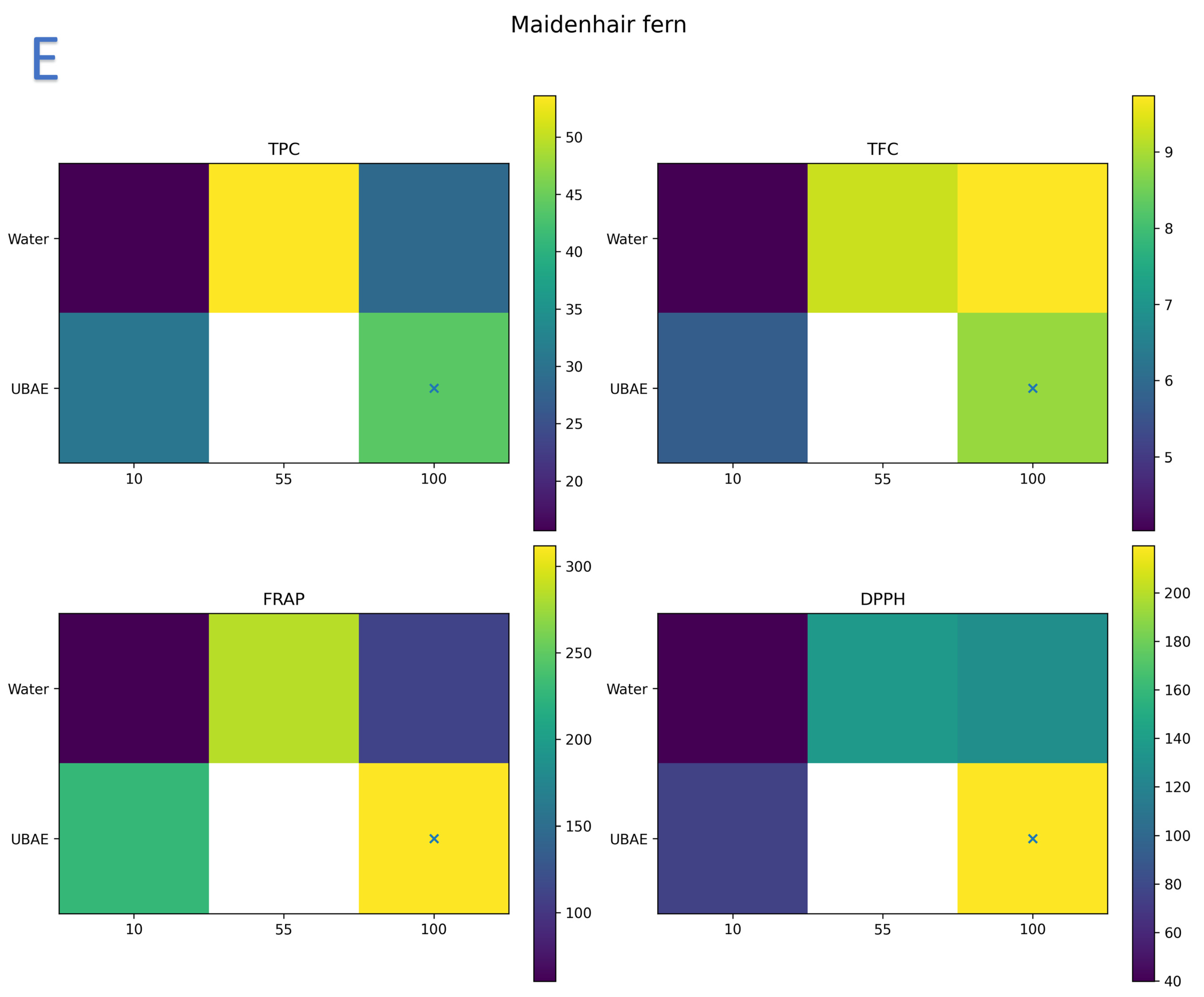

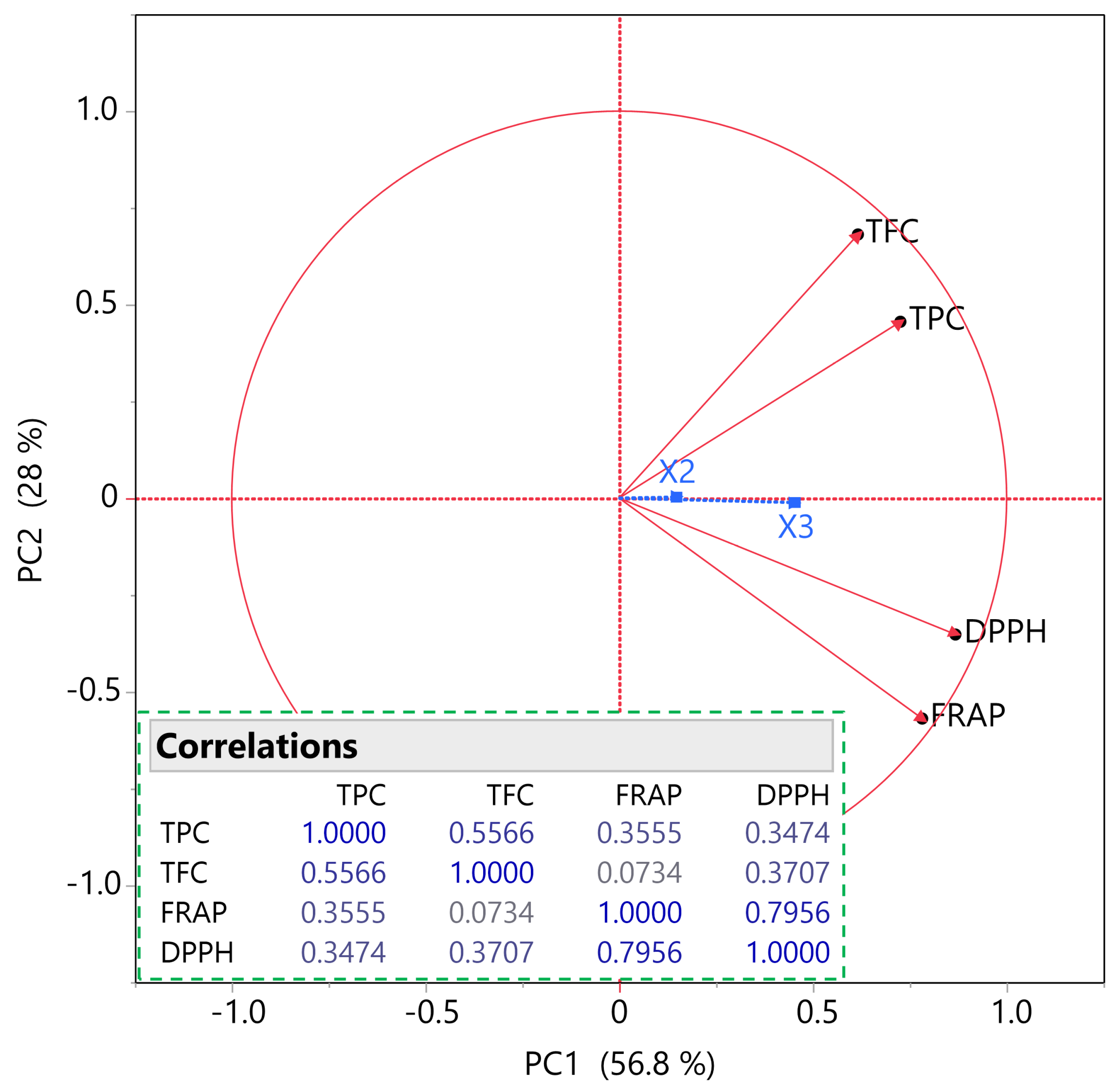


| Design Point | X1—Herb | X2—Technique | X3—Ratio (mL/g) | TPC (mg GAE/g dw) | TFC (mg RtE/g dw) | FRAP (μmol AAE/g dw) | DPPH (μmol AAE/g dw) |
|---|---|---|---|---|---|---|---|
| 1 | Maidenhair fern | EtOH 60% | 55 | 53.61 | 9.29 | 285.09 | 137.18 |
| 2 | Pennyroyal | Water | 55 | 22.25 | 8.42 | 277.63 | 274.50 |
| 3 | Chelidonium | Water | 55 | 38.78 | 2.49 | 178.65 | 67.04 |
| 4 | Chelidonium | UBAE | 55 | 6.60 | 4.19 | 233.97 | 74.93 |
| 5 | Helichrysum | Water | 100 | 28.47 | 18.09 | 170.64 | 164.64 |
| 6 | Chelidonium | EtOH 60% | 100 | 8.89 | 5.08 | 107.52 | 74.39 |
| 7 | Artemisia | UBAE | 10 | 17.76 | 7.02 | 151.64 | 21.01 |
| 8 | Pennyroyal | EtOH 60% | 10 | 35.37 | 11.33 | 286.36 | 270.08 |
| 9 | Maidenhair fern | Water | 10 | 15.66 | 4.03 | 60.30 | 39.98 |
| 10 | Helichrysum | EtOH 60% | 55 | 48.63 | 18.57 | 210.55 | 134.05 |
| 11 | Maidenhair fern | UBAE | 100 | 43.96 | 8.87 | 311.87 | 219.43 |
| 12 | Helichrysum | Water | 10 | 17.68 | 10.58 | 96.44 | 67.95 |
| 13 | Chelidonium | EtOH 60% | 10 | 8.77 | 2.74 | 35.10 | 43.95 |
| 14 | Pennyroyal | UBAE | 55 | 22.91 | 10.00 | 352.37 | 240.99 |
| 15 | Helichrysum | UBAE | 100 | 47.03 | 27.93 | 181.46 | 179.56 |
| 16 | Artemisia | EtOH 60% | 55 | 36.41 | 9.77 | 228.76 | 103.84 |
| 17 | Maidenhair fern | UBAE | 10 | 30.58 | 5.72 | 227.36 | 75.04 |
| 18 | Artemisia | UBAE | 100 | 14.76 | 9.12 | 147.12 | 117.94 |
| 19 | Artemisia | Water | 10 | 19.97 | 6.12 | 130.73 | 100.54 |
| 20 | Helichrysum | UBAE | 10 | 18.19 | 11.52 | 68.31 | 39.04 |
| 21 | Artemisia | Water | 100 | 18.59 | 4.96 | 178.11 | 181.41 |
| 22 | Pennyroyal | EtOH 60% | 100 | 28.14 | 11.12 | 394.76 | 320.22 |
| 23 | Maidenhair fern | Water | 100 | 28.84 | 9.74 | 110.70 | 128.96 |
| Response | Source | DF | Sum of Squares | Mean Square | F-Ratio | p-Value | R2 | Adj. R2 | RMSE | PRESS | PRESS RMSE | PRESS RSquare (Q2) |
|---|---|---|---|---|---|---|---|---|---|---|---|---|
| TPC | Model | 10 | 3447.20 | 344.72 | 8.354 | 0.0005 * | 0.8744 | 0.7697 | 6.42 | 6070.6 | 16.25 | 0.54 |
| Error | 12 | 495.16 | 41.26 | |||||||||
| Lack of fit | 7 | 399.18 | 57.03 | 2.971 | 0.1244 | |||||||
| Pure error | 5 | 95.98 | 19.20 | |||||||||
| TFC | Model | 8 | 1046.83 | 130.85 | 15.052 | <0.0001 * | 0.9098 | 0.8609 | 1.49 | 266.88 | 3.41 | 0.64 |
| Error | 14 | 121.77 | 8.70 | |||||||||
| Lack of fit | 9 | 101.06 | 11.23 | 1.945 | 0.2701 | |||||||
| Pure error | 5 | 20.71 | 4.14 | |||||||||
| FRAP | Model | 9 | 313,257.20 | 34,806.36 | 24.896 | <0.0001 * | 0.9491 | 0.9165 | 39.19 | 52,079.2 | 47.58 | 0.74 |
| Error | 13 | 18,185.04 | 1398.85 | |||||||||
| Lack of fit | 8 | 16,485.50 | 2060.69 | 4.204 | 0.0953 | |||||||
| Pure error | 5 | 1699.54 | 339.91 | |||||||||
| DPPH | Model | 9 | 184,071.10 | 20,452.34 | 25.022 | <0.0001 * | 0.9495 | 0.9174 | 15.13 | 11,880.8 | 22.73 | 0.93 |
| Error | 13 | 10,629.93 | 817.69 | |||||||||
| Lack of fit | 8 | 9458.19 | 1182.27 | 4.512 | 0.0806 | |||||||
| Pure error | 5 | 1171.74 | 234.35 |
| Predictor Terms | Description * | VIP Score |
|---|---|---|
| X1{Pennyroyal} | Herb factor contrast: Pennyroyal vs. other herbs | 1.98 |
| X1{Helichrysum} | Herb factor contrast: Helichrysum vs. other herbs | 1.86 |
| X3 | Solvent-to-solid ratio (coded) | 1.72 |
| X32 | Quadratic term for coded solvent-to-solid ratio | 1.59 |
| X1{Pennyroyal} × X3 | Interaction: Pennyroyal × ratio | 1.45 |
| X2 | Extraction technique (ordinal code: 1 = water; 2 = EtOH 60%; 3 = UBAE) | 1.32 |
| X22 | Quadratic term for extraction technique | 1.28 |
| X1{Chelidonium and Artemisia} | Herb factor contrast: Chelidonium and Artemisia vs. others | 1.17 |
| X1{Chelidonium and Artemisia} × X2 | Interaction: Chelidonium and Artemisia × technique | 1.08 |
| X1{Pennyroyal} × X2 | Interaction: Pennyroyal × technique | 1.03 |
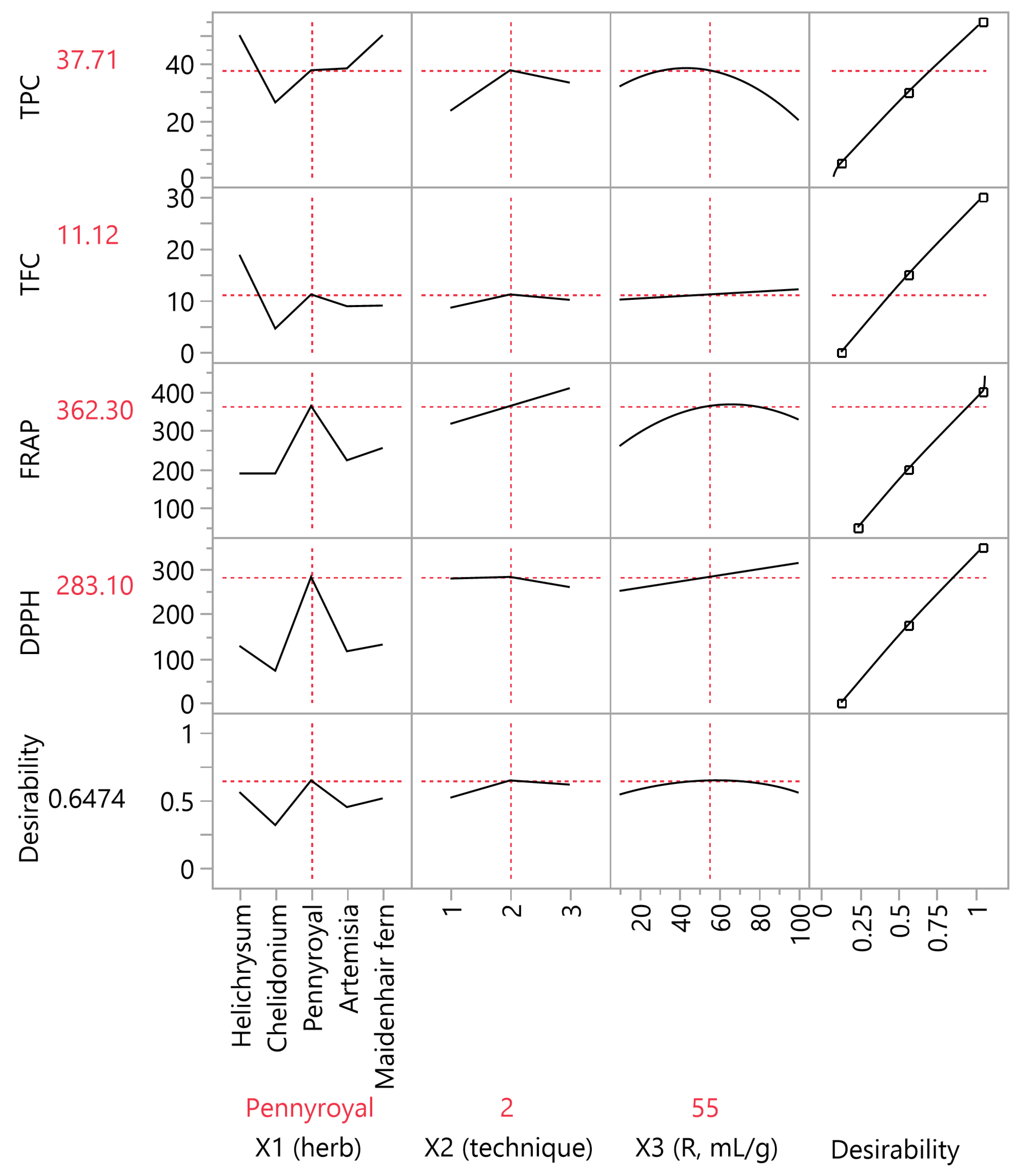
| Optimization Approach | RSM Composite Optimum * | PLS Compromise Optimum |
|---|---|---|
| X1—Herb | Helichrysum (TPC/TFC)/Pennyroyal (FRAP/DPPH) 1 | Pennyroyal |
| X2—Technique | EtOH 60% (TPC/TFC)/ UBAE (FRAP/DPPH) | EtOH 60% |
| X3—Ratio (mL/g) | 70–100 | 55 |
| TPC (mg GAE/g dw) | 60.32 ± 11.51 | 37.54 ± 2.10 |
| TFC (mg RtE/g dw) | 28.88 ± 2.92 | 21.62 ± 1.15 |
| FRAP (µmol AAE/g dw) | 465.26 ± 58.66 | 334.38 ± 12.37 |
| DPPH (µmol AAE/g dw) | 389.77 ± 29.01 | 262.67 ± 9.46 |
| Composite desirability | >0.94 (per individual model) | 0.6474 |
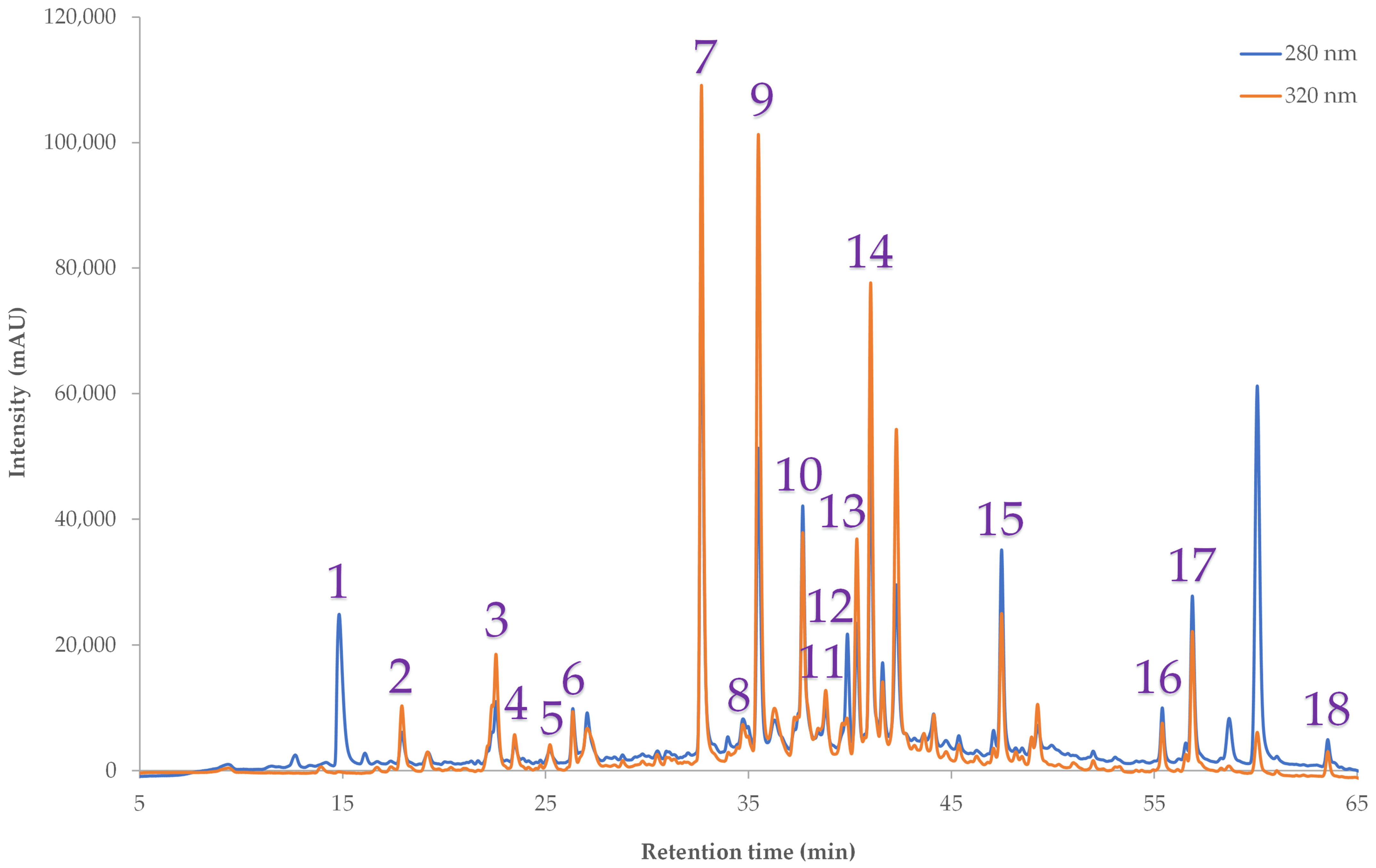
| Peak No. | Compound Name | Class | C (mg/L) | C (mg/g dw) | Reported Bioactivity | References |
|---|---|---|---|---|---|---|
| 1 | Protocatechuic acid | Phenolic acid | 28.7 ± 1.2 | 1.78 ± 0.07 | Antioxidant, anti-inflammatory | [35] |
| 2 | Neochlorogenic acid | Phenolic acid | 6.59 ± 0.16 | 0.41 ± 0.01 | Antioxidant, hepatoprotective | [36] |
| 3 | Chlorogenic acid | Phenolic acid | 3.51 ± 0.18 | 0.22 ± 0.01 | Antioxidant, hepatoprotective | [37] |
| 4 | Vanillic acid | Phenolic acid | 0.42 ± 0.03 | 0.03 ± 0 | Antioxidant | [38] |
| 5 | Caffeic acid | Phenolic acid | 0.12 ± 0 | 0.01 ± 0 | Antioxidant, antimicrobial | [39] |
| 6 | Syringic acid | Phenolic acid | 1.94 ± 0.06 | 0.12 ± 0 | Antioxidant | [40] |
| 7 | Kaempferol-3-O-β-rutinoside | Flavonoid glycoside | 52.3 ± 1.1 | 3.23 ± 0.07 | Antioxidant, cardioprotective | [41] |
| 8 | Quercetin-3-D-galactoside | Flavonoid glycoside | 2.83 ± 0.06 | 0.17 ± 0 | Antioxidant, anti-inflammatory | [42] |
| 9 | Luteolin-7-O-glucoside | Flavonoid glycoside | 24.8 ± 0.7 | 1.53 ± 0.04 | Antioxidant, anti-inflammatory | [43] |
| 10 | Kaempferol-3-glucoside | Flavonoid glycoside | 6.91 ± 0.44 | 0.43 ± 0.03 | Antioxidant | [44] |
| 11 | Isoharmetin-3-O-glucoside | Flavonoid glycoside | 14.6 ± 0.4 | 0.90 ± 0.02 | Antioxidant | [45] |
| 12 | Apigenin-7-O-glucoside | Flavonoid glycoside | 0.94 ± 0.03 | 0.06 ± 0 | Antioxidant, anti-inflammatory | [46] |
| 13 | Myricetin | Flavonoid aglycone | 4.03 ± 0.17 | 0.25 ± 0.01 | Antioxidant, anti-cancer | [47] |
| 14 | Rosmarinic acid | Phenolic acid | 6.95 ± 0.47 | 0.43 ± 0.03 | Strong antioxidant, anti-inflammatory | [48] |
| 15 | Quercetin | Flavonoid aglycone | 2.32 ± 0.13 | 0.14 ± 0.01 | Antioxidant, anti-cancer | [49] |
| 16 | Apigenin | Flavonoid aglycone | 1.26 ± 0.07 | 0.08 ± 0 | Antioxidant, anti-inflammatory | [50] |
| 17 | Kaempferol | Flavonoid aglycone | 4.52 ± 0.24 | 0.28 ± 0.02 | Antioxidant, anti-cancer | [51] |
| 18 | Rosmanol | Diterpene | 2.62 ± 0.13 | 0.16 ± 0.01 | Antioxidant, antimicrobial | [52] |
| Total identified | 165.4 ± 5.5 | 10.22 ± 0.34 |
Disclaimer/Publisher’s Note: The statements, opinions and data contained in all publications are solely those of the individual author(s) and contributor(s) and not of MDPI and/or the editor(s). MDPI and/or the editor(s) disclaim responsibility for any injury to people or property resulting from any ideas, methods, instructions or products referred to in the content. |
© 2025 by the authors. Licensee MDPI, Basel, Switzerland. This article is an open access article distributed under the terms and conditions of the Creative Commons Attribution (CC BY) license.
Share and Cite
Athanasiadis, V.; Avdoulach-Chatzi-Giousouf, E.; Koulouri, E.; Kalompatsios, D.; Lalas, S.I. Data-Driven Optimization of Polyphenol Recovery and Antioxidant Capacity from Medicinal Herbs Using Chemometrics and HPLC Profiling for Functional Food Applications. Int. J. Mol. Sci. 2026, 27, 309. https://doi.org/10.3390/ijms27010309
Athanasiadis V, Avdoulach-Chatzi-Giousouf E, Koulouri E, Kalompatsios D, Lalas SI. Data-Driven Optimization of Polyphenol Recovery and Antioxidant Capacity from Medicinal Herbs Using Chemometrics and HPLC Profiling for Functional Food Applications. International Journal of Molecular Sciences. 2026; 27(1):309. https://doi.org/10.3390/ijms27010309
Chicago/Turabian StyleAthanasiadis, Vassilis, Erva Avdoulach-Chatzi-Giousouf, Errika Koulouri, Dimitrios Kalompatsios, and Stavros I. Lalas. 2026. "Data-Driven Optimization of Polyphenol Recovery and Antioxidant Capacity from Medicinal Herbs Using Chemometrics and HPLC Profiling for Functional Food Applications" International Journal of Molecular Sciences 27, no. 1: 309. https://doi.org/10.3390/ijms27010309
APA StyleAthanasiadis, V., Avdoulach-Chatzi-Giousouf, E., Koulouri, E., Kalompatsios, D., & Lalas, S. I. (2026). Data-Driven Optimization of Polyphenol Recovery and Antioxidant Capacity from Medicinal Herbs Using Chemometrics and HPLC Profiling for Functional Food Applications. International Journal of Molecular Sciences, 27(1), 309. https://doi.org/10.3390/ijms27010309