The Histamine-Associated Inflammatory Landscape of Endometriosis: Molecular Profiling of HDC, HRH1-HRH4, and Cytokines Across Lesion Subtypes

 ,
,  and
and 
Abstract
1. Introduction
2. Results
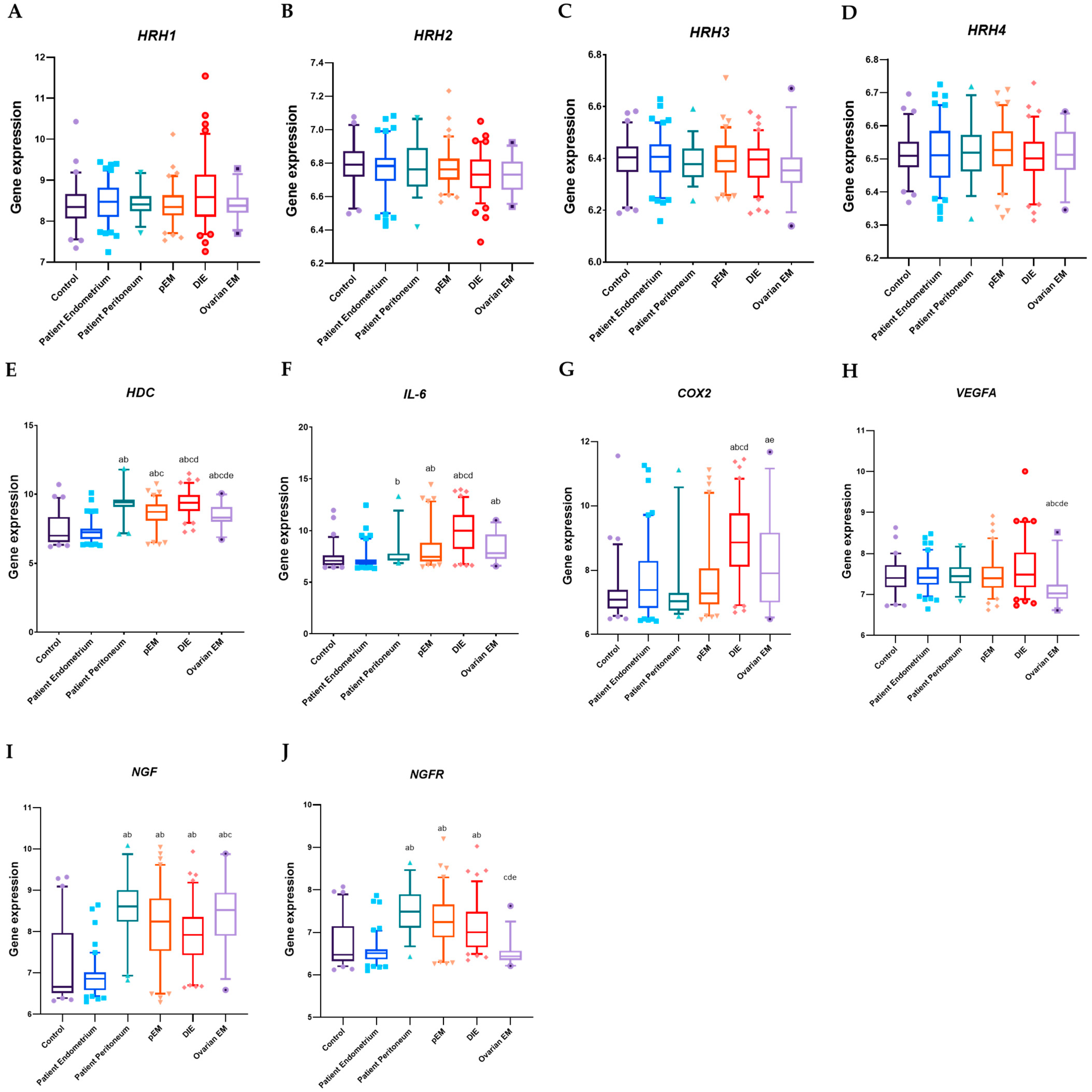
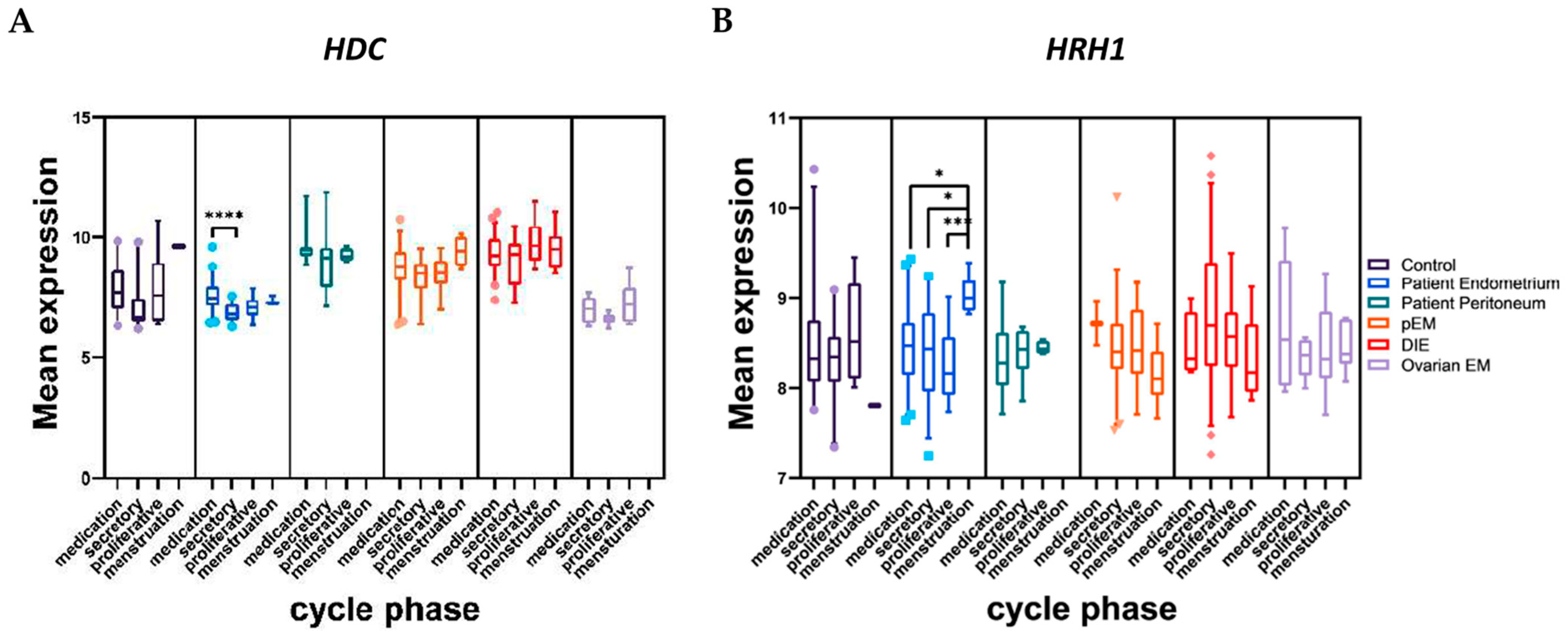
2.1. Altered Expression Patterns of Histamine Receptors, HDC, and Inflammatory Genes in Endometriosis and Control Tissues
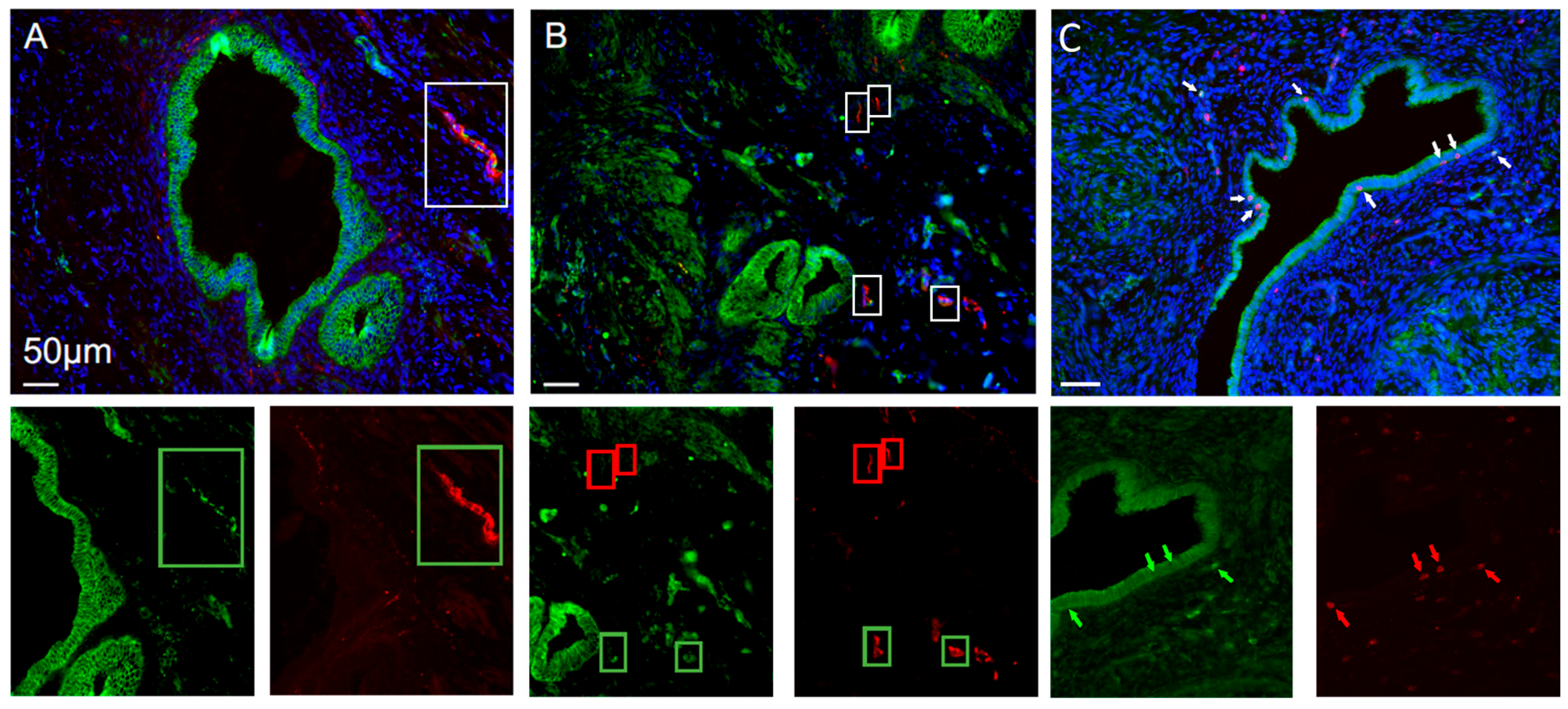
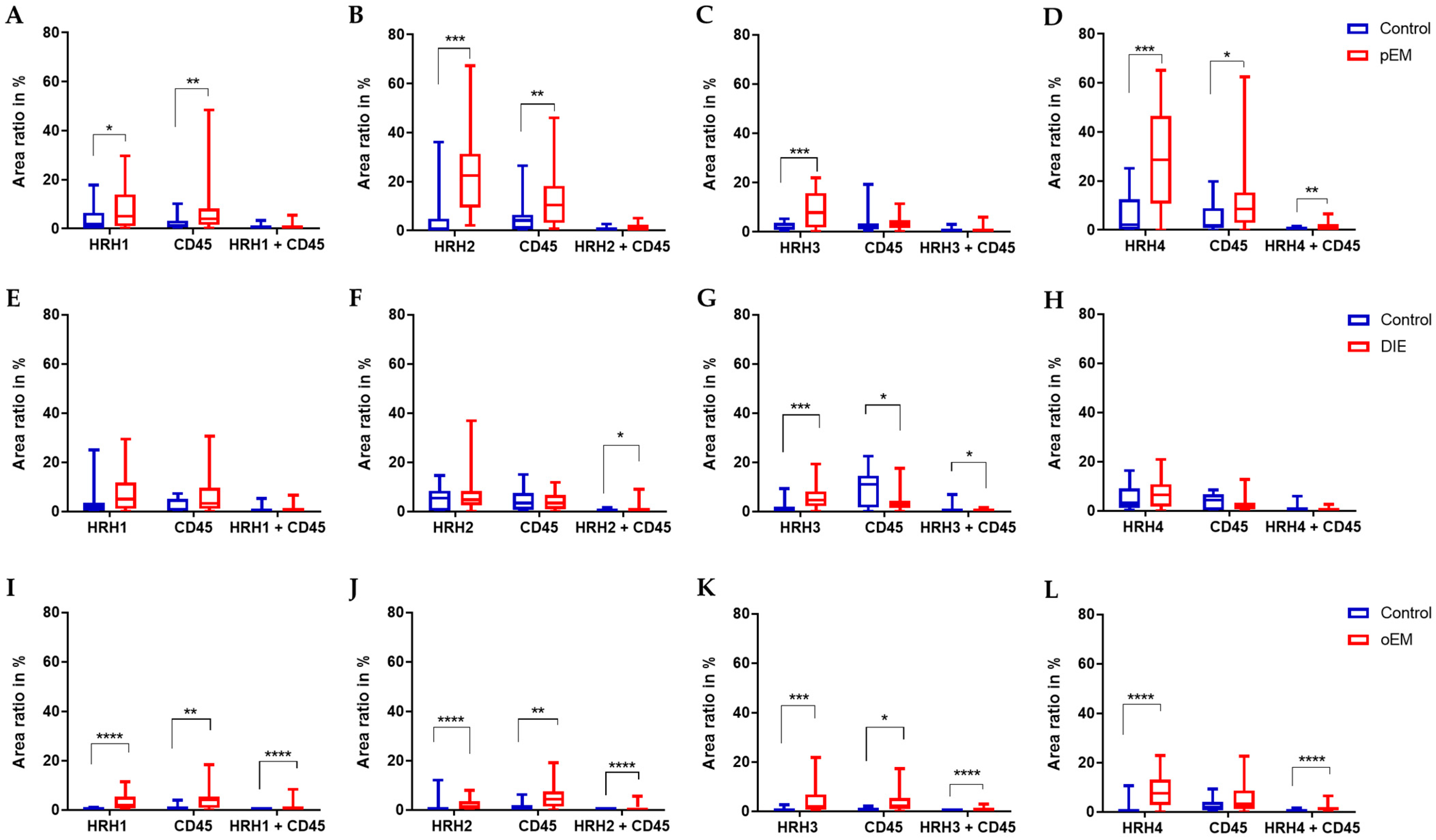
2.2. Histamine Receptor Distribution and Immune–Neural Interactions in Endometriosis
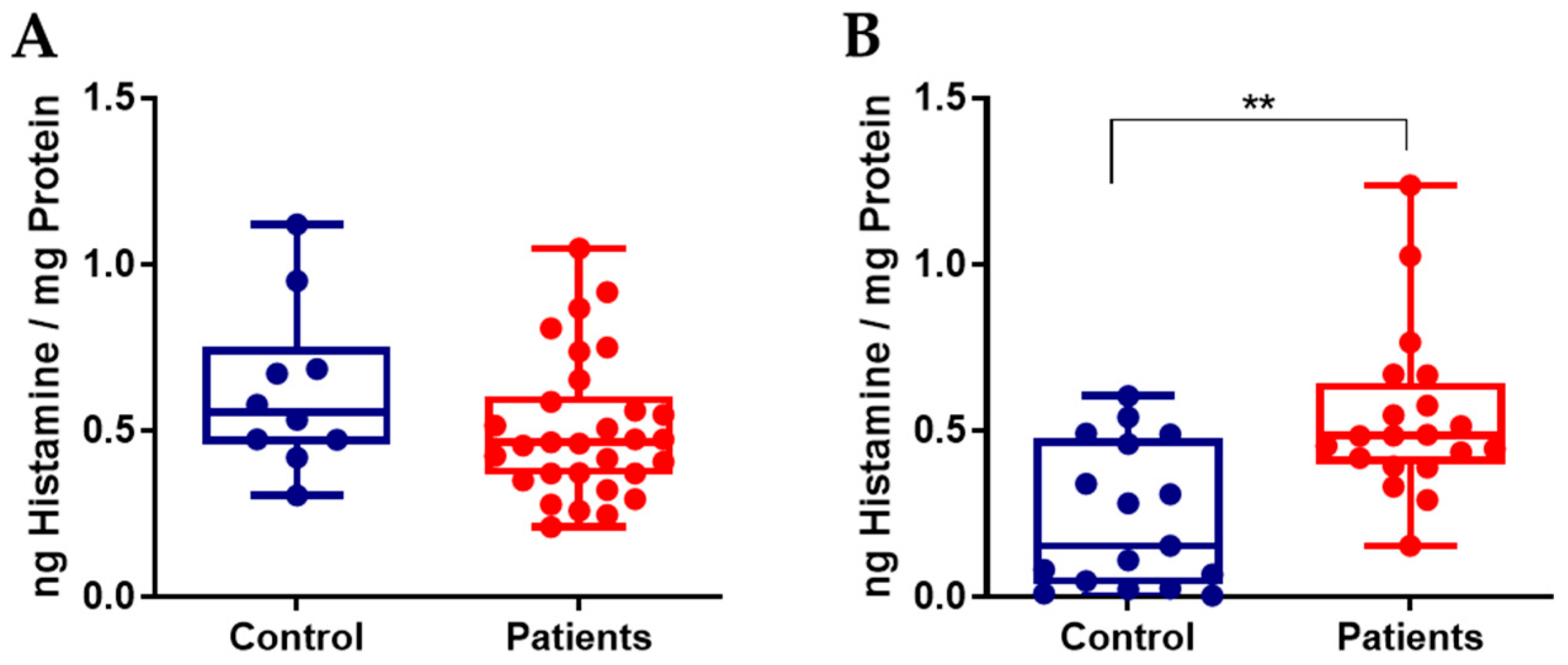
2.3. Comparative Analysis of Histamine Concentrations in Peritoneal Fluid and Serum from Endometriosis Patients and Controls
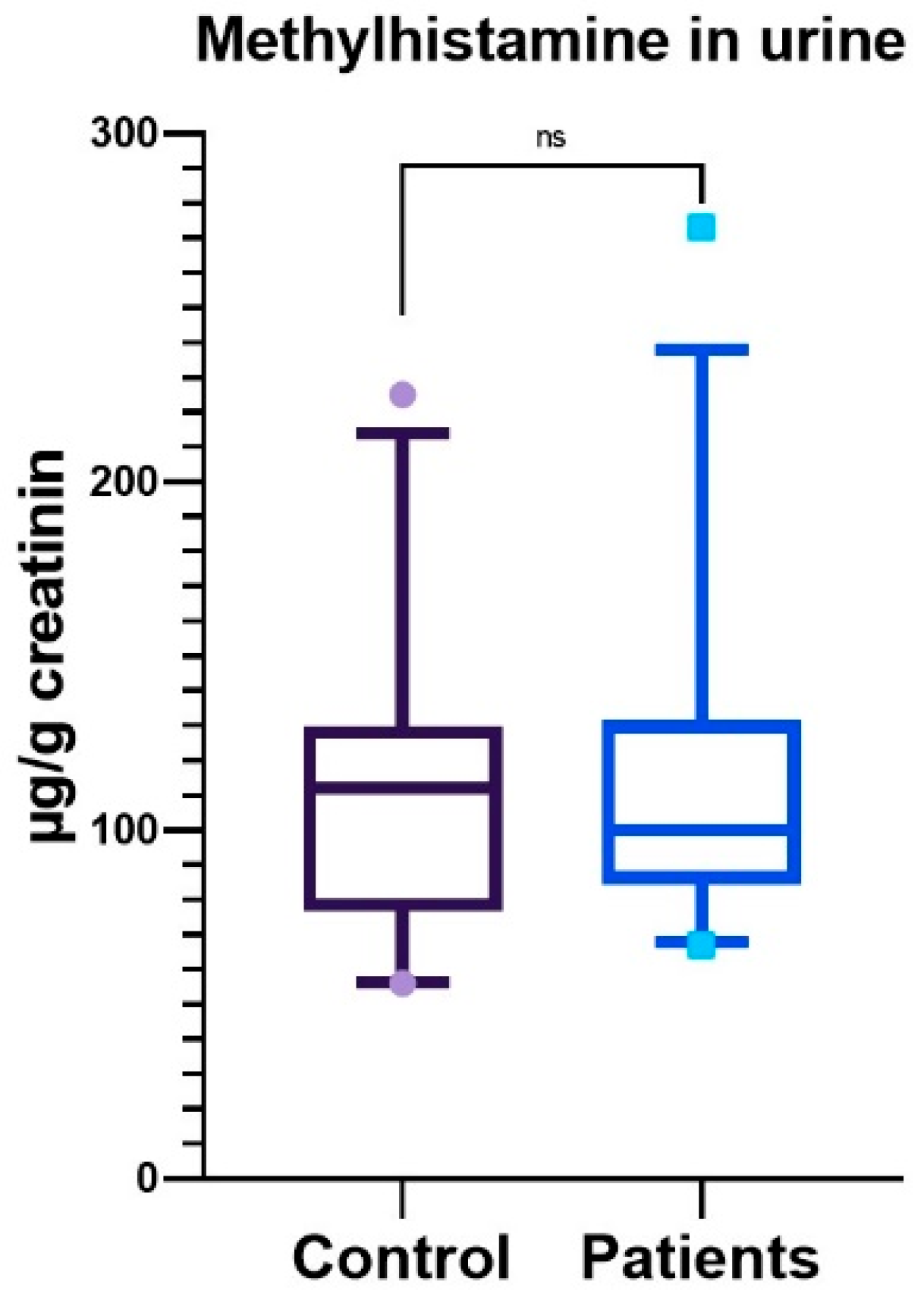
2.4. Methylhistamine Measurement in the Urine of Patients and Controls
3. Discussion
4. Materials and Methods
4.1. Patients and Samples
4.2. Analysis of Endometriosis-Associated Gene Expression and Clinical Features Using GEO Dataset GSE141549
4.3. Immunofluorescence Staining
4.4. Urinary Methylhistamine Quantification by HPLC in Endometriosis and Control Subjects
4.5. Histamine Measurement in Peritoneal Fluid and Serum by ELISA
4.6. Statistics
5. Conclusions
Supplementary Materials
Author Contributions
Funding
Institutional Review Board Statement
Informed Consent Statement
Data Availability Statement
Acknowledgments
Conflicts of Interest
Abbreviations
| ASRM | American Society for Reproductive Medicine |
| BEAS-2B | Human bronchial epithelial cell line |
| CD45 | Cluster of Differentiation 45 |
| CGRP | Calcitonin Gene-Related Peptide |
| CNS | Central Nervous System |
| COX2 | Cyclooxygenase-2 |
| Cyt | Cytokine |
| DAPI | 4′,6-Diamidino-2-Phenylindole |
| DAO | Diamine Oxidase |
| DIE | Deep Infiltrating Endometriosis |
| EC | Endothelial Cells |
| ELISA | Enzyme-Linked Immunosorbent Assay |
| EM | Endometriosis |
| GEO | Gene Expression Omnibus |
| GM-CSF | Granulocyte-Macrophage Colony-Stimulating Factor |
| HBD-2 | Human β-Defensin-2 |
| HDC | Histidine Decarboxylase |
| HNMT | Histamine-N-Methyltransferase |
| HPLC | High-Performance Liquid Chromatography |
| HRH1 | Histamine Receptor H1 |
| HRH2 | Histamine Receptor H2 |
| HRH3 | Histamine Receptor H3 |
| HRH4 | Histamine Receptor H4 |
| IL-6 | Interleukin-6 |
| IL-8 | Interleukin-8 |
| MRGPRX2 | Mas-Related G-Protein Coupled Receptor X2 |
| NGF | Nerve Growth Factor |
| NGFR | Nerve Growth Factor Receptor |
| NK cells | Natural Killer Cells |
| oEM | Ovarian Endometriosis |
| pEM | Peritoneal Endometriosis |
| PGP9.5/UCH-L1 | Protein Gene Product 9.5 |
| PKC | Protein Kinase C |
| PNS | Peripheral Nervous System |
| SP | Substance P |
| TH | Tyrosine Hydroxylase |
| TNF-α | Tumor Necrosis Factor-alpha |
| TRPV1 | Transient Receptor Potential Vanilloid 1 |
| VIP | Vasoactive Intestinal Peptide |
| VEGFA | Vascular Endothelial Growth Factor A |
References
- Mechsner, S. Endometriosis, an Ongoing Pain-Step-By-Step Treatment. J. Clin. Med. 2022, 11, 467. [Google Scholar] [CrossRef]
- Harder, C.; Velho, R.V.; Brandes, I.; Sehouli, J.; Mechsner, S. Assessing the true prevalence of endometriosis: A narrative review of literature data. Int. J. Gynaecol. Obstet. 2024, 167, 883–900. [Google Scholar] [CrossRef] [PubMed]
- Vallée, A.; Feki, A.; Ayoubi, J.-M. Endometriosis in transgender men: Recognizing the missing pieces. Front. Med. 2023, 10, 1266131. [Google Scholar] [CrossRef]
- Rizk, B.; Fischer, A.; Lotfy, H.; Turki, R.; Zahed, H.; Malik, R.; Holliday, C.; Glass, A.; Fishel, H.; Soliman, M. Recurrence of endometriosis after hysterectomy. Facts Views Vis. ObGyn 2014, 6, 219. [Google Scholar]
- Gruber, T.M.; Ortlieb, L.; Henrich, W.; Mechsner, S. Deep Infiltrating Endometriosis and Adenomyosis: Implications on Pregnancy and Outcome. J. Clin. Med. 2021, 11, 157. [Google Scholar] [CrossRef]
- Velho, R.V.; Werner, F.; Mechsner, S. Endo Belly: What Is It and Why Does It Happen?—A Narrative Review. J. Clin. Med. 2023, 12, 7176. [Google Scholar] [CrossRef] [PubMed]
- Velho, R.V.; Taube, E.; Sehouli, J.; Mechsner, S. Neurogenic Inflammation in the Context of Endometriosis—What Do We Know? Int. J. Mol. Sci. 2021, 22, 13102. [Google Scholar] [CrossRef] [PubMed]
- Velho, R.V.; Halben, N.; Chekerov, R.; Keye, J.; Plendl, J.; Sehouli, J.; Mechsner, S. Functional changes of immune cells: Signal of immune tolerance of the ectopic lesions in endometriosis? Reprod. Biomed. Online 2021, 43, 319–328. [Google Scholar] [CrossRef]
- Arnold, J.; de Arellano, M.L.B.; Ruster, C.; Vercellino, G.F.; Chiantera, V.; Schneider, A.; Mechsner, S. Imbalance between sympathetic and sensory innervation in peritoneal endometriosis. Brain Behav. Immun. 2012, 26, 132–141. [Google Scholar] [CrossRef]
- de Arellano, M.L.B.; Mechsner, S. The peritoneum—An important factor for pathogenesis and pain generation in endometriosis. J. Mol. Med. 2014, 92, 595–602. [Google Scholar] [CrossRef] [PubMed]
- Binda, M.M.; Donnez, J.; Dolmans, M.M. Targeting mast cells: A new way to treat endometriosis. Expert. Opin. Ther. Targets 2017, 21, 67–75. [Google Scholar] [CrossRef]
- Makoui, M.H.; Fekri, S.; Makoui, R.H.; Ansari, N.; Esmaeilzadeh, A. The Role of Mast Cells in the Development and Advancement of Endometriosis. Am. J. Reprod. Immunol. 2025, 93, e70019. [Google Scholar] [CrossRef]
- Mao, X.; Wang, J.; Ding, S.; Guo, X.; Xu, X.; Xu, P.; Zhang, X. MRGPRX2 Mediates Mast Cell-Induced Endometriosis Pain Through the Sensitization of Sensory Neurons via Histamine/HRH1/TRPV1 Signaling Pathway. FASEB J. 2025, 39, e70778. [Google Scholar] [CrossRef]
- Branco, A.; Yoshikawa, F.S.Y.; Pietrobon, A.J.; Sato, M.N. Role of Histamine in Modulating the Immune Response and Inflammation. Mediat. Inflamm. 2018, 2018, 9524075. [Google Scholar] [CrossRef]
- Thangam, E.B.; Jemima, E.A.; Singh, H.; Baig, M.S.; Khan, M.; Mathias, C.B.; Church, M.K.; Saluja, R. The Role of Histamine and Histamine Receptors in Mast Cell-Mediated Allergy and Inflammation: The Hunt for New Therapeutic Targets. Front. Immunol. 2018, 9, 1873. [Google Scholar] [CrossRef]
- Khalilzadeh, E.; Azarpey, F.; Hazrati, R.; Saiah, G.V. Evaluation of different classes of histamine H1 and H2 receptor antagonist effects on neuropathic nociceptive behavior following tibial nerve transection in rats. Eur. J. Pharmacol. 2018, 834, 221–229. [Google Scholar] [CrossRef] [PubMed]
- Bakker, R.A.; Schoonus, S.B.; Smit, M.J.; Timmerman, H.; Leurs, R. Histamine H1-receptor activation of nuclear factor-κB: Roles for Gβγ- and Gαq/11-subunits in constitutive and agonist-mediated signaling. Mol. Pharmacol. 2001, 60, 1133–1142. [Google Scholar] [CrossRef] [PubMed]
- Jemima, E.A.; Prema, A.; Thangam, E.B. Functional characterization of histamine H4 receptor on human mast cells. Mol. Immunol. 2014, 62, 19–28. [Google Scholar] [CrossRef]
- Criado, P.R.; Criado, R.F.J.; Maruta, C.W.; Machado Filho, C.d.A. Histamine, histamine receptors and antihistamines: New concepts. An. Bras. De Dermatol. 2010, 85, 195–210. [Google Scholar] [CrossRef]
- Mocking, T.; Bosma, R.; Rahman, S.; Verweij, E.; McNaught-Flores, D.A.; Vischer, H.F.; Leurs, R. Molecular aspects of histamine receptors. In Histamine Receptors: Preclinical and Clinical Aspects; Springer: Berlin/Heidelberg, Germany, 2016; pp. 1–49. [Google Scholar]
- Mandola, A.; Nozawa, A.; Eiwegger, T. Histamine, histamine receptors, and anti-histamines in the context of allergic responses. LymphoSign J. 2019, 6, 35–51. [Google Scholar] [CrossRef]
- Anaf, V.; Chapron, C.; El Nakadi, I.; De Moor, V.; Simonart, T.; Noel, J.C. Pain, mast cells, and nerves in peritoneal, ovarian, and deep infiltrating endometriosis. Fertil. Steril. 2006, 86, 1336–1343. [Google Scholar] [CrossRef]
- MacLean, D.B.; Bennett, B.; Morris, M.; Wheeler, F.B. Differential regulation of calcitonin gene-related peptide and substance P in cultured neonatal rat vagal sensory neurons. Brain Res. 1989, 478, 349–355. [Google Scholar] [CrossRef]
- Kessler, J.A.; Black, I.B. Nerve growth factor stimulates the development of substance P in sensory ganglia. Proc. Natl. Acad. Sci. USA 1980, 77, 649–652. [Google Scholar] [CrossRef] [PubMed]
- Zhu, T.H.; Zou, G.; Ding, S.J.; Li, T.T.; Zhu, L.B.; Wang, J.Z.; Yao, Y.X.; Zhang, X.M. Mast cell stabilizer ketotifen reduces hyperalgesia in a rodent model of surgically induced endometriosis. J. Pain Res. 2019, 12, 1359–1369. [Google Scholar] [CrossRef] [PubMed]
- Schneider, E.H. New perspectives for a well-known biogenic amine: Mast cell-derived histamine as pathophysiological agent in vincristine-induced neuropathic pain. Naunyn Schmiedebergs Arch. Pharmacol. 2017, 390, 1085–1086. [Google Scholar] [CrossRef]
- Done, J.D.; Rudick, C.N.; Quick, M.L.; Schaeffer, A.J.; Thumbikat, P. Role of mast cells in male chronic pelvic pain. J. Urol. 2012, 187, 1473–1482. [Google Scholar] [CrossRef]
- Massaad, C.A.; Safieh-Garabedian, B.; Poole, S.; Atweh, S.F.; Jabbur, S.J.; Saade, N.E. Involvement of substance P, CGRP and histamine in the hyperalgesia and cytokine upregulation induced by intraplantar injection of capsaicin in rats. J. Neuroimmunol. 2004, 153, 171–182. [Google Scholar] [CrossRef] [PubMed]
- Oliveira, S.M.; Drewes, C.C.; Silva, C.R.; Trevisan, G.; Boschen, S.L.; Moreira, C.G.; Cabrini, D.d.A.; Da Cunha, C.; Ferreira, J. Involvement of mast cells in a mouse model of postoperative pain. Eur. J. Pharmacol. 2011, 672, 88–95. [Google Scholar] [CrossRef]
- Sanchez-Perez, S.; Celorio-Sarda, R.; Veciana-Nogues, M.T.; Latorre-Moratalla, M.L.; Comas-Baste, O.; Vidal-Carou, M.C. 1-methylhistamine as a potential biomarker of food histamine intolerance. A pilot study. Front. Nutr. 2022, 9, 973682. [Google Scholar] [CrossRef]
- Stephan, V.; Zimmermann, A.; Kuhr, J.; Urbanek, R. Determination of N-methylhistamine in urine as an indicator of histamine release in immediate allergic reactions. J. Allergy Clin. Immunol. 1990, 86, 862–868. [Google Scholar] [CrossRef]
- Juhlin, L.; Shelley, W.B. Detection of histamine by a new fluorescent omicron-phthalaldehyde stain. J. Histochem. Cytochem. 1966, 14, 525–528. [Google Scholar] [CrossRef] [PubMed]
- Shelley, W.B.; Ohman, S.; Parnes, H.M. Mast cell stain for histamine in freeze-dried embedded tissue. J. Histochem. Cytochem. 1968, 16, 433–439. [Google Scholar] [CrossRef] [PubMed]
- Machairiotis, N.; Vasilakaki, S.; Thomakos, N. Inflammatory Mediators and Pain in Endometriosis: A Systematic Review. Biomedicines 2021, 9, 54. [Google Scholar] [CrossRef]
- Marone, G.; Granata, F.; Spadaro, G.; Genovese, A.; Triggiani, M. The histamine-cytokine network in allergic inflammation. J. Allergy Clin. Immunol. 2003, 112, S83–S88. [Google Scholar] [CrossRef]
- Hatipoglu, O.F.; Nishinaka, T.; Nishibori, M.; Watanabe, M.; Toyomura, T.; Mori, S.; Yaykasli, K.O.; Wake, H.; Takahashi, H. Histamine promotes angiogenesis through a histamine H1 receptor-PKC-VEGF-mediated pathway in human endothelial cells. J. Pharmacol. Sci. 2023, 151, 177–186. [Google Scholar] [CrossRef]
- Shahid, M.; Tripathi, T.; Sobia, F.; Moin, S.; Siddiqui, M.; Khan, R.A. Histamine, histamine receptors, and their role in immunomodulation: An updated systematic review. Open Immunol. J. 2009, 2, 9–41. [Google Scholar] [CrossRef]
- Gao, M.; Ooms, J.F.; Leurs, R.; Vischer, H.F. Histamine H3 Receptor Isoforms: Insights from Alternative Splicing to Functional Complexity. Biomolecules 2024, 14, 761. [Google Scholar] [CrossRef]
- Markovic, D.; Challiss, R.A. Alternative splicing of G protein-coupled receptors: Physiology and pathophysiology. Cell Mol. Life Sci. 2009, 66, 3337–3352. [Google Scholar] [CrossRef]
- Matsubara, M.; Ohmori, K.; Hasegawa, K. Histamine H1 receptor-stimulated interleukin 8 and granulocyte macrophage colony-stimulating factor production by bronchial epithelial cells requires extracellular signal-regulated kinase signaling via protein kinase C. Int. Arch. Allergy Immunol. 2006, 139, 279–293. [Google Scholar] [CrossRef]
- Takeuchi, K.; Kishioka, C.; Ishinaga, H.; Sakakura, Y.; Majima, Y. Histamine alters gene expression in cultured human nasal epithelial cells. J. Allergy Clin. Immunol. 2001, 107, 310–314. [Google Scholar] [CrossRef] [PubMed]
- Frei, R.; Ferstl, R.; Konieczna, P.; Ziegler, M.; Simon, T.; Rugeles, T.M.; Mailand, S.; Watanabe, T.; Lauener, R.; Akdis, C.A.; et al. Histamine receptor 2 modifies dendritic cell responses to microbial ligands. J. Allergy Clin. Immunol. 2013, 132, 194–204. [Google Scholar] [CrossRef] [PubMed]
- Muller, T.; Myrtek, D.; Bayer, H.; Sorichter, S.; Schneider, K.; Zissel, G.; Norgauer, J.; Idzko, M. Functional characterization of histamine receptor subtypes in a human bronchial epithelial cell line. Int. J. Mol. Med. 2006, 18, 925–931. [Google Scholar] [CrossRef][Green Version]
- Peng, H.; Wang, J.; Ye, X.Y.; Cheng, J.; Huang, C.Z.; Li, L.Y.; Li, T.Y.; Li, C.W. Histamine H4 receptor regulates IL-6 and INF-gamma secretion in native monocytes from healthy subjects and patients with allergic rhinitis. Clin. Transl. Allergy 2019, 9, 49. [Google Scholar] [CrossRef] [PubMed]
- Karlstedt, K.; Jin, C.; Panula, P. Expression of histamine receptor genes Hrh3 and Hrh4 in rat brain endothelial cells. Br. J. Pharmacol. 2013, 170, 58–66. [Google Scholar] [CrossRef]
- Hanuskova, E.; Plevkova, J. Histamine and its Effects Mediated via H3 Receptor—Potential Clinical Applications of H3 Antagonists. Acta Medica Martiniana 2013, 13, 28–36. [Google Scholar] [CrossRef]
- Obara, I.; Telezhkin, V.; Alrashdi, I.; Chazot, P.L. Histamine, histamine receptors, and neuropathic pain relief. Br. J. Pharmacol. 2020, 177, 580–599. [Google Scholar] [CrossRef]
- Orazov, M.R.; Radzinskiy, V.Y.; Khamoshina, M.B.; Nosenko, E.N.; Tokaeva, E.S.; Barsegyan, L.K.; Zakirova, Y.R. Histamine metabolism disorder in pathogenesis of chronic pelvic pain in patients with external genital endometriosis. Patol. Fiziol. I Eksperimental’naia Ter. 2017, 61, 56–60. [Google Scholar] [CrossRef]
- Maintz, L.; Novak, N. Histamine and histamine intolerance. Am. J. Clin. Nutr. 2007, 85, 1185–1196. [Google Scholar] [CrossRef]
- Schwelberger, H.G. Histamine intolerance: A metabolic disease? Inflamm. Res. 2010, 59, S219–S221. [Google Scholar] [CrossRef]
- Gabriel, M.; Fey, V.; Heinosalo, T.; Adhikari, P.; Rytkonen, K.; Komulainen, T.; Huhtinen, K.; Laajala, T.D.; Siitari, H.; Virkki, A.; et al. A relational database to identify differentially expressed genes in the endometrium and endometriosis lesions. Sci. Data 2020, 7, 284. [Google Scholar] [CrossRef] [PubMed]
- Marla, S.; Mortlock, S.; Heinosalo, T.; Poutanen, M.; Montgomery, G.W.; McKinnon, B.D. Gene expression profiles separate endometriosis lesion subtypes and indicate a sensitivity of endometrioma to estrogen suppressive treatments through elevated ESR2 expression. BMC Med. 2023, 21, 460. [Google Scholar] [CrossRef] [PubMed]
- Hermann, K.; Hertenberger, B.; Ring, J. Measurement and characterization of histamine and methylhistamine in human urine under histamine-rich and histamine-poor diets. Int. Arch. Allergy Ikemmunol. 1993, 101, 13–19. [Google Scholar] [CrossRef] [PubMed]



| Marker/Receptor Antibody | Dilution | Company |
|---|---|---|
| Anti-Histamine Rabbit Polyclonal | 1:50 to 1:1000 | Invitrogen, Waltham, MA, USA (PA5-119564) |
| Anti-Histamine H1 Receptor/HRH1 Rabbit Polyclonal | 1:200 | Alomone Labs, Jerusalem, Israel (AHR-006) |
| Anti-Histamine H2 Receptor/HRH2 Rabbit Polyclonal | 1:200 | Alomone Labs, Jerusalem, Israel (AHR-002) |
| Anti-Histamine H3 Receptor/HRH3 Rabbit Polyclonal | 1:200 | OriGene, Rockville, MD, USA (TA377221) |
| Anti-Histamine H4 Receptor/HRH4 Rabbit Polyclonal | 1:200 | OriGene, Rockville, MD, USA (SP4670P) |
| Anti-CD45 Mouse Monoclonal | 1:500 | Agilent Dako, Glostrup, Denmark (M0701) |
| Anti-UCH-L1/PGP9.5 (Protein gene product 9.5) Chicken Polyclonal | 1:500 | Novus, Los Angeles, CA, USA (NB110-58872) |
| Monoclonal mouse anti-TH (Tyrosine hydroxylase) | 1:100 | Sigma, St. Louis, MO, USA (T2928) |
| Monoclonal mouse anti-VIP (Vasoactive intestinal peptide) | 1:100 | Santa Cruz, Los Angeles, CA, USA (sc-25347) |
| Monoclonal rat anti-SP (Substance P) | 1:500 | Santa Cruz, Los Angeles, CA, USA (sc-21715) |
Disclaimer/Publisher’s Note: The statements, opinions and data contained in all publications are solely those of the individual author(s) and contributor(s) and not of MDPI and/or the editor(s). MDPI and/or the editor(s) disclaim responsibility for any injury to people or property resulting from any ideas, methods, instructions or products referred to in the content. |
© 2025 by the authors. Licensee MDPI, Basel, Switzerland. This article is an open access article distributed under the terms and conditions of the Creative Commons Attribution (CC BY) license.
Share and Cite
Velho, R.V.; Freitag, J.H.; Brueckner, A.M.; Thalmeier, L.; Pohl, J.; Mechsner, S. The Histamine-Associated Inflammatory Landscape of Endometriosis: Molecular Profiling of HDC, HRH1-HRH4, and Cytokines Across Lesion Subtypes. Int. J. Mol. Sci. 2026, 27, 212. https://doi.org/10.3390/ijms27010212
Velho RV, Freitag JH, Brueckner AM, Thalmeier L, Pohl J, Mechsner S. The Histamine-Associated Inflammatory Landscape of Endometriosis: Molecular Profiling of HDC, HRH1-HRH4, and Cytokines Across Lesion Subtypes. International Journal of Molecular Sciences. 2026; 27(1):212. https://doi.org/10.3390/ijms27010212
Chicago/Turabian StyleVelho, Renata Voltolini, Julia Hannah Freitag, Arie Maeve Brueckner, Laura Thalmeier, Jonathan Pohl, and Sylvia Mechsner. 2026. "The Histamine-Associated Inflammatory Landscape of Endometriosis: Molecular Profiling of HDC, HRH1-HRH4, and Cytokines Across Lesion Subtypes" International Journal of Molecular Sciences 27, no. 1: 212. https://doi.org/10.3390/ijms27010212
APA StyleVelho, R. V., Freitag, J. H., Brueckner, A. M., Thalmeier, L., Pohl, J., & Mechsner, S. (2026). The Histamine-Associated Inflammatory Landscape of Endometriosis: Molecular Profiling of HDC, HRH1-HRH4, and Cytokines Across Lesion Subtypes. International Journal of Molecular Sciences, 27(1), 212. https://doi.org/10.3390/ijms27010212