Exosome-Based Therapies for Alopecia Areata: A Systematic Review of Clinical and Experimental Evidence

 , , , , , and
Abstract
1. Introduction
2. Materials and Methods
2.1. Research Question
2.2. Primary Objectives
- Quantify treatment effects of exosome/EV interventions on AA outcomes (e.g., SALT change, hair density [hairs/cm2], hair shaft diameter, global photography scales) compared with placebo, standard care, or baseline.
- Assess safety and tolerability, summarizing adverse events (local/systemic) and any serious adverse events, plus durability of benefit and harms at ≥12–24 weeks when available.
- Appraise methodological quality of included studies using appropriate tools (RoB 2/ROBINS-I/SYRCLE) and judge certainty of evidence (GRADE) where feasible.
2.3. Secondary Objectives
- Map intervention heterogeneity by exosome source (ADSC/UC-MSC/BM-MSC/dermal papilla/other), manufacturing/characterization (alignment with MISEV domains), dose units (particles and/or µg protein), delivery route (intradermal, topical, microneedling-assisted), schedule, and co-interventions.
- Explore subgroup effects by baseline AA severity (e.g., SALT strata), age group (pediatric vs. adult), disease duration, and treatment setting.
- Synthesize mechanistic readouts (e.g., Wnt/β-catenin, PI3K/Akt, immune markers, angiogenesis) to evaluate biological plausibility and concordance with clinical signals.
2.4. Exploratory Objectives
- Compare exosomes vs. other hair regeneration modalities (e.g., PRP, minoxidil, JAK inhibitors) where indirect evidence exists, clearly labeling non-AA datasets as contextual only.
- Identify reporting gaps (e.g., missing particle characterization, absent primary outcomes, incomplete statistics) and propose standardized outcome sets and trial de-sign recommendations for future AA RCTs.
- Describe feasibility considerations (e.g., storage/stability, scalability, regulatory classification) when reported.
Eligibility Criteria (PICOS)
- Population: humans with alopecia areata (any severity: patchy, totalis, universalis) OR validated animal models of AA.
- Intervention: exosome or extracellular vesicle-based therapy from any cellular source (MSC, dermal papilla, platelets, etc.).
- Intervention delivery: any isolation method and delivery route.
- Comparator: any comparator or no comparator (single-arm studies accepted).
- Outcomes: hair regrowth metrics (density, diameter, coverage, SALT score), mechanistic endpoints, safety outcomes.
- Study designs: RCTs, non-randomized clinical studies, cohorts, case series, controlled animal studies, in vitro studies.
- Language: English-language publications.
- Publication type: peer-reviewed articles, conference abstracts with sufficient detail, preprints.
- Studies of subjects other than alopecia areata (excluded from primary analysis).
- No exosome or EV intervention.
- Review articles with no original data.
- Abstracts with insufficient methodological detail.
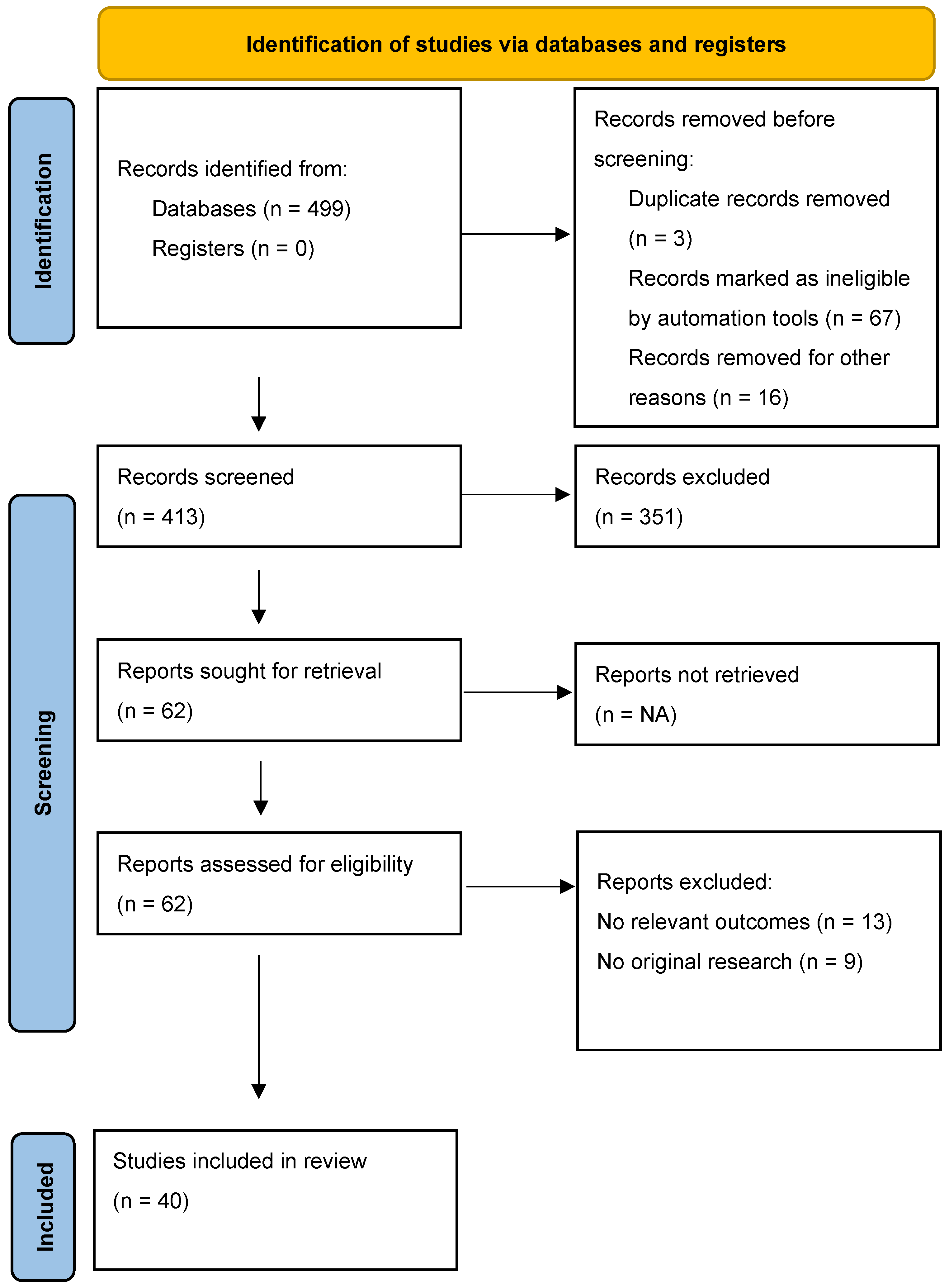
- Full text was not accessible after multiple retrieval attempts.
- Duplicate publications (we retained only most complete report).
2.5. Study Selection, Extraction, and Appraisal
2.6. Search Strategy
2.7. Assessment of the Risk of Bias
3. Results
3.1. Baricitinib-Loaded Exosomes for Targeted Drug Delivery
3.2. Colostrum-Derived Exosomes and Anagen Induction
3.3. Umbilical Cord MSC Exosomes: Dose–Response Relationships
3.4. Experimental Evidence Synthesis and Translational Implications
3.5. AA Human Evidence
3.6. Mechanistic and Hair Regeneration Evidence (Non-AA or Mixed)
3.7. Safety and Tolerability
3.8. Clinical Hair Loss Cohorts (Predominantly AGA; Contextual)
3.9. Reviews and State of the Art
3.10. Implications for the Present Review
3.11. Exosome Product Characterization Across Studies
4. Discussion
4.1. The Principal Findings
- Good mechanistic foundation: EVs or sEVs from multiple sources (MSCs, dermal papilla cells, platelets) consistently activate hair regenerative pathways (Wnt/β-catenin, PI3K/Akt) and exert immunomodulatory effects relevant to AA pathogenesis (reduction of IFN-γ signaling, modulation of CD8+ T cells, promotion of immune privilege) [1,4,5].
- Robust preclinical efficacy: controlled animal studies demonstrate substantial hair regrowth (50–99% coverage improvement), restoration of follicular architecture, and dampening of perifollicular inflammation [17,18,19] in validated AA animal models, with particularly potentially good results when exosomes are used as delivery vehicles for JAK inhibitors. Although the combination of exosome-based therapies with JAK inhibitors is conceptually attractive—potentially uniting immunosuppressive and regenerative mechanisms—there are currently no human studies in alopecia areata evaluating this approach, and its clinical utility remains speculative.
- Preliminary human efficacy signals: small clinical reports show meaningful improvements in hair density (9–31 hairs/cm2), SALT score reductions, and patient satisfaction, though these findings require validation in controlled trials.
- Significant heterogeneity and methodological limitations: variability in exosome source, isolation methods, characterization, dosing, and delivery routes precludes meta-analysis and limits comparative effectiveness assessment. The absence of randomized controlled trials represents a critical evidence gap.
4.2. Interpretation in Context of Current AA Therapeutics
4.3. Methodological Considerations and Standardization Needs
4.4. Translational Imperative and Call for Clinical Trials
4.5. Limitations of the Study
4.6. Future Research Directions
4.7. Comparative Effectiveness Research
4.8. Long-Term Follow-Up Studies
5. Conclusions
Author Contributions
Funding
Informed Consent Statement
Data Availability Statement
Conflicts of Interest
Abbreviations
| AA | Alopecia areata |
| ADSC | Adipose-derived stem cell |
| AKT | Protein Kinase B |
| ALP | Alkaline phosphatase |
| APC | Antigen-presenting cell (or article processing charge in a funding context) |
| ARRIVE | Animal Research: Reporting of In Vivo Experiments |
| AST | Aspartate aminotransferase |
| ALT | Alanine aminotransferase |
| BM-MSC | Bone marrow mesenchymal stem cell |
| BUN | Blood urea nitrogen |
| CASP9 | Caspase 9 |
| CD | Cluster of differentiation (e.g., CD8, CD9, CD63, CD81) |
| CRP | C-Reactive Protein |
| CTCAE | Common Terminology Criteria for Adverse Events |
| DPCP | Diphenylcyclopropenone |
| DKK1 | Dickkopf-related protein 1 |
| DP | Dermal papilla |
| ESR | Erythrocyte sedimentation rate |
| EV | Extracellular vesicle |
| FDA | Food and Drug Administration (U.S.) |
| GRADE | Grading of Recommendations Assessment, Development and Evaluation |
| GMP | Good manufacturing practice |
| HGF | Hepatocyte Growth Factor |
| ICTRP | International Clinical Trials Registry Platform |
| IFN-γ | Interferon-gamma |
| IGF-1 | Insulin-like Growth Factor 1 |
| IL | Interleukin (e.g., IL-10, IL-15) |
| ITT | Intention to treat |
| JAK | Janus Kinase |
| JAK-STAT | Janus kinase-signal transducer and activator of transcription |
| LEF1 | Lymphoid Enhancer-binding Factor 1 |
| MEDLINE | Medical Literature Analysis and Retrieval System Online |
| MISEV | Minimal Information for Studies of Extracellular Vesicles |
| miRNA | microRNA |
| mRNA | Messenger RNA |
| MSC | Mesenchymal stromal/stem cell |
| NICE | National Institute for Health and Care Excellence |
| NK | Natural killer (cells) |
| NKG2D | Natural killer group 2D |
| NTA | Nanoparticle tracking analysis |
| PCNA | Proliferating cell nuclear antigen |
| PI3K | Phosphoinositide 3-kinase |
| PICOS | Population, Intervention, Comparator, Outcomes, Study design |
| PRISMA | Preferred Reporting Items for Systematic Reviews and Meta-Analyses |
| PRP | Platelet-rich plasma |
| RCT | Randomized controlled trial |
| RoB | Risk of bias |
| ROBINS-I | Risk Of Bias In Non-randomized Studies of Interventions |
| SADBE | Squaric acid dibutylester |
| SALT | Severity of Alopecia Tool |
| sEV | Small extracellular vesicle |
| SFRP2 | Secreted Frizzled-related Protein 2 |
| SHH | Sonic hedgehog |
| STAT | Signal Transducer and Activator of Transcription |
| SYRCLE | Systematic Review Centre for Laboratory Animal Experimentation |
| TGF-β | Transforming Growth Factor-beta |
| Th | T helper (cells) (e.g., Th1, Th2, Th17) |
| TSG101 | Tumor Susceptibility Gene 101 |
| UC-MSC | Umbilical cord mesenchymal stem cell |
| VEGF | Vascular Endothelial Growth Factor |
| WHO | World Health Organization |
| Wnt | Wingless-related integration site (signaling pathway) |
References
- Paus, R. The Evolving Pathogenesis of Alopecia Areata: Major Open Questions. J. Investig. Dermatol. Symp. Proc. 2020, 20, S6–S10. [Google Scholar] [CrossRef] [Scilit] [PubMed]
- Gilhar, A.; Etzioni, A.; Paus, R. Alopecia areata. N. Engl. J. Med. 2012, 366, 1515–1525. [Google Scholar] [CrossRef] [Scilit] [PubMed]
- Pratt, C.H.; King, L.E., Jr.; Messenger, A.G.; Christiano, A.M.; Sundberg, J.P. Alopecia areata. Nat. Rev. Dis. Primers 2017, 3, 17011. [Google Scholar] [CrossRef] [Scilit] [PubMed]
- Strazzulla, L.C.; Wang, E.H.C.; Avila, L.; Sicco, K.L.; Brinster, N.; Christiano, A.M.; Shapiro, J. Alopecia areata: Disease characteristics, clinical evaluation, and new perspectives on pathogenesis. J. Am. Acad. Dermatol. 2018, 78, 1–12. [Google Scholar] [CrossRef] [Scilit]
- Lee, S.; Lee, H.; Lee, C.H.; Lee, W.S. Comorbidities in alopecia areata: A systematic review and meta-analysis. J. Am. Acad. Dermatol. 2019, 80, 466–477.e16. [Google Scholar] [CrossRef] [Scilit]
- Xing, L.; Dai, Z.; Jabbari, A.; Cerise, J.E.; Higgins, C.A.; Gong, W.; de Jong, A.; Harel, S.; DeStefano, G.M.; Rothman, L.; et al. Alopecia areata is driven by cytotoxic T lymphocytes and is reversed by JAK inhibition. Nat. Med. 2014, 20, 1043–1049. [Google Scholar] [CrossRef] [Scilit]
- Kalish, R.S.; Gilhar, A. Alopecia areata: Autoimmunity—The evidence is compelling. J. Investig. Dermatol. Symp. Proc. 2003, 8, 164–167. [Google Scholar] [CrossRef] [Scilit]
- McElwee, K.J.; Gilhar, A.; Tobin, D.J.; Ramot, Y.; Sundberg, J.P.; Nakamura, M.; Bertolini, M.; Inui, S.; Tokura, Y.; King, L.E.; et al. What causes alopecia areata? Exp. Dermatol. 2013, 22, 609–626. [Google Scholar] [CrossRef] [Scilit]
- Jabbari, A.; Sansaricq, F.; Cerise, J.; Chen, J.C.; Bitterman, A.; Ulerio, G.; Borbon, J.; Clynes, R.; Christiano, A.M.; Mackay-Wiggan, J. An Open-Label Pilot Study to Evaluate the Efficacy of Tofacitinib in Moderate to Severe Patch-Type Alopecia Areata, Totalis, and Universalis. J. Investig. Dermatol. 2018, 138, 1539–1545. [Google Scholar] [CrossRef] [Scilit]
- Messenger, A.G.; McKillop, J.; Farrant, P.; McDonagh, A.J.; Sladden, M. BAD guidelines for the management of alopecia areata 2012. Br. J. Dermatol. 2012, 166, 916–926. [Google Scholar] [CrossRef] [Scilit]
- Shapiro, J.; Wiseman, M.; Lui, H. Practical management of hair loss. Can. Fam. Physician 2000, 46, 1469–1477. [Google Scholar]
- King, B.; Ohyama, M.; Kwon, O.; Zlotogorski, A.; Ko, J.; Mesinkovska, N.A.; Hordinsky, M.; Dutronc, Y.; Wu, W.-S.; McCollam, J.; et al. Two phase 3 trials of baricitinib for alopecia areata. N. Engl. J. Med. 2022, 386, 1687–1699. [Google Scholar] [CrossRef] [Scilit] [PubMed]
- King, B.; Zhang, X.; Harcha, W.G.; Szepietowski, J.C.; Shapiro, J.; Lynde, C.; Mesinkovska, N.A.; Zwillich, S.H.; Napatalung, L.; Wajsbrot, D.; et al. Efficacy and safety of ritlecitinib in adults and adolescents with alopecia areata: A randomised, double-blind, multicentre, phase 2b-3 trial. Lancet 2023, 401, 1518–1529, Erratum in Lancet 2023, 401, 1928. https://doi.org/10.1016/S0140-6736(23)01078-4. Erratum in Lancet 2025, 406, 810. https://doi.org/10.1016/S0140-6736(25)01723-4. [Google Scholar] [CrossRef] [Scilit] [PubMed]
- Pegtel, D.M.; Gould, S.J. Exosomes. Annu. Rev. Biochem. 2019, 88, 487–514. [Google Scholar] [CrossRef] [Scilit] [PubMed]
- Hu, L.; Wang, J.; Zhou, X.; Xiong, Z.; Zhao, J.; Yu, R.; Huang, F.; Zhang, H.; Chen, L. ADSC exosomes accelerate wound healing. Sci. Rep. 2016, 6, 32993. [Google Scholar] [CrossRef] [Scilit]
- Zhou, L.; Wang, H.; Jing, J.; Yu, L.; Wu, X.; Lu, Z. Exosomes regulate hair follicle development. Biochem. Biophys. Res. Commun. 2018, 500, 325–332. [Google Scholar] [CrossRef] [Scilit]
- Rajendran, R.L.; Gangadaran, P.; Bak, S.S.; Oh, J.M.; Kalimuthu, S.; Lee, H.W.; Baek, S.H.; Zhu, L.; Sung, Y.K.; Jeong, S.Y.; et al. MSC exosomes activate dermal papilla cells. Sci. Rep. 2017, 7, 15560. [Google Scholar] [CrossRef] [Scilit]
- Tang, H.; Wang, F.; Yang, R.; Zhao, Z.; Zhang, Y.; Yang, L.; Li, B. Baricitinib-loaded vesicles in AA. Drug Discov. Ther. 2024, 18, 45–53. [Google Scholar] [CrossRef] [Scilit]
- Kim, H.; Jang, Y.; Kim, E.H.; Jang, H.; Cho, H.; Han, G.; Song, H.K.; Kim, S.H.; Yang, Y. Colostrum-derived exosomes promote hair regeneration. Front. Cell Dev. Biol. 2022, 10, 815205. [Google Scholar] [CrossRef] [Scilit]
- Zöller, M.; Zhao, K.; Kutlu, N.N.; Bauer, N.; Provaznik, J.; Hackert, T.; Schnölzer, M. MDSC exosomes in autoimmune AA. Front. Immunol. 2018, 9, 1279. [Google Scholar] [CrossRef] [Scilit]
- Bento, E.B.; Matos, C.; Ribeiro Júnior, H.L. Exosomes treating AA—Case report. Cosmetics 2025, 12, 97. [Google Scholar] [CrossRef] [Scilit]
- Li, Y.; Wang, G.; Wang, Q.; Zhang, Y.; Cui, L.; Huang, X. ADSC exosomes for immune alopecia. J. Immunol. Res. 2022, 2022, 7471246. [Google Scholar] [CrossRef] [Scilit] [PubMed]
- Cho, B.S. ASCE exosomes for scalp & hair. J. Investig. Dermatol. 2023, 143, S45. [Google Scholar]
- Hu, S.; Zhang, J.; Ji, Q.; Xie, S.; Jiang, J.; Ni, H.; He, X.; Yang, Y.; Wu, M. uMSC exosomes promote regrowth in AA. Cell Biol. Int. 2024, 48, 154–161. [Google Scholar] [CrossRef] [Scilit] [PubMed]
- Cestari, M.C.P.; Tovo, R.F.; Bueno, D.F. MSC-Derived Secretome and Exosomes in Dermatology: Mechanisms, Therapeutic Opportunities, and Scientific Challenges—A Narrative Review. Int. J. Dermatol. 2025, 64, 145–157. [Google Scholar] [CrossRef] [Scilit]
- Poddar, N.; Aratikatla, A.; Gupta, A. Stem cell exosomes in hair regeneration. World J. Stem Cells 2025, 17, 108519. [Google Scholar] [CrossRef] [Scilit]
- Paiewonsky, B.; Heinen, N.; Bellefeuille, G.; Raymond, O.; Hordinsky, M.; Shapiro, R.; Farah, R. Exosome therapy for scalp hair growth—A review of the in vivo and in vitro evidence (Abstract 35326). J. Am. Acad. Dermatol. 2022, 87, AB167. [Google Scholar] [CrossRef] [Scilit]
- Nunez, D.A.; Abgoon, R.; Wijesinghe, P.; Garnis, C. Serum and Plasma miRNA Expression Levels in Sudden Sensorineural Hearing Loss. Int. J. Mol. Sci. 2025, 26, 1245. [Google Scholar] [CrossRef] [Scilit]
- Park, B.S.; Choi, H.; Huh, G.; Kim, W.S. ADSC exosomes for hair loss. J. Cosmet. Dermatol. 2022, 21, 2282–2284. [Google Scholar] [CrossRef] [Scilit]
- Kost, Y.; Muskat, A.; Mhaimeed, N.; Nazarian, R.S.; Kobets, K. Exosome therapy in hair regeneration. J. Cosmet. Dermatol. 2022, 21, 3226–3231. [Google Scholar] [CrossRef] [Scilit]
- Dairov, A.K.; Issabekova, A.; Ogay, V. MSC exosomes in skin disease. Curr. Stem Cell Res. Ther. 2025, 20, 289–301. [Google Scholar]
- Zhao, J.; Quan, Z.; Wang, H.; Wang, J.; Xie, Y.; Li, J.; Zhang, R. Exosomes + collagen α1(XVII) stimulate HFSCs. Exp. Cell Res. 2025, 446, 114483. [Google Scholar] [CrossRef] [Scilit] [PubMed]
- Cheng, M.; Ma, C.; Chen, H.-D.; Wu, Y.; Xu, X.-G. Exosomes & hair follicle growth. Clin. Cosmet. Investig. Dermatol. 2024, 17, 1603–1612. [Google Scholar] [CrossRef] [Scilit] [PubMed]
- Hu, S.; Li, Z.; Lutz, H.; Huang, K.; Su, T.; Cores, J.; Dinh, P.-U.C.; Cheng, K. Dermal exosomes containing miR-218-5p promote hair regeneration. Sci. Adv. 2020, 6, eaba1685. [Google Scholar] [CrossRef] [Scilit]
- Chen, Y.-C.; Tsai, W.-C.; Li, Z.-X.; Lin, W.-J.; Lin, H.-Y.; Hsieh, Y.-J.; Wang, K.-H.; Chen, Y.-Y.; Hwang, T.-L.; Lin, T.-Y. hUCMSC exosomes promote dermal papilla growth. PLoS ONE 2025, 20, e0320154. [Google Scholar] [CrossRef] [Scilit]
- Rajendran, R.L.; Gangadaran, P.; Kwack, M.H.; Oh, J.M.; Hong, C.M.; Sung, Y.K.; Lee, J.; Ahn, B.-C. MSC-EVs promote hair growth. World J. Stem Cells 2022, 14, 527–538. [Google Scholar] [CrossRef] [Scilit]
- Schaffer, S.; Lily, T.; Braeden, K.; Prathmica, C.; Brookie, H.; Cael, A.K.; Jacobs, R.J. A Scoping Review of Exosome Delivery Applications in Hair Loss. Cureus 2025, 17, e81152. [Google Scholar] [CrossRef] [Scilit]
- Wu, X.; Tang, S. Advances in the extracellular vesicles treatment of alopecia. Ann. Med. 2025, 57, 2543517. [Google Scholar] [CrossRef] [Scilit]
- Li, L.; Wang, J.; Chen, J.; Wang, Z.; Qaseem, M.F.; Li, H.; Wu, A. Physiological and Transcriptomic Responses of Growth in Neolamarckia cadamba Stimulated by Exogenous Gibberellins. Int. J. Mol. Sci. 2022, 23, 11842. [Google Scholar] [CrossRef] [Scilit]
- Salhab, O.; Khayat, L.; Alaaeddine, N. Stem cell secretome in stress alopecia. J. Biomed. Sci. 2022, 29, 77. [Google Scholar] [CrossRef] [Scilit]
- Guermazi, D.; Khan, S.; Shah, A.; Saliba, E. Exosome-mediated treatments in dermatology. Gene Protein Dis. 2024, 3, 145–158. [Google Scholar] [CrossRef] [Scilit]
- Anudeep, T.C.; Jeyaraman, M.; Muthu, S.; Rajendran, R.L.; Gangadaran, P.; Mishra, P.C.; Sharma, S.; Jha, S.K.; Ahn, B.-C. Regenerative therapies in non-scarring alopecia. Pharmaceutics. 2022, 14, 612. [Google Scholar] [CrossRef] [Scilit]
- Palkina, N.V.; Zenaishvili, R.D.; Ruksha, T.G. Exosomes in immune skin disorders. Vestn. Dermatol. Venerol. 2024, 100, 8–17. [Google Scholar] [CrossRef] [Scilit]
- Ku, Y.C.B.; Sulaiman, H.O.; Anderson, S.R.; Abtahi, A.R.D. Exosomes in aesthetic plastic surgery. Plast. Reconstr. Surg. Glob. Open. 2023, 11, e5051. [Google Scholar] [CrossRef] [Scilit] [PubMed]
- Nahm, W.J.; Nikas, C.; Goldust, M.; Horneck, N.; Cervantes, J.A.; Burshtein, J.; Tsoukas, M. Exosomes in Dermatology: A Comprehensive Review of Current Applications, Clinical Evidence, and Future Directions. Int. J. Dermatol. 2025, 64, 1995–2010. [Google Scholar] [CrossRef] [Scilit] [PubMed]
- Chen, J.; Liang, W.; Yu, Y.; Feng, B.; Xu, Z. Exosomal miRNA therapies for skin disease. Regen. Ther. 2023, 24, 125–136. [Google Scholar]
- Frasier, K.; Fonceca, H.; Fritts, H. Exosome therapy in dermatology. Clin. Dermatol. Surg. 2024, 5, 89–103. [Google Scholar]
- Sun, X.; Chen, M. Oxidative stress activates ADSCs in alopecia. Redox Rep. 2025, 30, 2503128. [Google Scholar] [CrossRef] [Scilit]
- Gupta, A.K.; Hall, D.; Rapaport, J.; Paradise, C.R. Exosomes and hair restoration. Adv. Cosmet. Surg. 2023, 6, 31–41. [Google Scholar] [CrossRef] [Scilit]
- Queen, D.; Avram, M.R. Exosomes for treating hair loss. Dermatol. Surg. 2025, 51, 409–415. [Google Scholar] [CrossRef] [Scilit]
- Nilforoushzadeh, M.A.; Aghdami, N.; Taghiabadi, E. Effects of Adipose-Derived Stem Cells and Platelet-Rich Plasma Exosomes on The Inductivity of Hair Dermal Papilla Cells. Cell J. 2021, 23, 576–583. [Google Scholar] [CrossRef] [Scilit]
- Nilforoushzadeh, M.A.; Aghdami, N.; Taghiabadi, E. ORS cells + platelet-lysis exosomes promote hair inductivity. Tissue Eng. Regen. Med. 2020, 17, 525–536. [Google Scholar] [CrossRef] [Scilit] [PubMed]
- Zhang, J.; Chen, F.; Hu, Y.; Cong, X. ADSCs in hair loss therapy. Stem Cell Res. Ther. 2025, 16, 45. [Google Scholar]
- Matwiejuk, M.; Mikłosz, A.; Myśliwiec, H.; Chabowski, A.; Flisiak, I. The therapeutic efficacy of mesenchymal stem cells and their extracellular vesicles in the treatment of diverse skin diseases. Front. Immunol. 2025, 16, 1626066. [Google Scholar] [CrossRef] [Scilit] [PubMed]
- Mao, Y.; Liu, P.; Wei, J.; Xie, Y.; Zheng, Q.; Hu, X.; Yao, J.; Meng, W. UCMSC exosomes promote hair regrowth via RAS/ERK. J. Transl. Int. Med. 2024, 12, 478–494. [Google Scholar] [CrossRef] [Scilit]
- Cho, B. ASCE exosomes (abstract). J. Investig. Dermatol. 2023, 143, S277. [Google Scholar] [CrossRef] [Scilit]
- Hordinsky, M.K. Overview of alopecia areata. J. Investig. Dermatol. Symp. Proc. 2013, 16, S13–S15. [Google Scholar] [CrossRef] [Scilit]
- Théry, C.; Witwer, K.W.; Aikawa, E.; Alcaraz, M.J.; Anderson, J.D.; Andriantsitohaina, R.; Antoniou, A.; Arab, T.; Archer, F.; Atkin-Smith, G.K.; et al. MISEV2018 guidelines. J. Extracell. Vesicles 2018, 7, 1535750. [Google Scholar] [CrossRef] [Scilit]
- Petukhova, L.; Duvic, M.; Hordinsky, M.; Norris, D.; Price, V.; Shimomura, Y.; Kim, H.; Singh, P.; Lee, A.; Chen, W.V.; et al. GWAS implicates innate and adaptive immunity in AA. Nature 2010, 466, 113–117. [Google Scholar] [CrossRef] [Scilit]
- Liu, L.Y.; Craiglow, B.G.; King, B.A. Topical tofacitinib in AA. J. Am. Acad. Dermatol. 2018, 78, 403–404.e1. [Google Scholar] [CrossRef] [Scilit]
- Mackay-Wiggan, J.; Jabbari, A.; Nguyen, N.; Cerise, J.E.; Clark, C.; Ulerio, G.; Furniss, M.; Vaughan, R.; Christiano, A.M.; Clynes, R. Oral ruxolitinib in moderate–severe AA. JCI Insight 2016, 1, e89790. [Google Scholar] [CrossRef] [Scilit]
- Crispin, M.K.; Ko, J.M.; Craiglow, B.G.; Li, S.; Shankar, G.; Urban, J.R.; Chen, J.C.; Cerise, J.E.; Jabbari, A.; Winge, M.C.; et al. Tofacitinib in AA. JCI Insight 2016, 1, e89776. [Google Scholar] [CrossRef] [Scilit]
- De, A.; Chakraborty, D.; Agarwal, I.; Sarda, A. Exosomes in dermatology. Indian J. Dermatol. 2024, 69, 234–242. [Google Scholar] [CrossRef] [Scilit]


| Study | Study Type | Exosome Source | Study Population/Model | Intervention Protocol |
|---|---|---|---|---|
| Zöller et al., 2018 [20] | Experimental (animal) | Bone marrow cells | Female C3H/HeJ mice, alopecia areata (AA) model | Intravenous injection, 100 µg, twice/week, 10 weeks |
| Bento et al., 2025 [21] | Clinical (case report) | Rose stem cell | 39-year-old male, unifocal AA | 6 monthly sessions, 20 mg/vial, laser-assisted |
| Tang et al., 2024 [18] | Experimental (animal) | Mesenchymal stem cell (MSC) exosomes | AA mouse model (interferon-gamma-induced) | Local injection, baricitinib-loaded extracellular vesicles (EVs) |
| Li et al., 2022 [22] | Mixed (in vitro, animal) | Adipose-derived stem cells | Dermal papilla cells (DPCs) (in vitro), C57BL/6 mice | Subcutaneous injection, alone/with minoxidil |
| Cho B.S., 2023 [23] | Mixed (in vitro, in vivo, clinical) | Adipose stem cell | 29 subjects (AA, androgenetic alopecia), DPCs | Microneedling + topical adipose stem cell extract (ASCE), 10 sessions/6 months |
| Hu et al., 2024 [24] | Experimental (animal) | Umbilical cord MSC | AA mice | No mention found |
| Cestari et al., 2025 [25] | Mixed (review) | MSC (primed/engineered) | Preclinical/clinical studies | Topical/intradermal, no mention found |
| Poddar et al., 2025 [26] | Mixed (systematic review) | Various | In vitro, preclinical, clinical | No mention found |
| Paiewonsky et al., 2022 [27] | Mixed (review) | No mention found | In vivo/in vitro preclinical | No mention found |
| Nunez et al., 2025 [28] | Clinical (review) | No mention found | 12 clinical studies | No mention found |
| Park et al., 2022 [29] | Clinical (retrospective) | Adipose-derived stem cell | 39 patients, alopecia (type not specified) | Intradermal injection, 12 weeks |
| Kost et al., 2022 [30] | Mixed (review) | Multiple | Preclinical, pilot clinical | No mention found |
| Dairov et al., 2025 [31] | Review (clinical) | MSC | Clinical studies, case reports | No mention found |
| Zhao et al., 2025 [32] | In vitro | Dermal papilla cell | Hair follicle stem cells (HFSCs) (cell culture) | DPC-Exos + CS-COL17A1, dose-dependent |
| Cheng et al., 2024 [33] | Mixed (review) | DPC, MSC | Preclinical, in vitro | No mention found |
| Hu et al., 2020 [34] | In vitro | Dermal papilla spheroids | Dermal papilla (DP) cells (spheroid culture) | No mention found |
| Chen et al., 2025 [35] | In vitro | Umbilical cord MSC | Human hair dermal papilla cells (HHDPCs) (cell culture) | No mention found |
| Rajendran et al., 2022 [36] | In vitro/ex vivo | Bone marrow MSC | DP, outer root sheath (ORS) cells, human hair follicles (HFs) | 2–10 µg/mL, 24 h, ex vivo |
| Schaffer et al., 2025 [37] | Mixed (experimental, clinical) | MSC, adipose, others | Animal models, human | Microneedle patch, topical, intradermal |
| Wu and Tang, 2025 [38] | Review | No mention found | Literature review | No mention found |
| Li et al., 2022 [39] | Review | MSC | Narrative review | No mention found |
| Zhou et al., 2018 [16] | Mixed (animal, in vitro) | Dermal papilla cell | Mice, outer root sheath cells (ORSCs) | Intradermal injection |
| Salhab et al., 2022 [40] | Mixed (review) | Adipose-derived stem cell | Mice, human DPCs (hDPCs) | Subcutaneous, not detailed |
| Guermazi et al., 2024 [41] | Review | No mention found | Review | No mention found |
| Anudeep et al., 2022 [42] | Mixed (review) | Multiple | Clinical, preclinical, in vitro | No mention found |
| Palkina et al., 2024 [43] | Review | No mention found | Review | No mention found |
| Ku et al., 2023 [44] | Review | Bone marrow, placental, adipose, umbilical | Review | No mention found |
| Nahm et al., 2025 [45] | Review (clinical) | Human stem cell | Review | No mention found |
| Chen et al., 2023 [46] | Experimental (animal) | No mention found | 11 animal models | No mention found |
| Frasier et al., 2024 [47] | Review | Stem cell, keratinocyte, fibroblast | Review | No mention found |
| Sun et al., 2025 [48] | Review | No mention found | Review | No mention found |
| Gupta et al., 2023 [49] | Mixed (experimental, clinical) | No mention found | Preclinical, experimental clinical | No mention found |
| Queen and Avram, 2025 [50] | Review | No mention found | Review | No mention found |
| Kim et al., 2022 [19] | Preclinical (animal) | Bovine colostrum | C57BL/6 mice | Intradermal, 100 µg, every other day, 19 days |
| Nilforoushzadeh et al., 2021 [51] | In vitro | Adipose stem cell, platelet-rich plasma (PRP) | hDPCs, ORSCs | 25–100 µg/mL, no mention found |
| Nilforoushzadeh et al., 2020 [52] | In vitro | Human hair outer root sheath cells (HHORSCs), platelet lysis | hDPCs, HHORSCs | 2, 50, 100 µg/mL; no mention found |
| Zhang et al., 2025 [53] | Mixed (clinical, experimental) | Adipose-derived stem cell | Androgenetic alopecia, AA patients | Microneedling, 12 weeks |
| Matwiejuk et al., 2025 [54] | Mixed (experimental, clinical) | Bone marrow MSC (BM-MSC), human umbilical cord blood MSC (hUCB-MSC) | Animal models, small clinical | Topical, intraperitoneal, daily 10 days |
| Mao et al., 2024 [55] | Mixed (animal, in vitro) | Umbilical cord MSC | C57BL/6 mice, fibroblasts | 200 µg/mL, no mention found |
| Cho, 2023 [56] | Mixed (in vitro, in vivo, clinical) | Adipose stem cell | 29 subjects (AA, androgenetic alopecia), DPCs | Microneedling + topical ASCE, 10 sessions/6 months |
| Study | Model | Exosome Source | Intervention | Hair Regrowth | Mechanism |
|---|---|---|---|---|---|
| Tang et al., 2024 [18] | IFN-γ-induced AA (C3H/HeJ) | Baricitinib-loaded EVs | Subcutaneous injection | 62 ± 11% coverage | JAK-STAT inhibition |
| Kim et al., 2022 [19] | Telogen-arrest model | Colostrum-derived | Topical application | Anagen acceleration | Wnt/β-catenin activation |
| Zöller et al., 2018 [20] | C3H/HeJ AA model | Bone marrow MSC | Intravenous (100 µg) | 30% (totalis), 16% (partialis), 95–100% (incipient) | Treg expansion, immunomodulation |
| Hu et al., 2024 [24] | AA mice | UC-MSC | No details reported | Improved (not quantified) | Keratinocyte proliferation |
| Li et al., 2022 [22] | C57BL/6 mice | ADSC | Subcutaneous ± minoxidil | Improved growth, increased follicles | Wnt/β-catenin, miR-22 |
| Study | Sequence Generation | Baseline Characteristics | Allocation Concealment | Random Housing | Blinding of Investigators | Random Outcome Assessment | Blinding of Outcome Assessor | Incomplete Outcome Data | Selective Outcome Reporting | Other Bias | Overall Risk |
|---|---|---|---|---|---|---|---|---|---|---|---|
| Tang et al., 2024 [18] | Unclear | Low | Unclear | Unclear | High | Unclear | High | Low | Unclear | High | High |
| Kim et al., 2022 [19] | Low | Low | Unclear | Low | Low | Low | Low | Low | Low | Low | Low |
| Study | Design | Sample Size | Exosome Source | Delivery Method | Primary Outcome | Follow-Up |
|---|---|---|---|---|---|---|
| Park et al., 2022 [29] | Retrospective cohort | n = 39 (AA subset) | ADSC | Intradermal injection | Hair density (hairs/cm2) | 6 m |
| Bento et al., 2025 [21] | Case report | n = 1 | Plant-derived | Microneedling + topical | Photographic assessment | 6 m |
| Study | Design | Bias Due to Confounding | Bias in Selection of Participant | Bias in Classification of Intervention | Bias Due to Deviations from Intended Intervention | Bias Due to Missing Data | Bias in Measurement of Outcomes | Bias in Selection of Reported Results | Overall Risk of Bias |
|---|---|---|---|---|---|---|---|---|---|
| Park et al., 2022 [29] | Retrospective cohort | Moderate | Low | Low | Moderate | Low | Moderate | Low | Moderate |
| Bento et al., 2025 [21] | Case report | Serious | Low | Moderate | Serious | Low | Moderate | Serious | Serious |
| Study | Mechanisms of Action |
|---|---|
| Zöller et al., 2018 [20] | Regulatory T cell (Treg) expansion, reduced T helper proliferation, increased FoxP3/arginase 1 messenger RNA (mRNA) |
| Bento et al., 2025 [21] | No mention found |
| Tang et al., 2024 [18] | Janus kinase-signal transducer and activator of transcription (JAK-STAT) inhibition, Wnt/β-catenin upregulation |
| Li et al., 2022 [22] | Wnt/β-catenin, microRNA-22 (miR-22), tumor necrosis factor-alpha (TNF-α) downregulation |
| Cho B.S., 2023 [23] | Antiaging, anti-inflammatory, dermal papilla cell effects |
| Hu et al., 2023 [24] | Keratinocyte proliferation/migration |
| Cestari et al., 2025 [25] | No mention found |
| Poddar et al., 2025 [26] | Dermal papilla cell stimulation, angiogenesis, inflammation modulation |
| Paiewonsky et al., 2022 [27] | No mention found |
| Nunez et al., 2025 [28] | No mention found |
| Park et al., 2022 [29] | No mention found |
| Kost et al., 2022 [30] | Wnt/β-catenin, TNF-α, vascular endothelial growth factor (VEGF), FoxP3/arginase 1 |
| Dairov et al., 2025 [31] | No mention found |
| Zhao et al., 2025 [32] | hsa-novel-238a-CASP9 axis, hair follicle stem cell migration/viability |
| Cheng et al., 2024 [33] | No mention found |
| Hu et al., 2020 [34] | Wnt/β-catenin, miR-218-5p |
| Chen et al., 2025 [35] | Phosphoinositide 3-kinase/protein kinase B (PI3K/Akt), β-catenin, cyclin D1 |
| Rajendran et al., 2022 [36] | Wnt/β-catenin, dermal papilla/outer root sheath proliferation, keratin expression |
| Schaffer et al., 2025 [37] | Wnt/β-catenin, Sonic Hedgehog, VEGF, insulin-like growth factor-1 (IGF-1), M1→M2 macrophage |
| Wu and Tang, 2025 [38] | No mention found |
| Li et al., 2022 [39] | No mention found |
| Zhou et al., 2018 [16] | Wnt (β-catenin), Sonic Hedgehog (Shh), outer root sheath cell proliferation/migration |
| Salhab et al., 2022 [40] | Wnt/β-catenin, transforming growth factor-beta (TGF-β), extracellular signal-regulated kinase (Erk), Akt, VEGF, miR-22 |
| Guermazi et al., 2024 [41] | Dermal papilla cell proliferation, inflammation modulation |
| Anudeep et al., 2022 [42] | Wnt/β-catenin, bone morphogenetic protein (BMP), Hedgehog, Notch, VEGF, platelet-derived growth factor (PDGF), IGF-2 |
| Cho, 2023 [56] | Antiaging, anti-inflammatory, dermal papilla cell effects |
| Adverse Event Type | Frequency | Severity | Resolution |
|---|---|---|---|
| Injection-site discomfort | 68% (intradermal) | Mild | 24–48 h |
| Transient erythema | 41% | Mild | 2–5 days |
| Pruritus | 2.3% (1 patient) | Mild | 3 days |
| Serious adverse events | 0% | None reported | N/A |
| Study | Particle Size | Particle Count (NTA) | Protein Content | Positive Markers | Negative Markers | Source Cell Verified |
|---|---|---|---|---|---|---|
| Park et al., 2022 [29] | No | No | Yes | Unclear | No | Yes |
| Bento et al., 2025 [21] | No | No | Yes | No | No | Yes |
| Tang et al., 2024 [18] | Yes | Yes | Yes | Yes | No | Yes |
| Kim et al., 2022 [19] | Yes | Yes | Yes | Yes | No | Yes |
| Zöller et al., 2018 [20] | No | No | Yes | Unclear | No | Yes |
| Li et al., 2022 [22] | Yes | No | Yes | Unclear | No | Yes |
| Hu et al., 2024 [24] | No | No | Yes | Unclear | No | Yes |
Disclaimer/Publisher’s Note: The statements, opinions and data contained in all publications are solely those of the individual author(s) and contributor(s) and not of MDPI and/or the editor(s). MDPI and/or the editor(s) disclaim responsibility for any injury to people or property resulting from any ideas, methods, instructions or products referred to in the content. |
© 2025 by the authors. Licensee MDPI, Basel, Switzerland. This article is an open access article distributed under the terms and conditions of the Creative Commons Attribution (CC BY) license.
Share and Cite
Bulgaru-Iliescu, A.I.; Moraru, D.C.; Amarandei, A.-H.; Avadanei-Luca, S.; Constantinescu, M.-C.; Rusu, A.C.; Pertea, M. Exosome-Based Therapies for Alopecia Areata: A Systematic Review of Clinical and Experimental Evidence. Int. J. Mol. Sci. 2026, 27, 21. https://doi.org/10.3390/ijms27010021
Bulgaru-Iliescu AI, Moraru DC, Amarandei A-H, Avadanei-Luca S, Constantinescu M-C, Rusu AC, Pertea M. Exosome-Based Therapies for Alopecia Areata: A Systematic Review of Clinical and Experimental Evidence. International Journal of Molecular Sciences. 2026; 27(1):21. https://doi.org/10.3390/ijms27010021
Chicago/Turabian StyleBulgaru-Iliescu, Andra Irina, Dan Cristian Moraru, Alexandru-Hristo Amarandei, Stefana Avadanei-Luca, Mihai-Codrin Constantinescu, Alexandra Cristina Rusu, and Mihaela Pertea. 2026. "Exosome-Based Therapies for Alopecia Areata: A Systematic Review of Clinical and Experimental Evidence" International Journal of Molecular Sciences 27, no. 1: 21. https://doi.org/10.3390/ijms27010021
APA StyleBulgaru-Iliescu, A. I., Moraru, D. C., Amarandei, A.-H., Avadanei-Luca, S., Constantinescu, M.-C., Rusu, A. C., & Pertea, M. (2026). Exosome-Based Therapies for Alopecia Areata: A Systematic Review of Clinical and Experimental Evidence. International Journal of Molecular Sciences, 27(1), 21. https://doi.org/10.3390/ijms27010021