
From Vascular Dysfunction to Atherothrombosis: The Pivotal Role of Eicosanoids and Their Receptors in Platelet and Endothelial Imbalance: A Scoping Review
 , , , , , , , and
Abstract
1. Introduction
Objectives
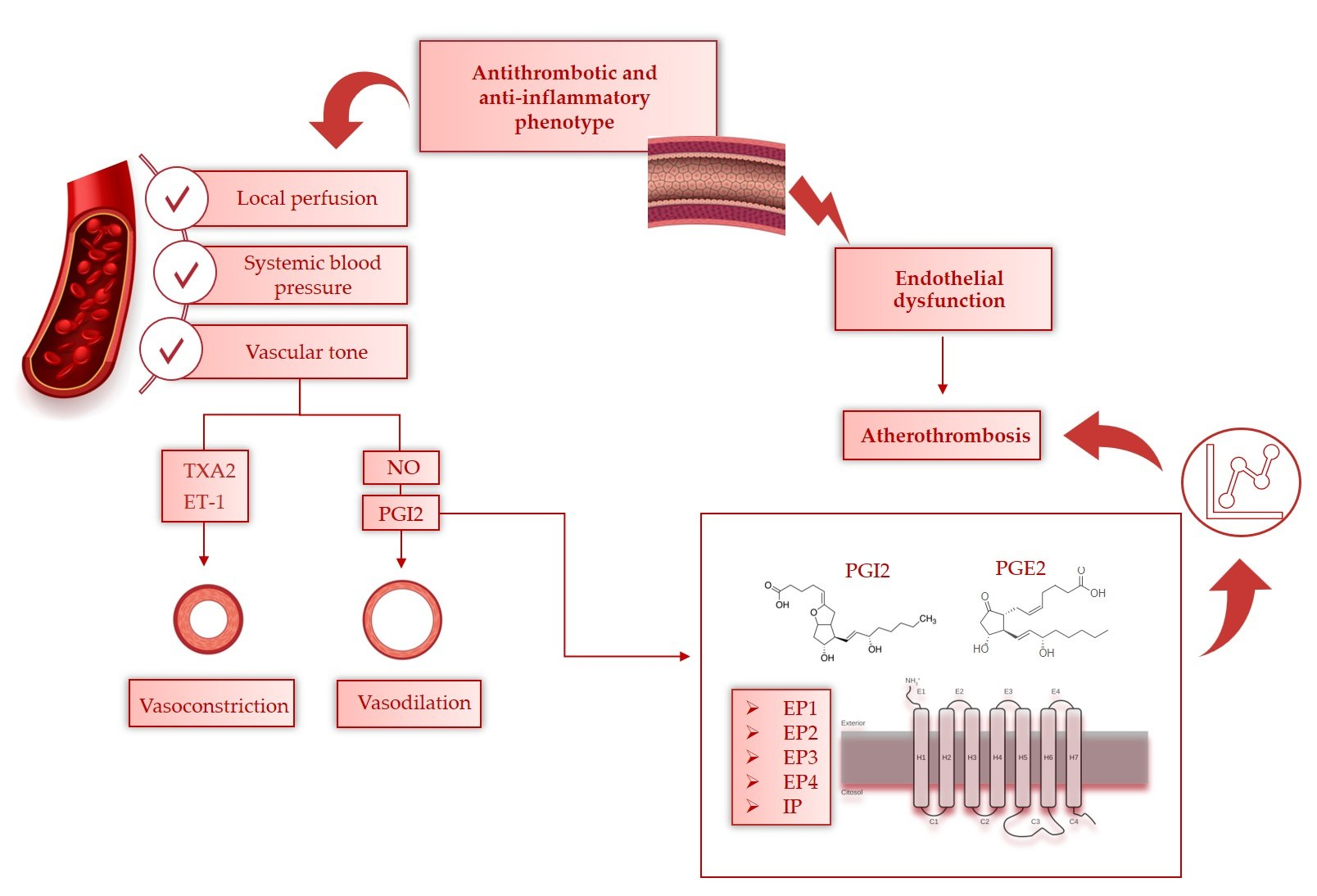
- Examine the contribution of eicosanoids and their receptors to platelet and endothelial dysfunction, as well as vascular inflammation, which represent key mechanisms underlying atherothrombotic disease.
- Assess how different eicosanoids and their receptors regulate prothrombotic and antithrombotic mechanisms.
- Identify potential therapeutic targets by synthesizing current evidence on eicosanoid receptor pathways that could be modulated to prevent or treat atherothrombosis.
2. Methods
2.1. Eligibility Criteria
2.1.1. Inclusion Criteria
2.1.2. Exclusion Criteria
2.2. Search Strategy
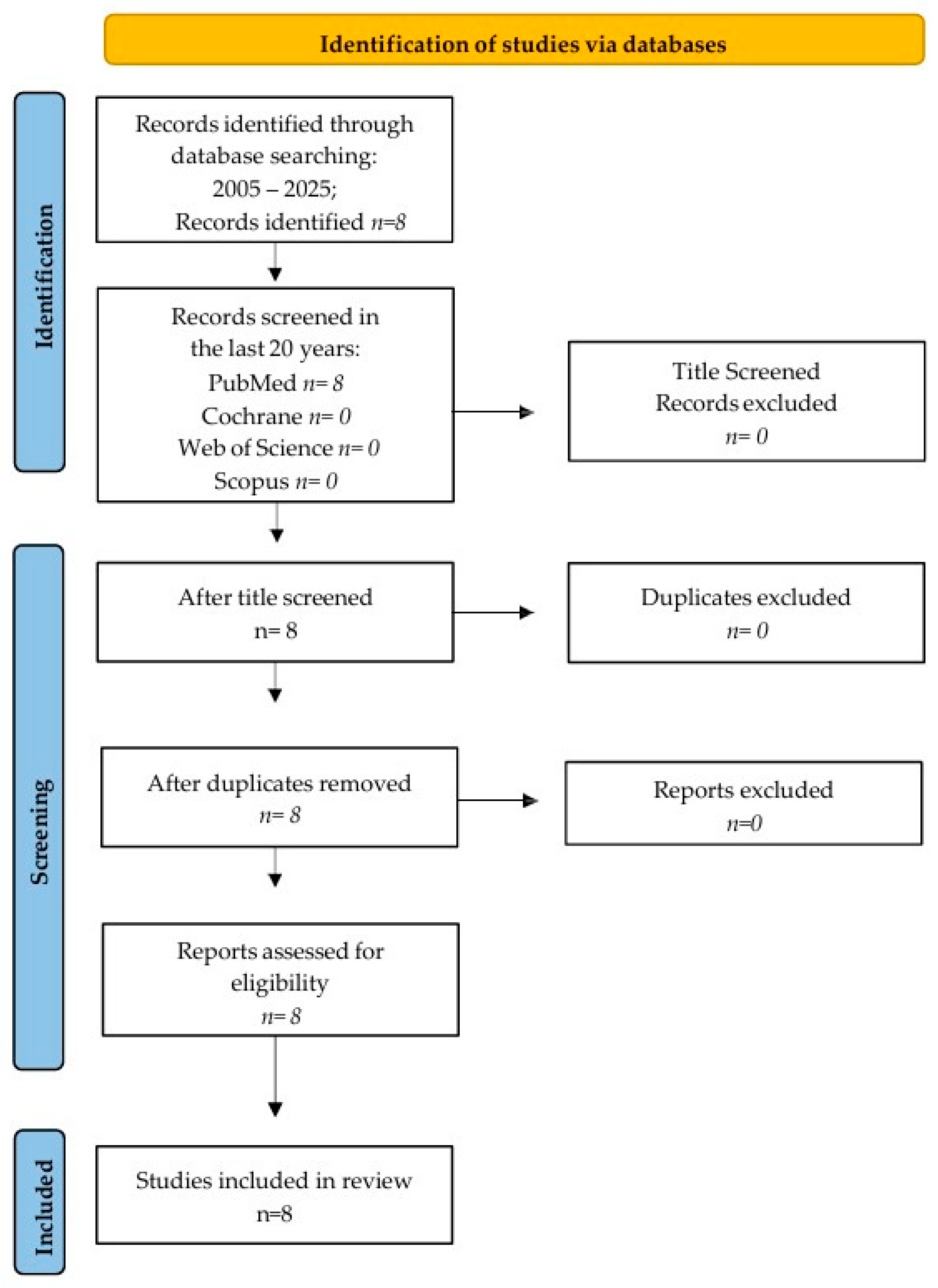
2.3. Screening and Selection of Studies
2.4. Data Charting
2.4.1. Collating, Summarizing, and Reporting the Results
2.4.2. Consultation Exercise
3. Results
4. Discussion
4.1. Atherothrombosis and Clotting
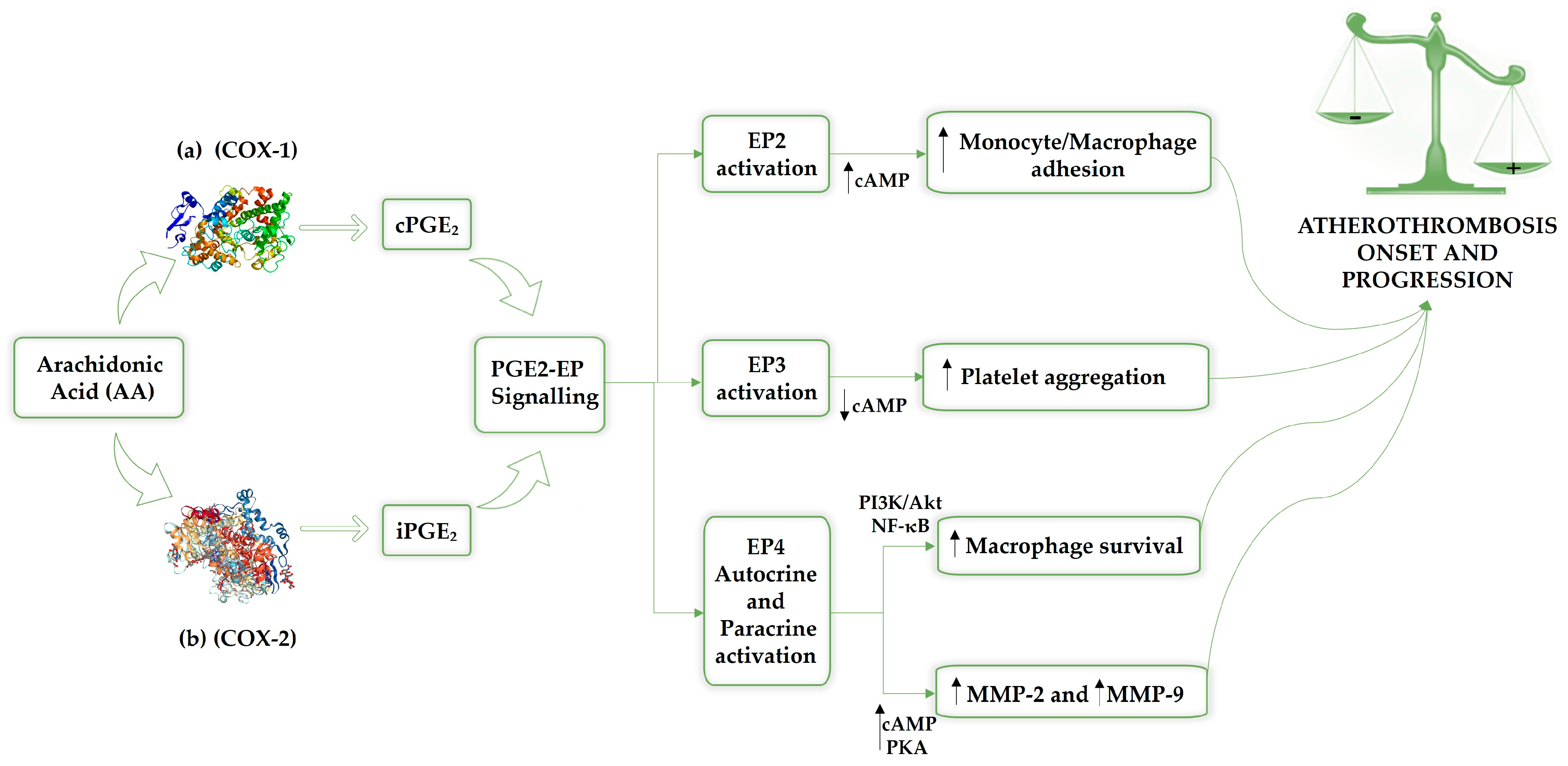
4.2. Eicosanoids and Atherothrombosis Onset and Development
4.3. The Crucial Role of Prostaglandin E2 Receptors in the Two-Stage Processes of Atherothrombosis
4.4. COX-2 and Endothelial Homeostasis
4.5. Limitations
5. Conclusions
OSF Registration Statement and Number
Author Contributions
Funding
Institutional Review Board Statement
Informed Consent Statement
Data Availability Statement
Acknowledgments
Conflicts of Interest
Abbreviations
| 12-HETE | 12-hydroxyeicosatetraenoic acid |
| 15-HETE | 15-hydroxyeicosatetraenoic acid |
| 5-HETE | 5-hydroxyeicosatetraenoic Acid |
| AA | arachidonic acid |
| ADP | adenosine diphosphate |
| AP-1 | Activator Protein 1 |
| aPC | activated protein C |
| Apo-E | apolipoprotein E |
| cGMP | cyclic guanosine monophosphate |
| COS-1 | CV-1 in Origin, Simian, SV40-transformed |
| cAMP | cyclic adenosine monophosphate |
| COX | cyclooxygenase |
| COX-1 | cyclooxygenase 1 |
| COX-2 | cyclooxygenase 2 |
| COX-2/mPGES-1 | cyclooxygenase 2/microsomal prostaglandin E synthase-1 |
| cPLA2 | cytosolic phospholipase A2 |
| DP1 | D-type prostanoid receptor 1 |
| DP2 | D-type prostanoid receptor 2 |
| DVT | deep vein thrombosis |
| ECM | extracellular matrix |
| ECs | endothelial cells |
| EET | epoxycosatrienoic acids |
| eNOS | endothelial nitric oxide synthase |
| EP | E-type prostanoid receptors |
| EP1 | prostaglandin E2 receptor 1 |
| EP2 | prostaglandin E2 receptor 2 |
| EP3 | prostaglandin E2 receptor 3 |
| EP3α | prostaglandin E2 receptor 3 alpha |
| EP3β | prostaglandin E2 receptor 3 beta |
| EP4 | prostaglandin E2 receptor 4 |
| EPCs | endothelial progenitor cells |
| ER | endoplasmic reticulum |
| ET-1 | endothelin-1 |
| F2α | prostaglandin F2α |
| FcεRI | high-affinity IgE receptor |
| FP | prostaglandin F receptor |
| GPCRs | G protein-coupled receptors |
| GWASs | genome-wide association studies |
| HDAC | Histone Deacetylase |
| HETE | hydroxycosatetraenoic acids |
| hIP | human prostacyclin receptor |
| IBD | Inflammatory Bowel Disease |
| ICAM-1 | Intercellular Adhesion Molecule 1 |
| IL-1β | interleukin-1 beta |
| IL-4 | Interleukin-4 |
| IP | prostacyclin receptor |
| JNK | c-jun N-terminal kinase |
| KIT | proto-oncogene, receptor tyrosine kinase |
| LDL | low-density lipoprotein |
| LOX | lipoxygenase |
| LPS | Lipopolysaccharide |
| LTB4 | leukotriene B4 |
| LTC4 | leukotriene C4 |
| LTD4 | leukotriene D4 |
| LTE4 | leukotriene E4 |
| MMP | metalloproteinases |
| MMP-2 | metalloproteinases 2 |
| MMP-9 | metalloproteinases 9 |
| MMPs | Matrix Metalloproteinases |
| mPGES-1 | microsomal prostaglandin E synthase-1 |
| mRNA | messenger ribonucleic acid |
| NF-κB | nuclear factor-κB |
| NO | nitric oxide |
| NSAIDs | non-steroidal anti-inflammatory drugs |
| ox-LDL | oxidized low-density lipoprotein |
| PECAM-1 | Platelet Endothelial Cell Adhesion Molecule-1 |
| PGD2 | prostaglandin D2 |
| PGE | prostaglandin E |
| PGE2 | prostaglandin E2 |
| PGG2 | prostaglandin G2 |
| PGH2 | prostaglandin H2 |
| PGHS | prostaglandin H synthase |
| PGI | prostaglandin I |
| PGI2 | prostacyclin |
| PI3K/Akt | phosphatidylinositol 3-kinase/protein kinase B |
| PICO | Population Intervention Comparison Outcome Population |
| PRISMA-ScR | Preferred Reporting Items for Scoping Reviews and Meta-Analyses extension for Scoping Reviews |
| PTGIR | Prostaglandin I2 Receptor gene polymorphisms |
| ROS | reactive oxygen species |
| SCF | Stem Cell Factor |
| SCFAs | Short-Chain Fatty Acids |
| SMCs | smooth muscle cells |
| TF | Tissue Factor |
| TFPI | the tissue factor pathway inhibitor |
| TM | thrombomodulin |
| TP | thromboxane prostanoid receptor |
| TPα | thromboxane A2 receptor alpha isoform |
| TXA2 | thromboxane A2 |
| TXs | thromboxanes |
| VCAM1 | vascular cell adhesion molecule 1 |
| VSMCs | vascular smooth muscle cells |
References
- Zamanian, R.T.; Kudelko, K.T.; Sung, Y.K.; Perez, V.J.; Liu, J.; Spiekerkoetter, E. Current clinical management of pulmonary arterial hypertension. Circ. Res. 2014, 115, 131–147. [Google Scholar] [CrossRef]
- Krüger-Genge, A.; Blocki, A.; Franke, R.-P.; Jung, F. Vascular Endothelial Cell Biology: An Update. Int. J. Mol. Sci. 2019, 20, 4411. [Google Scholar] [CrossRef]
- Gimbrone, M.A., Jr.; García-Cardeña, G. Endothelial Cell Dysfunction and the Pathobiology of Atherosclerosis. Circ. Res. 2016, 118, 620–636. [Google Scholar] [CrossRef] [PubMed]
- Gimbrone, M.A., Jr.; García-Cardeña, G. Vascular endothelium, hemodynamics, and the pathobiology of atherosclerosis. Cardiovasc. Pathol. 2013, 22, 9–15. [Google Scholar] [CrossRef] [PubMed]
- Neubauer, K.; Zieger, B. Endothelial cells and coagulation. Cell Tissue Res. 2022, 387, 391–398. [Google Scholar] [CrossRef]
- Medina-Leyte, D.J.; Zepeda-García, O.; Domínguez-Pérez, M.; González-Garrido, A.; Villarreal-Molina, T.; Jacobo-Albavera, L. Endothelial Dysfunction, Inflammation and Coronary Artery Disease: Potential Biomarkers and Promising Therapeutical Approaches. Int. J. Mol. Sci. 2021, 22, 3850. [Google Scholar] [CrossRef]
- Peng, Z.; Shu, B.; Zhang, Y.; Wang, M. Endothelial Response to Pathophysiological Stress. Arter. Thromb. Vasc. Biol. 2019, 39, e233–e243. [Google Scholar] [CrossRef]
- Nguyen, A.B.; Iqbal, O.; Block, R.C.; Mousa, S.A. Prevention and treatment of atherothrombosis: Potential impact of nanotechnology. Vasc. Pharmacol. 2023, 148, 107127. [Google Scholar] [CrossRef]
- Mallick, R.; Duttaroy, A.K. Modulation of endothelium function by fatty acids. Mol. Cell. Biochem. 2022, 477, 15–38. [Google Scholar] [CrossRef] [PubMed]
- Bochenek, M.L.; Schäfer, K. Role of Endothelial Cells in Acute and Chronic Thrombosis. Hamostaseologie 2019, 39, 128–139. [Google Scholar] [CrossRef]
- Immanuel, J.; Yun, S. Vascular Inflammatory Diseases and Endothelial Phenotypes. Cells 2023, 12, 1640. [Google Scholar] [CrossRef]
- Naderi-Meshkin, H.; Setyaningsih, W.A.W. Endothelial Cell Dysfunction: Onset, Progression, and Consequences. Front. Biosci. 2024, 29, 223. [Google Scholar] [CrossRef]
- Libby, P.; Buring, J.E.; Badimon, L.; Hansson, G.K.; Deanfield, J.; Bittencourt, M.S.; Tokgözoğlu, L.; Lewis, E.F. Atherosclerosis. Nat. Rev. Dis. Primers 2019, 5, 56. [Google Scholar] [CrossRef]
- Daiber, A.; Chlopicki, S. Revisiting pharmacology of oxidative stress and endothelial dysfunction in cardiovascular disease: Evidence for redox-based therapies. Free Radic. Biol. Med. 2020, 157, 15–37. [Google Scholar] [CrossRef]
- Dabravolski, S.; Orekhov, N.A.; Melnichenko, A.; Sukhorukov, V.N.; Popov, M.A.; Orekhov, A. Cholesteryl Ester Transfer Protein (CETP) Variations in Relation to Lipid Profiles and Cardiovascular Diseases: An Update. Curr. Pharm. Des. 2024, 30, 742–756. [Google Scholar] [CrossRef]
- Wang, R.; Wang, M.; Ye, J.; Sun, G.; Sun, X. Mechanism overview and target mining of atherosclerosis: Endothelial cell injury in atherosclerosis is regulated by glycolysis (Review). Int. J. Mol. Med. 2021, 47, 65–76. [Google Scholar] [CrossRef]
- Asada, Y.; Yamashita, A.; Sato, Y.; Hatakeyama, K. Pathophysiology of atherothrombosis: Mechanisms of thrombus formation on disrupted atherosclerotic plaques. Pathol. Int. 2020, 70, 309–322. [Google Scholar] [CrossRef]
- Ohman, E.M.; Bhatt, D.L.; Steg, P.G.; Goto, S.; Hirsch, A.T.; Liau, C.S.; Mas, J.L.; Richard, A.J.; Röther, J.; Wilson, P.W.; et al. The REduction of Atherothrombosis for Continued Health (REACH) Registry: An international prospective observational investigation in subjects at risk for atherothrombotic events-study design. Am. Heart J. 2006, 151, 786-e1–786.e10. [Google Scholar] [CrossRef]
- Yamashita, A.; Asada, Y. Underlying mechanisms of thrombus formation/growth in atherothrombosis and deep vein thrombosis. Pathol. Int. 2023, 73, 65–80. [Google Scholar] [CrossRef]
- Moreno, J.J. Eicosanoid receptors: Targets for the treatment of disrupted intestinal epithelial homeostasis. Eur. J. Pharmacol. 2017, 796, 7–19. [Google Scholar] [CrossRef]
- Biringer, R.G. A review of non-prostanoid, eicosanoid receptors: Expression, characterization, regulation, and mechanism of action. J. Cell Commun. Signal. 2022, 16, 5–46. [Google Scholar] [CrossRef]
- Piper, K.; Garelnabi, M. Eicosanoids: Atherosclerosis and cardiometabolic health. J. Clin. Transl. Endocrinol. 2020, 19, 100216. [Google Scholar] [CrossRef]
- Calder, P.C. Eicosanoids. Essays Biochem. 2020, 64, 423–441. [Google Scholar] [CrossRef]
- Wang, B.; Wu, L.; Chen, J.; Dong, L.; Chen, C.; Wen, Z.; Hu, J.; Fleming, I.; Wang, D.W. Metabolism pathways of arachidonic acids: Mechanisms and potential therapeutic targets. Signal Transduct. Target. Ther. 2021, 6, 94. [Google Scholar] [CrossRef]
- Zhou, Y.; Khan, H.; Xiao, J.; Cheang, W.S. Effects of Arachidonic Acid Metabolites on Cardiovascular Health and Disease. Int. J. Mol. Sci. 2021, 22, 12029. [Google Scholar] [CrossRef]
- Patrignani, P.; Di Febbo, C.; Tacconelli, S.; Douville, K.; Guglielmi, M.D.; Horvath, R.J.; Ding, M.; Sierra, K.; Stitham, J.; Gleim, S.; et al. Differential association between human prostacyclin receptor polymorphisms and the development of venous thrombosis and intimal hyperplasia: A clinical biomarker study. Pharmacogenet. Genom. 2008, 18, 611–620. [Google Scholar] [CrossRef]
- Gross, S.; Tilly, P.; Hentsch, D.; Vonesch, J.L.; Fabre, J.E. Vascular wall-produced prostaglandin E2 exacerbates arterial thrombosis and atherothrombosis through platelet EP3 receptors. J. Exp. Med. 2007, 204, 311–320. [Google Scholar] [CrossRef]
- Ma, H.; Hara, A.; Xiao, C.Y.; Okada, Y.; Takahata, O.; Nakaya, K.; Sugimoto, Y.; Ichikawa, A.; Narumiya, S.; Ushikubi, F. Increased bleeding tendency and decreased susceptibility to thromboembolism in mice lacking the prostaglandin E receptor subtype EP3. Circulation 2001, 104, 1176–1180. [Google Scholar] [CrossRef]
- Gray, S.J.; Heptinstall, S. The effects of PGE2 and CL 115,347, an antihypertensive PGE2 analogue, on human blood platelet behaviour and vascular contractility. Eur. J. Pharmacol. 1985, 114, 129–137. [Google Scholar] [CrossRef]
- Babaev, V.R.; Chew, J.D.; Ding, L.; Davis, S.; Breyer, M.D.; Breyer, R.M.; Oates, J.A.; Fazio, S.; Linton, M.F. Macrophage EP4 deficiency increases apoptosis and suppresses early atherosclerosis. Cell Metab. 2008, 8, 492–501. [Google Scholar] [CrossRef]
- Loftus, I.M.; Naylor, A.R.; Goodall, S.; Crowther, M.; Jones, L.; Bell, P.R.; Thompson, M.M. Increased matrix metalloproteinase-9 activity in unstable carotid plaques. A potential role in acute plaque disruption. Stroke 2000, 31, 40–47. [Google Scholar] [CrossRef]
- Pavlovic, S.; Du, B.; Sakamoto, K.; Khan, K.M.; Natarajan, C.; Breyer, R.M.; Dannenberg, A.J.; Falcone, D.J. Targeting prostaglandin E2 receptors as an alternative strategy to block cyclooxygenase-2-dependent extracellular matrix-induced matrix metalloproteinase-9 expression by macrophages. J. Biol. Chem. 2006, 281, 3321–3328. [Google Scholar] [CrossRef]
- Yang, C.; Liu, X.; Cao, Q.; Liang, Q.; Qiu, X. Prostaglandin E receptors as inflammatory therapeutic targets for atherosclerosis. Life Sci. 2011, 88, 201–205. [Google Scholar] [CrossRef]
- Imig, J.D. Eicosanoid blood vessel regulation in physiological and pathological states. Clin. Sci. 2020, 134, 2707–2727. [Google Scholar] [CrossRef]
- Tricco, A.C.; Lillie, E.; Zarin, W.; O’Brien, K.K.; Colquhoun, H.; Levac, D.; Moher, D.; Peters, M.D.J.; Horsley, T.; Weeks, L.; et al. PRISMA Extension for Scoping Reviews (PRISMA-ScR): Checklist and Explanation. Ann. Intern. Med. 2018, 169, 467–473. [Google Scholar] [CrossRef]
- Gleim, S.; Stitham, J.; Tang, W.H.; Martin, K.A.; Hwa, J. An eicosanoid-centric view of atherothrombotic risk factors. Cell. Mol. Life Sci. 2012, 69, 3361–3380. [Google Scholar] [CrossRef]
- Félétou, M.; Cohen, R.A.; Vanhoutte, P.M.; Verbeuren, T.J. TP receptors and oxidative stress hand in hand from endothelial dysfunction to atherosclerosis. Adv. Pharmacol. 2010, 60, 85–106. [Google Scholar] [CrossRef]
- Zuccollo, A.; Shi, C.; Mastroianni, R.; Maitland-Toolan, K.A.; Weisbrod, R.M.; Zang, M.; Xu, S.; Jiang, B.; Oliver-Krasinski, J.M.; Cayatte, A.J.; et al. The thromboxane A2 receptor antagonist S18886 prevents enhanced atherogenesis caused by diabetes mellitus. Circulation 2005, 112, 3001–3008. [Google Scholar] [CrossRef]
- Kobayashi, T.; Tahara, Y.; Matsumoto, M.; Iguchi, M.; Sano, H.; Murayama, T.; Arai, H.; Oida, H.; Yurugi-Kobayashi, T.; Yamashita, J.K.; et al. Roles of thromboxane A2 and prostacyclin in the development of atherosclerosis in apoE-deficient mice. J. Clin. Investig. 2004, 114, 784–794. [Google Scholar] [CrossRef]
- Bayat, H.; Xu, S.; Pimentel, D.; Cohen, R.A.; Jiang, B. Activation of thromboxane receptor upregulates interleukin (IL)-1β-induced VCAM-1 expression through JNK signaling. Arter. Thromb. Vasc. Biol. 2008, 28, 127–134. [Google Scholar] [CrossRef]
- Félétou, M.; Vanhoutte, P.M. Endothelial dysfunction: A multifaceted disorder (The Wiggers Award Lecture). Am. J. Physiol. Heart Circ. Physiol. 2006, 291, H985–H1002. [Google Scholar] [CrossRef]
- Yuhki, K.; Kojima, F.; Kashiwagi, H.; Kawabe, J.; Fujino, T.; Narumiya, S.; Ushikubi, F. Roles of prostanoids in the pathogenesis of cardiovascular diseases: Novel insights from knockout mouse studies. Pharmacol. Ther. 2011, 129, 195–205. [Google Scholar] [CrossRef]
- Kawabe, J.; Yuhki, K.; Okada, M.; Kanno, T.; Yamauchi, A.; Tashiro, N.; Sasaki, T.; Okumura, S.; Nakagawa, N.; Aburakawa, Y.; et al. Prostaglandin I2 promotes recruitment of endothelial progenitor cells and limits vascular remodeling. Arter. Thromb. Vasc. Biol. 2010, 30, 464–470. [Google Scholar] [CrossRef]
- He, T.; Lu, T.; d’Uscio, L.V.; Lam, C.F.; Lee, H.C.; Katusic, Z.S. Angiogenic function of prostacyclin biosynthesis in human endothelial progenitor cells. Circ. Res. 2008, 103, 80–88. [Google Scholar] [CrossRef]
- Cipollone, F.; Toniato, E.; Martinotti, S.; Mezzetti, A. Genetic and molecular determinants of atherosclerotic plaque instability. Curr. Vasc. Pharmacol. 2010, 8, 545–552. [Google Scholar] [CrossRef]
- Cipollone, F.; Fazia, M.L.; Iezzi, A.; Cuccurullo, C.; De Cesare, D.; Ucchino, S.; Spigonardo, F.; Marchetti, A.; Buttitta, F.; Paloscia, L.; et al. Association between prostaglandin E receptor subtype EP4 overexpression and unstable phenotype in atherosclerotic plaques in human. Arter. Thromb. Vasc. Biol. 2005, 25, 1925–1931. [Google Scholar] [CrossRef]
- Faour, W.H.; He, Y.; He, Q.W.; de Ladurantaye, M.; Quintero, M.; Mancini, A.; Di Battista, J.A. Prostaglandin E2 regulates the level and stability of cyclooxygenase-2 mRNA through activation of p38 mitogen-activated protein kinase in interleukin-1 beta-treated human synovial fibroblasts. J. Biol. Chem. 2001, 276, 31720–31731. [Google Scholar] [CrossRef]
- Rabausch, K.; Bretschneider, E.; Sarbia, M.; Meyer-Kirchrath, J.; Censarek, P.; Pape, R.; Fischer, J.W.; Schrör, K.; Weber, A.A. Regulation of thrombomodulin expression in human vascular smooth muscle cells by COX-2-derived prostaglandins. Circ. Res. 2005, 96, e1–e6. [Google Scholar] [CrossRef]
- Meyer-Kirchrath, J.; Debey, S.; Glandorff, C.; Kirchrath, L.; Schrör, K. Gene expression profile of the Gs-coupled prostacyclin receptor in human vascular smooth muscle cells. Biochem. Pharmacol. 2004, 67, 757–765. [Google Scholar] [CrossRef]
- Hong, T.T.; Huang, J.; Barrett, T.D.; Lucchesi, B.R. Effects of cyclooxygenase inhibition on canine coronary artery blood flow and thrombosis. Am. J. Physiol. Heart Circ. Physiol. 2008, 294, H145–H155. [Google Scholar] [CrossRef]
- Crofford, L.J.; Oates, J.C.; McCune, W.J.; Gupta, S.; Kaplan, M.J.; Catella-Lawson, F.; Morrow, J.D.; McDonagh, K.T.; Schmaier, A.H. Thrombosis in patients with connective tissue diseases treated with specific cyclooxygenase 2 inhibitors: A report of four cases. Arthritis Rheum. 2000, 43, 1891–1896. [Google Scholar] [CrossRef]
- Arehart, E.; Stitham, J.; Asselbergs, F.W.; Douville, K.; MacKenzie, T.; Fetalvero, K.M.; Gleim, S.; Kasza, Z.; Rao, Y.; Martel, L.; et al. Acceleration of cardiovascular disease by a dysfunctional prostacyclin receptor mutation: Potential implications for cyclooxygenase-2 inhibition. Circ. Res. 2008, 102, 986–993. [Google Scholar] [CrossRef]
- Ibrahim, S.; Tetruashvily, M.; Frey, A.J.; Wilson, S.J.; Stitham, J.; Hwa, J.; Smyth, E.M. Dominant negative actions of human prostacyclin receptor variant through dimerization: Implications for cardiovascular disease. Arter. Thromb. Vasc. Biol. 2010, 30, 1802–1809. [Google Scholar] [CrossRef]
- Wilson, S.J.; Roche, A.M.; Kostetskaia, E.; Smyth, E.M. Dimerization of the human receptors for prostacyclin and thromboxane facilitates thromboxane receptor-mediated cAMP generation. J. Biol. Chem. 2004, 279, 53036–53047. [Google Scholar] [CrossRef]
- Stitham, J.; Arehart, E.; Elderon, L.; Gleim, S.R.; Douville, K.; Kasza, Z.; Fetalvero, K.; MacKenzie, T.; Robb, J.; Martin, K.A.; et al. Comprehensive biochemical analysis of rare prostacyclin receptor variants: Study of association of signaling with coronary artery obstruction. J. Biol. Chem. 2011, 286, 7060–7069. [Google Scholar] [CrossRef]
- Irie, A.; Sugimoto, Y.; Namba, T.; Harazono, A.; Honda, A.; Watabe, A.; Negishi, M.; Narumiya, S.; Ichikawa, A. Third isoform of the prostaglandin-E-receptor EP3 subtype with different C-terminal tail coupling to both stimulation and inhibition of adenylate cyclase. Eur. J. Biochem. 1993, 217, 313–318. [Google Scholar] [CrossRef] [PubMed]
- Galis, Z.S.; Muszynski, M.; Sukhova, G.K.; Simon-Morrissey, E.; Unemori, E.N.; Lark, M.W.; Amento, E.; Libby, P. Cytokine-stimulated human vascular smooth muscle cells synthesize a complement of enzymes required for extracellular matrix digestion. Circ. Res. 1994, 75, 181–189. [Google Scholar] [CrossRef]
- Newby, A.C. Metalloproteinases and vulnerable atherosclerotic plaques. Trends Cardiovasc. Med. 2007, 17, 253–258. [Google Scholar] [CrossRef]
- Cipollone, F.; Prontera, C.; Pini, B.; Marini, M.; Fazia, M.; De Cesare, D.; Iezzi, A.; Ucchino, S.; Boccoli, G.; Saba, V.; et al. Overexpression of functionally coupled cyclooxygenase-2 and prostaglandin E synthase in symptomatic atherosclerotic plaques as a basis of prostaglandin E2-dependent plaque instability. Circulation 2001, 104, 921–927. [Google Scholar] [CrossRef]
- Badimon, L.; Peña, E.; Arderiu, G.; Padró, T.; Slevin, M.; Vilahur, G.; Chiva-Blanch, G. C-Reactive Protein in Atherothrombosis and Angiogenesis. Front. Immunol. 2018, 9, 430. [Google Scholar] [CrossRef]
- Baigent, C.; Collins, R.; Appleby, P.; Parish, S.; Sleight, P.; Peto, R. ISIS-2: 10 year survival among patients with suspected acute myocardial infarction in randomised comparison of intravenous streptokinase, oral aspirin, both, or neither. The ISIS-2 (Second International Study of Infarct Survival) Collaborative Group. BMJ 1998, 316, 1337–1343. [Google Scholar] [CrossRef]
- Kurata, N.; Tokashiki, N.; Fukushima, K.; Misao, T.; Hasuoka, N.; Kitagawa, K.; Mashimo, M.; Regan, J.W.; Murayama, T.; Fujino, H. Short chain fatty acid butyrate uptake reduces expressions of prostanoid EP4 receptors and their mediation of cyclooxygenase-2 induction in HCA-7 human colon cancer cells. Eur. J. Pharmacol. 2019, 853, 308–315. [Google Scholar] [CrossRef] [PubMed]
- Mao, Y.-H.; Song, F.-L.; Xu, Y.-X.; Song, A.-X.; Wang, Z.-M.; Zhao, M.-Z.; He, F.; Tian, Z.-Z.; Yang, Y. Extraction, Characterization, and Platelet Inhibitory Effects of Two Polysaccharides from the Cs-4 Fungus. Int. J. Mol. Sci. 2022, 23, 12608. [Google Scholar] [CrossRef]
- Jing, L.; Yanyan, Z.; Junfeng, F. Acetic Acid in Aged Vinegar Affects Molecular Targets for Thrombus Disease Management. Food Funct. 2015, 6, 2845–2853. [Google Scholar] [CrossRef]
- Takachi, R.; Kimira, M.; Uesugi, S.; Kudo, Y.; Ouchi, K.; Watanabe, S. The effect of dietary and plasma fatty acids on platelet aggregation in senior generation of Japanese women. Biofactors 2004, 22, 205–210. [Google Scholar] [CrossRef]
- Fujino, H. Butyrate, IL-4, and EP4 Receptors: A Triad of Colorectal Homeostasis, Protecting Against Onset of Cancer and IBD? Bioessays 2025, 47, e70046. [Google Scholar] [CrossRef] [PubMed]
- Salvi, P.S.; Cowles, R.A. Butyrate and the Intestinal Epithelium: Modulation of Proliferation and Inflammation in Homeostasis and Disease. Cells 2021, 10, 1775. [Google Scholar] [CrossRef]
- Kunikata, T.; Yamane, H.; Segi, E.; Matsuoka, T.; Sugimoto, Y.; Tanaka, S.; Tanaka, H.; Nagai, H.; Ichikawa, A.; Narumiya, S. Suppression of allergic inflammation by the prostaglandin E receptor subtype EP3. Nat. Immunol. 2005, 6, 524–531. [Google Scholar] [CrossRef]
- Ohira, H.; Tsutsui, W.; Mamoto, R.; Yamaguchi, S.; Nishida, M.; Ito, M.; Fujioka, Y. Butyrate attenuates lipolysis in adipocytes co-cultured with macrophages through non-prostaglandin E2-mediated and prostaglandin E2-mediated pathways. Lipids Health Dis. 2016, 15, 213. [Google Scholar] [CrossRef]
- Gudneppanavar, R.; Sabu Kattuman, E.E.; Teegala, L.R.; Southard, E.; Tummala, R.; Joe, B.; Thodeti, C.K.; Paruchuri, S. Epigenetic histone modification by butyrate downregulates KIT and attenuates mast cell function. J. Cell. Mol. Med. 2023, 27, 2983–2994. [Google Scholar] [CrossRef]



| Authors, Year | Aim of Studies | Search Databases | Types of Studies Included | Summary of Results | Refs. |
|---|---|---|---|---|---|
| Gleim S, et al. 2012 | To emphasize the connection between eicosanoids and heart health risks, focusing on eicosanoid receptor function and genetic mutations. | PubMed | Review | Examining spontaneous dysfunctional variants of eicosanoid receptors is a good way to improve receptor biology. It may offer more therapeutic advantages. This approach is also cost-effective for treating and preventing atherothrombotic disease. | [36] |
| Gross S, et al. 2007 | To determine whether PGE2 affects TXA2-induced thrombosis in mice without EP3. | PubMed | Comparative study | PGE2, released from atherosclerotic plaques, increases platelet activation in the arteries by activating the EP3 receptor when the arterial wall is damaged. | [27] |
| Félétou M, et al. 2010 | To describe how using thromboxane receptor blockers in animal models protects blood vessels, emphasizing the part that eicosanoid levels play in vascular problems, inflammation, and atherothrombosis. | PubMed | Review | TP receptor inhibition, besides its anti-platelet effect, could be especially effective in treating atherosclerosis by modulating chronic inflammation and oxidative stress, which may have anti-atherogenic benefits, especially in diabetes. | [37,38,39,40,41] |
| Yuhki K, et al. 2011 | To investigate knockout mice and show that prostanoids regulate platelets, which is important in cardiovascular diseases such as atherosclerosis. | PubMed | Review | Platelet aggregation is increased by PGE2 at low levels, which functions by activating the EP3 receptor, a process that is not present in EP3-deficient platelets. EP3 pathways contribute to atherothrombosis after plaque rupture, emphasizing its role in heart disease. | [27,28,29,39,42,43,44] |
| Cipollone F, et al. 2010 | To analyse the molecular mechanisms and immune cells in destabilizing atherosclerotic plaques and discover treatments to stabilize vulnerable plaques. | PubMed | Review | In symptomatic atherosclerotic plaques, the EP4 receptor stimulates macrophages to produce MMP-2 and MMP-9 in response to PGE2, leading to plaque instability through a mechanism linked to the inflammatory cyclooxygenase 2/microsomal prostaglandin E synthase-1 (COX-2/mPGES-1) pathway. The data imply that when COX-2 expression is reduced in inflammatory cells, the likelihood of plaque rupture and instability decreases. | [45,46,47] |
| Rabausch K, et al. 2005 | To show that prostaglandins, which are produced internally via the COX-2 pathway, can trigger the expression of active TM in human SMCs. | PubMed | Comparative study | Prostaglandins are found to regulate TM gene expression and activity, uncovering a new platelet-independent pathway that inhibits blood clotting, which may explain the prothrombotic effects of COX-2 inhibitors. | [48,49] |
| Patrignani P, et al. 2008 | To assess any differences in systemic markers of vascular disease and platelet activation and the influence of Prostaglandin I2 Receptor (PTGIR) gene polymorphisms. | PubMed | Research article | Patients with deep vein thrombosis (DVT) and platelet activation risks present unique PTGIR V53V/S328S polymorphisms. Furthermore, a dysfunctional PTGIR polymorphism (R212C) is found to be connected to intimal hyperplasia. | [26] |
| Hong TT, et al. 2008 | To evaluate how COX-1 and COX-2 inhibitors, plus naproxen, a non-selective COX inhibitor, affect coronary vasodilation and thrombogenicity during normal and Lipopolysaccharide (LPS)-induced inflammation. | PubMed | Research article | Variations in COX activity, combined with increased PGI2 production but not thromboxanes (TXs), create an effect preventing blood clotting, highlighting COX-2’s role in vascular health. | [50,51] |
| Authors, Year | Review | Types of Studies Included in Review | Aim of Studies | Summary of Results | Ref. |
|---|---|---|---|---|---|
| Gleim S, et al. 2012 [36] | (An eicosanoid-centric view of atherothrombotic risk factors) | Human genetic association study and in vitro functional study | In the high-risk cardiovascular group, the prostacyclin receptor variant (R212C) is unable to activate adenylyl cyclase in patient blood and an in vitro COS-1 over-expression system. | Human studies: ↑ Platelet aggregation. ↑ Both disease severity and adverse cardiovascular events in patients with R212C variants, with respect to normal allele patients. ↑ Disease progression in patients with greatest risk factors. In vitro studies: Defective hIP signalling, caused by R212C, represented a key factor in atherothrombosis onset and progression. | [52] |
| In vitro study | To evaluate the incorporation of IPR212C into homo- and hetero-dimeric receptor complexes and its role in the responsiveness of platelet IP and the enhancement in cardiovascular disease progression. | In vitro studies: ↓ cAMP generation by IPR212C. ↑ ER localization, but underwent normal homo- and heterodimerization. Human studies: ↓ Platelet IP responsiveness. ↑ Cardiovascular disease in individuals heterozygous for an IP variant, IPR212C. | [53] | ||
| In vitro study | To determine if the interaction between PGI2 and TXA2, two similarly opposing vascular mediators, is also receptor-mediated. | In vitro studies: IP and TPα co-expression maintained their typical signalling (IP → cAMP; TP → inositol phosphates). ↑ cAMP production by TP activation in IP/TPα-expressing cells, an effect that was missing if either receptor is expressed alone or IP is absent. TP’s ability to trigger a PGI2-like cAMP response is enabled by IP/TPα dimerization, showcasing a new way IP can oppose TP signalling. | [54] | ||
| Human genetic study with in vitro functional validation | A case–control study was performed to compare patients with coronary artery disease and those with non-synonymous mutations that reduced cAMP production (n = 23) with patients with non-synonymous mutations that had no reduction in cAMP (n = 17). | Human studies: Through human population-based studies (n = 1761), 18 non-synonymous mutations were discovered. In vitro studies: Mutations (M113T, L104R, and R279C) in three highly conserved positions showed severe misfolding that caused impaired binding and activation of cell surface receptors. Normal signalling (via cAMP) of hIP agonist played a key cardioprotective role. | [55] |
| Authors, Year | Review | Types of Studies Included in Review | Aim of Studies | Summary of Results | Ref. |
|---|---|---|---|---|---|
| Félétou M, et al. 2010 [37] | (TP receptors and oxidative stress hand in hand from endothelial dysfunction to atherosclerosis) | In vitro and in vivo studies | To assess the effect of S18886 on reducing atherogenesis in diabetic apoE−/− mice. | In vivo studies: ↓ S18886 significantly prevented a diabetes-related increase in lesion area. ↓ S18886 significantly decreased endothelial dysfunction. In vitro studies: ↓ Endothelial nitric oxide synthase expression. | [38] |
| In vivo study | To assess how TXA 2 and PGI 2 contribute to the formation of atherosclerotic lesions in mice without prostanoid receptors via homologous recombination. | In vivo studies: In apoE–/–IP–/– mice, plaques displayed a partial endothelial rupture. ↑ Expression of ICAM-1. ↓ Expression of PECAM-1. Compared to apoE−/− mice (apoE−/−), ex vivo platelet activation with thrombin displayed increased and decreased surface P-selectin expression sensitivity in apoE−/−IP−/− and apoE−/−TP−/− mice, respectively. | [39] | ||
| In vitro study | To assess how U46619, a TPr agonist, affects IL-1β’s VCAM-1 expression in VSMCs. | In vitro studies: NF-κB activation is unaffected by U46619 alone. VCAM-1 expression is not induced by U46619. Through the JNK signalling pathway, U46619 increases VCAM-1 expression, causing an increase in AP-1 protein activity and VCAM-1 gene transcription. | [40] |
| Authors, Year | Review | Types of Studies Included in Review | Aim of Studies | Summary of Results | Ref. |
|---|---|---|---|---|---|
| Yuhki K, et al. 2011 [42] | (Roles of prostanoids in the pathogenesis of cardiovascular diseases: Novel insights from knockout mouse studies) | In vitro and in vivo studies | To assess if PGI2 influences EPCs to control vascular remodelling. | In vitro studies: ↓ Adhesion, migration, and proliferation of EPCs on fibronectin in IP-deficient EPCs compared to WT EPCs. In vivo studies: WT EPCs, but not IP-deficient EPCs, contributed to reendothelialization and successfully reversed accelerated vascular remodelling. | [43] |
| In vitro and ex vivo studies | To examine the impact of PGE2 and CL 115,347, its antihypertensive counterpart, on human platelet function and vascular contractility in vitro. | Ex vivo studies: ↑ ADP- and collagen-induced aggregation at low concentrations by PGE2. ↓ PGE2 inhibiting it at high concentrations. In vitro studies: CL 115,347 showed a small impact at low levels but amplified aggregation at high levels. CL 115,347 exhibited a reduced activity on platelet activity and vascular contractility after in vitro modulation with respect to PGE2. | [29] | ||
| In vitro and in vivo studies | To investigate how PGE2 regulates platelet function, affecting haemostasis and thromboembolism, using EP3−/− mice. | In vitro studies: PGE2 amplified platelet aggregation caused by U46619 through EP3 by increasing [Ca2+]i, lowering [cAMP]i, or a combination of both. In vivo studies: EP3−/− mice showed considerably extended bleeding times in vivo. | [28] |
| Authors, Year | Review | Types of Studies Included in Review | Aim of Studies | Summary of Results | Ref. |
|---|---|---|---|---|---|
| Cipollone F, et al. 2010 [45] | (Genetic and molecular determinants of atherosclerotic plaque instability) | Observational study with in vitro analysis | To analyse EP1–4 expression in plaques from patients (symptomatic and asymptomatic), and relate it to inflammatory infiltration, COX-2/mPGES-1 and MMP expression, and patient clinical features. | Human studies: MMP-rich symptomatic lesions had a greater amount of EP4. The over-expression of EP4 correlated with increased inflammation in atherosclerotic plaques. Symptomatic and asymptomatic plaques showed no difference in EP2. In vitro studies: The EP4 antagonist L-161 982 suppressed MMP induction by PGE2. | [46] |
| Observational clinical study on human tissue | To determine the link between COX-2/PGES expression in carotid plaques, inflammatory infiltration/MMP activity, and clinical patient presentation. | Human studies: Symptomatic plaques had a significantly higher percentage of macrophage-rich areas (p < 0.0001). Activated MMPs were found in all symptomatic plaques. In vitro studies: ↓ COX-2 by NS-398 also lowered MMP production; PGE2 reversed this. | [59] | ||
| Observational clinical study on human tissue | To connect MMP properties, levels, and expression in carotid plaques with clinical condition, embolization of the brain, and tissue analysis. | Human studies: The MMP-9 level was 125.7 ng/mL (median) in group 4 and below 32 ng/mL (median) in all other groups (p = 0.003). No difference was observed in MMPs 1, 2, or 3 levels. ↑ MMP-9 in plaques with spontaneous embolization (p = 0.019) and histological instability (p < 0.03). | [31] |
Disclaimer/Publisher’s Note: The statements, opinions and data contained in all publications are solely those of the individual author(s) and contributor(s) and not of MDPI and/or the editor(s). MDPI and/or the editor(s) disclaim responsibility for any injury to people or property resulting from any ideas, methods, instructions or products referred to in the content. |
© 2025 by the authors. Licensee MDPI, Basel, Switzerland. This article is an open access article distributed under the terms and conditions of the Creative Commons Attribution (CC BY) license.
Share and Cite
Ritorto, G.; Ussia, S.; Macrì, R.; Serra, M.; Tavernese, A.; Altomare, C.; Dardano, D.M.; Idone, C.; Palma, E.; Muscoli, C.; et al. From Vascular Dysfunction to Atherothrombosis: The Pivotal Role of Eicosanoids and Their Receptors in Platelet and Endothelial Imbalance: A Scoping Review. Int. J. Mol. Sci. 2026, 27, 162. https://doi.org/10.3390/ijms27010162
Ritorto G, Ussia S, Macrì R, Serra M, Tavernese A, Altomare C, Dardano DM, Idone C, Palma E, Muscoli C, et al. From Vascular Dysfunction to Atherothrombosis: The Pivotal Role of Eicosanoids and Their Receptors in Platelet and Endothelial Imbalance: A Scoping Review. International Journal of Molecular Sciences. 2026; 27(1):162. https://doi.org/10.3390/ijms27010162
Chicago/Turabian StyleRitorto, Giovanna, Sara Ussia, Roberta Macrì, Maria Serra, Annamaria Tavernese, Carmen Altomare, Denise Maria Dardano, Chiara Idone, Ernesto Palma, Carolina Muscoli, and et al. 2026. "From Vascular Dysfunction to Atherothrombosis: The Pivotal Role of Eicosanoids and Their Receptors in Platelet and Endothelial Imbalance: A Scoping Review" International Journal of Molecular Sciences 27, no. 1: 162. https://doi.org/10.3390/ijms27010162
APA StyleRitorto, G., Ussia, S., Macrì, R., Serra, M., Tavernese, A., Altomare, C., Dardano, D. M., Idone, C., Palma, E., Muscoli, C., Volterrani, M., Barillà, F., Mollace, V., & Mollace, R. (2026). From Vascular Dysfunction to Atherothrombosis: The Pivotal Role of Eicosanoids and Their Receptors in Platelet and Endothelial Imbalance: A Scoping Review. International Journal of Molecular Sciences, 27(1), 162. https://doi.org/10.3390/ijms27010162