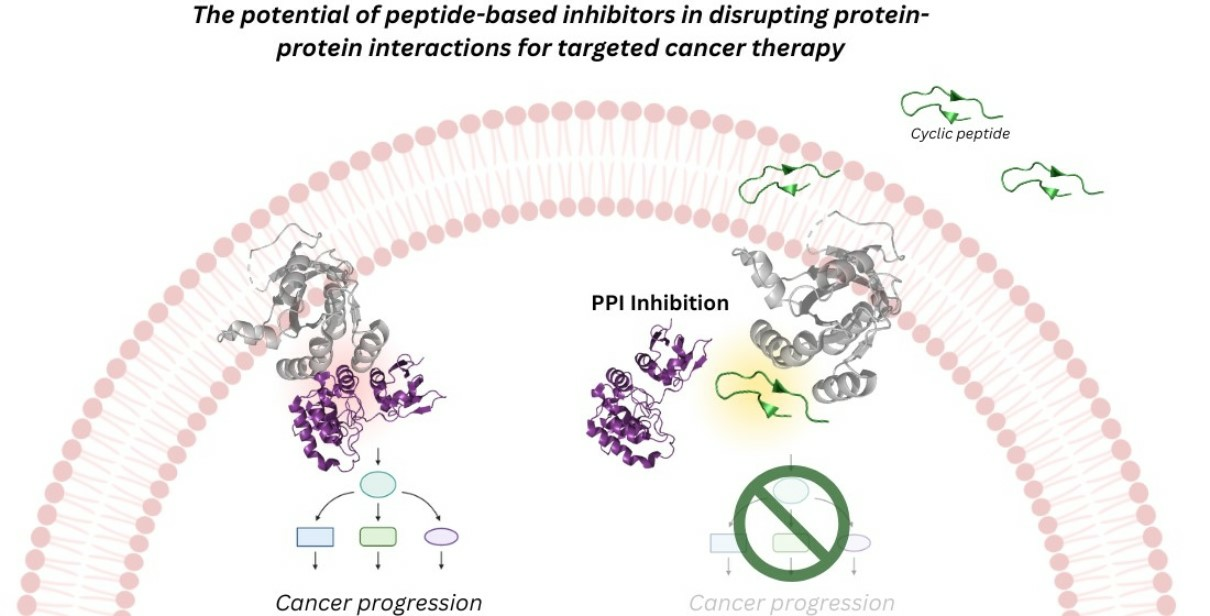
The Potential of Peptide-Based Inhibitors in Disrupting Protein–Protein Interactions for Targeted Cancer Therapy
 , and
, and 
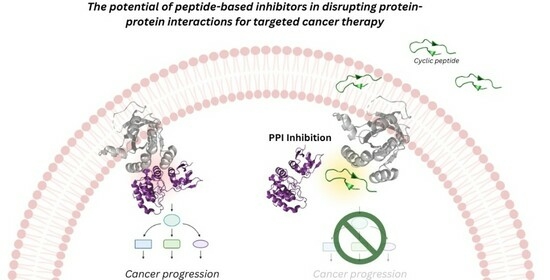
Abstract
Share and Cite
Afonso, A.L.; Cavaleiro, C.T.; Castanho, M.A.R.B.; Neves, V.; Cavaco, M. The Potential of Peptide-Based Inhibitors in Disrupting Protein–Protein Interactions for Targeted Cancer Therapy. Int. J. Mol. Sci. 2025, 26, 3117. https://doi.org/10.3390/ijms26073117
Afonso AL, Cavaleiro CT, Castanho MARB, Neves V, Cavaco M. The Potential of Peptide-Based Inhibitors in Disrupting Protein–Protein Interactions for Targeted Cancer Therapy. International Journal of Molecular Sciences. 2025; 26(7):3117. https://doi.org/10.3390/ijms26073117
Chicago/Turabian StyleAfonso, Alexandra L., Catarina T. Cavaleiro, Miguel A. R. B. Castanho, Vera Neves, and Marco Cavaco. 2025. "The Potential of Peptide-Based Inhibitors in Disrupting Protein–Protein Interactions for Targeted Cancer Therapy" International Journal of Molecular Sciences 26, no. 7: 3117. https://doi.org/10.3390/ijms26073117
APA StyleAfonso, A. L., Cavaleiro, C. T., Castanho, M. A. R. B., Neves, V., & Cavaco, M. (2025). The Potential of Peptide-Based Inhibitors in Disrupting Protein–Protein Interactions for Targeted Cancer Therapy. International Journal of Molecular Sciences, 26(7), 3117. https://doi.org/10.3390/ijms26073117