Review

Molecular Pathways, Neural Circuits and Emerging Therapies for Self-Injurious Behaviour

by
Kristina Zhang
1,2,
George M. Ibrahim
1,2,3 and
Flavia Venetucci Gouveia
2,*
1
Institute of Medical Science, University of Toronto, Toronto, ON M5S 3H2, Canada
2
Neurosciences and Mental Health, The Hospital for Sick Children, Toronto, ON M5G 0A4, Canada
3
Division of Neurosurgery, Hospital for Sick Children, Toronto, ON M5G 1X8, Canada
*
Author to whom correspondence should be addressed.
Int. J. Mol. Sci. 2025, 26(5), 1938; https://doi.org/10.3390/ijms26051938
Submission received: 30 January 2025 / Revised: 17 February 2025 / Accepted: 22 February 2025 / Published: 24 February 2025
(This article belongs to the Special Issue Molecular Research in Aggressive Behavior)

Abstract

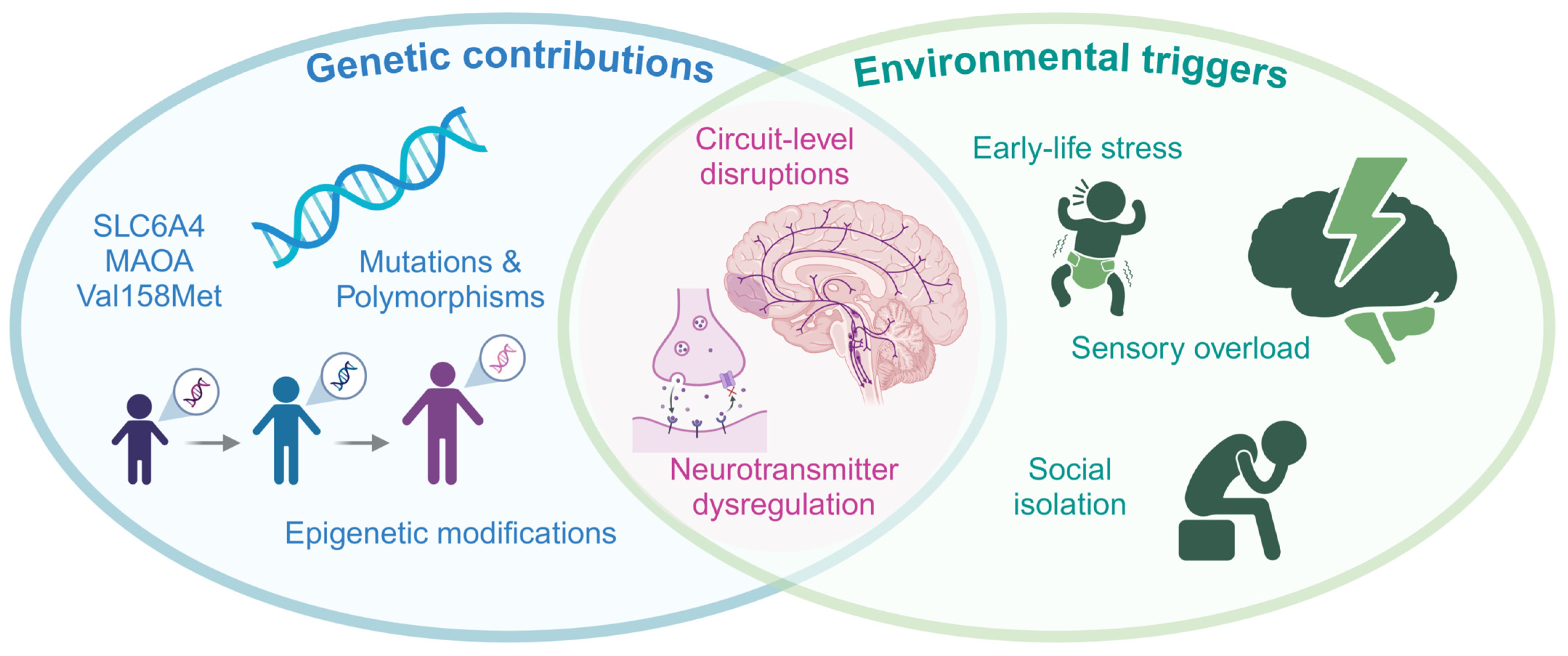
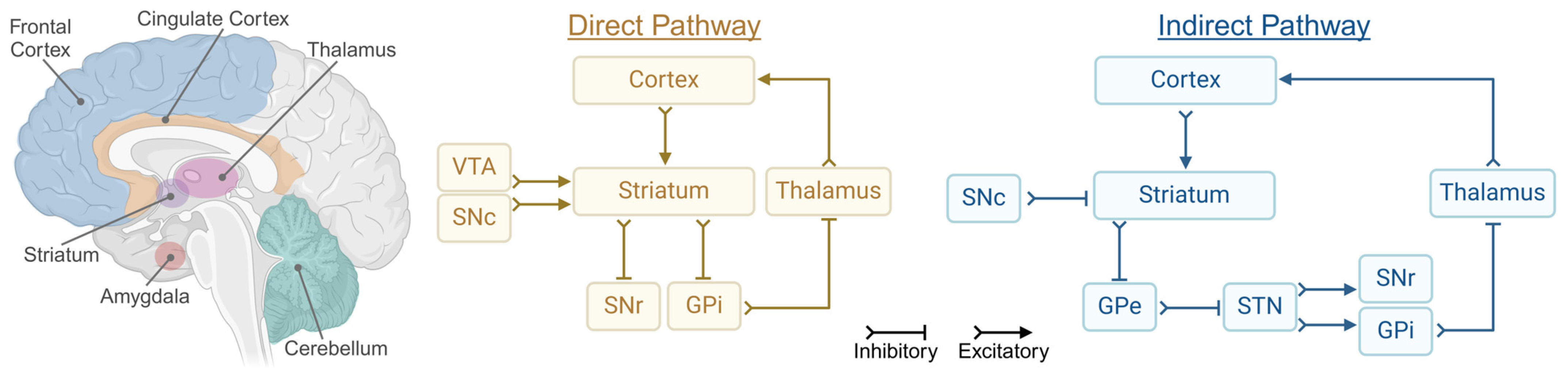
Nonsuicidal self-injurious behaviour (SIB) is a debilitating manifestation of physical aggression commonly observed across neurodevelopmental, psychiatric, and genetic disorders. This behaviour arises from a multifactorial aetiology involving genetic predispositions, epigenetic modifications, neurotransmitter dysregulation, and environmental stressors. Dysregulation in dopaminergic, serotonergic, glutamatergic, and GABAergic systems has been implicated in the pathophysiology of SIB, alongside structural and functional abnormalities within fronto-limbic-striatal circuits. These disruptions impair key processes, such as emotional regulation, reward processing, and behavioural inhibition, contributing to the emergence and reinforcement of SIB. Advances in preclinical research using genetic, lesion-based, pharmacological, and environmental animal models have been instrumental in elucidating the molecular and neurocircuitry underpinnings of SIB. Emerging neuromodulation therapies targeting critical nodes within the fronto-limbic-striatal network, particularly deep brain stimulation, have shown promise in treating severe, refractory SIB and improving quality of life. This review integrates current evidence from clinical studies, molecular research, and preclinical models to provide a comprehensive overview of the pathophysiology of SIB and therapeutic approaches. By focusing on the molecular mechanisms and neural circuits underlying SIB, we highlight the translational potential of emerging pharmacological and neuromodulatory therapies. A deeper understanding of these pathways will pave the way for precision-based interventions, bridging the gap between molecular research and clinical applications in SIB and related conditions.
Keywords: self-injury behaviour; treatment; molecular basis; neuroanatomy self-injury behaviour; treatment; molecular basis; neuroanatomy