


Abstract
Physical exercise is a potent non-pharmacological strategy for the prevention and management of chronic non-communicable diseases (NCDs), including type 2 diabetes, cardiovascular diseases, obesity, and certain cancers. Growing evidence demonstrates that the benefits of exercise extend beyond its physiological effects and are largely mediated by coordinated molecular and cellular adaptations. This review synthesizes current knowledge on the key mechanisms through which exercise modulates metabolic health, emphasizing intracellular signaling pathways, epigenetic regulation, and myokine-driven inter-organ communication. Exercise induces acute and chronic activation of pathways such as AMPK, PGC-1α, mTOR, MAPKs, and NF-κB, leading to enhanced mitochondrial biogenesis, improved oxidative capacity, refined energy sensing, and reduced inflammation. Additionally, repeated muscle contraction stimulates the release of myokines—including IL-6, irisin, BDNF, FGF21, apelin, and others—that act through endocrine and paracrine routes to regulate glucose and lipid metabolism, insulin secretion, adipose tissue remodeling, neuroplasticity, and systemic inflammatory tone. Epigenetic modifications and exercise-responsive microRNAs further contribute to long-term metabolic reprogramming. Collectively, these molecular adaptations establish exercise as a systemic biological stimulus capable of restoring metabolic homeostasis and counteracting the pathophysiological processes underlying NCDs. Understanding these mechanisms provides a foundation for developing targeted, personalized exercise-based interventions in preventive and therapeutic medicine.
1. Introduction
Physical activity is defined as any bodily movement produced by skeletal muscles that requires energy expenditure, whereas exercise refers to a planned, structured, and repetitive form of physical activity aimed at improving or maintaining one or more components of physical fitness [1,2]. In contrast, physical inactivity is characterized by failure to meet the minimum recommendations established by the World Health Organization (WHO), which advise at least 150 min of moderate-intensity aerobic activity or 75 min of vigorous activity per week in adults [3].
Globally, physical inactivity affects approximately one-third of the population, with the highest prevalence reported in the Western Pacific and South-East Asian regions (48.1% and 45.4%, respectively) [4]. This condition is associated with nearly 3.2 million deaths annually [5]. In response, the WHO has set a global target to reduce physical inactivity levels by 15% by the year 2030 [4,6].
Physical inactivity represents one of the most important modifiable risk factors for the development of chronic non-communicable diseases (NCDs), including type 2 diabetes mellitus, cardiovascular diseases, obesity, and several types of cancer [7,8,9,10,11,12]. These conditions impose a substantial global health and economic burden, significantly compromising life expectancy and quality of life [13,14]. Conversely, regular exercise has been consistently associated with reduced incidence and progression of these diseases, along with improvements in metabolic profile, insulin sensitivity, and cardiorespiratory function [15,16].
Over the past decades, growing evidence has unveiled the molecular mechanisms through which exercise exerts its protective and therapeutic effects [17]. Skeletal muscle contraction acts as a potent physiological stimulus that triggers an intricate network of cellular and molecular responses regulating systemic inflammation, energy metabolism, and redox signaling [18,19,20]. Among the most relevant mediators are myokines (such as IL-6, irisin, and myostatin), exercise-regulated microRNAs, epigenetic modifications, and the activation of key intracellular signaling pathways including AMP-activated protein kinase (AMPK), peroxisome proliferator-activated receptor gamma coactivator 1-alpha (PGC-1α), and mechanistic target of rapamycin (mTOR). These pathways collectively modulate mitochondrial biogenesis, fatty acid oxidation, glucose homeostasis, and overall metabolic plasticity [20,21,22].
A comprehensive understanding of these molecular interactions is essential for the development of exercise-based therapeutic strategies targeting NCDs. Within this framework, the present review aims to describe the main molecular effects of physical exercise on chronic non-communicable diseases, emphasizing the underlying biological pathways and their translational potential in personalized and preventive medicine.
2. Physiological and Molecular Adaptations to Exercise
Physical exercise triggers a broad range of physiological and molecular adaptations that jointly enhance metabolic efficiency, systemic homeostasis, and cellular resilience [17,23]. At the core of these responses lies skeletal muscle contraction, which operates as an integrative biological stimulus. By combining mechanical tension, neural activation, and metabolic fluctuations, muscle contraction activates interconnected intracellular signaling pathways that coordinate acute and chronic adaptations [24,25,26]. These include rapid metabolic adjustments during exercise and long-term remodeling processes such as changes in gene expression, mitochondrial expansion, and inter-organ communication.
During an acute bout of exercise, muscle fibers undergo marked increases in ATP turnover, cytosolic calcium levels, and reactive oxygen species (ROS) generation [27,28].
It is important to note that these disturbances—normally interpreted as “stress”—are now recognized as essential signals for the activation of molecular adaptation programs [17,23]. For instance, ROS generated during contraction function as second messengers that regulate redox-sensitive transcription factors including NF-κB, Nrf2, and PGC-1α. To maintain a beneficial balance between adaptive ROS signaling and harmful oxidative stress, cells rely on tightly regulated antioxidant systems—including superoxide dismutase, catalase, and glutathione peroxidase—as well as redox-buffering molecules such as glutathione. These mechanisms dynamically adjust ROS levels, ensuring sufficient oxidative cues for signaling while preventing irreversible damage to lipids, proteins, and DNA. Concurrently, the AMP-activated protein kinase (AMPK) detects fluctuations in the AMP/ATP ratio and promotes catabolic processes to restore energy balance [29,30,31]. AMPK activation enhances glucose uptake via GLUT4 translocation and stimulates fatty acid oxidation, collectively fostering an intracellular environment optimized for metabolic homeostasis [32,33,34].
At the transcriptional level, PGC-1α stands out as a master regulator of mitochondrial biogenesis and oxidative metabolism [31]. Its activation through AMPK- and SIRT1-mediated phosphorylation and deacetylation drives the expression of nuclear-encoded mitochondrial proteins and components of the electron transport chain. This coordinated regulation promotes mitochondrial expansion, improved oxidative capacity, and greater metabolic flexibility—hallmarks of exercise-trained skeletal muscle [31,35,36].
Beyond local muscle effects, exercise induces systemic adaptations mediated by the release of bioactive molecules collectively known as exerkines, which include myokines, hepatokines, adipokines, and various metabolites [37,38]. Myokines such as IL-6, irisin, and FGF21 facilitate metabolic crosstalk between muscle and distant organs—including the liver, adipose tissue, pancreas, and brain—modulating glucose and lipid metabolism, insulin action, and inflammatory tone [39,40]. These findings reinforce the concept of skeletal muscle as a dynamic endocrine organ capable of orchestrating whole-body metabolic health [41]. However, the heterogeneity in experimental protocols and analytical methods contributes to inconsistencies—particularly in biomarker quantification (e.g., irisin)—which must be interpreted cautiously.
In addition to these classical pathways, recent evidence indicates that exercise also remodels the intracellular architecture of skeletal muscle fibers, integrating metabolic signaling with organelle-level adaptations. Contractile activity influences mitochondrial dynamics—through coordinated cycles of fission and fusion regulated by AMPK–PGC-1α signaling—and enhances interactions between mitochondria, the sarcoplasmic reticulum, and lipid droplets, optimizing calcium handling, redox balance, and substrate utilization [30,31,35,36]. Key proteins involved in these processes include the fission mediator DRP1, which is activated by exercise-induced phosphorylation, and the fusion regulators MFN1, MFN2, and OPA1, all of which are upregulated or functionally enhanced in response to endurance and high-intensity exercise [42]. These structural adjustments support improved mitochondrial efficiency and reinforce cellular resilience during repeated exercise stimuli.
Chronic exercise training further amplifies these adaptive processes, leading to increases in mitochondrial content, angiogenesis, and insulin signaling efficiency [43]. These long-term effects are supported by cumulative molecular remodeling, including DNA hypomethylation, histone acetylation, and other epigenetic modifications in genes governing oxidative metabolism and inflammation [44,45]. In addition, muscle-enriched microRNAs such as miR-1, miR-133, and miR-206 fine-tune post-transcriptional regulatory networks involved in muscle plasticity, substrate utilization, and recovery [46,47]. While these findings demonstrate the plasticity of skeletal muscle, many epigenetic and miRNA studies rely on small sample sizes or animal models, highlighting the need for more rigorous translational research.
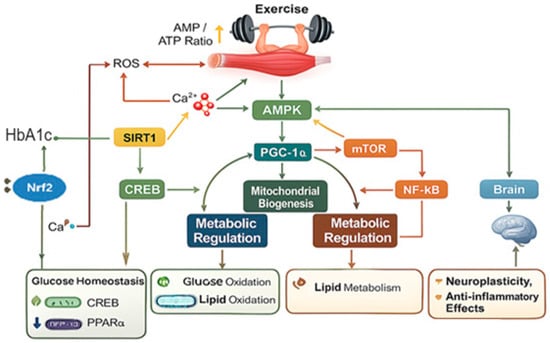
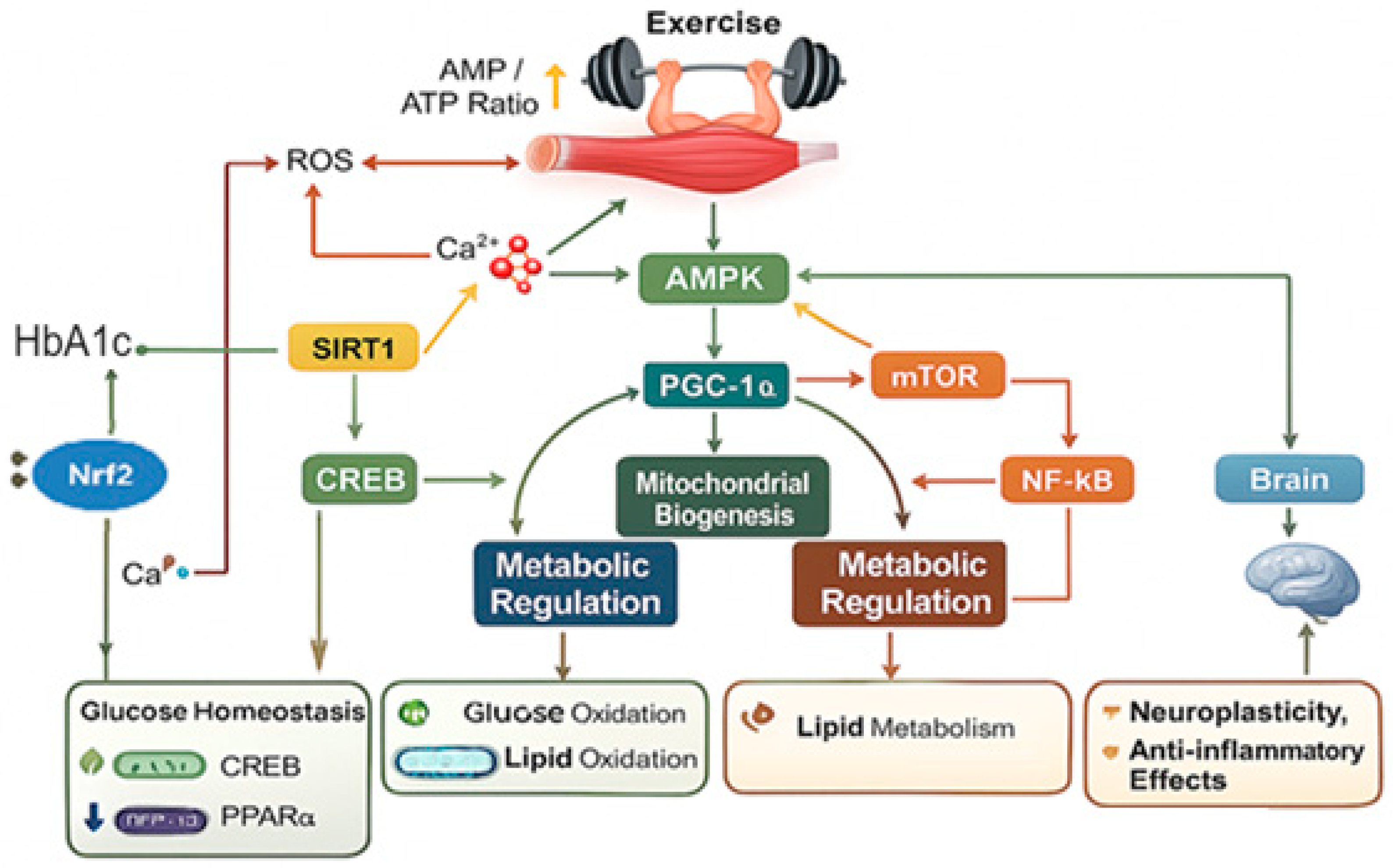
Overall, the physiological and molecular responses to exercise represent an integrated biological program that enhances energy sensing, mitochondrial efficiency, and metabolic resilience. These interconnected adaptations not only explain the health benefits of regular physical activity but also establish the mechanistic basis by which exercise prevents and mitigates chronic non-communicable diseases (Figure 1).
Figure 1.
Central Molecular Pathways Activated by Exercise. Source: own elaboration.
3. Cellular Signaling Pathways Involved in Exercise Adaptations
Physical exercise activates a complex network of intracellular signaling pathways that coordinate metabolic, structural, and molecular remodeling across multiple tissues, particularly skeletal muscle [1,17]. These signaling cascades underpin the well-documented improvements in energy homeostasis, mitochondrial function, inflammatory balance, and cellular resilience associated with regular physical activity [43]. Among the most thoroughly investigated pathways are AMPK, PGC-1α, mTOR, the MAPK family, and NF-κB. Alongside these canonical axes, exercise-induced epigenetic and post-transcriptional mechanisms, including microRNAs, contribute to the persistence and specificity of long-term adaptations [24,43,48,49].
3.1. AMPK Pathway: Energy Sensing and Metabolic Regulation
The AMPK pathway functions as a master metabolic regulator, integrating fluctuations in cellular energy status and orchestrating responses to sustain ATP availability [3,36,50]. During exercise, increased ATP turnover elevates AMP/ATP and ADP/ATP ratios, activating AMPK through phosphorylation at Thr172 by upstream kinases such as LKB1 and CaMKKβ. This activation promotes a shift toward catabolic pathways that generate ATP while suppressing energy-demanding anabolic processes [1,17,48].
In skeletal muscle, AMPK activation enhances glucose uptake through insulin-independent GLUT4 translocation and stimulates fatty acid oxidation via phosphorylation of acetyl-CoA carboxylase (ACC), lowering malonyl-CoA levels and facilitating mitochondrial fatty acid import through CPT1. These coordinated responses maintain ATP supply during repeated contractions [51,52,53,54].
Beyond its acute role, AMPK contributes to long-term metabolic adaptation by activating PGC-1α—either directly or through interactions with SIRT1—thereby promoting mitochondrial biogenesis and oxidative metabolism [30,31,43]. These processes underpin the enhanced metabolic flexibility characteristic of trained skeletal muscle.
AMPK-mediated adaptations extend across tissues. In the liver, AMPK inhibits gluconeogenesis and lipogenesis while promoting fatty acid oxidation [50]; in adipose tissue, it reduces lipogenesis and enhances lipolysis; and in vascular endothelium, it improves nitric oxide bioavailability through eNOS activation [55,56]. Collectively, AMPK serves as a key integrator of metabolic and vascular responses to exercise, with chronic activation protecting against insulin resistance, dyslipidemia, and cardiovascular dysfunction [57].
Critically, although AMPK is frequently portrayed as unequivocally beneficial, its activation is highly context-dependent and varies by exercise intensity, nutrient status, and fiber type—factors often underreported and limiting cross-study comparisons.
3.2. PGC-1α Signaling: Master Regulator of Oxidative and Mitochondrial Adaptation
PGC-1α is a central transcriptional coactivator driving the molecular remodeling of skeletal muscle in response to resistance exercise [58]. Activated by both endurance and resistance exercise, PGC-1α regulates mitochondrial biogenesis, oxidative phosphorylation, angiogenesis, and fiber-type transformation toward oxidative phenotypes [30,31,43,51].
Molecularly, PGC-1α integrates convergent signals from AMPK, SIRT1, and p38 MAPK, which modulate its phosphorylation, deacetylation, and nuclear translocation [59]. In the nucleus, it coactivates NRF1, NRF2, and ERRα, enhancing expression of nuclear-encoded mitochondrial genes and components of the electron transport chain [60,61]. PGC-1α also facilitates mitochondrial DNA replication by stimulating TFAM, expanding mitochondrial content and capacity [62,63].
Beyond metabolism, PGC-1α increases antioxidant enzyme expression (e.g., SOD2, catalase), attenuates inflammation by antagonizing NF-κB, and induces VEGF-driven angiogenesis, collectively improving oxidative tolerance and muscle perfusion [64,65,66,67].
Systemically, PGC-1α improves insulin sensitivity, enhances lipid utilization, and reduces ectopic fat accumulation, with emerging evidence pointing to roles in liver and adipose tissue via exerkine-mediated inter-organ communication [43,58,60,63,67].
A critical limitation in the current literature is the tendency to attribute a wide range of adaptations to PGC-1α without distinguishing between isoforms, cell-specific expression, or the contribution of compensatory pathways—issues that remain underexplored in human studies.
3.3. mTOR Pathway: Protein Synthesis, Muscle Hypertrophy, and AMPK Interplay
The mTOR regulates cell growth, protein synthesis, and nutrient sensing, particularly in response to mechanical load and amino acid availability [68]. During resistance exercise, activation of mTORC1 promotes muscle hypertrophy and protein accretion [69].
Mechanical signals and amino acids—especially leucine—activate mTORC1 via the Rag GTPases and PI3K/Akt pathway [70]. Activated mTORC1 phosphorylates S6K1 and 4E-BP1, stimulating translation initiation and ribosomal biogenesis [71,72], ultimately driving muscle fiber growth.
A critical aspect of this pathway is its antagonistic interplay with AMPK [48,73]. Under low-energy conditions, AMPK inhibits mTORC1 via Raptor phosphorylation, suppressing anabolism to preserve ATP [74]. This dynamic ensures coordinated metabolic efficiency: mTOR dominates when energy and nutrients are abundant, whereas AMPK prevails during energetic stress.
Beyond muscle, mTOR influences insulin signaling, autophagy, and lipid metabolism [75]. Dysregulation contributes to insulin resistance, obesity, and certain cancers, positioning exercise-mediated modulation of the AMPK–mTOR axis as a key mechanism for systemic metabolic health [76,77].
Despite extensive study, most evidence stems from controlled laboratory settings with limited ecological validity; real-world exercise responses may vary substantially due to nutritional timing, age, and sex-specific differences—factors requiring greater investigation.
3.4. MAPK and NF-κB Pathways: Inflammation and Oxidative Stress Regulation
The MAPK family—including ERK1/2, JNK, and p38 MAPK—transduces mechanical, metabolic, and cytokine-derived signals during exercise [78]. ERK1/2 primarily supports growth and differentiation, facilitating structural remodeling after resistance exercise [79]. In contrast, JNK and p38 MAPK respond to metabolic and oxidative stress, linking ROS generation with transcriptional control [80].
p38 MAPK interacts directly with PGC-1α, reinforcing mitochondrial biogenesis and antioxidant defense while regulating cytokine expression [80,81]. These effects illustrate the functional convergence between stress signaling and metabolic adaptation.
NF-κB, a central transcription factor in inflammation and redox regulation, is transiently activated during exercise by ROS and cytokines [66]. Moderate, acute activation induces antioxidant and cytoprotective gene expression, supporting adaptive hormesis [66,82]. In contrast, chronic NF-κB activation—associated with inactivity or overtraining—promotes inflammatory cytokine production and muscle catabolism [83]. Regular exercise mitigates chronic inflammation by enhancing IκB expression and suppressing systemic inflammatory mediators [84].
These pathways exemplify the dual nature of ROS—as essential signals or harmful stressors depending on intensity, duration, and recovery [19,49]. A critical challenge is the lack of standardized methods to quantify real-time redox dynamics in humans, limiting interpretation across studies.
3.5. Epigenetic and microRNA Modulation: Post-Transcriptional and Chromatin-Level Control
Exercise exerts powerful regulatory effects on gene expression through epigenetic mechanisms and microRNA-mediated post-transcriptional modulation [85]. These processes serve as a “molecular memory,” translating behavioral cues into persistent genomic adaptations [17,23,86].
Exercise alters DNA methylation in genes associated with mitochondrial function, glucose transport, and lipid metabolism [87,88]. Hypomethylation of promoters for PGC-1α, TFAM, and GLUT4 enhances transcriptional activity and metabolic plasticity [51]. Concurrent histone modifications—including acetylation and methylation—modulate chromatin accessibility, with SIRT1-mediated deacetylation linking energy status to chromatin structure [89,90].
MicroRNAs (miRNAs) fine-tune these adaptations. Muscle-enriched myomiRs (miR-1, miR-133a, miR-206) regulate myogenesis, mitochondrial biogenesis, and muscle regeneration [46,47]. Circulating miRNAs act as systemic messengers mediating communication between muscle and distant organs such as liver, adipose tissue, and brain [90,91].
Emerging findings suggest possible transgenerational effects of exercise-induced epigenetic remodeling, indicating that physical activity may influence metabolic phenotypes beyond the individual [92,93]. While promising, this evidence remains preliminary and largely restricted to animal models.
In summary, all cell signaling processes involved in exercise adaptations are synthesized in Table 1.
Table 1.
Summary of the main signaling pathways activated by exercise and their integrated molecular and physiological functions.
4. Exercise-Induced Myokines and Inter-Organ Crosstalk
Regular physical exercise transforms skeletal muscle into a dynamic endocrine organ capable of secreting a wide array of bioactive molecules collectively known as myokines [105]. Produced in response to muscle contraction, these cytokine-like factors mediate autocrine and paracrine influences within the muscle and endocrine effects on distant organs [106,107]. Through these mechanisms, myokines act as molecular messengers linking physical activity to systemic metabolic regulation, immunomodulation, and energy homeostasis [39].
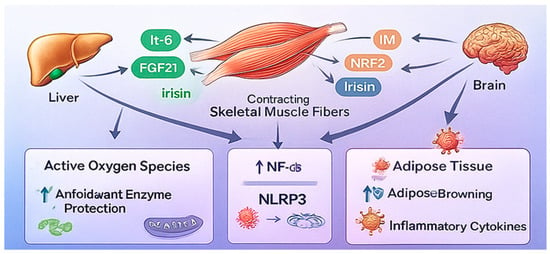
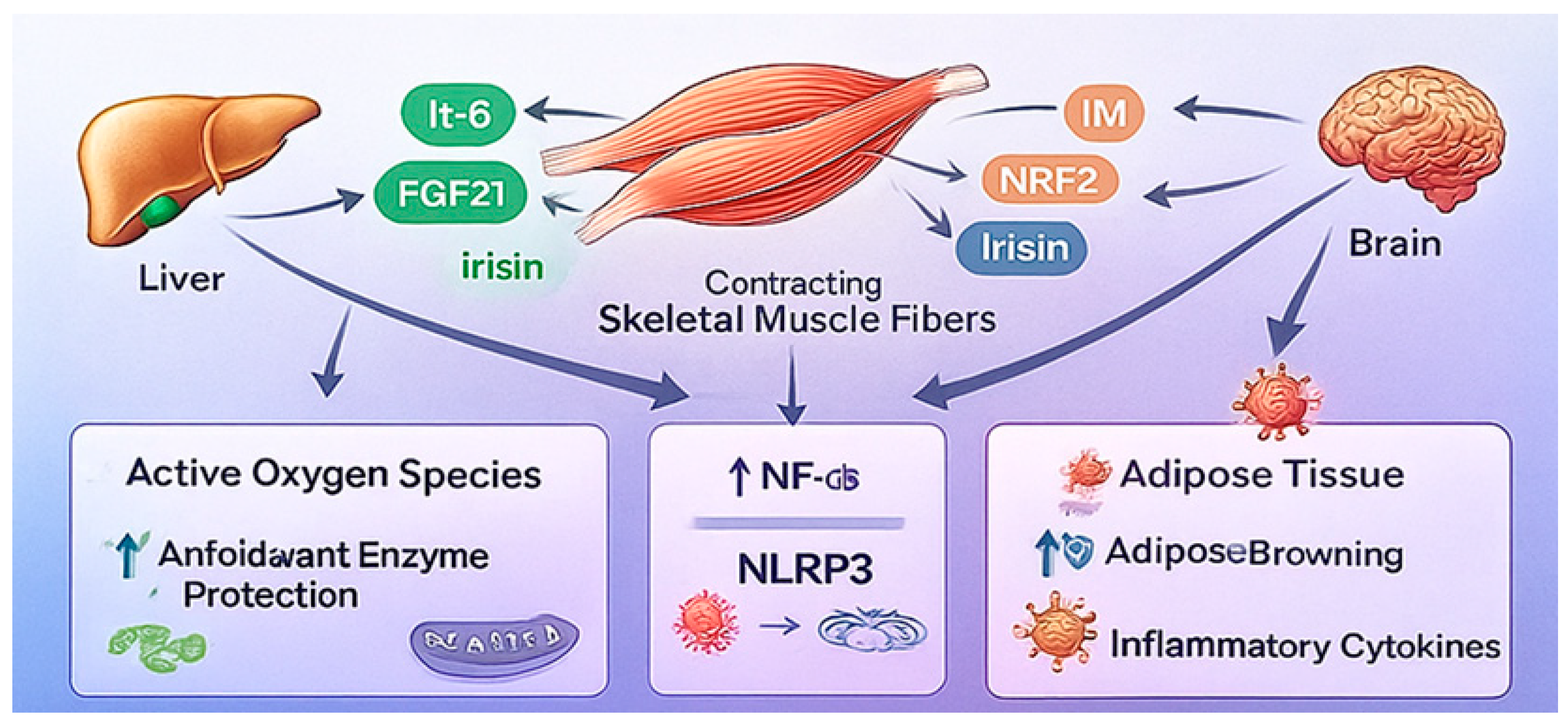
A key challenge in the current literature is the heterogeneity in detection methods, variability in exercise protocols, and differences in population characteristics, which complicate the interpretation of myokine responses. Nonetheless, several consistent patterns have emerged and are summarized below (Figure 2).
Figure 2.
Exercise-Induced Myokines and Inter-Organ Crosstalk. Source: own elaboration.
4.1. Major Exercise-Induced Myokines
The best-characterized myokines—interleukin-6 (IL-6), irisin, myostatin, brain-derived neurotrophic factor (BDNF), fibroblast growth factor 21 (FGF21), and apelin—play central roles in mediating the multisystemic benefits of regular exercise [107,108].
IL-6, the prototypical myokine, can increase up to 100-fold during exercise, stimulating hepatic glucose output and adipose tissue lipolysis to match energetic demands [109]. Importantly, IL-6 also exerts anti-inflammatory effects by inducing IL-10 and IL-1 receptor antagonist and suppressing TNF-α signaling [110,111]. Its dual metabolic and immunomodulatory roles exemplify the context-dependent nature of myokines—acute versus chronic IL-6 signaling yields markedly different outcomes.
Irisin, generated through cleavage of the FNDC5 protein in a PGC-1α–dependent manner, is traditionally associated with endurance exercise [67,111,112]. It induces browning of white adipose tissue via UCP1 upregulation, increasing thermogenesis and energy expenditure, and may enhance insulin sensitivity and β-cell viability [113,114]. However, significant controversy persists regarding irisin quantification in humans, highlighting the need for improved methodological rigor.
Myostatin, a TGF-β family member, functions as a potent inhibitor of muscle growth. Exercise, particularly resistance training, suppresses myostatin, facilitating hypertrophy and metabolic improvements [115]. Reduced myostatin levels correlate with improved insulin sensitivity and lower adiposity, although human evidence remains less consistent than animal models [116]
BDNF is produced by both muscle and neural tissues and is induced via AMPK–PGC-1α mechanisms [117]. Locally, it enhances fatty acid oxidation, while systemically it supports neuroplasticity, cognition, and mood regulation, linking physical exercise with brain health [118,119].
FGF21, produced by muscle and liver, promotes fatty acid oxidation, glucose uptake, and hepatoprotection [120]. Apelin improves glucose uptake, vascular function, and AMPK activation, and its decline with age or metabolic disease suggests that exercise-induced restoration may counteract age-related metabolic deterioration [121,122].
Critically, although these myokines are frequently studied in isolation, their effects often overlap, and interactions among them remain poorly characterized.
4.2. Endocrine and Paracrine Signaling Mechanisms
Myokines shape metabolic and structural remodeling through autocrine/paracrine and endocrine routes. Locally, contraction-induced changes in AMP/ATP ratio, Ca2+ signaling, and ROS activate AMPK, MAPK, and PGC-1α pathways, thereby promoting mitochondrial biogenesis, angiogenesis, and fiber-type remodeling. Paracrine actions of IL-6, VEGF, and BDNF support oxidative metabolism, vascularization, and tissue repair [24,41,60,78].
Endocrinally, myokines circulate to distant organs, activating intracellular pathways such as JAK/STAT, PI3K/Akt, or p38 MAPK to influence lipid and glucose metabolism, inflammation, and tissue adaptation [123,124,125]. IL-6 regulates hepatic glucose production; apelin activates AMPK in adipose and vascular tissue; and irisin promotes adipose browning through integrin αV/β5 [126].
Beyond soluble proteins, extracellular vesicles and exosomes serve as carriers of myokines and myomiRs, protecting them from degradation and allowing tissue-specific delivery [127,128]. These exerkine-derived vesicles reveal that muscle communicates through a diverse molecular language extending beyond classical cytokines.
Critically, the relative contribution of vesicle-bound vs. free-circulating myokines is still unclear, and standardized isolation protocols are urgently needed.
4.3. Inter-Organ Communication: Muscle–Liver, Muscle–Pancreas, Muscle–Adipose, and Muscle–Brain Axes
Exercise-induced myokines coordinate a complex, multidirectional communication network linking skeletal muscle with the liver, pancreas, adipose tissue, and brain [17,41,129].
In the liver-muscle axis, IL-6 and FGF21 regulate hepatic glucose and lipid metabolism [109,126]. During acute exercise, IL-6 increases gluconeogenesis and glycogenolysis to maintain blood glucose [130,131]. With training, IL-6 promotes hepatic insulin sensitivity and lipid oxidation through AMPK and STAT3 activation [132,133]. FGF21 enhances fatty acid oxidation and reduces lipogenesis, offering protection against NAFLD [134].
In the muscle–pancreas axis, myokines influence β-cell survival and insulin secretion. Irisin enhances glucose-stimulated insulin release and β-cell viability [135,136]. IL-6 indirectly supports insulin secretion via GLP-1 induction. BDNF and apelin mitigate oxidative and inflammatory stress in β-cells, helping preserve endocrine function [112,117,137].
In the muscle–adipose axis, myokines regulate lipid metabolism and thermogenesis. Irisin, BAIBA, and METRNL promote browning via UCP1 upregulation, increasing energy expenditure and insulin sensitivity [138,139,140]. Exercise-induced suppression of myostatin enhances lipid mobilization and reduces adipose inflammation [141].
The muscle–brain axis, BDNF is a central mediator of muscle-to-brain signaling, promoting neurogenesis, synaptic plasticity, and cognitive benefits [106,118]. Irisin crosses the blood–brain barrier and stimulates hippocampal BDNF expression, amplifying neuroprotective effects [112,117,137]. Myokines such as apelin and cathepsin B further support neurovascular function and cognitive resilience [142].
Critically, many of these findings are derived from animal models or acute interventions; long-term human data remain limited.
4.4. Integrative Role of Myokines in Metabolism and Homeostasis
Exercise-induced myokines act as central regulators of whole-body metabolism, inflammation, and energy homeostasis, synchronizing adaptations across tissues [109,124,143]. Regular exercise promotes a myokine profile that enhances oxidative metabolism, insulin sensitivity, and anti-inflammatory signaling, whereas inactivity shifts this profile toward chronic low-grade inflammation [43,132,133,138].
Metabolically, IL-6, irisin, FGF21, and myonectin promote glucose uptake, lipid oxidation, and mitochondrial biogenesis. IL-6 exhibits dual roles: acutely promoting hepatic glucose output and chronically enhancing insulin sensitivity via AMPK and STAT3 [109,117,132,133]. Irisin stimulates adipose browning via UCP1, and FGF21 induces fasting-like adjustments including fatty acid oxidation and ketogenesis [112,134].
Immunometabolically, exercise shifts cytokine profiles toward anti-inflammatory states, mediated by IL-10, IL-1ra, and decreased TNF-α [109,110,111]. Apelin and BDNF support vascular and neuronal resilience, contributing to cardiometabolic and cognitive protection [112,117,137].
Myokines also influence liver lipid metabolism, β-cell survival, and adipose tissue remodeling [137]. Apelin and IL-15 improve β-cell mitochondrial function, while myostatin suppression promotes hypertrophy and reduces fat accumulation [135,136].
Disruption of myokine secretion—due to inactivity, obesity, aging, or chronic inflammation—leads to “myokine resistance,” a state of impaired tissue responsiveness that contributes to insulin resistance, sarcopenia, and cardiovascular disease [4,10,13,14]. Understanding these networks provides opportunities for therapeutic strategies such as exercise mimetics, recombinant myokines, and gene-based interventions [1,17,23,25,40].
Ultimately, myokines constitute a unifying framework linking mechanical activity to molecular health, reinforcing exercise as a systemic regulator of metabolic homeostasis [17,23,25,40]. The evidence presented here is synthesized in Table 2, which summarizes meta-analytic findings on key myokines and their responsiveness to exercise across diverse populations and modalities.
Table 2.
Synthesis of Meta-Analytic Studies on Exercise-Responsive Myokines.
5. Translational and Clinical Perspectives: From Molecular Mechanisms to Therapeutic Applications
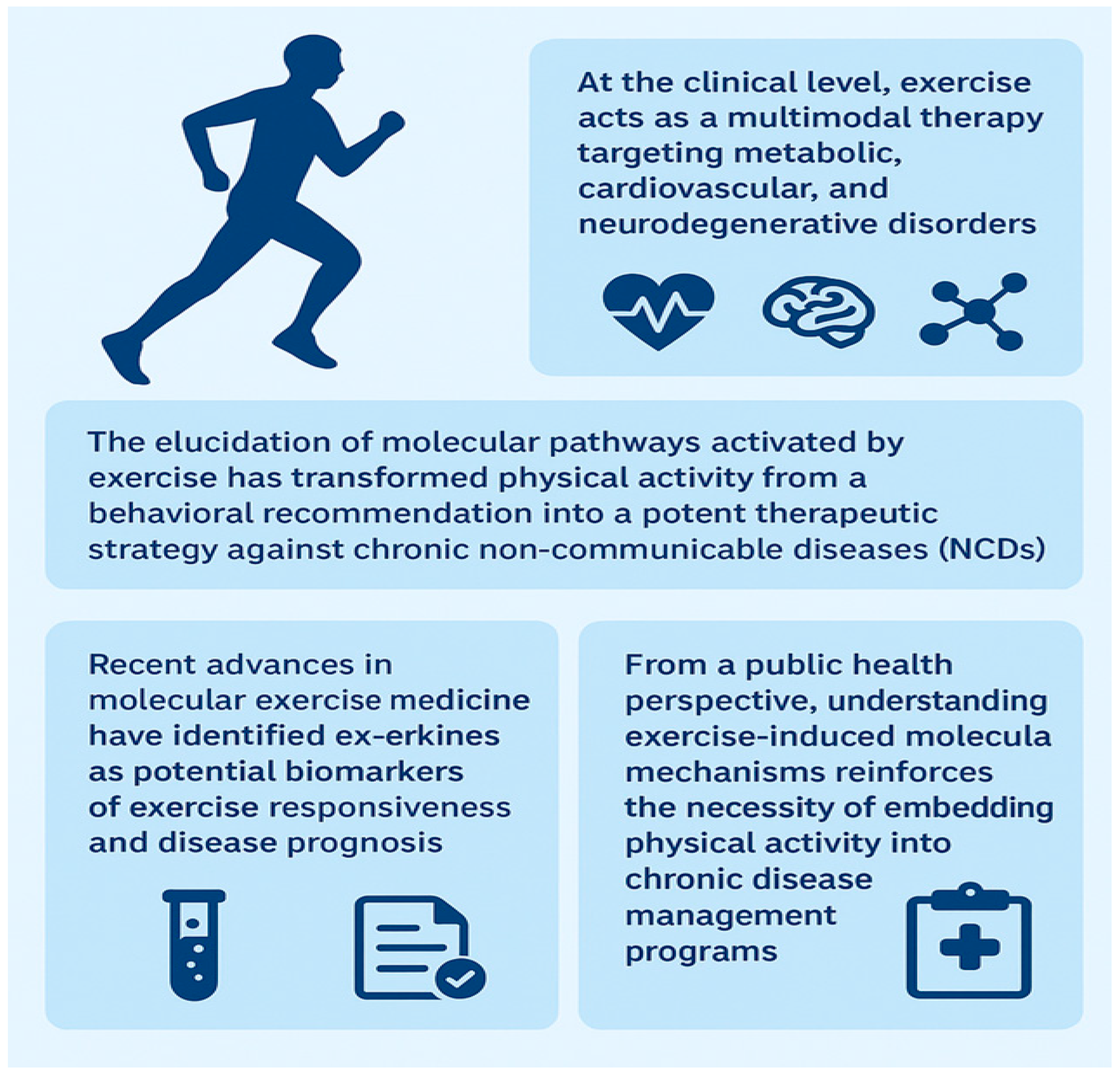
The elucidation of the molecular pathways activated by exercise has repositioned physical activity from a lifestyle recommendation to a potent therapeutic intervention for chronic non-communicable diseases (NCDs) [1,7,13]. As understanding of AMPK, PGC-1α, mTOR, myokines, and epigenetic regulators advances, the challenge lies in translating these mechanistic insights into clinically actionable strategies [1,17,23,25,40]. Bridging basic molecular biology with individualized, patient-centered interventions is central to the emergence of “exercise medicine”.
Clinically, structured aerobic and resistance training exert multimodal effects that target metabolic, cardiovascular, and neurodegenerative disorders [1]. Improvements in insulin sensitivity, reductions in systemic inflammation, enhanced mitochondrial biogenesis, and increased oxidative capacity have been consistently observed across tissues [17,21,58,115]. These adaptations mirror the pharmacological actions of therapies such as metformin (via AMPK activation), statins (via anti-inflammatory signaling), and neuroprotective agents that promote BDNF expression—supporting the conceptualization of exercise as a biological “polypill” with synergistic and pleiotropic benefits [150,151].
The concept of exercise mimetics—pharmacological agents that activate exercise-responsive pathways—represents another translational frontier. Compounds such as AICAR (AMPK agonist), resveratrol (SIRT1 activator), and GW501516 (PPARδ agonist) mimic aspects of endurance training by stimulating mitochondrial biogenesis and fatty acid oxidation [76,106,128,152]. Likewise, myostatin inhibitors aim to replicate the anabolic effects of resistance training. While promising, these agents only partially recapitulate the systemic benefits of exercise and raise concerns about safety, off-target effects, and ethical considerations. Future therapies will likely benefit from combined approaches in which pharmacological modulation complements, rather than replaces, physical activity to enhance metabolic and cellular resilience [153,154].
From a public health perspective, expanding knowledge of exercise-induced molecular mechanisms reinforces the imperative of incorporating structured physical activity into chronic disease prevention and management programs [1,17,23]. Early interventions that target muscle-derived signaling may prevent the development of metabolic inflexibility, systemic inflammation, and “myokine resistance”—a phenotype associated with sedentary behavior, obesity, and aging [40,41,110,114,125]. Understanding these mechanistic disruptions provides new avenues for mitigating the progressive decline in metabolic and functional capacity observed in high-risk populations.
In summary, deciphering the molecular underpinnings of exercise opens new avenues for translational and precision medicine. Integrating myokine biology, epigenetic adaptations, and exerkine profiling into clinical practice offers promising strategies to counter the growing burden of chronic diseases. By leveraging these mechanistic insights, exercise can be harnessed not only as a preventive measure but as a targeted therapeutic modality with substantial potential across metabolic, cardiovascular, and neurological domains [1] (Figure 3).
Figure 3.
Translational and clinical perspectives from molecular mechanisms to therapeutic applications. Source: own elaboration.
6. Limitations and Future Directions
Despite substantial progress in the molecular characterization of exercise-induced adaptations, several methodological and conceptual limitations continue to challenge the field. Heterogeneity in study designs, variability in training intensity and duration, and population differences (age, sex, metabolic status) hinder direct comparison across studies and make it difficult to establish universal mechanistic conclusions. Moreover, a considerable proportion of mechanistic insights derives from animal models or in vitro experiments, which only partially replicate the complex neuroendocrine, mechanical, and metabolic environment of human exercise.
A major limitation is the absence of standardized exercise protocols and sampling timelines. Acute and chronic exercise elicit distinct molecular signatures—yet many studies lack precise temporal profiling, leading to inconsistent interpretation of signaling cascades. This issue is particularly relevant for the quantification of circulating myokines, exerkines, and epigenetic markers, whose transient kinetics, low abundance, and sensitivity to external factors (diet, circadian rhythm, training status) complicate reliable measurement.
Advancing the field will require the integration of multi-omics approaches—including transcriptomics, proteomics, metabolomics, and epigenomics—within rigorously controlled human exercise trials. Such approaches can reveal tissue-specific, time-resolved adaptations and help reconcile inconsistencies observed in the current literature. However, implementing multi-omics designs in real-world exercise settings remains resource-intensive and logistically challenging, underscoring the need for methodological harmonization and accessible analytical pipelines.
Future research should prioritize translational and clinical frameworks that bridge mechanistic discoveries with personalized exercise prescriptions. Longitudinal studies incorporating molecular biomarkers, functional assessments, and clinical endpoints could clarify causal pathways, identify inter-individual variability in exercise responsiveness, and support precision exercise medicine. In this context, a key future direction is the development of personalized exercise prescriptions for individuals with metabolic disorders such as type 2 diabetes and obesity. Integrating molecular signatures—such as AMPK sensitivity, PGC-1α–driven mitochondrial remodeling, mTOR-related anabolic responses, and exercise-responsive microRNAs—could help tailor training modalities, intensities, and recovery strategies to individual metabolic profiles. Such mechanistically informed programs may optimize improvements in insulin sensitivity, lipid oxidation, and glycemic control, thereby enhancing clinical outcomes in these populations. Ultimately, progress in this field will depend on interdisciplinary collaboration among molecular biologists, clinicians, and exercise physiologists to develop standardized, reproducible, and clinically relevant models of exercise-induced molecular adaptation.
7. Conclusions
Exercise acts as a systemic modulator of molecular homeostasis, coordinating metabolic, inflammatory, and regenerative processes through tightly regulated signaling networks. Key pathways—including AMPK–PGC-1α, mTOR, MAPK, NF-κB, and epigenetic and miRNA-mediated regulation—form an integrated framework that translates mechanical and metabolic stress into adaptive responses across multiple organs.
Beyond its physiological benefits, exercise represents a biologically multifactorial and cost-effective therapeutic tool capable of preventing and mitigating chronic non-communicable diseases. By enhancing mitochondrial function, reducing inflammation, and optimizing energy balance, regular physical activity reprograms molecular networks toward resilience and longevity. Continued research into the molecular basis of exercise will not only refine our understanding of human adaptability but also open new therapeutic avenues for precision and translational medicine.
Author Contributions
Conceptualization, H.F.-B.; methodology, H.F.-B. and R.A.-E.; formal analysis, H.F.-B., R.A.-E., M.A.-R., O.L.-S., J.A.A.-H., Á.R.-V., D.R.-G. and M.C.-O.; investigation, H.F.-B., R.A.-E., M.A.-R., O.L.-S., J.A.A.-H., Á.R.-V., D.R.-G. and M.C.-O.; resources, H.F.-B., R.A.-E., M.A.-R., O.L.-S., J.A.A.-H., Á.R.-V., D.R.-G. and M.C.-O.; data curation, H.F.-B., R.A.-E., M.A.-R., O.L.-S., J.A.A.-H., Á.R.-V., D.R.-G. and M.C.-O.; writing—original draft preparation, H.F.-B., R.A.-E., M.A.-R., O.L.-S., J.A.A.-H., Á.R.-V., D.R.-G. and M.C.-O.; writing—review and editing, H.F.-B., R.A.-E., M.A.-R., O.L.-S., J.A.A.-H., Á.R.-V., D.R.-G. and M.C.-O.; visualization, H.F.-B., R.A.-E., M.A.-R., O.L.-S., J.A.A.-H., Á.R.-V., D.R.-G. and M.C.-O.; supervision, H.F.-B. All authors have read and agreed to the published version of the manuscript.
Funding
This research received no external funding.
Data Availability Statement
No new data were created or analyzed in this study. Data sharing is not applicable to this article.
Acknowledgments
During the preparation of this manuscript, the authors used ChatGTP-5-turbo to improve grammatical style. The authors have reviewed and edited the output and take full responsibility for the content of this publication.
Conflicts of Interest
The authors declare no conflicts of interest.
References
- Walzik, D.; Wences Chirino, T.Y.; Zimmer, P.; Joisten, N. Molecular insights of exercise therapy in disease prevention and treatment. Signal Transduct. Target. Ther. 2024, 9, 138. [Google Scholar] [CrossRef] [Scilit]
- Piggin, J. What Is Physical Activity? A Holistic Definition for Teachers, Researchers and Policy Makers. Front. Sports Act. Living 2020, 2, 72. [Google Scholar] [CrossRef] [Scilit]
- Bull, F.C.; Al-Ansari, S.S.; Biddle, S.; Borodulin, K.; Buman, M.P.; Cardon, G.; Carty, C.; Chaput, J.P.; Chastin, S.; Chou, R.; et al. World Health Organization 2020 guidelines on physical activity and sedentary behaviour. Br. J. Sports Med. 2020, 54, 1451–1462. [Google Scholar] [CrossRef] [Scilit]
- Abuhay, H.W.; Derseh, N.M.; Kolbe-Alexander, T.L.; Gyawali, P.; Yenit, M.K. Prevalence of physical inactivity and associated factors among adults in Eastern African countries: A systematic review and meta-analysis protocol. BMJ Open 2024, 14, e084073. [Google Scholar] [CrossRef] [Scilit]
- Strain, T.; Flaxman, S.; Guthold, R.; Semenova, E.; Cowan, M.; Riley, L.M.; Bull, F.C.; Stevens, G.A.; Country Data Author Group. National, regional, and global trends in insufficient physical activity among adults from 2000 to 2022: A pooled analysis of 507 population-based surveys with 5·7 million participants. Lancet Glob. Health 2024, 12, e1232–e1243, Erratum in Lancet Glob. Health 2025, 13, e202. [Google Scholar] [CrossRef] [Scilit]
- World Health Organization. Global Action Plan on Physical Activity 2018–2030: More Active People for a Healthier World; World Health Organization: Geneva, Switzerland, 2018. [Google Scholar]
- Wu, J.; Fu, Y.; Chen, D.; Zhang, H.; Xue, E.; Shao, J.; Tang, L.; Zhao, B.; Lai, C.; Ye, Z. Sedentary behavior patterns and the risk of non-communicable diseases and all-cause mortality: A systematic review and meta-analysis. Int. J. Nurs. Stud. 2023, 146, 104563. [Google Scholar] [CrossRef] [Scilit] [PubMed]
- Cavallo, F.R.; Golden, C.; Pearson-Stuttard, J.; Falconer, C.; Toumazou, C. The association between sedentary behaviour, physical activity and type 2 diabetes markers: A systematic review of mixed analytic approaches. PLoS ONE 2022, 17, e0268289. [Google Scholar] [CrossRef] [Scilit] [PubMed]
- Liang, Z.D.; Zhang, M.; Wang, C.Z.; Yuan, Y.; Liang, J.H. Association between sedentary behavior, physical activity, and cardiovascular disease-related outcomes in adults-A meta-analysis and systematic review. Front. Public Health 2022, 10, 1018460. [Google Scholar] [CrossRef] [Scilit]
- Silveira, E.A.; Mendonça, C.R.; Delpino, F.M.; Elias Souza, G.V.; Pereira de Souza Rosa, L.; de Oliveira, C.; Noll, M. Sedentary behavior, physical inactivity, abdominal obesity and obesity in adults and older adults: A systematic review and meta-analysis. Clin. Nutr. ESPEN 2022, 50, 63–73. [Google Scholar] [CrossRef] [Scilit] [PubMed]
- Hermelink, R.; Leitzmann, M.F.; Markozannes, G.; Tsilidis, K.; Pukrop, T.; Berger, F.; Baurecht, H.; Jochem, C. Sedentary behavior and cancer-an umbrella review and meta-analysis. Eur. J. Epidemiol. 2022, 37, 447–460. [Google Scholar] [CrossRef] [Scilit]
- Fairag, M.; Alzahrani, S.A.; Alshehri, N.; Alamoudi, A.O.; Alkheriji, Y.; Alzahrani, O.A.; Alomari, A.M.; Alzahrani, Y.A.; Alghamdi, S.M.; Fayraq, A. Exercise as a Therapeutic Intervention for Chronic Disease Management: A Comprehensive Review. Cureus 2024, 16, e74165. [Google Scholar] [CrossRef] [Scilit]
- Katzmarzyk, P.T.; Friedenreich, C.; Shiroma, E.J.; Lee, I.M. Physical inactivity and non-communicable disease burden in low-income, middle-income and high-income countries. Br. J. Sports Med. 2022, 56, 101–106. [Google Scholar] [CrossRef] [Scilit]
- González, K.; Fuentes, J.; Márquez, J.L. Physical Inactivity, Sedentary Behavior and Chronic Diseases. Korean J. Fam. Med. 2017, 38, 111–115. [Google Scholar] [CrossRef] [Scilit]
- Anderson, E.; Durstine, J.L. Physical activity, exercise, and chronic diseases: A brief review. Sports Med. Health Sci. 2019, 1, 3–10. [Google Scholar] [CrossRef] [Scilit]
- Capodaglio, E.M. Physical activity, tool for the prevention and management of chronic diseases. G. Ital. Med. Lav. Ergon. 2018, 40, 106–119. [Google Scholar] [CrossRef] [Scilit]
- Furrer, R.; Hawley, J.A.; Handschin, C. The molecular athlete: Exercise physiology from mechanisms to medals. Physiol. Rev. 2023, 103, 1693–1787. [Google Scholar] [CrossRef] [Scilit] [PubMed]
- Ji, L.L.; Yeo, D.; Kang, C.; Zhang, T. The role of mitochondria in redox signaling of muscle homeostasis. J. Sport. Health Sci. 2020, 9, 386–393. [Google Scholar] [CrossRef] [Scilit]
- Di Meo, S.; Napolitano, G.; Venditti, P. Mediators of Physical Activity Protection against ROS-Linked Skeletal Muscle Damage. Int. J. Mol. Sci. 2019, 20, 3024. [Google Scholar] [CrossRef] [Scilit] [PubMed]
- Powers, S.K.; Schrager, M. Redox signaling regulates skeletal muscle remodeling in response to exercise and prolonged inactivity. Redox Biol. 2022, 54, 102374. [Google Scholar] [CrossRef] [Scilit] [PubMed]
- Zhou, Y.; Zhang, X.; Baker, J.S.; Davison, G.W.; Yan, X. Redox signaling and skeletal muscle adaptation during aerobic exercise. iScience 2024, 27, 109643. [Google Scholar] [CrossRef] [Scilit]
- Kramer, P.A.; Duan, J.; Gaffrey, M.J.; Shukla, A.K.; Wang, L.; Bammler, T.K.; Qian, W.J.; Marcinek, D.J. Fatiguing contractions increase protein S-glutathionylation occupancy in mouse skeletal muscle. Redox Biol. 2018, 17, 367–376. [Google Scholar] [CrossRef] [Scilit] [PubMed]
- Furrer, R.; Handschin, C. Molecular aspects of the exercise response and training adaptation in skeletal muscle. Free Radic. Biol. Med. 2024, 223, 53–68. [Google Scholar] [CrossRef] [Scilit]
- Reisman, E.G.; Hawley, J.A.; Hoffman, N.J. Exercise-Regulated Mitochondrial and Nuclear Signalling Networks in Skeletal Muscle. Sports Med. 2024, 54, 1097–1119. [Google Scholar] [CrossRef] [Scilit]
- Hoppeler, H. Molecular networks in skeletal muscle plasticity. J. Exp. Biol. 2016, 219, 205–213. [Google Scholar] [CrossRef] [Scilit]
- Kuo, I.Y.; Ehrlich, B.E. Signaling in muscle contraction. Cold Spring Harb. Perspect. Biol. 2015, 7, a006023. [Google Scholar] [CrossRef] [Scilit]
- Espinosa, A.; Casas, M.; Jaimovich, E. Energy (and Reactive Oxygen Species Generation) Saving Distribution of Mitochondria for the Activation of ATP Production in Skeletal Muscle. Antioxidants 2023, 12, 1624. [Google Scholar] [CrossRef] [Scilit]
- Glancy, B.; Willis, W.T.; Chess, D.J.; Balaban, R.S. Effect of calcium on the oxidative phosphorylation cascade in skeletal muscle mitochondria. Biochemistry 2013, 52, 2793–2809. [Google Scholar] [CrossRef] [Scilit]
- Rius-Pérez, S.; Pérez, S.; Martí-Andrés, P.; Monsalve, M.; Sastre, J. Nuclear Factor Kappa B Signaling Complexes in Acute Inflammation. Antioxid. Redox Signal. 2020, 33, 145–165. [Google Scholar] [CrossRef] [Scilit] [PubMed]
- Gureev, A.P.; Shaforostova, E.A.; Popov, V.N. Regulation of Mitochondrial Biogenesis as a Way for Active Longevity: Interaction Between the Nrf2 and PGC-1α Signaling Pathways. Front. Genet. 2019, 10, 435. [Google Scholar] [CrossRef] [Scilit] [PubMed]
- Abu Shelbayeh, O.; Arroum, T.; Morris, S.; Busch, K.B. PGC-1α Is a Master Regulator of Mitochondrial Lifecycle and ROS Stress Response. Antioxidants 2023, 12, 1075. [Google Scholar] [CrossRef] [Scilit] [PubMed]
- Bogan, J.S. Ubiquitin-like processing of TUG proteins as a mechanism to regulate glucose uptake and energy metabolism in fat and muscle. Front. Endocrinol. 2022, 13, 1019405. [Google Scholar] [CrossRef] [Scilit] [PubMed]
- Shi, Y.; Wu, X.D.; Liu, Y.; Shen, Y.; Qu, H.; Zhao, Q.S.; Leng, Y.; Huang, S. Activation of SIK1 by phanginin A regulates skeletal muscle glucose uptake by phosphorylating HADC4/5/7 and enhancing GLUT4 expression and translocation. Nat. Prod. Bioprospect. 2025, 15, 24. [Google Scholar] [CrossRef] [Scilit] [PubMed]
- Mukaida, S.; Sato, M.; Öberg, A.I.; Dehvari, N.; Olsen, J.M.; Kocan, M.; Halls, M.L.; Merlin, J.; Sandström, A.L.; Csikasz, R.I.; et al. BRL37344 stimulates GLUT4 translocation and glucose uptake in skeletal muscle via β2-adrenoceptors without causing classical receptor desensitization. Am. J. Physiol. Regul. Integr. Comp. Physiol. 2019, 316, R666–R677. [Google Scholar] [CrossRef] [Scilit]
- Zhou, X.; Xu, S.; Zhang, Z.; Tang, M.; Meng, Z.; Peng, Z.; Liao, Y.; Yang, X.; Nüssler, A.K.; Liu, L.; et al. Gouqi-derived nanovesicles (GqDNVs) inhibited dexamethasone-induced muscle atrophy associating with AMPK/SIRT1/PGC1α signaling pathway. J. Nanobiotechnol. 2024, 22, 276. [Google Scholar] [CrossRef] [Scilit]
- Yu, S.; Qian, H.; Tian, D.; Yang, M.; Li, D.; Xu, H.; Chen, J.; Yang, J.; Hao, X.; Liu, Z.; et al. Linggui Zhugan Decoction activates the SIRT1-AMPK-PGC1α signaling pathway to improve mitochondrial and oxidative damage in rats with chronic heart failure caused by myocardial infarction. Front. Pharmacol. 2023, 14, 1074837. [Google Scholar] [CrossRef] [Scilit] [PubMed]
- Lu, X.; Chen, Y.; Shi, Y.; Shi, Y.; Su, X.; Chen, P.; Wu, D.; Shi, H. Exercise and exerkines: Mechanisms and roles in anti-aging and disease prevention. Exp. Gerontol. 2025, 200, 112685. [Google Scholar] [CrossRef] [Scilit]
- Zhou, N.; Gong, L.; Zhang, E.; Wang, X. Exploring exercise-driven exerkines: Unraveling the regulation of metabolism and inflammation. PeerJ 2024, 12, e17267. [Google Scholar] [CrossRef] [Scilit]
- Chen, Z.T.; Weng, Z.X.; Lin, J.D.; Meng, Z.X. Myokines: Metabolic regulation in obesity and type 2 diabetes. Life Metab. 2024, 3, loae006. [Google Scholar] [CrossRef] [Scilit]
- Yi, J.; Chen, J.; Yao, X.; Zhao, Z.; Niu, X.; Li, X.; Sun, J.; Ji, Y.; Shang, T.; Gong, L.; et al. Myokine-mediated muscle-organ interactions: Molecular mechanisms and clinical significance. Biochem. Pharmacol. 2025, 242, 117326. [Google Scholar] [CrossRef] [Scilit]
- Iglesias, P. Muscle in Endocrinology: From Skeletal Muscle Hormone Regulation to Myokine Secretion and Its Implications in Endocrine-Metabolic Diseases. J. Clin. Med. 2025, 14, 4490. [Google Scholar] [CrossRef] [Scilit] [PubMed]
- Huertas, J.R.; Ruiz-Ojeda, F.J.; Plaza-Díaz, J.; Nordsborg, N.B.; Martín-Albo, J.; Rueda-Robles, A.; Casuso, R.A. Human muscular mitochondrial fusion in athletes during exercise. FASEB J. 2019, 33, 12087–12098. [Google Scholar] [CrossRef] [Scilit]
- Zheng, L.; Rao, Z.; Wu, J.; Ma, X.; Jiang, Z.; Xiao, W. Resistance Exercise Improves Glycolipid Metabolism and Mitochondrial Biogenesis in Skeletal Muscle of T2DM Mice via miR-30d-5p/SIRT1/PGC-1α Axis. Int. J. Mol. Sci. 2024, 25, 12416. [Google Scholar] [CrossRef] [Scilit]
- Lin, Y.; Qiu, T.; Wei, G.; Que, Y.; Wang, W.; Kong, Y.; Xie, T.; Chen, X. Role of Histone Post-Translational Modifications in Inflammatory Diseases. Front. Immunol. 2022, 13, 852272. [Google Scholar] [CrossRef] [Scilit] [PubMed]
- Wu, D.; Shi, Y.; Zhang, H.; Miao, C. Epigenetic mechanisms of Immune remodeling in sepsis: Targeting histone modification. Cell Death Dis. 2023, 14, 112. [Google Scholar] [CrossRef] [Scilit] [PubMed]
- Bjorkman, K.K.; Guess, M.G.; Harrison, B.C.; Polmear, M.M.; Peter, A.K.; Leinwand, L.A. miR-206 enforces a slow muscle phenotype. J. Cell Sci. 2020, 133, jcs243162. [Google Scholar] [CrossRef] [Scilit] [PubMed]
- Townley-Tilson, W.H.; Callis, T.E.; Wang, D. MicroRNAs 1, 133, and 206: Critical factors of skeletal and cardiac muscle development, function, and disease. Int. J. Biochem. Cell Biol. 2010, 42, 1252–1255. [Google Scholar] [CrossRef] [Scilit] [PubMed]
- Mingzheng, X.; You, W. AMPK/mTOR balance during exercise: Implications for insulin resistance in aging muscle. Mol. Cell Biochem. 2025, 480, 5941–5953. [Google Scholar] [CrossRef] [Scilit]
- Bouviere, J.; Fortunato, R.S.; Dupuy, C.; Werneck-de-Castro, J.P.; Carvalho, D.P.; Louzada, R.A. Exercise-Stimulated ROS Sensitive Signaling Pathways in Skeletal Muscle. Antioxidants 2021, 10, 537. [Google Scholar] [CrossRef] [Scilit]
- Hardie, D.G. AMPK: A key regulator of energy balance in the single cell and the whole organism. Int. J. Obes. 2008, 32, S7–S12. [Google Scholar] [CrossRef] [Scilit]
- Wu, X.; Li, C.; Ke, C.; Huang, C.; Pan, B.; Wan, C. The activation of AMPK/PGC-1α/GLUT4 signaling pathway through early exercise improves mitochondrial function and mitigates ischemic brain damage. Neuroreport 2024, 35, 648–656. [Google Scholar] [CrossRef] [Scilit]
- Odongo, K.; Abe, A.; Kawasaki, R.; Kawabata, K.; Ashida, H. Two Prenylated Chalcones, 4-Hydroxyderricin, and Xanthoangelol Prevent Postprandial Hyperglycemia by Promoting GLUT4 Translocation via the LKB1/AMPK Signaling Pathway in Skeletal Muscle Cells. Mol. Nutr. Food Res. 2024, 68, e2300538. [Google Scholar] [CrossRef] [Scilit] [PubMed]
- Singh, S.S.B.; Patil, K.N. trans-ferulic acid attenuates hyperglycemia-induced oxidative stress and modulates glucose metabolism by activating AMPK signaling pathway in vitro. J. Food Biochem. 2022, 46, e14038. [Google Scholar] [CrossRef] [Scilit]
- Shrestha, M.M.; Lim, C.Y.; Bi, X.; Robinson, R.C.; Han, W. Tmod3 Phosphorylation Mediates AMPK-Dependent GLUT4 Plasma Membrane Insertion in Myoblasts. Front. Endocrinol. 2021, 12, 653557. [Google Scholar] [CrossRef] [Scilit]
- Fullerton, M.D. AMP-activated protein kinase and its multifaceted regulation of hepatic metabolism. Curr. Opin. Lipidol. 2016, 27, 172–180. [Google Scholar] [CrossRef] [Scilit]
- Sun, S.M.; Xie, Z.F.; Zhang, Y.M.; Zhang, X.W.; Zhou, C.D.; Yin, J.P.; Yu, Y.Y.; Cui, S.C.; Jiang, H.W.; Li, T.T.; et al. AMPK activator C24 inhibits hepatic lipogenesis and ameliorates dyslipidemia in HFHC diet-induced animal models. Acta Pharmacol. Sin. 2021, 42, 585–592. [Google Scholar] [CrossRef] [Scilit]
- Wang, Q.; Sun, J.; Liu, M.; Zhou, Y.; Zhang, L.; Li, Y. The New Role of AMP-Activated Protein Kinase in Regulating Fat Metabolism and Energy Expenditure in Adipose Tissue. Biomolecules 2021, 11, 1757. [Google Scholar] [CrossRef] [Scilit]
- Ruas, J.L.; White, J.P.; Rao, R.R.; Kleiner, S.; Brannan, K.T.; Harrison, B.C.; Greene, N.P.; Wu, J.; Estall, J.L.; Irving, B.A.; et al. A PGC-1α isoform induced by resistance training regulates skeletal muscle hypertrophy. Cell 2012, 151, 1319–1331. [Google Scholar] [CrossRef] [Scilit]
- Ihsan, M.; Markworth, J.F.; Watson, G.; Choo, H.C.; Govus, A.; Pham, T.; Hickey, A.; Cameron-Smith, D.; Abbiss, C.R. Regular postexercise cooling enhances mitochondrial biogenesis through AMPK and p38 MAPK in human skeletal muscle. Am. J. Physiol. Regul. Integr. Comp. Physiol. 2015, 309, R286–R294. [Google Scholar] [CrossRef] [Scilit]
- Kang, C.; Li, J.L. Role of PGC-1α signaling in skeletal muscle health and disease. Ann. N. Y Acad. Sci. 2012, 1271, 110–117. [Google Scholar] [CrossRef] [Scilit] [PubMed]
- Ping, Z.; Zhang, L.F.; Cui, Y.J.; Chang, Y.M.; Jiang, C.W.; Meng, Z.Z.; Xu, P.; Liu, H.Y.; Wang, D.Y.; Cao, X.B. The Protective Effects of Salidroside from Exhaustive Exercise-Induced Heart Injury by Enhancing the PGC-1 α -NRF1/NRF2 Pathway and Mitochondrial Respiratory Function in Rats. Oxid. Med. Cell Longev. 2015, 2015, 876825. [Google Scholar] [CrossRef] [Scilit] [PubMed]
- Theilen, N.T.; Kunkel, G.H.; Tyagi, S.C. The Role of Exercise and TFAM in Preventing Skeletal Muscle Atrophy. J. Cell Physiol. 2017, 232, 2348–2358. [Google Scholar] [CrossRef] [Scilit]
- Navazani, P.; Vaseghi, S.; Hashemi, M.; Shafaati, M.R.; Nasehi, M. Effects of Treadmill Exercise on the Expression Level of BAX, BAD, BCL-2, BCL-XL, TFAM, and PGC-1α in the Hippocampus of Thimerosal-Treated Rats. Neurotox. Res. 2021, 39, 1274–1284. [Google Scholar] [CrossRef] [Scilit]
- Liang, H.; Ward, W.F. PGC-1alpha: A key regulator of energy metabolism. Adv. Physiol. Educ. 2006, 30, 145–151. [Google Scholar] [CrossRef] [Scilit]
- Lian, S.; Wang, T.; Li, J.; Yang, Q.; Lu, C. Tauroursodeoxycholic Acid Mitigates Oxidative Stress and Promotes Differentiation in High Salt-Stimulated Osteoblasts via NOX1 Mediated by PGC-1α. Discov. Med. 2024, 36, 788–798. [Google Scholar] [CrossRef] [Scilit] [PubMed]
- Liu, J.; Jia, S.; Yang, Y.; Piao, L.; Wang, Z.; Jin, Z.; Bai, L. Exercise induced meteorin-like protects chondrocytes against inflammation and pyroptosis in osteoarthritis by inhibiting PI3K/Akt/NF-κB and NLRP3/caspase-1/GSDMD signaling. Biomed. Pharmacother. 2023, 158, 114118. [Google Scholar] [CrossRef] [Scilit]
- Taylor, C.W.; Ingham, S.A.; Hunt, J.E.; Martin, N.R.; Pringle, J.S.; Ferguson, R.A. Exercise duration-matched interval and continuous sprint cycling induce similar increases in AMPK phosphorylation, PGC-1α and VEGF mRNA expression in trained individuals. Eur. J. Appl. Physiol. 2016, 116, 1445–1454. [Google Scholar] [CrossRef] [Scilit] [PubMed]
- Shad, B.J.; Smeuninx, B.; Atherton, P.J.; Breen, L. The mechanistic and ergogenic effects of phosphatidic acid in skeletal muscle. Appl. Physiol. Nutr. Metab. 2015, 40, 1233–1241. [Google Scholar] [CrossRef] [Scilit]
- D’Hulst, G.; Masschelein, E.; De Bock, K. Resistance exercise enhances long-term mTORC1 sensitivity to leucine. Mol. Metab. 2022, 66, 101615. [Google Scholar] [CrossRef] [Scilit]
- Buel, G.R.; Dang, H.Q.; Asara, J.M.; Blenis, J.; Mutvei, A.P. Prolonged deprivation of arginine or leucine induces PI3K/Akt-dependent reactivation of mTORC1. J. Biol. Chem. 2022, 298, 102030. [Google Scholar] [CrossRef] [Scilit]
- Maracci, C.; Motta, S.; Romagnoli, A.; Costantino, M.; Perego, P.; Di Marino, D. The mTOR/4E-BP1/eIF4E Signalling Pathway as a Source of Cancer Drug Targets. Curr. Med. Chem. 2022, 29, 3501–3529. [Google Scholar] [CrossRef] [Scilit] [PubMed]
- Batool, A.; Aashaq, S.; Andrabi, K.I. Reappraisal to the study of 4E-BP1 as an mTOR substrate—A normative critique. Eur. J. Cell Biol. 2017, 96, 325–336. [Google Scholar] [CrossRef] [Scilit] [PubMed]
- Zeng, Z.; Liang, J.; Wu, L.; Zhang, H.; Lv, J.; Chen, N. Exercise-Induced Autophagy Suppresses Sarcopenia Through Akt/mTOR and Akt/FoxO3a Signal Pathways and AMPK-Mediated Mitochondrial Quality Control. Front. Physiol. 2020, 11, 583478. [Google Scholar] [CrossRef] [Scilit]
- Ling, N.X.Y.; Kaczmarek, A.; Hoque, A.; Davie, E.; Ngoei, K.R.W.; Morrison, K.R.; Smiles, W.J.; Forte, G.M.; Wang, T.; Lie, S.; et al. mTORC1 directly inhibits AMPK to promote cell proliferation under nutrient stress. Nat. Metab. 2020, 2, 41–49. [Google Scholar] [CrossRef] [Scilit]
- Cayo, A.; Segovia, R.; Venturini, W.; Moore-Carrasco, R.; Valenzuela, C.; Brown, N. mTOR Activity and Autophagy in Senescent Cells, a Complex Partnership. Int. J. Mol. Sci. 2021, 22, 8149. [Google Scholar] [CrossRef] [Scilit]
- Zhang, D.; Lu, C.; Sang, K. Exercise as a Metabolic Regulator: Targeting AMPK/mTOR-Autophagy Crosstalk to Counteract Sarcopenic Obesity. Aging Dis. 2025, Epub ahead of print. [Google Scholar] [CrossRef] [Scilit]
- Senapati, P.K.; Mahapatra, K.K.; Singh, A.; Bhutia, S.K. mTOR inhibitors in targeting autophagy and autophagy-associated signaling for cancer cell death and therapy. Biochim. Biophys. Acta Rev. Cancer 2025, 1880, 189342. [Google Scholar] [CrossRef] [Scilit]
- Zbinden-Foncea, H.; Raymackers, J.M.; Deldicque, L.; Renard, P.; Francaux, M. TLR2 and TLR4 activate p38 MAPK and JNK during endurance exercise in skeletal muscle. Med. Sci. Sports Exerc. 2012, 44, 1463–1472. [Google Scholar] [CrossRef] [Scilit]
- Taylor, L.W.; Wilborn, C.D.; Kreider, R.B.; Willoughby, D.S. Effects of resistance exercise intensity on extracellular signal-regulated kinase 1/2 mitogen-activated protein kinase activation in men. J. Strength Cond. Res. 2012, 26, 599–607. [Google Scholar] [CrossRef] [Scilit]
- Liu, J.; Chang, F.; Li, F.; Fu, H.; Wang, J.; Zhang, S.; Zhao, J.; Yin, D. Palmitate promotes autophagy and apoptosis through ROS-dependent JNK and p38 MAPK. Biochem. Biophys. Res. Commun. 2015, 463, 262–267. [Google Scholar] [CrossRef] [Scilit]
- Ha, S.E.; Bhagwan Bhosale, P.; Kim, H.H.; Park, M.Y.; Abusaliya, A.; Kim, G.S.; Kim, J.A. Apigetrin Abrogates Lipopolysaccharide-Induced Inflammation in L6 Skeletal Muscle Cells through NF-κB/MAPK Signaling Pathways. Curr. Issues Mol. Biol. 2022, 44, 2635–2645. [Google Scholar] [CrossRef] [Scilit] [PubMed]
- Lu, H.; Lei, X.; Zhang, Q. Moderate activation of IKK2-NF-kB in unstressed adult mouse liver induces cytoprotective genes and lipogenesis without apparent signs of inflammation or fibrosis. BMC Gastroenterol. 2015, 15, 94. [Google Scholar] [CrossRef] [Scilit] [PubMed]
- Liu, Y.; Xie, F.; Lu, C.; Zhou, Z.; Li, S.; Zhong, J.; Li, Q.; Shao, X. Polydatin inhibited TNF-α-induced apoptosis of skeletal muscle cells through AKT-mediated p38 MAPK and NF-κB pathways. Gen. Physiol. Biophys. 2023, 42, 521–529. [Google Scholar] [CrossRef] [Scilit] [PubMed]
- Sakurai, T.; Takei, M.; Ogasawara, J.; Watanabe, N.; Sanpei, M.; Yoshida, M.; Nakae, D.; Sakurai, T.; Nakano, N.; Kizaki, T.; et al. Exercise training enhances tumor necrosis factor-alpha-induced expressions of anti-apoptotic genes without alterations in caspase-3 activity in rat epididymal adipocytes. Jpn. J. Physiol. 2005, 55, 181–189. [Google Scholar] [CrossRef] [Scilit]
- Dos Santos, J.A.C.; Veras, A.S.C.; Batista, V.R.G.; Tavares, M.E.A.; Correia, R.R.; Suggett, C.B.; Teixeira, G.R. Physical exercise and the functions of microRNAs. Life Sci. 2022, 304, 120723. [Google Scholar] [CrossRef] [Scilit]
- Sharples, A.P.; Turner, D.C. Skeletal muscle memory. Am. J. Physiol. Cell Physiol. 2023, 324, C1274–C1294. [Google Scholar] [CrossRef] [Scilit] [PubMed]
- Barrón-Cabrera, E.; Ramos-Lopez, O.; González-Becerra, K.; Riezu-Boj, J.I.; Milagro, F.I.; Martínez-López, E.; Martínez, J.A. Epigenetic Modifications as Outcomes of Exercise Interventions Related to Specific Metabolic Alterations: A Systematic Review. Lifestyle Genom. 2019, 12, 25–44. [Google Scholar] [CrossRef] [Scilit]
- Gomez-Pinilla, F.; Thapak, P. Exercise epigenetics is fueled by cell bioenergetics: Supporting role on brain plasticity and cognition. Free Radic. Biol. Med. 2024, 220, 43–55. [Google Scholar] [CrossRef] [Scilit]
- Li, J.; Zhang, S.; Li, C.; Zhang, X.; Shan, Y.; Zhang, Z.; Bo, H.; Zhang, Y. Endurance exercise-induced histone methylation modification involved in skeletal muscle fiber type transition and mitochondrial biogenesis. Sci. Rep. 2024, 14, 21154. [Google Scholar] [CrossRef] [Scilit]
- Burke, B.I.; Ismaeel, A.; Long, D.E.; Depa, L.A.; Coburn, P.T.; Goh, J.; Saliu, T.P.; Walton, B.J.; Vechetti, I.J.; Peck, B.D.; et al. Extracellular vesicle transfer of miR-1 to adipose tissue modifies lipolytic pathways following resistance exercise. JCI Insight 2024, 9, e182589. [Google Scholar] [CrossRef] [Scilit]
- Zhou, S.; Cheing, G.L.Y.; Cheung, A.K.K. Role of exosomes and exosomal microRNA in muscle-Kidney crosstalk in chronic kidney disease. Front. Cell Dev. Biol. 2022, 10, 951837. [Google Scholar] [CrossRef] [Scilit]
- Costa-Júnior, J.M.; Ferreira, S.M.; Kurauti, M.A.; Bernstein, D.L.; Ruano, E.G.; Kameswaran, V.; Schug, J.; Freitas-Dias, R.; Zoppi, C.C.; Boschero, A.C.; et al. Paternal Exercise Improves the Metabolic Health of Offspring via Epigenetic Modulation of the Germline. Int. J. Mol. Sci. 2021, 23, 1. [Google Scholar] [CrossRef] [Scilit]
- Axsom, J.E.; Libonati, J.R. Impact of parental exercise on epigenetic modifications inherited by offspring: A systematic review. Physiol. Rep. 2019, 7, e14287. [Google Scholar] [CrossRef] [Scilit]
- Spaulding, H.R.; Yan, Z. AMPK and the Adaptation to Exercise. Annu. Rev. Physiol. 2022, 84, 209–227. [Google Scholar] [CrossRef] [Scilit]
- Kjøbsted, R.; Hingst, J.R.; Fentz, J.; Foretz, M.; Sanz, M.N.; Pehmøller, C.; Shum, M.; Marette, A.; Mounier, R.; Treebak, J.T.; et al. AMPK in skeletal muscle function and metabolism. FASEB J. 2018, 32, 1741–1777. [Google Scholar] [CrossRef] [Scilit]
- Lira, V.A.; Benton, C.R.; Yan, Z.; Bonen, A. PGC-1alpha regulation by exercise training and its influences on muscle function and insulin sensitivity. Am. J. Physiol. Endocrinol. Metab. 2010, 299, E145–E161. [Google Scholar] [CrossRef] [Scilit] [PubMed]
- Olesen, J.; Kiilerich, K.; Pilegaard, H. PGC-1alpha-mediated adaptations in skeletal muscle. Pflugers Arch. 2010, 460, 153–162. [Google Scholar] [CrossRef] [Scilit] [PubMed]
- Jung, S.; Kim, K. Exercise-induced PGC-1α transcriptional factors in skeletal muscle. Integr. Med. Res. 2014, 3, 155–160. [Google Scholar] [CrossRef] [Scilit]
- Rivas, D.A.; Lessard, S.J.; Coffey, V.G. mTOR function in skeletal muscle: A focal point for overnutrition and exercise. Appl. Physiol. Nutr. Metab. 2009, 34, 807–816. [Google Scholar] [CrossRef] [Scilit] [PubMed]
- Yoon, M.S. mTOR as a Key Regulator in Maintaining Skeletal Muscle Mass. Front. Physiol. 2017, 8, 788. [Google Scholar] [CrossRef] [Scilit]
- Kramer, H.F.; Goodyear, L.J. Exercise, MAPK, and NF-kappaB signaling in skeletal muscle. J. Appl. Physiol. 2007, 103, 388–395. [Google Scholar] [CrossRef] [Scilit]
- Ji, L.L. Nuclear factor κB signaling revisited: Its role in skeletal muscle and exercise. Free Radic. Biol. Med. 2025, 232, 158–170. [Google Scholar] [CrossRef] [Scilit]
- Liu, H.W.; Chang, S.J. Moderate Exercise Suppresses NF-κB Signaling and Activates the SIRT1-AMPK-PGC1α Axis to Attenuate Muscle Loss in Diabetic db/db Mice. Front. Physiol. 2018, 9, 636. [Google Scholar] [CrossRef] [Scilit]
- Niu, S.; Yin, X.; Cao, Q.; Huang, K.; Deng, Z.; Cao, J. miRNAs involved in the regulation of exercise fatigue. Front. Physiol. 2025, 16, 1614942. [Google Scholar] [CrossRef] [Scilit]
- Romagnoli, C.; Zonefrati, R.; Sharma, P.; Innocenti, M.; Cianferotti, L.; Brandi, M.L. Characterization of Skeletal Muscle Endocrine Control in an In Vitro Model of Myogenesis. Calcif. Tissue Int. 2020, 107, 18–30. [Google Scholar] [CrossRef] [Scilit]
- Severinsen, M.C.K.; Pedersen, B.K. Muscle-Organ Crosstalk: The Emerging Roles of Myokines. Endocr. Rev. 2020, 41, 594–609, Erratum in Endocr. Rev. 2021, 42, 97–99. [Google Scholar] [CrossRef] [Scilit] [PubMed]
- de Sousa, C.A.Z.; Sierra, A.P.R.; Martínez Galán, B.S.; Maciel, J.F.S.; Manoel, R.; Barbeiro, H.V.; de Souza, H.P.; Cury-Boaventura, M.F. Time Course and Role of Exercise-Induced Cytokines in Muscle Damage and Repair After a Marathon Race. Front. Physiol. 2021, 12, 752144. [Google Scholar] [CrossRef] [Scilit] [PubMed]
- Al-Ibraheem, A.M.T.; Hameed, A.A.Z.; Marsool, M.D.M.; Jain, H.; Prajjwal, P.; Khazmi, I.; Nazzal, R.S.; Al-Najati, H.M.H.; Al-Zuhairi, B.H.Y.K.; Razzaq, M.; et al. Exercise-Induced cytokines, diet, and inflammation and their role in adipose tissue metabolism. Health Sci. Rep. 2024, 7, e70034. [Google Scholar] [CrossRef] [Scilit]
- Nash, D.; Hughes, M.G.; Butcher, L.; Aicheler, R.; Smith, P.; Cullen, T.; Webb, R. IL-6 signaling in acute exercise and chronic training: Potential consequences for health and athletic performance. Scand. J. Med. Sci. Sports 2023, 33, 4–19. [Google Scholar] [CrossRef] [Scilit]
- Ringleb, M.; Javelle, F.; Haunhorst, S.; Bloch, W.; Fennen, L.; Baumgart, S.; Drube, S.; Reuken, P.A.; Pletz, M.W.; Wagner, H.; et al. Beyond muscles: Investigating immunoregulatory myokines in acute resistance exercise—A systematic review and meta-analysis. FASEB J. 2024, 38, e23596. [Google Scholar] [CrossRef] [Scilit] [PubMed]
- Kazeminasab, F.; Marandi, S.M.; Ghaedi, K.; Safaeinejad, Z.; Esfarjani, F.; Nasr-Esfahani, M.H. A comparative study on the effects of high-fat diet and endurance training on the PGC-1α-FNDC5/irisin pathway in obese and nonobese male C57BL/6 mice. Appl. Physiol. Nutr. Metab. 2018, 43, 651–662. [Google Scholar] [CrossRef] [Scilit]
- Wrann, C.D.; White, J.P.; Salogiannnis, J.; Laznik-Bogoslavski, D.; Wu, J.; Ma, D.; Lin, J.D.; Greenberg, M.E.; Spiegelman, B.M. Exercise induces hippocampal BDNF through a PGC-1α/FNDC5 pathway. Cell Metab. 2013, 18, 649–659. [Google Scholar] [CrossRef] [Scilit]
- Brenmoehl, J.; Ohde, D.; Albrecht, E.; Walz, C.; Tuchscherer, A.; Hoeflich, A. Browning of subcutaneous fat and higher surface temperature in response to phenotype selection for advanced endurance exercise performance in male DUhTP mice. J. Comp. Physiol. B 2017, 187, 361–373. [Google Scholar] [CrossRef] [Scilit] [PubMed]
- Gonzalez-Gil, A.M.; Elizondo-Montemayor, L. The Role of Exercise in the Interplay between Myokines, Hepatokines, Osteokines, Adipokines, and Modulation of Inflammation for Energy Substrate Redistribution and Fat Mass Loss: A Review. Nutrients 2020, 12, 1899. [Google Scholar] [CrossRef] [Scilit] [PubMed]
- Nikooie, R.; Jafari-Sardoie, S.; Sheibani, V.; Nejadvaziri Chatroudi, A. Resistance training-induced muscle hypertrophy is mediated by TGF-β1-Smad signaling pathway in male Wistar rats. J. Cell Physiol. 2020, 235, 5649–5665. [Google Scholar] [CrossRef] [Scilit]
- Dichtel, L.E.; Kimball, A.; Bollinger, B.; Scarff, G.; Gerweck, A.V.; Bredella, M.A.; Haines, M.S. Higher serum myostatin levels are associated with lower insulin sensitivity in adults with overweight/obesity. Physiol. Rep. 2024, 12, e16169. [Google Scholar] [CrossRef] [Scilit]
- Wang, X.; Shi, J.; Li, Y.; Zhou, L.; Xu, L.; Wang, J.; Liu, C.; Liang, B. Different Fasting Methods Combined With Running Exercise Regulate Glucose Metabolism via AMPK/SIRT1/BDNF Pathway in Mice. Compr. Physiol. 2025, 15, e70031. [Google Scholar] [CrossRef] [Scilit]
- Pedersen, B.K. Physical activity and muscle-brain crosstalk. Nat. Rev. Endocrinol. 2019, 15, 383–392. [Google Scholar] [CrossRef] [Scilit]
- Rawliuk, T.; Thrones, M.; Cordingley, D.M.; Cornish, S.M.; Greening, S.G. Promoting brain health and resilience: The effect of three types of acute exercise on affect, brain-derived neurotrophic factor and heart rate variability. Behav. Brain Res. 2025, 493, 115675. [Google Scholar] [CrossRef] [Scilit] [PubMed]
- Sun, H.; Sherrier, M.; Li, H. Skeletal Muscle and Bone—Emerging Targets of Fibroblast Growth Factor-21. Front. Physiol. 2021, 12, 625287. [Google Scholar] [CrossRef] [Scilit]
- Chae, S.A.; Du, M.; Son, J.S.; Zhu, M.J. Exercise improves homeostasis of the intestinal epithelium by activation of apelin receptor-AMP-activated protein kinase signalling. J. Physiol. 2023, 601, 2371–2389. [Google Scholar] [CrossRef] [Scilit]
- Kilpiö, T.; Skarp, S.; Perjés, Á.; Swan, J.; Kaikkonen, L.; Saarimäki, S.; Szokodi, I.; Penninger, J.M.; Szabó, Z.; Magga, J.; et al. Apelin regulates skeletal muscle adaptation to exercise in a high-intensity interval training model. Am. J. Physiol. Cell Physiol. 2024, 326, C1437–C1450. [Google Scholar] [CrossRef] [Scilit]
- Rabiee, F.; Lachinani, L.; Ghaedi, S.; Nasr-Esfahani, M.H.; Megraw, T.L.; Ghaedi, K. New insights into the cellular activities of Fndc5/Irisin and its signaling pathways. Cell Biosci. 2020, 10, 51. [Google Scholar] [CrossRef] [Scilit]
- Xu, S.; Deng, K.Q.; Lu, C.; Fu, X.; Zhu, Q.; Wan, S.; Zhang, L.; Huang, Y.; Nie, L.; Cai, H.; et al. Interleukin-6 classic and trans-signaling utilize glucose metabolism reprogramming to achieve anti- or pro-inflammatory effects. Metabolism 2024, 155, 155832. [Google Scholar] [CrossRef] [Scilit]
- Tymochko-Voloshyn, R.; Hashchyshyn, V.; Paraniak, N.; Boretsky, V.; Reshetylo, S.; Boretsky, Y. Myokines are one of the key elements of interaction between skeletal muscles and other systems of human body necessary for adaptation to physical loads. Visnyk Lviv. Univ. 2023, 88, 3–16. [Google Scholar] [CrossRef] [Scilit]
- Karadag, A.; Zhou, M.; Croucher, P.I. ADAM-9 (MDC-9/meltrin-gamma), a member of the a disintegrin and metalloproteinase family, regulates myeloma-cell-induced interleukin-6 production in osteoblasts by direct interaction with the alpha(v)beta5 integrin. Blood 2006, 107, 3271–3278. [Google Scholar] [CrossRef] [Scilit] [PubMed]
- Safdar, A.; Tarnopolsky, M.A. Exosomes as Mediators of the Systemic Adaptations to Endurance Exercise. Cold Spring Harb. Perspect. Med. 2018, 8, a029827. [Google Scholar] [CrossRef] [Scilit] [PubMed]
- Sabaratnam, R.; Wojtaszewski, J.F.P.; Højlund, K. Factors mediating exercise-induced organ crosstalk. Acta Physiol. 2022, 234, e13766. [Google Scholar] [CrossRef] [Scilit]
- Giudice, J.; Taylor, J.M. Muscle as a paracrine and endocrine organ. Curr. Opin. Pharmacol. 2017, 34, 49–55. [Google Scholar] [CrossRef] [Scilit]
- Hughey, C.C.; Bracy, D.P.; Rome, F.I.; Goelzer, M.; Donahue, E.P.; Viollet, B.; Foretz, M.; Wasserman, D.H. Exercise training adaptations in liver glycogen and glycerolipids require hepatic AMP-activated protein kinase in mice. Am. J. Physiol. Endocrinol. Metab. 2024, 326, E14–E28. [Google Scholar] [CrossRef] [Scilit]
- Martino, M.R.; Habibi, M.; Ferguson, D.; Brookheart, R.T.; Thyfault, J.P.; Meyer, G.A.; Lantier, L.; Hughey, C.C.; Finck, B.N. Disruption of Hepatic Mitochondrial Pyruvate and Amino Acid Metabolism Impairs Gluconeogenesis and Endurance Exercise Capacity in Mice. Am. J. Physiol. Endocrinol. Metab. 2024, 326, E515–E527. [Google Scholar] [CrossRef] [Scilit] [PubMed]
- Arad, A.D.; DiMenna, F.J.; Kittrell, H.D.; Kissileff, H.R.; Albu, J.B. Whole body lipid oxidation during exercise is impaired with poor insulin sensitivity but not with obesity per se. Am. J. Physiol. Endocrinol. Metab. 2022, 323, E366–E377. [Google Scholar] [CrossRef] [Scilit]
- Szekeres, R.; Priksz, D.; Bombicz, M.; Pelles-Tasko, B.; Szilagyi, A.; Bernat, B.; Posa, A.; Varga, B.; Gesztelyi, R.; Somodi, S.; et al. Exercise Types: Physical Activity Mitigates Cardiac Aging and Enhances Mitochondrial Function via PKG-STAT3-Opa1 Axis. Aging Dis. 2024, 16, 3040–3054. [Google Scholar]
- Wang, Z.; Sun, T.; Yu, J.; Li, S.; Gong, L.; Zhang, Y. FGF21: A Sharp Weapon in the Process of Exercise to Improve NAFLD. Front. Biosci. (Landmark Ed.) 2023, 28, 351. [Google Scholar] [CrossRef] [Scilit]
- Deepa Maheshvare, M.; Raha, S.; König, M.; Pal, D. A pathway model of glucose-stimulated insulin secretion in the pancreatic β-cell. Front. Endocrinol. 2023, 14, 1185656. [Google Scholar] [CrossRef] [Scilit]
- Ali, A.; Khan, D.; Dubey, V.; Tarasov, A.I.; Flatt, P.R.; Irwin, N. Comparative Effects of GLP-1 and GLP-2 on Beta-Cell Function, Glucose Homeostasis and Appetite Regulation. Biomolecules 2024, 14, 1520. [Google Scholar] [CrossRef] [Scilit]
- Chan, W.S.; Ng, C.F.; Pang, B.P.S.; Hang, M.; Tse, M.C.L.; Iu, E.C.Y.; Ooi, X.C.; Yang, X.; Kim, J.K.; Lee, C.W.; et al. Exercise-induced BDNF promotes PPARδ-dependent reprogramming of lipid metabolism in skeletal muscle during exercise recovery. Sci. Signal. 2024, 17, eadh2783. [Google Scholar] [CrossRef] [Scilit]
- Bae, J.Y. Aerobic Exercise Increases Meteorin-like Protein in Muscle and Adipose Tissue of Chronic High-Fat Diet-Induced Obese Mice. Biomed. Res. Int. 2018, 2018, 6283932. [Google Scholar] [CrossRef] [Scilit]
- Roberts, L.D.; Boström, P.; O’Sullivan, J.F.; Schinzel, R.T.; Lewis, G.D.; Dejam, A.; Lee, Y.K.; Palma, M.J.; Calhoun, S.; Georgiadi, A.; et al. β-Aminoisobutyric acid induces browning of white fat and hepatic β-oxidation and is inversely correlated with cardiometabolic risk factors. Cell Metab. 2014, 19, 96–108. [Google Scholar] [CrossRef] [Scilit] [PubMed]
- Luo, X.; Li, J.; Zhang, H.; Wang, Y.; Shi, H.; Ge, Y.; Yu, X.; Wang, H.; Dong, Y. Irisin promotes the browning of white adipocytes tissue by AMPKα1 signaling pathway. Res. Vet. Sci. 2022, 152, 270–276. [Google Scholar] [CrossRef] [Scilit] [PubMed]
- Espinoza-Salinas, A.; González-Jurado, J.; Molina-Sotomayor, E.; Fuentes-Barría, H.; Farías Valenzuela, C.; Arenas-Sánchez, G. Mobilization, transport and oxidation of fatty acids: Physiological mechanisms associated with weight loss. J. Sport Health Res. 2020, 12, 303–312. [Google Scholar]
- Yu, Q.; Zhang, Z.; Herold, F.; Ludyga, S.; Kuang, J.; Chen, Y.; Liu, Z.; Erickson, K.I.; Goodpaster, B.H.; Cheval, B.; et al. Physical activity, cathepsin B, and cognitive health. Trends Mol. Med. 2025, 31, 595–609. [Google Scholar] [CrossRef] [Scilit]
- Henselmans, M.; Bjørnsen, T.; Hedderman, R.; Vårvik, F.T. The Effect of Carbohydrate Intake on Strength and Resistance Training Performance: A Systematic Review. Nutrients 2022, 14, 856. [Google Scholar] [CrossRef] [Scilit] [PubMed]
- Jandova, T.; Buendía-Romero, A.; Polanska, H.; Hola, V.; Rihova, M.; Vetrovsky, T.; Courel-Ibáñez, J.; Steffl, M. Long-Term Effect of Exercise on Irisin Blood Levels-Systematic Review and Meta-Analysis. Healthcare 2021, 9, 1438. [Google Scholar] [CrossRef] [Scilit]
- Bettariga, F.; Taaffe, D.R.; Galvão, D.A.; Lopez, P.; Bishop, C.; Markarian, A.M.; Natalucci, V.; Kim, J.S.; Newton, R.U. Exercise training mode effects on myokine expression in healthy adults: A systematic review with meta-analysis. J. Sport. Health Sci. 2024, 13, 764–779. [Google Scholar] [CrossRef] [Scilit]
- Kazeminasab, F.; Sadeghi, E.; Afshari-Safavi, A. Comparative Impact of Various Exercises on Circulating Irisin in Healthy Subjects: A Systematic Review and Network Meta-Analysis. Oxid. Med. Cell Longev. 2022, 2022, 8235809. [Google Scholar] [CrossRef] [Scilit]
- Vints, W.A.J.; Gökçe, E.; Langeard, A.; Pavlova, I.; Çevik, Ö.S.; Ziaaldini, M.M.; Todri, J.; Lena, O.; Shalom, S.B.; Jak, S.; et al. Investigating the mediating effect of myokines on exercise-induced cognitive changes in older adults: A living systematic review and meta-analysis. Neurosci. Biobehav. Rev. 2025, 178, 106381, Erratum in Neurosci. Biobehav. Rev. 2025, 179, 106405. [Google Scholar] [CrossRef] [Scilit]
- Khalafi, M.; Maleki, A.H.; Symonds, M.E.; Sakhaei, M.H.; Rosenkranz, S.K.; Ehsanifar, M.; Korivi, M.; Liu, Y. Interleukin-15 responses to acute and chronic exercise in adults: A systematic review and meta-analysis. Front. Immunol. 2024, 14, 1288537. [Google Scholar] [CrossRef] [Scilit] [PubMed]
- Torabi, A.; Reisi, J.; Kargarfard, M.; Mansourian, M. Differences in the Impact of Various Types of Exercise on Irisin Levels: A Systematic Review and Meta-Analysis. Int. J. Prev. Med. 2024, 15, 11. [Google Scholar] [CrossRef] [Scilit] [PubMed]
- Miller, B.F.; Thyfault, J.P. Exercise-Pharmacology Interactions: Metformin, Statins, and Healthspan. Physiology 2020, 35, 338–347. [Google Scholar] [CrossRef] [Scilit]
- Valenzuela, P.L.; Castillo-García, A.; Saco-Ledo, G.; Santos-Lozano, A.; Lucia, A. Physical exercise: A polypill against chronic kidney disease. Nephrol. Dial. Transplant. 2024, 39, 1384–1391. [Google Scholar] [CrossRef] [Scilit]
- Cento, A.S.; Leigheb, M.; Caretti, G.; Penna, F. Exercise and Exercise Mimetics for the Treatment of Musculoskeletal Disorders. Curr. Osteoporos. Rep. 2022, 20, 249–259. [Google Scholar] [CrossRef] [Scilit] [PubMed]
- Pokrywka, A.; Cholbinski, P.; Kaliszewski, P.; Kowalczyk, K.; Konczak, D.; Zembron-Lacny, A. Metabolic modulators of the exercise response: Doping control analysis of an agonist of the peroxisome proliferator-activated receptor δ (GW501516) and 5-aminoimidazole-4-carboxamide ribonucleotide (AICAR). J. Physiol. Pharmacol. 2014, 65, 469–476. [Google Scholar] [PubMed]
- Misquitta, N.S.; Ravel-Chapuis, A.; Jasmin, B.J. Combinatorial treatment with exercise and AICAR potentiates the rescue of myotonic dystrophy type 1 mouse muscles in a sex-specific manner. Hum. Mol. Genet. 2023, 32, 551–566. [Google Scholar] [CrossRef] [Scilit] [PubMed]

Disclaimer/Publisher’s Note: The statements, opinions and data contained in all publications are solely those of the individual author(s) and contributor(s) and not of MDPI and/or the editor(s). MDPI and/or the editor(s) disclaim responsibility for any injury to people or property resulting from any ideas, methods, instructions or products referred to in the content. |
© 2025 by the authors. Licensee MDPI, Basel, Switzerland. This article is an open access article distributed under the terms and conditions of the Creative Commons Attribution (CC BY) license (https://creativecommons.org/licenses/by/4.0/).