A Narrative Review of Metallomic Studies: Revealing the Toxic Metal Burden in Tobacco Smokers

 , ,
, ,
Abstract
1. Introduction
2. Introduction to Metallomics
3. Analysis of the Elemental Composition of Biological Samples
3.1. Sample Pretreatment
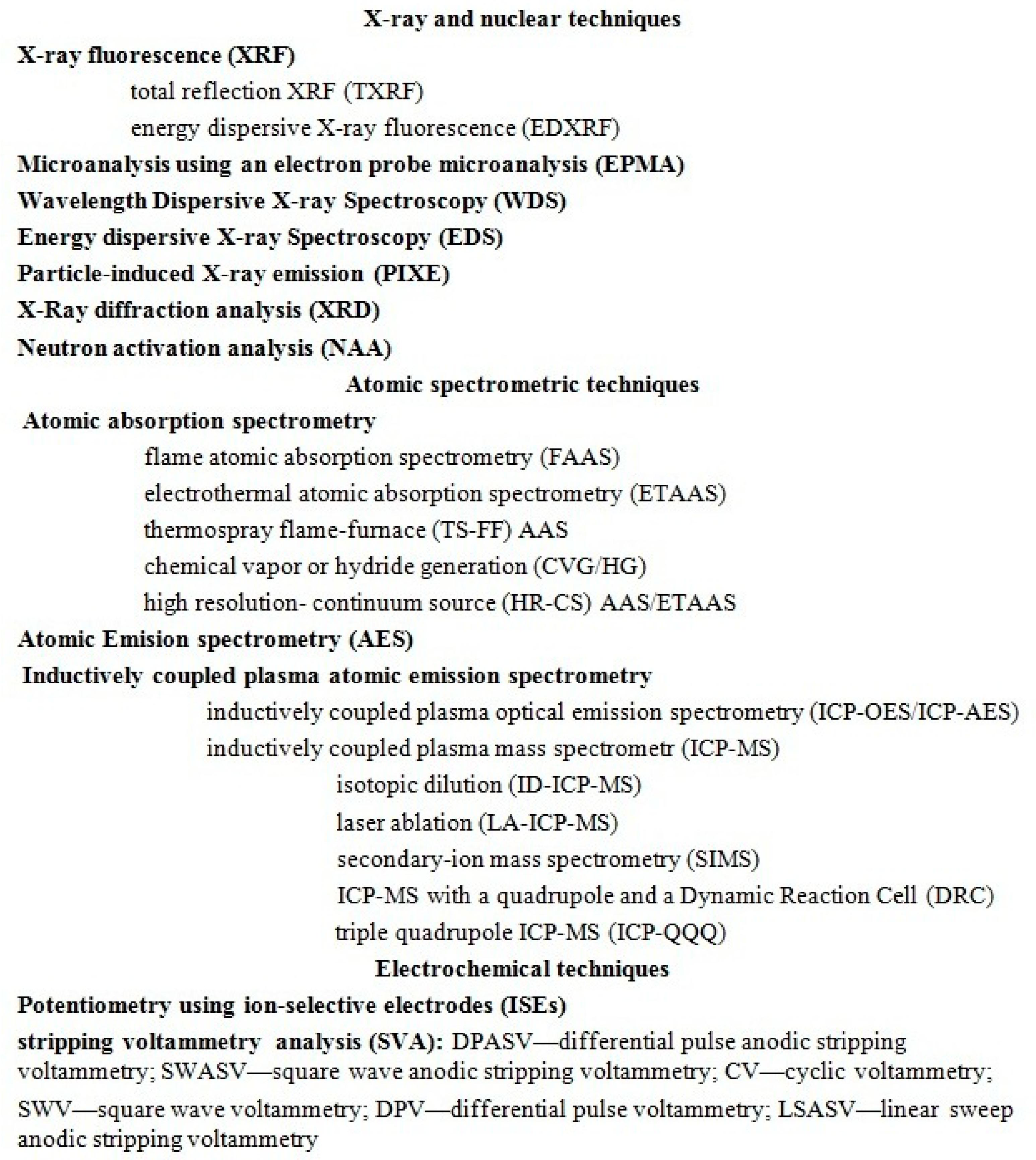
3.2. Selected Analytical Techniques
4. Contamination of Tobacco Products with Heavy Metals
5. Major Health Risks Associated with Exposure to Tobacco Smoke
5.1. Addiction to Smoking Cigarettes
5.2. Accumulation of Metals in Tissues by Tobacco Smokers
5.2.1. Bronchi and Lungs
5.2.2. Liver, Kidneys, Prostate
5.2.3. Brain
5.2.4. Body Fluids
5.2.5. Skin, Hair
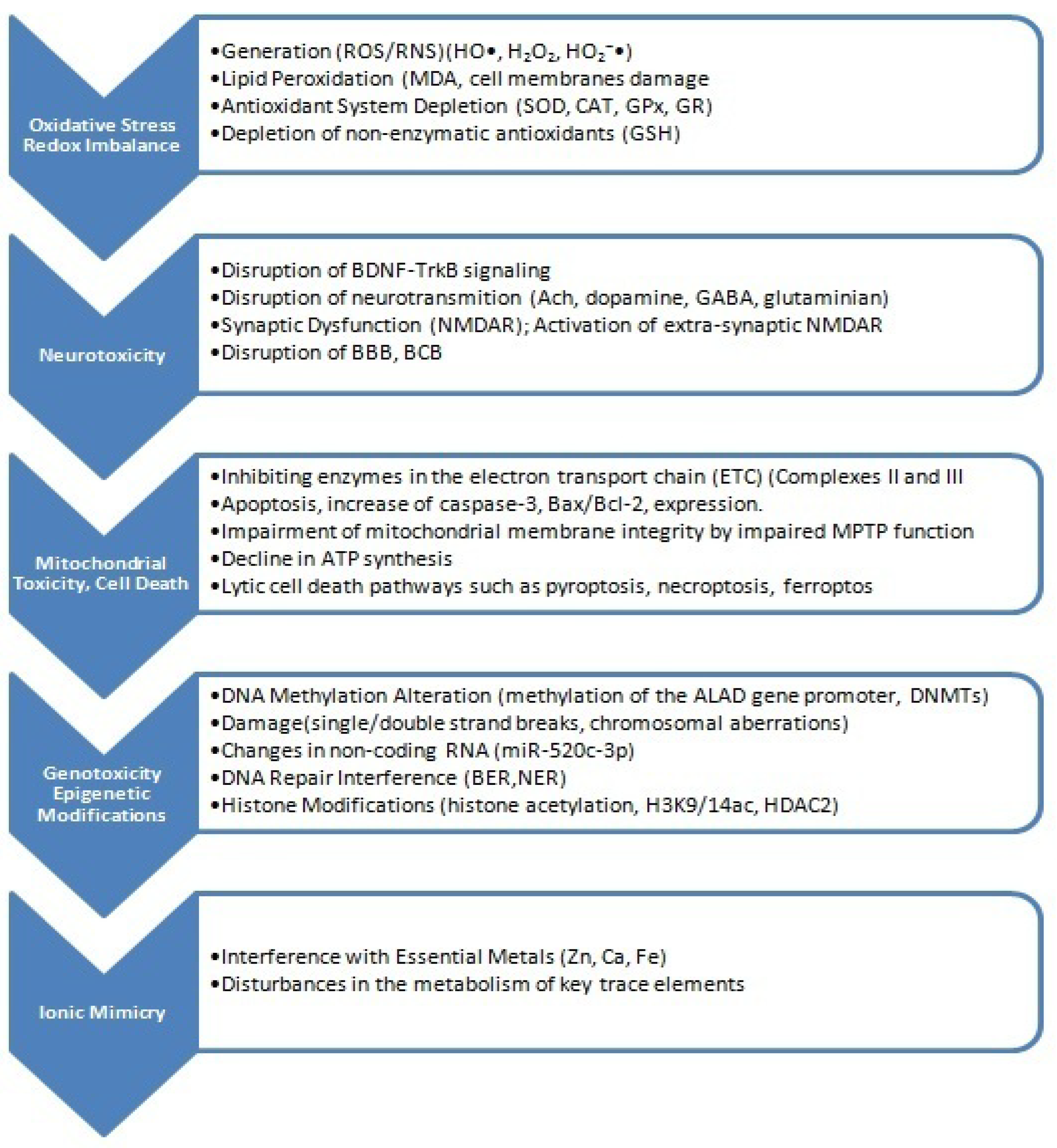
6. Molecular Mechanism of Metal Toxicity
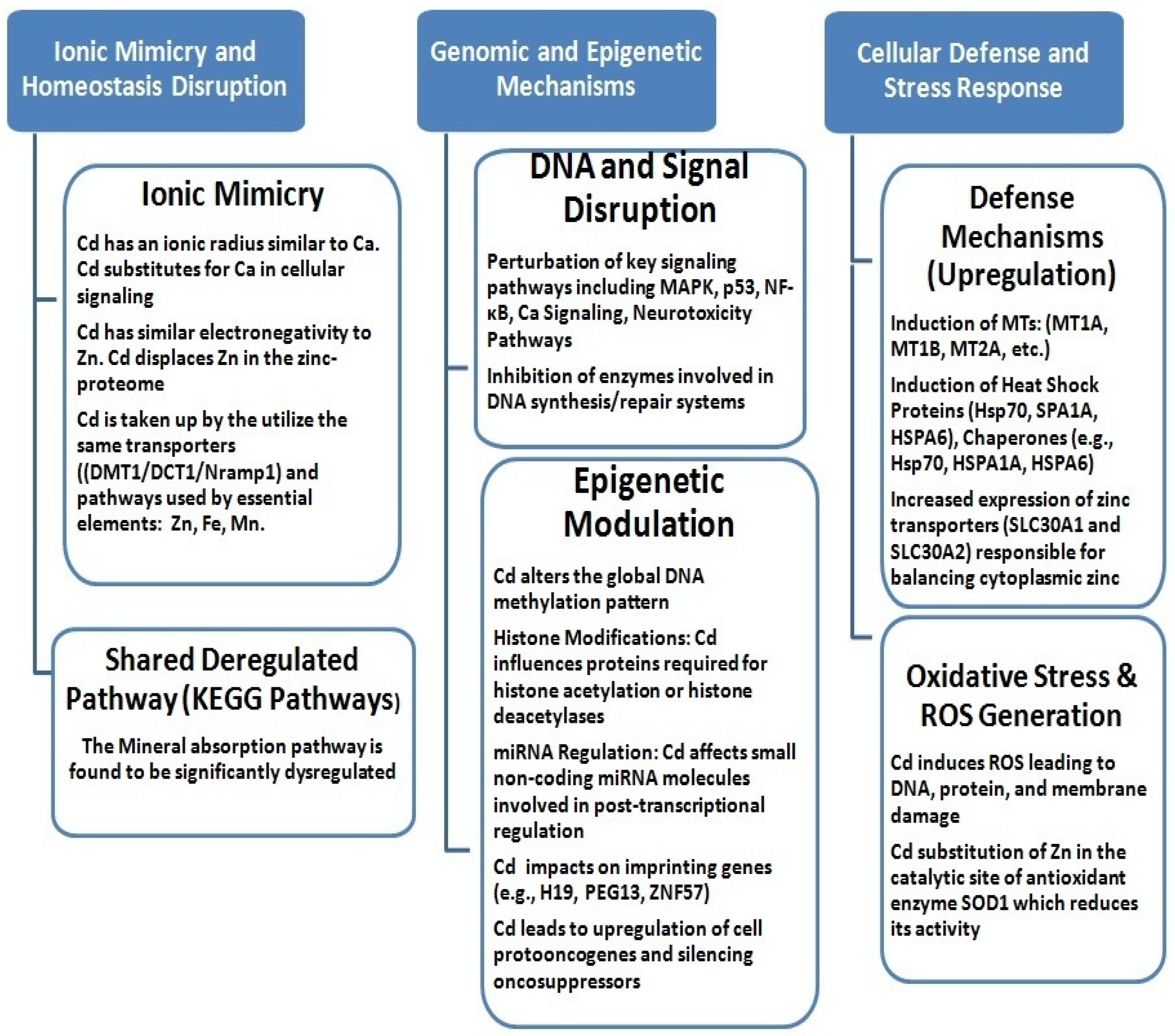
6.1. Cd Toxicity
6.2. Pb Toxicity
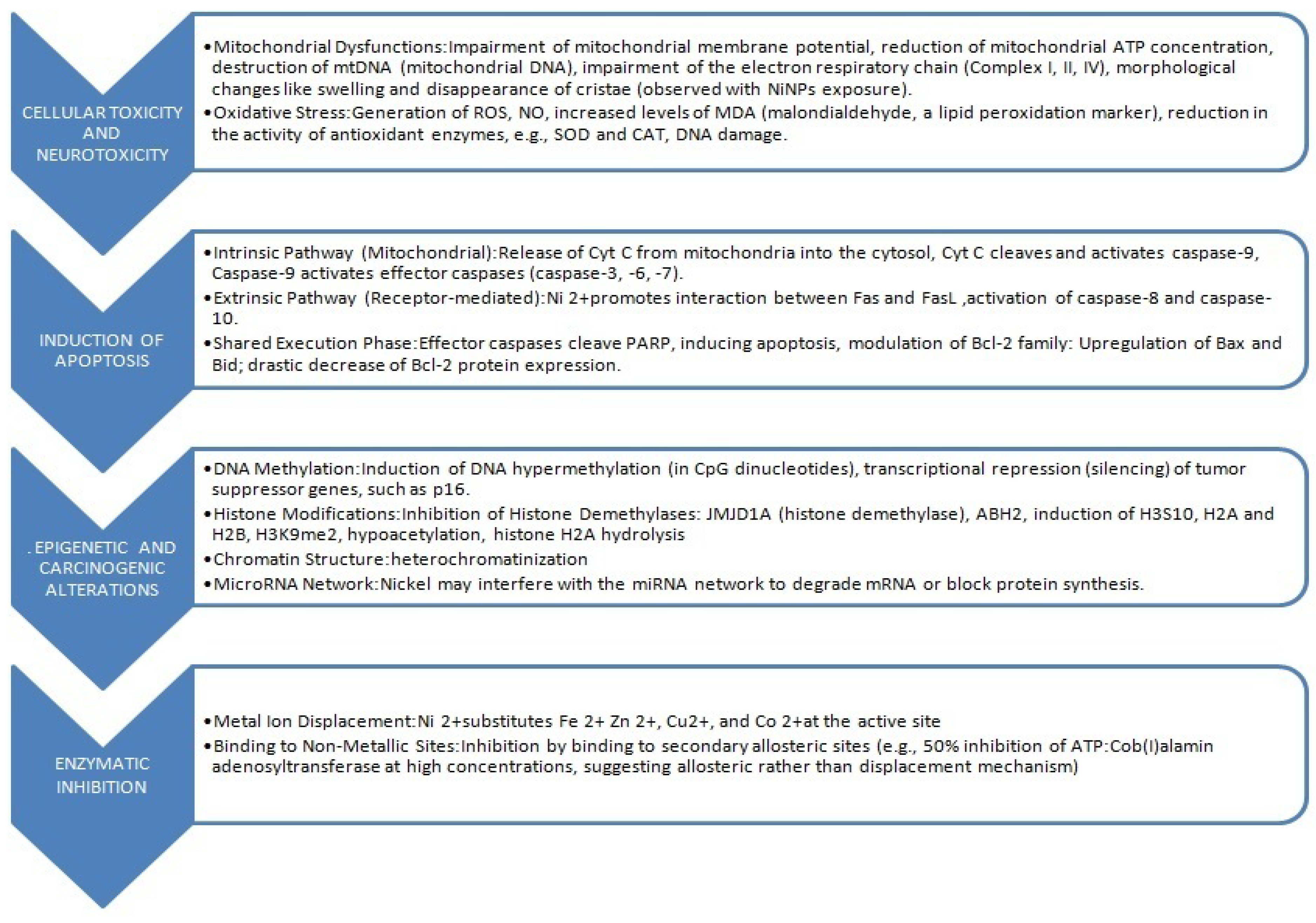
6.3. Ni Toxicity
7. Summary and Future Directions
Author Contributions
Funding
Institutional Review Board Statement
Informed Consent Statement
Data Availability Statement
Conflicts of Interest
Abbreviations
| 4-HNE | 4-hydroxynonenal |
| 8-OHdG | 8-hydroksy-2′-deoksyguanozyny |
| AAS | Atomic absorption spectrometry |
| AD | Alzheimer’s disease |
| ADHD | Attention Deficit Hyperactivity Disorder |
| AES | Atomic Emission spectrometry |
| AFM | Atomic force microscope |
| AFS | Atomic fluorescence spectrometry |
| ALA | δ-aminolevulinic acid |
| ALAD | δ-aminolevulinic acid dehydratase |
| ALS | Amyotrophic lateral sclerosis |
| AM | Alveolar macrophage |
| APC | Antigen presenting cells |
| APDC | ammonium pyrrolidinedithiocarbamate |
| APE1/Ref-1 | Apurinic/apyrimidinic endonuclease 1/redox effector factor 1 |
| ASD | Autism Spectrum Disorder |
| ASV | Anodic Stripping Voltammetry |
| BAL | Bronchoalveolar lavage fluid |
| BATF | Basic leucine zipper ATF-like transcription factor |
| Bax | Bcl-2-associated X protein |
| BBB | Blood-Brain Barrier |
| BCB | Blood-Cerebrospinal Fluid Barrier |
| Bcl-2 | B cell lymphoma 2 |
| BDNF | Brain-Derived Neurotrophic Factor |
| BER | Base excision repair |
| CaM | Calmodulin |
| CAT | Catalase |
| CNS | Central nervous system |
| COPD | Chronic Obstructive Pulmonary Disease |
| CREB5 | cAMP responsive element binding protein 5 |
| CRI | Cancer Risk Index |
| CSP | Cigarette smoke particle |
| CV | Cyclic voltammetry |
| CVAAS | Cold vapour atomic absorption spectrometry |
| CVG/HG | Chemical vapor or hydride generation |
| Cyt C | Cytochrome c |
| DCT1 | Divalent cation transporter 1 |
| Dios | Jodothyronine deiodinases |
| DL | Detection Limit |
| DMT | Divalent metal transporter |
| DNA | Deoxyribonucleic acid |
| DNMT | DNA methyltransferases |
| DPASV | Differential pulse anodic stripping voltammetry |
| DPV | Differential pulse voltammetry |
| DRC | Dynamic Reaction Cell |
| EDS | Energy dispersive X-ray Spectroscopy |
| EDXRF | Energy dispersive X-ray fluorescence |
| EELS | Electron Energy Loss Spectroscopy |
| EFTEM | Energy-Filtered Transmission Electron Microscopes |
| EGFR | Epidermal Growth Factor Receptor |
| eGFR | An estimated GFR |
| ELCR | Excess Lifetime Cancer Risk |
| EPMA | Electron probe X-ray microanalysis |
| ETAAS | Electrothermal atomic absorption spectrometry |
| EU | European Union |
| FAAS | Flame atomic absorption spectrometry |
| Fas | First apoptotic signal |
| FasL | Fas Ligand |
| FCTC | Framework Convention on Tobacco Control |
| FDA | U.S. Food and Drug Administration |
| FP | Ferroportin |
| GFAAS | Graphite furnace atomic absorption spectrophotometry |
| GFR | Glomerular Filtration Rate |
| GPx | Glutathione peroxidase |
| GSH | Glutathione |
| GSH-Px | Glutathione peroxidase |
| GSHR or GR | Glutathione reductase |
| GSSG | Glutathione disulfide |
| GTP | Guanosine-5′-triphosphate |
| Hb | Hemoglobin |
| HCL | Hollow cathode lamps |
| Hct | Hematocrit |
| HGAAS | Hydride generation atomic absorption spectroscopy |
| HHS | U.S. Department of Health and Human Services |
| HPA | The hypothalamic-pituitary-adrenal axis |
| HR-CS | High resolution-continuum source |
| IARC | International Agency for Research on Cancer |
| IC | Ion chromatography |
| ICDA | International Chromium Development Association |
| ICP-AES | Inductively coupled plasma-atomic emission spectrometer |
| ICP-MS | Inductively coupled plasma mass spectrometry |
| ICP-OES | Inductively coupled plasma optical emission spectrometry |
| ICP-QQQ-MS | Inductively Coupled Plasma–Triple Quadrupole Mass Spectrometry |
| ICP-TOF-MS | Inductively coupled plasma time-of-flight mass spectrometry |
| ICRP | International Commission on Radiological Protection |
| ID-ICP-MS | Isotopic dilution ICP-MS |
| IL | Interleukin |
| IMC | Imaging mass cytometry |
| IQ | Intelligence Quotient |
| ISE | Potentiometry using ion-selective electrode |
| IUPAC | International Union of Pure and Applied Chemistry |
| KEGG | Kyoto Encyclopedia of Genes and Genomes |
| LA | Laser Ablation |
| LAMB3 | Laminin subunit beta 3 |
| LCC | Lifetime Cancer Risk |
| LFA | Lateral flow assay technology |
| LIBS | Laser-Induced Breakdown Spectroscopy |
| LMW | Low-molecular-weight proteins |
| LSASV | Linear sweep anodic stripping voltammetry |
| MAPK | Mitogen-activated protein kinase |
| MAPK/JNK | mitogen-activated protein kinase/c-Jun NH2-terminal kinase |
| MDA | Malondialdehyde |
| MeCP2 | Methyl-CpG binding protein 2 |
| miRNA | microRNA |
| MOF | Metal-organic framework |
| MRI | Magnetic Resonance Imaging |
| MS | Multiple sclerosis |
| MT | Metallothionein |
| NAA | Neutron activation analysis |
| NAFLD | Non-Alcoholic Fatty Liver Disease |
| NanoSIMS | Nanoscale secondary ion mass spectrometry |
| nano-SXRF | Nano-Synchrotron X-Ray Fluorescence |
| NCCH | National Center for Chronic Disease Prevention and Health Promotion |
| NDD | Neurodevelopmental Disorders |
| NER | Nucleotide excision repair |
| NF-κB | Nuclear factor kappa-light-chain-enhancer of activated B cells |
| NHANES | National Health and Nutrition Examination Survey |
| NIST | National Institute of Standards and Technology |
| NMDAR | N-methyl-D-aspartate receptor |
| NMR | Nuclear magnetic resonance |
| Nramp1 | Natural resistance-associated macrophage protein |
| Nrf-2 | Nuclear factor erythroid 2-related |
| PD | Parkinson’s disease |
| PDHc | Pyruvate dehydrogenase complex |
| PIGE | Particle-Induced Gamma-ray Emission |
| PIXE | Particle-induced X-ray emission |
| PKC | Protein Kinase C |
| PLT | Platelet Count |
| PS | Phosphatidylserine |
| RA | Rheumatoid arthritis |
| RAAS | Renin-Angiotensin-Aldosterone System |
| Ras | Rat sarcoma proteins |
| RBC | Red Blood Cells |
| ROS | Reactive oxygen species |
| RP-IC | Reversed-phase ion interaction chromatography |
| SELF | Stimulated Epithelial Lung Fluid |
| SEM | Scanning electron microscope |
| SFK | Src family kinase |
| -SH | Sulfhydryl groups |
| SHS | Secondhand smoke exposure |
| SIA-ASV | Sequential Injection Analysis Anodic Stripping Voltammetry |
| SIMS | Secondary ion mass spectroscopy |
| SOD | Superoxide Dismutase |
| STEM | Scanning Transmission Electron Microscopes |
| SVA | Stripping voltammetry analysis |
| SWASV | Square wave anodic stripping voltammetry |
| SWV | Square wave voltammetry |
| SZ | Schizophrenia |
| TEM | Transmission electron microscopy |
| THS | Third-Hand Smoke |
| TNF | Tumor necrosis factor |
| TMAH | Tetramethylammonium hydroxide |
| TrkB | Tropomyosin receptor kinase B |
| TS-FF | Thermospray flame-furnace |
| TXRF | Total reflection X-ray fluorescence |
| UV | Ultraviolet |
| WBC | White Blood Cells |
| WDS | Wavelength Dispersive X-ray Spectroscopy |
| WHO | World Health Organization |
| XAS | X-ray absorption spectroscopy |
| XRD | X-ray diffraction analysis |
| XRF | X-ray fluorescence |
| μSR-XRF | X-ray microfluorescence analysis using synchrotron radiation |
References
- Munir, N.; Jahangeer, M.; Bouyahya, A.; El Omari, N.; Ghchime, R.; Balahbib, A.; Aboulaghras, S.; Mahmood, Z.; Akram, M.; Ali Shah, S.M.; et al. Heavy Metal Contamination of Natural Foods Is a Serious Health Issue: A Review. Sustainability 2022, 14, 161. [Google Scholar] [CrossRef]
- Lin, H.M.; Zhang, J.R.; Li, M.X.; Hou, H.; Wang, H.; Huang, Y. Cigarette smoking and alcohol-related liver disease. Liver Res. 2024, 8, 237–245. [Google Scholar] [CrossRef]
- Wang, S.Q.; Wang, W.J.; Wu, C.C.; Bao, L.J.; Yu, Y.; Zeng, E.Y. Low tar level does not reduce human exposure to polycyclic aromatic hydrocarbons in environmental tobacco smoke. Environ. Sci. Technol. 2020, 54, 1075–1081. [Google Scholar] [CrossRef]
- WHO Report on the Global Tobacco Epidemic, 2023: Protect People from Tobacco Smoke. Available online: https://www.who.int/publications/i/item/9789240077164 (accessed on 20 May 2024).
- WHO 2003, Updated Reprint 2004, 2005; Framework Convention on Tobacco Control. Available online: https://iris.who.int/server/api/core/bitstreams/264104b3-241a-4e48-88f9-aa7120779ffc/content (accessed on 18 January 2010).
- Prognistic Raport. Available online: https://ippez.pl/wp-content/uploads/2025/05/2025_RAPORT_5PROCENTPOLSKI_.pdf (accessed on 23 May 2025).
- WHO Global Report on Trends in Prevalence of Tobacco Use 2000–2030. 16 January 2024. Available online: https://www.who.int/publications/i/item/9789240088283 (accessed on 12 January 2024).
- Dubick, M.A.; Keen, C.L. Influence of nicotine on tissue trace element concentrations and tissue antioxidant defense. Biol. Trace Elem. Res. 1991, 31, 97–109. [Google Scholar] [CrossRef]
- Kocyigit, A.; Erel, O.; Gur, S. Effects of tobacco smoking on plasma selenium, zinc, copper and iron concentrations and related antioxidative enzyme activities. Clin. Biochem. 2001, 34, 629–633. [Google Scholar] [CrossRef] [PubMed]
- Williams, R.J.P. Chemical selection of elements by cells. Coord. Chem. Rev. 2001, 216, 583–595. [Google Scholar] [CrossRef]
- Haraguchi, H. Metallomics as integrated biometal science. J. Anal. At. Spectrom. 2004, 19, 5–14. [Google Scholar] [CrossRef]
- Haraguchi, H. Metallomics: The history in the last decade and the future outlook. Metallomics 2017, 9, 1001–1013. [Google Scholar] [CrossRef]
- Lobinski, R.; Becker, J.S.; Haraguchi, H.; Sarkar, B. Metallomics: Guidelines for terminology and critical evaluation of analytical chemistry approaches (IUPAC technical report). Pure Appl. Chem. 2010, 82, 493–504. [Google Scholar] [CrossRef]
- Maret, W. An Appraisal of the Field of Metallomics and the Roles of Metal Ions in Biochemistry and Cell Signaling. Appl. Sci. 2021, 11, 10846. [Google Scholar] [CrossRef]
- Maret, W. The quintessence of metallomics: A harbinger of a different life science based on the periodic table of the bioelements. Metallomics 2022, 14, mfac051. [Google Scholar] [CrossRef]
- Maret, W.; Caruso, J.A.; Contag, C.H.; Giedroc, D.P.; Hagedoorn, P.-L.; Matusch, A.; Skaar, E.P.; Thompson, R.B. Methods and techniques for studing metals in biological systems. In Trace Metals and Infectious Diseases; Nriagu, J.O., Skaar, E.P., Eds.; MIT Press: Cambridge, UK, 2015; pp. 341–401. [Google Scholar]
- Maret, W. The Metals in the Biological Periodic System of the Elements: Concepts and Conjectures. Int. J. Mol. Sci. 2016, 17, 66. [Google Scholar] [CrossRef]
- Cvetkovic, A.; Menon, A.L.; Thorgersen, M.P.; Scott, J.W.; Poole, F.L., 2nd; Jenney, F.E., Jr.; Lancaster, W.A.; Praissman, J.L.; Shanmukh, S.; Vaccaro, B.J.; et al. Microbial metalloproteomes are largely uncharacterized. Nature 2010, 466, 779–782. [Google Scholar] [CrossRef]
- Zhou, Y.; Li, H.; Tse, E.; Sun, H. Metal-detection based techniques and their applications in metallobiology. Chem. Sci. 2024, 15, 10264–10280. [Google Scholar] [CrossRef]
- Szpunar, J.; Lobinski, R.; Prange, A. Hyphenated techniques for elemental speciation in biological systems. Appl. Spectrosc. 2003, 57, 102A–111A. [Google Scholar] [CrossRef]
- Wilschefski, S.C.; Baxter, M.R. Inductively Coupled Plasma Mass Spectrometry: Introduction to Analytical Aspects. Clin. Biochem. Rev. 2019, 40, 115–133. [Google Scholar] [CrossRef]
- Wu, J.S.; Kim, A.M.; Bleher, R.; Myers, B.D.; Marvin, R.G.; Inada, H.; Nakamura, K.; Zhang, X.F.; Roth, E.; Li, S.Y.; et al. Imaging and elemental mapping of biological specimens with a dual-EDS dedicated scanning transmission electron microscope. Ultramicroscopy 2013, 128, 24–31. [Google Scholar] [CrossRef] [PubMed]
- Davison, C.; Beste, D.; Bailey, M.; Felipe-Sotelo, M. Expanding the boundaries of atomic spectroscopy at the single-cell level: Critical review of SP-ICP-MS, LIBS and LA-ICP-MS advances for the elemental analysis of tissues and single cells. Anal. Bioanal. Chem. 2023, 415, 6931–6950. [Google Scholar] [CrossRef]
- Szpunar, J. Metallomics: A new frontier in analytical chemistry. Anal. Bioanal. Chem. 2004, 378, 54–56. [Google Scholar] [CrossRef] [PubMed]
- Stewart, T.J. Across the spectrum: Integrating multidimensional metal analytics for in situ metallomic imaging. Metallomics 2019, 11, 29–49. [Google Scholar] [CrossRef] [PubMed]
- Carter, K.P.; Young, A.M.; Palmer, A.E. Fluorescent sensors for measuring metal ions in living systems. Chem. Rev. 2014, 114, 4564–4601. [Google Scholar] [CrossRef]
- Razzaque, M.S.; Wimalawansa, S.J. Minerals and Human Health: From Deficiency to Toxicity. Nutrients 2025, 17, 454. [Google Scholar] [CrossRef] [PubMed]
- Foster, A.W.; Osman, D.; Robinson, N.J. Metal preferences and metallation. J. Biol. Chem. 2014, 289, 28095–28103. [Google Scholar] [CrossRef] [PubMed]
- Maret, W.; Wedd, A.G. (Eds.) Binding, Transport and Storage of Metal Ions in Biological Cells; Royal Society of Chemistry: Cambridge, UK, 2014. [Google Scholar]
- Pufahl, R.A.; Singer, C.P.; Peariso, K.L.; Lin, S.J.; Schmidt, P.J.; Fahrni, C.J.; Culotta, V.C.; Penner-Hahn, J.E.; O’Halloran, T.V. Metal ion chaperone function of the soluble Cu(I) receptor Atx1. Science 1997, 278, 853–856. [Google Scholar] [CrossRef] [PubMed]
- Hagedoorn, P.-L. Microbial Metalloproteomics. Proteomes 2015, 3, 424–439. [Google Scholar] [CrossRef] [PubMed]
- Tainer, J.A.; Roberts, V.A.; Getzoff, E.D. Metal-binding sites in proteins. Curr. Opin. Biotechnol. 1991, 2, 582–591. [Google Scholar] [CrossRef]
- Leyssens, L.; Vinck, B.; Van Der Straeten, C.; Wuyts, F.; Maes, L. Cobalt toxicity in humans-a review of the potential sources and systemic health effects. Toxicology 2017, 387, 43–56. [Google Scholar] [CrossRef]
- Buccella, D.; Lim, M.H.; Morrow, J.R. Metals in Biology: From Metallomics to Trafficking. Inorg. Chem. 2019, 58, 13505–13508. [Google Scholar] [CrossRef]
- Menghini, V. De Ferreorum Particulerum Sede in Sanguis; Commentar: Bologna, Italy, 1747. [Google Scholar]
- Prasad, A.S.; Halsted, J.A.; Nadimi, M. Syndrome of iron deficiency anemia, hepatosplenomegaly, hypogonadism, dwarfism and geophagia. Am. J. Med. 1961, 31, 532–546. [Google Scholar] [CrossRef]
- McCall, A.S.; Cummings, C.F.; Bhave, G.; Vanacore, R.; Page-McCaw, A.; Hudson, B.G. Bromine is an essential trace element for assembly of collagen IV scaffolds in tissue development and architecture. Cell 2014, 157, 1380–1392. [Google Scholar] [CrossRef]
- Nielsen, F.H. Should bioactive trace elements not recognized as essential, but with beneficial health effects, have intake recommendations. J. Trace Elem. Med. Biol. 2014, 28, 406–408. [Google Scholar] [CrossRef] [PubMed]
- Tian, X.; Teng, Y.; Deng, Y.; Zhang, Q.; Hu, C.; Feng, J. Advances in Mammalian Metallomics: New Insights into Metal Dynamics and Biological Significance. Int. J. Mol. Sci. 2025, 26, 9729. [Google Scholar] [CrossRef] [PubMed]
- Yasuda, H.; Yonashiro, T.; Yoshida, K.; Ishii, T.; Tsutsui, T. Relationship between body mass index and minerals in male Japanese adults. Biomed. Res. Trace Elem. 2006, 17, 316–321. [Google Scholar] [CrossRef]
- Zoroddu, M.A.; Aaseth, J.; Crisponi, G.; Medici, S.; Peana, M.; Nurchi, V.M. The essential metals for humans: A brief overview. J. Inorg. Biochem. 2019, 195, 120–129. [Google Scholar] [CrossRef]
- Maret, W. Metallomics: The Science of Biometals and Biometalloids. In Metallomics; Arruda, M., Ed.; Advances in Experimental Medicine and Biology; Springer: Cham, Switzerland, 2018; p. 1055. [Google Scholar]
- Skalnaya, M.G.; Skalny, A.V. Essential Trace Elements in Human Health: A Physician’s View; Tomsk Publishing House of Tomsk State University: Tomsk, Russia, 2018. [Google Scholar]
- CLSI C38A. Control of Preexamination Variation in Trace Element Determinations. 1997. C38-A, Vol. 13, Replaces 2024, C38-P, Vol. 14. Available online: https://www.scribd.com/document/638520133/CLSI-C38-A (accessed on 15 April 2023).
- Duffus, J.H. Heavy metals-A meaningless term? Pure Appl. Chem. 2002, 74, 793–807. Available online: https://publications.iupac.org/pac/2002/pdf/7405x0793.pdf (accessed on 7 June 2002).
- Calabrese, E.J.; Mattson, M.P. How does hormesis impact biology, toxicology, and medicine? NPJ Aging Mech. Dis. 2017, 3, 13. [Google Scholar] [CrossRef]
- Mattson, M.P.; Calabrese, E.J. Hormesis: A Revolution in Biology, Toxicology and Medicine; Springer Science & Business Media: Berlin/Heidelberg, Germany, 2009. [Google Scholar]
- Wessels, I. Metal Homeostasis during Development, Maturation, and Aging: Impact on Infectious Diseases. In Trace Metals and Infectious Diseases; Nriagu, J.O., Skaar, E.P., Eds.; MIT Press: Cambridge, MA, USA, 2015; Chapter 8. Available online: https://www.ncbi.nlm.nih.gov/books/NBK569694/ (accessed on 18 February 2015).
- Aaseth, J.O. Toxic and Essential Metals in Human Health and Disease 2021. Biomolecules 2022, 12, 1375. [Google Scholar] [CrossRef]
- Tsatsakis, A.M.; Vassilopoulou, L.; Kovatsi, L.; Tsitsimpikou, C.; Karamanou, M.; Leon, G.; Liesivuori, J.; Hayes, A.W.; Spandidos, D.A. The dose response principle from philosophy to modern toxicology: The impact of ancient philosophy and medicine in modern toxicology science. Toxicol. Rep. 2018, 5, 1107–1113. [Google Scholar] [CrossRef]
- Momčilović, B.; Reeves, P.; Blake, M.J. Idiorrhythmic dose-rate variability in dietary zinc intake generates a different response pattern of zinc metabolism than conventional dose-response feeding. Br. J. Nutr. 1997, 78, 173–191. [Google Scholar] [CrossRef][Green Version]
- Momčilović, B.; Prejac, J.; Brundić, S.; Morović, S.; Skalny, A.V.; Mimica, N.; Drmić, S. An essay on human and elements, multielement profiles, and depression. Translat. Neurosci. 2010, 1, 322–334. [Google Scholar] [CrossRef][Green Version]
- Freeland-Graves, J.H.; Mousa, T.Y.; Kim, S. International variability in diet and requirements of manganese: Causes and consequences. J. Trace Elem. Med. Biol. 2016, 38, 24–32. [Google Scholar] [CrossRef] [PubMed]
- Baj, J.; Flieger, W.; Barbachowska, A.; Kowalska, B.; Flieger, M.; Forma, A.; Teresiński, G.; Portincasa, P.; Buszewicz, G.; Radzikowska-Büchner, E.; et al. Consequences of Disturbing Manganese Homeostasis. Int. J. Mol. Sci. 2023, 24, 14959. [Google Scholar] [CrossRef]
- Maret, W.; Li, Y. Coordination dynamics of zinc in proteins. Chem. Rev. 2009, 109, 4682–4707. [Google Scholar] [CrossRef]
- DesMarais, T.L.; Costa, M. Mechanisms of Chromium-Induced Toxicity. Curr. Opin. Toxicol. 2019, 14, 1–7. [Google Scholar] [CrossRef]
- Nielsen, F.H. Update on the possible nutritional importance of silicon. J. Trace Elem. Med. Biol. 2014, 28, 379–382. [Google Scholar] [CrossRef]
- Nielsen, F.H. Update on human health effects of boron. J. Trace Elem. Med. Biol. 2014, 28, 383–387. [Google Scholar] [CrossRef] [PubMed]
- Yokel, R.A.; Lasley, S.M.; Dorman, D.C. The speciation of metals in mammals influences their toxicokinetics and toxicodynamics and therefore human health risk assessment. J. Toxicol. Environ. Health B Crit. Rev. 2006, 9, 63–85. [Google Scholar] [CrossRef] [PubMed]
- Emsley, J. Nature’s Building Blocks: An A-Z Guide to the Elements; Oxford University Press: Oxford, UK, 2003. [Google Scholar]
- Laur, N.; Kinscherf, R.; Pomytkin, K.; Kaiser, L.; Knes, O.; Deigner, H.-P. ICP-MS trace element analysis in serum and whole blood. PLoS ONE 2020, 15, e0233357. [Google Scholar] [CrossRef]
- Nawi, A.M.; Chin, S.-F.; Jamal, R. Simultaneous analysis of 25 trace elements in micro volume of human serum by inductively coupled plasma mass spectrometry (ICP-MS). Pract. Lab. Med. 2020, 18, e00142. [Google Scholar] [CrossRef]
- Lee, Y.H.; Bang, E.; Lee, J.; Lee, J.D.; Kang, D.R.; Hong, J.; Lee, J.M. Serum Concentrations of Trace Elements Zinc, Copper, Selenium, and Manganese in Critically Ill Patients. Biol. Trace Elem. Res. 2019, 188, 316–325. [Google Scholar] [CrossRef]
- Grochowski, C.; Blicharska, E.; Krukow, P.; Jonak, K.; Maciejewski, M.; Szczepanek, D.; Jonak, K.; Flieger, J.; Maciejewski, R. Analysis of Trace Elements in Human Brain: Its Aim, Methods, and Concentration Levels. Front. Chem. 2019, 5, 115. [Google Scholar] [CrossRef]
- Adani, G.; Filippini, T.; Michalke, B.; Vinceti, M. Selenium and Other Trace Elements in the Etiology of Parkinson’s Disease: A Systematic Review and Meta-Analysis of Case-Control Studies. Neuroepidemiology 2020, 54, 1–23. [Google Scholar] [CrossRef] [PubMed]
- De Benedictis, C.A.; Vilella, A.; Grabrucker, A.M. The Role of Trace Metals in Alzheimer’s Disease. In Alzheimer’s Disease; Wisniewski, T., Ed.; Codon Publications: Brisbane, Australia, 2018. [Google Scholar]
- Cilliers, K.; Muller, C.J.F.; Page, B.J. Trace Element Concentration Changes in Brain Tumors: A Review. Anat. Rec. 2020, 303, 1293–1299. [Google Scholar] [CrossRef]
- Maciejewski, R.; Radzikowska-Büchner, E.; Flieger, W.; Kulczycka, K.; Baj, J.; Forma, A.; Flieger, J. An Overview of Essential Microelements and Common Metallic Nanoparticles and Their Effects on Male Fertility. Int. J. Environ. Res. Public Health 2022, 19, 11066. [Google Scholar] [CrossRef]
- Baj, J.; Flieger, W.; Flieger, M.; Forma, A.; Sitarz, E.; Skórzyńska-Dziduszko, K.; Grochowski, C.; Maciejewski, R.; Karakuła-Juchnowicz, H. Autism spectrum disorder: Trace elements imbalances and the pathogenesis and severity of autistic symptoms. Neurosci. Biobehav. Rev. 2021, 129, 117–132. [Google Scholar] [CrossRef]
- Baj, J.; Forma, A.; Sitarz, E.; Karakuła, K.; Flieger, W.; Sitarz, M.; Grochowski, C.; Maciejewski, R.; Karakula-Juchnowicz, H. Beyond the Mind—Serum Trace Element Levels in Schizophrenic Patients: A Systematic Review. Int. J. Mol. Sci. 2020, 21, 9566. [Google Scholar] [CrossRef]
- Jomova, K.; Alomar, S.Y.; Nepovimova, E.; Kuca, K.; Valko, M. Heavy metals: Toxicity and human health effects. Arch. Toxicol. 2025, 99, 153–209. [Google Scholar] [CrossRef]
- Baj, J.; Teresiński, G.; Kowalska, B.; Krajka, T.; Buszewicz, G.; Forma, A.; Flieger, W.; Karakuła, K.H.; Kędzierawski, P.; Cywka, T.; et al. ICP-MS Multi-Elemental Analysis of the Human Meninges Collected from Sudden Death Victims in South-Eastern Poland. Molecules 2022, 27, 1911. [Google Scholar] [CrossRef] [PubMed]
- Baj, J.; Kowalska, B.; Flieger, W.; Radzikowska-Büchner, E.; Forma, A.; Czeczelewski, M.; Kędzierawski, P.; Karakuła, K.; Flieger, M.; Majerek, D.; et al. Assessment of the Concentration of 51 Elements in the Liver and in Various Parts of the Human Brain—Profiling of the Mineral Status. Nutrients 2023, 15, 2799. [Google Scholar] [CrossRef] [PubMed]
- Baj, J.; Forma, A.; Kowalska, B.; Teresiński, G.; Buszewicz, G.; Majerek, D.; Flieger, W.; Maciejewski, R.; Karakuła, K.; Flieger, M.; et al. Multi-Elemental Analysis of Human Optic Chiasm—A New Perspective to Reveal the Pathomechanism of Nerve Fibers’ Degeneration. Int. J. Environ. Res. Public Health 2022, 19, 4420. [Google Scholar] [CrossRef]
- Höck, A.; Demmel, U.; Schicha, H.; Kasperek, K.; Feinendegen, L.E. Trace element concentration in human brain. Activation analysis of cobalt, iron, rubidium, selenium, zinc, chromium, silver, cesium, antimony and scandium. Brain 1975, 98, 49–64. [Google Scholar] [CrossRef] [PubMed]
- Liu, T.; Lu, Q.-B.; Yan, L.; Guo, J.; Feng, F.; Qiu, J.; Wang, J. Comparative Study on Serum Levels of 10 Trace Elements in Schizophrenia. PLoS ONE 2015, 10, e0133622. [Google Scholar] [CrossRef]
- Cai, L.; Chen, T.; Yang, J.; Zhou, K.; Yan, X.; Chen, W.; Sun, L.; Li, L.; Qin, S.; Wang, P.; et al. Serum trace element differences between Schizophrenia patients and controls in the Han Chinese population. Sci. Rep. 2015, 5, 15013. [Google Scholar] [CrossRef]
- Grochowski, C.; Szukała, M.; Litak, J.; Budny, A.; Proch, J.; Majerek, D.; Blicharska, E.; Niedzielski, P. Correlations Between Trace Elements in Selected Locations of the Human Brain in Individuals with Alcohol Use Disorder. Molecules 2020, 25, 359. [Google Scholar] [CrossRef]
- Wang, B.; Fang, T.; Chen, H. Zinc and Central Nervous System Disorders. Nutrients 2023, 15, 2140. [Google Scholar] [CrossRef]
- Shen, B.; Lu, R.; Lv, M.; Chen, J.; Li, J.; Long, J.; Cai, H.; Su, L.; Gong, Z. Association between the levels of toxic heavy metals and schizophrenia in the population of Guangxi, China: A case-control study. Environ. Pollut. 2024, 363 Pt 2, 125179. [Google Scholar] [CrossRef] [PubMed]
- Grochowski, C.; Blicharska, E.; Bogucki, J.; Proch, J.; Mierzwińska, A.; Baj, J.; Litak, J.; Podkowiński, A.; Flieger, J.; Teresiński, G.; et al. Increased Aluminum Content in Certain Brain Structures is Correlated with Higher Silicon Concentration in Alcoholic Use Disorder. Molecules 2019, 24, 1721. [Google Scholar] [CrossRef] [PubMed]
- Botturi, A.; Ciappolino, V.; Delvecchio, G.; Boscutti, A.; Viscardi, B.; Brambilla, P. The Role and the Effect of Magnesium in Mental Disorders: A Systematic Review. Nutrients 2020, 12, 1661. [Google Scholar] [CrossRef]
- Popescu, C.; Munteanu, C.; Spînu, A.; Andone, I.; Bistriceanu, R.; Postoiu, R.; Suciu, A.; Giuvara, S.; Vlădulescu-Trandafir, A.-I.; Aurelian, S.M.; et al. Actual Data on Essential Trace Elements in Parkinson’s Disease. Nutrients 2025, 17, 1852. [Google Scholar] [CrossRef] [PubMed]
- López-Alonso, M.; Rivas, I.; Miranda, M. Trace Mineral Imbalances in Global Health: Challenges, Biomarkers, and the Role of Serum Analysis. Nutrients 2025, 17, 2241. [Google Scholar] [CrossRef]
- Lech, T.; Dudek-Adamska, D. The influence of the method of digestion of biological samples and the method of determination of some major and trace elements in these samples on analytical results. Probl. Forensic Sci. 2009, 80, 429–440. [Google Scholar]
- Ivanenko, N.B.; Ganeev, A.A.; Solovyev, N.D.; Moskvin, N.L. Determination of trace elements in biological fluids. J. Anal. Chem. 2011, 66, 784–799. [Google Scholar] [CrossRef]
- Jones, D.R.; Jarrett, J.M.; Tevis, D.S.; Franklin, M.; Mullinix, N.J.; Wallon, K.L.; Derrick Quarles, C., Jr.; Caldwell, K.L.; Jones, R.L. Analysis of whole human blood for Pb, Cd, Hg, Se, and Mn by ICP-DRC-MS for biomonitoring and acute exposures. Talanta 2017, 162, 114–122. [Google Scholar] [CrossRef]
- Navarro, J.A.; Granadillo, V.A.; Parra, O.E.; Romero, R.A. Determination of lead in whole blood by graphite furnace atomic absorption spectrometry with matrix modification. J. Anal. At. Spectrom. 1989, 4, 401–406. [Google Scholar] [CrossRef]
- Uddin, A.H.; Khalid, R.S.; Alaama, M.; Abdualkader, A.M.; Kasmuri, A.; Abbas, S.A. Comparative study of three digestion methods for elemental analysis in traditional medicine products using atomic absorption spectrometry. J. Anal. Sci. Technol. 2016, 7, 6. [Google Scholar] [CrossRef]
- El Hosry, L.; Sok, N.; Richa, R.; Al Mashtoub, L.; Cayot, P.; Bou-Maroun, E. Sample Preparation and Analytical Techniques in the Determination of Trace Elements in Food: A Review. Foods 2023, 12, 895. [Google Scholar] [CrossRef] [PubMed]
- Helaluddin, A.; Khalid, R.S.; Alaama, M.; Abbas, S.A. Main analytical techniques used for elemental analysis in various matrices. Trop. J. Pharm. Res. 2016, 15, 427–434. [Google Scholar] [CrossRef]
- Guo, C.-Y.; Lv, L.-J.; Liu, Y.-C.; Ji, M.-Y.; Zang, E.-H.; Liu, Q.; Zhang, M.; Li, M. Applied analytical methods for detecting heavy metals in medicinal plants. Crit. Rev. Anal. Chem. 2023, 53, 339–359. [Google Scholar] [CrossRef]
- Slavin, W. Accuracy in Furnace Atomic Absorption Spectroscopy. J. Res. Natl. Bur. Stand. 1988, 93, 445–446. [Google Scholar] [CrossRef]
- Lorenc, W.; Hanć, A.; Sajnóg, A.; Barałkiewicz, D. LC/ICP-MS and complementary techniques in bespoke and nontargeted speciation analysis in food samples. Mass Spectrom. Rev. 2022, 41, 32–50. [Google Scholar] [CrossRef]
- Thomas, R. Atomic Absorption Spectrophotometry (AAS): Principles, Instrumentation, and Comparisons with Other AS Techniques. Separation Science 2025. Available online: https://www.sepscience.com/atomic-absorption-spectrophotometry-aas-principles-instrumentation-and-comparisons-with-other-as-techniques-12134 (accessed on 2 October 2025).
- Chemnitzer, R. Strategies for Achieving the Lowest Possible Detection Limits in ICP-MS. Spectroscopy 2019, 34, 12–16. [Google Scholar]
- Ruggieri, F.; Alimonti, A.; Bocca, B. Full validation and accreditation of a method to support human biomonitoring studies for trace and ultra-trace elements. TrAC Trends Anal. Chem. 2016, 80, 471–485. [Google Scholar] [CrossRef]
- Mounicou, S.; Szpunar, J.; Lobinski, R. Metallomics: The concept and methodology. Chem. Soc. Rev. 2009, 38, 1119–1138. [Google Scholar] [CrossRef]
- Tsang, C.N.; Bianga, J.; Sun, H.Z.; Szpunar, J.; Lobinski, R. Probing of bismuth antiulcer drug targets in H. pylori by laser ablation–inductively coupled plasma mass spectrometry. Metallomics 2012, 4, 277–283. [Google Scholar] [CrossRef]
- Lovett, J.H.; Harris, H.H. Application of X-ray absorption and X-ray fluorescence techniques to the study of metallodrug action. Curr. Opin. Chem. Biol. 2021, 61, 135–142. [Google Scholar] [CrossRef]
- McRae, R.; Bagchi, P.; Sumalekshmy, S.; Fahrni, C.J. In situ imaging of metals in cells and tissues. Chem. Rev. 2009, 109, 4780–4827. [Google Scholar] [CrossRef] [PubMed]
- Clavijo Jordan, V.; Al-Ebraheem, A.; Geraki, K.; Dao, E.; Martins, A.F.; Chirayil, S.; Farquharson, M.; Sherry, A.D. Synchrotron Radiation X-ray Fluorescence Elemental Mapping in Healthy Versus Malignant Prostate Tissues Provides New Insights into the Glucose-Stimulated Zinc Trafficking in the Prostate as Discovered by MRI. Inorg. Chem. 2019, 58, 13654–13660. [Google Scholar] [CrossRef]
- Aitken, J.B.; Levina, A.; Lay, P.A. Studies on the biotransformations and biodistributions of metal-containing drugs using X-ray absorption spectroscopy. Curr. Top. Med. Chem. 2011, 11, 553–571. [Google Scholar] [CrossRef] [PubMed]
- Wietecha, R.; Koœcielniak, P.; Lech, T.; Rymanowski, M. Determination of selenium in human blood using atomic fluorescence spectrometry. Probl. Forensic Sci. 2002, 52, 21–36.38. [Google Scholar]
- Wietecha-Posłuszny, R.; Koœcielniak, P.; Lech, T.; Kielar, T. Simple method for simultaneous determination of selenium and arsenic in human hair by means of atomic fluorescence spectrometry with hydride generation technique. Microchim. Acta 2005, 149, 137–144. [Google Scholar] [CrossRef]
- Sánchez-Rodas, D.; Corns, W.T.; Chen, B.; Stockwell, P.B. Atomic Fluorescence Spectrometry: A suitable detection technique in speciation studies for arsenic, selenium, antimony and mercury. J. Anal. At. Spectrom. 2010, 25, 933–946. [Google Scholar] [CrossRef]
- Chassot, E.; Irigaray, J.L.; Terver, S.; Vanneuville, G. Analytical method used for PIXE analyses. Nucl. Instrum. Methods Phys. Res. Sect. B Beam Interact. Mater. At. 2005, 229, 479–488. [Google Scholar] [CrossRef]
- Huszank, R.; Csedreki, L.; Török, Z. Direct Trace Element Analysis of Liquid Blood Samples by In-Air Ion Beam Analytical Techniques (PIXE-PIGE). Anal. Chem. 2017, 89, 1558–1564. [Google Scholar] [CrossRef] [PubMed]
- Legin, A.A.; Schintlmeister, A.; Jakupec, M.A.; Galanski, M.; Lichtscheidl, I.; Wagner, M.; Keppler, B.K. NanoSIMS combined with fluorescence microscopy as a tool for subcellular imaging of isotopically labeled platinum-based anticancer drugs. Chem. Sci. 2014, 5, 3135–3143. [Google Scholar] [CrossRef]
- Lee, R.F.; Escrig, S.; Croisier, M.; Clerc-Rosset, S.; Knott, G.W.; Meibom, A.; Davey, C.A.; Johnsson, K.; Dyson, P.J. NanoSIMS analysis of an isotopically labelled organometallic ruthenium(II) drug to probe its distribution and state in vitro. Chem. Commun. 2015, 51, 16486–16489. [Google Scholar] [CrossRef]
- Giesen, C.; Wang, H.A.; Schapiro, D.; Zivanovic, N.; Jacobs, A.; Hattendorf, B.; Schüffler, P.J.; Grolimund, D.; Buhmann, J.M.; Brandt, S.; et al. Highly multiplexed imaging of tumor tissues with subcellular resolution by mass cytometry. Nat. Methods 2014, 11, 417–422. [Google Scholar] [CrossRef]
- Chang, Q.; Ornatsky, O.I.; Siddiqui, I.; Straus, R.; Baranov, V.I.; Hedley, D.W. Biodistribution of cisplatin revealed by imaging mass cytometry identifies extensive collagen binding in tumor and normal tissues. Sci. Rep. 2016, 6, 36641. [Google Scholar] [CrossRef]
- Shi, Y.; Zhang, S.; Zhou, H.; Dong, Y.; Liu, G.; Ye, W.; He, R.; Zhao, G. Recent Developments in Heavy Metals Detection: Modified Electrodes, Pretreatment Methods, Prediction Models and Algorithms. Metals 2025, 15, 80. [Google Scholar] [CrossRef]
- Guo, X.; Feng, S.; Peng, Y.; Li, B.; Zhao, J.; Xu, H.; Meng, X.; Zhai, W.; Pang, H. Emerging insights into the application of metal-organic framework (MOF)-based materials for electrochemical heavy metal ion detection. Food Chem. 2024, 463, 141387. [Google Scholar] [CrossRef]
- Higson, S.P.J. Analytical Chemistry; Oxford University Press: Oxford, UK, 2013. [Google Scholar]
- Michalski, R. Applications of Ion Chromatography for the Determination of Inorganic Cations. Crit. Rev. Anal. Chem. 2009, 39, 230–250. [Google Scholar] [CrossRef]
- Xie, X.; Hu, X.; Cao, X.; Zhou, Q.; Yang, W.; Yu, R.; Liu, S.; Hu, H.; Qi, J.; Zhang, Z. Heavy Metal Ion Detection Based on Lateral Flow Assay Technology: Principles and Applications. Biosensors 2025, 15, 438. [Google Scholar] [CrossRef]
- U.S. Dept of Health and Human Services. How Tobacco Smoke Causes Disease: The Biology and Behavioral Basis for Smoking-Attributable Disease: A Report of the Surgeon General. U.S. Dept of Health and Human Services. 2010. Available online: https://www.ncbi.nlm.nih.gov/books/NBK53017/ (accessed on 28 March 2024).
- Fowles, J.; Dybing, E. Application of toxicological risk assessment principles to the chemical constituents of cigarette smoke. Tob. Control 2003, 12, 424–430. [Google Scholar] [CrossRef] [PubMed]
- Zhu, Y.; Costa, M. Metals and molecular carcinogenesis. Carcinogenesis 2020, 41, 1161–1172. [Google Scholar] [CrossRef] [PubMed]
- Bell, P.F.; Mulchi, C.L.; Chaney, R.L. Microelement levels in Maryland air-cured tobacco. Commun. Soil Sci. Plant Anal. 1992, 23, 1617–1628. [Google Scholar] [CrossRef]
- Özcan, M.M.; Aljuhaimi, F.; Uslu, N.; Ghafoor, K.; Mohamed Ahmed, I.A.; Babiker, E.E. Distribution of heavy metal and macroelements of Indian and imported cigarette brands in Turkey Environ. Sci. Pollut. Res. 2019, 26, 28210–28215. [Google Scholar] [CrossRef] [PubMed]
- Rodgman, A.; Perfetti, T.A. The Chemical Components of Tobacco and Tobacco Smoke; CRC Press: Boca Raton, FL, USA, 2009. [Google Scholar]
- Pappas, R.S. Toxic elements in tobacco and in cigarette smoke: Inflammation and sensitization. Metallomics 2011, 3, 1181–1198. [Google Scholar] [CrossRef]
- Ziarati, P.; Mousavi, Z.; Pashapour, S. Analysis of heavy metals in cigarette tobacco. J. Med. Discov. 2016, 2, 1–6. [Google Scholar] [CrossRef]
- Viana, G.F.; Garcia, K.S.; Menezes-Filho, J.A. Assessment of carcinogenic heavy metals levels in Brazilian cigarettes. Environ. Monit. Assess. 2001, 181, 255–265. [Google Scholar] [CrossRef]
- O’Connor, R.J.; Li, Q.; Stephens, W.E.; Hammond, D.; Elton-Marshall, T.; Cummings, K.M.; Giovino, G.A.; Fong, G.T. Cigarettes sold in China: Design, emissions and metals. Tob. Control 2010, 19, i47–i53. [Google Scholar] [CrossRef]
- Stephens, W.E.; Calder, A.; Newton, J. Source and health implications of high toxic metal concentrations in illicit tobacco products. Environ. Sci. Technol. 2005, 39, 479–488. [Google Scholar] [CrossRef]
- Pappas, R.S.; Polzin, G.M.; Watson, C.H.; Ashley, D.L. Cadmium, lead, and thallium in smoke particulate from counterfeit cigarettes compared to authentic US brands. Food Chem. Toxicol. 2007, 45, 202–209. [Google Scholar] [CrossRef] [PubMed]
- Eneji, I.S.; Olalekan, S.; Sha’ato, R.; Eneji Ishaq, S.; Salawu, O.W. Analysis of heavy metals in selected cigarettes and tobacco leaves in Benue state. Nigeria J. Sci. (JOS) 2013, 3, 244–247. [Google Scholar]
- Su, X.; Narayanan, M.; Shi, X.; Chen, X.; Li, Z.; Ma, Y. Mitigating heavy metal accumulation in tobacco: Strategies, mechanisms, and global initiatives. Sci. Total Environ. 2024, 926, 172128. [Google Scholar] [CrossRef]
- Wertz, M.S.; Kyriss, T.; Paranjape, S.; Glantz, S.A. The toxic effects of cigarette additives. Philip Morris’ project mix reconsidered: An analysis of documents released through litigation. PLoS Med. 2011, 8, e1001145. [Google Scholar] [CrossRef]
- Food and Drug Administration. Harmful and Potentially Harmful Constituents in Tobacco Products and Tobacco Smoke; Established List; FDA: Rockville, MD, USA, 2012. [Google Scholar]
- Bernhard, D.; Rossmann, A.; Wick, G. Metals in cigarette smoke. IUBMB Life 2005, 57, 805–809. [Google Scholar] [CrossRef]
- Iradukunda, A.; Zhang, D.; Proshad, R.; Mperejekumana, P. A review on cadmium contamination in soil and bioaccumulation by tobacco, its source, toxicity and health risk. Asian J. Plant Sci. Res. 2021, 11, 154–163. [Google Scholar]
- Ashraf, M.W. Levels of heavy metals in popular cigarette brands and exposure to these metals via smoking. Sci. World J. 2012, 2012, 729430. [Google Scholar] [CrossRef]
- Felix, A.T.; Ntarisa, A.V. Review of toxic metals in tobacco cigarette brands and risk assessment. J. King Saud Univ. Sci. 2024, 36, 103484. [Google Scholar] [CrossRef]
- Fresquez, M.R.; Pappas, R.S.; Watson, C.H. Establishment of Toxic Metal Reference Range in Tobacco from U.S. Cigarettes. J. Anal. Toxicol. 2013, 37, 298–304. [Google Scholar] [CrossRef]
- Tobacco Smoke and Involuntary Smoking. IARC Monographs on the Evaluation of Carcinogenic Risks to Humans; World Health Organization, International Agency for Research on Cancer: Lyon, France, 2004; Volume 83. [Google Scholar]
- Counts, M.E.; Morton, M.J.; Laffoon, S.W.; Cox, R.H.; Lipowicz, P.J. Smoke composition and predicting relationships for international commercial cigarettes smoked with three machine-smoking conditions. Regul. Toxicol. Pharmacol. 2005, 41, 185–227. [Google Scholar] [CrossRef] [PubMed]
- Werfel, U.; Langen, V.; Eickhoff, I.; Schoonbrood, J.; Vahrenholz, C.; Brauksiepe, A.; Popp, W.; Norpoth, K. Elevated DNA single-strand breakage frequencies in lymphocytes of welders exposed to chromium and nickel. Carcinogenesis 1998, 19, 413–418. [Google Scholar] [CrossRef] [PubMed]
- Chiba, M.; Masironi, R. Toxic and trace elements in tobacco and tobacco smoke. Bull. World Health Organ. 1992, 70, 269–275. [Google Scholar]
- Guttuso, T., Jr. High lithium levels in tobacco may account for reduced incidences of both Parkinson’s disease and melanoma in smokers through enhanced β-catenin-mediated activity. Med. Hypotheses 2019, 131, 109302. [Google Scholar] [CrossRef]
- Kubalek, D.; Serša, G.; Štrok, M.; Benedik, L.; Jeran, Z. Radioactivity of cigarettes and the importance of (210)Po and thorium isotopes for radiation dose assessment due to smoking. J. Environ. Radioact. 2016, 155–156, 97–104. [Google Scholar] [CrossRef]
- Boujelbane, F.; Samaali, M.; Rahali, S.; Dridi, W.; Abdelli, W.; Oueslati, M.; Takriti, S. The activities of 210Po and 210Pb in cigarette smoked in Tunisia. Radiat. Environ. Biophys. 2020, 59, 565–570. [Google Scholar] [CrossRef]
- Karagueuzian, H.S.; White, C.; Sayre, J.; Norman, A. Cigarette smoke radioactivity and lung cancer risk. Nicotine Tob. Res. 2012, 14, 79–90. [Google Scholar] [CrossRef]
- Laking, G.R. Human Exposure to Radioactivity From Tobacco Smoke: Systematic Review. Nicotine Tob. Res. 2019, 21, 1172–1180. [Google Scholar] [CrossRef]
- Felix, A.T.; Ntarisa, A.V. Review of natural radioactivity in tobacco cigarette brands. J. Environ. Radioact. 2024, 272, 107348. [Google Scholar] [CrossRef]
- Mansouri, N.; Etebari, M.; Ebrahimi, A.; Ebrahimpour, K.; Rahimi, B.; Hassanzadeh, A. Genotoxicity and phytotoxicity comparison of cigarette butt with cigarette ash. Environ. Sci. Pollut. Res. Int. 2020, 27, 40383–40391. [Google Scholar] [CrossRef] [PubMed]
- Matassa, R.; Cattaruzza, M.S.; Sandorfi, F.; Battaglione, E.; Relucenti, M.; Familiari, G. Direct imaging evidences of metal inorganic contaminants traced into cigarettes. J. Hazard. Mater. 2021, 411, 125092. [Google Scholar] [CrossRef] [PubMed]
- Centers for Disease Control and Prevention. Current cigarette smoking prevalence among working adults—United States. Morb. Mortal. Wkly. Rep. 2011, 60, 2004–2010. [Google Scholar]
- Galazyn-Sidorczuk, M.; Brzóska, M.; Moniuszko-Jakoniuk, J. Estimation of Polish cigarettes contamination with cadmium and lead, and exposure to these metals via smoking. Environ. Monit. Assess. 2008, 137, 481–493. [Google Scholar] [CrossRef]
- Tyka, A.; Rusin, M. Heavy metals content in various types of tobacco and tobacco smoke. Med. Srod. 2019, 22, 57–64. [Google Scholar] [CrossRef]
- European Commission. Ambient Air Pollution by AS, CD and NI compounds: Position Paper—Final Verision; LUA NRW; European Commission: Essen, Germany, 2001. [Google Scholar]
- Lugon-Moulin, N.; Martin, F.; Krauss, M.R.; Ramey, P.B.; Rossi, L. Arsenic Concentration in Tobacco Leaves: A Study on Three Commercially Important Tobacco (Nicotiana tabacum L.) Types. Water Air Soil Pollut. 2008, 192, 315–319. [Google Scholar] [CrossRef]
- Pinto, E.; Cruz, M.; Ramos, P.; Santos, A.; Almeida, A. Metals transfer from tobacco to cigarette smoke: Evidences in smokers’ lung tissue. J. Hazard. Mater. 2017, 325, 31–35. [Google Scholar] [CrossRef]
- Suzuki, T.; Shishido, S.; Urushiyama, K. Mercury in cigarettes. Tohoku J. Exp. Med. 1976, 119, 353–356. [Google Scholar] [CrossRef]
- Adachi, A.; Asai, K.; Koyama, Y.; Matsumoto, Y.; Kobayashi, T. Vanadium content of cigarettes. Bull. Environ. Contam. Toxicol. 1998, 61, 276–280. [Google Scholar] [CrossRef] [PubMed]
- Goldfine, A.B.; Simonson, D.C.; Folli, F.; Patti, M.E.; Kahn, C.R. Metabolic effects of sodium metavanadate in humans with insulin-dependent and noninsulin-dependent diabetes mellitus in vivo and in vitro studies. J. Clin. Endocrinol. Metab. 1995, 80, 3311–3320. [Google Scholar] [CrossRef]
- Barceloux, D.G. Vanadium. J. Toxicol. Clin. Toxicol. 1999, 37, 265–278, Erratum in: J. Toxicol. Clin. Toxicol. 2000, 38, 813. [Google Scholar] [CrossRef] [PubMed]
- Barth, A.; Schaffer, A.W.; Konnaris, C.; Blauensteiner, R.; Winker, R.; Osterode, W.; Rüdiger, H.W. Neurobehavioral effects of vanadium. J. Toxicol. Environ. Health Part A 2002, 65, 677–683. [Google Scholar] [CrossRef]
- Matt, G.E.; Quintana, P.J.E.; Hoh, E.; Dodder, N.G.; Mahabee-Gittens, M.; Padilla, S.; Markman, L.; Watanabe, K. Tobacco smoke is a likely source of lead and cadmium in settled house dust. J. Trace Elem. Med. Biol. 2021, 63, 126656. [Google Scholar] [CrossRef]
- Tang, X.; Dong, W.; Destaillats, H. Inhalation of Trace Metals in Secondhand and Thirdhand Tobacco Smoke Can Result in Increased Health Risks. Environ. Sci. Technol. Lett. 2024, 11, 329–334. [Google Scholar] [CrossRef]
- Gatzke-Kopp, L.M.; Riis, J.L.; Ahmadi, H.; Piccerillo, H.L.; Granger, D.A.; Blair, C.B.; Thomas, E.A. Environmental tobacco smoke exposure is associated with increased levels of metals in children’s saliva. J. Expo. Sci. Environ. Epidemiol. 2023, 33, 903–910. [Google Scholar] [CrossRef]
- Jung, S.Y.; Kim, S.; Lee, K.; Kim, J.Y.; Bae, W.K.; Lee, K.; Han, J.-S.; Kim, S. Association between secondhand smoke exposure and blood lead and cadmium concentration in community dwelling women: The fifth Korea National Health and Nutrition Examination Survey (2010–2012). BMJ Open 2015, 5, e008218. [Google Scholar] [CrossRef] [PubMed]
- Drago, G.; Perrino, C.; Canepari, S.; Ruggieri, S.; L’Abbate, L.; Longo, V.; Colombo, P.; Frasca, D.; Balzan, M.; Cuttitta, G.; et al. Relationship between domestic smoking and metals and rare earth elements concentration in indoor PM2.5. Environ. Res. 2018, 165, 71–80. [Google Scholar] [CrossRef] [PubMed]
- Bohlandt, A.; Schierl, R.; Diemer, J.; Koch, C.; Bolte, G.; Kiranoglu, M.; Fromme, H.; Nowak, D. High concentrations of cadmium, cerium and lanthanum in indoor air due to environmental tobacco smoke. Sci. Total Environ. 2012, 414, 738–741. [Google Scholar] [CrossRef] [PubMed]
- Na, J.; Chen, H.; An, H.; Li, N.; Yan, L.; Ye, R.; Li, Z. Association of rare earth elements with passive smoking among housewives in Shanxi Province, China. Int. J. Environ. Res. Public Health 2022, 19, 559. [Google Scholar] [CrossRef]
- Halstead, M.M.; Watson, C.H.; Pappas, R.S. Electron Microscopic Analysis of Surface Inorganic Substances on Oral and Combustible Tobacco Products. J. Anal. Toxicol. 2015, 39, 698–701. [Google Scholar] [CrossRef][Green Version]
- Landsberger, S.; Larson, S.; Wu, D. Determination of air borne cadmium in environmental tobacco smoke by instrumental neutron activation analysis with a Compton suppression system. Anal. Chem. 1993, 65, 1506–1509. [Google Scholar] [CrossRef]
- Piade, J.-J.; Jaccard, G.; Dolka, C.; Belushkin, M.; Wajrock, S. Differences in cadmium transfer from tobacco to cigarette smoke, compared to arsenic or lead. Toxicol. Rep. 2015, 2, 12–26. [Google Scholar] [CrossRef]
- Taebunpakul, S.; Liu, C.; Wright, C.; McAdam, K.; Heroult, J.; Braybrook, J.; Goenaga-Infante, H. Determination of total arsenic and arsenic speciation in tobacco products: From tobacco leaf and cagarette smoke. J. Anal. At. Spectrom. 2011, 26, 1633–1640. [Google Scholar] [CrossRef]
- Pappas, R.S.; Stanfill, S.B.; Watson, C.H.; Ashley, D.L. Analysis of toxic metals in commercial moist snuff and Alaskan iqmik. J. Anal. Toxicol. 2008, 32, 281–291. [Google Scholar] [CrossRef] [PubMed]
- Dahlawi, S.; Almulla, A.; Ullah, S.; Salama, K.; Labib, O.; Aljassim, M.; Akhtar, A.; Asghar, W.; Faraj, T.K.; Khalid, N. Assessment of different heavy metals in cigarette filler and ash from multiple brands retailed in Saudi Arabia. J. King Saud Univ. Sci. 2021, 33, 101521. [Google Scholar] [CrossRef]
- Pappas, R.S.; Watson, C.H.; Valentin-Blasini, L. Aluminum in Tobacco Products Available in the United States. J. Anal. Toxicol. 2018, 42, 637–641. [Google Scholar] [CrossRef]
- Exley, C.; Begum, A.; Woolley, M.B.; Bloor, R.N. Aluminum in tobacco and cannabis and smoking-related disease. Am. J. Med. 2006, 119, e9–e11. [Google Scholar] [CrossRef]
- Lisboa, T.P.; Mimura, A.M.S.; da Silva, J.C.J.; de Sousa, R.A. Chromium Levels in Tobacco, Filter and Ash of Illicit Brands Cigarettes Marketed in Brazil. J. Anal. Toxicol. 2020, 44, 514–520. [Google Scholar] [CrossRef]
- Afridi, H.I.; Talpur, F.N.; Kazi, T.G.; Brabazon, D. Effect of Trace and Toxic Elements of Different Brands of Cigarettes on the Essential Elemental Status of Irish Referent and Diabetic Mellitus Consumers. Biol. Trace Elem. Res. 2015, 167, 209–224. [Google Scholar] [CrossRef]
- Kazi, T.G.; Jalbani, N.; Arain, M.B.; Jamali, M.K.; Afridi, H.I.; Sarfraz, R.A.; Shah, A.Q. Toxic metals distribution in different components of Pakistani and imported cigarettes by electrothermal atomic absorption spectrometer. J. Hazard. Mater. 2009, 163, 302–307. [Google Scholar] [CrossRef]
- Suwazono, Y.; Kido, T.; Nakagawa, H.; Nishijo, M.; Honda, R.; Kobayashi, E.; Dochi, M.; Nogawa, K. Biological half-life of cadmium in the urine of inhabitants after cessation of cadmium exposure. Biomarkers 2009, 14, 77–81. [Google Scholar] [CrossRef] [PubMed]
- Rani, A.; Kumar, A.; Lal, A.; Pant, M. Cellular mechanisms of cadmium-induced toxicity: A review. Int. J. Environ. Health Res. 2014, 24, 378–399. [Google Scholar] [CrossRef]
- Dumkova, J.; Vrlikova, L.; Vecera, Z.; Putnova, B.; Docekal, B.; Mikuska, P.; Fictum, P.; Hampl, A.; Buchtova, M. Inhaled Cadmium Oxide Nanoparticles: Their in Vivo Fate and Effect on Target Organs. Int. J. Mol. Sci. 2016, 17, 874. [Google Scholar] [CrossRef]
- IARC Working Group on the Evaluation of Carcinogenic Risks to Humans. Chromium, Nickel and Welding; International Agency for Research on Cancer: Lyon, France, 1990. [Google Scholar]
- IARC Monographs on the Evaluation of Carcinogenic Risks to Humans, No. 49. Chromium and Chromium Compounds. In Chromium, Nickel and Welding; International Agency for Research on Cancer: Lyon, France, 1990.
- Hansen, M.B.; Johansen, J.D.; Menne, T. Chromium allergy: Significance of both Cr(III) and Cr(VI). Contact Dermat. 2003, 49, 206–212. [Google Scholar] [CrossRef] [PubMed]
- International Agency for Research on Cancer Inorganic and Organic Lead Compounds. IARC Monographs on the Evaluation of Carcinogenic Risks to Humans, 87, 378, 2006. Available online: http://monographs.iarc.fr/ENG/Monographs/vol87/volume87.pdf (accessed on 20 November 2012).
- American Toxic Substances and Diseases Registry Toxicological Profile for Lead. 2007; pp. 21–169. Available online: http://www.atsdr.cdc.gov/ToxProfiles/tp13.pdf2007 (accessed on 20 November 2012).
- American Toxic Substances and Diseases Registry Toxicological Profile for Manganese, 38–86, 2008. Available online: http://www.atsdr.cdc.gov/ToxProfiles/tp151-c3.pdf (accessed on 20 November 2012).
- Schaumann, F.; Borm, P.J.A.; Herbrich, A.; Knoch, J.; Pitz, M.; Schins, R.P.F.; Luetti, B.; Hohlfeld, J.M.; Heinrich, J.; Krug, N. Metal-rich ambient particles (Particulate Matter 2.5) cause airway inflammation in healthy subjects. Am. J. Respir. Crit. Care Med. 2004, 170, 898–903. [Google Scholar] [CrossRef]
- Kim, J.G.; Dixon, J.B.; Chusuei, C.C.; Deng, Y. Oxidation of chromium (III) to (VI) by manganese oxides. Soil Sci. Soc. Am. J. 2002, 66, 306–315. [Google Scholar] [CrossRef]
- Kravchenko, J.; Darrah, T.H.; Miller, R.K.; Lyerly, H.K.; Vengosh, A. A review of the health impacts of barium from natural and anthropogenic exposure. Environ. Geochem. Health 2014, 36, 797–814. [Google Scholar] [CrossRef]
- Grevenstuk, T.; Romano, A. Aluminium speciation and internal detoxification mechanisms in plants: Where do we stand? Metallomics 2013, 5, 1584–1594. [Google Scholar] [CrossRef] [PubMed]
- Exley, C. The toxicity of aluminium in humans. Morphologie 2016, 100, 51–55. [Google Scholar] [CrossRef]
- Agency for Toxic Substances and Disease Registry (ATSDR). Toxicological Profile for Aluminum. 2008; pp. 14–126. Available online: http://www.atsdr.cdc.gov/toxprofiles/tp22.pdf (accessed on 2 February 2018).
- Girod, C.E.; King, T.E., Jr. COPD a dust-induced disease? Chest 2005, 128, 3055–3064. [Google Scholar] [CrossRef]
- Pappas, R.S.; Halstead, M.M.; Watson, C.H. Electron microscopic analysis of silicate and calcium particles in cigarette smoke tar. Int. J. Respir. Pulm. Med. 2016, 3, 039. [Google Scholar] [CrossRef]
- Benson, N.U.; Anake, W.U.; Adedapo, A.E.; Fred-Ahmadu, O.H.; Ayejuyo, O.O. Toxic metals in cigarettes and human health risk assessment associated with inhalation exposure. Environ. Monit. Assess. 2017, 189, 619. [Google Scholar] [CrossRef] [PubMed]
- Pappas, R.S.; Fresquez, M.R.; Martone, N.; Watson, C.H. Toxic metal concentrations in mainstream smoke from cigarettes available in the USA. J. Anal. Toxicol. 2014, 38, 204–211. [Google Scholar] [CrossRef]
- Shaykhiev, R.; Krause, A.; Salit, J.; Strulovici-Barel, Y.; Harvey, B.-G.; O’Connor, T.P.; Crystal, R.G. Smoking-dependent reprogramming of alveolar macrophage polarization: Implication for pathogenesis of COPD. J. Immunol. 2009, 183, 2867–2883. [Google Scholar] [CrossRef]
- Hadrup, N.; Sørli, J.B.; Jenssen, B.M.; Vogel, U.; Sharma, A.K. Toxicity and biokinetics following pulmonary exposure to aluminium (aluminum): A review. Toxicology 2024, 506, 153874. [Google Scholar] [CrossRef]
- Rahman, M.; Alatiqi, M.; Al Jarallah, M.; Hussain, M.Y.; Monayem, A.; Panduranga, P.; Rajan, R. Cardiovascular Effects of Smoking and Smoking Cessation: A 2024 Update. Glob Heart. 2025, 20, 15. [Google Scholar] [CrossRef] [PubMed]
- Dai, X.; Gil, G.F.; Reitsma, M.B.; Ahmad, N.S.; Anderson, J.A.; Bisignano, C.; Carr, S.; Feldman, R.; Hay, S.I.; He, J.; et al. Health effects associated with smoking: A Burden of Proof study. Nat. Med. 2022, 28, 2045–2055. [Google Scholar] [CrossRef] [PubMed]
- Winnall, W.; Bellew, B.; Hanley-Jones, S.; Greenhalgh, E.M.; Winstanley, M.H. 3.27 Health effects of smoking tobacco in other forms. In Tobacco in Australia: Facts and Issues; Greenhalgh, E.M., Scollo, M.M., Winstanley, M.H., Eds.; Cancer Council Victoria: Melbourne, Australia, 2023; Available online: https://www.tobaccoinaustralia.org.au/chapter-3-health-effects/3-27-health-effects-of-smoking-tobacco-in-other-fo (accessed on 12 March 2025).
- Vogelmeier, C.F.; Criner, G.J.; Martinez, F.J.; Anzueto, A.; Barnes, P.J.; Bourbeau, J.; Celli, B.R.; Chen, R.; Decramer, M.; Fabbri, L.M.; et al. Global Strategy for the Diagnosis, Management, and Prevention of Chronic Obstructive Lung Disease 2017 Report. GOLD Executive Summary. Am. J. Respir. Crit. Care Med. 2017, 195, 557–582. [Google Scholar] [CrossRef]
- Ferrea, S.; Winterer, G. Neuroprotective and neurotoxic effects of nicotine. Pharmacopsychiatry 2009, 42, 255–265. [Google Scholar] [CrossRef] [PubMed]
- Mayer, B. How much nicotine kills a human? Tracing back the generally accepted lethal dose to dubious self-experiments in the nineteenth century. Arch. Toxicol. 2014, 88, 5–7. [Google Scholar] [CrossRef]
- Clinical Practice Guidelines, Nicotine Poisoning. Available online: https://www.rch.org.au/clinicalguide/guideline_index/Nicotine_Poisoning/ (accessed on 31 January 2019).
- Howes, S.; Hartmann-Boyce, J.; Livingstone-Banks, J.; Hong, B.; Lindso, N. Antidepressants for smoking cessation. Cochrane Database Syst. Rev. 2020, 4, CD000031. [Google Scholar] [CrossRef]
- Choi, D.; Ota, S.; Watanuki, S. Does cigarette smoking relieve stress? Evidence from the event-related potential (ERP). Int. J. Psychophysiol. 2015, 98 Pt 1, 470–476. [Google Scholar] [CrossRef]
- Li, M.D.; Wang, J. Neuroproteomics and its applications in research on nicotine and other drugs of abuse. Proteom. Clin. Appl. 2007, 1, 1406–1427. [Google Scholar] [CrossRef] [PubMed]
- Bortner, J.D., Jr.; Richie, J.P., Jr.; Das, A.; Liao, J.; Umstead, T.M.; Stanley, A.; Stanley, B.A.; Belani, C.P.; El-Bayoumy, K. Proteomic profiling of human plasma by iTRAQ reveals down-regulation of ITI-HC3 and VDBP by cigarette smoking. J. Proteome Res. 2011, 10, 1151–1159. [Google Scholar] [CrossRef]
- Sinha, I.; Modesto, J.; Krebs, N.M.; Stanley, A.E.; Walter, V.A.; Richie, J.P., Jr.; Muscat, J.E.; Sinha, R. Changes in salivary proteome before and after cigarette smoking in smokers compared to sham smoking in nonsmokers: A pilot study. Tob. Induc. Dis. 2021, 19, 56. [Google Scholar] [CrossRef]
- Office on Smoking and Health, National Center for Chronic Disease Prevention and Health Promotion. Available online: https://www.cdc.gov/tobacco/data_statistics/index.htm (accessed on 31 July 2023).
- Eurostat. Tobacco Consumption Statistics. Available online: https://ec.europa.eu/eurostat/statistics-explained/index.php?title=Tobacco_consumption_statistics (accessed on 4 April 2022).
- Saiphoklang, N.; Poachanukoon, O.; Soorapan, S. Smoking characteristics and lung functions among university athletes. Sci. Rep. 2020, 10, 20118. [Google Scholar] [CrossRef]
- NFZ o Zdrowiu Choroby Odtytoniowe. (In Polish)
- Zhou, J.F.; Yan, X.F.; Guo, F.Z.; Sun, N.Y.; Qian, Z.J.; Ding, D.Y. Effects of cigarette smoking and smoking cessation on plasma constituents and enzyme activities related to oxidative stress. Biomed. Environ. Sci. 2000, 13, 44–55. [Google Scholar]
- Sohn, H.O.; Lim, H.B.; Lee, Y.G.; Lee, D.W.; Kim, Y.T. Effect of subchronic administration of antioxidants against cigarette smoke exposure in rats. Arch. Toxicol. 1993, 67, 667–673. [Google Scholar] [CrossRef]
- Lapenna, D.; Mezzetti, A.; de Gioia, S.; Pierdomenico, S.D.; Daniele, F.; Cuccurullo, F. Plasma copper and lipid peroxidation in cigarette smokers. Free Radic. Biol. Med. 1995, 19, 849–852. [Google Scholar] [CrossRef] [PubMed]
- Faruque, M.O.; Khan, M.R.; Rahman, M.M.; Ahmed, F. Relationship between smoking and antioxidant nutrient status. Br. J. Nutr. 1995, 73, 625–632. [Google Scholar] [CrossRef] [PubMed]
- Ntarisa, A.V. Heavy metals concentration and human health risk assessment in tobacco cigarette products from Tanzania. Chin. J. Anal. Chem. 2024, 52, 100428. [Google Scholar] [CrossRef]
- Rzymski, P.; Niedzielski, P.; Poniedziałek, B.; Tomczyk, K.; Rzymski, P. Identification of toxic metals in human embryonic tissues. Arch. Med. Sci. 2018, 14, 415–421. [Google Scholar] [CrossRef]
- Stojanović, D.; Nikić, D.; Lazarević, K. The level of nickel in smoker’s blood and urine. Cent. Eur. J. Public Health 2004, 12, 187–189. [Google Scholar]
- Richter, P.A.; Bishop, E.E.; Wang, J.; Swahn, M.H. Tobacco smoke exposure and levels of urinary metals in the U.S. youth and adult population: The National Health and Nutrition Examination Survey (NHANES) 1999–2004. Int. J. Environ. Res. Public Health 2009, 6, 1930–1946. [Google Scholar] [CrossRef]
- Banafshe, H.R.; Ghaderi, A. Thallium Intoxication in Relation to Drug Abuse and Cigarette Smoking in Iran. Int. J. Med. Toxicol. Forensic Med. 2018, 8, 41–44. [Google Scholar] [CrossRef]
- Marano, K.M.; Naufal, Z.S.; Kathman, S.J.; Bodnar, J.A.; Borgerding, M.F.; Garner, C.D.; Wilson, C.L. Cadmium exposure and tobacco consumption: Biomarkers and risk assessment. Regul. Toxicol. Pharmacol. 2012, 64, 243–252. [Google Scholar] [CrossRef]
- Serdar, M.A.; Akin, B.S.; Razi, C.; Akin, O.; Tokgoz, S.; Kenar, L.; Aykut, O. The correlation between smoking status of family members and concentrations of toxic trace elements in the hair of children. Biol. Trace Elem. Res. 2012, 148, 11–17. [Google Scholar] [CrossRef]
- Dorne, J.L.; Kass, G.E.; Bordajandi, L.R.; Amzal, B.; Bertelsen, U.; Castoldi, A.F.; Heppner, C.; Eskola, M.; Fabiansson, S.; Ferrari, P.; et al. Human risk assessment of heavy metals: Principles and applications. Met. Ions Life Sci. 2011, 8, 27–60. [Google Scholar] [PubMed]
- Friberg, L. Health hazards in the manufacture of alkaline accumulators with special reference to chronic cadmium poisoning; a clinical and experimental study. Acta Medica Scand. Suppl. 1950, 240, 1–124. [Google Scholar]
- Friberg, L. Injuries following continued administration of cadmium. preliminary report of a clinical and experimental study. Arch. Indust. Hyg. Occup. Med. 1950, 1, 458–466. [Google Scholar]
- Agency for Toxic Substances & Disease Registry (ATSDR). Toxicological Profile for Cadmium; U.S. Department of Health and Human Services, Public Health Service: Atlanta, GA, USA, 2012.
- NCHS (National Center for Health Statistics) National Health and Nutrition Examination Surveys. 2010. Available online: http://www.cdc.gov/nchs/nhanes.htm (accessed on 14 January 2011).
- Yang, Y.; Hassan, M.F.; Ali, W.; Zou, H.; Liu, Z.; Ma, Y. Effects of Cadmium Pollution on Human Health: A Narrative Review. Atmosphere 2025, 16, 225. [Google Scholar] [CrossRef]
- World Health Organization (WHO). Exposure to Cadmium: A Major Public Health Concern; WHO: Geneva, Switzerland, 2010. [Google Scholar]
- Satarug, S.; Moore, M.R. Adverse health effects of chronic exposure to low-level cadmium in foodstuffs and cigarette smoke. Environ. Health Perspect. 2004, 112, 1099–1103. [Google Scholar] [CrossRef]
- Nair, A.R.; Degheselle, O.; Smeets, K.; Van Kerkhove, E.; Cuypers, A. Cadmium-induced pathologies: Where is the oxidative balance lost (or not)? Int. J. Mol. Sci. 2013, 14, 6116–6143. [Google Scholar] [CrossRef]
- Barregard, L.; Fabricius-Lagging, E.; Lundh, T.; Mölne, J.; Wallin, M.; Olausson, M.; Modigh, C.; Sallsten, G. Cadmium, mercury, and lead in kidney cortex of living kidney donors: Impact of different exposure sources. Environ. Res. 2010, 110, 47–54. [Google Scholar] [CrossRef]
- Ganguly, K.; Levänen, B.; Palmberg, L.; Åkesson, A.; Lindén, A. Cadmium in tobacco smokers: A neglected link to lung disease? Eur. Respir. Rev. 2018, 27, 170122. [Google Scholar] [CrossRef]
- Mannino, D.M.; Holguin, F.; Greves, H.M.; Savage-Brown, A.; Stock, A.L.; Jones, R.L. Urinary cadmium levels predict lower lung function in current and former smokers: Data from the Third National Health and Nutrition Examination Survey. Thorax 2004, 59, 194–198. [Google Scholar] [CrossRef]
- Rokadia, H.K.; Agarwal, S. Serum heavy metals and obstructive lung disease: Results from the National Health and Nutrition Examination Survey. Chest 2013, 143, 388–397. [Google Scholar] [CrossRef]
- Hassan, F.; Xu, X.; Nuovo, G.; Killilea, D.W.; Tyrrell, J.; Da Tan, C.; Tarran, R.; Diaz, P.; Jee, J.; Knoell, D.; et al. Accumulation of metals in GOLD4 COPD lungs is associated with decreased CFTR levels. Respir. Res. 2014, 15, 69. [Google Scholar] [CrossRef]
- Sundblad, B.M.; Ji, J.; Levänen, B.; Midander, K.; Julander, A.; Larsson, K.; Palmberg, L.; Lindén, A. Extracellular cadmium in the bronchoalveolar space of long-term tobacco smokers with and without COPD and its association with inflammation. Int. J. Chron. Obstruct. Pulmon. Dis. 2016, 11, 1005–1013. [Google Scholar] [CrossRef]
- Nawrot, T.S.; Martens, D.S.; Hara, A.; Plusquin, M.; Vangronsveld, J.; Roels, H.A.; Staessen, J.A. Association of total cancer and lung cancer with environmental exposure to cadmium: The meta-analytical evidence. Cancer Causes Control 2015, 26, 1281–1288. [Google Scholar] [CrossRef]
- Flieger, W.; Niedzielski, P.; Wojciechowska, Z.; Proch, A.; Proch, J.; Forma, A.; Torbicz, A.; Majerek, D.; Teresiński, G.; Baj, J.; et al. Evidence of Organ-Specific Metal Accumulation: ICP-MS Elemental Analysis of Autopsy Tissues of Tobacco Smokers. Int. J. Mol. Sci. 2025, 26, 6368. [Google Scholar] [CrossRef]
- Ndokiari, B.; Holly, B.; Tamuno-Boma, O.; Julie, C. Inhalation Bioaccessibility of Potentially Toxic Metals in Tobacco Snuff and Related Exposure Risks. J. Environ. Prot. 2021, 12, 237–248. [Google Scholar] [CrossRef]
- Petit, A.; Knabe, L.; Khelloufi, K.; Jory, M.; Gras, D.; Cabon, Y.; Begg, M.; Richard, S.; Massiera, G.; Chanez, P.; et al. Bronchial Epithelial Calcium Metabolism Impairment in Smokers and Chronic Obstructive Pulmonary Disease. Decreased ORAI3 Signaling. Am. J. Respir. Cell Mol. Biol. 2019, 61, 501–511. [Google Scholar] [CrossRef]
- Sjåheim, T.; Halstensen, T.S.; Lund, M.B.; Bjørtuft, Ø.; Drablø, P.A.; Malterud, D.; Kongerud, J. Airway inflammation in aluminium potroom asthma. Occup. Environ. Med. 2004, 61, 779–785. [Google Scholar] [CrossRef]
- Ghio, A.J.; Pavlisko, E.N.; Roggli, V.L.; Todd, N.W.; Sangani, R.G. Cigarette Smoke Particle-Induced Lung Injury and Iron Homeostasis. Int. J. Chron. Obstruct. Pulmon. Dis. 2022, 17, 117–140. [Google Scholar] [CrossRef]
- Lugg, S.T.; Scott, A.; Parekh, D.; Naidu, B.; Thickett, D.R. Cigarette smoke exposure and alveolar macrophages: Mechanisms for lung disease. Thorax 2022, 77, 94–101. [Google Scholar] [CrossRef]
- Pääkkö, P.; Kokkonen, P.; Anttila, S.; Kalliomäki, P.L. Cadmium and chromium as markers of smoking in human lung tissue. Environ. Res. 1989, 49, 197–207. [Google Scholar] [CrossRef]
- Torén, K.; Olin, A.C.; Johnsson, Å.; Vikgren, J.; Forsgard, N.; Bergström, G.; Sallsten, G.; Barregård, L. The association between cadmium exposure and chronic airflow limitation and emphysema: The Swedish CArdioPulmonary BioImage Study (SCAPIS pilot). Eur. Respir. J. 2019, 54, 1900960. [Google Scholar] [CrossRef]
- Richter, P.; Faroon, O.; Pappas, R.S. Cadmium and Cadmium/Zinc Ratios and Tobacco-Related Morbidities. Int. J. Environ. Res. Public Health 2017, 14, 1154. [Google Scholar] [CrossRef]
- Davidova, S.; Milushev, V.; Satchanska, G. The Mechanisms of Cadmium Toxicity in Living Organisms. Toxics 2024, 12, 875. [Google Scholar] [CrossRef]
- Jackson, J.S.; Rout, P. Aluminum Toxicity. In StatPearls; StatPearls Publishing: Treasure Island, FL, USA, 2025. Available online: https://www.ncbi.nlm.nih.gov/books/NBK609094/ (accessed on 13 March 2025).
- Verma, P.; Sharma, A.K.; Shankar, H.; Sharma, A.; Rao, D.N. Role of Trace Elements, Oxidative Stress and Immune System: A Triad in Premature Ovarian Failure. Biol. Trace Elem. Res. 2018, 184, 325–333. [Google Scholar] [CrossRef]
- Rayman, M.P. Selenium and human health. Lancet 2012, 379, 1256–1268. [Google Scholar] [CrossRef]
- Köhrle, J.; Jakob, F.; Contempré, B.; Dumont, J.E. Selenium, the thyroid, and the endocrine system. Endocr. Rev. 2005, 26, 944–984. [Google Scholar] [CrossRef]
- Hawkes, W.C.; Turek, P.J. Effects of dietary selenium on sperm motility in healthy men. J. Androl. 2001, 22, 764–772. [Google Scholar] [CrossRef]
- Scheiber, I.F.; Dringen, R. Astrocyte functions in the copper homeostasis of the brain. Neurochem. Int. 2013, 62, 556–565. [Google Scholar] [CrossRef]
- Scheiber, I.F.; Mercer, J.F.; Dringen, R. Metabolism and functions of copper in brain. Prog. Neurobiol. 2014, 116, 33–57. [Google Scholar] [CrossRef]
- Uriu-Adams, J.Y.; Keen, C.L. Copper, oxidative stress, and human health. Mol. Asp. Med. 2005, 26, 268–298. [Google Scholar] [CrossRef]
- Fang, X.; Wang, K.; Han, D.; He, X.; Wei, J.; Zhao, L.; Imam, M.U.; Ping, Z.; Li, Y.; Xu, Y.; et al. Dietary magnesium intake and the risk of cardiovascular disease, type 2 diabetes, and all-cause mortality: A dose-response meta-analysis of prospective cohort studies. BMC Med. 2016, 14, 210–223. [Google Scholar] [CrossRef]
- Jurowski, K.; Szewczyk, B.; Nowak, G.; Piekoszewski, W. Biological consequences of zinc deficiency in the pathomechanisms of selected diseases. J. Biol. Inorg. Chem. 2014, 19, 1069–1079. [Google Scholar] [CrossRef]
- Mocchegiani, E.; Giacconi, R.; Muzzioli, M.; Cipriano, C. Zinc, infections and immunosenescence. Mech. Ageing Dev. 2000, 121, 21–35. [Google Scholar] [CrossRef]
- Rayman, M.P. Selenium intake, status, and health: A complex relationship. Hormones 2020, 19, 9–14. [Google Scholar] [CrossRef]
- Arora, M.; Mahat, R.K.; Kumar, S.; Mustafa, I.; Sah, S.P. Study of Trace Elements in Patients of Hypothyroidism with Special Reference to Zinc and Copper. Biomed. J. Sci. Tech. Res. 2018, 6, 11–16. [Google Scholar] [CrossRef]
- Zhang, X.; Xia, J.; Del Gobbo, L.C.; Hruby, A.; Dai, Q.; Song, Y. Serum magnesium concentrations and all cause, cardiovascular, and cancer mortality among U.S. adults: Results from the NHANES I Epidemiologic Follow-up Study. Clin. Nutr. 2018, 37, 1541–1549. [Google Scholar] [CrossRef] [PubMed]
- Kim, D.J.; Xun, P.; Liu, K.; Loria, C.; Yokota, K.; Jacobs, D.R.; He, K. Magnesium intake in relation to systemic inflammation, insulin resistance, and the incidence of diabetes. Diabetes Care 2010, 33, 2604–2610. [Google Scholar] [CrossRef]
- El-Fakahany, E.; Richelson, E. Effects of lanthanides on muscarinic acetylcholine receptor function. Mol. Pharmacol. 1981, 19, 282–290. [Google Scholar] [CrossRef]
- Chantler, P.D. Lanthanides do not function as calcium analogues in scallop myosin. J. Bio. Chem. 1983, 258, 4702–4705. [Google Scholar] [CrossRef]
- Wang, K.; Cheng, Y.; Yang, X.; Li, R. Cell responses to lanthanides and potential pharmacological actions of lanthanides. Met. Ions Biol. Syst. 2003, 40, 707–751. [Google Scholar] [PubMed]
- Morrow, J.R.; Tóth, É. Next-generation magnetic resonance imaging contrast agents. Inorg. Chem. 2017, 56, 6029–6034. [Google Scholar] [CrossRef]
- Boros, E.; Gale, E.M.; Caravan, P. MR imaging probes: Design and applications. Dalton Trans. 2015, 44, 4804–4818. [Google Scholar] [CrossRef]
- Chen, B.; Sun, L.; Zeng, G.; Shen, Z.; Wang, K.; Yin, L.; Xu, F.; Wang, P.; Ding, Y.; Nie, Q.; et al. Gut bacteria alleviate smoking-related NASH by degrading gut nicotine. Nature 2022, 610, 562–568. [Google Scholar] [CrossRef]
- Marti-Aguado, D.; Clemente-Sanchez, A.; Bataller, R. Cigarette smoking and liver diseases. J. Hepatol. 2022, 77, 191–205. [Google Scholar] [CrossRef] [PubMed]
- Assi, M.A.; Hezmee, M.N.M.; Abd Wahid Haron, M.Y.M.; Sabri, M.A.R. The detrimental effects of lead on human and animal health. Vet. World 2016, 9, 660–671. [Google Scholar] [CrossRef]
- Ilesanmi, O.B.; Adeogun, E.F.; Odewale, T.T.; Chikere, B. Lead exposure-induced changes in hematology and biomarkers of hepatic injury: Protective role of TrévoTM supplement. Environ. Anal. Health Toxicol. 2022, 37, e2022007-0. [Google Scholar] [CrossRef]
- Mudipalli, A. Lead hepatotoxicity & potential health effects. Indian J. Med. Res. 2007, 126, 518. [Google Scholar]
- Flora, S.J.; Flora, G.; Saxena, G. Environmental occurrence, health effects and management of lead poisoning. In Lead Chemistry, Analytical Aspects; Cascas, S.B., Sordo, J., Eds.; Environmental Impacts and Health Effects; Elsevier Publication: Amsterdam, The Netherlands, 2006; pp. 158–228. [Google Scholar]
- Favari, L.; Mourelle, M. Thallium replaces potassium in activation of the (Na+,K+)-ATPase of rat liver plasma membranes. J. Appl. Toxicol. 1985, 5, 32–34. [Google Scholar] [CrossRef] [PubMed]
- Schöpfer, J.; Drasch, G.; Schrauzer, G.N. Selenium and Cadmium Levels and Ratios in Prostates, Livers, and Kidneys of Nonsmokers and Smokers. Biol. Trace Elem. Res. 2010, 134, 180–187. [Google Scholar] [CrossRef] [PubMed]
- Drasch, G.; Schöpfer, J.; Schrauzer, G.N. Selenium/cadmium ratios in human prostates: Indicators of prostate cancer risk of smokers and nonsmokers, and relevance to the cancer protective effects of selenium. Biol. Trace Elem. Res. 2005, 103, 103–107. [Google Scholar] [CrossRef] [PubMed]
- Chen, Z.; Shi, K.; Kuang, W.; Huang, L. Exploration of the optimal strategy for dietary calcium intervention against the toxicity of liver and kidney induced by cadmium in mice: An in vivo diet intervention study. PLoS ONE 2021, 16, e0250885. [Google Scholar] [CrossRef]
- Enli, Y.; Turgut, S.; Oztekin, O.; Demir, S.; Enli, H.; Turgut, G. Cadmium intoxication of pregnant rats and fetuses: Interactions of copper supplementation. Arch. Med. Res. 2010, 41, 7–13. [Google Scholar] [CrossRef]
- Wallin, C.; Sholts, S.B.; Österlund, N.; Luo, J.; Jarvet, J.; Roos, P.M.; Ilag, L.; Gräslund, A.; Wärmländer, S.K.T.S. Alzheimer’s disease and cigarette smoke components: Effects of nicotine, PAHs, and Cd(II), Cr(III), Pb(II), Pb(IV) ions on amyloid-β peptide aggregation. Sci. Rep. 2017, 7, 14423. [Google Scholar] [CrossRef]
- Taiwo, O.A. Diffuse parenchymal diseases associated with aluminium use and primary aluminum production. J. Occup. Environ. Med. 2014, 55 (Suppl. S5), S71–S72. [Google Scholar] [CrossRef]
- Re, D.B.; Hilpert, M.; Saglimbeni, B.; Strait, M.; Ilievski, V.; Coady, M.; Talayero, M.; Wilmsen, K.; Chesnais, H.; Balac, O.; et al. Exposure to e-cigarette aerosol over two months induces accumulation of neurotoxic metals and alteration of essential metals in mouse brain. Environ. Res. 2021, 202, 111557. [Google Scholar] [CrossRef]
- Hoffmann, K.; Becker, K.; Friedrich, C.; Helm, D.; Krause, C.; Seifert, B. The German Environmental Survery 1990/1992 (GerESII): Cadmium in blood, urine, and hair of adults and children. J. Expo. Anal. Environ. Epidemiol. 2000, 10, 126–135. [Google Scholar] [CrossRef]
- Jeong, J.; Yun, S.-m.; Kim, M.; Koh, Y.H. Association of Blood Cadmium with Cardiovascular Disease in Korea: From the Korea National Health and Nutrition Examination Survey 2008–2013 and 2016. Int. J. Environ. Res. Public Health 2020, 17, 6288. [Google Scholar] [CrossRef]
- Mortensen, M.E.; Wong, L.Y.; Osterloh, J.D. Smoking status and urine cadmium above levels associated with subclinical renal effects in U.S. adults without chronic kidney disease. Int. J. Hyg. Environ. Health 2011, 214, 305–310. [Google Scholar] [CrossRef]
- Adams, V.A.; Newcomb, P.A. Cadmium blood and urine concentrations as measures of exposure: NHANES 1999–2010. J. Expo. Sci. Environ. Epidemiol. 2014, 24, 163–170. [Google Scholar] [CrossRef]
- Centers for Disease Control and Prevention (CDC). National Report on Human Exposure to Environmental Chemicals (2009 Report Updated February 2015). Available online: http://www.cdc.gov/exposurereport/ (accessed on 29 August 2017).
- Townsend, A.T.; Miller, K.A.; Mclean, S.; Aldous, S. The determination of copper, zinc, cadmium and lead in urine by high resolution ICP-MS. J. Anal. At. Spectrom. 1998, 13, 1213–1219. [Google Scholar] [CrossRef]
- Everett, C.J.; Frithsen, I.L. Association of urinary cadmium and myocardial infarction. Environ. Res. 2008, 106, 284–286. [Google Scholar] [CrossRef]
- Lin, Y.-S.; Caffrey, J.L.; Chang, M.-H.; Dowling, N.; Lin, J.-W. Cigarette smoking, cadmium exposure, and zinc intake on obstructive lung disorder. Respir. Res. 2010, 11, 53. [Google Scholar] [CrossRef] [PubMed]
- Wróblewski, K.; Wojnicka, J.; Tutka, P.; Szmagara, A.; Błażewicz, A. Measurements of cadmium levels in relation to tobacco dependence and as a function of cytisine administration. Sci. Rep. 2024, 14, 1883. [Google Scholar] [CrossRef] [PubMed]
- American Toxic Substances and Disease Registry (ATSDR). Toxicological Profile for Cadmium; American Toxic Substances and Disease Registry: Atlanta, GA, USA, 2012; pp. 12–105. Available online: http://www.atsdr.cdc.gov/toxprofiles/tp5.pdf (accessed on 31 August 2017).
- Paschal, D.C.; Burt, V.; Caudill, S.P.; Gunter, E.W.; Pirkle, J.L.; Sampson, E.J.; Miller, D.T.; Jackson, R.J. Exposure of the U.S. population aged 6 years and older to cadmium: 1988–1994. Arch. Environ. Contam. Toxicol. 2000, 38, 377–383. [Google Scholar] [CrossRef] [PubMed]
- Rayyan, W.A. The Impact of Chronic Smoking on Blood and Hair Cadmium Levels among Saudi Citizens in Hail. Sch. J. App. Med. Sci. 2016, 4, 375–382. Available online: https://www.saspublishers.com/media/articles/SJAMS_42B_375-382.pdf (accessed on 27 October 2022).
- Fang, Y.W.; Chen, C.W.; Su, T.C.; Wang, C.; Lin, C.Y. Investigating the associations of blood lead and cadmium with smoking-related DNA methylation and mortality among U.S. adults. Ecotoxicol. Environ. Saf. 2025, 299, 118360. [Google Scholar] [CrossRef]
- Torres-Sánchez, L.; Vázquez-Salas, R.A.; Vite, A.; Galván-Portillo, M.; Cebrián, M.E.; Macias-Jiménez, A.P.; Ríos, C.; Montes, S. Blood cadmium determinants among males over forty living in Mexico City. Sci. Total Environ. 2018, 637–638, 686–694. [Google Scholar] [CrossRef]
- Mérida-Ortega, Á.; López-Carrillo, L.; Rangel-Moreno, K.; Ramirez, N.; Rothenberg, S.J. Tobacco Smoke Exposure and Urinary Cadmium in Women from Northern Mexico. Int. J. Environ. Res. Public Health 2021, 18, 12581. [Google Scholar] [CrossRef]
- Anetor, J.I.; Ajose, F.; Anetor, G.O.; Iyanda, A.A.; Babalola, O.O.; Adeniyi, F.A. High cadmium/zinc ratio in cigarette smokers: Potential implications as a biomarker of risk of prostate cancer. Niger. J. Physiol. Sci. 2008, 23, 41–49. [Google Scholar] [CrossRef] [PubMed]
- Fresquez, M.R.; Pappas, R.S.; Watson, C.H. Determination of Differences in Cadmium, Mercury, Copper, Lead and Zinc Transport in Cigarette Smoke Using Electrothermal Vaporization-Inductively Coupled Plasma-Mass Spectrometry. In Proceedings of the Winter Conference on Plasma Spectrochemistry, Amelia Island, FL, USA, 6–11 January 2014. [Google Scholar]
- Kim, K.; Melough, M.M.; Vance, T.M.; Kim, D.; Noh, H.; Koo, S.I.; Chun, O.K. The relationship between zinc intake and cadmium burden is influenced by smoking status. Food Chem. Toxicol. 2019, 125, 210–216. [Google Scholar] [CrossRef]
- Galan, P.; Viteri, F.E.; Bertrais, S.; Czernichow, S.; Faure, H.; Arnaud, J.; Ruffieux, D.; Chenal, S.; Arnault, N.; Favier, A.; et al. Serum concentrations of beta-carotene, vitamins C and E, zinc and selenium are influenced by sex, age, diet, smoking status, alcohol consumption and corpulence in a general French adult population. Eur. J. Clin. Nutr. 2005, 59, 1181–1190. [Google Scholar] [CrossRef]
- Buxaderas, S.C.; Farré-Rovira, R. Whole blood and serum zinc levels in relation to sex and age. Rev. Esp. Fisiol. 1985, 41, 463–470. [Google Scholar]
- Costello, L.C.; Franklin, R.B.; Feng, P.; Tan, M.; Bagasra, O. Zinc and prostate cancer: A critical scientific, medical, and public interest issue (United States). Cancer Causes Control 2005, 16, 901–915. [Google Scholar] [CrossRef]
- Uz, E.; Sahin, S.; Hepsen, I.F.; Var, A.; Sogut, S.; Akyol, O. The relationship between serum trace element changes and visual function in heavy smokers. Acta Ophthalmol. Scand. 2003, 81, 161–164. [Google Scholar] [CrossRef] [PubMed]
- Afridi, H.I.; Kazi, T.G.; Kazi, N.G.; Jamali, M.K.; Arain, M.B.; Sirajuddin Baig, J.A.; Kandhro, G.A.; Wadhwa, S.K.; Shah, A.Q. Evaluation of cadmium, lead, nickel and zinc status in biological samples of smokers and nonsmokers hypertensive patients. J. Hum. Hypertens. 2010, 24, 34–43. [Google Scholar] [CrossRef] [PubMed]
- Northrop-Clewes, C.A.; Thurnham, D.I. Monitoring micronutrients in cigarette smokers. Clin. Chim. Acta 2007, 377, 14–38. [Google Scholar] [CrossRef]
- Kulikowska-Karpińska, E.; Zdanowicz, M.; Gałażyn-Sidorczuk, M. Estimation of copper in the urine of cigarette smokers. Wiad. Lek. 2017, 70, 697–702. [Google Scholar] [PubMed]
- Jasińska-Starczewska, M.; Szydłowska, I.; Mroczek, B.; Laszczyńska, M.; Chlubek, D.; Kemicer-Chmielewska, E.; Chełstowski, K.; Karakiewicz, B.; Ciećwież, S.; Starczewski, A. The Influence of Cigarette Smoke Exposure on the Copper Concentration in the Serum Depending on the Use of Menopausal Hormone Therapy. Biomed. Res. Int. 2017, 2017, 5732380. [Google Scholar] [CrossRef]
- Choi, K.H.; Park, M.S.; Kim, J.A.; Lim, J.A. Associations Between Excessive Sodium Intake and Smoking and Alcohol Intake Among Korean Men: KNHANES V. Int. J. Environ. Res. Public Health 2015, 12, 15540–15549. [Google Scholar] [CrossRef]
- Bushra, J.; Summiaya, K.; Hafsa, A.; Mubashir, R.; Eeman, S.; Sohaib, I.; Sameer, A. Smoking and human body electrolyte levels? Evaluating with automated CH analyzer. Pak. J. Med. Cardiol. Rev. 2025, 4, 111–113. [Google Scholar] [CrossRef]
- Eliasson, M.; Hägg, E.; Lundblad, D.; Karlsson, R.; Bucht, E. Influence of smokingand snuff use on electrolytes, adrenal and calcium regulating hormones. Eur. J. Endocrinol. 1993, 128, 35–40. [Google Scholar] [CrossRef]
- Nwaji, A.R.; Inwang, U.; Nwoke, F.A.; Ante, I. Changes in serumelectrolytes, ureaand creatinine in nicotiana tabacum-treated rats. Niger. J. Physiol. Sci. 2022, 37, 153–156. [Google Scholar] [CrossRef] [PubMed]
- Overwyk, K.J.; Pfeiffer, C.M.; Storandt, R.J.; Zhao, L.; Zhang, Z.; Campbell, N.R.; Wiltz, J.L.; Merritt, R.K.; Cogswell, M.E. Serum sodium and potassiumdistributionandcharacteristics in the US population, national health and nutritionexamination survey 2009–2016. J. Appl. Lab. Med. 2021, 6, 63–78. [Google Scholar] [CrossRef]
- Wu, W.; Xia, C.; Gan, L.; Liao, S.; Yan, Y. Etomidate-induced hypokalemiainelectronic cigarette users: Two case reports and literature review. Front. Endocrinol. 2024, 15, 1321610. [Google Scholar] [CrossRef]
- Das, S.; Saha, S.N. A study of serum sodium and potassiumlevels in subjectsof acute myocardial infarction in a tertiary care hospital in EasternIndia. Int. J. Basic Clin. Pharmacol. 2022, 11, 223. [Google Scholar] [CrossRef]
- Lin, Z.; Wong, L.Y.; Cheung, B.M. Diuretic-induced hypokalaemia: An updatedreview. Postgrad. Med. J. 2022, 98, 477–482. [Google Scholar] [CrossRef]
- Fan, P.; Lu, Y.T.; Yang, K.Q.; Zhang, D.; Liu, X.Y.; Tian, T.; Luo, F.; Wang, L.P.; Ma, W.J.; Liu, Y.X.; et al. Apparent mineralocorticoid excess caused by novel compound heterozygous mutations in HSD11B2 and characterized by early-onset hypertension and hypokalemia. Endocrine 2020, 70, 607–615. [Google Scholar] [CrossRef]
- Enderle, J.; Klink, U.; di Giuseppe, R.; Koch, M.; Seidel, U.; Weber, K.; Birringer, M.; Ratjen, I.; Rimbach, G.; Lieb, W. Plasma lithium levels in the general population: A cross-sectional analysis of metabolic and dietary correlates. Nutrients 2020, 12, 2489. [Google Scholar] [CrossRef]
- Rose, K.N.; Schwarzschild, M.A.; Gomperts, S.N. Clearing the Smoke: What Protects Smokers from Parkinson’s Disease? Mov. Disord. 2024, 39, 267–272. [Google Scholar] [CrossRef] [PubMed]
- Parzynski, C.S.; Jaszyna-Gasior, M.; Franken, F.H.; Moolchan, E.T. Measuring nicotine intake among highly-dependent adolescent smokers: Comparability of saliva and plasma cotinine concentrations. Pharm. Biochem. Behav. 2008, 89, 145–149. [Google Scholar] [CrossRef][Green Version]
- Kim, Y.J.; Kim, Y.K.; Kho, H.S. Effects of smoking on trace metal levels in saliva. Oral Dis. 2010, 16, 823–830. [Google Scholar] [CrossRef]
- Muchacka, R.; Kapusta, E.; Greń, A.; Formicki, G.; Kopańska, M.; Kraska, K.; Skomoruch, I.; Sosnówka-Czajka, E. Accumulation of metals in hair and nails of women smoking cigarettes. J. Microb. Biotech. Food Sci. 2013, 2, 22. [Google Scholar]
- Afridi, H.I.; Talpur, F.N.; Kazi, T.G.; Brabazon, D. Assessment of toxic elements in the samples of different cigarettes and their effect on the essential elemental status in the biological samples of Irish hypertensive consumers. J. Hum. Hypertens. 2015, 29, 309–315. [Google Scholar] [CrossRef]
- Afridi, H.I.; Talpur, F.N.; Kazi, T.G.; Brabazon, D. Estimation of Aluminum, Arsenic, Lead and Nickel Status in the Samples of Different Cigarettes and their Effect on Human Health of Irish Smoker Hypertensive Consumers. Clin. Lab. 2015, 61, 1147–1156. [Google Scholar] [CrossRef] [PubMed]
- Afridi, H.I.; Talpur, F.N.; Kazi, T.G.; Brabazon, D. Estimation of toxic elements in the samples of different cigarettes and their effect on the essential elemental status in the biological samples of Irish smoker rheumatoid arthritis consumers. Environ. Monit. Assess. 2015, 187, 157. [Google Scholar] [CrossRef]
- Skalny, A.V.; Serebryansky, E.P.; Korobeinikova, T.V.; Tsatsakis, A.; Vardavas, C.; Paoliello, M.M.B.; Sotnikova, T.I.; Aschner, M.; Tinkov, A.A. Smoking is associated with altered serum and hair essential metal and metalloid levels in women. Food Chem. Toxicol. 2022, 167, 113249. [Google Scholar] [CrossRef]
- Alrobaian, M.; Arida, H. Assessment of Heavy and Toxic Metals in the Blood and Hair of Saudi Arabia Smokers Using Modern Analytical Techniques. Int. J. Anal. Chem. 2019, 2019, 7125210. [Google Scholar] [CrossRef]
- Hong, D.; Cho, S.H.; Park, S.J.; Kim, S.Y.; Park, S.B. Hair mercury level in smokers and its influence on blood pressure and lipid metabolism. Environ. Toxicol. Pharmacol. 2013, 36, 103–107. [Google Scholar] [CrossRef] [PubMed]
- Zhu, Y.; Li, Z.; Pang, Y.; Huo, W.; Li, N.; Li, Z.; Zhang, J.; Ye, R.; Wang, B. Association Between Chronic Exposure to Tobacco Smoke and Accumulation of Toxic Metals in Hair Among Pregnant Women. Biol. Trace Elem. Res. 2018, 185, 302–310. [Google Scholar] [CrossRef] [PubMed]
- Samejo, S.; Kazi, A.G.; Afridi, H.I.; Kazi, T.G. Evaluate the effect of cadmium on levels of zinc in scalp hair and blood samples of smoker and nonsmoker psoriatic patients at different stage. Environ. Sci. Pollut. Res. Int. 2019, 26, 31763–31769. [Google Scholar] [CrossRef]
- Szynkowska, M.I.; Marcinek, M.; Pawlaczyk, A.; Albińska, J. Human hair analysis in relation to similar environmental and occupational exposure. Environ. Toxicol. Pharmacol. 2015, 40, 402–408. [Google Scholar] [CrossRef]
- Bah, H.A.F.; Martinez, V.O.; Dos Santos, N.R.; Gomes Junior, E.A.; Costa, D.O.; Pires, E.M.; Santana, J.V.A.; Cerqueira, F.D.S.; Menezes-Filho, J.A. Determinants of Exposure to Potentially Toxic Metals in Pregnant Women of the DSAN-12M Cohort in the Recôncavo Baiano, Brazil. Int. J. Environ. Res. Public Health 2023, 20, 2949. [Google Scholar] [CrossRef] [PubMed]
- He, M.J.; Li, Q.; Wang, D.X.; Zhao, J.Y.; Yang, T. Bioaccumulation and Correlation of Heavy Metals in Human Hairs From Urban and Rural Areas of Chongqing. Huan Jing Ke Xue 2017, 38, 1697–1703. (In Chinese) [Google Scholar] [CrossRef]
- Chanihoon, G.Q.; Afridi, H.I.; Unar, A.; Talpur, F.N.; Kalochi, H.B.; Nassani, R.; Laghari, N.; Uddin, N.; Ghulam, A.; Chandio, A.U.R. Selenium and mercury concentrations in biological samples from patients with COVID-19. J. Trace Elem. Med. Biol. 2022, 73, 127038. [Google Scholar] [CrossRef]
- Li, L.; Guo, L.; Chen, X.; Xiang, M.; Yang, F.; Ren, J.C.; Zhang, G.H. Secondhand smoke is associated with heavy metal concentrations in children. Eur. J. Pediatr. 2018, 177, 257–264. [Google Scholar] [CrossRef]
- Noreen, F.; Sajjad, A.; Mahmood, K.; Anwar, M.; Zahra, M.; Waseem, A. Human Biomonitoring of Trace Elements in Scalp Hair from Healthy Population of Pakistan. Biol. Trace Elem. Res. 2020, 196, 37–46. [Google Scholar] [CrossRef]
- Ali, F.; Kazi, T.G.; Afridi, H.I.; Baig, J.A. Exposure of cadmium via smoking and drinking water on zinc levels of biological samples of malnutrition pregnant women: A prospective cohort study. Environ. Toxicol. Pharmacol. 2018, 63, 48–54. [Google Scholar] [CrossRef] [PubMed]
- Cabar, H.D.; Ersoy Karaçuha, M.; Yilmaz, M. The Interaction Between Concentration of Heavy Metal-Trace Elements and Non-Smoking Status of Adolescents in Sinop (Turkey). Biol. Trace Elem. Res. 2020, 194, 105–114. [Google Scholar] [CrossRef] [PubMed]
- Yaprak, E.; Yolcubal, I.; Sinanoğlu, A.; Doğrul-Demiray, A.; Guzeldemir-Akcakanat, E.; Marakoğlu, I. High levels of heavy metal accumulation in dental calculus of smokers: A pilot inductively coupled plasma mass spectrometry study. J. Periodontal. Res. 2017, 52, 83–88. [Google Scholar] [CrossRef]
- Sandal, S.; Verghese, P.S.; Taneja, A.; Massey, D.D.; Habil, M. Cigarettes as a source of heavy metal toxicity: Evaluating human health risks. Discov. Public Health 2025, 22, 311. [Google Scholar] [CrossRef]
- Forcella, M.; Lau, P.; Fabbri, M.; Fusi, P.; Oldani, M.; Melchioretto, P.; Gribaldo, L.; Urani, C. Is Cadmium Toxicity Tissue-Specific? Toxicogenomics Studies Reveal Common and Specific Pathways in Pulmonary, Hepatic, and Neuronal Cell Models. Int. J. Mol. Sci. 2022, 23, 1768. [Google Scholar] [CrossRef]
- Charkiewicz, A.E.; Omeljaniuk, W.J.; Nowak, K.; Garley, M.; Nikliński, J. Cadmium Toxicity and Health Effects—A Brief Summary. Molecules 2023, 28, 6620. [Google Scholar] [CrossRef]
- Bridges, C.C.; Zalups, R.K. Molecular and ionic mimicry and the transport of toxic metals. Toxicol. Appl. Pharmacol. 2005, 204, 274–308. [Google Scholar] [CrossRef]
- Thévenod, F.; Fels, J.; Lee, W.K.; Zarbock, R. Channels, transporters and receptors for cadmium and cadmium complexes in eukaryotic cells: Myths and facts. Biometals 2019, 32, 469–489. [Google Scholar] [CrossRef]
- Tchounwou, P.B.; Yedjou, C.G.; Patlolla, A.K.; Sutton, D.J. Heavy metal toxicity and the environment. Mol. Clin. Environ. Toxicol. 2012, 101, 133–164. [Google Scholar] [CrossRef]
- Wang, H.; Zhao, L.; Liu, H.; Luo, S.; Akinyemiju, T.; Hwang, S.; Wei, Q. Variants in SNAI1, AMDHD1 and CUBN in Vitamin D Pathway Genes Are Associated with Breast Cancer Risk: A Large-Scale Analysis of 14 GWASs in the DRIVE Study. Am. J. Cancer Res. 2020, 10, 2160–2173. [Google Scholar]
- Jiang, X.; Kiel, D.P.; Kraft, P. The genetics of vitamin D. Bone 2019, 126, 59–77. [Google Scholar] [CrossRef] [PubMed]
- Goto, Y.; Shinjo, K.; Kondo, Y.; Shen, L.; Toyota, M.; Suzuki, H.; Gao, W.; An, B.; Fujii, M.; Murakami, H.; et al. Epigenetic Profiles Distinguish Malignant Pleural Mesothelioma from Lung Adenocarcinoma. Cancer Res. 2009, 69, 9073–9082. [Google Scholar] [CrossRef] [PubMed]
- Shen, Q.; Polom, K.; Williams, C.; de Oliveira, F.M.S.; Guergova-Kuras, M.; Lisacek, F.; Karlsson, N.G.; Roviello, F.; Kamali-Moghaddam, M. A Targeted Proteomics Approach Reveals a Serum Protein Signature as Diagnostic Biomarker for Resectable Gastric Cancer. eBioMedicine 2019, 44, 322–333. [Google Scholar] [CrossRef]
- Gao, C.; Zhan, J.; Li, H.; Liu, C.; Zhou, C.; Liu, L.; Sun, C. Exploration of methylation-driven genes for monitoring and prognosis of patients with lung adenocarcinoma. Cancer Cell. Int. 2018, 18, 194. [Google Scholar] [CrossRef]
- Liu, H.; Zhou, Y.; Qiu, H.; Zhan, R.; Han, Y.; Liu, X.; Qiu, X.; Wang, Z.; Xu, L.; Tan, R.; et al. Rab26 suppresses migration and invasion of breast cancer cells through mediating autophagic degradation of phosphorylated Src. Cell Death Dis. 2021, 12, 284. [Google Scholar] [CrossRef] [PubMed]
- Chen, Q.Y.; DesMarais, T.; Costa, M. Metals and Mechanisms of Carcinogenesis. Annu. Rev. Pharmacol. Toxicol. 2019, 59, 537–554. [Google Scholar] [CrossRef]
- Sasaki, T.; Horiguchi, H.; Matsukawa, T.; Kobayashi, M.; Omori, Y.; Oguma, E.; Komatsuda, A. A suspected case of “itai-itai disease” in a cadmium-polluted area in Akita prefecture, Japan. Environ. Health Prev. Med. 2024, 29, 40. [Google Scholar] [CrossRef]
- Smereczański, N.M.; Brzóska, M.M. Current Levels of Environmental Exposure to Cadmium in Industrialized Countries as a Risk Factor for Kidney Damage in the General Population: A Comprehensive Review of Available Data. Int. J. Mol. Sci. 2023, 24, 8413. [Google Scholar] [CrossRef]
- Zając-Nędza, M.; Langauer-Lewowicka, H.; Kadm (Eds.) Mark Kazimierz, Choroby Zawodowe; Wydawnictwo Lekarskie PZWL: Warszawa, Poland, 2001; pp. 195–199. [Google Scholar]
- Järup, L. Hazards of heavy metal contamination. Br. Med. Bull. 2003, 68, 167–182. [Google Scholar]
- Lech, T.; Sadlik, J.K. Cadmium concentration in human autopsy tissues. Biol. Trace Elem. Res. 2017, 179, 172–177. [Google Scholar] [CrossRef]
- Fu, Y.C.; Xu, Z.L.; Zhao, M.Y.; Xu, K. The Association Between Smoking and Renal Function in People Over 20 Years Old. Front. Med. 2022, 9, 870278. [Google Scholar] [CrossRef]
- Ajmani, G.S.; Suh, H.H.; Wroblewski, K.E.; Pinto, J.M. Smoking and olfactory dysfunction: A systematic literature review and meta-analysis. Laryngoscope 2017, 127, 1753–1761. [Google Scholar] [CrossRef]
- Brown, K.F.; Rumgay, H.; Dunlop, C.; Ryan, M.; Quartly, F.; Cox, A.; Deas, A.; Elliss-Brookes, L.; Gavin, A.; Hounsome, L.; et al. The fraction of cancer attributable to modifiable risk factors in England, Wales, Scotland, Northern Ireland, and the United Kingdom in 2015. Br. J. Cancer. 2018, 118, 1130–1141. [Google Scholar] [CrossRef]
- Cancer Research UK (2025), Lung Cancer Statistics, Cancer Research UK. Available online: https://www.cancerresearchuk.org/health-professional/cancer-statistics/statistics-by-cancer-type/lung-cancer (accessed on 13 January 2025).
- IARC Working Group on the Evaluation of Carcinogenic Risks to Humans. Personal Habits and Indoor Combustions; International Agency for Research on Cancer: Lyon, France, 2012; (IARC Monographs on the Evaluation of Carcinogenic Risks to Humans, No. 100E.); Tobacco Smoking. Available online: https://www.ncbi.nlm.nih.gov/books/NBK304395/ (accessed on 13 March 2025).
- Ruczaj, A.; Brzóska, M.M. Environmental exposure of the general population to cadmium as a risk factor of the damage to the nervous system: A critical review of current data. J. Appl. Toxicol. 2023, 43, 66–88. [Google Scholar] [CrossRef] [PubMed]
- Wang, B.; Du, Y. Cadmium and its neurotoxic effects. Oxid. Med. Cell Longev. 2013, 2013, 898034. [Google Scholar] [CrossRef] [PubMed]
- Syeda, T.; Cannon, J.R. Environmental exposures and the etiopathogenesis of Alzheimer’s disease: The potential role of BACE1 as a critical neurotoxic target. J. Biochem. Mol. Toxicol. 2021, 35, e22694. [Google Scholar] [CrossRef]
- Meysami, S.; Garg, S.; Hashemi, S.; Akbari, N.; Gouda, A.; Chodakiewitz, Y.G.; Nguyen, T.D.; Attariwala, R.; Niotis, K.; Merrill, D.A.; et al. Smoking predicts brain atrophy in 10,134 healthy individuals and is potentially influenced by body mass index. NPJ Dement. 2025, 1, 17. [Google Scholar] [CrossRef]
- Fagerberg, B.; Barregard, L.; Sallsten, G.; Forsgard, N.; Ostling, G.; Persson, M.; Borné, Y.; Engström, G.; Hedblad, B. Cadmium exposureand atherosclerotic carotid plaques-results from the Malmodiet and Cancer study. Environ. Res. 2015, 136, 67–74. [Google Scholar] [CrossRef]
- Charkiewicz, A.E.; Garley, M.; Ratajczak-Wrona, W.; Jabłońska, E.; Miltyk, W.; Motyka, J.; Omeljaniuk, W.J. The diagnostic potential of novel biomarkers of hypertension in men. Arch. Med. Sci. 2022, 18, 1666–1671. [Google Scholar] [CrossRef]
- Li, H.; Fagerberg, B.; Sallsten, G.; Borné, Y.; Hedblad, B.; Engström, G.; Barregard, L.; Andersson, E.M. Smoking-induced risk of future cardiovascular disease is partly mediated by cadmium in tobacco: Malmö Diet and Cancer Cohort Study. Environ. Health 2019, 18, 56. [Google Scholar] [CrossRef]
- Genchi, G.; Sinicropi, M.S.; Lauria, G.; Carocci, A.; Catalano, A. The Effects of Cadmium Toxicity. Int. J. Environ. Res. Public Health 2020, 17, 3782. [Google Scholar] [CrossRef]
- Omeljaniuk, W.J.; Socha, K.; Soroczynska, J.; Charkiewicz, A.E.; Laudanski, T.; Kulikowski, M.; Kobylec, E.; Borawska, M.H. Cadmium and Lead in Women Who Miscarried. Clin. Lab. 2018, 64, 59–67. [Google Scholar] [CrossRef]
- Kippler, M.; Ekström, E.C.; Lönnerdal, B.; Goessler, W.; Akesson, A.; El Arifeen, S.; Persson, L.A.; Vahter, M. Influence of iron and zinc status on cadmium accumulation in Bangladeshi women. Toxicol. Appl. Pharmacol. 2007, 222, 221–226. [Google Scholar] [CrossRef] [PubMed]
- Czeczot, H.; Majewska, M. Cadmium–exposure and its effects on health. Toksykologia 2010, 66, 243–250. [Google Scholar]
- Mishra, A.; Khan, S.A.; Jadhav, K.; Mehrotra, N. Inhaling Risk: Smoking Impact on Male and Female Reproductive Health. Biosci. Biotech. Res. Asia 2025, 22, 23–35. [Google Scholar] [CrossRef]
- Jurdziak, M.; Matys, T.; Gać, P.; Mazur, G.; Poręba, R. Molecular basis of lead toxicity. Environ. Med. 2018, 21, 44–52. [Google Scholar] [CrossRef]
- Flora, G.; Gupta, D.; Tiwari, A. Toxicity of lead: A review with recent updates. Interdiscip. Toxicol. 2012, 5, 47–58. [Google Scholar] [CrossRef]
- Patrick, L. Lead toxicity, a review of the literature. Part 1: Exposure, evaluation, and treatment. Altern. Med. Rev. 2006, 11, 2–22. [Google Scholar] [PubMed]
- Gonzalez-Villalva, A.; Marcela, R.L.; Nelly, L.V.; Patricia, B.N.; Guadalupe, M.R.; Brenda, C.T.; Maria Eugenia, C.V.; Martha, U.C.; Isabel, G.P.; Fortoul, T.I. Lead systemic toxicity: A persistent problem for health. Toxicology 2025, 515, 154163. [Google Scholar] [CrossRef]
- Xu, J.; Lian, L.J.; Wu, C.; Wang, X.F.; Fu, W.Y.; Xu, L.H. Lead induces oxidative stress, DNA damage and alteration of p53, Bax and Bcl-2 expressions in mice. Food Chem. Toxicol. 2008, 46, 1488–1494. [Google Scholar] [CrossRef] [PubMed]
- Ahamed, M.; Verma, S.; Kumar, A.; Siddiqui, M.K. Environmental exposure to lead and its correlation with biochemical indices in children. Sci. Total. Environ. 2005, 346, 48–55. [Google Scholar] [CrossRef]
- Virgolini, M.B.; Aschner, M. Molecular Mechanisms of Lead Neurotoxicity. In Advances in Neurotoxicology; Academic Press: Cambridge, MA, USA, 2021; Volume 5, pp. 159–213. [Google Scholar] [CrossRef]
- Han, Q.; Zhang, W.; Guo, J.; Zhu, Q.; Chen, H.; Xia, Y.; Zhu, G. Mitochondrion: A sensitive target for Pb exposure. J. Toxicol. Sci. 2021, 46, 345–358. [Google Scholar] [CrossRef]
- Zhang, H.; Liu, Y.; Liu, R.; Liu, C.; Chen, Y. Molecular Mechanism of Lead-Induced Superoxide Dismutase Inactivation in Zebrafish Livers. J. Phys. Chem. B 2014, 118, 14820–14826. [Google Scholar] [CrossRef]
- Lidsky, T.I.; Schneider, J.S. Lead neurotoxicity in children: Basic mechanisms and clinical correlates. Brain 2003, 126 Pt 1, 5–19. [Google Scholar] [CrossRef]
- Collin, M.S.; Venkatraman, S.K.; Vijayakumar, N.; Kanimozhi, V.; Arbaaz, S.M.; Sibiya Stacey, R.G.; Anusha, J.; Choudhary, R.; Lvov, V.; Tovar, G.I.; et al. Bioaccumulation of lead (Pb) and its effects on human: A review. J. Hazard. Mater. Adv. 2022, 7, 100094. [Google Scholar] [CrossRef]
- Parithathvi, A.; Choudhari, N.; Dsouza, H.S. Prenatal and early life lead exposure induced neurotoxicity. Hum. Exp. Toxicol. 2024, 43, 09603271241285523. [Google Scholar] [CrossRef] [PubMed]
- Fracasso, M.E.; Perbellini, L.; Soldà, S.; Talamini, G.; Franceschetti, P. Lead induced DNA strand breaks in lymphocytes of exposed workers: Role of reactive oxygen species and protein kinase C. Mutat. Res. 2002, 515, 159–169. [Google Scholar] [CrossRef]
- Kasten-Jolly, J.; Heo, Y.; Lawrence, D.A. Central nervous system cytokine gene expression: Modulation by lead. J. Biochem. Mol. Toxicol. 2011, 25, 41–54. [Google Scholar] [CrossRef]
- Li, L.; Davie, J.R. The role of Sp1 and Sp3 in normal and cancer cell biology. Ann. Anat. 2010, 192, 275–283. [Google Scholar] [CrossRef]
- Reddy, G.R.; Zawia, N.H. Lead exposure alters Egr-1 DNA-binding in the neonatal rat brain. Int. J. Dev. Neurosci. 2000, 18, 791–795. [Google Scholar] [CrossRef]
- Paithankar, J.G.; Saini, S.; Dwivedi, S.; Sharma, A.; Chowdhuri, D.K. Heavy metal associated health hazards: An interplay of oxidative stress and signal transduction. Chemosphere 2021, 262, 128350. [Google Scholar] [CrossRef] [PubMed]
- Koyama, H.; Kamogashira, T.; Yamasoba, T. Heavy Metal Exposure: Molecular Pathways, Clinical Implications, and Protective Strategies. Antioxidants 2024, 13, 76. [Google Scholar] [CrossRef] [PubMed]
- García-Lestón, J.; Méndez, J.; Pásaro, E.; Laffon, B. Genotoxic effects of lead: An updated review. Environ. Int. 2010, 36, 623–636. [Google Scholar] [CrossRef] [PubMed]
- Zhang, H.; Wei, K.; Zhang, M.; Liu, R.; Chen, Y. Assessing the mechanism of DNA damage induced by lead through direct and indirect interactions. J. Photochem. Photobiol. B 2014, 136, 46–53. [Google Scholar] [CrossRef]
- Hemmaphan, S.; Bordeerat, N.K. Genotoxic Effects of Lead and Their Impact on the Expression of DNA Repair Genes. Int. J. Environ. Res. Public Health 2022, 19, 4307. [Google Scholar] [CrossRef]
- Witkowska, D.; Słowik, J.; Chilicka, K. Heavy Metals and Human Health: Possible Exposure Pathways and the Competition for Protein Binding Sites. Molecules 2021, 26, 6060. [Google Scholar] [CrossRef]
- Liu, W.; Fu, Y.; Zheng, B.; Cheng, S.; Li, W.; Lau, T.C.; Liang, H. Kinetics and mechanism of conformational changes in a G-quadruplex of thrombin-binding aptamer induced by Pb2+. J. Phys. Chem. B. 2011, 115, 13051–13056. [Google Scholar] [CrossRef]
- Szymański, M. Molecular mechanisms of lead toxicity. BioTechnologia 2014, 95, 137–149. [Google Scholar] [CrossRef]
- Winter, D.; Polacek, N.; Halama, I.; Streicher, B.; Barta, A. Lead-catalysed specific cleavage of ribosomal RNAs. Nucleic Acids Res. 1997, 25, 1817–1824. [Google Scholar] [CrossRef]
- Wright, R.O.; Schwartz, J.; Wright, R.J.; Bollati, V.; Tarantini, L.; Park, S.K.; Hu, H.; Sparrow, D.; Vokonas, P.; Baccarelli, A. Biomarkers of lead exposure and DNA methylation within retrotransposons. Environ. Health Perspect. 2010, 118, 790–795. [Google Scholar] [CrossRef]
- Wu, Y.; Liu, Y.; Ni, N.; Bao, B.; Zhang, C.; Lu, L. High lead exposure is associated with telomere length shortening in Chinese battery manufacturing plant workers. Occup. Environ. Med. 2012, 69, 557–563. [Google Scholar] [CrossRef]
- Schneider, J.S.; Kidd, S.K.; Anderson, D.W. Influence of developmental lead exposure on expression of DNA methyltransferases and methyl cytosine-binding proteins in hippocampus. Toxicol. Lett. 2013, 217, 75–81. [Google Scholar] [CrossRef]
- Nihei, M.K.; Guilarte, T.R. NMDAR-2A subunit protein expression is reduced in the hippocampus of rats exposed to Pb2+ during development. Brain Res. Mol. Brain Res. 1999, 66, 42–49. [Google Scholar] [CrossRef]
- Nihei, M.K.; Guilarte, T.R. Molecular changes in glutamatergic synapses induced by Pb2+: Association with deficits of LTP and spatial learning. Neurotoxicology 2001, 22, 635–643. [Google Scholar] [CrossRef] [PubMed]
- Ordemann, J.M.; Austin, R.N. Lead neurotoxicity: Exploring the potential impact of lead substitution in zinc-finger proteins on mental health. Metallomics 2016, 8, 579–588. [Google Scholar] [CrossRef]
- Feng, C.; Gu, J.; Zhou, F.; Li, J.; Zhu, G.; Guan, L.; Liu, H.; Du, G.; Feng, J.; Liu, D.; et al. The effect of lead exposure on expression of SIRT1 in the rat hippocampus. Environ. Toxicol. Pharmacol. 2016, 44, 84–92. [Google Scholar] [CrossRef]
- Toscano, D.; Hashemzadeh-Gargari, H.; McGlothan, J.L.; Guilarte, T.R. Developmental Pb2+ exposure alters NMDAR subtypes and reduces CREB phosphorylation in the rat brain. Brain Res. Dev. Brain Res. 2002, 139, 217–226. [Google Scholar] [CrossRef] [PubMed]
- Rahman, A.; Brew, B.J.; Guillemin, G.J. Lead dysregulates serine/threonine protein phosphatases in human neurons. Neurochem. Res. 2011, 36, 195–204. [Google Scholar] [CrossRef] [PubMed]
- Metryka, E.; Chibowska, K.; Gutowska, I.; Falkowska, A.; Kupnicka, P.; Barczak, K.; Chlubek, D.; Baranowska-Bosiacka, I. Lead (Pb) Exposure Enhances Expression of Factors Associated with Inflammation. Int. J. Mol. Sci. 2018, 19, 1813. [Google Scholar] [CrossRef]
- Akaras, N.; Kucukler, S.; Gur, C.; Ileriturk, M.; Kandemir, F.M. Sinapic acid protects against lead acetate- induced lung toxicity by reducing oxidative stress, apoptosis, inflammation, and endoplasmic reticulum stress damage. Environ. Toxicol. 2024, 39, 20240326. [Google Scholar] [CrossRef] [PubMed]
- Generalova, A.; Davidova, S.; Satchanska, G. The Mechanisms of Lead Toxicity in Living Organisms. J. Xenobiot. 2025, 15, 146. [Google Scholar] [CrossRef] [PubMed]
- Wang, C.Y.; Wang, Y.T.; Tzeng, D.W.; Yang, J.L. Lead acetate induces EGFR activation upstream of SFK and PKCalpha linkage to the Ras/Raf-1/ERK signaling. Toxicol. Appl. Pharm. 2009, 235, 244–252. [Google Scholar] [CrossRef]
- Baranowska-Bosiacka, I.; Dziedziejko, V.; Safranow, K.; Gutowska, I.; Marchlewicz, M.; Dołegowska, B.; Rać, M.E.; Wiszniewska, B.; Chlubek, D. Inhibition of erythrocyte phosphoribosyltransferases (APRT and HPRT) by Pb2+: A potential mechanism of lead toxicity. Toxicology 2009, 259, 77–83. [Google Scholar] [CrossRef]
- Jin, Q.; Yao, C.; Bian, Y.; Pi, J. Pb-Induced Eryptosis May Provoke Thrombosis Prior to Hemolysis. Int. J. Mol. Sci. 2022, 23, 7008. [Google Scholar] [CrossRef] [PubMed]
- Dietert, R.R.; Lee, J.E.; Hussain, I.; Piepenbrink, M. Developmental immunotoxicology of lead. Toxicol. Appl. Pharmacol. 2004, 198, 86–94. [Google Scholar] [CrossRef]
- Wani, A.L.; Ara, A.; Usmani, J.A. Lead toxicity: A review. Interdiscip. Toxicol. 2015, 8, 55–64. [Google Scholar] [CrossRef]
- Swaringen, B.F.; Gawlik, E.; Kamenov, G.D.; McTigue, N.E.; Cornwell, D.A.; Bonzongo, J.J. Children’s exposure to environmental lead: A review of potential sources, blood levels, and methods used to reduce exposure. Environ. Res. 2022, 204 Pt B, 112025. [Google Scholar] [CrossRef]
- Andjelkovic, M.; Buha Djordjevic, A.; Antonijevic, E.; Stanic, M.; Kotur-Stevuljevic, J.; Spasojevic-Kalimanovska, V.; Jovanovic, M.; Boricic, N.; Wallace, D.; Bulat, Z. Toxic Effect of Acute Cadmium and Lead Exposure in Rat Blood, Liver, and Kidney. Int. J. Environ. Res. Public Health 2019, 16, 274. [Google Scholar] [CrossRef]
- Park, S.K.; Wang, X.; Lee, S.; Hu, H. Do we underestimate risk of cardiovascular mortality due to lead exposure? Sci. Total Environ. 2024, 923, 171511. [Google Scholar] [CrossRef]
- Dossou-Agoin, G.B.; Gbankoto, A.; Azonbakin, S.; Osseni, R.; Yemoa, A.; Lalèyè, A. Aqueous extract of Pedalium murex D. Royen ex L. leafy stem protects against lead induced testicular toxicity in Wistar rats. J. Complement. Integr. Med. 2022, 19, 683–690. [Google Scholar] [CrossRef]
- Abedini, B.; Khazaei, K.; Salehzadeh, A. Effects of N-Acetylcysteine supplementation on oxidative stress and expression of apoptosis-related genes in testicular tissue of rats exposed to lead. Biol. Trace Elem. Res. 2023, 201, 2407–2415. [Google Scholar] [CrossRef]
- Blahova, L.; Novakova, Z.; Vecera, Z.; Vrlíková, L.; Dočekal, B.; Dumková, J.; Křůmal, K.; Mikuška, P.; Buchtová, M.; Hampl, A.; et al. The effects of nano-sized PbO on biomarkers of membrane disruption and DNA damage in a sub-chronic inhalation study on mice. Nanotoxicology 2020, 14, 214–231. [Google Scholar] [CrossRef]
- Gallegos-Reyes, M.A.; Antaño-Martínez, A.R.; Alcaraz-Contreras, Y.; Alegría-Torres, J.A.; Robles, J.; Yáñez-Barrientos, E.; Martinez-Alfaro, M. Melatonin therapy reverses lead exposure-induced testicular damage in rats despite the lack of effect on serum testosterone levels. J. Toxicol. Sci. 2023, 48, 481–486. [Google Scholar] [CrossRef]
- Flora, S.J.S.; Pachauri, V.; Saxena, G. Arsenic, Cadmium and Lead. Reproductive and Developmental Toxicology; Academic Press: Cambridge, MA, USA, 2011; pp. 415–438. [Google Scholar]
- González-Rendón, E.S.; Gutierrez-Cano, G.; Alcaraz-Zubeldia, M.; Garibay-Huarte, T.; Fortoul, T.I. Lead Inhalation and Hepatic Damage: Morphological and Functional Evaluation in Mice. Toxicol. Ind. Health 2018, 34, 128–138. [Google Scholar] [CrossRef] [PubMed]
- Kim, J.W.; Kim, Y.J. The Evidence-Based Multifaceted Roles of Hepatic Stellate Cells in Liver Diseases: A Concise Review. Life Sci. 2024, 344, 122547. [Google Scholar] [CrossRef] [PubMed]
- Kucukler, S.; Benzer, F.; Yildirim, S.; Gur, C.; Kandemir, F.M.; Bengu, A.S.; Ayna, A.; Caglayan, C.; Dortbudak, M.B. Protective Effects of Chrysin Against Oxidative Stress and Inflammation Induced by Lead Acetate in Rat Kidneys: A Biochemical and Histopathological Approach. Biol. Trace Elem. Res. 2021, 199, 1501–1514. [Google Scholar] [CrossRef]
- Battistini, B.; Greggi, C.; Visconti, V.V.; Albanese, M.; Messina, A.; De Filippis, P.; Gasperini, B.; Falvino, A.; Piscitelli, P.; Palombi, L.; et al. Metals Accumulation Affects Bone and Muscle in Osteoporotic Patients: A Pilot Study. Environ. Res. 2024, 250, 118514. [Google Scholar] [CrossRef]
- Wang, S.; Zhao, X.; Zhou, R.; Jin, Y.; Wang, X.; Ma, X.; Lu, X. The Influence of Adult Urine Lead Exposure on Bone Mineral Densit: NHANES 2015–2018. Front. Endocrinol. 2024, 15, 1412872. [Google Scholar] [CrossRef]
- Mitra, P.; Sharma, S.; Purohit, P.; Sharma, P. Clinical and molecular aspects of lead toxicity: An update. Crit. Rev. Clin. Lab. Sci. 2017, 54, 506–528. [Google Scholar] [CrossRef] [PubMed]
- Nagaraju, R.; Kalahasthi, R.; Balachandar, R.; Bagepally, B.S. Association between lead exposure and DNA damage (genotoxicity): Systematic review and meta-analysis. Arch. Toxicol. 2022, 96, 2899–2911. [Google Scholar] [CrossRef]
- Cempel, M.; Nikel, G. Nickel: A review of its sources and environmental toxicology. Pol. J. Environ. Stud. 2006, 15, 375–382. [Google Scholar]
- Chen, Q.Y.; Brocato, J.; Laulicht, F.; Costa, M. Mechanisms of nickel carcinogenesis. In Essential and Non-Essential Metals; Mudipalli, A., Zelikoff, J.T., Eds.; Molecular and Integrative Toxicology; Springer International Publishing AG: New York, NY, USA, 2017; pp. 181–197. [Google Scholar]
- Sinicropi, M.S.; Caruso, A.; Capasso, A.; Palladino, C.; Panno, A.; Saturnino, C. Heavy metals: Toxicity and carcinogenicity. Pharmacologyonline 2010, 2, 329–333. [Google Scholar]
- Sinicropi, M.S.; Amantea, D.; Caruso, A.; Saturnino, C. Chemical and biological properties of toxic metals and use of chelating agents for the pharmacological treatment of metal poisoning. Arch. Toxicol. 2010, 84, 501–520. [Google Scholar] [CrossRef] [PubMed]
- Andersen, A.; Berge, S.R.; Engeland, A.; Norseth, T. Exposure to nickel compounds and smoking in relation to incidence of lung and nasal can-cer among nickel refinery workers. Occup. Environ. Med. 1996, 53, 708–713. [Google Scholar] [CrossRef]
- Genchi, G.; Carocci, A.; Lauria, G.; Sinicropi, M.S.; Catalano, A. Nickel: Human Health and Environmental Toxicology. Int. J. Environ. Res. Public Health 2020, 17, 679. [Google Scholar] [CrossRef]
- Song, X.; Kenston, S.S.F.; Kong, L.; Zhao, J. Molecular mechanisms of nickel induced neurotoxicity and chemoprevention. Toxicology 2017, 392, 47–54. [Google Scholar] [CrossRef]
- Xu, S.; He, M.; Zhong, M.; Li, L.; Lu, Y.; Zhang, Y.; Zhang, L.; Yu, Z.; Zhou, Z. The neuroprotective effects of taurine against nickel by reducing oxidative stress and maintaining mitochondrial function in cortical neurons. Neurosci. Lett. 2015, 590, 52–57. [Google Scholar] [CrossRef]
- Kong, L.; Gao, X.; Zhu, J.; Cheng, K.; Tang, M. Mechanisms involved in reproductive toxicity caused by nickel nanoparticle in female rats. Environ. Toxicol. 2016, 31, 1674–1683. [Google Scholar] [CrossRef]
- Arita, A.; Costa, M. Epigenetics in metal carcinogenesis: Nickel, arsenic, chromium and cadmium. Metallomics 2009, 1, 222–228. [Google Scholar] [CrossRef] [PubMed]
- Ke, Q.; Li, Q.; Ellen, T.P.; Sun, H.; Costa, M. Nickel compounds induce phosphorylation of histone H3 at serine 10 by activating JNK–MAPK pathway. Carcinogenesis 2008, 29, 1276–1281. [Google Scholar] [CrossRef] [PubMed]
- Cantone, L.; Nordio, F.; Hou, L.; Apostoli, P.; Bonzini, M.; Tarantini, L.; Angelici, L.; Bollati, V.; Zanobetti, A.; Schwartz, J.; et al. Inhalable metal-rich air particles and histone H3K4 dimethylation and H3K9 acetylation in a cross-sectional study of steel workers. Environ. Health Perspect. 2011, 119, 964–969. [Google Scholar] [CrossRef] [PubMed]
- Ke, Q.; Ellen, T.P.; Costa, M. Nickel compounds induce histone ubiquitination by inhibiting histone deubiquitinating enzyme activity. Toxicol. Appl. Pharm. 2008, 228, 190–199. [Google Scholar] [CrossRef]
- Ellen, T.P.; Kluz, T.; Harder, M.E.; Xiong, J.; Costa, M. Heterochromatinization as a potential mechanism of nickel-induced carcinogenesis. Biochemistry 2009, 48, 4626–4632. [Google Scholar] [CrossRef]
- Buan, N.R.; Suh, S.J.; Escalante-Semerena, J.C. The eutT gene of Salmonella enterica encodes an oxygen-labile, metal-containing ATP:corrinoid adenosyltransferase enzyme. J. Bacteriol. 2004, 186, 5708–5714. [Google Scholar] [CrossRef]
- Johnson, C.L.; Buszko, M.L.; Bobik, T.A. Purification and initial characterization of the Salmonella enterica PduO ATP:Cob(I)alamin adenosyltransferase. J. Bacteriol. 2004, 186, 7881–7887. [Google Scholar] [CrossRef]
- Buan, N.R.; Escalante-Semerena, J.C. Purification and initial biochemical characterization of ATP:Cob(I)alamin adenosyltransferase (EutT) enzyme of Salmonella Enterica. J. Biol. Chem. 2006, 281, 16971–16977. [Google Scholar] [CrossRef] [PubMed]
- Léonard, A.; Gerber, G.B.; Jacquet, P. Carcinogenicity, mutagenicity and teratogenicity of nickel. Mutat. Res. Rev. Genet. Toxicol. 1981, 87, 1–15. [Google Scholar] [CrossRef]
- Leonard, A.; Jacquet, P. Embryotoxicity and Genotoxicity of Nickel; Iarc Scientific Publications: Lyon, France, 1984; pp. 277–291. [Google Scholar]
- Da Mata Perez, L.; França, A.T.; Zimmerman, J.R. Systemic nickel allergy syndrome. World Allergy Organ. J. 2015, 8, A89. [Google Scholar] [CrossRef]
- Talhout, R.; Schulz, T.; Florek, E.; van Benthem, J.; Wester, P.; Opperhuizen, A. Hazardous compounds in tobacco smoke. Int.J. Environ. Res. Public Health 2011, 8, 613–628. [Google Scholar] [CrossRef]
- Condoluci, A.; Mazzara, C.; Zoccoli, A.; Pezzuto, A.; Tonini, G. Impact of smoking on lung cancer treatment effectiveness: A review. Fut. Oncol. 2016, 12, 2149–2161. [Google Scholar] [CrossRef]
- Stewart, B.W.; Wild, C.P. World Cancer Report. Lyon: International Agency for Research on Cancer; International Agency for Research on Cancer: Lyon, France, 2014; Available online: https://www.drugsandalcohol.ie/28525/1/world%20cancer%20report.pdf (accessed on 16 December 2013).
- Michael, M.; Meyyazhagan, A.; Velayudhannair, K.; Pappuswamy, M.; Maria, A.; Xavier, V.; Balasubramanian, B.; Baskaran, R.; Kamyab, H.; Vasseghian, Y.; et al. The Content of Heavy Metals in Cigarettes and the Impact of Their Leachates on the Aquatic Ecosystem. Sustainability 2022, 14, 4752. [Google Scholar] [CrossRef]
- Swan, G.E.; Lessov-Schlaggar, C.N. The effects of tobacco smoke and nicotine on cognition and the brain. Neuropsychol. Rev. 2007, 17, 259–273. [Google Scholar] [CrossRef]
- Sulaiman, M.B.; Adamu, A.M.; Ali, S.B.; Ezenobi, U.V.; Gimba, A.M.; Akinlotan, O.O.; Abubakar, A. Heavy metal contamination in medicinal plants: Assessing carcinogenic and non-carcinogenic health risks. Discov. Environ. Res. 2024, 2, 11. [Google Scholar] [CrossRef]
- Armendariz, C.R.; Garcia, T.; Soler, A.J.; Fernandez, A.J.G.; Glez-Weller, D.; Gonzalez, G.L.; Girones, C.R. Heavy metals in cigarettes for sale in Spain. Environ. Res. 2015, 143, 162–169. [Google Scholar] [CrossRef]
- Banožić, M.; Jokić, S.; Ačkar, Đ.; Blažić, M.; Šubarić, D. Carbohydrates key players in tobacco aroma formation and quality determination. Molecules 2020, 25, 1734. [Google Scholar] [CrossRef]
- Peto, R.; Lopez, A.D. The future worldwide health effects of current smoking patterns. In Tobacco and Public Health: Science and Policy; Boyle, P., Gray, N., Henningfield, J., Seffrin, J., Zatonski, W., Eds.; Oxford University Press: Oxford, UK, 2004; pp. 281–286. [Google Scholar]
- Giovino, G.A.; Mirza, S.A.; Samet, J.M.; Gupta, P.C.; Jarvis, M.J.; Bhala, N.; Asma, S. Tobacco use in 3 billion individuals from 16 countries: An analysis of nationally representative cross-sectional household surveys. Lancet 2012, 380, 668–679. [Google Scholar] [CrossRef] [PubMed]
- Liu, B.Q.; Peto, R.; Chen, Z.M.; Boreham, J.; Wu, Y.P.; Li, J.Y.; Campbel, T.C.; Chen, J.S. Emerging tobacco hazards in China: 1. Retrospective proportional mortality study of one million deaths. BMJ 1998, 317, 1411–1422. [Google Scholar] [CrossRef]
- Lopez, A.D.; Mathers, C.D. Measuring the global burden of disease and epidemiological transitions: 2002–2030. Ann. Trop. Med. Parasitol. 2006, 100, 481–499. [Google Scholar] [CrossRef]
- Chu, V.; Southammavong, T.; Sackda, P.; Sombandith, X.; Thongsna, S.; MMedSD, M.D.; Vidhamaly, S. Tobacco-Related Socioeconomic Cost of Stroke, Lung Cancer, and Copd in Laos; Southeast Asia Tobacco Control Alliance (SEATCA): Vientiane, Laos, 2009. Available online: https://assets.publishing.service.gov.uk/media/57a08b4a40f0b652dd000be4/Laos-Healthcare_costs_of_smoking.pdf (accessed on 18 February 2009).
- Lazarević, K.; Nikolić, D.; Stosić, L.; Milutinović, S.; Videnović, J.; Bogdanović, D. Determination of lead and arsenic in tobacco and cigarettes: An important issue of public health. Cent. Eur. J. Public Health 2012, 20, 62–66. [Google Scholar] [CrossRef] [PubMed]
- Mortada, W.I.; Sobh, M.A.; El Defrawy, M.M. The exposure to cadmium, lead and mercury from smoking and its impact on renal integrity. Med. Sci. Monit. 2004, 10, CR112–CR116. [Google Scholar] [PubMed]
- Satarug, S.; Ujjin, P.; Vanavanitkun, Y.; Nishijo, M.; Baker, J.R.; Moore, M.R. Effects of cigarette smoking and exposure to cadmium and lead on phenotypic variability of hepatic CYP2A6 and renal function biomarkers in men. Toxicology 2004, 204, 161–173. [Google Scholar] [CrossRef] [PubMed]
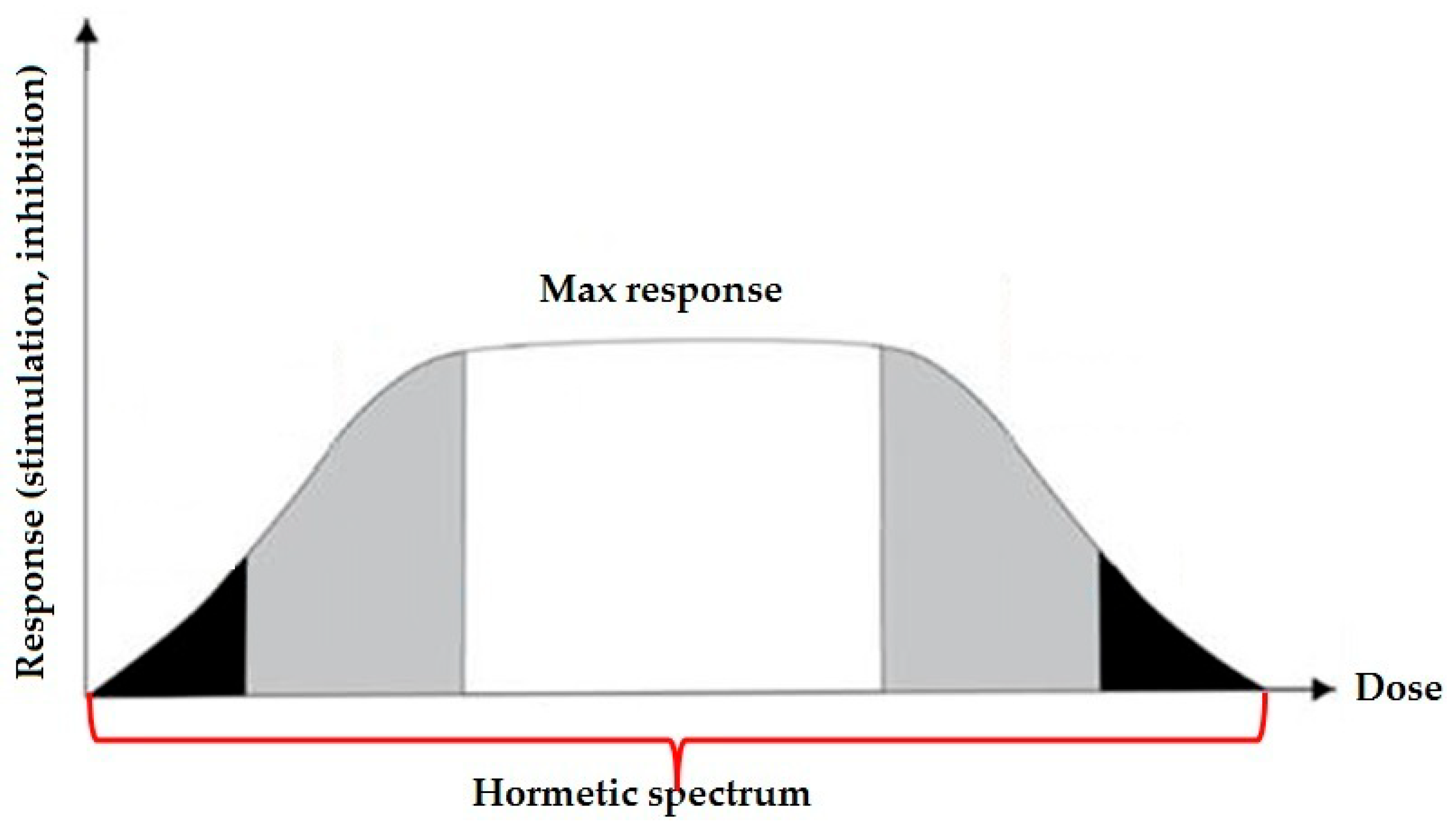


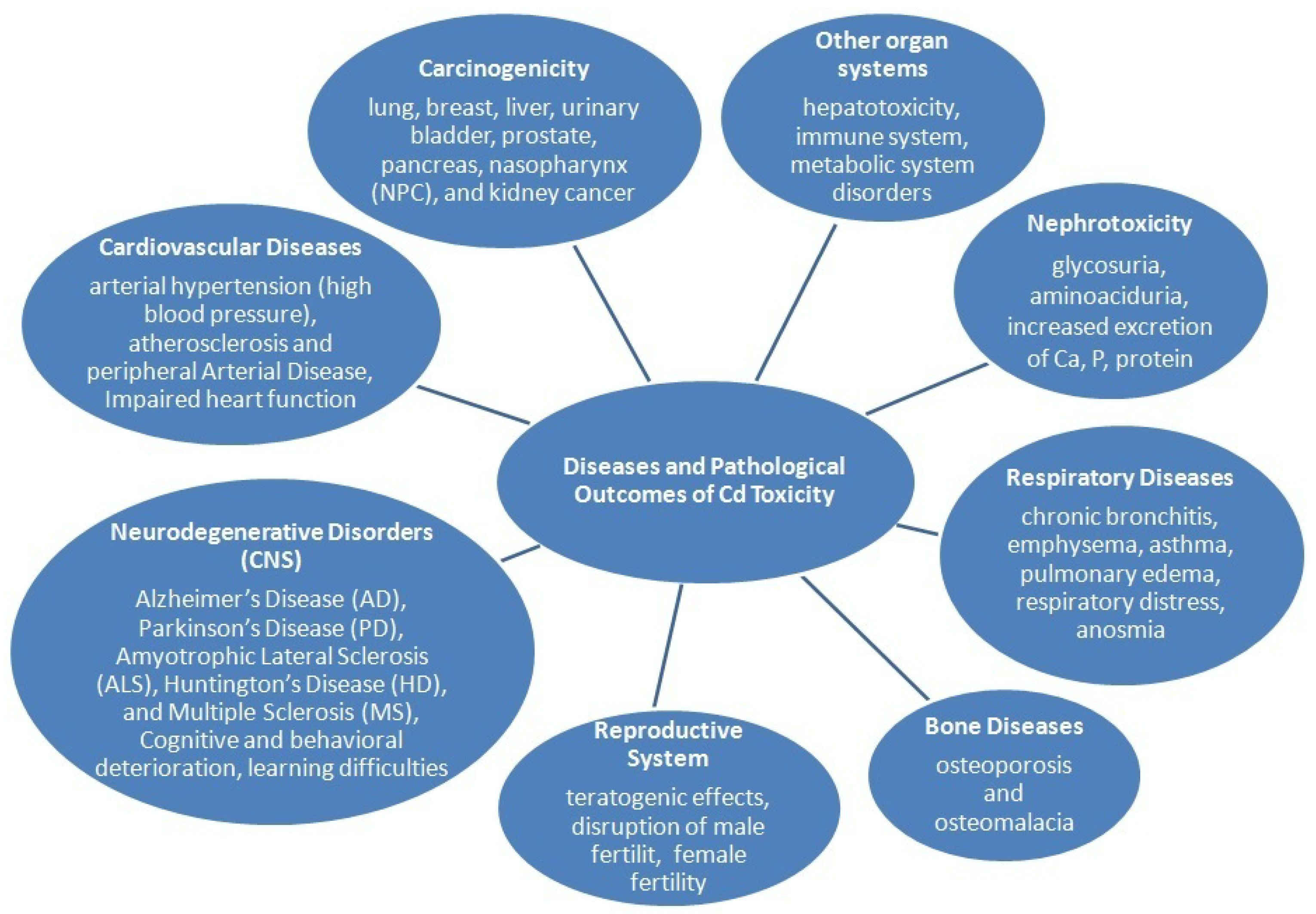



| Tobacco Product | Metal | Average Metal Concentration | Ref. |
|---|---|---|---|
| commercial moist snuff and Alaskan iqmik | As, Ba, Be, Cd, Cr, Co, Pb, Ni | 0.23 ± 0.06 µg/g (As); 1.40 ± 0.31 µg/g (Cd); 0.45 ± 0.13 µg/g (Pb); 2.28 ± 0.36 µg/g (Ni) | [173] |
| Tobacco from U.S. Cigarettes (n = 50) | As, Be, Cd, Cr, Co, Pb, Mn, Hg, Ni | Mn 131–245 µg/g; Cr 1.4–3.2 µg/g; Co 0.44–1.11 µg/g; Ni 2.1–3.9 µg/g; Cd 1.0–1.7 µg/g; Pb 0.60–1.16 µg/g; As 0.29 µg/g; Be 0.031 µg/g | [138] |
| cigarette filler and ash from 36 brands retailed in Saudi Arabia | Cr, Cd, Cu, Fe, Pb, Mn, Zn | 0.66 mg/kg (Cr), 0.09 mg/kg (Cd), 2.61 mg/kg (Cu), 245.55 mg/kg (Fe), 0.38 mg/kg (Pb), 3.985 mg/kg (Mn); 1.64 mg/kg (Zn) | [174] |
| Tobacco Products Available in the United States | Al | cigarette tobacco 0.719 ± 0.157 μg/mg; smokeless tobacco 0.408 ± 0.104 μg/mg; little cigar 1.20 ± 0.30 μg/mg; pipe/roll your own 1.05 ± 0.31 μg/mg | [175] |
| tobacco and cannabis | Al | Bangladeshi tobacco 2.3–3.7 mg Al/g; Rothmans 0.6–1.5 mg Al/g; natural tobacco 1.2–2.0 mg Al/g; medium tobacco 0.8–1.4 mg Al/g; cannabis (2 types) 0.1–0.4 mg Al/g; cannabinoid extract (THC) 0.1–0.4 mg Al/g | [176] |
| tobacco, filter and ash of illicit brands cigarettes marketed in Brazil | Cr | 0.32–0.80 µg/ashes 0.96 to 3.85 μg/cigarette for tobacco | [177] |
| 7 commercially available branded cigarettes purchased from local market of Dublin (Ireland) | As, Al, Cd, Ni, Hg, and Pb | 9.55–12.4 ng/cigarette, 0.432–0.727 μg/cigarette, 360–496 μg/cigarette, 1.70–2.12 μg/cigarette, 0.715–1.52 μg/cigarette, 0.378–1.16 μg/cigarette | [178] |
| packs of 20 cigarette brands were purchased from retail outlets at Oporto, Portugal | Co, Cd, Pb, As, Tl, Al, Mn, Ba | from less than1 μg/g (Co, Cd, Pb, As i Tl) to several hundreds of μg/g (Al, Mn i Ba) | [156] |
| different components of Pakistani local branded and imported cigarettes | Al, Cd, Ni, Pb | 97.3–99.0%, and 15.0–31.3% of total metal contents were observed for Al and Cd in ash, respectively | [179] |
| Tissue | Chemical Element | Observation | Ref. |
|---|---|---|---|
| bronchoalveolar space | extracellular Cd | Cd concentrations increased in cell-free BAL fluid of smokers compared to nonsmokers (n = 19–29; p < 0.001) | [242] |
| SELF fluid | inhalation bioaccessibility of Cd, Cr, Ni, Zn | The percentage inhalation bioaccessibility ranged between 20.8–59.8% (Cd), 3.3–8.1% (Cr), 21.7–48.8% (Ni) and 7.6–12.5% (Zn). | [245] |
| bronchial epithelium | Ca2+ signaling | Ca2+ signaling is impaired in smoker epithelia | [246] |
| bronchial biopsy specimens | Al potroom emissions | airway inflammation is a central feature of potroom asthma | [247] |
| bronchial autopsy tissue | 41 elements | significantly higher concentrations of Al in bronchial and lung of smokers | [244] |
| non-neoplastic lung injury | Fe | disruption of iron homeostasis in cells after exposure to CSP | [248] |
| lung | Fe | increased extracellular Fe from AMs is a potential source of oxidative damage and inflammation in the lung following CS exposure | [249] |
| lung samples of controls and COPD patients | Cd, Mn | the accumulation of Cd, Mn suggests a role for these metals in the pathogenesis of COPD | [241] |
| human lung tissue | Cr, Cd | concentrations of about 4.3 mg/g (dry weight) were found in smokers compared to 1.3 mg/g in non smokers; increasing concentration was observed with age and smoking time | [250] |
| Studied Samples | Population | Metals | Detection Method | Observation | Ref. |
|---|---|---|---|---|---|
| blood and hair | healthy adult male volunteers, smokers (29), nonsmokers volunteers (14) | Hg, Pb, Cd, As, Se, Mn, Zn, Ni, and Cr | ICP-AES | All the investigated toxic elements levels in the hair of cigarette-smoking subjects (except Hg and Zn) were significantly higher than nonsmoker subjects | [332] |
| hair | 236 healthy people 16–75-years-of-age | Hg | ICP-MS | Hg concentration was higher in the smoking exposure group than the non-exposure group | [333] |
| hair | 252 pregnant women | Ag, Cd, Hg, Pb) | ICP-MS | positive correlations between cotinine and Ag (r = 0.369, p < 0.001), Cd (r = 0.185, p < 0.01), Hg (r = 0.161, p < 0.05), and Pb (r = 0.243, p < 0.001); positive correlations between nicotine and Ag (r = 0.331, p < 0.001), Cd (r = 0.176, p < 0.01), and Pb (r = 0.316, p < 0.001) | [334] |
| serum and hair | 344 women 20–70 years old including 199 smokers and 145 non-smoking women | Co, Cr, Cu, Fe, Mn, V, Zn, Se | ICP-MS | smoking leads to decreased serum Cu, Fe, Zn concentrations, hair Fe, Se; increased serum Mn, V, Cr; inverse relationship between smoking intensity and Se levels, and a positive correlation with serum Cr, Zn, and hair Fe levels | [331] |
| blood, scalp hair | smoker and nonsmoker males who have mild and severe psoriasis | Cd, Zn | AAS | increased Cd levels in hair and blood in smoking patients with psoriasis; decreased Zn concentrations in smoking patients with psoriasis; 5% decreased Zn levels in smokers; 17.8–33.3% decreased Zn levels in non-smoking patients with psoriasis; 25% lower Cd levels in the blood of smokers; two- to three-fold higher Cd concentrations in psoriasis patients | [335] |
| hair | 95 subjects (24 males and 71 females) | Co, Cr, Cu, Li, Sr, Pb | ICP-TOF-MS | smokers’ hair contained more Cu, while the content of Pb, Cr, and Co was similar in the hair of nonsmokers and smokers. The results were not statistically significant. | [336] |
| blood, toenails, and hair | 163 pregnant women | Pb, Cd, As, Mn | GFAAS | passive smoking significantly increased levels of Mn, Pb, Cd | [337] |
| hair | - | Cd, Cu, Ni, Pb and Zn | FAAS | significantly higher concentrations of Cd and Pb in male hair and smokers than those in female and non-smokers (p < 0.01) | [338] |
| blood, nasal fluid, saliva, sputum, serum, scalp hair | male smokers and nonsmokers infected with COVID-19 and from healthy men (aged 29–59 years) | Se, Hg | AAS | Se concentrations in all samples from smokers and nonsmokers with COVID-19 were lower than those of healthy smokers and nonsmokers; Hg concentrations were elevated in both smokers and nonsmokers with COVID-19 | [339] |
| hair | 821 students (433 boys and 388 girls) SHS; 48.9% of fathers who are smokers, but 25.2% of fathers smoke in front of their children. | Cr, Mn, Ni, As, Pb, Cd | ICP-MS | increasing levels of Pb and Cd in the hair of SHS children | [340] |
| scalp hair | various age groups (16–32 years, 33–50 years, and 51–62 years) | Zn, Fe, Cu, Cr, Cd, Ni, Pb, As | FAAS, GF AAS | the concentrations of As (0.17, 0.81, and 0.91 μg/g), Cd (2.80, 3.81, and 3.16 μg/g), Cr (4.1, 4.2, and 5.3 μg/g), Cu (20.0, 21.0, and 21.9 μg/g), Ni (3.9, 4.6, and 4.3 μg/g), Pb (4.0, 4.8, and 5.0 μg/g), and Fe (49.0, 49.0, and 59.3 μg/g) were significantly higher in smokers for various age groups respectively. The concentrations of Zn (165, 163, and 173 μg/g v) were lower in smokers. Correlation studies for male smokers show a highly positive correlation between Cr-Cd, Cr-Ni, Cu-Fe, and Ni-Zn. | [341] |
| scalp hair | 200 pregnant and non-pregnant women (20–35 years) | Cd, Zn | AAS | The malnourished pregnant and non-pregnant smoking women group had three to four times higher levels of Cd in their scalp hair samples than those values obtained for non-smokers; the content of Zn in scalp hair samples of the reference women was ∼20% higher than the malnourished group | [342] |
| hair | 40 female students | Mg, Cr, Co, and Zn | ICP-MS/MS | Mg, Cr, Co, and Zn concentrations were higher for the non-smoking girls; Cd concentration was higher for passive smoking; the strong positive correlation for smokers was for Ca/Cd, Al/Fe, Mg/Cr, Na/Fe, Al/Cd, and Al/Na | [343] |
| supragingival dental calculus | 29 subjects, including nonsmokers (n = 14) and smokers (n = 15) | 26 metals and metalloids | ICP-MS | The concentrations of toxic heavy metals, As (p < 0.05), Cd (p < 0.05), Pb (p < 0.01), Mn (p < 0.01), and V (p < 0.01), were significantly higher in smokers than in nonsmokers | [344] |
Disclaimer/Publisher’s Note: The statements, opinions and data contained in all publications are solely those of the individual author(s) and contributor(s) and not of MDPI and/or the editor(s). MDPI and/or the editor(s) disclaim responsibility for any injury to people or property resulting from any ideas, methods, instructions or products referred to in the content. |
© 2025 by the authors. Licensee MDPI, Basel, Switzerland. This article is an open access article distributed under the terms and conditions of the Creative Commons Attribution (CC BY) license (https://creativecommons.org/licenses/by/4.0/).
Share and Cite
Flieger, W.; Stankiewicz, M.; Dzierżyński, E.; Gawlik, P.; Pietrzyk, Ł.; Łańcut, M.; Walczak, F.; Szymkiewicz, A.; Flieger, J. A Narrative Review of Metallomic Studies: Revealing the Toxic Metal Burden in Tobacco Smokers. Int. J. Mol. Sci. 2025, 26, 11617. https://doi.org/10.3390/ijms262311617
Flieger W, Stankiewicz M, Dzierżyński E, Gawlik P, Pietrzyk Ł, Łańcut M, Walczak F, Szymkiewicz A, Flieger J. A Narrative Review of Metallomic Studies: Revealing the Toxic Metal Burden in Tobacco Smokers. International Journal of Molecular Sciences. 2025; 26(23):11617. https://doi.org/10.3390/ijms262311617
Chicago/Turabian StyleFlieger, Wojciech, Magdalena Stankiewicz, Eliasz Dzierżyński, Piotr Gawlik, Łukasz Pietrzyk, Mirosław Łańcut, Filip Walczak, Anna Szymkiewicz, and Jolanta Flieger. 2025. "A Narrative Review of Metallomic Studies: Revealing the Toxic Metal Burden in Tobacco Smokers" International Journal of Molecular Sciences 26, no. 23: 11617. https://doi.org/10.3390/ijms262311617
APA StyleFlieger, W., Stankiewicz, M., Dzierżyński, E., Gawlik, P., Pietrzyk, Ł., Łańcut, M., Walczak, F., Szymkiewicz, A., & Flieger, J. (2025). A Narrative Review of Metallomic Studies: Revealing the Toxic Metal Burden in Tobacco Smokers. International Journal of Molecular Sciences, 26(23), 11617. https://doi.org/10.3390/ijms262311617