
Albumin-Phthalocyanine Nanoconjugates as Platforms for Enhanced Photodynamic Cancer Therapy



Abstract
1. Introduction
2. Results
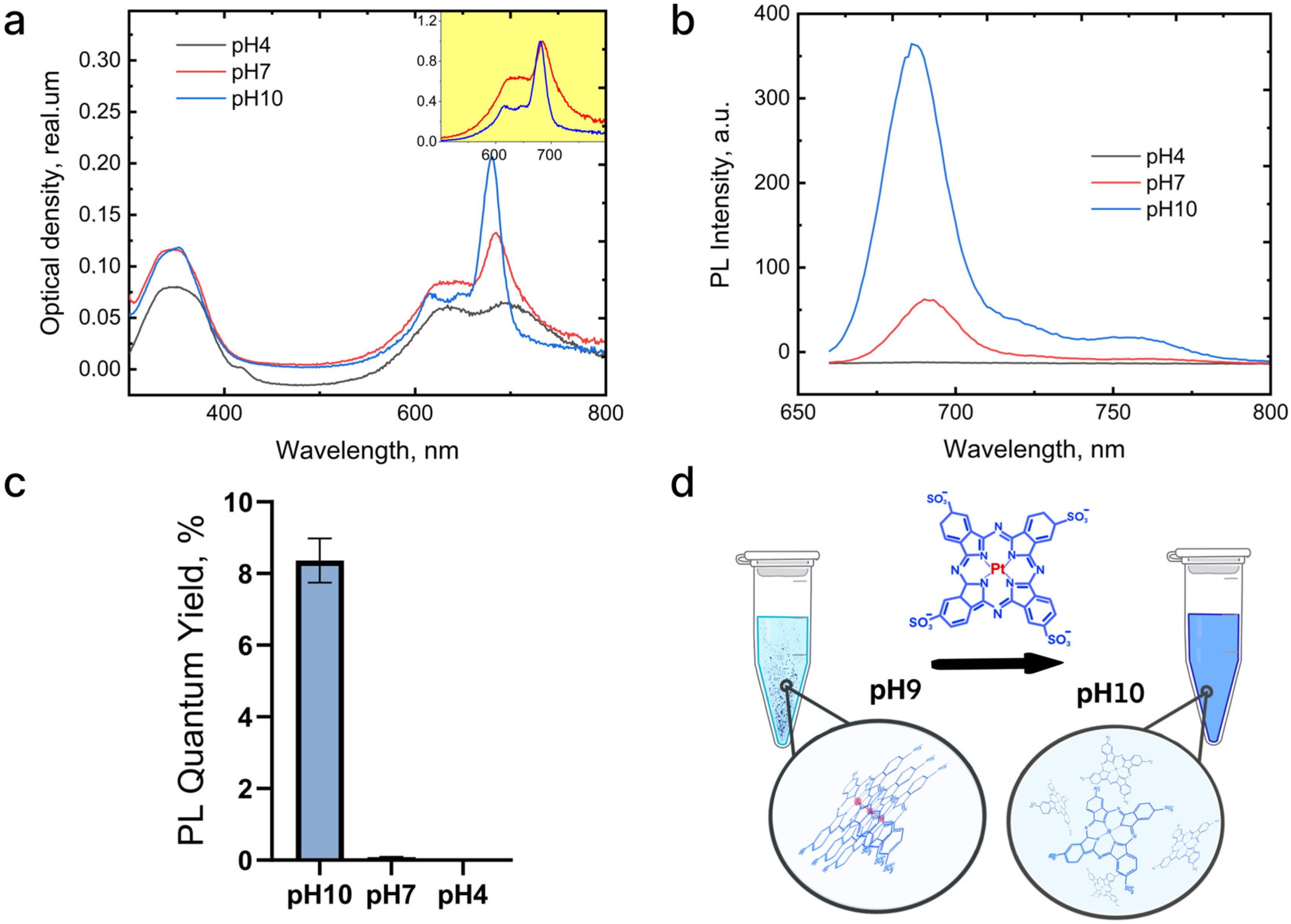
2.1. Optical Properties of Pc as a Function of pH
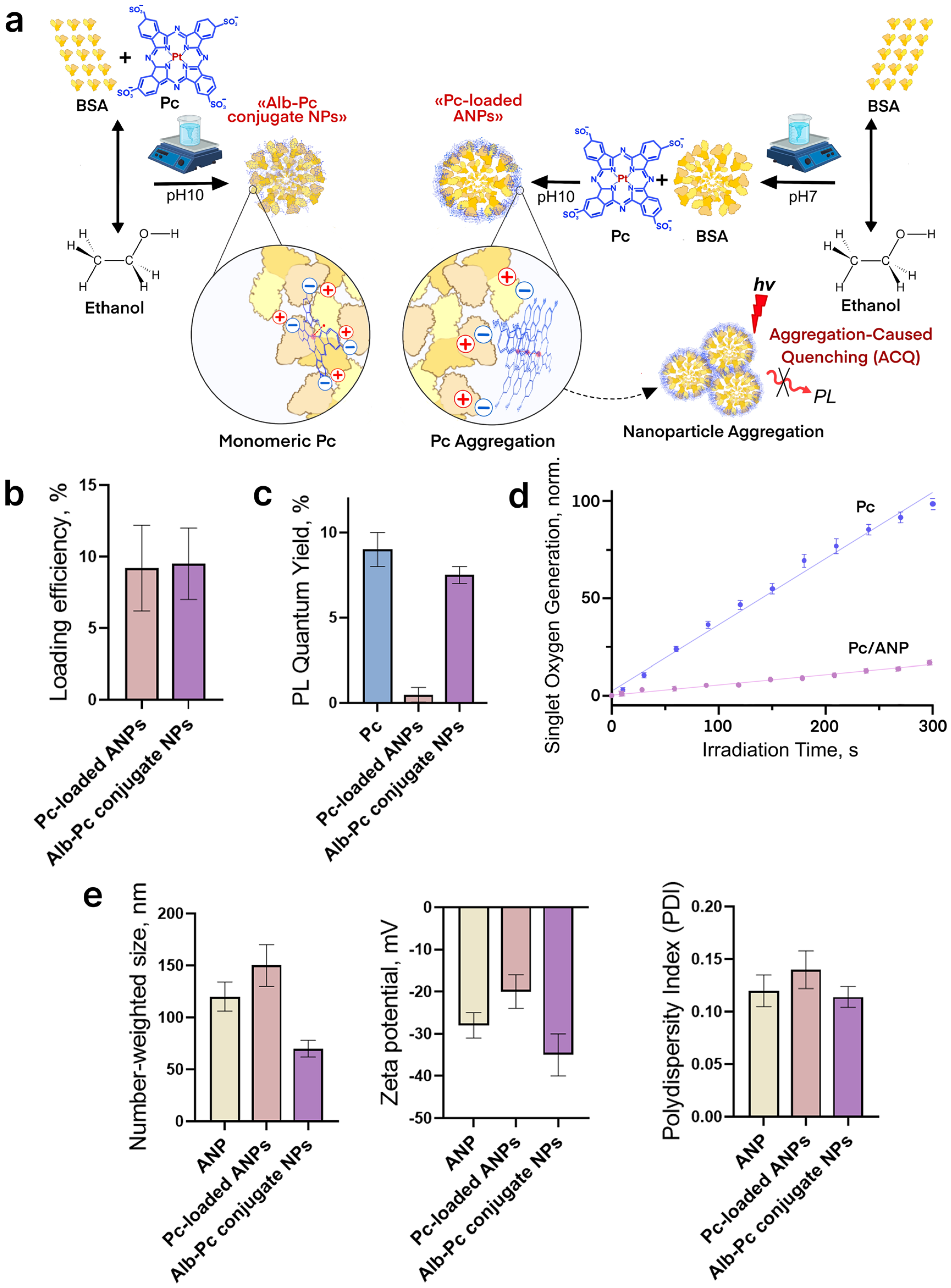
2.2. Pc Loading into ANP
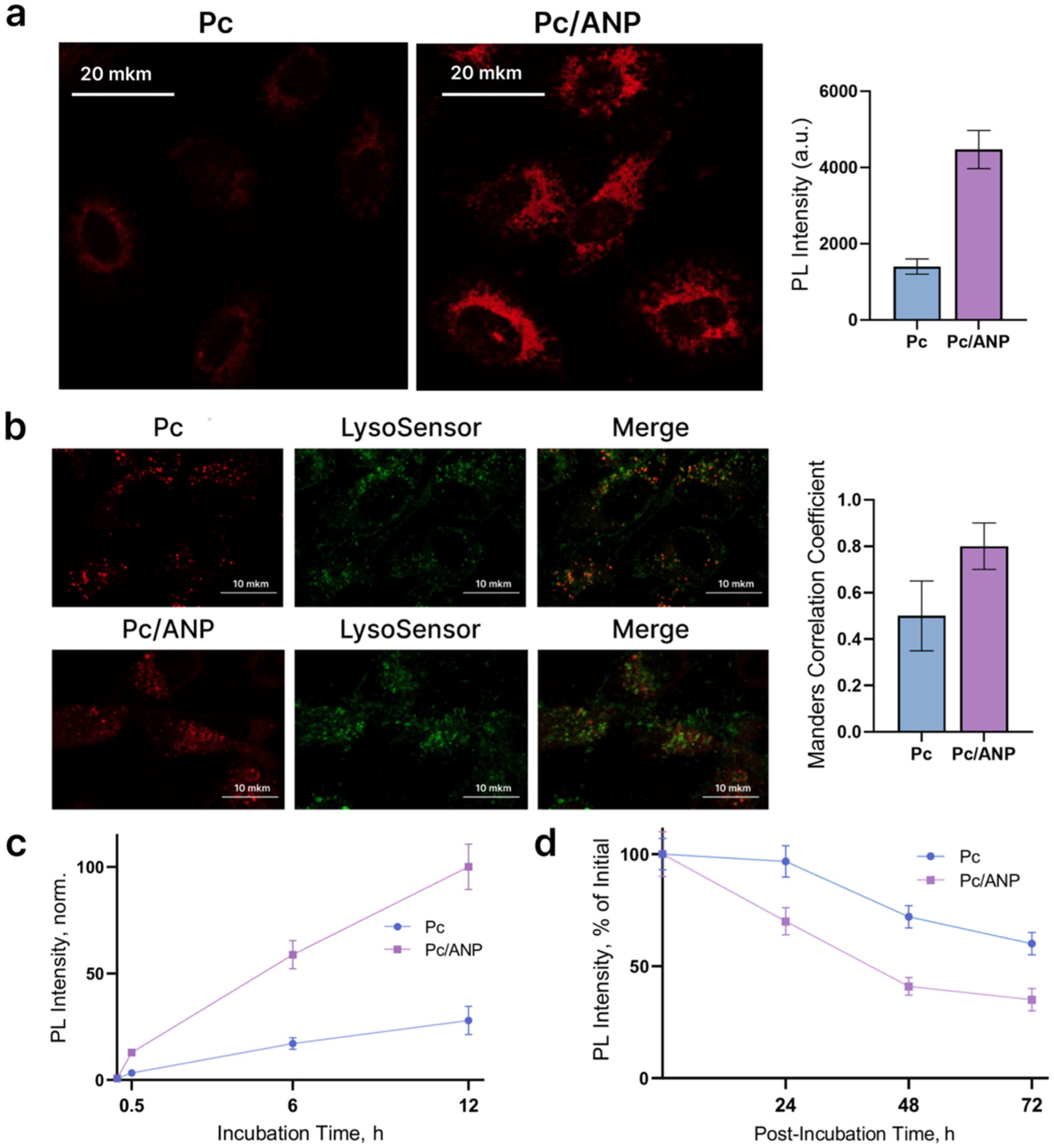
2.3. Pc/ANP Internalization
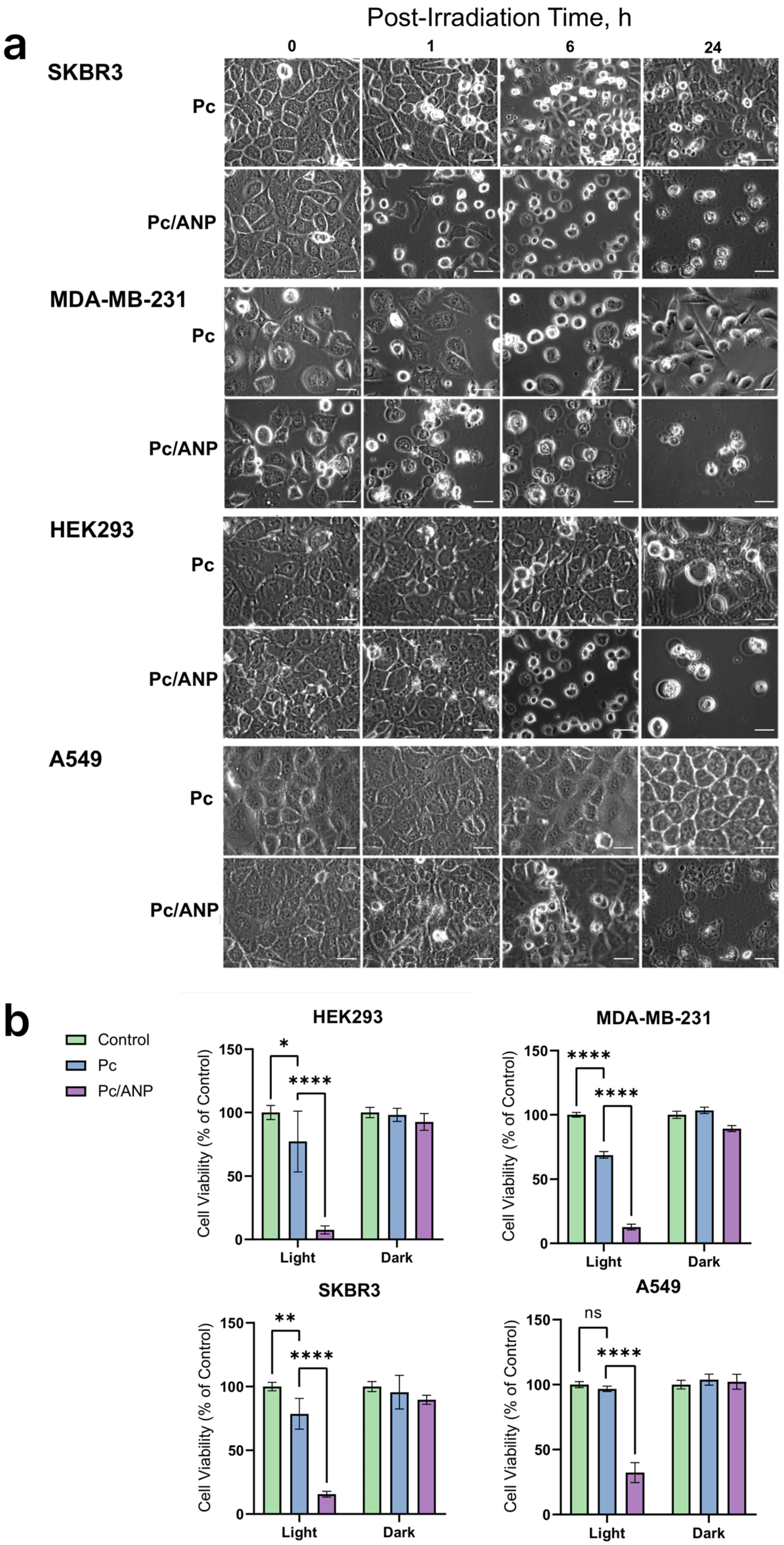
2.4. Pc/ANP Photodynamic Effect
2.5. Cell Death Pathways Induced by PDT
3. Discussion
4. Materials and Methods
4.1. Chemicals and Reagents
4.2. Synthesis and Characterization of Pc/ANP Systems
4.2.1. ANP Synthesis
4.2.2. Pc Loading
Loading in Synthesized ANP («Pc-Loaded ANPs»)
Loading on ANP Synthesis Stage («Alb-Pc Conjugates NPs»)
4.2.3. Systems Characterization
4.3. Systems Interaction with Cells
4.3.1. Analysis of Pc/ANP Cellular Internalization
4.3.2. Analysis of Photodynamical Effect
4.3.3. Analysis of Cell Death Mechanism
4.4. Statistical Analysis
5. Conclusions
Supplementary Materials
Author Contributions
Funding
Institutional Review Board Statement
Informed Consent Statement
Data Availability Statement
Conflicts of Interest
References
- Sobhani, N.; Samadani, A.A. Implications of photodynamic cancer therapy: An overview of PDT mechanisms basically and practically. J. Egypt. Natl. Cancer Inst. 2021, 33, 34. [Google Scholar] [CrossRef]
- Correia, J.H.; Rodrigues, J.A.; Pimenta, S.; Dong, T.; Yang, Z. Photodynamic therapy review: Principles, photosensitizers, applications, and future directions. Pharmaceutics 2021, 13, 1332. [Google Scholar] [CrossRef] [PubMed]
- Pham, T.C.; Nguyen, V.-N.; Choi, Y.; Lee, S.; Yoon, J. Recent strategies to develop innovative photosensitizers for enhanced photodynamic therapy. Chem. Rev. 2021, 121, 13454–13619. [Google Scholar] [CrossRef] [PubMed]
- Niculescu, A.-G.; Grumezescu, A.M. Photodynamic therapy—An up-to-date review. Appl. Sci. 2021, 11, 3626. [Google Scholar] [CrossRef]
- Kessel, D. Photodynamic therapy: Critical PDT theory. Photochem. Photobiol. 2023, 99, 199–203. [Google Scholar] [CrossRef]
- Zhou, Z.; Zhang, L.; Zhang, Z.; Liu, Z. Advances in photosensitizer-related design for photodynamic therapy. Asian J. Pharm. Sci. 2021, 16, 668–686. [Google Scholar] [CrossRef]
- Singh, P.P.; Sinha, S.; Gahtori, P.; Mishra, D.; Pandey, G.; Srivastava, V. Recent advancement in photosensitizers for photodynamic therapy. Dye. Pigment. 2024, 229, 112262. [Google Scholar] [CrossRef]
- Kolesova, E.; Bulgakova, A.; Maslov, V.; Veniaminov, A.; Dubavik, A.; Gun’ko, Y.; Efremenkova, O.; Oleinikov, V.; Orlova, A. Bactericidal activity of multilayered hybrid structures comprising titania nanoparticles and CdSe quantum dots under visible light. Nanomaterials 2021, 11, 3331. [Google Scholar] [CrossRef]
- Zhao, J.; Xu, X.; Yang, Y.; Li, J. Assembled photosensitizers applied for enhanced photodynamic therapy. CCS Chem. 2023, 5, 1043–1060. [Google Scholar] [CrossRef]
- Li, D.; Cai, S.; Wang, P.; Cheng, H.; Cheng, B.; Zhang, Y.; Liu, G. Innovative design strategies advance biomedical applications of phthalocyanines. Adv. Healthc. Mater. 2023, 12, 2300263. [Google Scholar] [CrossRef]
- Valduga, G.; Bianco, G.; Csik, G.; Reddi, E.; Masiero, L.; Garbisa, S.; Jori, G. Interaction of hydro- or lipophilic phthalocyanines with cells of different metastatic potential. Biochem. Pharmacol. 1996, 51, 585–590. [Google Scholar] [CrossRef]
- Bunin, D.A.; Martynov, A.G.; Gvozdev, D.A.; Gorbunova, Y.G. Phthalocyanine aggregates in the photodynamic therapy: Dogmas, controversies, and future prospects. Biophys. Rev. 2023, 15, 983–998. [Google Scholar] [CrossRef]
- Rak, J.; Pouckova, P.; Benes, J.; Vetvicka, D. Drug delivery systems for phthalocyanines for photodynamic therapy. Anticancer Res. 2019, 39, 3323–3339. [Google Scholar] [CrossRef]
- Truong, D.H.; Tran, P.T.T.; Tran, T.H. Nanoparticles as carriers of photosensitizers to improve photodynamic therapy in cancer. Pharm. Dev. Technol. 2024, 29, 221–235. [Google Scholar] [CrossRef]
- Merlin, J.J.; Crous, A.; Abrahamse, H. Combining photodynamic therapy and targeted drug delivery systems: Enhancing mitochondrial toxicity for improved cancer outcomes. Int. J. Mol. Sci. 2024, 25, 10796. [Google Scholar] [CrossRef]
- Ye, Q.; Wang, J.; Guo, R.; Chen, G.; Shen, Y.; Wu, Y.; Wang, J.; Lin, Z.; Wang, K.; Chen, J. Enhancing antitumor efficacy of NIR-I region zinc phthalocyanine@upconversion nanoparticle through lysosomal escape and mitochondria targeting. J. Photochem. Photobiol. B Biol. 2024, 255, 112923. [Google Scholar] [CrossRef] [PubMed]
- Qi, T.; Chen, B.; Wang, Z.; Du, H.; Liu, D.; Yin, Q.; Liu, B.; Zhang, Q.; Wang, Y. A pH-Activatable nanoparticle for dual-stage precisely mitochondria-targeted photodynamic anticancer therapy. Biomaterials 2019, 213, 119219. [Google Scholar] [CrossRef] [PubMed]
- Peng, N.; Yu, H.; Yu, W.; Yang, M.; Chen, H.; Zou, T.; Deng, K.; Huang, S.; Liu, Y. Sequential-targeting nanocarriers with pH-controlled charge reversal for enhanced mitochondria-located photodynamic-immunotherapy of cancer. Acta Biomater. 2020, 105, 223–238. [Google Scholar] [CrossRef] [PubMed]
- Bao, X.; Ye, K.; Song, Z.; Zhang, M.; Wei, S.; Zhou, L. From Cell Membrane to Lysosome: Arginine Modification Boosts the Phototoxic Index of Zinc Phthalocyanine for Efficient Bladder Cancer Treatment. Dye. Pigment. 2025, 245, 113219. [Google Scholar] [CrossRef]
- Rak, J.; Kabesova, M.; Benes, J.; Pouckova, P.; Vetvicka, D. Advances in liposome-encapsulated phthalocyanines for photodynamic therapy. Life 2023, 13, 305. [Google Scholar] [CrossRef]
- Rodriguez, M.E.; Zhang, P.; Azizuddin, K.; Delos Santos, G.B.; Chiu, S.m.; Xue, L.y.; Berlin, J.C.; Peng, X.; Wu, H.; Lam, M. Structural factors and mechanisms underlying the improved photodynamic cell killing with silicon phthalocyanine photosensitizers directed to lysosomes versus mitochondria. Photochem. Photobiol. 2009, 85, 1189–1200. [Google Scholar] [CrossRef]
- Qu, N.; Song, K.; Ji, Y.; Liu, M.; Chen, L.; Lee, R.J.; Teng, L. Albumin nanoparticle-based drug delivery systems. Int. J. Nanomed. 2024, 19, 6945–6980. [Google Scholar] [CrossRef] [PubMed]
- Solanki, R.; Saini, M.; Mochi, J.; Pappachan, A.; Patel, S. Synthesis, characterization, in-silico and in-vitro anticancer studies of Plumbagin encapsulated albumin nanoparticles for breast cancer treatment. J. Drug Deliv. Sci. Technol. 2023, 84, 104501. [Google Scholar] [CrossRef]
- Fang, J. EPR effect-based tumor targeted nanomedicine: A promising approach for controlling cancer. J. Pers. Med. 2022, 12, 95. [Google Scholar] [CrossRef]
- Ji, Q.; Zhu, H.; Qin, Y.; Zhang, R.; Wang, L.; Zhang, E.; Zhou, X.; Meng, R. GP60 and SPARC as albumin receptors: Key targeted sites for the delivery of antitumor drugs. Front. Pharmacol. 2024, 15, 1329636. [Google Scholar] [CrossRef] [PubMed]
- Jeong, H.; Huh, M.; Lee, S.J.; Koo, H.; Kwon, I.C.; Jeong, S.Y.; Kim, K. Photosensitizer-conjugated human serum albumin nanoparticles for effective photodynamic therapy. Theranostics 2011, 1, 230–239. [Google Scholar] [CrossRef]
- Liu, Y.; Li, Y.; Shen, W.; Li, M.; Wang, W.; Jin, X. Trend of albumin nanoparticles in oncology: A bibliometric analysis of research progress and prospects. Front. Pharmacol. 2024, 15, 1409163. [Google Scholar] [CrossRef]
- Yakovlev, D.; Kolesova, E.; Sizova, S.; Annas, K.; Tretyak, M.; Loschenov, V.; Orlova, A.; Oleinikov, V. New Conjugates Based on AIS/ZnS Quantum Dots and Aluminum Phthalocyanine Photosensitizer: Synthesis, Properties and Some Perspectives. Nanomaterials 2022, 12, 3874. [Google Scholar] [CrossRef]
- Zhang, H.; Shan, Y.; Dong, L. A comparison of TiO2 and ZnO nanoparticles as photosensitizers in photodynamic therapy for cancer. J. Biomed. Nanotechnol. 2014, 10, 1450–1457. [Google Scholar] [CrossRef]
- Nagakannan, P.; Tabeshmehr, P.; Eftekharpour, E. Oxidative damage of lysosomes in regulated cell death systems: Pathophysiology and pharmacologic interventions. Free Radic. Biol. Med. 2020, 157, 94–127. [Google Scholar] [CrossRef] [PubMed]
- Li, S.; Liu, Y.; Zhang, X.; Liu, Y.; Si, L.; Jiang, S.; Wang, A.; Che, X.; Chen, J.; Hu, J. Multi-pathway oxidative stress amplification via controllably targeted nanomaterials for photoimmunotherapy of tumors. J. Nanobiotechnol. 2025, 23, 33. [Google Scholar] [CrossRef]
- Luobin, L.; Wanxin, H.; Yingxin, G.; Qinzhou, Z.; Zefeng, L.; Danyang, W.; Huaqin, L. Nanomedicine-induced programmed cell death in cancer therapy: Mechanisms and perspectives. Cell Death Discov. 2024, 10, 386. [Google Scholar] [CrossRef]
- Korbelik, M. PDT-associated host response and its role in the therapy outcome. Lasers Surg. Med. Off. J. Am. Soc. Laser Med. Surg. 2006, 38, 500–508. [Google Scholar] [CrossRef] [PubMed]
- Aebisher, D.; Woźnicki, P.; Bartusik-Aebisher, D. Photodynamic therapy and adaptive immunity induced by reactive oxygen species: Recent reports. Cancers 2024, 16, 967. [Google Scholar] [CrossRef]
- Frant, M.P.; Trytek, M.; Deryło, K.; Kutyła, M.; Paduch, R. Cellular localization of selected porphyrins and their effect on the in vitro motility of human colon tumors and normal cells. Molecules 2023, 28, 2907. [Google Scholar] [CrossRef] [PubMed]
- Kuznetsova, N.A.; Bulgakov, R.A.; Solovyova, L.I.; Shevchenko, E.N.; Kaliya, O.L.; Lukyanets, E.A. Influence of central versus peripheral coordination of Pt and Pd atoms on physical-chemical properties of octa-4, 5-carboxyphthalocyanines. Макрогетероциклы 2015, 8, 143–149. [Google Scholar] [CrossRef][Green Version]
- Hamad, O.A.; Kareem, R.O.; Omer, P.K. Properties, characterization, and application of phthalocyanine and metal phthalocyanine. J. Chem. Rev 2024, 6, 39–75. [Google Scholar]
- AĞirtaŞ, M.S.; Solğun, D.G.; Yildiko, Ü.; Özkartal, A. Design of novel substituted phthalocyanines; synthesis and fluorescence, DFT, photovoltaic properties. Turk. J. Chem. 2020, 44, 1574–1586. [Google Scholar] [CrossRef] [PubMed]
- Tackley, D.R.; Dent, G.; Smith, W.E. Phthalocyanines: Structure and vibrations. Phys. Chem. Chem. Phys. 2001, 3, 1419–1426. [Google Scholar] [CrossRef]
- D’Ambrosio, P.; Tonucci, L.; d’Alessandro, N.; Morvillo, A.; Sortino, S.; Bressan, M. Water-Soluble Transition-Metal-Phthalocyanines as Singlet Oxygen Photosensitizers in Ene Reactions. Eur. J. Inorg. Chem. 2011, 2011, 503–509. [Google Scholar] [CrossRef]
- Palewska, K.; Sworakowski, J.; Lipiński, J. Molecular aggregation in soluble phthalocyanines–Chemical interactions vs. π-stacking. Opt. Mater. 2012, 34, 1717–1724. [Google Scholar] [CrossRef]
- Liu, L.; Wang, X.; Gao, H.; Wu, T.; Li, M.; Wang, J.; Zhao, X.; Zheng, X.; Liu, G.; Xu, Z. Aggregation-induced phosphorescence Pt (ii) complexes: Molecular design strategies, mechanistic insights and applications. J. Mater. Chem. C 2025, 13, 13563–13581. [Google Scholar] [CrossRef]
- Teixeira, R.; Serra, V.V.; Botequim, D.; Paulo, P.M.; Andrade, S.M.; Costa, S.M. Fluorescence spectroscopy of porphyrins and phthalocyanines: Some insights into supramolecular self-assembly, microencapsulation, and imaging microscopy. Molecules 2021, 26, 4264. [Google Scholar] [CrossRef]
- Burtsev, I.; Egorov, A.; Kostyukov, A.; Shibaeva, A.; Klimovich, M.; Kosov, A.; Seliverstov, M.Y.; Dubinina, T.; Markova, A.; Kuzmin, V. Photochemical properties of octaphenyl-substituted erbium phthalocyanine. Russ. J. Phys. Chem. B 2022, 16, 109–117. [Google Scholar] [CrossRef]
- Luo, J.; Miao, Z.; Huang, X.; Yang, Y.; Liu, M.; Shen, G.; Yang, T. Translational albumin nanocarrier caging photosensitizer for efficient cancer photodynamic therapy. Front. Bioeng. Biotechnol. 2023, 11, 1132591. [Google Scholar] [CrossRef]
- Jiang, L.; Zhao, X.; Zheng, C.; Li, F.; Maclean, J.L.; Chen, F.; Swami, A.; Qian, H.; Zhu, J.; Ge, L. The quantitative detection of the uptake and intracellular fate of albumin nanoparticles. RSC Adv. 2015, 5, 34956–34966. [Google Scholar] [CrossRef]
- Kutumova, E.O.; Akberdin, I.R.; Egorova, V.S.; Kolesova, E.P.; Parodi, A.; Pokrovsky, V.S.; Zamyatnin, A.A., Jr.; Kolpakov, F.A. Physiologically based pharmacokinetic model for predicting the biodistribution of albumin nanoparticles after induction and recovery from acute lung injury. Heliyon 2024, 10, e30962. [Google Scholar] [CrossRef] [PubMed]
- Syrocheva, A.O.; Gorbacheva, V.I.; Egorova, V.S.; Zamyatnin, A.A., Jr.; Parodi, A.; Kolesova, E.P. Inorganic Silica Nanoparticles Increase Lysosomal Biology and Protease Activity. Int. J. Mol. Sci. 2025, 26, 8291. [Google Scholar] [CrossRef] [PubMed]
- Tsubone, T.M.; Martins, W.K.; Pavani, C.; Junqueira, H.C.; Itri, R.; Baptista, M.S. Enhanced efficiency of cell death by lysosome-specific photodamage. Sci. Rep. 2017, 7, 6734. [Google Scholar] [CrossRef]
- Gu, S.; Chen, C.; Jiang, X.; Zhang, Z. ROS-mediated endoplasmic reticulum stress and mitochondrial dysfunction underlie apoptosis induced by resveratrol and arsenic trioxide in A549 cells. Chem.-Biol. Interact. 2016, 245, 100–109. [Google Scholar] [CrossRef]
- Gote, V.; Nookala, A.R.; Bolla, P.K.; Pal, D. Drug resistance in metastatic breast cancer: Tumor targeted nanomedicine to the rescue. Int. J. Mol. Sci. 2021, 22, 4673. [Google Scholar] [CrossRef]
- Meng, R.; Hao, S.; Sun, C.; Hou, Z.; Hou, Y.; Wang, L.; Deng, P.; Deng, J.; Yang, Y.; Xia, H. Reverse-QTY code design of active human serum albumin self-assembled amphiphilic nanoparticles for effective anti-tumor drug doxorubicin release in mice. Proc. Natl. Acad. Sci. USA 2023, 120, e2220173120. [Google Scholar] [CrossRef]
- Mishchenko, T.; Balalaeva, I.; Gorokhova, A.; Vedunova, M.; Krysko, D.V. Which cell death modality wins the contest for photodynamic therapy of cancer? Cell Death Dis. 2022, 13, 455. [Google Scholar] [CrossRef]
- Zhang, Y.; Zhan, X.; Xiong, J.; Peng, S.; Huang, W.; Joshi, R.; Cai, Y.; Liu, Y.; Li, R.; Yuan, K.; et al. Temperature-dependent cell death patterns induced by functionalized gold nanoparticle photothermal therapy in melanoma cells. Sci. Rep. 2018, 8, 8720. [Google Scholar] [CrossRef]
- Zhang, Y.; Cheung, Y.-K.; Ng, D.K.; Fong, W.-P. Immunogenic necroptosis in the anti-tumor photodynamic action of BAM-SiPc, a silicon (IV) phthalocyanine-based photosensitizer. Cancer Immunol. Immunother. 2021, 70, 485–495. [Google Scholar] [CrossRef]
- Wang, Y.; Xia, C.; Lun, Z.; Lv, Y.; Chen, W.; Li, T. Crosstalk between p38 MAPK and caspase-9 regulates mitochondria-mediated apoptosis induced by tetra-α-(4-carboxyphenoxy) phthalocyanine zinc photodynamic therapy in LoVo cells. Oncol. Rep. 2018, 39, 61–70. [Google Scholar] [PubMed]
- Chiu, S.-M.; Evans, H.H.; Lam, M.; Nieminen, A.-L.; Oleinick, N.L. Phthalocyanine 4 photodynamic therapy-induced apoptosis of mouse L5178Y-R cells results from a delayed but extensive release of cytochrome c from mitochondria. Cancer Lett. 2001, 165, 51–58. [Google Scholar] [CrossRef] [PubMed]
- Doustvandi, M.A.; Mohammadnejad, F.; Mansoori, B.; Mohammadi, A.; Navaeipour, F.; Baradaran, B.; Tajalli, H. The interaction between the light source dose and caspase-dependent and -independent apoptosis in human SK-MEL-3 skin cancer cells following photodynamic therapy with zinc phthalocyanine: A comparative study. J. Photochem. Photobiol. B Biol. 2017, 176, 62–68. [Google Scholar] [CrossRef] [PubMed]



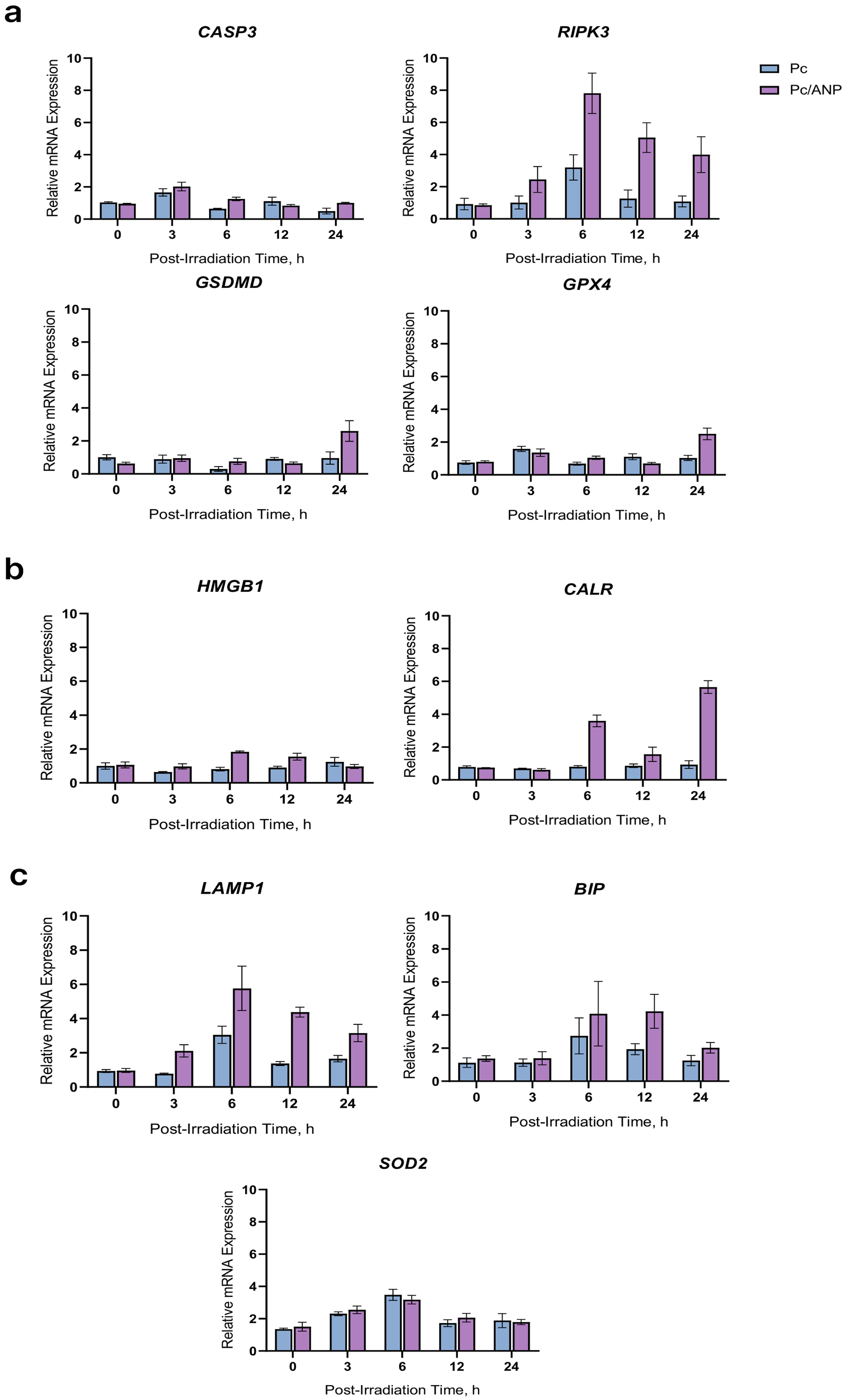
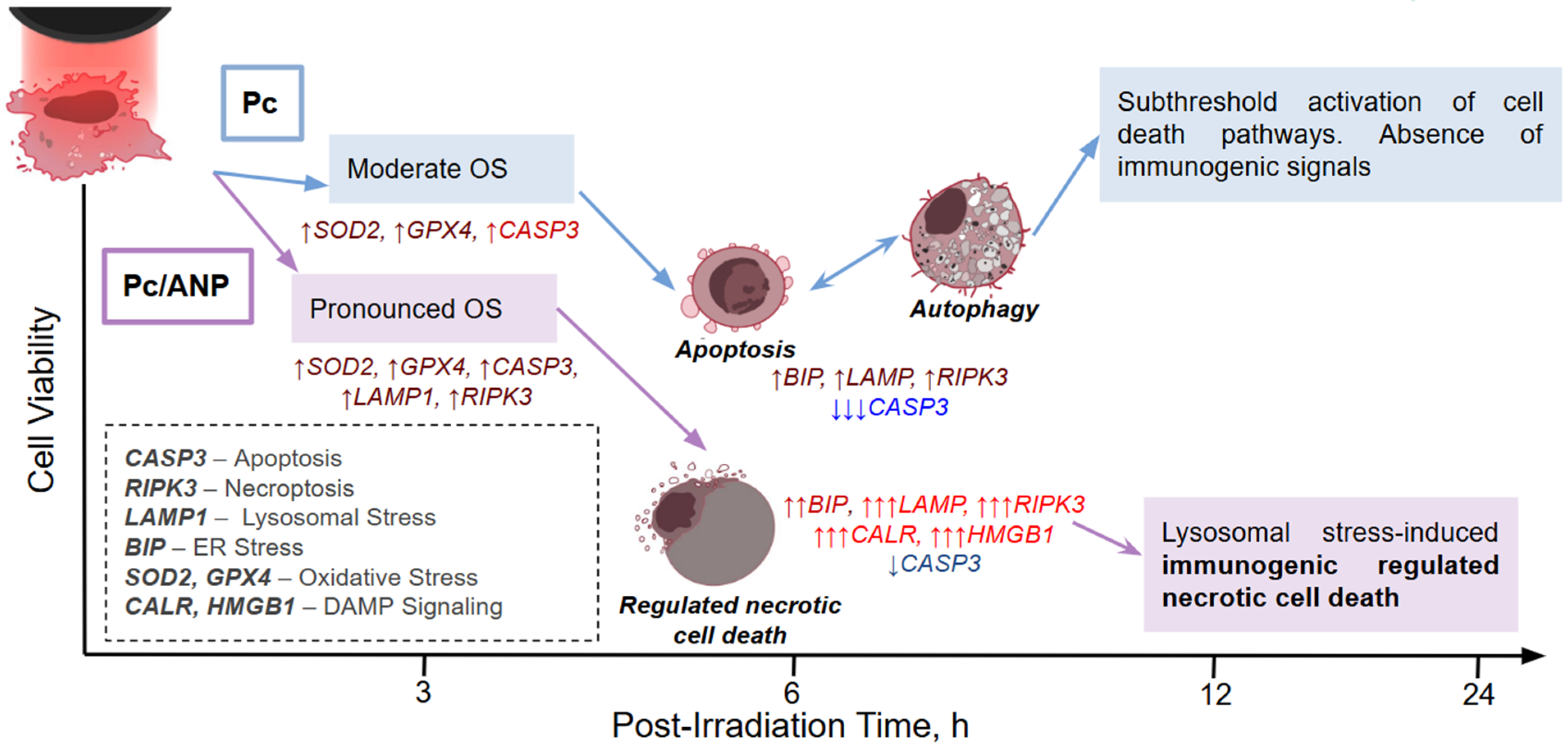
| Pathway | Key Gene(s) | Effect of Pc/ANP vs. Pc | Temporal Profile |
|---|---|---|---|
| Necroptosis | RIPK3 | Strong Induction | Early and Sustained |
| Apoptosis | CASP3 | Induction | Early (peaks at 6 h) |
| ER Stress/ICD | CALR, BIP, HMGB1 | Induction | Mid-phase (6–12 h) |
| Pyroptosis | GSDMD | Induction (Delayed) | Late (24 h) |
| Ferroptosis | GPX4 | Biphasic Response | Complex (Oscillating) |
| Lysosomal Stress | LAMP1 | Induction | Sustained |
| Gene | Oligonucleotide | |
|---|---|---|
| CASP3 | F | GGTGCTATTGTGAGGCGGTT |
| R | TGAGAATGGGGGAAGAGGCA | |
| RIPK3 | F | CTACGATGTGGCGGTCAAGAT |
| R | GTCCCAGTTCACCTTCTCGATAAC | |
| TNF-α | F | CGAGTGACAAGCCTGTAGCC |
| R | GGACCTGGGAGTAGATGAGGT | |
| GSDMD | F | AGGACAGGCAAAGATCGCAG |
| R | CACCTCAGTCACCACGTACA | |
| CALR | F | AACCCCGAGTATTCTCCCGA |
| R | GCTCAGCGTATGCCTCATCGT | |
| GPX4 | F | TTCCCGTGTAACCAGTTCG |
| R | GCCCTTGGGTTGGATCTTCA | |
| HMGB1 | F | CGACTCTGTGCCTCGCTG |
| R | TCCTCCCGACAAGTTTGC | |
| LAMP1 | F | GTGTCACGAAGGCGTTTTCAG |
| R | TGTTCTCGTCCAGCAGACAC | |
| SOD2 | F | GCACTAGCAGCATGTTGAGC |
| R | TTGATGTGAGGTTCCAGGGC | |
| TBP | F | TGTATCCACAGTGAATCTTGGTTG |
| R | GGTTCGTGGCTCTCTTATCCTC | |
| BIP | F | GGAACCATCCCGTGGCATAA |
| R | TGGTAGGCACCACTGTGTTC | |
Disclaimer/Publisher’s Note: The statements, opinions and data contained in all publications are solely those of the individual author(s) and contributor(s) and not of MDPI and/or the editor(s). MDPI and/or the editor(s) disclaim responsibility for any injury to people or property resulting from any ideas, methods, instructions or products referred to in the content. |
© 2025 by the authors. Licensee MDPI, Basel, Switzerland. This article is an open access article distributed under the terms and conditions of the Creative Commons Attribution (CC BY) license (https://creativecommons.org/licenses/by/4.0/).
Share and Cite
Gorbacheva, V.I.; Syrocheva, A.O.; Kolesova, E.P. Albumin-Phthalocyanine Nanoconjugates as Platforms for Enhanced Photodynamic Cancer Therapy. Int. J. Mol. Sci. 2025, 26, 11559. https://doi.org/10.3390/ijms262311559
Gorbacheva VI, Syrocheva AO, Kolesova EP. Albumin-Phthalocyanine Nanoconjugates as Platforms for Enhanced Photodynamic Cancer Therapy. International Journal of Molecular Sciences. 2025; 26(23):11559. https://doi.org/10.3390/ijms262311559
Chicago/Turabian StyleGorbacheva, Valentina I., Anastasiia O. Syrocheva, and Ekaterina P. Kolesova. 2025. "Albumin-Phthalocyanine Nanoconjugates as Platforms for Enhanced Photodynamic Cancer Therapy" International Journal of Molecular Sciences 26, no. 23: 11559. https://doi.org/10.3390/ijms262311559
APA StyleGorbacheva, V. I., Syrocheva, A. O., & Kolesova, E. P. (2025). Albumin-Phthalocyanine Nanoconjugates as Platforms for Enhanced Photodynamic Cancer Therapy. International Journal of Molecular Sciences, 26(23), 11559. https://doi.org/10.3390/ijms262311559