Review

Emerging Roles of Post-Translational Modifications in Metabolic Homeostasis and Type 2 Diabetes

1
Institute of Medical Science, College of Medicine, Yeungnam University, Daegu 42415, Republic of Korea
2
Department of Biochemistry, College of Medicine, Chungnam National University, Daejeon 35015, Republic of Korea
3
Department of Medical Science, College of Medicine, Chungnam National University, Daejeon 35015, Republic of Korea
4
Biomedical Research Institute, Chungnam National University Hospital, Daejeon 35015, Republic of Korea
*
Author to whom correspondence should be addressed.
Int. J. Mol. Sci. 2025, 26(23), 11552; https://doi.org/10.3390/ijms262311552
Submission received: 28 October 2025 / Revised: 23 November 2025 / Accepted: 25 November 2025 / Published: 28 November 2025
(This article belongs to the Special Issue Advances in Cell Metabolism in Endocrine Diseases)

Abstract

Post-translational modifications (PTMs) provide an integrated regulatory layer that couples nutrient and hormonal signals to whole-body energy homeostasis across metabolic organs. PTMs modulate protein activity, localization, stability, and metabolic networks in a tissue- and state-specific manner. Through network remodeling, PTMs integrate receptor signaling with chromatin and organelle function and align transcriptional control with mitochondrial function, proteostasis, and membrane trafficking. PTM crosstalk connects kinase cascades, nutrient-sensing pathways, and ubiquitin-family modifiers to orchestrate gluconeogenesis, lipolysis, glucose uptake, thermogenesis, and insulin secretion in response to nutrient cues. The metabolic state regulates PTM enzymes through changes in cofactors, redox tone, and compartmentalization, and PTM-dependent changes in transcription and signaling feedback to metabolic tone. In obesity and diabetes, dysregulated post translational modification networks disrupt insulin receptor signaling, disturb organelle quality control, and impair beta cell function, which promotes insulin resistance and beta cell failure. Consequently, PTMs organize metabolic information flow and modulate tissue responses to overnutrition and metabolic stress. A systems-level understanding of PTMs clarifies mechanisms of whole-body energy homeostasis and supports the discovery of new therapeutic targets in metabolic disease.

1. Introduction

Diabetes develops when the body cannot effectively control blood glucose levels, due to issues with insulin production in the beta cells or inadequate responses to insulin in target tissues. Both genetic predisposition and environmental factors contribute to its onset [1,2]. Pancreatic beta cells are central to glycemic control, and their loss or dysfunction leads to diabetes [3]. Type 1 diabetes is a disease caused by immune-mediated loss of insulin-producing beta cells, resulting in a lifelong intrinsic inability to maintain glucose homeostasis [2,4]. Type 2 diabetes is caused by a complex combination of genetic and environmental factors and is associated with obesity, insulin resistance, and islet dysfunction, including impaired glucose-stimulated insulin secretion (GSIS) [1,2].
Post-translational modifications (PTMs) are chemical or enzymatic changes that occur in proteins after translation, allowing them to be covalently altered either reversibly or irreversibly [5,6]. Modifications such as phosphorylation, methylation, ubiquitination, glycosylation, acylation, nitrosylation, and SUMOylation can alter protein stability, localization, and activity. These modifications affect various cellular processes and may disrupt normal cell function [7,8,9]. Traditional approaches to studying PTMs involve mass spectrometry (MS)-based proteomics and the use of antibodies that specifically recognize individual PTMs [10,11]. Growing evidence suggests that PTMs enhance protein diversity by modifying their structure, localization, and function. These modifications are crucial in numerous physiological and pathological processes, including cell division, apoptosis, regulation of transcription and translation, signal transduction, and immune responses [12,13,14].
In recent years, PTMs have emerged as central regulators of metabolic physiology. PTM networks regulate metabolic signaling and align gene expression with the metabolic state. Advances in multi-omics and quantitative proteomics continue to reveal extensive PTM crosstalk and context-dependent remodeling that track with metabolic state and disease risk. This review provides an overview of the major types of PTMs and their functional significance in metabolic regulation. We emphasize the roles and mechanisms of PTMs in disorders of glucose metabolism. This review aims to offer valuable insights into potential therapeutic approaches for managing these metabolic disorders.

2. Pathophysiology of Type 2 Diabetes

2.1. Type 2 Diabetes

Type 2 diabetes is one of the most prevalent chronic diseases worldwide and represents a major cause of morbidity, mortality, and health care expenditure [15]. It is a heterogeneous metabolic disease characterized by chronic hyperglycemia due to a combination of insulin resistance and inadequate insulin secretion. Type 2 diabetes is strongly associated with obesity, sedentary lifestyle, and aging, and its prevalence continues to rise in both developed and developing countries. The major drivers are insulin resistance in peripheral tissues such as the liver, adipose tissue, and skeletal muscle, and progressive beta cell dysfunction. Diverse factors, including low-grade inflammation in metabolic organs, oxidative and ER stress, and mitochondrial defects, amplify these drivers [16,17,18].
Persistent hyperglycemia and associated metabolic abnormalities lead to a broad spectrum of complications. Microvascular injury underlies diabetic retinopathy with visual loss, nephropathy with progression to chronic kidney disease and end-stage renal disease, and peripheral and autonomic neuropathy with pain, sensory loss, and impaired autonomic function. Macrovascular complications include coronary artery disease, stroke, and peripheral arterial disease, which increase the risk of myocardial infarction, heart failure, limb ischemia, and amputations. These complications impose a substantial burden on quality of life, functional capacity, and survival. Beyond these vascular complications, non-vascular complications such as fatty liver disease, cognitive impairment, bone fragility, and increased cancer risk are also gaining attention as important contributors to the overall burden of diabetes [19,20,21].
Type 2 diabetes is clinically heterogeneous, with variation in the relative contributions of insulin resistance and beta cell failure, patterns of obesity, and rates and profiles of complication development. Current therapies rarely achieve durable remission, and most individuals require lifelong management to limit disease progression and its complications. A deeper understanding of the mechanisms that link insulin resistance, beta cell failure, and end-organ injury and the identification of new therapeutic targets are essential for the development of more effective and disease-modifying therapies.

2.2. Insulin Resistance and Beta Cell Compensation

Insulin resistance is a central feature in the pathogenesis of type 2 diabetes and refers to an impaired response to insulin in target tissues such as the liver, skeletal muscle, and adipose tissue (Figure 1). In the liver, impaired insulin action fails to suppress gluconeogenesis and glycogenolysis, which elevates hepatic glucose output, especially in the fasting state. In skeletal muscle, this defect lowers GLUT4 translocation and glucose uptake. In adipose tissue, reduced insulin sensitivity enhances lipolysis and increases the release of free fatty acids into the circulation. These fatty acids accumulate in the liver and skeletal muscle as toxic lipid intermediates and activate stress kinases, which further disrupt insulin receptor signaling [22,23]. The development of insulin resistance reflects a complex interaction among nutrient excess, ectopic lipid deposition, low-grade inflammation, mitochondrial dysfunction, and genetic susceptibility. Obesity and chronic overnutrition promote adipose tissue expansion and increase the secretion of proinflammatory adipokines, which in turn recruit immune cells that produce cytokines such as TNF-α and IL-6. These mediators, together with lipotoxic molecules, activate stress pathways and further impair insulin receptor signaling. Mitochondrial defects reduce oxidative capacity and favor accumulation of lipid metabolites. Hormonal factors such as altered adipokine and hepatokine profiles also modulate systemic insulin sensitivity [24,25,26].
In the early stages of insulin resistance, pancreatic beta cells initiate a compensatory response that maintains near-normal glucose levels. This process, often termed beta cell compensation, involves both quantitative and qualitative adaptations. Quantitative changes include an increase in beta cell mass through enhanced proliferation. Qualitative adaptations involve augmented insulin biosynthesis and strengthen GSIS. Experimental and clinical studies indicate that insulin resistance from obesity, pregnancy, or high-fat feeding is usually accompanied by expanded beta cell mass and hyperinsulinemia [27,28]. In rodent models, beta cell area can increase several-fold under sustained metabolic load [29]. These changes reflect activation of cell cycle regulators and suppression of proapoptotic signals. Growth factor and hormone pathways that signal through AKT, JAK-STAT, MAPKs, and mTOR support beta cell survival and proliferation in this context [30]. In addition, transcription factors including PDX1 and FOXM1 maintain the proliferative and secretory phenotype required for compensation [31,32]. However, beta cell compensation has finite limits. When insulin resistance is severe, prolonged, or combined with genetic susceptibility, compensatory mechanisms fail. The capacity for beta cell compensation explains why many individuals with obesity or insulin resistance maintain normal glucose tolerance for years, while others progress rapidly to type 2 diabetes. Differences in beta cell mass expansion, survival signaling, and stress resilience contribute to this heterogeneity.

2.3. Beta Cell Failure

Beta cell failure is a key process in the natural history of type 2 diabetes and develops when beta cells can no longer adequately compensate for insulin resistance and glycemic control begins to fail. When metabolic stress exceeds adaptive capacity, beta cells lose the ability to secrete sufficient insulin for the level of insulin resistance. This failure reflects a combination of reduced beta cell mass, impaired stimulus–secretion coupling, loss of mature identity, and increased vulnerability to stress [33,34].
ER stress has a central position in beta cell failure. Beta cells synthesize and fold large amounts of proinsulin under normal conditions. Increased secretory demand induces further expansion of the endoplasmic reticulum workload. Misfolded proteins accumulate and activate the unfolded protein response. Transient activation can restore proteostasis. However, chronic activation of PERK, IRE1, and ATF6 pathways suppresses global translation and favors proapoptotic transcription programs. CHOP and related factors promote mitochondrial outer membrane permeabilization and caspase activation. As these pathways progress, beta cell survival falls and islet architecture deteriorates [35,36].
Mitochondrial dysfunction and oxidative stress are tightly linked components of beta cell failure. Dysfunctional mitochondria produce excessive reactive oxygen species. Beta cells have relatively low expression of antioxidant enzymes such as catalase and glutathione peroxidase, which makes them highly susceptible to oxidative damage. Reactive oxygen species modify proteins, lipids, and DNA, alter key signaling molecules, and amplify ER stress. Defective mitophagy allows damaged mitochondria to persist and maintain high oxidative stress, which accelerates apoptosis and loss of functional beta cell mass [37,38].
Loss of beta cell identity is another key feature of failure. Under sustained metabolic and inflammatory stress, expression of lineage-defining transcription factors such as PDX1, NKX6.1, and MAFA decreases. Genes that characterize mature beta cells show reduced transcription. In parallel, genes characteristic of progenitor cells or other islet cell types are aberrantly re-expressed. Some beta cells enter a dedifferentiated state with low insulin content and altered hormone expression. Although these cells are not dead, they do not contribute effectively to insulin secretion. This phenomenon reduces functional beta cell mass even when cell number has not yet fallen dramatically [39,40,41].
Collectively, these findings indicate that the pathogenesis of diabetes is influenced by highly integrated intracellular signaling networks and diverse molecular alterations. Signaling pathways that regulate cell cycle progression, cell survival and apoptosis, the unfolded protein response, mitochondrial quality control, redox balance, and lineage-determining transcription factors all contribute to the balance between adaptive beta cell expansion and functional decline, and to the degree of insulin resistance in the liver, skeletal muscle, and adipose tissue. The activity and crosstalk of these pathways are tightly controlled by PTMs, which rapidly tune protein stability, localization, and interaction with partner molecules. Dynamic changes in PTM patterns are therefore likely to be critical molecular switches that determine whether insulin resistant tissues and pancreatic beta cells remain in a compensated state or progress toward overt beta cell failure and type 2 diabetes. Current evidence supports a significant role for PTMs as key modulators in the regulation of metabolic homeostasis and in the pathogenesis of diabetes. In this review, we discuss how specific PTMs in insulin target tissues and pancreatic beta cells contribute to the development and progression of diabetes and consider their potential as therapeutic targets.

3. Post-Translational Modifications

Proteins rarely remain in their nascent form after translation. Instead, they undergo a wide spectrum of post-translational modifications that remodel their function, stability, and cellular localization. Post translational modifications are covalent chemical changes that occur on proteins after translation and expand the functional diversity of the proteome beyond what is encoded by the genome. Since the recognition of phosphorylation as a signaling switch and the proposal of the histone code, post-translational modifications have been regarded as a dynamic interface between metabolism, signaling, and gene regulation [42,43].
These modifications include phosphorylation, ubiquitination, acetylation, methylation, SUMOylation, glycosylation, lipidation, redox-based modifications, and many others. Specific amino acid residues such as serine, threonine, tyrosine, lysine, arginine, cysteine, and asparagine serve as major PTM sites. Addition or removal of these chemical groups can alter protein conformation, catalytic activity, subcellular localization, stability, and affinity. In this way, PTMs integrate extracellular and intracellular signaling networks into rapid and spatially restricted changes in protein function without the need for new protein synthesis. PTMs are written, erased, and interpreted by specific enzymes and binding domains that act as dynamic regulatory modules. Kinases, acetyltransferases, ubiquitin ligases, and related enzymes add modifications, whereas phosphatases, deacetylases, deubiquitinases, and desumoylating proteases remove them. Reader proteins that contain domains such as SH2, 14-3-3, bromodomains, or ubiquitin binding motifs recognize specific PTMs and assemble downstream signaling complexes. Individual proteins often carry multiple PTMs at distinct sites, and these modifications can cooperate or compete with one another, which creates PTM patterns that resemble a regulatory code [44,45,46].
This layered control is particularly important in metabolic pathways and stress responses, where PTMs fine-tune insulin signaling, organelle quality control, and cell fate decisions that influence the development and progression of insulin resistance and diabetes. Within metabolic organs, PTMs serve as sensors of nutrient flux and energy. Phosphorylation rapidly relays insulin and AMPK signaling, adjusting glucose uptake, glycogen synthesis, and lipid oxidation [47]. Acetylation, governed by lysine acetyltransferases and deacetylases such as Sirtuins, reflects acetyl-CoA abundance and links nutrient state to mitochondrial efficiency and transcriptional control [48]. Ubiquitination and related modifiers regulate enzyme turnover and insulin receptor stability, ensuring proper termination of signaling cascades [49]. Meanwhile, O-GlcNAcylation acts as a glucose-responsive modification that modulates both cytosolic enzymes and transcription factors, frequently antagonizing phosphorylation to fine-tune insulin sensitivity [50].
The interplay among these modifications establishes a multilayered regulatory system. Crosstalk between phosphorylation, acetylation, and ubiquitination determines whether energy is stored or expended, while histone acylation integrates intermediary metabolites into epigenomic regulation of metabolic genes [51]. Under physiological conditions, this network preserves energy homeostasis across the liver, skeletal muscle, and adipose tissue. However, chronic nutrient excess—characteristic of obesity—distorts PTM dynamics. Elevated cytosolic acetyl-CoA enhances global protein acetylation, suppressing fatty-acid oxidation; persistent hyperglycemia increases O-GlcNAcylation of key signaling proteins, desensitizing insulin pathways; and aberrant phosphorylation of IRS and AKT further amplifies insulin resistance [52,53].
These molecular alterations converge in type 2 diabetes, where PTM imbalance underlies impaired insulin signaling and metabolic inflexibility. In the liver, hyperacetylation of gluconeogenic enzymes sustains hepatic glucose output despite insulin presence. In skeletal muscle, reduced AMPK-dependent phosphorylation weakens glucose uptake and mitochondrial biogenesis. Adipose tissue displays excessive ubiquitin-mediated degradation of insulin-sensitive receptors, promoting systemic resistance to insulin action. Oxidative and inflammatory stress introduce further layers—nitrosylation, carbonylation, and SUMOylation—that aggravate mitochondrial dysfunction and lipid peroxidation [54].
Emerging proteomic and metabolomic studies reveal that type 2 diabetes involves not a single defective pathway but a global reorganization of the PTM landscape. Understanding how nutrient-responsive modifications shape metabolic enzyme activity, chromatin architecture, and hormonal signaling opens new therapeutic directions. Pharmacological modulation of PTM enzymes—such as Sirtuin activators, HDAC inhibitors, and O-GlcNAc cycling regulators—represents a promising strategy to restore metabolic flexibility and counteract insulin resistance.

4. Post-Translational Modifications in Type 2 Diabetes

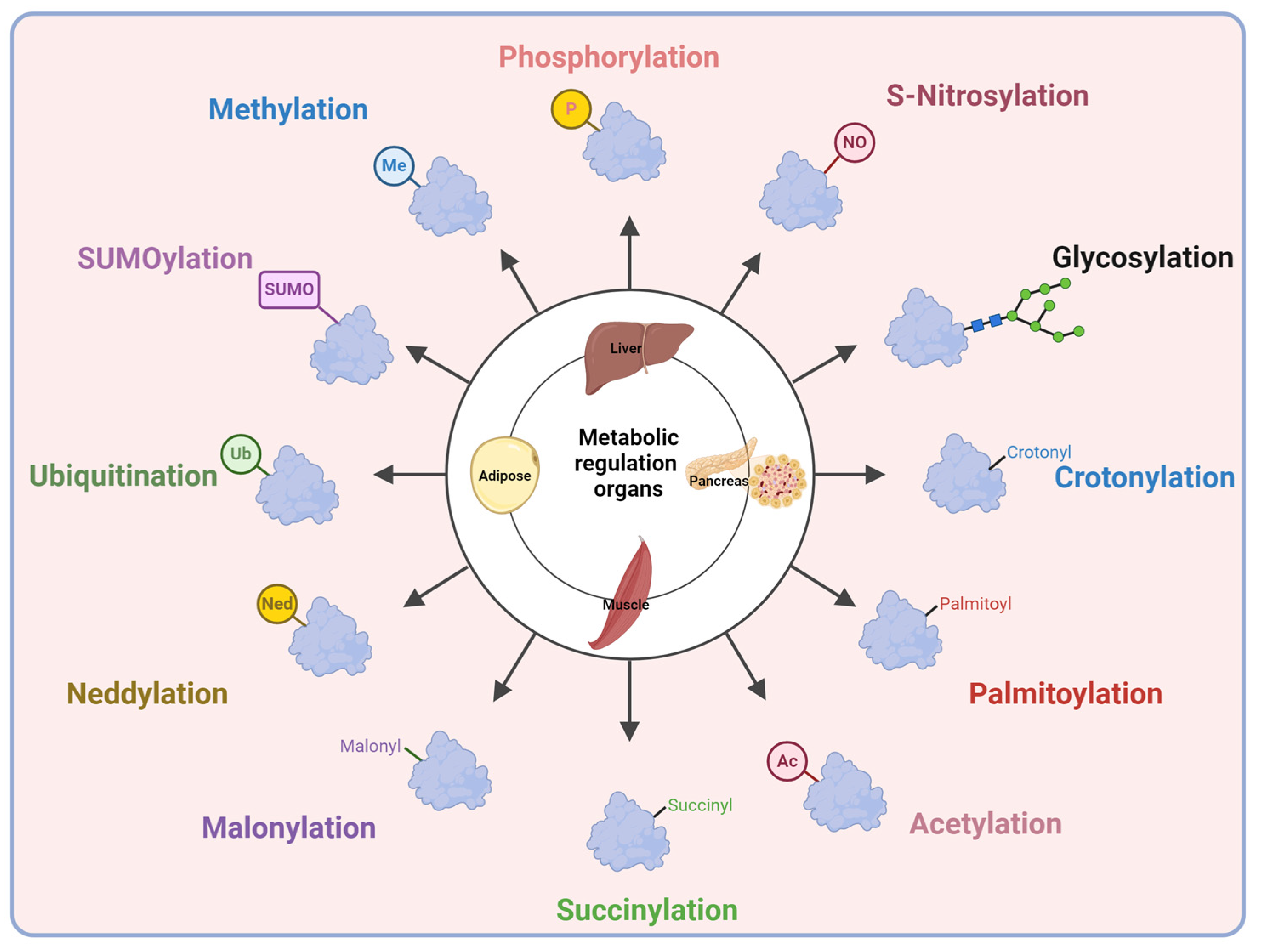
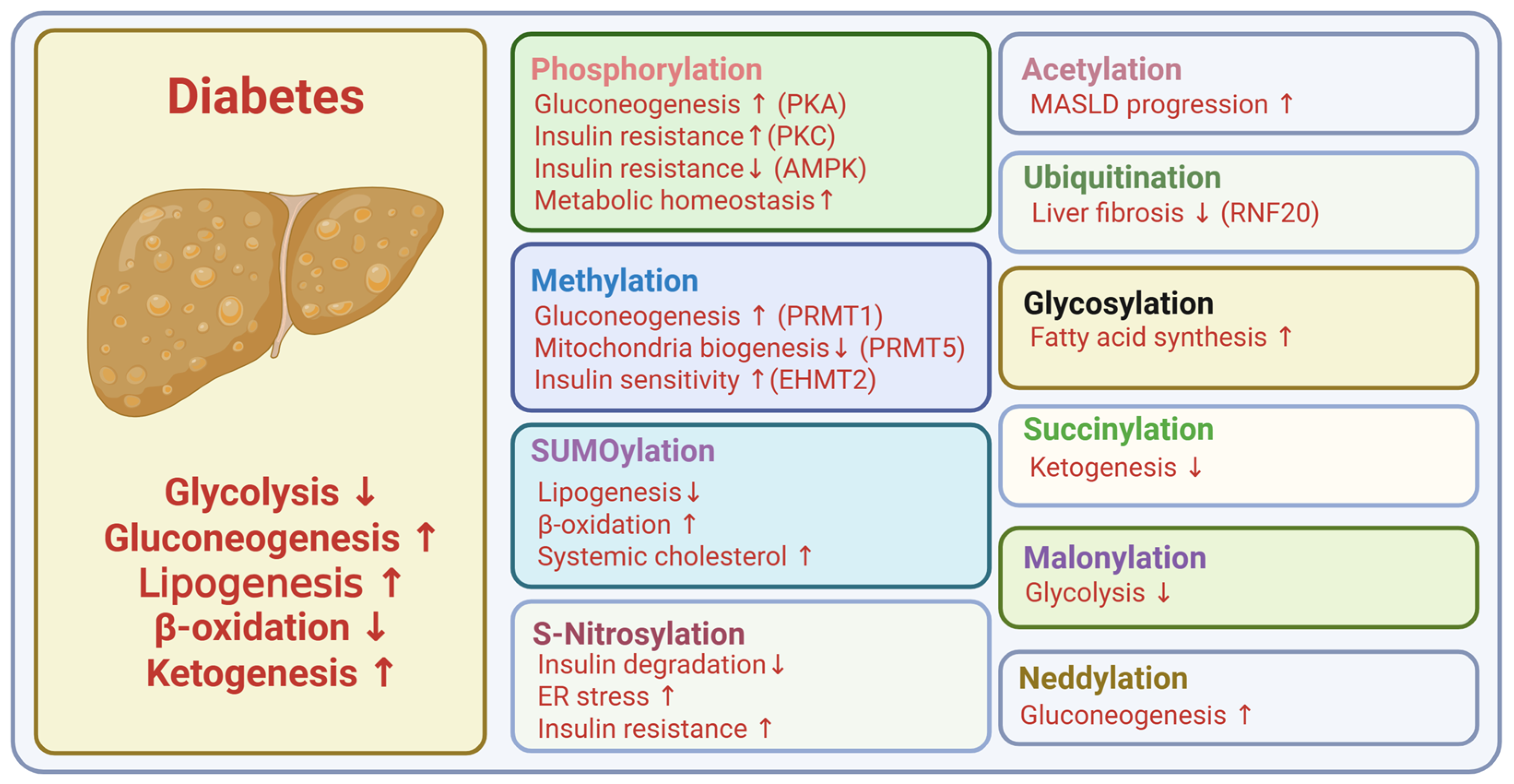
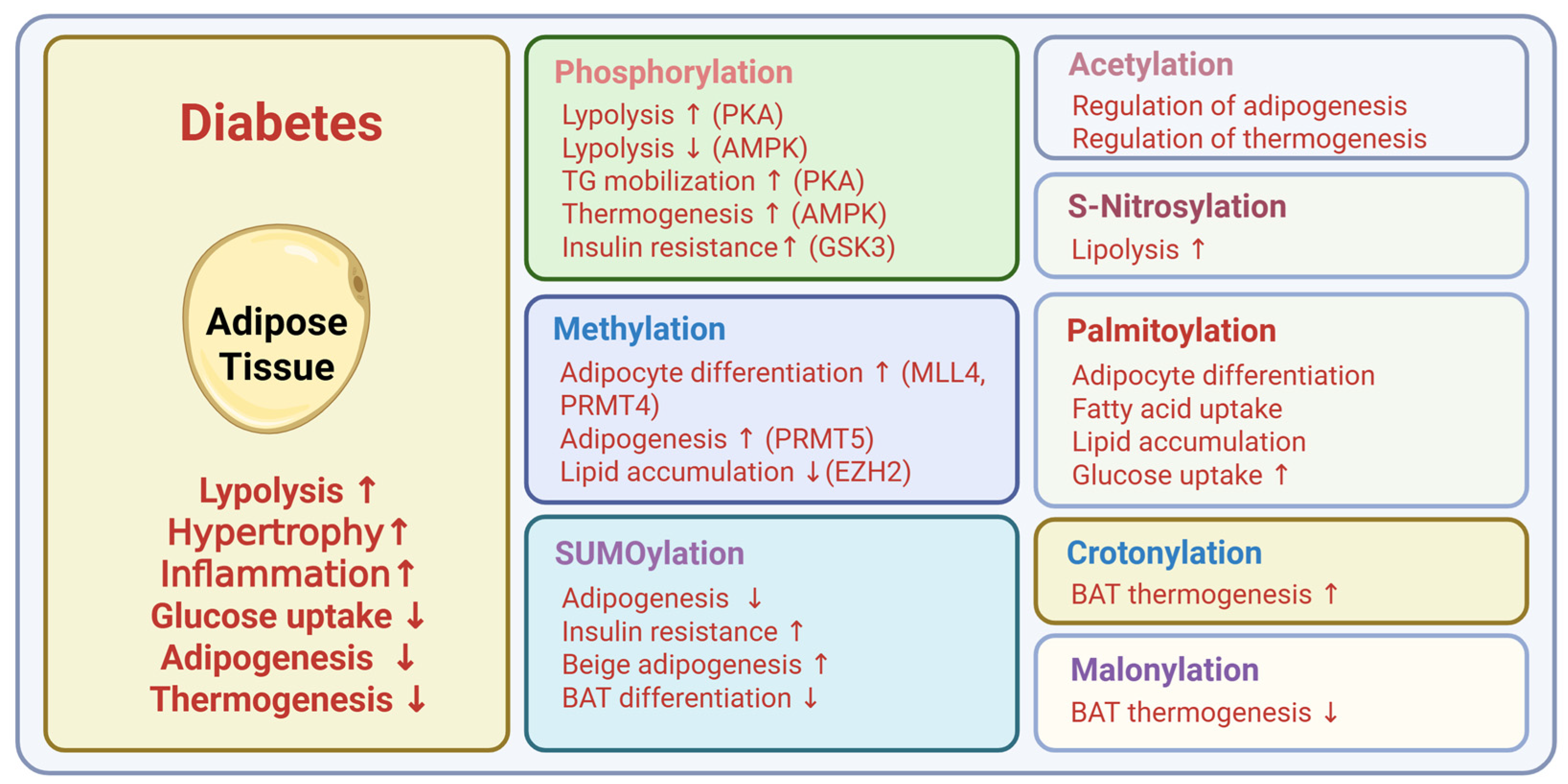
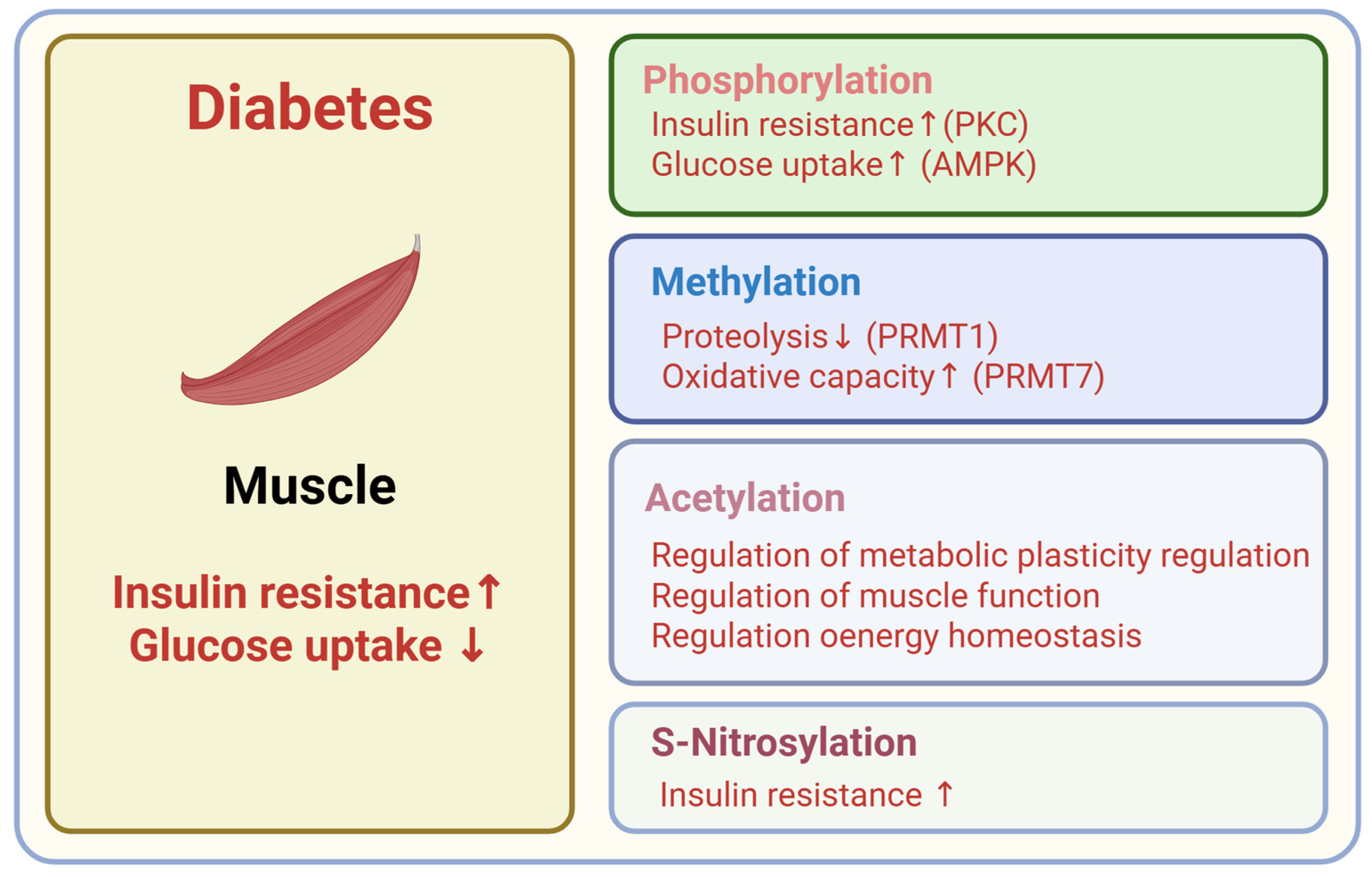
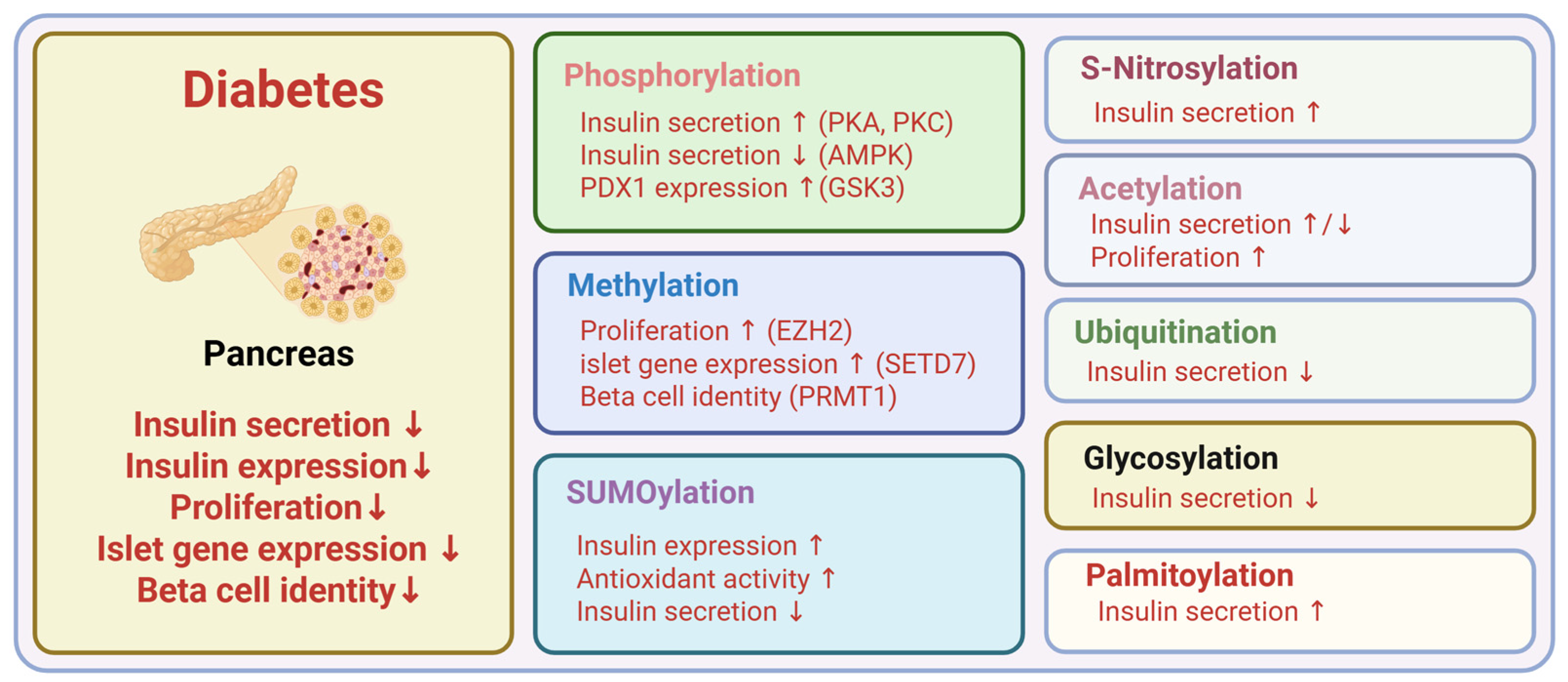
The liver, adipose tissue, skeletal muscle, and pancreatic beta cells are central regulators of whole-body energy metabolism and represent the major sites of insulin action and secretion (Figure 2). Hepatic PTMs modulate insulin signaling pathways, gluconeogenic enzymes, and lipid metabolism, which directly influence hepatic glucose production (Figure 3). PTMs in adipose tissue regulate adipokine secretion, lipolysis, and inflammatory signaling that feed back on systemic insulin sensitivity (Figure 4). Within skeletal muscle, PTMs affect insulin-stimulated glucose transport, cytoskeletal organization, and mitochondrial function, which are key determinants of peripheral glucose disposal (Figure 5). In pancreatic beta cells, PTMs fine-tune GSIS, ER and mitochondrial stress responses, and the maintenance of beta cell identity and survival (Figure 6). Focusing on PTMs in these four tissues is therefore essential to understand how nutrient and hormonal cues are converted into molecular signals that support metabolic homeostasis or promote progression to diabetes.

4.1. Phosphorylation

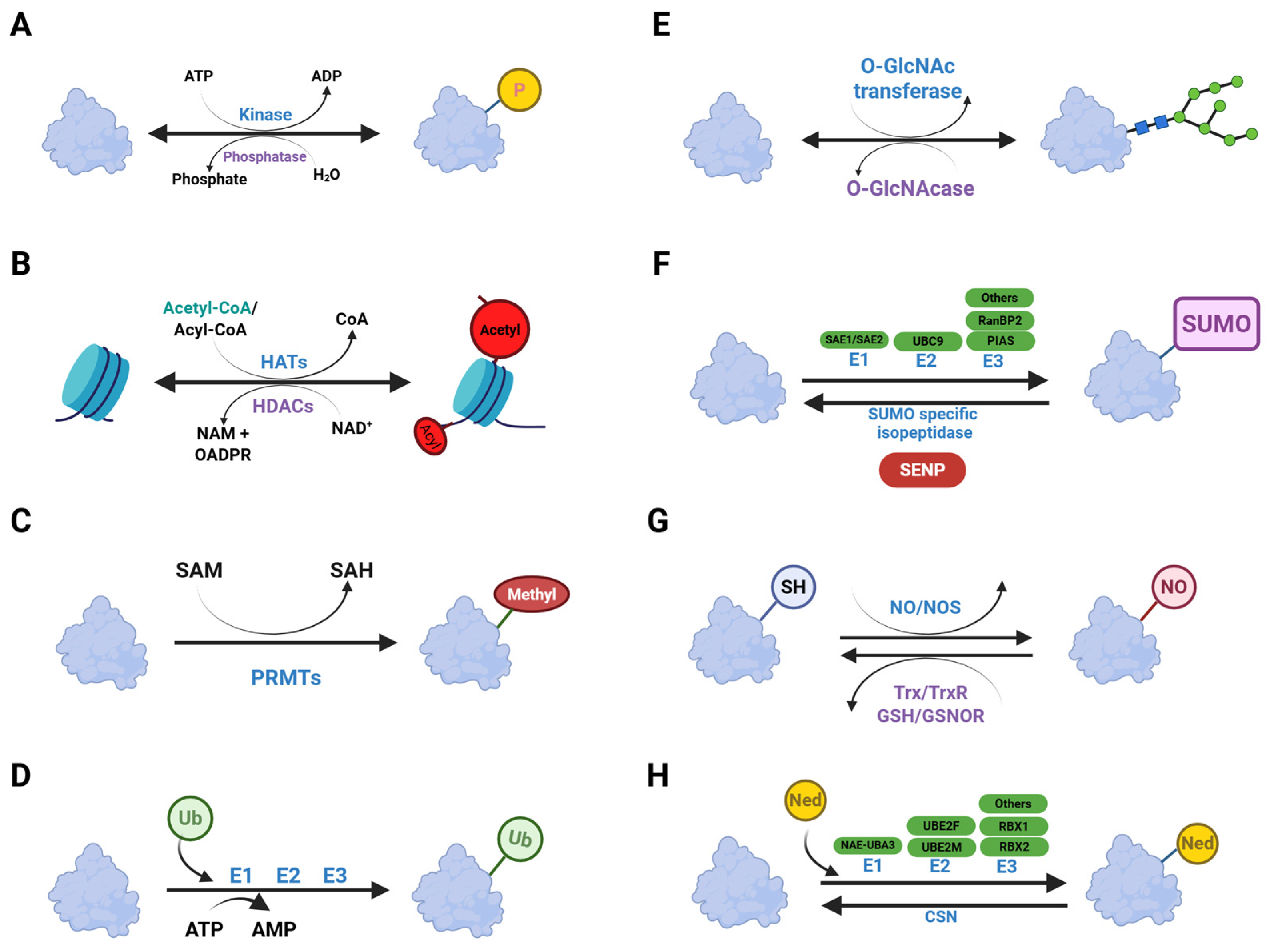
Phosphorylation is the covalent attachment of a phosphate group to specific amino acid residues, catalyzed by protein kinases. This modification regulates protein activity and interactions [55]. Phosphorylation is broadly involved in various regulatory processes, such as membrane transport, protein degradation, modulation of enzyme activity, and protein-protein interactions [55,56]. Protein phosphorylation is among the most prevalent and functionally significant PTMs [56,57]. This modification is reversible and tightly regulated by the coordinated actions of protein kinases and phosphatases (Figure 7A).
Protein kinase A (PKA) and protein kinase C (PKC) couple nutrient and hormonal cues to metabolic programs across the liver, adipose tissue, skeletal muscle, and pancreatic beta cells. PKA is the principal effector of cAMP downstream of glucagon and catecholamine signaling and promotes hepatic gluconeogenesis [58,59,60]. In adipose tissue, PKA phosphorylates perilipin and hormone-sensitive lipase to stimulate lipolysis and mobilize stored triacylglycerol [61]. PKA signaling also supports thermogenic programming in brown and beige fat in part through pathways that induce PGC-1α and UCP1 [62,63]. In pancreatic beta cells, PKA enhances Ca2+ entry, vesicle priming, and exocytotic competence to potentiate GSIS [64]. PKC isoforms are organized into conventional, novel, and atypical classes with distinct lipid and Ca2+ sensitivities and they integrate diacylglycerol and lipid-derived signals with metabolic control [65]. Lipid-activated PKCθ in skeletal muscle and PKCε in liver impair insulin receptor signaling and contribute to insulin resistance in nutrient excess [66,67]. Hepatic PKCδ and PKCβ promote steatotic and lipogenic programs and are linked to dysregulated lipid handling and VLDL-related adaptations [68,69,70]. In adipose tissue, PKC signaling modulates lipolysis, adipogenesis, and inflammatory tone, and in beta cells PKC activity regulates the kinetics of biphasic insulin secretion [65,71].
AMP-activated protein kinase (AMPK) is a central energy sensor that restores metabolic homeostasis by promoting catabolic pathways and restraining anabolic programs across liver, adipose tissue, skeletal muscle, and pancreatic beta cells [72]. AMPK suppresses mTORC1 through phosphorylation of TSC2 and Raptor and it promotes autophagy via direct phosphorylation of ULK1 [73,74]. In the liver, AMPK coordinates lipid and glucose metabolism to support insulin sensitivity and limit steatosis. Pharmacologic or genetic activation of hepatic AMPK improves metabolic homeostasis in preclinical models, whereas reduced AMPK activity under nutrient excess is associated with lipogenic drive and hepatocellular stress [75,76,77,78]. In skeletal muscle, AMPK activation increases glucose uptake through GLUT4 translocation during contraction or pharmacologic stimulation [79]. In adipose tissue, AMPK supports thermogenic programming and browning while maintaining mitochondrial homeostasis in brown and beige fat [80,81]. AMPK also restrains adipocyte lipolysis by phosphorylating hormone-sensitive lipase and counteracting PKA-dependent activation [82,83]. In pancreatic beta cells, glucose suppresses AMPK activity, and AMPK activation can restrain insulin secretion and affect beta cell proliferation and survival [84,85,86].
Recent advances in phosphoproteomics now enable system-wide mapping of insulin-responsive phosphorylation with tissue and disease resolution. In pancreatic islets, integrated proteomic and phosphoproteomic analyses have uncovered substantial remodeling of critical signaling pathways in islets affected by type 2 diabetes [87]. In adipose tissue, profiling across insulin-resistance models shows attenuation of canonical insulin-responsive sites. MARK2/3 and GSK3 dysregulation is a shared hallmark, and acute GSK3 inhibition partially restores insulin sensitivity [88]. In human skeletal muscle, personalized phosphoproteomics identifies the deubiquitinase MINDY1 as a modulator of insulin action that alters insulin-stimulated signaling and glucose uptake [89].
It has long been proposed that abnormal phosphorylation of islet proteins plays a key role in the onset and progression of type 2 diabetes. Glycogen synthase kinase 3 (GSK3) is a critical regulator of the beta cell transcription factor PDX1, which is essential for glucose sensing and insulin secretion [87,90]. Maintenance of ER homeostasis is vital for proper beta cell function, and its disruption induces ER stress and activates the unfolded protein response (UPR) [91]. Protein kinase R–like ER kinase (PERK), a key UPR component, senses ER stress and phosphorylates the α-subunit of eukaryotic translation initiation factor 2 (eIF2α), resulting in a reduction in global protein synthesis [91,92].

4.2. Acetylation

Histone acetylation is primarily regulated by the opposing actions of histone acetyltransferases (HATs) and histone deacetylases (HDACs). Three main families of HATs—GNAT, MYST, and p300/CBP—have been identified, all of which utilize acetyl-coenzyme A (Acetyl-CoA) as the donor of the acetyl group. Some of the studies have demonstrated that proper regulation of histone acetylation is crucial for the proliferation and functional maintenance of pancreatic beta cells [93]. HDACs are metalloenzymes categorized into three major classes, based on their sequence similarity to yeast deacetylase proteins [94,95,96,97,98,99]. Class I HDACs, which include HDAC1, HDAC2, HDAC3, and HDAC8, are homologous to the yeast transcriptional regulator Rpd3 (reduced potassium dependency 3). Class II HDACs are further subdivided into class IIa—comprising HDAC4, HDAC5, HDAC7, and HDAC9—and class IIb, which includes HDAC6 and HDAC10, both sharing structural similarities with yeast Hda1 (histone deacetylase I) (Figure 7B).
Skeletal muscle, the largest organ system in mammals and the primary site of glucose disposal and energy metabolism, plays a central role in maintaining systemic homeostasis [100]. Beyond its contractile functions, skeletal muscle acts as a dynamic metabolic hub that integrates nutrient sensing, energy expenditure, and inter-organ communication [101]. Epigenetic regulation, particularly histone acetylation, has emerged as a fundamental mechanism by which chromatin architecture and transcriptional networks are remodeled to support these diverse functions [102]. The balance between histone acetyltransferases and deacetylases dynamically modulates acetylation states, thereby shaping chromatin accessibility and enabling context-specific transcriptional programs that govern skeletal muscle metabolic plasticity [103]. Such regulation is critical during physiological adaptations, including exercise-induced remodeling, fasting–feeding cycles, and thermogenic responses, as well as in pathological contexts such as insulin resistance, sarcopenia, and type 2 diabetes. By linking environmental cues to gene expression, histone acetylation serves as a key epigenomic mechanism that integrates metabolic signals with skeletal muscle function and systemic energy homeostasis [104,105].
Over the past decade, the escalating prevalence of obesity and its related metabolic disorders has emerged as a critical global health concern. To address the heightened morbidity and mortality associated with the obesity epidemic, a wide range of therapeutic strategies have been explored. Recent advances in adipocyte biology have underscored the potential of thermogenic adipose tissue as a powerful modulator of systemic metabolism and a promising target for alleviating metabolic dysfunction. Concurrently, epigenetic research has revealed that histone acetylation plays a pivotal role in regulating adipogenesis and thermogenesis, thereby highlighting the essential functions of HATs and HDACs in controlling metabolism and maintaining systemic energy homeostasis [106,107].
In the liver, acetylation and deacetylation modifications at histone sites H3K9, H3K27, and H4K8 are primarily associated with the regulation of protein expression and silencing. Histone acetylation can promote the progression of Metabolic dysfunction-associated steatotic liver disease (MASLD) by enhancing ChREBP-mediated lipogenesis and facilitating fat accumulation through pathways involving NR4A1, LncRNA-NEAT1, and SCD [108,109,110]. Conversely, deacetylases such as Sirt1 and Sirt6 inhibit MASLD progression by suppressing PNPLA3-associated oxidative stress and mitigating fat accumulation linked to Smad3 signaling [111,112,113]. Although Sirt1 and Sirt6 were initially characterized as NAD-dependent histone deacetylases, accumulating evidence indicates that members of the Sirtuin family also deacetylate non-histone substrates and in this way modulate hepatic fatty acid oxidation, lipid synthesis, and triglyceride storage. More broadly, acetylation and deacetylation of non-histone proteins, including metabolic enzymes, transcription factors, and organelle-associated proteins, represent key mechanisms in MASLD progression and have attracted considerable attention as potential therapeutic targets [114].
Numerous studies have explored the function of HDACs in pancreatic beta cells, yielding mixed findings. However, inhibition of HDACs in cell lines and rodent islets has been shown to protect beta cells from cytokine-induced damage and promote their proliferation [115,116,117,118]. Moreover, mice with an inducible, beta cell-specific deletion of HDAC3 using the MIP-CreERT system exhibited improved glucose tolerance and enhanced insulin secretion [119]. In contrast, mice with a constitutive beta-cell-specific deletion of HDAC3 driven by the Rip-Cre system showed impaired beta-cell function [120]. The varying outcomes of these studies suggest that HDACs play a more intricate role than previously recognized. A dynamic equilibrium between HAT and HDAC activities may serve as a molecular rheostat, enabling cells to sense metabolic states and adjust their responses accordingly.

4.3. Methylation

Protein methylation is a widespread post-translational modification in which monomethyl, dimethyl, or trimethyl groups are added to lysine and arginine residues, modulating protein conformation, interaction surfaces, and chromatin binding. Lysine methylation is written by SET-domain lysine methyltransferases and erased by FAD-dependent KDM1A/B and Fe2+- and 2-oxoglutarate–dependent JmjC dioxygenases, with KDM1A/B acting on mono- and dimethylated lysines but not trimethylated sites. Arginine methylation is catalyzed by protein arginine methyltransferases (PRMTs) and is regulated by PRMT activity and substrate turnover (Figure 7C) [121,122,123]. In metabolic tissues, protein methylation regulates transcriptional and signaling pathways fundamental to glucose and lipid homeostasis, including PDX1-dependent islet programs, AKT and FOXO signaling, PPARγ-driven adipogenesis, and mitochondrial biogenesis. Nutrient and hormonal cues remodel methylation by altering enzyme abundance, cofactor availability, and subcellular localization, coupling cellular redox and metabolic status to gene regulation.
Protein methylation contributes to hepatic glucose and lipid metabolism by regulating key transcriptional and signaling pathways. PRMT1 promotes hepatic glucose production through FoxO1-dependent transcription. Arginine methylation of FOXO factors antagonizes AKT-mediated phosphorylation and sustains FOXO activity. This modification links methylation to hepatic control of gluconeogenesis [124,125]. PRMT5 inhibition increases mitochondrial biogenesis, elevates PPARα and PGC-1α, and reduces PI3K–AKT signaling [126]. Hepatic G9a/EHMT2, a histone H3K9 mono- and dimethyltransferase, supports insulin signaling and maintains HMGA1 and insulin receptor expression. Loss of G9a lowers INSR and reduces AKT and GSK3β phosphorylation, whereas hepatic G9a restoration in db/db mice raises HMGA1 and improves glycemic control [127].
In adipose tissue, protein methylation regulates adipocyte differentiation, lipid storage, and systemic metabolism. MLL4 (KMT2D), an H3K4 mono- and dimethyltransferase, is required for enhancer activation during cell differentiation. Loss of MLL4 reduces H3K4me1 and H3K27ac as enhancers and blunts induction of lineage-specific genes [128]. CARM1 (PRMT4) is an arginine methyltransferase that modifies histone H3 and functions as a transcriptional coactivator. CARM1 cooperates with PPARγ at metabolic promoters to promote adipocyte differentiation, and its deficiency lowers lipid-metabolism gene expression, reduces brown fat development, and impairs adipogenesis [129]. PRMT5 promotes adipogenesis by inducing PPARγ2 and its target genes and, in white adipose tissue, regulates fatty-acid metabolism and lipid-droplet biogenesis [130,131]. EZH2, the catalytic subunit of Polycomb repressive complex 2 (PRC2), mediates H3K27 trimethylation and acts as a transcriptional repressor. In adipose tissue, EZH2 regulates adipocyte lipid metabolism independently of adipogenic differentiation, and genetic or pharmacologic EZH2 inhibition increases ApoE and enhances lipoprotein-dependent lipid accumulation in adipocytes [132].
Methylation influences muscle homeostasis and energy metabolism. PRMT1 maintains skeletal muscle integrity by counteracting a PRMT6–FOXO3 axis that drives autophagy and proteolysis [133]. PRMT7 sustains oxidative metabolism through a p38MAPK–ATF2–PGC-1α signaling axis, and Prmt7 deficiency lowers oxidative capacity and predisposes to age-related obesity [134].
Protein methylation regulates beta cell proliferation, identity, and insulin secretion. EZH2, the H3K27 methyltransferase of Polycomb repressive complex 2, represses the Ink4a/Arf locus in pancreatic beta cells. Beta cell–specific Ezh2 loss derepresses p16Ink4a and p19Arf, reduces proliferative capacity, and impairs regenerative responses in diabetic settings [135]. SETD7 (also known as SET7/9), an H3K4 methyltransferase, maintains euchromatin and supports transcription at islet-enriched genes in beta cells. It methylates PDX1 and enhances its transcriptional activity at target loci, reinforcing islet gene expression programs [136,137]. PRMT1 preserves mature beta cell identity by maintaining H4R3me2a-dependent chromatin accessibility at CTCF and beta cell transcription factor sites. Deletion of Prmt1 in beta cells rapidly depletes H4R3me2a, downregulates mature beta cell genes, and induces diabetes, which worsens under high-fat diet stress [138].

4.4. Ubiquitination

Ubiquitination is a common post-translational modification in which ubiquitin is covalently attached to target proteins. This process is facilitated by a cascade of three enzymes: E1 (ubiquitin-activating), E2 (ubiquitin-conjugating), and E3 (ubiquitin ligases). Ubiquitin (Ub) is a highly conserved 76-amino-acid protein and contains seven lysine residues (K6, K11, K27, K29, K33, K48, and K63), each capable of assembling distinct polyubiquitin chains with specific functional consequences (Figure 7D) [139,140]. Extensive research has demonstrated that ubiquitination plays a pivotal role in a wide range of physiological and pathological processes, including transcriptional regulation, cell proliferation, apoptosis, DNA damage repair, and immune system modulation [141,142]. A dynamic balance between ubiquitination and deubiquitination is essential for protein homeostasis and normal cellular function. Disruptions in this balance within the ubiquitin system have been linked to the development of various diseases [143,144].
In the context of MASLD progression, research on histone ubiquitination remains relatively limited, despite its crucial role in modulating chromatin architecture, recruiting effector proteins, and activating downstream chromatin regulatory pathways. Notably, overexpression of RNF20 has been shown to suppress the expression of IL-6, TNFα, and vascular endothelial growth factor A (VEGFA) through monoubiquitination of histone H2B at lysine 120. This modification effectively counteracts TGF-β–induced activation of hepatic stellate cells (LX-2) and attenuates liver fibrosis [120,145].
In the context of beta cell dysfunction and type 2 diabetes progression, a critical subset of proteins involved in insulin secretion is subject to regulation through ubiquitination-mediated degradation. Specifically, the ubiquitination-induced degradation of glucokinase impairs insulin secretion by reducing the production of glucose-6-phosphate [146]. The E3 ubiquitin ligase Hrd-1 promotes the ubiquitination and subsequent degradation of MafA in pancreatic beta cells, leading to its cytoplasmic accumulation. This mislocalization diminishes MafA’s nuclear activity and consequently reduces insulin secretion [147]. Somatostatin receptor subtype 5 (SSTR5) suppresses PDX-1 expression by downregulating Pdx-1 transcription and promoting post-translational ubiquitination of PDX-1, thereby leading to reduced insulin secretion [148]. In pancreatic beta cells, phosphorylation of PDX-1 at Thr11 by macrophage-stimulating 1 (MST1) promotes its ubiquitination and subsequent degradation, thereby impairing insulin secretion [9,149].

4.5. Glycosylation

Glycosylation is considered one of the most diverse post-translational modifications. It can occur enzymatically or through non-enzymatic glycation, where glucose in its aldehyde form reacts with lysine and arginine residues in proteins. These reactions can progress to form advanced glycation end products (AGEs), which play significant roles in aging and are particularly relevant in the context of diseases such as diabetes [150]. Protein glycosylation is a complex, multi-step process involving approximately 200 glycosyltransferase enzymes. These enzymes regulate which proteins are glycosylated, determine the specific sites of glycan attachment, and orchestrate the assembly of distinct glycan structures [150,151]. Research on glycosylation enzyme deficiencies in both animal models and human diseases has significantly deepened our understanding of the biological roles of protein glycosylation. These studies have shown that most glycosyltransferases are crucial for maintaining normal physiological functions in mammals [152,153,154].
Earlier studies indicated that elevated levels of O-GlcNAcylation—arising from increased expression of O-GlcNAc transferase (OGT) or inhibition of O-GlcNAcase (OGA)—may contribute to insulin resistance via the hexosamine biosynthetic pathway (HBP) (Figure 7E) [155]. O-GlcNAcylation of insulin receptor substrate 1 (IRS-1) has been shown to impair AKT signaling, thereby contributing to the development of insulin resistance [156]. Studies have shown that O-GlcNAcylation of PDK1 and AKT impairs the insulin signaling pathway, further contributing to insulin resistance [157,158]. High intracellular glucose levels enhance flux through the hexosamine biosynthetic pathway (HBP), resulting in increased protein O-GlcNAcylation [159]. This elevated O-GlcNAcylation in peripheral tissues, including pancreatic islets, has been linked to the pathogenesis of diabetes.
MASLD is a metabolic liver disorder closely linked to hepatic nutrient metabolism. Conditions such as obesity and type 2 diabetes can promote hepatic triglyceride accumulation, which serves as a key driver of MASLD development [160,161]. Furthermore, Metabolic dysfunction-associated steatohepatitis represents the most severe form of MASLD and is recognized as a critical precursor to the onset of cirrhosis and hepatocellular carcinoma (HCC). As a key nutrient sensor, O-GlcNAcylation modulates hepatic triglyceride accumulation by regulating upstream glucose uptake, downstream fatty acid synthesis, and additional metabolic pathways. It has been reported that O-GlcNAc modification of fatty acid synthase (FAS) enhances its interaction with the deubiquitinase ubiquitin-specific protease 2a (USP2A), thereby reducing ubiquitin-mediated degradation and increasing FAS expression, which promotes fatty acid synthesis [162]. Additionally, carbohydrate-responsive element-binding protein (ChREBP) and sterol regulatory element-binding protein 1c (SREBP1c), key regulators of FAS expression, are influenced indirectly by O-GlcNAcylation. Through modification of liver X receptors (LXRs), O-GlcNAcylation enhances the transcription of ChREBP and SREBP1c, thereby upregulating FAS expression and promoting fatty acid synthesis [163,164,165].
O-GlcNAcylation plays a pivotal role in maintaining glucose homeostasis and insulin sensitivity in skeletal muscle, thereby conferring metabolic plasticity that allows adaptation to variations in nutrient availability and physiological cues. However, the global patterns of O-GlcNAcylation in skeletal muscle are highly complex and are influenced by factors such as muscle fiber type, inactivity, rest, and exercise modalities, including type and intensity [166]. O-GlcNAc transferase (OGT) is the sole enzyme in the human genome responsible for attaching a single O-GlcNAc moiety to serine and threonine residues of target proteins. Metabolic homeostasis is closely intertwined with O-GlcNAc cycling, with the hexosamine biosynthesis pathway (HBP) providing UDP-GlcNAc as a substrate for OGT [50,167]. Notably, adipocyte-specific OGT has been reported to reactivate lipid desaturation, resulting in increased accumulation of endocannabinoids within adipose tissue. Nevertheless, it remains unclear whether OGT in adipocytes affects hepatic stellate cell (HSC) differentiation, particularly under obesity-prone conditions [168,169].
Pancreatic beta cells exhibit high levels of O-GlcNAc and its modifying enzyme O-GlcNAc transferase (OGT), and O-GlcNAcylation has been shown to be essential for proper beta cell function [159,170]. Notably, in Goto-Kakizaki (GK) rats—a model of type 2 diabetes—pharmacological enhancement of O-GlcNAcylation in pancreatic islets leads to impaired GSIS, highlighting the critical role of O-GlcNAcylation in the regulation of insulin secretion [171]. Since O-GlcNAcylation targets serine and threonine residues, it can potentially compete with phosphorylation at the same sites, including those modified by PKA [172,173].

4.6. Acylation

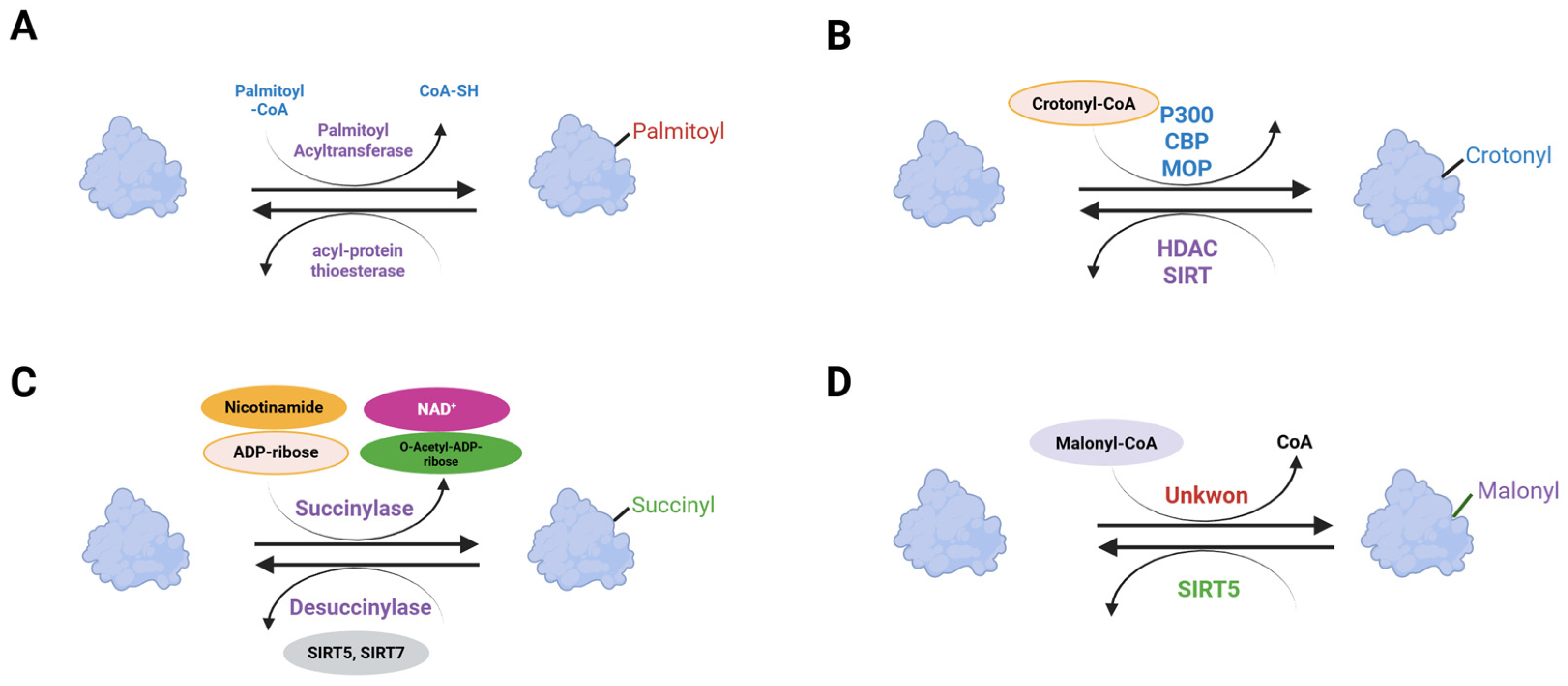
Protein acylation is the covalent attachment of acyl groups that couples nutrient status to signaling, gene regulation, and membrane dynamics. S-acylation adds long-chain fatty acids via zDHHC acyltransferases and is reversed by the thioesterases APT1 and APT2, which control receptor trafficking, vesicle fusion, and compartmentalized signaling. Lysine acylations—including malonylation, succinylation, and crotonylation—use acyl-CoA donors, are written by acyltransferases, and are erased mainly by sirtuins (Figure 8). This couples these marks to acyl-CoA and NAD+. Across metabolic tissues, acylation regulates chromatin and mitochondrial pathways and modulates transporter localization, enzyme activity, insulin secretion and response, and lipid homeostasis [174,175].
Palmitoylation is the reversible attachment of palmitate to cysteine residues and regulates receptor maturation, signaling, and membrane trafficking in metabolic tissues. Early biochemical work showed that insulin and IGF-1 receptors carry covalently bound palmitate on the receptor beta subunit. This finding suggested roles for S-acylation in receptor maturation and signaling [176]. Palmitoylation supports insulin secretion and receptor trafficking in pancreatic beta cells. SNAP-25 requires cysteine palmitoylation for plasma membrane targeting and efficient exocytosis [177]. GLP-1 receptor agonists induce C-terminal palmitoylation, which promotes nanodomain clustering and endocytosis, and modulators of this process alter insulin secretion [178]. APT1 (acyl-protein thioesterase 1) is a cytosolic thioesterase that depalmitoylates S-acylated proteins and terminates palmitoylation cycles. In pancreatic beta cells, APT1-dependent depalmitoylation restrains palmitoylation-driven exocytosis, and APT1 deficiency in human islets and mouse models causes insulin hypersecretion followed by progressive beta cell failure [179]. In adipocytes, palmitoylation is a key regulator of signaling, differentiation, and fatty acid uptake. AKT palmitoylation at Cys344 supports phosphorylation and is required for adipocyte differentiation [180]. Dynamic palmitoylation controls CD36 trafficking and function in adipocytes and couples membrane residency and endocytosis to fatty acid uptake. DHHC4 and DHHC5 maintain this cycle from distinct compartments, and disruption of palmitoylation reduces adipocyte fatty acid uptake and limits lipid accumulation [181,182]. In addition, palmitoylation also regulates glucose transporter trafficking and insulin signaling complexes in adipocytes. DHHC7 palmitoylates GLUT4 at Cys223 and is required for insulin-stimulated GLUT4 membrane translocation and glucose uptake [183]. Insulin drives a caveolin-2 palmitoylation cycle via APT1 and ZDHHC21 that organizes IR–Cav-2–IRS1–AKT signaling and promotes glucose uptake and lipogenesis [184].
Crotonylation is a lysine acylation that uses crotonyl-CoA as a donor and is enriched on histones where it regulates transcriptional activity. The mark is reversible and is recognized by reader modules, linking metabolic state to chromatin function. SIRT1, SIRT2, and SIRT3 function as histone decrotonylases, and SIRT3 has been shown in cells to regulate histone crotonylation and gene expression [185,186]. In beige adipocytes, HDAC1 removes H3K18 crotonylation at Pgc1a and Ucp1 enhancers and promoters, lowering thermogenesis, whereas HDAC1 inhibition enriches crotonylation and enhances energy expenditure in vivo [187].
SIRT5 is an NAD+-dependent lysine desuccinylase and demalonylase that removes acidic acylations from mitochondrial proteins and establishes sirtuins as regulators of non-acetyl acylations [188]. Proteome-wide analyses in mouse liver show widespread lysine malonylation that increases with Sirt5 deficiency. Glycolysis is a principal target, and Sirt5 loss reduces glycolytic flux [189]. Additionally, diabetic mouse liver shows broad lysine malonylation across enzymes involved in glycolysis, gluconeogenesis, and lipid metabolism [190]. In parallel, SIRT5 acts as the predominant mitochondrial desuccinylase. Proteome-wide analyses show that lysine succinylation is widespread and regulated by SIRT5. SIRT5 desuccinylates subunits of the pyruvate dehydrogenase and succinate dehydrogenase complexes and modulates mitochondrial respiration [191]. In liver, SIRT5 also targets HMGCS2, and lysine-to-glutamate mutation at hypersuccinylated sites reduces its activity, which supports a role for SIRT5 in hepatic ketogenesis [192]. In brown adipose tissue, SIRT5 restrains mitochondrial succinylation and malonylation, with UCP1 as a key substrate. BAT-specific Sirt5 loss increases acylation, destabilizes UCP1, impairs respiration and mitophagy, and reduces thermogenic capacity [193].

4.7. SUMOylation

Small ubiquitin-like modifier (SUMO) conjugation is a reversible post-translational modification in which SUMO proteins are covalently attached to specific lysine residues of target substrates. This modification alters protein stability, controls intracellular trafficking, and regulates transcriptional activity. The conjugation reaction proceeds through a hierarchical cascade of E1-activating, E2-conjugating, and E3-ligating enzymes, whereas SUMO-specific proteases (SENPs) remove SUMO to preserve dynamic balance. Through this regulated cycle, SUMOylation modulates essential cellular pathways such as transcriptional regulation, DNA damage repair, cell-cycle progression, and stress responses (Figure 7F). In metabolic tissues, SUMOylation functions as a nutrient- and stress-sensitive hub that coordinates hormonal signals with transcriptional programs and metabolic homeostasis [194,195,196].
In the liver, SUMOylation integrates nutrient signals with lipid metabolism and fasting responses. Dysregulation of this process accelerates lipogenesis and MASLD progression. PIASy-mediated SUMOylation of SREBP-1c promotes its degradation and suppresses lipogenesis, whereas PIASy loss enhances hepatic steatosis [197]. Nutritional stress–induced deSUMOylation of FoxA1 reduces Sirt6 expression and fatty-acid oxidation, accelerating steatosis [198]. SUMOylation of Prox1 functions as a nutrient-sensitive switch that declines during fasting but is blunted in obesity, and hepatocyte-specific knock-in of a SUMO-deficient Prox1 lowers systemic cholesterol [199]. In contrast, defective SUMOylation of LRH-1 under lipogenic conditions activates lipogenic programs and exacerbates MASLD [200].
Adipose SUMOylation regulates pathways essential for maintaining systemic insulin sensitivity under nutritional stress. SENP2 promotes adipogenesis and lipid storage by counteracting repressive histone marks, preserving lipid-storage capacity and preventing ectopic lipid accumulation. Loss of SENP2 reduces adipogenic potential and predisposes to insulin resistance under high-fat diet conditions [201]. UBC9-dependent SUMOylation of ER proteins, including ERp44, aggravates ER stress and metabolic dysfunction, whereas disruption of this modification alleviates stress and protects against diet-induced insulin resistance [202]. In thermogenic adipose depots, SENP2 promotes brown adipocyte differentiation by suppressing Necdin and limits browning of white adipose tissue by deconjugating SUMO from C/EBPβ [203,204].
In pancreatic beta cells, SUMOylation functions as a central regulatory mechanism linking transcriptional control, stress adaptation, and survival. It stabilizes key regulators of the insulin gene and maintains the balance between conjugation and deconjugation. PDX1, a master regulator of beta cell identity and insulin transcription, is SUMOylated by SUMO-1, which promotes nuclear retention and enhances insulin transcriptional activity [205]. MafA, a beta-cell–specific transcription factor required for glucose-responsive insulin expression, is SUMO-1/2–modified at Lys32. This modification increases under low glucose or oxidative stress and reduces insulin promoter activation [206]. Ubc9, the sole E2-conjugating enzyme in the SUMO pathway, transfers SUMO to substrates and is essential for beta cell homeostasis. Its deletion triggers ROS-driven beta cell death and diabetes, whereas overexpression enhances NRF2-dependent antioxidant defense but suppresses insulin secretion [207]. Enhanced SUMOylation protects beta cells from IL-1β-induced apoptosis, reduces iNOS expression, caspase-3 cleavage, and NF-κB nuclear entry. Conversely, SENP1 overexpression impairs insulin secretion and promotes beta cell apoptosis [208].
Beyond transcriptional regulation and survival, SUMOylation modulates key steps in GSIS. SUMO-1 modification of the voltage-gated K+ channel Kv2.1 reduces conductance and membrane excitability, an effect enhanced by Ubc9 and reversed by SENP1 [209]. SUMOylation suppresses post-docking insulin exocytosis in rodent and human beta cells, and deSUMOylation reverses this effect to promote secretion [210,211]. The isocitrate–SENP1 pathway amplifies glucose-stimulated insulin exocytosis [212]. SUMOylation also regulates beta cell metabolic sensing, as glucokinase modification increases its activity and stability [213], and SENP2-mediated deSUMOylation of DRP1 preserves mitochondrial function to sustain GSIS [214]. Importantly, the incretin effect in pancreatic beta cells is regulated by SUMOylation. GLP-1R–driven cAMP generation and insulin secretion are attenuated by SUMO-1, whereas SENP1 is required for incretin-enhanced exocytosis and for maintaining oral glucose tolerance under metabolic stress [215,216].
SUMOylation maintains metabolic homeostasis by regulating hepatic lipid metabolism, insulin secretion in beta cells, and lipid storage and thermogenesis in adipose tissue. Dysregulation of this pathway contributes to insulin resistance and MASLD, establishing SUMOylation as a promising therapeutic target in metabolic disease.

4.8. S-Nitrosylation

S-nitrosylation is a reversible, redox-dependent post-translational modification in which a nitric oxide (NO) group covalently attaches to specific cysteine residues to form S-nitrosothiols. Cellular S-nitrosylation is regulated by nitric oxide synthases, protein-to-protein transnitrosylation, and denitrosylating systems such as GSNOR and thioredoxin (Figure 7G). It modulates protein conformation, activity, localization, and interactions in a site-specific manner and links oxidative signaling to core metabolic pathways. In metabolic tissues, S-nitrosylation intersects with insulin signaling and nutrient homeostasis [217,218].
S-nitrosylation disrupts key processes of hepatic insulin regulation and metabolic homeostasis. S-nitrosylation of the insulin-degrading enzyme (IDE) inhibits its catalytic activity and impairs cellular insulin degradation [219]. SCAN (biliverdin reductase B) functions as a protein S-nitrosylase that uses S-nitroso-CoA to selectively nitrosylate the insulin receptor and IRS1, and this modulates insulin signaling [220]. Obesity-induced iNOS promotes S-nitrosylation of IRE1α, which suppresses XBP1 splicing and impairs ER function [221]. Hepatic dysfunction of the denitrosylase GSNOR elevates S-nitrosylation of lysosomal enzymes, disrupts autophagic flux, and promotes insulin resistance in obesity, whereas restoring GSNOR activity or expressing nitrosylation-resistant lysosomal proteins rescues autophagy and improves insulin action [222].
S-nitrosylation is a key mechanism linking nitric oxide signaling to insulin resistance in skeletal muscle. Acute exercise lowers iNOS and reverses S-nitrosylation of IRβ, IRS1, and AKT, and it restores early insulin signaling and insulin sensitivity in diet-induced obese rats [223]. S-nitrosylation of AKT at Cys224 suppresses kinase activity and is elevated in db/db mice [224]. LPS-induced iNOS drives nitrosylation of IRβ, IRS1, and AKT, which blunts insulin-stimulated phosphorylation and causes insulin resistance [225]. Proteomic analysis reveals nearly 500 nitrosylated cysteine sites across mitochondrial, contractile, and metabolic proteins. These widespread modifications cluster in pathways such as the TCA cycle, glycolysis, glutathione metabolism, and fatty acid oxidation, and they demonstrate that S-nitrosylation extends beyond insulin signaling to encompass core energy and redox networks in skeletal muscle [226].
In adipocytes, obesity increases protein S-nitrosylation of IRβ and AKT and is accompanied by increased iNOS and decreased thioredoxin reductase. S-nitrosylation of PDE3B at Cys768 and Cys1040 reduces insulin-stimulated PDE3B activation and weakens the anti-lipolytic action of insulin [227]. In endothelial cells, nitric oxide promotes transendothelial insulin transport and enhances tissue delivery. S-nitrosylation of protein tyrosine phosphatases such as PTP1B and SHP2 sustains endothelial insulin-receptor signaling and facilitates insulin uptake and transendothelial transport [228,229]. S-nitrosylation also operates in the nervous system to regulate central insulin action and energy balance. Obesity induces hypothalamic iNOS and S-nitrosylation of IRβ and AKT, which impairs central insulin signaling and disrupts energy balance [230].
S-nitrosylation directly modulates beta cell glucose sensing and insulin secretion. Insulin elevates nitric oxide (NO) and nitrosylates glucokinase at Cys371, changing its conformation and subcellular localization [231]. GLP-1 enhances GSIS by inducing glucokinase S-nitrosylation at Cys371, which increases enzymatic activity and promotes release from secretory granules [232]. Glucose triggers rapid S-nitrosylation of syntaxin-4 at Cys141 in human islets and MIN6 beta cells within minutes, which promotes VAMP2 binding and facilitates insulin granule exocytosis [233].

4.9. Neddylation

Neddylation is a reversible ubiquitin-like modification in which NEDD8 is conjugated to lysine residues, predominantly on cullins, by the NEDD8-activating enzyme NAE1–UBA3, the E2 conjugases UBE2M and UBE2F, and E3 ligases such as RBX1 or RBX2. Deneddylation is mediated by the COP9 signalosome through its metalloprotease subunit CSN5 (Figure 7H) [234]. Recent findings demonstrate that neddylation plays important roles in metabolic regulation. In the liver, neddylation regulates glucose homeostasis at multiple nodes. Inhibition of cullin neddylation stabilizes insulin receptor substrates, enhances hepatic insulin signaling, and lowers glucose production [235]. Fasting induces neddylation of phosphoenolpyruvate carboxykinase 1, which increases enzymatic activity and sustains gluconeogenesis, whereas disruption of this modification reduces hepatic glucose output and improves glycemic control [236]. In obesity, macrophage UBE2M-mediated neddylation of TRIM21 promotes VHL degradation, stabilizes HIF-1α, and elevates IL-1β, driving inflammation and metabolic dysfunction. Deletion of macrophage Ube2m or TRIM21 antisense therapy alleviates insulin resistance and hepatic steatosis [237].

5. Conclusions

Post-translational modifications function as integrated regulatory layers that connect metabolic inputs to transcriptional and signaling outputs across metabolic organs. These mechanisms define tractable targets for pharmacology and genetic intervention and support biomarker development that reflects pathway engagement. In type 2 diabetes, dysregulated PTM networks contribute to insulin resistance in peripheral tissues and to beta cell dysfunction, which links PTM biology directly to disease initiation and progression.
Key challenges remain. The complexity of PTM crosstalk complicates target selection and demands multiplexed readouts with temporal and spatial resolution. Precise characterization of PTM changes in defined cell types and disease stages will be crucial for the development of therapies that restore metabolic homeostasis without disrupting essential adaptive responses. Single-cell and spatial proteomics, quantitative PTM stoichiometry, and integrative multi-omics are needed to capture heterogeneity across tissues and disease stages. Chemical probes and genetic tools that selectively perturb writers, erasers, and readers will clarify pathway logic and limit off-target risk. Translational progress will benefit from human tissue-anchored studies, longitudinal cohorts with PTM biomarkers, and patient stratification that aligns pathway activity with therapeutic choice. Research in this area has the potential to identify interventions that can protect insulin secretion and insulin response organs from metabolic and inflammatory stress and to improve glycemic control in individuals with metabolic syndrome and diabetes.

Author Contributions

Conceptualization, Y.K.K. and H.K.; writing—original draft preparation, Y.K.K. and H.K.; writing—review and editing, Y.K.K. and H.K. All authors have read and agreed to the published version of the manuscript.

Funding

This work was supported by Chungnam National University Hospital Research Fund, 2021 (2021-CF-010); National Research Foundation of Korea (NRF) grant funded by the Korea government (MSIT) (RS-2023-00222910, RS-2024-00406568, RS-2025-00515615). Additional funding was provided by a grant of the Korea Health Technology R&D Project through the Korea Health Industry Development Institute (KHIDI), funded by the Ministry of Health & Welfare, Republic of Korea (RS-2020-KH088690). This work was supported by a grant from the Korea government’s Institute of Information and Communications Technology Planning & Evaluation (IITP) (RS-2022-II220965).

Institutional Review Board Statement

Not applicable.

Informed Consent Statement

Not applicable.

Data Availability Statement

No new data were created or analyzed in this study.

Acknowledgments

During the preparation of this manuscript, the authors used ChatGPT5 for the purposes of language correction. The authors have reviewed and edited the output and take full responsibility for the content of this publication.

Conflicts of Interest

The authors declare no conflict of interest.

Abbreviations

The following abbreviations are used in this manuscript:
AGEsAdvanced Glycation End products
AKTProtein Kinase B
AMPKAMP-activated Protein Kinase
APT1Acyl-protein thioesterase 1
APT2Acyl-protein thioesterase 2
CARM1Coactivator-associated arginine methyltransferase 1
CD36Cluster of Differentiation 36
ChREBPCarbohydrate-Responsive Element-Binding Protein
CTCFCCCTC-binding factor
DHHC7Zinc Finger DHHC-type Palmitoyltransferase 7
eIF2aEukaryotic Translation Initiation Factor 2 alpha
EZH2Enhancer of zeste homolog 2
FASFatty Acid Synthase
FOXOForkhead box O
GK ratsGoto-Kakizaki rats
GLUT4Glucose Transporter Type 4
GSISGlucose-Stimulated Insulin Secretion
GSK3Glycogen Synthase Kinase 3
HATsHistone Acetyl-Transferases
HCCHepatocellular Carcinoma
HDACsHistone Deacetylases
HMGA1High Mobility Group A1
IGF-1Insulin-like growth factor 1
IRS-1Insulin Receptor Substrate 1
KDM1A/BLysine Specific Histone Demethylase 1A/B
LncRNA-NEAT1Nuclear Paraspeckle Assembly Transcript 1
MafAv-maf musculoaponeurotic fibrosarcoma oncogene homolog A
MARK2MAP/Microtuble Affinity-Regulating Kinase 2
MARK3MAP/Microtuble Affinity-Regulating Kinase 3
MASLDMetabolic Dysfunction-Associated Steatotic Liver Disease
MINDY1MINDY Lysine 48 deubiquitinase 1
MIP-CreERTMouse Insulin 1 Promoter-Cre-ERT
MLL4Mixed-lineage leukemia 4
mTORMechanistic Target of Rapamycin
NR4A1Nuclear Receptor Subfamily 4, group A, Member 1
OGTO-GlcNAc Transferase
PDE3BPhosphodiesterase 3B
PDX1Pancreatic and Duodenal Homeobox 1
PERKProtein Kinase R-like ER Kinase
PGC1-aPeroxisome Proliferator-activated receptor gamma coactivator 1- alpha
PKAProtein Kinase A
PKCProtein Kinase C
PNPLA3Patatin-like phospholipase domain-containing 3
PPARγPeroxisome Proliferator-Activated Receptor gamma
PRMTsProtein Arginine Methyltransferases
PTMPost Translation Modification
RIP-CreRat Insulin Promoter-Cre
RNF20Ring Finger Protein 20
Rpd3Reduced Potassium Dependency 3
SCANBiliverdin Reductase B
SCDStearoyl-CoA Desaturase
SENP1SUMO-specific peptidase 1
SETD7SET domain-containing lysine methyltransferase 7
SIRTsSirtuins
SNAP-25Synaptosome-associated Protein 25
SREBP1cSterol Regulatory Element-Binding Protein 1c
TGF-βTransforming Growth Factor beta
TNFαTumor Necrosis Factor alpha
TSC2Tuberous sclerosis complex 2
UCP-1Uncoupling Protein 1
ULK1Unc-51 Like Autophagy Activating Kinase 1
UPRUnfolded Protein Response
USP2AUbiquitin-specific Protease 2a
VAMP2Vesicle-associated membrane protein 2
VEGFAVascular Endothelial Growth Factor A
zDHHCZinc fingers DHHC-type
ZDHHC21Zinc Finger DHHC-type Palmitoyltransferase 21

References

  1. Campbell, J.E.; Newgard, C.B. Mechanisms controlling pancreatic islet cell function in insulin secretion. Nat. Rev. Mol. Cell Biol. 2021, 22, 142–158. [Google Scholar] [CrossRef]
  2. Kim, Y.K.; Sussel, L.; Davidson, H.W. Inherent Beta Cell Dysfunction Contributes to Autoimmune Susceptibility. Biomolecules 2021, 11, 512. [Google Scholar] [CrossRef] [PubMed]
  3. Brereton, M.F.; Rohm, M.; Ashcroft, F.M. beta-Cell dysfunction in diabetes: A crisis of identity? Diabetes Obes. Metab. 2016, 18 (Suppl. S1), 102–109. [Google Scholar] [CrossRef] [PubMed]
  4. Yang, Y.H.; Wen, R.; Yang, N.; Zhang, T.N.; Liu, C.F. Roles of protein post-translational modifications in glucose and lipid metabolism: Mechanisms and perspectives. Mol. Med. 2023, 29, 93. [Google Scholar] [CrossRef]
  5. Uy, R.; Wold, F. Posttranslational covalent modification of proteins. Science 1977, 198, 890–896. [Google Scholar] [CrossRef]
  6. Lee, J.M.; Hammaren, H.M.; Savitski, M.M.; Baek, S.H. Control of protein stability by post-translational modifications. Nat. Commun. 2023, 14, 201. [Google Scholar] [CrossRef]
  7. Sharma, C.; Hamza, A.; Boyle, E.; Donu, D.; Cen, Y. Post-Translational Modifications and Diabetes. Biomolecules 2024, 14, 310. [Google Scholar] [CrossRef] [PubMed]
  8. McLaughlin, R.J.; Spindler, M.P.; van Lummel, M.; Roep, B.O. Where, How, and When: Positioning Posttranslational Modification Within Type 1 Diabetes Pathogenesis. Curr. Diabetes Rep. 2016, 16, 63. [Google Scholar] [CrossRef]
  9. Yang, C.; Wei, M.; Zhao, Y.; Yang, Z.; Song, M.; Mi, J.; Yang, X.; Tian, G. Regulation of insulin secretion by the post-translational modifications. Front. Cell Dev. Biol. 2023, 11, 1217189. [Google Scholar] [CrossRef]
  10. Doll, S.; Gnad, F.; Mann, M. The Case for Proteomics and Phospho-Proteomics in Personalized Cancer Medicine. Proteom. Clin. Appl. 2019, 13, e1800113. [Google Scholar] [CrossRef]
  11. Aslam, B.; Basit, M.; Nisar, M.A.; Khurshid, M.; Rasool, M.H. Proteomics: Technologies and Their Applications. J. Chromatogr. Sci. 2017, 55, 182–196. [Google Scholar] [CrossRef]
  12. Meng, Y.; Sandow, J.J.; Czabotar, P.E.; Murphy, J.M. The regulation of necroptosis by post-translational modifications. Cell Death Differ. 2021, 28, 861–883. [Google Scholar] [CrossRef]
  13. Patwardhan, A.; Cheng, N.; Trejo, J. Post-Translational Modifications of G Protein-Coupled Receptors Control Cellular Signaling Dynamics in Space and Time. Pharmacol. Rev. 2021, 73, 120–151. [Google Scholar] [CrossRef]
  14. Yu, Y.; Liu, J.; Liu, C.; Liu, R.; Liu, L.; Yu, Z.; Zhuang, J.; Sun, C. Post-Translational Modifications of cGAS-STING: A Critical Switch for Immune Regulation. Cells 2022, 11, 3043. [Google Scholar] [CrossRef]
  15. Collaboration, N.C.D.R.F. Worldwide trends in diabetes prevalence and treatment from 1990 to 2022: A pooled analysis of 1108 population-representative studies with 141 million participants. Lancet 2024, 404, 2077–2093. [Google Scholar] [CrossRef]
  16. Taylor, R. Understanding the cause of type 2 diabetes. Lancet Diabetes Endocrinol. 2024, 12, 664–673. [Google Scholar] [CrossRef]
  17. Lu, X.; Xie, Q.; Pan, X.; Zhang, R.; Zhang, X.; Peng, G.; Zhang, Y.; Shen, S.; Tong, N. Type 2 diabetes mellitus in adults: Pathogenesis, prevention and therapy. Signal Transduct. Target. Ther. 2024, 9, 262. [Google Scholar] [CrossRef] [PubMed]
  18. Galicia-Garcia, U.; Benito-Vicente, A.; Jebari, S.; Larrea-Sebal, A.; Siddiqi, H.; Uribe, K.B.; Ostolaza, H.; Martin, C. Pathophysiology of Type 2 Diabetes Mellitus. Int. J. Mol. Sci. 2020, 21, 6275. [Google Scholar] [CrossRef]
  19. Zakir, M.; Ahuja, N.; Surksha, M.A.; Sachdev, R.; Kalariya, Y.; Nasir, M.; Kashif, M.; Shahzeen, F.; Tayyab, A.; Khan, M.S.M.; et al. Cardiovascular Complications of Diabetes: From Microvascular to Macrovascular Pathways. Cureus 2023, 15, e45835. [Google Scholar] [CrossRef] [PubMed]
  20. Tomic, D.; Shaw, J.E.; Magliano, D.J. The burden and risks of emerging complications of diabetes mellitus. Nat. Rev. Endocrinol. 2022, 18, 525–539. [Google Scholar] [CrossRef] [PubMed]
  21. Forbes, J.M.; Cooper, M.E. Mechanisms of diabetic complications. Physiol. Rev. 2013, 93, 137–188. [Google Scholar] [CrossRef]
  22. Lee, S.H.; Park, S.Y.; Choi, C.S. Insulin Resistance: From Mechanisms to Therapeutic Strategies. Diabetes Metab. J. 2022, 46, 15–37. [Google Scholar] [CrossRef]
  23. Klein, S.; Gastaldelli, A.; Yki-Jarvinen, H.; Scherer, P.E. Why does obesity cause diabetes? Cell Metab. 2022, 34, 11–20. [Google Scholar] [CrossRef]
  24. Kawai, T.; Autieri, M.V.; Scalia, R. Adipose tissue inflammation and metabolic dysfunction in obesity. Am. J. Physiol. Cell Physiol. 2021, 320, C375–C391. [Google Scholar] [CrossRef]
  25. Apostolova, N.; Vezza, T.; Muntane, J.; Rocha, M.; Victor, V.M. Mitochondrial Dysfunction and Mitophagy in Type 2 Diabetes: Pathophysiology and Therapeutic Targets. Antioxid. Redox Signal. 2023, 39, 278–320. [Google Scholar] [CrossRef]
  26. Jensen-Cody, S.O.; Potthoff, M.J. Hepatokines and metabolism: Deciphering communication from the liver. Mol. Metab. 2021, 44, 101138. [Google Scholar] [CrossRef] [PubMed]
  27. Inaishi, J.; Saisho, Y. Beta-Cell Mass in Obesity and Type 2 Diabetes, and Its Relation to Pancreas Fat: A Mini-Review. Nutrients 2020, 12, 3846. [Google Scholar] [CrossRef]
  28. Cerf, M.E. Beta cell dysfunction and insulin resistance. Front. Endocrinol. 2013, 4, 37. [Google Scholar] [CrossRef]
  29. Golson, M.L.; Misfeldt, A.A.; Kopsombut, U.G.; Petersen, C.P.; Gannon, M. High Fat Diet Regulation of beta-Cell Proliferation and beta-Cell Mass. Open Endocrinol. J. 2010, 4. [Google Scholar] [CrossRef]
  30. Jiang, W.J.; Peng, Y.C.; Yang, K.M. Cellular signaling pathways regulating beta-cell proliferation as a promising therapeutic target in the treatment of diabetes. Exp. Ther. Med. 2018, 16, 3275–3285. [Google Scholar] [CrossRef] [PubMed]
  31. Sachdeva, M.M.; Claiborn, K.C.; Khoo, C.; Yang, J.; Groff, D.N.; Mirmira, R.G.; Stoffers, D.A. Pdx1 (MODY4) regulates pancreatic beta cell susceptibility to ER stress. Proc. Natl. Acad. Sci. USA 2009, 106, 19090–19095. [Google Scholar] [CrossRef]
  32. Davis, D.B.; Lavine, J.A.; Suhonen, J.I.; Krautkramer, K.A.; Rabaglia, M.E.; Sperger, J.M.; Fernandez, L.A.; Yandell, B.S.; Keller, M.P.; Wang, I.M.; et al. FoxM1 is up-regulated by obesity and stimulates beta-cell proliferation. Mol. Endocrinol. 2010, 24, 1822–1834. [Google Scholar] [CrossRef] [PubMed]
  33. Wysham, C.; Shubrook, J. Beta-cell failure in type 2 diabetes: Mechanisms, markers, and clinical implications. Postgrad. Med. 2020, 132, 676–686. [Google Scholar] [CrossRef]
  34. Halban, P.A.; Polonsky, K.S.; Bowden, D.W.; Hawkins, M.A.; Ling, C.; Mather, K.J.; Powers, A.C.; Rhodes, C.J.; Sussel, L.; Weir, G.C. beta-cell failure in type 2 diabetes: Postulated mechanisms and prospects for prevention and treatment. Diabetes Care 2014, 37, 1751–1758. [Google Scholar] [CrossRef]
  35. Lee, J.H.; Lee, J. Endoplasmic Reticulum (ER) Stress and Its Role in Pancreatic beta-Cell Dysfunction and Senescence in Type 2 Diabetes. Int. J. Mol. Sci. 2022, 23, 4843. [Google Scholar] [CrossRef]
  36. Fonseca, S.G.; Gromada, J.; Urano, F. Endoplasmic reticulum stress and pancreatic beta-cell death. Trends Endocrinol. Metab. 2011, 22, 266–274. [Google Scholar] [CrossRef]
  37. Dludla, P.V.; Mabhida, S.E.; Ziqubu, K.; Nkambule, B.B.; Mazibuko-Mbeje, S.E.; Hanser, S.; Basson, A.K.; Pheiffer, C.; Kengne, A.P. Pancreatic beta-cell dysfunction in type 2 diabetes: Implications of inflammation and oxidative stress. World J. Diabetes 2023, 14, 130–146. [Google Scholar] [CrossRef] [PubMed]
  38. Fex, M.; Nicholas, L.M.; Vishnu, N.; Medina, A.; Sharoyko, V.V.; Nicholls, D.G.; Spegel, P.; Mulder, H. The pathogenetic role of beta-cell mitochondria in type 2 diabetes. J. Endocrinol. 2018, 236, R145–R159. [Google Scholar] [CrossRef]
  39. Talchai, C.; Xuan, S.; Lin, H.V.; Sussel, L.; Accili, D. Pancreatic beta cell dedifferentiation as a mechanism of diabetic beta cell failure. Cell 2012, 150, 1223–1234. [Google Scholar] [CrossRef]
  40. Cinti, F.; Bouchi, R.; Kim-Muller, J.Y.; Ohmura, Y.; Sandoval, P.R.; Masini, M.; Marselli, L.; Suleiman, M.; Ratner, L.E.; Marchetti, P.; et al. Evidence of beta-Cell Dedifferentiation in Human Type 2 Diabetes. J. Clin. Endocrinol. Metab. 2016, 101, 1044–1054. [Google Scholar] [CrossRef]
  41. Bensellam, M.; Jonas, J.C.; Laybutt, D.R. Mechanisms of beta-cell dedifferentiation in diabetes: Recent findings and future research directions. J. Endocrinol. 2018, 236, R109–R143. [Google Scholar] [CrossRef]
  42. Strahl, B.D.; Allis, C.D. The language of covalent histone modifications. Nature 2000, 403, 41–45. [Google Scholar] [CrossRef]
  43. Hunter, T. The age of crosstalk: Phosphorylation, ubiquitination, and beyond. Mol. Cell 2007, 28, 730–738. [Google Scholar] [CrossRef]
  44. Suskiewicz, M.J. The logic of protein post-translational modifications (PTMs): Chemistry, mechanisms and evolution of protein regulation through covalent attachments. Bioessays 2024, 46, e2300178. [Google Scholar] [CrossRef] [PubMed]
  45. Deribe, Y.L.; Pawson, T.; Dikic, I. Post-translational modifications in signal integration. Nat. Struct. Mol. Biol. 2010, 17, 666–672. [Google Scholar] [CrossRef] [PubMed]
  46. Zhong, Q.; Xiao, X.; Qiu, Y.; Xu, Z.; Chen, C.; Chong, B.; Zhao, X.; Hai, S.; Li, S.; An, Z.; et al. Protein posttranslational modifications in health and diseases: Functions, regulatory mechanisms, and therapeutic implications. MedComm 2023, 4, e261. [Google Scholar] [CrossRef]
  47. Li, M.; Chi, X.; Wang, Y.; Setrerrahmane, S.; Xie, W.; Xu, H. Trends in insulin resistance: Insights into mechanisms and therapeutic strategy. Signal Transduct. Target. Ther. 2022, 7, 216. [Google Scholar] [CrossRef]
  48. Houtkooper, R.H.; Pirinen, E.; Auwerx, J. Sirtuins as regulators of metabolism and healthspan. Nat. Rev. Mol. Cell Biol. 2012, 13, 225–238. [Google Scholar] [CrossRef]
  49. Hershko, A.; Ciechanover, A. The ubiquitin system. Annu. Rev. Biochem. 1998, 67, 425–479. [Google Scholar] [CrossRef]
  50. Ruan, H.B.; Singh, J.P.; Li, M.D.; Wu, J.; Yang, X. Cracking the O-GlcNAc code in metabolism. Trends Endocrinol. Metab. 2013, 24, 301–309. [Google Scholar] [CrossRef] [PubMed]
  51. Jo, S.; Esch, N.; Nguyen, A.; Wong, A.; Mohan, R.; Kim, C.; Blandino-Rosano, M.; Bernal-Mizrachi, E.; Alejandro, E.U. Loss of O-GlcNAcylation modulates mTORC1 and autophagy in beta cells, driving diabetes 2 progression. JCI Insight 2024, 9, e183033. [Google Scholar] [CrossRef]
  52. Ernst, R.; Ballweg, S.; Levental, I. Corrigendum to “Cellular mechanisms of physicochemical membrane homeostasis” [Curr Opin Cell Biol (2018) 44-51]. Curr. Opin. Cell Biol. 2020, 63, 212. [Google Scholar] [CrossRef]
  53. Ali, I.; Conrad, R.J.; Verdin, E.; Ott, M. Lysine Acetylation Goes Global: From Epigenetics to Metabolism and Therapeutics. Chem. Rev. 2018, 118, 1216–1252. [Google Scholar] [CrossRef] [PubMed]
  54. Gupta, R.; Sahu, M.; Srivastava, D.; Tiwari, S.; Ambasta, R.K.; Kumar, P. Post-translational modifications: Regulators of neurodegenerative proteinopathies. Ageing Res. Rev. 2021, 68, 101336. [Google Scholar] [CrossRef]
  55. Cohen, P. The origins of protein phosphorylation. Nat. Cell Biol. 2002, 4, E127–E130. [Google Scholar] [CrossRef]
  56. Cohen, P. The regulation of protein function by multisite phosphorylation--a 25 year update. Trends Biochem. Sci. 2000, 25, 596–601. [Google Scholar] [CrossRef]
  57. Cohen, P.; Cross, D.; Janne, P.A. Kinase drug discovery 20 years after imatinib: Progress and future directions. Nat. Rev. Drug Discov. 2021, 20, 551–569. [Google Scholar] [CrossRef] [PubMed]
  58. Rui, L. Energy metabolism in the liver. Compr. Physiol. 2014, 4, 177–197. [Google Scholar] [CrossRef] [PubMed]
  59. Han, H.S.; Kang, G.; Kim, J.S.; Choi, B.H.; Koo, S.H. Regulation of glucose metabolism from a liver-centric perspective. Exp. Mol. Med. 2016, 48, e218. [Google Scholar] [CrossRef]
  60. Altarejos, J.Y.; Montminy, M. CREB and the CRTC co-activators: Sensors for hormonal and metabolic signals. Nat. Rev. Mol. Cell Biol. 2011, 12, 141–151. [Google Scholar] [CrossRef]
  61. Wang, H.; Hu, L.; Dalen, K.; Dorward, H.; Marcinkiewicz, A.; Russell, D.; Gong, D.; Londos, C.; Yamaguchi, T.; Holm, C.; et al. Activation of hormone-sensitive lipase requires two steps, protein phosphorylation and binding to the PAT-1 domain of lipid droplet coat proteins. J. Biol. Chem. 2009, 284, 32116–32125. [Google Scholar] [CrossRef]
  62. Cao, W.; Daniel, K.W.; Robidoux, J.; Puigserver, P.; Medvedev, A.V.; Bai, X.; Floering, L.M.; Spiegelman, B.M.; Collins, S. p38 mitogen-activated protein kinase is the central regulator of cyclic AMP-dependent transcription of the brown fat uncoupling protein 1 gene. Mol. Cell. Biol. 2004, 24, 3057–3067. [Google Scholar] [CrossRef] [PubMed]
  63. Collins, S. beta-Adrenoceptor Signaling Networks in Adipocytes for Recruiting Stored Fat and Energy Expenditure. Front. Endocrinol. 2011, 2, 102. [Google Scholar] [CrossRef]
  64. Rorsman, P.; Ashcroft, F.M. Pancreatic beta-Cell Electrical Activity and Insulin Secretion: Of Mice and Men. Physiol. Rev. 2018, 98, 117–214. [Google Scholar] [CrossRef]
  65. Mehta, K.D. Emerging role of protein kinase C in energy homeostasis: A brief overview. World J. Diabetes 2014, 5, 385–392. [Google Scholar] [CrossRef]
  66. Samuel, V.T.; Liu, Z.X.; Wang, A.; Beddow, S.A.; Geisler, J.G.; Kahn, M.; Zhang, X.M.; Monia, B.P.; Bhanot, S.; Shulman, G.I. Inhibition of protein kinase Cepsilon prevents hepatic insulin resistance in nonalcoholic fatty liver disease. J. Clin. Investig. 2007, 117, 739–745. [Google Scholar] [CrossRef]
  67. Szendroedi, J.; Yoshimura, T.; Phielix, E.; Koliaki, C.; Marcucci, M.; Zhang, D.; Jelenik, T.; Muller, J.; Herder, C.; Nowotny, P.; et al. Role of diacylglycerol activation of PKCtheta in lipid-induced muscle insulin resistance in humans. Proc. Natl. Acad. Sci. USA 2014, 111, 9597–9602. [Google Scholar] [CrossRef]
  68. Bezy, O.; Tran, T.T.; Pihlajamaki, J.; Suzuki, R.; Emanuelli, B.; Winnay, J.; Mori, M.A.; Haas, J.; Biddinger, S.B.; Leitges, M.; et al. PKCdelta regulates hepatic insulin sensitivity and hepatosteatosis in mice and humans. J. Clin. Investig. 2011, 121, 2504–2517. [Google Scholar] [CrossRef] [PubMed]
  69. Greene, M.W.; Burrington, C.M.; Lynch, D.T.; Davenport, S.K.; Johnson, A.K.; Horsman, M.J.; Chowdhry, S.; Zhang, J.; Sparks, J.D.; Tirrell, P.C. Lipid metabolism, oxidative stress and cell death are regulated by PKC delta in a dietary model of nonalcoholic steatohepatitis. PLoS ONE 2014, 9, e85848. [Google Scholar] [CrossRef]
  70. Mehta, D.; Mehta, K.D. PKCbeta: Expanding role in hepatic adaptation of cholesterol homeostasis to dietary fat/cholesterol. Am. J. Physiol. Gastrointest. Liver Physiol. 2017, 312, G266–G273. [Google Scholar] [CrossRef] [PubMed]
  71. Trexler, A.J.; Taraska, J.W. Regulation of insulin exocytosis by calcium-dependent protein kinase C in beta cells. Cell Calcium 2017, 67, 1–10. [Google Scholar] [CrossRef] [PubMed]
  72. Grahame Hardie, D. AMP-activated protein kinase: A key regulator of energy balance with many roles in human disease. J. Intern. Med. 2014, 276, 543–559. [Google Scholar] [CrossRef]
  73. Gwinn, D.M.; Shackelford, D.B.; Egan, D.F.; Mihaylova, M.M.; Mery, A.; Vasquez, D.S.; Turk, B.E.; Shaw, R.J. AMPK phosphorylation of raptor mediates a metabolic checkpoint. Mol. Cell 2008, 30, 214–226. [Google Scholar] [CrossRef]
  74. Zhao, M.; Klionsky, D.J. AMPK-dependent phosphorylation of ULK1 induces autophagy. Cell Metab. 2011, 13, 119–120. [Google Scholar] [CrossRef]
  75. Viollet, B.; Foretz, M.; Guigas, B.; Horman, S.; Dentin, R.; Bertrand, L.; Hue, L.; Andreelli, F. Activation of AMP-activated protein kinase in the liver: A new strategy for the management of metabolic hepatic disorders. J. Physiol. 2006, 574, 41–53. [Google Scholar] [CrossRef]
  76. Steinberg, G.R.; Carling, D. AMP-activated protein kinase: The current landscape for drug development. Nat. Rev. Drug Discov. 2019, 18, 527–551. [Google Scholar] [CrossRef] [PubMed]
  77. Woods, A.; Williams, J.R.; Muckett, P.J.; Mayer, F.V.; Liljevald, M.; Bohlooly, Y.M.; Carling, D. Liver-Specific Activation of AMPK Prevents Steatosis on a High-Fructose Diet. Cell Rep. 2017, 18, 3043–3051. [Google Scholar] [CrossRef] [PubMed]
  78. Boudaba, N.; Marion, A.; Huet, C.; Pierre, R.; Viollet, B.; Foretz, M. AMPK Re-Activation Suppresses Hepatic Steatosis but its Downregulation Does Not Promote Fatty Liver Development. EBioMedicine 2018, 28, 194–209. [Google Scholar] [CrossRef]
  79. Kjobsted, R.; Hingst, J.R.; Fentz, J.; Foretz, M.; Sanz, M.N.; Pehmoller, C.; Shum, M.; Marette, A.; Mounier, R.; Treebak, J.T.; et al. AMPK in skeletal muscle function and metabolism. FASEB J. 2018, 32, 1741–1777. [Google Scholar] [CrossRef]
  80. van der Vaart, J.I.; Boon, M.R.; Houtkooper, R.H. The Role of AMPK Signaling in Brown Adipose Tissue Activation. Cells 2021, 10, 1122. [Google Scholar] [CrossRef]
  81. Yang, Q.; Liang, X.; Sun, X.; Zhang, L.; Fu, X.; Rogers, C.J.; Berim, A.; Zhang, S.; Wang, S.; Wang, B.; et al. AMPK/alpha-Ketoglutarate Axis Dynamically Mediates DNA Demethylation in the Prdm16 Promoter and Brown Adipogenesis. Cell Metab. 2016, 24, 542–554. [Google Scholar] [CrossRef]
  82. Daval, M.; Foufelle, F.; Ferre, P. Functions of AMP-activated protein kinase in adipose tissue. J. Physiol. 2006, 574, 55–62. [Google Scholar] [CrossRef] [PubMed]
  83. Anthony, N.M.; Gaidhu, M.P.; Ceddia, R.B. Regulation of visceral and subcutaneous adipocyte lipolysis by acute AICAR-induced AMPK activation. Obesity 2009, 17, 1312–1317. [Google Scholar] [CrossRef] [PubMed]
  84. da Silva Xavier, G.; Leclerc, I.; Varadi, A.; Tsuboi, T.; Moule, S.K.; Rutter, G.A. Role for AMP-activated protein kinase in glucose-stimulated insulin secretion and preproinsulin gene expression. Biochem. J. 2003, 371, 761–774. [Google Scholar] [CrossRef]
  85. Fu, A.; Eberhard, C.E.; Screaton, R.A. Role of AMPK in pancreatic beta cell function. Mol. Cell. Endocrinol. 2013, 366, 127–134. [Google Scholar] [CrossRef]
  86. Szkudelski, T.; Szkudelska, K. The relevance of AMP-activated protein kinase in insulin-secreting beta cells: A potential target for improving beta cell function? J. Physiol. Biochem. 2019, 75, 423–432. [Google Scholar] [CrossRef]
  87. Sacco, F.; Seelig, A.; Humphrey, S.J.; Krahmer, N.; Volta, F.; Reggio, A.; Marchetti, P.; Gerdes, J.; Mann, M. Phosphoproteomics Reveals the GSK3-PDX1 Axis as a Key Pathogenic Signaling Node in Diabetic Islets. Cell Metab. 2019, 29, 1422–1432.e1423. [Google Scholar] [CrossRef]
  88. Fazakerley, D.J.; van Gerwen, J.; Cooke, K.C.; Duan, X.; Needham, E.J.; Diaz-Vegas, A.; Madsen, S.; Norris, D.M.; Shun-Shion, A.S.; Krycer, J.R.; et al. Phosphoproteomics reveals rewiring of the insulin signaling network and multi-nodal defects in insulin resistance. Nat. Commun. 2023, 14, 923. [Google Scholar] [CrossRef]
  89. Needham, E.J.; Hingst, J.R.; Onslev, J.D.; Diaz-Vegas, A.; Leandersson, M.R.; Huckstep, H.; Kristensen, J.M.; Kido, K.; Richter, E.A.; Hojlund, K.; et al. Personalized phosphoproteomics of skeletal muscle insulin resistance and exercise links MINDY1 to insulin action. Cell Metab. 2024, 36, 2542–2559.e2546. [Google Scholar] [CrossRef]
  90. Boucher, M.J.; Selander, L.; Carlsson, L.; Edlund, H. Phosphorylation marks IPF1/PDX1 protein for degradation by glycogen synthase kinase 3-dependent mechanisms. J. Biol. Chem. 2006, 281, 6395–6403. [Google Scholar] [CrossRef] [PubMed]
  91. Ghosh, R.; Colon-Negron, K.; Papa, F.R. Endoplasmic reticulum stress, degeneration of pancreatic islet beta-cells, and therapeutic modulation of the unfolded protein response in diabetes. Mol. Metab. 2019, 27S, S60–S68. [Google Scholar] [CrossRef] [PubMed]
  92. Yong, J.; Johnson, J.D.; Arvan, P.; Han, J.; Kaufman, R.J. Therapeutic opportunities for pancreatic beta-cell ER stress in diabetes mellitus. Nat. Rev. Endocrinol. 2021, 17, 455–467. [Google Scholar] [CrossRef] [PubMed]
  93. Haws, S.A.; Leech, C.M.; Denu, J.M. Metabolism and the Epigenome: A Dynamic Relationship. Trends Biochem. Sci. 2020, 45, 731–747. [Google Scholar] [CrossRef]
  94. Ramms, B.; Pollow, D.P.; Zhu, H.; Nora, C.; Harrington, A.R.; Omar, I.; Gordts, P.; Wortham, M.; Sander, M. Systemic LSD1 Inhibition Prevents Aberrant Remodeling of Metabolism in Obesity. Diabetes 2022, 71, 2513–2529. [Google Scholar] [CrossRef] [PubMed]
  95. Wortham, M.; Liu, F.; Harrington, A.R.; Fleischman, J.Y.; Wallace, M.; Mulas, F.; Mallick, M.; Vinckier, N.K.; Cross, B.R.; Chiou, J.; et al. Nutrient regulation of the islet epigenome controls adaptive insulin secretion. J. Clin. Investig. 2023, 133. [Google Scholar] [CrossRef]
  96. Bompada, P.; Atac, D.; Luan, C.; Andersson, R.; Omella, J.D.; Laakso, E.O.; Wright, J.; Groop, L.; De Marinis, Y. Histone acetylation of glucose-induced thioredoxin-interacting protein gene expression in pancreatic islets. Int. J. Biochem. Cell Biol. 2016, 81, 82–91. [Google Scholar] [CrossRef]
  97. He, F.; Li, N.; Huang, H.B.; Wang, J.B.; Yang, X.F.; Wang, H.D.; Huang, W.; Li, F.R. LSD1 inhibition yields functional insulin-producing cells from human embryonic stem cells. Stem Cell Res. Ther. 2020, 11, 163. [Google Scholar] [CrossRef]
  98. Wong, C.K.; Wade-Vallance, A.K.; Luciani, D.S.; Brindle, P.K.; Lynn, F.C.; Gibson, W.T. The p300 and CBP Transcriptional Coactivators Are Required for beta-Cell and alpha-Cell Proliferation. Diabetes 2018, 67, 412–422. [Google Scholar] [CrossRef]
  99. Yang, X.F.; Zhou, S.Y.; Wang, C.; Huang, W.; Li, N.; He, F.; Li, F.R. Inhibition of LSD1 promotes the differentiation of human induced pluripotent stem cells into insulin-producing cells. Stem Cell Res. Ther. 2020, 11, 185. [Google Scholar] [CrossRef]
  100. Egan, B.; Zierath, J.R. Exercise metabolism and the molecular regulation of skeletal muscle adaptation. Cell Metab. 2013, 17, 162–184. [Google Scholar] [CrossRef]
  101. Xourafa, G.; Korbmacher, M.; Roden, M. Inter-organ crosstalk during development and progression of type 2 diabetes mellitus. Nat. Rev. Endocrinol. 2024, 20, 27–49. [Google Scholar] [CrossRef]
  102. Shvedunova, M.; Akhtar, A. Modulation of cellular processes by histone and non-histone protein acetylation. Nat. Rev. Mol. Cell Biol. 2022, 23, 329–349. [Google Scholar] [CrossRef]
  103. Hostrup, M.; Lemminger, A.K.; Stocks, B.; Gonzalez-Franquesa, A.; Larsen, J.K.; Quesada, J.P.; Thomassen, M.; Weinert, B.T.; Bangsbo, J.; Deshmukh, A.S. High-intensity interval training remodels the proteome and acetylome of human skeletal muscle. eLife 2022, 11, e69802. [Google Scholar] [CrossRef] [PubMed]
  104. Xu, J.; Li, C.; Kang, X. The epigenetic regulatory effect of histone acetylation and deacetylation on skeletal muscle metabolism-a review. Front. Physiol. 2023, 14, 1267456. [Google Scholar] [CrossRef] [PubMed]
  105. Tian, H.; Liu, S.; Ren, J.; Lee, J.K.W.; Wang, R.; Chen, P. Role of Histone Deacetylases in Skeletal Muscle Physiology and Systemic Energy Homeostasis: Implications for Metabolic Diseases and Therapy. Front. Physiol. 2020, 11, 949. [Google Scholar] [CrossRef] [PubMed]
  106. Ong, B.X.; Brunmeir, R.; Zhang, Q.; Peng, X.; Idris, M.; Liu, C.; Xu, F. Regulation of Thermogenic Adipocyte Differentiation and Adaptive Thermogenesis Through Histone Acetylation. Front. Endocrinol. 2020, 11, 95. [Google Scholar] [CrossRef]
  107. Peng, X.; Zhang, Q.; Liao, C.; Han, W.; Xu, F. Epigenomic Control of Thermogenic Adipocyte Differentiation and Function. Int. J. Mol. Sci. 2018, 19, 1793. [Google Scholar] [CrossRef]
  108. Bricambert, J.; Miranda, J.; Benhamed, F.; Girard, J.; Postic, C.; Dentin, R. Salt-inducible kinase 2 links transcriptional coactivator p300 phosphorylation to the prevention of ChREBP-dependent hepatic steatosis in mice. J. Clin. Investig. 2010, 120, 4316–4331. [Google Scholar] [CrossRef]
  109. Liang, H.; Xie, X.; Song, X.; Huang, M.; Su, T.; Chang, X.; Liang, B.; Huang, D. Orphan nuclear receptor NR4A1 suppresses hyperhomocysteinemia-induced hepatic steatosis in vitro and in vivo. FEBS Lett. 2019, 593, 1061–1071. [Google Scholar] [CrossRef]
  110. Hu, M.J.; Long, M.; Dai, R.J. Acetylation of H3K27 activated lncRNA NEAT1 and promoted hepatic lipid accumulation in non-alcoholic fatty liver disease via regulating miR-212-5p/GRIA3. Mol. Cell. Biochem. 2022, 477, 191–203. [Google Scholar] [CrossRef]
  111. Xu, X.; Deng, X.; Chen, Y.; Xu, W.; Xu, F.; Liang, H. SIRT1 mediates nutritional regulation of SREBP-1c-driven hepatic PNPLA3 transcription via modulation of H3k9 acetylation. Genes Environ. 2022, 44, 18. [Google Scholar] [CrossRef]
  112. Yin, H.; Hu, M.; Liang, X.; Ajmo, J.M.; Li, X.; Bataller, R.; Odena, G.; Stevens, S.M., Jr.; You, M. Deletion of SIRT1 from hepatocytes in mice disrupts lipin-1 signaling and aggravates alcoholic fatty liver. Gastroenterology 2014, 146, 801–811. [Google Scholar] [CrossRef]
  113. Zhong, X.; Huang, M.; Kim, H.G.; Zhang, Y.; Chowdhury, K.; Cai, W.; Saxena, R.; Schwabe, R.F.; Liangpunsakul, S.; Dong, X.C. SIRT6 Protects Against Liver Fibrosis by Deacetylation and Suppression of SMAD3 in Hepatic Stellate Cells. Cell. Mol. Gastroenterol. Hepatol. 2020, 10, 341–364. [Google Scholar] [CrossRef]
  114. Min, Y.; Zhang, Y.; Ji, Y.; Liu, S.; Guan, C.; Wei, L.; Yu, H.; Zhang, Z. Post-translational modifications in the pathophysiological process of metabolic dysfunction-associated steatotic liver disease. Cell Biosci. 2025, 15, 79. [Google Scholar] [CrossRef]
  115. Khan, S.; Jena, G. Valproic Acid Improves Glucose Homeostasis by Increasing Beta-Cell Proliferation, Function, and Reducing its Apoptosis through HDAC Inhibition in Juvenile Diabetic Rat. J. Biochem. Mol. Toxicol. 2016, 30, 438–446. [Google Scholar] [CrossRef] [PubMed]
  116. Chou, D.H.; Holson, E.B.; Wagner, F.F.; Tang, A.J.; Maglathlin, R.L.; Lewis, T.A.; Schreiber, S.L.; Wagner, B.K. Inhibition of histone deacetylase 3 protects beta cells from cytokine-induced apoptosis. Chem. Biol. 2012, 19, 669–673. [Google Scholar] [CrossRef] [PubMed]
  117. Larsen, L.; Tonnesen, M.; Ronn, S.G.; Storling, J.; Jorgensen, S.; Mascagni, P.; Dinarello, C.A.; Billestrup, N.; Mandrup-Poulsen, T. Inhibition of histone deacetylases prevents cytokine-induced toxicity in beta cells. Diabetologia 2007, 50, 779–789. [Google Scholar] [CrossRef]
  118. Lindelov Vestergaard, A.; Heiner Bang-Berthelsen, C.; Floyel, T.; Lucien Stahl, J.; Christen, L.; Taheri Sotudeh, F.; de Hemmer Horskjaer, P.; Stensgaard Frederiksen, K.; Greek Kofod, F.; Bruun, C.; et al. MicroRNAs and histone deacetylase inhibition-mediated protection against inflammatory beta-cell damage. PLoS ONE 2018, 13, e0203713. [Google Scholar] [CrossRef]
  119. Remsberg, J.R.; Ediger, B.N.; Ho, W.Y.; Damle, M.; Li, Z.; Teng, C.; Lanzillotta, C.; Stoffers, D.A.; Lazar, M.A. Deletion of histone deacetylase 3 in adult beta cells improves glucose tolerance via increased insulin secretion. Mol. Metab. 2017, 6, 30–37. [Google Scholar] [CrossRef] [PubMed]
  120. Chen, W.B.; Gao, L.; Wang, J.; Wang, Y.G.; Dong, Z.; Zhao, J.; Mi, Q.S.; Zhou, L. Conditional ablation of HDAC3 in islet beta cells results in glucose intolerance and enhanced susceptibility to STZ-induced diabetes. Oncotarget 2016, 7, 57485–57497. [Google Scholar] [CrossRef]
  121. Luo, M. Chemical and Biochemical Perspectives of Protein Lysine Methylation. Chem. Rev. 2018, 118, 6656–6705. [Google Scholar] [CrossRef]
  122. Murn, J.; Shi, Y. The winding path of protein methylation research: Milestones and new frontiers. Nat. Rev. Mol. Cell Biol. 2017, 18, 517–527. [Google Scholar] [CrossRef]
  123. Bedford, M.T.; Clarke, S.G. Protein arginine methylation in mammals: Who, what, and why. Mol. Cell 2009, 33, 1–13. [Google Scholar] [CrossRef] [PubMed]
  124. Choi, D.; Oh, K.J.; Han, H.S.; Yoon, Y.S.; Jung, C.Y.; Kim, S.T.; Koo, S.H. Protein arginine methyltransferase 1 regulates hepatic glucose production in a FoxO1-dependent manner. Hepatology 2012, 56, 1546–1556. [Google Scholar] [CrossRef]
  125. Yamagata, K.; Daitoku, H.; Takahashi, Y.; Namiki, K.; Hisatake, K.; Kako, K.; Mukai, H.; Kasuya, Y.; Fukamizu, A. Arginine methylation of FOXO transcription factors inhibits their phosphorylation by Akt. Mol. Cell 2008, 32, 221–231. [Google Scholar] [CrossRef] [PubMed]
  126. Huang, L.; Liu, J.; Zhang, X.O.; Sibley, K.; Najjar, S.M.; Lee, M.M.; Wu, Q. Inhibition of protein arginine methyltransferase 5 enhances hepatic mitochondrial biogenesis. J. Biol. Chem. 2018, 293, 10884–10894. [Google Scholar] [CrossRef]
  127. Xue, W.; Huang, J.; Chen, H.; Zhang, Y.; Zhu, X.; Li, J.; Zhang, W.; Yuan, Y.; Wang, Y.; Zheng, L.; et al. Histone methyltransferase G9a modulates hepatic insulin signaling via regulating HMGA1. Biochim. Biophys. Acta Mol. Basis Dis. 2018, 1864, 338–346. [Google Scholar] [CrossRef]
  128. Lee, J.E.; Wang, C.; Xu, S.; Cho, Y.W.; Wang, L.; Feng, X.; Baldridge, A.; Sartorelli, V.; Zhuang, L.; Peng, W.; et al. H3K4 mono- and di-methyltransferase MLL4 is required for enhancer activation during cell differentiation. eLife 2013, 2, e01503. [Google Scholar] [CrossRef]
  129. Yadav, N.; Cheng, D.; Richard, S.; Morel, M.; Iyer, V.R.; Aldaz, C.M.; Bedford, M.T. CARM1 promotes adipocyte differentiation by coactivating PPARgamma. EMBO Rep. 2008, 9, 193–198. [Google Scholar] [CrossRef] [PubMed]
  130. LeBlanc, S.E.; Konda, S.; Wu, Q.; Hu, Y.J.; Oslowski, C.M.; Sif, S.; Imbalzano, A.N. Protein arginine methyltransferase 5 (Prmt5) promotes gene expression of peroxisome proliferator-activated receptor gamma2 (PPARgamma2) and its target genes during adipogenesis. Mol. Endocrinol. 2012, 26, 583–597. [Google Scholar] [CrossRef]
  131. Jia, Z.; Yue, F.; Chen, X.; Narayanan, N.; Qiu, J.; Syed, S.A.; Imbalzano, A.N.; Deng, M.; Yu, P.; Hu, C.; et al. Protein Arginine Methyltransferase PRMT5 Regulates Fatty Acid Metabolism and Lipid Droplet Biogenesis in White Adipose Tissues. Adv. Sci. 2020, 7, 2002602. [Google Scholar] [CrossRef]
  132. Yiew, N.K.H.; Greenway, C.; Zarzour, A.; Ahmadieh, S.; Goo, B.; Kim, D.; Benson, T.W.; Ogbi, M.; Tang, Y.L.; Chen, W.; et al. Enhancer of zeste homolog 2 (EZH2) regulates adipocyte lipid metabolism independent of adipogenic differentiation: Role of apolipoprotein E. J. Biol. Chem. 2019, 294, 8577–8591. [Google Scholar] [CrossRef]
  133. Choi, S.; Jeong, H.J.; Kim, H.; Choi, D.; Cho, S.C.; Seong, J.K.; Koo, S.H.; Kang, J.S. Skeletal muscle-specific Prmt1 deletion causes muscle atrophy via deregulation of the PRMT6-FOXO3 axis. Autophagy 2019, 15, 1069–1081. [Google Scholar] [CrossRef]
  134. Jeong, H.J.; Lee, H.J.; Vuong, T.A.; Choi, K.S.; Choi, D.; Koo, S.H.; Cho, S.C.; Cho, H.; Kang, J.S. Prmt7 Deficiency Causes Reduced Skeletal Muscle Oxidative Metabolism and Age-Related Obesity. Diabetes 2016, 65, 1868–1882. [Google Scholar] [CrossRef] [PubMed]
  135. Chen, H.; Gu, X.; Su, I.H.; Bottino, R.; Contreras, J.L.; Tarakhovsky, A.; Kim, S.K. Polycomb protein Ezh2 regulates pancreatic beta-cell Ink4a/Arf expression and regeneration in diabetes mellitus. Genes Dev. 2009, 23, 975–985. [Google Scholar] [CrossRef] [PubMed]
  136. Deering, T.G.; Ogihara, T.; Trace, A.P.; Maier, B.; Mirmira, R.G. Methyltransferase Set7/9 maintains transcription and euchromatin structure at islet-enriched genes. Diabetes 2009, 58, 185–193. [Google Scholar] [CrossRef]
  137. Maganti, A.V.; Maier, B.; Tersey, S.A.; Sampley, M.L.; Mosley, A.L.; Ozcan, S.; Pachaiyappan, B.; Woster, P.M.; Hunter, C.S.; Stein, R.; et al. Transcriptional activity of the islet beta cell factor Pdx1 is augmented by lysine methylation catalyzed by the methyltransferase Set7/9. J. Biol. Chem. 2015, 290, 9812–9822. [Google Scholar] [CrossRef]
  138. Kim, H.; Yoon, B.H.; Oh, C.M.; Lee, J.; Lee, K.; Song, H.; Kim, E.; Yi, K.; Kim, M.Y.; Kim, H.; et al. PRMT1 Is Required for the Maintenance of Mature beta-Cell Identity. Diabetes 2020, 69, 355–368. [Google Scholar] [CrossRef]
  139. Swatek, K.N.; Komander, D. Ubiquitin modifications. Cell Res. 2016, 26, 399–422. [Google Scholar] [CrossRef] [PubMed]
  140. Rajalingam, K.; Dikic, I. SnapShot: Expanding the Ubiquitin Code. Cell 2016, 164, 1074–1074.e1071. [Google Scholar] [CrossRef]
  141. Roberts, J.Z.; Crawford, N.; Longley, D.B. The role of Ubiquitination in Apoptosis and Necroptosis. Cell Death Differ. 2022, 29, 272–284. [Google Scholar] [CrossRef]
  142. Zhong, T.; Lei, K.; Lin, X.; Xie, Z.; Luo, S.; Zhou, Z.; Zhao, B.; Li, X. Protein ubiquitination in T cell development. Front. Immunol. 2022, 13, 941962. [Google Scholar] [CrossRef]
  143. Cockram, P.E.; Kist, M.; Prakash, S.; Chen, S.H.; Wertz, I.E.; Vucic, D. Ubiquitination in the regulation of inflammatory cell death and cancer. Cell Death Differ. 2021, 28, 591–605. [Google Scholar] [CrossRef]
  144. Liu, B.; Ruan, J.; Chen, M.; Li, Z.; Manjengwa, G.; Schluter, D.; Song, W.; Wang, X. Deubiquitinating enzymes (DUBs): Decipher underlying basis of neurodegenerative diseases. Mol. Psychiatry 2022, 27, 259–268. [Google Scholar] [CrossRef] [PubMed]
  145. Chen, S.; Dai, X.; Li, H.; Gong, Y.; Zhao, Y.; Huang, H. Overexpression of ring finger protein 20 inhibits the progression of liver fibrosis via mediation of histone H2B lysine 120 ubiquitination. Hum. Cell 2021, 34, 759–770. [Google Scholar] [CrossRef]
  146. Cho, J.; Horikawa, Y.; Enya, M.; Takeda, J.; Imai, Y.; Imai, Y.; Handa, H.; Imai, T. L-Arginine prevents cereblon-mediated ubiquitination of glucokinase and stimulates glucose-6-phosphate production in pancreatic beta-cells. Commun. Biol. 2020, 3, 497. [Google Scholar] [CrossRef]
  147. Wu, T.; Zhang, S.; Xu, J.; Zhang, Y.; Sun, T.; Shao, Y.; Wang, J.; Tang, W.; Chen, F.; Han, X. HRD1, an Important Player in Pancreatic beta-Cell Failure and Therapeutic Target for Type 2 Diabetic Mice. Diabetes 2020, 69, 940–953. [Google Scholar] [CrossRef] [PubMed]
  148. Zhou, G.; Liu, S.H.; Shahi, K.M.; Wang, H.; Duan, X.; Lin, X.; Feng, X.H.; Li, M.; Fisher, W.E.; Demayo, F.J.; et al. Negative regulation of pancreatic and duodenal homeobox-1 by somatostatin receptor subtype 5. Mol. Endocrinol. 2012, 26, 1225–1234. [Google Scholar] [CrossRef]
  149. Ardestani, A.; Paroni, F.; Azizi, Z.; Kaur, S.; Khobragade, V.; Yuan, T.; Frogne, T.; Tao, W.; Oberholzer, J.; Pattou, F.; et al. MST1 is a key regulator of beta cell apoptosis and dysfunction in diabetes. Nat. Med. 2014, 20, 385–397. [Google Scholar] [CrossRef] [PubMed]
  150. Fournet, M.; Bonte, F.; Desmouliere, A. Glycation Damage: A Possible Hub for Major Pathophysiological Disorders and Aging. Aging Dis. 2018, 9, 880–900. [Google Scholar] [CrossRef]
  151. Joshi, H.J.; Hansen, L.; Narimatsu, Y.; Freeze, H.H.; Henrissat, B.; Bennett, E.; Wandall, H.H.; Clausen, H.; Schjoldager, K.T. Glycosyltransferase genes that cause monogenic congenital disorders of glycosylation are distinct from glycosyltransferase genes associated with complex diseases. Glycobiology 2018, 28, 284–294. [Google Scholar] [CrossRef]
  152. Stanley, P. What Have We Learned from Glycosyltransferase Knockouts in Mice? J. Mol. Biol. 2016, 428, 3166–3182. [Google Scholar] [CrossRef]
  153. Lowe, J.B.; Marth, J.D. A genetic approach to Mammalian glycan function. Annu. Rev. Biochem. 2003, 72, 643–691. [Google Scholar] [CrossRef]
  154. Freeze, H.H.; Chong, J.X.; Bamshad, M.J.; Ng, B.G. Solving glycosylation disorders: Fundamental approaches reveal complicated pathways. Am. J. Hum. Genet. 2014, 94, 161–175. [Google Scholar] [CrossRef]
  155. Vosseller, K.; Wells, L.; Lane, M.D.; Hart, G.W. Elevated nucleocytoplasmic glycosylation by O-GlcNAc results in insulin resistance associated with defects in Akt activation in 3T3-L1 adipocytes. Proc. Natl. Acad. Sci. USA 2002, 99, 5313–5318. [Google Scholar] [CrossRef]
  156. Whelan, S.A.; Dias, W.B.; Thiruneelakantapillai, L.; Lane, M.D.; Hart, G.W. Regulation of insulin receptor substrate 1 (IRS-1)/AKT kinase-mediated insulin signaling by O-Linked beta-N-acetylglucosamine in 3T3-L1 adipocytes. J. Biol. Chem. 2010, 285, 5204–5211. [Google Scholar] [CrossRef] [PubMed]
  157. Nie, H.; Yi, W. O-GlcNAcylation, a sweet link to the pathology of diseases. J. Zhejiang Univ. Sci. B 2019, 20, 437–448. [Google Scholar] [CrossRef] [PubMed]
  158. Yang, X.; Ongusaha, P.P.; Miles, P.D.; Havstad, J.C.; Zhang, F.; So, W.V.; Kudlow, J.E.; Michell, R.H.; Olefsky, J.M.; Field, S.J.; et al. Phosphoinositide signalling links O-GlcNAc transferase to insulin resistance. Nature 2008, 451, 964–969. [Google Scholar] [CrossRef] [PubMed]
  159. Ma, J.; Hart, G.W. Protein O-GlcNAcylation in diabetes and diabetic complications. Expert Rev. Proteom. 2013, 10, 365–380. [Google Scholar] [CrossRef] [PubMed]
  160. Perla, F.M.; Prelati, M.; Lavorato, M.; Visicchio, D.; Anania, C. The Role of Lipid and Lipoprotein Metabolism in Non-Alcoholic Fatty Liver Disease. Children 2017, 4, 46. [Google Scholar] [CrossRef]
  161. Mao, Z.; Mu, J.; Gao, Z.; Huang, S.; Chen, L. Biological Functions and Potential Therapeutic Significance of O-GlcNAcylation in Hepatic Cellular Stress and Liver Diseases. Cells 2024, 13, 805. [Google Scholar] [CrossRef]
  162. Baldini, S.F.; Wavelet, C.; Hainault, I.; Guinez, C.; Lefebvre, T. The Nutrient-Dependent O-GlcNAc Modification Controls the Expression of Liver Fatty Acid Synthase. J. Mol. Biol. 2016, 428, 3295–3304. [Google Scholar] [CrossRef]
  163. Cha, J.Y.; Repa, J.J. The liver X receptor (LXR) and hepatic lipogenesis. The carbohydrate-response element-binding protein is a target gene of LXR. J. Biol. Chem. 2007, 282, 743–751. [Google Scholar] [CrossRef]
  164. Bindesboll, C.; Fan, Q.; Norgaard, R.C.; MacPherson, L.; Ruan, H.B.; Wu, J.; Pedersen, T.A.; Steffensen, K.R.; Yang, X.; Matthews, J.; et al. Liver X receptor regulates hepatic nuclear O-GlcNAc signaling and carbohydrate responsive element-binding protein activity. J. Lipid Res. 2015, 56, 771–785. [Google Scholar] [CrossRef]
  165. Anthonisen, E.H.; Berven, L.; Holm, S.; Nygard, M.; Nebb, H.I.; Gronning-Wang, L.M. Nuclear receptor liver X receptor is O-GlcNAc-modified in response to glucose. J. Biol. Chem. 2010, 285, 1607–1615. [Google Scholar] [CrossRef]
  166. Liu, Y.; Hu, Y.J.; Fan, W.X.; Quan, X.; Xu, B.; Li, S.Z. O-GlcNAcylation: The Underestimated Emerging Regulators of Skeletal Muscle Physiology. Cells 2022, 11, 1789. [Google Scholar] [CrossRef]
  167. Yang, X.; Qian, K. Protein O-GlcNAcylation: Emerging mechanisms and functions. Nat. Rev. Mol. Cell Biol. 2017, 18, 452–465. [Google Scholar] [CrossRef]
  168. Li, M.D.; Vera, N.B.; Yang, Y.; Zhang, B.; Ni, W.; Ziso-Qejvanaj, E.; Ding, S.; Zhang, K.; Yin, R.; Wang, S.; et al. Adipocyte OGT governs diet-induced hyperphagia and obesity. Nat. Commun. 2018, 9, 5103. [Google Scholar] [CrossRef] [PubMed]
  169. He, N.; Li, Y.; Liu, F.; Dong, X.; Ma, D. Adipocytes regulate monocyte development through the OGT-NEFA-CD36/FABP4 pathway in high-fat diet-induced obesity. Cell Death Dis. 2025, 16, 401. [Google Scholar] [CrossRef] [PubMed]
  170. Hanover, J.A.; Lai, Z.; Lee, G.; Lubas, W.A.; Sato, S.M. Elevated O-linked N-acetylglucosamine metabolism in pancreatic beta-cells. Arch. Biochem. Biophys. 1999, 362, 38–45. [Google Scholar] [CrossRef] [PubMed]
  171. Akimoto, Y.; Hart, G.W.; Wells, L.; Vosseller, K.; Yamamoto, K.; Munetomo, E.; Ohara-Imaizumi, M.; Nishiwaki, C.; Nagamatsu, S.; Hirano, H.; et al. Elevation of the post-translational modification of proteins by O-linked N-acetylglucosamine leads to deterioration of the glucose-stimulated insulin secretion in the pancreas of diabetic Goto-Kakizaki rats. Glycobiology 2007, 17, 127–140. [Google Scholar] [CrossRef] [PubMed]
  172. Wang, Z.; Gucek, M.; Hart, G.W. Cross-talk between GlcNAcylation and phosphorylation: Site-specific phosphorylation dynamics in response to globally elevated O-GlcNAc. Proc. Natl. Acad. Sci. USA 2008, 105, 13793–13798. [Google Scholar] [CrossRef] [PubMed]
  173. Hu, P.; Shimoji, S.; Hart, G.W. Site-specific interplay between O-GlcNAcylation and phosphorylation in cellular regulation. FEBS Lett. 2010, 584, 2526–2538. [Google Scholar] [CrossRef] [PubMed]
  174. F, S.M.; Abrami, L.; Linder, M.E.; Bamji, S.X.; Dickinson, B.C.; van der Goot, F.G. Mechanisms and functions of protein S-acylation. Nat. Rev. Mol. Cell Biol. 2024, 25, 488–509. [Google Scholar] [CrossRef]
  175. Lin, H.; Su, X.; He, B. Protein lysine acylation and cysteine succination by intermediates of energy metabolism. ACS Chem. Biol. 2012, 7, 947–960. [Google Scholar] [CrossRef]
  176. Magee, A.I.; Siddle, K. Insulin and IGF-1 receptors contain covalently bound palmitic acid. J. Cell. Biochem. 1988, 37, 347–357. [Google Scholar] [CrossRef]
  177. Gonelle-Gispert, C.; Molinete, M.; Halban, P.A.; Sadoul, K. Membrane localization and biological activity of SNAP-25 cysteine mutants in insulin-secreting cells. J. Cell Sci. 2000, 113 Pt 18, 3197–3205. [Google Scholar] [CrossRef]
  178. Buenaventura, T.; Bitsi, S.; Laughlin, W.E.; Burgoyne, T.; Lyu, Z.; Oqua, A.I.; Norman, H.; McGlone, E.R.; Klymchenko, A.S.; Correa, I.R., Jr.; et al. Agonist-induced membrane nanodomain clustering drives GLP-1 receptor responses in pancreatic beta cells. PLoS Biol. 2019, 17, e3000097. [Google Scholar] [CrossRef]
  179. Dong, G.; Adak, S.; Spyropoulos, G.; Zhang, Q.; Feng, C.; Yin, L.; Speck, S.L.; Shyr, Z.; Morikawa, S.; Kitamura, R.A.; et al. Palmitoylation couples insulin hypersecretion with beta cell failure in diabetes. Cell Metab. 2023, 35, 332–344.e337. [Google Scholar] [CrossRef]
  180. Blaustein, M.; Piegari, E.; Martinez Calejman, C.; Vila, A.; Amante, A.; Manese, M.V.; Zeida, A.; Abrami, L.; Veggetti, M.; Guertin, D.A.; et al. Akt Is S-Palmitoylated: A New Layer of Regulation for Akt. Front. Cell Dev. Biol. 2021, 9, 626404. [Google Scholar] [CrossRef]
  181. Hao, J.W.; Wang, J.; Guo, H.; Zhao, Y.Y.; Sun, H.H.; Li, Y.F.; Lai, X.Y.; Zhao, N.; Wang, X.; Xie, C.; et al. CD36 facilitates fatty acid uptake by dynamic palmitoylation-regulated endocytosis. Nat. Commun. 2020, 11, 4765. [Google Scholar] [CrossRef]
  182. Wang, J.; Hao, J.W.; Wang, X.; Guo, H.; Sun, H.H.; Lai, X.Y.; Liu, L.Y.; Zhu, M.; Wang, H.Y.; Li, Y.F.; et al. DHHC4 and DHHC5 Facilitate Fatty Acid Uptake by Palmitoylating and Targeting CD36 to the Plasma Membrane. Cell Rep. 2019, 26, 209–221.e205. [Google Scholar] [CrossRef]
  183. Du, K.; Murakami, S.; Sun, Y.; Kilpatrick, C.L.; Luscher, B. DHHC7 Palmitoylates Glucose Transporter 4 (Glut4) and Regulates Glut4 Membrane Translocation. J. Biol. Chem. 2017, 292, 2979–2991. [Google Scholar] [CrossRef]
  184. Choi, M.; Lee, J.; Jeong, K.; Pak, Y. Caveolin-2 palmitoylation turnover facilitates insulin receptor substrate-1-directed lipid metabolism by insulin receptor tyrosine kinase. Biochim. Biophys. Acta Mol. Basis Dis. 2024, 1870, 167173. [Google Scholar] [CrossRef] [PubMed]
  185. Bao, X.; Wang, Y.; Li, X.; Li, X.M.; Liu, Z.; Yang, T.; Wong, C.F.; Zhang, J.; Hao, Q.; Li, X.D. Identification of ‘erasers’ for lysine crotonylated histone marks using a chemical proteomics approach. eLife 2014, 3, e02999. [Google Scholar] [CrossRef] [PubMed]
  186. Jiang, G.; Li, C.; Lu, M.; Lu, K.; Li, H. Protein lysine crotonylation: Past, present, perspective. Cell Death Dis. 2021, 12, 703. [Google Scholar] [CrossRef] [PubMed]
  187. Tian, D.; Zeng, X.; Gong, Y.; Zheng, Y.; Zhang, J.; Wu, Z. HDAC1 inhibits beige adipocyte-mediated thermogenesis through histone crotonylation of Pgc1a/Ucp1. Cell. Signal. 2023, 111, 110875. [Google Scholar] [CrossRef]
  188. Du, J.; Zhou, Y.; Su, X.; Yu, J.J.; Khan, S.; Jiang, H.; Kim, J.; Woo, J.; Kim, J.H.; Choi, B.H.; et al. Sirt5 is a NAD-dependent protein lysine demalonylase and desuccinylase. Science 2011, 334, 806–809. [Google Scholar] [CrossRef]
  189. Nishida, Y.; Rardin, M.J.; Carrico, C.; He, W.; Sahu, A.K.; Gut, P.; Najjar, R.; Fitch, M.; Hellerstein, M.; Gibson, B.W.; et al. SIRT5 Regulates both Cytosolic and Mitochondrial Protein Malonylation with Glycolysis as a Major Target. Mol. Cell 2015, 59, 321–332. [Google Scholar] [CrossRef]
  190. Du, Y.; Cai, T.; Li, T.; Xue, P.; Zhou, B.; He, X.; Wei, P.; Liu, P.; Yang, F.; Wei, T. Lysine malonylation is elevated in type 2 diabetic mouse models and enriched in metabolic associated proteins. Mol. Cell. Proteom. 2015, 14, 227–236. [Google Scholar] [CrossRef]
  191. Park, J.; Chen, Y.; Tishkoff, D.X.; Peng, C.; Tan, M.; Dai, L.; Xie, Z.; Zhang, Y.; Zwaans, B.M.; Skinner, M.E.; et al. SIRT5-mediated lysine desuccinylation impacts diverse metabolic pathways. Mol. Cell 2013, 50, 919–930. [Google Scholar] [CrossRef]
  192. Rardin, M.J.; He, W.; Nishida, Y.; Newman, J.C.; Carrico, C.; Danielson, S.R.; Guo, A.; Gut, P.; Sahu, A.K.; Li, B.; et al. SIRT5 regulates the mitochondrial lysine succinylome and metabolic networks. Cell Metab. 2013, 18, 920–933. [Google Scholar] [CrossRef]
  193. Wang, G.; Meyer, J.G.; Cai, W.; Softic, S.; Li, M.E.; Verdin, E.; Newgard, C.; Schilling, B.; Kahn, C.R. Regulation of UCP1 and Mitochondrial Metabolism in Brown Adipose Tissue by Reversible Succinylation. Mol. Cell 2019, 74, 844–857.e847. [Google Scholar] [CrossRef]
  194. Flotho, A.; Melchior, F. Sumoylation: A regulatory protein modification in health and disease. Annu. Rev. Biochem. 2013, 82, 357–385. [Google Scholar] [CrossRef]
  195. Chang, H.M.; Yeh, E.T.H. SUMO: From Bench to Bedside. Physiol. Rev. 2020, 100, 1599–1619. [Google Scholar] [CrossRef] [PubMed]
  196. Celen, A.B.; Sahin, U. Sumoylation on its 25th anniversary: Mechanisms, pathology, and emerging concepts. FEBS J. 2020, 287, 3110–3140. [Google Scholar] [CrossRef]
  197. Lee, G.Y.; Jang, H.; Lee, J.H.; Huh, J.Y.; Choi, S.; Chung, J.; Kim, J.B. PIASy-mediated sumoylation of SREBP1c regulates hepatic lipid metabolism upon fasting signaling. Mol. Cell. Biol. 2014, 34, 926–938. [Google Scholar] [CrossRef] [PubMed]
  198. Zou, D.; Liao, J.; Xiao, M.; Liu, L.; Dai, D.; Xu, M. Impaired SUMOylation of FoxA1 promotes nonalcoholic fatty liver disease through down-regulation of Sirt6. Cell Death Dis. 2024, 15, 674. [Google Scholar] [CrossRef]
  199. Alfaro, A.J.; Dittner, C.; Becker, J.; Loft, A.; Mhamane, A.; Maida, A.; Georgiadi, A.; Tsokanos, F.F.; Klepac, K.; Molocea, C.E.; et al. Fasting-sensitive SUMO-switch on Prox1 controls hepatic cholesterol metabolism. EMBO Rep. 2023, 24, e55981. [Google Scholar] [CrossRef]
  200. Stein, S.; Lemos, V.; Xu, P.; Demagny, H.; Wang, X.; Ryu, D.; Jimenez, V.; Bosch, F.; Luscher, T.F.; Oosterveer, M.H.; et al. Impaired SUMOylation of nuclear receptor LRH-1 promotes nonalcoholic fatty liver disease. J. Clin. Investig. 2017, 127, 583–592. [Google Scholar] [CrossRef] [PubMed]
  201. Zheng, Q.; Cao, Y.; Chen, Y.; Wang, J.; Fan, Q.; Huang, X.; Wang, Y.; Wang, T.; Wang, X.; Ma, J.; et al. Senp2 regulates adipose lipid storage by de-SUMOylation of Setdb1. J. Mol. Cell Biol. 2018, 10, 258–266. [Google Scholar] [CrossRef]
  202. Xie, H.; Wang, Y.H.; Liu, X.; Gao, J.; Yang, C.; Huang, T.; Zhang, L.; Luo, X.; Gao, Z.; Wang, T.; et al. SUMOylation of ERp44 enhances Ero1alpha ER retention contributing to the pathogenesis of obesity and insulin resistance. Metabolism 2023, 139, 155351. [Google Scholar] [CrossRef]
  203. Liang, Q.; Zheng, Q.; Zuo, Y.; Chen, Y.; Ma, J.; Ni, P.; Cheng, J. SENP2 Suppresses Necdin Expression to Promote Brown Adipocyte Differentiation. Cell Rep. 2019, 28, 2004–2011.e2004. [Google Scholar] [CrossRef]
  204. Lee, J.S.; Chae, S.; Nan, J.; Koo, Y.D.; Lee, S.A.; Park, Y.J.; Hwang, D.; Han, W.; Lee, D.S.; Kim, Y.B.; et al. SENP2 suppresses browning of white adipose tissues by de-conjugating SUMO from C/EBPbeta. Cell Rep. 2022, 38, 110408. [Google Scholar] [CrossRef]
  205. Kishi, A.; Nakamura, T.; Nishio, Y.; Maegawa, H.; Kashiwagi, A. Sumoylation of Pdx1 is associated with its nuclear localization and insulin gene activation. Am. J. Physiol. Endocrinol. Metab. 2003, 284, E830–E840. [Google Scholar] [CrossRef] [PubMed]
  206. Shao, C.; Cobb, M.H. Sumoylation regulates the transcriptional activity of MafA in pancreatic beta cells. J. Biol. Chem. 2009, 284, 3117–3124. [Google Scholar] [CrossRef] [PubMed]
  207. He, X.; Lai, Q.; Chen, C.; Li, N.; Sun, F.; Huang, W.; Zhang, S.; Yu, Q.; Yang, P.; Xiong, F.; et al. Both conditional ablation and overexpression of E2 SUMO-conjugating enzyme (UBC9) in mouse pancreatic beta cells result in impaired beta cell function. Diabetologia 2018, 61, 881–895. [Google Scholar] [CrossRef]
  208. Hajmrle, C.; Ferdaoussi, M.; Plummer, G.; Spigelman, A.F.; Lai, K.; Manning Fox, J.E.; MacDonald, P.E. SUMOylation protects against IL-1beta-induced apoptosis in INS-1 832/13 cells and human islets. Am. J. Physiol. Endocrinol. Metab. 2014, 307, E664–E673. [Google Scholar] [CrossRef]
  209. Dai, X.Q.; Kolic, J.; Marchi, P.; Sipione, S.; Macdonald, P.E. SUMOylation regulates Kv2.1 and modulates pancreatic beta-cell excitability. J. Cell Sci. 2009, 122, 775–779. [Google Scholar] [CrossRef] [PubMed]
  210. Dai, X.Q.; Plummer, G.; Casimir, M.; Kang, Y.; Hajmrle, C.; Gaisano, H.Y.; Manning Fox, J.E.; MacDonald, P.E. SUMOylation regulates insulin exocytosis downstream of secretory granule docking in rodents and humans. Diabetes 2011, 60, 838–847. [Google Scholar] [CrossRef]
  211. Ferdaoussi, M.; Fu, J.; Dai, X.; Manning Fox, J.E.; Suzuki, K.; Smith, N.; Plummer, G.; MacDonald, P.E. SUMOylation and calcium control syntaxin-1A and secretagogin sequestration by tomosyn to regulate insulin exocytosis in human ss cells. Sci. Rep. 2017, 7, 248. [Google Scholar] [CrossRef]
  212. Ferdaoussi, M.; Dai, X.; Jensen, M.V.; Wang, R.; Peterson, B.S.; Huang, C.; Ilkayeva, O.; Smith, N.; Miller, N.; Hajmrle, C.; et al. Isocitrate-to-SENP1 signaling amplifies insulin secretion and rescues dysfunctional beta cells. J. Clin. Investig. 2015, 125, 3847–3860. [Google Scholar] [CrossRef]
  213. Aukrust, I.; Bjorkhaug, L.; Negahdar, M.; Molnes, J.; Johansson, B.B.; Muller, Y.; Haas, W.; Gygi, S.P.; Sovik, O.; Flatmark, T.; et al. SUMOylation of pancreatic glucokinase regulates its cellular stability and activity. J. Biol. Chem. 2013, 288, 5951–5962. [Google Scholar] [CrossRef]
  214. Nan, J.; Lee, J.S.; Moon, J.H.; Lee, S.A.; Park, Y.J.; Lee, D.S.; Chung, S.S.; Park, K.S. SENP2 regulates mitochondrial function and insulin secretion in pancreatic beta cells. Exp. Mol. Med. 2022, 54, 72–80. [Google Scholar] [CrossRef] [PubMed]
  215. Rajan, S.; Torres, J.; Thompson, M.S.; Philipson, L.H. SUMO downregulates GLP-1-stimulated cAMP generation and insulin secretion. Am. J. Physiol. Endocrinol. Metab. 2012, 302, E714–E723. [Google Scholar] [CrossRef]
  216. Lin, H.; Smith, N.; Spigelman, A.F.; Suzuki, K.; Ferdaoussi, M.; Alghamdi, T.A.; Lewandowski, S.L.; Jin, Y.; Bautista, A.; Wang, Y.W.; et al. beta-Cell Knockout of SENP1 Reduces Responses to Incretins and Worsens Oral Glucose Tolerance in High-Fat Diet-Fed Mice. Diabetes 2021, 70, 2626–2638. [Google Scholar] [CrossRef] [PubMed]
  217. Foster, M.W.; Hess, D.T.; Stamler, J.S. Protein S-nitrosylation in health and disease: A current perspective. Trends Mol. Med. 2009, 15, 391–404. [Google Scholar] [CrossRef] [PubMed]
  218. Fernando, V.; Zheng, X.; Walia, Y.; Sharma, V.; Letson, J.; Furuta, S. S-Nitrosylation: An Emerging Paradigm of Redox Signaling. Antioxidants 2019, 8, 404. [Google Scholar] [CrossRef]
  219. Cordes, C.M.; Bennett, R.G.; Siford, G.L.; Hamel, F.G. Nitric oxide inhibits insulin-degrading enzyme activity and function through S-nitrosylation. Biochem. Pharmacol. 2009, 77, 1064–1073. [Google Scholar] [CrossRef]
  220. Zhou, H.L.; Grimmett, Z.W.; Venetos, N.M.; Stomberski, C.T.; Qian, Z.; McLaughlin, P.J.; Bansal, P.K.; Zhang, R.; Reynolds, J.D.; Premont, R.T.; et al. An enzyme that selectively S-nitrosylates proteins to regulate insulin signaling. Cell 2023, 186, 5812–5825.e5821. [Google Scholar] [CrossRef]
  221. Yang, L.; Calay, E.S.; Fan, J.; Arduini, A.; Kunz, R.C.; Gygi, S.P.; Yalcin, A.; Fu, S.; Hotamisligil, G.S. METABOLISM. S-Nitrosylation links obesity-associated inflammation to endoplasmic reticulum dysfunction. Science 2015, 349, 500–506. [Google Scholar] [CrossRef]
  222. Qian, Q.; Zhang, Z.; Orwig, A.; Chen, S.; Ding, W.X.; Xu, Y.; Kunz, R.C.; Lind, N.R.L.; Stamler, J.S.; Yang, L. S-Nitrosoglutathione Reductase Dysfunction Contributes to Obesity-Associated Hepatic Insulin Resistance via Regulating Autophagy. Diabetes 2018, 67, 193–207. [Google Scholar] [CrossRef]
  223. Pauli, J.R.; Ropelle, E.R.; Cintra, D.E.; Carvalho-Filho, M.A.; Moraes, J.C.; De Souza, C.T.; Velloso, L.A.; Carvalheira, J.B.; Saad, M.J. Acute physical exercise reverses S-nitrosation of the insulin receptor, insulin receptor substrate 1 and protein kinase B/Akt in diet-induced obese Wistar rats. J. Physiol. 2008, 586, 659–671. [Google Scholar] [CrossRef]
  224. Yasukawa, T.; Tokunaga, E.; Ota, H.; Sugita, H.; Martyn, J.A.; Kaneki, M. S-nitrosylation-dependent inactivation of Akt/protein kinase B in insulin resistance. J. Biol. Chem. 2005, 280, 7511–7518. [Google Scholar] [CrossRef]
  225. Carvalho-Filho, M.A.; Ueno, M.; Carvalheira, J.B.; Velloso, L.A.; Saad, M.J. Targeted disruption of iNOS prevents LPS-induced S-nitrosation of IRbeta/IRS-1 and Akt and insulin resistance in muscle of mice. Am. J. Physiol. Endocrinol. Metab. 2006, 291, E476–E482. [Google Scholar] [CrossRef] [PubMed]
  226. Su, D.; Shukla, A.K.; Chen, B.; Kim, J.S.; Nakayasu, E.; Qu, Y.; Aryal, U.; Weitz, K.; Clauss, T.R.; Monroe, M.E.; et al. Quantitative site-specific reactivity profiling of S-nitrosylation in mouse skeletal muscle using cysteinyl peptide enrichment coupled with mass spectrometry. Free Radic. Biol. Med. 2013, 57, 68–78. [Google Scholar] [CrossRef]
  227. Ovadia, H.; Haim, Y.; Nov, O.; Almog, O.; Kovsan, J.; Bashan, N.; Benhar, M.; Rudich, A. Increased adipocyte S-nitrosylation targets anti-lipolytic action of insulin: Relevance to adipose tissue dysfunction in obesity. J. Biol. Chem. 2011, 286, 30433–30443. [Google Scholar] [CrossRef] [PubMed]
  228. Wang, H.; Wang, A.X.; Aylor, K.; Barrett, E.J. Nitric oxide directly promotes vascular endothelial insulin transport. Diabetes 2013, 62, 4030–4042. [Google Scholar] [CrossRef]
  229. Hsu, M.F.; Pan, K.T.; Chang, F.Y.; Khoo, K.H.; Urlaub, H.; Cheng, C.F.; Chang, G.D.; Haj, F.G.; Meng, T.C. S-nitrosylation of endogenous protein tyrosine phosphatases in endothelial insulin signaling. Free Radic. Biol. Med. 2016, 99, 199–213. [Google Scholar] [CrossRef]
  230. Katashima, C.K.; Silva, V.R.R.; Lenhare, L.; Marin, R.M.; Carvalheira, J.B.C. iNOS promotes hypothalamic insulin resistance associated with deregulation of energy balance and obesity in rodents. Sci. Rep. 2017, 7, 9265. [Google Scholar] [CrossRef] [PubMed]
  231. Rizzo, M.A.; Piston, D.W. Regulation of beta cell glucokinase by S-nitrosylation and association with nitric oxide synthase. J. Cell Biol. 2003, 161, 243–248. [Google Scholar] [CrossRef]
  232. Ding, S.Y.; Nkobena, A.; Kraft, C.A.; Markwardt, M.L.; Rizzo, M.A. Glucagon-like peptide 1 stimulates post-translational activation of glucokinase in pancreatic beta cells. J. Biol. Chem. 2011, 286, 16768–16774. [Google Scholar] [CrossRef]
  233. Wiseman, D.A.; Kalwat, M.A.; Thurmond, D.C. Stimulus-induced S-nitrosylation of Syntaxin 4 impacts insulin granule exocytosis. J. Biol. Chem. 2011, 286, 16344–16354. [Google Scholar] [CrossRef]
  234. Zhang, S.; Yu, Q.; Li, Z.; Zhao, Y.; Sun, Y. Protein neddylation and its role in health and diseases. Signal Transduct. Target. Ther. 2024, 9, 85. [Google Scholar] [CrossRef] [PubMed]
  235. Chen, C.; Gu, L.; Matye, D.J.; Clayton, Y.D.; Hasan, M.N.; Wang, Y.; Friedman, J.E.; Li, T. Cullin neddylation inhibitor attenuates hyperglycemia by enhancing hepatic insulin signaling through insulin receptor substrate stabilization. Proc. Natl. Acad. Sci. USA 2022, 119. [Google Scholar] [CrossRef] [PubMed]
  236. Gonzalez-Rellan, M.J.; Fernandez, U.; Parracho, T.; Novoa, E.; Fondevila, M.F.; da Silva Lima, N.; Ramos, L.; Rodriguez, A.; Serrano-Macia, M.; Perez-Mejias, G.; et al. Neddylation of phosphoenolpyruvate carboxykinase 1 controls glucose metabolism. Cell Metab. 2023, 35, 1630–1645.e1635. [Google Scholar] [CrossRef] [PubMed]
  237. Lu, X.; Kong, X.; Wu, H.; Hao, J.; Li, S.; Gu, Z.; Zeng, X.; Shen, Y.; Wang, S.; Chen, J.; et al. UBE2M-mediated neddylation of TRIM21 regulates obesity-induced inflammation and metabolic disorders. Cell Metab. 2023, 35, 1390–1405.e1398. [Google Scholar] [CrossRef]
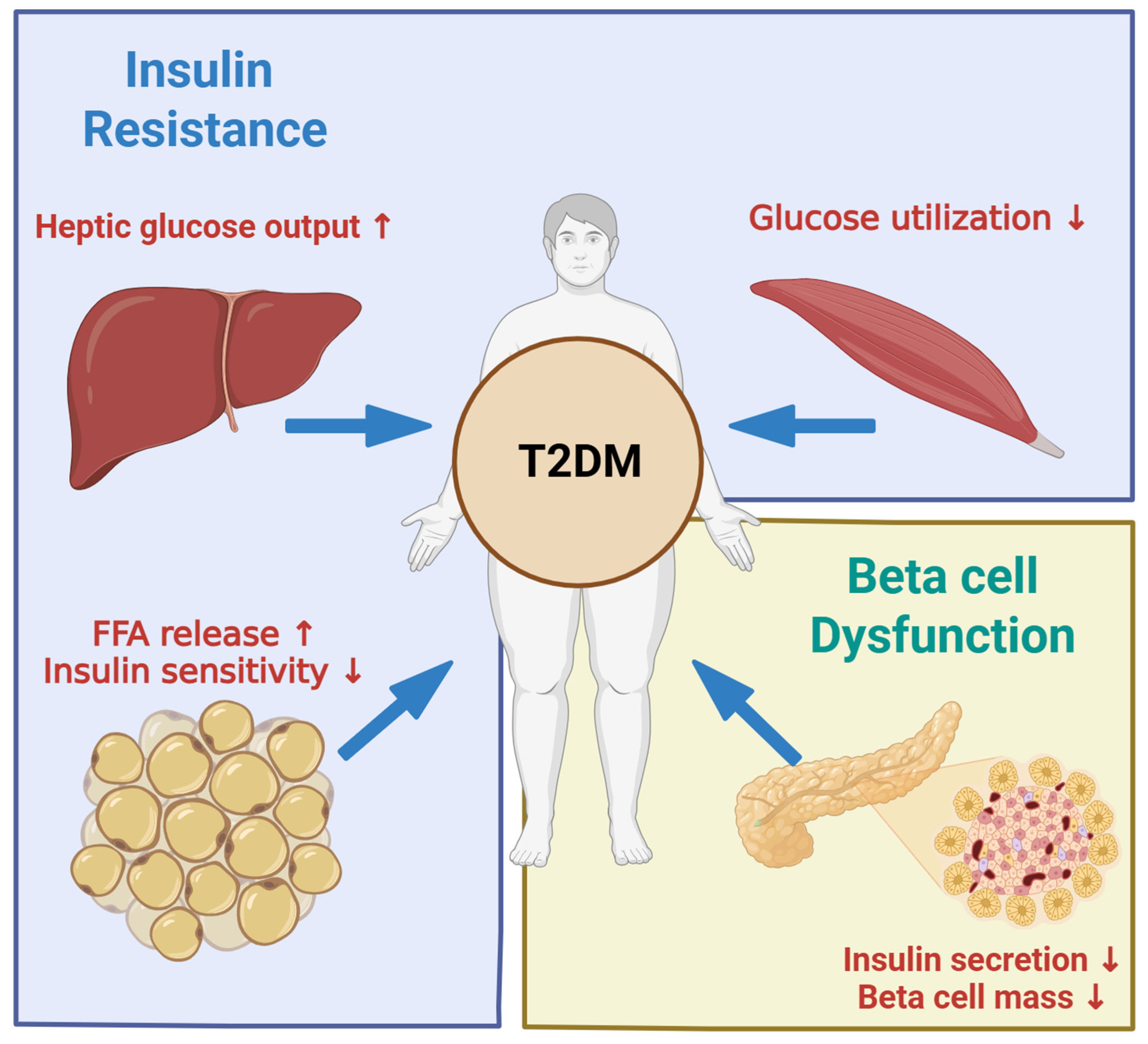
Figure 1. Pathophysiology of type 2 diabetes. Created in BioRender. Kim, Y. (2025) BioRender.com/i32lzrh.
Ijms 26 11552 g001
Figure 2. Post-translational modification in metabolic organs. Created in BioRender. Kim, Y. (2025) BioRender.com/iizhezf.
Ijms 26 11552 g002
Figure 3. Metabolic roles of PTMs in liver. Created in BioRender. Kim, H. (2025) BioRender.com/bxe5ipm.
Ijms 26 11552 g003
Figure 4. Metabolic roles of PTMs in adipose tissue. Created in BioRender. Kim, H. (2025) BioRender.com/iaawf9v.
Ijms 26 11552 g004
Figure 5. Metabolic roles of PTMs in skeletal muscle. Created in BioRender. Kim, H. (2025) BioRender.com/rkh9dss.
Ijms 26 11552 g005
Figure 6. Metabolic roles of PTMs in pancreatic beta cells. Created in BioRender. Kim, Y. (2025) BioRender.com/i32lzrh.
Ijms 26 11552 g006
Figure 7. Mechanism of post-translational modification. (A) Phosphorylation. (B) Acetylation. (C) Methylation. (D) Ubiquitination. (E) Glycosylation. (F) SUMOylation. (G) S-Nitrosylation. (H) Neddylation. Created in BioRender. Kim, Y. (2025) BioRender.com/19pdp1n.
Ijms 26 11552 g007
Figure 8. Mechanism of protein acylation. (A) Palmitoylation. (B) Crotonylation. (C) succinylation. (D) malonylation. Created in BioRender. Kim, Y. (2025) BioRender.com/4vnlcle.
Ijms 26 11552 g008
Disclaimer/Publisher’s Note: The statements, opinions and data contained in all publications are solely those of the individual author(s) and contributor(s) and not of MDPI and/or the editor(s). MDPI and/or the editor(s) disclaim responsibility for any injury to people or property resulting from any ideas, methods, instructions or products referred to in the content.