
Mitochondria-Enriched Extracellular Vesicles (EVs) for Cardiac Bioenergetics Restoration: A Scoping Review of Preclinical Mechanisms and Source-Specific Strategies



Abstract
1. Introduction
2. Materials and Methods
- (1)
- Preclinical in vitro or in vivo research investigating EV-mediated delivery of mitochondrial components to cardiomyocytes;
- (2)
- Reported functional outcomes such as ATP production, ROS reduction, LVEF improvement, infarct size, or calcium handling;
- (3)
- Described EV engineering or isolation methods (e.g., ultracentrifugation, surface modification, mitochondrial tagging);
- (4)
- Utilized iPSC-CMs, MSC-derived vesicles, or primary cardiomyocytes as source or recipient cells;
- (5)
- Were published in English between 2015 and 2025 to reflect contemporary bioengineering techniques.
- (1)
- Reviews, editorials, or commentaries without original experimental data;
- (2)
- Studies lacking mitochondrial-specific analysis;
- (3)
- Articles not focused on cardiac or cardiomyocyte models. However, select non-cardiac studies with clear mechanistic relevance to mitochondrial transfer were retained for contextual discussion under a separate section (“Emerging insights from non-cardiac models”).
2.1. Data Charting and Synthesis Approach
- (1)
- EV source (e.g., iPSC-CM, MSC, CPC)
- (2)
- Engineering or modification method (e.g., passive loading, overexpression, electroporation).
- (3)
- Mitochondrial cargo type (e.g., mtDNA, ATP5a1, PGC-1α).
- (4)
- Recipient models and detection methods (e.g., flow cytometry, fluorescence microscopy).
- (5)
- Functional endpoints (e.g., ATP restoration, ROS reduction, infarct size, LVEF).
- (6)
- Safety and biodistribution metrics, if available.
2.2. Results Mapping and Synthesis Strategy
- EV origin (iPSC-CM vs. MSC);
- Mitochondrial content (whole organelles vs. isolated proteins or mtDNA);
- Outcome domains (bioenergetic function, ROS reduction, LVEF, infarct size);
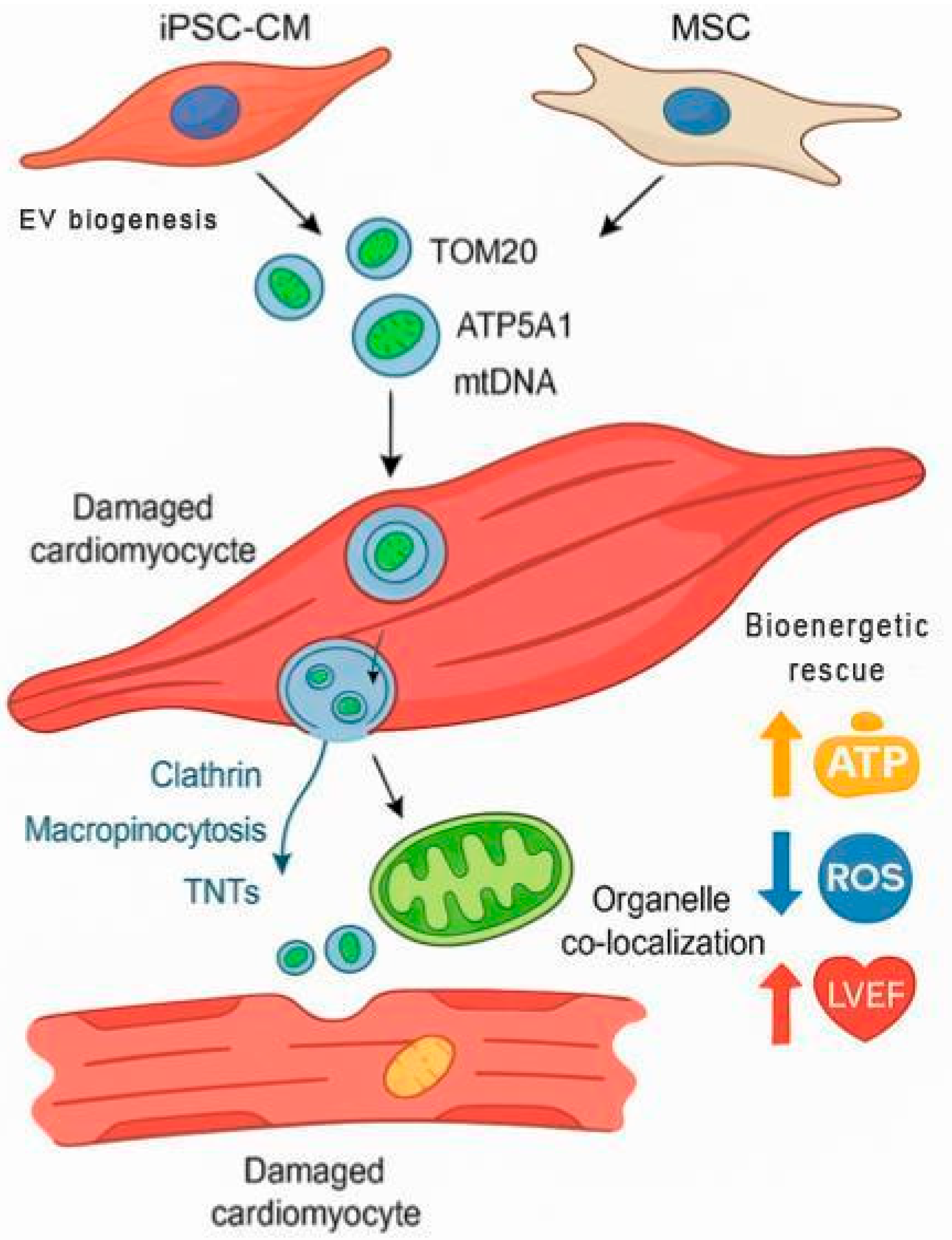
- Delivery mechanism (e.g., macropinocytosis, TNTs, clathrin-mediated endocytosis).
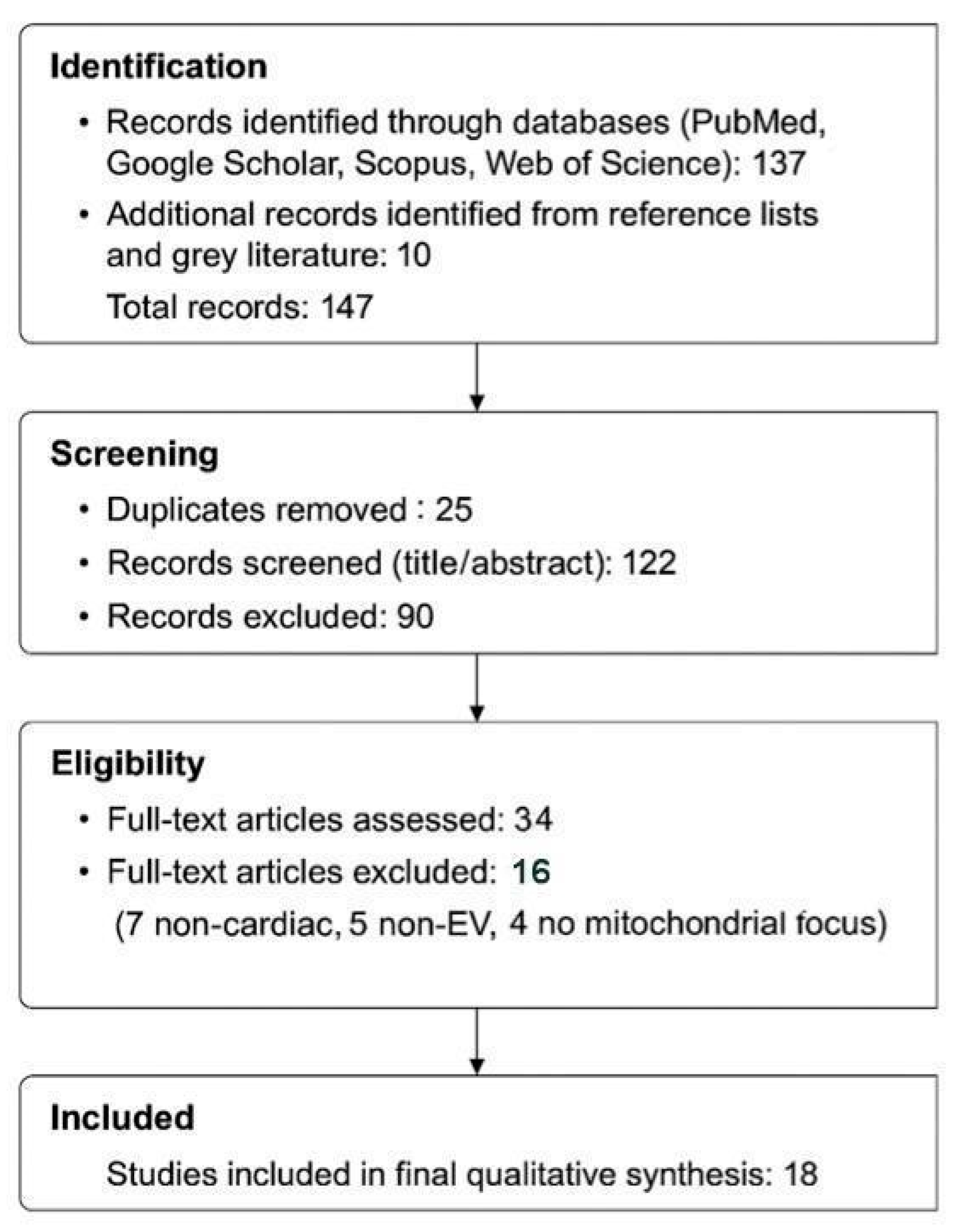
2.3. Study Selection Summary
3. Results
3.1. EV Isolation and Engineering Approaches
3.2. Mitochondrial Content Characterization
3.3. Uptake Mechanisms and Bioenergetic Rescue
3.4. Functional Outcomes: ATP, ROS, Infarct Size, and LVEF
3.5. Functional Outcome Summary and Effect Measures
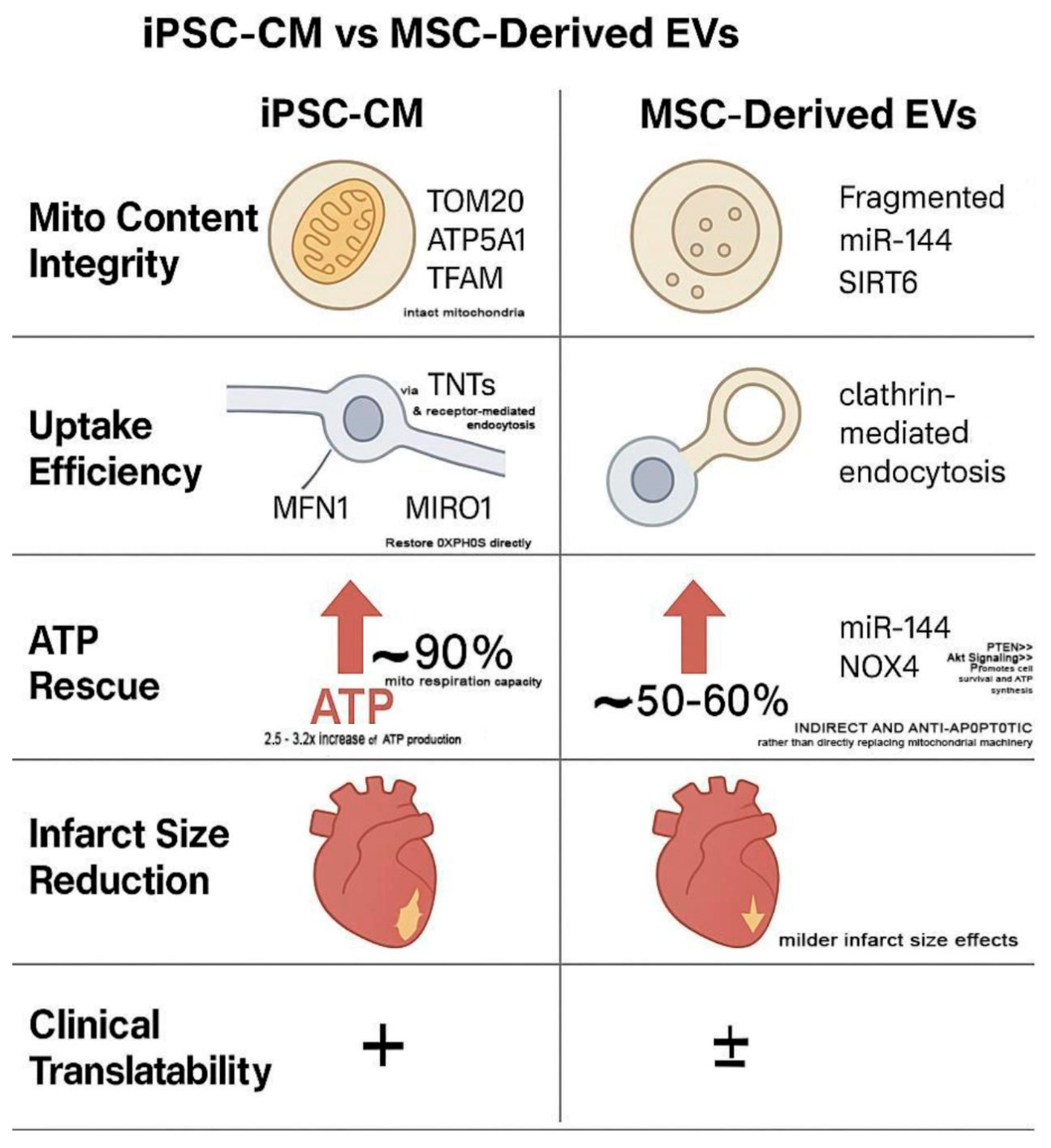
3.6. Comparative Efficacy: iPSC-CM Versus MSC-Derived EVs
3.7. Risk of Bias Evaluation
4. Discussion
4.1. Study Characteristics and EV Source Diversity
4.2. Cargo Characterization and Targeting Mechanisms
4.3. Mechanisms of Mitochondrial Transfer
4.4. Functional Outcomes: Bioenergetic and Cardioprotective Effects
4.5. Source Comparisons: iPSC-CM vs. MSC-Derived EVs
4.6. Contextual Insights: EV Biodistribution Modeling and Mitochondrial Vesicle Biogenesis
Emerging Insights from Non-Cardiac Models
4.7. Therapeutic Potential of Mitochondria-Enriched EVs
4.8. Strengths and Innovations
4.9. Gaps and Limitations
4.10. Clinical Translation Challenges
4.11. Future Directions
- Developing robust, scalable EV bioengineering platforms with consistent mitochondrial loading.
- Conducting clinical trials to assess safety and efficacy in post-MI or heart failure patients [87].
- Performing long-term studies on myocardial remodeling and electrical integration post-EV therapy.
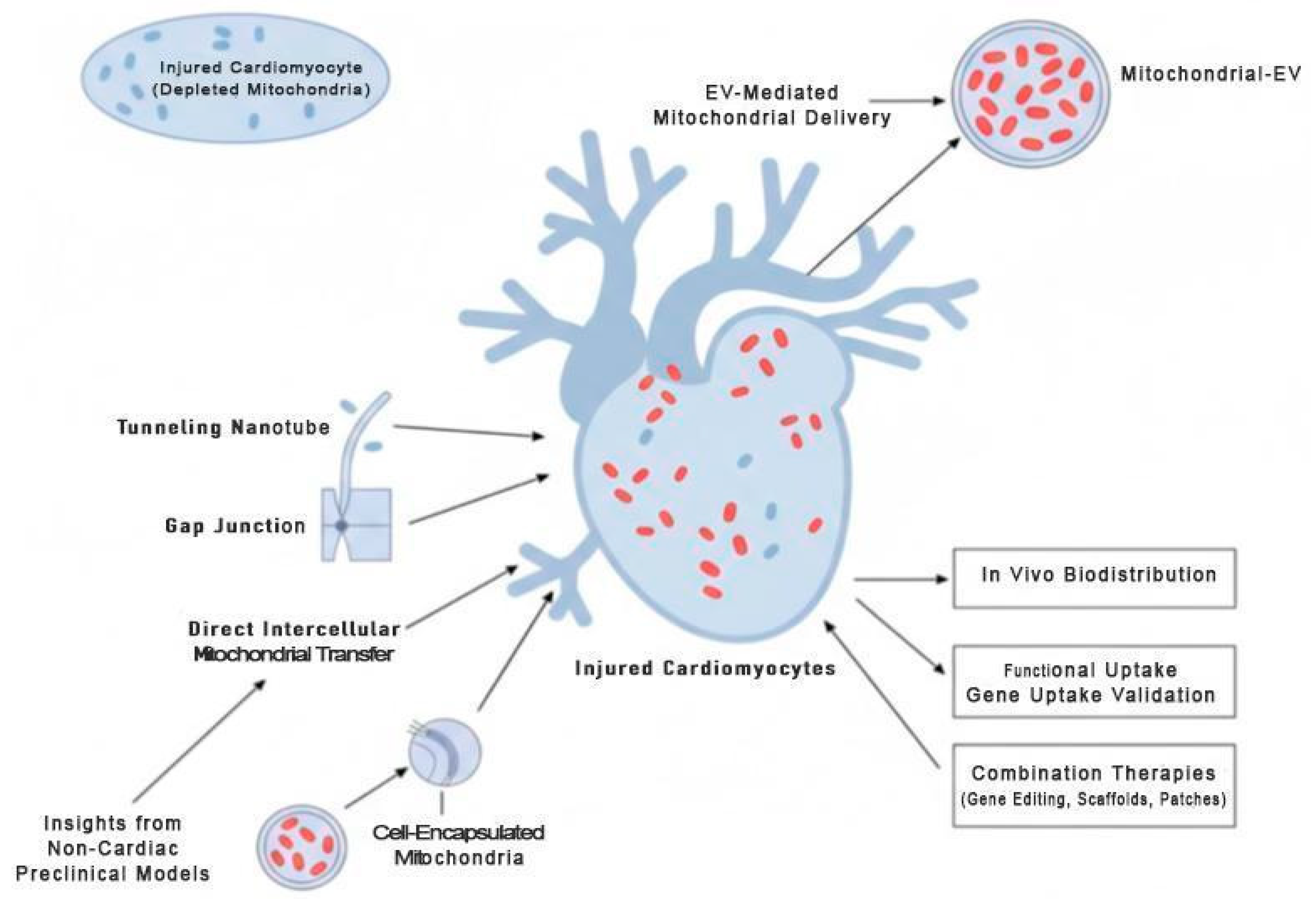
- Exploring combination therapies—e.g., EVs integrated with gene editing tools, biomaterial scaffolds, or cardiac patches.
- Establishing standardized in vivo biodistribution assays using dual-labeled EVs (e.g., MitoTracker + Cy5-EVs) to assess cardiac targeting, retention, and clearance kinetics across delivery routes [77].
- Validating functional uptake via mitochondrial membrane potential recovery (Δψm), respiratory complex reconstitution (via Western blot for ATP5a1, COXIV), and single-cell OCR in recipient cardiomyocytes.
- Utilizing side-by-side comparisons of iPSC-CM- and MSC-EV-treated infarct models to define duration, tissue depth, and mitochondrial functional half-life in vivo.
- Investigating direct intercellular mitochondrial transfer as a complementary or alternative mechanism to EV-mediated delivery, including strategies to harness tunneling nanotubes, gap junctions, or cell-encapsulated mitochondria for clinical applications.
- The need for longer follow-up periods. Our review highlights that most published studies evaluate therapeutic effects at acute time points (e.g., within 24–48 h) following EV administration. While these studies demonstrate promising immediate bioenergetic restoration, the clinical relevance of such therapies relies on their sustained efficacy. Therefore, future research should incorporate longer-term follow-up assessments (e.g., 72 h, 7 days, or more) to track the long-term persistence of EV presence and their lasting impact on mitochondrial function.
5. Conclusions
Supplementary Materials
Author Contributions
Funding
Data Availability Statement
Conflicts of Interest
Abbreviations
| iPSC | Induced pluripotent stem cell |
| CM | Cardiomyocytes |
| ACE | Angiotensin-Converting Enzyme |
| ADSC | Adipose-derived Stem Cell |
| Akt | Serine/Threonine Kinase (also known as Protein Kinase B) |
| AMPK | AMP-Activated Protein Kinase |
| ATP | Adenosine Triphosphate |
| ATP5a1 | ATP Synthase Subunit Alpha 1 |
| Bax | BCL2-Associated X Protein |
| Bcl-2 | B-Cell Lymphoma 2 |
| CDC | Cardiosphere-Derived Cell |
| COXIV | Cytochrome c oxidase Subunit IV |
| CPC | Cardiac Progenitor Cell |
| CVD | Cardiovascular Disease |
| Cy5 | Cyanine 5 (Fluorescent tag) |
| DCFDA | 2′,7′-Dichlorofluorescin Diacetate (ROS detection dye) |
| EC | Endothelial Cell |
| EIPA | 5-(N-ethyl-N-isopropyl) amiloride |
| ESCRT | Endosomal Sorting Complex Required for Transport |
| EV | Extracellular Vesicle |
| GFP | Green Fluorescent Protein |
| GMP | Good Manufacturing Practice |
| HSP70 | Heat Shock Protein 70 |
| I/R | Ischemia/Reperfusion |
| LVEF | Left Ventricular Ejection Fraction |
| MAC | Monocyte-Derived Adherent Cell |
| MDV | Mitochondrial-Derived Vesicle |
| MEK1/2 | Mitogen-Activated Protein Kinase 1/2 |
| miRNA | MicroRNA |
| MitoSOX | Mitochondrial Superoxide Indicator |
| MSC | Mesenchymal Stem Cell |
| mtDNA | Mitochondrial DNA |
| NAD+/NADH | Nicotinamide Adenine Dinucleotide (oxidized/reduced forms) |
| OXPHOS | Oxidative Phosphorylation |
| PBPK | Physiologically Based Pharmacokinetic |
| PDGF | Platelet-Derived Growth Factor |
| PEG | Polyethylene Glycol |
| PKH | (Fluorescent lipid dye family used in EV tracking) |
| PINK | PTEN-Induced Kinase 1 |
| PTEN | Phosphatase and Tensin Homolog |
| qPCR | Quantitative Polymerase Chain Reaction |
| ROS | Reactive Oxygen Species |
| Snx9 | Sorting Nexin 9 |
| Sirt6 | Sirtuin 6 |
| TFAM | Mitochondrial Transcription Factor A |
| TOM20 | Translocase of Outer Mitochondrial Membrane 20 |
| TNT | Tunneling Nanotube |
References
- Di Cesare, M.; Perel, P.; Taylor, S.; Bixby, H.; Gaziano, T.A.; McGhie, D.V.; Mwangi, J.; Pervan, B.; Narula, J.; Pineiro, D.; et al. The heart of the world. Glob. Heart 2024, 19, 1. [Google Scholar] [CrossRef]
- World Health Organization: WHO. Cardiovascular Diseases. 2019. Available online: https://www.who.int/health-topics/cardiovascular-diseases#tab=tab_1 (accessed on 27 July 2025).
- Heart Disease Facts. Heart Disease. 2024. Available online: https://www.cdc.gov/heart-disease/data-research/facts-stats/index.html (accessed on 27 July 2025).
- Bozkurt, B.; Ahmad, T.; Alexander, K.M.; Baker, W.L.; Bosak, K.; Breathett, K.; Fonarow, G.C.; Heidenreich, P.; Ho, J.E.; Hsich, E.; et al. Heart Failure Epidemiology and Outcomes Statistics: A report of the Heart Failure Society of America. J. Card. Fail. 2023, 29, 1412–1451. [Google Scholar] [CrossRef]
- Ohira, T.; Eguchi, E.; Hayashi, F.; Kinuta, M.; Imano, H. Epidemiology of cardiovascular disease in Japan: An overview study. J. Cardiol. 2023, 83, 191–200. [Google Scholar] [CrossRef]
- Hirata, K.; Matsumoto, K.; Hatakeyama, Y.; Onishi, R.; Seto, K.; Hasegawa, T. Social burden of three major diseases in Japan: A time trend and future projections using the comprehensive cost of illness method. PLoS ONE 2023, 18, e0280311. [Google Scholar] [CrossRef]
- Muharram, F.R.; Multazam, C.E.C.Z.; Mustofa, A.; Socha, W.; Martini, S.; Aminde, L.; Yi-Li, C. The 30 years of Shifting in the Indonesian Cardiovascular Burden—Analysis of the Global Burden of Disease Study. J. Epidemiol. Glob. Health 2024, 14, 193–212, Correction in J. Epidemiol. Glob. Health 2024, 14, 1369. [Google Scholar] [CrossRef]
- Arsyad, D.S.; Westerink, J.; Cramer, M.J.; Ansar, J.; Wahiduddin; Visseren, F.L.J.; Doevendans, P.A.; Ansariadi. Modifiable risk factors in adults with and without prior cardiovascular disease: Findings from the Indonesian National Basic Health Research. BMC Public Health 2022, 22, 660. [Google Scholar] [CrossRef]
- Shahannaz, D.C.; Sugiura, T.; Ferrell, B.E. Enhancing mitochondrial maturation in iPSC-derived cardiomyocyte strategies in metabolic optimization. BioChem 2025, 5, 23. [Google Scholar] [CrossRef]
- Uche, N.; Lai, S.; Dai, Q.; Benjamin, I. Promoting Mitochondrial Biogenesis Protects against Doxorubicin-Induced Cardiomyocyte Injury. FASEB J. 2022, 36 (Suppl. S1). [Google Scholar] [CrossRef]
- Bețiu, A.M.; Noveanu, L.; Hâncu, I.M.; Lascu, A.; Petrescu, L.; Maack, C.; Elmér, E.; Muntean, D.M. Mitochondrial effects of common cardiovascular medications: The good, the bad and the mixed. Int. J. Mol. Sci. 2022, 23, 13653. [Google Scholar] [CrossRef] [PubMed]
- Ballinger, S.W. Mitochondrial dysfunction in cardiovascular disease. Free. Radic. Biol. Med. 2005, 38, 1278–1295. [Google Scholar] [CrossRef]
- Rossi, M.; Talbot, J.; Piris, P.; Le Grand, M.; Montero, M.-P.; Matteudi, M.; Agavnian-Couquiaud, E.; Appay, R.; Keime, C.; Williamson, D.; et al. Beta-blockers disrupt mitochondrial bioenergetics and increase radiotherapy efficacy independently of beta-adrenergic receptors in medulloblastoma. EBioMedicine 2022, 82, 104149. [Google Scholar] [CrossRef]
- Shahannaz, D.C.; Sugiura, T.; Ferrell, B.E.; Yoshida, T. Targetting Mitochondrial Dynamics via EV Delivery in Regenerative Cardiology: Mechanistic and Therapeutic Perspectives. Cells 2025, 14, 1738. [Google Scholar] [CrossRef]
- Kumar, M.A.; Baba, S.K.; Sadida, H.Q.; Marzooqi, S.A.; Jerobin, J.; Altemani, F.H.; Algehainy, N.; Alanazi, M.A.; Abou-Samra, A.-B.; Kumar, R.; et al. Extracellular vesicles as tools and targets in therapy for diseases. Signal Transduct. Target. Ther. 2024, 9, 27. [Google Scholar] [CrossRef]
- Ikeda, G.; Santoso, M.R.; Tada, Y.; Li, A.M.; Vaskova, E.; Jung, J.-H.; O’bRien, C.; Egan, E.; Ye, J.; Yang, P.C. Mitochondria-Rich extracellular vesicles from autologous stem Cell–Derived cardiomyocytes restore energetics of ischemic myocardium. J. Am. Coll. Cardiol. 2021, 77, 1073–1088. [Google Scholar] [CrossRef] [PubMed]
- Chen, P.; Wang, L.; Fan, X.; Ning, X.; Yu, B.; Ou, C.; Chen, M. Targeted delivery of extracellular vesicles in heart injury. Theranostics 2020, 11, 2263–2277. [Google Scholar] [CrossRef] [PubMed]
- Chang, W.; Li, P. Bone marrow mesenchymal stromal cell-derived small extracellular vesicles: A novel therapeutic agent in ischemic heart diseases. Front. Pharmacol. 2023, 13, 1098634. [Google Scholar] [CrossRef]
- Vignais, M.L.; Levoux, J.; Sicard, P.; Khattar, K.; Lozza, C.; Gervais, M.; Mezhoud, S.; Nakhle, J.; Relaix, F.; Agbulut, O.; et al. Transfer of cardiac mitochondria improves the therapeutic efficacy of mesenchymal stem cells in a preclinical model of ischemic heart disease. Cells 2023, 12, 582. [Google Scholar] [CrossRef] [PubMed]
- Harane, N.E.; Kervadec, A.; Bellamy, V.; Pidial, L.; Neametalla, H.J.; Perier, M.-C.; Lima Correa, B.; Thiébault, L.; Cagnard, N.; Duché, A.; et al. Acellular therapeutic approach for heart failure: In vitro production of extracellular vesicles from human cardiovascular progenitors. Eur. Heart J. 2018, 39, 1835–1847. [Google Scholar] [CrossRef]
- Louro, A.F.; Paiva, M.A.; Oliveira, M.R.; Kasper, K.A.; Alves, P.M.; Gomes-Alves, P.; Serra, M. Bioactivity and miRNome profiling of native extracellular vesicles in human induced pluripotent stem Cell-Cardiomyocyte differentiation. Adv. Sci. 2022, 9, 2104296. [Google Scholar] [CrossRef]
- Sun, P.; Wang, C.; Mang, G.; Xu, X.; Fu, S.; Chen, J.; Wang, X.; Wang, W.; Li, H.; Zhao, P.; et al. Extracellular vesicle-packaged mitochondrial disturbing miRNA exacerbates cardiac injury during acute myocardial infarction. Clin. Transl. Med. 2022, 12, e779. [Google Scholar] [CrossRef]
- Cao, T.G.N.; Kang, J.H.; Kang, S.J.; Hoang, Q.T.; Kang, H.C.; Rhee, W.J.; Zhang, Y.S.; Ko, Y.T.; Shim, M.S. Brain endothelial cell-derived extracellular vesicles with a mitochondria-targeting photosensitizer effectively treat glioblastoma by hijacking the blood-brain barrier. Acta Pharm. Sin. B 2023, 13, 3834–3848. [Google Scholar] [CrossRef]
- Rakshit, T.; Pal, S. Extracellular vesicles for drug delivery and theranostics in vivo. JACS Au 2024, 4, 318–327. [Google Scholar] [CrossRef]
- Agosti, E.; Antonietti, S.; Ius, T.; Fontanella, M.M.; Zeppieri, M.; Panciani, P.P. A Systematic review of Mesenchymal Stem Cell-Derived Extracellular Vesicles: A potential treatment for glioblastoma. Brain Sci. 2024, 14, 1058. [Google Scholar] [CrossRef]
- Carles-Fontana, R.; Heaton, N.; Palma, E.; Khorsandi, S. Extracellular Vesicle-Mediated mitochondrial reprogramming in cancer. Cancers 2022, 14, 1865. [Google Scholar] [CrossRef]
- Liu, X.; Cao, Z.; Wang, W.; Zou, C.; Wang, Y.; Pan, L.; Jia, B.; Zhang, K.; Zhang, W.; Li, W.; et al. Engineered Extracellular Vesicle-Delivered CRISPR/CAS9 for radiotherapy sensitization of glioblastoma. ACS Nano 2023, 17, 16432–16447. [Google Scholar] [CrossRef]
- Peng, F.; Chen, X.; Wu, L.; He, J.; Li, Z.; Hong, Q.; Zhao, Q.; Qian, M.; Wang, X.; Shen, W.; et al. Nitric oxide-primed engineered extracellular vesicles restore bioenergetics in acute kidney injury via mitochondrial transfer. Theranostics 2025, 15, 5499–5517. [Google Scholar] [CrossRef]
- Leonov, S.; Dorfman, A.; Pershikova, E.; Inyang, O.; Alhaddad, L.; Wang, Y.; Pustovalova, M.; Merkher, Y. Extracellular Vesicle- and Mitochondria-Based Targeting of Non-Small Cell Lung Cancer Response to Radiation: Challenges and Perspectives. Cancers 2024, 16, 2235. [Google Scholar] [CrossRef]
- Wang, X.; Liu, Z.; Zhang, L.; Hu, G.; Tao, L.; Zhang, F. Mitochondrial transplantation for the treatment of cardiac and noncardiac diseases: Mechanisms, prospective, and challenges. Life Med. 2024, 3, lnae017. [Google Scholar] [CrossRef]
- Katayama, T.; Kinugawa, S.; Takada, S.; Furihata, T.; Fukushima, A.; Yokota, T.; Anzai, T.; Hibino, M.; Harashima, H.; Yamada, Y. A mitochondrial delivery system using liposome-based nanocarriers that target myoblast cells. Mitochondrion 2019, 49, 66–72. [Google Scholar] [CrossRef]
- Sun, M.; Jiang, W.; Mu, N.; Zhang, Z.; Yu, L.; Ma, H. Mitochondrial transplantation as a novel therapeutic strategy for cardiovascular diseases. J. Transl. Med. 2023, 21, 347. [Google Scholar] [CrossRef]
- Yamada, Y.; Akita, H.; Kamiya, H.; Kogure, K.; Yamamoto, T.; Shinohara, Y.; Yamashita, K.; Kobayashi, H.; Kikuchi, H.; Harashima, H. MITO-Porter: A liposome-based carrier system for delivery of macromolecules into mitochondria via membrane fusion. Biochim. Et Biophys. Acta (BBA)-Biomembr. 2007, 1778, 423–432. [Google Scholar] [CrossRef]
- Tsujioka, T.; Sasaki, D.; Takeda, A.; Harashima, H.; Yamada, Y. Resveratrol-Encapsulated Mitochondria-Targeting liposome enhances mitochondrial respiratory capacity in myocardial cells. Int. J. Mol. Sci. 2021, 23, 112. [Google Scholar] [CrossRef]
- Li, Q.; Feng, Q.; Zhou, H.; Lin, C.; Sun, X.; Ma, C.; Sun, L.; Guo, G.; Wang, D. Mechanisms and therapeutic strategies of extracellular vesicles in cardiovascular diseases. MedComm 2023, 4, e454. [Google Scholar] [CrossRef] [PubMed]
- Chen, Q.; Yu, T.; Gong, J.; Shan, H. Advanced Nanomedicine Delivery Systems for Cardiovascular Diseases: Viral and Non-Viral Strategies in Targeted Therapy. Molecules 2025, 30, 962. [Google Scholar] [CrossRef]
- Di Florio, D.N.; Beetler, D.J.; McCabe, E.J.; Sin, J.; Ikezu, T.; Fairweather, D. Mitochondrial extracellular vesicles, autoimmunity and myocarditis. Front. Immunol. 2024, 15, 1374796. [Google Scholar] [CrossRef]
- Li, S.; Zhou, L.; Huang, Y.; Tang, S. Emerging Frontiers in acute kidney injury: The role of extracellular vesicles. Bioact. Mater. 2025, 48, 149–170. [Google Scholar] [CrossRef]
- Røsand, Ø.; Wang, J.; Scrimgeour, N.; Marwarha, G.; Høydal, M.A. Exosomal preconditioning of human IPSC-Derived cardiomyocytes beneficially alters cardiac electrophysiology and micro RNA expression. Int. J. Mol. Sci. 2024, 25, 8460. [Google Scholar] [CrossRef]
- Chen, J.; Liang, X.; Han, Q.; He, H.; Huang, X.; Shen, Y.; Qiu, J.; Lin, F.; Mai, C.; Li, Z.; et al. Exosomal miR-202-5p derived from iPSC-MSCs protects against myocardial infarction through inhibition of cardiomyocyte pyroptosis. Stem Cell Res. Ther. 2025, 16, 282. [Google Scholar] [CrossRef]
- Zheng, H.; Liang, X.; Liu, B.; Huang, X.; Shen, Y.; Lin, F.; Chen, J.; Gao, X.; He, H.; Li, W.; et al. Exosomal miR-9-5p derived from iPSC-MSCs ameliorates doxorubicin-induced cardiomyopathy by inhibiting cardiomyocyte senescence. J. Nanobiotechnol. 2024, 22, 195. [Google Scholar] [CrossRef]
- Li, H.; Wang, L.; Ma, T.; Liu, Z.; Gao, L. Exosomes secreted by endothelial cells derived from human induced pluripotent stem cells improve recovery from myocardial infarction in mice. Stem Cell Res. Ther. 2023, 14, 278. [Google Scholar] [CrossRef]
- Yang, J.; Liu, L.; Oda, Y.; Wada, K.; Ago, M.; Matsuda, S.; Hattori, M.; Goto, T.; Ishibashi, S.; Kawashima-Sonoyama, Y.; et al. Extracellular Vesicles and Cx43-Gap Junction Channels Are the Main Routes for Mitochondrial Transfer from Ultra-Purified Mesenchymal Stem Cells, RECs. Int. J. Mol. Sci. 2023, 24, 10294. [Google Scholar] [CrossRef]
- Wen, Z.; Mai, Z.; Zhu, X.; Wu, T.; Chen, Y.; Geng, D.; Wang, J. Mesenchymal stem cell-derived exosomes ameliorate cardiomyocyte apoptosis in hypoxic conditions through microRNA144 by targeting the PTEN/AKT pathway. Stem Cell Res. Ther. 2020, 11, 36. [Google Scholar] [CrossRef]
- Liu, L.; Jin, X.; Hu, C.F.; Li, R.; Zhou, Z.; Shen, C.X. Exosomes Derived from Mesenchymal Stem Cells Rescue Myocardial Ischaemia/Reperfusion Injury by Inducing Cardiomyocyte Autophagy Via AMPK and Akt Pathways. Cell. Physiol. Biochem. 2017, 43, 52–68. [Google Scholar] [CrossRef]
- Liu, K.; Wang, H.; Wang, Y.; Zhang, X.; Wang, R.; Zhang, Z.; Wang, J.; Lu, X.; Wu, X.; Han, Y. Exploring the therapeutic potential of Sirt6-enriched adipose stem cell-derived exosomes in myocardial ischemia–reperfusion injury: Unfolding new epigenetic frontiers. Clin. Epigenetics 2024, 16, 7, Correction in Clin. Epigenetics 2024, 16, 186. [Google Scholar] [CrossRef]
- Liu, X.; Meng, Q.; Shi, S.; Geng, X.; Wang, E.; Li, Y.; Lin, F.; Liang, X.; Xi, X.; Han, W.; et al. Cardiac-derived extracellular vesicles improve mitochondrial function to protect the heart against ischemia/reperfusion injury by delivering ATP5a1. J. Nanobiotechnol. 2024, 22, 385. [Google Scholar] [CrossRef] [PubMed]
- O’Brien, C.G.; Ozen, M.O.; Ikeda, G.; Vaskova, E.; Jung, J.H.; Bayardo, N.; Santoso, M.R.; Shi, L.; Wahlquist, C.; Jiang, Z.; et al. Mitochondria-Rich extracellular vesicles rescue Patient-Specific cardiomyocytes from doxorubicin injury. JACC CardioOncol. 2021, 3, 428–440. [Google Scholar] [CrossRef] [PubMed]
- Liu, Y.; Dissanayaka, W.L.; Yiu, C. Therapeutic implications of mitochondrial transfer on stem cell fate in regenerative medicine. J. Transl. Med. 2025, 23, 568. [Google Scholar] [CrossRef] [PubMed]
- Kumar, P.; Mehta, D.; Bissler, J.J. Physiologically based pharmacokinetic modeling of extracellular vesicles. Biology 2023, 12, 1178. [Google Scholar] [CrossRef]
- Heyn, J.; Heuschkel, M.A.; Goettsch, C. Mitochondrial-Derived Vesicles—Link to extracellular vesicles and implications in cardiovascular disease. Int. J. Mol. Sci. 2023, 24, 2637. [Google Scholar] [CrossRef]
- Chen, T.; Liu, N. Barriers and opportunities: Intercellular mitochondrial transfer for cardiac protection—Delivery by extracellular vesicles. Front. Cardiovasc. Med. 2023, 9, 1024481. [Google Scholar] [CrossRef]
- Femminò, S.; Bonelli, F.; Brizzi, M.F. Extracellular vesicles in cardiac repair and regeneration: Beyond stem-cell-based approaches. Front. Cell Dev. Biol. 2022, 10, 996887. [Google Scholar] [CrossRef]
- Chen, J.; Zhong, J.; Wang, L.L.; Chen, Y.Y. Mitochondrial transfer in cardiovascular disease: From mechanisms to therapeutic implications. Front. Cardiovasc. Med. 2021, 8, 771298. [Google Scholar] [CrossRef]
- Ibáñez, B.; Villena-Gutierrez, R. Cardiac mitochondrial transplantation. J. Am. Coll. Cardiol. 2021, 77, 1089–1092. [Google Scholar] [CrossRef]
- Théry, C.; Witwer, K.W.; Aikawa, E.; Alcaraz, M.J.; Anderson, J.D.; Andriantsitohaina, R.; Antoniou, A.; Arab, T.; Archer, F.; Atkin-Smith, G.K.; et al. Minimal information for studies of extracellular vesicles 2018 (MISEV2018): A position statement of the International Society for Extracellular Vesicles and update of the MISEV2014 guidelines. J. Extracell. Vesicles 2018, 7, 1535750. [Google Scholar] [CrossRef]
- Vader, P.; Mol, E.A.; Pasterkamp, G.; Schiffelers, R.M. Extracellular vesicles for drug delivery. Adv. Drug Deliv. Rev. 2016, 106 Pt A, 148–156. [Google Scholar] [CrossRef] [PubMed]
- Phinney, D.G.; Di Giuseppe, M.; Njah, J.; Sala, E.; Shiva, S.; St Croix, C.M.; Stolz, D.B.; Watkins, S.C.; Di, Y.P.; Leikauf, G.D.; et al. Mesenchymal stem cells use extracellular vesicles to outsource mitophagy and shuttle microRNAs. Nat. Commun. 2015, 6, 8472. [Google Scholar] [CrossRef]
- Islam, M.N.; Das, S.; Emin, M.; Wei, M.; Sun, L.; Westphalen, K.; Rowlands, D.J.; Quadri, S.K.; Bhattacharya, S.; Bhattacharya, J. Mitochondrial transfer from bone-marrow–derived stromal cells to pulmonary alveoli protects against acute lung injury. Nat. Med. 2012, 18, 759–765. [Google Scholar] [CrossRef] [PubMed]
- Sugiura, T.; Shahannaz, D.C.; Ferrell, B.E. Current status of cardiac regenerative therapy using induced pluripotent stem cells. Int. J. Mol. Sci. 2024, 25, 5772. [Google Scholar] [CrossRef]
- Tada, Y.; Yang, P.C. Iron oxide labeling and tracking of extracellular vesicles. Magnetochemistry 2019, 5, 60. [Google Scholar] [CrossRef]
- Driedonks, T.; Jiang, L.; Carlson, B.; Han, Z.; Liu, G.; Queen, S.E.; Shirk, E.N.; Gololobova, O.; Liao, Z.; Nyberg, L.H.; et al. Pharmacokinetics and biodistribution of extracellular vesicles administered intravenously and intranasally to Macaca nemestrina. J. Extracell. Biol. 2022, 1, e59, Correction in J. Extracell. Biol. 2022, 1, e67. [Google Scholar] [CrossRef]
- Aimaletdinov, A.M.; Gomzikova, M.O. Tracking of extracellular vesicles’ biodistribution: New methods and approaches. Int. J. Mol. Sci. 2022, 23, 11312. [Google Scholar] [CrossRef]
- Sugiura, T.; Shahannaz, D.C.; Ferrell, B.E.; Yoshida, T. Advancements in cardiac regenerative therapy: Scalable human iPSC-derived cardiomyocyte differentiation and maturation. Glob. Transl. Med. 2025, 4, 5745. [Google Scholar] [CrossRef]
- Adamiak, M.; Cheng, G.; Bobis-Wozowicz, S.; Zhao, L.; Kedracka-Krok, S.; Samanta, A.; Karnas, E.; Xuan, Y.-T.; Skupien-Rabian, B.; Chen, X.; et al. Induced Pluripotent stem cell (IPSC)–Derived extracellular vesicles are safer and more effective for cardiac repair than IPSCs. Circ. Res. 2017, 122, 296–309. [Google Scholar] [CrossRef]
- Rana, P.; Anson, B.; Engle, S.; Will, Y. Characterization of Human-Induced Pluripotent stem Cell–Derived cardiomyocytes: Bioenergetics and utilization in safety screening. Toxicol. Sci. 2012, 130, 117–131. [Google Scholar] [CrossRef]
- Sugiura, T.; Nawaz, S.; Shahannaz, D.C.; Ferrell, B.E.; Yoshida, T. From injury to repair: The therapeutic potential of induced pluripotent stem cells in heart failure. Regen. Med. Rep. 2025, 2, 22–30. [Google Scholar] [CrossRef]
- Barile, L.; Moccetti, T.; Marbán, E.; Vassalli, G. Roles of exosomes in cardioprotection. Eur. Heart J. 2016, 38, ehw304. [Google Scholar] [CrossRef]
- Rosina, M.; Ceci, V.; Turchi, R.; Chuan, L.; Borcherding, N.; Sciarretta, F.; Sánchez-Díaz, M.; Tortolici, F.; Karlinsey, K.; Chiurchiù, V.; et al. Ejection of damaged mitochondria and their removal by macrophages ensure efficient thermogenesis in brown adipose tissue. Cell Metab. 2022, 34, 533–548.e12. [Google Scholar] [CrossRef] [PubMed] [PubMed Central]
- Lou, P.; Zhou, X.; Zhang, Y.; Xie, Y.; Wang, Y.; Wang, C.; Liu, S.; Wan, M.; Lu, Y.; Liu, J. Harnessing tissue-derived mitochondria-rich extracellular vesicles (Ti-mitoEVs) to boost mitochondrial biogenesis for regenerative medicine. Sci. Adv. 2025, 11, eadt1318. [Google Scholar] [CrossRef]
- Tortolici, F.; Di Biagio, C.; Lettieri-Barbato, D.; Aquilano, K. Protocol for detecting mitochondria extracellular vesicles of brown adipose tissue in mice. STAR Protoc. 2024, 5, 103161. [Google Scholar] [CrossRef] [PubMed] [PubMed Central]
- Camino, T.; Lago-Baameiro, N.; Sueiro, A.; Bravo, S.B.; Couto, I.; Santos, F.F.; Baltar, J.; Casanueva, F.F.; Pardo, M. Brown Adipose Tissue Sheds Extracellular Vesicles That Carry Potential Biomarkers of Metabolic and Thermogenesis Activity Which Are Affected by High Fat Diet Intervention. Int. J. Mol. Sci. 2022, 23, 10826. [Google Scholar] [CrossRef] [PubMed] [PubMed Central]
- Lay, S.L.; Scherer, P.E. Exploring adipose tissue-derived extracellular vesicles in inter-organ crosstalk: Implications for metabolic regulation and adipose tissue function. Cell Rep. 2025, 44, 115732. [Google Scholar] [CrossRef]
- Kong, J.; Sun, R.; Du, C.; Tang, Y.; Xie, C.; Li, Q.; Lin, L.; Wang, H. Mitochondrial Extracellular vesicles: A novel approach to mitochondrial quality control. Biomolecules 2025, 15, 1145. [Google Scholar] [CrossRef]
- Lee, J.; Choi, W.G.; Rhee, M.; Lee, S.H. Extracellular Vesicle-Mediated Network in the pathogenesis of obesity, diabetes, steatotic liver disease, and cardiovascular disease. Diabetes Metab. J. 2025, 49, 348–367. [Google Scholar] [CrossRef]
- Puhm, F.; Afonyushkin, T.; Resch, U.; Obermayer, G.; Rohde, M.; Penz, T.; Schuster, M.; Wagner, G.; Rendeiro, A.F.; Melki, I.; et al. Mitochondria Are a Subset of Extracellular Vesicles Released by Activated Monocytes and Induce Type I IFN and TNF Responses in Endothelial Cells. Circ. Res. 2019, 125, 43–52, Erratum in Circ. Res. 2019, 125, e93. https://doi.org/10.1161/RES.0000000000000305. [Google Scholar] [CrossRef] [PubMed]
- Wiklander, O.P.B.; Nordin, J.Z.; O’Loughlin, A.; Gustafsson, Y.; Corso, G.; Mäger, I.; Vader, P.; Lee, Y.; Sork, H.; Seow, Y.; et al. Extracellular vesicle in vivo biodistribution is determined by cell source, route of administration and targeting. J. Extracell. Vesicles 2015, 4, 26316. [Google Scholar] [CrossRef]
- Sugiura, A.; MccLelland, G.; Fon, E.A.; McBride, H.M. A new pathway for mitochondrial quality control: Mitochondrial-derived vesicles. EMBO J. 2014, 33, 2142–2156. [Google Scholar] [CrossRef]
- Fry, M.Y.; Navarro, P.P.; Hakim, P.; Ananda, V.Y.; Qin, X.; Landoni, J.C.; Rath, S.; Inde, Z.; Lugo, C.M.; E Luce, B.; et al. In situ architecture of Opa1-dependent mitochondrial cristae remodeling. EMBO J. 2024, 43, 391–413. [Google Scholar] [CrossRef]
- Chen, L.; Liu, B.; Qin, Y.; Li, A.; Gao, M.; Liu, H.; Gong, G. Mitochondrial fusion protein MFN2 and its role in heart failure. Front. Mol. Biosci. 2021, 8, 681237. [Google Scholar] [CrossRef]
- Chen, Y.; Liu, Y.; Dorn, G.W. Mitochondrial Fusion is Essential for Organelle Function and Cardiac Homeostasis. Circ. Res. 2011, 109, 1327–1331. [Google Scholar] [CrossRef]
- Tan, S.; Yang, Y.; Yang, W.; Han, Y.; Huang, L.; Yang, R.; Hu, Z.; Tao, Y.; Liu, L.; Li, Y.; et al. Exosomal cargos-mediated metabolic reprogramming in tumor microenvironment. J. Exp. Clin. Cancer Res. 2023, 42, 59. [Google Scholar] [CrossRef]
- Collino, F.; Lopes, J.A.; Tapparo, M.; Tortelote, G.G.; Kasai-Brunswick, T.H.; Lopes, G.M.; Almeida, D.B.; Skovronova, R.; Wendt, C.H.C.; de Miranda, K.R.; et al. Extracellular Vesicles Derived from Induced Pluripotent Stem Cells Promote Renoprotection in Acute Kidney Injury Model. Cells 2020, 9, 453. [Google Scholar] [CrossRef]
- Cao, H.; Cheng, Y.; Gao, H.; Zhuang, J.; Zhang, W.; Bian, Q.; Wang, F.; Du, Y.; Li, Z.; Kong, D.; et al. In Vivo Tracking of Mesenchymal Stem Cell-Derived Extracellular Vesicles Improving Mitochondrial Function in Renal Ischemia-Reperfusion Injury. ACS Nano 2020, 14, 4014–4026. [Google Scholar] [CrossRef] [PubMed]
- Stawarska, A.; Bamburowicz-Klimkowska, M.; Runden-Pran, E.; Dusinska, M.; Cimpan, M.R.; Rios-Mondragon, I.; Grudzinski, I.P. Extracellular vesicles as Next-Generation diagnostics and advanced therapy medicinal products. Int. J. Mol. Sci. 2024, 25, 6533. [Google Scholar] [CrossRef]
- Davies, O.G.; Rafiq, Q.A. Considerations for the bioprocessing, manufacture and translation of extracellular vesicles for therapeutic and diagnostic applications. Cell Gene Ther. Insights 2017, 3, 683–694. [Google Scholar] [CrossRef]
- Prakash, A.; Crespo-Avilan, G.E.; Hernandez-Resendiz, S.; Ong, S.G.; Hausenloy, D.J. Extracellular vesicles-mediating and delivering cardioprotection in acute myocardial infarction and heart failure. Cond. Med. 2020, 3, 227–238. [Google Scholar]



| No | Study (Author, Year) | EV Source | Key Cargo/Mechanism | Functional Outcomes |
|---|---|---|---|---|
| iPSC | ||||
| 1. | Røsand et al. (2024) [39] | iPSC-CM | Preconditioning alters miRNA | ↑ Electrophysiology |
| 2. | Ikeda et al. (2021) [16] | iPSC-CM | Mitochondria-rich EVs | ↑ ATP, ↑ Contractility, ↓ ROS |
| iPSC-MSC | ||||
| 3. | Chen et al. (2025) [40] | iPSC-MSC | miR-202-5p | ↓ pyroptosis |
| 4. | Zheng et al. (2024) [41] | iPSC-MSC | iR-9-5p | ↓senescence, Dox-cardioprotection |
| iPSC-EC | ||||
| 5. | Li et al. (2023) [42] | iPSC-EC | Ca2+ modulation | ↑ contractility ↑ LVEF |
| MSC | ||||
| 6. | Yang et al. (2023) [43] | MSC | Respiratory EVs | ↑ LVEF ↓ infarct |
| 7. | Wen et al. (2020) [44] | MSC | miR-144 → PTEN/AKT | ↓ Apoptosis |
| 8. | Liu L et al. (2017) [45] | MSC | AMPK/Akt → autophagy | ↓ ROS, ↓ infarct |
| ADSC | ||||
| 9. | Liu K et al. (2024) [46] | Adipose stem cell (ADSC)-derived exosomes | Sirt6 enrichment; epigenetic modulation of oxidative stress | ↑ LVEF in I/R injury model, ↓ ROS, ↓ infarct size |
| Cardiomyocyte-derived | ||||
| 10. | Liu X et al. (2024) [47] | CM-derived EVs | ATP5a1 overexpression | ↑ ATP, ↓ ROS, ↓ Ferroptosis |
| Fibroblast-derived | ||||
| 11. | O’Brien et al. (2021) [48] | Fibroblast-derived EVs | Mitochondrial cargo, metabolomic rescue | Metabolomic profile restoration in iPSC-CMs |
| Reviews | ||||
| 12. | Liu, Dissanayaka, and Yiu (2025) [49] | Conceptual Review: MSC and iPSC | Mitochondrial transfer routes (EVs, TNTs) review | Induced CM rescue, influence stem fate decision (hypothesized stem cell reprogramming via mitochondrial signaling) |
| 13. | Kumar, Mehta, and Bissler (2023) [50] | PBPK Modeling review | Pharmacokinetics of general EV biodistribution | Safety and delivery optimization (EV uptake, clearance, and tissue tropism) |
| 14. | Heyn et al. (2023) [51] | Mechanistic review: MDVs | Cross-talk between MDVs and exosome pathways | EV origin and mito-selectivity mechanisms |
| 15. | Chen and Liu (2023) [52] | Conceptual Review: MSC, iPSC-CM, cardiac EVs | Mitochondrial EV barriers | Mechanistic insights |
| 16. | Femminò, Bonelli, and Brizzi (2022) [53] | MSC, iPSC-CM, CDCs, CPC sources, hypoxic CMs | miRNAs (miR-132, miR210, miR93-5p, miR-199a-3p), and pro-angiogenic protein cargo (VEGF, PDGF, HSP70, and MEK1/2) | Cardiac repair from anti-apoptotic, anti-inflammatory, angiogenic roles of EVs ↑ Vessel density ↑ Bcl-2 ↓ Infarct size ↓ Apoptosis ↓ Bax M1 to M2 shift |
| 17. | Chen et al. (2021) [54] | Mechanistic Review: MSC, iPSC-CM, cardiac EVs | Mitochondrial uptake pathways | Bioenergetic context |
| 18. | Ibáñez and Villena-Gutierrez (2021) [55] | Engineered cardiac-targeted EVs from CMs | ATP5a1 + Tom20 | ↑ LVEF ↓ ROS |
| No | Study (Author, Year) | ATP ↑ * | ROS ↓ | LVEF ↑ | Infarct ↓ | Effect Precision/Notes |
|---|---|---|---|---|---|---|
| 1. | Røsand et al. (2024) [39] | – | – | – | – | ↑ Electrophysiological metrics; preconditioning effect |
| 2. | Ikeda et al. (2021) [16] | ↑ ATP (2.5–3.2 fold) | ↓ ROS (35–50%) | – | – | DCFDA, MitoSOX, no SD/p-values |
| 3. | Chen et al. (2025) [40] | ↑ ATP | – | – | ↓ Infarct | Fluorescent tracking; mitochondrial respiratory proteins delivered |
| 4. | Zheng et al. (2024) [41] | – | – | – | – | Only described ↑ resistance and ↓ senescence |
| 5. | Li et al. (2023) [42] | – | – | ↑ LVEF | – | ↑ Contractility and Ca2+ cycling improved |
| 6. | Yang et al. (2023) [43] | ↑ ATP | ↓ ROS | ↑ LVEF (up to 16%) | ↓ Infarct (~28%) | High; utilized ultra-purified mesenchymal stem cells (RECs) and rigorous experimental controls, Cardiac targeted EVs |
| 7. | Wen et al. (2020) [44] | – | ↓ ROS | – | ↓ Infarct | microRNA-144/PTEN-AKT pathway; ↑ Bcl-2/Bax |
| 8. | Liu Y et al. (2017) [45] | – | ↓ ROS | – | ↓ Infarct | AMPK/Akt autophagy induction; no numerical data |
| 9. | Liu K et al. (2024) [46] | ↑ ATP | ↓ ROS | ↑ LVEF | ↓ Infarct | SIRT6-enriched ADSC EVs; ↓ Ferroptosis |
| 10. | Liu X et al. (2024) [47] | ↑ ATP (2.5–3.2 fold) | ↓ ROS (35–50%) | – | ↓ Infarct | ↓ Ferroptosis also noted |
| 11. | O’Brien et al. (2021) [48] | ↑ ATP | ↓ ROS | – | – | Mitochondrial respiration restored in iPSC-CMs |
| 12. | Liu Y et al. (2025) [49] | – | – | – | – | |
| 13. | Kumar, Mehta, and Bissler (2023) [50] | – | – | – | PBPK Modeling only, no wet lab data | |
| 14. | Heyn et al. (2023) [51] | – | – | – | Mechanistic review of MDVs; no effect data | |
| 15. | Chen and Liu (2023) [52] | ↑ ATP | ↓ ROS | – | – | Conceptual only; no experimental data |
| 16. | Femminò et al. (2022) [53] | – | ↓ ROS | – | ↓ Infarct | Multi-source conceptual review |
| 17. | Chen et al. (2021) [54] | – | – | – | – | Mechanistic review only |
| 18. | Ibáñez and Villena-Gutierrez (2021) [55] | – | ↓ ROS | ↑ LVEF | ↓ Infarct | No numerical value reported |
| No | Study (Author, Year) | Cell Source | EV Isolation Method | Mitochondrial Content | Uptake Mechanism/Labeling | Functional Outcomes | In Vivo | Main Conclusion |
|---|---|---|---|---|---|---|---|---|
| 1. | Røsand et al. (2024) [39] | iPSC-CM | Commercial kit | miRNAs (not mitochondrial) | None used | ↑ Field potential duration | x | Preconditioned EVs alter cardiac electrical profiles |
| 2. | Ikeda et al. (2021) [16] | iPSC-CM | Differential centrifugation | Whole mitochondria | Fluorescent tracking | ↑ ATP, ↑ Contractility, ↓ ROS | √ | iPSC-CM EVs with mitochondrial rescue energy in ischemic hearts |
| 3. | Chen et al. (2025) [40] | Cardiac EVs | Gradient ultracentrifugation | Respiratory chain proteins | Fluorescent labeling | ↑ ATP ↓ infarct | √ | Cardiac EVs deliver mitochondrial proteins for infarct recovery |
| 4. | Zheng et al. (2024) [41] | iPSC-MSC | Exosome precipitation | miR-9-5p (non-mitochondrial) | Not specified | ↑ resistance ↓ senescence | √ | iPSC-MSC-EVs attenuate chemo-induced cardiomyopathy |
| 5. | Li et al. (2023) [42] | iPSC-derived EC | PEG + Ultracentrifugation | Calcium-modulatory proteins | Calcein-AM assay | ↑ contraction ↑ Ca2+ cycling | √ | Endothelial EVs modulate cardiac excitation-contraction coupling |
| 6. | Yang et al. (2023) [43] | Engineered cardiac-targeted EVs | Commercial isolation (kit) | PKH-labeled EVs; tropism tested | Cardiac targeting validated | √ | Engineered cardiac EVs selectively localize to ischemic myocardium | |
| 7. | Wen et al. (2020) [44] | MSC | Centrifugation and filtration | miR cargo (not mitochondrial) | No direct labeling | ↑ Bcl-2/Bax ratio ↓ ROS | √ | MSC-EVs protect against hypoxia via miR and anti-apoptotic shift |
| 8. | Liu et al. (2017) [45] | MSC | Differential centrifugation | Not mitochondrial-focused (miR-144) | No uptake marker used | ↑ AKT ↓ Apoptosis | √ | miRNA-mediated survival improvement in hypoxic heart tissue |
| 9. | Liu et al. (2024) [46] | ADSCs | Exosome isolation kit | SIRT6 (not mitochondrial specific) | No direct tracking | ↓ infarct ↓ oxidative stress | √ | Reinforces epigenetic regulation via ADSC EVs |
| 10. | Liu et al. (2024) [47] | ADSCs | Exosome isolation kit | Not mitochondrial (SIRT6 epigenetic) | No label used | ↑ ATP, ↓ ROS, ↓ Ferroptosis ↓ infarct size | √ | Epigenetic cargo in ADSC-EVs reduces oxidative cardiac injury |
| 11. | O’Brien et al. (2021) [48] | Fibroblast → iPSC-CM | Ultracentrifugation | Whole mitochondria (functional validation) | Mitochondria tracking dyes | ↑ Mitochondrial respiration ↓ ROS | Fibroblast-derived mitochondrial EVs improve iPSC-CM energetic | |
| 12. | Liu, Dissanayaka, and Yiu (2025) [49] | MSC and iPSC (review) | N/A | Hypothetical (full mitochondrial transfer) | Discussed TNTs, endocytosis | N/A | x | Conceptual review of mitochondrial–EVE crosstalk with stem cell fate |
| 13. | Kumar, Mehta, and Bissler (2023) [50] | Modeling paper | N/A | None | PBPK modeling parameters | N/A | x | Proposes clearance /distribution models for EV therapy |
| 14. | Heyn et al. (2023) [51] | Review on MDVs | N/A | MDV biogenesis, mitochondrial sorting | ESCRT, PINK/Parkin pathways | N/A | x | Explores how MDVs intersect with EVs in CVD pathogenesis |
| 15. | Chen and Liu (2023) [52] | None (review) | N/A | Conceptual (cargo diversity) | Discussed only | – | x | Conceptual review of barriers/opportunities for mito-EV therapy |
| 16. | Femminò, Bonelli, and Brizzi (2022) [53] | MSC, iPSC-CM, CDCs, CPC sources, hypoxic CMs, ADSCs (review) | N/A | Indirectly discusses miR and metabolic proteins | Literature-based | Anti-apoptotic, angiogenic | x | Multi-source review: EV role in inflammation, fibrosis, and angiogenesis |
| 17. | Chen et al. (2021) [54] | Multi-source (MSC, iPSC-CM, MACs) (review) | N/A | mtDNA, TOM20 (from literature) | Tunneling nanotubes, fusion, etc. | Integrated from cited work | Mechanistic review of mitv-EV cargo and transfer pathways | |
| 18. | Ibáñez and Villena-Gutierrez (2021) [55] | CMs | Ultracentrifugation | ATP5A1 (mito protein) | No label, uptake inferred | ↑ LVEF ↓ ROS ↓ infarct size | √ | Cardiomyocyte-EVs restore bioenergetics and cardiac function |
Disclaimer/Publisher’s Note: The statements, opinions and data contained in all publications are solely those of the individual author(s) and contributor(s) and not of MDPI and/or the editor(s). MDPI and/or the editor(s) disclaim responsibility for any injury to people or property resulting from any ideas, methods, instructions or products referred to in the content. |
© 2025 by the authors. Licensee MDPI, Basel, Switzerland. This article is an open access article distributed under the terms and conditions of the Creative Commons Attribution (CC BY) license (https://creativecommons.org/licenses/by/4.0/).
Share and Cite
Shahannaz, D.C.; Sugiura, T.; Yoshida, T. Mitochondria-Enriched Extracellular Vesicles (EVs) for Cardiac Bioenergetics Restoration: A Scoping Review of Preclinical Mechanisms and Source-Specific Strategies. Int. J. Mol. Sci. 2025, 26, 11052. https://doi.org/10.3390/ijms262211052
Shahannaz DC, Sugiura T, Yoshida T. Mitochondria-Enriched Extracellular Vesicles (EVs) for Cardiac Bioenergetics Restoration: A Scoping Review of Preclinical Mechanisms and Source-Specific Strategies. International Journal of Molecular Sciences. 2025; 26(22):11052. https://doi.org/10.3390/ijms262211052
Chicago/Turabian StyleShahannaz, Dhienda C., Tadahisa Sugiura, and Taizo Yoshida. 2025. "Mitochondria-Enriched Extracellular Vesicles (EVs) for Cardiac Bioenergetics Restoration: A Scoping Review of Preclinical Mechanisms and Source-Specific Strategies" International Journal of Molecular Sciences 26, no. 22: 11052. https://doi.org/10.3390/ijms262211052
APA StyleShahannaz, D. C., Sugiura, T., & Yoshida, T. (2025). Mitochondria-Enriched Extracellular Vesicles (EVs) for Cardiac Bioenergetics Restoration: A Scoping Review of Preclinical Mechanisms and Source-Specific Strategies. International Journal of Molecular Sciences, 26(22), 11052. https://doi.org/10.3390/ijms262211052