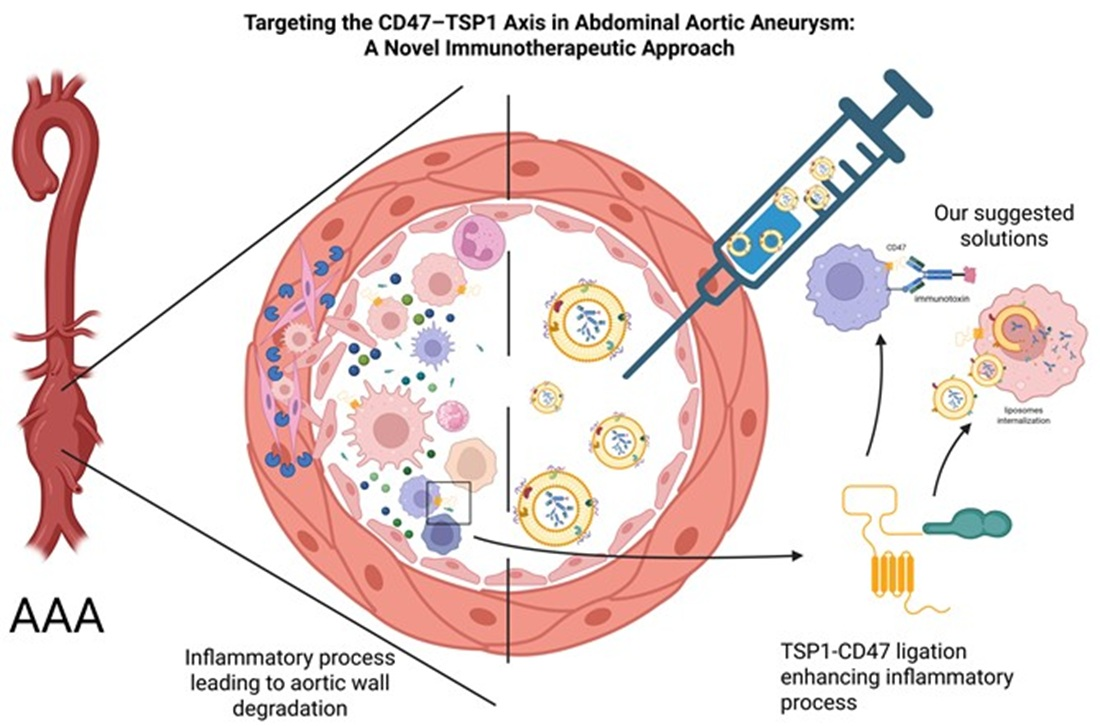
Targeting the CD47–TSP1 Axis in Abdominal Aortic Aneurysm: A Novel Immunotherapeutic Approach


Abstract
1. Introduction
2. Search Strategy and Selection Criteria
3. Molecular Basis of AAA Development
3.1. TSP-1 Role in AAA Progression
3.2. CD47 Receptor: Structure and Role in Immune Regulation
4. Lack of Clinical Efficacy of MMP Inhibitors in the Management of AAA
4.1. Therapeutic Potential of MMP Inhibition in AAA
4.2. Translational Applications and Broader Therapeutic Challenges
5. Macrophage-Mediated Remodeling and Destruction of the Aortic Wall
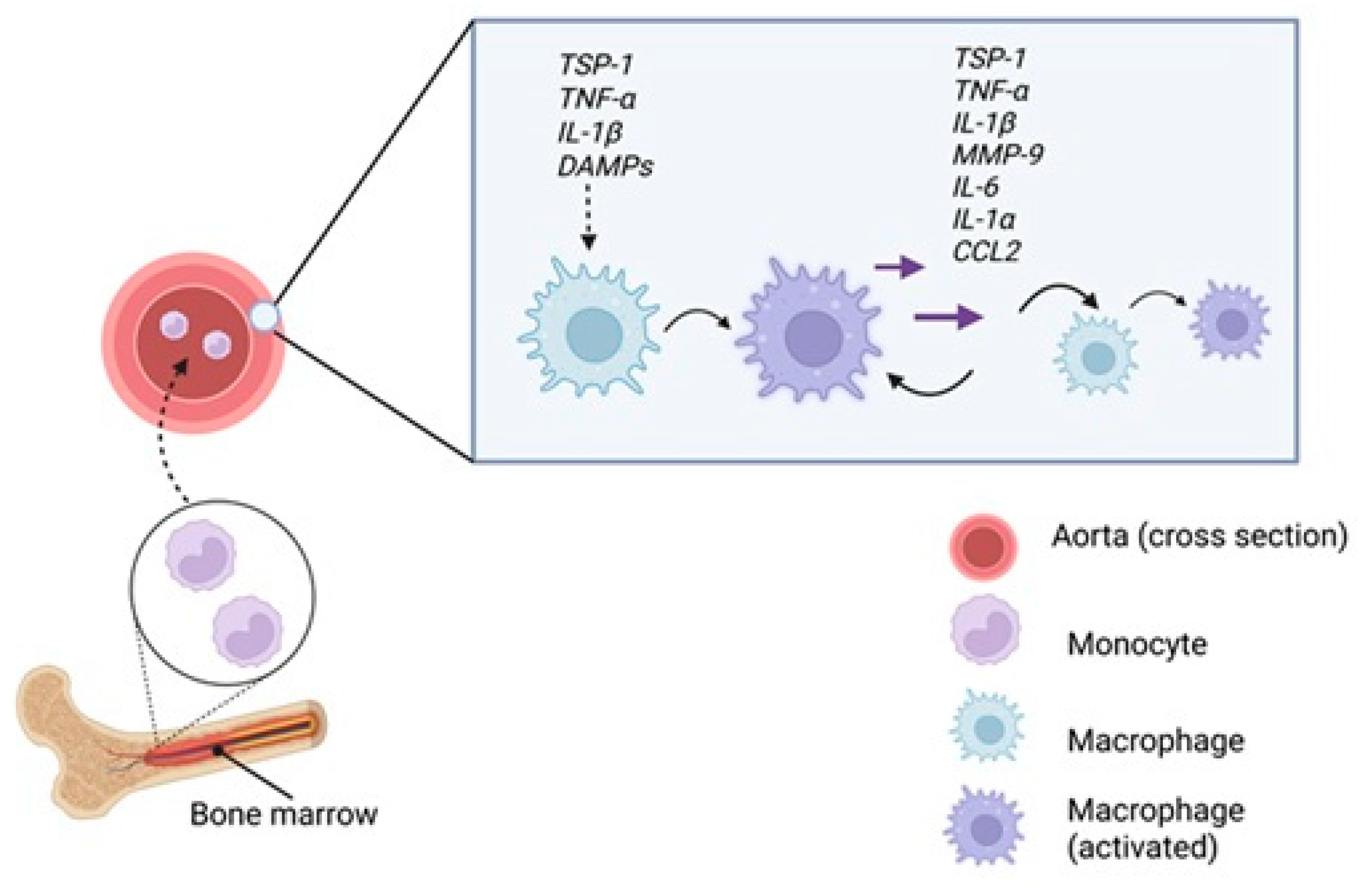
5.1. Monocyte Recruitment and Differentiation
5.2. Activation of Macrophages in AAA
5.3. Macrophage-Mediated Structural Remodeling of the Aortic Wall
5.4. Interferon-Inducible Macrophages in AAA Pathogenesis
5.5. Therapeutic Potential of M2 Macrophages
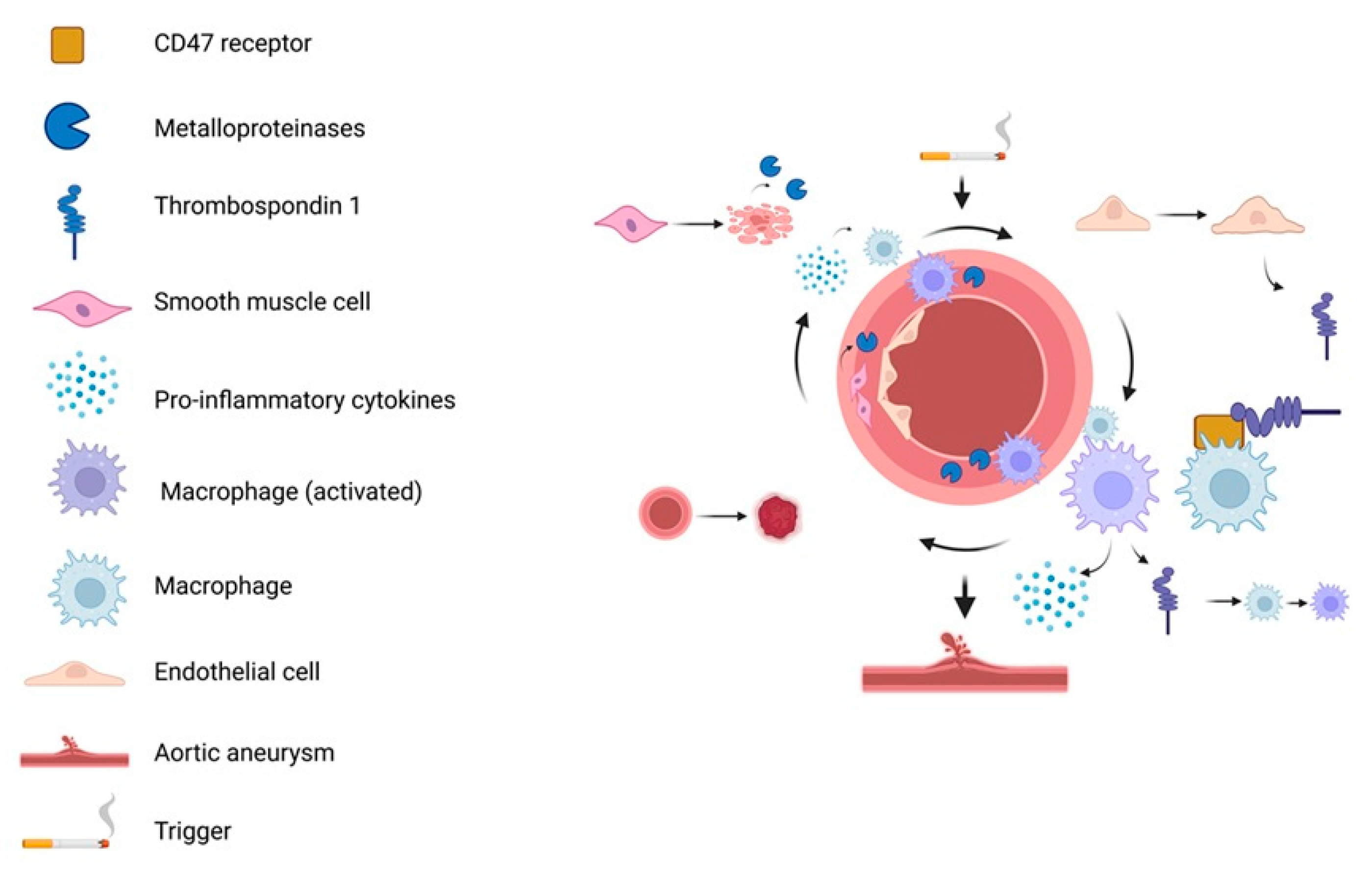
6. Inflammatory Loop of AAA
7. Anti-CD47 mo-Ab in Cancer
8. CD47 as a Therapeutic Target in Cardiovascular Disease
9. Future Applications: A Novel Treatment Proposal
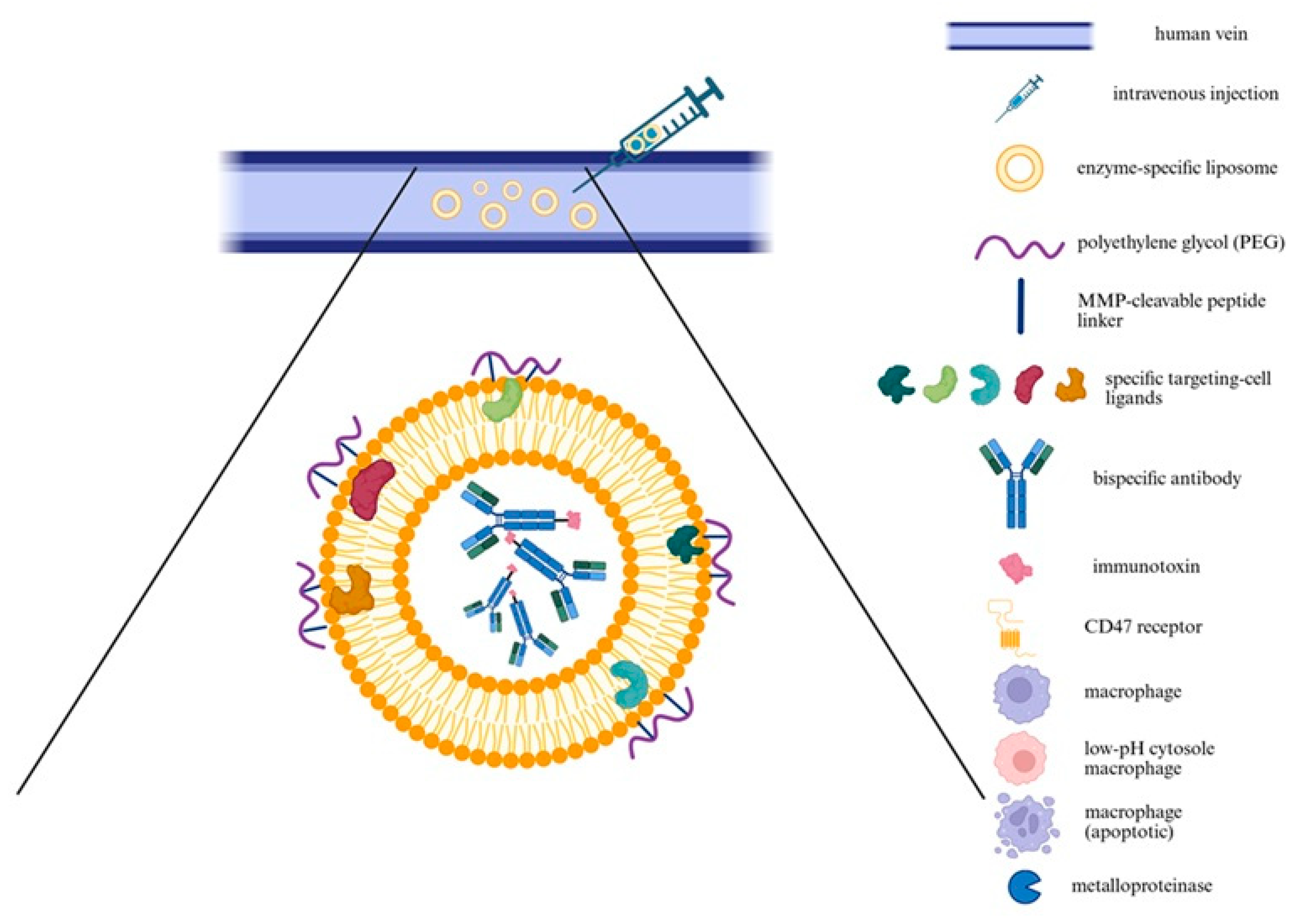
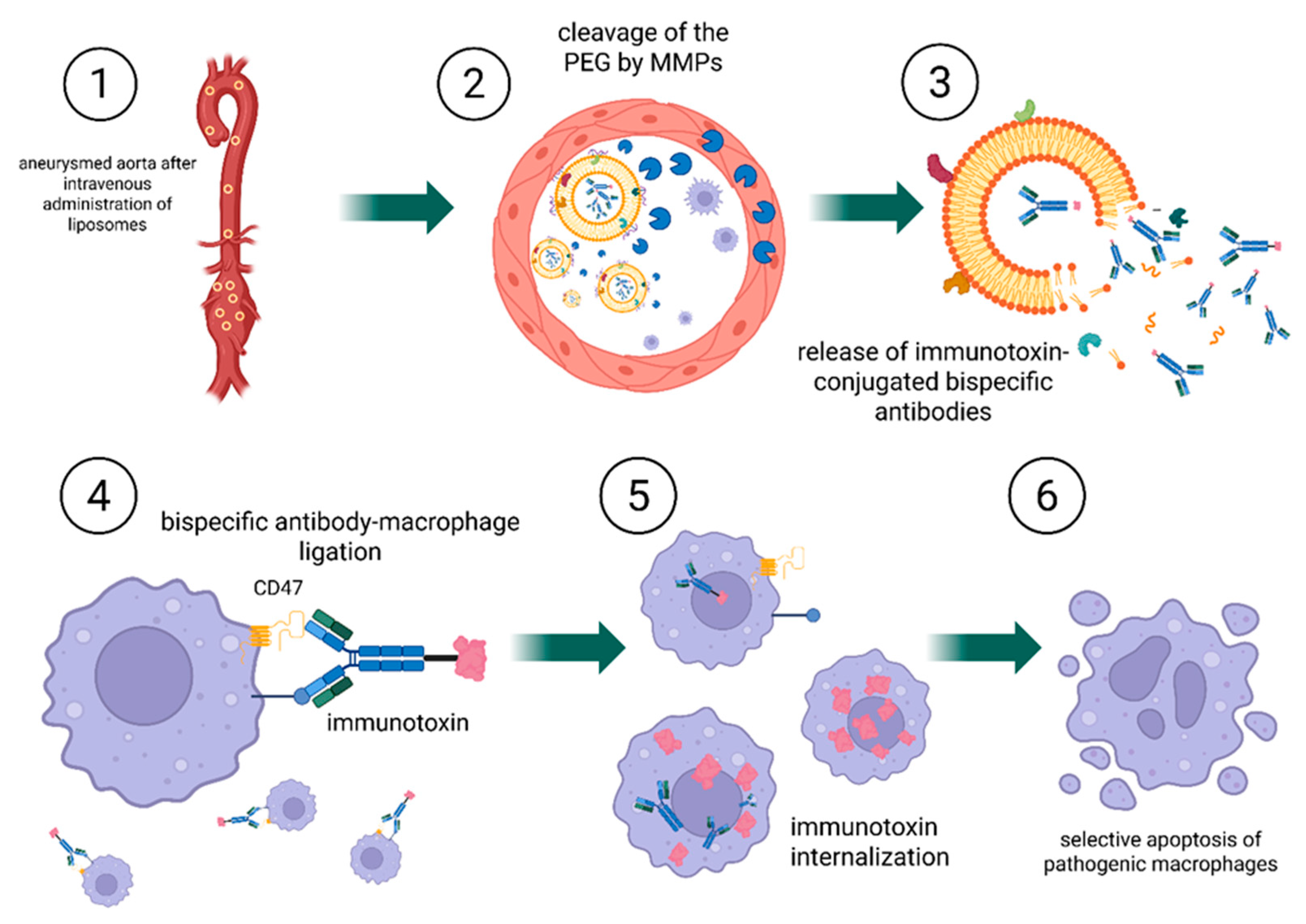
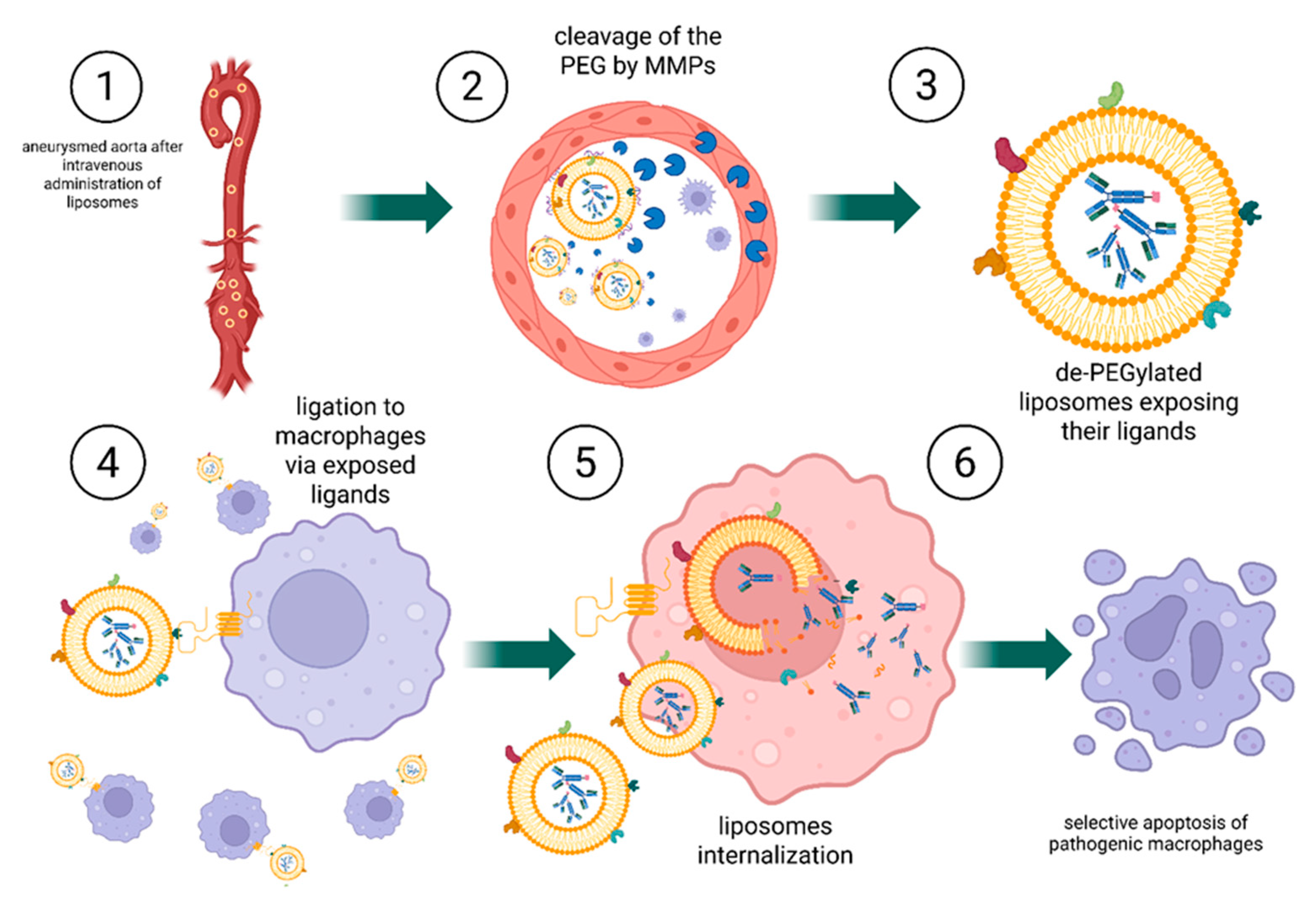
9.1. Targeted Delivery Approach
9.2. Safety Considerations and Translational Challenges of CD47 Blockade in AAA
9.3. Translational Limitations of Liposomal Delivery in AAA
10. Immunotoxins
10.1. Macrophage Specific Surface Markers
10.2. Presence of TREM2+ and CD86+ Macrophage Subsets in AAA Models
10.3. Challenges and Adjuvant Treatment
11. Future Directions
12. Discussion
13. Conclusions
Author Contributions
Funding
Institutional Review Board Statement
Informed Consent Statement
Data Availability Statement
Acknowledgments
Conflicts of Interest
Abbreviations
| AAA | Abdominal aortic aneurysm |
| ACE | Angiotensin-converting enzyme |
| ACS | Acute coronary syndrome |
| ADAMTS1 | A disintegrin and metalloproteinase with thrombospondin motifs 1 |
| AML | Acute myeloid leukemia |
| ARB | Angiotensin II receptor blockers |
| CaMKII | Ca2+/calmodulin-dependent protein kinase II |
| CCL1 | C-C motif ligand 2 |
| CCR2 | C-C chemokine receptor type 2 |
| CD47 | Cluster of Differentiation 47 |
| CD86 | Cluster of Differentiation 86 |
| CKD | Chronic kidney disease |
| COMP | Cartilage oligomeric matrix protein |
| cGAS–STING | Cyclic GMP-AMP synthase–stimulator of interferon genes |
| cGMP | Cyclic guanosine monophosphate |
| CTD | Intracellular domain |
| CVD | Cardiovascular disease |
| DAMP | Damage-associated molecular patterns |
| ECM | Extracellular matrix |
| ECD | Extracellular domain |
| EGF-like repeat | Epidermal Growth Factor-like domain |
| HDAC3 | Histone deacetylase 3 |
| HCC | Hepatocellular carcinoma |
| IFNICs | Interferon-inducible cells |
| IgV | Immunoglobulin Variable domain |
| IAP | Integrin-associated protein |
| Ifnar1 | Interferon alpha/beta receptor 1 |
| IL | Interleukin |
| IL-1β | Interleukin-1 beta |
| IRI | Ischemia–reperfusion injury |
| iNOS | Inducible Nitric Oxide Synthase |
| ITIM | Immunoreceptor Tyrosine-based Inhibitory Motif |
| JAK–STAT | Janus kinase–signal transducer and activator of transcription |
| MDS | Myelodysplastic syndromes |
| MEC | Mitoxantrone, Etoposide, Cytarabine |
| MCP-1 | Monocyte chemoattractant protein-1 |
| MMP | Matrix metalloproteinases |
| MSS | Musculoskeletal syndrome |
| mTOR | Mechanistic Target of Rapamycin |
| NLC | Nanostructured lipid carrier |
| NF-κB | Nuclear Factor kappa-light-chain-enhancer of activated B cells |
| NHL | Non-Hodgkin lymphoma |
| NO | Nitric oxide |
| PAH | Pulmonary arterial hypertension |
| PD-L1 | Programmed Death-Ligand 1 |
| PEG | Polyethylene Glycol |
| PC | Procollagen homology domain |
| R-spondins | Roof plate–specific spondins |
| SCO | Subcommissural organ spondin |
| SH2 | Src Homology 2 domain |
| SHP1 | Src Homology region 2 domain-containing Phosphatase-1 |
| SHP2 | Src Homology region 2 domain-containing Phosphatase-2 |
| SIRPα | Signal regulatory protein |
| SLE | Systemic lupus erythematosus |
| SS | Systemic sclerosis |
| TAT | Trans-Activator of Transcription |
| TIMP | Tissue inhibitors of metalloproteinases |
| TGF-β | Transforming growth factor |
| TMD | Transmembrane domain |
| TNF-α | Tumor necrosis factor-alpha |
| TREM | Triggering Receptor Expressed on Myeloid Cells 2 |
| TSR | Thrombospondin Type 1 Repeats |
| TSP1 | Thrombospondin-1 |
| VEGF | Vascular Endothelial Growth Factor |
| VSMC | Vascular smooth muscle cell |
References
- Møller, A.; Eldrup, N.; Wetterslev, J.; Hellemann, D.; Nielsen, H.B.; Rostgaard, K.; Hjalgrim, H.; Pedersen, O.B. Trends in Abdominal Aortic Aneurysm Repair Incidence, Comorbidity, Treatment, and Mortality: A Danish Nationwide Cohort Study, 1996–2018. Clin. Epidemiol. 2024, 16, 175–189. [Google Scholar] [CrossRef]
- Ghoddusi Johari, H.; Ranjbar, K.; Kassaee, K.; Hoseini, S.M.; Shahriarirad, M. Evaluation of Aneurysm Cases Undergoing Surgery at a Tertiary Center in Iran: A 22-Year Retrospective Study. Health Sci. Rep. 2025, 8, e70331. [Google Scholar] [CrossRef]
- Song, P.; He, Y.; Adeloye, D.; Zhu, Y.; Ye, X.; Yi, Q.; Rahimi, K.; Rudan, I.; Global Health Epidemiology Research Group (GHERG). The Global and Regional Prevalence of Abdominal Aortic Aneurysms: A Systematic Review and Modeling Analysis. Ann. Surg. 2023, 277, 912–919. [Google Scholar] [CrossRef]
- Altobelli, E.; Rapacchietta, L.; Profeta, V.F.; Fagnano, R. Risk Factors for Abdominal Aortic Aneurysm in Population-Based Studies: A Systematic Review and Meta-Analysis. Int. J. Environ. Res. Public Health 2018, 15, 2805. [Google Scholar] [CrossRef]
- Stępień, K.L.; Bajdak-Rusinek, K.; Fus-Kujawa, A.; Kuczmik, W.; Gawron, K. Role of Extracellular Matrix and Inflammation in Abdominal Aortic Aneurysm. Int. J. Mol. Sci. 2022, 23, 11078. [Google Scholar] [CrossRef]
- Greigert, H.; Bamdé, C.C.; Ramon, A.; Steinmetz, E.; Béjot, Y.; Bouchot, O.; Bonnotte, B.; Samson, M. Giant Cell Arteritis: Role of Surgery in the Management of Vascular Complications. Jt. Bone Spine 2025, 92, 105862. [Google Scholar] [CrossRef]
- Wanhainen, A.; Van Herzeele, I.; Bastos Goncalves, F.; Bellmunt Montoya, S.; Berard, X.; Boyle, J.R.; D’Oria, M.; Prendes, C.F.; Karkos, C.D.; Kazimierczak, A.; et al. ESVS 2024 Clinical Practice Guidelines on the Management of Abdominal Aorto-iliac Artery Aneurysms. Eur. J. Vasc. Endovasc. Surg. 2024, 67, 187–189. [Google Scholar] [CrossRef]
- Chaikof, E.L.; Dalman, R.L.; Eskandari, M.K.; Jackson, B.M.; Lee, W.A.; Mansour, M.A.; Mastracci, T.M.; Mell, M.; Murad, M.H.; Nguyen, L.L.; et al. The Society for Vascular Surgery practice guidelines on the care of patients with an abdominal aortic aneurysm. J. Vasc. Surg. 2018, 67, 2–77. [Google Scholar] [CrossRef] [PubMed]
- Sweeting, M.J.; Thompson, S.G.; Brown, L.C.; Powell, J.T.; RESCAN Collaborators. Meta-Analysis of Individual Patient Data to Examine Factors Affecting Growth and Rupture of Small Abdominal Aortic Aneurysms. Br. J. Surg. 2012, 99, 655–665. [Google Scholar] [CrossRef] [PubMed]
- Brady, A.R.; Thompson, S.G.; Fowkes, F.G.; Greenhalgh, R.M.; Powell, J.T.; UK Small Aneurysm Trial Participants. Abdominal Aortic Aneurysm Expansion: Risk Factors and Time Intervals for Surveillance. Circulation 2004, 110, 16–21. [Google Scholar] [CrossRef] [PubMed]
- US Preventive Services Task Force. Screening for Abdominal Aortic Aneurysm: Recommendation Statement. JAMA 2019, 322, 2211–2218. [Google Scholar] [CrossRef]
- Svensjö, S.; Björck, M.; Gürtelschmid, M.; Djavani Gidlund, K.; Hellberg, A.; Wanhainen, A. Low prevalence of abdominal aortic aneurysm among 65-year-old Swedish men indicates a change in the epidemiology. Circulation 2011, 124, 1118–1123. [Google Scholar] [CrossRef]
- Cosford, P.A.; Leng, G.C. Screening for abdominal aortic aneurysm. Cochrane Database Syst. Rev. 2007, 2, CD002945. [Google Scholar] [CrossRef]
- Davis, M.; Harris, M.; Earnshaw, J.J. Implementation of national AAA screening programs: Current status and perspectives. Vasc. Med. 2023, 28, 475–483. [Google Scholar]
- Stępień, K.L.; Auguściak-Duma, A.; Fus-Kujawa, A.; Diak, N.; Lesiak, M.; Bogunia, E.; Hermyt, M.; Czekaj, P.; Sznapka, M.; Ziaja, D.; et al. Abdominal aortic aneurysm: Characteristics of extracellular matrix abnormalities caused by disorders of collagen types I and III and elastin. Int. J. Cardiol. 2025, 444, 133973. [Google Scholar] [CrossRef] [PubMed]
- Longo, G.M.; Xiong, W.; Greiner, T.C.; Zhao, Y.; Fiotti, N.; Baxter, B.T. Matrix Metalloproteinases 2 and 9 Work in Concert to Produce Aortic Aneurysms. J. Clin. Investig. 2002, 110, 625–632. [Google Scholar] [CrossRef]
- Leite, T.F.O.; da Silva, E.R.; Gomes, K.; Tirapelli, D.P.D.C.; Joviliano, E.E. Expression of Plasma Levels of MMP-2, MMP-9, TIMP-1, and TIMP-2 in Patients with Abdominal Aortic Aneurysms. J. Vasc. Bras. 2025, 24, e20240163. [Google Scholar] [CrossRef]
- Auguściak-Duma, A.; Lesiak, M.; Stępień, K.; Gutmajster, E.; Sieroń, A.L. mRNA Expression of Thrombospondin 1, 2 and 3 from Proximal to Distal in Human Abdominal Aortic Aneurysm—Preliminary Report. Acta Biochim. Pol. 2021, 68, 745–750. [Google Scholar] [CrossRef]
- Meier, L.A.; Faragher, J.L.; Osinski, V.; Auger, J.L.; Voeller, R.; Marath, A.; Binstadt, B.A. CD47 Promotes Autoimmune Valvular Carditis by Impairing Macrophage Efferocytosis and Enhancing Cytokine Production. J. Immunol. 2022, 208, 2643–2651. [Google Scholar] [CrossRef]
- Yang, H.; Zhou, T.; Sorenson, C.M.; Sheibani, N.; Liu, B. Myeloid-Derived TSP1 (Thrombospondin-1) Contributes to Abdominal Aortic Aneurysm through Suppressing Tissue Inhibitor of Metalloproteinases-1. Arterioscler. Thromb. Vasc. Biol. 2020, 40, e350–e366. [Google Scholar] [CrossRef] [PubMed]
- Wilde, L.; Kasner, M. Targeting CD47: Many Misses; Hopeful for a Hit. Blood 2025, 145, 460–462. [Google Scholar] [CrossRef]
- Mannis, G.N.; Abboud, C.N.; Daver, N.G.; Murthy, G.S.G.; Wang, E.S.; Bradley, T.J.; Yaghmour, G.; Vachhani, P.; Balasubramanian, S.K.; Chua, C.C.; et al. Phase 2 Multi-Arm Study of Magrolimab Combinations in Patients with Acute Myeloid Leukaemia. EJHaem 2025, 6, e70051. [Google Scholar] [CrossRef]
- Nordon, I.M.; Hinchliffe, R.J.; Loftus, I.M.; Thompson, M.M. Pathophysiology and Epidemiology of Abdominal Aortic Aneurysms. Nat. Rev. Cardiol. 2011, 8, 92–102. [Google Scholar] [CrossRef]
- Kent, K.C. Clinical Practice. Abdominal Aortic Aneurysms. N. Engl. J. Med. 2014, 371, 2101–2108. [Google Scholar] [CrossRef] [PubMed]
- Wang, Y.; Ait-Oufella, H.; Herbin, O.; Bonnin, P.; Ramkhelawon, B.; Taleb, S.; Huang, J.; Offenstadt, G.; Combadière, C.; Rénia, L.; et al. TGF-β Activity Protects against Inflammatory Aortic Aneurysm Progression and Complications in Angiotensin II–Infused Mice. Arterioscler. Thromb. Vasc. Biol. 2010, 30, 1671–1677. [Google Scholar] [CrossRef] [PubMed]
- McCormick, M.L.; Gavrila, D.; Weintraub, N.L. Role of Oxidative Stress in the Pathogenesis of Abdominal Aortic Aneurysms. Arterioscler. Thromb. Vasc. Biol. 2007, 27, 461–469. [Google Scholar] [CrossRef] [PubMed]
- Thompson, R.W.; Geraghty, P.J.; Lee, J.K. Abdominal Aortic Aneurysms: Basic Mechanisms and Clinical Implications. Curr. Probl. Surg. 2002, 39, 110–230. [Google Scholar] [CrossRef]
- Tucker, R.P.; Adams, J.C. Molecular Evolution of the Thrombospondin Superfamily. Semin. Cell Dev. Biol. 2024, 155 Pt B, 12–21. [Google Scholar] [CrossRef]
- Kuivaniemi, H.; Platsoucas, C.D.; Tilson, M.D. 3rd. Aortic Aneurysms: An Immune Disease with a Strong Genetic Component. Circulation 2008, 117, 242–252. [Google Scholar] [CrossRef]
- Spin, J.M.; Hsu, M.; Azuma, J.; Tedesco, M.M.; Deng, A.; Dyer, J.S.; Maegdefessel, L.; Dalman, R.L.; Tsao, P.S. Transcriptional Profiling and Network Analysis of the Murine Angiotensin II–Induced Abdominal Aortic Aneurysm. Physiol. Genom. 2011, 43, 993–1003. [Google Scholar] [CrossRef]
- Thompson, S.G.; Ashton, H.A.; Gao, L.; Scott, R.A. Screening men for abdominal aortic aneurysm: 10-year mortality and cost-effectiveness. BMJ 2009, 338, b2307. [Google Scholar] [CrossRef]
- Alawattegama, L.H.; Gaddah, M.; Kimani, L.; Antoniou, G.A. The Effect of Diabetes on Abdominal Aortic Aneurysm Growth—Updated Systematic Review and Meta-Analysis. Vasa 2024, 53, 397–410. [Google Scholar] [CrossRef]
- Gurung, R.; Choong, A.M.; Woo, C.C.; Foo, R.; Sorokin, V. Genetic and Epigenetic Mechanisms Underlying Vascular Smooth Muscle Cell Phenotypic Modulation in Abdominal Aortic Aneurysm. Int. J. Mol. Sci. 2020, 21, 6334. [Google Scholar] [CrossRef]
- Maguire, E.M.; Pearce, S.W.A.; Xiao, R.; Oo, A.Y.; Xiao, Q. Matrix Metalloproteinase in Abdominal Aortic Aneurysm and Aortic Dissection. Pharmaceuticals 2019, 12, 118. [Google Scholar] [CrossRef] [PubMed]
- Klaus, V.; Tanios-Schmies, F.; Reeps, C.; Trenner, M.; Matevossian, E.; Eckstein, H.H.; Pelisek, J. Association of Matrix Metalloproteinase Levels with Collagen Degradation in the Context of Abdominal Aortic Aneurysm. Eur. J. Vasc. Endovasc. Surg. 2017, 53, 549–558. [Google Scholar] [CrossRef]
- Pan, H.; Lu, X.; Ye, D.; Feng, Y.; Wan, J.; Ye, J. The Molecular Mechanism of Thrombospondin Family Members in Cardiovascular Diseases. Front. Cardiovasc. Med. 2024, 11, 1337586. [Google Scholar] [CrossRef]
- Zhang, K.; Li, M.; Yin, L.; Fu, G.; Liu, Z. Role of Thrombospondin1 and Thrombospondin2 in Cardiovascular Diseases (Review). Int. J. Mol. Med. 2020, 45, 1275–1293. [Google Scholar]
- Chistiakov, D.A.; Melnichenko, A.A.; Myasoedova, V.A.; Grechko, A.V.; Orekhov, A.N. Thrombospondins: A Role in Cardiovascular Disease. Int. J. Mol. Sci. 2017, 18, 1540. [Google Scholar] [CrossRef] [PubMed]
- Guo, N.; Yang, L.; Wan, X.; Qiu, D.; Sun, W.; Ma, H. Relationship between Elevated Circulating Thrombospondin-1 Levels and Vascular Complications in Diabetes Mellitus. J. Diabetes Investig. 2024, 15, 197–207. [Google Scholar] [CrossRef]
- Barkhordarian, M.; Tran, H.H.; Menon, A.; Pulipaka, S.P.; Aguilar, I.K.; Fuertes, A.; Dey, S.; Chacko, A.A.; Sethi, T.; Bangolo, A.; et al. Innovation in Pathogenesis and Management of Aortic Aneurysm. World J. Exp. Med. 2024, 14, 91408. [Google Scholar] [CrossRef]
- Cho, M.J.; Lee, M.R.; Park, J.G. Aortic Aneurysms: Current Pathogenesis and Therapeutic Targets. Exp. Mol. Med. 2023, 55, 2519–2530. [Google Scholar] [CrossRef]
- Liao, W.; Xu, L.; Pan, Y.; Wei, J.; Wang, P.; Yang, X.; Chen, M.; Gao, Y. Association of Atrial Arrhythmias with Thrombospondin-1 in Patients with Acute Myocardial Infarction. BMC Cardiovasc. Disord. 2021, 21, 507. [Google Scholar]
- Palao, T.; Medzikovic, L.; Rippe, C.; Wanga, S.; Al-Mardini, C.; van Weert, A.; de Vos, J.; van der Wel, N.N.; van Veen, H.A.; van Bavel, E.T.; et al. Thrombospondin-4 Mediates Cardiovascular Remodelling in Angiotensin II-Induced Hypertension. Cardiovasc. Pathol. 2018, 35, 12–19. [Google Scholar] [CrossRef]
- Genaro, K.; Luo, Z.D. Pathophysiological Roles of Thrombospondin-4 in Disease Development. Semin. Cell Dev. Biol. 2024, 155 (Pt B), 66–73. [Google Scholar] [CrossRef]
- Ma, Z.; Wang, M.; Xu, X.; Zhang, Y.; Zhong, J.; Chen, M.; Su, P.; Zhao, L. Thrombospondin-1 Plasma Levels Associated with In-Hospital Major Adverse Cardiovascular Events in Patients with Acute Coronary Syndrome. Int. J. Cardiol. 2023, 375, 98–103. [Google Scholar] [CrossRef]
- Julovi, M.S.; Trinh, K.; Robertson, H.; Xu, C.; Minhas, N.; Viswanathan, S.; Patrick, E.; Horowitz, J.D.; Meijles, D.N.; Rogers, N.M. Thrombospondin-1 Drives Cardiac Remodeling in Chronic Kidney Disease. JACC Basic Transl. Sci. 2024, 9, 607–627. [Google Scholar]
- Huang, C.L.; Jong, Y.S.; Wu, Y.W.; Wang, W.J.; Hsieh, A.R.; Chao, C.L.; Chen, W.J.; Yang, W.S. Association of Plasma Thrombospondin-1 Level with Cardiovascular Disease and Mortality in Hemodialysis Patients. Acta Cardiol. Sin. 2015, 31, 113–119. [Google Scholar]
- MacFarlane, A.A.; Orriss, G.; Okun, N.; Meier, M.; Klonisch, T.; Khajehpour, M.; Stetefeld, J. The Pentameric Channel of COMPcc in Complex with Different Fatty Acids. PLoS ONE 2012, 7, e48130, Correction in PLoS ONE 2013, 8. [Google Scholar] [CrossRef] [PubMed][Green Version]
- Niu, J.; Liu, Y.; Wang, J.; Wang, H.; Zhao, Y.; Zhang, M. Thrombospondin-2 Acts as a Critical Regulator of Cartilage Regeneration: A Review. Medicine 2023, 102, e33651. [Google Scholar] [CrossRef] [PubMed]
- Hamaguchi-Hamada, K.; Kurumata-Shigeto, M.; Minobe, S.; Fukuoka, N.; Sato, M.; Matsufuji, M.; Koizumi, O.; Hamada, S. Thrombospondin Type-1 Repeat Domain-Containing Proteins Are Strongly Expressed in the Head Region of Hydra. PLoS ONE 2016, 11, e0151823. [Google Scholar] [CrossRef] [PubMed]
- Tan, K.; Duquette, M.; Liu, J.H.; Dong, Y.; Zhang, R.; Joachimiak, A.; Lawler, J.; Wang, J.H. Crystal Structure of the TSP-1 Type 1 Repeats: A Novel Layered Fold and Its Biological Implication. J. Cell Biol. 2002, 159, 373–382. [Google Scholar] [CrossRef]
- Kvansakul, M.; Adams, J.C.; Hohenester, E. Structure of a Thrombospondin C-Terminal Fragment Reveals a Novel Calcium Core in the Type 3 Repeats. EMBO J. 2004, 23, 1223–1233. [Google Scholar] [CrossRef]
- Kiss, A. Thrombospondin-1 in Chronic Kidney Disease Driven Cardiac Dysfunction: More Than Just a Biomarker? J. Am. Coll. Cardiol. Basic Transl. Sci. 2024, 9, 628–630. [Google Scholar]
- Feng, J.; Lu, Y.; Wu, H.; Ma, W.; Zhang, Y.; Guo, N. Knockdown of TSP-4 Alleviates MI/RI-Induced Myocardial Injury and Improves Brain Inflammation by Enhancing Blood–Brain Barrier Stability. Hum. Mol. Genet. 2025, 34, 934–944. [Google Scholar] [CrossRef] [PubMed]
- Fenalti, G.; Villanueva, N.; Griffith, M.; Pagarigan, B.; Lakkaraju, S.K.; Huang, R.Y.; Ladygina, N.; Sharma, A.; Mikolon, D.; Abbasian, M.; et al. Structure of the Human Marker of Self 5-Transmembrane Receptor CD47. Nat. Commun. 2021, 12, 5218. [Google Scholar] [CrossRef] [PubMed]
- Stefanidakis, M.; Newton, G.; Lee, W.Y.; Parkos, C.A.; Luscinskas, F.W. Endothelial CD47 Interaction with SIRPγ Is Required for Human T-Cell Transendothelial Migration under Shear Flow Conditions In Vitro. Blood 2008, 112, 1284–1293. [Google Scholar] [CrossRef] [PubMed]
- Sarfati, M.; Fortin, G.; Raymond, M.; Susin, S. CD47 in the Immune Response: Role of Thrombospondin and SIRP-Alpha Reverse Signaling. Curr. Drug Targets 2008, 9, 842–850. [Google Scholar] [CrossRef]
- Luo, X.; Shen, Y.; Huang, W.; Bao, Y.; Mo, J.; Yao, L.; Yuan, L. Blocking CD47–SIRPα Signal Axis as Promising Immunotherapy in Ovarian Cancer. Cancer Control 2023, 30, 10732748231159706. [Google Scholar] [CrossRef]
- Podolnikova, N.P.; Key, S.; Wang, X.; Ugarova, T.P. The Cis Association of CD47 with Integrin Mac-1 Regulates Macrophage Responses by Stabilizing the Extended Integrin Conformation. J. Biol. Chem. 2023, 299, 103024. [Google Scholar] [CrossRef]
- Eladl, E.; Tremblay-LeMay, R.; Rastgoo, N.; Musani, R.; Chen, W.; Liu, A.; Chang, H. Role of CD47 in Hematological Malignancies. J. Hematol. Oncol. 2020, 13, 96. [Google Scholar] [CrossRef]
- Kurihara, H.; Harita, Y.; Ichimura, K.; Hattori, S.; Sakai, T. SIRP-Alpha–CD47 System Functions as an Intercellular Signal in the Renal Glomerulus. Am. J. Physiol. Ren. Physiol. 2010, 299, F517–F527. [Google Scholar] [CrossRef]
- Jiang, Z.; Sun, H.; Yu, J.; Tian, W.; Song, Y. Targeting CD47 for Cancer Immunotherapy. J. Hematol. Oncol. 2021, 14, 180. [Google Scholar] [CrossRef]
- Gheibihayat, S.M.; Cabezas, R.; Nikiforov, N.G.; Jamialahmadi, T.; Johnston, T.P.; Sahebkar, A. CD47 in the Brain and Neurodegeneration: An Update on the Role in Neuroinflammatory Pathways. Molecules 2021, 26, 3943. [Google Scholar] [CrossRef]
- Smolle, M.A.; Pichler, M. Inflammation, Phagocytosis and Cancer: Another Step in the CD47 Act. J. Thorac. Dis. 2017, 9, 2279–2282. [Google Scholar] [CrossRef]
- Leclair, P.; Lim, C.J. CD47 (Cluster of Differentiation 47): An Anti-Phagocytic Receptor with a Multitude of Signaling Functions. Anim. Cells Syst. 2020, 24, 243–252. [Google Scholar] [CrossRef] [PubMed]
- Gorantla, K.R.; Krishnan, A.; Waheed, S.O.; Varghese, A.; DiCastri, I.; LaRouche, C.; Paik, M.; Fields, G.B.; Karabencheva-Christova, T.G. Novel Insights into the Catalytic Mechanism of Collagenolysis by Zn(II)-Dependent Matrix Metalloproteinase-1. Biochemistry 2024, 63, 1925–1940. [Google Scholar] [CrossRef]
- Cabral-Pacheco, G.A.; Garza-Veloz, I.; Castruita-De la Rosa, C.; Ramirez-Acuña, J.M.; Perez-Romero, B.A.; Guerrero-Rodriguez, J.F.; Martinez-Avila, N.; Martinez-Fierro, M.L. The Roles of Matrix Metalloproteinases and Their Inhibitors in Human Diseases. Int. J. Mol. Sci. 2020, 21, 9739. [Google Scholar] [CrossRef] [PubMed]
- Hey, S.; Linder, S. Matrix Metalloproteinases at a Glance. J. Cell Sci. 2023, 136, jcs260837. [Google Scholar] [CrossRef]
- Li, Y.; Wang, W.; Li, L.; Khalil, R.A. MMPs and ADAMs/ADAMTS Inhibition Therapy of Abdominal Aortic Aneurysm. Life Sci. 2020, 253, 117659. [Google Scholar] [CrossRef]
- Atkinson, G.; Bianco, R.; Di Gregoli, K.; Johnson, J.L. The Contribution of Matrix Metalloproteinases and Their Inhibitors to the Development, Progression, and Rupture of Abdominal Aortic Aneurysms. Front. Cardiovasc. Med. 2023, 10, 1248561. [Google Scholar] [CrossRef] [PubMed]
- Fields, G.B. The Rebirth of Matrix Metalloproteinase Inhibitors: Moving Beyond the Dogma. Cells 2019, 8, 984. [Google Scholar] [CrossRef] [PubMed]
- Lindeman, J.H.; Abdul-Hussien, H.; van Bockel, J.H.; Wolterbeek, R.; Kleemann, R. Clinical Trial of Doxycycline for Matrix Metalloproteinase-9 Inhibition in Patients with an Abdominal Aneurysm: Doxycycline Selectively Depletes Aortic Wall Neutrophils and Cytotoxic T Cells. Circulation 2009, 119, 2209–2216. [Google Scholar] [CrossRef]
- Sawada, H.; Daugherty, A.; Lu, H.S. Divergent Roles of Matrix Metalloproteinase 12 in Abdominal Aortic Aneurysms. Circ. Res. 2023, 132, 449–451. [Google Scholar] [CrossRef]
- Salata, K.; Syed, M.; Hussain, M.A.; de Mestral, C.; Greco, E.; Mamdani, M.; Tu, J.V.; Forbes, T.L.; Bhatt, D.L.; Verma, S.; et al. Statins Reduce Abdominal Aortic Aneurysm Growth, Rupture, and Perioperative Mortality: A Systematic Review and Meta-Analysis. J. Am. Heart Assoc. 2018, 7, e008657. [Google Scholar] [CrossRef]
- Takagi, H.; Umemoto, T. ACE inhibitors and angiotensin receptor blockers reduce abdominal aortic aneurysm expansion: Meta-analysis. Int. J. Cardiol. 2017, 226, 295–299. [Google Scholar]
- Propranolol Aneurysm Trial Investigators. Propranolol for small abdominal aortic aneurysms. JAMA 2002, 287, 1829–1835. [Google Scholar]
- Dorjay Tamang, J.S.; Banerjee, S.; Baidya, S.K.; Das, S.; Ghosh, B.; Jha, T.; Adhikari, N. An Overview of Matrix Metalloproteinase-12 in Multiple Disease Conditions, Potential Selective Inhibitors, and Drug Designing Strategies. Eur. J. Med. Chem. 2025, 283, 117154. [Google Scholar] [CrossRef]
- Alves, R.; Pires, A.; Jorge, J.; Balça-Silva, J.; Gonçalves, A.C.; Sarmento-Ribeiro, A.B. Batimastat Induces Cytotoxic and Cytostatic Effects in In Vitro Models of Hematological Tumors. Int. J. Mol. Sci. 2024, 25, 4554. [Google Scholar] [CrossRef]
- Szczygielski, O.; Dąbrowska, E.; Niemyjska, S.; Przylipiak, A.; Zajkowska, M. Targeting Matrix Metalloproteinases and Their Inhibitors in Melanoma. Int. J. Mol. Sci. 2024, 25, 13558. [Google Scholar] [CrossRef] [PubMed]
- Horta, M.; Soares, P.; Sarmento, B.; Leite Pereira, C.; Lima, R.T. Nanostructured Lipid Carriers for Enhanced Batimastat Delivery across the Blood–Brain Barrier: An In Vitro Study for Glioblastoma Treatment. Drug Deliv. Transl. Res. 2025. Online ahead of print. [Google Scholar] [CrossRef] [PubMed]
- Zhao, M.; Hu, L.; Lin, Z.; Yue, X.; Zheng, X.; Piao, M.; Jin, X.; Piao, L.; Cui, R.; Liu, M.; et al. Plasminogen Activator Inhibitor 1 Controls Abdominal Aortic Aneurysm Formation via the Modulation of TGF-β/Smad2/3 Signaling in Mice. FASEB J. 2025, 39, e70562. [Google Scholar] [CrossRef]
- Yao, G.; Hu, X.; Song, D.; Yao, J.; Chen, D.; Luan, T.; Zhao, Y. Identification of Macrophage-Related Biomarkers for Abdominal Aortic Aneurysm through Combined Single-Cell Sequencing and Machine Learning. J. Inflamm. Res. 2024, 17, 11009–11027. [Google Scholar] [CrossRef]
- Nie, H.; Huang, Z.S.; Liu, G.; Li, T.S. Diabetes-Induced Alteration of Metal Ion Levels Declines the Activity of MMPs to Decrease Aortic Aneurysm Risk. Life Sci. 2025, 360, 123243. [Google Scholar] [CrossRef]
- Cheng, S.; Liu, Y.; Jing, Y.; Jiang, B.; Wang, D.; Chu, X.; Jia, L.; Xin, S. Identification of Key Monocytes/Macrophages Related Gene Set of the Early-Stage Abdominal Aortic Aneurysm by Integrated Bioinformatics Analysis and Experimental Validation. Front. Cardiovasc. Med. 2022, 9, 950961. [Google Scholar] [CrossRef]
- Dash, S.P.; Gupta, S.; Sarangi, P.P. Monocytes and Macrophages: Origin, Homing, Differentiation, and Functionality during Inflammation. Heliyon 2024, 10, e28364. [Google Scholar] [CrossRef] [PubMed]
- Klopf, J.; Zagrapan, B.; Brandau, A.; Lechenauer, P.; Candussi, C.J.; Rossi, P.; Celem, N.D.; Ziegler, M.; Fuchs, L.; Hayden, H.; et al. Circulating Monocyte Populations as Biomarker for Abdominal Aortic Aneurysms: A Single-Center Retrospective Cohort Study. Front. Immunol. 2024, 15, 1392886. [Google Scholar] [CrossRef] [PubMed]
- Evers, T.M.J.; Sheikhhassani, V.; Haks, M.C.; Storm, C.; Ottenhoff, T.H.M.; Mashaghi, A. Single-Cell Analysis Reveals Chemokine-Mediated Differential Regulation of Monocyte Mechanics. iScience 2021, 25, 104333. [Google Scholar] [CrossRef] [PubMed]
- Gunnersen, S.; Shim, J.T.; Liu, F.; Tietge, U.J.F.; Sørensen, C.B.; Bentzon, J.F. Conditional Deletion of Ccl2 in Smooth Muscle Cells Does Not Reduce Early Atherosclerosis in Mice. Atheroscler. Plus 2024, 55, 12–20. [Google Scholar] [CrossRef]
- Kumar, R.; Nolan, K.; Kassa, B.; Chanana, N.; Palmo, T.; Sharma, K.; Singh, K.; Mickael, C.; Fonseca Balladares, D.; Nilsson, J.; et al. Monocytes and Interstitial Macrophages Contribute to Hypoxic Pulmonary Hypertension. J. Clin. Investig. 2025. Online ahead of print. [Google Scholar] [CrossRef]
- Kratofil, R.M.; Kubes, P.; Deniset, J.F. Monocyte Conversion during Inflammation and Injury. Arterioscler. Thromb. Vasc. Biol. 2017, 37, 35–42. [Google Scholar] [CrossRef]
- Li, S.; Pan, M.; Zhao, H.; Li, Y. Role of CCL2/CCR2 Axis in Pulmonary Fibrosis Induced by Respiratory Viruses. J. Microbiol. Immunol. Infect. 2025. Online ahead of print. [Google Scholar] [CrossRef]
- de Aguiar, M.F.; Torquato, H.; Salu, B.R.; Oliveira, A.C.D.; Oliva, M.L.V.; Paredes-Gamero, E.J.; Abdulahad, W.H.; Brouwer, E.; de Souza, A.W.S. Monocyte Subsets and Monocyte-Related Chemokines in Takayasu Arteritis. Sci. Rep. 2023, 13, 2092. [Google Scholar] [CrossRef] [PubMed]
- Potteaux, S.; Tedgui, A. Monocytes, Macrophages and Other Inflammatory Mediators of Abdominal Aortic Aneurysm. Curr. Pharm. Des. 2015, 21, 4007–4015. [Google Scholar] [CrossRef] [PubMed]
- Ashida, S.; Yamawaki-Ogata, A.; Tokoro, M.; Mutsuga, M.; Usui, A.; Narita, Y. Administration of Anti-Inflammatory M2 Macrophages Suppresses Progression of Angiotensin II-Induced Aortic Aneurysm in Mice. Sci. Rep. 2023, 13, 1380. [Google Scholar] [CrossRef]
- Lang, K.; Wang, X.; Wei, T.; Ning, X.; Chen, S.; Luo, Y.; Li, H.; Xu, Y.; Yang, D.; Song, Y. Extracellular Peroxiredoxin 6 Released from Alveolar Epithelial Cells as a DAMP Drives Macrophage Activation and Inflammatory Exacerbation in Acute Lung Injury. Int. Immunopharmacol. 2025, 148, 114023. [Google Scholar] [CrossRef]
- Jafarzadeh, S.; Nemati, M.; Zandvakili, R.; Jafarzadeh, A. Modulation of M1 and M2 Macrophage Polarization by Metformin: Implications for Inflammatory Diseases and Malignant Tumors. Int. Immunopharmacol. 2025, 151, 114345. [Google Scholar] [CrossRef]
- Karasaki, K.; Ishida, M.; Kokubo, H.; Sakai, C.; Kobayashi, Y.; Yoshizumi, M. Aged Garlic Extract Attenuates CaCl2-Induced Abdominal Aortic Aneurysm Formation by Inhibiting Matrix Metalloproteinase 9 Expression in Macrophages. Mol. Nutr. Food Res. 2025, 69, e70028. [Google Scholar] [CrossRef]
- Gabizon, A.A.; Gabizon-Peretz, S.; Modaresahmadi, S.; La-Beck, N.M. Thirty Years from FDA Approval of Pegylated Liposomal Doxorubicin (Doxil/Caelyx): An Updated Analysis and Future Perspective. BMJ Oncol. 2025, 4, e000573. [Google Scholar] [CrossRef]
- Millar, J.; Nasser, E.; Ailawadi, G.; Salmon, M. IL-1 in Abdominal Aortic Aneurysms. J. Cell. Immunol. 2023, 5, 22–29. [Google Scholar] [CrossRef]
- Wang, F.; Liu, Y.H.; Zhang, T.; Hou, X.; Xin, Y.; Xie, G.Y.; Zhao, W.J.; Wang, X.; Sun, T.; Hu, Z.; et al. Blockade of TSP-1/CD47 Signal Axis Promotes Donor Hematopoietic Engraftment by Improving SEC/MK Niche Function. iScience 2025, 28, 109845. [Google Scholar] [CrossRef] [PubMed]
- Le, S.; Wu, J.; Liu, H.; Du, Y.; Wang, D.; Luo, J.; Yang, P.; Ran, S.; Hu, P.; Chen, M.; et al. Single-Cell RNA Sequencing Identifies Interferon-Inducible Monocytes/Macrophages as a Cellular Target for Mitigating the Progression of Abdominal Aortic Aneurysm and Rupture Risk. Cardiovasc. Res. 2024, 120, 1351–1364. [Google Scholar] [CrossRef]
- Hu, M.; Yao, Z.; Xu, L.; Peng, M.; Deng, G.; Liu, L.; Jiang, X.; Cai, X. M2 Macrophage Polarization in Systemic Sclerosis Fibrosis: Pathogenic Mechanisms and Therapeutic Effects. Heliyon 2023, 9, e16206. [Google Scholar] [CrossRef]
- Yamashiro, Y.; Thang, B.Q.; Shin, S.J.; Lino, C.A.; Nakamura, T.; Kim, J.; Sugiyama, K.; Tokunaga, C.; Sakamoto, H.; Osaka, M.; et al. Role of Thrombospondin-1 in Mechanotransduction and Development of Thoracic Aortic Aneurysm in Mouse and Humans. Circ. Res. 2018, 123, 660–672, Erratum in Circ. Res. 2020, 127, e142. [Google Scholar] [CrossRef]
- Chao, C.L.; Applewhite, B.; Reddy, N.K.; Matiuto, N.; Dang, C.; Jiang, B. Advances and Challenges in Regenerative Therapies for Abdominal Aortic Aneurysm. Front. Cardiovasc. Med. 2024, 11, 1369785. [Google Scholar] [CrossRef]
- Zhao, G.; Lu, H.; Chang, Z.; Zhao, Y.; Zhu, T.; Chang, L.; Guo, Y.; Garcia-Barrio, M.T.; Chen, Y.E.; Zhang, J. Single-Cell RNA Sequencing Reveals the Cellular Heterogeneity of Aneurysmal Infrarenal Abdominal Aorta. Cardiovasc. Res. 2021, 117, 1402–1416. [Google Scholar] [CrossRef] [PubMed]
- Hawkes, E.; Lewis, K.L.; Wong Doo, N.; Patil, S.S.; Miskin, H.P.; Sportelli, P.; Kolibaba, K.S.; Normant, E.; Turpuseema, T.; Cheah, C.Y. First-in-Human (FIH) Study of the Fully Human Kappa–Lambda CD19/CD47 Bispecific Antibody TG-1801 in Patients with B-Cell Lymphoma. Blood 2024, 144 (Suppl. S1), 1043. [Google Scholar]
- Ye, Z.H.; Yu, W.B.; Huang, M.Y.; Chen, J.; Lu, J.J. Building on the Backbone of CD47-Based Therapy in Cancer: Combination Strategies, Mechanisms, and Future Perspectives. Acta Pharm. Sin. B 2023, 13, 1467–1487. [Google Scholar] [CrossRef] [PubMed]
- Zhao, H.; Song, S.; Ma, J.; Yan, Z.; Xie, H.; Feng, Y.; Che, S. CD47 as a promising therapeutic target in oncology. Front. Immunol. 2022, 13, 757480. [Google Scholar] [CrossRef]
- Chen, Q.; Guo, X.; Ma, W. Opportunities and challenges of CD47-targeted therapy in cancer immunotherapy. Oncol. Res. 2023, 32, 49–60. [Google Scholar] [CrossRef] [PubMed] [PubMed Central]
- Stirling, E.R.; Terabe, M.; Wilson, A.S.; Kooshki, M.; Yamaleyeva, L.M.; Alexander-Miller, M.A.; Zhang, W.; Miller, L.D.; Triozzi, P.L.; Soto-Pantoja, D.R. Targeting the CD47/thrombospondin-1 signaling axis regulates immune cell bioenergetics in the tumor microenvironment to potentiate antitumor immune response. J. Immunother. Cancer 2022, 10, e004712. [Google Scholar] [CrossRef] [PubMed] [PubMed Central]
- Moniot, A.; Schneider, C.; Chardin, L.; Yaniz-Galende, E.; Genestie, C.; Etiennot, M.; Henry, A.; Drelon, C.; Le Formal, A.; Langlois, B.; et al. The CD47/TSP-1 axis: A promising avenue for ovarian cancer treatment and biomarker research. Mol. Cancer 2024, 23, 166. [Google Scholar] [CrossRef]
- Isenberg, J.S.; Ridnour, L.A.; Dimitry, J.; Frazier, W.A.; Wink, D.A.; Roberts, D.D. CD47 Is Necessary for Inhibition of Nitric Oxide-Stimulated Vascular Cell Responses by Thrombospondin-1. J. Biol. Chem. 2006, 281, 26069–26080. [Google Scholar] [CrossRef]
- Rogers, N.M.; Sharifi-Sanjani, M.; Csányi, G.; Pagano, P.J.; Isenberg, J.S. Thrombospondin-1 and CD47 Regulation of Cardiac, Pulmonary and Vascular Responses in Health and Disease. Matrix Biol. 2014, 37, 92–101. [Google Scholar] [CrossRef]
- Godo, S.; Shimokawa, H. Divergent Roles of Endothelial Nitric Oxide Synthase System in Maintaining Cardiovascular Homeostasis. Free Radic. Biol. Med. 2017, 109, 4–10. [Google Scholar] [CrossRef]
- Ghimire, K.; Li, Y.; Chiba, T.; Julovi, S.M.; Li, J.; Ross, M.A.; Straub, A.C.; O’Connell, P.J.; Rüegg, C.; Pagano, P.J.; et al. CD47 Promotes Age-Associated Deterioration in Angiogenesis, Blood Flow and Glucose Homeostasis. Cells 2020, 9, 1695. [Google Scholar] [CrossRef] [PubMed]
- Li, G.; Chen, J.; Wang, Z.; Kang, S.; Liu, Y.; Ai, X.; Wang, C.; Jiang, S. CD47 Blockade Reduces Ischemia/Reperfusion Injury in Murine Heart Transplantation and Improves Donor Heart Preservation. Int. Immunopharmacol. 2024, 132, 111953. [Google Scholar] [CrossRef] [PubMed]
- Kelley, S.M.; Ravichandran, K.S. Putting the Brakes on Phagocytosis: “Don’t-Eat-Me” Signaling in Physiology and Disease. EMBO Rep. 2021, 22, e52564. [Google Scholar] [CrossRef]
- Govatati, S.; Pichavaram, P.; Kumar, R.; Rao, G.N. Blockade of CD47 Function Attenuates Restenosis by Promoting Smooth Muscle Cell Efferocytosis and Inhibiting Their Migration and Proliferation. J. Biol. Chem. 2023, 299, 104594. [Google Scholar] [CrossRef]
- Bauer, P.M.; Bauer, E.M.; Rogers, N.M.; Yao, M.; Feijoo-Cuaresma, M.; Pilewski, J.M.; Champion, H.C.; Zuckerbraun, B.S.; Calzada, M.J.; Isenberg, J.S. Activated CD47 Promotes Pulmonary Arterial Hypertension through Targeting Caveolin-1. Cardiovasc. Res. 2012, 93, 682–693. [Google Scholar] [CrossRef] [PubMed]
- Deng, W.Q.; Ye, Z.H.; Tang, Z.; Zhang, X.L.; Lu, J.J. Beyond Cancer: The Potential Application of CD47-Based Therapy in Non-Cancer Diseases. Acta Pharm. Sin. B 2025, 15, 757–791. [Google Scholar] [CrossRef]
- Isenberg, J.S.; Roberts, D.D.; Frazier, W.A. CD47: A New Target in Cardiovascular Therapy. Arterioscler. Thromb. Vasc. Biol. 2008, 28, 615–621. [Google Scholar] [CrossRef] [PubMed]
- Petralia, M.C.; Mazzon, E.; Fagone, P.; Russo, A.; Longo, A.; Avitabile, T.; Nicoletti, F.; Reibaldi, M.; Basile, M.S. Characterization of the Pathophysiological Role of CD47 in Uveal Melanoma. Molecules 2019, 24, 2450. [Google Scholar] [CrossRef]
- Park, J.K.; Lee, Y.J.; Park, J.S.; Lee, E.B.; Song, Y.W. CD47 Potentiates Inflammatory Response in Systemic Lupus Erythematosus. Cells 2021, 10, 1151. [Google Scholar] [CrossRef]
- Shiratori-Aso, S.; Nakazawa, D.; Kudo, T.; Kanda, M.; Ueda, Y.; Watanabe-Kusunoki, K.; Nishio, S.; Iwasaki, S.; Tsuji, T.; Masuda, S.; et al. CD47 Blockade Ameliorates Autoimmune Vasculitis via Efferocytosis of Neutrophil Extracellular Traps. JCI Insight 2023, 8, e167486. [Google Scholar] [CrossRef] [PubMed]
- Gao, L.; He, Z.; Wu, Y. Advances in Anti-Metabolic Disease Treatments Targeting CD47. Curr. Pharm. Des. 2022, 28, 3720–3728. [Google Scholar] [CrossRef]
- Li, H.; Bai, S.; Ao, Q.; Wang, X.; Tian, X.; Li, X.; Tong, H.; Hou, W.; Fan, J. Modulation of Immune-Inflammatory Responses in Abdominal Aortic Aneurysm: Emerging Molecular Targets. J. Immunol. Res. 2018, 2018, 7213760. [Google Scholar] [CrossRef]
- Urooj, W.; Ahmed, B.; Shahzad, Y.; Siddiqui, A.; Mughal, Z.U.N.; Ahmed, K.A.H. FDA Endorses NALIRIFOX for Metastatic Pancreatic Adenocarcinoma: An Editorial. Ann. Med. Surg. 2024, 86, 5685–5687. [Google Scholar] [CrossRef]
- Fouladi, F.; Steffen, K.J.; Mallik, S. Enzyme-Responsive Liposomes for the Delivery of Anticancer Drugs. Bioconjug. Chem. 2017, 28, 857–868. [Google Scholar] [CrossRef]
- Askarizadeh, A.; Mashreghi, M.; Mirhadi, E.; Mirzavi, F.; Shargh, V.H.; Badiee, A.; Alavizadeh, S.H.; Arabi, L.; Jaafari, M.R. Doxorubicin-Loaded Liposomes Surface Engineered with the Matrix Metalloproteinase-2 Cleavable Polyethylene Glycol Conjugate for Cancer Therapy. Cancer Nanotechnol. 2023, 14, 18. [Google Scholar] [CrossRef]
- Matar, S.; Skah, S.; Diomande, L.E.; Buss, T.; Hagland, H.R.; Yadav, A.; Forstrøm, R.J.; Dalhus, B.; Hestdal, K.; Pettersen, R.D.; et al. Development of a Novel Bifunctional Anti-CD47 Fusion Protein with Improved Efficacy and a Favorable Safety Profile. Mol. Cancer Ther. 2025, 24, 816–827. [Google Scholar] [CrossRef] [PubMed]
- Fobian, S.F.; Amin, M.; Sacchetti, A.; Oei, A.L.; Ten Hagen, T.L.M. Investigating the Delivery of PD-L1-Targeted Immunoliposomes in a Dynamic Cervical Cancer-On-a-Chip Model. J. Control. Release 2025, 379, 236–250, Correction in J. Control. Release 2025, 380, 1202. [Google Scholar] [CrossRef]
- Chang, R.; Chu, X.; Zhang, J.; Fu, R.; Feng, C.; Jia, D.; Wang, R.; Yan, H.; Li, G.; Li, J. Liposome-Based Co-Immunotherapy with TLR Agonist and CD47-SIRPα Checkpoint Blockade for Efficient Treatment of Colon Cancer. Molecules 2023, 28, 3147. [Google Scholar] [CrossRef] [PubMed]
- Zhao, M.; Zhou, L.; Zhai, Y.; Sun, A.; Shao, G.; Lin, Q. Macropinocytosis: Both a Target and a Tool for Cancer Therapy. Biomolecules 2025, 15, 936. [Google Scholar] [CrossRef] [PubMed]
- Advani, R.; Flinn, I.; Popplewell, L.; Forero, A.; Bartlett, N.L.; Ghosh, N.; Kline, J.; Roschewski, M.; LaCasce, A.; Collins, G.P.; et al. CD47 blockade by Hu5F9-G4 and rituximab in non-Hodgkin’s lymphoma. N. Engl. J. Med. 2018, 379, 1711–1721. [Google Scholar] [CrossRef]
- Sallman, D.A.; Al Malki, M.M.; Asch, A.S.; Wang, E.S.; Jurcic, J.G.; Bradley, T.J.; Flinn, I.W.; Pollyea, D.A.; Kambhampati, S.; Tanaka, T. Net al. Magrolimab combined with azacitidine in patients with myelodysplastic syndromes. J. Clin. Oncol. 2023, 41, 25–35. [Google Scholar] [CrossRef]
- Liu, J.; Wang, L.; Zhao, F.; Tseng, S.; Narayanan, C.; Shura, L.; Willingham, S.; Howard, M.; Prohaska, S.; Volkmer, J.; et al. Preclinical development of a humanized anti-CD47 antibody with anti-cancer therapeutic potential. PLoS ONE 2015, 10, e0137345. [Google Scholar]
- Xu, Z.; Liu, S.; Li, Y.; Wu, Y.; Tu, J.; Chen, Q.; Sun, C. Engineering Strategies of Sequential Drug Delivery Systems for Combination Tumor Immunotherapy. Acta Pharm. Sin. B 2025, 15, 3951–3977. [Google Scholar] [CrossRef] [PubMed]
- Suh, G.Y.; Les, A.S.; Tenforde, A.S.; Shadden, S.C.; Spilker, R.L.; Yeung, J.J.; Cheng, C.P.; Herfkens, R.J.; Dalman, R.L.; Taylor, C.A. Hemodynamic Changes Quantified in Abdominal Aortic Aneurysms with Increasing Exercise Intensity Using MR Exercise Imaging and Image-Based Computational Fluid Dynamics. Ann. Biomed. Eng. 2011, 39, 2186–2202. [Google Scholar] [CrossRef]
- Vorp, D.A. Biomechanics of abdominal aortic aneurysm. J. Vasc. Surg. 2019, 69, 935–946. [Google Scholar] [CrossRef]
- Yuan, G.; Wang, W.; Jia, X.; Liu, Z.; Cui, R.; Xu, Y.; Liu, Y.; Si, G. Multifunctional nanoparticles in abdominal aortic aneurysm management: From basic research to clinical transformation. J. Nanobiotechnol. 2025, 23, 636. [Google Scholar] [CrossRef]
- Bortolotti, M.; Polito, L.; Bolognesi, A. Toxin and Immunotoxin Based Therapeutic Approaches. Toxins 2022, 14, 63. [Google Scholar] [CrossRef]
- Khirehgesh, M.R.; Sharifi, J.; Safari, F.; Akbari, B. Immunotoxins and Nanobody-Based Immunotoxins: Review and Update. J. Drug Target. 2021, 29, 848–862. [Google Scholar] [CrossRef]
- Liu, X.; Tan, Q.; Wen, J.; Wang, X.; Yang, G.; Li, Y.; Lu, M.; Ye, W.; Si, A.; Ma, S.; et al. Improving the Cytotoxicity of Immunotoxins by Reducing the Affinity of the Antibody in Acidic pH. J. Transl. Med. 2023, 21, 572. [Google Scholar] [CrossRef] [PubMed]
- Liu, Z.; Song, X.; Wang, B.; Zeng, R.; Cui, L.; Zheng, Y.; Ye, W. Single-Cell RNA Sequencing Identifies Two Fibroblast Subtypes and a Trem2+ Macrophage Subtype as the Possible Specific Cellular Targets in Abdominal Aortic Aneurysms. Front. Immunol. 2025, 16, 1551308. [Google Scholar] [CrossRef]
- Keshari, S.; Shavkunov, A.S.; Miao, Q.; Saha, A.; Minowa, T.; Molgora, M.; Williams, C.D.; Chaib, M.; Highsmith, A.M.; Pineda, J.E.; et al. Comparing Neoantigen Cancer Vaccines and Immune Checkpoint Therapy Unveils an Effective Vaccine and Anti-TREM2 Macrophage-Targeting Dual Therapy. Cell Rep. 2024, 43, 114875. [Google Scholar] [CrossRef]
- Jia, L.; Wang, Y.; Jin, C.; Ma, Y.; Wang, Y.; Song, L.; Shen, J.; Xie, Y.; Xiang, M. Macrophage Heme Oxygenase-1 Modulates Peroxynitrite-Mediated Vascular Injury and Exacerbates Abdominal Aortic Aneurysm Development. Am. J. Physiol. Cell Physiol. 2025, 328, C1808–C1821. [Google Scholar] [CrossRef]
- Singh, S.; Zhao, F.; Fan, L.; Xin, W.; Liu, H.; Zhu, G.; Xu, C.; Zhang, D.; Tian, J.; Shaikh, I.I.; et al. Caspase-11 Deficiency Ameliorates Elastase-Induced Abdominal Aortic Aneurysm in Mice by Suppressing Inflammatory Response of Macrophages. Am. J. Physiol. Cell Physiol. 2025, 329, C93–C106. [Google Scholar] [CrossRef]
- Cione, E.; Piegari, E.; Gallelli, G.; Caroleo, M.C.; Lamirata, E.; Curcio, F.; Colosimo, F.; Cannataro, R.; Ielapi, N.; Colosimo, M.; et al. Expression of MMP-2, MMP-9, and NGAL in Tissue and Serum of Patients with Vascular Aneurysms and Their Modulation by Statin Treatment: A Pilot Study. Biomolecules 2020, 10, 359. [Google Scholar] [CrossRef]
- Skovbo, J.S.; Obel, L.M.; Diederichsen, A.C.; Steffensen, F.H.; Frost, L.; Lambrechtsen, J.; Busk, M.; Urbonaviciene, G.; Egstrup, K.; Dahl, M.; et al. Association of Statin Treatment and Dose With the Clinical Course of Small Abdominal Aortic Aneurysms in Men: A 5-Year Prospective Cohort Study From 2 Population-Based Screening Trials. Circulation 2025, 152, 384–396. [Google Scholar] [CrossRef] [PubMed]
- Hamann, B.; Klimova, A.; Kapalla, M.; Poitz, D.M.; Busch, A.; Morawietz, H.; Reeps, C.; Hofmann, A. Changes in monocyte subsets are associated with an increased risk of AAA and are surrogate markers for AAA morphology in patients with late-stage disease. Front. Immunol. 2025, 16, 1621888. [Google Scholar] [CrossRef] [PubMed]
- Zhao, X.; Li, Y. Matrix Metalloproteinase-2-Responsive Peptide-Modified Cleavable PEGylated Liposomes for Paclitaxel Delivery. Pharmaceuticals 2025, 18, 1042. [Google Scholar] [CrossRef] [PubMed]
- Gong, W.; Tian, Y.; Li, L. T cells in abdominal aortic aneurysm: Immunomodulation and clinical application. Front. Immunol. 2023, 14, 1240132. [Google Scholar] [CrossRef] [PubMed]
- Lin, Z.; Zhao, M.; Zhang, X.; Piao, J.; Zheng, X.; Shu, S.; Zhao, L.; Zhang, M.; Shi, G.P.; Lei, Y.; et al. CD8 + T-cell deficiency protects mice from abdominal aortic aneurysm formation in response to calcium chloride 2. J. Hypertens. 2024, 42, 1966–1975. [Google Scholar] [CrossRef] [PubMed] [PubMed Central]
- Gang, Q.; Lun, Y.; Zhang, X.; Uzokov, J.; Jiang, H.; He, Y.; Shen, S.; Wang, S.; Erhart, P.; Böckler, D.; et al. Targeting VCAM-1 with chimeric antigen receptor and regulatory T cell for abdominal aortic aneurysm treatment. Commun. Biol. 2025, 8, 1230. [Google Scholar] [CrossRef]
- Nakahara, T.; Miyazawa, R.; Iwabuchi, Y.; Tonda, K.; Narula, N.; Strauss, H.W.; Narula, J.; Jinzaki, M. Aortic uptake of 18F-NaF and 18F-FDG and calcification predict the development of abdominal aortic aneurysms and is attenuated by drug therapy. Arterioscler. Thromb. Vasc. Biol. 2024, 44, 1975–1985. [Google Scholar] [CrossRef]
- Roychowdhury, T.; Klarin, D.; Levin, M.G.; Spin, J.M.; Rhee, Y.H.; Deng, A.; Headley, C.A.; Tsao, N.L.; Gellatly, C.; Zuber, V.; et al. Genome-wide association meta-analysis identifies risk loci for abdominal aortic aneurysm and highlights PCSK9 as a therapeutic target. Nat. Genet. 2023, 55, 1831–1842. [Google Scholar] [CrossRef] [PubMed]



| Drug Name | Type | Therapeutic Application/Clinical Use | Mechanism of Action |
|---|---|---|---|
| Magrolimab | Humanized monoclonal antibody (IgG4) targeting CD47 | Acute Myeloid Leukemia (AML)–evaluated in combination with venetoclax + azacitidine or MEC in Phase 2 and 3 trials | On-target anemia observed; development in AML discontinued after modest Phase 3 results |
| Lemzoparlimab | Humanized monoclonal antibody (IgG4) targeting CD47 | Binds a distinct CD47 epitope compared to magrolimab, reducing red blood cell binding and anemia risk | Demonstrates favorable safety and preliminary efficacy; under continued investigation |
| TG-1801 | Bispecific antibody targeting CD19 and CD47 | Simultaneously targets CD19 and blocks CD47, enabling selective engagement of malignant B cells | Enhances precision via dual-antigen targeting; a promising strategy for improved selectivity |
Disclaimer/Publisher’s Note: The statements, opinions and data contained in all publications are solely those of the individual author(s) and contributor(s) and not of MDPI and/or the editor(s). MDPI and/or the editor(s) disclaim responsibility for any injury to people or property resulting from any ideas, methods, instructions or products referred to in the content. |
© 2025 by the authors. Licensee MDPI, Basel, Switzerland. This article is an open access article distributed under the terms and conditions of the Creative Commons Attribution (CC BY) license (https://creativecommons.org/licenses/by/4.0/).
Share and Cite
Stępień, K.L.; Janas, K.; Rojek, S. Targeting the CD47–TSP1 Axis in Abdominal Aortic Aneurysm: A Novel Immunotherapeutic Approach. Int. J. Mol. Sci. 2025, 26, 11042. https://doi.org/10.3390/ijms262211042
Stępień KL, Janas K, Rojek S. Targeting the CD47–TSP1 Axis in Abdominal Aortic Aneurysm: A Novel Immunotherapeutic Approach. International Journal of Molecular Sciences. 2025; 26(22):11042. https://doi.org/10.3390/ijms262211042
Chicago/Turabian StyleStępień, Karolina L., Katarzyna Janas, and Stanisław Rojek. 2025. "Targeting the CD47–TSP1 Axis in Abdominal Aortic Aneurysm: A Novel Immunotherapeutic Approach" International Journal of Molecular Sciences 26, no. 22: 11042. https://doi.org/10.3390/ijms262211042
APA StyleStępień, K. L., Janas, K., & Rojek, S. (2025). Targeting the CD47–TSP1 Axis in Abdominal Aortic Aneurysm: A Novel Immunotherapeutic Approach. International Journal of Molecular Sciences, 26(22), 11042. https://doi.org/10.3390/ijms262211042