Review

Role of Calcitriol and Vitamin D Receptor (VDR) Gene Polymorphisms in Alzheimer’s Disease

by
Soon Pyo Jeong
,
Niti Sharma
* and
Seong Soo A. An
*
Bionano Research Institute, Gachon University, 1342 Seongnam-daero, Sujung-gu, Seongnam-si 461-701, Republic of Korea
*
Authors to whom correspondence should be addressed.
Int. J. Mol. Sci. 2024, 25(9), 4806; https://doi.org/10.3390/ijms25094806
Submission received: 15 February 2024 / Revised: 21 February 2024 / Accepted: 26 April 2024 / Published: 28 April 2024
(This article belongs to the Special Issue Vitamin D and Vitamin D Binding Protein in Health and Disease 3.0)

Abstract

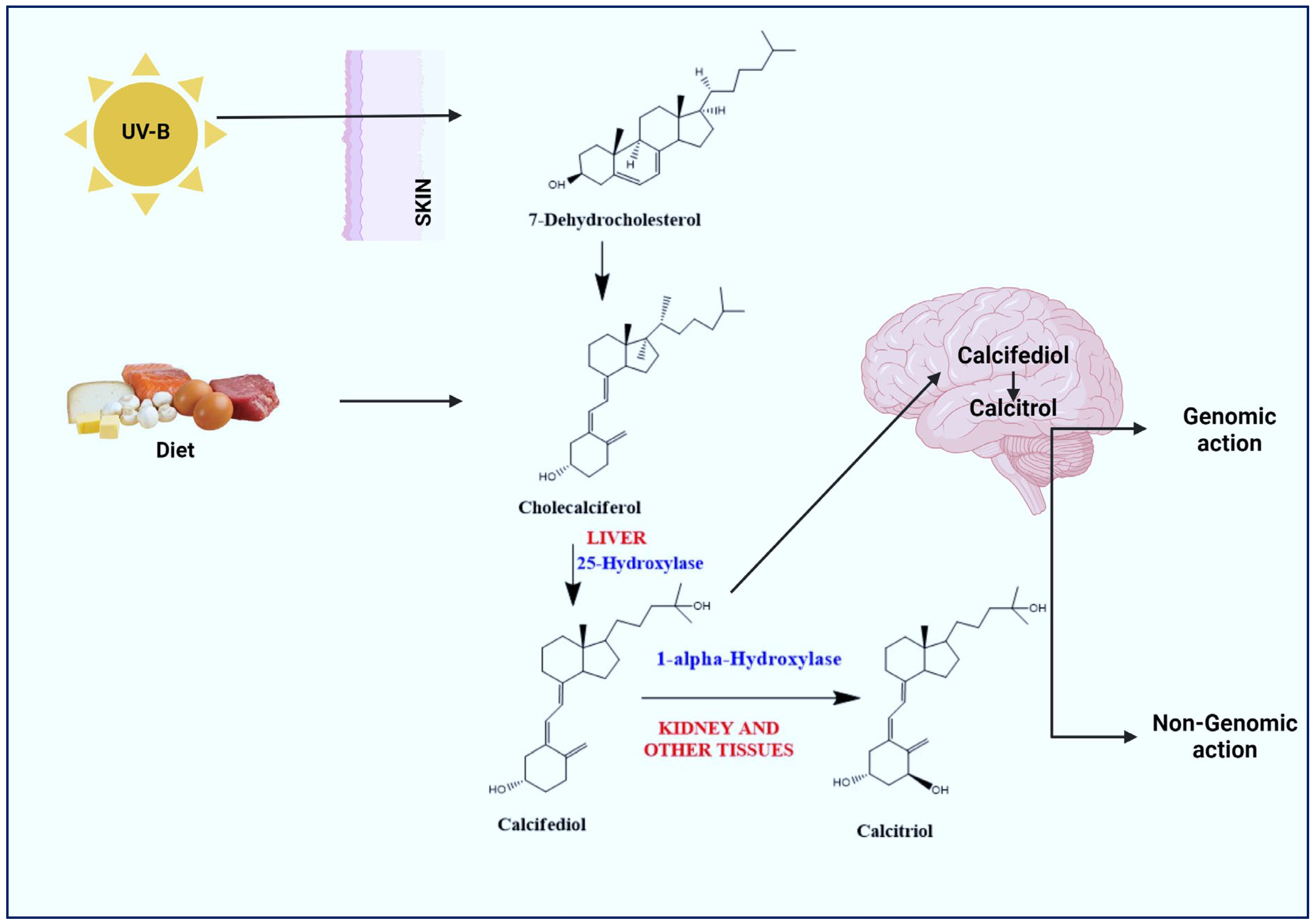
Alzheimer’s disease (AD) is characterized by amyloid beta (Aβ) buildup and neuronal degeneration. An association between low serum vitamin D levels and an increased risk of AD has been reported in several epidemiological studies. Calcitriol (1,25-dihydroxycholecalciferol) is the active form of vitamin D, and is generated in the kidney and many other tissues/organs, including the brain. It is a steroid hormone that regulates important functions like calcium/phosphorous levels, bone mineralization, and immunomodulation, indicating its broader systemic significance. In addition, calcitriol confers neuroprotection by mitigating oxidative stress and neuroinflammation, promoting the clearance of Aβ, myelin formation, neurogenesis, neurotransmission, and autophagy. The receptors to which calcitriol binds (vitamin D receptors; VDRs) to exert its effects are distributed over many organs and tissues, representing other significant roles of calcitriol beyond sustaining bone health. The biological effects of calcitriol are manifested through genomic (classical) and non-genomic actions through different pathways. The first is a slow genomic effect involving nuclear VDR directly affecting gene transcription. The association of AD with VDR gene polymorphisms relies on the changes in vitamin D consumption, which lowers VDR expression, protein stability, and binding affinity. It leads to the altered expression of genes involved in the neuroprotective effects of calcitriol. This review summarizes the neuroprotective mechanism of calcitriol and the role of VDR polymorphisms in AD, and might help develop potential therapeutic strategies and markers for AD in the future.
Keywords: vitamin D; calcitriol; VDR polymorphism; Alzheimer’s diseases; neuroprotection vitamin D; calcitriol; VDR polymorphism; Alzheimer’s diseases; neuroprotection
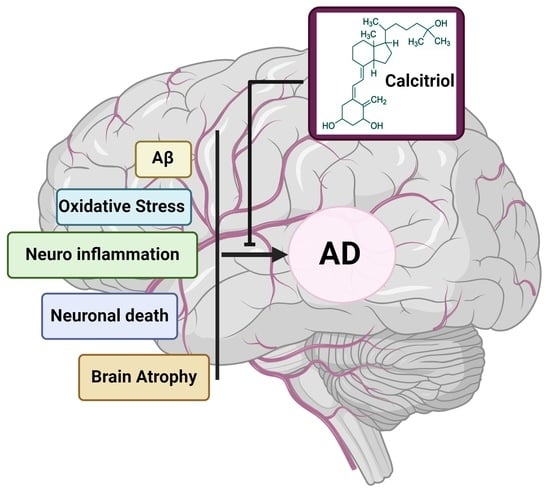
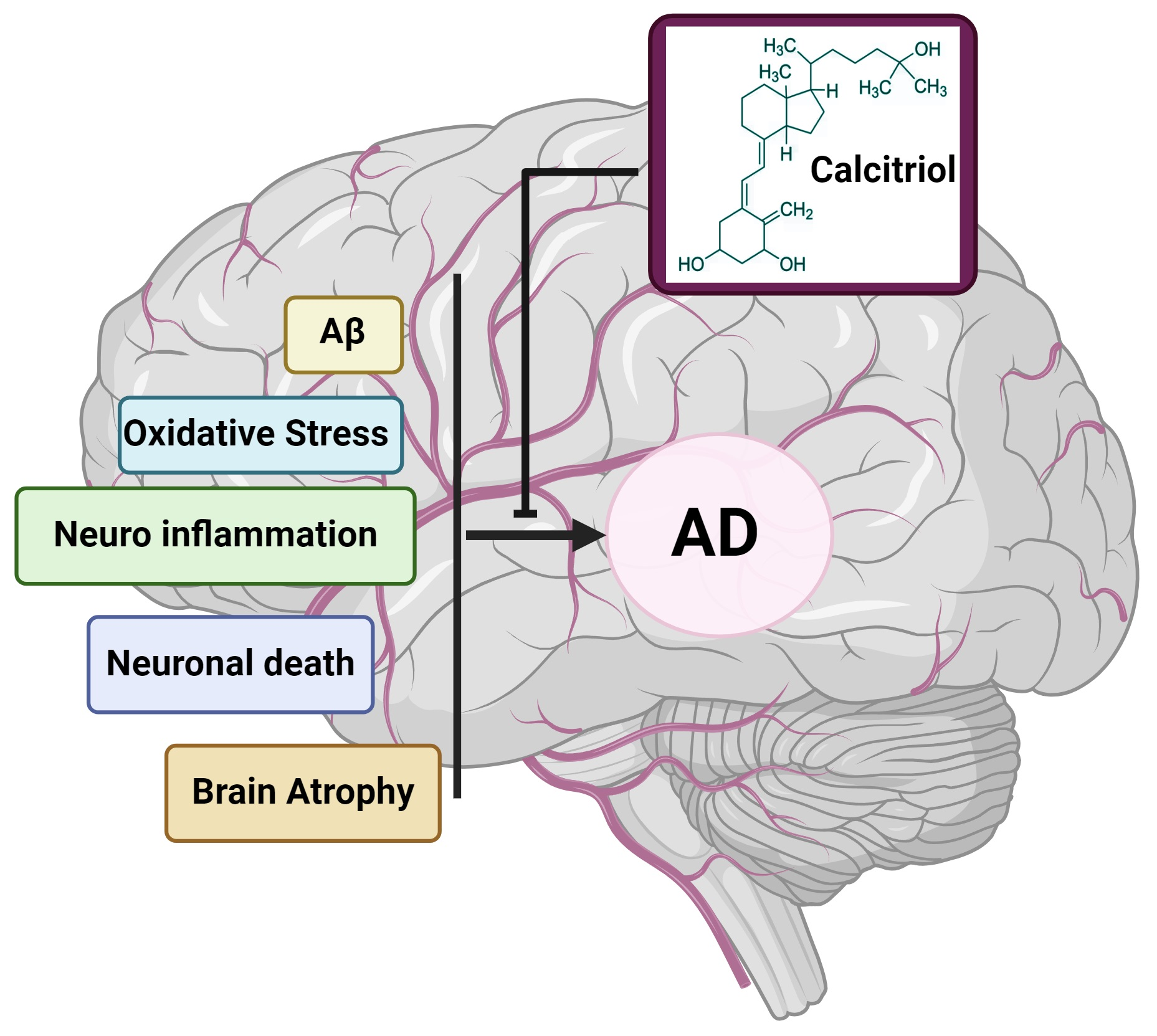
Graphical Abstract