Next Article in Journal
HIV Infection Drives Foam Cell Formation via NLRP3 Inflammasome Activation
Next Article in Special Issue
A Glycosyl Hydrolase 5 Family Protein Is Essential for Virulence of Necrotrophic Fungi and Can Suppress Plant Immunity
Previous Article in Journal
The Promising B−Type Response Regulator hst1 Gene Provides Multiple High Temperature and Drought Stress Tolerance in Rice
Previous Article in Special Issue
Genome-Wide Identification and Characterization of Effector Candidates with Conserved Motif in Falciphora oryzae
 
 
Correction published on 20 September 2024, see Int. J. Mol. Sci. 2024, 25(18), 10095.
Article

The Auto-Regulation of ATL2 E3 Ubiquitin Ligase Plays an Important Role in the Immune Response against Alternaria brassicicola in Arabidopsis thaliana


1
Division of Life Science and Division of Applied Life Science (BK21 Four), Plant Molecular Biology and Biotechnology Research Center (PMBBRC), Gyeongsang National University, 501 Jinju-daero, Jinju 52828, Republic of Korea
2
Division of Plant Science & Technology, C.S. Bond Life Sciences Center, University of Missouri, Columbia, MO 65211, USA
3
Laboratory of Horticultural Crop Protection, Division of Horticultural Science, Gyeongsang National University, 33 Dongjin-ro, Jinju 52725, Republic of Korea
4
Agri-Food Bio Convergence Institute, Gyeongsang National University, 33 Dongjin-ro, Jinju 52725, Republic of Korea
5
College of Pharmacy and Research Institute of Pharmaceutical Science, Gyeongsang National University, 501 Jinju-daero, Jinju 52828, Republic of Korea
6
Division of Applied Life Science (BK21 Four), Plant Biological Rhythm Research Center (PBRRC), Plant Molecular Biology and Biotechnology Research Center (PMBBRC), Gyeongsang National University, 501 Jinju-daero, Jinju 52828, Republic of Korea
*
Author to whom correspondence should be addressed.
These authors contributed equally to this work.
Int. J. Mol. Sci. 2024, 25(4), 2388; https://doi.org/10.3390/ijms25042388
Submission received: 24 January 2024 / Revised: 13 February 2024 / Accepted: 14 February 2024 / Published: 17 February 2024 / Corrected: 20 September 2024
(This article belongs to the Special Issue Advances in Plant–Pathogen Interactions: 3rd Edition)

Abstract

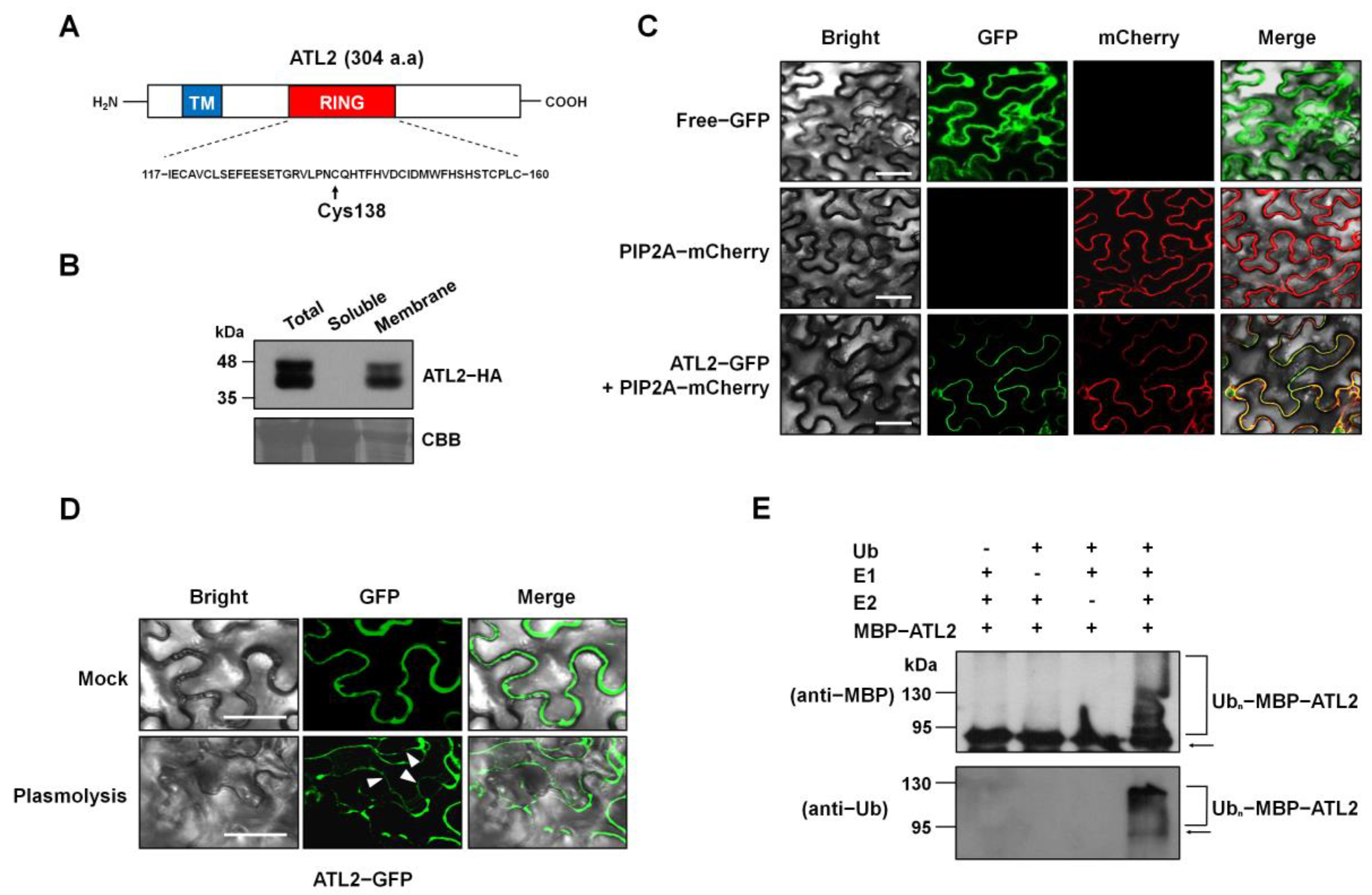
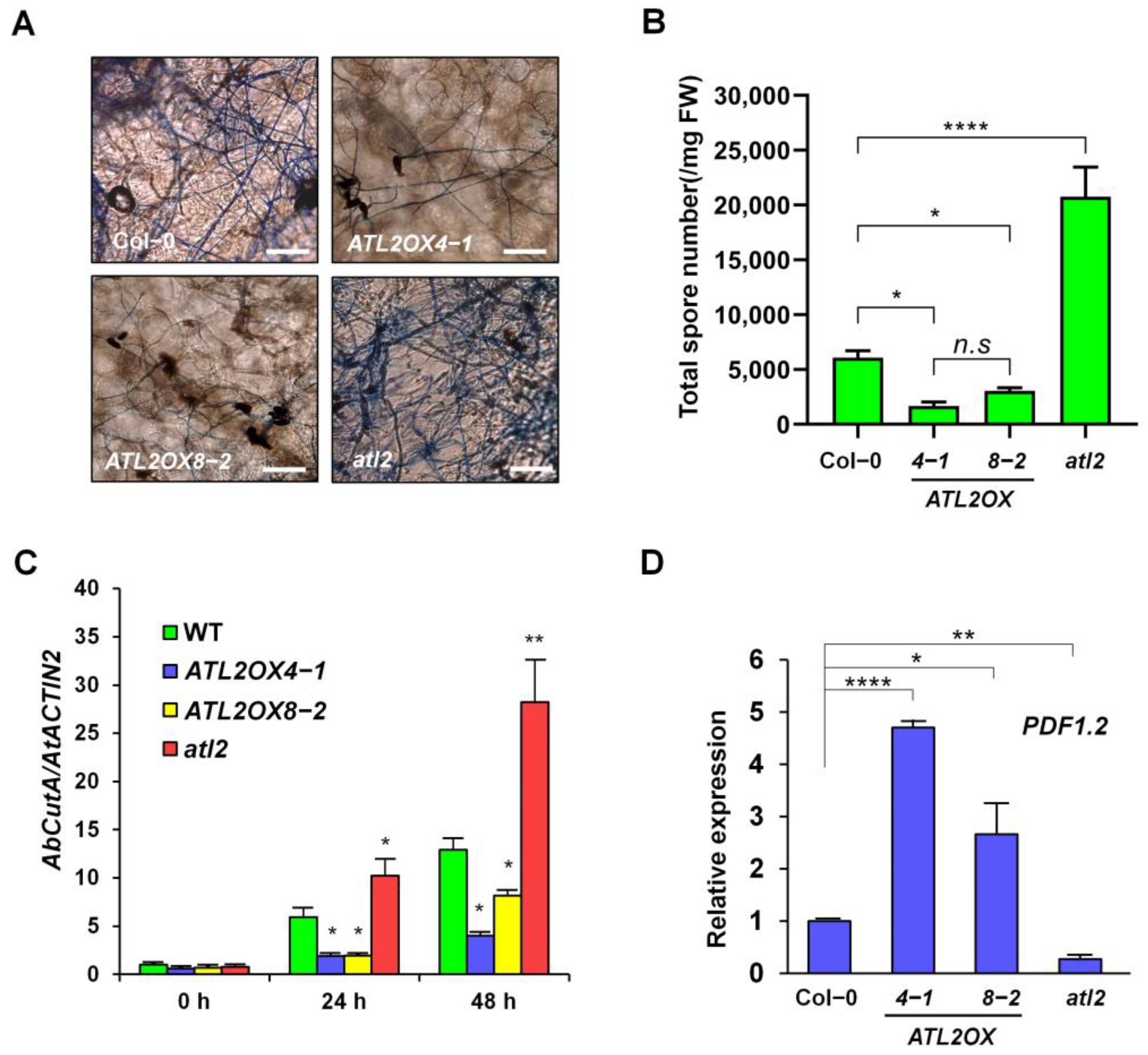
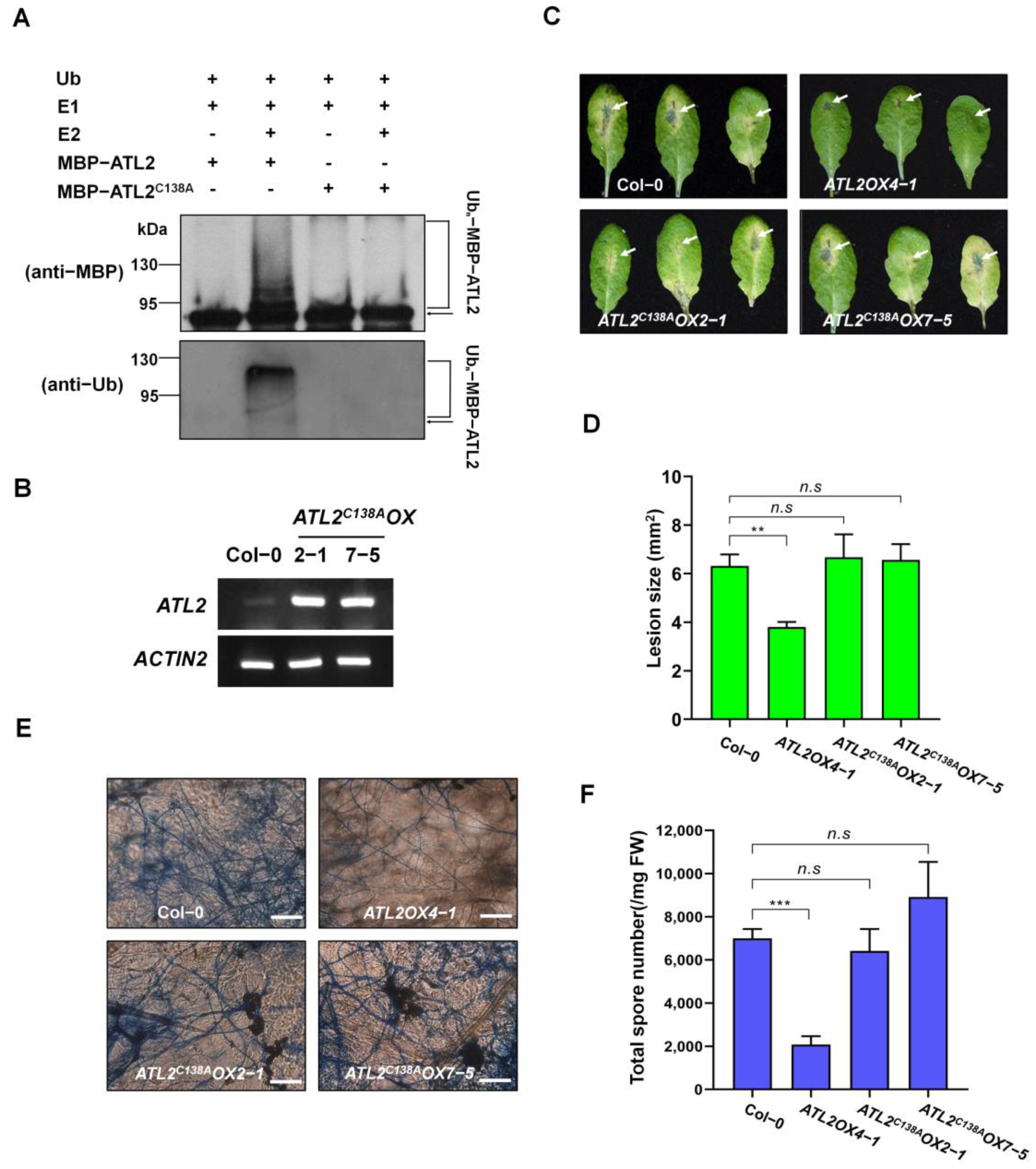
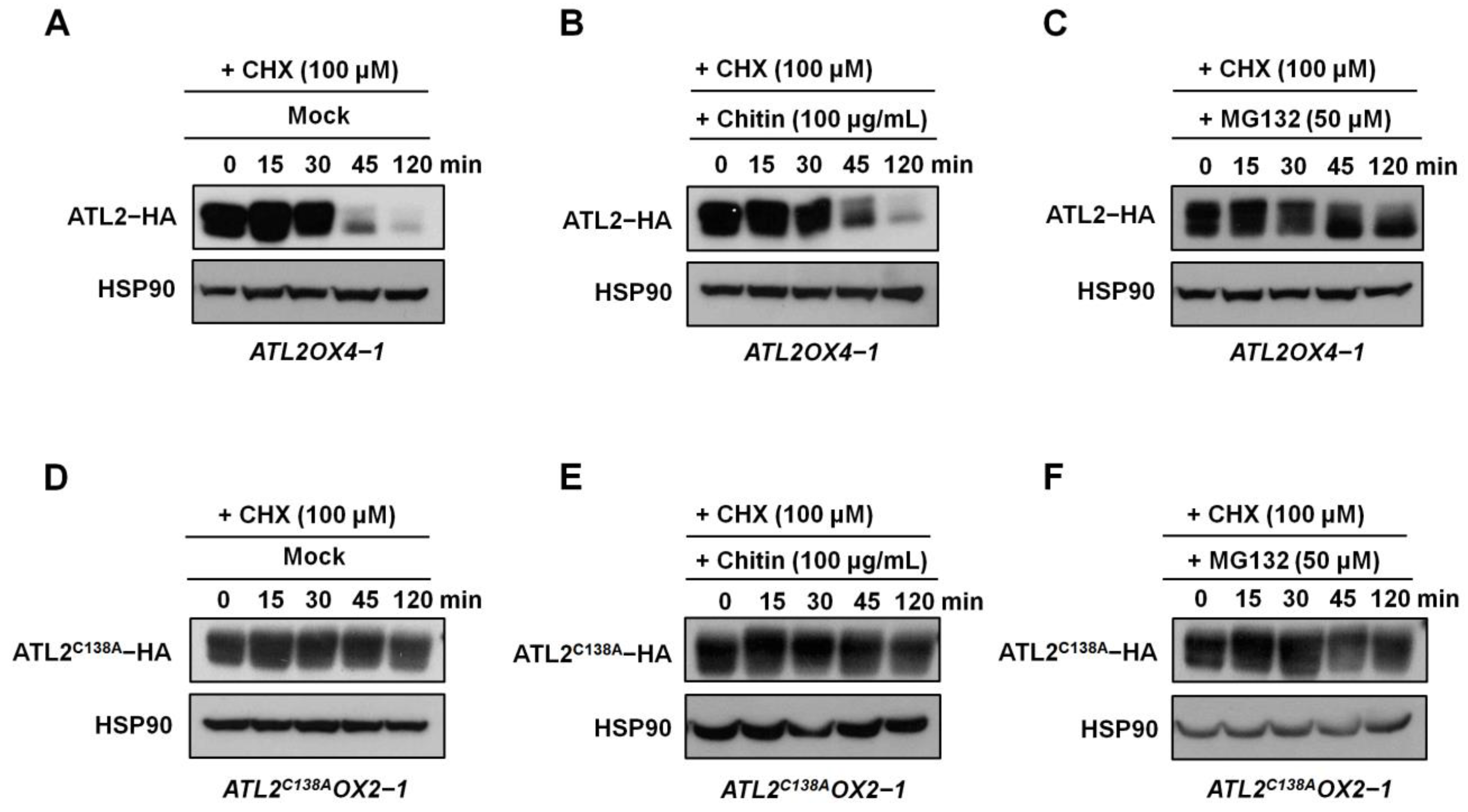
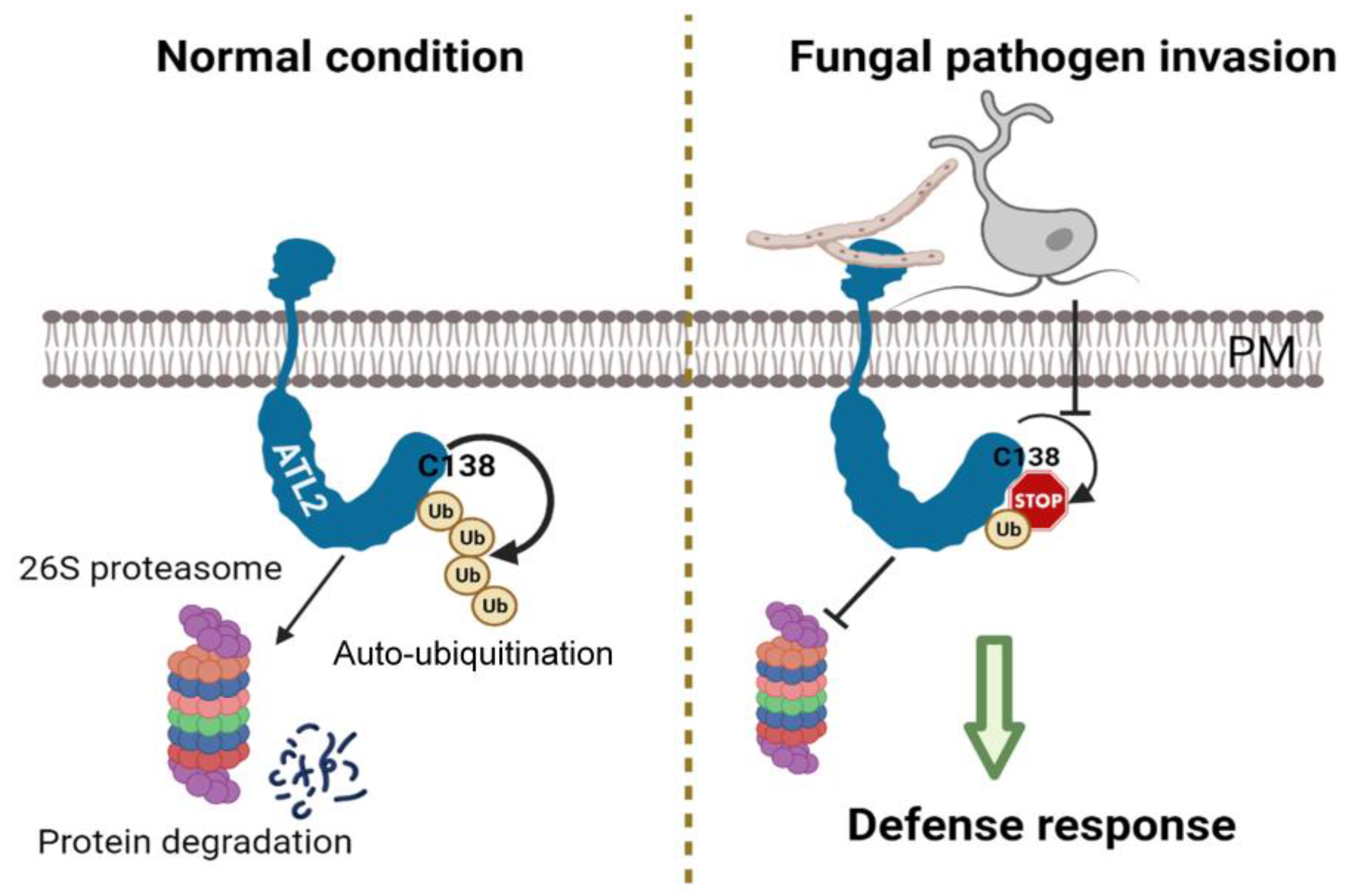
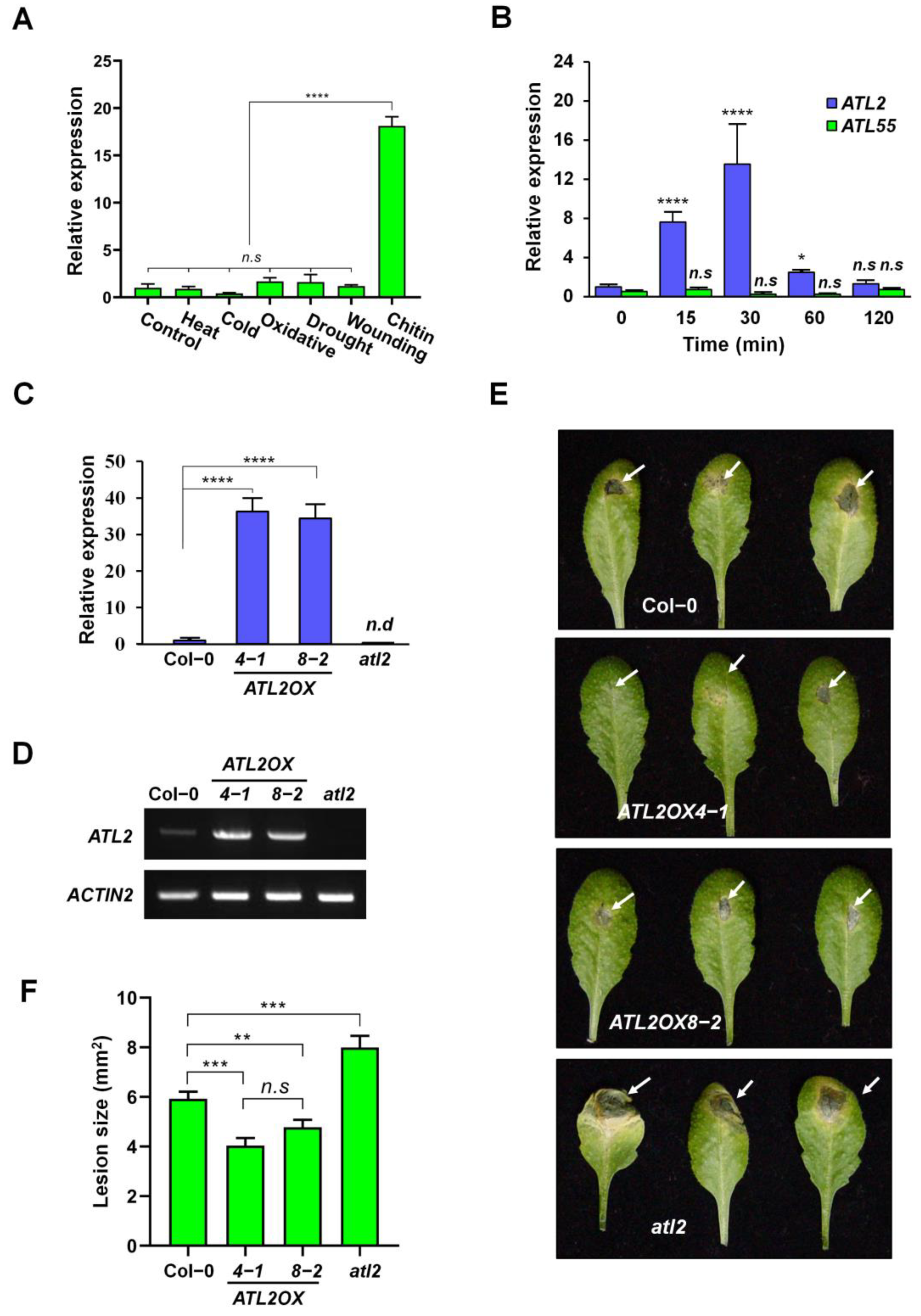
The ubiquitin/26S proteasome system is a crucial regulatory mechanism that governs various cellular processes in plants, including signal transduction, transcriptional regulation, and responses to biotic and abiotic stressors. Our study shows that the RING-H2-type E3 ubiquitin ligase, Arabidopsis Tóxicos en Levadura 2 (ATL2), is involved in response to fungal pathogen infection. Under normal growth conditions, the expression of the ATL2 gene is low, but it is rapidly and significantly induced by exogenous chitin. Additionally, ATL2 protein stability is markedly increased via chitin treatment, and its degradation is prolonged when 26S proteasomal function is inhibited. We found that an atl2 null mutant exhibited higher susceptibility to Alternaria brassicicola, while plants overexpressing ATL2 displayed increased resistance. We also observed that the hyphae of A. brassicicola were strongly stained with trypan blue staining, and the expression of A. brassicicola Cutinase A (AbCutA) was dramatically increased in atl2. In contrast, the hyphae were weakly stained, and AbCutA expression was significantly reduced in ATL2-overexpressing plants. Using bioinformatics, live-cell confocal imaging, and cell fractionation analysis, we revealed that ATL2 is localized to the plasma membrane. Further, it is demonstrated that the ATL2 protein possesses E3 ubiquitin ligase activity and found that cysteine 138 residue is critical for its function. Moreover, ATL2 is necessary to successfully defend against the A. brassicicola fungal pathogen. Altogether, our data suggest that ATL2 is a plasma membrane-integrated protein with RING-H2-type E3 ubiquitin ligase activity and is essential for the defense response against fungal pathogens in Arabidopsis.
Keywords: chitin; fungal pathogen; defense response; ubiquitin/26S proteasome; ATL2; RING-H2-type E3 ligase; plasma membrane; Arabidopsis thaliana chitin; fungal pathogen; defense response; ubiquitin/26S proteasome; ATL2; RING-H2-type E3 ligase; plasma membrane; Arabidopsis thaliana