Article

Elevated Serum KIM-1 in Sepsis Correlates with Kidney Dysfunction and the Severity of Multi-Organ Critical Illness


by
Jonathan Frederik Brozat
1,2,
Neval Harbalioğlu
1,
Philipp Hohlstein
1,
Samira Abu Jhaisha
1,
Maike Rebecca Pollmanns
1,
Jule Katharina Adams
1,
Theresa Hildegard Wirtz
1,
Karim Hamesch
1,
Eray Yagmur
3,
Ralf Weiskirchen
4,
Frank Tacke
2,
Christian Trautwein
1,† and
Alexander Koch
1,*
1
Department for Gastroenterology, Metabolic Disorders and Intensive Care Medicine, University Hospital RWTH Aachen, RWTH Aachen, Pauwelsstraße 30, 52074 Aachen, Germany
2
Department of Hepatology and Gastroenterology, Charité—Universitätsmedizin Berlin, Campus Virchow-Klinikum (CVK) and Campus Charité Mitte (CCM), Augustenburger Platz 1, 13353 Berlin, Germany
3
Institute of Laboratory Medicine, Western Palatine Hospital, Hellmut-Hartert-Straße 1, 67655 Kaiserslautern, Germany
4
Institute of Molecular Pathobiochemistry, Experimental Gene Therapy and Clinical Chemistry, University Hospital Aachen, RWTH Aachen, Pauwelsstraße 30, 52074 Aachen, Germany
*
Author to whom correspondence should be addressed.
This is Christian Trautwein’s former affiliation: Department for Gastroenterology, Metabolic Disorders and Intensive Care Medicine, University Hospital RWTH Aachen, Pauwelsstraße 30, 52074 Aachen, Germany.
Int. J. Mol. Sci. 2024, 25(11), 5819; https://doi.org/10.3390/ijms25115819
Submission received: 20 April 2024 / Revised: 24 May 2024 / Accepted: 25 May 2024 / Published: 27 May 2024
(This article belongs to the Special Issue Sepsis and Septic Shock: From Molecular Mechanisms to Novel Therapies)

Abstract

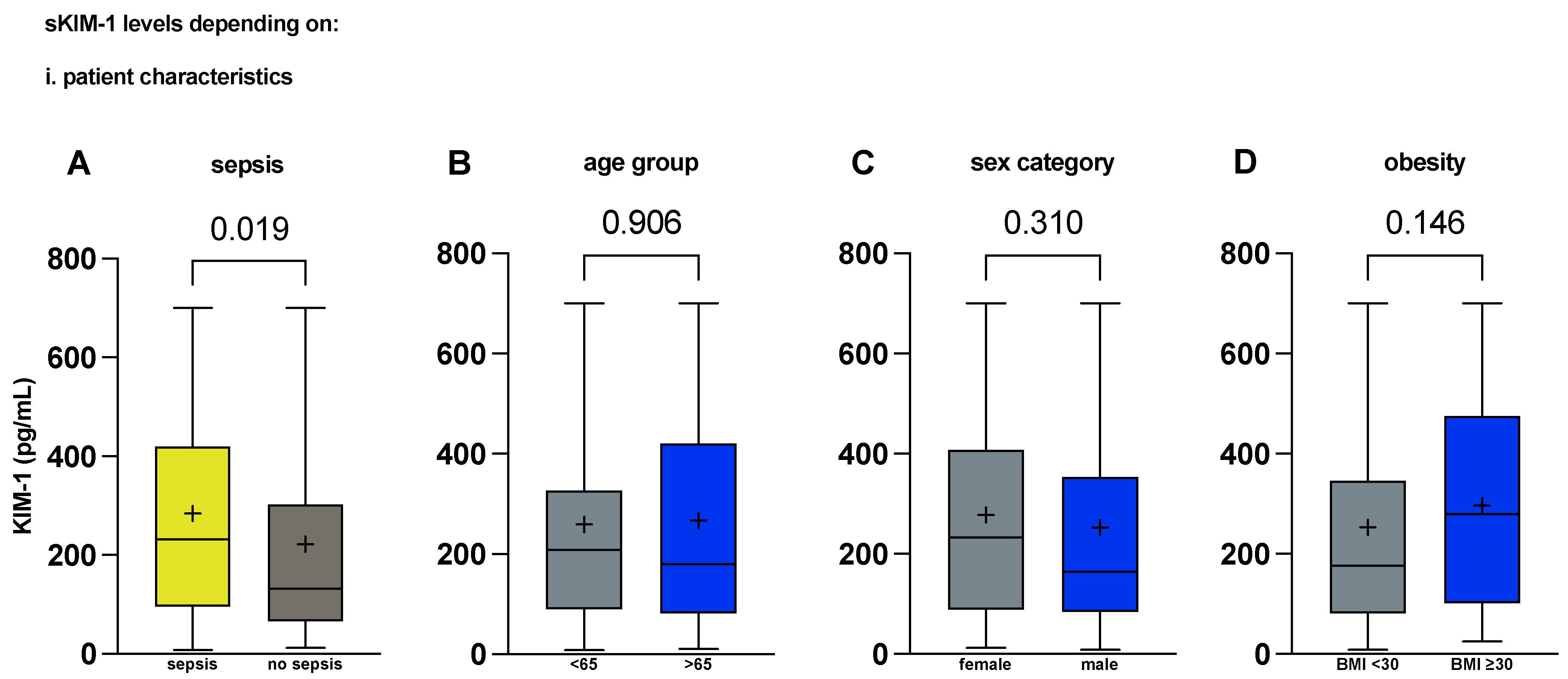
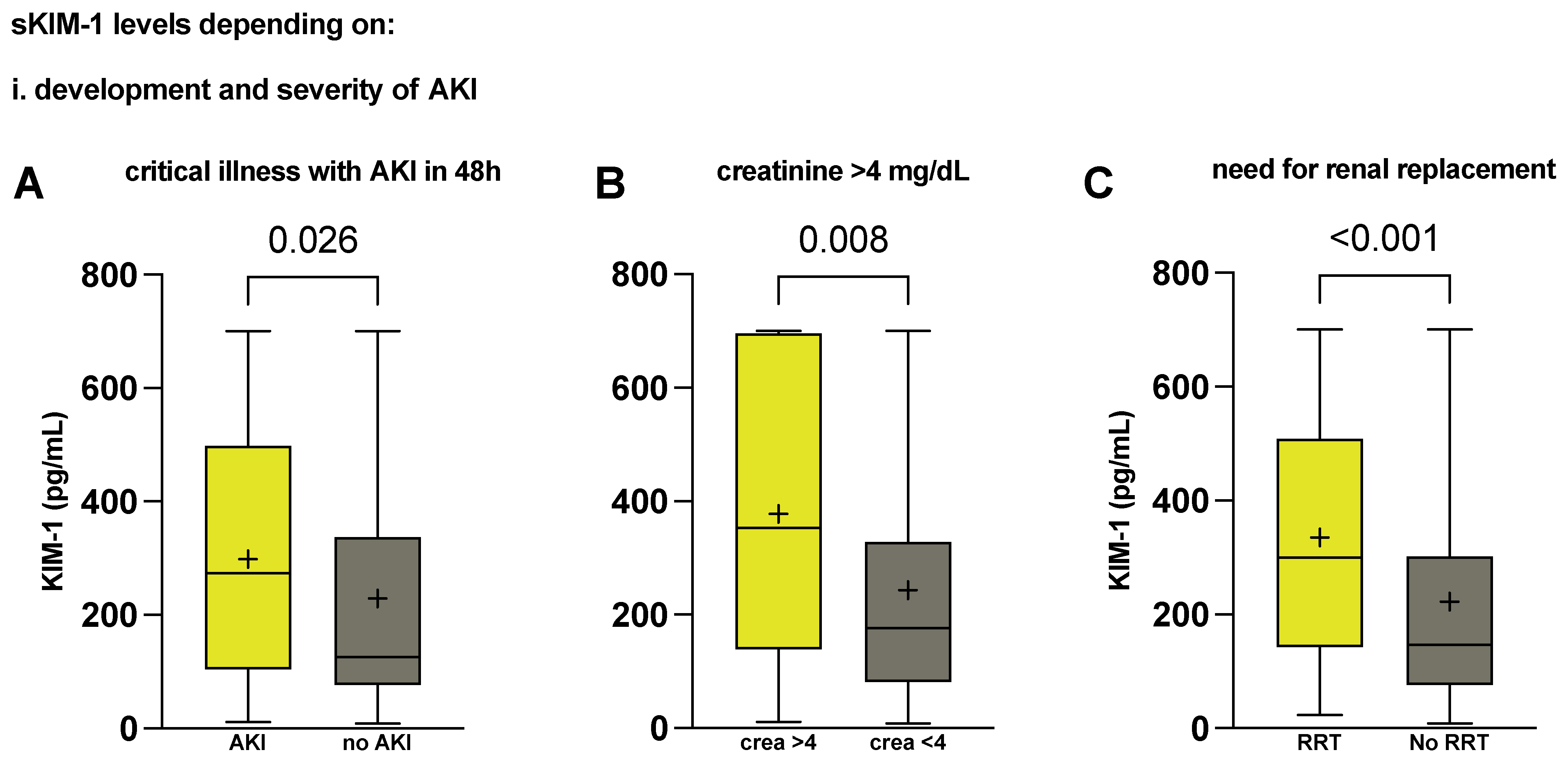
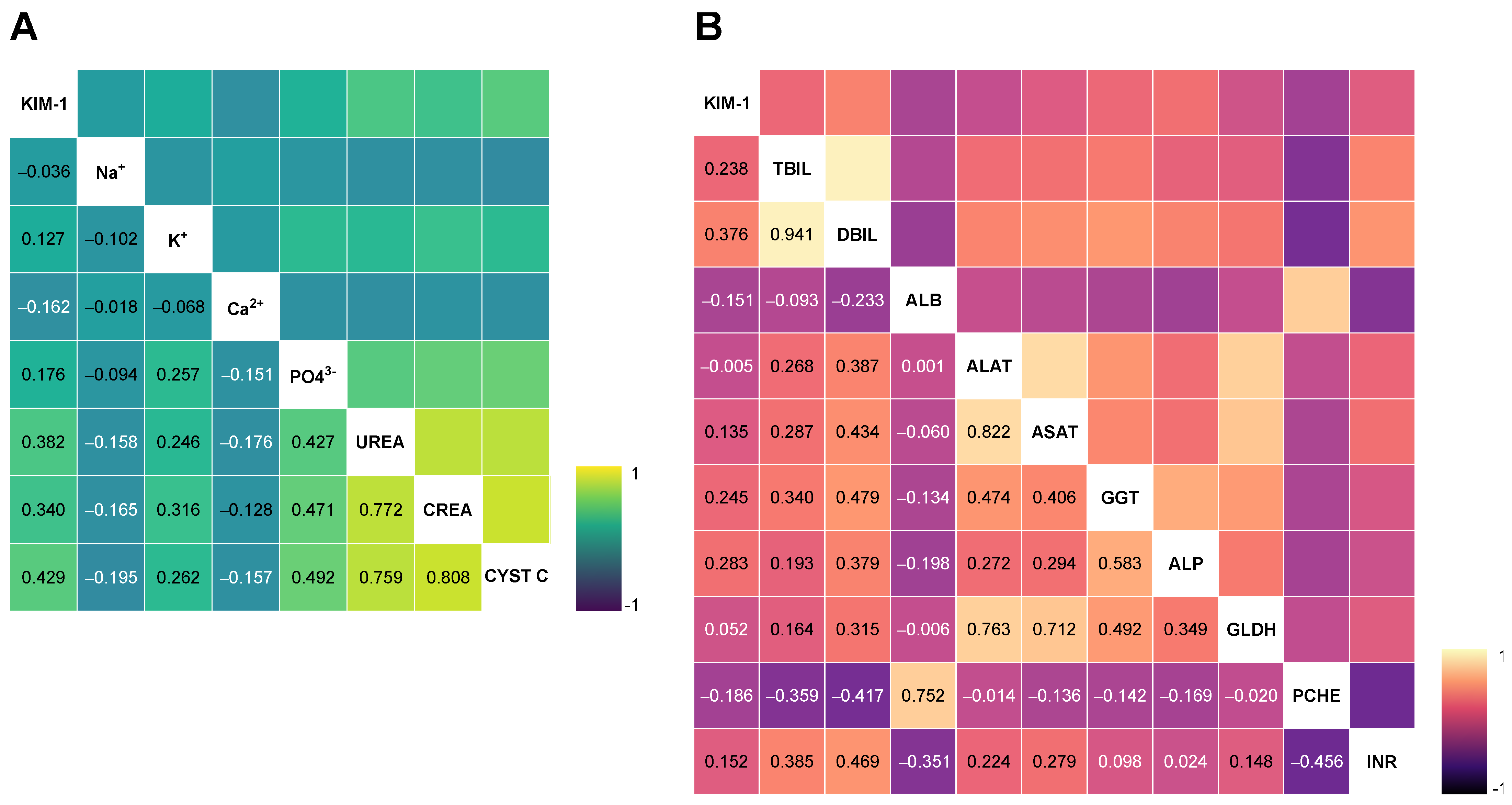
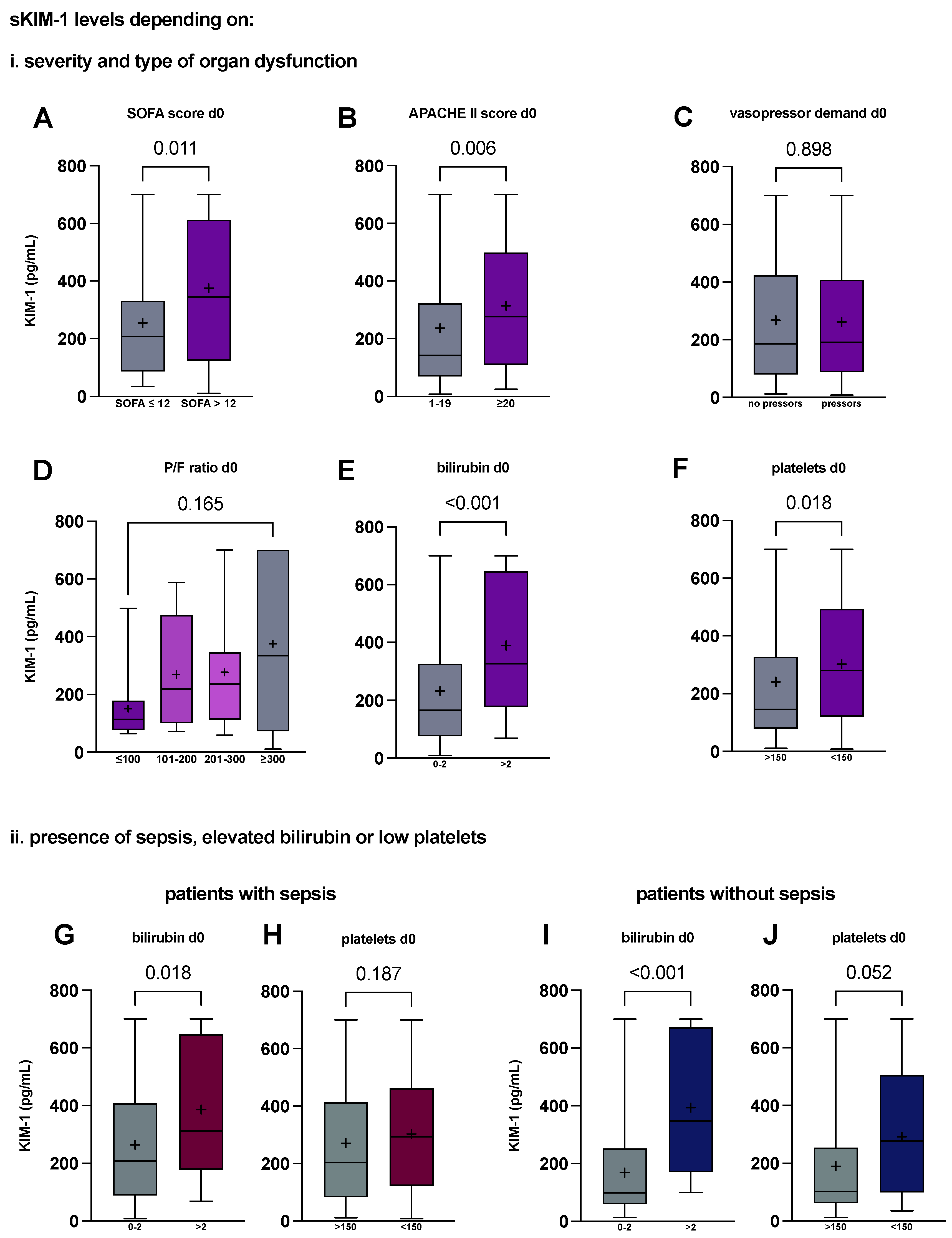
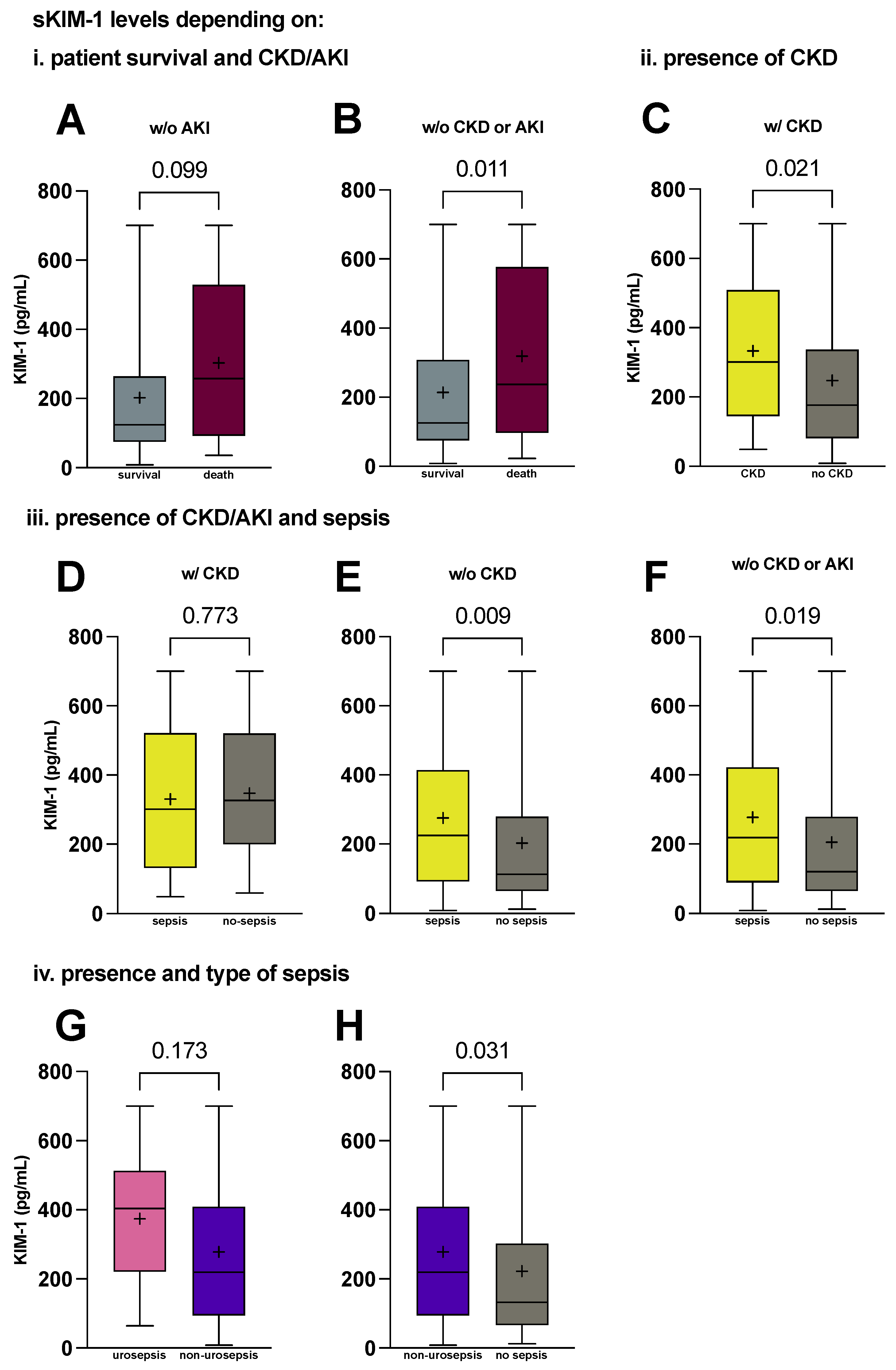
The kidney injury molecule (KIM)-1 is shed from proximal tubular cells in acute kidney injury (AKI), relaying tubular epithelial proliferation. Additionally, KIM-1 portends complex immunoregulation and is elevated after exposure to lipopolysaccharides. It thus may represent a biomarker in critical illness, sepsis, and sepsis-associated AKI (SA-AKI). To characterise and compare KIM-1 in these settings, we analysed KIM-1 serum concentrations in 192 critically ill patients admitted to the intensive care unit. Irrespective of kidney dysfunction, KIM-1 serum levels were significantly higher in patients with sepsis compared with other critical illnesses (191.6 vs. 132.2 pg/mL, p = 0.019) and were highest in patients with urogenital sepsis, followed by liver failure. Furthermore, KIM-1 levels were significantly elevated in critically ill patients who developed AKI within 48 h (273.3 vs. 125.8 pg/mL, p = 0.026) or later received renal replacement therapy (RRT) (299.7 vs. 146.3 pg/mL, p < 0.001). KIM-1 correlated with markers of renal function, inflammatory parameters, hematopoietic function, and cholangiocellular injury. Among subcomponents of the SOFA score, KIM-1 was elevated in patients with hyperbilirubinaemia (>2 mg/dL, p < 0.001) and thrombocytopenia (<150/nL, p = 0.018). In univariate and multivariate regression analyses, KIM-1 predicted sepsis, the need for RRT, and multi-organ dysfunction (MOD, SOFA > 12 and APACHE II ≥ 20) on the day of admission, adjusting for relevant comorbidities, bilirubin, and platelet count. Additionally, KIM-1 in multivariate regression was able to predict sepsis in patients without prior (CKD) or present (AKI) kidney injury. Our study suggests that next to its established role as a biomarker in kidney dysfunction, KIM-1 is associated with sepsis, biliary injury, and critical illness severity. It thus may offer aid for risk stratification in these patients.
Keywords: KIM-1; TIM-1; intensive care unit; kidney dysfunction; organ failure; sepsis; biomarker KIM-1; TIM-1; intensive care unit; kidney dysfunction; organ failure; sepsis; biomarker