Review

Modeling Trophoblast Cell-Guided Uterine Spiral Artery Transformation in the Rat
by
Vinay Shukla
1,* and
Michael J. Soares
1,2,3,*
1
Institute for Reproduction and Perinatal Research, Department of Pathology and Laboratory Medicine, University of Kansas Medical Center, Kansas City, KS 66160, USA
2
Department of Obstetrics and Gynecology, University of Kansas Medical Center, Kansas City, KS 66160, USA
3
Center for Perinatal Research, Children’s Mercy Research Institute, Children’s Mercy, Kansas City, MO 64108, USA
*
Authors to whom correspondence should be addressed.
Int. J. Mol. Sci. 2022, 23(6), 2947; https://doi.org/10.3390/ijms23062947
Submission received: 4 February 2022 / Revised: 3 March 2022 / Accepted: 4 March 2022 / Published: 9 March 2022

Abstract

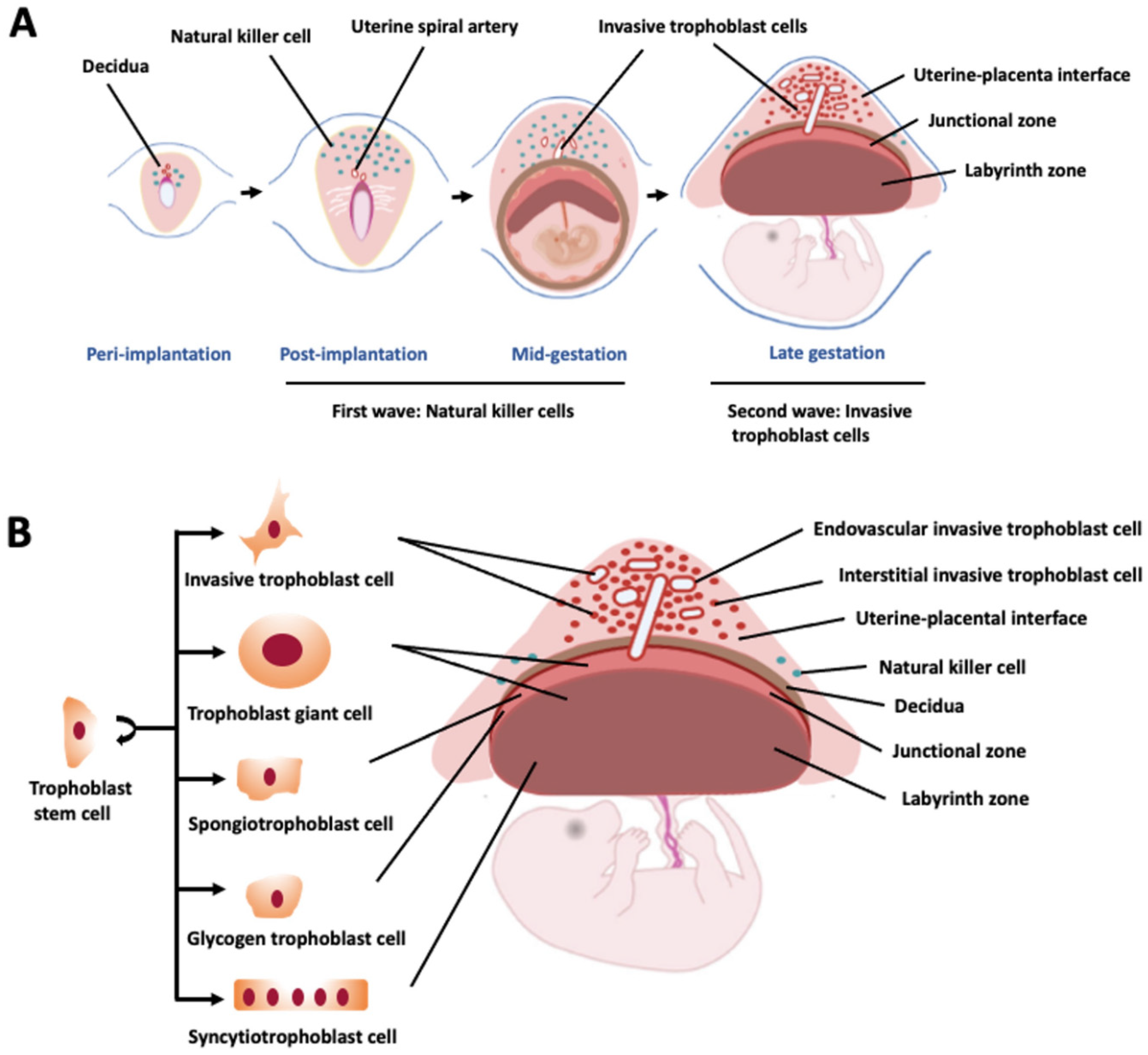
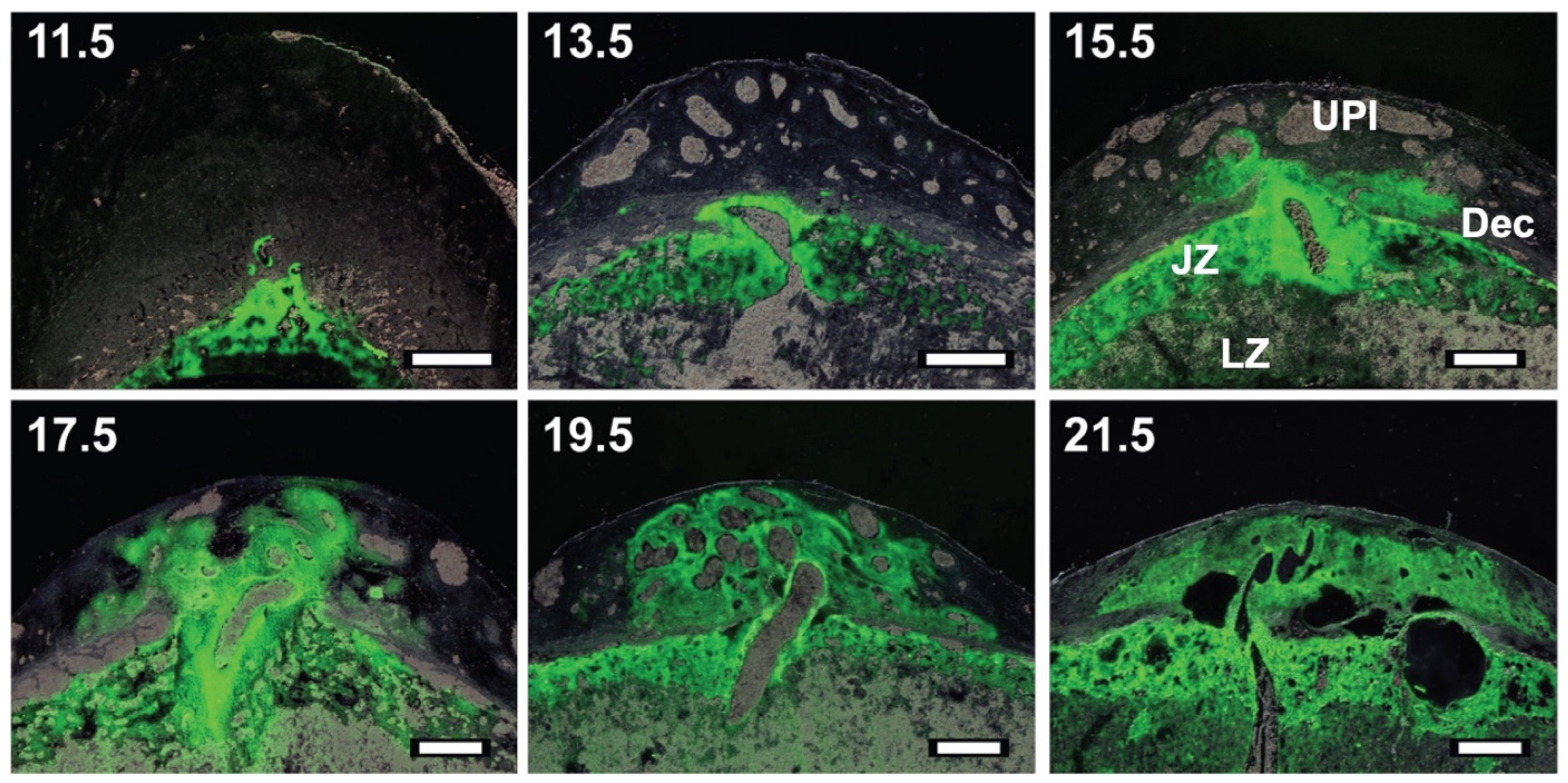
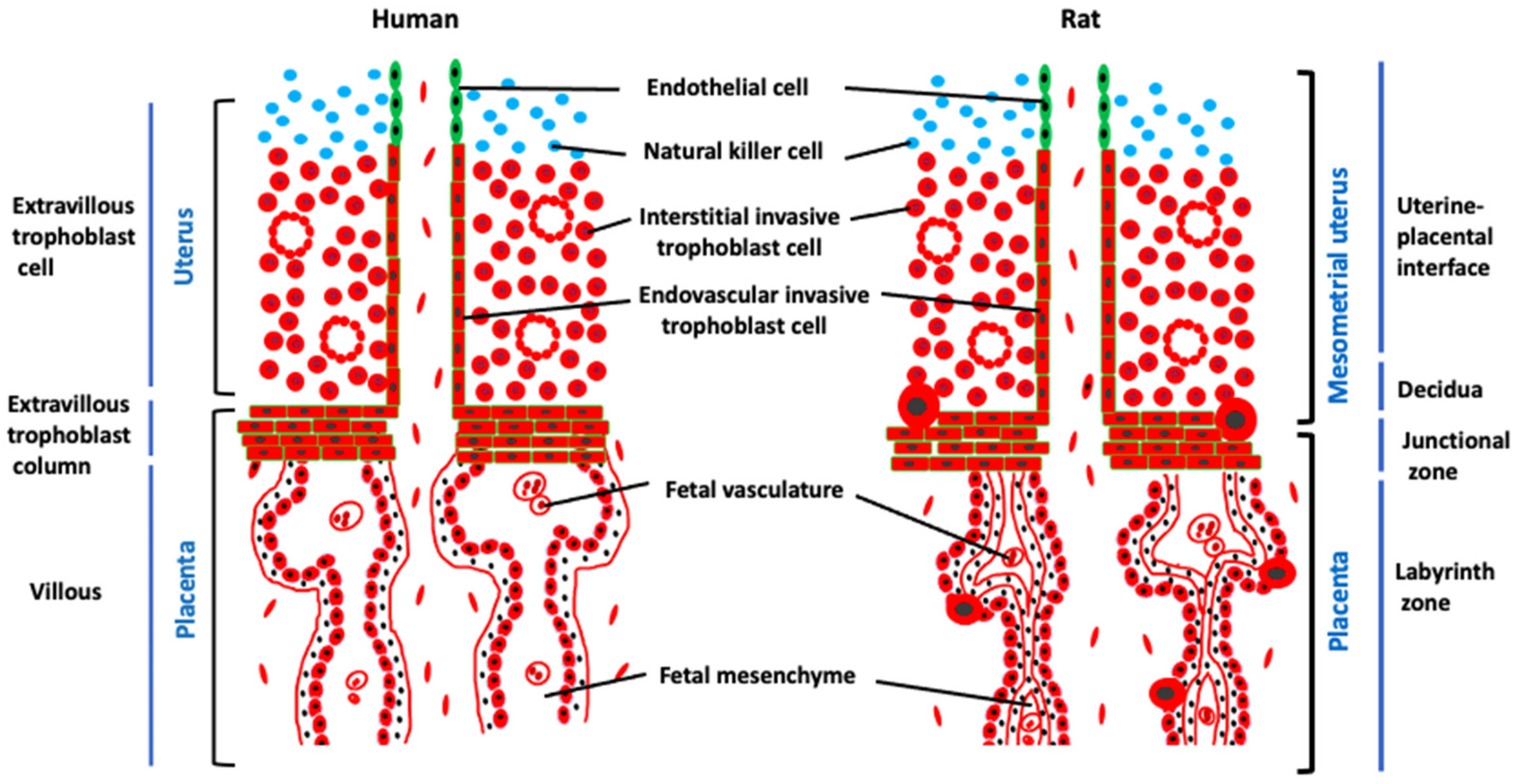
The rat possesses hemochorial placentation with deep intrauterine trophoblast cell invasion and trophoblast-guided uterine spiral artery remodeling, which resembles human placentation. Uterine spiral arteries are extensively remodeled to deliver sufficient supply of maternal blood and nutrients to the developing fetus. Inadequacies in these key processes negatively impact fetal growth and development. Recent innovations in genome editing combined with effective phenotyping strategies have provided new insights into placental development. Application of these research approaches has highlighted both conserved and species-specific features of hemochorial placentation. The review provides foundational information on rat hemochorial placental development and function during physiological and pathological states, especially as related to the invasive trophoblast cell-guided transformation of uterine spiral arteries. Our goal is to showcase the utility of the rat as a model for in vivo mechanistic investigations targeting regulatory events within the uterine-placental interface.
Keywords: placenta; invasive trophoblast cells; uterine spiral artery remodeling; rat placenta; invasive trophoblast cells; uterine spiral artery remodeling; rat