


Regulatory T Cells in Development and Prediction of Necrotizing Enterocolitis in Preterm Neonates: A Scoping Review


Abstract
1. Introduction
2. Methods
3. Results
3.1. Study Results
3.2. The role of Different T Cell Subsets in NEC
3.2.1. Treg Number in NEC
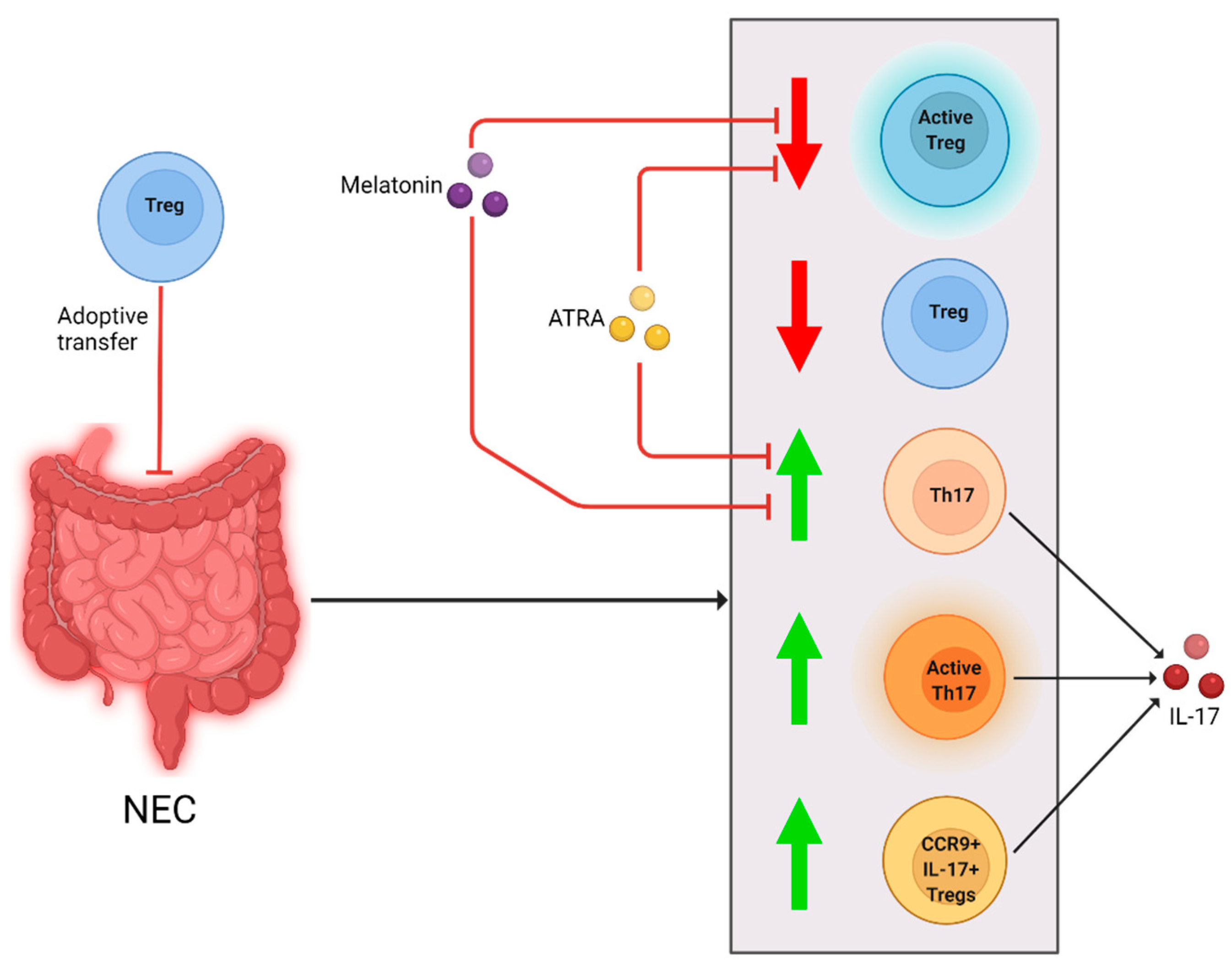
3.2.2. The Influence of Th17 Cells on the Inflammatory State in NEC
3.2.3. Increased Levels of CCR9 + Tregs in NEC

| Author | Year | Study Design | Species | Sample Size | NEC Induction | Methods | Histological NEC Score | Flow Cytometry | T Cell Markers | Most Relevant Findings |
|---|---|---|---|---|---|---|---|---|---|---|
| Huenecke [14] | 2016 | Case control | Human | 50 total, 40 cases, preterm; 10 controls, term | No | Infants grouped based on GA. Immune cell subsets were analyzed on PB samples. | No | Yes: on blood | Treg: CD4+ + CD25+ + CD127dim; naive T cells: CD3+ + CD4+ or CD8+ + CD45RA+ + CD62L+; central memory T cells: CD3+ + CD4+ or CD8+ + CD45RO+ + CD62L+; effector memory T cells: CD3+ + CD4+ or CD8+ + CD45RO+ + CD62L−; effector memory RA T cells: CD3+ + CD4+ or CD8+ + CD45RA+ + CD62L− | B cell numbers were decreased in preterm infants compared to term infants at time of birth. Tregs frequency was highest in preterm infants at GA of 26 weeks, but declined during first weeks of life. |
| Weitkamp [15] | 2009 | Case study | Human | 59 total, all intestinal surgical cases | No | Remnant human tissue samples of intestinal surgical cases of NEC, perinatal spontaneous intestinal perforation, and congenital intestinal obstruction. Immunohistochemistry was performed. | No | No | Treg: FOXP3+; effector T cells: CD3+ + CD4+ or CD8+ | FOXP3+ cells were found in the large and small intestine as early as 23 weeks GA. There was no change in the ratio of FOXP3+ to CD4+ or CD8+ cells with postnatal exposure. CD3+, CD4+, CD8+ and FOXP3+ cells were decreased in NEC patients, but present in same ratios as the other diseases. |
| Weitkamp [7] | 2013 | Case control | Human | 48 total, 18 cases, 30 controls | No | Fresh ileal tissue samples from NEC patients and non-NEC intestinal surgical patients matched for GA. LPMCs and Tregs were isolated. T cell suppression assay and PCR on total ileal RNA performed. | No | Yes: on remnant surgical intestinal tissue | Treg: CD4+ + Cd25+ + FOXP3+ + CD127low + CD45RO; effector T cells: CD4+ or CD8+ | Proportions of Tregs to CD4+ or CD8+ T cells were lower in ileum of NEC patients. Absolute Treg number was decreased in NEC patients. Treg proportions increased after NEC healing. |
| Dingle [6] | 2013 | Experimental | Sprague Dawley rat pup | 134 total | Yes: formula fed, starved 12 h after birth, hypoxia | Rats were divided into groups: dam-fed; NEC induction; NEC induction + Treg supplementation; NEC induction + saline supplement; NEC induction + active Treg supplementation; NEC induction + active Teff supplementation. | Yes: terminal ileum HE staining | Yes: on spleen, thymus, mesenteric lymph node and terminal ileum | Treg: CD3+ + CD4+ + FOXP3+; effector T cells: CD3+ + CD4+ or CD8+ | The Treg frequency in the ileum was significantly lower in NEC-induced rats. NEC-induced rats had lower NEC incidence after Treg transfer. Levels of ileal Tregs were higher towards normal after Treg transfer. CD25 expression and T cell maturation occurred in rats after the Teff transfer. |
| Egan [17] | 2016 | Experimental | Wild type; RAG−/−; IL-17-GFP; RORyt-GFP mice | 170 total | Yes: formula fed, hypoxia, NEC patient enteric bacteria supplementation | Enterocytes incubated with LPS, IL-17A or vehicle for 6 h. ELISA and immunoblots performed. | Yes: ileum HE staining | Yes, on lamina propria cells | Treg: CD4+ + FOXP3+; Th17 cells: CD4+ + RORγt+ | RORγt+ T cells were increased and FOXP3+ T cells were decreased after NEC induction compared to wild-type mice. T cell deficient (RAG−/−) mice were protected from developing NEC. |
| Niño [19] | 2017 | Experimental | Wild-type mice, enterocyte culture | 120 total | Yes: formula fed, hypoxia, NEC patient enteric bacteria supplementation | Enterocytes treated with IL-17A or vehicle for 6 h. Immunohistochemistry performed. Mice were divided into groups: dam-fed; dam-fed + ATRA supplement; NEC induction; NEC induction + ATRA supplement; NEC induction + Treg depletion. | Yes: terminal ileum HE staining | Yes: on lamina propria cells | Treg: CD4+ + FOXP3+; Th17 cells: CD4+ + IL-17+ | Th17 cell activation and IL-17 expression was increased in NEC mice. Treg depletion lead to increased intestinal damage after NEC induction. ATRA preserved levels of Tregs in NEC-induced mice. ATRA decreased Th17 cell induction and IL-17 expression in NEC-induced mice. |
| Pang [20] | 2018 (June) | Case control | Human | 30 total, 15 cases, 15 controls | No | Blood samples from infants displaying clinical NEC symptoms, included after surgical procedure. Non-NEC controls matched for BW, GA and sex. RT-PCR and cytokines ELISA performed. | No | Yes: on blood | Treg: CD4+ + FOXP3+; Th17 cells: CD4+ + RORγt+ | Monocytes from NEC infants had higher TLR4 expression. CD4+ T cells of NEC patients had higher RORC and lower FOXP3 transcription than controls, and expression of IL-17 was increased in patients. |
| Pang [11] | 2018 (October) | Case control | Human | 30 total, 15 cases, 15 controls | No | Blood samples from infants displaying clinical NEC symptoms, included after surgical procedure. Non-NEC controls matched for BW, GA and sex. RT-PCR and cytokines ELISA performed. | No | Yes: on blood | Treg: CD3+ + CD4+ + CD25+ + FOXP3+; Th17 cells: CD3+ + CD4+ + IL-17+ | Treg frequency was significantly lower in NEC patients. Tregs of NEC infants have reduced expression of Treg related genes. The frequency of IL-17+ CD4+ T cells and level of IL-17 was significantly higher in NEC infants. |
| Ma [24] | 2019 | Experimental and case control | Wild-type mice, human | Mouse: 83 total Human: 157 total, 77 cases, 80 controls | Mouse: Yes: formula fed, hypoxia, NEC patient enteric bacteria supplementation Human: No | Mouse: Mice divided into groups: dam-fed; NEC induction; NEC induction + anti-IL6R supplement. Cytokine ELISAs and total protein Western blots performed. Human: Blood samples from infants diagnosed with NEC and BW, GA and sex matched control neonates. Tregs and CCR9+ CD4+ T cells isolated. Treg polarization, T cell proliferation and suppression assays performed. RT-PCR performed on total RNA from CCR9+ CD4+ T cells. | Mouse: Yes: ileum HE staining Human: No | Mouse: Yes: on ileum Human: Yes: on blood | Mouse: Treg: CD4+ + FOXP3+; Th17 cells: CD4+ + IL-17+ Human: Treg: CD4+ + FOXP3+; Th17 cells: CD4+ + RORγt+ | Mouse: Levels of Th17 cells and IL-17+ Tregs increased and Treg levels decreased after NEC induction compared to controls. Frequency of circulating CCR9+ IL-17+ Tregs increased after NEC inductions. Increased level of circulating CCR9+ IL-17+ Tregs correlated negatively to severity of intestinal damage. Human: Monocytes from NEC infants had higher TLR4 expression. CD4+ T cells of NEC patients had higher RORC and lower FOXP3 transcription than controls, and expression of IL-17 was increased in patients. |
| Ma [28] | 2020 | Experimental | Wild-type mice | 60 total | Yes: Formula fed, hypoxia, cold stress | Mice divided into groups: dam-fed; NEC induction; NEC induction + melatonin supplement; NEC induction + saline supplement; NEC induction + melatonin supplement + Treg ablation; NEC induction + saline supplement + Treg ablation. | Yes: ileum HE staining | Yes: on lamina propria mononuclear cells | Treg: CD4+ + FOXP3+; Th17 cells: CD4+ + IL-17+ | Levels of Th17 cells increased and levels of Tregs decreased after NEC induction. Melatonin supplementation during NEC induction normalized Th17 cell and Treg levels and decreased NEC incidence. NEC protection by melatonin was impaired after Treg ablation. |
3.3. Immune Modulation in NEC
| Author | Year | Study Design | Species | Sample Size | NEC Induction | Methods | Histological NEC Score | Flow Cytometry | T Cell Markers | Most Relevant Findings |
|---|---|---|---|---|---|---|---|---|---|---|
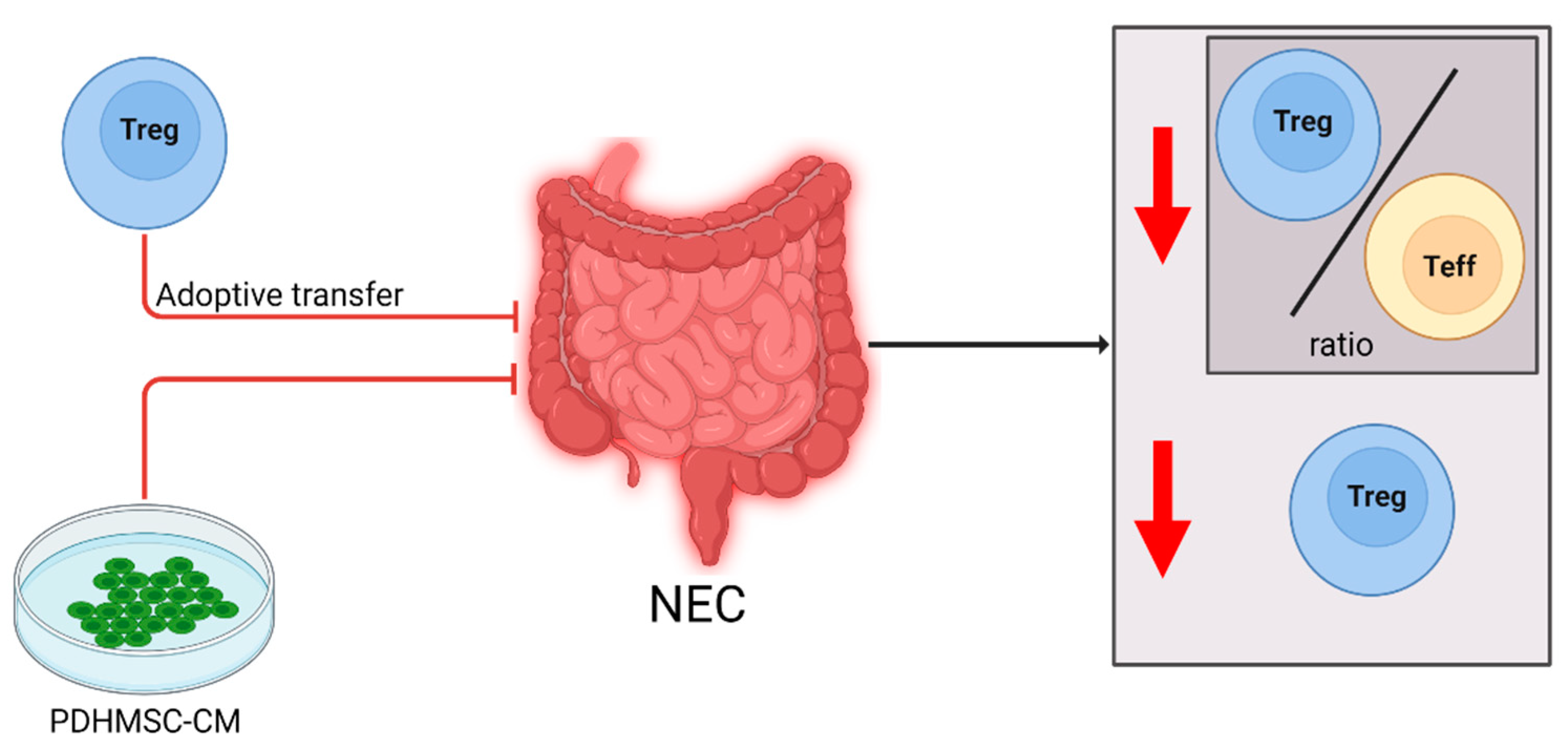
| Schulz [29] | 2015 | Experimental | Wild-type mice: HO1−/−; HO1+/− | 51 total | Yes: formula fed, hypoxia | HO1+/− mice were injected with wild-type Tregs. | Yes: intestine HE staining | Yes, on ileum | Treg: CD4+ + CD25+ + FOXP3+; effector T cells: CD4+ | Treg frequency was decreased in NEC induced mice. High Treg/effector T cell ratio was associated with attenuated intestinal damage. Treg transfer during NEC induction reduced intestinal damage scores and NEC incidence. |
| Chen [31] | 2020 | Experimental | Sprague Dawley rats | 58 total | Yes: formula fed, starved 12 h after birth, hypoxia | BM-MSCs transfected with PHD2 or GFP silencing lentivirus. Cytokine assay on conditioned medium. Conditioned medium was supplied to rats. Cytokine arrays, qPCR and Western blot performed. | Yes: terminal ileum HE staining | Yes, on enterocyte culture and rat mesenteric lymph nodes | Treg: CD4+ + FOXP3+ | PHD2 knockdown reduced NEC incidence and ileal damage. PHD2 knockdown increased number of FOXP3 Tregs in the mesenteric lymph nodes. PHD2 knockdown BM-MSCs produced more anti-inflammatory and Treg inducing cytokines. |
3.4. The Role of Milk on NEC and Tregs
| Author | Year | Study Design | Species | Sample Size | NEC Induction | Methods | Histological NEC Score | Flow Cytometry | T Cell Markers | Most Relevant Findings |
|---|---|---|---|---|---|---|---|---|---|---|
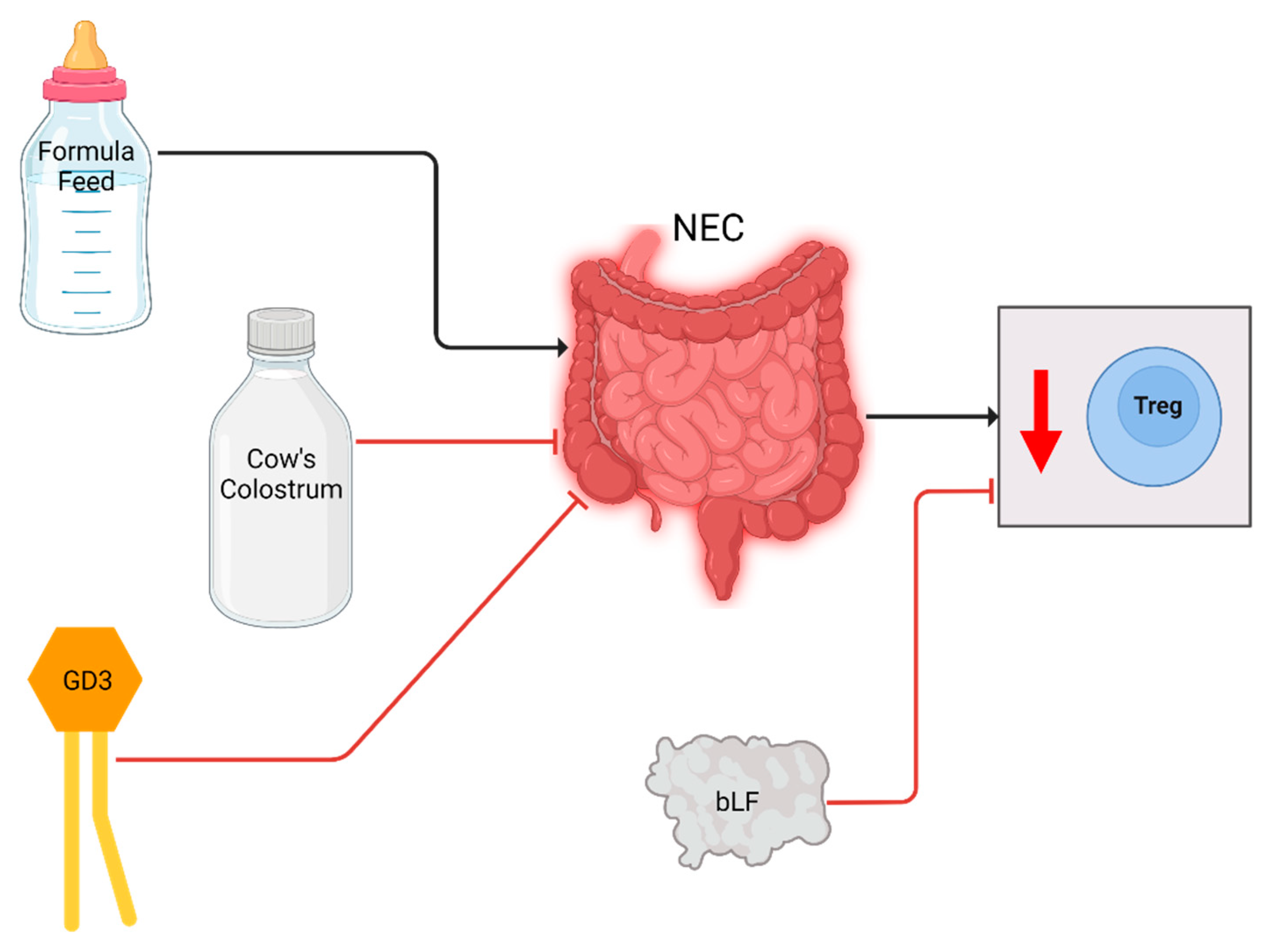
| Li [38] | 2020 | Experimental | Preterm piglets | 74 total | No | Piglets divided in groups: 4 day colostrum fed; 4 days formula fed. After day 4, piglets again divided in groups: continuation of previous diet until day 9; switched diet until day 9; euthanasia. Cytokine ELISAs performed before euthanasia. qPCR performed for mucosal gene expression. | Yes: proximal, middle and distal smallintestine HE staining | Yes: on arterial blood | Treg: CD4+ + CD25+ + FOXP3+; effector T cells: CD3+ + CD4+ or CD8+ | Pigs fed colostrum for 4 days had lower NEC incidence and less severe intestinal lesions. After 9 days, NEC incidences were similar among all the different groups. Treg frequency was higher in groups fed colostrum at any point compared to pigs fed formula only. |
| Xu [40] | 2013 | Experimental | Sprague Dawley rats | 90 total | Yes: formula fed, hypoxia, cold stress | Rats divided into groups: dam-fed; NEC induction; NEC induction + GD3 supplement. Cytokine array and FOXP3 immunoblot performed. FOXP3 immunofluorescence performed on ileum. | Yes: distal ileum HE staining | No | Treg: FOXP3+ | GD3 supplementation reduced NEC incidence and severity scores. Levels of inflammatory cytokines were increased in NEC rats, but normalized after GD3 supplementation. FOXP3 expression was lower in the lamina propria of NEC rats. FOXP3 expression increased after GD3 supplementation. |
| Akin [43] | 2014 | Randomised clinical trial | Human | 50 total, 25 lactoferrin prophylaxis, 25 placebo | No | Neonates with VLBM or GA less than 32 randomised to bLF or placebo groups. bLF and placebo supplemented in milk or formula once daily for entire hospital stay. Blood samples obtained at birth and discharge. | No | Yes: on blood | Treg: CD4+ + CD25+ + FOXP3+ | In control patients, 20% of neonates developed NEC. In the bLF-treated group, none of the neonates developed NEC. No significant differences were found in Treg levels between groups. Level of Tregs increased significantly between birth and discharge in bLF-treated infants. |
3.5. The Effect of Probiotics on Tregs
| Author | Year | Study Design | Species | Sample Size | NEC Induction | Methods | Histological NEC Score | Flow Cytometry | T Cell Markers | Most Relevant Findings |
|---|---|---|---|---|---|---|---|---|---|---|
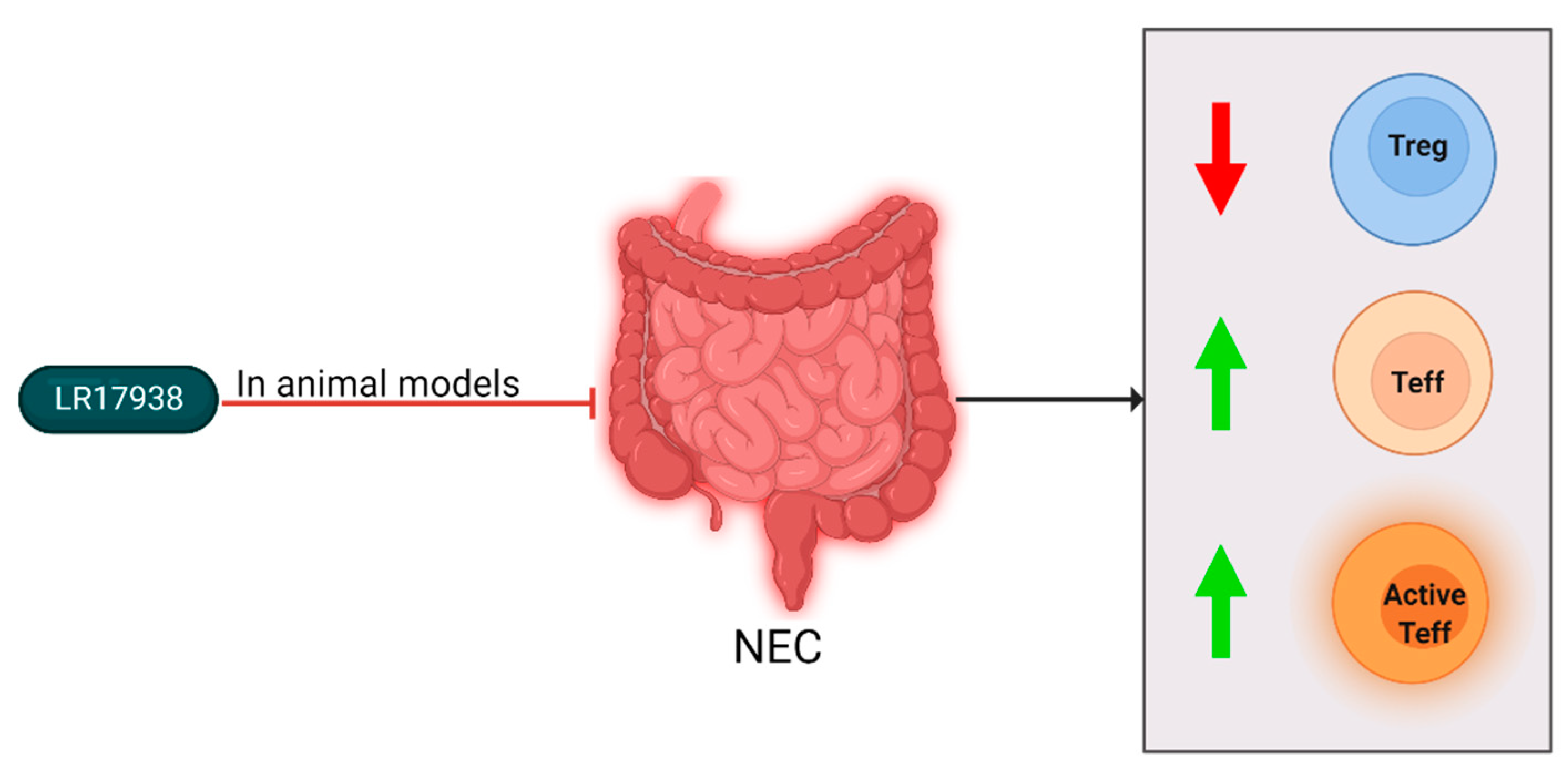
| Liu [5] | 2013 | Experimental | Sprague Dawley rats | 180 total | Yes: formula fed, starved 12 h after birth, hypoxia | Rats divided into groups: dam-fed; dam-fed + LR17938 supplement; NEC induction; NEC induction + LR17938 supplement. CD3 immunohistochemistry performed. | Yes: terminal ileum HE staining | Yes: on spleen, thymus and mesenteric lymph node | Treg: CD3+ + CD4+ + FOXP3+; effector T cells: CD3+ + CD4+ or CD8+ | Treg percentage increased during first days of life in dam-fed rats. Treg percentages were significantly lower in NEC rats. Treg percentage and survival rates were higher in NEC rats after LR17938 supplementation. |
| Liu [53] | 2014 | Experimental | Wild-type mice | 99 total | Yes: formula fed, 12 h starvation, hypoxia, cold stress | Mice divided into groups: dam-fed; dam-fed + LR17938 supplement; NEC induction; NEC induction + LR17938 supplement. | Yes: intestine HE staining | Yes: on ileum | Treg: CD4+ + FOXP3+; activated effector T cells: CD4+ + CD44+ + CD4RBlo | Treg frequency decreased and effector T cell frequency increased in ileum and mesenteric lymph nodes of NEC mice. Treg and effector T cell levels remained the same as controls after LR17938 treatment. |
| Hoang [54] | 2018 | Experimental | Mice: wild type; TLR−/− | 106 total | Yes, formula fed, hypoxia, cold stress | Mice divided into groups: dam-fed; NEC induction; NEC induction + anti-IL6R supplement. Cytokine ELISAs and total protein Western blots performed. | Yes: ileum HE staining | Yes: on ileum | Treg: CD4+ + FOXP3+; Th17 cells: CD4+ + IL-17+ | Levels of Th17 cells and IL-17+ Tregs increased and Treg levels decreased after NEC induction compared to controls. Frequency of circulating CCR9+ IL-17+ Tregs increased after NEC induction. Increased level of circulating CCR9+ IL-17+ Tregs correlated negatively to severity of intestinal damage. |
| Qazi [55] | 2020 | Randomised control trial | Human | 163 total 134 ELBW, 29 term. | No | Neonates with ELBW randomised into LR17938 or placebo supplement groups. Blood taken at day 14, day 28 at PMW 36 + 0. PBMC isolated. | No | Yes: on blood | Treg: CD4+ + CD25+ + FOXP3+ + CD127+; effector T cells: CD4+ or CD8+ | Percentages of total and viable lymphocytes were significantly lower in ELBW neonates at 14 DOL. ELBW infants have a reduced Tbet/GATA3 ratio and Helios level in Tregs at both 14 and 28 DOL. LR17938 supplementation had no impact on the T cell proportions. |
4. Discussion
Author Contributions
Funding
Institutional Review Board Statement
Informed Consent Statement
Acknowledgments
Conflicts of Interest
References
- Neu, J.; Walker, W.A. Necrotizing Enterocolitis. N. Engl. J. Med. 2011, 364, 255–264. [Google Scholar] [CrossRef] [PubMed]
- Lin, P.W.; Stoll, B.J. Necrotising Enterocolitis. Lancet 2006, 368, 1271–1283. [Google Scholar] [CrossRef]
- Papillon, S.; Castle, S.L.; Gayer, C.P.; Ford, H.R. Necrotizing Enterocolitis: Contemporary Management and Outcomes. Adv. Pediatr. 2013, 60, 263–279. [Google Scholar] [CrossRef]
- Cho, S.X.; Berger, P.J.; Nold-Petry, C.A.; Nold, M.F. The Immunological Landscape in Necrotising Enterocolitis. Expert Rev. Mol. Med. 2016, 18, e12. [Google Scholar] [CrossRef] [PubMed]
- Liu, Y.; Fatheree, N.Y.; Dingle, B.M.; Tran, D.Q.; Rhoads, J.M. Lactobacillus reuteri DSM 17938 Changes the Frequency of Foxp3+ Regulatory T Cells in the Intestine and Mesenteric Lymph Node in Experimental Necrotizing Enterocolitis. PLoS ONE 2013, 8, e56547. [Google Scholar] [CrossRef]
- Dingle, B.M.; Liu, Y.; Fatheree, N.Y.; Min, J.; Rhoads, J.M.; Tran, D.Q. FoxP3+ Regulatory T Cells Attenuate Experimental Necrotizing Enterocolitis. PLoS ONE 2013, 8, e82963. [Google Scholar] [CrossRef]
- Weitkamp, J.-H.; Koyama, T.; Rock, M.T.; Correa, H.; Goettel, J.A.; Matta, P.; Oswald-Richter, K.; Rosen, M.J.; Engelhardt, B.G.; Moore, D.J.; et al. Necrotising Enterocolitis Is Characterised by Disrupted Immune Regulation and Diminished Mucosal Regulatory (FOXP3)/Effector (CD4, CD8) T Cell Ratios. Gut 2013, 62, 73–82. [Google Scholar] [CrossRef] [PubMed]
- Bettelli, E.; Carrier, Y.; Gao, W.; Korn, T.; Strom, T.B.; Oukka, M.; Weiner, H.L.; Kuchroo, V.K. Reciprocal Developmental Pathways for the Generation of Pathogenic Effector TH17 and Regulatory T Cells. Nature 2006, 441, 235–238. [Google Scholar] [CrossRef] [PubMed]
- Yang, X.O.; Nurieva, R.; Martinez, G.J.; Kang, H.S.; Chung, Y.; Pappu, B.P.; Shah, B.; Chang, S.H.; Schluns, K.S.; Watowich, S.S.; et al. Molecular Antagonism and Plasticity of Regulatory and Inflammatory T Cell Programs. Immunity 2008, 29, 44–56. [Google Scholar] [CrossRef] [PubMed]
- Omenetti, S.; Pizarro, T.T. The Treg/Th17 Axis: A Dynamic Balance Regulated by the Gut Microbiome. Front. Immunol. 2015, 6, 639. [Google Scholar] [CrossRef] [PubMed]
- Pang, Y.; Du, X.; Xu, X.; Wang, M.; Li, Z. Impairment of Regulatory T Cells in Patients with Neonatal Necrotizing Enterocolitis. Int. Immunopharmacol. 2018, 63, 19–25. [Google Scholar] [CrossRef] [PubMed]
- Tricco, A.C.; Lillie, E.; Zarin, W.; O’Brien, K.K.; Colquhoun, H.; Levac, D.; Moher, D.; Peters, M.D.J.; Horsley, T.; Weeks, L.; et al. PRISMA Extension for Scoping Reviews (PRISMA-ScR): Checklist and Explanation. Ann. Intern. Med. 2018, 169, 467–473. [Google Scholar] [CrossRef] [PubMed]
- Ouzzani, M.; Hammady, H.; Fedorowicz, Z.; Elmagarmid, A. Rayyan—A Web and Mobile App for Systematic Reviews. Syst. Rev. 2016, 5, 210. [Google Scholar] [CrossRef] [PubMed]
- Huenecke, S.; Fryns, E.; Wittekindt, B.; Buxmann, H.; Königs, C.; Quaiser, A.; Fischer, D.; Bremm, M.; Klingebiel, T.; Koehl, U.; et al. Percentiles of Lymphocyte Subsets in Preterm Infants According to Gestational Age Compared to Children and Adolescents. Scand. J. Immunol. 2016, 84, 291–298. [Google Scholar] [CrossRef]
- Weitkamp, J.-H.; Rudzinski, E.; Koyama, T.; Correa, H.; Matta, P.; Alberty, B.; Polk, D.-B. Ontogeny of FOXP3+ Regulatory T Cells in the Postnatal Human Small Intestinal and Large Intestinal Lamina Propria. Pediatr. Dev. Pathol. 2009, 12, 443–449. [Google Scholar] [CrossRef] [PubMed]
- Hori, S.; Nomura, T.; Sakaguchi, S. Control of Regulatory T Cell Development by the Transcription Factor Foxp3. Science 2003, 299, 1057–1061. [Google Scholar] [CrossRef] [PubMed]
- Egan, C.E.; Sodhi, C.P.; Good, M.; Lin, J.; Jia, H.; Yamaguchi, Y.; Lu, P.; Ma, C.; Branca, M.F.; Weyandt, S.; et al. Toll-Like Receptor 4–Mediated Lymphocyte Influx Induces Neonatal Necrotizing Enterocolitis. J. Clin. Investig. 2015, 126, 495–508. [Google Scholar] [CrossRef] [PubMed]
- Ivanov, I.I.; McKenzie, B.S.; Zhou, L.; Tadokoro, C.E.; Lepelley, A.; Lafaille, J.J.; Cua, D.J.; Littman, D.R. The Orphan Nuclear Receptor RORγt Directs the Differentiation Program of Proinflammatory IL-17+ T Helper Cells. Cell 2006, 126, 1121–1133. [Google Scholar] [CrossRef] [PubMed]
- Niño, D.F.; Sodhi, C.P.; Egan, C.E.; Zhou, Q.; Lin, J.; Lu, P.; Yamaguchi, Y.; Jia, H.; Martin, L.Y.; Good, M.; et al. Retinoic Acid Improves Incidence and Severity of Necrotizing Enterocolitis by Lymphocyte Balance Restitution and Repopulation of LGR5+ Intestinal Stem Cells. Shock 2017, 47, 22–32. [Google Scholar] [CrossRef] [PubMed]
- Pang, Y.; Du, X.; Xu, X.; Wang, M.; Li, Z. Monocyte Activation and Inflammation Can Exacerbate Treg/Th17 Imbalance in Infants with Neonatal Necrotizing Enterocolitis. Int. Immunopharmacol. 2018, 59, 354–360. [Google Scholar] [CrossRef] [PubMed]
- Capone, A.; Volpe, E. Transcriptional Regulators of T Helper 17 Cell Differentiation in Health and Autoimmune Diseases. Front. Immunol. 2020, 11, 348. [Google Scholar] [CrossRef] [PubMed]
- O’Garra, A.; Barrat, F.J.; Castro, G.; Vicari, A.; Hawrylowicz, C. Strategies for Use Of IL-10 Or Its Antagonists in Human Disease. Immunol. Rev. 2008, 223, 114–131. [Google Scholar] [CrossRef] [PubMed]
- Yoshimura, A.; Wakabayashi, Y.; Mori, T. Cellular and Molecular Basis for the Regulation of Inflammation by TGF-. J. Biochem. 2010, 147, 781–792. [Google Scholar] [CrossRef] [PubMed]
- Ma, F.; Li, S.; Gao, X.; Zhou, J.; Zhu, X.; Wang, D.; Cai, Y.; Li, F.; Yang, Q.; Gu, X.; et al. Interleukin-6-Mediated CCR9+ Interleukin-17-Producing Regulatory T Cells Polarization Increases the Severity of Necrotizing Enterocolitis. EBioMedicine 2019, 44, 71–85. [Google Scholar] [CrossRef] [PubMed]
- Onai, N.; Kitabatake, M.; Zhang, Y.; Ishikawa, H.; Ishikawa, S.; Matsushima, K. Pivotal role of CCL25 (TECK)-CCR9 in the Formation of Gut Cryptopatches and Consequent Appearance of Intestinal Intraepithelial T Lymphocytes. Int. Immunol. 2002, 14, 687–694. [Google Scholar] [CrossRef] [PubMed]
- Hosoe, N.; Miura, S.; Watanabe, C.; Tsuzuki, Y.; Hokari, R.; Oyama, T.; Fujiyama, Y.; Nagata, H.; Ishii, H. Demonstration of Functional Role of TECK/CCL25 In T Lymphocyte-Endothelium Interaction in Inflamed and Uninflamed Intestinal Mucosa. Am. J. Physiol. Liver Physiol. 2004, 286, G458–G466. [Google Scholar] [CrossRef] [PubMed]
- Papadakis, K.A.; Prehn, J.; Moreno, S.T.; Cheng, L.; Kouroumalis, E.A.; Deem, R.; Breaverman, T.; Ponath, P.D.; Andrew, D.P.; Green, P.H.; et al. CCR9–Positive lymphocytes and Thymus-Expressed Chemokine Distinguish Small Bowel from Colonic Crohn’s disease. Gastroenterology 2001, 121, 246–254. [Google Scholar] [CrossRef] [PubMed]
- Ma, F.; Hao, H.; Gao, X.; Cai, Y.; Zhou, J.; Liang, P.; Lv, J.; He, Q.; Shi, C.; Hu, D.; et al. Melatonin Ameliorates Necrotizing Enterocolitis by Preventing Th17/Treg Imbalance Through Activation of the AMPK/SIRT1 Pathway. Theranostics 2020, 10, 7730–7746. [Google Scholar] [CrossRef] [PubMed]
- Kourula, S.; Chisholm, K.M.; Zhao, H.; Kalish, F.; Yang, Y.; Wong, R.J.; Stevenson, D.K. Heme Oxygenase-1 Confers Protection and Alters T-Cell Populations in a Mouse Model of Neonatal Intestinal Inflammation. Pediatr. Res. 2015, 77, 640–648. [Google Scholar] [CrossRef][Green Version]
- Kourula, S.; Wong, R.J.; Jang, K.Y.; Kalish, F.; Chisholm, K.; Zhao, H.; Vreman, H.J.; Sylvester, K.G.; Stevenson, D.K. Heme Oxygenase-1 Deficiency Promotes the Development of Necrotizing Enterocolitis-Like Intestinal Injury in a Newborn Mouse Model. Am. J. Physiol. Gastrointest. Liver Physiol. 2013, 304, G991–G1001. [Google Scholar] [CrossRef]
- Chen, H.; Zhang, H.; Zheng, Y.; Min, X.; Luo, Y.; Zhou, W.; Ma, F.; Li, J.; Lu, Q.; Zhang, C.; et al. Prolyl Hydroxylase 2 Silencing Enhances the Paracrine Effects of Mesenchymal Stem Cells on Necrotizing Enterocolitis in an NF-Κb-Dependent Mechanism. Cell Death Dis. 2020, 11, 188. [Google Scholar] [CrossRef] [PubMed]
- Chen, H.; Min, X.-H.; Wang, Q.-Y.; Leung, F.W.; Shi, L.; Zhou, Y.; Yu, T.; Wang, C.-M.; An, G.; Sha, W.; et al. Pre-Activation of Mesenchymal Stem Cells With TNF-A, IL-1β And Nitric Oxide Enhances Its Paracrine Effects on Radiation-Induced Intestinal Injury. Sci. Rep. 2015, 5, 8718. [Google Scholar] [CrossRef] [PubMed]
- Ko, S.H.; Nauta, A.C.; Morrison, S.D.; Hu, M.S.; Zimmermann, A.S.; Chung, M.T.; Glotzbach, J.P.; Wong, V.W.; Walmsley, G.G.; Lorenz, H.P.; et al. PHD-2 Suppression in Mesenchymal Stromal Cells Enhances Wound Healing. Plast. Reconstr. Surg. 2018, 141, 55e. [Google Scholar] [CrossRef] [PubMed]
- Lönnerdal, B. Infant Formula and Infant Nutrition: Bioactive Proteins of Human Milk and Implications for Composition of Infant Formulas. Am. J. Clin. Nutr. 2014, 99, 712S–717S. [Google Scholar] [CrossRef]
- Nickerson, K.P.; Chanin, R.; McDonald, C. Deregulation of Intestinal Anti-Microbial Defense by the Dietary Additive, Maltodextrin. Gut Microbes 2015, 6, 78–83. [Google Scholar] [CrossRef]
- Timby, N.; Domellöf, M.; Lönnerdal, B.; Hernell, O. Supplementation of Infant Formula with Bovine Milk Fat Globule Membranes. Adv. Nutr. 2017, 8, 351–355. [Google Scholar] [CrossRef]
- Fallon, E.M.; Nehra, D.; Potemkin, A.K.; Gura, K.M.; Simpser, E.; Compher, C.; Puder, M.; Mirtallo, J.; Ayers, P.; Goday, P.S.; et al. A.S.P.E.N. Clinical Guidelines. J. Parenter. Enter. Nutr. 2012, 36, 506–523. [Google Scholar] [CrossRef]
- Li, Y.; Pan, X.; Nguyen, D.N.; Ren, S.; Moodley, A.; Sangild, P.T. Bovine Colostrum Before or After Formula Feeding Improves Systemic Immune Protection and Gut Function in Newborn Preterm Pigs. Front. Immunol. 2020, 10, 3062. [Google Scholar] [CrossRef]
- Ahnfeldt, A.M.; Hyldig, N.; Li, Y.; Kappel, S.S.; Aunsholdt, L.; Sangild, P.T.; Zachariassen, G. FortiColos—A Multicentre Study Using Bovine Colostrum as a Fortifier to Human Milk in Very Preterm Infants: Study Protocol for a Randomised Controlled Pilot Trial. Trials 2019, 20, 279. [Google Scholar] [CrossRef]
- Xu, J.; Anderson, V.; Schwarz, S.M. Dietary GD3 Ganglioside Reduces the Incidence and Severity of Necrotizing Enterocolitis by Sustaining Regulatory Immune Responses. J. Pediatr. Gastroenterol. Nutr. 2013, 57, 550–556. [Google Scholar] [CrossRef]
- Schnabl, K.L.; Larsen, B.; Van Aerde, J.E.; Lees, G.; Evans, M.; Belosevic, M.; Field, C.; Thomson, A.B.R.; Clandinin, M.T. Gangliosides Protect Bowel in an Infant Model of Necrotizing Enterocolitis by Suppressing Proinflammatory Signals. J. Pediatr. Gastroenterol. Nutr. 2009, 49, 382–392. [Google Scholar] [CrossRef] [PubMed]
- Park, E.J.; Suh, M.; Thomson, B.; Thomson, A.B.; Ramanujam, K.S.; Clinin, M.T. Dietary Ganglioside Decreases Cholesterol Content, Caveolin Expression and Inflammatory Mediators in Rat Intestinal Microdomains. Glycobiology 2005, 15, 935–942. [Google Scholar] [CrossRef]
- Akin, I.M.; Atasay, B.; Dogu, F.; Okulu, E.; Arsan, S.; Karatas, H.D.; Ikinciogullari, A.; Turmen, T. Oral Lactoferrin to Prevent Nosocomial Sepsis and Necrotizing Enterocolitis of Premature Neonates and Effect on T-Regulatory Cells. Am. J. Perinatol. 2014, 31, 1111–1120. [Google Scholar] [CrossRef] [PubMed]
- Buccigrossi, V.; De Marco, G.; Bruzzese, E.; Ombrato, L.; Bracale, I.; Polito, G.; Guarino, A. Lactoferrin Induces Concentration-Dependent Functional Modulation of Intestinal Proliferation and Differentiation. Pediatr. Res. 2007, 61, 410–414. [Google Scholar] [CrossRef] [PubMed]
- Llorente, C.G.; Muñoz, S.; Gil, A. Role of Toll-Like Receptors in the Development of Immunotolerance Mediated by Probiotics. Proc. Nutr. Soc. 2010, 69, 381–389. [Google Scholar] [CrossRef]
- van den Akker, C.H.; Van Goudoever, J.B.; Szajewska, H.; Embleton, N.D.; Hojsak, I.; Reid, D.; Shamir, R. For the ESPGHAN Working Group for Probiotics, P. & C. on N. Probiotics for Preterm Infants: A Strain-Specific Systematic Review and Network Meta-Analysis. J. Pediatric Gastroenterol. Nutr. 2018, 67, 103–122. [Google Scholar] [CrossRef]
- Bi, L.-W.; Yan, B.-L.; Yang, Q.-Y.; Li, M.-M.; Cui, H.-L. Which is the Best Probiotic Treatment Strategy to Prevent the Necrotizing Enterocolitis in Premature Infants: A Network Meta-Analysis Revealing the Efficacy and Safety. Medicine 2019, 98, e17521. [Google Scholar] [CrossRef]
- Morgan, R.L.; Preidis, G.A.; Kashyap, P.C.; Weizman, A.V.; Sadeghirad, B.; McMaster Probiotic, Prebiotic, and Synbiotic Work Group. Probiotics Reduce Mortality and Morbidity in Preterm, Low-Birth-Weight Infants: A Systematic Review and Network Meta-analysis of Randomized Trials. Gastroenterology 2020, 159, 467–480. [Google Scholar] [CrossRef]
- Chi, C.; Li, C.; Buys, N.; Wang, W.; Yin, C.; Sun, J. Effects of Probiotics in Preterm Infants: A Network Meta-analysis. Pediatrics 2021, 147, e20200706. [Google Scholar] [CrossRef]
- Beghetti, I.; Panizza, D.; Lenzi, J.; Gori, D.; Martini, S.; Corvaglia, L.; Aceti, A. Probiotics for Preventing Necrotizing Enterocolitis in Preterm Infants: A Network Meta-Analysis. Nutrients 2021, 13, 192. [Google Scholar] [CrossRef]
- Patel, R.M.; Underwood, M.A. Probiotics and Necrotizing Enterocolitis. Semin. Pediatr. Surg. 2018, 27, 39–46. [Google Scholar] [CrossRef] [PubMed]
- Rosander, A.; Connolly, E.; Roos, S. Removal of Antibiotic Resistance Gene-Carrying Plasmids from Lactobacillus reuteri ATCC 55730 and Characterization of the Resulting Daughter Strain, L. reuteri DSM 17938. Appl. Environ. Microbiol. 2008, 74, 6032–6040. [Google Scholar] [CrossRef] [PubMed]
- Liu, Y.; Tran, D.Q.; Fatheree, N.Y.; Rhoads, J.M. Lactobacillus reuteri DSM 17938 Differentially Modulates Effector Memory T Cells and Foxp3+ Regulatory T Cells in a Mouse Model of Necrotizing Enterocolitis. Am. J. Physiol. Gastrointest. Liver Physiol. 2014, 307, G177–G186. [Google Scholar] [CrossRef] [PubMed]
- Hoang, T.K.; He, B.; Wang, T.; Tran, D.Q.; Rhoads, J.M.; Liu, Y. Protective Effect of Lactobacillus reuteri DSM 17938 Against Experimental Necrotizing Enterocolitis Is Mediated by Toll-Like Receptor 2. Am. J. Physiol. Gastrointest. Liver Physiol. 2018, 315, G231–G240. [Google Scholar] [CrossRef]
- Qazi, K.R.; Jensen, G.B.; Van Der Heiden, M.; Björkander, S.; Holmlund, U.; Haileselassie, Y.; Kokkinou, E.; Marchini, G.; Jenmalm, M.C.; Abrahamsson, T.; et al. Extremely Preterm Infants Have Significant Alterations in Their Conventional T Cell Compartment during the First Weeks of Life. J. Immunol. 2019, 204, 68–77. [Google Scholar] [CrossRef]
Publisher’s Note: MDPI stays neutral with regard to jurisdictional claims in published maps and institutional affiliations. |
© 2022 by the authors. Licensee MDPI, Basel, Switzerland. This article is an open access article distributed under the terms and conditions of the Creative Commons Attribution (CC BY) license (https://creativecommons.org/licenses/by/4.0/).
Share and Cite
Zuiderwijk, M.O.; van der Burg, M.; Bekker, V.; Schoenaker, M.H.D. Regulatory T Cells in Development and Prediction of Necrotizing Enterocolitis in Preterm Neonates: A Scoping Review. Int. J. Mol. Sci. 2022, 23, 10903. https://doi.org/10.3390/ijms231810903
Zuiderwijk MO, van der Burg M, Bekker V, Schoenaker MHD. Regulatory T Cells in Development and Prediction of Necrotizing Enterocolitis in Preterm Neonates: A Scoping Review. International Journal of Molecular Sciences. 2022; 23(18):10903. https://doi.org/10.3390/ijms231810903
Chicago/Turabian StyleZuiderwijk, Mara O., Mirjam van der Burg, Vincent Bekker, and Michiel H. D. Schoenaker. 2022. "Regulatory T Cells in Development and Prediction of Necrotizing Enterocolitis in Preterm Neonates: A Scoping Review" International Journal of Molecular Sciences 23, no. 18: 10903. https://doi.org/10.3390/ijms231810903
APA StyleZuiderwijk, M. O., van der Burg, M., Bekker, V., & Schoenaker, M. H. D. (2022). Regulatory T Cells in Development and Prediction of Necrotizing Enterocolitis in Preterm Neonates: A Scoping Review. International Journal of Molecular Sciences, 23(18), 10903. https://doi.org/10.3390/ijms231810903

