


Underlying Biochemical and Molecular Mechanisms for Seed Germination


Abstract
1. Introduction
2. Main Text
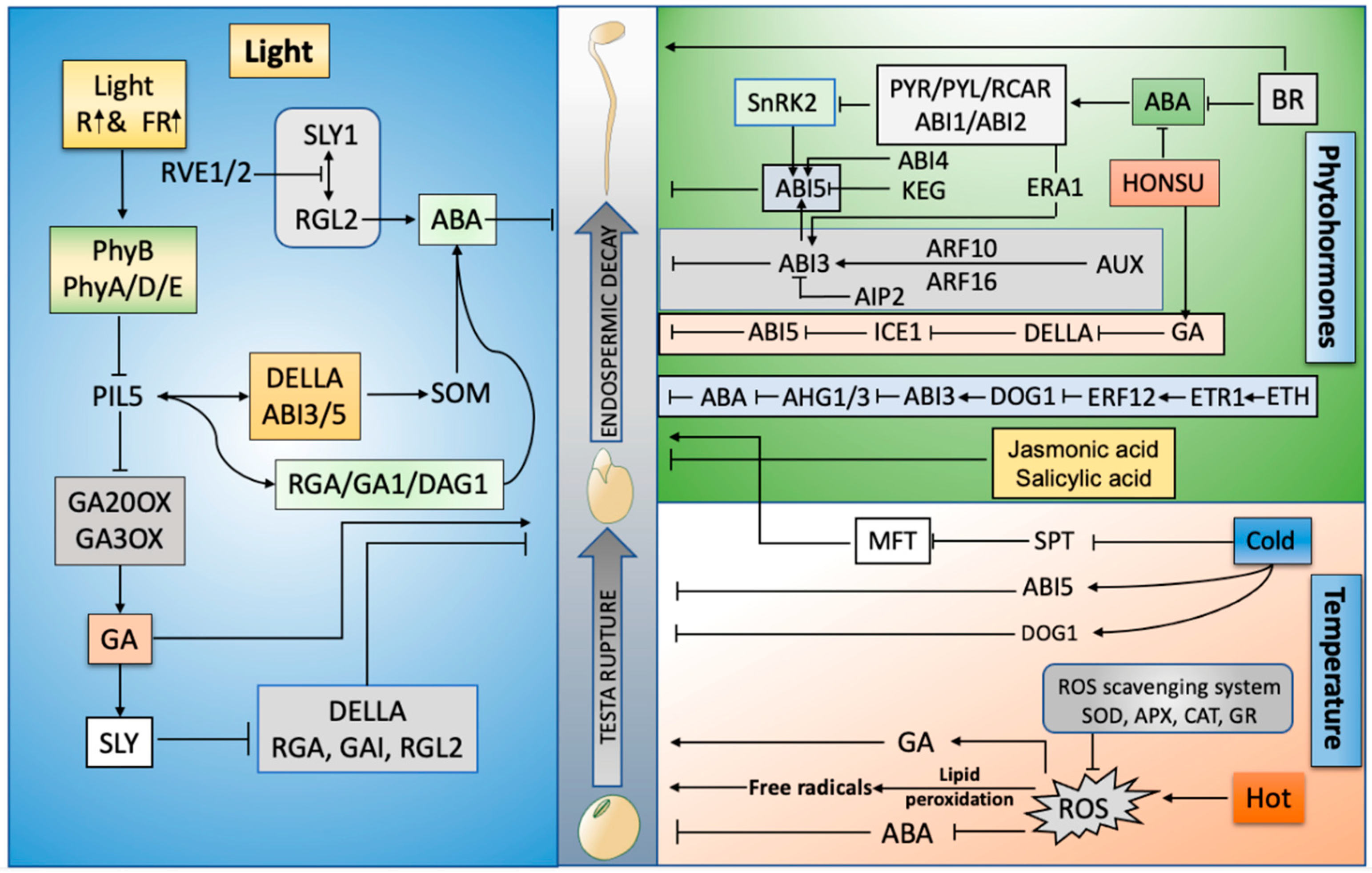
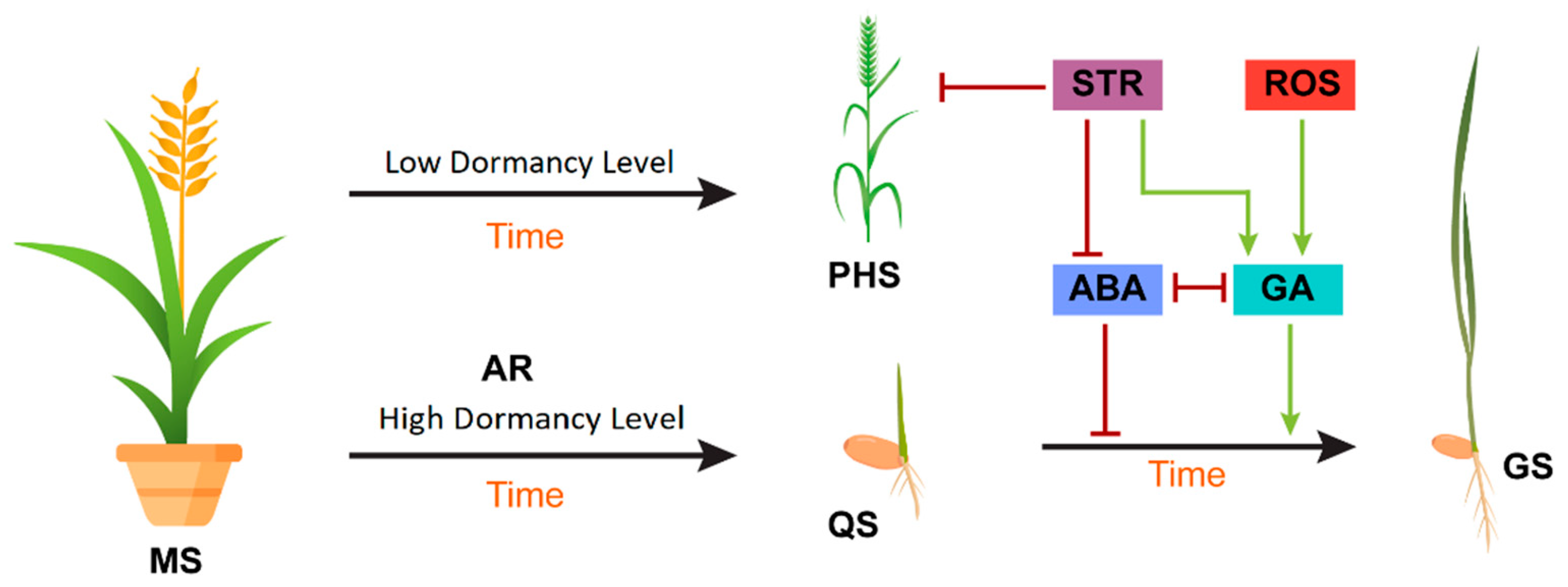
2.1. Phytohormone Regulation of Dormancy and Germination
2.2. Light Controls Seed Germination and Dormancy
2.3. Optimum Temperature Enables Seed Germination
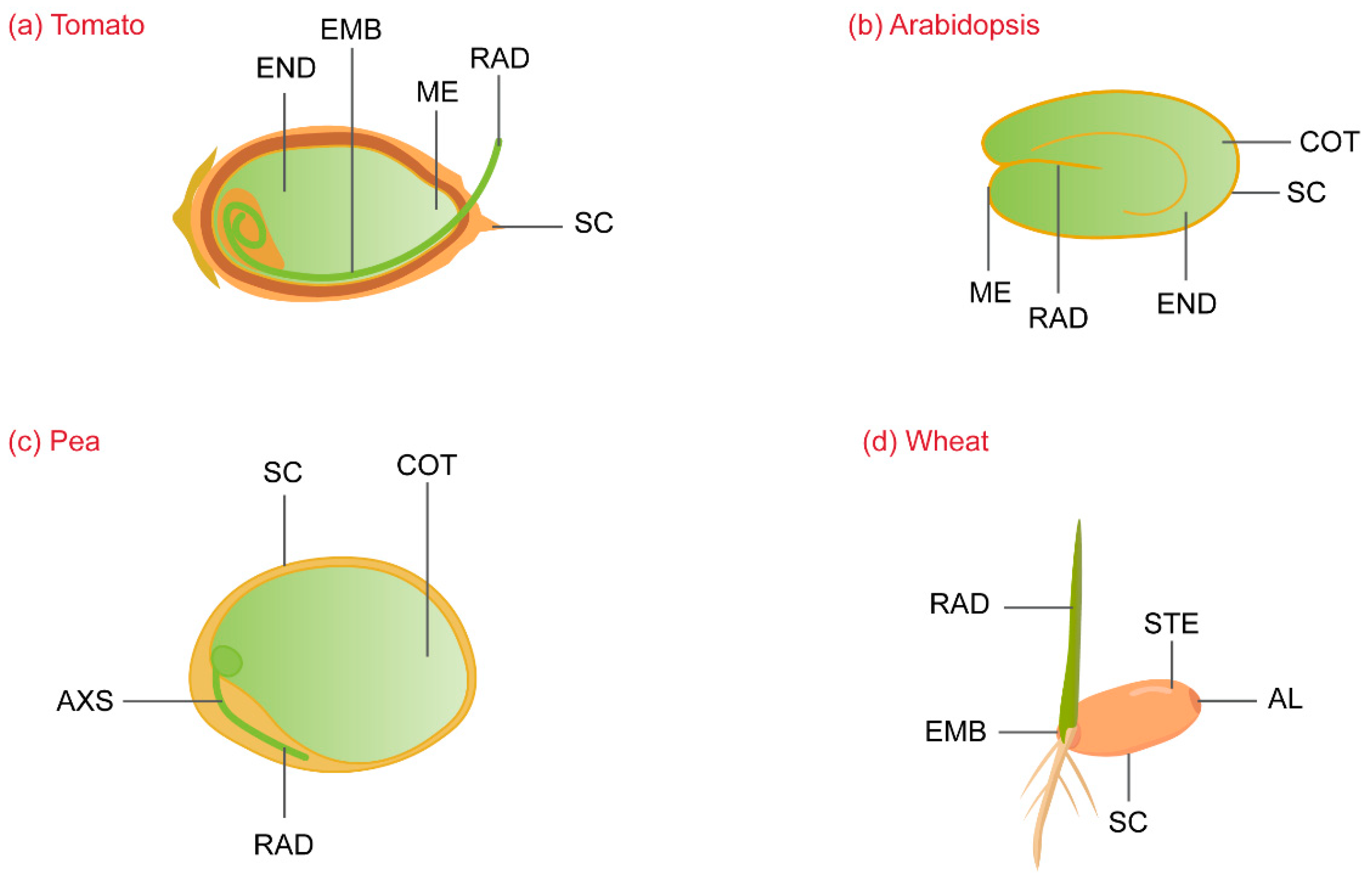
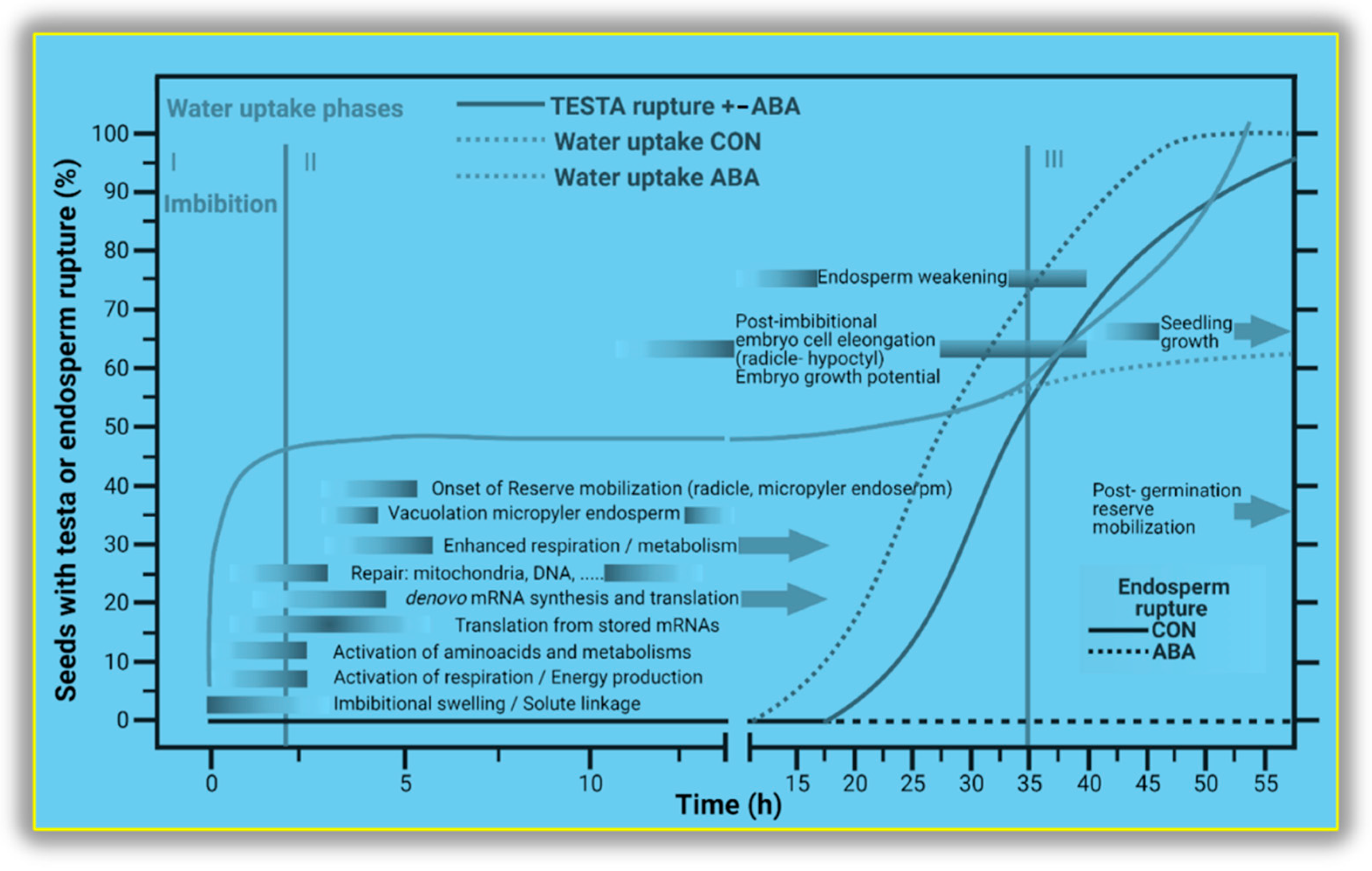
2.4. Endosperm Decay, A Prerequisite for Embryo Growth
3. Conclusions and Future Perspectives
Author Contributions
Funding
Institutional Review Board Statement
Informed Consent Statement
Data Availability Statement
Conflicts of Interest
References
- Carrera-Castaño, G.; Calleja-Cabrera, J.; Pernas, M.; Gómez, L.; Oñate-Sánchez, L. An Updated Overview on the Regulation of Seed Germination. Plants 2020, 9, 703. [Google Scholar] [CrossRef] [Scilit] [PubMed]
- Wang, H.; Zhao, K.; Li, X.; Chen, X.; Liu, W.; Wang, J. Factors affecting seed germination and emergence of Aegilops tauschii. Weed Res. 2020, 60, 171–181. [Google Scholar] [CrossRef] [Scilit]
- Oracz, K.; Karpiński, S. Phytohormones signaling pathways and ROS involvement in seed germination. Front. Plant Sci. 2016, 7, 864. [Google Scholar] [CrossRef] [Scilit]
- Shu, K.; Liu, X.D.; Xie, Q.; He, Z.-H. Two faces of one seed: Hormonal regulation of dormancy and germination. Mol. Plant 2016, 9, 34–45. [Google Scholar] [CrossRef] [Scilit] [PubMed]
- Wang, Y.; Htwe, Y.M.; Li, J.; Shi, P.; Zhang, D.; Zhao, Z.; Ihase, L.O. Integrative omics analysis on phytohormones involved in oil palm seed germination. BMC Plant Biol. 2019, 19, 1–14. [Google Scholar] [CrossRef] [Scilit] [PubMed]
- MacGregor, D.R.; Kendall, S.L.; Florance, H.; Fedi, F.; Moore, K.; Paszkiewicz, K.; Smirnoff, N.; Penfield, S. Seed production temperature regulation of primary dormancy occurs through control of seed coat phenylpropanoid metabolism. N. Phytol. 2015, 205, 642–652. [Google Scholar] [CrossRef] [Scilit] [PubMed]
- Farooq, M.A.; Zhang, X.; Zafar, M.M.; Ma, W.; Zhao, J. Roles of Reactive Oxygen Species and Mitochondria in Seed Germination. Front. Plant Sci. 2021, 12, 781734. [Google Scholar] [CrossRef] [Scilit] [PubMed]
- Xia, Q.; Ponnaiah, M.; Cueff, G.; Rajjou, L.; Prodhomme, D.; Gibon, Y.; Bailly, C.; Corbineau, F.; Meimoun, P.; El-Maarouf-Bouteau, H. Integrating proteomics and enzymatic profiling to decipher seed metabolism affected by temperature in seed dormancy and germination. Plant Sci. 2018, 269, 118–125. [Google Scholar] [CrossRef] [Scilit]
- Oh, E.; Kim, J.; Park, E.; Kim, J.-I.; Kang, C.; Choi, G. PIL5, a phytochrome-interacting basic helix-loop-helix protein, is a key negative regulator of seed germination in Arabidopsis thaliana. Plant Cell 2004, 16, 3045–3058. [Google Scholar] [CrossRef] [Scilit]
- He, H.; Willems, L.A.J.; Batushansky, A.; Fait, A.; Hanson, J.; Nijveen, H.; Hilhorst, H.; Bentsink, L. Effects of Parental Temperature and Nitrate on Seed Performance are Reflected by Partly Overlapping Genetic and Metabolic Pathways. Plant Cell Physiol. 2016, 57, 473–487. [Google Scholar] [CrossRef] [Scilit] [PubMed]
- Meng, Y.; Shuai, H.; Luo, X.; Chen, F.; Zhou, W.; Yang, W.; Shu, K. Karrikins: Regulators involved in phytohormone signaling networks during seed germination and seedling development. Front. Plant Sci. 2017, 7, 2021. [Google Scholar] [CrossRef] [Scilit] [PubMed]
- Springthorpe, V.; Penfield, S. Flowering time and seed dormancy control use external coincidence to generate life history strategy. Elife 2015, 4, e05557. [Google Scholar] [CrossRef] [Scilit] [PubMed]
- Jiang, A.; Guo, Z.; Pan, J.; Yang, Y.; Zhuang, Y.; Zuo, D.; Hao, C.; Gao, Z.; Xin, P.; Chu, J.; et al. The PIF1-miR408-PLANTACYANIN repression cascade regulates light-dependent seed germination. Plant Cell 2021, 33, 1506–1529. [Google Scholar] [CrossRef] [Scilit] [PubMed]
- Yang, L.-W.; Liu, S.; Lin, R. The role of light in regulating seed dormancy and germination. J. Integr. Plant Biol. 2020, 62, 1310–1326. [Google Scholar] [CrossRef] [Scilit] [PubMed]
- Zhang, K.; Yao, L.; Zhang, Y.; Baskin, J.M.; Baskin, C.C.; Xiong, Z.; Tao, J. A review of the seed biology of Paeonia species (Paeoniaceae), with particular reference to dormancy and germination. Planta 2019, 249, 291–303. [Google Scholar] [CrossRef] [Scilit]
- Miransari, M.; Smith, D.L. Plant hormones and seed germination. Environ. Exp. Bot. 2014, 99, 110–121. [Google Scholar] [CrossRef] [Scilit]
- Zhou, S.F.; Sun, L.; Valdés, A.E.; Engström, P.; Song, Z.T.; Lu, S.J.; Liu, J.X. Membrane-associated transcription factor peptidase, site-2 protease, antagonizes ABA signaling in Arabidopsis. New Phytol. 2015, 208, 188–197. [Google Scholar] [CrossRef] [Scilit]
- Hubbard, K.E.; Nishimura, N.; Hitomi, K.; Getzoff, E.D.; Schroeder, J. Early abscisic acid signal transduction mechanisms: Newly discovered components and newly emerging questions. Genes Dev. 2010, 24, 1695–1708. [Google Scholar] [CrossRef] [Scilit]
- Cutler, S.R.; Rodriguez, P.L.; Finkelstein, R.R.; Abrams, S.R. Abscisic Acid: Emergence of a Core Signaling Network. Annu. Rev. Plant Biol. 2010, 61, 651–679. [Google Scholar] [CrossRef] [Scilit]
- Kim, W.; Lee, Y.; Park, J.; Lee, N.; Choi, G. HONSU, a Protein Phosphatase 2C, Regulates Seed Dormancy by Inhibiting ABA Signaling in Arabidopsis. Plant Cell Physiol. 2013, 54, 555–572. [Google Scholar] [CrossRef] [Scilit] [PubMed]
- Xiang, Y.; Nakabayashi, K.; Ding, J.; He, F.; Bentsink, L.; Soppe, W.J. Reduced Dormancy5 encodes a protein phosphatase 2C that is required for seed dormancy in Arabidopsis. Plant Cell 2014, 26, 4362–4375. [Google Scholar] [CrossRef] [Scilit] [PubMed]
- Zhang, W.; Qu, L.-W.; Zhao, J.; Xue, L.; Dai, H.-P.; Xing, G.-M.; Lei, J.-J. Practical Methods for Breaking Seed Dormancy in a Wild Ornamental Tulip Species Tulipa thianschanica Regel. Agronomy 2020, 10, 1765. [Google Scholar] [CrossRef] [Scilit]
- Lee, S.; Cheng, H.; King, K.E.; Wang, W.; He, Y.; Hussain, A.; Lo, J.; Harberd, N.P.; Peng, J. Gibberellin regulates Arabidopsis seed germination via RGL2, a GAI/RGA-like gene whose expression is up-regulated following imbibition. Genes Dev. 2002, 16, 646–658. [Google Scholar] [CrossRef] [Scilit] [PubMed]
- Resentini, F.; Felipo-Benavent, A.; Colombo, L.; Blázquez, M.A.; Alabadí, D.; Masiero, S. TCP14 and TCP15 mediate the promotion of seed germination by gibberellins in Arabidopsis thaliana. Mol. Plant 2015, 8, 482–485. [Google Scholar] [CrossRef] [Scilit] [PubMed]
- Steber, C.M.; Cooney, S.E.; McCourt, P. Isolation of the GA-response mutant sly1 as a suppressor of ABI1-1 in Arabidopsis thaliana. Genetics 1998, 149, 509–521. [Google Scholar] [CrossRef] [Scilit] [PubMed]
- Shu, K.; Chen, Q.; Wu, Y.; Liu, R.; Zhang, H.; Wang, P.; Li, Y.; Wang, S.; Tang, S.; Liu, C. ABI 4 mediates antagonistic effects of abscisic acid and gibberellins at transcript and protein levels. Plant J. 2016, 85, 348–361. [Google Scholar] [CrossRef] [Scilit]
- Finkelstein, R.R. Mutations at two new Arabidopsis ABA response loci are similar to the abi3 mutations. Plant J. 1994, 5, 765–771. [Google Scholar] [CrossRef] [Scilit]
- Brocard-Gifford, I.M.; Lynch, T.J.; Finkelstein, R.R. Regulatory Networks in Seeds Integrating Developmental, Abscisic Acid, Sugar, and Light Signaling. Plant Physiol. 2003, 131, 78–92. [Google Scholar] [CrossRef] [Scilit]
- Finkelstein, R.; Reeves, W.; Ariizumi, T.; Steber, C. Molecular Aspects of Seed Dormancy. Annu. Rev. Plant Biol. 2008, 59, 387–415. [Google Scholar] [CrossRef] [Scilit] [PubMed]
- Kong, D.; Ju, C.; Parihar, A.; Kim, S.; Cho, D.; Kwak, J.M. Arabidopsis Glutamate Receptor Homolog3.5 Modulates Cytosolic Ca2+ Level to Counteract Effect of Abscisic Acid in Seed Germination. Plant Physiol. 2015, 167, 1630–1642. [Google Scholar] [CrossRef] [Scilit]
- Shu, K.; Zhang, H.; Wang, S.; Chen, M.; Wu, Y.; Tang, S.; Liu, C.; Feng, Y.; Cao, X.; Xie, Q. ABI4 Regulates Primary Seed Dormancy by Regulating the Biogenesis of Abscisic Acid and Gibberellins in Arabidopsis. PLoS Genet. 2013, 9, e1003577. [Google Scholar] [CrossRef] [Scilit] [PubMed]
- Frey, A.; Effroy, D.; Lefebvre, V.; Seo, M.; Perreau, F.; Berger, A.; Sechet, J.; To, A.; North, H.M.; Marion-Poll, A. Epoxycarotenoid cleavage by NCED5 fine-tunes ABA accumulation and affects seed dormancy and drought tolerance with other NCED family members. Plant J. 2012, 70, 501–512. [Google Scholar] [CrossRef] [Scilit] [PubMed]
- Matakiadis, T.; Alboresi, A.; Jikumaru, Y.; Tatematsu, K.; Pichon, O.; Renou, J.-P.; Kamiya, Y.; Nambara, E.; Truong, H.-N. The Arabidopsis Abscisic Acid Catabolic Gene CYP707A2 Plays a Key Role in Nitrate Control of Seed Dormancy. Plant Physiol. 2008, 149, 949–960. [Google Scholar] [CrossRef] [Scilit]
- Yamauchi, Y.; Takeda-Kamiya, N.; Hanada, A.; Ogawa, M.; Kuwahara, A.; Seo, M.; Kamiya, Y.; Yamaguchi, S. Contribution of Gibberellin Deactivation by AtGA2ox2 to the Suppression of Germination of Dark-Imbibed Arabidopsis thaliana Seeds. Plant Cell Physiol. 2007, 48, 555–561. [Google Scholar] [CrossRef] [Scilit]
- Jacobsen, S.E.; Olszewski, N.E. Mutations at the SPINDLY locus of Arabidopsis alter gibberellin signal transduction. Plant Cell 1993, 5, 887–896. [Google Scholar] [PubMed]
- Lee, H.G.; Lee, K.; Seo, P.J. The Arabidopsis MYB96 transcription factor plays a role in seed dormancy. Plant Mol. Biol. 2015, 87, 371–381. [Google Scholar] [CrossRef] [Scilit]
- Lee, K.; Lee, H.G.; Yoon, S.; Kim, H.U.; Seo, P.J. The Arabidopsis MYB96 Transcription Factor Is a Positive Regulator of ABSCISIC ACID-INSENSITIVE4 in the Control of Seed Germination. Plant Physiol. 2015, 168, 677–689. [Google Scholar] [CrossRef] [Scilit] [PubMed]
- Nakabayashi, K.; Bartsch, M.; Xiang, Y.; Miatton, E.; Pellengahr, S.; Yano, R.; Seo, M.; Soppe, W.J. The time required for dormancy release in Arabidopsis is determined by DELAY OF GERMINATION1 protein levels in freshly harvested seeds. Plant Cell 2012, 24, 2826–2838. [Google Scholar] [CrossRef] [Scilit]
- Graeber, K.; Linkies, A.; Steinbrecher, T.; Mummenhoff, K.; Tarkowská, D.; Turečková, V.; Ignatz, M.; Sperber, K.; Voegele, A.; De Jong, H. DELAY OF GERMI-NATION 1 mediates a conserved coat-dormancy mechanism for the temperature-and gibberellin-dependent control of seed germination. Proc. Natl. Acad. Sci. USA 2014, 111, E3571–E3580. [Google Scholar] [CrossRef] [Scilit]
- Zheng, J.; Chen, F.; Wang, Z.; Cao, H.; Li, X.; Deng, X.; Soppe, W.J.; Li, Y.; Liu, Y. A novel role for histone methyltransferase KYP/SUVH4 in the control of Arabidopsis primary seed dormancy. New Phytol. 2012, 193, 605–616. [Google Scholar] [CrossRef] [Scilit] [PubMed]
- Ding, Z.J.; Yan, J.Y.; Li, G.X.; Wu, Z.C.; Zhang, S.Q.; Zheng, S.J. WRKY41 controls Arabidopsis seed dormancy via direct regulation of ABI3 transcript levels not downstream of ABA. Plant J. 2014, 79, 810–823. [Google Scholar] [CrossRef] [Scilit] [PubMed]
- Lee, S.-J.; Lee, M.H.; Kim, J.-I.; Kim, S.Y. Arabidopsis Putative MAP Kinase Kinase Kinases Raf10 and Raf11 are Positive Regulators of Seed Dormancy and ABA Response. Plant Cell Physiol. 2014, 56, 84–97. [Google Scholar] [CrossRef] [Scilit] [PubMed]
- Barrero, J.M.; Millar, A.A.; Griffiths, J.; Czechowski, T.; Scheible, W.R.; Udvardi, M.; Reid, J.B.; Ross, J.J.; Jacobsen, J.V.; Gubler, F. Gene expression profiling identifies two regulatory genes controlling dormancy and ABA sensitivity in Arabidopsis seeds. Plant J. 2010, 61, 611–622. [Google Scholar] [CrossRef] [Scilit] [PubMed]
- Vaistij, F.E.; Gan, Y.; Penfield, S.; Gilday, A.D.; Dave, A.; He, Z.; Josse, E.-M.; Choi, G.; Halliday, K.J.; Graham, I.A. Differential control of seed primary dormancy in Arabidopsis ecotypes by the transcription factor SPATULA. Proc. Natl. Acad. Sci. USA 2013, 110, 10866–10871. [Google Scholar] [CrossRef] [Scilit] [PubMed]
- Belmonte, M.F.; Kirkbride, R.C.; Stone, S.L.; Pelletier, J.M.; Bui, A.Q.; Yeung, E.C.; Hashimoto, M.; Fei, J.; Harada, C.M.; Munoz, M.D.; et al. Comprehensive developmental profiles of gene activity in regions and subregions of the Arabidopsis seed. Proc. Natl. Acad. Sci. USA 2013, 110, E435–E444. [Google Scholar] [CrossRef] [Scilit]
- Liu, X.; Zhang, H.; Zhao, Y.; Feng, Z.; Li, Q.; Yang, H.-Q.; Luan, S.; Li, J.; He, Z.-H. Auxin controls seed dormancy through stimulation of abscisic acid signaling by inducing ARF-mediated ABI3 activation in Arabidopsis. Proc. Natl. Acad. Sci. USA 2013, 110, 15485–15490. [Google Scholar] [CrossRef] [Scilit]
- Hu, Y.; Yu, D. BRASSINOSTEROID INSENSITIVE2 interacts with AB-SCISIC ACID INSENSITIVE5 to mediate the antagonism of brassinosteroids to abscisic acid during seed germination in Arabidopsis. Plant Cell 2014, 26, 4394–4408. [Google Scholar] [CrossRef] [Scilit]
- Zhou, X.; Hao, H.; Zhang, Y.; Bai, Y.; Zhu, W.; Qin, Y.; Yuan, F.; Zhao, F.; Wang, M.; Hu, J. PKS5/CIPK11, a SnRK3-type protein kinase, is important for ABA responses in Arabidopsis through phosphorylation of ABI5. Plant Physiol. 2015. [Google Scholar] [CrossRef] [Scilit]
- Park, S.-Y.; Fung, P.; Nishimura, N.; Jensen, D.R.; Fujii, H.; Zhao, Y.; Lumba, S.; Santiago, J.; Rodrigues, A.; Chow, T.-F.F.; et al. Abscisic Acid Inhibits Type 2C Protein Phosphatases via the PYR/PYL Family of START Proteins. Science 2009, 324, 1068–1071. [Google Scholar] [CrossRef] [Scilit]
- Yano, R.; Kanno, Y.; Jikumaru, Y.; Nakabayashi, K.; Kamiya, Y.; Nambara, E. CHOTTO1, a putative double APETALA2 repeat transcription factor, is involved in abscisic acid-mediated repression of gibberellin biosynthesis during seed germination in Arabidopsis. Plant Physiol. 2009, 151, 641–654. [Google Scholar] [CrossRef] [Scilit]
- Yaish, M.W.; El-Kereamy, A.; Zhu, T.; Beatty, P.H.; Good, A.G.; Bi, Y.-M.; Rothstein, S.J. The APETALA-2-Like Transcription Factor OsAP2-39 Controls Key Interactions between Abscisic Acid and Gibberellin in Rice. PLoS Genet. 2010, 6, e1001098. [Google Scholar] [CrossRef] [Scilit]
- Magome, H.; Yamaguchi, S.; Hanada, A.; Kamiya, Y.; Oda, K. The DDF1 transcriptional activator upregulates expression of a gibberellin-deactivating gene, GA2ox7, under high-salinity stress in Arabidopsis. Plant J. 2008, 56, 613–626. [Google Scholar] [CrossRef] [Scilit]
- Kerchev, P.I.; Pellny, T.K.; Vivancos, P.D.; Kiddle, G.; Hedden, P.; Driscoll, S.; Vanacker, H.; Verrier, P.; Hancock, R.D.; Foyer, C.H. The Transcription Factor ABI4 Is Required for the Ascorbic Acid–Dependent Regulation of Growth and Regulation of Jasmonate-Dependent Defense Signaling Pathways in Arabidopsis. Plant Cell 2011, 23, 3319–3334. [Google Scholar] [CrossRef] [Scilit]
- Shuai, H.; Meng, Y.; Luo, X.; Chen, F.; Zhou, W.; Dai, Y.; Qi, Y.; Du, J.; Yang, F.; Liu, J. Exogenous auxin represses soybean seed germination through decreasing the gibberellin/abscisic acid (GA/ABA) ratio. Sci. Rep. 2017, 7, 12620. [Google Scholar] [CrossRef] [Scilit]
- Majid, A.; Mohsen, S.; Mandana, A.; Saeid, J.-H.; Ezatollah, E.; Fariborz, S. Biochemistry, The effects of different levels of salinity and indole-3-acetic acid (IAA) on early growth and germination of wheat seedling. J. Stress Physiol. Biochem. 2013, 9, 329–338. [Google Scholar]
- Liu, A.; Gao, F.; Kanno, Y.; Jordan, M.C.; Kamiya, Y.; Seo, M.; Ayele, B.T. Regulation of wheat seed dormancy by after-ripening is mediated by specific transcriptional switches that induce changes in seed hormone metabolism and signaling. PLoS ONE 2013, 8, e56570. [Google Scholar] [CrossRef] [Scilit] [PubMed]
- Corbineau, F.; Xia, Q.; Bailly, C.; El-Maarouf-Bouteau, H. Ethylene, a key factor in the regulation of seed dormancy. Front. Plant Sci. 2014, 5, 539. [Google Scholar] [CrossRef] [Scilit]
- Jiroutova, P.; Oklestkova, J.; Strnad, M. Crosstalk between brassinosteroids and ethylene during plant growth and under abiotic stress conditions. Int. J. Mol. Sci. 2018, 19, 3283. [Google Scholar] [CrossRef] [Scilit]
- Yanik, F.; Aytürk, Ö.; Genc, A.C.; Vardar, F. Salicylic acid-induced germination, biochemical and developmental alterations in rye (Secale cereale L.). Acta Bot. Croat. 2018, 77, 45–50. [Google Scholar] [CrossRef] [Scilit]
- Tuan, P.A.; Yamasaki, Y.; Kanno, Y.; Seo, M.; Ayele, B.T. Transcriptomics of cytokinin and auxin metabolism and signaling genes during seed maturation in dormant and non-dormant wheat genotypes. Sci. Rep. 2019, 9, 1–16. [Google Scholar] [CrossRef] [Scilit]
- Linkies, A.; Leubner-Metzger, G. Beyond gibberellins and abscisic acid: How ethylene and jasmonates control seed germination. Plant Cell Rep. 2012, 31, 253–270. [Google Scholar] [CrossRef] [Scilit]
- Fantini, E.; Facella, P. Cryptochromes in the field: How blue light influences crop development. Physiol. Plant. 2020, 169, 336–346. [Google Scholar] [CrossRef] [Scilit] [PubMed]
- Barrero, J.M.; Downie, A.B.; Xu, Q.; Gubler, F. A role for barley CRYPTOCHROME1 in light regulation of grain dormancy and germination. Plant Cell 2014, 26, 1094–1104. [Google Scholar] [CrossRef] [Scilit] [PubMed]
- Poppe, C.; Schafer, E. Seed Germination of Arabidopsis thaliana phyA/phyB Double Mutants Is under Phytochrome Control. Plant Physiol. 1997, 114, 1487–1492. [Google Scholar] [CrossRef] [Scilit]
- Hennig, L.; Stoddart, W.M.; Dieterle, M.; Whitelam, G.C.; Schäfer, E. Phytochrome E controls light-induced germination of Arabidopsis. Plant Physiol. 2002, 128, 194–200. [Google Scholar] [CrossRef] [PubMed]
- Arana, M.V.; Sánchez-Lamas, M.; Strasser, B.; Ibarra, S.E.; Cerdan, P.D.; Botto, J.F.; Sanchez, R.A. Functional diversity of phytochrome family in the control of light and gibberellin-mediated germination in A rabidopsis. Plant Cell Environ. 2014, 37, 2014–2023. [Google Scholar] [CrossRef] [Scilit]
- Kim, D.H.; Yamaguchi, S.; Lim, S.; Oh, E.; Park, J.; Hanada, A.; Kamiya, Y.; Choi, G. SOMNUS, a CCCH-type zinc finger protein in Arabidopsis, negatively regulates light-dependent seed germination downstream of PIL5. Plant Cell 2008, 20, 1260–1277. [Google Scholar] [CrossRef] [Scilit]
- Cho, J.; Ryu, J.-Y.; Jeong, Y.-M.; Park, J.; Song, J.-J.; Amasino, R.M.; Noh, B.; Noh, Y.-S. Control of Seed Germination by Light-Induced Histone Arginine Demethylation Activity. Dev. Cell 2012, 22, 736–748. [Google Scholar] [CrossRef] [Scilit]
- Majee, M.; Kumar, S.; Kathare, P.K.; Wu, S.; Gingerich, D.; Nayak, N.R.; Salaita, L.; Dinkins, R.; Martin, K.; Goodin, M. KELCH F-BOX protein positively influences Arabidopsis seed germination by targeting PHYTOCHROME-INTERACTING FACTOR1. Proc. Natl. Acad. Sci. USA 2018, 115, E4120–E4129. [Google Scholar] [CrossRef] [Scilit]
- Zhu, L.; Bu, Q.; Xu, X.; Paik, I.; Huang, X.; Hoecker, U.; Deng, X.W.; Huq, E. CUL4 forms an E3 ligase with COP1 and SPA to promote light-induced degradation of PIF1. Nat. Commun. 2015, 6, 7245. [Google Scholar] [CrossRef] [Scilit]
- Shi, H.; Wang, X.; Mo, X.; Tang, C.; Zhong, S.; Deng, X.W. Arabidopsis DET1 degrades HFR1 but stabilizes PIF1 to precisely regulate seed germination. Proc. Natl. Acad. Sci. USA 2015, 112, 3817–3822. [Google Scholar] [CrossRef] [Scilit] [PubMed]
- Zhu, L.; Xin, R.; Bu, Q.; Shen, H.; Dang, J.; Huq, E. A Negative Feedback Loop between PHYTOCHROME INTERACTING FACTORs and HECATE Proteins Fine-Tunes Photomorphogenesis in Arabidopsis. Plant Cell 2016, 28, 855–874. [Google Scholar] [CrossRef] [Scilit]
- Lee, N.; Park, J.; Kim, K.; Choi, G. The Transcriptional Coregulator LEUNIG_HOMOLOG Inhibits Light-Dependent Seed Germination in Arabidopsis. Plant Cell 2015, 27, 2301–2313. [Google Scholar] [CrossRef] [Scilit]
- Shi, H.; Zhong, S.; Mo, X.; Liu, N.; Nezames, C.D.; Deng, X.W. HFR1 sequesters PIF1 to govern the transcriptional network underlying light-initiated seed germination in Arabidopsis. Plant Cell 2013, 25, 3770–3784. [Google Scholar] [CrossRef] [Scilit] [PubMed]
- Jin, D.; Wu, M.; Li, B.; Bücker, B.; Keil, P.; Zhang, S.; Li, J.; Kang, D.; Liu, J.; Dong, J.; et al. The COP9 Signalosome regulates seed germination by facilitating protein degradation of RGL2 and ABI5. PLoS Genet. 2018, 14, e1007237. [Google Scholar] [CrossRef] [Scilit]
- Tang, W.; Ji, Q.; Huang, Y.; Jiang, Z.; Bao, M.; Wang, H.; Lin, R. FAR-RED ELONGATED HYPOCOTYL3 and FAR-RED IMPAIRED RESPONSE1 transcription factors integrate light and abscisic acid signaling in Arabidopsis. Plant Physiol. 2013, 163, 857–866. [Google Scholar] [CrossRef] [Scilit] [PubMed]
- Chen, H.; Zhang, J.; Neff, M.M.; Hong, S.-W.; Zhang, H.; Deng, X.-W.; Xiong, L. Integration of light and abscisic acid signaling during seed germination and early seedling development. Proc. Natl. Acad. Sci. USA 2008, 105, 4495–4500. [Google Scholar] [CrossRef] [Scilit]
- Xu, D.; Li, J.; Gangappa, S.N.; Hettiarachchi, C.; Lin, F.; Andersson, M.X.; Jiang, Y.; Deng, X.W.; Holm, M. Convergence of light and ABA signaling on the ABI5 promoter. PLoS Genet. 2014, 10, e1004197. [Google Scholar] [CrossRef] [Scilit]
- Duque, P.; Chua, N.H. IMB1, a bromodomain protein induced during seed imbibition, regulates ABA-and phyA-mediated responses of germination in Arabidopsis. Plant J. 2003, 35, 787–799. [Google Scholar] [CrossRef] [Scilit] [PubMed]
- Penfield, S.; Hall, A. A role for multiple circadian clock genes in the response to signals that break seed dormancy in Arabidopsis. Plant Cell 2009, 21, 1722–1732. [Google Scholar] [CrossRef] [Scilit]
- Penfield, S.; Josse, E.-M.; Halliday, K.J. A role for an alternative splice variant of PIF6 in the control of Arabidopsis primary seed dormancy. Plant Mol. Biol. 2010, 73, 89–95. [Google Scholar] [CrossRef] [Scilit] [PubMed]
- Jiang, Z.; Xu, G.; Jing, Y.; Tang, W.; Lin, R. Phytochrome B and REVEIL-LE1/2-mediated signalling controls seed dormancy and germination in Arabidopsis. Nat. Commun. 2016, 7, 12377. [Google Scholar] [CrossRef] [Scilit] [PubMed]
- Gabriele, S.; Rizza, A.; Martone, J.; Circelli, P.; Costantino, P.; Vittorioso, P. The Dof protein DAG1 mediates PIL5 activity on seed germination by negatively regulating GA biosynthetic gene AtGA3ox1. Plant J. 2010, 61, 312–323. [Google Scholar] [CrossRef] [Scilit]
- Vaistij, F.E.; Barros-Galvão, T.; Cole, A.F.; Gilday, A.D.; He, Z.; Li, Y.; Harvey, D.; Larson, T.R.; Graham, I.A. MOTHER-OF-FT-AND-TFL1 represses seed germination under far-red light by modulating phytohormone responses in Arabidopsis thaliana. Proc. Natl. Acad. Sci. USA 2018, 115, 8442–8447. [Google Scholar] [CrossRef] [Scilit] [PubMed]
- Zha, P.; Liu, S.; Li, Y.; Ma, T.; Yang, L.; Jing, Y.; Lin, R. The evening complex and the chromatin-remodeling factor PICKLE coordinately control seed dormancy by directly repressing DOG1 in Arabidopsis. Plant Commun. 2020, 1, 100011. [Google Scholar] [CrossRef] [Scilit]
- Hajiabbasi, M.; Afshari, R.T.; Abbasi, A.; Seyyedi, S. Germination and gene expression as affected by aminocyclopropane-1-carboxylic acid in deteriorated soybean seed. J. Crop Improv. 2020, 34, 505–517. [Google Scholar] [CrossRef] [Scilit]
- Lee, K.P.; Piskurewicz, U.; Turečková, V.; Carat, S.; Chappuis, R.; Strnad, M.; Fankhauser, C.; Lopez-Molina, L. Spatially and genetically distinct control of seed germination by phytochromes A and B. Genes Dev. 2012, 26, 1984–1996. [Google Scholar] [CrossRef] [Scilit]
- Park, E.; Kim, Y.; Choi, G. Phytochrome B requires PIF degradation and sequestration to induce light responses across a wide range of light conditions. Plant Cell 2018, 30, 1277–1292. [Google Scholar] [CrossRef] [Scilit]
- Béziat, C.; Barbez, E.; Feraru, M.I.; Lucyshyn, D.; Kleine-Vehn, J. Light triggers PILS-dependent reduction in nuclear auxin signalling for growth transition. Nat. Plants 2017, 3, 17105. [Google Scholar] [CrossRef] [Scilit]
- Yavari, N. An Integrated Approach to Unravel the Physiological and Molecular Basis of Arabidopsis Thaliana Response to Narrow-Wavelength Light; McGill University: Montréal, QC, Canada, 2020. [Google Scholar]
- Shu, K.; Yang, W. E3 ubiquitin ligases: Ubiquitous actors in plant development and abiotic stress responses. Plant Cell Physiol. 2017, 58, 1461–1476. [Google Scholar] [CrossRef] [Scilit]
- De Wit, M.; Keuskamp, D.H.; Bongers, F.J.; Hornitschek, P.; Gommers, C.M.; Reinen, E.; Martínez-Cerón, C.; Fankhauser, C.; Pierik, R. Integration of Phytochrome and Cryptochrome Signals Determines Plant Growth during Competition for Light. Curr. Biol. 2016, 26, 3320–3326. [Google Scholar] [CrossRef] [Scilit] [PubMed]
- Lymperopoulos, P.; Msanne, J.; Rabara, R. Phytochrome and phytohormones: Working in tandem for plant growth and development. Front. Plant Sci. 2018, 9, 1037. [Google Scholar] [CrossRef] [Scilit]
- Zou, J.; Zhang, Y.; Zhang, Y.; Bian, Z.; Fanourakis, D.; Yang, Q.; Li, T. Morphological and physiological properties of indoor cultivated lettuce in response to additional far-red light. Sci. Hortic. 2019, 257, 108725. [Google Scholar] [CrossRef] [Scilit]
- Penfield, S. Seed dormancy and germination. Curr. Opin. Plant Biol. 2017, 27, R874–R878. [Google Scholar] [CrossRef] [Scilit]
- Essemine, J.; Ammar, S.; Jbir, N.; Bouzid, S. Sensitivity of two wheat species’s seeds (Triticum durum, Variety Karim and Triticum aestivum, Variety Salambo) to heat constraint during germination. Pak. J. Biol. Sci. 2007, 10, 3762–3768. [Google Scholar] [PubMed]
- Dell’Aquila, A.; Spada, P. Effect of low and high temperatures on protein synthesis patterns of germinating wheat embryos. Plant Physiol. Biochem. 1994, 32, 65–73. [Google Scholar]
- Chen, H.; Shen, Z.; Li, P. Adaptability of crop plants to high temperature stress [Bean, potato, soybean, tomato, heat tolerance, viability tests]. Crop Sci. 1982, 22, 719–725. [Google Scholar] [CrossRef] [Scilit]
- Petruzzelli, L.; Taranto, G. Wheat aging: The contribution of embryonic and non-embryonic lesions to loss of seed viability. Physiol. Plant. 1989, 76, 289–294. [Google Scholar] [CrossRef]
- Soltani, A.; Gholipoor, M.; Zeinali, E. Seed reserve utilization and seedling growth of wheat as affected by drought and salinity. Environ. Exp. Bot. 2006, 55, 195–200. [Google Scholar] [CrossRef] [Scilit]
- Blum, A.; Sinmena, B. Wheat seed endosperm utilization under heat stress and its relation to thermotolerance in the autotrophic plant. Field Crop. Res. 1994, 37, 185–191. [Google Scholar] [CrossRef] [Scilit]
- Su, P.; Jiang, C.; Qin, H.; Hu, R.; Feng, J.; Chang, J.; Yang, G.; He, G. Identification of Potential Genes Responsible for Thermotolerance in Wheat under High Temperature Stress. Genes 2019, 10, 174. [Google Scholar] [CrossRef] [Scilit] [PubMed]
- Zabihi-e-Mahmoodabad, R.; Jamaati-e-Somarin, S.; Khayatnezhad, M.; Gholamin, R. Effect of cold stress on germination and growth of wheat cultivars. Adv. Environ. Biol. 2011, 5, 94–97. [Google Scholar]
- Ni, Z.; Li, H.; Zhao, Y.; Peng, H.; Hu, Z.; Xin, M.; Sun, Q. Genetic improvement of heat tolerance in wheat: Recent progress in understanding the underlying molecular mechanisms. Crop J. 2018, 6, 32–41. [Google Scholar] [CrossRef] [Scilit]
- Wang, L.; Ma, H.; Song, L.; Shu, Y.; Gu, W. Comparative proteomics analysis reveals the mechanism of pre-harvest seed deterioration of soybean under high temperature and humidity stress. J. Proteom. 2012, 75, 2109–2127. [Google Scholar] [CrossRef] [Scilit] [PubMed]
- Rashid, M.; Hampton, J.G.; Shaw, M.L.; Rolston, M.P.; Khan, K.M.; Saville, D.J. Oxidative damage in forage rape (Brassica napus L.) seeds following heat stress during seed development. J. Agron. Crop Sci. 2019, 206, 101–117. [Google Scholar] [CrossRef] [Scilit]
- Huang, W.; Mayton, H.S.; Amirkhani, M.; Wang, D.; Taylor, A.G. Seed dormancy, germination and fungal infestation of eastern gamagrass seed. Ind. Crop. Prod. 2017, 99, 109–116. [Google Scholar] [CrossRef] [Scilit]
- Porceddu, M.; Mattana, E.; Pritchard, H.W.; Bacchetta, G. Sequential temperature control of multi-phasic dormancy release and germination of Paeonia corsica seeds. J. Plant Ecol. 2016, 9, 464–473. [Google Scholar] [CrossRef] [Scilit]
- Devic, M.; Guilleminot, J.; Debeaujon, I.; Bechtold, N.; Bensaude, E.; Koornneef, M.; Pelletier, G.; Delseny, M. The BANYULS gene encodes a DFR-like protein and is a marker of early seed coat development. Plant J. 1999, 19, 387–398. [Google Scholar] [CrossRef] [Scilit]
- Nesi, N.; Debeaujon, I.; Jond, C.; Pelletier, G.; Caboche, M.; Lepiniec, L. The TT8 gene encodes a basic helix-loop-helix domain protein required for expression of DFR and BAN genes in Arabidopsis siliques. Plant Cell 2000, 12, 1863–1878. [Google Scholar] [CrossRef] [Scilit]
- Toh, S.; Imamura, A.; Watanabe, A.; Nakabayashi, K.; Okamoto, M.; Jikumaru, Y.; Hanada, A.; Aso, Y.; Ishiyama, K.; Tamura, N.; et al. High Temperature-Induced Abscisic Acid Biosynthesis and Its Role in the Inhibition of Gibberellin Action in Arabidopsis Seeds. Plant Physiol. 2008, 146, 1368–1385. [Google Scholar] [CrossRef] [Scilit]
- Braybrook, S.A.; Stone, S.L.; Park, S.; Bui, A.Q.; Le, B.H.; Fischer, R.L.; Goldberg, R.B.; Harada, J.J. Genes directly regulated by LEAFY COTYLEDON2 provide insight into the control of embryo maturation and somatic embryogenesis. Proc. Natl. Acad. Sci. USA 2006, 103, 3468–3473. [Google Scholar] [CrossRef] [Scilit] [PubMed]
- Mönke, G.; Altschmied, L.; Tewes, A.; Reidt, W.; Mock, H.-P.; Conrad, U. Seed-specific transcription factors ABI3 and FUS3: Molecular interaction with DNA. Planta 2004, 219, 158–166. [Google Scholar] [CrossRef] [Scilit] [PubMed]
- Chiu, R.S.; Nahal, H.; Provart, N.J.; Gazzarrini, S. The role of the Arabidopsis FUSCA3transcription factor during inhibition of seed germination at high temperature. BMC Plant Biol. 2012, 12, 15. [Google Scholar] [CrossRef] [Scilit] [PubMed]
- Linkies, A.; Graeber, K.; Knight, C.; Leubner-Metzger, G. The evolution of seeds. New Phytol. 2010, 186, 817–831. [Google Scholar] [CrossRef] [Scilit]
- Bailly, C. The signalling role of ROS in the regulation of seed germination and dormancy. Biochem. J. 2019, 476, 3019–3032. [Google Scholar] [CrossRef] [Scilit]
- Chen, Z.; Yang, B.; Hao, Z.; Zhu, J.; Zhang, Y.; Xu, T. Exogenous hydrogen sulfide ameliorates seed germination and seedling growth of cauliflower under lead stress and its antioxidant role. J. Plant Growth Regul. 2018, 37, 5–15. [Google Scholar] [CrossRef] [Scilit]
- Chen, D.; Li, Y.; Fang, T.; Shi, X.; Chen, X. Specific roles of tocopherols and tocotrienols in seed longevity and germination tolerance to abiotic stress in transgenic rice. Plant Sci. 2016, 244, 31–39. [Google Scholar] [CrossRef] [Scilit] [PubMed]
- Ortiz-Espín, A.; Sánchez-Guerrero, A.; Sevilla, F.; Jiménez, A. The Role of Ascorbate in Plant Growth and Development. In Ascorbic Acid in Plant Growth, Development and Stress Tolerance; Springer: Cham, Switzerland, 2017; pp. 25–45. [Google Scholar] [CrossRef] [Scilit]
- Schmidt, R.J.; Burr, F.A.; Aukerman, M.J.; Burr, B. Maize regulatory gene opaque-2 encodes a protein with a “leucine-zipper” motif that binds to zein DNA. Proc. Natl. Acad. Sci. USA 1990, 87, 46–50. [Google Scholar] [CrossRef] [Scilit] [PubMed]
- Mena, M.; Vicente-Carbajosa, J.; Schmidt, R.J.; Carbonero, P. An endosperm-specific DOF protein from barley, highly conserved in wheat, binds to and activates transcription from the prolamin-box of a native B-hordein promoter in barley endosperm. Plant J. 1998, 16, 53–62. [Google Scholar] [CrossRef] [Scilit]
- Oñate, L.; Vicente-Carbajosa, J.; Lara, P.; Díaz, I.; Carbonero, P. Barley BLZ2, a seed-specific bZIP protein that interacts with BLZ1 in vivo and activates transcription from the GCN4-like motif of B-hordein promoters in barley endosperm. J. Biol. Chem. 1999, 274, 9175–9182. [Google Scholar] [CrossRef] [Scilit]
- Albani, D.; Hammond-Kosack, M.; Smith, C.; Conlan, S.; Colot, V.; Holdsworth, M.; Bevan, M.W. The wheat transcriptional activator SPA: A seed-specific bZIP protein that recognizes the GCN4-like motif in the bifactorial endosperm box of prolamin genes. Plant Cell 1997, 9, 171–184. [Google Scholar] [PubMed]
- Kawakatsu, T.; Takaiwa, F. Differences in transcriptional regulatory mechanisms functioning for free lysine content and seed storage protein accumulation in rice grain. Plant Cell Physiol. 2010, 51, 1964–1974. [Google Scholar] [CrossRef] [Scilit] [PubMed]
- Hobo, T.; Kowyama, Y.; Hattori, T. A bZIP factor, TRAB1, interacts with VP1 and mediates abscisic acid-induced transcription. Proc. Natl. Acad. Sci. USA 1999, 96, 15348–15353. [Google Scholar] [CrossRef] [Scilit] [PubMed]
- Casaretto, J.; Ho, T.-H.D. The Transcription Factors HvABI5 and HvVP1 Are Required for the Abscisic Acid Induction of Gene Expression in Barley Aleurone Cells. Plant Cell 2003, 15, 271–284. [Google Scholar] [CrossRef] [Scilit] [PubMed]
- Penfield, S.; Li, Y.; Gilday, A.D.; Graham, S.; Graham, I.A. ArabidopsisABA INSENSITIVE4 Regulates Lipid Mobilization in the Embryo and Reveals Repression of Seed Germination by the Endosperm. Plant Cell 2006, 18, 1887–1899. [Google Scholar] [CrossRef] [Scilit] [PubMed]
- Iglesias-Fernández, R.; Barrero-Sicilia, C.; Carrillo-Barral, N.; Oñate-Sánchez, L.; Carbonero, P. Arabidopsis thaliana bZIP 44: A transcription factor affecting seed germination and expression of the mannanase-encoding gene AtMAN7. Plant J. 2013, 74, 767–780. [Google Scholar] [CrossRef] [Scilit]
- Marzábal, P.; Gas, E.; Fontanet, P.; Vicente-Carbajosa, J.; Torrent, M.; Ludevid, M.D. The maize Dof protein PBF activates transcription of γ-zein during maize seed development. Plant Mol. Biol. 2008, 67, 441–454. [Google Scholar] [CrossRef] [Scilit]
- Dong, G.; Ni, Z.; Yao, Y.; Nie, X.; Sun, Q. Wheat Dof transcription factor WPBF interacts with TaQM and activates transcription of an alpha-gliadin gene during wheat seed development. Plant Mol. Biol. 2007, 63, 73–84. [Google Scholar] [CrossRef] [Scilit]
- Mena, M.; Cejudo, F.J.; Isabel-Lamoneda, I.; Carbonero, P.J. A role for the DOF transcription factor BPBF in the regulation of gibberellin-responsive genes in barley aleurone. Plant Physiol. 2002, 130, 111–119. [Google Scholar] [CrossRef] [Scilit]
- Isabel-LaMoneda, I.; Diaz, I.; Martinez, M.; Mena, M.; Carbonero, P. SAD: A new DOF protein from barley that activates transcription of a cathepsin B-like thiol protease gene in the aleurone of germinating seeds. Plant J. 2003, 33, 329–340. [Google Scholar] [CrossRef] [Scilit] [PubMed]
- Moreno-Risueno, M.Á.; Martínez, M.; Vicente-Carbajosa, J.; Carbonero, P. The family of DOF transcription factors: From green unicellular algae to vascular plants. Mol. Genet. Genom. 2007, 277, 379–390. [Google Scholar] [CrossRef] [Scilit] [PubMed]
- Guo, W.-J.; Ho, T.-H.D. An Abscisic Acid-Induced Protein, HVA22, Inhibits Gibberellin-Mediated Programmed Cell Death in Cereal Aleurone Cells. Plant Physiol. 2008, 147, 1710–1722. [Google Scholar] [CrossRef] [Scilit] [PubMed]
- Tsuji, H.; Aya, K.; Ueguchi-Tanaka, M.; Shimada, Y.; Nakazono, M.; Watanabe, R.; Nishizawa, N.K.; Gomi, K.; Shimada, A.; Kitano, H. GAMYB controls different sets of genes and is differentially regulated by microRNA in aleurone cells and anthers. Plant J. 2006, 47, 427–444. [Google Scholar] [CrossRef] [Scilit]
- Gubler, F.; Chandler, P.M.; White, R.G.; Llewellyn, D.J.; Jacobsen, J.V. Gibberellin signaling in barley aleurone cells. Control of SLN1 and GAMYB expression. Plant Physiol. 2002, 129, 191–200. [Google Scholar] [CrossRef] [Scilit] [PubMed]
- Ikeda, A.; Ueguchi-Tanaka, M.; Sonoda, Y.; Kitano, H.; Koshioka, M.; Futsuhara, Y.; Matsuoka, M.; Yamaguchi, J. Slender Rice, a Constitutive Gibberellin Response Mutant, Is Caused by a Null Mutation of the SLR1 Gene, an Ortholog of the Height-Regulating Gene GAI/RGA/RHT/D8. Plant Cell 2001, 13, 999. [Google Scholar] [CrossRef] [Scilit] [PubMed]
- Lee, K.P.; Piskurewicz, U.; Turečková, V.; Strnad, M.; Lopez-Molina, L. A seed coat bedding assay shows that RGL2-dependent release of abscisic acid by the endosperm controls embryo growth in Arabidopsis dormant seeds. Proc. Natl. Acad. Sci. USA 2010, 107, 19108–19113. [Google Scholar] [CrossRef] [Scilit] [PubMed]
- Cao, X.; Costa, L.M.; Biderre-Petit, C.; Kbhaya, B.; Dey, N.; Perez, P.; McCarty, D.R.; Gutierrez-Marcos, J.F.; Becraft, P.W. Abscisic acid and stress signals induce Viviparous1 expression in seed and vegetative tissues of maize. Plant Physiol. 2007, 143, 720–731. [Google Scholar] [CrossRef] [Scilit]
- Miyoshi, K.; Kagaya, Y.; Ogawa, Y.; Nagato, Y.; Hattori, T. Temporal and spatial expression pattern of the OSVP1 and OSEM genes during seed development in rice. Plant Cell Physiol. 2002, 43, 307–313. [Google Scholar] [CrossRef] [Scilit]
- Moreno-Risueno, M.Á.; González, N.; Díaz, I.; Parcy, F.; Carbonero, P.; Vicente-Carbajosa, J. FUSCA3 from barley unveils a common transcriptional regulation of seed-specific genes between cereals and Arabidopsis. Plant J. 2008, 53, 882–894. [Google Scholar] [CrossRef] [Scilit]
- Zhang, Y.; Mayba, O.; Pfeiffer, A.; Shi, H.; Tepperman, J.M.; Speed, T.P.; Quail, P.H. A Quartet of PIF bHLH Factors Provides a Transcriptionally Centered Signaling Hub That Regulates Seedling Morphogenesis through Differential Expression-Patterning of Shared Target Genes in Arabidopsis. PLoS Genet. 2013, 9, e1003244. [Google Scholar] [CrossRef] [Scilit]
- Mare, C.; Mazzucotelli, E.; Crosatti, C.; Francia, E.; Stanca, A.; Cattivelli, L. Hv-WRKY38: A new transcription factor involved in cold- and drought-response in barley. Plant Mol. Biol. 2004, 55, 399–416. [Google Scholar] [CrossRef] [Scilit] [PubMed]
- Sano, N.; Rajjou, L.; North, H.M. Lost in Translation: Physiological Roles of Stored mRNAs in Seed Germination. Plants 2020, 9, 347. [Google Scholar] [CrossRef] [Scilit] [PubMed]
- Dekkers, B.J.; Pearce, S.; van Bolderen-Veldkamp, R.; Marshall, A.; Widera, P.; Gilbert, J.; Drost, H.-G.; Bassel, G.; Müller, K.; King, J.R.; et al. Transcriptional Dynamics of Two Seed Compartments with Opposing Roles in Arabidopsis Seed Germination. Plant Physiol. 2013, 163, 205–215. [Google Scholar] [CrossRef] [Scilit] [PubMed]
- Manz, B.; Müller, K.; Kucera, B.; Volke, F.; Leubner-Metzger, G. Water Uptake and Distribution in Germinating Tobacco Seeds Investigated in Vivo by Nuclear Magnetic Resonance Imaging. Plant Physiol. 2005, 138, 1538–1551. [Google Scholar] [CrossRef] [Scilit]
- Müller, K.; Levesque-Tremblay, G.; Bartels, S.; Weitbrecht, K.; Wormit, A.; Usadel, B.; Haughn, G.; Kermode, A.R. Demethylesterification of cell wall pectins in Arabidopsis plays a role in seed germination. Plant Phy. 2013, 161, 305–316. [Google Scholar] [CrossRef] [Scilit]
- Sherson, S.M.; Alford, H.L.; Forbes, S.M.; Wallace, G.; Smith, S.M. Roles of cell-wall invertases and monosaccharide transporters in the growth and development of Arabidopsis. J. Exp. Bot. 2003, 54, 525–531. [Google Scholar] [CrossRef] [Scilit]
- Kreitschitz, A.; Haase, E.; Gorb, S.N. The role of mucilage envelope in the endozoochory of selected plant taxa. Die Naturwissenschaften 2020, 108, 1–14. [Google Scholar] [CrossRef] [Scilit]
- Sarker, U.; Oba, S. Drought stress effects on growth, ROS markers, compatible solutes, phenolics, flavonoids, and antioxidant activity in Amaranthus tricolor. Appl. Biochem. Biotechnol. 2018, 186, 999–1016. [Google Scholar] [CrossRef] [Scilit]
- Choi, M.-G.; Kim, E.J.; Song, J.-Y.; Choi, S.-B.; Cho, S.-W.; Park, C.S.; Kang, C.-S.; Park, Y.-I. Peptide transporter2 (PTR2) enhances water uptake during early seed germination in Arabidopsis thaliana. Plant Mol. Biol. 2020, 102, 615–624. [Google Scholar] [CrossRef] [Scilit] [PubMed]
- Preston, J.; Tatematsu, K.; Kanno, Y.; Hobo, T.; Kimura, M.; Jikumaru, Y.; Yano, R.; Kamiya, Y.; Nambara, E. Temporal Expression Patterns of Hormone Metabolism Genes during Imbibition of Arabidopsis thaliana Seeds: A Comparative Study on Dormant and Non-Dormant Accessions. Plant Cell Physiol. 2009, 50, 1786–1800. [Google Scholar] [CrossRef] [Scilit]
- Vander Willigen, C.; Postaire, O.; Tournaire-Roux, C.; Boursiac, Y.; Maurel, C.J. Expression and inhibition of aquaporins in germinating Arabidopsis seeds. Plant Cell Physiol. 2006, 47, 1241–1250. [Google Scholar] [CrossRef] [Scilit] [PubMed]
- Nnogaki, H.; Chen, F.; Bradford, K.J. Mechanisms and genes involved in germination sensu stricto. In Annual Plant Reviews Volume 27: Seed Development, Dormancy and Germination; Wiley: Hoboken, NJ, USA, 2008; p. 264. [Google Scholar]
- Weitbrecht, K.; Müller, K.; Leubner-Metzger, G. First off the mark: Early seed germination. J. Exp. Bot. 2011, 62, 3289–3309. [Google Scholar] [CrossRef] [Scilit] [PubMed]
- Nonogaki, H.; Chen, F.; Bradford, K.J. Mechanisms and genes involved in germination sensu stricto. In Annual Plant Reviews Online; Wiley: Hoboken, NJ, USA, 2018; pp. 264–304. [Google Scholar]
- Doll, N.M.; Bovio, S.; Gaiti, A.; Marsollier, A.-C.; Chamot, S.; Moussu, S.; Widiez, T.; Ingram, G. The Endosperm-Derived Embryo Sheath Is an Anti-adhesive Structure that Facilitates Cotyledon Emergence during Germination in Arabidopsis. Curr. Biol. 2020, 30, 909–915.e4. [Google Scholar] [CrossRef] [Scilit]
- Li, Z.; Zhang, J.; Liu, Y.; Liu, R.; Wang, J. Time series analysis of differential expression transcript in four developmental phases of germinating tobacco seed. Int. J. Agric. Biol. 2020, 23, 87–92. [Google Scholar]
- Hidayat, T.; Ridhawati, A. The vigor and viability seed testing of three tobacco varieties on various seed germination media. AgroTech J. 2020, 5, 1–9. [Google Scholar] [CrossRef] [Scilit]
- Steinbrecher, T.; Leubner-Metzger, G. The biomechanics of seed germination. J. Exp. Bot. 2017, 68, 765–783. [Google Scholar] [CrossRef] [Scilit]
- Li, T.; Zhang, W.; Yang, H.; Dong, Q.; Ren, J.; Fan, H.; Zhang, X.; Zhou, Y. Comparative transcriptome analysis reveals differentially expressed genes related to the tissue-specific accumulation of anthocyanins in pericarp and aleurone layer for maize. Sci. Rep. 2019, 9, 1–12. [Google Scholar] [CrossRef] [Scilit] [PubMed]
- Schmidt, M.A.; Herman, E.M. Characterization and functional biology of the soybean aleurone layer. BMC Plant Biol. 2018, 18, 354. [Google Scholar] [CrossRef] [Scilit]
- Hurlock, A.K.; Wang, K.; Takeuchi, T.; Horn, P.J.; Benning, C. In vivo lipid ‘tag and track’approach shows acyl editing of plastid lipids and chloroplast import of phosphatidylglycerol precursors in Arabidopsis thaliana. Plant J. 2018, 95, 1129–1139. [Google Scholar] [CrossRef] [Scilit]
- Müller, K.; Tintelnot, S.; Leubner-Metzger, G. Endosperm-limited Brassicaceae seed germination: Abscisic acid inhibits embryo-induced endosperm weakening of Lepidium sativum (cress) and endosperm rupture of cress and Arabidopsis thaliana. Plant Cell Physiol. 2006, 47, 864–877. [Google Scholar] [CrossRef] [Scilit]
- Sechet, J.; Frey, A.; Effroy-Cuzzi, D.; Berger, A.; Perreau, F.; Cueff, G.; Charif, D.; Rajjou, L.; Mouille, G.; North, H.M.; et al. Xyloglucan Metabolism Differentially Impacts the Cell Wall Characteristics of the Endosperm and Embryo during Arabidopsis Seed Germination. Plant Physiol. 2016, 170, 1367–1380. [Google Scholar] [CrossRef] [Scilit] [PubMed]
- Gómez-Maqueo, X.; Gamboa-deBuen, A. The dynamics of plant cell wall in muro modifications and its physiological implications on seed germination. In New Challenges in Seed Biology—Basic and Translational Research Driving Seed Technology; Intechopen: London, UK, 2016; pp. 155–177. [Google Scholar]
- Sánchez-Montesino, R.; Bouza-Morcillo, L.; Marquez, J.; Ghita, M.; Duran-Nebreda, S.; Gómez, L.; Holdsworth, M.J.; Bassel, G.; Oñate-Sánchez, L. A Regulatory Module Controlling GA-Mediated Endosperm Cell Expansion Is Critical for Seed Germination in Arabidopsis. Mol. Plant 2018, 12, 71–85. [Google Scholar] [CrossRef] [Scilit] [PubMed]
- Wang, G.; Xiao, Y.; Deng, X.; Zhang, H.; Li, T.; Chen, H. Exogenous hydrogen peroxide contributes to heme oxygenase-1 delaying programmed cell death in isolated aleurone layers of rice subjected to drought stress in a cGMP-dependent manner. Front. Plant Sci. 2018, 9, 84. [Google Scholar] [CrossRef] [Scilit] [PubMed]
- Urbanova, T.; Leubner-Metzger, G. Gibberellins and seed germination. In Annual Plant Reviews Online; Wiley: Hoboken, NJ, USA, 2018; pp. 253–284.a. [Google Scholar]

| Name of Gene | Mutant Dormancy Level | General Description of Gene | References |
|---|---|---|---|
| ABI3 | Decreased | Positively regulates ABA signaling and represses seed germination | [27] |
| ABI4 | Decreased | Positively regulates ABA signaling and represses seed germination | [28,29] |
| ABI5 | Not Changed | Positively regulates ABA signaling and represses seed germination | [30,31] |
| NCED5 | Decreased | ABA-biosynthesis gene; the ABA content is decreased | [32] |
| CYP707A1/2 | Enhanced | ABI4 negatively regulates its transcription | [33] |
| GAI/2 | Enhanced | GA-biosynthesis genes; GA content is decreased in mutants | [23] |
| GA2oxs | Decreased | GA-inactivate genes; GA content is upregulated in mutants | [34] |
| RGL2/SPY | Enhanced | GA signaling is blocked in mutants | [35] |
| MYB96 | Decreased | Decreases transcription of ABI4 and some ABA biogenesis genes | [36,37] |
| DOG1 | Enhanced | ABA sensitivity of dog1 seeds is unchanged | [38,39] |
| SUVH4/SUVH5 | Enhanced | Repress DOG1 and ABI3 transcription | [40] |
| LDL1/LDL2 | Enhanced | Repress seed dormancy by negatively regulating DOG1 | [17] |
| WRKY41 | Decreased | WRKY41 directly promotes ABI3 transcription | [41] |
| RAF10/RAF11 | Decreased | Directly enhances ABI3 transcription | [42] |
| DEP | Decreased | Promotes ABI3 transcription | [43] |
| SPT | Decreased in Ler but enhanced in Col background | Opposite roles in Ler and Col ecotypes | [44,45] |
| ARF10/ARF16 | Decreased | ARF10/ARF16 directly promote ABI3 transcription | [46] |
| BIN2 | Not mentioned | Phosphorylates and stabilizes ABI5 to enhance ABA signaling | [47] |
| PKS5 | Not mentioned | Phosphorylates ABI5 (Ser42) and controls transcription of ABA-responsive genes | [48] |
| HONSU | Enhanced | A PP2C protein that impairs ABA signaling | [20] |
| RDO5 | Enhanced | Its ABA sensitivity and content remain unchanged | [21] |
| ABI1/2 | Decreased | Dominant-negative mutants; the mutated proteins cannot interact with ABA receptors | [49] |
| CHO1 | Decreased | Acts upstream on ABI4 genetically | [50] |
| OsAP2-39 | Decreased | Promotes OsNCEDI and OsEUI, thereby enhancing ABA biogenesis and impairing GA accumulation | [51] |
| DDF1 | Decreased | Directly promotes GAox7 and thus decreases GA content | [52] |
| Protein | Locus | Possible Biochemical Function | Loss of Function Phenotype | References |
|---|---|---|---|---|
| PHYA | AT1G09570 | Regulates GA/ABA biosynthesis and signaling | Reduced germination in FR and R | [64] |
| PHYB | AT2G18970 | Regulates GA/ABA biosynthesis and signaling | Reduced germination in FR and R, increased dormancy | [65] |
| PHYC | AT5G35840 | Regulates GA biosynthesis | Increased germination in FR | [66] |
| PHYD | AT4G16250 | Regulates GA biosynthesis | Reduced germination in FR | [66] |
| PHYE | AT4G18130 | Regulates GA biosynthesis | Reduced germination in FR | [65] |
| PIF1 | AT2G20180 | Directly activates SOM, RGA, and GAI expression; indirectly activates ABA biosynthesis genes and represses an ABA catabolic gene | Increased germination in FR | [67] |
| SOM | AT1G03790 | Regulates the expression of GA and ABA metabolic genes | Increased germination in FR | [67] |
| JMJ20 | AT5G63080 | Increases H4R3me2 in GA3ox1 and GA3ox2 chromatin | Reduced germination in jmj20jmj22 double mutant seeds in R | [68] |
| JMJ22 | AT5G06550 | Increases H4R3me2 in GA3ox1 and GA3ox2 chromatin | Reduced germination in jmj20jmj22 double mutant seeds in R | [68] |
| CTG10 | AT4G19330 | Promotes PIF1 degradation | Reduced germination in FR | [69] |
| COP1 | AT2G32950 | Promotes PIF1 degradation | Reduced germination in FR | [70] |
| SPA1 | AT2G46340 | Promotes PIF1 degradation | Reduced germination in spaQ, R, and FR | [70] |
| SPA2 | AT4G11110 | Promotes PIF1 degradation | Reduced germination in spaQ, R, and FR | [70] |
| SPA3 | AT3G15354 | Promotes PIF1 degradation | Reduced germination in spaQ, R, and FR | [70] |
| SPA4 | AT1G53090 | Promotes PIF1 degradation | Reduced germination in spaQ, R, and FR | [70] |
| COP10 | AT3G13550 | Enhances PIF1 stability | Increased germination in FR | [71] |
| DET1 | AT4G10180 | Enhances PIF1 stability | Increased germination in FR | [71] |
| HEC2 | AT3G50330 | Blocks PIF1 transcriptional activity | Reduced germination in R | [72] |
| LUH | AT2G32700 | Serves as a co-regulator of PIF1 | Increased germination in FR | [73] |
| HFR1 | AT1G02340 | Blocks PIF1 transcriptional activity | Reduced germination in FR | [74] |
| CSN1 | AT3G61140 | Stimulates RGL2 degradation and further inhibits ABI5 activity | Delayed/ reduced germination | [75] |
| CSN5A | AT1G22920 | Inhibits ABI5 accumulation | Delayed/ reduced germination | [75] |
| FHY3 | AT3G22170 | Directly activates ABI5 expression | Increased germination in ABA | [76] |
| FAR1 | AT4G15090 | Activates ABI5 expression | Increased germination in ABA | [76] |
| HY5 | AT5G11260 | Directly induces ABI5 transcription | Increased germination in ABA | [77] |
| BBX21 | AT1G75540 | Interferes with HY5′ binding to ABI5 | Reduced germination in ABA | [78] |
| IMB1 | AT3G07610 | N/A | Reduced germination in ABA | [79] |
| CCA1 | AT2G46830 | Regulates the expression of GA/ ABA related genes | Reduced dormancy in cca1lhy; overexpression increases dormancy | [80] |
| LHY | AT1G01060 | Regulates the expression of GA/ABA related genes | Reduced dormancy in cca1lhy; overexpression increases dormancy | [80] |
| PIF6 | AT3G62090 | N/A | Increased dormancy | [81] |
| RVE1 | AT5G17300 | Directly inhibits GA3ox2 expression, prevents RGL2 degradation | Reduced dormancy, increased germination in R | [82] |
| RVE2 | AT5G37260 | Directly inhibits GA3ox2 expression | Reduced dormancy, increased germination in R | [82] |
| DAG1 | AT3G61850 | Directly inhibits GA3ox1 expression | Reduced dormancy and increased germination in R | [83] |
| SPT | AT4G36930 | Induces RGL3 and ABI5 expression in the Col background; suppresses RGA and ABI4 expression in the Ler background | Reduced dormancy in Col background; increased dormancy in Ler background | [84] |
| ELF3 | AT2G25930 | Inhibits DOG1 expression | Increased dormancy | [85] |
| LUX | AT3G46640 | Directly inhibits DOG1 expression | Increased dormancy | [85] |
| PKL | AT2G25170 | Inhibits DOG1 expression by regulating its H3K27me3; interacts with LUX | Increased dormancy | [85] |
| Gene | Species | Binding Site | Target Gene | Expression | Phenotypes | References |
|---|---|---|---|---|---|---|
| bZIP Transcription Factors | ||||||
| Opaque2 (O2) | Maize | GCN4-like motif (TGASTCA) | a-zein, 32 kDa albumin (b-32) | Endosperm-specific | Soft and chalky endosperm with high lysine and tryptophan | [120] |
| BLZ1 | Barley | Ltr1 | Endosperm, roots, and leaves | NA | [121] | |
| BLZ2 | Barley | Hor-2 | Endosperm-specific | NA | [122] | |
| SPA | Wheat | LMWG-1D1 | Seed-specific | NA | [123] | |
| RISBZ1 | Rice | OsLKR/SDH | Endosperm-specific | Higher lysine contents | [124] | |
| TRAB1 | Rice | ABRE (ACGT box) | Osem | Embryo roots and leaves | NA | [125] |
| HvABI5 | Barley | HVA1, HVA22 | Aleurone layer | HvABI5 RNAi inhibits the ABA activation of ABRC-GUS | [126] | |
| AtABI5 | Arabidopsis | AtEm6, AtEm1 | Embryo and micropylar endosperm | Reduced sensitivity to ABA inhibition of germination | [127] | |
| AtbZIP44 | Arabidopsis | G box (CACGTG) | AtMAN7 | Embryo and micropylar endosperm | Delayed germination | [128] |
| DOF Transcription Factors | ||||||
| PBF | Maize | Prolamin box (TGHAAAG) | γ-ZEIN | Endosperm-specific | NA | [129] |
| WPBF | Wheat | α-gliadin | Root, cotyledon, leaf, stem, flower, seeds | NA | [130] | |
| HvDOF24/ BPBF | Barley | Hor-2, Al21, Amy2/32b | Endosperm-specific | NA | [131] | |
| HvDOF23/SAD | Barley | Ltr1, Hor-2, and Al21 | Starchy endosperm, aleurone cells, nucellar projection, vascular tissues, and immature embryo | NA | [132] | |
| HvDOF19 | Barley | Al21 | Aleurone layer and embryo | NA | [133] | |
| GAMYB Transcription Factors | ||||||
| HvGAMYB | Barley | G-ARE (T/C) AAC (A/T) AC | Hor-2 and ltr1 | Aleurone layer, starchy endosperm | Transient expression of HvGANYB RNAi blocks gibberellin- induced vacuolation in aleurone cells | [134] |
| OsGAMYB | Rice | GARE (TAACAAA) | RAmy1A | Aleurone cells and anthers | Defects in gibberellin induced gene expression in the endosperm, incomplete heading, sterile panicle | [135] |
| AtMYB101, AtMYB33, AtMYB65 | Arabidopsis | NA | NA | Endosperm, embryo, anthers; MYB101 is endosperm specific | Defects in gibberellin induced vacuolation in germinating endosperm | [127] |
| DELLA Proteins | ||||||
| SLN1 | Barley | NA | NA | NA | Constitutive expression of α-amylase in aleurone layer, slender plants | [136] |
| SLR1 | Rice | NA | NA | NA | Constitutive expression of α-amylase in aleurone layer, slender plants | [137] |
| RGL2 | Arabidopsis | NA | NA | NA | Inability to secrete ABA from the endosperm | [138] |
| B3 Domain Transcription Factors | ||||||
| Viviparous (VP1) | Maize | RY/SPH motif (CATGCA) | C1, a regulator for anthocyanin biosynthesis | Embryo and aleurone layer | ABA-insensitive seed, reduced accumulation of anthocyanins in kernels, vivipary | [139] |
| OsVP1 | Rice | Osem | Embryo and aleurone layer | NA | [140] | |
| AtABI3 | Arabidopsis | SOMNUS (SOM, a set of 98 genes) | Embryo and endosperm | ABA insensitive seed, severe defects in seed maturation, desiccation intolerant seeds | [127] | |
| HvFUS3 | Barley | Hor-2 and ltr1 | Embryo, endosperm, and aleurone cells | HvFUS3 complements Arabidopsis fus3 mutants | [141] | |
| bHLH Transcription Factors | ||||||
| AtPIL5 | Arabidopsis | G-box (CAGGTG) | SOMNUS (SOM), GAI, RGA | Both embryo and endosperm in germinating seeds | PhyB independent germination, dissected endosperm secretes ABA in light dependent manner | [142] |
| WRKY Transcription Factors | ||||||
| HvWRKY38 | Barley | W-box (TTGACY) | Amy32b | NA | NA | [143] |
Publisher’s Note: MDPI stays neutral with regard to jurisdictional claims in published maps and institutional affiliations. |
© 2022 by the authors. Licensee MDPI, Basel, Switzerland. This article is an open access article distributed under the terms and conditions of the Creative Commons Attribution (CC BY) license (https://creativecommons.org/licenses/by/4.0/).
Share and Cite
Farooq, M.A.; Ma, W.; Shen, S.; Gu, A. Underlying Biochemical and Molecular Mechanisms for Seed Germination. Int. J. Mol. Sci. 2022, 23, 8502. https://doi.org/10.3390/ijms23158502
Farooq MA, Ma W, Shen S, Gu A. Underlying Biochemical and Molecular Mechanisms for Seed Germination. International Journal of Molecular Sciences. 2022; 23(15):8502. https://doi.org/10.3390/ijms23158502
Chicago/Turabian StyleFarooq, Muhammad Awais, Wei Ma, Shuxing Shen, and Aixia Gu. 2022. "Underlying Biochemical and Molecular Mechanisms for Seed Germination" International Journal of Molecular Sciences 23, no. 15: 8502. https://doi.org/10.3390/ijms23158502
APA StyleFarooq, M. A., Ma, W., Shen, S., & Gu, A. (2022). Underlying Biochemical and Molecular Mechanisms for Seed Germination. International Journal of Molecular Sciences, 23(15), 8502. https://doi.org/10.3390/ijms23158502

