Review

Molecular Basis of Bile Acid-FXR-FGF15/19 Signaling Axis
by
Takeshi Katafuchi
* and
Makoto Makishima
Division of Biochemistry, Department of Biomedical Science, Nihon University School of Medicine, Tokyo 173-8610, Japan
*
Author to whom correspondence should be addressed.
Int. J. Mol. Sci. 2022, 23(11), 6046; https://doi.org/10.3390/ijms23116046
Submission received: 28 April 2022 / Revised: 24 May 2022 / Accepted: 25 May 2022 / Published: 27 May 2022
(This article belongs to the Special Issue Molecular Biology of Nuclear Receptors 3.0)

Abstract

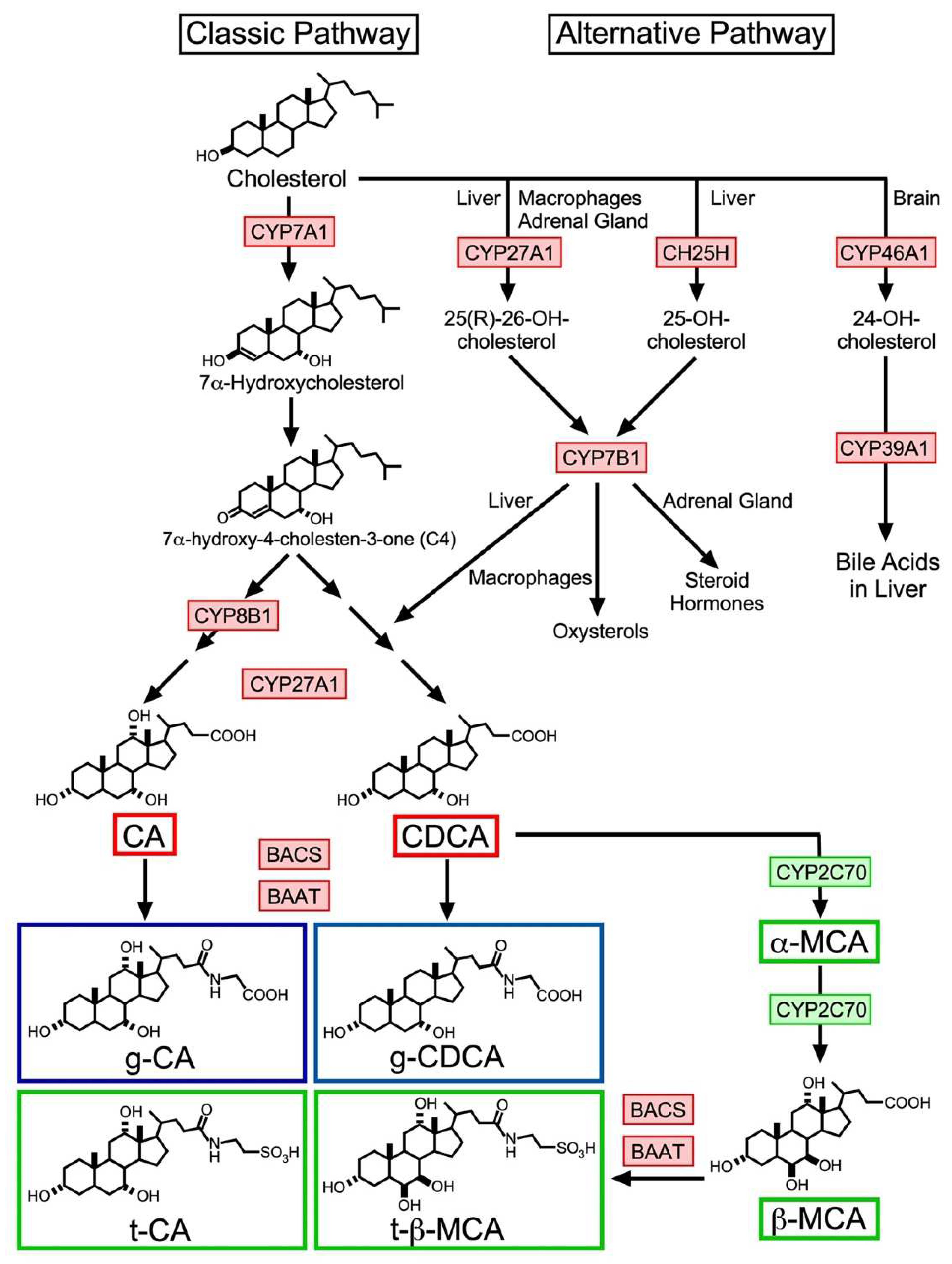
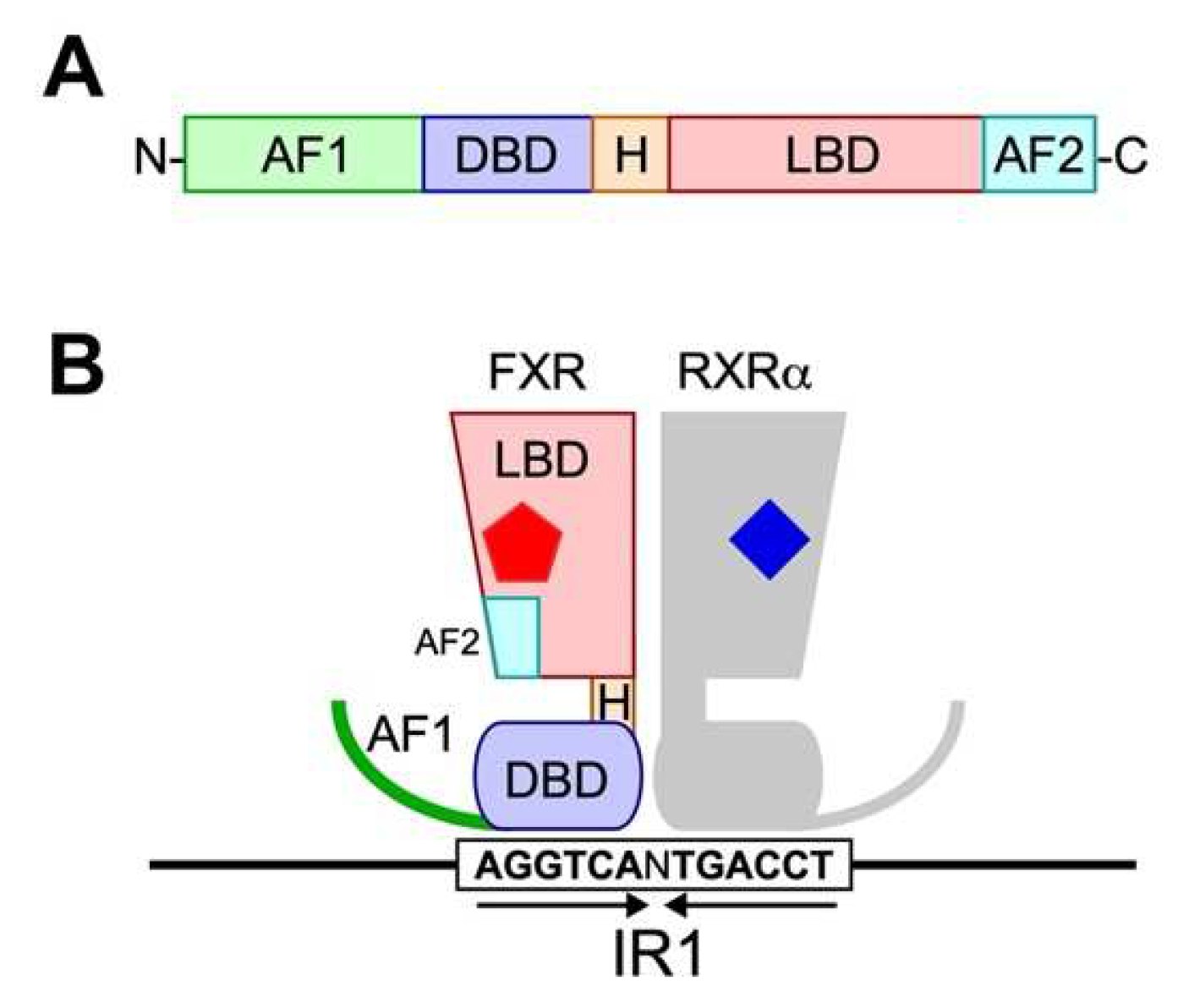
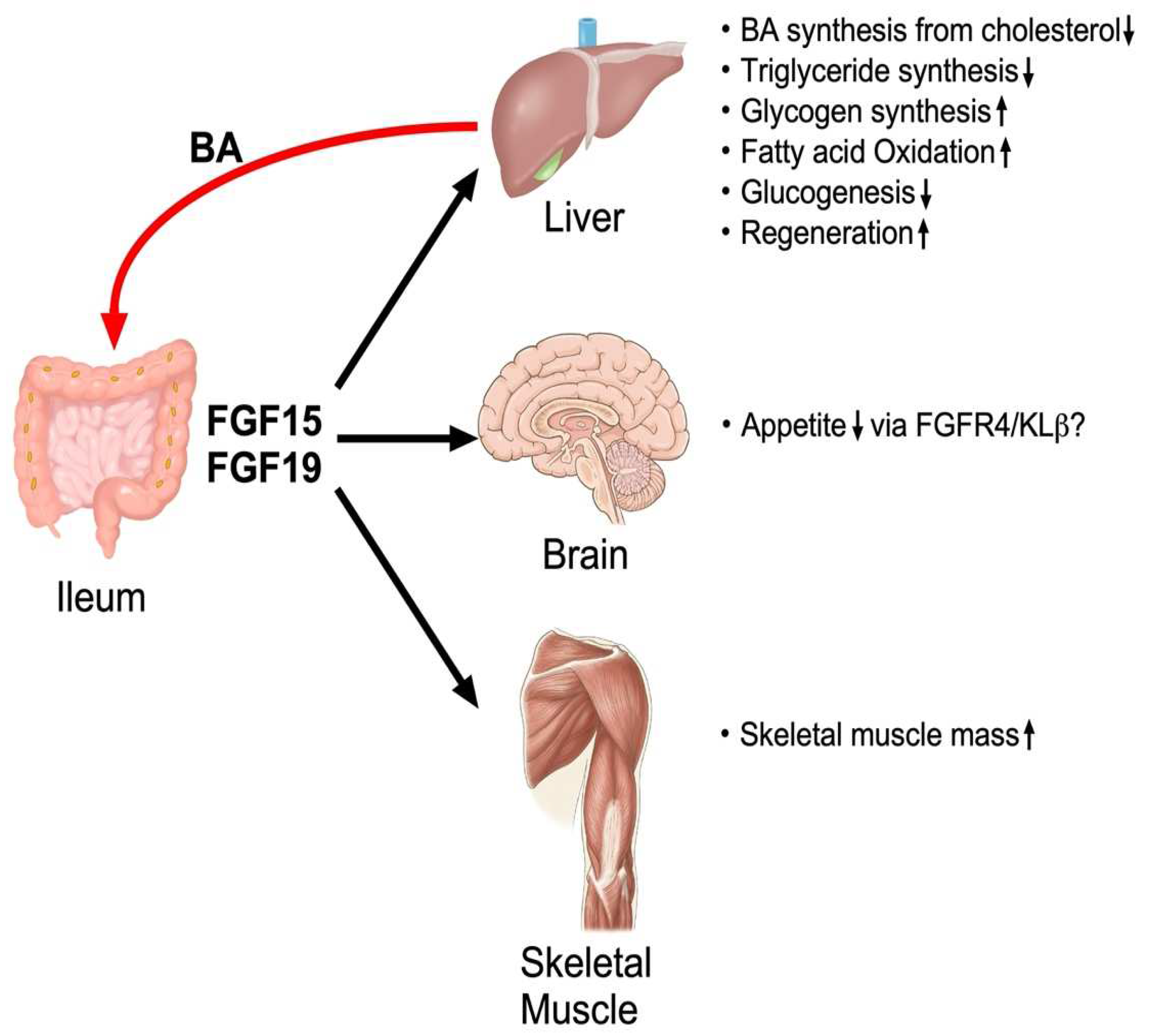
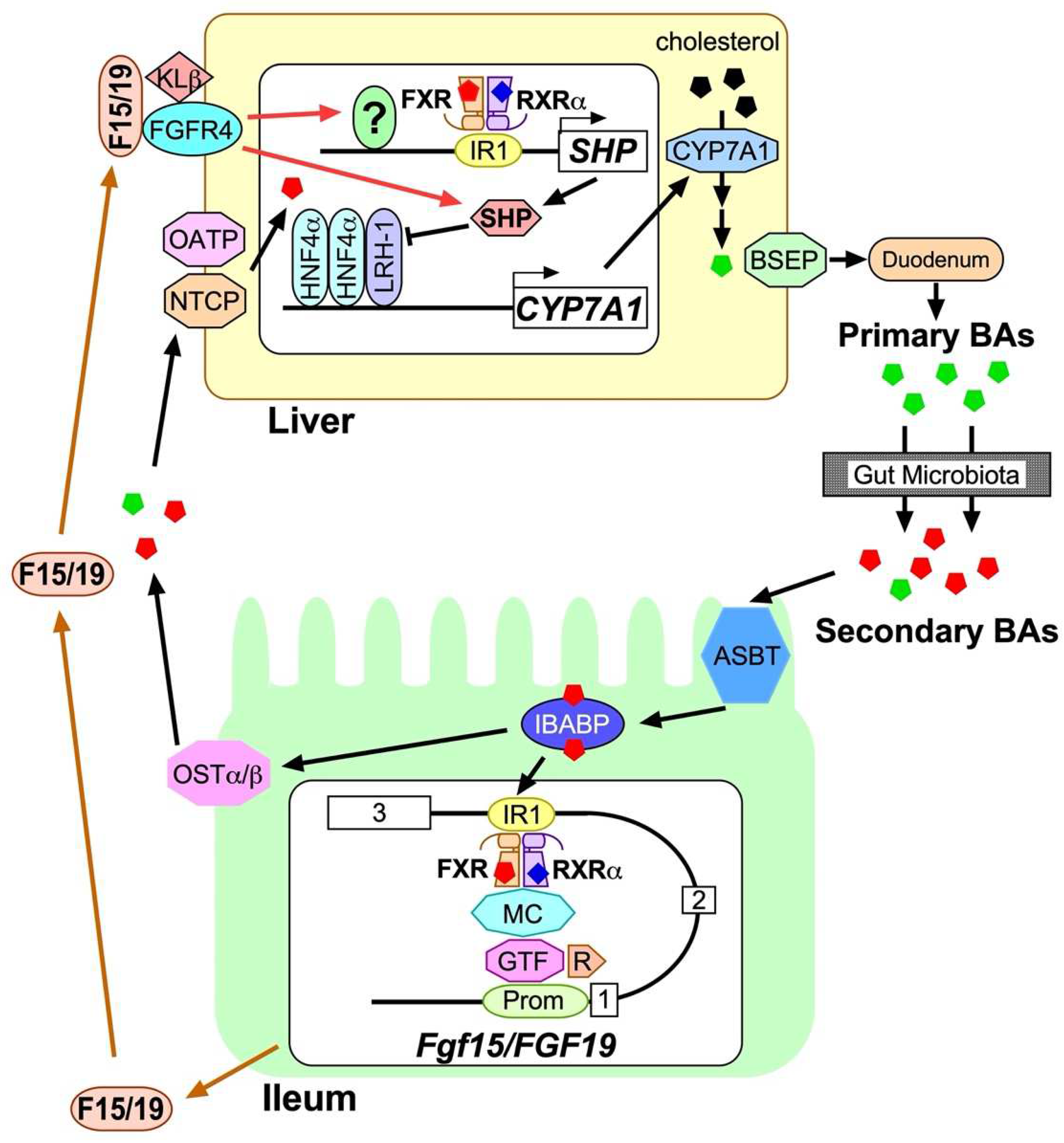
Bile acids (BAs) are a group of amphiphilic molecules consisting of a rigid steroid core attached to a hydroxyl group with a varying number, position, and orientation, and a hydrophilic side chain. While BAs act as detergents to solubilize lipophilic nutrients in the small intestine during digestion and absorption, they also act as hormones. Farnesoid X receptor (FXR) is a nuclear receptor that forms a heterodimer with retinoid X receptor α (RXRα), is activated by BAs in the enterohepatic circulation reabsorbed via transporters in the ileum and the colon, and plays a critical role in regulating gene expression involved in cholesterol, BA, and lipid metabolism in the liver. The FXR/RXRα heterodimer also exists in the distal ileum and regulates production of fibroblast growth factor (FGF) 15/FGF19, a hormone traveling via the enterohepatic circulation that activates hepatic FGF receptor 4 (FGFR4)-β-klotho receptor complex and regulates gene expression involved in cholesterol, BA, and lipid metabolism, as well as those regulating cell proliferation. Agonists for FXR and analogs for FGF15/19 are currently recognized as a promising therapeutic target for metabolic syndrome and cholestatic diseases.
Keywords: bile acid; farnesoid X receptor; fibroblast growth factor 15/19 bile acid; farnesoid X receptor; fibroblast growth factor 15/19