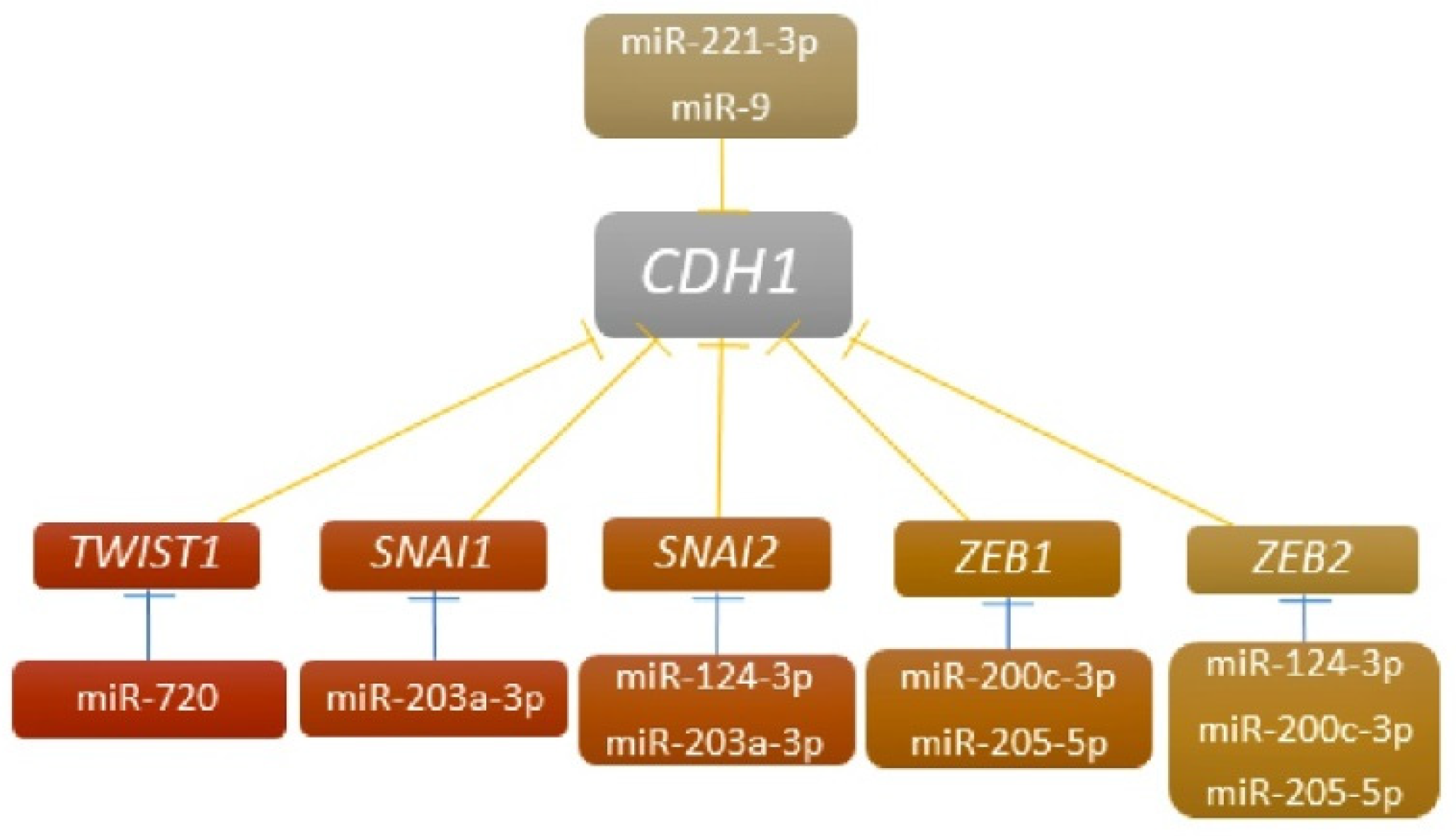
miR-205-5p Downregulation and ZEB1 Upregulation Characterize the Disseminated Tumor Cells in Patients with Invasive Ductal Breast Cancer

 , , , , ,
Abstract
1. Introduction
2. Results
2.1. miRNA and mRNA Expressions vs. Controls
2.2. miRNA and mRNA Expressions in Different Types of Samples
2.3. Association between miRNA and mRNA Expression and Clinico-Pathological Parameters
3. Discussion
4. Materials and Methods
4.1. Patients
4.2. CD45 Depletion of Peripheral Blood and CTC Detection
4.3. miRNA and mRNA Isolation and Real-Time PCR
4.4. Immunohistochemical Analyses of E-Cadherin
4.5. Statistical Analysis
Supplementary Materials
Author Contributions
Funding
Institutional Review Board Statement
Informed Consent Statement
Acknowledgments
Conflicts of Interest
Abbreviations
| BC | Breast cancer |
| C-blood | CD45-depleted blood fraction from healthy women |
| C-breast | Non-neoplastic breast tissue |
| CD45-DB | CD45-depleted blood |
| CDH1 | Cadherin 1 |
| CI | Confidence interval |
| CTC | Circulating tumor cells |
| EMT | Epithelial-to-mesenchymal transition |
| ER | Estrogen receptor |
| FC | Fold change |
| FFPE | Formalin-fixed paraffin-embedded tissue |
| HER2 | Human epidermal growth factor receptor 2 |
| LN | Lymph node |
| LNM | Lymph node metastasis |
| LVI | Lymphovascular invasion |
| mRNA | Messenger RNA |
| miRNA | microRNA |
| MTS | Distant metastasis |
| OR | Odds ratio |
| PR | Progesterone receptor |
| r | Correlation coefficient |
| RT-PCR | Real time- Polymerase chain reaction |
| SNAI1 | Snail Family Transcriptional Repressor 1 |
| SNAI2 | Snail Family Transcriptional Repressor 2 |
| TNBC | Triple-negative breast cancer |
| TNM | Tumor Node Metastasis staging |
| TU-C | Tumor centrum |
| TU-IF | Tumor invasive front |
| TWIST1 | Twist Family BHLH Transcription Factor 1 |
| ZEB1 | Zinc Finger E-Box Binding Homeobox 1 |
| ZEB2 | Zinc Finger E-Box Binding Homeobox 2 |
References
- Bray, F.; Ferlay, J.; Soerjomataram, I.; Siegel, R.L.; Torre, L.A.; Jemal, A. Global cancer statistics 2018: GLOBOCAN estimates of incidence and mortality worldwide for 36 cancers in 185 countries. CA Cancer J. Clin. 2018, 68, 394–424. [Google Scholar] [CrossRef] [Scilit] [PubMed]
- Wu, Q.; Li, J.; Zhu, S.; Wu, J.; Chen, C.; Liu, Q.; Wei, W.; Zhang, Y.; Sun, S. Breast cancer subtypes predict the preferential site of distant metastases: A SEER based study. Oncotarget 2017, 8, 27990–27996. [Google Scholar] [CrossRef] [Scilit] [PubMed]
- Cummings, M.C.; Simpson, P.T.; Reid, L.E.; Jayanthan, J.; Skerman, J.; Song, S.; McCart Reed, A.E.; Kutasovic, J.R.; Morey, A.L.; Marquart, L.; et al. Metastatic progression of breast cancer: Insights from 50 years of autopsies. J. Pathol. 2014, 232, 23–31. [Google Scholar] [CrossRef] [Scilit] [PubMed]
- Barinoff, J.; Hils, R.; Bender, A.; Groß, J.; Kurz, C.; Tauchert, S.; Mann, E.; Schwidde, I.; Ipsen, B.; Sawitzki, K.; et al. Clinicopathological diferences between breast cancer in patients with primary metastatic disease and those without: A multicentre study. Eur. J. Cancer 2013, 49, 305–311. [Google Scholar] [CrossRef] [Scilit] [PubMed]
- Eng, L.G.; Dawood, S.; Sopik, V.; Haaland, B.; Tan, P.S.; Bhoo-Pathy, N.; Warner, E.; Iqbal, J.; Narod, S.A.; Dent, R. Ten-year survival in women with primary stage IV breast cancer. Breast Cancer Res. Treat. 2016, 160, 145–152. [Google Scholar] [CrossRef] [Scilit] [PubMed]
- Paduch, R. The role of lymphangiogenesis and angiogenesis in tumor metastasis. Cell Oncol. 2016, 39, 397–410. [Google Scholar] [CrossRef] [Scilit] [PubMed]
- Sleeman, J.P.; Nazarenko, I.; Thiele, W. Do all roads lead to Rome? Routes to metastasis development. Int. J. Cancer 2011, 128, 2511–2526. [Google Scholar] [CrossRef] [Scilit]
- Wong, S.Y.; Hynes, R.O. Lymphatic or hematogenous dissemination: How does a metastatic tumor cell decide? Cell Cycle 2006, 5, 812–817. [Google Scholar] [CrossRef] [Scilit] [PubMed]
- Witte, M.H.; Dellinger, M.T.; McDonald, D.M.; Nathanson, S.D.; Boccardo, F.M.; Campisi, C.C.; Sleeman, J.P.; Gershenwald, J.E. Lymphangiogenesis and hemangiogenesis: Potential targets for therapy. J. Surg. Oncol. 2011, 103, 489–500. [Google Scholar] [CrossRef] [Scilit] [PubMed]
- Nathanson, S.D.; Kwon, D.; Kapke, A.; Alford, S.H.; Chitale, D. The role of lymph node metastasis in the systemic dissemination of breast cancer. Ann. Surg. Oncol. 2009, 16, 3396–3405. [Google Scholar] [CrossRef] [Scilit]
- Nathanson, S.D.; Krag, D.; Kuerer, H.M.; Newman, L.A.; Brown, M.; Kerjaschki, D.; Pereira, E.R.; Padera, T.P. Breast cancer metastasis through the lympho-vascular system. Clin. Exp. Metastasis 2018, 35, 443–454. [Google Scholar] [CrossRef] [Scilit] [PubMed]
- Cristofanilli, M.; Budd, G.T.; Ellis, M.J.; Stopeck, A.; Matera, J.; Miller, M.C.; Reuben, J.M.; Doyle, G.V.; Allard, W.J.; Terstappen, L.W.M.M.; et al. Circulating tumor cells, disease progression, and survival in metastatic breast cancer. N. Engl. J. Med. 2004, 351, 781–791. [Google Scholar] [CrossRef] [Scilit] [PubMed]
- Giuliano, M.; Giordano, A.; Jackson, S.; De Giorgi, U.; Mego, M.; Cohen, E.N.; Gao, H.; Anfossi, S.; Handy, B.C.; Ueno, N.T.; et al. Circulating tumor cells as early predictors of metastatic spread in breast cancer patients with limited metastatic dissemination. Breast Cancer Res. 2014, 16, 440. [Google Scholar] [CrossRef] [Scilit] [PubMed]
- Bidard, F.-C.; Proudhon, C.; Pierga, J.-Y. Circulating tumor cells in breast cancer. Mol. Oncol. 2016, 10, 418–430. [Google Scholar] [CrossRef] [Scilit] [PubMed]
- Balic, M.; Lin, H.; Williams, A.; Datar, R.H.; Cote, R.J. Progress in circulating tumor cell capture and analysis: Implications for cancer management. Expert Rev. Mol. Diagn. 2012, 12, 303–312. [Google Scholar] [CrossRef] [Scilit]
- Krebs, M.G.; Metcalf, R.L.; Carter, L.; Brady, G.; Blackhall, F.H.; Dive, C. Molecular analysis of circulating tumour cells-biology and biomarkers. Nat. Rev. Clin. Oncol. 2014, 11, 129–144. [Google Scholar] [CrossRef] [Scilit] [PubMed]
- Kallergi, G.; Papadaki, M.A.; Politaki, E.; Mavroudis, D.; Georgoulias, V.; Agelaki, S. Epithelial to mesenchymal transition markers expressed in circulating tumour cells of early and metastatic breast cancer patients. Breast Cancer Res. 2011, 13, R59. [Google Scholar] [CrossRef] [Scilit]
- Mego, M.; Mani, S.A.; Lee, B.N.; Li, C.; Evans, K.W.; Cohen, E.N.; Gao, H.; Jackson, S.A.; Giordano, A.; Hortobagyi, G.N.; et al. Expression of epithelial-mesenchymal transition-inducing transcription factors in primary breast cancer: The effect of neoadjuvant therapy. Int. J. Cancer 2012, 130, 808–816. [Google Scholar] [CrossRef] [Scilit]
- Lustberg, M.B.; Balasubramanian, P.; Miller, B.; Garcia-Villa, A.; Deighan, C.; Wu, Y.; Carothers, S.; Berger, M.; Ramaswamy, B.; Macrae, E.R.; et al. Heterogeneous atypical cell populations are present in blood of metastatic breast cancer patients. Breast Cancer Res. 2014, 16, R23. [Google Scholar] [CrossRef] [Scilit] [PubMed]
- Bulfoni, M.; Gerratana, L.; Del Ben, F.; Marzinotto, S.; Sorrentino, M.; Turetta, M.; Scoles, G.; Toffoletto, B.; Isola, M.; Beltrami, C.A.; et al. In patients with metastatic breast cancer the identification of circulating tumor cells in epithelial-to-mesenchymal transition is associated with a poor prognosis. Breast Cancer Res. 2016, 18, 30. [Google Scholar] [CrossRef] [Scilit] [PubMed]
- Kalluri, R.; Weinberg, R.A. The basics of epithelial-mesenchymal transition. J. Clin. Investig. 2009, 119, 1420–1428. [Google Scholar] [CrossRef] [Scilit] [PubMed]
- Pang, M.F.; Georgoudaki, A.M.; Lambut, L.; Johansson, J.; Tabor, V.; Hagikura, K.; Jin, Y.; Jansson, M.; Alexander, J.S.; Nelson, C.M.; et al. TGF-1-induced EMT promotes targeted migration of breast cancer cells through the lymphatic system by the activation of CCR7/CCL21-mediated chemotaxis. Oncogene 2016, 35, 748–760. [Google Scholar] [CrossRef] [Scilit]
- Moyret-Lalle, C.; Ruiz, E.; Puisieux, A. Epithelial-mesenchymal transition transcription factors and miRNAs: “Plastic surgeons” of breast cancer. World J. Clin. Oncol. 2014, 5, 311–322. [Google Scholar] [CrossRef] [Scilit]
- Nickel, A.; Stadler, S.C. Role of epigenetic mechanisms in epithelial-to-mesenchymal transition of breast cancer cells. Transl. Res. 2015, 165, 126–142. [Google Scholar] [CrossRef] [Scilit]
- Berx, G.; Van Roy, F. The E-cadherin/catenin complex: An important gatekeeper in breast cancer tumorigenesis and malignant progression. Breast Cancer Res. 2001, 3, 289–293. [Google Scholar] [CrossRef] [Scilit]
- Petridis, C.; Shinomiya, I.; Kohut, K.; Gorman, P.; Caneppele, M.; Shah, V.; Troy, M.; Pinder, S.E.; Hanby, A.; Tomlinson, I.; et al. Germline CDH1 mutations in bilateral lobular carcinoma in situ. Br. J. Cancer 2014, 110, 1053–1057. [Google Scholar] [CrossRef] [Scilit] [PubMed]
- Caldeira, J.R.F.; Prando, E.C.; Quevedo, F.C.; Neto, F.A.M.; Rainho, C.A.; Rogatto, S.R. CDH1 promoter hypermethylation and E-cadherin protein expression in infiltrating breast cancer. BMC Cancer 2006, 6, 48. [Google Scholar] [CrossRef] [Scilit]
- Sebova, K.; Zmetakova, I.; Bella, V.; Kajo, K.; Stankovicova, I.; Kajabova, V.; Krivulcik, T.; Lasabova, Z.; Tomka, M.; Galbavy, S.; et al. RASSF1A and CDH1 hypermethylation as potential epimarkers in breast cancer. Cancer Biomark. 2012, 10, 13–26. [Google Scholar] [CrossRef] [Scilit]
- Fridrichova, I.; Zmetakova, I. MicroRNAs Contribute to Breast Cancer Invasiveness. Cells 2019, 8, 1361. [Google Scholar] [CrossRef] [Scilit] [PubMed]
- Ma, F.; Li, W.; Liu, C.; Li, W.; Yu, H.; Lei, B.; Ren, Y.; Li, Z.; Pang, D.; Qian, C. MiR-23a promotes TGF-β-1-induced EMT and tumor metastasis in breast cancer cells by directly targeting CDH1 and activating Wnt/β-catenin signaling. Oncotarget 2017, 8, 69538–69550. [Google Scholar] [CrossRef] [Scilit]
- Zhou, X.; Marian, C.; Makambi, K.H.; Kosti, O.; Kallakury, B.V.; Loffredo, C.A.; Zheng, Y.-L. MicroRNA-9 as potential biomarker for breast cancer local recurrence and tumor estrogen receptor status. PLoS ONE 2012, 7, e39011. [Google Scholar] [CrossRef] [Scilit]
- Lambertini, E.; Lolli, A.; Vezzali, F.; Penolazzi, L.; Gambari, R.; Piva, R. Correlation between Slug transcription factor and miR-221 in MDA-MB-231 breast cancer cells. BMC Cancer 2012, 12, 445. [Google Scholar] [CrossRef] [Scilit]
- Pan, Y.; Li, J.; Zhang, Y.; Wang, N.; Liang, H.; Liu, Y.; Zhang, C.Y.; Zen, K.; Gu, H. Slug-upregulated miR-221 promotes breast cancer progression through suppressing E-cadherin expression. Sci. Rep. 2016, 6, 25798. [Google Scholar] [CrossRef] [PubMed]
- Niu, X.-Y.; Zhang, Z.-Q.; Ma, P.-L. MiRNA-221-5p promotes breast cancer progression by regulating E-cadherin expression. Eur. Rev. Med. Pharm. Sci. 2019, 23, 6983–6990. [Google Scholar] [CrossRef] [Scilit]
- Stinson, S.; Lackner, M.R.; Adai, A.T.; Yu, N.; Kim, H.J.; O’Brien, C.; Spoerke, J.; Jhunjhunwala, S.; Boyd, Z.; Januario, T.; et al. TRPS1 targeting by miR-221/222 promotes the epithelial-to-mesenchymal transition in breast cancer. Sci. Signal. 2011, 4, ra41. [Google Scholar] [CrossRef] [Scilit]
- Castilla, M.Á.; Díaz-Martín, J.; Sarrió, D.; Romero-Pérez, L.; López-García, M.Á.; Vieites, B.; Biscuola, M.; Ramiro-Fuentes, S.; Isacke, C.M.; Palacios, J. MicroRNA-200 family modulation in distinct breast cancer phenotypes. PLoS ONE 2012, 7, e47709. [Google Scholar] [CrossRef] [Scilit] [PubMed]
- Hurteau, G.J.; Carlson, J.A.; Spivack, S.D.; Brock, G.J. Overexpression of the microRNA hsa-miR-200c leads to reduced expression of transcription factor 8 and increased expression of E-cadherin. Cancer Res. 2007, 67, 7972–7976. [Google Scholar] [CrossRef] [Scilit]
- Sundararajan, V.; Gengenbacher, N.; Stemmler, M.P.; Kleemann, J.A.; Brabletz, T.; Brabletz, S. The ZEB1/miR-200c feedback loop regulates invasion via actin interacting proteins MYLK and TKS5. Oncotarget 2015, 6, 27083–27096. [Google Scholar] [CrossRef] [Scilit]
- Chen, H.; Li, Z.; Zhang, L.; Zhang, L.; Zhang, Y.; Wang, Y.; Xu, M.; Zhong, Q. MicroRNA-200c inhibits the metastasis of triple-negative breast cancer by targeting ZEB2, an epithelial-mesenchymal transition regulator. Ann. Clin. Lab. Sci. 2020, 50, 519–527. [Google Scholar] [PubMed]
- Lee, J.-Y.; Park, M.K.; Park, J.-H.; Lee, H.J.; Shin, D.H.; Kang, Y.; Lee, C.H.; Kong, G. Loss of the polycomb protein Mel-18 enhances the epithelial-mesenchymal transition by ZEB1 and ZEB2 expression through the downregulation of miR-205 in breast cancer. Oncogene 2014, 33, 1325–1335. [Google Scholar] [CrossRef] [Scilit] [PubMed]
- Sun, E.-H.; Zhou, Q.; Liu, K.-S.; Wei, W.; Wang, C.-M.; Liu, X.-F.; Lu, C.; Ma, D.-Y. Screening miRNAs related to different subtypes of breast cancer with miRNAs microarray. Eur. Rev. Med. Pharm. Sci. 2014, 18, 2783–2788. [Google Scholar]
- Moes, M.; Le Béchec, A.; Crespo, I.; Laurini, C.; Halavatyi, A.; Vetter, G.; Del Sol, A.; Friederich, E. A novel network integrating a miRNA-203/SNAI1 feedback loop which regulates epithelial to mesenchymal transition. PLoS ONE 2012, 7, e35440. [Google Scholar] [CrossRef] [Scilit]
- Zhang, Z.; Zhang, B.; Li, W.; Fu, L.; Fu, L.; Zhu, Z.; Dong, J.-T. Epigenetic silencing of miR-203 upregulates SNAI2 and contributes to the invasiveness of malignant breast cancer cells. Genes Cancer 2011, 2, 782–791. [Google Scholar] [CrossRef] [Scilit]
- Ji, H.; Sang, M.; Liu, F.; Ai, N.; Geng, C. miR-124 regulates EMT based on ZEB2 target to inhibit invasion and metastasis in triple-negative breast cancer. Pathol. Res. Pr. 2019, 215, 697–704. [Google Scholar] [CrossRef] [Scilit] [PubMed]
- Liang, Y.-J.; Wang, Q.-Y.; Zhou, C.-X.; Yin, Q.-Q.; He, M.; Yu, X.-T.; Cao, D.-X.; Chen, G.-Q.; He, J.-R.; Zhao, Q. MiR-124 targets Slug to regulate epithelial-mesenchymal transition and metastasis of breast cancer. Carcinogenesis 2013, 34, 713–722. [Google Scholar] [CrossRef] [Scilit]
- Li, L.-Z.; Zhang, C.Z.; Liu, L.-L.; Yi, C.; Lu, S.-X.; Zhou, X.; Zhang, Z.-J.; Peng, Y.-H.; Yang, Y.-Z.; Yun, J.-P. miR-720 inhibits tumor invasion and migration in breast cancer by targeting TWIST1. Carcinogenesis 2014, 35, 469–478. [Google Scholar] [CrossRef] [Scilit] [PubMed]
- Jeschke, U.; Mylonas, I.; Kuhn, C.; Shabani, N.; Kunert-Keil, C.; Schindlbeck, C.; Gerber, B.; Friese, K. Expression of E-cadherin in human ductal breast cancer carcinoma in situ, invasive carcinomas, their lymph node metastases, their distant metastases, carcinomas with recurrence and in recurrence. Anticancer Res. 2007, 27, 1969–19674. [Google Scholar] [PubMed]
- Borcherding, N.; Cole, K.; Kluz, P.; Jorgensen, M.; Kolb, R.; Bellizzi, A.; Zhang, W. Re-evaluating E-cadherin and β-catenin: A pan-cancer proteomic approach with an emphasis on breast cancer. Am. J. Pathol. 2018, 188, 1910–1920. [Google Scholar] [CrossRef] [Scilit]
- Padmanaban, V.; Krol, I.; Suhail, Y.; Szczerba, B.M.; Aceto, N.; Bader, J.S.; Ewald, A.J. E-cadherin is required for metastasis in multiple models of breast cancer. Nature 2019, 573, 439–444. [Google Scholar] [CrossRef] [Scilit] [PubMed]
- Prasad, C.P.; Mirza, S.; Sharma, G.; Prashad, R.; DattaGupta, S.; Rath, G.; Ralhan, R. Epigenetic alterations of CDH1 and APC genes: Relationship with activation of Wnt/beta-catenin pathway in invasive ductal carcinoma of breast. Life Sci. 2008, 83, 318–325. [Google Scholar] [CrossRef] [Scilit]
- Cai, K.-T.; Feng, C.-X.; Zhao, J.-C.; He, R.-Q.; Ma, J.; Zhong, J.-C. Upregulated miR-203a-3p and its potential molecular mechanism in breast cancer: A study based on bioinformatics analyses and a comprehensive meta-analysis. Mol. Med. Rep. 2018, 18, 4994–5008. [Google Scholar] [CrossRef] [Scilit] [PubMed]
- Gomes, B.C.; Martins, M.; Lopes, P.; Morujão, I.; Oliveira, M.; Araújo, A.; Rueff, J.; Rodrigues, A.S. Prognostic value of microRNA-203a expression in breast cancer. Oncol. Rep. 2016, 36, 1748–1756. [Google Scholar] [CrossRef] [Scilit] [PubMed]
- Wu, H.-T.; Zhong, H.-T.; Li, G.-W.; Shen, J.-X.; Ye, Q.-Q.; Zhang, M.-L.; Liu, J. Oncogenic functions of the EMT-related transcription factor ZEB1 in breast cancer. J. Transl. Med. 2020, 18, 51. [Google Scholar] [CrossRef] [Scilit]
- Lehmann, W.; Mossmann, D.; Kleemann, J.; Mock, K.; Meisinger, C.; Brummer, T.; Herr, R.; Brabletz, S.; Stemmler, M.P.; Brabletz, T. ZEB1 turns into a transcriptional activator by interacting with YAP1 in aggressive cancer types. Nat. Commun. 2016, 7, 10498. [Google Scholar] [CrossRef] [Scilit] [PubMed]
- Zhang, Y.; Xu, L.; Li, A.; Han, X. The roles of ZEB1 in tumorigenic progression and epigenetic modifications. Biomed. Pharm. 2019, 110, 400–408. [Google Scholar] [CrossRef] [Scilit] [PubMed]
- Scherbakov, A.M.; Andreeva, O.E.; Shatskaya, V.A.; Krasil’nikov, M.A. The relationships between snail1 and estrogen receptor signaling in breast cancer cells. J. Cell Biochem. 2012, 113, 2147–2155. [Google Scholar] [CrossRef] [Scilit]
- Fu, J.; Zhang, L.; He, T.; Xiao, X.; Liu, X.; Wang, L.; Yang, L.; Yang, M.; Zhang, T.; Chen, R.; et al. TWIST represses estrogen receptor-alpha expression by recruiting the NuRD protein complex in breast cancer cells. Int. J. Biol. Sci. 2012, 8, 522–532. [Google Scholar] [CrossRef] [Scilit] [PubMed]
- Cochrane, D.R.; Cittelly, D.M.; Howe, E.N.; Spoelstra, N.S.; McKinsey, E.L.; LaPara, K.; Elias, A.; Yee, D.; Richer, J.K. MicroRNAs link estrogen receptor alpha status and Dicer levels in breast cancer. Horm. Cancer 2010, 1, 306–319. [Google Scholar] [CrossRef] [Scilit] [PubMed]
- Sakurai, M.; Masuda, M.; Miki, Y.; Hirakawa, H.; Suzuki, T.; Sasano, H. Correlation of miRNA expression profiling in surgical pathology materials, with Ki-67, HER2, ER and PR in breast cancer patients. Int. J. Biol. Markers 2015, 30, e190–e199. [Google Scholar] [CrossRef] [Scilit]
- van Nes, J.G.H.; de Kruijf, E.M.; Putter, H.; Faratian, D.; Munro, A.; Campbell, F.; Smit, V.T.H.B.M.; Liefers, G.-J.; Kuppen, P.J.K.; van de Velde, C.J.H.; et al. Co-expression of SNAIL and TWIST determines prognosis in estrogen receptor-positive early breast cancer patients. Breast Cancer Res. Treat. 2012, 133, 49–59. [Google Scholar] [CrossRef] [Scilit] [PubMed]
- Lv, X.-B.; Jiao, Y.; Qing, Y.; Hu, H.; Cui, X.; Lin, T.; Song, E.; Yu, F. miR-124 suppresses multiple steps of breast cancer metastasis by targeting a cohort of pro-metastatic genes in vitro. Chin. J. Cancer 2011, 30, 821–830. [Google Scholar] [CrossRef] [Scilit] [PubMed]
- Cai, W.-L.; Huang, W.-D.; Li, B.; Chen, T.-R.; Li, Z.-X.; Zhao, C.-L.; Li, H.-Y.; Wu, Y.-M.; Yan, W.-J.; Xiao, J.-R. microRNA-124 inhibits bone metastasis of breast cancer by repressing Interleukin-11. Mol. Cancer 2018, 17, 9. [Google Scholar] [CrossRef] [Scilit]
- Morel, A.P.; Ginestier, C.; Pommier, R.M.; Cabaud, O.; Ruiz, E.; Wicinski, J.; Devouassoux-Shisheboran, M.; Combaret, V.; Finetti, P.; Chassot, C.; et al. A stemness-related ZEB1-MSRB3 axis governs cellular pliancy and breast cancer genome stability. Nat. Med. 2017, 23, 568–578. [Google Scholar] [CrossRef] [Scilit]
- Plantamura, I.; Cataldo, A.; Cosentino, G.; Iorio, M.V. miR-205 in breast cancer: State of the art. Int. J. Mol. Sci. 2020, 22, 27. [Google Scholar] [CrossRef] [Scilit] [PubMed]
- Xiao, Y.; Humphries, B.; Yang, C.; Wang, Z. MiR-205 dysregulations in breast cancer: The complexity and opportunities. Noncoding RNA 2019, 5, 53. [Google Scholar] [CrossRef] [Scilit] [PubMed]
- Xiao, Y.; Li, Y.; Tao, H.; Humphries, B.; Li, A.; Jiang, Y.; Yang, C.; Luo, R.; Wang, Z. Integrin α5 down-regulation by miR-205 suppresses triple negative breast cancer stemness and metastasis by inhibiting the Src/Vav2/Rac1 pathway. Cancer Lett. 2018, 433, 199–290. [Google Scholar] [CrossRef] [Scilit] [PubMed]
- Chao, C.-H.; Chang, C.-C.; Wu, M.-J.; Ko, H.-W.; Wang, D.; Hung, M.-C.; Yang, J.-Y.; Chang, C.-J. MicroRNA-205 signaling regulates mammary stem cell fate and tumorigenesis. J. Clin. Investig. 2014, 124, 3093–3106. [Google Scholar] [CrossRef] [Scilit] [PubMed]
- Hu, Y.; Qiu, Y.; Yague, E.; Ji, W.; Liu, J.; Zhang, J. miRNA-205 targets VEGFA and FGF2 and regulates resistance to chemotherapeutics in breast cancer. Cell Death Dis. 2016, 7, e2291. [Google Scholar] [CrossRef] [Scilit]
- Smirnov, D.A.; Zweitzig, D.R.; Foulk, B.W.; Miller, M.C.; Doyle, G.V.; Pienta, K.J.; Meropol, N.J.; Weiner, L.M.; Cohen, S.J.; Moreno, J.G.; et al. Global gene expression profiling of circulating tumor cells. Cancer Res. 2005, 65, 4993–4997. [Google Scholar] [CrossRef] [Scilit] [PubMed]
- Lang, J.E.; Scott, J.H.; Wolf, D.M.; Novak, P.; Punj, V.; Magbanua, M.J.; Zhu, W.; Mineyev, N.; Haqq, C.M.; Crothers, J.R.; et al. Expression profiling of circulating tumor cells in metastatic breast cancer. Breast Cancer Res. Treat. 2015, 149, 121–131. [Google Scholar] [CrossRef] [Scilit] [PubMed]
- Onstenk, W.; Sieuwerts, A.M.; Weekhout, M.; Mostert, B.; Reijm, E.A.; van Deurzen, C.H.M.; Bolt-de Vries, J.B.; Peeters, D.J.; Hamberg, P.; Seynaeve, C.; et al. Gene expression profiles of circulating tumor cells versus primary tumors in metastatic breast cancer. Cancer Lett. 2015, 362, 36–44. [Google Scholar] [CrossRef] [Scilit] [PubMed]
- Pereira-Veiga, T.; Martínez-Fernández, M.; Abuin, C.; Piñeiro, R.; Cebey, V.; Cueva, J.; Palacios, P.; Blanco, C.; Muinelo-Romay, L.; Abalo, A.; et al. CTCs expression profiling for advanced breast cancer monitoring. Cancers 2019, 11, 1941. [Google Scholar] [CrossRef] [Scilit] [PubMed]
- Cierna, Z.; Mego, M.; Janega, P.; Karaba, M.; Minarik, G.; Benca, J.; Sedlácková, T.; Cingelova, S.; Gronesova, P.; Manasova, D.; et al. Matrix metalloproteinase 1 and circulating tumor cells in early breast cancer. BMC Cancer 2014, 14, 472. [Google Scholar] [CrossRef] [Scilit] [PubMed]
- Kalinkova, L.; Zmetakova, I.; Smolkova, B.; Minarik, G.; Sedlackova, T.; Horvathova Kajabova, V.; Cierna, Z.; Mego, M.; Fridrichova, I. Decreased methylation in the SNAI2 and ADAM23 genes associated with de-differentiation and haematogenous dissemination in breast cancers. BMC Cancer 2018, 18, 875. [Google Scholar] [CrossRef] [Scilit] [PubMed]

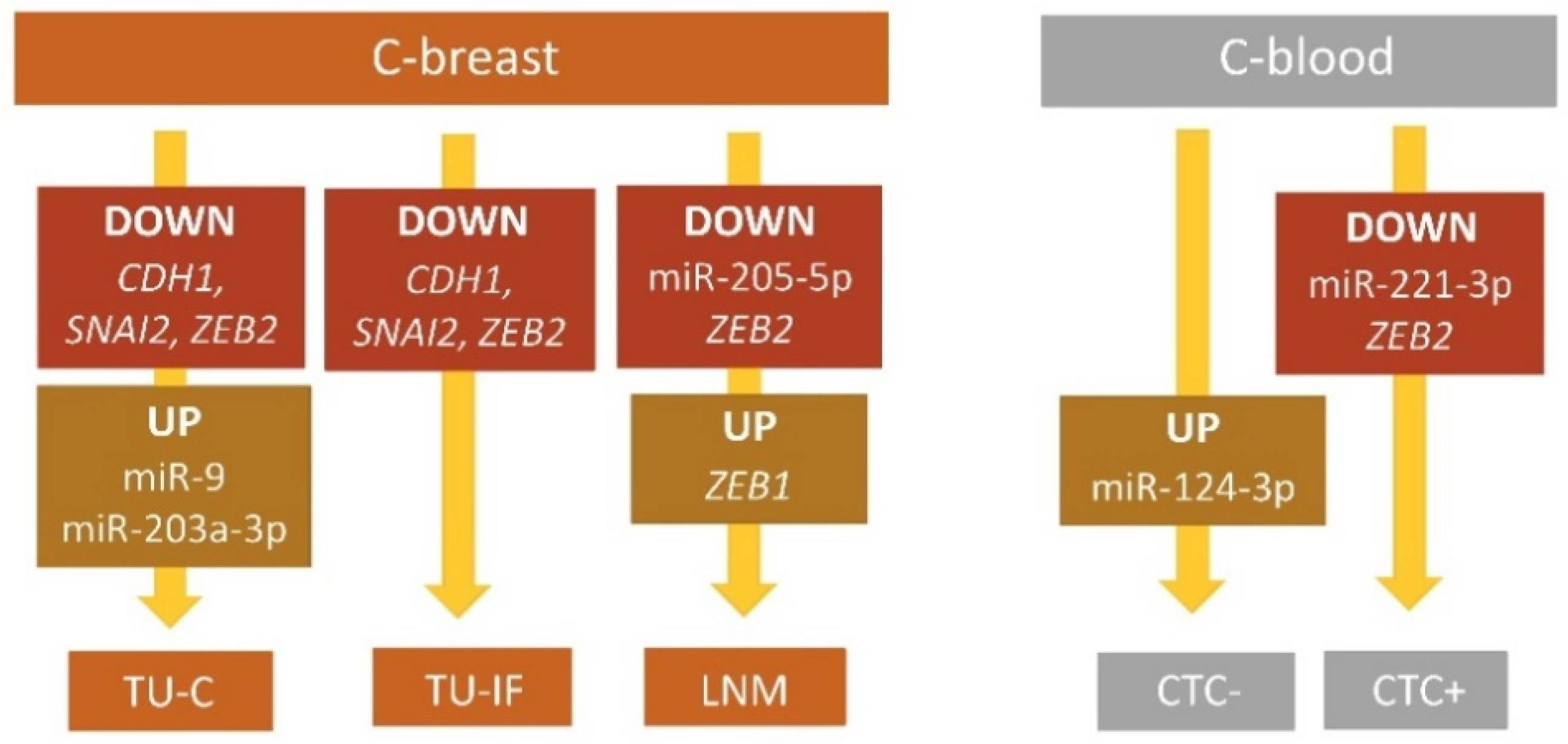
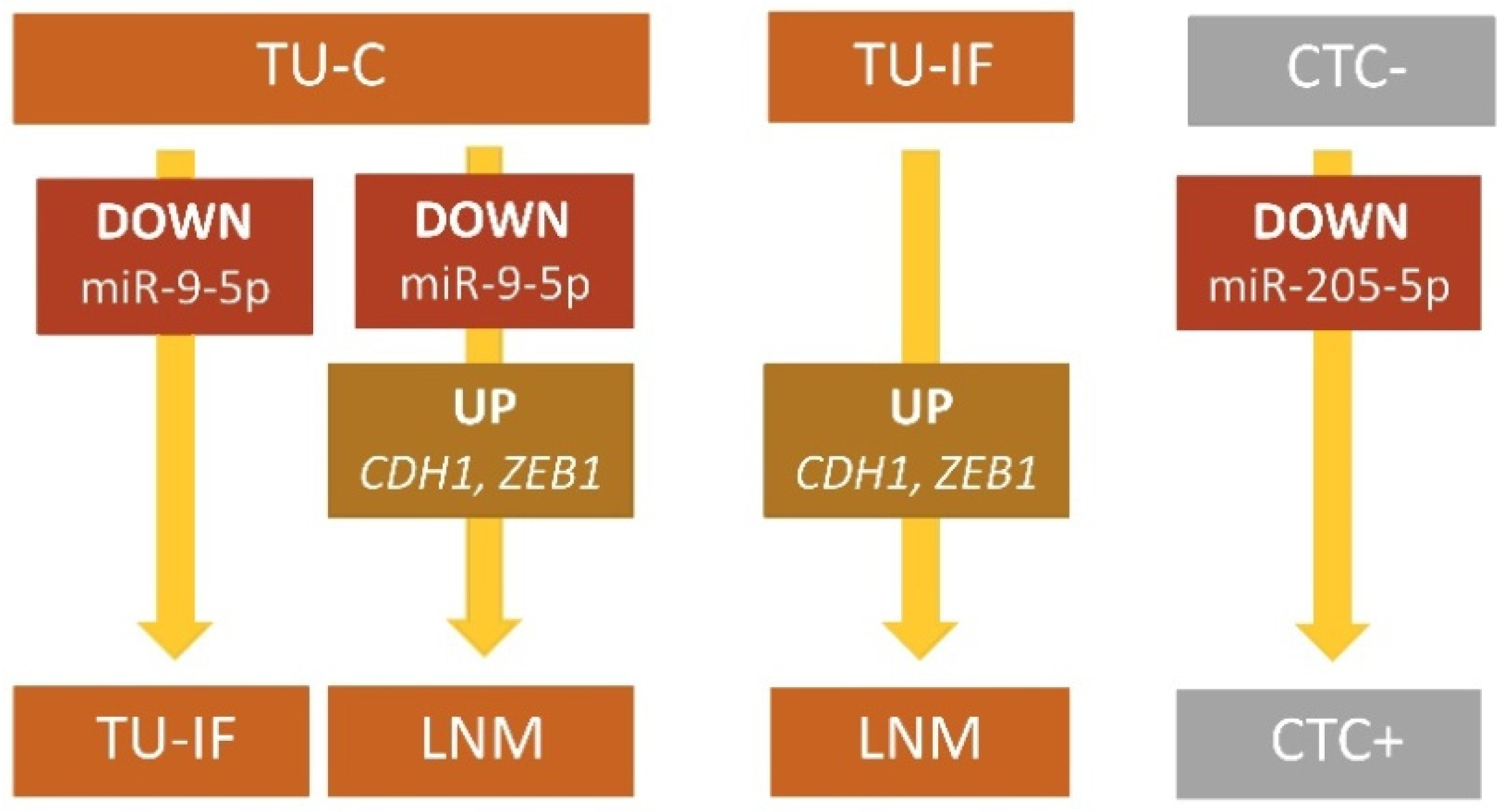
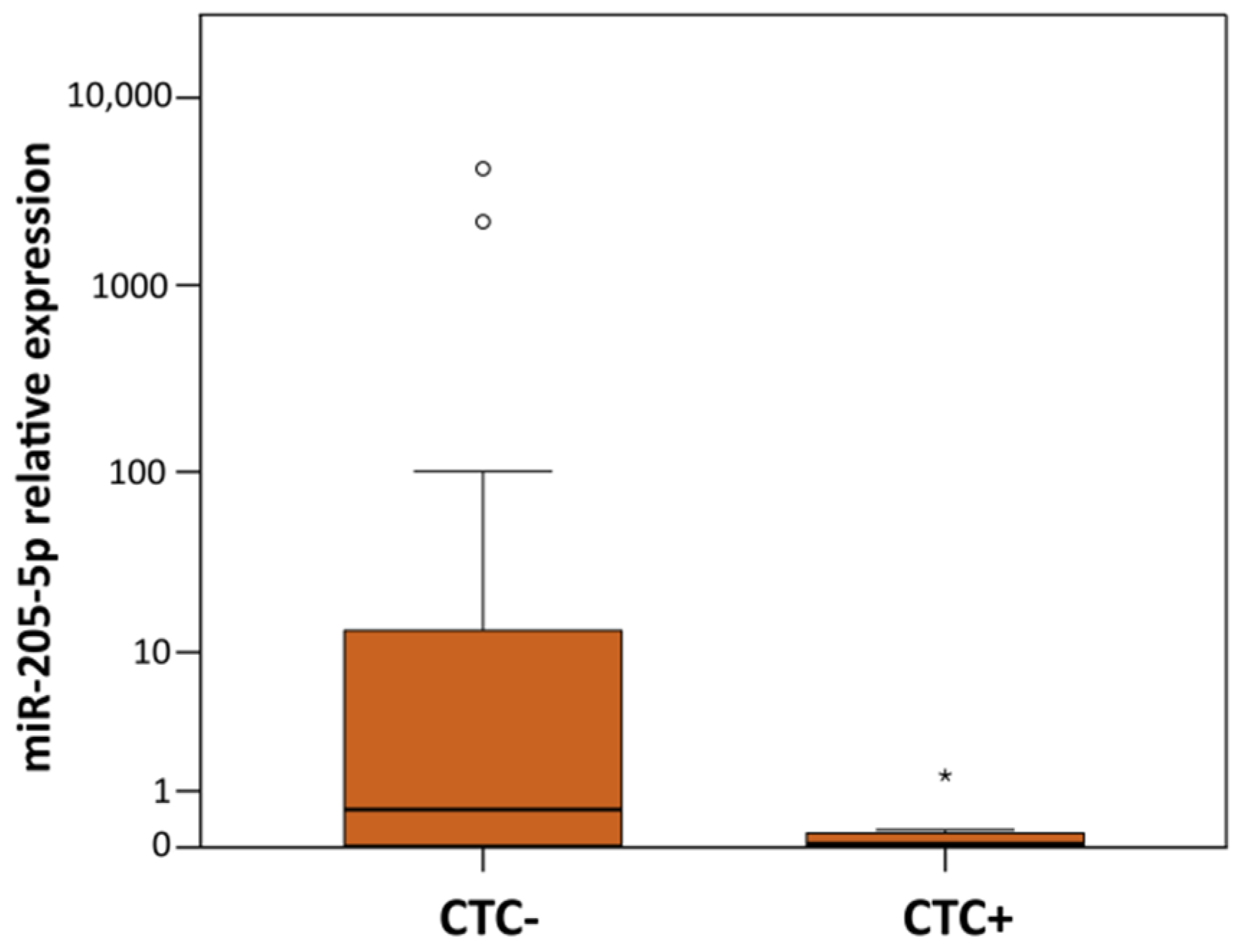

| miRNAs/Genes | TU-C vs. C-Breast | TU-IF vs. C-Breast | LNM vs. C-Breast | ||||||
|---|---|---|---|---|---|---|---|---|---|
| FC | p-Value | 95% CI | FC | p-Value | 95% CI | FC | p-Value | 95% CI | |
| miR-9-5p | 7.915 | 0.042 | 0.012–41.946 | 0.838 | 0.790 | 0.004–263.197 | 0.551 | 0.422 | 0.004–180.863 |
| miR-124-3p | 1.789 | 0.553 | 0.001–4.238 | 1.632 | 0.557 | 0.002–1.277 | 0.649 | 0.634 | 0.002–624.915 |
| miR-200c-3p | 1.686 | 0.382 | 0.054–45.865 | 2.137 | 0.092 | 0.215–59.281 | 1.821 | 0.271 | 0.156–48.471 |
| miR-203a-3p | 2.356 | 0.042 | 0.077–79.574 | 1.556 | 0.294 | 0.042–38.469 | 1.287 | 0.593 | 0.039–29.094 |
| miR-205-5p | 0.512 | 0.251 | 0.009–36.730 | 0.350 | 0.054 | 0.002–10.925 | 0.210 | 0.012 | 0.002–8.057 |
| miR-221-3p | 1.335 | 0.423 | 0.081–17.503 | 1.365 | 0.290 | 0.168–13.709 | 1.096 | 0.802 | 0.091–19.943 |
| miR-720 | 1.152 | 0.735 | 0.050–33.593 | 1.398 | 0.245 | 0.130–15.221 | 1.033 | 0.939 | 0.042–22.785 |
| CDH1 | 0.123 | 0.002 | 0.004–2.366 | 0.108 | 0.001 | 0.004–2.015 | 0.630 | 0.754 | 0.005–461.981 |
| TWIST1 | 0.449 | 0.765 | 0.000–19.953 | 0.320 | 0.097 | 0.000–29.212 | 2.866 | 0.717 | 0.000–84,067.528 |
| SNAI1 | 0.711 | 0.586 | 0.027–23.260 | 0.706 | 0.658 | 0.020–55.154 | 1.460 | 0.740 | 0.024–246.709 |
| SNAI2 | 0.161 | 0.021 | 0.003–13.083 | 0.102 | 0.002 | 0.001–9.663 | 0.302 | 0.168 | 0.001–140.598 |
| ZEB1 | 0.482 | 0.117 | 0.032–9.616 | 0.474 | 0.052 | 0.064–6.320 | 22.08 | 0.043 | 0.083–522,995.072 |
| ZEB2 | 0.125 | <0.001 | 0.002–3.578 | 0.086 | <0.001 | 0.001–3.209 | 0.122 | 0.003 | 0.001–13.175 |
| CTC- vs. C-Blood | CTC+ vs. C-Blood | CTC+ vs. CTC- | |||||||
| FC | p-Value | 95% CI | FC | p-Value | 95% CI | FC | p-Value | 95% CI | |
| miR-9-5p | 0.428 | 0.366 | 0.001–157.642 | 0.374 | 0.223 | 0.002–39.997 | 0.873 | 0.880 | 0.004–373.287 |
| miR-124-3p | 9.766 | 0.036 | 0.007–15,744.196 | 5.914 | 0.150 | 0.007–12,237.005 | 0.606 | 0.696 | 0.000–6364.879 |
| miR-200c-3p | 0.398 | 0.171 | 0.005–43.795 | 0.299 | 0.052 | 0.008–10.359 | 0.751 | 0.645 | 0.012–25.075 |
| miR-203a-3p | 1.176 | 0.643 | 0.000–745.653 | 0.148 | 0.089 | 0.000–16.253 | 0.125 | 0.064 | 0.000–174.337 |
| miR-205-5p | 10.792 | 0.082 | 0.004–167,893.014 | 0.443 | 0.370 | 0.002–138.141 | 0.041 | 0.010 | 0.000–69.820 |
| miR-221-3p | 0.771 | 0.634 | 0.023–36.002 | 0.289 | 0.017 | 0.016–6.790 | 0.374 | 0.077 | 0.005–14.906 |
| miR-720 | 0.667 | 0.451 | 0.020–37.507 | 0.534 | 0.339 | 0.004–18.729 | 0.801 | 0.712 | 0.006–25.216 |
| CDH1 | 1.031 | 0.918 | 0.071–29.950 | 0.948 | 0.912 | 0.132–17.345 | 0.919 | 0.782 | 0.024–7.315 |
| TWIST1 | 0.518 | 0.362 | 0.006–18.831 | 0.685 | 0.606 | 0.010–25.111 | 1.321 | 0.543 | 0.052–21.295 |
| SNAI1 | 0.456 | 0.136 | 0.016–6.304 | 0.424 | 0.125 | 0.013–7.586 | 0.931 | 0.658 | 0.072–9.000 |
| ZEB1 | 0.683 | 0.206 | 0.032–12.101 | 1.121 | 0.751 | 0.029–23.244 | 1.641 | 0.410 | 0.085–19.595 |
| ZEB2 | 0.451 | 0.066 | 0.022–6.546 | 0.395 | 0.037 | 0.024–2.350 | 0.876 | 0.824 | 0.135–3.364 |
| TU-IF vs. TU C | LNM vs. TU C | LNM vs. TU IF | |||||||
| FC | p-Value | 95% CI | FC | p-Value | 95% CI | FC | p-Value | 95% CI | |
| miR-9-5p | 0.106 | 0.001 | 0.000–48.840 | 0.070 | <0.001 | 0.000–28.042 | 0.658 | 0.437 | 0.005–113.159 |
| miR-124-3p | 0.912 | 0.898 | 0.000–1595.729 | 0.363 | 0.215 | 0.000–775.000 | 0.398 | 0.201 | 0.001–451.409 |
| miR-200c-3p | 1.267 | 0.531 | 0.089–30.484 | 1.080 | 0.892 | 0.069–25.098 | 0.852 | 0.556 | 0.064–9.123 |
| miR-203a-3p | 0.661 | 0.199 | 0.016–16.564 | 0.546 | 0.103 | 0.01 -11.711 | 0.827 | 0.614 | 0.018–32.217 |
| miR-205-5p | 0.684 | 0.612 | 0.003–68.594 | 0.409 | 0.100 | 0.002–48.151 | 0.598 | 0.318 | 0.005–112.073 |
| miR-221-3p | 1.022 | 0.934 | 0.079–19.973 | 0.821 | 0.540 | 0.043–18.746 | 0.803 | 0.452 | 0.054–13.541 |
| miR-720 | 1.213 | 0.481 | 0.040–22.891 | 0.897 | 0.766 | 0.015–29.349 | 0.739 | 0.325 | 0.021–11.792 |
| CDH1 | 0.882 | 0.662 | 0.048–16.349 | 5.135 | 0.048 | 0.081–4310.936 | 5.819 | 0.034 | 0.087–4172.813 |
| TWIST1 | 0.712 | 0.148 | 0.025–31.480 | 6.378 | 0.158 | 0.017–88,008.904 | 8.96 | 0.102 | 0.019–132,814.422 |
| SNAI1 | 0.994 | 0.986 | 0.043–54.895 | 2.055 | 0.208 | 0.052–259.574 | 2.067 | 0.224 | 0.019–316.497 |
| SNAI2 | 0.635 | 0.198 | 0.005–16.977 | 1.875 | 0.258 | 0.022–238.470 | 2.955 | 0.070 | 0.025–644.682 |
| ZEB1 | 0.982 | 0.947 | 0.111–15.056 | 45.794 | 0.015 | 0.139–1,074,172.923 | 46.615 | 0.014 | 0.225–1,274,282.570 |
| ZEB2 | 0.69 | 0.191 | 0.029–8.390 | 0.979 | 0.962 | 0.027–58.004 | 1.419 | 0.415 | 0.034–76.961 |
| Sample | miRNA | Gene | Correlation Coefficient (r) | p-Value |
|---|---|---|---|---|
| C-breast | miR-124-3p | SNAI1 | 0.964 | 0.036 |
| TU-C | miR-203a-3p | CDH1 | 0.409 | 0.031 |
| ZEB1 | 0.479 | 0.018 | ||
| ZEB2 | 0.406 | 0.036 | ||
| miR-205-5p | SNAI1 | 0.383 | 0.048 | |
| miR-221-3p | TWIST1 | −0.470 | 0.015 | |
| TU-IF | miR-200c-3p | SNAI1 | 0.387 | 0.046 |
| miR-720 | TWIST1 | 0.417 | 0.034 | |
| SNAI1 | 0.527 | 0.005 | ||
| SNAI2 | 0.383 | 0.040 | ||
| LNM | miR-9 | SNAI1 | −0.607 | 0.013 |
| miR-221-3p | TWIST1 | 0.726 | 0.011 | |
| ZEB1 | 0.581 | 0.048 | ||
| C-blood | miR-9 | ZEB1 | 0.610 | 0.046 |
| ZEB2 | 0.627 | 0.039 | ||
| miR-200c-3p | ZEB1 | 0.616 | 0.043 | |
| ZEB2 | 0.682 | 0.021 | ||
| miR-203a-3p | TWIST1 | 0.967 | 0.007 | |
| SNAI1 | 0.797 | 0.032 | ||
| ZEB1 | 0.800 | 0.010 | ||
| ZEB2 | 0.900 | 0.001 | ||
| miR-221-3p | TWIST1 | 0.885 | 0.019 | |
| SNAI1 | 0.784 | 0.021 | ||
| ZEB1 | 0.785 | 0.004 | ||
| ZEB2 | 0.936 | <0.000 | ||
| miR-720 | TWIST1 | 0.869 | 0.025 | |
| ZEB1 | 0.743 | 0.009 | ||
| ZEB2 | 0.736 | 0.010 | ||
| CTC- | miR-124-3p | TWIST1 | −0.883 | 0.020 |
| miR-221-3p | ZEB2 | −0.543 | 0.024 | |
| CTC+ | miR-9 | SNAI1 | −0.835 | 0.001 |
| ZEB1 | −0.853 | 0.001 | ||
| miR-205-5p | SNAI1 | −0.653 | 0.021 | |
| ZEB1 | −0.588 | 0.044 | ||
| miR-221-3p | ZEB1 | −0.610 | 0.035 | |
| miR-720 | SNAI1 | −0.616 | 0.033 | |
| ZEB1 | −0.623 | 0.031 |
| Sample | Clinical Characteristics | miRNAs/Genes | FC | p-Value | 95% CI |
|---|---|---|---|---|---|
| TU-C | MTS+ vs. MTS- | miR-124-3p | 0.075 | 0.049 | 0.000–35.995 |
| HER2+ vs. HER2- | miR-200c-3p | 0.440 | 0.018 | 0.030–12.772 | |
| TNM III and IV vs. TNM I and II | miR-203a-3p | 0.316 | 0.008 | 0.009–4.922 | |
| ER+ vs. ER- | SNAI1 | 0.465 | 0.007 | 0.049–7.093 | |
| ZEB2 | 0.486 | 0.017 | 0.113–5.252 | ||
| PR+ vs. PR- | CDH1 | 0.366 | 0.025 | 0.028–3.448 | |
| SNAI1 | 0.336 | 0.008 | 0.049–6.071 | ||
| TU-IF | ≤20 mm vs. >20 mm | ZEB2 | 0.343 | 0.011 | 0.024–4.821 |
| LNM+ vs. LNM- | SNAI2 | 0.326 | 0.023 | 0.002–9.962 | |
| ZEB1 | 0.497 | 0.035 | 0.079–4.408 | ||
| MTS+ vs. MTS- | SNAI2 | 0.432 | 0.041 | 0.034–94.834 | |
| ZEB2 | 0.344 | 0.030 | 0.006–7.949 | ||
| TNM III and IV vs. TNM I and II | SNAI2 | 0.246 | 0.007 | 0.002–4.248 | |
| ZEB1 | 0.438 | 0.007 | 0.059–2.126 | ||
| LVI+ vs. LVI- | SNAI2 | 0.294 | 0.015 | 0.002–6.602 | |
| ZEB1 | 0.482 | 0.034 | 0.079–3.844 | ||
| ZEB2 | 0.350 | 0.026 | 0.024–3.722 | ||
| ER+ vs. ER- | miR-200c-3p | 3.795 | 0.048 | 0.684–24.343 | |
| TWIST1 | 0.420 | 0.049 | 0.011–15.353 | ||
| LNM | MTS + vs. MTS- | ZEB1 | 824.73 | 0.018 | 0.283–1,584,361.881 |
| TNM III and IV vs. TNM I and II | SNAI1 | 5.959 | 0.025 | 0.227–432.565 | |
| ER+ vs. ER- | miR-124-3p | 6.819 | 0.018 | 0.091–887.828 | |
| CD45-DB | CTC+ vs. CTC- | miR-205-5p | 0.041 | 0.010 | 0.000–69.820 |
| LNM+ vs. LNM- | miR-205-5p | 22.961 | 0.035 | 0.012–400,412.929 | |
| TNM III and IV vs. TNM I and II | miR-205-5p | 39.056 | 0.006 | 0.039–692,990.143 | |
| HER2+ vs. HER2- | miR-9 | 10.321 | 0.027 | 0.088–1098.021 | |
| SNAI1 | 0.439 | 0.041 | 0.061–9.288 | ||
| Grade 3 vs. Grade 1 and 2 | CDH1 | 1.468 | 0.033 | 0.151–11.647 |
| Risk Factor | Variables | p-Value | OR | 95% CI |
|---|---|---|---|---|
| CTCs presence | Age High grade (G3) miR-205-5p * | 0.061 0.075 0.028 | 0.893 46.197 4.326 | 0.792–1.005 0.683–3124.868 1.170–15.995 |
| Tumor size > 20 mm | 0.047 | 96.081 | 1.066–8661.849 | |
| HER2 positivity § Constant | 0.036 0.126 | 2153.786 0.000 | 1.628–2,849,343.631 |
| Variables | n | % | |
|---|---|---|---|
| All | 31 | 100.0 | |
| Age | ≤50 | 3 | 9.68 |
| >50 | 28 | 90.32 | |
| Histological grade | 1 and 2 | 14 | 45.16 |
| 3 | 17 | 54.84 | |
| Tumor size (mm) | ≤20 | 12 | 38.71 |
| >20 | 19 | 61.29 | |
| LNM status a | 0 | 9 | 29.03 |
| ≥1 | 22 | 70.97 | |
| MTS status | Negative | 24 | 77.42 |
| Positive | 7 | 22.58 | |
| TNM stage | I. and II. | 13 | 41.94 |
| III. and IV. | 18 | 58.06 | |
| CTC occurrence b | Negative | 18 | 58.06 |
| Positive | 13 | 41.94 | |
| LVI | Negative | 7 | 22.58 |
| Positive | 24 | 77.42 | |
| ER status c | Negative | 5 | 16.13 |
| Positive | 26 | 83.87 | |
| PR status c | Negative | 11 | 35.48 |
| Positive | 20 | 64.52 | |
| HER2 status d | Negative | 23 | 74.19 |
| Positive | 8 | 25.81 | |
| Ki-67 proliferative index e | Low | 4 | 12.90 |
| High | 27 | 87.10 | |
| E-cadherin expression f | High | 22 | 70.97 |
| Low | 9 | 29.03 | |
Publisher’s Note: MDPI stays neutral with regard to jurisdictional claims in published maps and institutional affiliations. |
© 2021 by the authors. Licensee MDPI, Basel, Switzerland. This article is an open access article distributed under the terms and conditions of the Creative Commons Attribution (CC BY) license (https://creativecommons.org/licenses/by/4.0/).
Share and Cite
Kalinkova, L.; Nikolaieva, N.; Smolkova, B.; Ciernikova, S.; Kajo, K.; Bella, V.; Kajabova, V.H.; Kosnacova, H.; Minarik, G.; Fridrichova, I. miR-205-5p Downregulation and ZEB1 Upregulation Characterize the Disseminated Tumor Cells in Patients with Invasive Ductal Breast Cancer. Int. J. Mol. Sci. 2022, 23, 103. https://doi.org/10.3390/ijms23010103
Kalinkova L, Nikolaieva N, Smolkova B, Ciernikova S, Kajo K, Bella V, Kajabova VH, Kosnacova H, Minarik G, Fridrichova I. miR-205-5p Downregulation and ZEB1 Upregulation Characterize the Disseminated Tumor Cells in Patients with Invasive Ductal Breast Cancer. International Journal of Molecular Sciences. 2022; 23(1):103. https://doi.org/10.3390/ijms23010103
Chicago/Turabian StyleKalinkova, Lenka, Nataliia Nikolaieva, Bozena Smolkova, Sona Ciernikova, Karol Kajo, Vladimir Bella, Viera Horvathova Kajabova, Helena Kosnacova, Gabriel Minarik, and Ivana Fridrichova. 2022. "miR-205-5p Downregulation and ZEB1 Upregulation Characterize the Disseminated Tumor Cells in Patients with Invasive Ductal Breast Cancer" International Journal of Molecular Sciences 23, no. 1: 103. https://doi.org/10.3390/ijms23010103
APA StyleKalinkova, L., Nikolaieva, N., Smolkova, B., Ciernikova, S., Kajo, K., Bella, V., Kajabova, V. H., Kosnacova, H., Minarik, G., & Fridrichova, I. (2022). miR-205-5p Downregulation and ZEB1 Upregulation Characterize the Disseminated Tumor Cells in Patients with Invasive Ductal Breast Cancer. International Journal of Molecular Sciences, 23(1), 103. https://doi.org/10.3390/ijms23010103