Review

Time to Classify Tumours of the Stomach and the Kidneys According to Cell of Origin

1
Department of Clinical and Molecular Medicine, Faculty of Medicine and Health Sciences, Norwegian University of Science and Technology, 7030 Trondheim, Norway
2
Department of Pathology, St. Olav’s Hospital, 7030 Trondheim, Norway
*
Author to whom correspondence should be addressed.
Int. J. Mol. Sci. 2021, 22(24), 13386; https://doi.org/10.3390/ijms222413386
Submission received: 3 November 2021 / Revised: 9 December 2021 / Accepted: 10 December 2021 / Published: 13 December 2021
(This article belongs to the Special Issue Extracellular Vesicles and Tumour Microenvironment 2.0)

Abstract

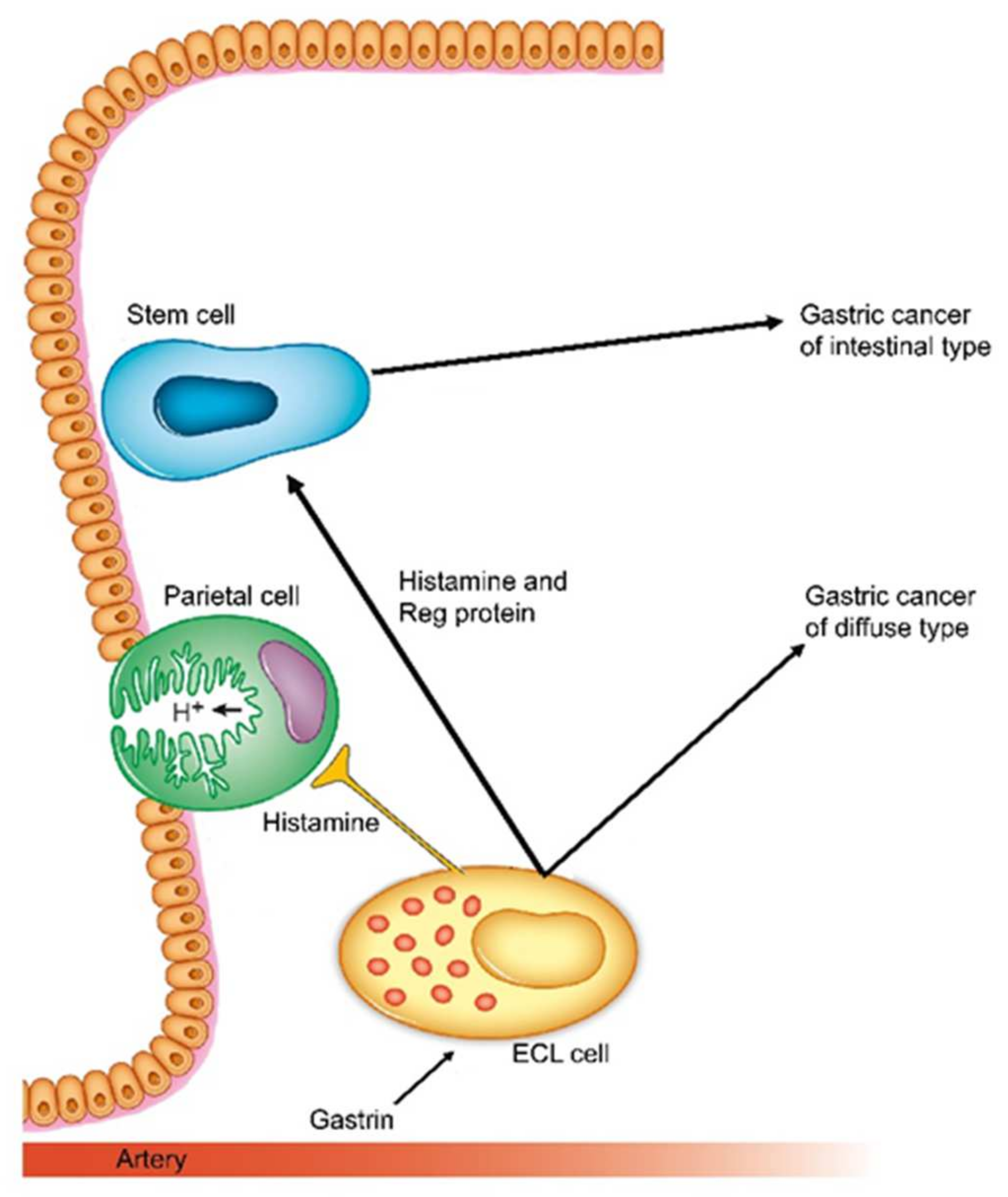
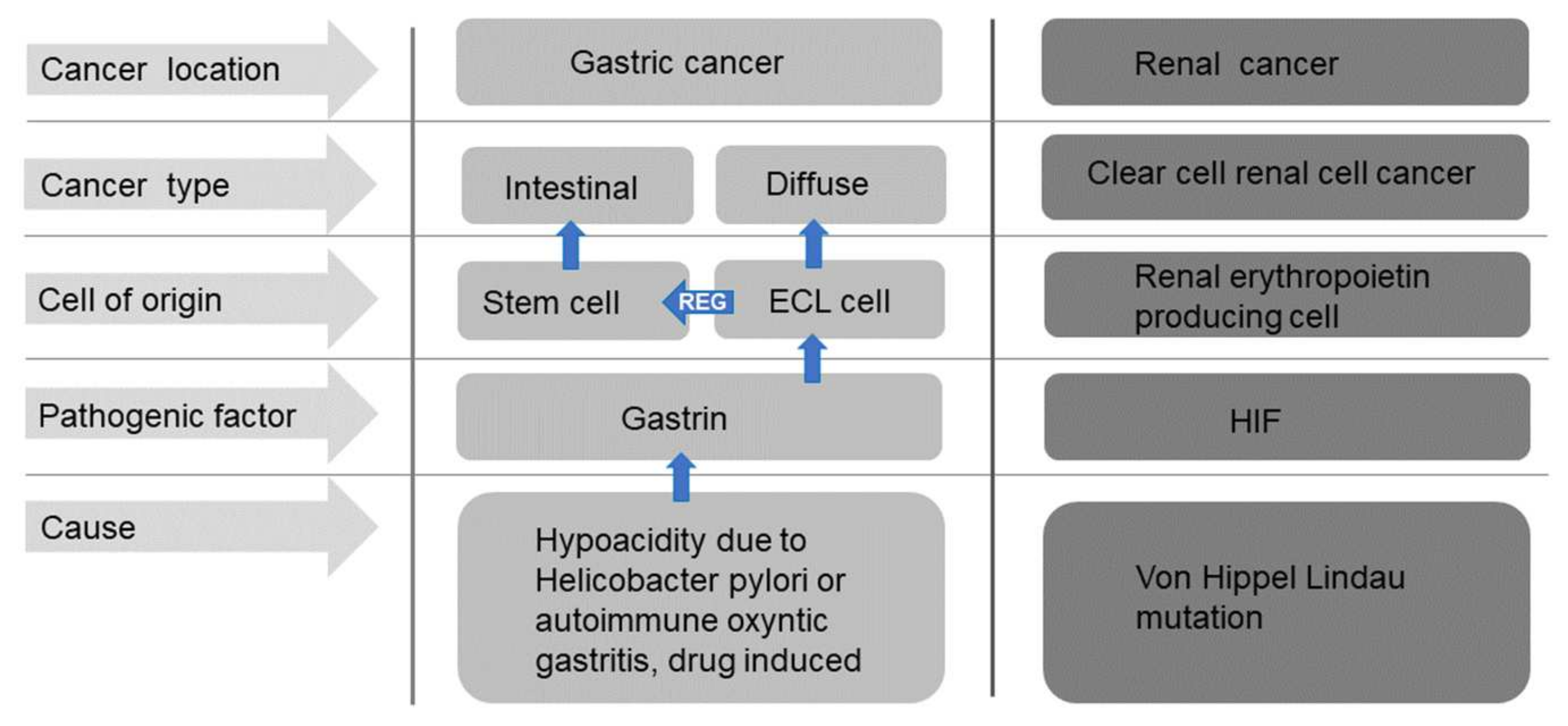
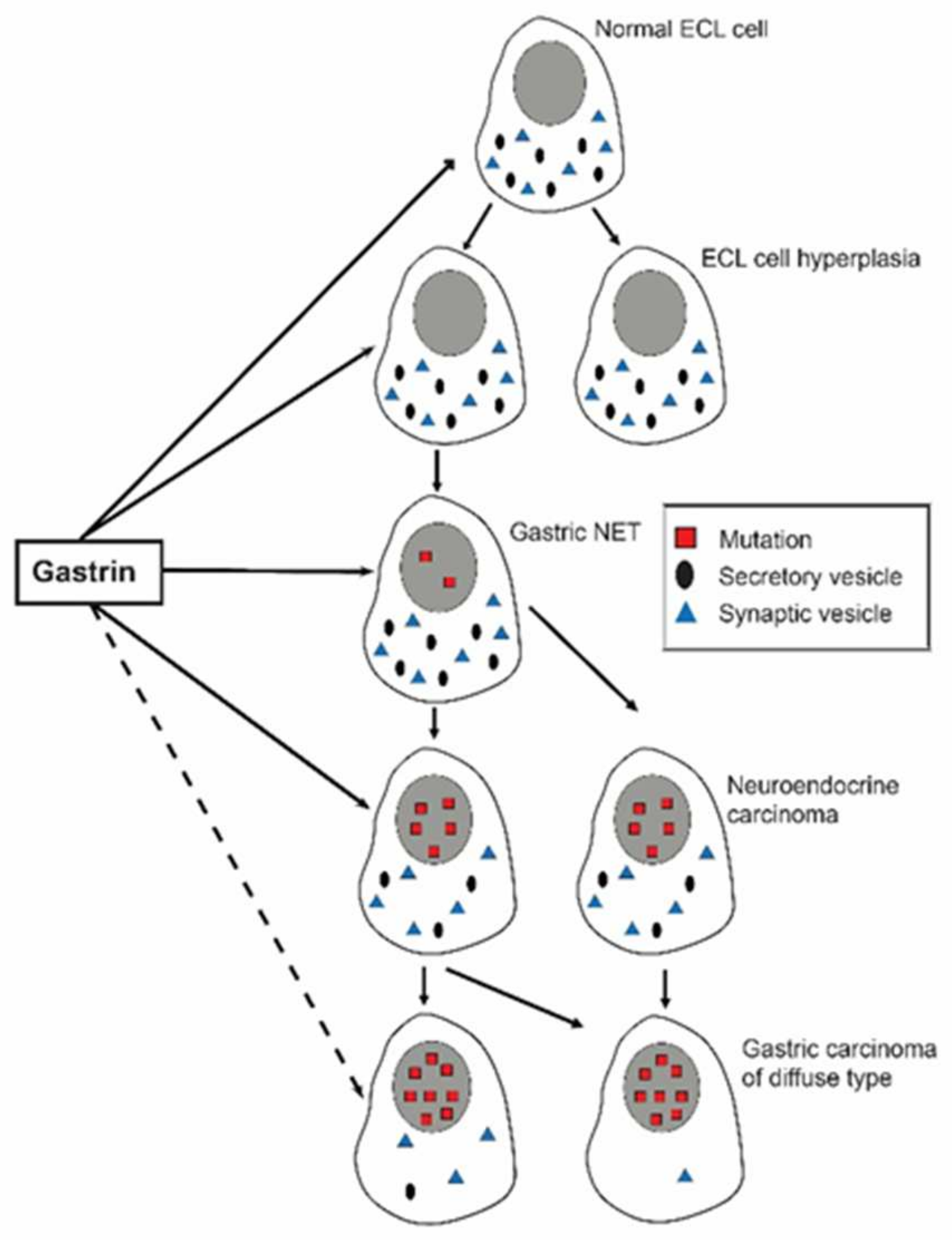
Malignant tumours are traditionally classified according to their organ of origin and whether they are of epithelial (carcinomas) or mesenchymal (sarcomas) origin. By histological appearance the site of origin may often be confirmed. Using same treatment for tumours from the same organ is rational only when there is no principal heterogeneity between the tumours of that organ. Organ tumour heterogeneity is typical for the lungs with small cell and non-small cell tumours, for the kidneys where clear cell renal carcinoma (CCRCC) is the dominating type among other subgroups, and in the stomach with adenocarcinomas of intestinal and diffuse types. In addition, a separate type of neuroendocrine tumours (NETs) is found in most organs. Every cell type able to divide may develop into a tumour, and the different subtypes most often reflect different cell origin. In this article the focus is on the cells of origin in tumours arising in the stomach and kidneys and the close relationship between normal neuroendocrine cells and NETs. Furthermore, that the erythropoietin producing cell may be the cell of origin of CCRCC (a cancer with many similarities to NETs), and that gastric carcinomas of diffuse type may originate from the ECL cell, whereas the endodermal stem cell most probably gives rise to cancers of intestinal type.
Keywords: cell of origin of tumours; tumour classification; neuroendocrine cells; neuroendocrine carcinoma versus adenocarcinoma; gastric carcinoma; renal carcinoma cell of origin of tumours; tumour classification; neuroendocrine cells; neuroendocrine carcinoma versus adenocarcinoma; gastric carcinoma; renal carcinoma