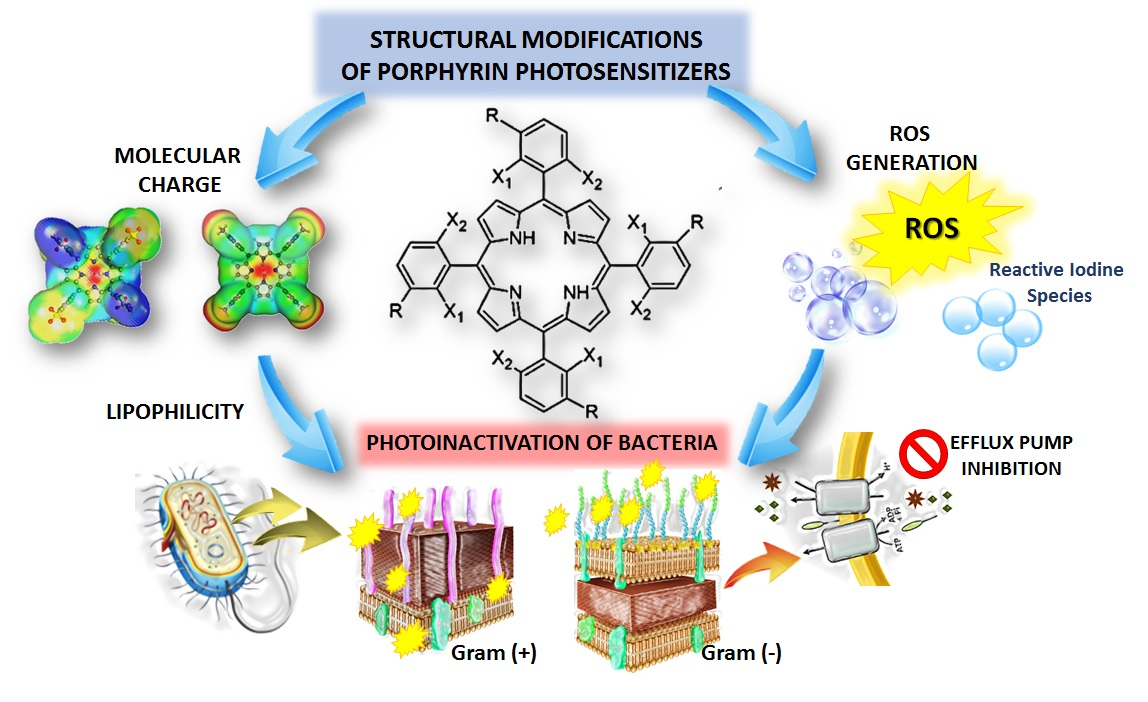
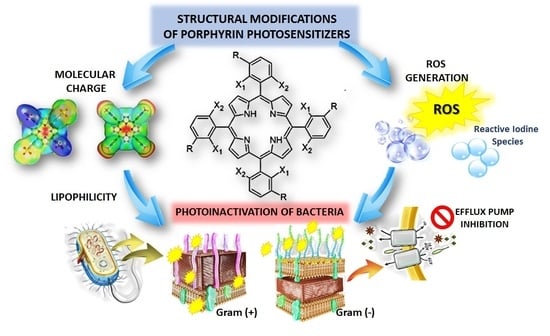
Photodynamic Inactivation of Bacteria with Porphyrin Derivatives: Effect of Charge, Lipophilicity, ROS Generation, and Cellular Uptake on Their Biological Activity In Vitro

 ,
,  ,
, 
Abstract
Share and Cite
Sułek, A.; Pucelik, B.; Kobielusz, M.; Barzowska, A.; Dąbrowski, J.M. Photodynamic Inactivation of Bacteria with Porphyrin Derivatives: Effect of Charge, Lipophilicity, ROS Generation, and Cellular Uptake on Their Biological Activity In Vitro. Int. J. Mol. Sci. 2020, 21, 8716. https://doi.org/10.3390/ijms21228716
Sułek A, Pucelik B, Kobielusz M, Barzowska A, Dąbrowski JM. Photodynamic Inactivation of Bacteria with Porphyrin Derivatives: Effect of Charge, Lipophilicity, ROS Generation, and Cellular Uptake on Their Biological Activity In Vitro. International Journal of Molecular Sciences. 2020; 21(22):8716. https://doi.org/10.3390/ijms21228716
Chicago/Turabian StyleSułek, Adam, Barbara Pucelik, Marcin Kobielusz, Agata Barzowska, and Janusz M. Dąbrowski. 2020. "Photodynamic Inactivation of Bacteria with Porphyrin Derivatives: Effect of Charge, Lipophilicity, ROS Generation, and Cellular Uptake on Their Biological Activity In Vitro" International Journal of Molecular Sciences 21, no. 22: 8716. https://doi.org/10.3390/ijms21228716
APA StyleSułek, A., Pucelik, B., Kobielusz, M., Barzowska, A., & Dąbrowski, J. M. (2020). Photodynamic Inactivation of Bacteria with Porphyrin Derivatives: Effect of Charge, Lipophilicity, ROS Generation, and Cellular Uptake on Their Biological Activity In Vitro. International Journal of Molecular Sciences, 21(22), 8716. https://doi.org/10.3390/ijms21228716