Article

Phenotypic Plasticity of Fibroblasts during Mammary Carcinoma Development


1
Institute of Biochemistry I, Faculty of Medicine, Goethe-University Frankfurt, 60590 Frankfurt, Germany
2
Buchmann Institute for Molecular Life Sciences (BMLS), Goethe University Frankfurt, 60438 Frankfurt, Germany
3
Institute of Cardiovascular Regeneration, Faculty of Medicine, Goethe-University Frankfurt, 60590 Frankfurt, Germany
4
Max Planck Institute for Heart and Lung Research, Member of the German Center for Lung Research (DZL), Member of the Cardio-Pulmonary Institute (CPI), 61231 Bad Nauheim, Germany
5
Frankfurt Cancer Institute, Goethe-University Frankfurt, 60596 Frankfurt, Germany
6
Project Group Translational Medicine and Pharmacology TMP, Fraunhofer Institute for Molecular Biology and Applied Ecology, IME, 60590 Frankfurt, Germany
7
German Cancer Consortium (DKTK), Partner Site Frankfurt, 60590 Frankfurt, Germany
*
Authors to whom correspondence should be addressed.
These authors contributed equally to the paper.
Int. J. Mol. Sci. 2019, 20(18), 4438; https://doi.org/10.3390/ijms20184438
Submission received: 15 July 2019 / Revised: 4 September 2019 / Accepted: 6 September 2019 / Published: 9 September 2019

Abstract

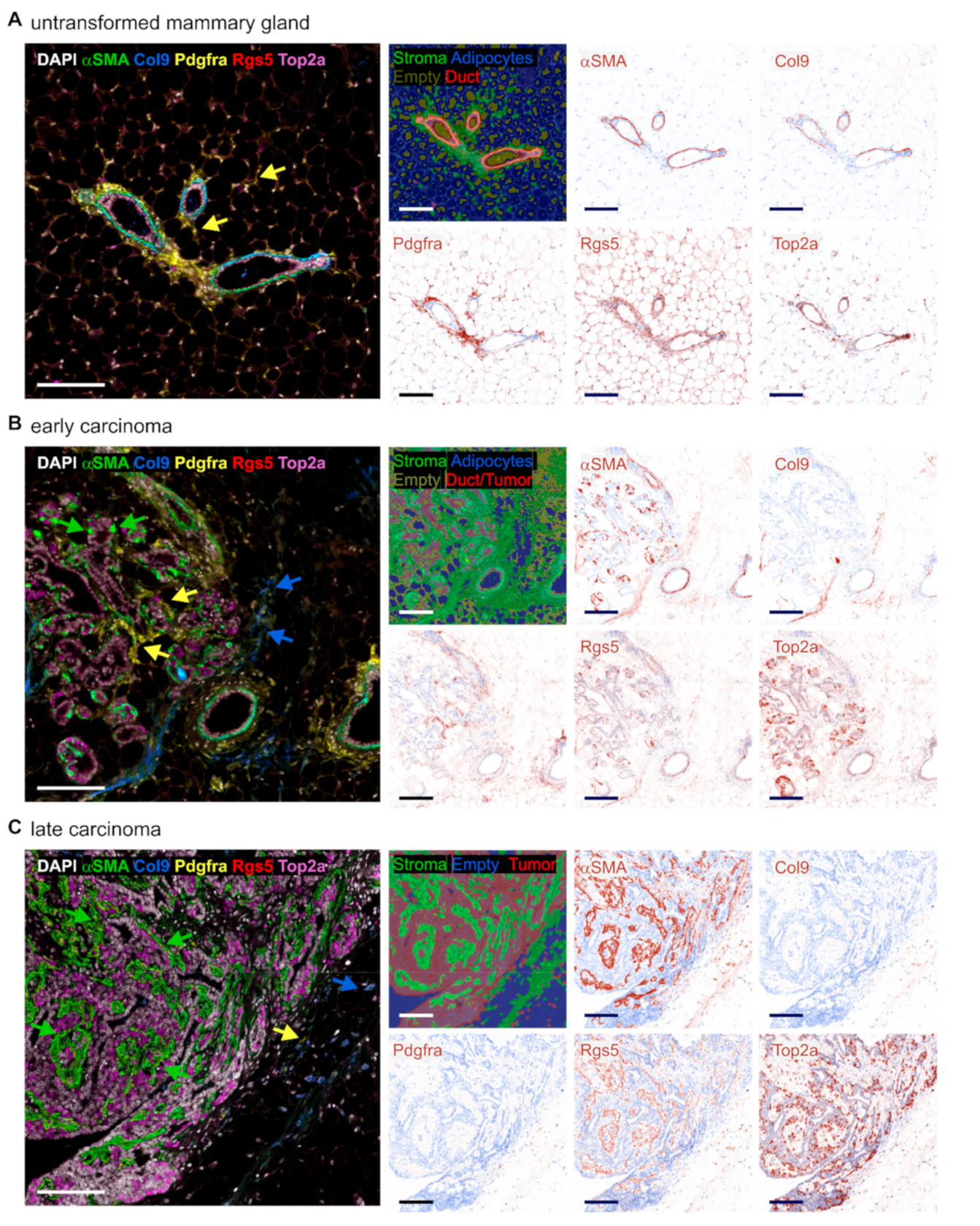
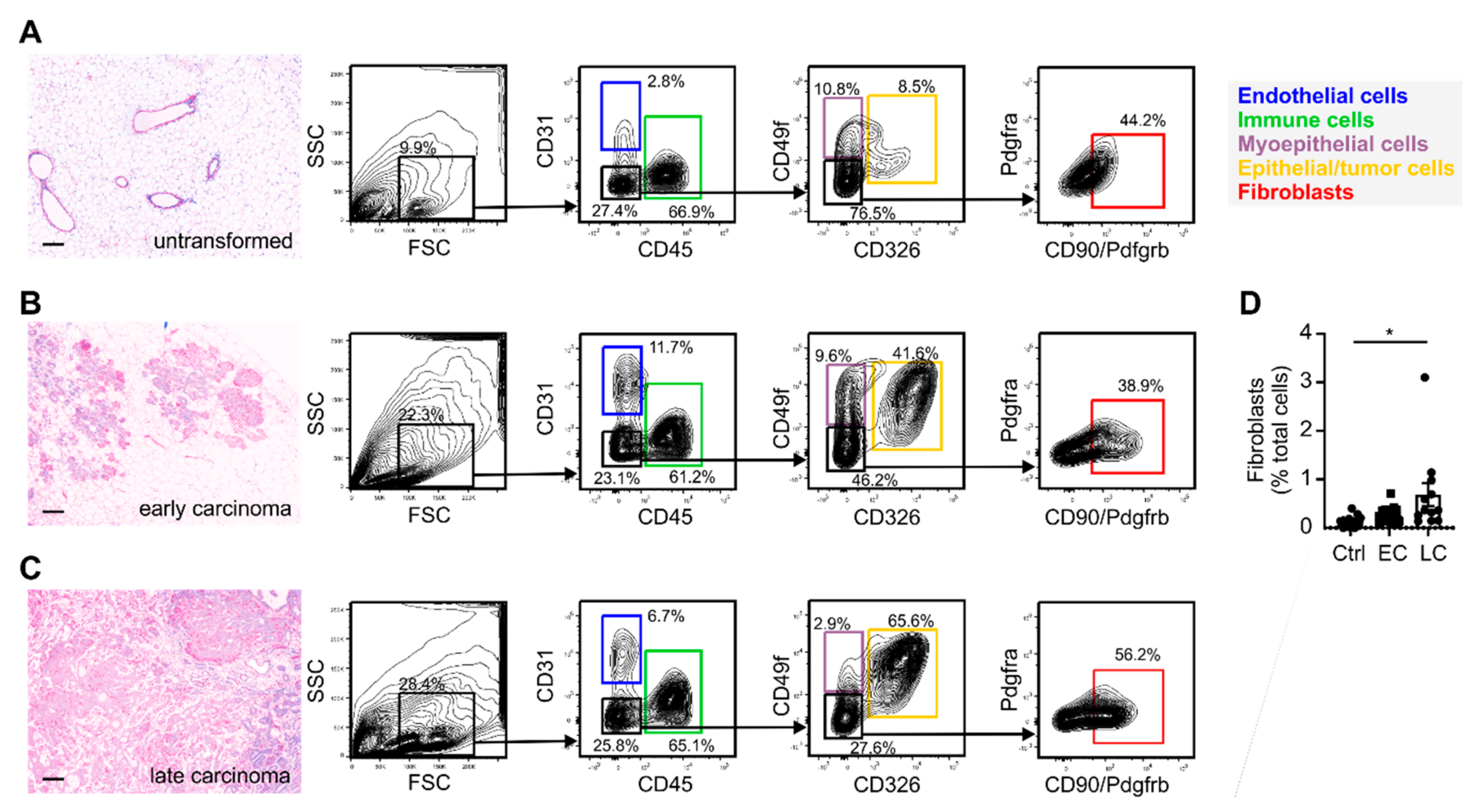
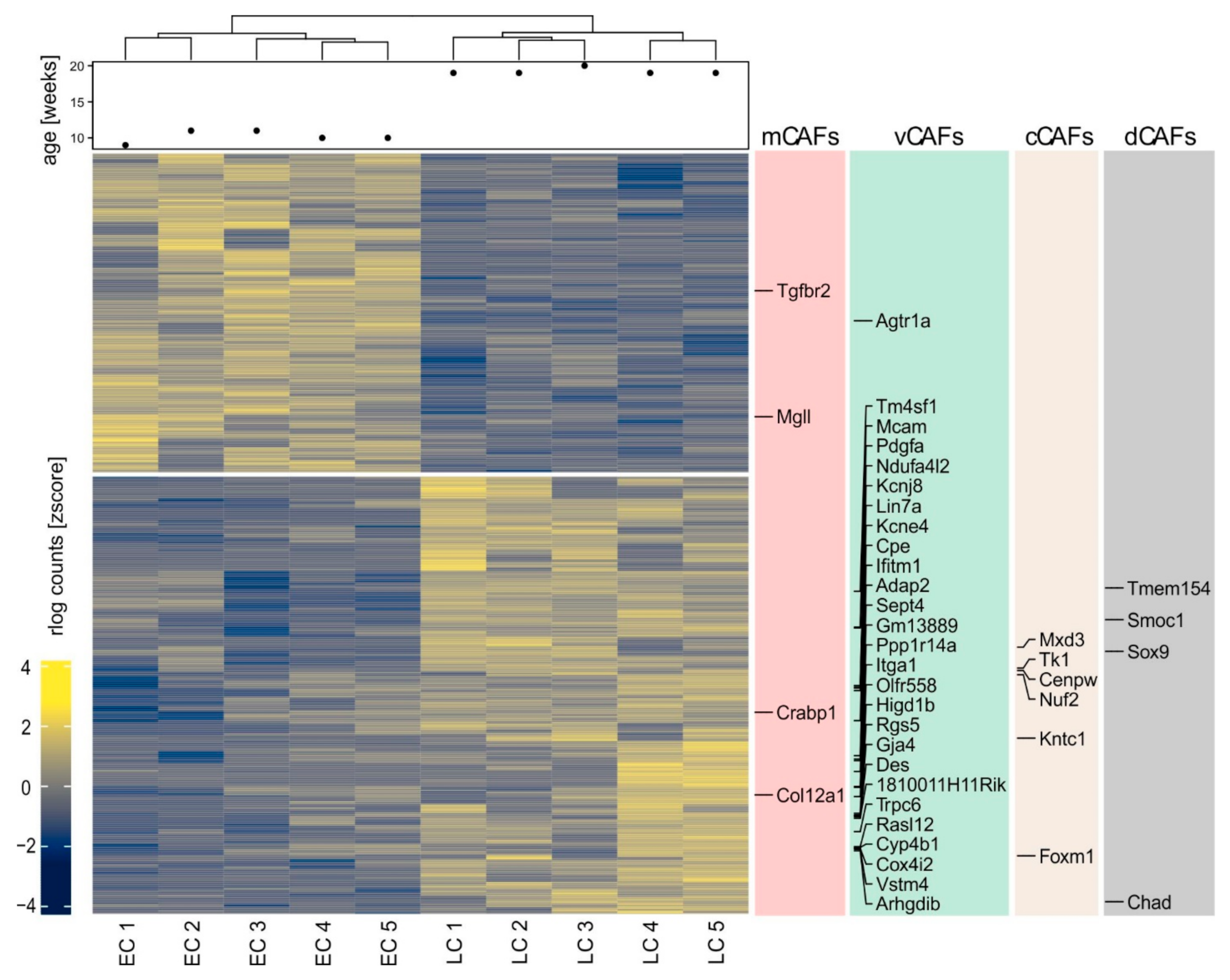
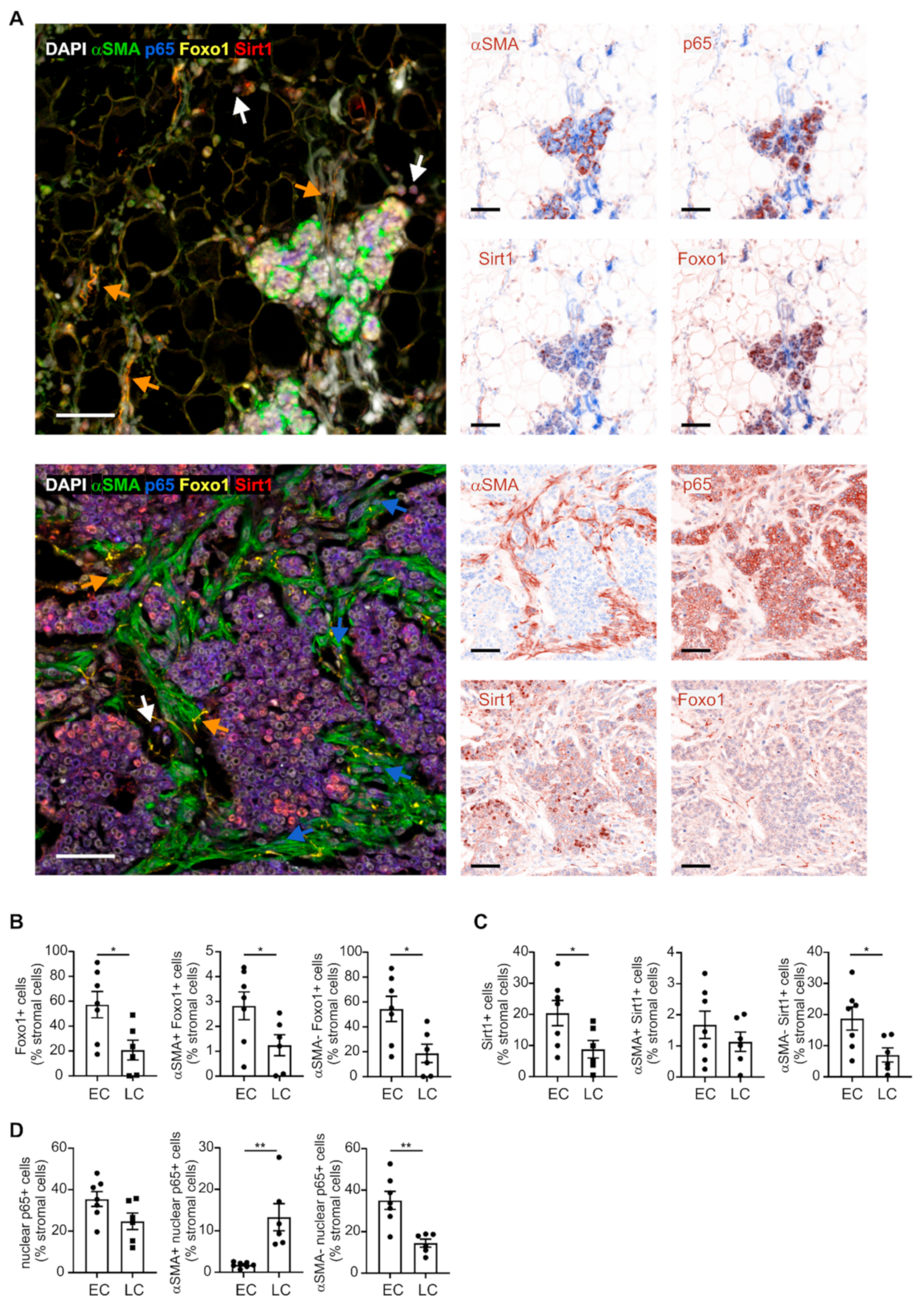
Cancer-associated fibroblasts (CAFs) in the tumor microenvironment contribute to all stages of tumorigenesis and are usually considered to be tumor-promoting cells. CAFs show a remarkable degree of heterogeneity, which is attributed to developmental origin or to local environmental niches, resulting in distinct CAF subsets within individual tumors. While CAF heterogeneity is frequently investigated in late-stage tumors, data on longitudinal CAF development in tumors are lacking. To this end, we used the transgenic polyoma middle T oncogene-induced mouse mammary carcinoma model and performed whole transcriptome analysis in FACS-sorted fibroblasts from early- and late-stage tumors. We observed a shift in fibroblast populations over time towards a subset previously shown to negatively correlate with patient survival, which was confirmed by multispectral immunofluorescence analysis. Moreover, we identified a transcriptomic signature distinguishing CAFs from early- and late-stage tumors. Importantly, the signature of early-stage CAFs correlated well with tumor stage and survival in human mammary carcinoma patients. A random forest analysis suggested predictive value of the complete set of differentially expressed genes between early- and late-stage CAFs on bulk tumor patient samples, supporting the clinical relevance of our findings. In conclusion, our data show transcriptome alterations in CAFs during tumorigenesis in the mammary gland, which suggest that CAFs are educated by the tumor over time to promote tumor development. Moreover, we show that murine CAF gene signatures can harbor predictive value for human cancer.
Keywords: cancer-associated fibroblasts; mammary carcinoma; cancer; transcriptional profiling; gene signature cancer-associated fibroblasts; mammary carcinoma; cancer; transcriptional profiling; gene signature