Review

Neuroendocrine Aspects of Skin Aging


by
Georgeta Bocheva
1,*,
Radomir M. Slominski
2 and
Andrzej T. Slominski
3,4,*
1
Department of Pharmacology and Toxicology, Medical University of Sofia, Sofia 1431, Bulgaria
2
Division of Rheumatology, Department of Medicine, University of Alabama at Birmingham, Birmingham, AL 35294, USA
3
Department of Dermatology, Comprehensive Cancer Center, Cancer Chemoprevention Program, University of Alabama at Birmingham, Birmingham, AL 35294, USA
4
Veteran Administration Medical Center, Birmingham, AL 35294, USA
*
Authors to whom correspondence should be addressed.
Int. J. Mol. Sci. 2019, 20(11), 2798; https://doi.org/10.3390/ijms20112798
Submission received: 2 May 2019 / Revised: 28 May 2019 / Accepted: 6 June 2019 / Published: 7 June 2019
(This article belongs to the Special Issue Molecular Mechanisms of Skin Aging)

Abstract

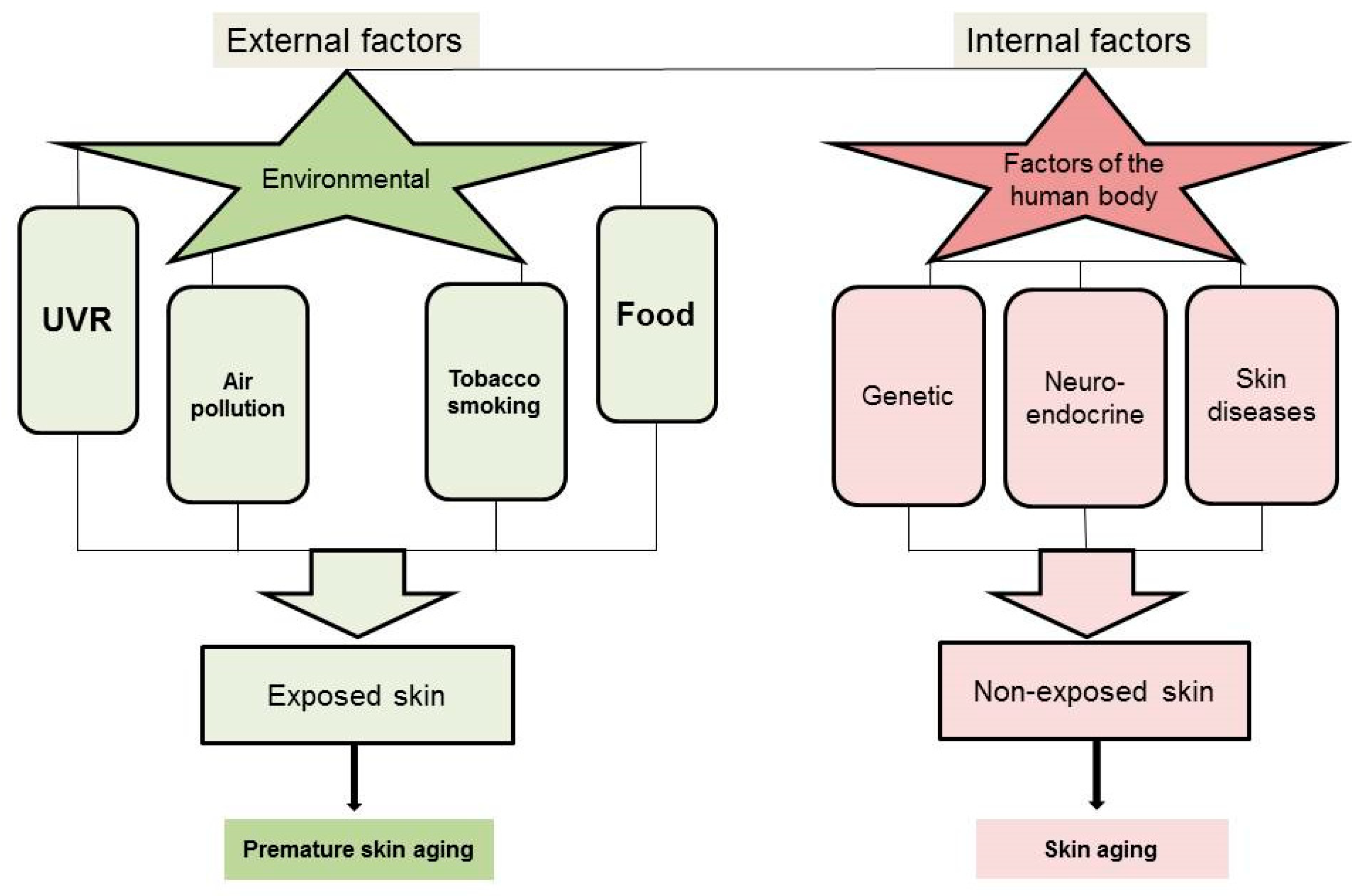
Skin aging is accompanied by a gradual loss of function, physiological integrity and the ability to cope with internal and external stressors. This is secondary to a combination of complex biological processes influenced by constitutive and environmental factors or by local and systemic pathologies. Skin aging and its phenotypic presentation are dependent on constitutive (genetic) and systemic factors. It can be accelerated by environmental stressors, such as ultraviolet radiation, pollutants and microbial insults. The skin’s functions and its abilities to cope with external stressors are regulated by the cutaneous neuroendocrine systems encompassing the regulated and coordinated production of neuropeptides, neurohormones, neurotransmitters and hormones, including steroids and secosteroids. These will induce/stimulate downstream signaling through activation of corresponding receptors. These pathways and corresponding coordinated responses to the stressors decay with age or undergo pathological malfunctions. This affects the overall skin phenotype and epidermal, dermal, hypodermal and adnexal functions. We propose that skin aging can be attenuated or its phenotypic presentation reversed by the topical use of selected factors with local neurohormonal activities targeting specific receptors or enzymes. Some of our favorite factors include melatonin and its metabolites, noncalcemic secosteroids and lumisterol derivatives, because of their low toxicity and their desirable local phenotypic effects.
Keywords: skin aging; photoaging; premature aged skin; UV irradiation; oxidative stress; vitamins B3 and D; melatonin skin aging; photoaging; premature aged skin; UV irradiation; oxidative stress; vitamins B3 and D; melatonin