Article

Binding of Organometallic Ruthenium Anticancer Complexes to DNA: Thermodynamic Base and Sequence Selectivity


1
Institute of Chinese Materia Medica, China Academy of Chinese Medical Sciences, Beijing 100700, China
2
Beijing National Laboratory for Molecular Sciences, National Centre for Mass Spectrometry in Beijing, CAS Key Laboratory of Analytical Chemistry for Living Biosystems, CAS Research/Education Centre for Excellence in Molecular Sciences, Institute of Chemistry, Chinese Academy of Sciences, Beijing 100190, China
3
School of Chemistry and Chemical Engineering, Wuhan University of Science and Technology, Wuhan 430081, China
4
University of Chinese Academy of Sciences, Beijing 100049, China
*
Authors to whom correspondence should be addressed.
Int. J. Mol. Sci. 2018, 19(7), 2137; https://doi.org/10.3390/ijms19072137
Submission received: 14 June 2018 / Revised: 3 July 2018 / Accepted: 4 July 2018 / Published: 23 July 2018

Abstract

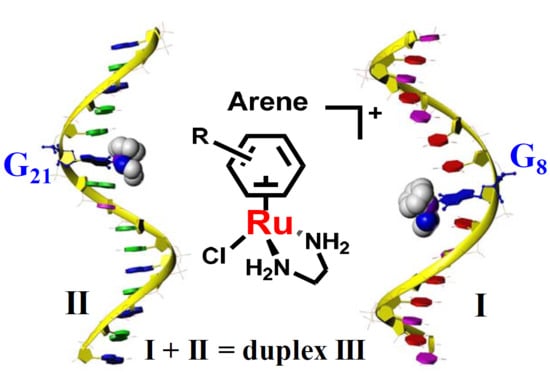
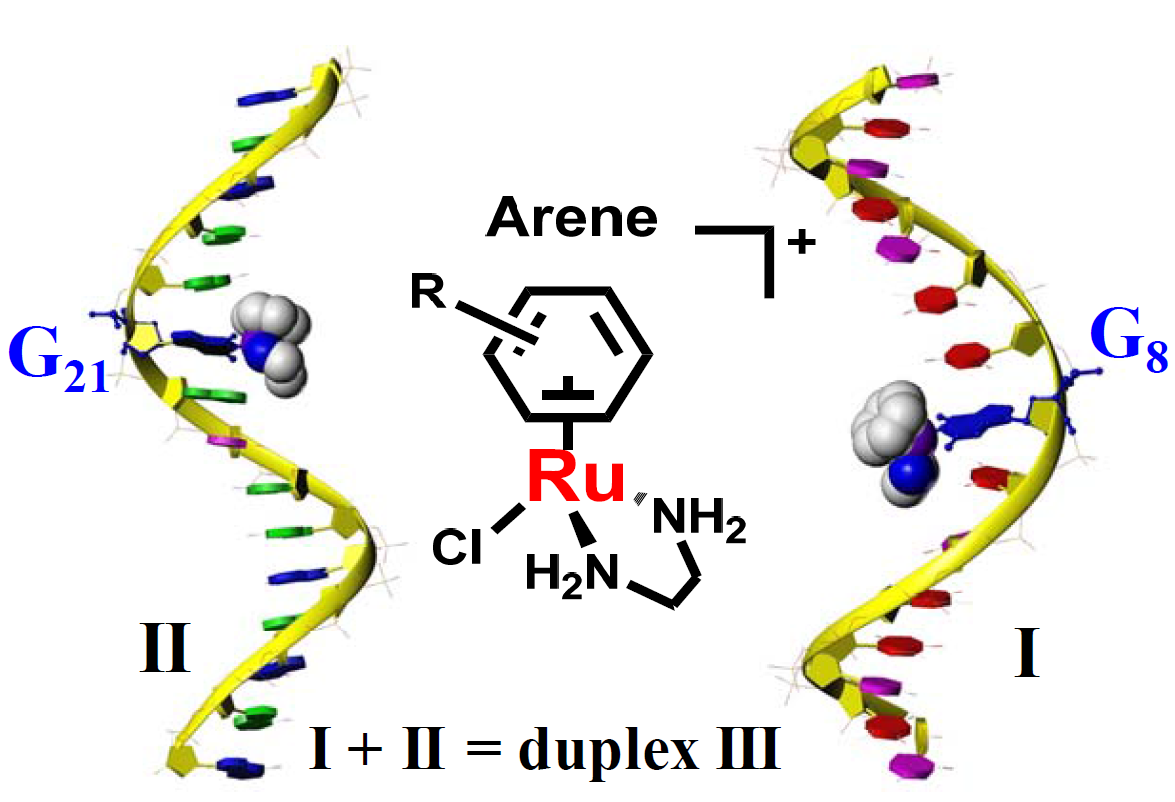
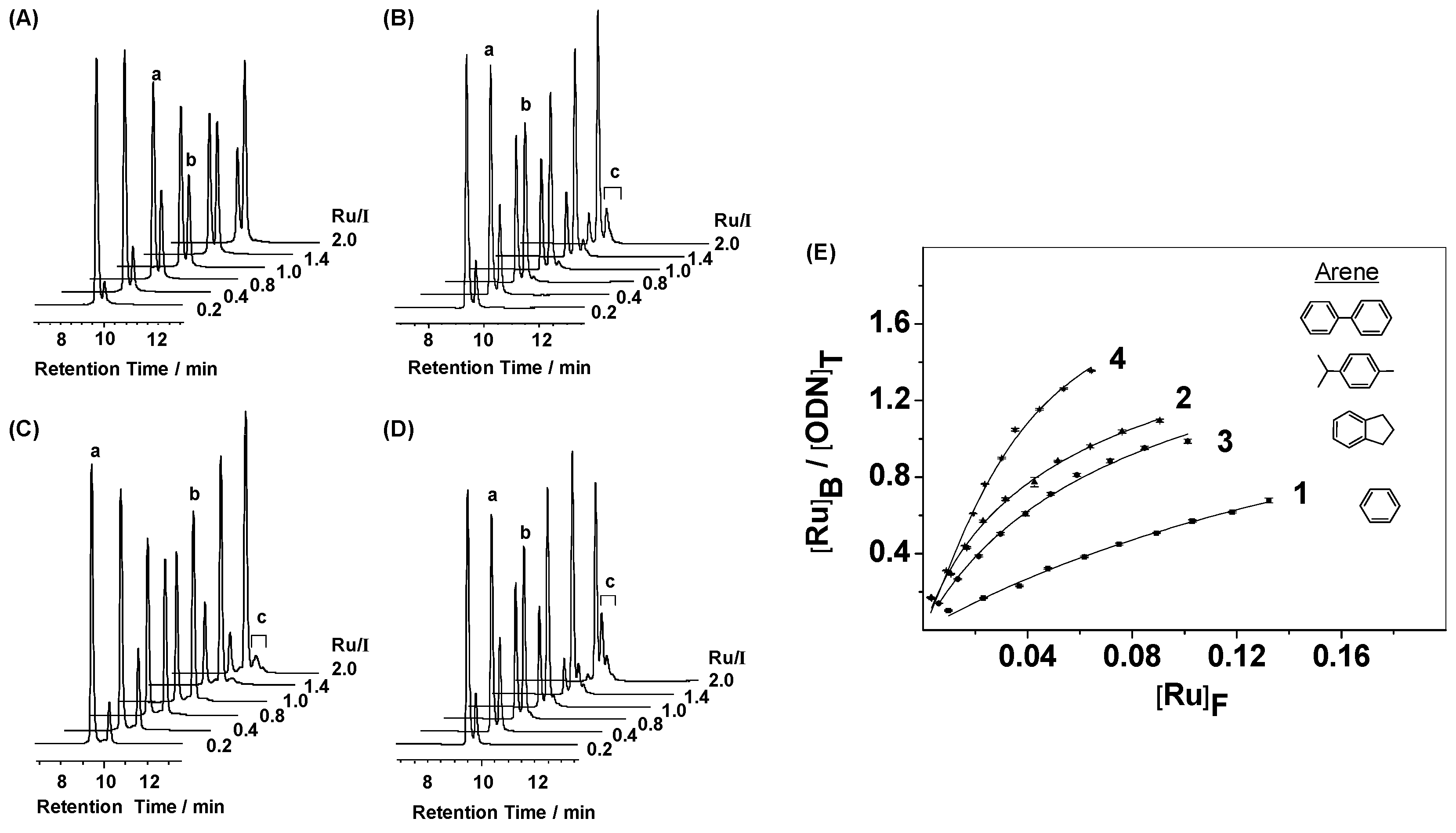
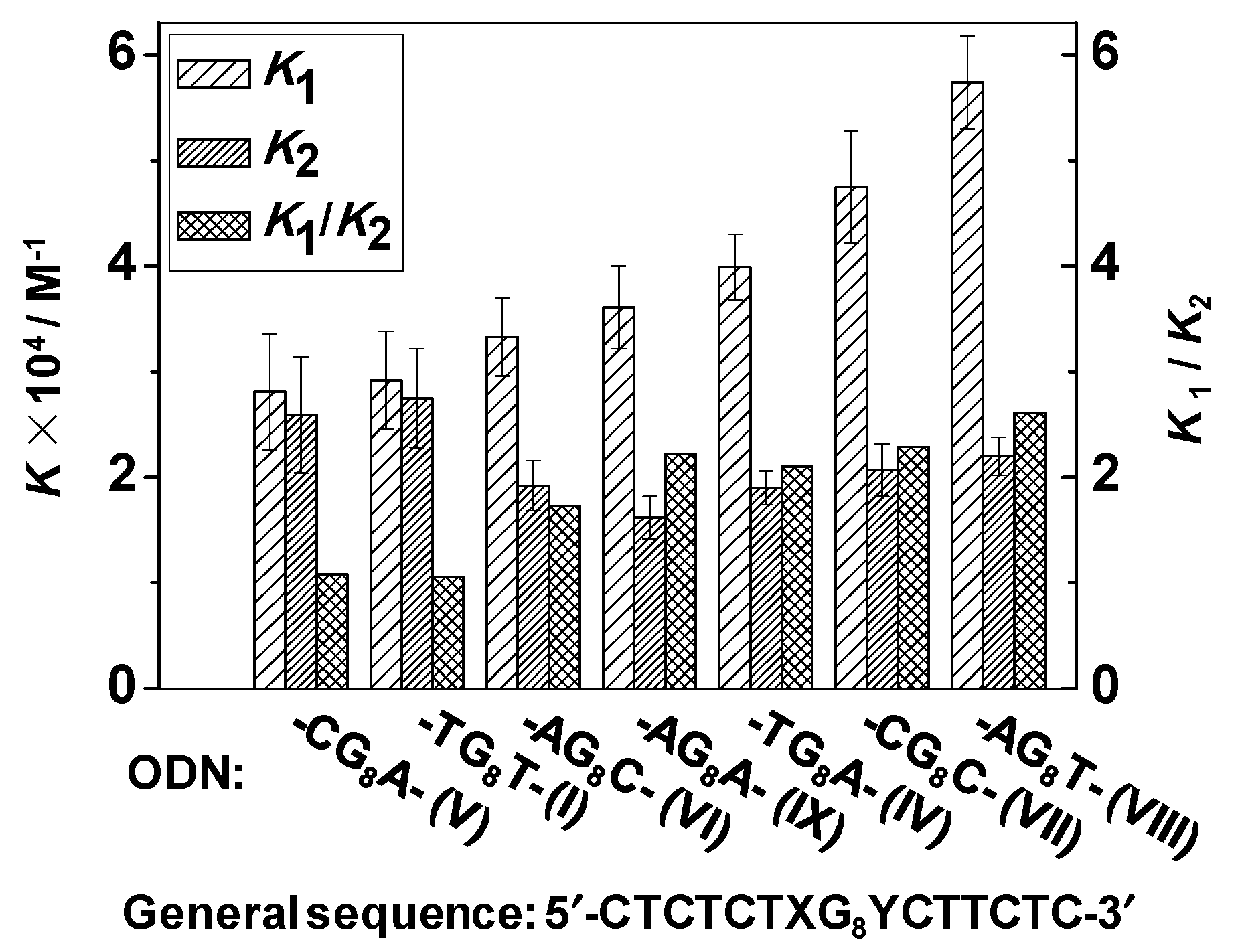
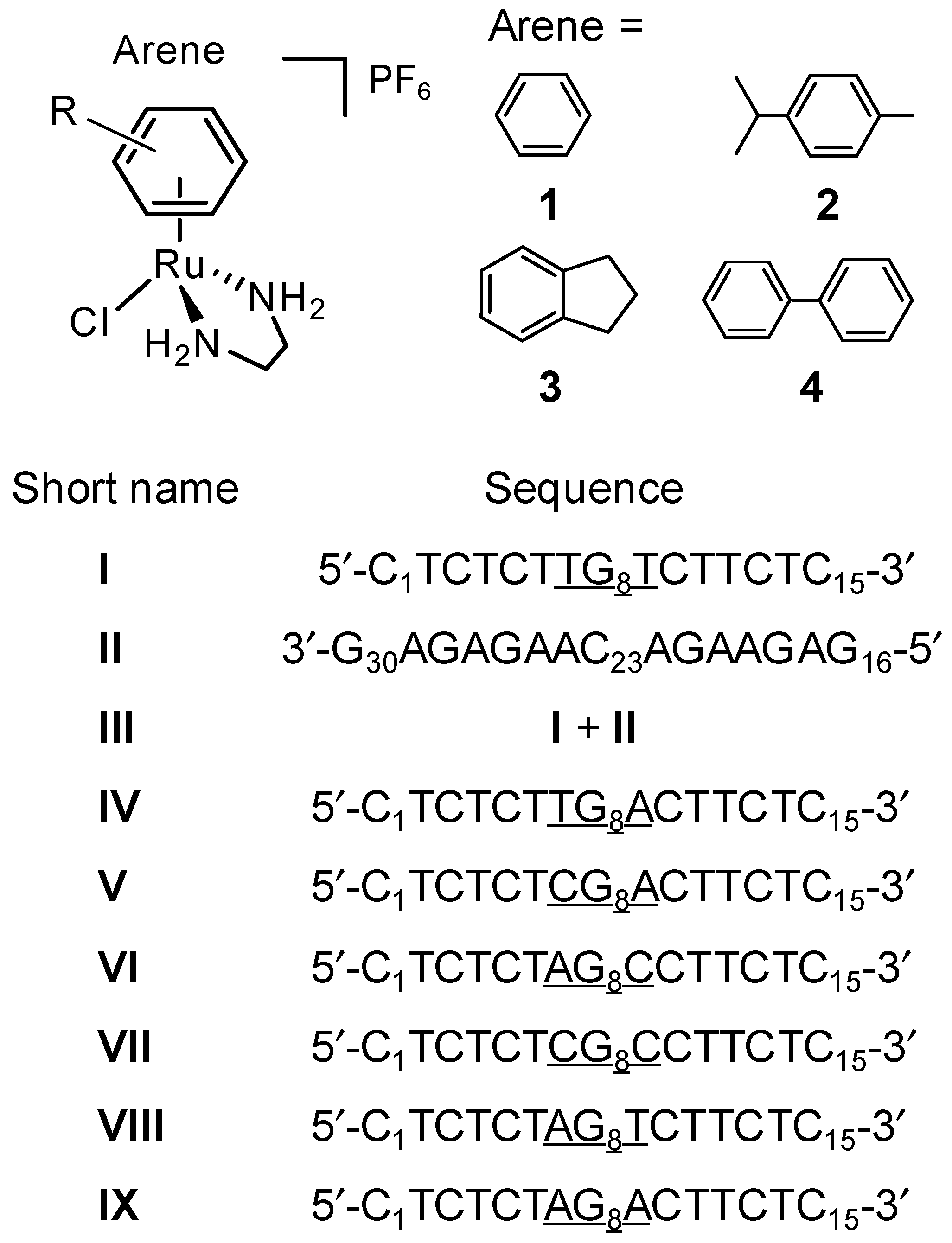
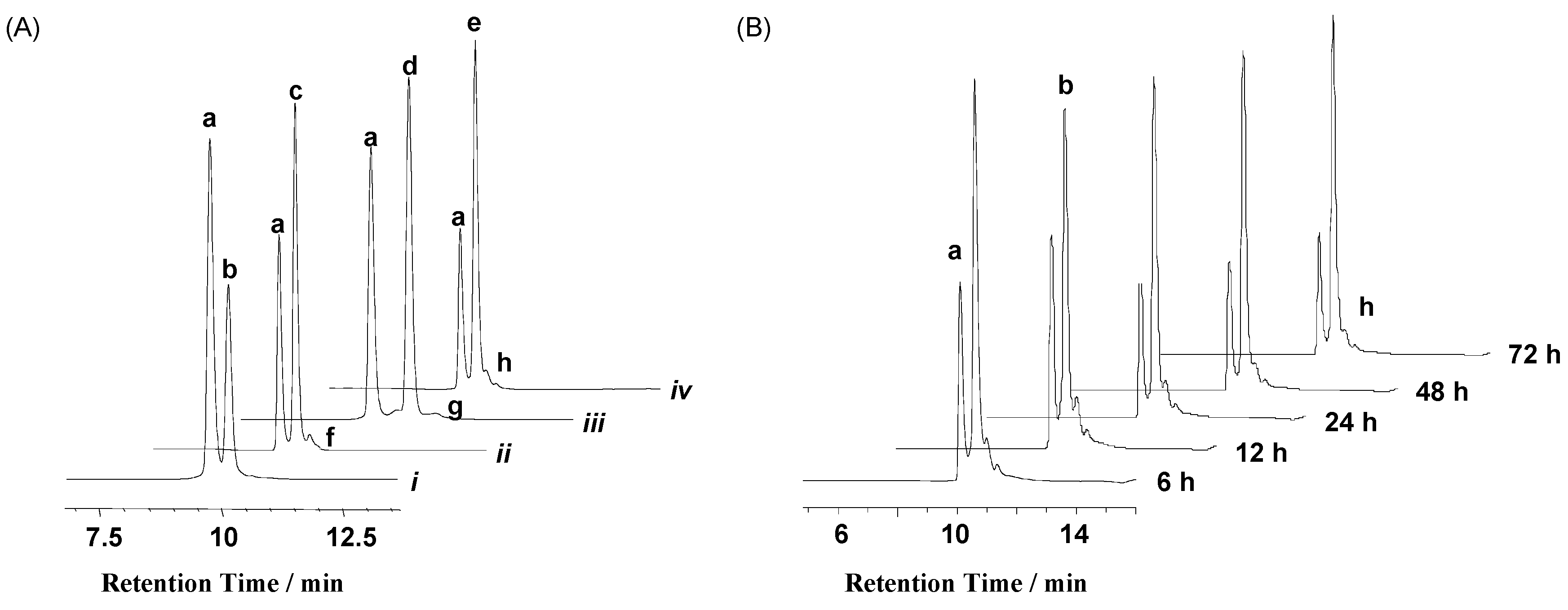
Organometallic ruthenium(II) complexes [(η6-arene)Ru(en)Cl][PF6] (arene = benzene (1), p-cymene (2), indane (3), and biphenyl (4); en = ethylenediamine) are promising anticancer drug candidates both in vitro and in vivo. In this paper, the interactions between ruthenium(II) complexes and 15-mer single- and double-stranded oligodeoxynucleotides (ODNs) were thermodynamically investigated using high performance liquid chromatography (HPLC) and electrospray ionization mass spectroscopy (ESI-MS). All of the complexes bind preferentially to G8 on the single strand 5′-CTCTCTT7G8T9CTTCTC-3′ (I), with complex 4 containing the most hydrophobic ligand as the most reactive one. To the analogs of I (changing T7 and/or T9 to A and/or C), complex 4 shows a decreasing affinity to the G8 site in the following order: -AG8T- (K: 5.74 × 10⁴ M−1) > -CG8C- > -TG8A- > -AG8A- > -AG8C- > -TG8T- (I) ≈ -CG8A- (K: 2.81 × 10⁴ M−1). In the complementary strand of I, the G bases in the middle region are favored for ruthenation over guanine (G) bases in the end of oligodeoxynucleotides (ODNs). These results indicate that both the flanking bases (or base sequences) and the arene ligands play important roles in determining the binding preference, and the base- and sequence-selectivity, of ruthenium complex in binding to the ODNs.
Keywords: organometallic ruthenium complexes; anticancer; oligodeoxynucleotide; base/sequence selectivity; thermodynamics; LC-MS organometallic ruthenium complexes; anticancer; oligodeoxynucleotide; base/sequence selectivity; thermodynamics; LC-MS
Graphical Abstract