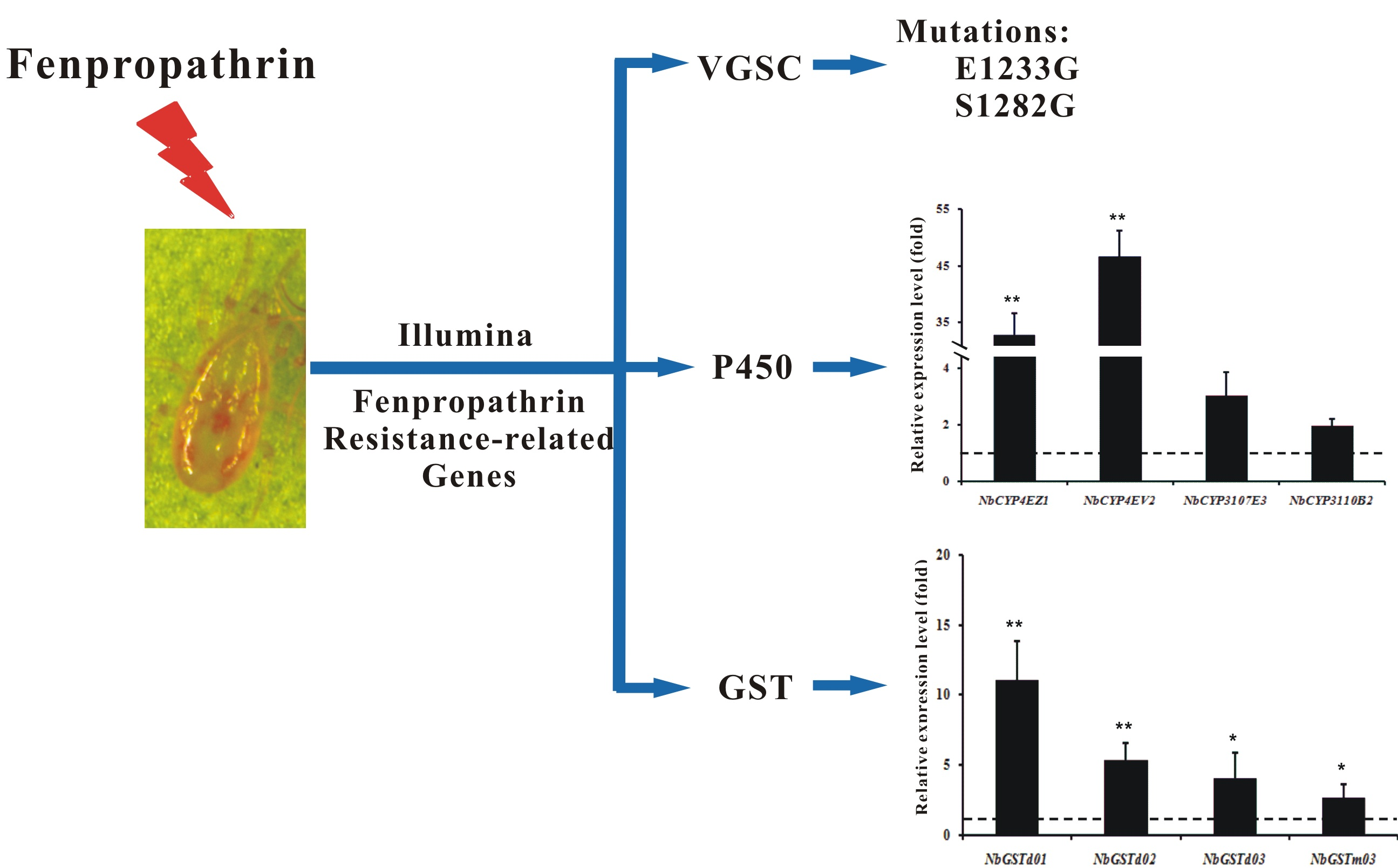
Transcriptome and Difference Analysis of Fenpropathrin Resistant Predatory Mite, Neoseiulus barkeri (Hughes)
Abstract
Share and Cite
Cong, L.; Chen, F.; Yu, S.; Ding, L.; Yang, J.; Luo, R.; Tian, H.; Li, H.; Liu, H.; Ran, C. Transcriptome and Difference Analysis of Fenpropathrin Resistant Predatory Mite, Neoseiulus barkeri (Hughes). Int. J. Mol. Sci. 2016, 17, 704. https://doi.org/10.3390/ijms17060704
Cong L, Chen F, Yu S, Ding L, Yang J, Luo R, Tian H, Li H, Liu H, Ran C. Transcriptome and Difference Analysis of Fenpropathrin Resistant Predatory Mite, Neoseiulus barkeri (Hughes). International Journal of Molecular Sciences. 2016; 17(6):704. https://doi.org/10.3390/ijms17060704
Chicago/Turabian StyleCong, Lin, Fei Chen, Shijiang Yu, Lili Ding, Juan Yang, Ren Luo, Huixia Tian, Hongjun Li, Haoqiang Liu, and Chun Ran. 2016. "Transcriptome and Difference Analysis of Fenpropathrin Resistant Predatory Mite, Neoseiulus barkeri (Hughes)" International Journal of Molecular Sciences 17, no. 6: 704. https://doi.org/10.3390/ijms17060704
APA StyleCong, L., Chen, F., Yu, S., Ding, L., Yang, J., Luo, R., Tian, H., Li, H., Liu, H., & Ran, C. (2016). Transcriptome and Difference Analysis of Fenpropathrin Resistant Predatory Mite, Neoseiulus barkeri (Hughes). International Journal of Molecular Sciences, 17(6), 704. https://doi.org/10.3390/ijms17060704