Evidence of Bioactive Compounds from Vernonia polyanthes Leaves with Topical Anti-Inflammatory Potential
 ,
,
Abstract
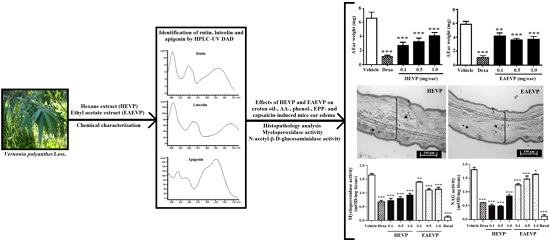
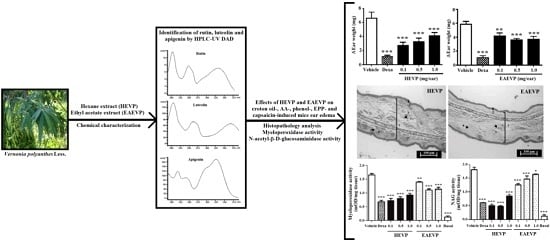
:
1. Introduction
2. Results
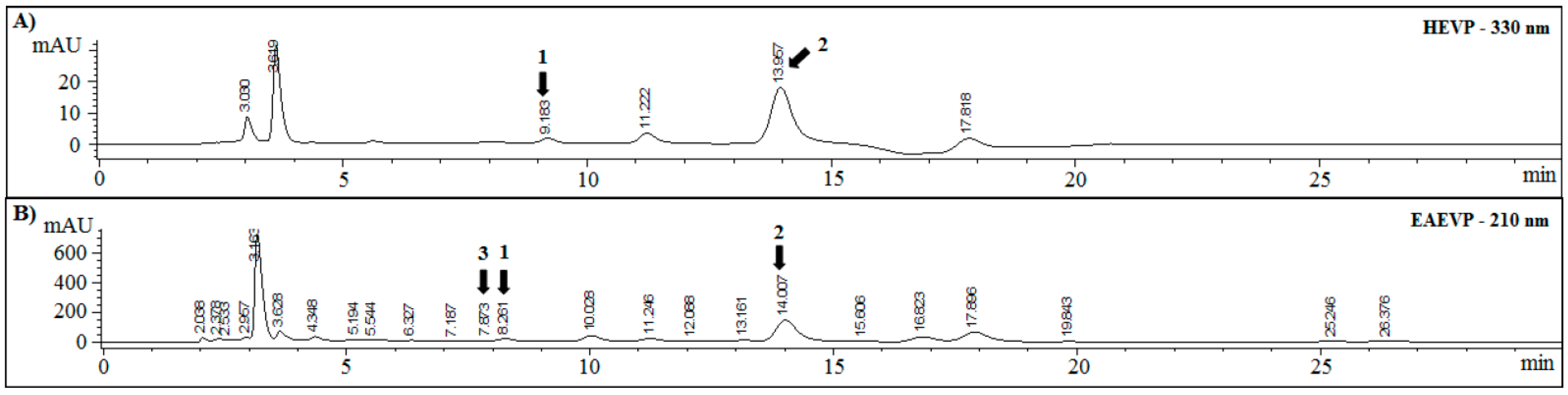
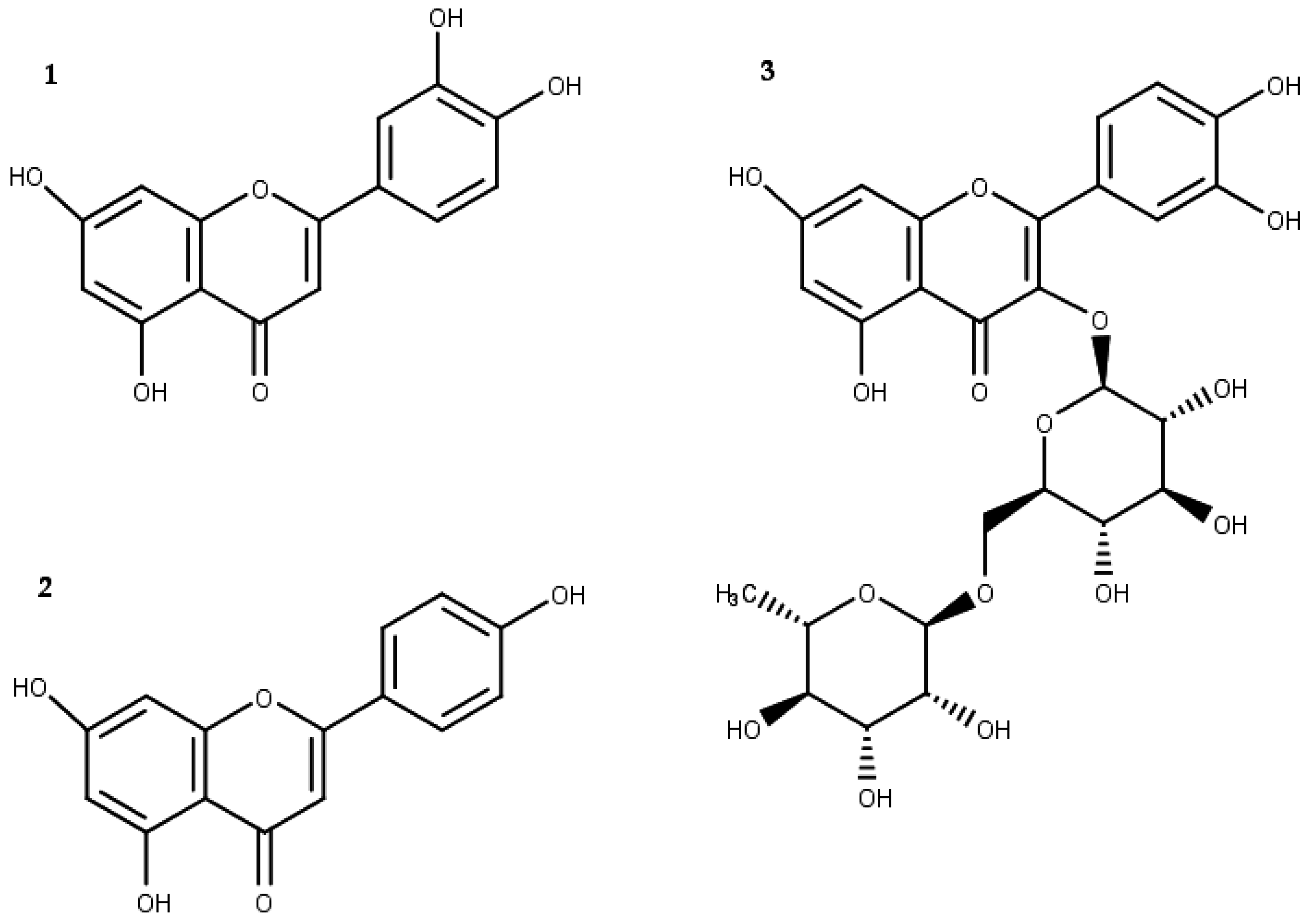
2.1. Chemical Characterization by HPLC
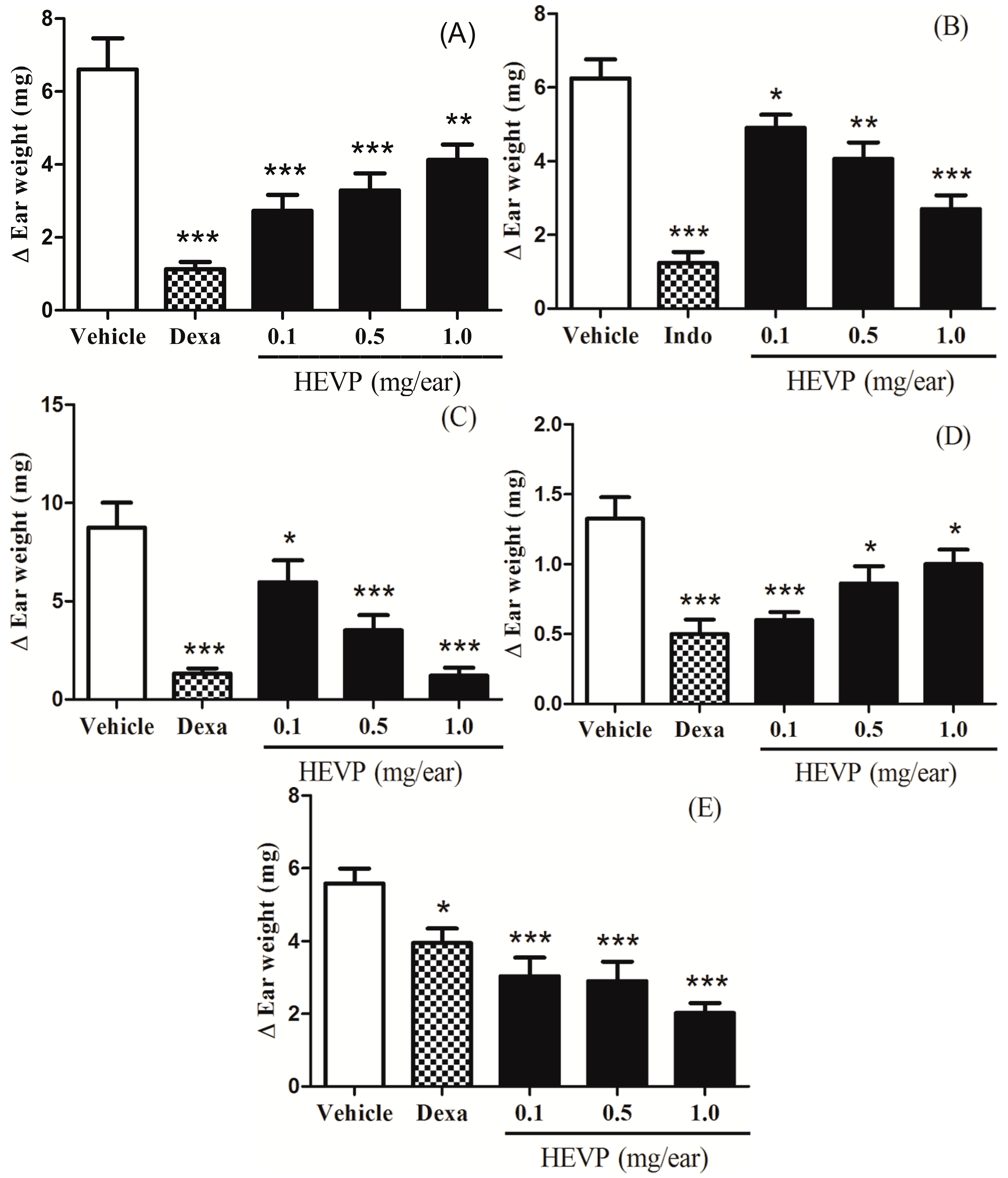
2.2. Effect of HEVP on Different Irritant Agents-Induced Mice Ear Edema
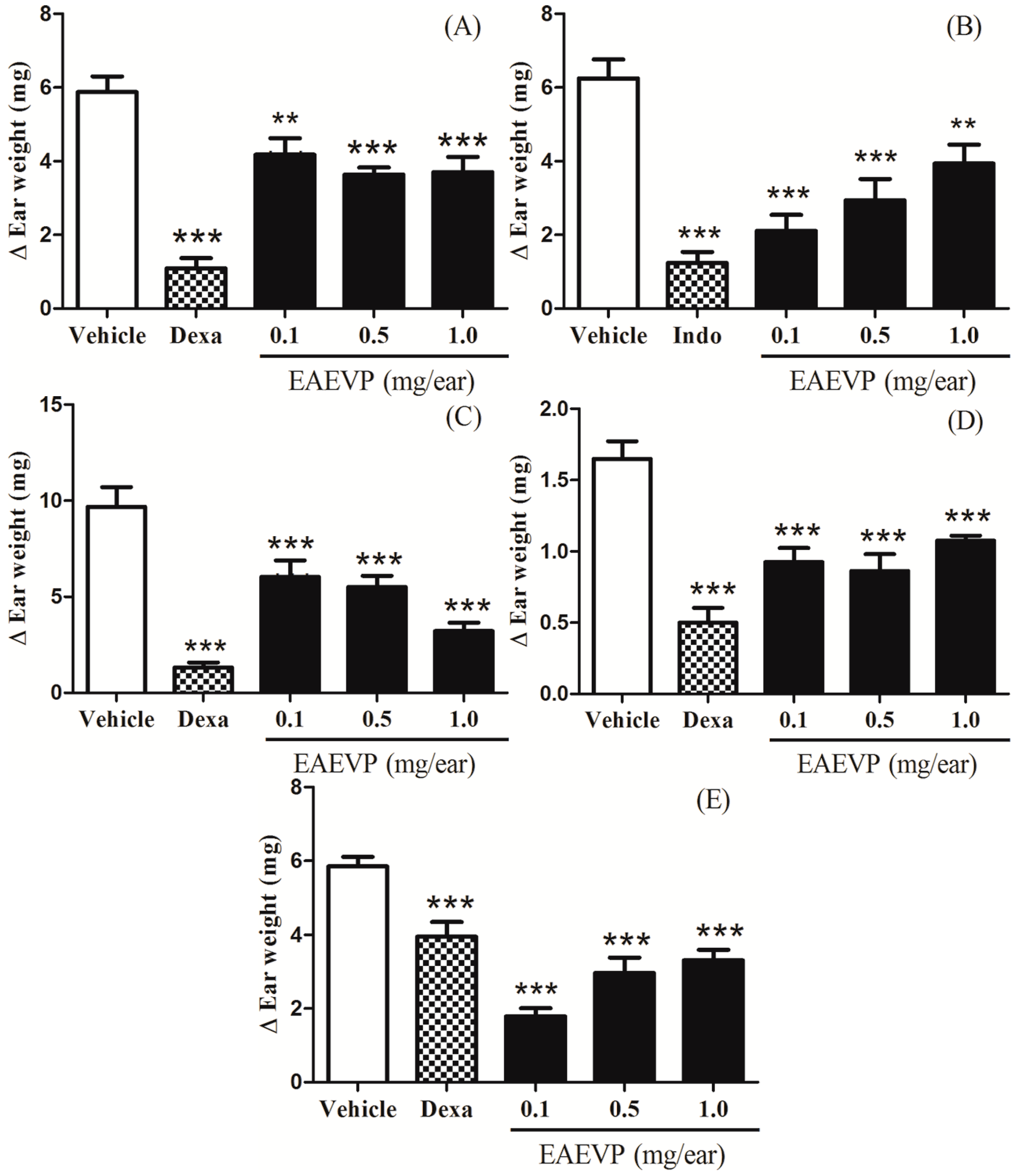
2.3. Effect of EAEVP on Different Irritant Agents-Induced Mice Ear Edema
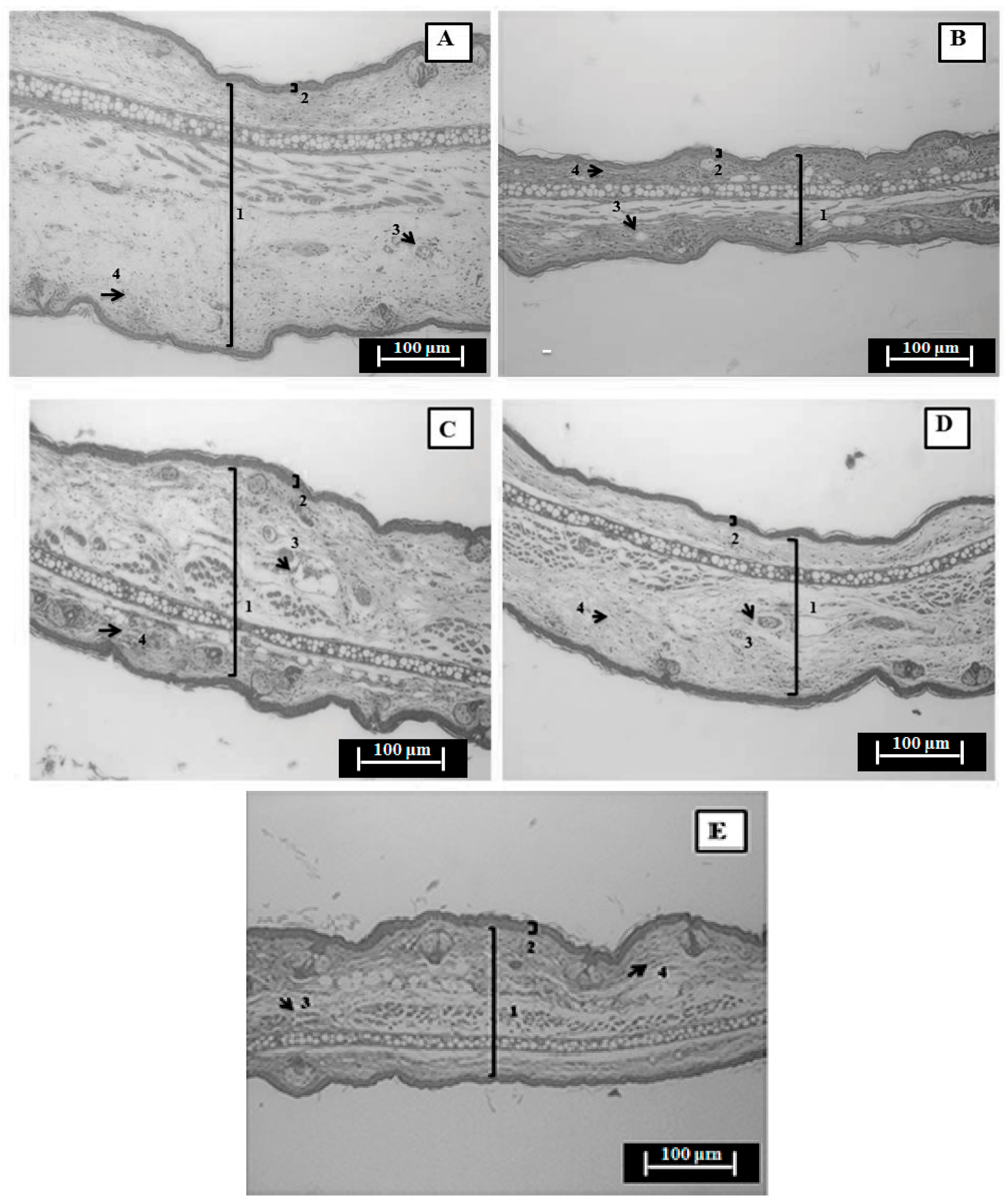
2.4. Histopathology Analysis
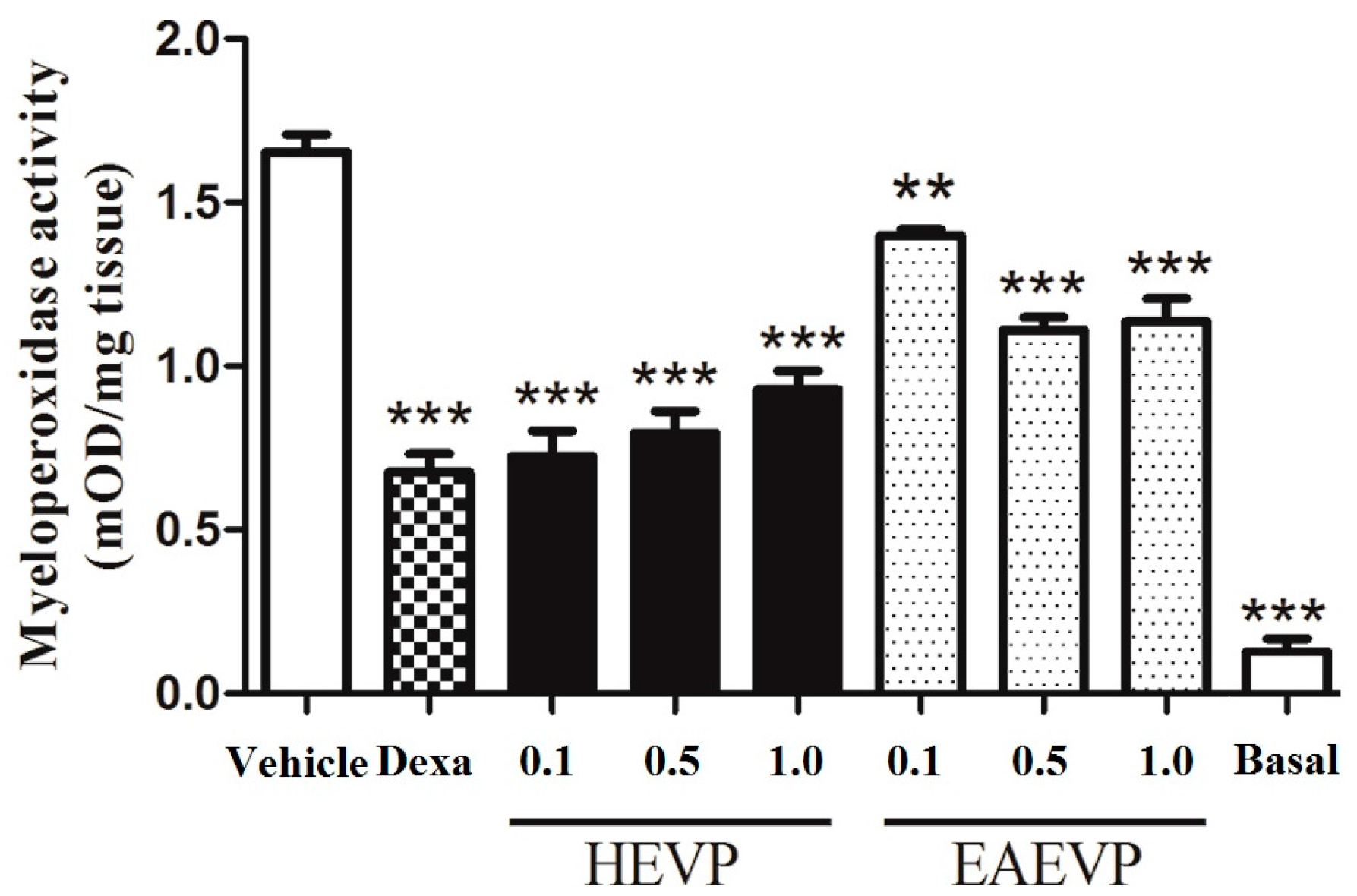
2.5. Effect of HEVP and EAEVP on MPO Activity in Croton Oil-Induced Ear Edema
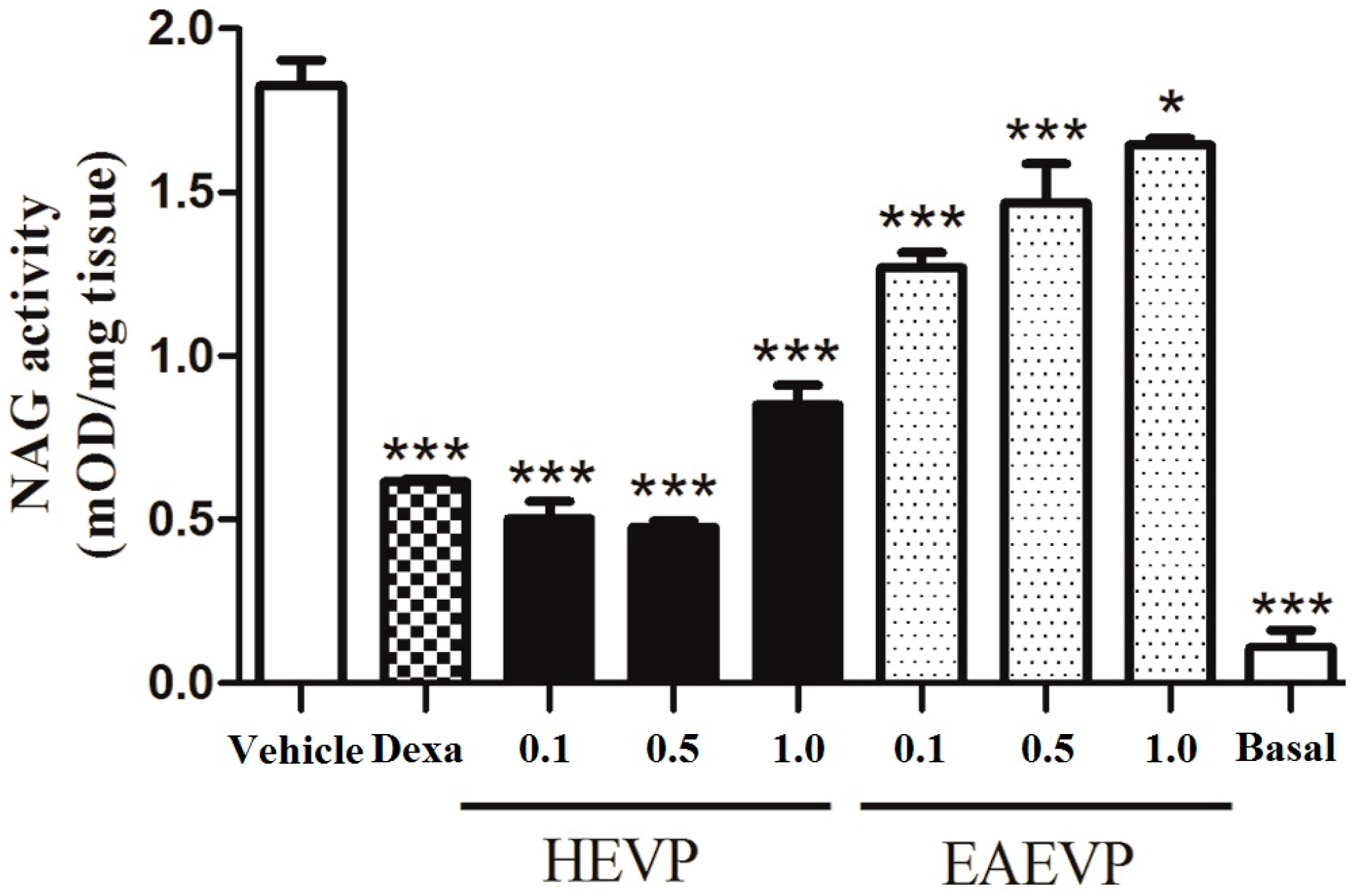
2.6. Effect of HEVP and EAEVP on NAG Activity in Croton Oil-Induced Ear Edema
3. Discussion
4. Materials and Methods
4.1. Plant Material
4.2. Chemicals
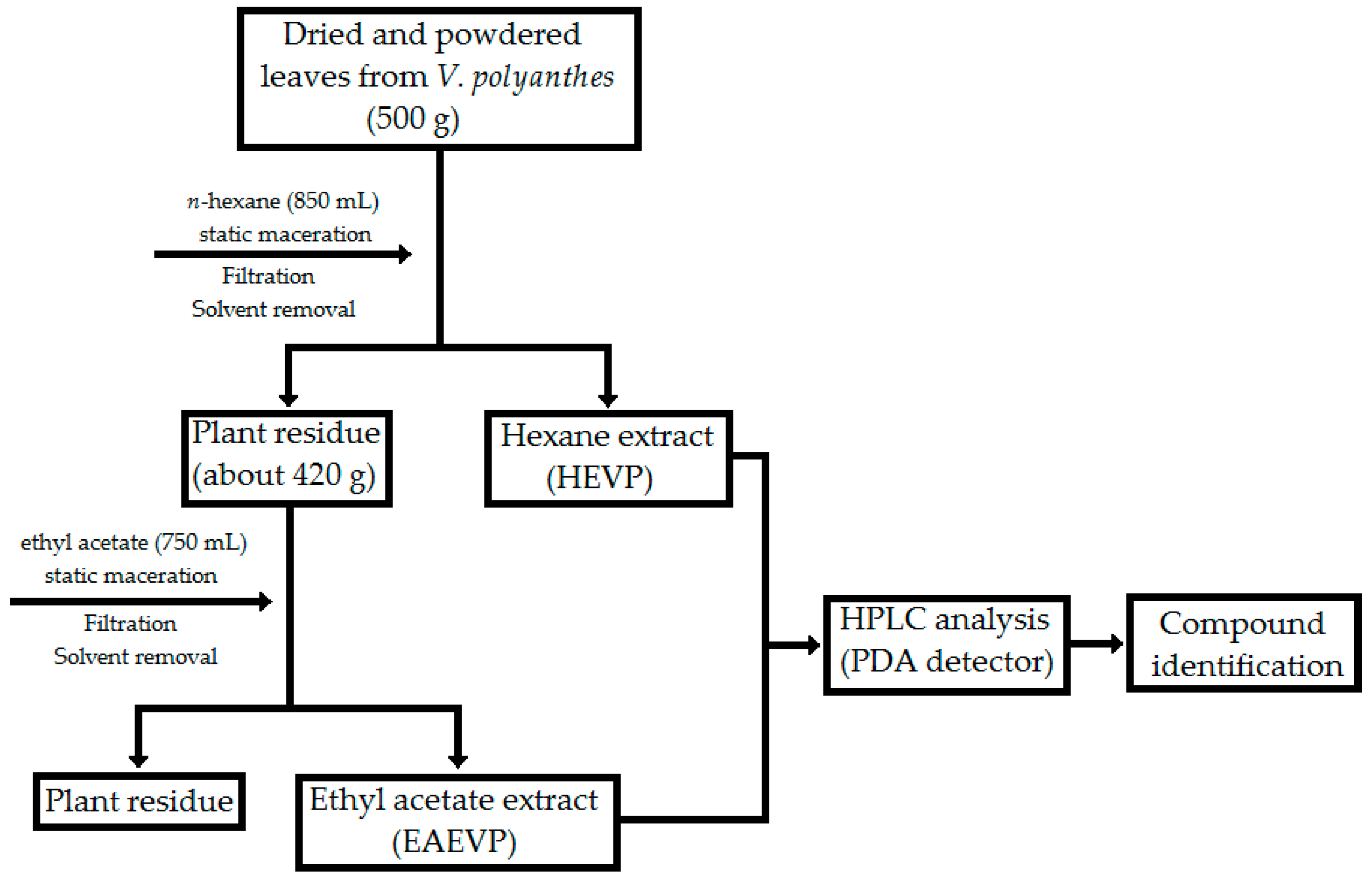
4.3. Extract Preparation
4.4. High-Pressure Liquid Chromatography (HPLC) Analysis
4.5. Pharmacological Assays
4.5.1. Animals
4.5.2. Croton Oil-Induced Ear Edema
4.5.3. AA-, Phenol-, and EPP-Induced Ear Edema
4.5.4. Capsaicin-Induced Ear Edema
4.5.5. Ear Edema Evaluation
4.5.6. Histopathological Analysis
4.5.7. Tissue Myeloperoxidase (MPO) Assay
4.5.8. Tissue N-Acetyl-β-d-glucosaminidase (NAG) Assay
4.6. Statistical Analysis
5. Conclusions
Acknowledgments
Author Contributions
Conflicts of Interest
Abbreviations
| HEVP | Hexane extract from Vernonia polyanthes leaves |
| EAEVP | Ethyl acetate extract of Vernonia polyanthes leaves |
| HPLC–UV–DAD | high-performance liquid chromatography–ultraviolet–diode-array detection |
| AA | Arachidonic acid |
| EPP | Ethyl phenylpropiolate |
| MPO | Myeloperoxidase |
| NAG | N-acetyl-β-d-glucosaminidase |
References
- Costin, G.-E.; Hearing, V.J. Human skin pigmentation: Melanocytes modulate skin color in response to stress. FASEB J. 2007, 21, 976–994. [Google Scholar] [CrossRef] [PubMed]
- Di Meglio, P.; Perera, G.K.; Nestle, F.O. The multitasking organ: Recent insights into skin immune function. Immunity 2011, 35, 857–869. [Google Scholar] [CrossRef] [PubMed]
- Belkaid, Y.; Segre, J.A. Dialogue between skin microbiota and immunity. Science 2014, 346, 954–959. [Google Scholar] [CrossRef] [PubMed]
- Nestle, F.O.; di Meglio, P.; Qin, J.-Z.; Nickoloff, B.J. Skin immune sentinels in health and disease. Nat. Rev. Immunol. 2009, 9, 679–691. [Google Scholar] [CrossRef] [PubMed]
- Ulrich, C.; Arnold, R.; Frei, U.; Hetzer, R.; Neuhaus, P.; Stockfleth, E. Skin changes following organ transplantation: An interdisciplinary challenge. Dtsch. Ärzteblatt Int. 2014, 111, 188–194. [Google Scholar]
- Borroni, R.G. Pharmacogenetic markers of severe cutaneous adverse drug reactions. G. Ital. Dermatol. Venereol. 2014, 149, 219–226. [Google Scholar] [PubMed]
- Darlenski, R.; Kazandjieva, J.; Zuberbier, T.; Tsankov, N. Chronic urticaria as a systemic disease. Clin. Dermatol. 2014, 32, 420–423. [Google Scholar] [CrossRef] [PubMed]
- Rea, J.N.; Newhouse, M.L.; Halil, T. Skin disease in Lambeth. A community study of prevalence and use of medical care. Br. J. Prev. Soc. Med. 1976, 30, 107–114. [Google Scholar] [CrossRef] [PubMed]
- Lowell, B.A.; Froelich, C.W.; Federman, D.G.; Kirsner, R.S. Dermatology in primary care: Prevalence and patient disposition. J. Am. Acad. Dermatol. 2011, 45, 250–255. [Google Scholar] [CrossRef] [PubMed]
- Mahé, A.; N’Diaye, H.T.; Bobin, P. The proportion of medical consultations motivated by skin diseases in health centers of Bamako (Republic of Mali). Int. J. Dermatol. 1997, 36, 185–186. [Google Scholar] [CrossRef] [PubMed]
- Penna, G.; Ramos, A.; Café, M.E.; Penna, M.L.; Campos, M.R.; Martelli, C.M.T. Nosologic profile of dermatologic visits in Brazil. An. Bras. Dermatol. 2006, 81, 549–558. [Google Scholar]
- Raposo, A.A.; Schettini, A.P.M.; Sardinha, J.C.G.; Pedrosa, V.L. Nosological profile in a dermatology referral center in the State of Amazonas–Brazil. An. Bras. Dermatol. 2011, 86, 463–468. [Google Scholar] [CrossRef] [PubMed]
- Feely, M.A.; Smith, B.L.; Weinberg, J.M. Novel psoriasis therapies and patient outcomes, part 1: Topical medications. Cutis 2015, 95, 164–170. [Google Scholar] [PubMed]
- Uva, L.; Miguel, D.; Pinheiro, C.; Antunes, J.; Cruz, D.; Ferreira, J.; Felipe, P. Mechanisms of action of topical corticosteroids in psoriasis. Int. J. Endocrinol. 2012, 2012, 1–16. [Google Scholar] [CrossRef] [PubMed]
- Meeuwis, K.A.P.; Hullu, J.A.; Massuger, L.F.A.G.; Kerkhof, P.C.M.; Rossum, M.M. Genital psoriasis: A systematic literature review on this Hidden skin disease. Acta Derm-Venereol. 2011, 91, 5–11. [Google Scholar] [CrossRef] [PubMed]
- Zhu, W.; Gao, J. The use of botanical extracts as topical skin-lightening agents for the improvement of skin pigmentation disorders. J. Investig. Dermatol. Symp. Proc. 2008, 13, 20–24. [Google Scholar] [CrossRef] [PubMed]
- Temponi, V.S.; Silva, J.B.; Alves, M.S.; Ribeiro, A.; Pinho, J.J.R.G.; Yamamoto, C.H.; Pinto, M.A.O.P.; del-Vechio-Vieira, G.; Sousa, O.V. Antinociceptive and anti-inflammatory effects of ethanol extract from Vernonia polyanthes leaves in rodents. Int. J. Mol. Sci. 2012, 13, 3887–3899. [Google Scholar] [CrossRef] [PubMed]
- Igual, M.O.; Martucci, M.E.P.; Costa, F.B.D.; Gobbo-Neto, L. Sesquiterpenes lactones, chlorogenic acids and flavonoids from leaves of Vernonia polyanthes Less (Asteraceae). Biochem. Syst. Ecol. 2013, 51, 94–97. [Google Scholar] [CrossRef]
- Barbastefano, V.; Cola, M.; Luiz-Ferreira, A.; Farias-Silva, E.; Hiruma-Lima, A.C.; Vilegas, W.; Souza-Brito, M.R.A. Vernonia polyanthes as a new source of antiulcer drugs. Fitoterapia 2007, 78, 545–551. [Google Scholar] [CrossRef] [PubMed]
- Silveira, R.R.; Foglio, M.A.; Gontijo, J.A.R. Effect of the crude extract of Vernonia polyanthes Less. On blood pressure and renal sodium excretion in unanesthetized rats. Phytomedicine 2003, 10, 127–131. [Google Scholar] [CrossRef] [PubMed]
- Silva, N.C.C.; Barbosa, L.; Seito, L.N.; Junior, A.F. Antimicrobial activity and phytochemical analysis of crude extracts and essential oils from medicinal plants. Nat. Prod. Res. 2012, 26, 1510–1514. [Google Scholar] [CrossRef] [PubMed]
- Braga, F.G.; Bouzada, M.L.M.; Fabri, R.L.; Matos, M.O.; Moreira, F.O.; Scio, E.; Coimbra, E.S. Antileishmanial and antifungal activity of plants used in traditional medicine in Brazil. J. Ethnopharmacol. 2007, 111, 396–402. [Google Scholar] [CrossRef] [PubMed]
- Martucci, M.E.; de Vos, R.C.; Carollo, C.A.; Gobbo-Neto, L. Metabolomics as a potential chemotaxonomical tool: Application in the genus Vernonia schreb. PLoS ONE 2014, 9, 1–8. [Google Scholar] [CrossRef] [PubMed]
- Yuan, G.; Wahlqvist, M.L.; He, G.; Yang, M.; Li, D. Natural products and anti-inflammatory activity. Asia Pac. J. Clin. Nutr. 2006, 15, 143–152. [Google Scholar] [PubMed]
- Gautam, R.; Jachak, S.M. Recent developments in anti-inflammatory natural products. Med. Res. Rev. 2009, 29, 767–820. [Google Scholar] [CrossRef] [PubMed]
- Sá, R.C.S.; Andrade, L.N.; Oliveira, R.R.B.; Sousa, D.P. A review on anti-inflammatory activity of phenylpropanoids found in essential oils. Molecules 2014, 19, 1459–1480. [Google Scholar]
- Phanse, M.A.; Patil, M.J.; Chaudhari, K.A.P.D. Patel B. In-vivo and in-vitro screening of medicinal plants for their anti-inflammatory activity: An overview. J. Appl. Pharm. Sci. 2012, 2, 19–33. [Google Scholar]
- Cottiglia, F.; Casu, L.; Bonsignore, L.; Casu, M.; Floris, C.; Sosa, S.; Altinier, G.; della Loggia, R. Topical anti-inflammatory activity of flavonoids and a new xanthone from Santolina insularis. Z. Naturforsch. C 2005, 60, 63–66. [Google Scholar] [CrossRef] [PubMed]
- Antunes-Ricardo, M.; Gutiérrez-Uribe, J.A.; Martínez-Vitela, C.; Serna-Saldívar, S.O. Topical anti-Inflammatory effects of isorhamnetin glycosides isolated from Opuntia ficus-indica. BioMed Res. Int. 2015, 2015, 1–9. [Google Scholar] [CrossRef] [PubMed]
- Torres-Rêgo, M.; Furtado, A.A.; Bitencourt, M.A.O.; Lima, M.C.J.S.; Andrade, R.C.L.C.; Azevedo, E.P.; Soares, T.C.; Tomaz, J.C.; Lopes, N.P.; Silva-Júnior, A.A.; et al. Anti-inflammatory activity of aqueous extract and bioactive compounds identified from the fruits of Hancornia speciosa Gomes (Apocynaceae). BMC Complement. Altern. Med. 2016, 12, 275. [Google Scholar] [CrossRef] [PubMed]
- Chen, D.; Bi, A.; Dong, X.; Jiang, Y.; Rui, B.; Liu, J.; Yin, Z.; Luo, L. Luteolin exhibits anti-inflammatory effects by blocking the activity of heat shock protein 90 in macrophages. Biochem. Biophys. Res. Commun. 2014, 443, 326–332. [Google Scholar] [CrossRef] [PubMed]
- Wang, J.; Liu, Y.T.; Xiao, L.; Zhu, L.; Wang, Q.; Yan, T. Anti-inflammatory effects of apigenin in lipopolysaccharide-induced inflammatory in acute lung injury by suppressing COX-2 and NF-κB pathway. Inflammation 2014, 37, 2085–2090. [Google Scholar] [CrossRef] [PubMed]
- Heiman, A.S.; Crews, F.T. Characterization of the effects of phorbol esters on rat mast cell secretion. J. Immunol. 1985, 134, 548–555. [Google Scholar] [PubMed]
- Pascual, G.; Glass, C.K. Nuclear receptor versus inflammation: Mechanisms of transrepression. Trends Endocrinol. Metab. 2006, 17, 321–328. [Google Scholar] [CrossRef] [PubMed]
- Murakawa, M.; Yamaoka, K.; Tanaka, Y.; Fukuda, Y. Involvement of tumor necrosis factor (TNF)-α in phorbol ester 12-O-tetradecanoylphorbol-13-acetate (TPA)-induced skin edema in mice. Biochem. Pharmacol. 2006, 71, 1331–1336. [Google Scholar] [CrossRef] [PubMed]
- Garg, R.; Ramchandani, A.G.; Maru, G.B. Curcumin decreases 12-O-tetradecanoylphorbol-13-acetate induced protein kinase C translocation to modulate downstream targets in mouse skin. Carcinogenesis 2008, 29, 1249–1257. [Google Scholar] [CrossRef] [PubMed]
- Chibli, L.A.; Rodrigues, K.C.M.; Gasparetto, C.M.; Pinto, N.C.C.; Fabri, R.L.; Scio, E.; Alves, M.S.; del-Vechio-Vieira, G.; Sousa, O.V. Anti-inflammatory effects of Bryophyllum pinnatum (Lam.) Oken ethanol extract in acute and chronic cutaneous inflammation. J. Ethnopharmacol. 2014, 154, 330–338. [Google Scholar] [CrossRef] [PubMed]
- Gomes, A.; Das, M.; Sur, P.; Besra, S.E.; Chakravorty, A.K.; Das, B.; Ganguly, D.K.; Vedasiromoni, J.R. Glycosmis arborea extract as a hepatoprotective agent. Phytother. Res. 2003, 17, 571–574. [Google Scholar] [CrossRef] [PubMed]
- Mukherjee, S.; Sur, A.; Maiti, B.R. Hepatoprotective effect of Swertia chirata on rat. Indian J. Exp. Biol. 1997, 35, 384–388. [Google Scholar] [PubMed]
- Crummey, A.; Harper, G.P.; Boyle, E.A.; Mangan, F.R. Inhibition of arachidonic acid-induced ear oedema as a model for assessing topical anti-inflammatory compounds. Agents Actions 1987, 20, 69–76. [Google Scholar] [CrossRef] [PubMed]
- Young, J.M.; Spires, D.A.; Bedord, C.J.; Wagner, B.; Ballron, S.J.; de Young, L.M. The mouse ear inflammatory response to topical arachidonic acid. J. Investig. Dermatol. 1984, 82, 367–371. [Google Scholar] [CrossRef] [PubMed]
- Doherty, N.S.; Beaver, T.H.; Rheins, L.A.; Nordlund, J.J. Multiple topical applications of arachidonic acid to mouse ears induce inflammatory and proliferative changes. J. Investig. Dermatol. 1988, 91, 298–302. [Google Scholar] [CrossRef] [PubMed]
- Wilmer, J.L.; Burleson, F.G.; Kayama, F.; Kauno, J.; Luster, M.I. Cytokine induction in human epidermal keratinocytes exposed to contact irritants and its relation to chemical-induced inflammation in mouse skin. J. Investig. Dermatol. 1994, 102, 915–922. [Google Scholar] [CrossRef] [PubMed]
- Murray, A.R.; Kisin, E.; Castranova, V.; Kommineni, C.; Gunther, M.R.; Shvedova, A.A. Phenol-induced in vivo oxidative stress in skin: Evidence for enhanced free radical generation, thiol oxidation, and antioxidante depletion. Chem. Res. Toxicol. 2007, 20, 1769–1777. [Google Scholar] [CrossRef] [PubMed]
- Patrick, E.; Maibach, H.I.; Burkhalter, A. Mechanisms of chemically induced skin irritation I. Studies of time course, dose response, and components of inflammation in the laboratory mouse. Toxicol. Appl. Pharmacol. 1985, 81, 476–490. [Google Scholar] [CrossRef]
- Patrick, E.; Burkhalter, A.; Maibach, H.I. Recent investigations of mechanisms of chemically induced skin irritation in laboratory mice. J. Investig. Dermatol. 1987, 88, 24s–31s. [Google Scholar] [CrossRef] [PubMed]
- Szolcsányi, J. Forty years in capsaicin research for sensory pharmacology and physiology. Neuropeptides 2004, 38, 377–384. [Google Scholar] [CrossRef] [PubMed]
- Zegarska, B.; Lelinska, A.; Tyrakowski, T. Clinical and experimental aspects of cutaneous neurogenic inflammation. Pharmacol. Rep. 2006, 58, 13–21. [Google Scholar] [PubMed]
- Schimitt, W.H. Newer insights into the aetiology and pathogenesis of myeloperoxidase associated autoimmunity. Jpn. J. Infect. Dis. 2004, 57, S7–S8. [Google Scholar]
- Pulli, B.; Ali, M.; Forghani, R.; Schob, S.; Hsieh, K.L.C.; Wojtkiewicz, G.; Linnoila, J.J.; Chen, J.W. Measuring myeloperoxidase activity in biological samples. PLoS ONE 2013, 8, 1–10. [Google Scholar] [CrossRef] [PubMed]
- Rutgers, A.; Heeringa, P.; Tervaert, J.W.C. The role of myeloperoxidase in the pathogenesis of systemic vasculitis. Clin. Exp. Rheumatol. 2003, 21, S55–S63. [Google Scholar] [PubMed]
- Iqbal, M.P.; Sharif, H.M.; Mehboobali, N.; Yousuf, F.A.; Khan, A.H.; Sellke, F.W. N-acetyl-β-d-glucosaminidase and inflammatory response after cardiopulmonary bypass. J. Coll. Physicians Surg. Pak. 2008, 18, 74–77. [Google Scholar] [PubMed]
- Kim, H.P.; Son, K.H.; Chang, H.W.; Kang, S.S. Anti-inflammatory plant flavonoids and cellular action mechanisms. J. Pharmacol. Sci. 2004, 96, 229–245. [Google Scholar] [CrossRef] [PubMed]
- Rathee, P.; Chaudhary, H.; Rathee, S.; Rathee, D.; Kumar, V.; Kohli, K. Mechanism of action of flavonoids as anti-inflammatory agents: A review. Inflamm. Allergy-Drug Targets 2009, 28, 229–235. [Google Scholar] [CrossRef]
- Nijveldt, R.J.; van Nood, E.; van Hoorn, D.E.C.; Boelens, P.G.; van Norren, K.; van Leeuwen, P.A.M. Flavonoids: A review of probable mechanisms of action and potential applications. Am. Clin. Nutr. 2001, 74, 418–425. [Google Scholar]
- Yoo, H.; Ku, S.K.; Baek, Y.D.; Bae, J.S. Anti-inflammatory effects of rutin on HMGB1-induced inflammatory responses in vitro and in vivo. Inflamm. Res. 2014, 63, 197–206. [Google Scholar] [CrossRef] [PubMed]
- Schiantarelli, P.; Cadel, S.; Acerbi, D.; Pavesi, L. Anti-inflammatory activity and bioavailability of percutaneous piroxicam. Arzneimittel-Forschung 1982, 32, 230–235. [Google Scholar] [PubMed]
- Lim, H.; Park, H.; Kim, H.P. Inhibition of contact dermatitis in animal models and suppression of proinflammatory gene expression by topically applied flavonoid, wogonin. Arch. Pharm. Res. 2004, 27, 442–448. [Google Scholar] [CrossRef] [PubMed]
- Kale, M.; Misar, A.V.; Dave, V.; Joshi, M.; Mujumdar, A.M. Anti-inflammatory activity of Dalbergia lanceolaria bark ethanol extract in mice and rats. J. Ethnopharmacol. 2007, 12, 300–304. [Google Scholar] [CrossRef] [PubMed]
- Gábor, M.; Rázga, Z. Development and inhibition of mouse ear oedema induced with capsaicin. Agents Actions 1992, 36, 83–86. [Google Scholar] [CrossRef] [PubMed]
- Kettle, A.J.; Winterbourn, C.C. Assays for the chlorination activity of myeloperoxidase. Methods Enzymol. 1994, 233, 502–512. [Google Scholar] [PubMed]
- Lloret, S.; Moreno, J.J. Effects of an anti-inflammatory peptide (antiflammin 2) on cell influx, eicosanoid biosynthesis and oedema formation by arachidonic acid and tetradecanoyl phorbol dermal application. Biochem. Pharmacol. 1995, 50, 347–853. [Google Scholar] [CrossRef]

| Group | Dose | Ear Thickness (µm) | Edema Inhibition (%) |
|---|---|---|---|
| Non-inflamed | - | 192.0 ± 7.0 | - |
| Acetone (vehicle) | 20 µL/ear | 705.3 ± 11.5 | 0 |
| 0.1 mg/ear | 389.7 ± 6.7 *** | 58.8% | |
| HEVP | 0.5 mg/ear | 429.5 ± 3.2 *** | 50.3% |
| 1.0 mg/ear | 472.6 ± 9.8 *** | 37.6% | |
| 0.1 mg/ear | 540.1 ± 29.1 *** | 19.9% | |
| EAEVP | 0.5 mg/ear | 528.7 ± 32.5 *** | 22.8% |
| 1.0 mg/ear | 543.1 ± 24.3 *** | 22.3% | |
| Dexamethasone | 0.1 mg/ear | 236.6 ± 8.9 *** | 79.5% |
© 2016 by the authors; licensee MDPI, Basel, Switzerland. This article is an open access article distributed under the terms and conditions of the Creative Commons Attribution (CC-BY) license (http://creativecommons.org/licenses/by/4.0/).
Share and Cite
Rodrigues, K.C.M.; Chibli, L.A.; Santos, B.C.S.; Temponi, V.S.; Pinto, N.C.C.; Scio, E.; Del-Vechio-Vieira, G.; Alves, M.S.; Sousa, O.V. Evidence of Bioactive Compounds from Vernonia polyanthes Leaves with Topical Anti-Inflammatory Potential. Int. J. Mol. Sci. 2016, 17, 1929. https://doi.org/10.3390/ijms17121929
Rodrigues KCM, Chibli LA, Santos BCS, Temponi VS, Pinto NCC, Scio E, Del-Vechio-Vieira G, Alves MS, Sousa OV. Evidence of Bioactive Compounds from Vernonia polyanthes Leaves with Topical Anti-Inflammatory Potential. International Journal of Molecular Sciences. 2016; 17(12):1929. https://doi.org/10.3390/ijms17121929
Chicago/Turabian StyleRodrigues, Kamilla C. M., Lucas A. Chibli, Bruna C. S. Santos, Vanessa S. Temponi, Nícolas C. C. Pinto, Elita Scio, Glauciemar Del-Vechio-Vieira, Maria S. Alves, and Orlando V. Sousa. 2016. "Evidence of Bioactive Compounds from Vernonia polyanthes Leaves with Topical Anti-Inflammatory Potential" International Journal of Molecular Sciences 17, no. 12: 1929. https://doi.org/10.3390/ijms17121929
APA StyleRodrigues, K. C. M., Chibli, L. A., Santos, B. C. S., Temponi, V. S., Pinto, N. C. C., Scio, E., Del-Vechio-Vieira, G., Alves, M. S., & Sousa, O. V. (2016). Evidence of Bioactive Compounds from Vernonia polyanthes Leaves with Topical Anti-Inflammatory Potential. International Journal of Molecular Sciences, 17(12), 1929. https://doi.org/10.3390/ijms17121929