


Inhibition of Mammalian Target of Rapamycin Complex 1 (mTORC1) Downregulates ELOVL1 Gene Expression and Fatty Acid Synthesis in Goat Fetal Fibroblasts
Abstract
1. Introduction
2. Results
2.1. cDNA Cloning and Sequence Analysis
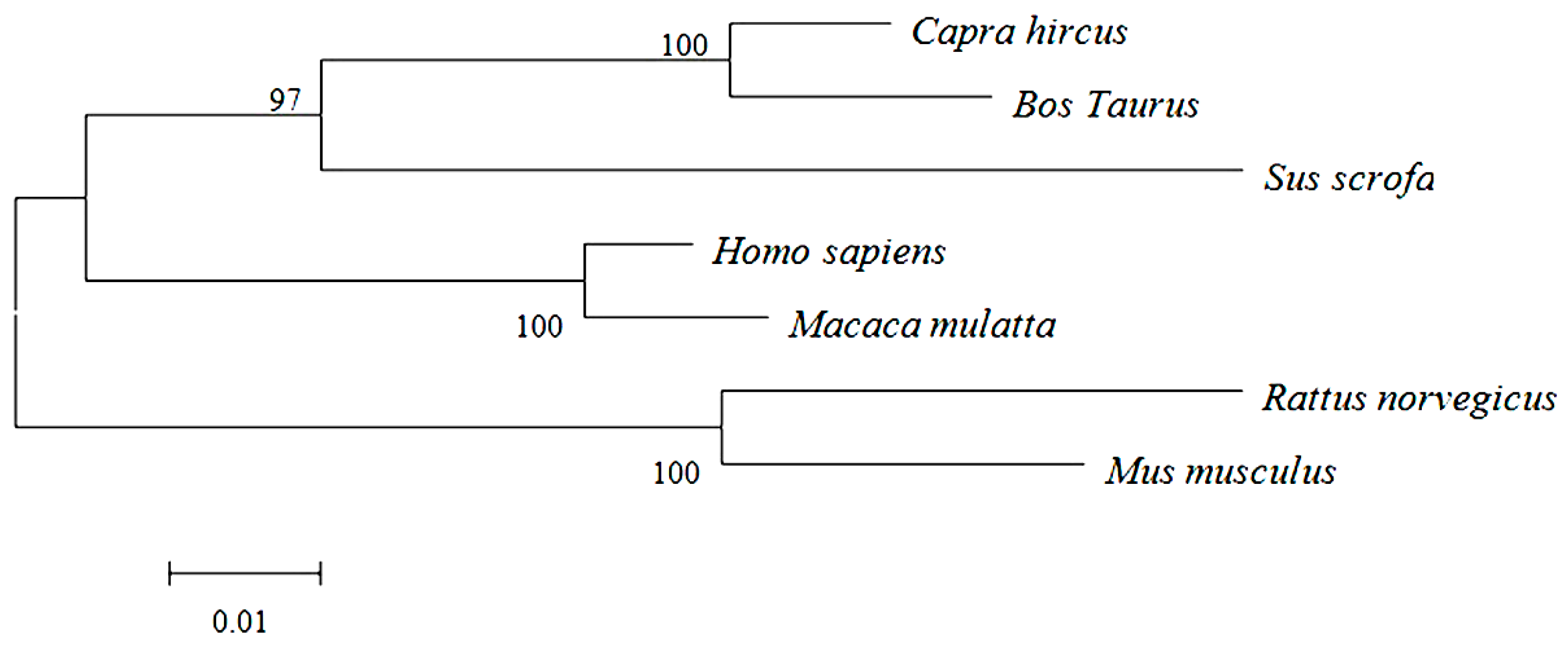
2.2. Primary and Secondary Structure of Cashmere Goat ELOVL1 Protein
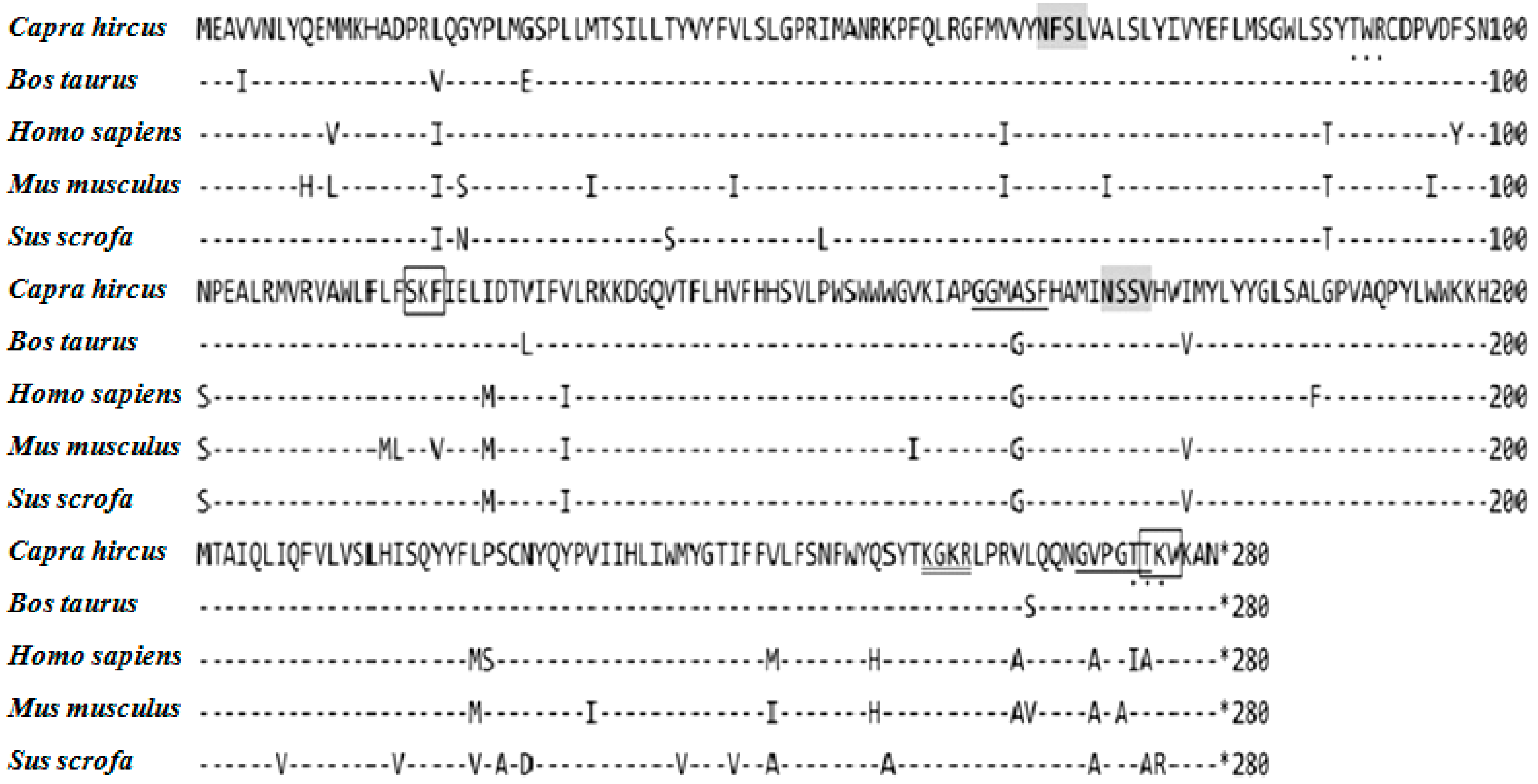
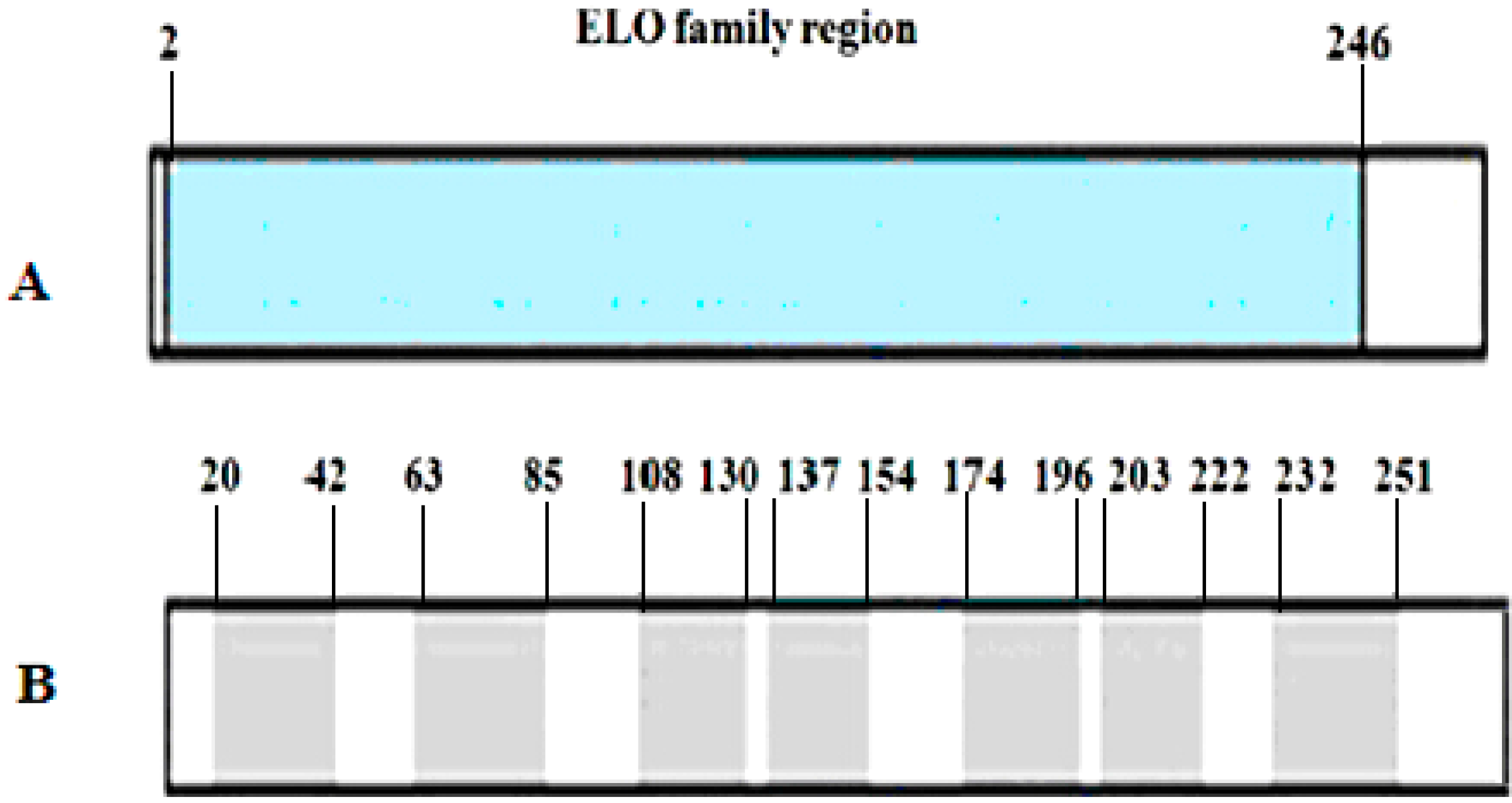
2.3. Tissue Distribution of Cashmere Goat ELOVL1 mRNA
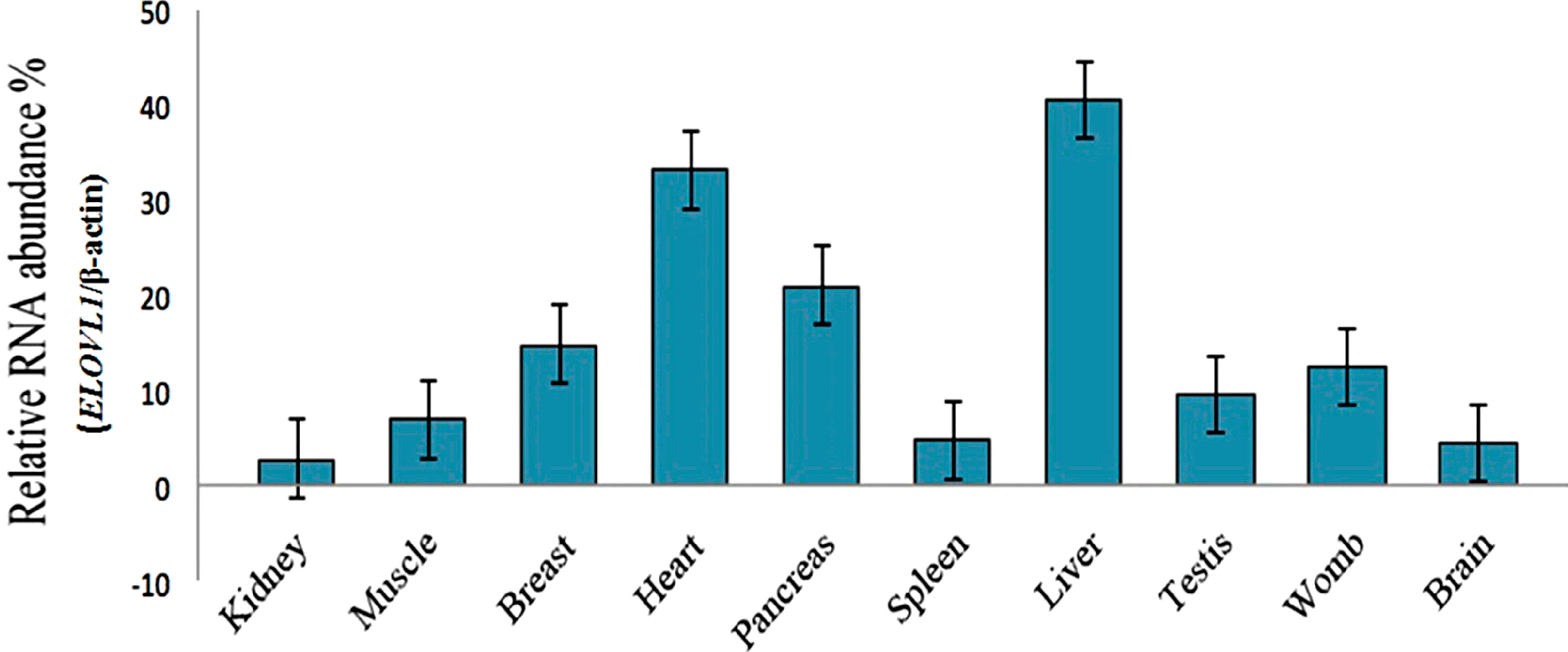
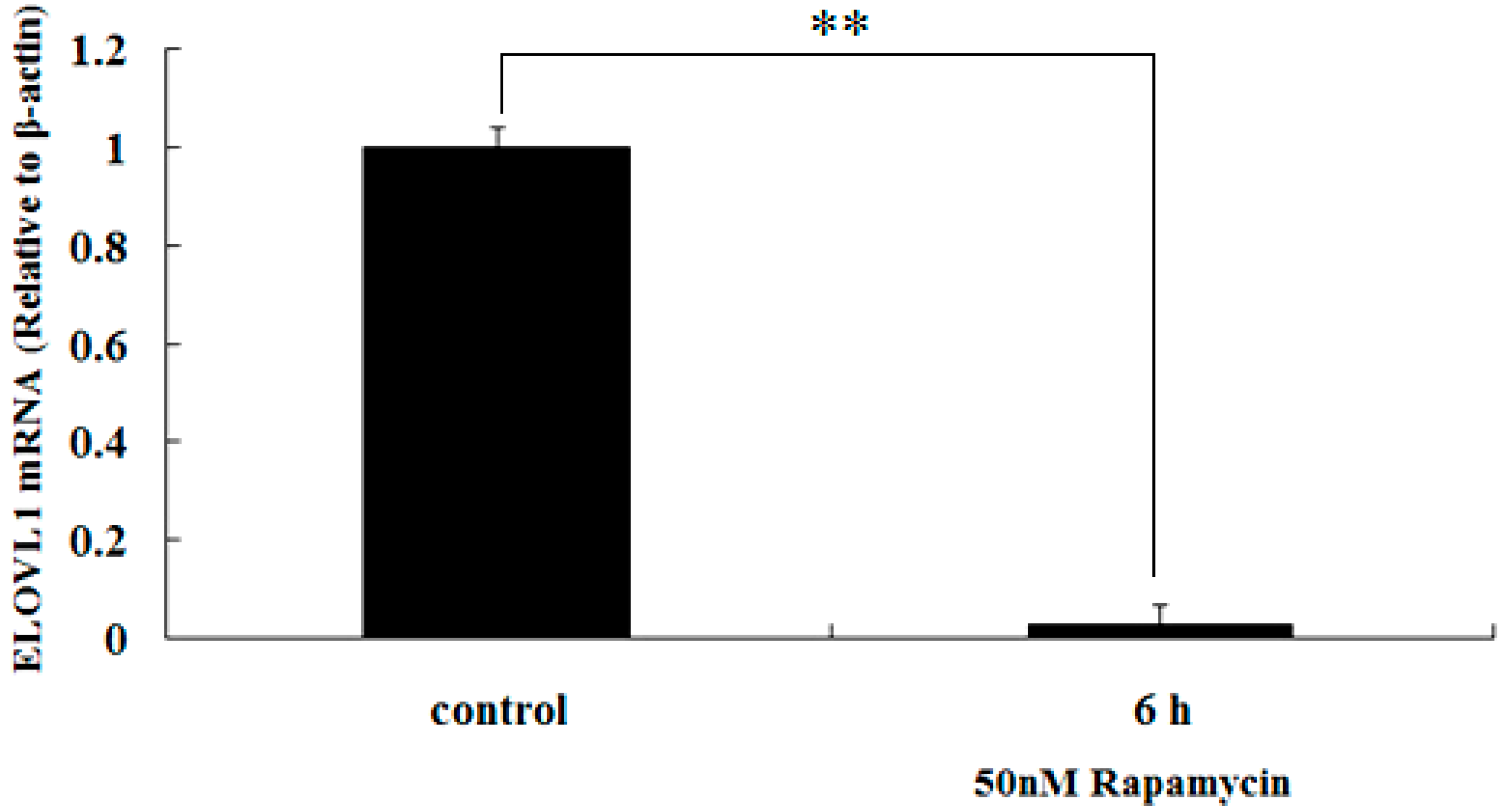
2.4. Rapamycin Down-Regulates the Transcription of ELOVL1 in GFb Cells
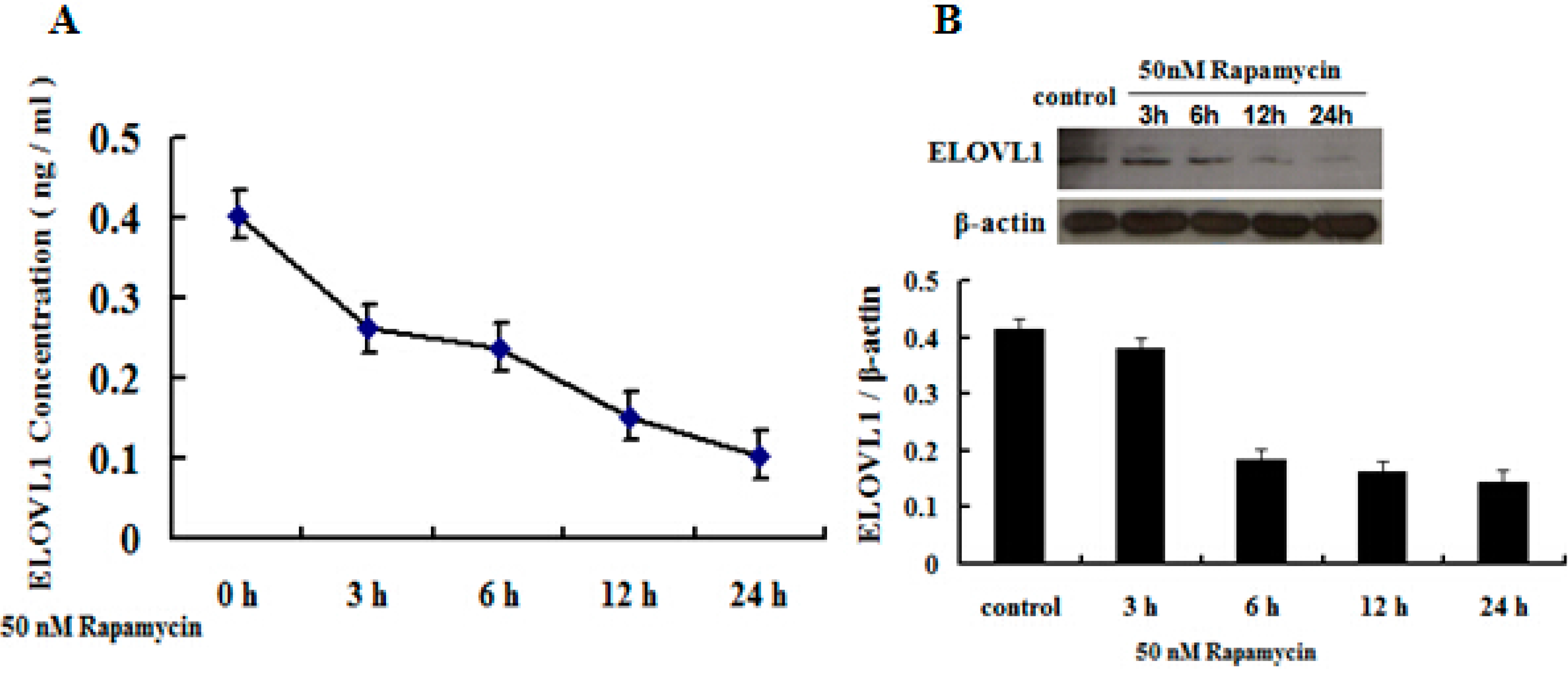
2.5. Rapamycin Attenuates ELOVL1 Expression and Fatty Acid Synthesis in GFb Cells
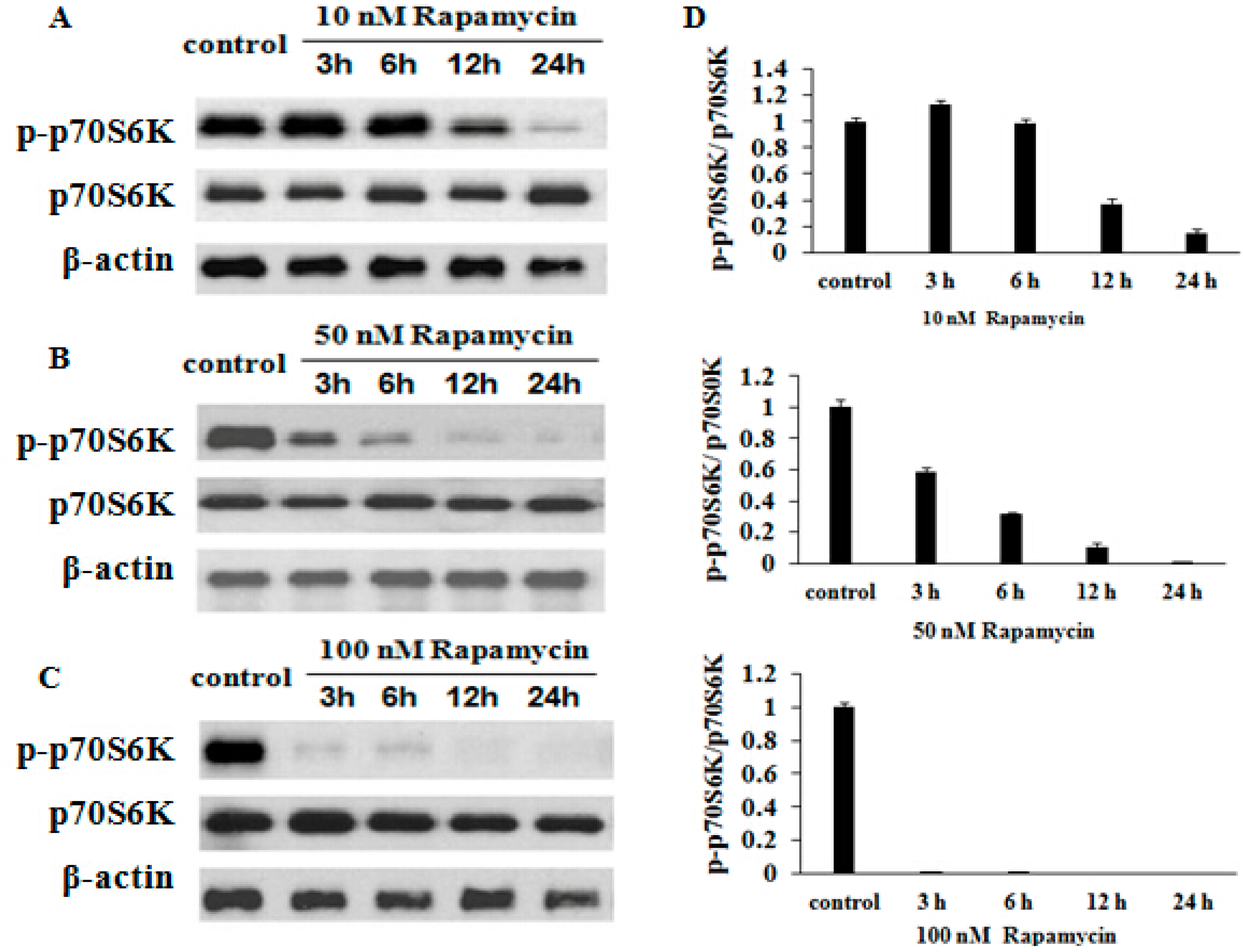
2.6. Rapamycin Inhibits p70S6K (Thr 389) Expression in a Time- and Dose-Dependent Manner

| Fatty Acid | Control (mg/kg) | Treatment (mg/kg) |
|---|---|---|
| Undecanedioic acid (11:0) | 0.12 ± 0.004 | 0.11 ± 0.009 |
| Tridecanoic acid (13:0) | 0.04 ± 0.008 | 0.04 ± 0.008 |
| Myristic acid (14:0) | 4.62 ± 0.48 | 4.21 ± 0.29 |
| Pentadecanoic acid (15:0) | 0.44 ± 0.01 | 0.41 ± 0.03 |
| Palmitic acid (16:0) | 606.42 ± 22.50 | 565.10 ± 32.51 |
| Margaric acid (17:0) | 4.07 ± 0.02 | 3.84 ± 0.35 |
| Stearic acid (18:0) | 721.06 ± 36.82 | 664.16 ± 30.31 |
| Oleic acid (18:1) | 7.16 ± 1.97 | 6.45 ± 0.62 |
| Linoleic acid (18:2) | 1.36 ± 0.24 | 1.37 ± 0.28 |
| Arachidic acid (20:0) | 3.72 ± 0.14 | 3.34 ± 0.27 |
| Heneicosanic acid (21:0) | 0.58 ± 0.04 | 0.55 ± 0.05 |
| Behenic acid (22:0) | 0.22 ± 0.02 | 0.19 ± 0.03 |
| Erucic acid (22:1) | 2.36 ± 0.15 | 2.13 ± 0.25 |
| Tricosanoic acid (23:0) | 0.03 ± 0.01 | 0.01 ± 0.004 |
3. Discussion
4. Experimental Section
4.1. Animal and Tissue Collection
4.2. Cell Culture Conditions
4.3. Total RNA Extraction and Full-Length cDNA Isolation
4.4. Cloning and Sequencing of ELOVL1 cDNA
4.5. Tissue Distribution Analysis and Relative Abundance in GFb Cells of ELOVL1 mRNA by Real-Time q-PCR
4.6. Bioinformatics Analysis
4.7. ELISA
4.8. Gas Chromatography and Mass Spectrum
4.9. Western Blot and Antibodies
4.10. Statistical Analysis
5. Conclusions
Acknowledgments
Author Contributions
Conflicts of Interest
Abbreviations
| ELOVL1 | elongation of very-long-chain fatty acids 1 |
| DHA | docosahexaenoic acid |
| EPA | eicosapentaenoic acid |
| ELO | yeast elongase |
| GFb cells | goat fetal fibroblasts |
| mTOR | mammalian target of rapamycin |
| PPAR | peroxisome proliferator-activated receptor |
| and SREBP1 | sterol regulatory element-binding protein 1 |
References
- Kihara, A. Very long-chain fattyacids: Elongation, physiology and realated disorders. J. Biochem. 2012, 152, 387–395. [Google Scholar] [CrossRef] [PubMed]
- Sassa, T.; Kihara, A. Metabolisem of very long-chain Fatty acids: Genes and pathophysiology. Biomol. Ther. 2014, 22, 83–92. [Google Scholar] [CrossRef] [PubMed]
- Ohno, Y.; Suto, S.; Yamanaka, M.; Mizutani, Y.; Mitsutake, S.; Igarashi, Y.; Sassa, T.; Kihara, A. ELOVL1 production of C24 acyl-CoAs is linked to C24 sphingolipid synthesis. Proc. Natl. Acad. Sci. USA 2010, 107, 18439–18444. [Google Scholar] [CrossRef] [PubMed]
- Jakobsson, A.; Westerberg, R.; Jacobsson, A. Fatty acid elongases in mammals: Their regulation and roles in metabolism. Prog. Lipid Res. 2006, 45, 237–249. [Google Scholar] [CrossRef] [PubMed]
- Schackmann, M.J.; Ofman, R.; Dijkstra, I.M.; Wanders, R.J.; Kemp, S. Enzymatic characterization of ELOVL1, a key enzyme in very long-chain fatty acid synthesis. Biochim. Biophys. Acta 2015, 1851, 231–237. [Google Scholar] [CrossRef] [PubMed]
- Leonard, A.E.; Bobik, G.; Dorado, J.; Kroeger, P.E.; Chuang, L.T.; Thurmond, J.M.; Parker-Barnes, J.M.; Das, T.; Huang, Y.S.; Mukerji, P. Cloning of a human cDNA encoding a novel enzyme involved in the elongation of long-chain polyunsaturated fatty acids. Biochem. J. 2000, 350, 765–770. [Google Scholar] [CrossRef] [PubMed]
- Tvrdik, P.; Westerberg, R.; Silve, S.; Asadi, A.; Jakobsson, A.; Cannon, B.; Loison, G.; Jacobsson, A. Role of a new mammalian gene family in the biosynthesis of very long chain fatty acids and sphingolipids. J. Cell Biol. 2000, 149, 707–718. [Google Scholar] [CrossRef] [PubMed]
- Hartmann, D.; Wegner, M.S.; Wanger, R.A.; Ferreirós, N.; Schreiber, Y.; Lucks, J.; Schiffmann, S.; Geisslinger, G.; Grösch, S. The equilibrium between long and very long chain ceramides is important for the fate of the cell and can beinfluenced by co-expression of CerS. Int. J. Biochem. Cell Biol. 2013, 45, 1195–1203. [Google Scholar] [CrossRef] [PubMed]
- Sassa, T.; Wakashima, T.; Ohno, Y.; Kihara, A. Lorenzo’s oil inhibits ELOVL1 and lowers the level of sphingomyelin with a saturated very long-chain fatty acid. J. Lipid Res. 2014, 55, 524–530. [Google Scholar] [CrossRef] [PubMed]
- Düvel, K.; Yecies, J.L.; Menon, S.; Raman, P.; Lipovsky, A.I.; Souza, A.L.; Triantafellow, E.; Cleaver, S. Activation of a metabolic gene regulatory network downstream of mTOR complex 1. Mol. Cell 2010, 39, 171–183. [Google Scholar] [CrossRef] [PubMed]
- Lodhi, I.J.; Wei, X.; Semenkovich, C.F. Lipoexpediency: De novo lipogenesis as a metabolic signal transmitter. Trends Endocrinol. 2011, 22, 1–8. [Google Scholar] [CrossRef] [PubMed]
- Lamming, D.W.; Sabatini, D.M. A central role for mTOR in lipid homeostasis. Cell Metab. 2013, 18, 465–469. [Google Scholar] [CrossRef] [PubMed]
- Denic, V.; Weissman, J.S. A molecular caliper mechanism for determining very long-chain fatty acid length. Cell 2007, 130, 663–677. [Google Scholar] [CrossRef] [PubMed]
- Riezman, H. The long and short of fatty acid synthesis. Cell 2007, 130, 587–588. [Google Scholar] [CrossRef] [PubMed]
- Monroig, Ó.; Guinot, D.; Hontoria, F.; Tocher, D.R.; Navarro, J.C. Biosynthesis of essential fatty acids in Octopus vulgaris (Cuvier, 1797): Molecular cloning, functional characterisation and tissue distribution of a fatty acyl elongase. Aquaculture 2012, 360, 45–53. [Google Scholar] [CrossRef]
- Oh, C.S.; Toke, D.A.; Mandala, S.; Martin, C.E. ELO2 and ELO3, homologues of the Saccharomyces cerevisiae ELO1 gene, function in fatty acid elongation and are required for sphingolipid formation. J. Biol. Chem. 1997, 272, 17376–17384. [Google Scholar] [CrossRef] [PubMed]
- Ofman, R.; Dijkstra, I.M.E. The role of ELOVL1 in very long-chain fatty acid homeostasis and X-linked adrenoleukodystrophy. EMBO Mol. Med. 2010, 2, 90–97. [Google Scholar] [CrossRef] [PubMed]
- Laplante, M.; Sabatini, D.M. mTOR signaling in growth control and disease. Cell 2012, 149, 274–293. [Google Scholar] [CrossRef] [PubMed]
- Laplante, M.; Sabatini, D.M. Regulation of mTORC1 and its impact on gene expression at a glance. J. Cell Sci. 2013, 126, 1713–1719. [Google Scholar] [CrossRef] [PubMed]
- Loewith, R.; Hall, M.N. Target of rapamycin (TOR) in nutrient signaling and growth control. Genetics 2011, 189, 1177–1201. [Google Scholar] [CrossRef] [PubMed]
- Norrmén, C.; Figlia, G.; Lebrun-Julien, F.; Pereira, J.A.; Trötzmüller, M.; Köfeler, H.C.; Rantanen, V.; Wessig, C.; van Deijk, A.L.; Smit, A.B.; et al. mTORC1 controls PNS myelination along the mTORC1-RXRγ-SREBP-lipid biosynthesis axis in Schwann cells. Cell Rep. 2014, 9, 646–660. [Google Scholar] [CrossRef] [PubMed]
- Wang, L.; Lin, Y.; Bian, Y.; Liu, L.; Shao, L.; Lin, L.; Qu, B.; Zhao, F.; Gao, X.; Li, Q. Leucyl-tRNA synthetase regulates lactation and cell proliferation via mTOR signaling in dairy cow mammary epithelial cells. Int. J. Mol. Sci. 2014, 15, 5952–5969. [Google Scholar] [CrossRef] [PubMed]
- Wang, Q.; Tikhonenko, M.; Bozack, S.N.; Lydic, T.A.; Yan, L.; Panchy, N.L.; McSorley, K.M.; Faber, M.S.; Yan, Y.; Boulton, M.E.; et al. Changes in the daily rhythm of lipid metabolism in the diabetic retina. PLoS ONE 2014, 9, e95028. [Google Scholar] [CrossRef] [PubMed]
- Carmona-Antoñanzas, G.; Tocher, D.R.; Martinez-Rubio, L.; Leaver, M.J. Conservation of lipid metabolic gene transcriptional regulatory networks in fish and mammals. Gene 2014, 534, 1–9. [Google Scholar] [CrossRef] [PubMed]
- Wang, Y.; Botolin, D.; Xu, J.; Christian, B.; Mitchell, E.; Jayaprakasam, B.; Nair, M.G.; Peters, J.M.; Busik, J.V.; Olson, L.K.; et al. Regulation of hepatic fatty acid elongase and desaturase expression in diabetes and obesity. J. Lipid Res. 2006, 47, 2028–2041. [Google Scholar] [CrossRef] [PubMed]
- Kuo, S.H.; Hsu, C.H.; Chen, L.T.; Lu, Y.S; Lin, C.H.; Yeh, P.Y.; Jeng, H.J.; Gao, M.; Yeh, K.H.; Cheng, A.L. Lack of compensatory pAKT activation and eIF4E phosphorylation of lymphoma cells towards mTOR inhibitor, RAD001. Eur. J. Cancer 2011, 17, 1244–1257. [Google Scholar] [CrossRef] [PubMed]
- Li, G.; Shan, C.; Liu, L.; Zhou, T.; Zhou, J.; Hu, X.; Chen, Y.; Cui, H.; Gao, N. Tanshinone IIA inhibits HIF-1α and VEGF expression in breast cancer cells via mTOR/p70S6K/RPS6/4E-BP1 signaling pathway. PLoS ONE 2015, 10, e0117440. [Google Scholar] [CrossRef] [PubMed]
- Chen, Y.; Huang, W.; Zheng, M.; Xue, Y.; Yang, J.; Liu, W.; Han, S. The mTOR inhibitor rapamycin synergizes with a fatty acid synthase inhibitor to induce cytotoxicity in ER/HER2-positive breast cancer cells. PLoS ONE 2014, 27, e97697. [Google Scholar]
- Basic Local Alignment Search Tool. Available online: http://www.ncbi.nlm.nih.gov/BLAST/ (accessed on 4 June 2013).
- Compute pI/Mw tool. Available online: http://web.expasy.org/compute_pi/ (accessed on 4 June 2013).
- PSORT WWW Server. Available online: http://psort.hgc.jp/ (accessed on 7 July 2013).
- SMART. Available online: http://smart.embl-heidelberg.de/ (accessed on 28 October 2013).
- The Pfam database. Available online: http://pfam.xfam.org/ (accessed on 28 October 2013).
- SoftBerry-Psite. Available online: http://www.softberry.com/ (accessed on 7 July 2013).
© 2015 by the authors; licensee MDPI, Basel, Switzerland. This article is an open access article distributed under the terms and conditions of the Creative Commons Attribution license (http://creativecommons.org/licenses/by/4.0/).
Share and Cite
Wang, W.; He, Q.; Guo, Z.; Yang, L.; Bao, L.; Bao, W.; Zheng, X.; Wang, Y.; Wang, Z. Inhibition of Mammalian Target of Rapamycin Complex 1 (mTORC1) Downregulates ELOVL1 Gene Expression and Fatty Acid Synthesis in Goat Fetal Fibroblasts. Int. J. Mol. Sci. 2015, 16, 16440-16453. https://doi.org/10.3390/ijms160716440
Wang W, He Q, Guo Z, Yang L, Bao L, Bao W, Zheng X, Wang Y, Wang Z. Inhibition of Mammalian Target of Rapamycin Complex 1 (mTORC1) Downregulates ELOVL1 Gene Expression and Fatty Acid Synthesis in Goat Fetal Fibroblasts. International Journal of Molecular Sciences. 2015; 16(7):16440-16453. https://doi.org/10.3390/ijms160716440
Chicago/Turabian StyleWang, Weipeng, Qiburi He, Zhixin Guo, Limin Yang, Lili Bao, Wenlei Bao, Xu Zheng, Yanfeng Wang, and Zhigang Wang. 2015. "Inhibition of Mammalian Target of Rapamycin Complex 1 (mTORC1) Downregulates ELOVL1 Gene Expression and Fatty Acid Synthesis in Goat Fetal Fibroblasts" International Journal of Molecular Sciences 16, no. 7: 16440-16453. https://doi.org/10.3390/ijms160716440
APA StyleWang, W., He, Q., Guo, Z., Yang, L., Bao, L., Bao, W., Zheng, X., Wang, Y., & Wang, Z. (2015). Inhibition of Mammalian Target of Rapamycin Complex 1 (mTORC1) Downregulates ELOVL1 Gene Expression and Fatty Acid Synthesis in Goat Fetal Fibroblasts. International Journal of Molecular Sciences, 16(7), 16440-16453. https://doi.org/10.3390/ijms160716440

