Hemp Seed Hull and Cellulose Acetate Thermoplastic Biocomposites and Their Properties

 , , , ,
Abstract
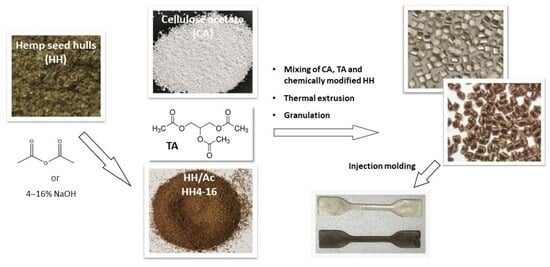
1. Introduction
2. Results and Discussion
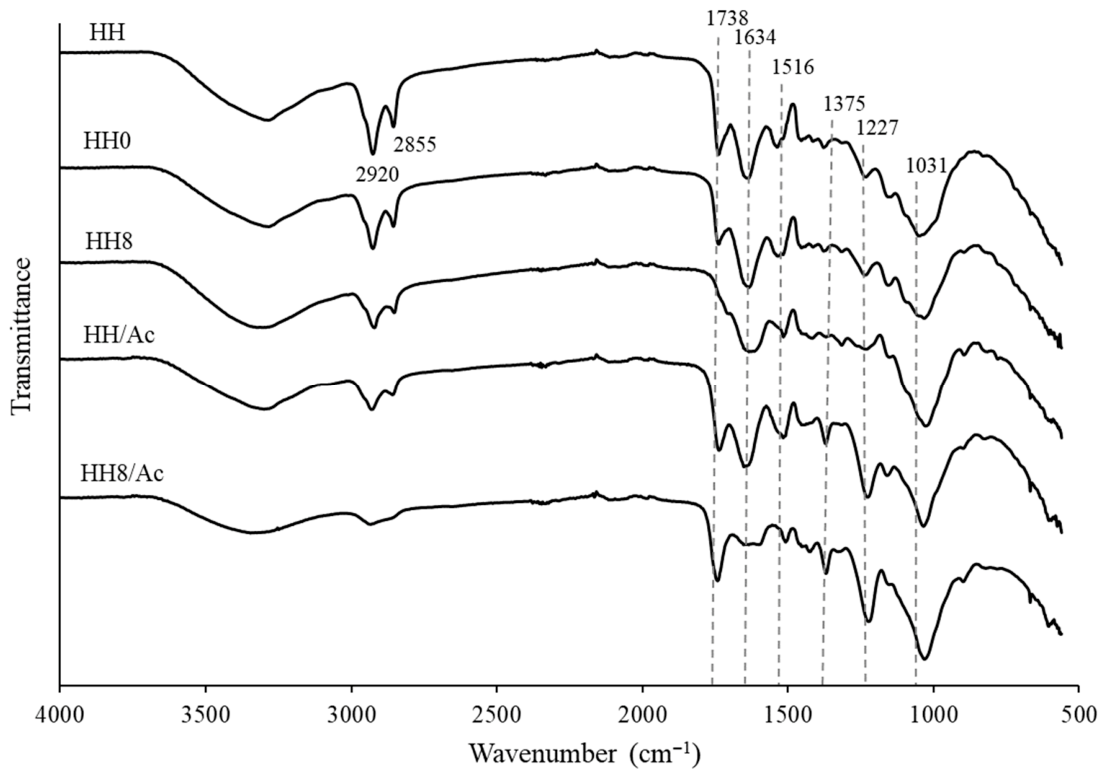
2.1. FT-IR Characterization of Raw and Chemically Modified Hemp Seed Hulls
2.2. Testing of Chemically Modified Hemp Seed Hulls as Fillers in Thermoplastic Cellulose Acetate Biocomposites
2.3. Effect of Alkaline Treatment on Hemp Seed Hull Properties
2.4. Effect of Alkaline Treatment of Hemp Seed Hulls on Mechanical Properties and Biodegradability of Thermoplastic Biocomposites
3. Materials and Methods
3.1. Materials
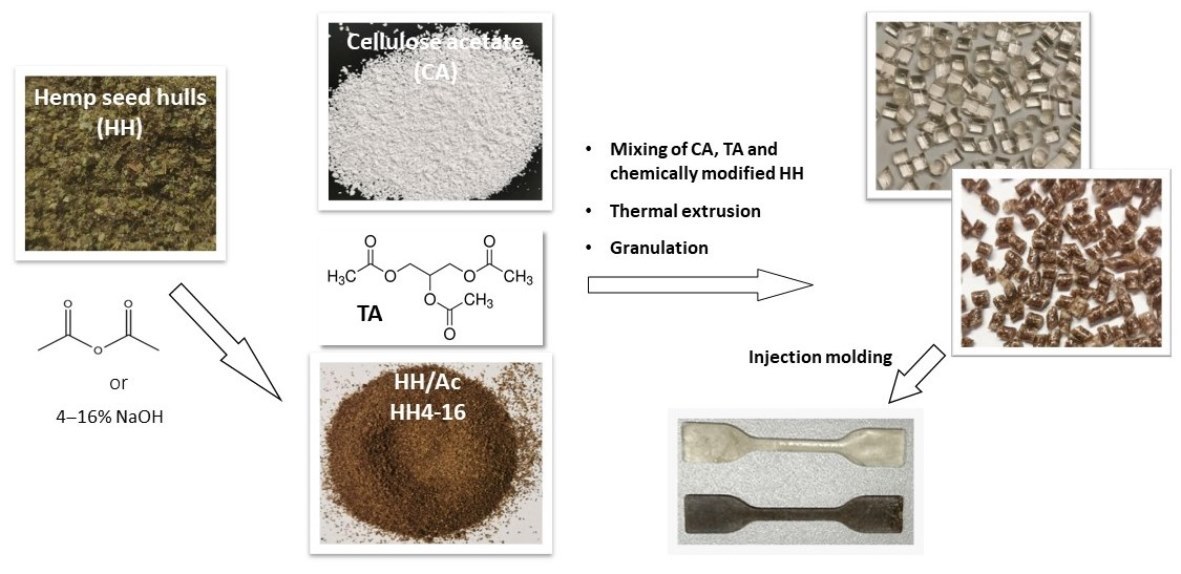
3.2. Preparation and Chemical Treatment of Hemp Seed Hulls
3.3. Analysis of Hemp Seed Hull Samples
3.3.1. Determination of Fat Content
3.3.2. Determination of Cellulose and Hemicellulose Content
3.3.3. Determination of Lignin Content
3.3.4. Determination of Protein Content
3.3.5. Determination of Ash Content
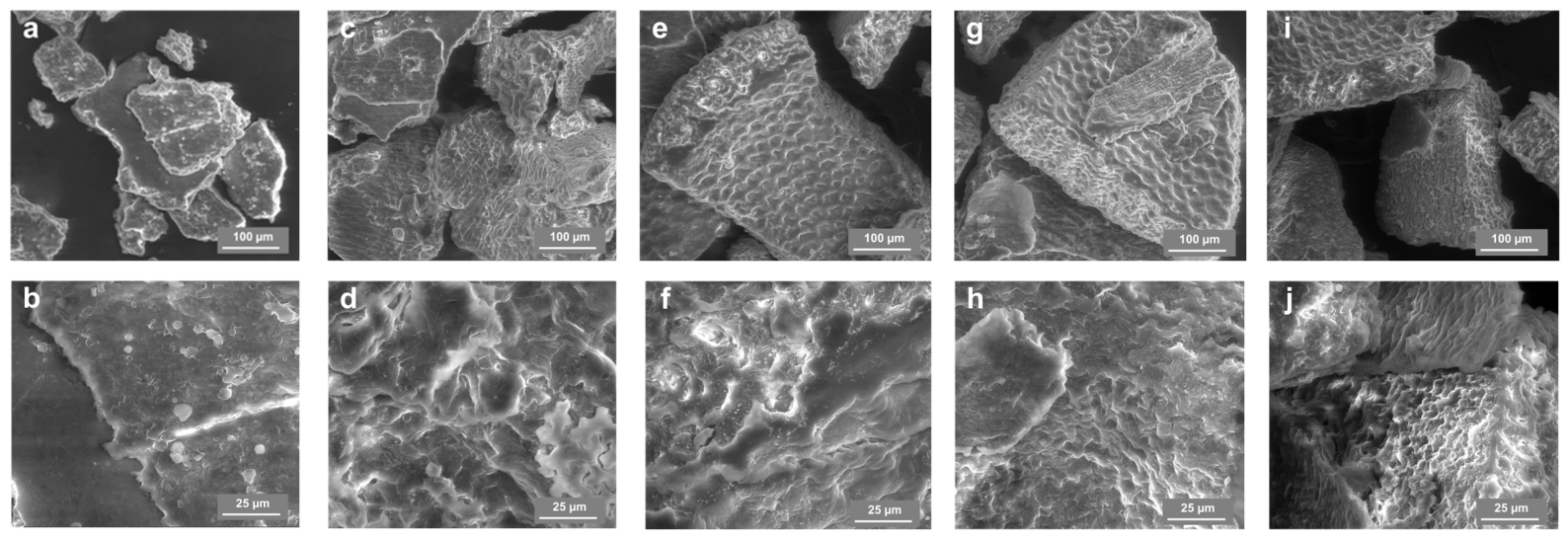
3.4. Scanning Electron Microscopy (SEM) Analysis
3.5. FT-IR Spectroscopic Analysis
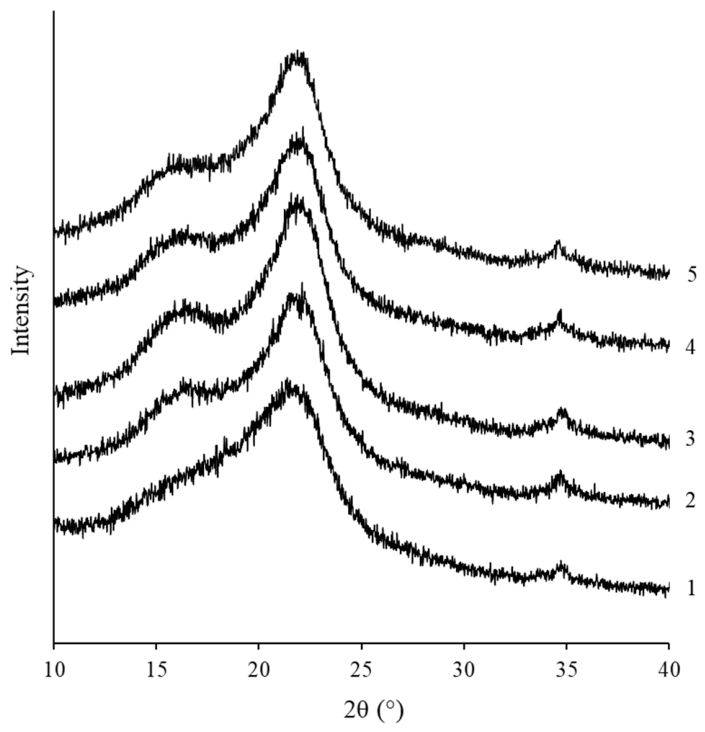
3.6. Wide Angle X-Ray Diffraction Analysis
3.7. Preparation of Cellulose Acetate, Plasticizer and Biofiller Formulations
3.8. Extrusion of Cellulose Acetate, Plasticizer and Biofiller Formulations
3.9. Melt Mass-Flow Rate Determination
3.10. Mechanical Testing
3.11. Hardness Testing
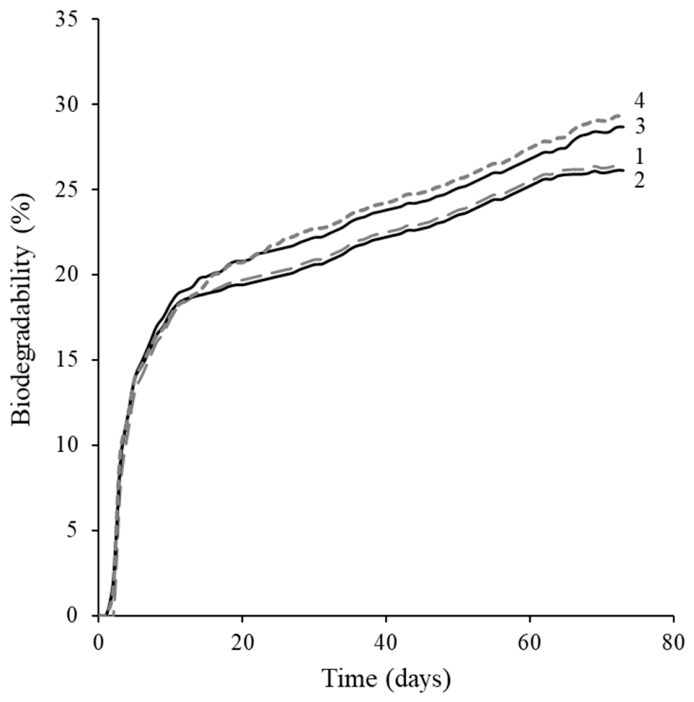
3.12. Biodegradation Testing
4. Conclusions
Author Contributions
Funding
Institutional Review Board Statement
Informed Consent Statement
Data Availability Statement
Conflicts of Interest
References
- Guruprasad, K.H.; Shashidhara, G.M. Grafting, blending, and biodegradability of cellulose acetate. J. Appl. Polym. Sci. 2004, 91, 1716–1723. [Google Scholar] [CrossRef]
- Erdmann, R.; Kabasci, S.; Heim, H.-P. Thermal properties of plasticized cellulose acetate and its β-relaxation phenomenon. Polymers 2021, 13, 1356. [Google Scholar] [CrossRef]
- Romero, R.B.; Ferrarezi, M.M.F.; Leite, C.A.P.; Alves, R.M.V.; Gonçalves, M.C. Influence of layered silicate type on cellulose acetate nanocomposites. Cellulose 2013, 20, 675–686. [Google Scholar] [CrossRef]
- Przekop, R.E.; Jakubowska, P.; Sztorch, B.; Kozera, R.; Dydek, K.; Jałbrzykowski, M.; Osiecki, T.; Marciniak, P.; Martyła, A.; Kloziński, A.; et al. Opoka—Sediment Rock as New Type of Hybrid Mineral Filler for Polymer Composites. AppliedChem 2021, 1, 90–110. [Google Scholar] [CrossRef]
- Gutiérrez, M.C.; De Paoli, M.-A.; Felisberti, M.I. Biocomposites based on cellulose acetate and short curauá fibers: Effect of plasticizers and chemical treatments of the fibers. Compos. Part A Appl. Sci. Manuf. 2012, 43, 1338–1346. [Google Scholar] [CrossRef]
- Jeon, G.W.; An, J.-E.; Jeong, Y.G. High performance cellulose acetate propionate composites reinforced with exfoliated graphene. Compos. Part B Eng. 2012, 43, 3412–3418. [Google Scholar] [CrossRef]
- Ahmed, A.T.M.F.; Islam, M.Z.; Mahmud, M.S.; Sarker, M.E.; Islam, M.R. Hemp as a potential raw material toward a sustainable world: A review. Heliyon 2022, 8, e08753. [Google Scholar] [CrossRef]
- Crini, G.; Lichtfouse, E.; Chanet, G.; Morin-Crini, N. Traditional and new applications of hemp. In Sustainable Agriculture Reviews 42; Springer: Cham, Switzerland, 2020; Volume 42, pp. 37–87. [Google Scholar] [CrossRef]
- Deshmukh, G.S. Advancement in hemp fibre polymer composites: A comprehensive review. J. Polym. Eng. 2022, 42, 575–598. [Google Scholar] [CrossRef]
- Kabir, M.M.; Wang, H.; Lau, K.T.; Cardona, F. Chemical treatments on plant-based natural fibre reinforced polymer composites. Compos. Part B Eng. 2012, 43, 2883–2892. [Google Scholar] [CrossRef]
- Tanasă, F.; Zănoagă, M.; Teacă, C.-A.; Nechifor, M.; Shahzad, A. Modified hemp fibres intended for fibre-reinforced polymer composites used in structural applications—A review. I. Methods of modification. Polym. Compos. 2020, 41, 5–31. [Google Scholar] [CrossRef]
- Monga, S.; Kadian, M.; Nagoria, S.; Kumar, S.; Verma, M. A Review on Mechanical Improvements and Environmental Benefits of Rice Husk Reinforced Polymer Composites. Curr. World Environ. 2024, 19, 1077. [Google Scholar] [CrossRef]
- Vázquez-Fletes, R.C.; Sadeghi, V.; González-Núñez, R.; Rodrigue, D. Effect of Surface Modification on the Properties of Buckwheat Husk—High-Density Polyethylene Biocomposites. J. Compos. Sci. 2023, 7, 429. [Google Scholar] [CrossRef]
- Shelly, D.; Lee, S.-Y.; Park, S.-J. Hemp fiber and its bio-composites: A comprehensive review part I—Characteristics and processing. Adv. Compos. Hybrid Mater. 2025, 8, 252. [Google Scholar] [CrossRef]
- Hurtado-Figueroa, O.; Cobo Escamilla, A.; Varum, H. The mercerization process and its impact on rice straw surface topography. Buildings 2023, 13, 1573. [Google Scholar] [CrossRef]
- Gurunathan, T.; Mohanty, S.; Nayak, S.K. A review of the recent developments in biocomposites based on natural fibres and their application perspectives. Compos. Part A Appl. Sci. Manuf. 2015, 77, 1–25. [Google Scholar] [CrossRef]
- Pradhan, S.; Entsminger, E.; Mohammadabadi, M.; Seale, D.; Ragon, K. Evaluation of rice husk composite boards prepared using different adhesives and processing methods. BioResources 2024, 19, 595–604. [Google Scholar] [CrossRef]
- Kumar, R.; Ranjan, C.; Kumar, K. Investigation of mechanical properties of rice straws and rice husk reinforced hybrid polymeric composite. In Hybrid Composites; Kumar, K., Sridhar Babu, B., Eds.; De Gruyter: Berlin, Germany; Boston, MA, USA, 2022; pp. 59–79. [Google Scholar] [CrossRef]
- Gallina, L.; Chaji, S.; Manzoli, M.; Cravero, F.; Gnoffo, C.; Gesti, S.; Frache, A.; Cravotto, G. Preparation of hemp-based biocomposites and their potential industrial application. Polym. Compos. 2024, 46, 3791–3802. [Google Scholar] [CrossRef]
- Yunusa, S.U.; Wakili, B.S. Development of lignocellulosic–plastic composite from rice husk and polyethylene. Clean. Circ. Bioeconomy 2023, 6, 100054. [Google Scholar] [CrossRef]
- Andrzejewski, J.; Krawczak, A.; Wesoły, K.; Szostak, M. Rotational molding of biocomposites with addition of buckwheat husk filler: Structure–property correlation assessment for materials based on polyethylene (PE) and poly(lactic acid) (PLA). Compos. Part B Eng. 2020, 202, 108410. [Google Scholar] [CrossRef]
- Setyowati, E.; Pandelaki, E.E.; Supriyo, E. The Comparison of treated coco-husk composite and its applications in architectural interior. In Proceedings of the E3S Web of Conferences, Semarang, Indonesia, 14–15 August 2018; Volume 73, p. 08003. [Google Scholar] [CrossRef]
- Battegazzore, D.; Noori, A.; Frache, A. Natural wastes as particle filler for poly(lactic acid)-based composites. J. Compos. Mater. 2019, 53, 783–797. [Google Scholar] [CrossRef]
- Choi, J.S.; Lim, S.T.; Choi, H.J.; Mohanty, A.K.; Drzal, L.T.; Misra, M.; Wibowo, A. Preparation and characterization of plasticized cellulose acetate biocomposite with natural fiber. J. Mater. Sci. 2004, 39, 6631–6633. [Google Scholar] [CrossRef]
- Araujo, R.O.; Santos, J.L.; Colpani, D.; Pereira, B.R.S.; Falcão, N.P.S.; de Souza, L.K.C. Introduction to Biomass and Features. In Encyclopedia of Renewable Energy, Sustainability and the Environment; Rahimpour, M.R., Ed.; Elsevier: Amsterdam, The Netherlands, 2024; Volume 1, pp. 509–518. [Google Scholar] [CrossRef]
- Yang, X.; Li, X.; Zhu, L.; Liang, J.; Zhu, J. Production of Hemicellulose Sugars Combined with the Alkaline Extraction Lignin Increased the Hydro-Depolymerization of Cellulose from Corn Cob. Sustainability 2023, 15, 9041. [Google Scholar] [CrossRef]
- Asriza, R.O.; Ropalia; Humaira, D.; Ryaldi, G.O.; Zomi. Characterization of Cellulose Acetate Functional Groups Synthesized from Corn Husk (Zea mays). IOP Conf. Ser. Earth Environ. Sci. 2021, 926, 012060. [Google Scholar] [CrossRef]
- Malayil, S.; Loughran, L.; Ulken, F.M.; Satyavolu, J. Exploring hemp seed hull biomass for an integrated c-5 biorefinery: Xylose and activated carbon. J. Bioresour. Bioprod. 2024, 9, 310–321. [Google Scholar] [CrossRef]
- Rozali, N.L.; Azizan, K.A.; Singh, R.; Jaafar, S.N.S.; Othman, A.; Weckwerth, W.; Ramli, U.S. Fourier transform infrared (FTIR) spectroscopy approach combined with discriminant analysis and prediction model for crude palm oil authentication of different geographical and temporal origins. Food Control 2023, 145, 109509. [Google Scholar] [CrossRef]
- Sadat, A.; Joye, I.J. Peak fitting applied to fourier transform infrared and raman spectroscopic analysis of proteins. Appl. Sci. 2020, 10, 5918. [Google Scholar] [CrossRef]
- Kline, L.M.; Hayes, D.G.; Womac, A.R.; Labbé, N. Simplified determination of lignin content in hard and soft woods via UV-spectrophotometric analysis of biomass dissolved in ionic liquids. BioResources 2010, 5, 1366–1383. [Google Scholar] [CrossRef]
- Fayose, F.T.; Huan, Z. Specific mechanical energy requirement of a locally developed extruder for selected starchy crops. Food Sci. Technol. Res. 2014, 20, 793–798. [Google Scholar] [CrossRef]
- Finkenstadt, V.L.; Liu, L.; Willett, J.L. Evaluation of Poly(lactic acid) and Sugar Beet Pulp Green Composites. J. Polym. Environ. 2007, 15, 1–6. [Google Scholar] [CrossRef]
- García-Castellanos, I.; Nath, D.; Krishnan, R.; Misra, M.; Mohanty, A.K. Green composites from plasticized cellulose ac-etate and microcrystalline cellulose: Effect of maleated cellulose acetate on the biocomposite performance. ACS Sustain. Resour. Manag. 2025, 2, 594–604. [Google Scholar] [CrossRef]
- Khouaja, A.; Koubaa, A.; Daly, H.B. Mechanical and morphological properties of cellulose biocomposites. Chemosphere 2025, 379, 144415. [Google Scholar] [CrossRef]
- Miescher, S.; Schleiffer, F.; Wegenstein, E.; Yildirim, S. Potato peel-based PBS/PBAT biocomposites: Influence of composition and filler content on injection molded properties. Sustain. Food Technol. 2025, 3, 2308–2320. [Google Scholar] [CrossRef]
- McNeill, D.C.; Misra, M.; Pal, A.K.; Mohanty, A.K. Injection molding of biodegradable polyester blends filled with mineral and sustainable fillers: Performance Evaluation. J. Appl. Polym. Sci. 2024, 141, e55166. [Google Scholar] [CrossRef]
- Mohamad, M.; Ting, S.W.; Abu Bakar, M.B.; Wan Osman, W.H. The Effect of Alkaline Treatment on Mechanical Properties of Polylactic Acid Reinforced with Kenaf Fiber Mat Biocomposite. IOP Conf. Ser. Earth Environ. Sci. 2020, 596, 012002. [Google Scholar] [CrossRef]
- Schultz, C.J.; Lim, W.L.; Khor, S.F.; Neumann, K.A.; Schulz, J.M.; Ansari, O. Consumer and health-related traits of seed from selected commercial and breeding lines of industrial hemp (Cannabis sativa L.). J. Agric. Food Res. 2020, 2, 100025. [Google Scholar] [CrossRef]
- Stevulova, N.; Cigasova, J.; Estokova, A.; Terpakova, E.; Geffert, A.; Kacik, F.; Singovszka, E.; Holub, M. Properties charac-terization of chemically modified hemp hurds. Materials 2014, 7, 8131–8150. [Google Scholar] [CrossRef]
- Nindiyasari, F.; Griesshaber, E.; Zimmermann, T.; Manian, A.P.; Randow, C.; Zehbe, R.; Fernández-Díaz, L.; Ziegler, A.; Fleck, C.; Schmahl, W.W. Characterization and mechanical properties investigation of the cellulose/gypsum composite. J. Compos. Mater. 2016, 50, 657–672. [Google Scholar] [CrossRef]
- Moharram, M.A.; Mahmoud, O.M. X-ray diffraction methods in the study of the effect of microwave heating on the transformation of Cellulose I into Cellulose II during mercerization. J. Appl. Polym. Sci. 2007, 105, 2978–2983. [Google Scholar] [CrossRef]
- Gong, J.; Li, J.; Xu, J.; Xiang, Z.; Mo, L. Research on cellulose nanocrystals produced from cellulose sources with various polymorphs. RSC Adv. 2017, 7, 33486–33493. [Google Scholar] [CrossRef]
- Mwaikambo, L.Y.; Ansell, M.P. Chemical modification of hemp, sisal, jute, and kapok fibres by alkalization. J. Appl. Polym. Sci. 2002, 84, 2222–2234. [Google Scholar] [CrossRef]
- Van de Weyenberg, I.; Ivens, J.; De Coster, A.; Kino, B.; Baetens, E.; Verpoest, I. Influence of processing and chemical treatment of flax fibres on their composites. Compos. Sci. Technol. 2003, 63, 1241–1246. [Google Scholar] [CrossRef]
- Joseph, K.; Thomas, S.; Pavithran, C. Effect of chemical treatment on the tensile properties of short sisal fibre-reinforced polyethylene composites. Polymer 1996, 37, 5139–5149. [Google Scholar] [CrossRef]
- Buchanan, C.M.; Gardner, R.M.; Komarek, R.J. Aerobic Biodegradation of Cellulose Acetate. J. Appl. Polym. Sci. 1993, 47, 1709–1719. [Google Scholar] [CrossRef]
- Phuong, V.T.; Verstichel, S.; Cinelli, P.; Anguillesi, I.; Coltelli, M.B.; Lazzeri, A. Cellulose Acetate Blends—Effect of Plasticizers on Properties and Biodegradability. J. Renew. Mater. 2014, 1, 35–41. [Google Scholar] [CrossRef]
- Nizamuddin, S.; Baloch, A.J.; Chen, C.; Arif, M.; Mubarak, N.M. Bio-Based Plastics, Biodegradable Plastics, and Compostable Plastics: Biodegradation Mechanism, Biodegradability Standards and Environmental Stratagem. Int. Biodeterior. Biodegrad. 2024, 195, 105887. [Google Scholar] [CrossRef]
- Mæhre, H.K.; Dalheim, L.; Edvinsen, G.K.; Elvevoll, E.O.; Jensen, I.-J. Protein determination—Method matters. Foods 2018, 7, 5. [Google Scholar] [CrossRef]
- ISO 1133-1:2011; Plastics—Determination of the Melt Mass-Flow Rate (MFR) and Melt Volume-Flow Rate (MVR) of Thermoplastics—Part 1: Standard Method. International Organization for Standardization: Geneva, Switzerland, 2011.
- ASTM D638-14; Standard Test Method for Tensile Properties of Plastics. ASTM International: West Conshohocken, PA, USA, 2014.
- ASTM D2240-15; Standard Test Method for Rubber Property—Durometer Hardness. ASTM International: West Conshohocken, PA, USA, 2015.
- ISO 14851:1999; Determination of the Ultimate Aerobic Biodegradability of Plastic Materials in an Aqueous Medium—Method by Measuring the Oxygen Demand in a Closed Respirometer. International Organization for Standardization: Geneva, Switzerland, 1999.



| Sample | SME (kJ/kg) | MFR (g/10 min) | Tensile Strength (MPa) | Elongation at Break (%) | Tensile Modulus (MPa) | Hardness (Shore D) |
|---|---|---|---|---|---|---|
| CA/TA | 542.6 ± 22.6 | 39.4 ± 0.6 | 40.75 ± 2.64 | 6.13 ± 0.09 | 1153 ± 86 | 68.4 ± 1.62 |
| CA/TA:HH | 168.1 ± 15.5 | 30.7 ± 0.5 | 27.88 ± 4.09 | 2.81 ± 0.21 | 1110 ± 96 | 72.4 ± 4.32 |
| CA/TA:HH0 | 171.20 ± 10.3 | 30.4 ± 0.5 | 29.37 ± 4.83 | 2.81 ± 0.19 | 1114 ± 42 | 73.9 ± 2.90 |
| CA/TA:HH8 | 127.4 ± 14.0 | 20.3 ± 2.2 | 35.43 ± 2.50 | 2.47 ± 0.19 | 1306 ± 49 | 74.7 ± 1.72 |
| CA/TA:HH8/Ac | 110.1 ± 10.8 | 16.9 ± 0.3 | 32.02 ± 1.33 | 2.19 ± 0.24 | 1277 ± 38 | 74.3 ± 2.05 |
| CA/TA:HH/Ac | 123.9 ± 12.4 | 17.4 ± 0.3 | 31.61 ± 1.87 | 2.59 ± 0.46 | 1247 ± 88 | 73.8 ± 3.41 |
| Sample | Lignin (%) | Cellulose (%) | Hemicellulose (%) | Protein (%) | Fat (%) | Ash (%) |
|---|---|---|---|---|---|---|
| HH0 | 34.6 ± 0.68 | 18.7 ± 1.94 | 24.8 ± 1.24 | 12.9 ± 0.14 | 3.5 ± 0.18 | 2.37 ± 0.04 |
| HH4 | 32.7 ± 0.26 | 30.6 ± 1.44 | 21.5 ±1.08 | 8.8 ± 0.05 | 2.9 ± 0.15 | 2.35 ± 0.02 |
| HH8 | 32.0 ± 0.03 | 34.3 ± 1.58 | 19.2 ± 0.96 | 7.1 ± 0.33 | 2.7 ± 0.14 | 2.15 ± 0.06 |
| HH12 | 32.6 ± 0.75 | 36.0 ± 1.28 | 17.9 ± 0.90 | 6.4 ± 0.21 | 2.2 ± 0.11 | 2.79 ± 0.09 |
| HH16 | 31.5 ± 1.01 | 39.5 ± 0.68 | 17.5 ± 0.88 | 5.8 ± 0.04 | 1.7 ± 0.08 | 1.46 ± 0.06 |
| Sample | Tensile Strength (MPa) | Elongation at Break (%) | Tensile Modulus (MPa) | Hardness (Shore D) |
|---|---|---|---|---|
| CA/TA:HH0 | 29.37 ± 4.83 | 2.81 ± 0.19 | 1114 ± 42 | 65.9 ± 2.90 |
| CA/TA:HH4 | 27.80 ± 2.91 | 2.44 ± 0.52 | 1172 ± 77 | 70.8 ± 2.08 |
| CA/TA:HH8 | 35.43 ± 2.50 | 2.47 ± 0.19 | 1306 ± 49 | 74.7 ± 1.72 |
| CA/TA:HH12 | 36.00 ± 2.55 | 2.51 ± 0.24 | 1377 ± 51 | 73.4 ± 2.15 |
| CA/TA:HH16 | 34.85 ± 1.87 | 2.74 ± 0.76 | 1347 ± 88 | 69.3 ± 2.41 |
| Sample Code | Alkaline Treatment | Acetylation Treatment | ||||
|---|---|---|---|---|---|---|
| Reagents | T (°C) | Duration (h) | Reagents | T (°C) | Duration (h) | |
| HH0 | Distilled water | 20 ± 1 | 24 | - | - | - |
| HH4 | 4% sodium hydroxide | 20 ± 1 | 24 | - | - | - |
| HH8 | 8% sodium hydroxide | 20 ± 1 | 24 | - | - | - |
| HH12 | 12% sodium hydroxide | 20 ± 1 | 24 | - | - | - |
| HH16 | 16% sodium hydroxide | 20 ± 1 | 24 | - | - | - |
| HH8/Ac | 8% sodium hydroxide | 20 ± 1 | 24 | Acetic anhydride | 30 ± 1 | 24 |
| HH/Ac | - | - | - | Acetic anhydride | 30 ± 1 | 24 |
Disclaimer/Publisher’s Note: The statements, opinions and data contained in all publications are solely those of the individual author(s) and contributor(s) and not of MDPI and/or the editor(s). MDPI and/or the editor(s) disclaim responsibility for any injury to people or property resulting from any ideas, methods, instructions or products referred to in the content. |
© 2026 by the authors. Licensee MDPI, Basel, Switzerland. This article is an open access article distributed under the terms and conditions of the Creative Commons Attribution (CC BY) license.
Share and Cite
Rutkaite, R.; Bendoraitiene, J.; Pavuolyte, G.; Peciulyte, L.; Liudvinaviciute, D.; Barvainis, P.; Varzinskas, V. Hemp Seed Hull and Cellulose Acetate Thermoplastic Biocomposites and Their Properties. Molecules 2026, 31, 1453. https://doi.org/10.3390/molecules31091453
Rutkaite R, Bendoraitiene J, Pavuolyte G, Peciulyte L, Liudvinaviciute D, Barvainis P, Varzinskas V. Hemp Seed Hull and Cellulose Acetate Thermoplastic Biocomposites and Their Properties. Molecules. 2026; 31(9):1453. https://doi.org/10.3390/molecules31091453
Chicago/Turabian StyleRutkaite, Ramune, Joana Bendoraitiene, Giedruna Pavuolyte, Laura Peciulyte, Dovile Liudvinaviciute, Paulius Barvainis, and Visvaldas Varzinskas. 2026. "Hemp Seed Hull and Cellulose Acetate Thermoplastic Biocomposites and Their Properties" Molecules 31, no. 9: 1453. https://doi.org/10.3390/molecules31091453
APA StyleRutkaite, R., Bendoraitiene, J., Pavuolyte, G., Peciulyte, L., Liudvinaviciute, D., Barvainis, P., & Varzinskas, V. (2026). Hemp Seed Hull and Cellulose Acetate Thermoplastic Biocomposites and Their Properties. Molecules, 31(9), 1453. https://doi.org/10.3390/molecules31091453