Article

C5-alkyl and C5-aryl Substituted 5-Deazaflavin as Sensitizers for Photodehalogenation of Aryl Halides


by
Huimin Guo
*,
Xing Guan
,
Heping Li
and
Weihua Guo
School of Chemistry, State Key Laboratory of Fine Chemicals, Dalian University of Technology, Dalian 116024, China
*
Author to whom correspondence should be addressed.
Molecules 2026, 31(9), 1400; https://doi.org/10.3390/molecules31091400

Submission received: 18 March 2026 / Revised: 18 April 2026 / Accepted: 20 April 2026 / Published: 23 April 2026
(This article belongs to the Section Photochemistry)

Abstract

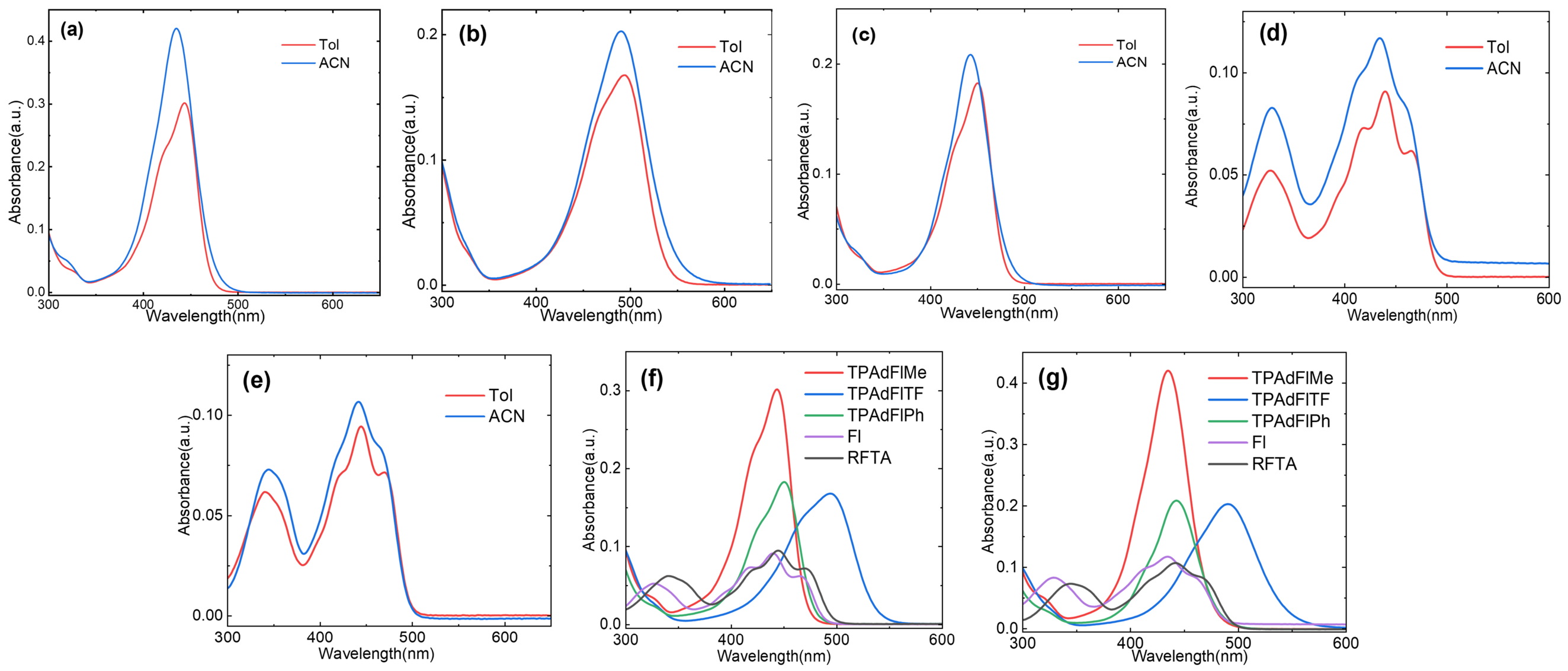
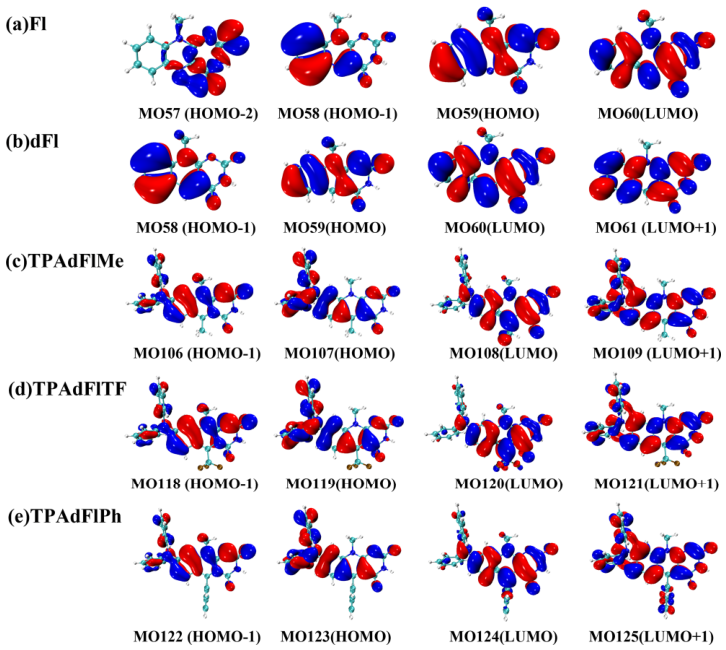
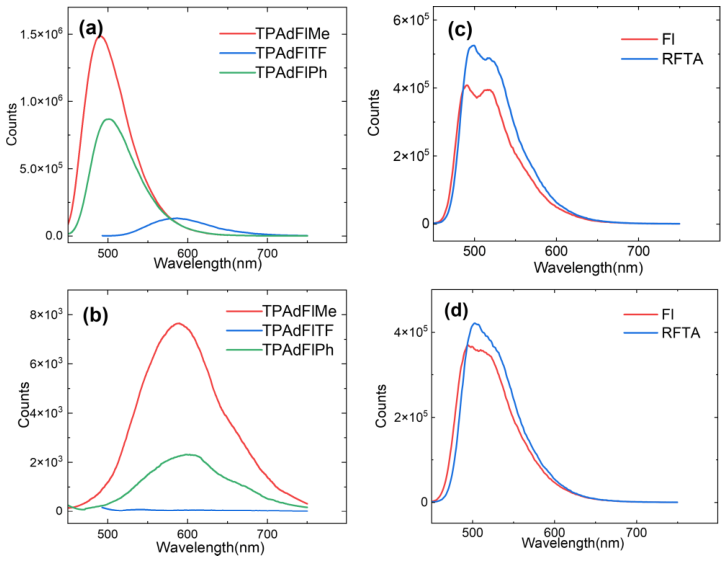
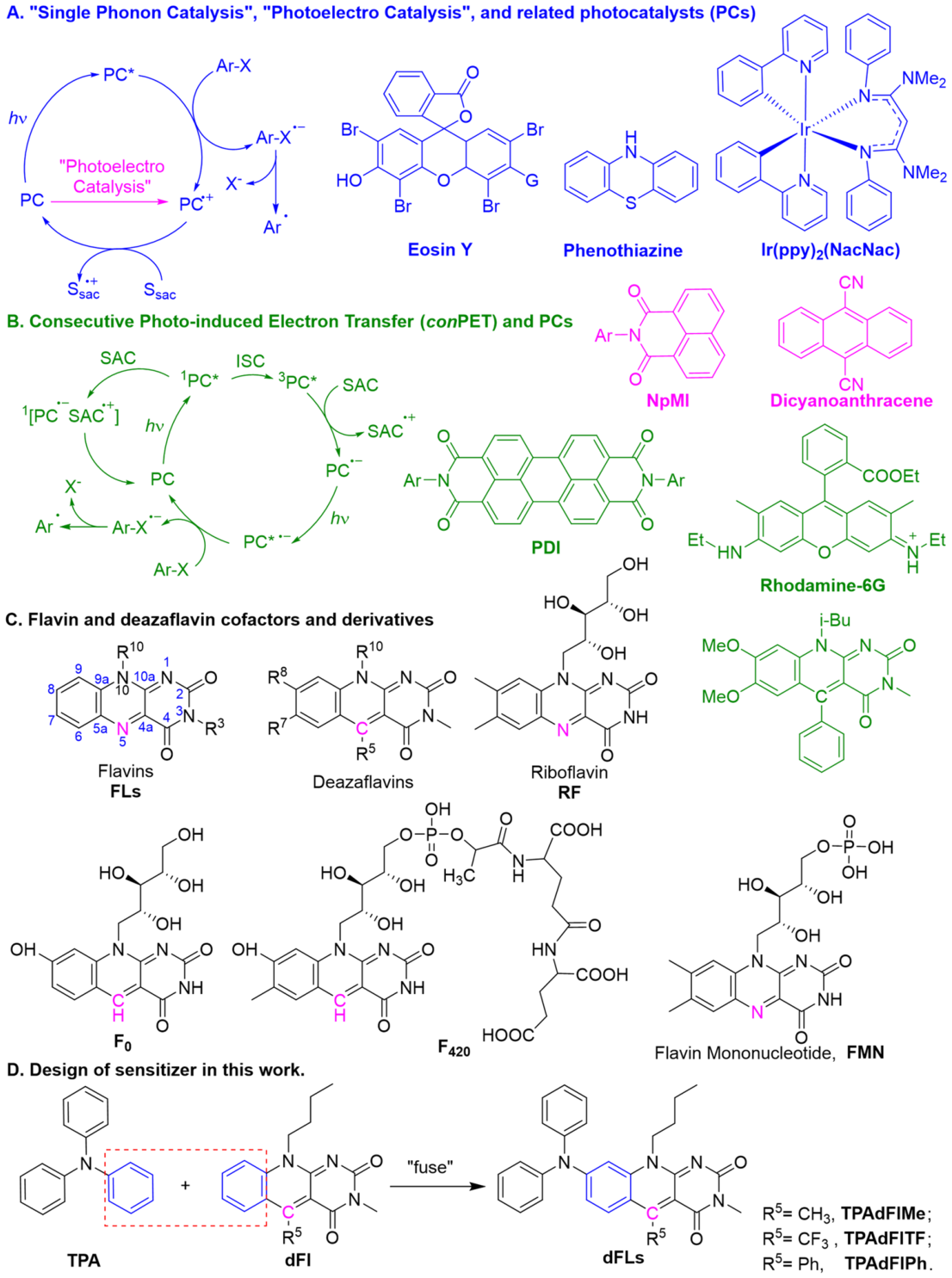
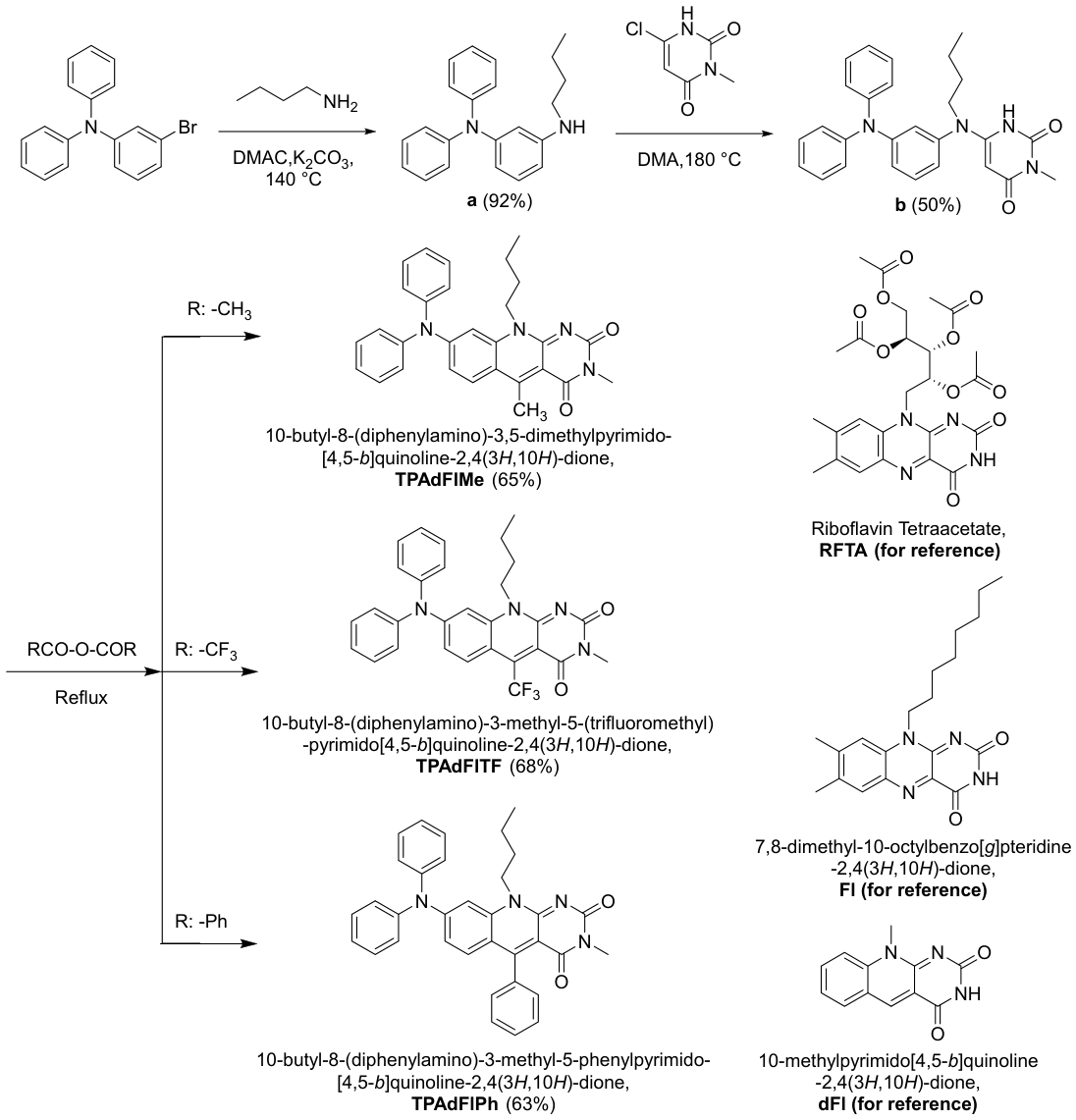
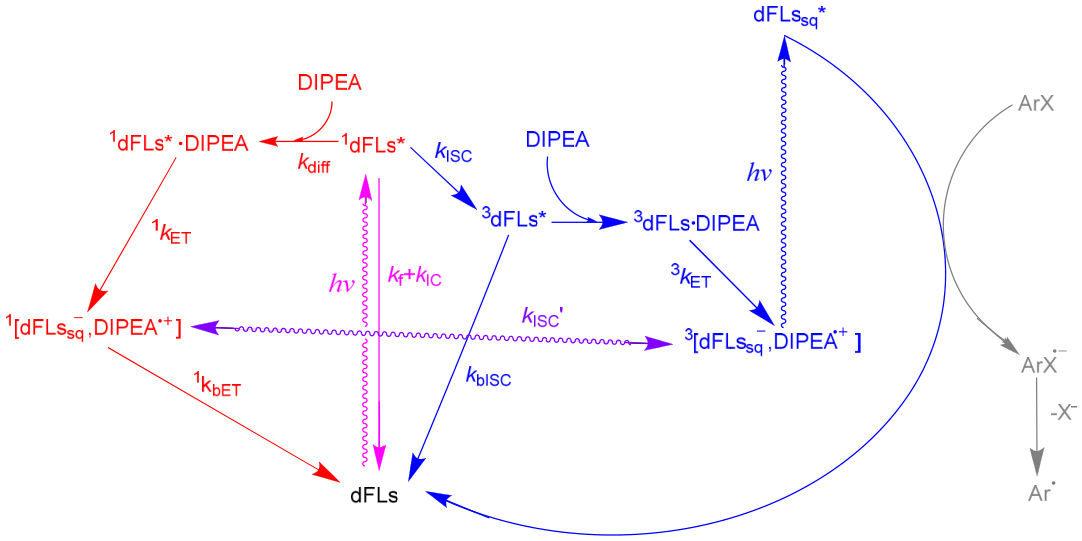
Aryl halides are important intermediates for chemical synthesis. However, the negative reduction potential up to −2.7 V (vs. SCE) makes photoredox conversion of aryl halides by reductive dehalogenation to aryl radicals for chemical transformations difficult. Inspired by the outstanding photophysical properties of deazaflavin and triphenylamine, as well as results of theoretical calculations, we attached the diphenylamino group to C8 of deazaflavin, and the resulting compounds look fabricated by “fusing” deazaflavin and triphenylamine (TPA) together by sharing the benzene ring. We also introduced alkyl and aryl moieties to C5 and afforded a series of deazaflavin derivatives (dFLs), namely 10-butyl-8-(diphenylamino)-3,5-dimethylpyrimido[4,5b]quinoline-2,4(3H,10H)-dione (TPAdFlMe), 10-butyl-8-(diphenylamino)-3-methyl-5-(trifluoromethyl)pyrimido[4,5-b]quinoline-2,4(3H,10H)-dione(TPAdFlTF) and 10-butyl-8-(diphenylamino)-3-methyl-5-phenylpyrimido[4,5-b]quinoline-2,4(3H,10H)-dione (TPAdFlPh), and investigated their photophysical properties and performance as sensitizers in the photodehalogenation of aryl halides. We showed that the photophysical properties are significantly improved in these dFLs. The absorption bands of dFLs are redshifted and the absorbance is more than double that of riboflavin tetraacetate (RFTA). The singlet oxygen quantum yields of TPAdFlMe, TPAdFlTF and TPAdFlPh are 0.42, 0.25 and 0.39, respectively, and the corresponding redox potentials are −1.75, −0.75 and −1.71 V vs. Ag/Ag+, respectively, comparable to known deazaflavin-based sensitizers. Originating from these properties, TPAdFlMe and TPAdFlPh are capable of sensitizing the full photodehalogenation of 0.038 mmol p-iodoanisole, and the yields of the photodehalogenation of 0.038 mmol p-bromoanisole are 67 and 69%, respectively. They also demonstrate exceptional performance in the photodehalogenation of halides of polycyclic aromatics with yields in the range of 73% for 1-benzhydryl-3-bromobenzene to 100% for 1-bromonapthalene in 18 h runs. The performance of TPAdFlMe and TPAdFlPh in photodehalogenation are already comparable to recently reported deazaflavin-based sensitizers, and we propose the transformation would proceed though the consecutive photo-induced electron transfer (conPET) mechanism with consecutive excitation of charged deazaflavin-based radicals under light irradiation as the key step to generating the aryl radicals, and the vital role of sensitizer-based radicals is further confirmed by mechanistic investigations. We expect the findings will help to design novel flavin-based triplet sensitizers for photoredox catalytic organic transformations.
Keywords: aryl halides; deazaflavin; flavin; photodehalogenation; photosensitizer aryl halides; deazaflavin; flavin; photodehalogenation; photosensitizer