New In Situ Amphipathic Polymerization-Modified Titanium Quantum Dots: Application as a High-Performance Water-Lock-Breaking Agent in Tight Gas Reservoirs

Abstract
1. Introduction
2. Results
2.1. Characterization of PTQs
2.2. Surface Tension of PTQ Nanofluid
2.3. Wettability Alteration
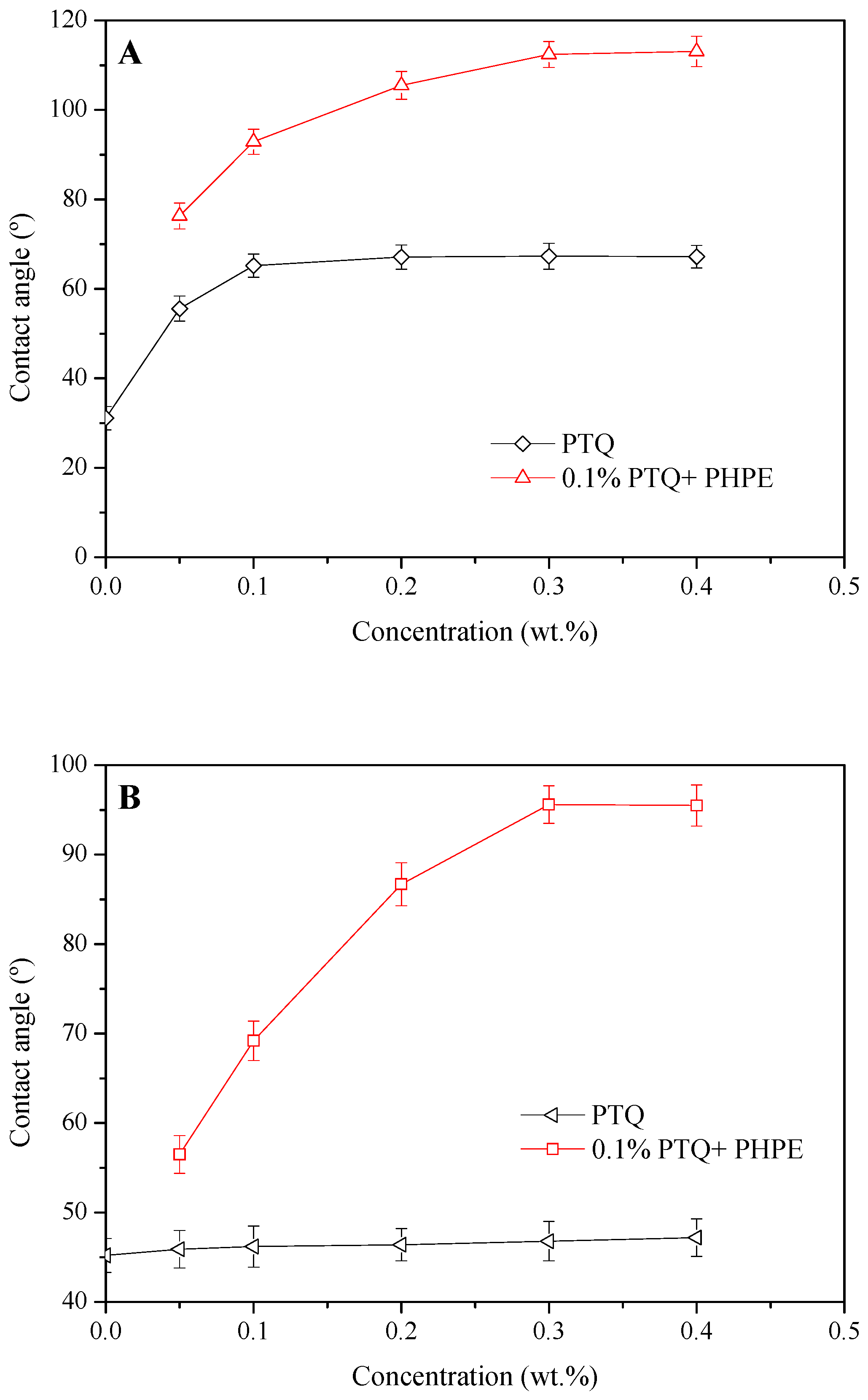
2.3.1. Contact Angle of Sand Slice Under Effect of PTQs
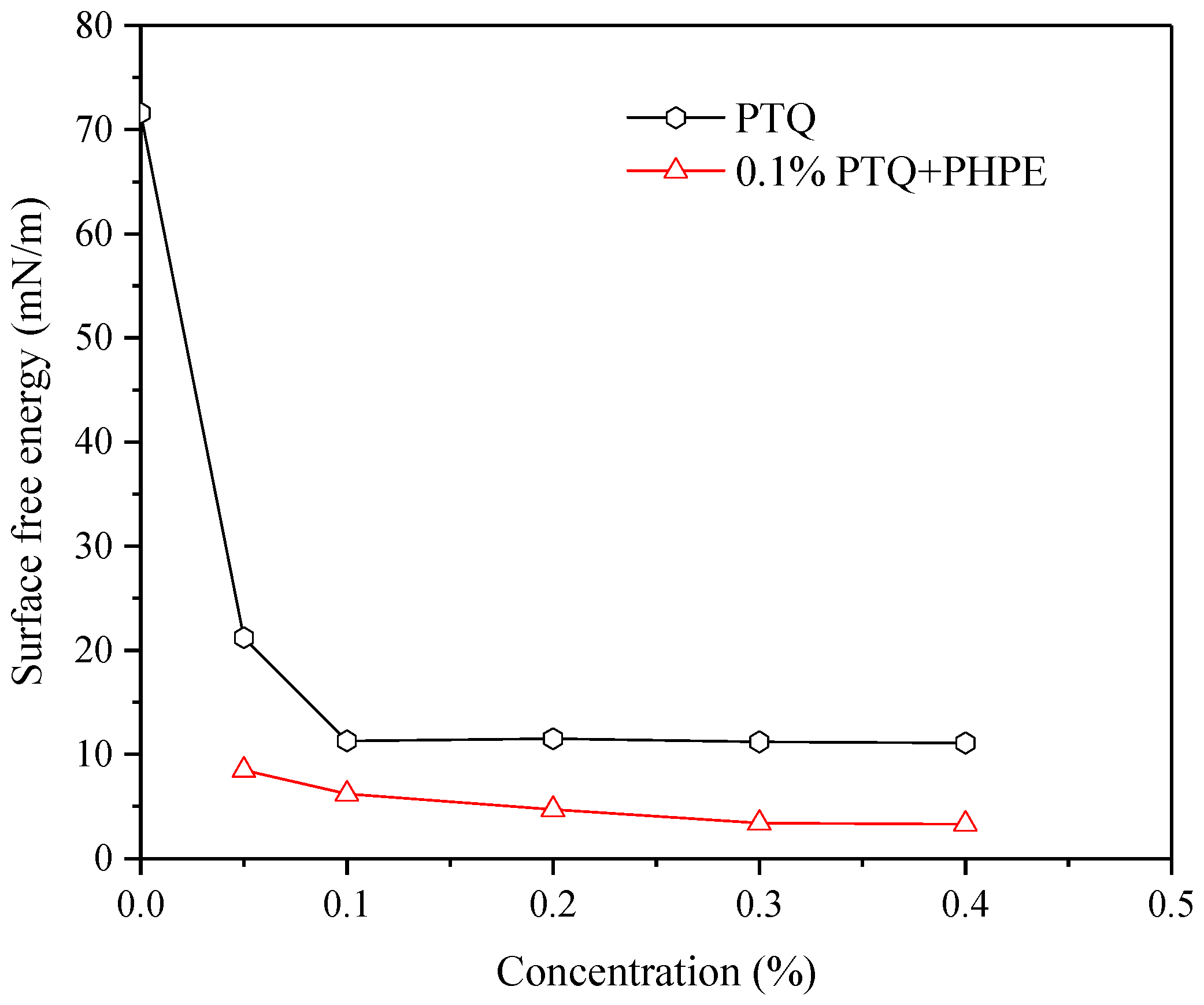
2.3.2. Surface Free Energy of Sandstone Under Influence of PTQs
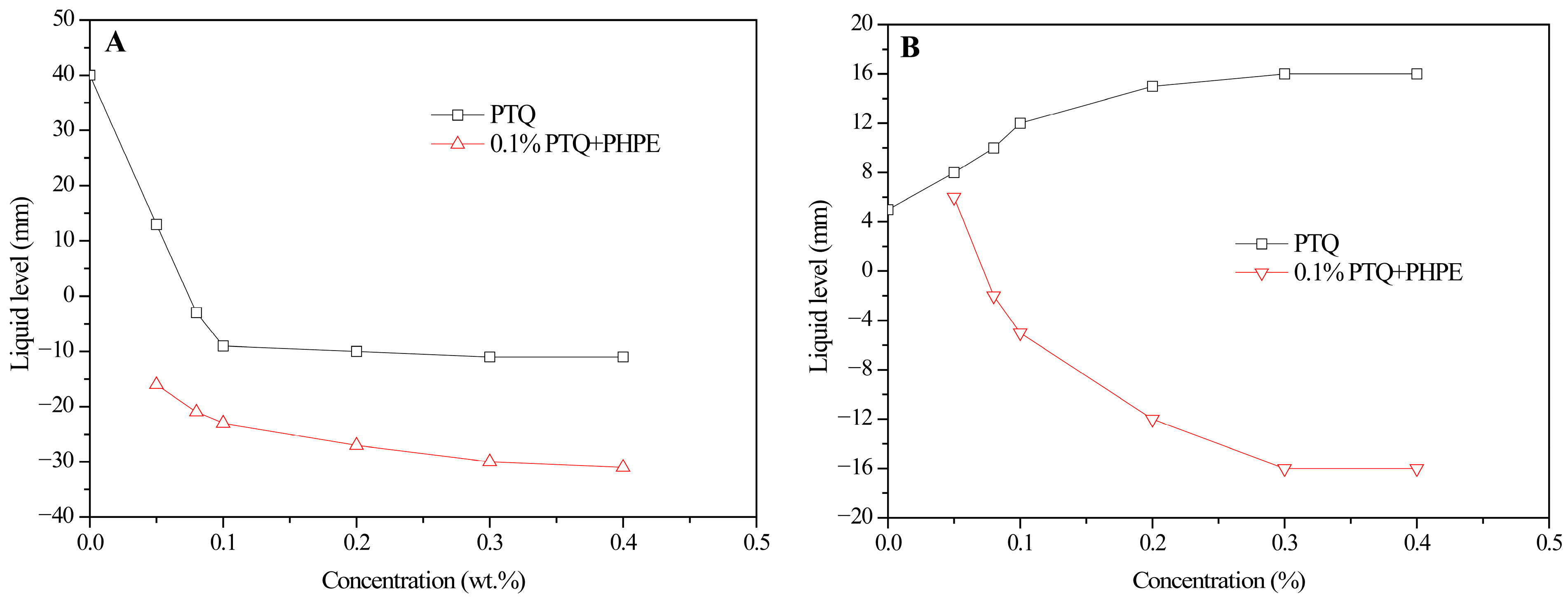
2.3.3. Liquid Level
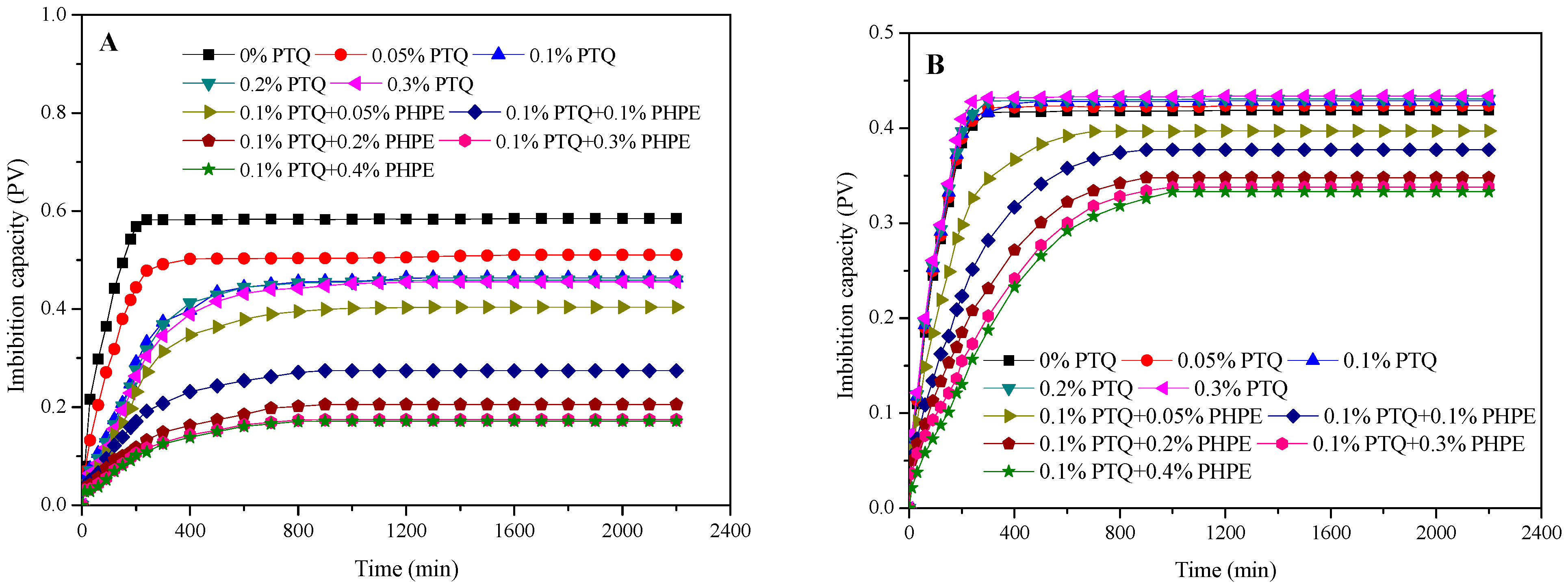
2.3.4. Spontaneous Imbibition
3. Discussions
4. Materials
5. Methods
5.1. Synthesis of PTQ
5.2. Characterization
5.3. Surface Tension
5.4. Adsorption of PTQs on the Sandstone Surface
5.5. Contact Angle
5.6. Surface Free Energy
5.7. Liquid Level Measurements
5.8. Spontaneous Imbibition
6. Conclusions
- (1)
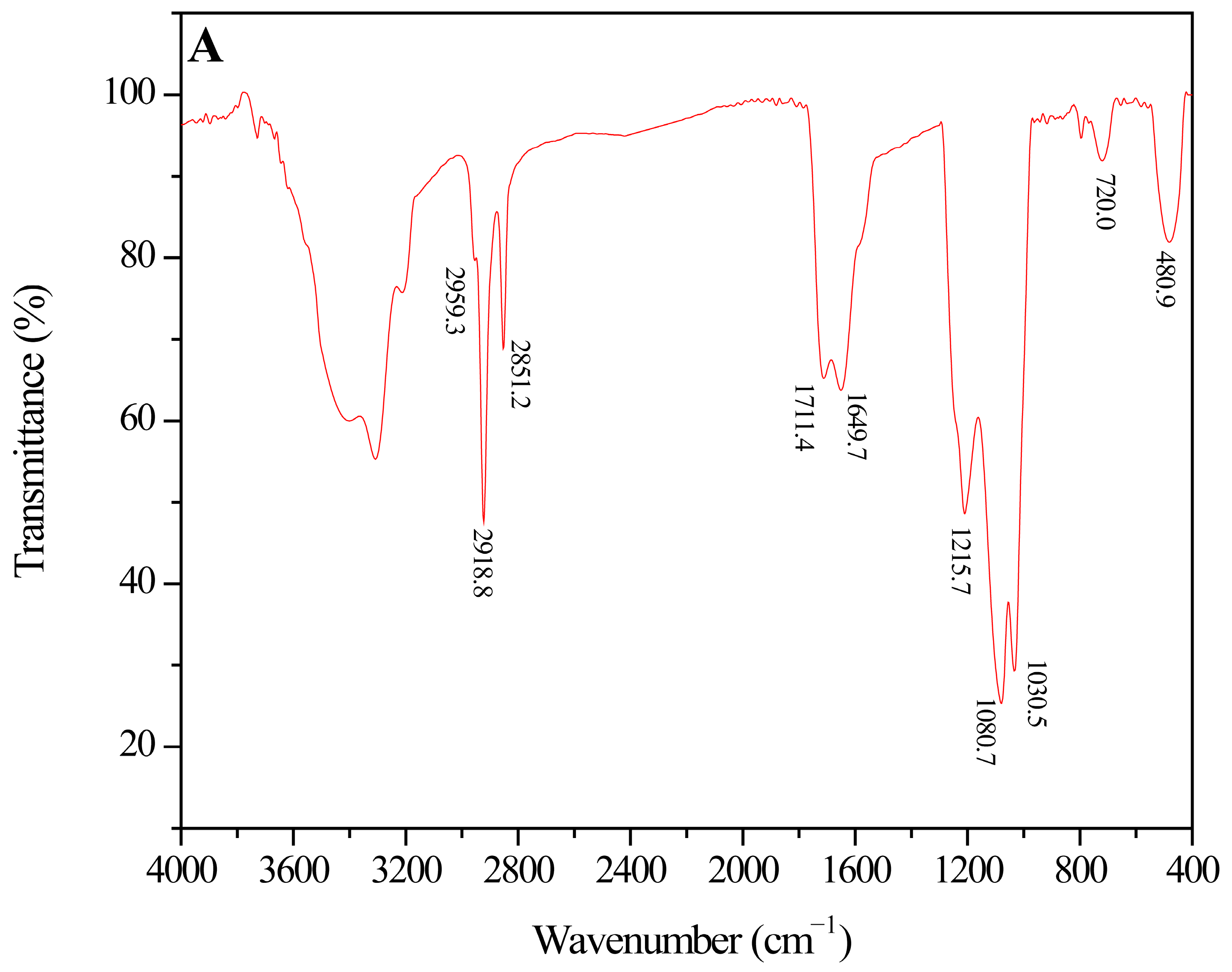
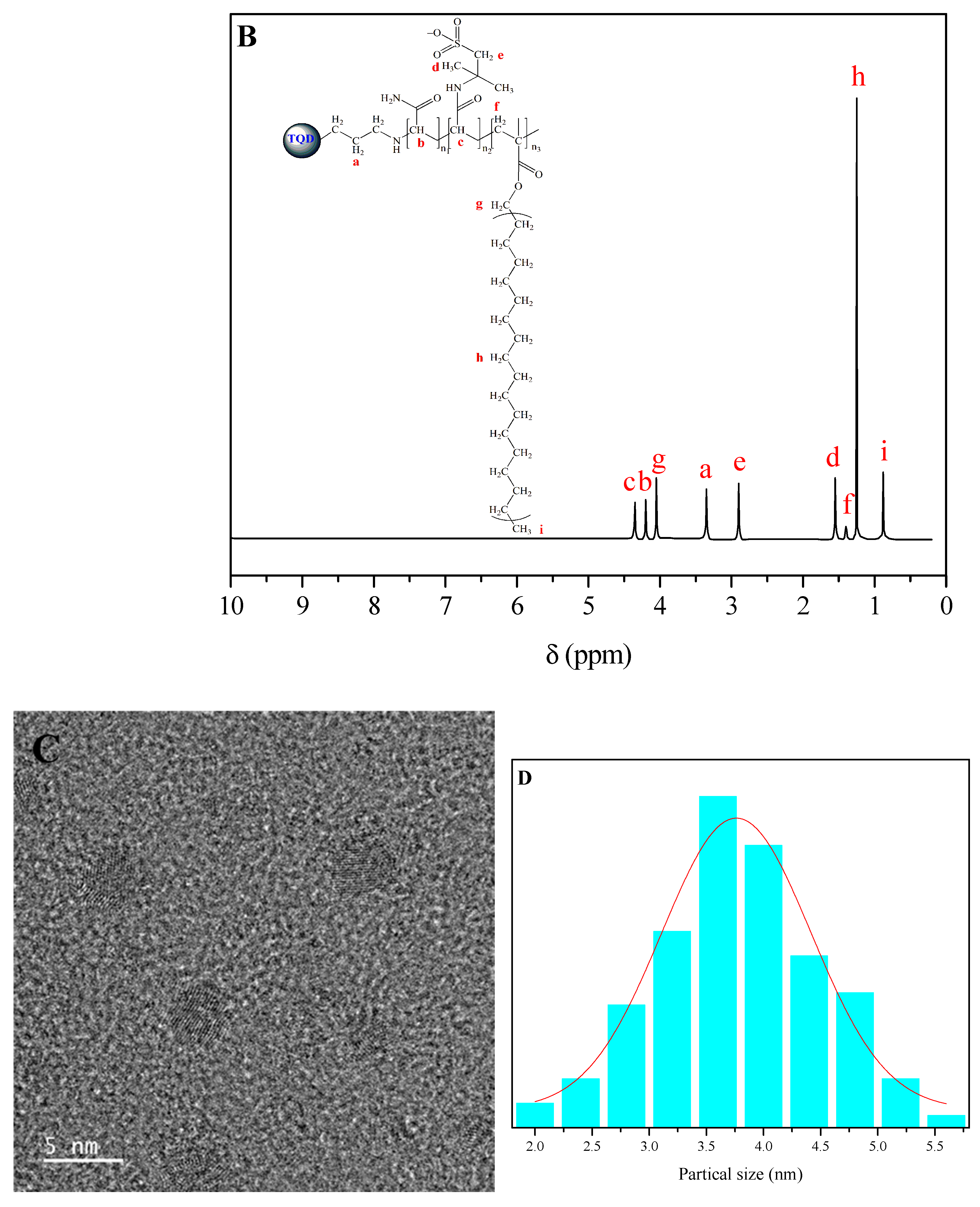
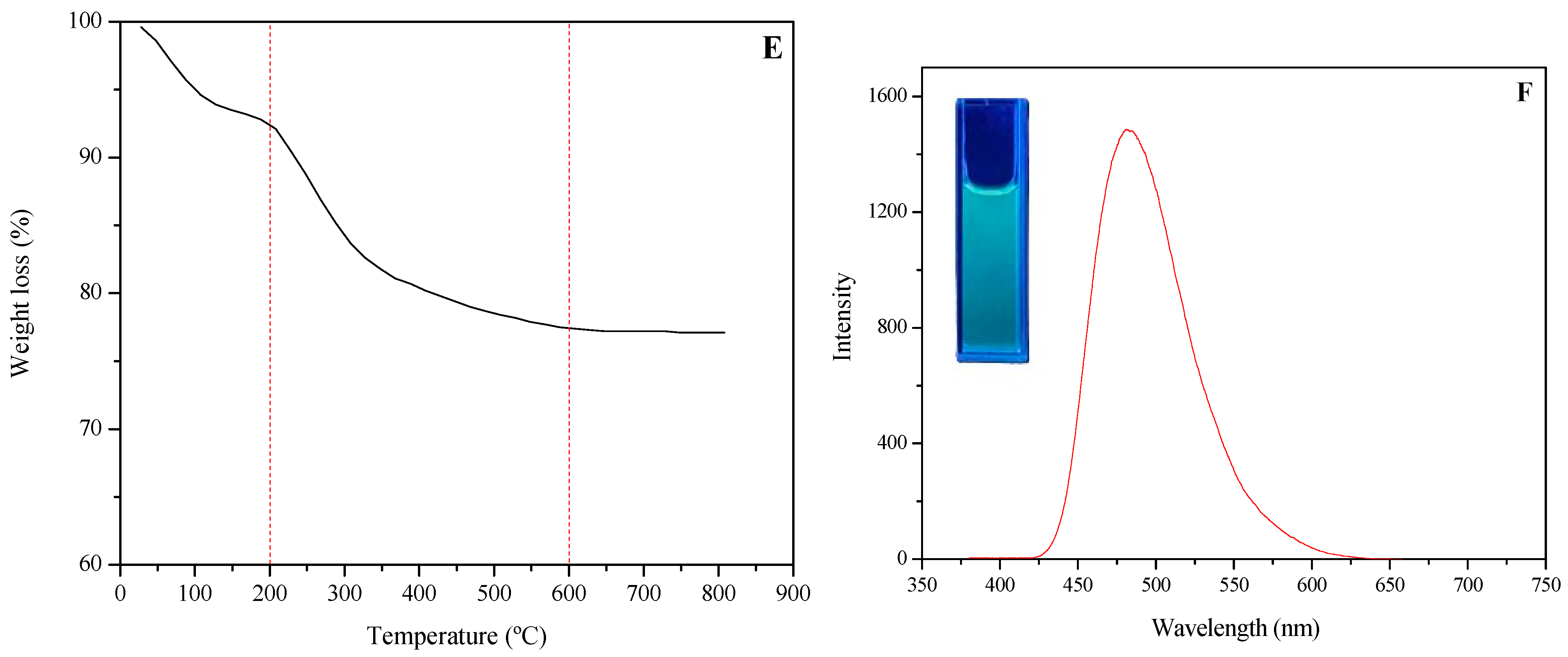
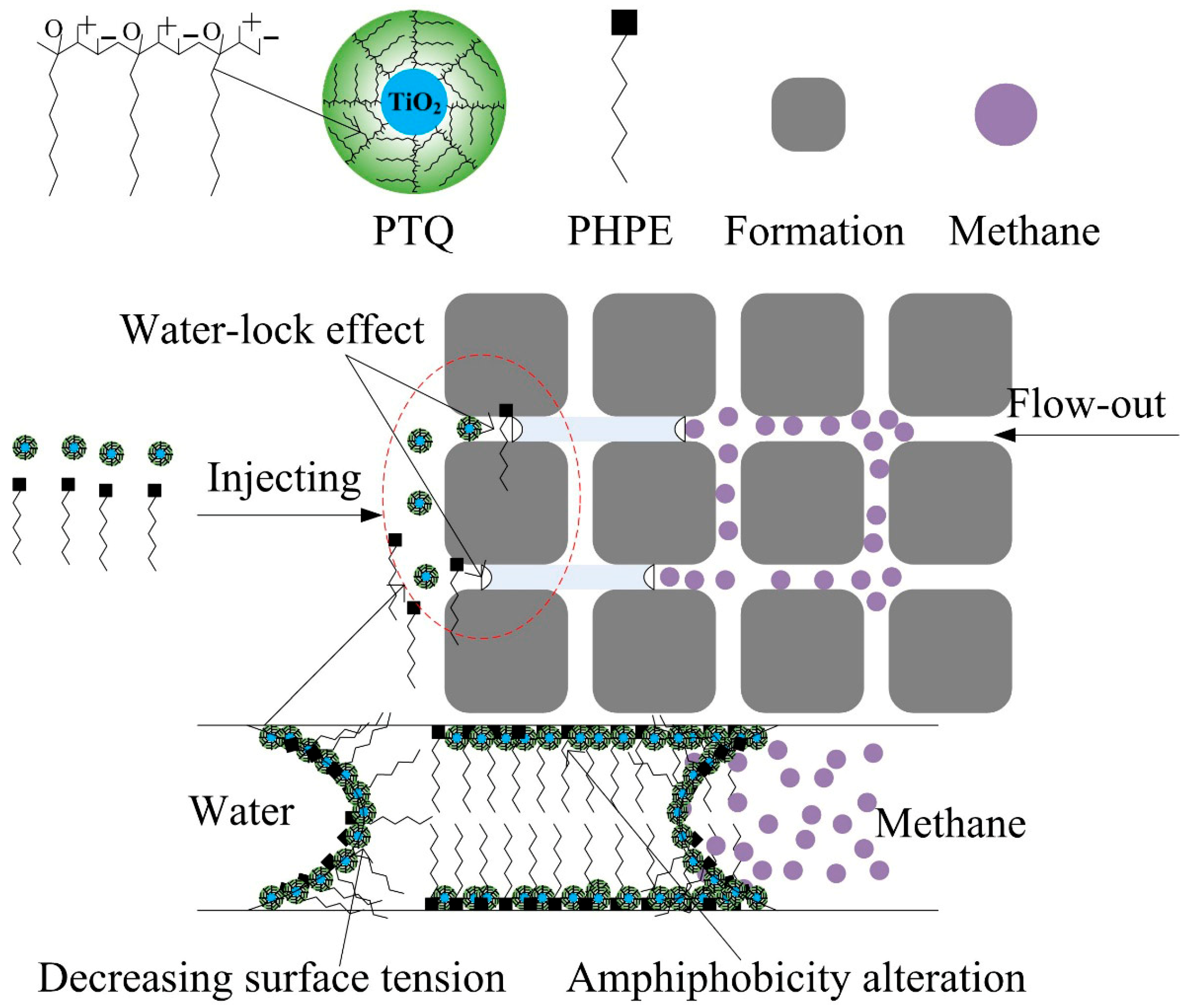
- The synthesized PTQs with a median size of 3.6 nm and significant green fluorescence have zwitterionic hydrophilic groups and the hydrophobic structure of long-chain groups, which can freely migrate throughout the tight reservoir and arrange on the interface of the gas–water phase.
- (2)
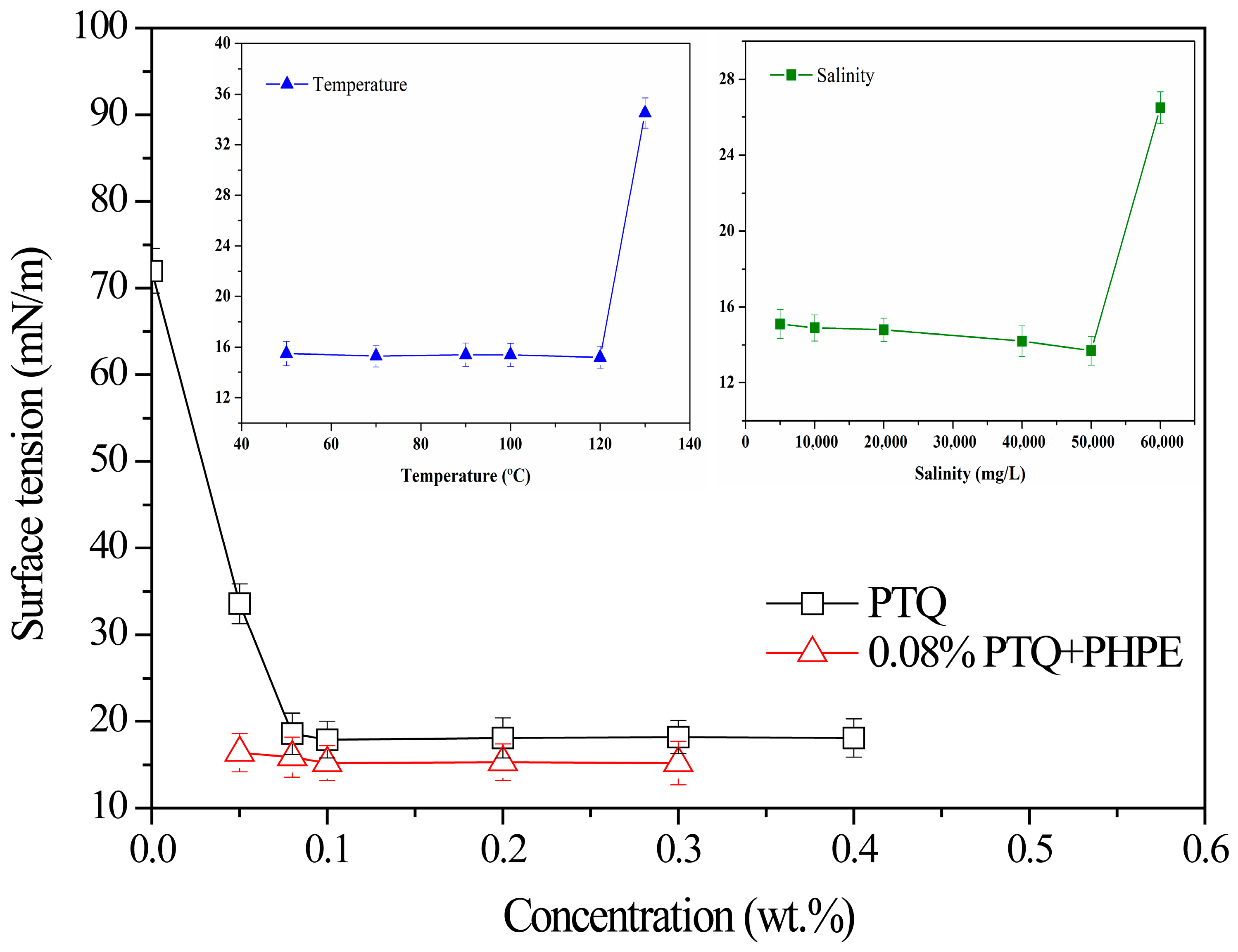
- The surface tension significantly decreased from 72 mN/m to 15.2 mN/m under the influence of PTQs, especially in combination with fluorocarbon surfactants. Meanwhile, PTQs exhibited excellent salt- and thermostability due to their specific structure.
- (3)
- The hydrophobicity of sandstone was enhanced by PTQs, but its amphiphobicity of was increased only under the combined effects of PTQs and fluorocarbon surfactants. Hence, the liquid level, surface free energy, and imbibition capacity were powerfully inhibited by this interaction.
- (4)
- The strong surface activity of PTQs results from their specific molecular structure, which enables electrostatic attraction, the quantum size effect, hydrogen bonding, and van der Waals forces between the inter-polar molecules of PTQs and the surface of sandstone, thereby effectively eliminating the water lock effect. Simultaneously, the synergistic effect between PTQs and fluorocarbon surfactants further improves surface tension reduction and wettability alteration.
Author Contributions
Funding
Institutional Review Board Statement
Data Availability Statement
Acknowledgments
Conflicts of Interest
References
- Li, Y.Z.; Jiang, G.C.; Li, X.Q.; Yang, L. Quantitative Investigation of Water Sensitivity and Water Locking Damages on a Low-Permeability Reservoir Using the Core Flooding Experiment and NMR Test. ACS Omega 2022, 7, 4444–4456. [Google Scholar] [CrossRef] [PubMed]
- Yang, X.; Fei, H.; Shi, J.; Sheng, L.; Guo, D.; Yao, E. Enhancing Gas Recovery in Tight Dolomite Reservoirs: A Study of Water-Lock Damage and Chemical Drainage. Processes 2023, 11, 3228. [Google Scholar] [CrossRef]
- Da, L.; Yao, C.; Zhang, X.; Li, L.; Lei, G. Reservoir Damage Induced by Water-Based Fracturing Fluids in Tight Reservoirs: A Review of Formation Mechanisms and Treatment Methods. Energy Fuels 2024, 38, 18093–18115. [Google Scholar] [CrossRef]
- Wang, L.; Wang, B.; Zhu, J.; Liao, X.; Ni, S.; Shen, S. Experimental study on alleviating water-blocking effect and promoting coal gas desorption by gas wettability alteration. J. Nat. Gas Sci. Eng. 2022, 108, 104805. [Google Scholar] [CrossRef]
- Salehi, M.; Johnson, S.J.; Liang, J.T. Mechanistic study of wettability alteration using surfactants with applications in naturally fractured reservoirs. Langmuir 2008, 24, 14099–14107. [Google Scholar] [CrossRef]
- Li, Y.F.; Wang, Y.L.; Wang, Q.; Tang, L.; Yuan, L.; Wang, G.; Zhang, R. Optimization the synthesis parameters of gas-wetting alteration agent and evaluation its performance. Colloids Surf. A Physicochem. Eng. Asp. 2018, 558, 438–445. [Google Scholar] [CrossRef]
- Aminnaji, M.; Fazeli, H.; Bahramian, A.; Gerami, S.; Ghojavand, H. Wettability alteration of reservoir rocks from liquid wetting to gas-wetting using nanofluid. Transp. Porous Media 2015, 109, 201–216. [Google Scholar] [CrossRef]
- Safaei, A.; Esmaeilzadeh, F.; Sardarian, A.; Mousavi, S.M.; Wang, X. Experimental investigation of wettability alteration of carbonate gas-condensate reservoirs from oil-wetting to gaswetting using Fe3O4 nanoparticles coated with Poly(vinyl alcohol),(PVA) or Hydroxyapatite(HAp). J. Pet. Sci. Eng. 2020, 184, 106530. [Google Scholar] [CrossRef]
- Wang, Y.L.; Li, Y.F.; Wang, Q.; Li, Q.; Zhang, Y.; Yuan, L. Synthesis and evaluation of properties of N, N-bis(perfluorooctyl) imine acetate sodium as a gas-wetting alteration agent. RSC Adv. 2018, 8, 7924–7931. [Google Scholar] [CrossRef]
- Karandish, G.; Rahimpour, M.; Sharifzadeh, S.; Dadkhah, A. Wettability Alteration in Gas-condensate Carbonate Reservoir Using Anionic Fluorinated Treatment. Chem. Eng. Res. Des. 2015, 93, 554–564. [Google Scholar] [CrossRef]
- Saboori, R.; Azin, R.; Osfouri, S.; Sabbaghi, S.; Bahramian, A. Wettability alteration of carbonate rocks from strongly liquid-wetting to strongly gas-wetting by fluorine-doped silica coated by fluor silane. J. Dispers. Sci. Technol. 2018, 39, 767–776. [Google Scholar] [CrossRef]
- Ni, X.; Jiang, G.; Liu, F.; Deng, Z. Synthesis of an Amphiphobic Nanofluid with a Novel Structure and Its Wettability Alteration on Low-permeability Sandstone Reservoirs. Energy Fuels 2018, 32, 4747–4753. [Google Scholar] [CrossRef]
- Naghizadeh, A.; Azin, R.; Osfouri, S.; Fatehi, R. Wettability alteration of calcite and dolomite carbonates using silica nanoparticles coated with fluorine groups. J. Pet. Sci. Eng. 2020, 188, 106915. [Google Scholar] [CrossRef]
- Medina, O.E.; Rosales, S.; Garzón, N.; López, D.; Taborda, E.A.; Ordóñez, J.C.; Fernández, S.A.; Cortés, F.B.; Franco, C.A. Advances in Quantum Dot Applications for the Oil and Gas Industry: Current Trends and Future Directions. Energy Fuels 2024, 38, 21793–21831. [Google Scholar] [CrossRef]
- Zhao, M.; Li, Y.; Dai, C.; Chen, Y.; Ma, Z.; Li, T.; Yang, Z.; Liu, K. Novel silicon quantum dots for efficient imbibition oil recovery in low permeability reservoirs. Fuel 2023, 347, 128481. [Google Scholar] [CrossRef]
- Zhou, Y.; Wu, X.; Zhong, X.; Zhang, S.; Pu, H.; Zhao, J.X. Development of silicon quantum dots based nano-fluid for enhanced oil recovery in tight Bakken cores. Fuel 2020, 277, 118203. [Google Scholar] [CrossRef]
- Kumar, A.; Mandal, A. Critical investigation of zwitterionic surfactant for enhanced oil recovery from both sandstone and carbonate reservoirs: Adsorption, wettability alteration and imbibition studies. Chem. Eng. Sci. 2019, 209, 115222. [Google Scholar] [CrossRef]
- Liu, P.; Li, X.; Li, H.; Liu, S.; Wang, J.; Zhang, P. Application and Synthesis of Gemini Surfactant in Heavy Oil Development. ACS Omega 2025, 10, 8832–8842. [Google Scholar] [CrossRef]
- Yarahmadi, A.; Zargar, G.; Ashoori, S.; Manshad, A.K. Molecular design and thermodynamic insights into TnSm-type gemini surfactants for advanced interfacial applications. Sci. Rep. 2025, 15, 37097. [Google Scholar] [CrossRef]
- Yue, L.; Zhang, M.; Zuo, T.; Yang, J.; Zhou, Y. A high temperature resistance and hyper-dispersed nanoparticle grafted by multi-monomer via in-situ polymerization: Preparation, characterization, and its imbibition performance. Can. J. Chem. Eng. 2024, 102, 2172–2183. [Google Scholar] [CrossRef]
- Gbadamosi, A.; Alotaibi, M.; Kalam, S.; Patil, S.; Abu-Khamsin, S.A.; Hussain, S.M.S.; Kamal, M.S.; Fahmi, M. Static Adsorption of Novel Synthesized Zwitterionic Surfactants on Carbonates. Energy Fuels 2024, 38, 269821861. [Google Scholar] [CrossRef]
- Hussain, S.M.S.; Adewunmi, A.A.; Mahboob, A.; Murtaza, M.; Zhou, X.; Kamal, M.S. Fluorinated surfactants: A review on recent progress on synthesis and oilfield applications. Adv. Colloid Interface Sci. 2022, 303, 102634. [Google Scholar] [CrossRef] [PubMed]
- Yue, L.; Zhang, M.; Yang, J.; Zhou, Y.; Shao, X.; Wu, J. Experimental investigation of the rheological behavior and micro-morphology of the wormlike micelle cross-linked with polyelectrolyte-grafted nano silica and the associative polymer. J. Dispers. Sci. Technol. 2024, 46, 2338371. [Google Scholar] [CrossRef]
- Yue, L.; Pu, W.; Zhao, T.; Zhuang, J.; Zhao, S. A high performance magnetically responsive Janus nano-emulsifier: Preparation, emulsification characteristics, interfacial rheology, and application in emulsion flooding. J. Pet. Sci. Eng. 2021, 208, 109748. [Google Scholar] [CrossRef]
- Wang, H.; Liu, C.; You, Q.; Bai, S.; Wang, T.; Zhao, G.; Wu, Y.; Dai, C. Investigation on the primary contributing factors of formation damage by slickwater in tight reservoirs. J. Mol. Liq. 2025, 423, 127049. [Google Scholar] [CrossRef]
- Yue, L.; Pu, W.; Zhao, S.; Zhang, S.; Ren, F.; Xu, D. Insights into mechanism of low salinity water flooding in sandstone reservoir from interfacial features of oil/brine/rock via intermolecular forces. J. Mol. Liq. 2020, 313, 113435. [Google Scholar] [CrossRef]
- Basheva, E.S.; Kralchevsky, P.A.; Danov, K.D.; Ananthapadmanabhan, K.P.; Lips, A. The colloid structural forces as a tool for particle characterization and control of dispersion stability. Phys. Chem. Chem. Phys. 2007, 9, 5183–5198. [Google Scholar] [CrossRef]
- Li, K.; Firoozabadi, A. Experimental study of wettability alteration to preferential gas-wetting in porous media and its effects. SPE Reserv. Eval. Eng. 2000, 3, 139–147. [Google Scholar] [CrossRef]
- Wasan, D.; Nikolov, A. Spreading of nanofluids on solids. Nature 2003, 423, 156–159. [Google Scholar] [CrossRef]
- Darsh, W.; Alex, N.; Kirti, K. The wetting and spreading of nanofluids on solids: Role of the structural disjoining pressure. Curr. Opin. Colloid Interface Sci. 2011, 16, 344–349. [Google Scholar] [CrossRef]



| No. | Diameter (cm) | Length (cm) | Porosity (%) | Permeability (mD) |
|---|---|---|---|---|
| 1# | 2.51 | 5.89 | 10.32 | 0.28 |
| 2# | 2.54 | 5.62 | 10.25 | 0.25 |
Disclaimer/Publisher’s Note: The statements, opinions and data contained in all publications are solely those of the individual author(s) and contributor(s) and not of MDPI and/or the editor(s). MDPI and/or the editor(s) disclaim responsibility for any injury to people or property resulting from any ideas, methods, instructions or products referred to in the content. |
© 2026 by the authors. Licensee MDPI, Basel, Switzerland. This article is an open access article distributed under the terms and conditions of the Creative Commons Attribution (CC BY) license.
Share and Cite
Li, H.; Xu, H.; Yue, L.; Zhou, Y.; Li, Y.; Wang, K.; Tao, C.; Yang, B.; Chai, L.; Feng, H. New In Situ Amphipathic Polymerization-Modified Titanium Quantum Dots: Application as a High-Performance Water-Lock-Breaking Agent in Tight Gas Reservoirs. Molecules 2026, 31, 1338. https://doi.org/10.3390/molecules31081338
Li H, Xu H, Yue L, Zhou Y, Li Y, Wang K, Tao C, Yang B, Chai L, Feng H. New In Situ Amphipathic Polymerization-Modified Titanium Quantum Dots: Application as a High-Performance Water-Lock-Breaking Agent in Tight Gas Reservoirs. Molecules. 2026; 31(8):1338. https://doi.org/10.3390/molecules31081338
Chicago/Turabian StyleLi, Haibo, Hongxing Xu, Lei Yue, Yining Zhou, Yanhong Li, Kongjie Wang, Changzhou Tao, Boli Yang, Long Chai, and Haihong Feng. 2026. "New In Situ Amphipathic Polymerization-Modified Titanium Quantum Dots: Application as a High-Performance Water-Lock-Breaking Agent in Tight Gas Reservoirs" Molecules 31, no. 8: 1338. https://doi.org/10.3390/molecules31081338
APA StyleLi, H., Xu, H., Yue, L., Zhou, Y., Li, Y., Wang, K., Tao, C., Yang, B., Chai, L., & Feng, H. (2026). New In Situ Amphipathic Polymerization-Modified Titanium Quantum Dots: Application as a High-Performance Water-Lock-Breaking Agent in Tight Gas Reservoirs. Molecules, 31(8), 1338. https://doi.org/10.3390/molecules31081338