Investigating the Potential of By-Products from Clitoria and Borage Flower Infusions for Valorization: A Comparative Study


Abstract
1. Introduction
2. Results and Discussion
2.1. Physical Property Assessments
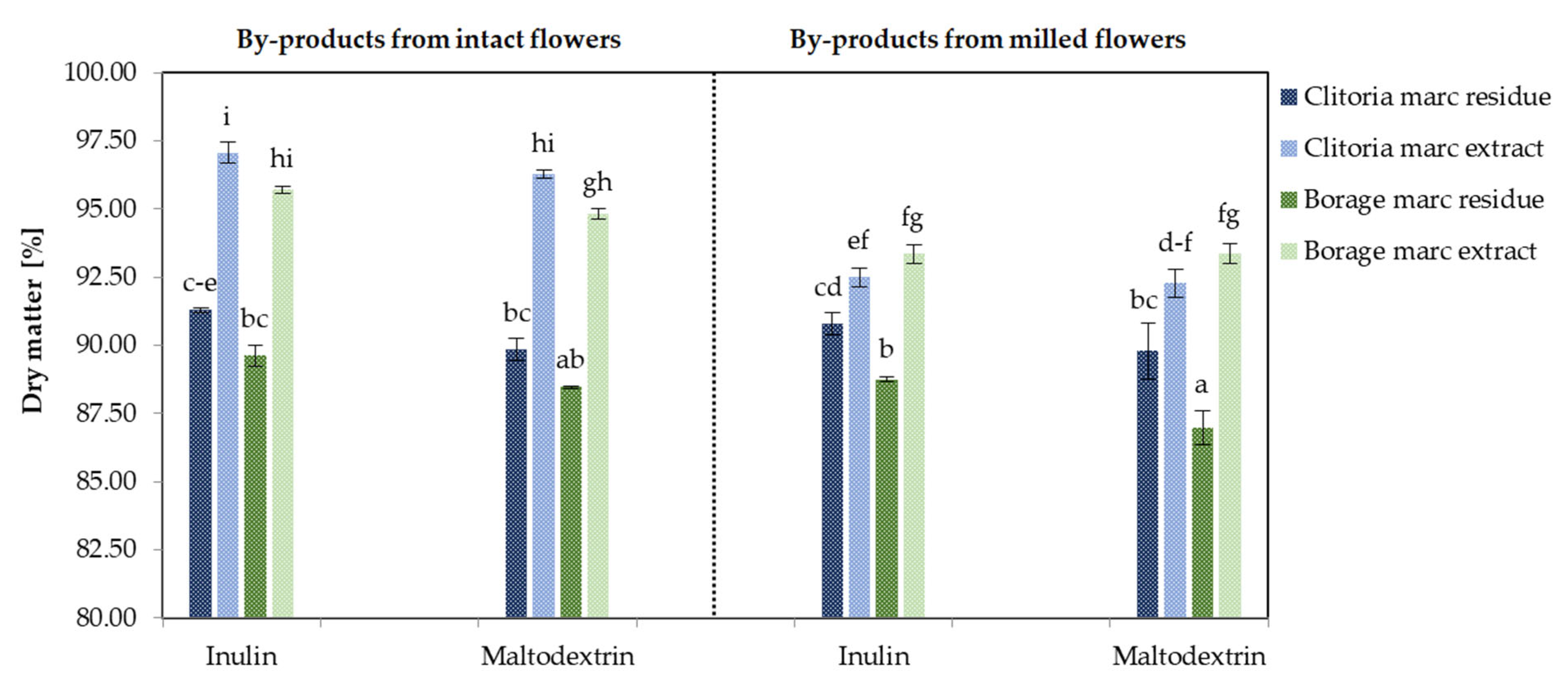
2.1.1. Dry Matter
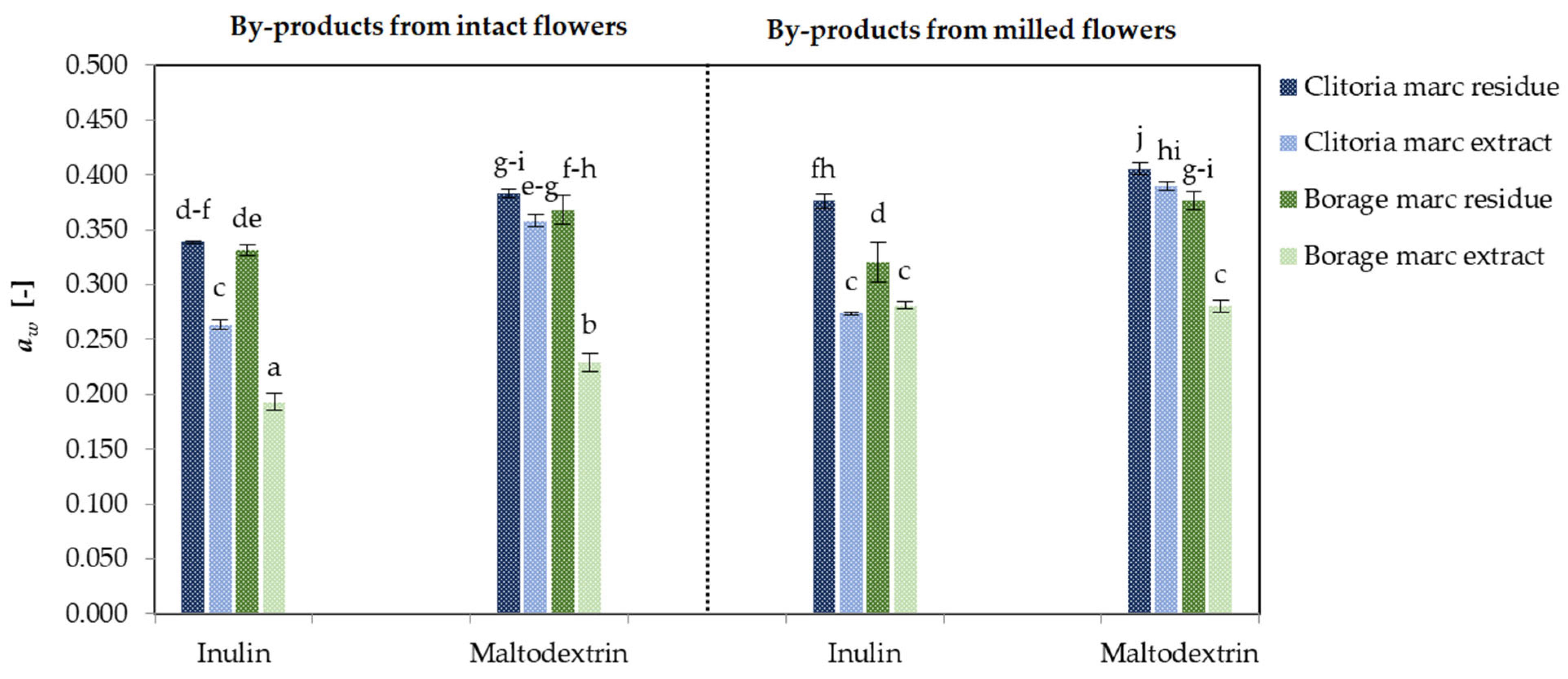
2.1.2. Water Activity (aw)
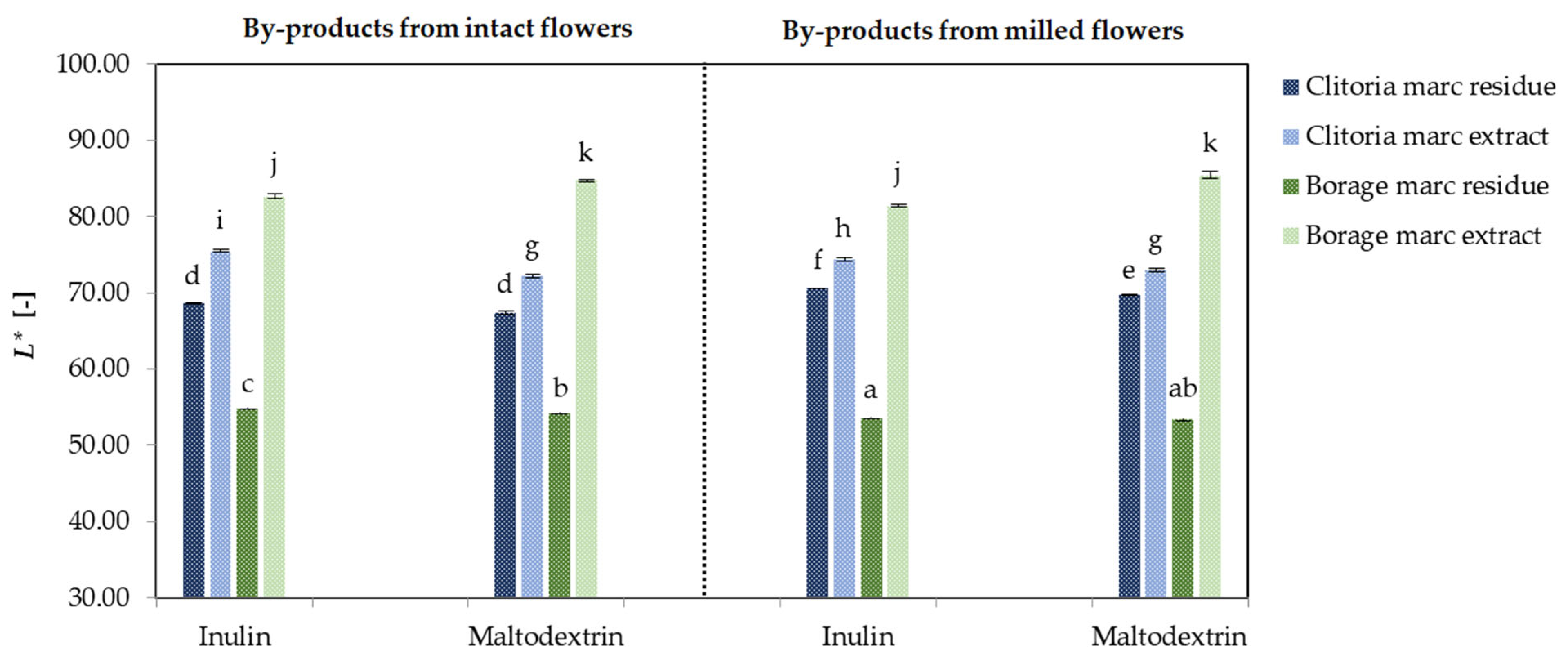
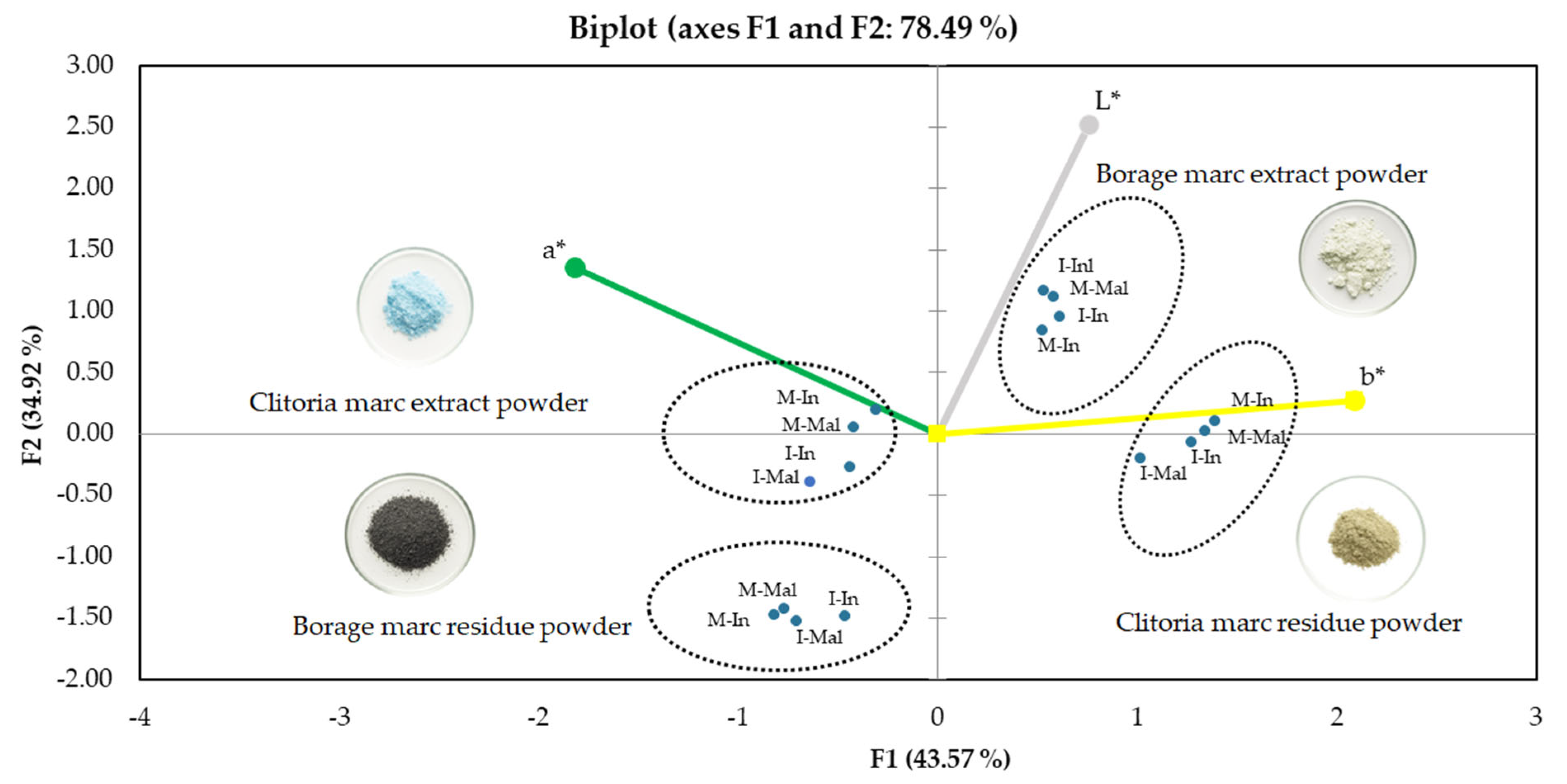
2.1.3. Color
2.2. Chemical Property Assessments
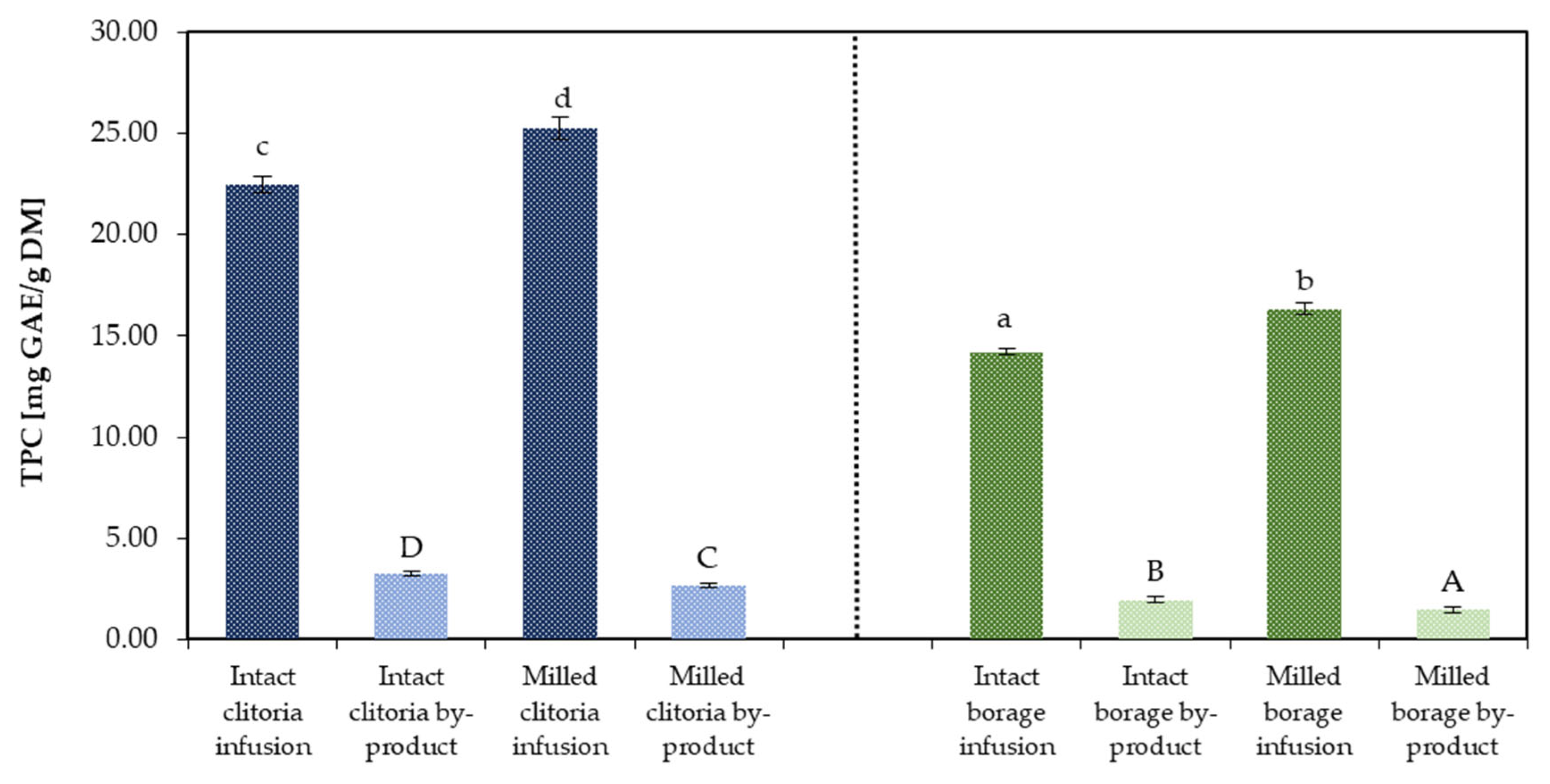
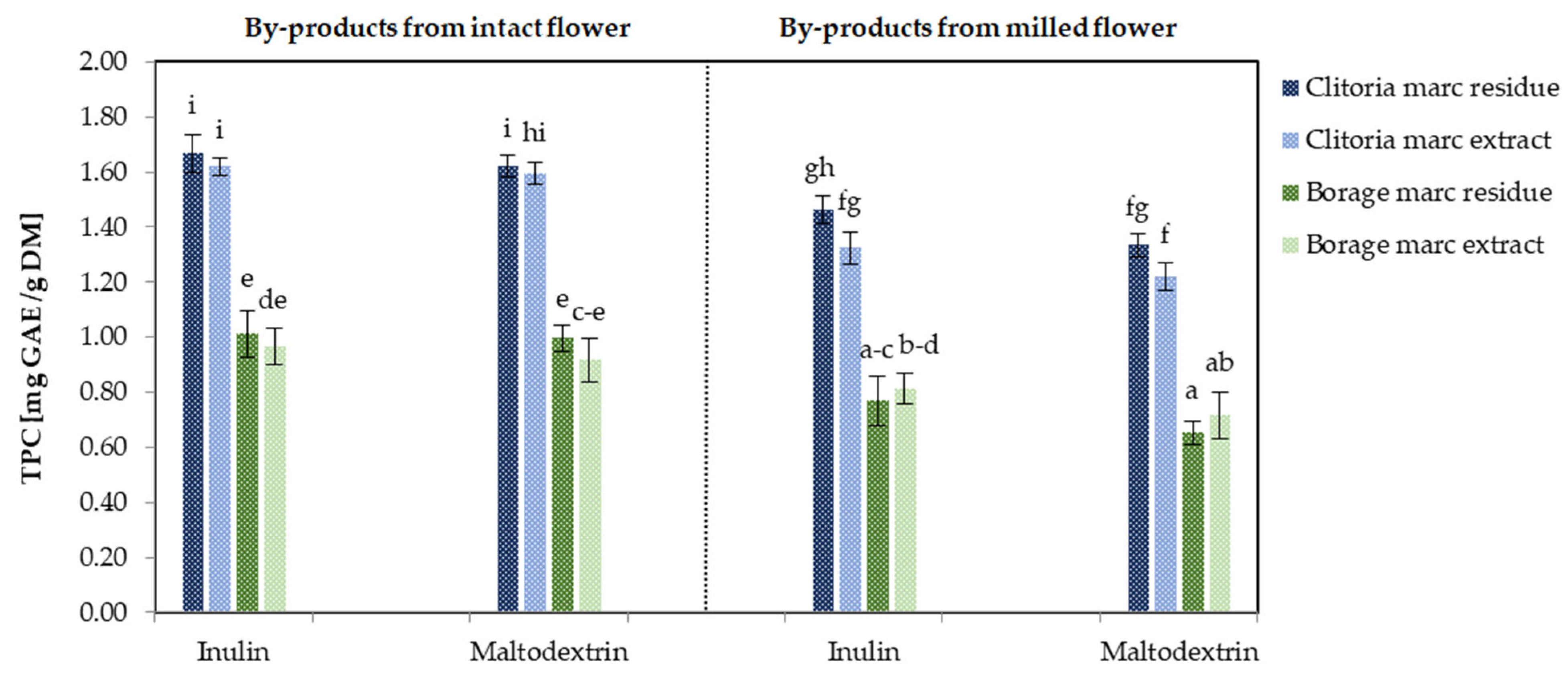
2.2.1. TPC by the Folin–Ciocalteu Method
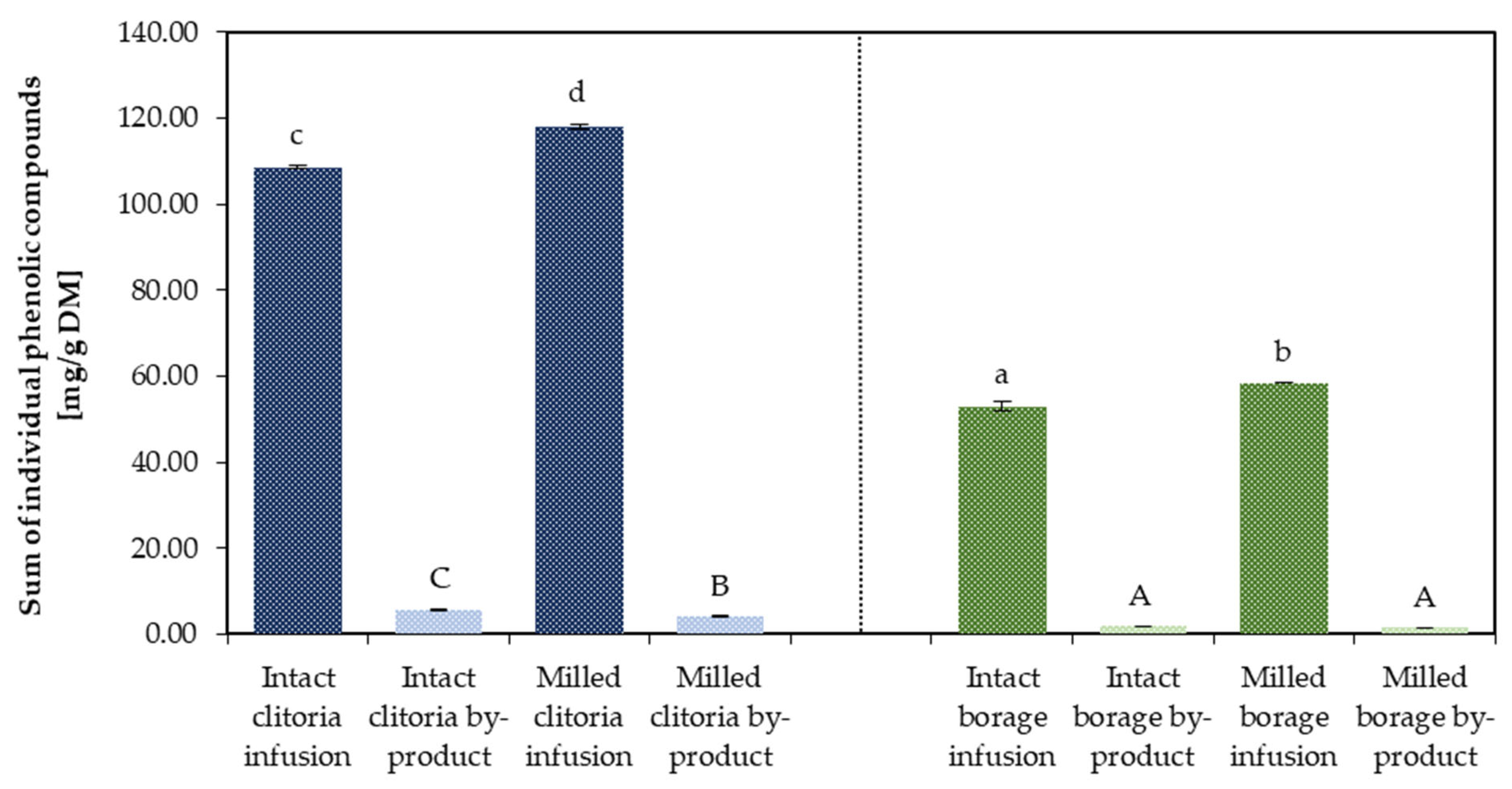
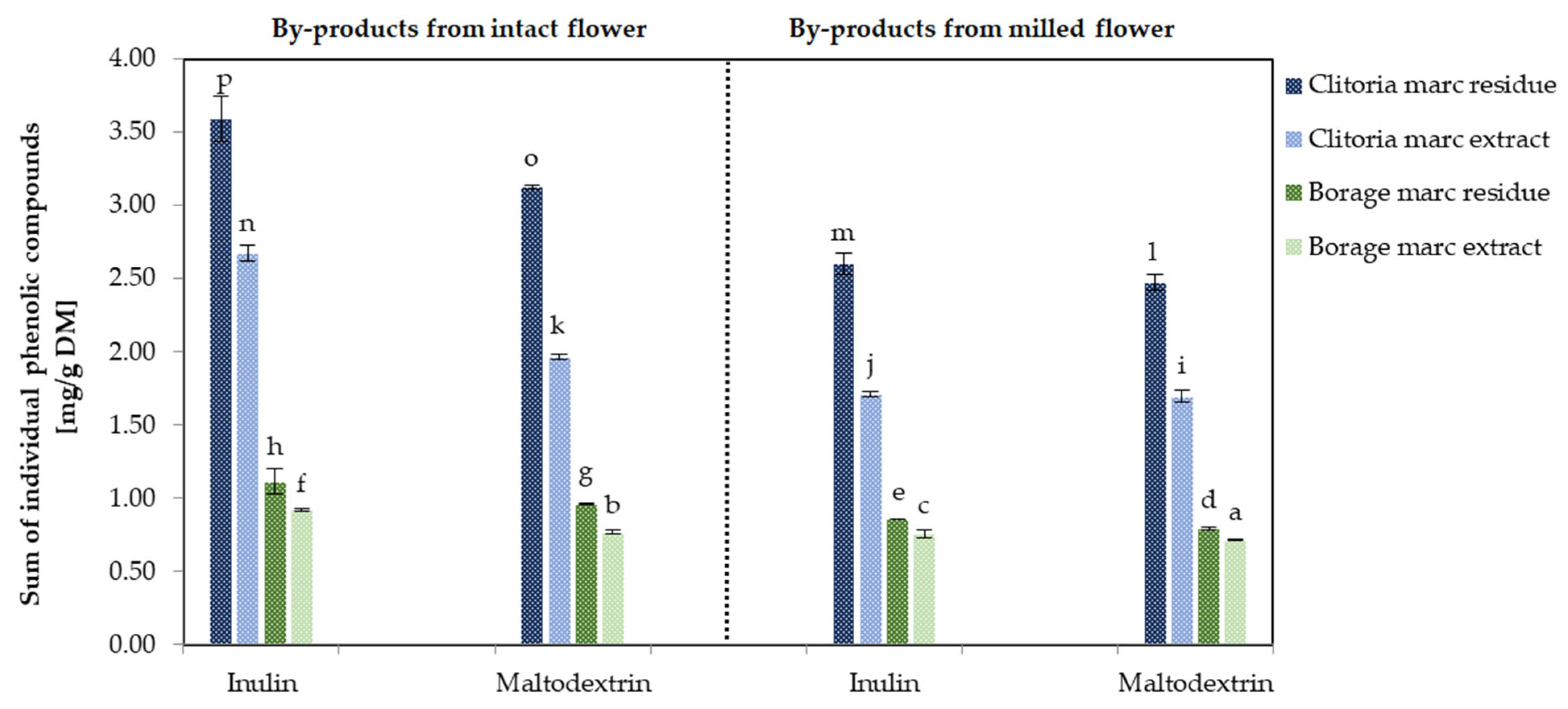
2.2.2. Sum of Individual Phenolic Compounds by HPLC Method
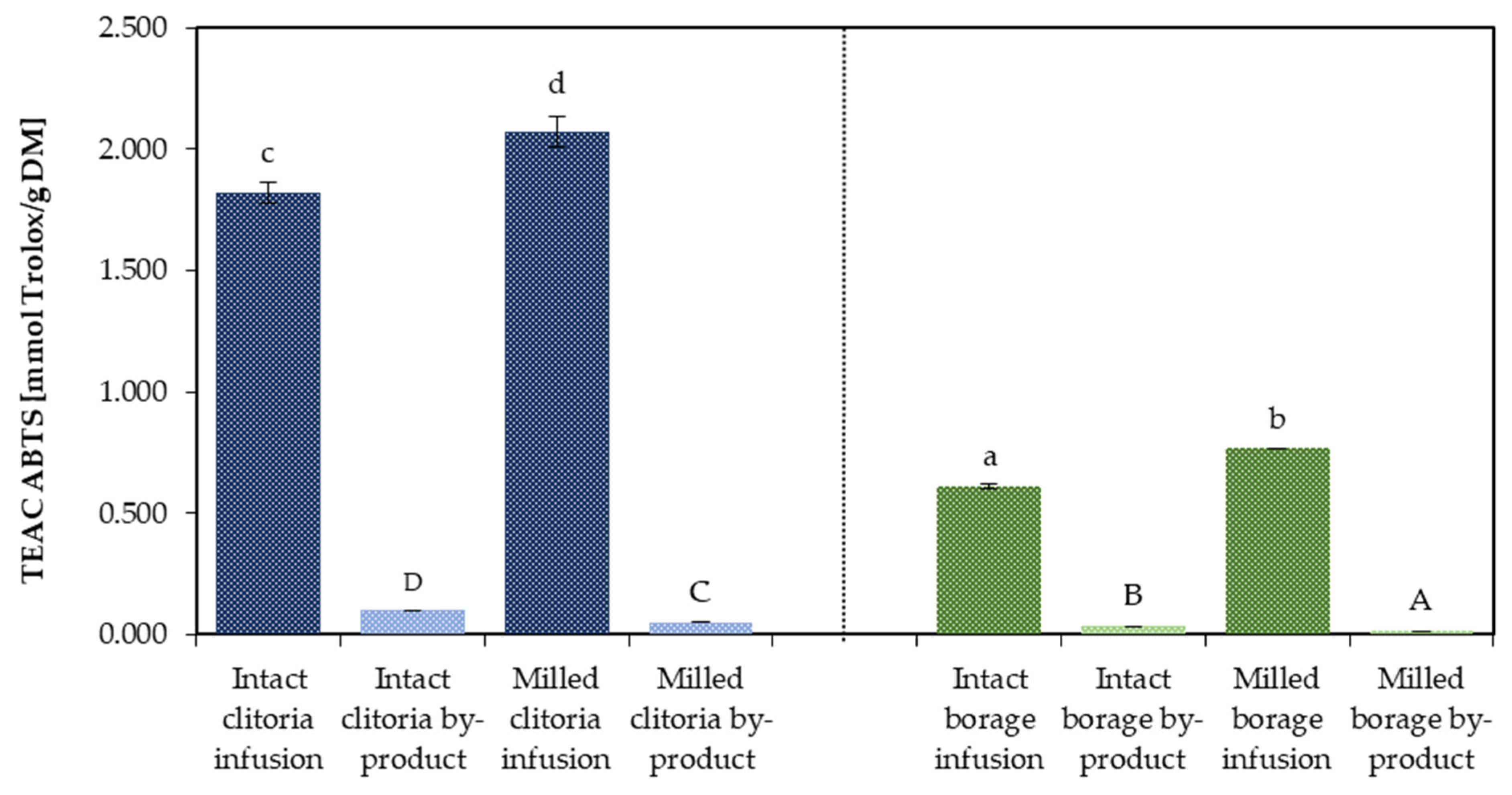
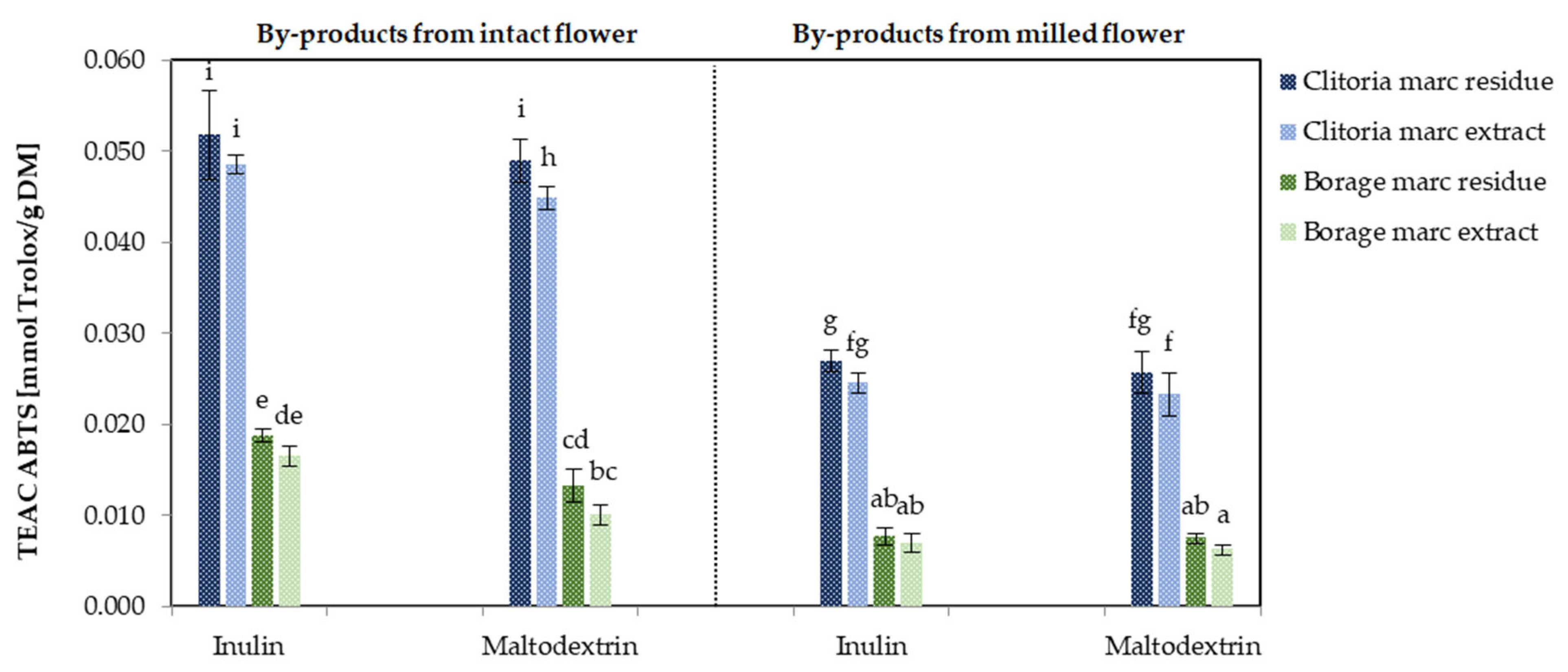
2.2.3. Antioxidant Capacity (ABTS Assay)
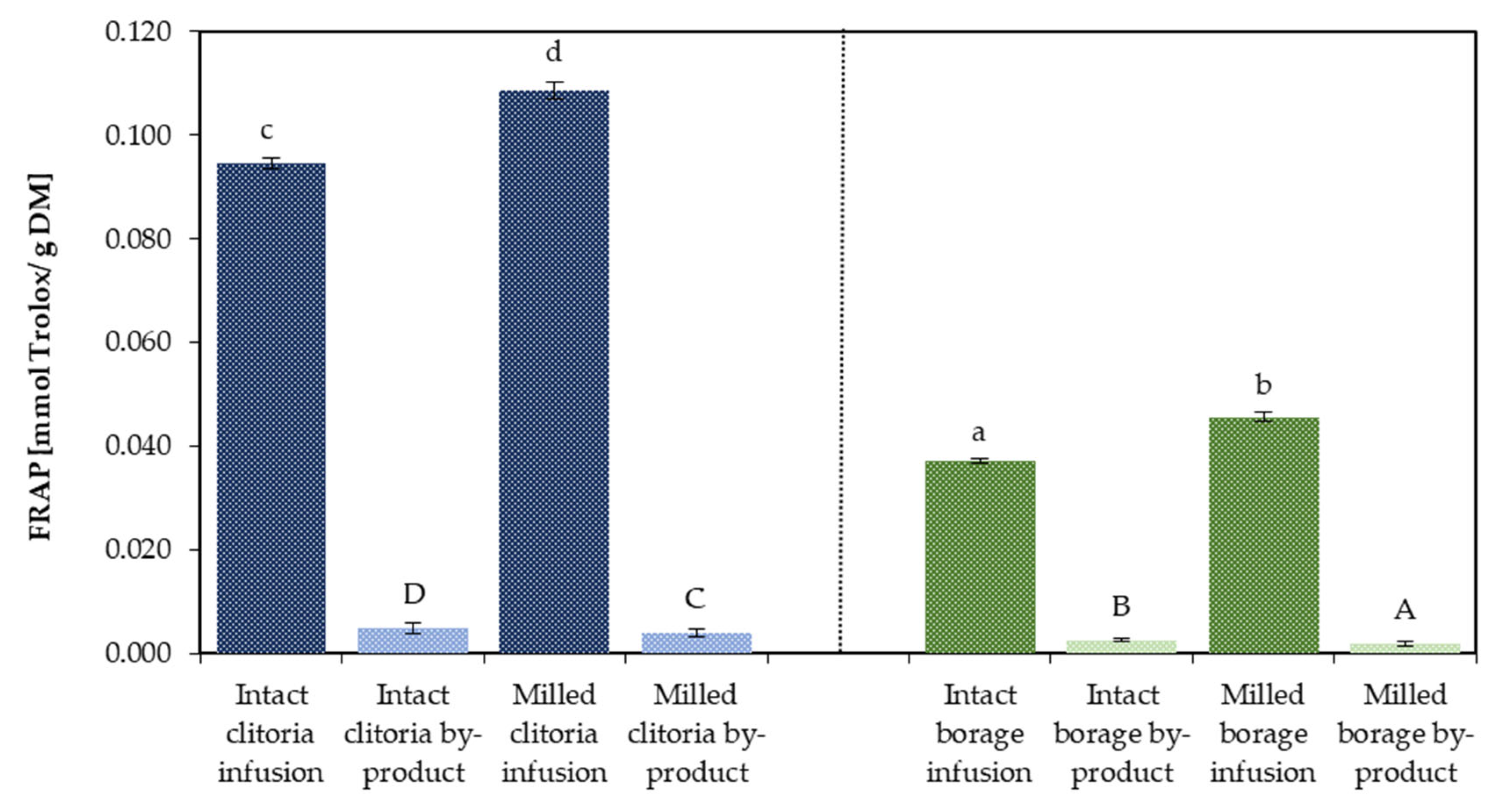
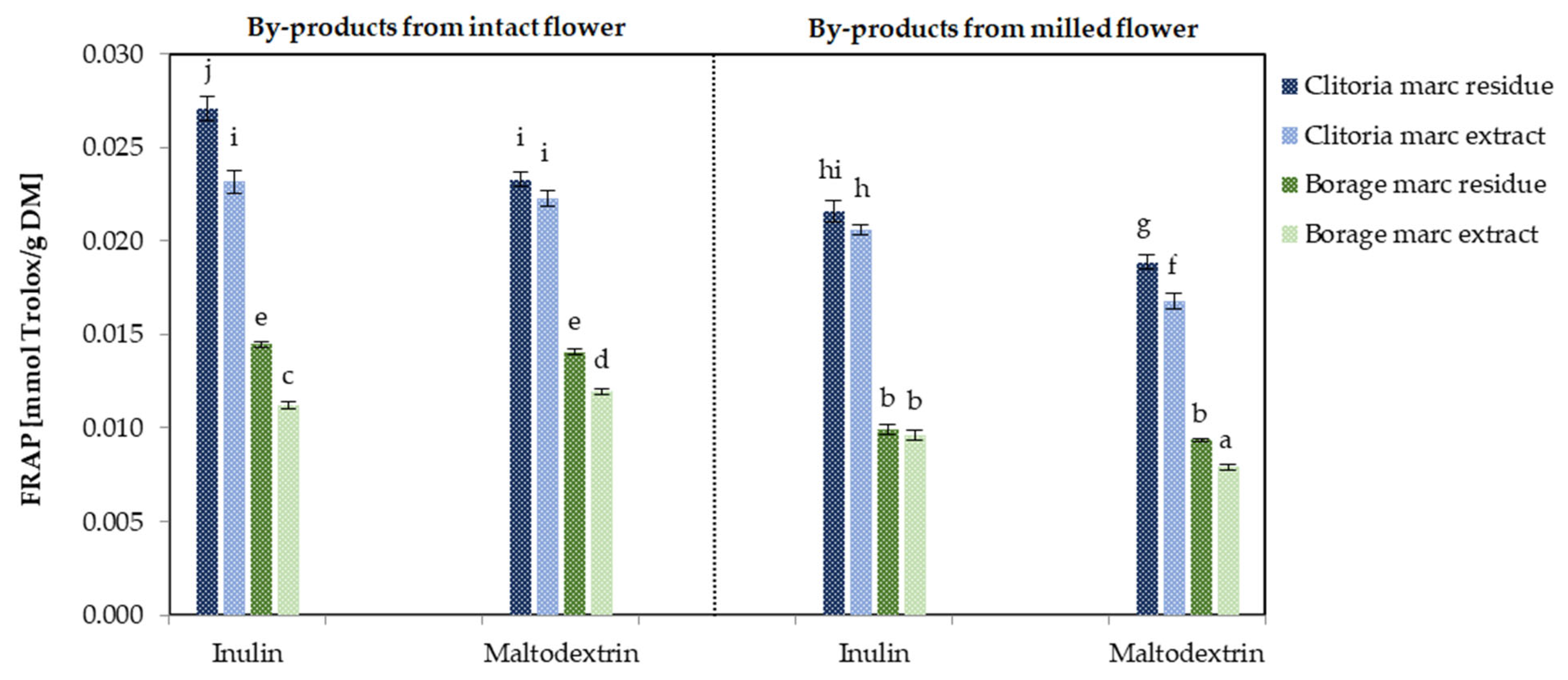
2.2.4. Antioxidant Capacity (FRAP Assay)
2.3. Correlations of Antioxidant Assays and Phenolic Compounds
2.4. Instant Properties
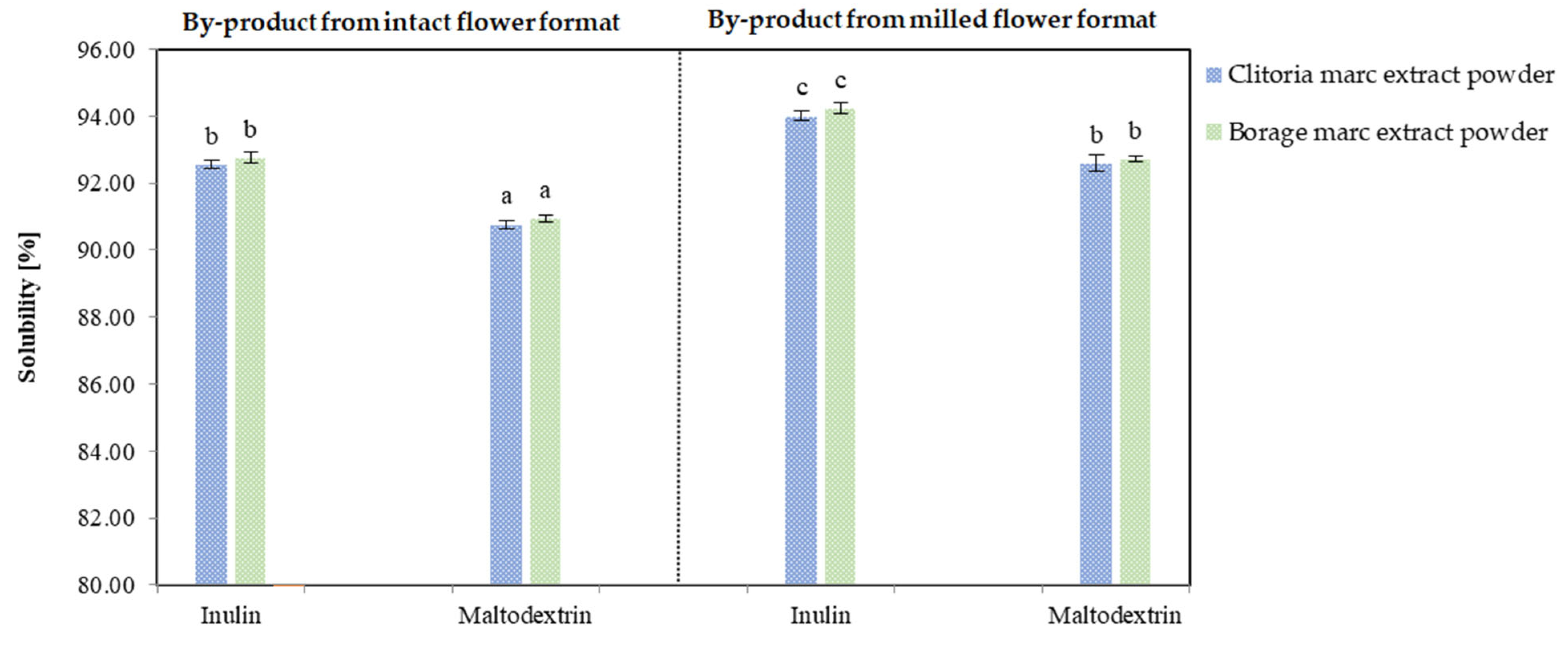
Cold Water Solubility
2.5. Limitations Related to Practical Food Applications
3. Materials and Methods
3.1. Chemicals and Reagents
3.2. Material
3.3. Methods
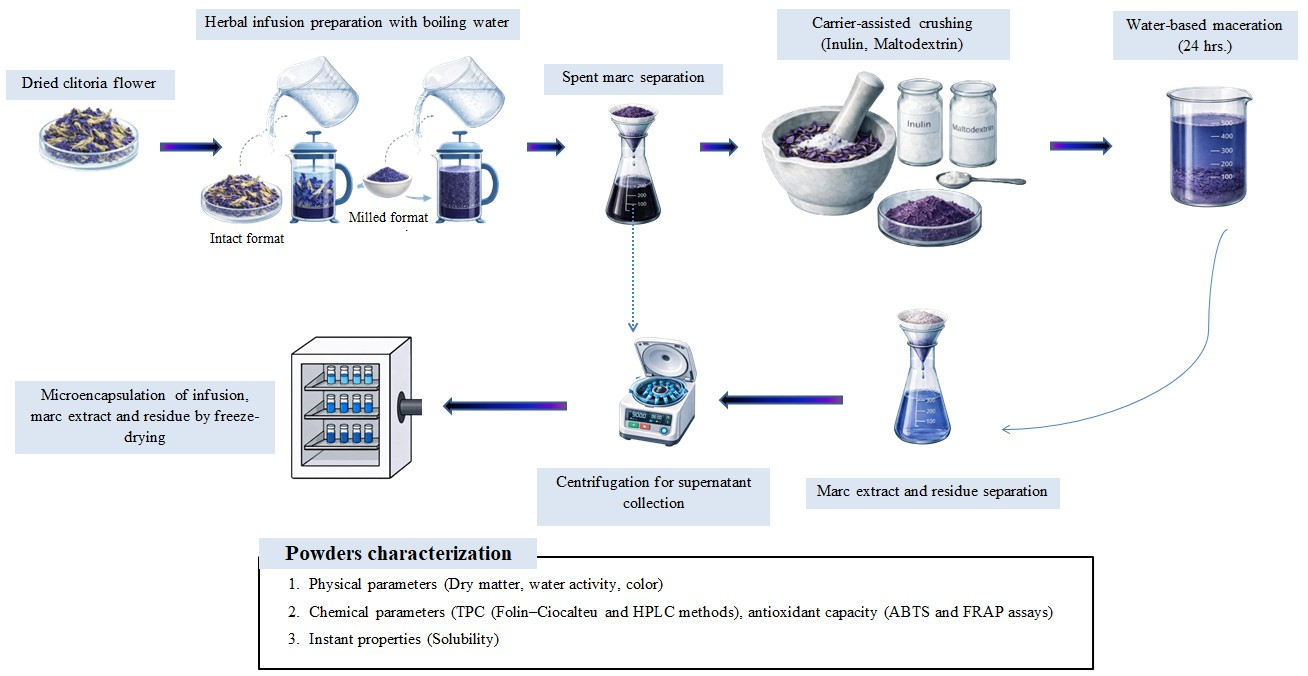
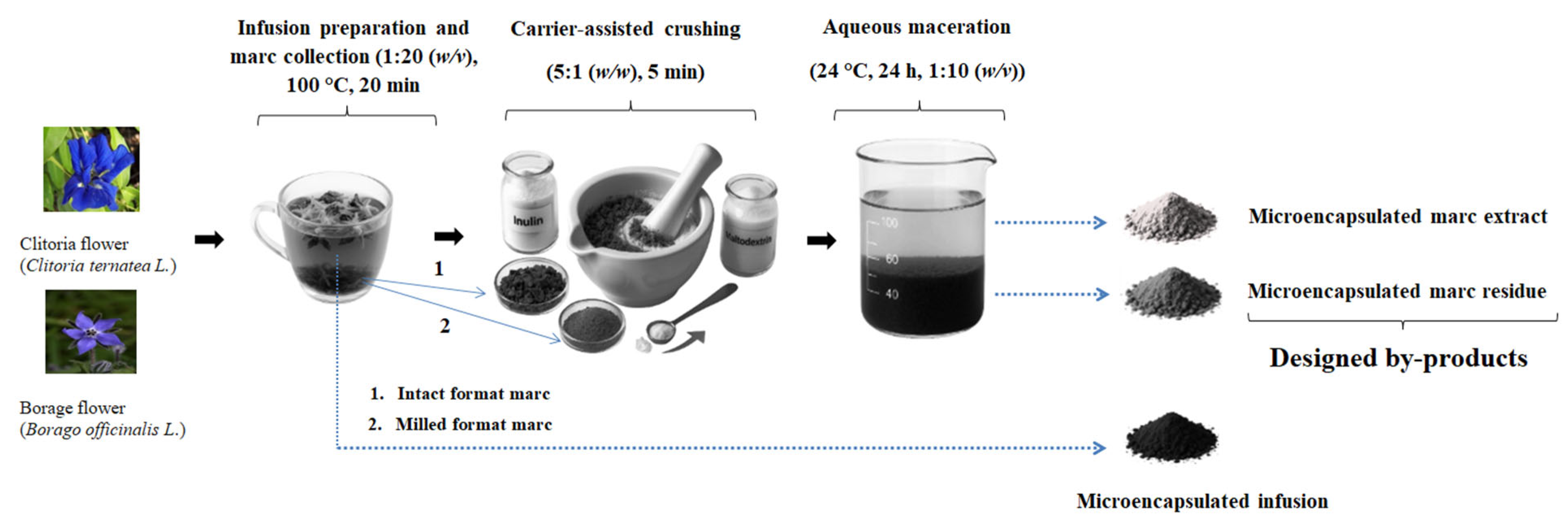
3.3.1. Preparation of Herbal Infusions and Marc Collection
3.3.2. Designed By-Products
3.3.3. Microencapsulation by Freeze-Drying
3.3.4. Physical Properties
Dry Matter (DM)
Water Activity (aw)
Color Coordinates (Lab*)
3.3.5. Chemical Properties
Extract Preparation
Total Phenolic Content (TPC) by the Folin–Ciocalteu Method
Sum of Individual Phenolic Compounds by HPLC
Antioxidant Capacity In Vitro by TEAC ABTS and FRAP Assays
3.3.6. Instant Properties
Cold Water Solubility
3.3.7. Statistical Analysis
4. Conclusions
Supplementary Materials
Author Contributions
Funding
Institutional Review Board Statement
Informed Consent Statement
Data Availability Statement
Acknowledgments
Conflicts of Interest
References
- Latif, R.; Nawaz, T. Medicinal plants and human health: A comprehensive review of bioactive compounds, therapeutic effects, and applications. Phytochem. Rev. 2025, 25, 2299–2342. [Google Scholar] [CrossRef] [Scilit]
- Dai, J.; Mumper, R.J. Plant phenolics: Extraction, analysis and their antioxidant and anticancer properties. Molecules 2010, 15, 7313–7352. [Google Scholar] [CrossRef] [Scilit]
- Sun, W.; Shahrajabian, M.H. Therapeutic potential of phenolic compounds in medicinal plants—Natural health products for human health. Molecules 2023, 28, 1845. [Google Scholar] [CrossRef] [Scilit]
- Vinogradova, N.; Vinogradova, E.; Chaplygin, V.; Mandzhieva, S.; Kumar, P.; Rajput, V.D.; Singh, R.K. Phenolic compounds of the medicinal plants in an anthropogenically transformed environment. Molecules 2023, 28, 6322. [Google Scholar] [CrossRef] [Scilit]
- Wojdyło, A.; Oszmiański, J.; Czemerys, R. Antioxidant activity and phenolic compounds in 32 selected herbs. Food Chem. 2007, 105, 940–949. [Google Scholar] [CrossRef] [Scilit]
- Bansal, P.; Maithani, M.; Gupta, V.; Kaur, G.; Bansal, R. Future prospective of nutraceutical and functional food with herbs and spices. In Herbs, Spices and Their Roles in Nutraceuticals and Functional Foods; Academic Press: Cambridge, MA, USA, 2023; pp. 361–381. [Google Scholar]
- Chong, C.H.; Dibagar, N.; Maulion, R.; Figiel, A. Drying characteristics of herbs, spices, and medicinal plants. In Drying of Herbs, Spices, and Medicinal Plants; CRC Press: Boca Raton, FL, USA, 2023; pp. 29–52. [Google Scholar]
- Embuscado, M.E. Spices and herbs: Natural sources of antioxidants—A mini review. J. Funct. Foods 2015, 18, 811–819. [Google Scholar] [CrossRef] [Scilit]
- Liu, Y.; Guo, C.; Zang, E.; Shi, R.; Liu, Q.; Zhang, M.; Li, M. Review on herbal tea as a functional food: Classification, active compounds, biological activity, and industrial status. J. Future Foods 2023, 3, 206–219. [Google Scholar] [CrossRef] [Scilit]
- Dhanavel, A. Effect of Clitoria ternatea herbal tea on management of diabetic neuropathy. Pravara Med. Rev. 2025, 17, 56–64. [Google Scholar]
- Ishchenko, S.; Złotek, U. Herbal and spice additives in functional confectionery products: A review. Molecules 2025, 30, 3449. [Google Scholar] [CrossRef] [Scilit] [PubMed]
- Kandyliari, A.; Potsaki, P.; Bousdouni, P.; Kaloteraki, C.; Christofilea, M.; Almpounioti, K.; Koutelidakis, A.E. Development of dairy products fortified with plant extracts: Antioxidant and phenolic content characterization. Antioxidants 2023, 12, 500. [Google Scholar] [CrossRef] [Scilit]
- Mukherjee, D.; Palit, P.; Roychoudhury, S.; Halder, S.; Mandal, S.C. White tea: An emerging gift of nature and bioprospection towards the development of novel herbal formulations, nutraceuticals, and cosmetics. In Advances in Medicinal and Aromatic Plants; Apple Academic Press: Palm Bay, FL, USA, 2024; Volume 2, p. 403. [Google Scholar]
- Ekasari, W.; Kurnia, A.I.; Wirabuana, R.K.; Angembani, V.M.; Prameswari, E.S.; Suri, W.A.; Sahu, R.K. Sedative and anxiolytic activities of Cassia spectabilis leaf extract: An in vivo and in silico evaluation in a mouse model of stress. Vet. Med. Int. 2025, 2025, 7703472. [Google Scholar] [CrossRef] [Scilit]
- Madisch, A.; Frieling, T.; Zimmermann, A.; Hollenz, M.; Labenz, J.; Stracke, B.; Miehlke, S. Menthacarin, a proprietary peppermint oil and caraway oil combination, improves multiple complaints in patients with functional gastrointestinal disorders: A systematic review and meta-analysis. Dig. Dis. 2023, 41, 522–532. [Google Scholar] [CrossRef] [Scilit]
- Yaman, İ.; Yiğit, U.; Kırzıoğlu, F.Y.; Özmen, Ö.; Ağar, O.T.; Demirci, S. The possible relationship between periodontitis and Alzheimer’s disease and the beneficial effects of Salvia officinalis in an experimental rat model: An immunohistochemical study. Med. J. Süleyman Demirel Univ. 2025, 32, 111–120. [Google Scholar] [CrossRef] [Scilit]
- Brimson, J.M.; Prasanth, M.I.; Kumaree, K.K.; Thitilertdecha, P.; Malar, D.S.; Tencomnao, T.; Prasansuklab, A. Tea plant (Camellia sinensis): A current update on use in diabetes, obesity, and cardiovascular disease. Nutrients 2022, 15, 37. [Google Scholar] [CrossRef] [Scilit] [PubMed]
- Ekor, M. The growing use of herbal medicines: Issues relating to adverse reactions and challenges in monitoring safety. Front. Pharmacol. 2014, 4, 177. [Google Scholar] [CrossRef] [Scilit] [PubMed]
- Mazár, J.; Albert, K.; Kovács, Z.; Koris, A.; Nath, A.; Bánvölgyi, S. Advances in spray-drying and freeze-drying technologies for the microencapsulation of instant tea and herbal powders: The role of wall materials. Foods 2025, 14, 486. [Google Scholar] [CrossRef] [Scilit] [PubMed]
- Cifte, N.E.; Taskin, E.; Gorgisen, G.; Namli, S.; Yetgin, M.M.; Gurleyik, A.; Oztop, M.H. Valorization of black tea waste fibers into instant teas and characterization of their bioactive profile and physicochemical properties. ACS Food Sci. Technol. 2024, 5, 162–174. [Google Scholar] [CrossRef] [Scilit]
- Zhao, N.; Begho, T. Micro-level contributions towards SDG Target 12.3: Identifying the behavioural drivers of household food waste reduction. Stud. Microecon. 2025, 13, 106–126. [Google Scholar] [CrossRef] [Scilit]
- Pallarés, N.; Berrada, H.; Ferrer, E.; Rached, W.; Pinela, J.; Mandim, F.; Pires, T.C.S.P.; Finimundy, T.C.; Barba, F.J.; Barros, L. Green and innovative extraction: Phenolic profiles and biological activities of underutilized plant extracts using pulsed electric fields and maceration. Foods 2025, 14, 222. [Google Scholar] [CrossRef] [Scilit]
- Xie, J.; Lin, Y.S.; Shi, X.J.; Zhu, X.Y.; Su, W.K.; Wang, P. Mechanochemical-assisted extraction of flavonoids from bamboo (Phyllostachys edulis) leaves. Ind. Crops Prod. 2013, 43, 276–282. [Google Scholar] [CrossRef] [Scilit]
- Jin, L.; Li, H.; Wu, F.; Li, X.; Yu, H.; Cui, N.; Xu, Y. Application of mechanochemical pretreatment prior to aqueous extraction of eleutheroside B from Eleutherococcus senticosus. Ind. Eng. Chem. Res. 2012, 51, 10695–10701. [Google Scholar] [CrossRef] [Scilit]
- Simić, S.; Vidović, S.; Lubura Stošić, J.; Filipović, K.; Aladić, K.; Jokić, S.; Gavarić, A. Utilizing herbal dust: Ultrasound-assisted extraction of green tea, hibiscus, and lemon balm filter tea industry waste. Processes 2024, 12, 2405. [Google Scholar] [CrossRef] [Scilit]
- Escher, G.B.; Wen, M.; Zhang, L.; Rosso, N.D.; Granato, D. Phenolic Composition by UHPLC-Q-TOF-MS/MS and Stability of Anthocyanins from Clitoria ternatea L. (Butterfly pea) Blue Petals. Food Chem. 2020, 331, 127341. [Google Scholar] [CrossRef] [Scilit] [PubMed]
- US Food and Drug Administration. FDA Approves Three Food Colors from Natural Sources. FDA News Events. Available online: https://www.fda.gov/news-events/press-announcements/fda-approves-three-food-colors-natural-sources (accessed on 9 May 2025).
- Darijani, S.; Afsahi, M.M.; Akhavan, H.R.; Goharrizi, A.S. Drying of borage (Echium amoenum) flowers extract: Optimization of encapsulation and spouted bed drying. Appl. Food Res. 2025, 5, 100836. [Google Scholar] [CrossRef] [Scilit]
- Mohammadalinejhad, S.; Almasi, H.; Moradi, M. Immobilization of Echium amoenum Anthocyanins into Bacterial Cellulose Film: A Novel Colorimetric pH Indicator for Freshness/Spoilage Monitoring of Shrimp. Food Control. 2020, 113, 107169. [Google Scholar] [CrossRef] [Scilit]
- Vidana Gamage, G.C.; Lim, Y.Y.; Choo, W.S. Anthocyanins from Clitoria ternatea Flower: Biosynthesis, Extraction, Stability, Antioxidant Activity, and Applications. Front. Plant Sci. 2021, 12, 792303. [Google Scholar] [CrossRef] [Scilit]
- Zannou, O.; Pashazadeh, H.; Ghellam, M.; Ibrahim, S.A.; Koca, I. Extraction of anthocyanins from borage (Echium amoenum) flowers using choline chloride and a glycerol-based deep eutectic solvent: Optimization, antioxidant activity, and in vitro bioavailability. Molecules 2021, 27, 134. [Google Scholar] [CrossRef] [Scilit]
- Handayani, L.; Aprilia, S.; Arahman, N.; Bilad, M.R. Identification of the anthocyanin profile from butterfly pea (Clitoria ternatea L.) flowers under varying extraction conditions: Evaluating its potential as a natural blue food colorant and its application as a colorimetric indicator. S. Afr. J. Chem. Eng. 2024, 49, 151–161. [Google Scholar] [CrossRef] [Scilit]
- Hariadi, H.; Amien, S.; Karuniawan, A.; Darniadi, S.; Histifarina, D.; Indriati, A.; Ramadiyanti, M. The effect of three drying methods on physicochemical properties of powdered butterfly pea flower extract (Clitoria ternatea L.). Food Sci. Technol. 2024, 44, E00119. [Google Scholar] [CrossRef] [Scilit]
- Souza, M.A.D.; Vilas-Boas, I.T.; Leite-da-Silva, J.M.; Abrahão, P.D.N.; Teixeira-Costa, B.E.; Veiga-Junior, V.F. Polysaccharides in agro-industrial biomass residues. Polysaccharides 2022, 3, 95–120. [Google Scholar] [CrossRef] [Scilit]
- Przybył, K.; Walkowiak, K.; Jedlińska, A.; Samborska, K.; Masewicz, Ł.; Biegalski, J.; Koszela, K. Fruit powder analysis using machine learning based on color and FTIR-ATR spectroscopy—Case study: Blackcurrant powders. Appl. Sci. 2023, 13, 9098. [Google Scholar] [CrossRef] [Scilit]
- Hedegaard, R.V.; Skibsted, L.H. Shelf-life of food powders. In Handbook of Food Powders; Bhandari, B., Bansal, N., Zhang, M., Schuck, P., Eds.; Woodhead Publishing: Cambridge, UK, 2024; pp. 335–354. [Google Scholar]
- Juárez-Enríquez, E.; Olivas, G.I.; Zamudio-Flores, P.B.; Ortega-Rivas, E.; Pérez-Vega, S.; Sepúlveda, D.R. Effect of water content on the flowability of hygroscopic powders. J. Food Eng. 2017, 205, 12–17. [Google Scholar] [CrossRef] [Scilit]
- Araujo-Díaz, S.B.; Leyva-Porras, C.; Aguirre-Bañuelos, P.; Álvarez-Salas, C.; Saavedra-Leos, Z. Evaluation of the physical properties and conservation of the antioxidants content, employing inulin and maltodextrin in the spray drying of blueberry juice. Carbohydr. Polym. 2017, 167, 317–325. [Google Scholar] [CrossRef] [Scilit]
- El-Kholy, W.M.; Bisar, G.H.; Aamer, R.A. Impact of inulin extracted and purified from chicory and globe artichoke roots and its combination with maltodextrin as prebiotic dietary fiber on the functional properties of stirred bio-yogurt. Food Nutr. Sci. 2023, 14, 70–89. [Google Scholar]
- Stępień, A.; Witczak, M.; Witczak, T. The thermal characteristics, sorption isotherms and state diagrams of the freeze-dried pumpkin-inulin powders. Molecules 2022, 27, 2225. [Google Scholar] [CrossRef] [Scilit]
- Sritham, E.; Gunasekaran, S. Thermal evaluation of sucrose–maltodextrin–sodium citrate bioglass: Glass transition temperature. Food Hydrocoll. 2016, 60, 589–597. [Google Scholar] [CrossRef] [Scilit]
- Magri, G.; Franzé, S.; Musazzi, U.M.; Selmin, F.; Cilurzo, F. Maltodextrins as drying auxiliary agent for the preparation of easily resuspendable nanoparticles. J. Drug Deliv. Sci. Technol. 2019, 50, 181–187. [Google Scholar] [CrossRef] [Scilit]
- Michalska-Ciechanowska, A.; Majerska, J.; Brzezowska, J.; Wojdyło, A.; Figiel, A. The influence of maltodextrin and inulin on the physico-chemical properties of cranberry juice powders. ChemEngineering 2020, 4, 12. [Google Scholar] [CrossRef] [Scilit]
- Świąder, K.; Florowska, A.; Konisiewicz, Z. The sensory quality and the textural properties of functional oolong tea-infused set-type yoghurt with inulin. Foods 2021, 10, 1242. [Google Scholar] [CrossRef] [Scilit] [PubMed]
- Jaafar, N.F.; Ramli, M.E.; Salleh, R.M. Optimum extraction condition of Clitorea ternatea flower on antioxidant activities, total phenolic, total flavonoid and total anthocyanin contents. Trop. Life Sci. Res. 2020, 31, 1–17. [Google Scholar] [CrossRef] [Scilit]
- Ceccanti, C.; Landi, M.; Guidi, L.; Pardossi, A.; Incrocci, L. Seasonal fluctuations of crop yield, total phenolic content and antioxidant activity in fresh or cooked borage (Borago officinalis L.), mallow (Malva sylvestris L.) and buck’s-horn plantain (Plantago coronopus L.) leaves. Horticulturae 2022, 8, 253. [Google Scholar] [CrossRef] [Scilit]
- Michalska, A.; Wojdyło, A.; Brzezowska, J.; Majerska, J.; Ciska, E. The influence of inulin on the retention of polyphenolic compounds during the drying of blackcurrant juice. Molecules 2019, 24, 4167. [Google Scholar] [CrossRef] [Scilit]
- Karastergiou, A.; Gancel, A.L.; Jourdes, M.; Teissedre, P.L. Transforming winemaking waste: Grape pomace as a sustainable source of bioactive compounds. OENO One 2025, 59, 1–12. [Google Scholar] [CrossRef] [Scilit]
- Adamczuk, N.; Krauze-Baranowska, M.; Ośko, J.; Grembecka, M.; Migas, P. Comparison of antioxidant properties of fruit from some cultivated varieties and hybrids of Rubus idaeus and Rubus occidentalis. Antioxidants 2025, 14, 86. [Google Scholar] [CrossRef] [Scilit]
- Trevizan, J.; Soto, E.; Parra, F.; Bustos, L.; Parra, C. Antioxidant activity of nine medicinal plants with commercial potential. Idesia 2020, 38, 53–58. [Google Scholar] [CrossRef] [Scilit]
- Surveswaran, S.; Cai, Y.Z.; Corke, H.; Sun, M. Systematic evaluation of natural phenolic antioxidants from 133 Indian medicinal plants. Food Chem. 2007, 102, 938–953. [Google Scholar] [CrossRef] [Scilit]
- Gu, C.; Howell, K.; Dunshea, F.R.; Suleria, H.A. LC-ESI-QTOF/MS characterisation of phenolic acids and flavonoids in polyphenol-rich fruits and vegetables and their potential antioxidant activities. Antioxidants 2019, 8, 405. [Google Scholar] [CrossRef] [Scilit] [PubMed]
- Sattler, M.; Huch, M.; Bunzel, D.; Soukup, S.T.; Kulling, S.E. Pyrrolizidine alkaloid contents and profiles in Borago officinalis leaves, flowers and microgreens: Implications for safety. Food Control 2025, 168, 110930. [Google Scholar] [CrossRef] [Scilit]
- European Commission. Commission Regulation (EU) 2023/915 of 25 April 2023 on Maximum Levels for Certain Contaminants in Food and Repealing Regulation (EC) No 1881/2006. Off. J. Eur. Union 2023, L119, 103–157. [Google Scholar]
- Shoaib, M.; Shehzad, A.; Omar, M.; Rakha, A.; Raza, H.; Sharif, H.R.; Niazi, S. Inulin: Properties, health benefits and food applications. Carbohydr. Polym. 2016, 147, 444–454. [Google Scholar] [CrossRef] [Scilit]
- González-Ortega, R.; Faieta, M.; Di Mattia, C.D.; Valbonetti, L.; Pittia, P. Microencapsulation of olive leaf extract by freeze-drying: Effect of carrier composition on process efficiency and technological properties of the powders. J. Food Eng. 2020, 285, 110089. [Google Scholar] [CrossRef] [Scilit]
- Figiel, A. Drying kinetics and quality of beetroots dehydrated by combination of convective and vacuum-microwave methods. J. Food Eng. 2010, 98, 461–470. [Google Scholar] [CrossRef] [Scilit]
- Horszwald, A.; Andlauer, W. Characterisation of bioactive compounds in berry juices by traditional photometric and modern microplate methods. J. Berry Res. 2011, 1, 189–199. [Google Scholar] [CrossRef] [Scilit]
- Re, R.; Pellegrini, N.; Proteggente, A.; Pannala, A.; Yang, M.; Rice-Evans, C. Antioxidant activity applying an improved ABTS radical cation decolorization assay. Free Radic. Biol. Med. 1999, 26, 1231–1237. [Google Scholar] [CrossRef] [Scilit] [PubMed]
- Benzie, I.F.; Strain, J.J. The ferric reducing ability of plasma (FRAP) as a measure of “antioxidant power”: The FRAP assay. Anal. Biochem. 1996, 239, 70–76. [Google Scholar] [CrossRef] [Scilit] [PubMed]
- Santhalakshmy, S.; Bosco, S.J.D.; Francis, S.; Sabeena, M. Effect of inlet temperature on physicochemical properties of spray-dried jamun fruit juice powder. Powder Technol. 2015, 274, 37–43. [Google Scholar] [CrossRef] [Scilit]








| Variables | Sum of Phenolics | TPC | FRAP | ABTS |
|---|---|---|---|---|
| Sum of phenolics | 1 | 0.788 (p = 0.212) | 0.714 (p = 0.286) | 0.840 (p = 0.160) |
| TPC | 1 | 0.929 (p = 0.071) | 0.984 (p = 0.016) | |
| FRAP | 1 | 0.856 (p = 0.144) | ||
| ABTS | 1 |
| Variables | Sum of Phenolics | TPC | FRAP | ABTS |
|---|---|---|---|---|
| Sum of phenolics | 1 | 0.868 (p = 0.132) | 0.967 (p = 0.033) | 0.947 (p = 0.053) |
| TPC | 1 | 0.827 (p = 0.173) | 0.949 (p = 0.051) | |
| FRAP | 1 | 0.860 (p = 0.140) | ||
| ABTS | 1 |
| Variables | Sum of Phenolics | TPC | FRAP | ABTS |
|---|---|---|---|---|
| Sum of phenolics | 1 | 0.586 (p = 0.414) | 0.824 (p = 0.176) | 0.901 (p = 0.799) |
| TPC | 1 | 0.939 (p = 0.060) | 0.879 (p = 0.122) | |
| FRAP | 1 | 0.678 (p = 0.322) | ||
| ABTS | 1 |
| Variables | Sum of Phenolics | TPC | FRAP | ABTS |
|---|---|---|---|---|
| Sum of phenolics | 1 | 0.738 (p = 0.262) | 0.828 (p = 0.171) | 0.605 (p = 0.395) |
| TPC | 1 | 0.963 (p = 0.037) | 0.871 (p = 0.129) | |
| FRAP | 1 | 0.929 (p = 0.071) | ||
| ABTS | 1 |
Disclaimer/Publisher’s Note: The statements, opinions and data contained in all publications are solely those of the individual author(s) and contributor(s) and not of MDPI and/or the editor(s). MDPI and/or the editor(s) disclaim responsibility for any injury to people or property resulting from any ideas, methods, instructions or products referred to in the content. |
© 2026 by the authors. Licensee MDPI, Basel, Switzerland. This article is an open access article distributed under the terms and conditions of the Creative Commons Attribution (CC BY) license.
Share and Cite
Dibagar, N.; Michalska-Ciechanowska, A.; Kucharska-Guzik, A. Investigating the Potential of By-Products from Clitoria and Borage Flower Infusions for Valorization: A Comparative Study. Molecules 2026, 31, 1335. https://doi.org/10.3390/molecules31081335
Dibagar N, Michalska-Ciechanowska A, Kucharska-Guzik A. Investigating the Potential of By-Products from Clitoria and Borage Flower Infusions for Valorization: A Comparative Study. Molecules. 2026; 31(8):1335. https://doi.org/10.3390/molecules31081335
Chicago/Turabian StyleDibagar, Nesa, Anna Michalska-Ciechanowska, and Alicja Kucharska-Guzik. 2026. "Investigating the Potential of By-Products from Clitoria and Borage Flower Infusions for Valorization: A Comparative Study" Molecules 31, no. 8: 1335. https://doi.org/10.3390/molecules31081335
APA StyleDibagar, N., Michalska-Ciechanowska, A., & Kucharska-Guzik, A. (2026). Investigating the Potential of By-Products from Clitoria and Borage Flower Infusions for Valorization: A Comparative Study. Molecules, 31(8), 1335. https://doi.org/10.3390/molecules31081335