Application of Silibinin Oleate as a Nutraceutical Antioxidant for Improving the Quality of Sunflower Oil


 , ,
, ,  , , , and
Abstract
1. Introduction
2. Results and Discussion
2.1. Evolution of Primary Oxidation (PV), Secondary Oxidation (p-AV) and Integrated Oxidation Assessment (TOTOX)
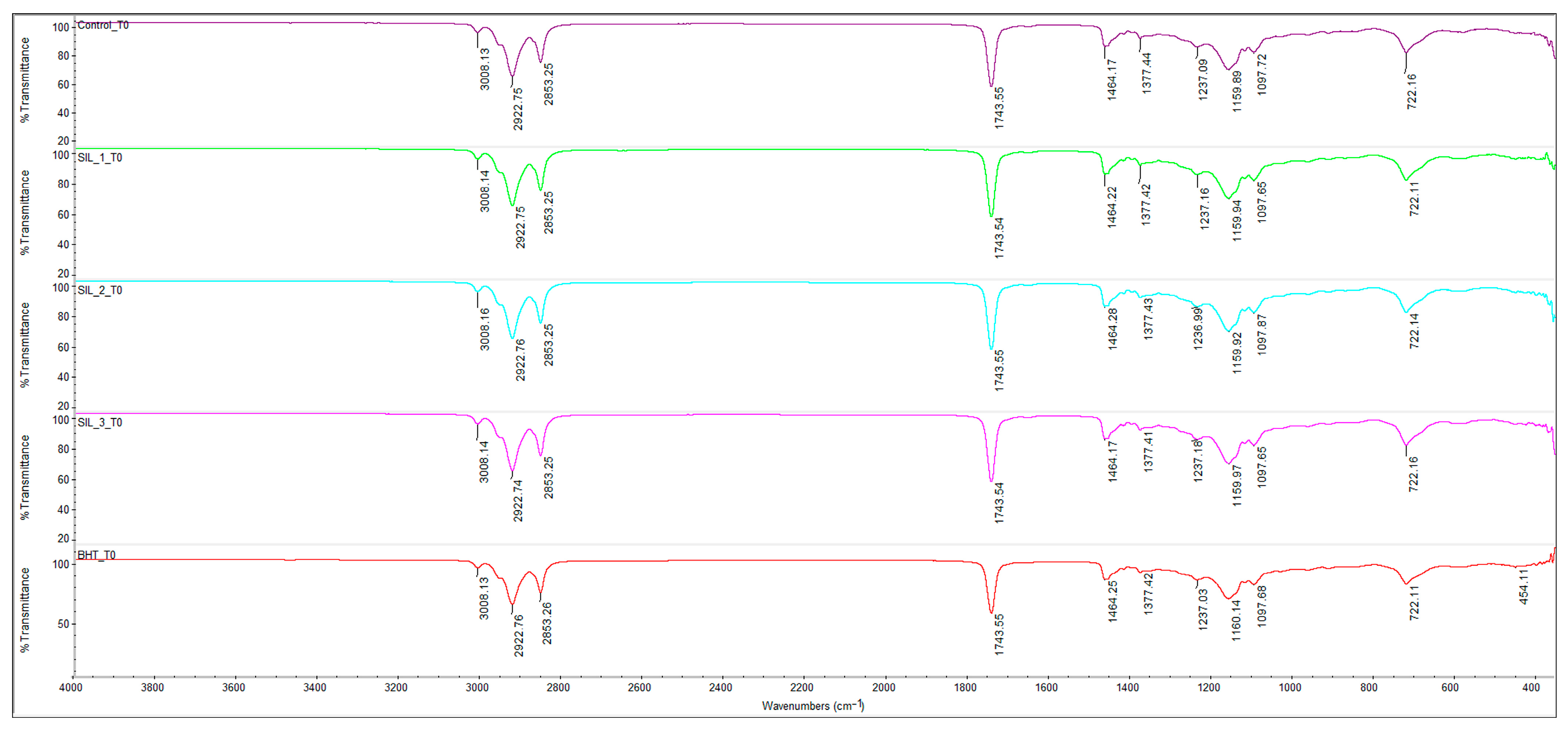
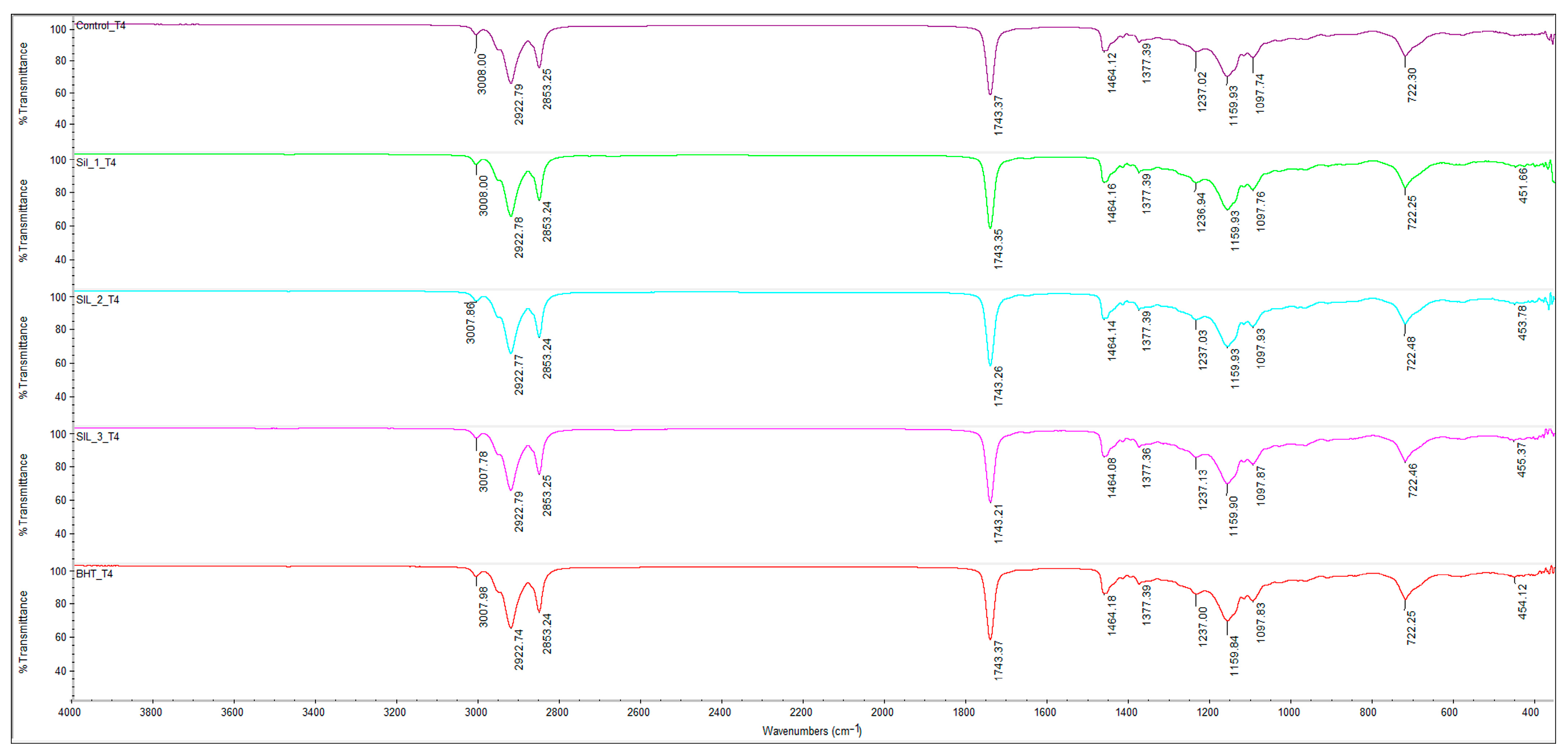
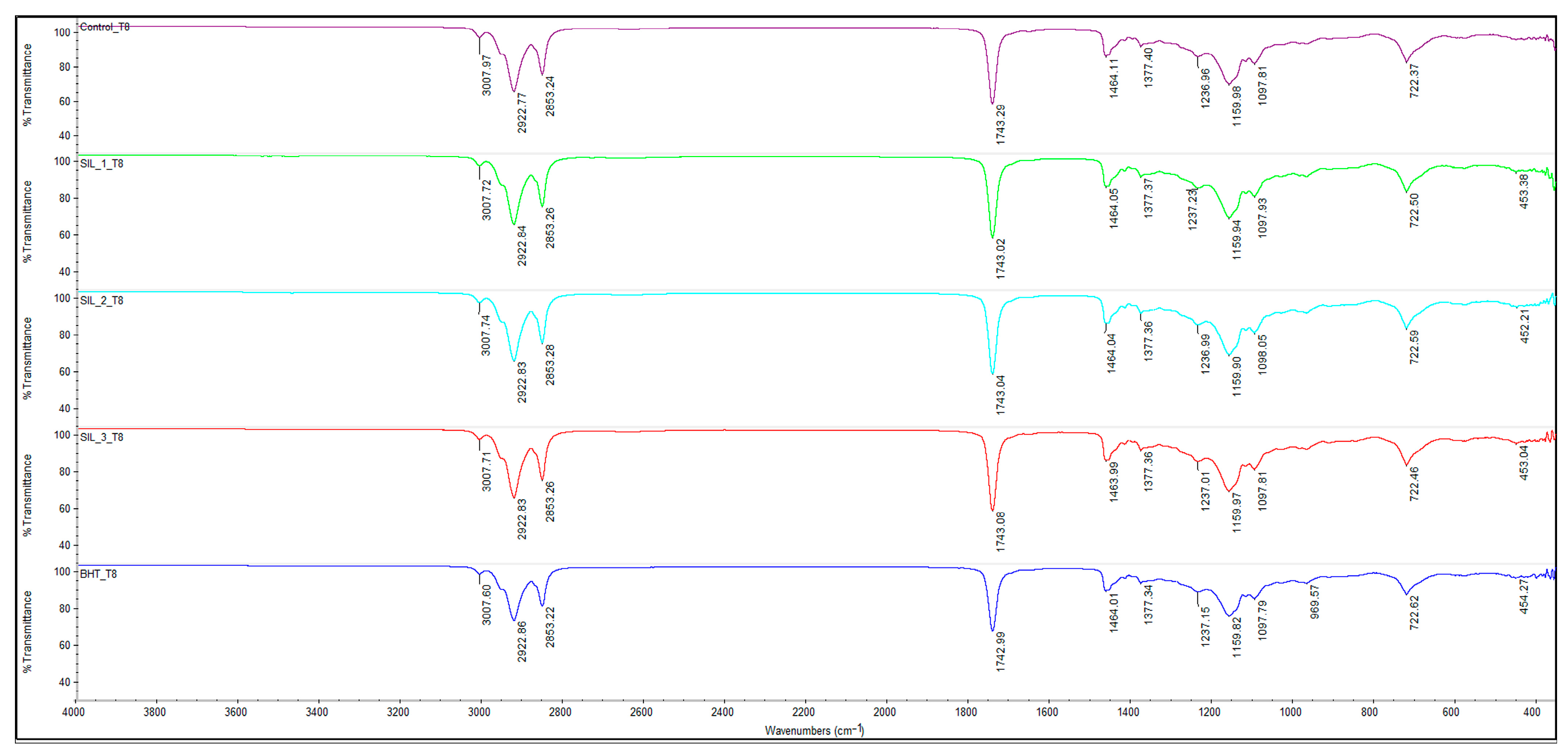
2.2. Changes of ATR-FTIR Spectrum
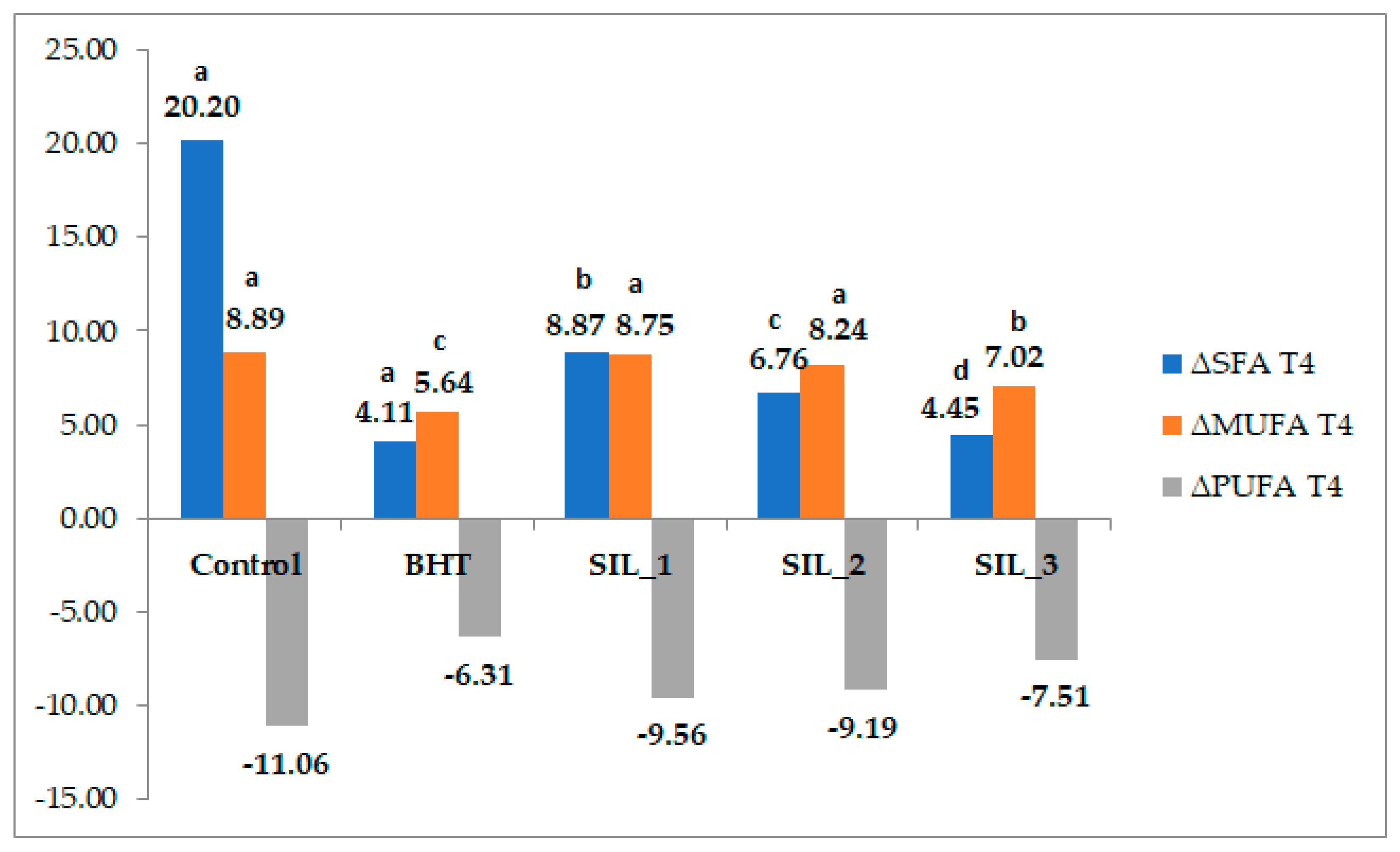
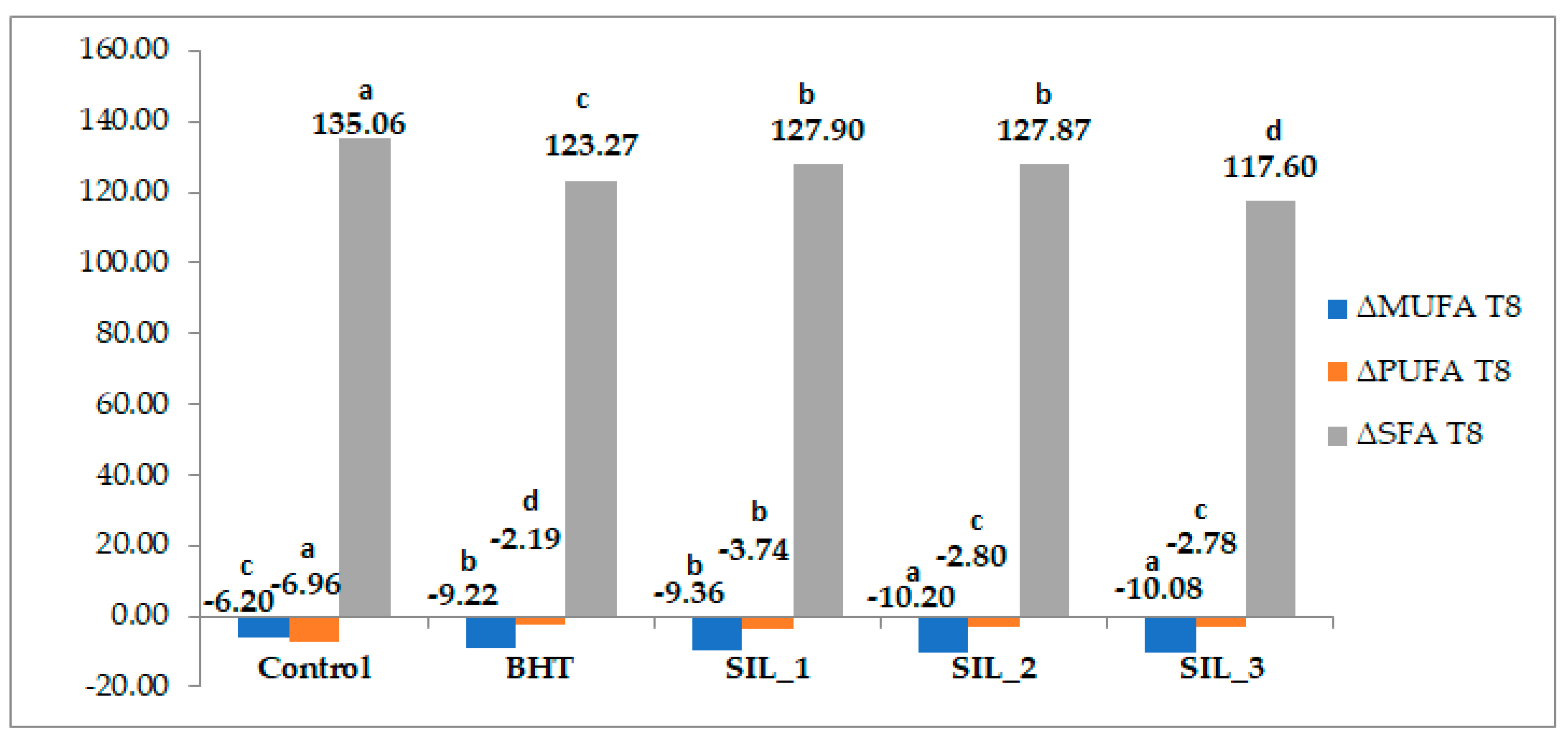
2.3. Evolution of Main Fatty Acid Classes
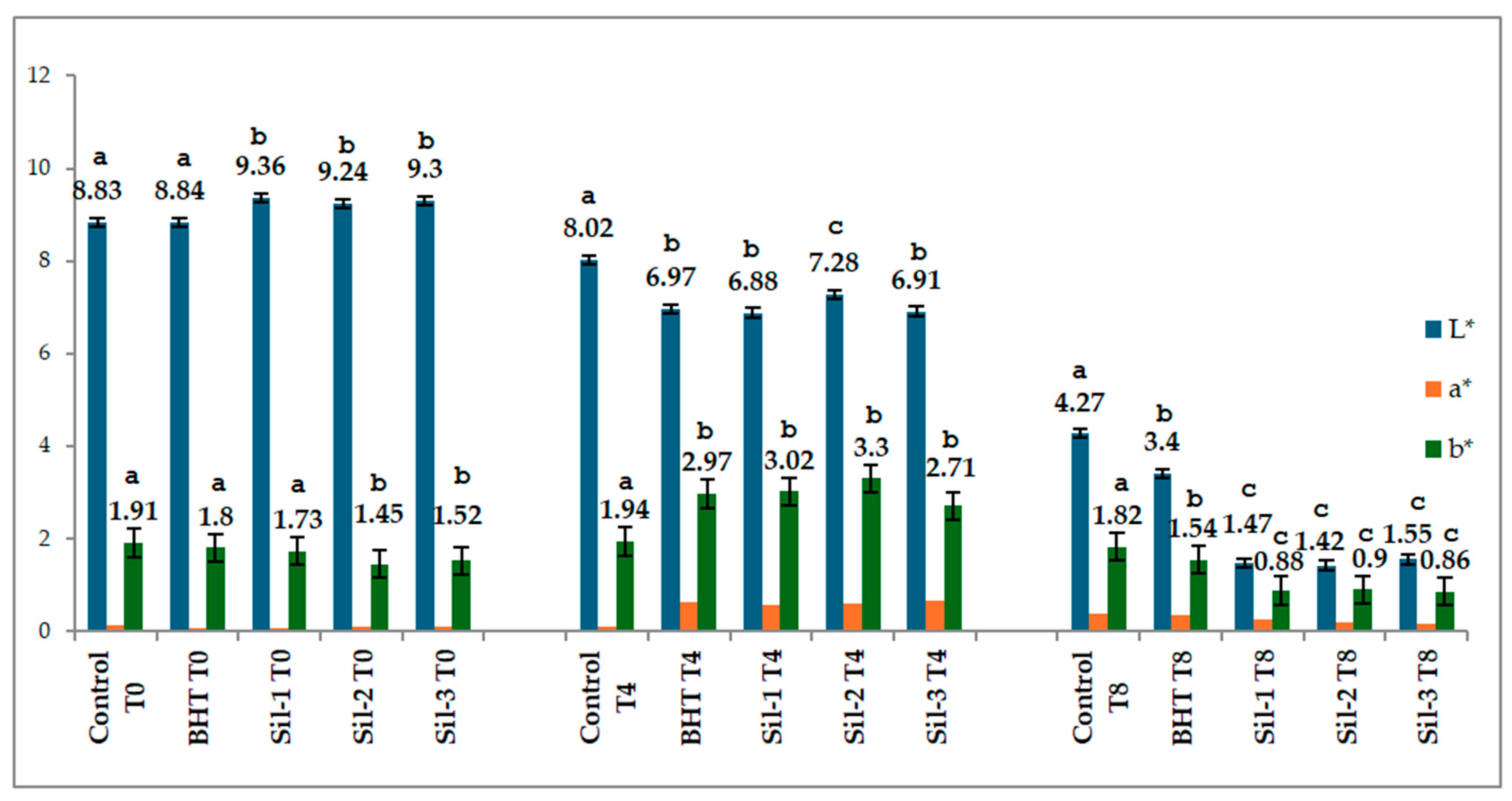
2.4. The Changes in Color Parameters
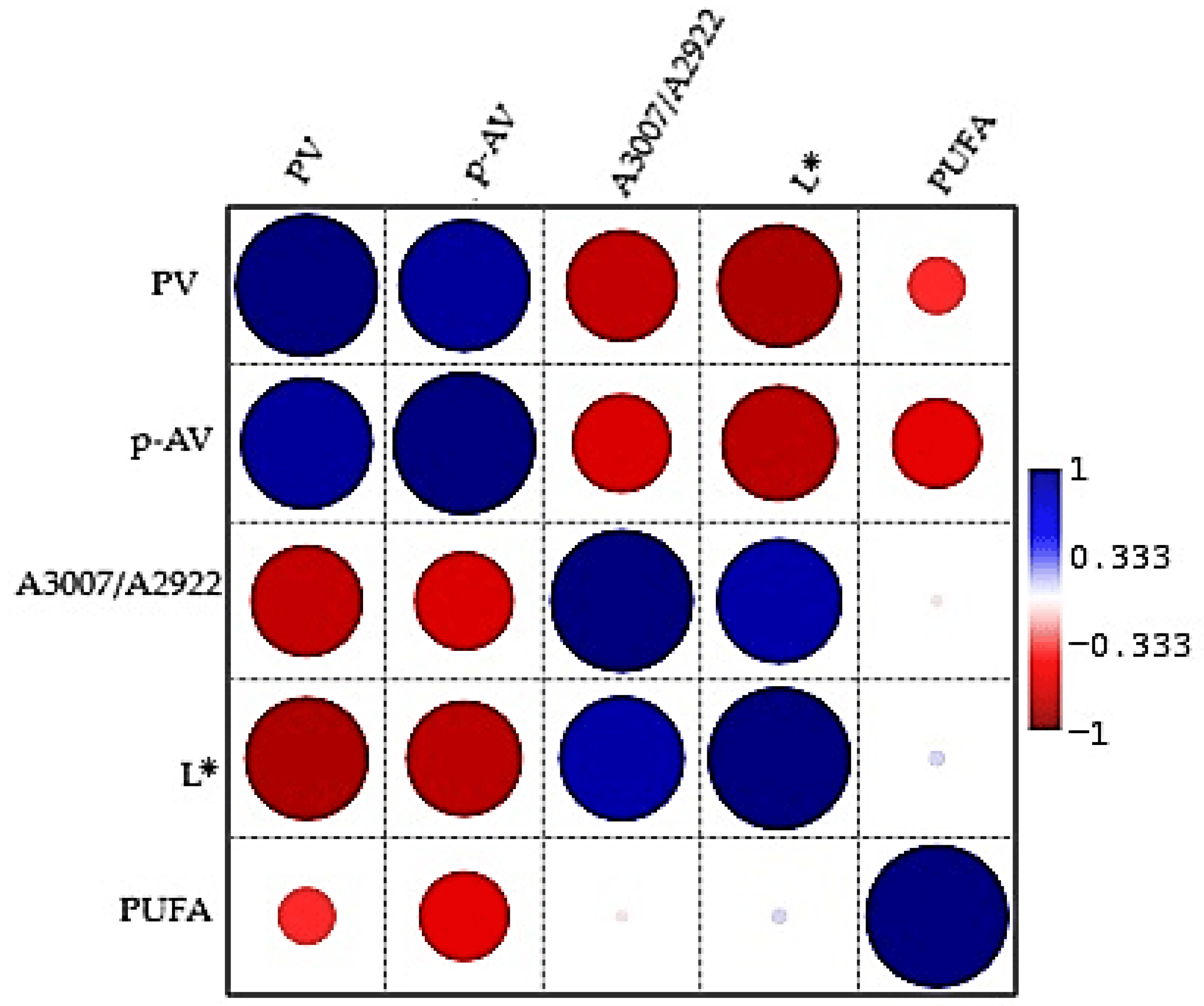
2.5. Correlation Between Parameters
2.5.1. Pearson Correlation Between Parameters
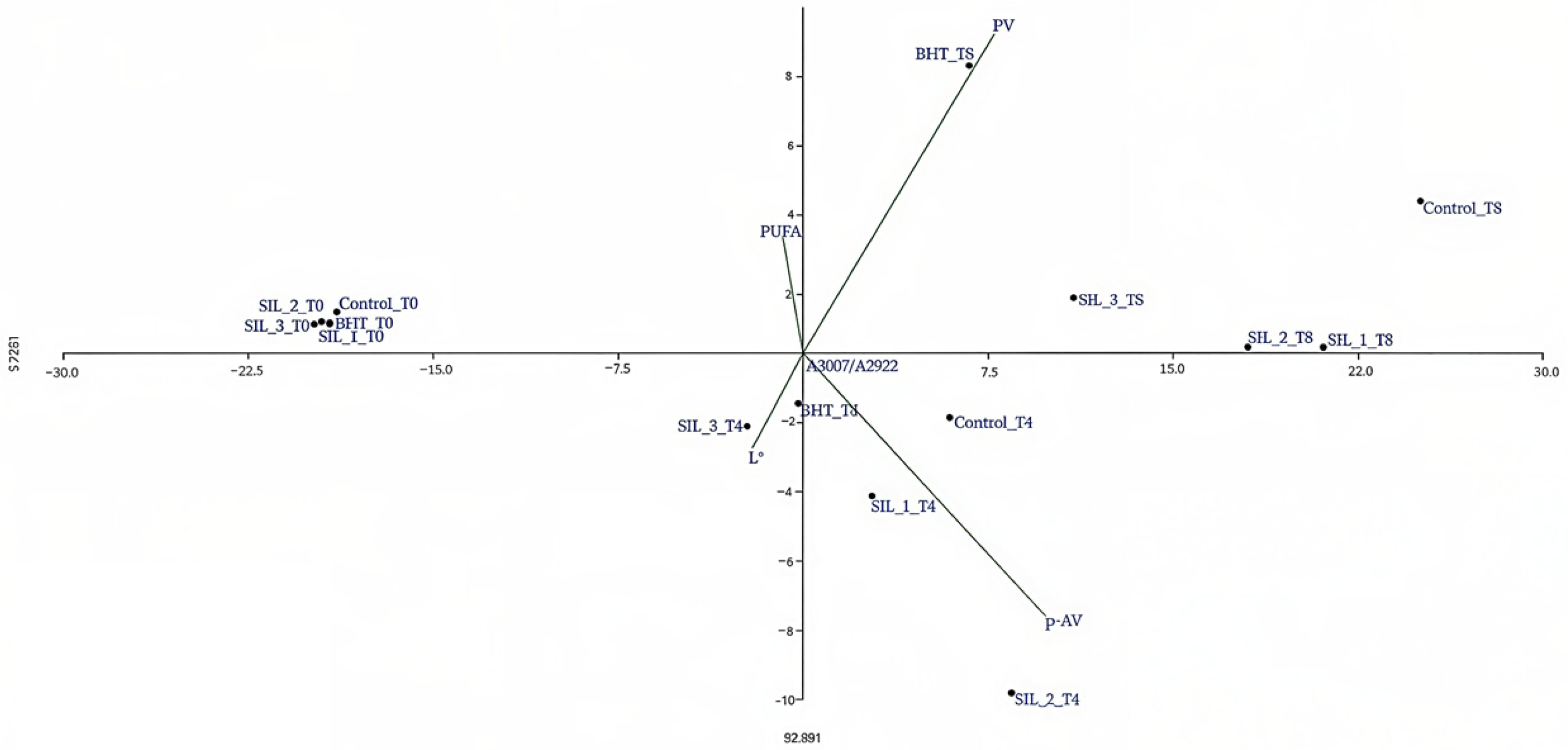
2.5.2. Principal Component Analysis (PCA)
3. Materials and Methods
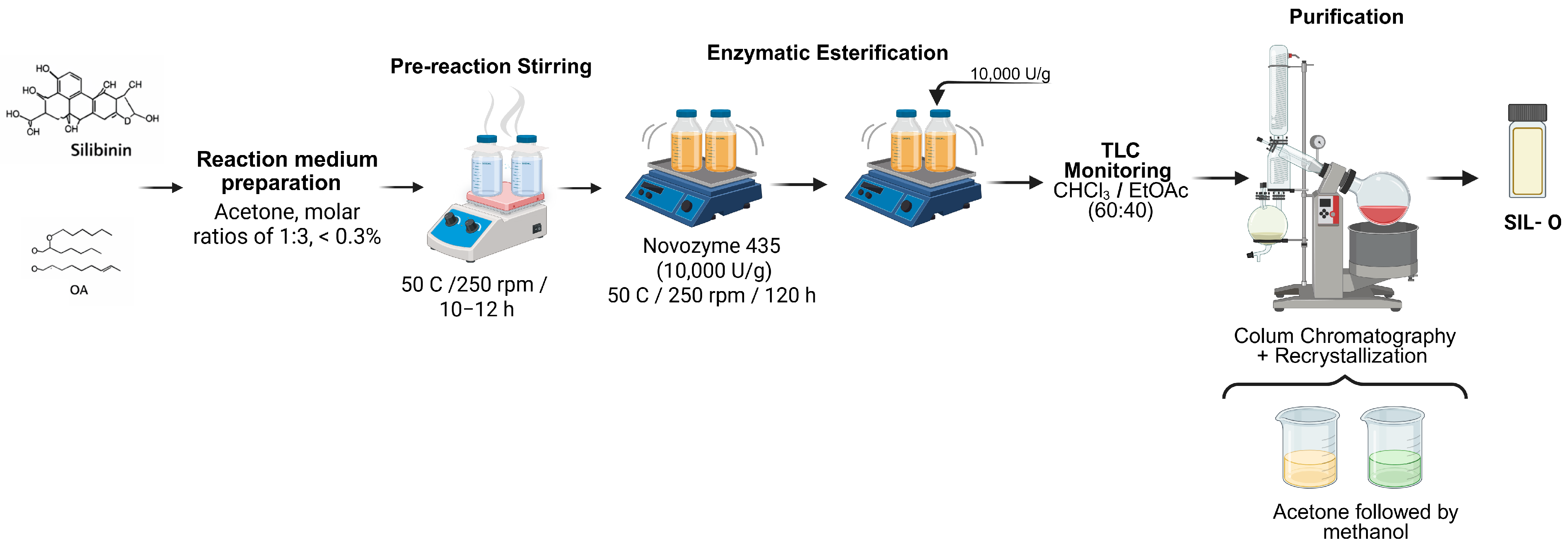
3.1. Obtaining of SIL-O Derivative
3.2. Preparation of Antioxidant-Enriched Oils
3.3. Thermal Oxidation Model at 180 °C and Sampling Strategy
3.4. Determination of Oxidation Parameters
3.4.1. Determination of Peroxide Value (PV) and Inhibition of Oil Oxidation (IO)
3.4.2. Determination of p-Anisidine Value (p-AV)
3.4.3. Determination of Total Oxidation Value (TOTOX)
3.5. ATR-FTIR Spectroscopy
3.6. Fatty Acid Composition by GC-MS
3.6.1. Fatty Acid Methyl Ester (FAME) Preparation
3.6.2. GC-MS Analysis Protocol
3.6.3. Fatty Acid Main Classes Calculation
3.7. Color Analysis
3.8. Statistical Analysis
4. Conclusions
- Thermal treatment significantly increased PV, p-anisidine, and TOTOX, indicating progressive oxidation.
- FTIR analysis confirmed molecular changes associated with the loss of unsaturation and formation of oxidation products.
- Fatty acid evolution showed preferential degradation of PUFA, consistent with typical oxidation mechanisms in sunflower oil.
- Antioxidant addition improved oxidative stability, with BHT showing the highest efficiency at equal concentration and SIL-O exhibiting a comparable, dose-dependent effect.
- Correlation analysis revealed consistent relationships between oxidation indices, PUFA content, FTIR unsaturation index, and color parameters, supporting a coherent link between chemical degradation, molecular structural changes, and visual quality evolution.
Author Contributions
Funding
Institutional Review Board Statement
Informed Consent Statement
Data Availability Statement
Conflicts of Interest
References
- Lužaić, T.; Škrbić, J.; Nakov, G.; Petrović, J.; Romanić, R. Deep-Frying Performance of Palm Olein and Sunflower Oil Variants: Antioxidant-Enriched and High-Oleic Oil as Potential Substitutes. Processes 2025, 13, 3285. [Google Scholar] [CrossRef]
- Nid Ahmed, M.; Gagour, J.; Asbbane, A.; Hallouch, O.; Atrach, L.; Giuffrè, A.M.; Majourhat, K.; Gharby, S. Advances in the Use of Four Synthetic Antioxidants as Food Additives for Enhancing the Oxidative Stability of Refined Sunflower Oil (Helianthus annuus L.). Analytica 2024, 5, 273–294. [Google Scholar] [CrossRef]
- Dehelean, C.A.; Liga, S.; Poiana, M.-A.; Cocan, I.; Coricovac, D.; Cseh, L.; Suba, M.; Alexa, E. Natural Silibinin Linoleate: A Protective Antioxidant in Edible Vegetable Oils. Foods 2025, 14, 3430. [Google Scholar] [CrossRef] [PubMed]
- Sanna, D.; Fadda, A. Oxidative Stability of Sunflower Oil: Effect of Blending with an Oil Extracted from Myrtle Liqueur By-Product. Antioxidants 2025, 14, 300. [Google Scholar] [CrossRef]
- Ahmed, M.N.; Asbbane, A.; Bijla, L.; Gagour, J.; Hallouch, O.; Ibourki, M.; Guenaze, B.; Majourhat, K.; Giuffrè, A.M.; Gharby, S. The effect of direct ultrasound fortification of sunflower oil with saffron by-products on oxidative stability. Int. J. Food Sci. Technol. 2025, 60, vvaf085. [Google Scholar] [CrossRef]
- Baştürk, A.; Yavaş, B. ImImproving sunflower oil stability with propolis: A study on antioxidative effects of Turkish propolis during accelerated oxidation. J. Food Sci. 2024, 89, 8910–8929. [Google Scholar] [CrossRef]
- Mikołajczak, N.; Tańska, M.; Ogrodowska, D. Phenolic compounds in plant oils: A review of composition, analytical methods, and effect on oxidative stability. Trends Food Sci. Technol. 2021, 113, 110–138. [Google Scholar] [CrossRef]
- Ali, R.F.M.; Alayouni, R.; El-Anany, A.M. Enhancing the quality and oxidative stability of sunflower oil during thermal treatment with an ultrasound-extracted pomegranate flower (Punica granatum L.) extract. Front. Nutr. 2026, 13, 1797519. [Google Scholar] [CrossRef] [PubMed]
- Yildiz, S.; Dilmen, S.; Turan, S.; Kiralan, M.; Ramadan, M. Effect of natural phenolics and synthetic antioxidants on the oxidative thermal stability of refined and purified sunflower oils. La Rivista Italiana delle Sostanze Grasse 2021, XCVIII. Available online: https://www.innovhub-ssi.it/kdocs/2012984/2021_vol._982_-_art._02_-_yildiz.pdf (accessed on 25 February 2026).
- Dehelean, C.; Alexa, E.; Marcovici, I.; Iftode, A.; Lazar, G.; Simion, A.; Chis, V.; Pirnau, A.; Cinta Pinzaru, S.; Boeriu, E. Synthesis, Characterization, and in vitro–in Ovo Toxicological Screening of Silibinin Fatty Acids Conjugates as Prodrugs with Potential Biomedical Applications. Biomol. Biomed. 2024, 24, 1735–1750. [Google Scholar] [CrossRef]
- Shahidi, F.; Zhong, Y. Novel antioxidants in food quality preservation and health promotion. Eur. J. Lipid Sci. Technol. 2010, 112, 930–940. [Google Scholar] [CrossRef]
- Li, X.; Zhu, H.; Wang, Y.; Zhang, X.; Yang, Z.; Yan, X.; Yu, Q. Silymarin and Silybin: Rejuvenating Traditional Remedies with Modern Delivery Strategies. Pharmaceutics 2025, 17, 1628. [Google Scholar] [CrossRef]
- Taleb, A.; Ahmad, K.A.; Ihsan, A.U.; Qu, J.; Lin, N.; Hezam, K.; Koju, N.; Hui, L.; Qilong, D. Antioxidant effects and mechanism of silymarin in oxidative stress induced cardiovascular diseases. Biomed Pharmacother. 2018, 102, 689–698. [Google Scholar] [CrossRef]
- Dhande, D.; Dhok, A.; Anjankar, A.; Nagpure, S. Silymarin as an Antioxidant Therapy in Chronic Liver Diseases: A Comprehensive Review. Cureus 2024, 17, 16. [Google Scholar] [CrossRef]
- Liu, X.; Zheng, Z.; Liu, Y. Lipophilic antioxidants in edible oils: Mechanisms, applications and interactions. Food Res. Int. 2025, 200, 115423. [Google Scholar] [CrossRef]
- Grajeda-Iglesias, C.; Cruz Figueroa-Espinoza, M.; Barouh, N.; Nayzzel Muñoz-Castellanos, L.; Salas, E. Polyphenol lipophilisation: A suitable tool for the valorisation of natural by-products. Int. J. Food Sci. Technol. 2022, 57, 6935–6947. [Google Scholar] [CrossRef]
- Zieniuk, B.; Białecka-Florjańczyk, E.; Wierzchowska, K.; Fabiszewska, A. Recent advances in the enzymatic synthesis of lipophilic antioxidant and antimicrobial compounds. World J. Microbiol. Biotechnol. 2022, 38, 11. [Google Scholar] [CrossRef] [PubMed]
- Poiana, M.-A. Enhancing Oxidative Stability of Sunflower Oil during Convective and Microwave Heating Using Grape Seed Extract. Int. J. Mol. Sci. 2012, 13, 9240–9259. [Google Scholar] [CrossRef] [PubMed]
- Amin, K.A.; Homeida, A.M.; El Mazoudy, R.H.; Hashim, K.S.; Garelnabi, M. Dietary Lipids in Health and Disease. J. Lipids 2019, 5729498. [Google Scholar] [CrossRef] [PubMed]
- Aleena, K.S.; Divya, M.P.; Beena, A.K.; Rachana, C.R.; Divya, K.B. Oxidative stability of sunflower oil on high temperature cooking. Pharma Innov. J. 2020, 9, 552–554. [Google Scholar]
- Aşkın, B.; Kaya, Y. Effect of deep frying process on the quality of the refined oleic/linoleic sunflower seed oil and olive oil. J. Food Sci. Technol. 2020, 57, 4716–4725. [Google Scholar] [CrossRef]
- Metzner Ungureanu, C.-R.; Poiana, M.-A.; Cocan, I.; Lupitu, A.I.; Alexa, E.; Moigradean, D. Strategies to Improve the Thermo-Oxidative Stability of Sunflower Oil by Exploiting the Antioxidant Potential of Blueberries Processing Byproducts. Molecules 2020, 25, 5688. [Google Scholar] [CrossRef]
- Yildiz, A.Y.; Echegaray, N.; Öztekin, S.; Lorenzo, J.M. Quality and stability of frying oils and fried foods in ultrasound and microwave–assisted frying processes and hybrid technologies. Compr. Rev. Food Sci. Food Saf. 2024, 23, e13405. [Google Scholar] [CrossRef]
- Murari, S.K.; Shwetha, M.V. Effect of antioxidant butylated hydroxyanisole on the thermal or oxidative stability of sunflower oil (Helianthus annuus) by ultrasonic treatment. J. Food Sci. Technol. 2016, 53, 840–847. [Google Scholar] [CrossRef] [PubMed]
- Rodríguez, G.; Villanueva, E.; Cortez, D.; Sanchez, E.; Aguirre, E.; Hidalgo, A. Oxidative Stability of Chia (Salvia hispanica L.) and Sesame (Sesamum indicum L.) Oil Blends. J. Am. Oil Chem. Soc. 2020, 97, 729–735. [Google Scholar] [CrossRef]
- Cattani, M.; Bailoni, L.; Schiavon, S.; Bittante, G. Fatty Acid Profile of Milk and Dairy Products: A Review of Factors Affecting Composition and Nutritional Quality. Foods 2023, 12, 2766. [Google Scholar]
- Cheng, S.; Wu, S. A Shelf-Life Prediction Method for Butter Based on the Effects of β-Carotene on Colour and Oxidative Stability. Int. J. Dairy Technol. 2024, 77, 961–972. [Google Scholar] [CrossRef]
- Fadda, A.; Sanna, D.; Sakar, E.H.; Gharby, S.; Mulas, M.; Medda, S.; Yesilcubuk, N.S.; Karaca, A.C.; Gozukirmizi, C.K.; Lucarini, M.; et al. Innovative and Sustainable Technologies to Enhance the Oxidative Stability of Vegetable Oils. Sustainability 2022, 14, 849. [Google Scholar] [CrossRef]
- Duan, M.; Zhu, Z.; Pi, H.; Chen, J.; Cai, J.; Wu, Y. Mechanistic Insights and Analytical Advances in Food Antioxidants: A Comprehensive Review of Molecular Pathways, Detection Technologies, and Nutritional Applications. Antioxidants 2025, 14, 438. [Google Scholar] [CrossRef]
- Ramadan, M.F. Chemistry and Functionality of Lipo-phenolics. In Pheno-Phospholipids and Lipo-Phenolics; Springer: Cham, Switzerland, 2021. [Google Scholar] [CrossRef]
- Gažák, R.; Purchartová, K.; Marhol, P.; Živná, L.; Sedmera, P.; Valentová, K.; Kato, N.; Matsumura, H.; Kaihatsu, K.; Křen, V. Antioxidant and antiviral activities of silybin fatty acid conjugates. Eur. J. Med. Chem. 2010, 45, 1059–1067. [Google Scholar] [CrossRef]
- Drouet, S.; Doussot, J.; Garros, L.; Mathiron, D.; Bassard, S.; Favre-Réguillon, A.; Molinié, R.; Lainé, É.; Hano, C. Selective synthesis of 3-O-palmitoyl-silybin, a new-to-nature flavonolignan with increased protective action against oxidative damages in lipophilic media. Molecules 2018, 23, 2594. [Google Scholar] [CrossRef]
- Di Costanzo, A.; Angelico, R. Formulation strategies for enhancing the bioavailability of silymarin: The state of the art. Molecules 2019, 24, 2155. [Google Scholar] [CrossRef]
- Velasco, J. (Ed.) Antioxidants and Oxidative Stability in Fats and Oils; MDPI: Basel, Switzerland, 2018. [Google Scholar] [CrossRef]
- Al Amin, M.; Ali, M.A.; Alam, M.S.; Nahar, A.; Chew, S.C. Oxidative degradation of sunflower oil blended with roasted sesame oil during heating at frying temperature. Grain Oil Sci. Technol. 2023, 6, 34–42. [Google Scholar] [CrossRef]
- Guillén, M.D.; Cabo, N. Characterization of edible oils and lard by Fourier transform infrared spectroscopy. Relationships between composition and frequency of concrete bands in the fingerprint region. J. Am. Oil Chem. Soc. 1997, 74, 1281–1286. [Google Scholar] [CrossRef]
- Lerma-García, M.J.; Simó-Alfonso, E.F.; Bendini, A.; Cerretani, L. Rapid evaluation of oxidised fatty acid profiles in vegetable oils by FTIR spectroscopy. Food Chem. 2010, 123, 889–894. [Google Scholar]
- Yurchenko, S.; Saealle, N. Oxidative stability and fatty acid profile of vegetable oils from the Estonian market. Meas. Food 2025, 20, 100255. [Google Scholar] [CrossRef]
- Gharby, S.; Asbbane, A.; Nid Ahmed, M.; Gagour, J.; Hallouch, O.; Oubannin, S.; Bijla, L.; Goh, K.W.; Bouyahya, A.; Ibourki, M. Vegetable oil oxidation: Mechanisms, impacts on quality, and approaches to enhance shelf life. Food Chem. X 2025, 28, 102541. [Google Scholar] [CrossRef]
- Szabo, Z.; Marosvölgyi, T.; Szabo, E.; Koczka, V.; Verzar, Z.; Figler, M.; Decsi, T. Effects of Repeated Heating on Fatty Acid Composition of Plant-Based Cooking Oils. Foods 2022, 11, 192. [Google Scholar] [CrossRef]
- Maliki, N.N.; Bakar, A.A.; Hashim, N.H.; Abidin, Z.H.Z.; Cheng, S.F. Smartphone-based colorimetry as a rapid preliminary screening method for monitoring reheated cooking oil degradation. J. Food Meas. Charact. 2026. [Google Scholar] [CrossRef]
- Flores, M.; Avendaño, V.; Bravo, J.; Valdés, C.; Forero-Doria, O.; Quitral, V.; Vilcanqui, Y.; Ortiz-Viedma, J. Edible Oil Parameters during Deterioration Processes. Int. J. Food Sci. 2021, 2021, 7105170. [Google Scholar] [CrossRef] [PubMed]
- ISO 3960:2017; Animal and Vegetable Fats and Oils—Determination of Peroxide Value—Iodometric (Visual) Endpoint Determination. ISO: Geneva, Switzerland, 2017.
- AOCS. Official Method Cd 18-90: P-Anisidine Value. In Official Methods and Recommended Practices of the AOCS, 5th ed.; AOCS Press: Champaign, IL, USA, 1998. [Google Scholar]
- Ivan, A.; Pricop, M.-A.; Lukinich-Gruia, A.T.; Cristea, I.-M.; Negrea, A.; Pascu, I.B.; Calma, C.L.; Paunescu, A.; Paunescu, V.; Tatu, C.A. Cellular Metabolic Responses to Copper Nanoparticles: Comparison Between Normal and Breast Cancer Cells. Int. J. Mol. Sci. 2025, 26, 10716. [Google Scholar] [CrossRef] [PubMed]
- Fluerasu, D.; Negrea, M.; Neagu, C.; Dossa, S.; Jianu, C.; Lalescu, D.; Berbecea, A.; Cseh, L.; Cocan, I.; Misca, C.; et al. Whey Valorization in Functional Jellies: A Nutritional and Technological Approach. Foods 2025, 14, 3193. [Google Scholar] [CrossRef] [PubMed]







| No. | Abbreviation | PV (meq O2/kg) | p-AV | TOTOX |
|---|---|---|---|---|
| 1 | Control_T0 | 1.75 ± 0.03 a | 4.35 ± 0.32 a | 7.85 a |
| 2 | SIL_1_T0 | 1.36 ± 0.02 c | 4.41 ± 0.38 a | 7.13 a |
| 3 | SIL_2_T0 | 1.33 ± 0.02 c | 3.92 ± 0.20 b | 6.58 c |
| 4 | SIL_3_T0 | 0.96 ± 0.01 d | 3.89 ± 0.17 b | 5.81 d |
| 5 | BHT_T0 | 1.42 ± 0.03 b | 4.17 ± 0.03 b | 7.01 b |
| 6 | Control_T4 | 15.93 ± 0.02 a | 24.71 ± 0.43 b | 56.58 a |
| 7 | SIL_1_T4 | 11.49 ± 0.03 b | 24.00 ± 0.04 b | 46.98 b |
| 8 | SIL_2_T4 | 10.63 ± 0.01 c | 32.02 ± 0.66 a | 53.28 a |
| 9 | SIL_3_T4 | 9.78 ± 0.02 d | 18.85 ± 0.02 c | 38.40 c |
| 10 | BHT_T4 | 11.75 ± 0.01 b | 19.97 ± 0.63 c | 43.47 b |
| 11 | Control_T8 | 32.03 ± 0.02 a | 36.06 ± 0.06 a | 93.37 a |
| 12 | SIL_1_T8 | 24.83 ± 0.02 b | 36.24 ± 1.44 a | 83.38 b |
| 13 | SIL_2_T8 | 22.94 ± 0.49 c | 33.71 ± 0.29 b | 73.26 c |
| 14 | SIL_3_T8 | 19.48 ± 0.47 d | 27.37 ± 0.25 d | 38.96 d |
| 15 | BHT_T8 | 22.96 ± 0.02 c | 29.31 ± 0.06 c | 82.16 b |
| No. | Abbreviation | A1743 | A3007 | A2922 | Unsaturation Index A3007/A2922 |
|---|---|---|---|---|---|
| 1 | Control_T0 | 57.626 | 96.063 | 65.175 | 1.474 |
| 2 | SIL_1_T0 | 57.666 | 96.038 | 65.166 | 1.474 |
| 3 | SIL_2_T0 | 57.621 | 96.011 | 65.115 | 1.474 |
| 4 | SIL_3_T0 | 57.573 | 95.921 | 65.026 | 1.475 |
| 5 | BHT_T0 | 57.750 | 96.067 | 65.210 | 1.473 |
| 6 | Contol_T4 | 57.734 | 96.346 | 65.129 | 1.479 |
| 7 | SIL_1_T4 | 57.774 | 96.413 | 65.101 | 1.481 |
| 8 | SIL_2_T4 | 58.026 | 96.780 | 65.214 | 1.484 |
| 9 | SIL_3_T4 | 58.045 | 96.779 | 65.181 | 1.485 |
| 10 | BHT_T4 | 57.619 | 95.987 | 64.864 | 1.480 |
| 11 | Control_T8 | 57.897 | 65.143 | 96.616 | 0.674 |
| 12 | SIL_1_T8 | 58.045 | 65.199 | 97.118 | 0.671 |
| 13 | SIL_2_T8 | 58.143 | 65.243 | 97.139 | 0.672 |
| 14 | SIL_3_T8 | 58.134 | 65.241 | 97.114 | 0.672 |
| 15 | BHT_T8 | 89.211 | 98.398 | 72.861 | 1.350 |
| No. | Abbreviation | Composition | Heating Treatment |
|---|---|---|---|
| 1 | Control_T0 | Sunflower oil (SF) without addition | No heating |
| 2 | SIL_1_T0 | Sunflower oil (SF) + 100 ppm silibinin oleate (SO) | No heating |
| 3 | SIL_2_T0 | Sunflower oil (SF) + 200 ppm silibinin oleate (SO) | No heating |
| 4 | SIL_3_T0 | Sunflower oil (SF) + 300 ppm silibinin oleate (SO) | No heating |
| 5 | BHT_T0 | Sunflower oil (SF) + 200 ppm BHT | No heating |
| 6 | Contol_T4 | Sunflower oil (SF) | 4 h at 180 °C |
| 7 | SIL_1_T4 | Sunflower oil (SF) + 100 ppm silibinin oleate (SO) | 4 h at 180 °C |
| 8 | SIL_2_T4 | Sunflower oil (SF) + 200 ppm silibinin oleate (SO) | 4 h at 180 °C |
| 9 | SIL_3_T4 | Sunflower oil (SF) + 300 ppm silibinin oleate (SO) | 4 h at 180 °C |
| 10 | BHT_T4 | Sunflower oil (SF) + 200 ppm BHT | 4 h at 180 °C |
| 11 | Control_T8 | Sunflower oil (SF) | 8 h at 180 °C |
| 12 | SIL_1_T8 | Sunflower oil (SF) + 100 ppm silibinin oleate (SO) | 8 h at 180 °C |
| 13 | SIL_2_T8 | Sunflower oil (SF) + 200 ppm silibinin oleate (SO) | 8 h at 180 °C |
| 14 | SIL_3_T8 | Sunflower oil (SF) + 300 ppm silibinin oleate (SO) | 8 h at 180 °C |
| 15 | BHT_T8 | Sunflower oil (SF) + 200 ppm BHT | 8 h at 180 °C |
Disclaimer/Publisher’s Note: The statements, opinions and data contained in all publications are solely those of the individual author(s) and contributor(s) and not of MDPI and/or the editor(s). MDPI and/or the editor(s) disclaim responsibility for any injury to people or property resulting from any ideas, methods, instructions or products referred to in the content. |
© 2026 by the authors. Licensee MDPI, Basel, Switzerland. This article is an open access article distributed under the terms and conditions of the Creative Commons Attribution (CC BY) license.
Share and Cite
Dehelean, C.A.; Oancea, C.; Neamtu, A.-A.; Enache, V.; Alexa, V.E.; Cocan, I.; Suba, M.; Pricop, M.-A.; Lukinich-Gruia, A.T.; Tatu, C.A.; et al. Application of Silibinin Oleate as a Nutraceutical Antioxidant for Improving the Quality of Sunflower Oil. Molecules 2026, 31, 1222. https://doi.org/10.3390/molecules31071222
Dehelean CA, Oancea C, Neamtu A-A, Enache V, Alexa VE, Cocan I, Suba M, Pricop M-A, Lukinich-Gruia AT, Tatu CA, et al. Application of Silibinin Oleate as a Nutraceutical Antioxidant for Improving the Quality of Sunflower Oil. Molecules. 2026; 31(7):1222. https://doi.org/10.3390/molecules31071222
Chicago/Turabian StyleDehelean, Cristina Adriana, Cristian Oancea, Andreea-Adriana Neamtu, Vlad Enache, Victor Emil Alexa, Ileana Cocan, Mariana Suba, Maria-Alexandra Pricop, Alexandra Teodora Lukinich-Gruia, Călin Adrian Tatu, and et al. 2026. "Application of Silibinin Oleate as a Nutraceutical Antioxidant for Improving the Quality of Sunflower Oil" Molecules 31, no. 7: 1222. https://doi.org/10.3390/molecules31071222
APA StyleDehelean, C. A., Oancea, C., Neamtu, A.-A., Enache, V., Alexa, V. E., Cocan, I., Suba, M., Pricop, M.-A., Lukinich-Gruia, A. T., Tatu, C. A., & Alexa, E. (2026). Application of Silibinin Oleate as a Nutraceutical Antioxidant for Improving the Quality of Sunflower Oil. Molecules, 31(7), 1222. https://doi.org/10.3390/molecules31071222