1. Introduction
The genus
Cirsium (family
Asteraceae, subfamily
Carduoideae) includes more than 200 species found in the temperate regions of the Northern Hemisphere [
1]. Members of this genus
Cirsium have medicinal properties and are used in traditional East Asian medicine [
2,
3,
4]. In recent years, particular scientific interest has focused on
Cirsium arvense (L.) Scop. (creeping thistle) and
Cirsium vulgare (Savi) Ten. (spear thistle), which are characterized by a high content of secondary metabolites and a wide range of biological activities [
5]. Despite their status as invasive and difficult-to-eradicate weeds, both are now valued as sources of phytochemicals for pharmaceutical and biotechnological uses.
The
C. arvense is a perennial with a well-developed vegetative system and a strong capacity for vegetative reproduction. This explains its broad distribution and high ecological resilience. Phytochemical investigations have found triterpenoids (α- and β-amyrin, taraxasterol, lupeol), sterols (stigmasterol, β-sitosterol), phenolic acids, and flavonoids. Together, these explain the antioxidant, anti-inflammatory, and antimicrobial properties of this species. Additionally,
C. arvense is considered a promising source of natural compounds with potential applications in the pharmaceutical and cosmetic industries [
6,
7].
In contrast,
C. vulgare is a biennial spiny plant rich in phenolic compounds, such as chlorogenic, caffeic, and ferulic acids, as well as flavonoids (apigenin, luteolin, quercetin) and their glycosides. Because of its high antioxidant and polyphenol content, this species shows marked hepatoprotective, antitumor, and gastroprotective effects in experimental studies. As a result,
C. vulgare extracts are being investigated as plant sources for antioxidant and anti-inflammatory phytopharmaceuticals [
8,
9,
10,
11,
12,
13].
For
C. arvense, the available evidence is limited and mainly demonstrates antioxidant and antimicrobial activity. In contrast,
C. vulgare has been reported to exhibit a wider range of experimentally confirmed activities, including hepatoprotective, gastroprotective, and cytotoxic [
14]. Despite the growing number of publications, the available data remain methodologically heterogeneous. Studies often differ in the plant parts used, extraction procedures, analytical techniques, and experimental models. Such variability complicates comparisons between studies and limits a comprehensive evaluation of the pharmacological potential of these species. Moreover, studies integrating the phytochemical composition, biological activity, and traditional uses of these species from a modern, evidence-based phytopharmacological perspective remain scarce.
Many studies have investigated species of the genus Cirsium. However, the available information on C. arvense and C. vulgare remains scattered across different types of studies. Most publications focus on individual aspects, such as phytochemical constituents or specific pharmacological effects. Direct comparisons between these two species are still limited. As a result, the overall picture of their phytochemical diversity and biological potential is not clearly summarized in the literature. To the best of our knowledge, the present review represents the first comprehensive synthesis of data on C. arvense and C. vulgare. It summarizes their ethnobotanical uses, phytochemical composition, and pharmacological properties. In addition, the review discusses methodological differences between studies. The aim of this work is to organize the available evidence and to highlight directions for future preclinical and clinical research.
2. Methods
The literature describing the phytochemical composition, biological activity, and pharmacological properties of plants of the genus Cirsium, with particular emphasis on C. arvense and C. vulgare, was comprehensively reviewed. The review was performed following the general principles of the PRISMA 2020 guidelines to ensure transparency and reproducibility of the study selection process.
Data on C. arvense and C. vulgare were collected using databases such as PubMed, Scopus, Web of Science Core Collection, and Google Scholar, covering the period from the inception of database indexing to 15 January 2025. Publications in English and Russian were included.
The search strategy employed the following keywords, in combinations, related to Cirsium, its species names, and associated phytochemical and pharmacological activities: antioxidant, antimicrobial, anti-tumor, anti-inflammatory, and hepatoprotective. For example, in PubMed the following search query was used: (Cirsium OR “Cirsium arvense” OR “Cirsium vulgare”) AND (phytochem* OR secondary metabolite* OR biological activity OR pharmacological property). In addition, taxonomic synonyms and alternative botanical names reported for these species (e.g., Carduus arvensis L. and Carduus lanceolatus L.) were considered during the search to minimize the risk of omitting relevant studies.
Studies were considered eligible if they clearly identified the plant species (C. arvense or C. vulgare), specified the plant part used, described extraction methods and solvents, and reported phytochemical composition and/or pharmacological activity using recognized analytical techniques such as GC–MS, HPLC, LC–MS, NMR, or spectrophotometry. Studies were excluded if the plant species was not clearly identified, if phytochemical or pharmacological data were insufficient, or if the full text was not accessible.
Study selection was performed independently by two reviewers. Titles and abstracts were initially screened, followed by full-text evaluation of potentially relevant articles. Any disagreements were resolved through discussion and re-examination of the original publications.
Data extraction was also performed independently by two reviewers. For each included study, information was collected on plant species and plant part; extraction method and solvent; identified compounds with concentrations (if applicable); analytical methods; type of biological assay; IC50/EC50 values; in vitro or in vivo model; botanical characteristics; geographical distribution; and traditional uses. No assumptions were made regarding missing or unclear data.
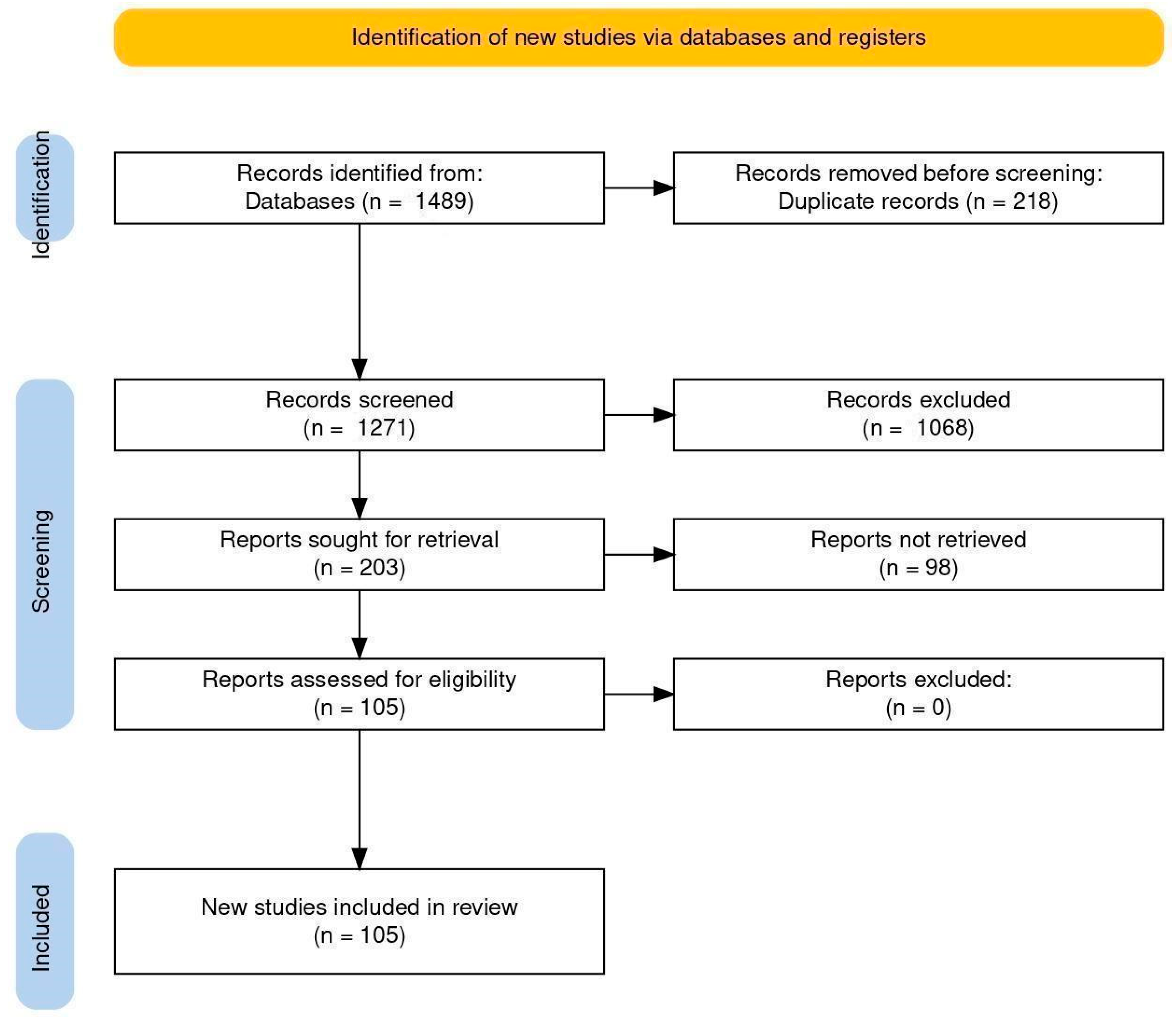
Initially, 1489 publications were identified. After removing 218 duplicates, 1271 titles and abstracts were screened. Of these, 1068 records were excluded. A total of 203 articles were assessed for eligibility. Ninety-eight articles were excluded for insufficient data. Finally, 105 studies met the inclusion criteria and were included in the review. The PRISMA selection flowchart is shown in
Figure 1. Excluded studies were mainly omitted due to insufficient phytochemical characterization or unclear species identification.
Phytochemical characterization in the included studies was generally performed with solvent extracts of plant material, most often butanolic extracts. These extracts were analyzed using chromatographic techniques, such as GC–MS or HPLC, to identify major classes of secondary metabolites. However, analytical conditions varied considerably across studies, potentially affecting the comparability of phytochemical data.
To supplement these data, relevant background information from reviews and related studies (including general aspects of the genus Cirsium and broader topics such as flavonoids, triterpenes, structure–activity relationships, and nanomaterial-based applications) was also included, providing contextual support for findings specific to C. arvense and C. vulgare. All such references were included within the final set of 105 studies and were used to strengthen the interpretation and discussion of the findings.
This review was not registered and no protocol was prepared. No standardized risk of bias assessment tool was applied due to the heterogeneity of the included studies; however, study quality was considered qualitatively during interpretation of results. As a meta-analysis was not performed due to heterogeneity, no effect measures were calculated; results were summarized narratively.
3. Results and Discussion
3.1. Geographic Distribution, Taxonomy and Botanical Characteristics of the Genus Cirsium
The genus
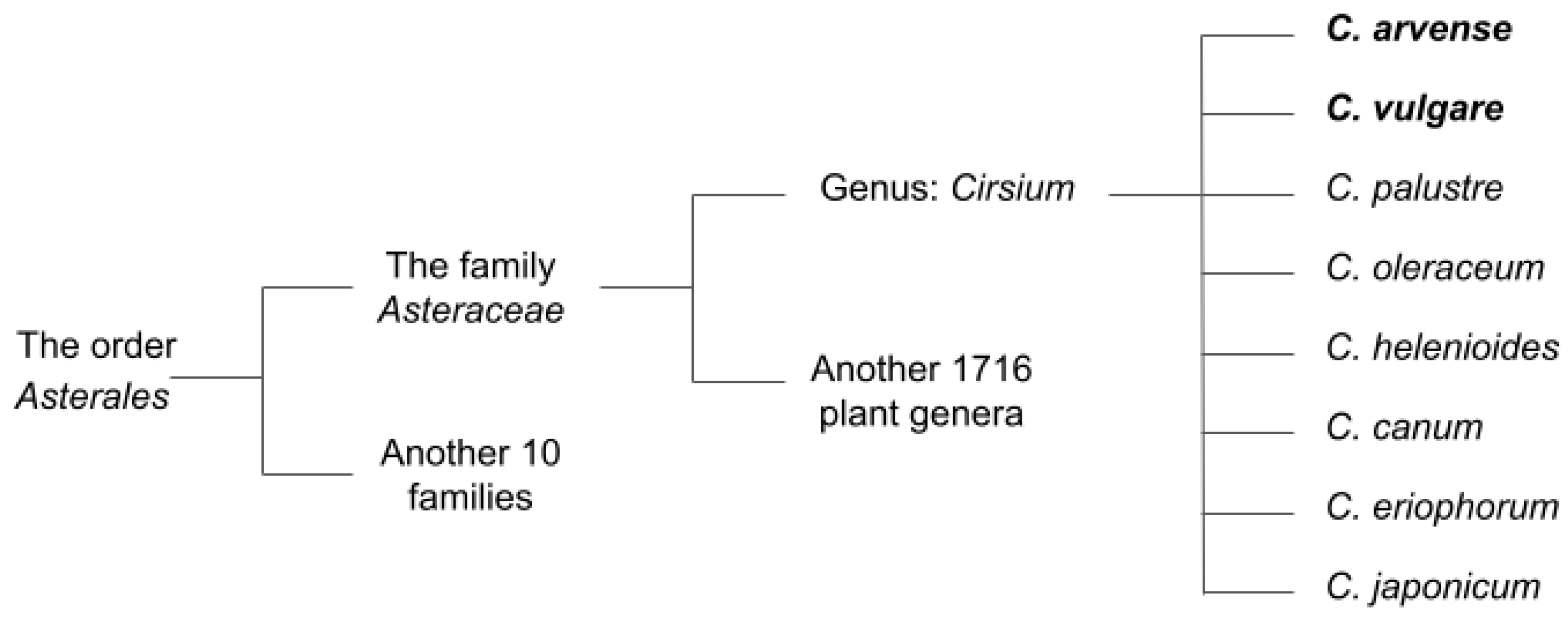
Cirsium comprises predominantly perennial and, less frequently, annual spiny plants belonging to the family Asteraceae (
Figure 2), comprising approximately 1600 species and up to 23,000 species [
15]. The genus name is derived from the Greek term khirsos, meaning “swollen vein” [
16,
17]. Representatives of
Cirsium are distributed mainly across the Northern Hemisphere, including Europe, Asia, North America, and North Africa. Considerable diversity of the genus has been reported in East Asia, where approximately 120 species have been recorded in Japan and about 50 species in China [
18,
19,
20]. Approximately 16 species are distributed in the humid evergreen forests of India and adjacent regions of China and Nepal, including
C. argyracanthum,
C. arvense,
C. lineare,
C. eriophoroides,
C. falconeri,
C. flavisquamatum,
C. interpositum,
C. verutum,
C. nishiokae,
C. phulchokiense,
C. shansiense,
C. souliei,
C. tibeticum,
C. wallichii, and
C. glabrifolium [
21]. Overall, representatives of the genus occur on all continents except Antarctica [
22,
23,
24].
The genus
Cirsium comprises herbaceous plants characterized by spiny leaves and purplish-pink capitulate inflorescences [
25,
26,
27]. Most representatives of the
Asteraceae family are perennial plants with a well-developed system of spines that may be present on all parts of the plant. Species of the genus
Cirsium are commonly known as “thistles”, including creeping thistle (
C. arvense) and spear thistle (
C. vulgare) [
28].
3.2. Botanical Characteristics and Distribution of Selected Species
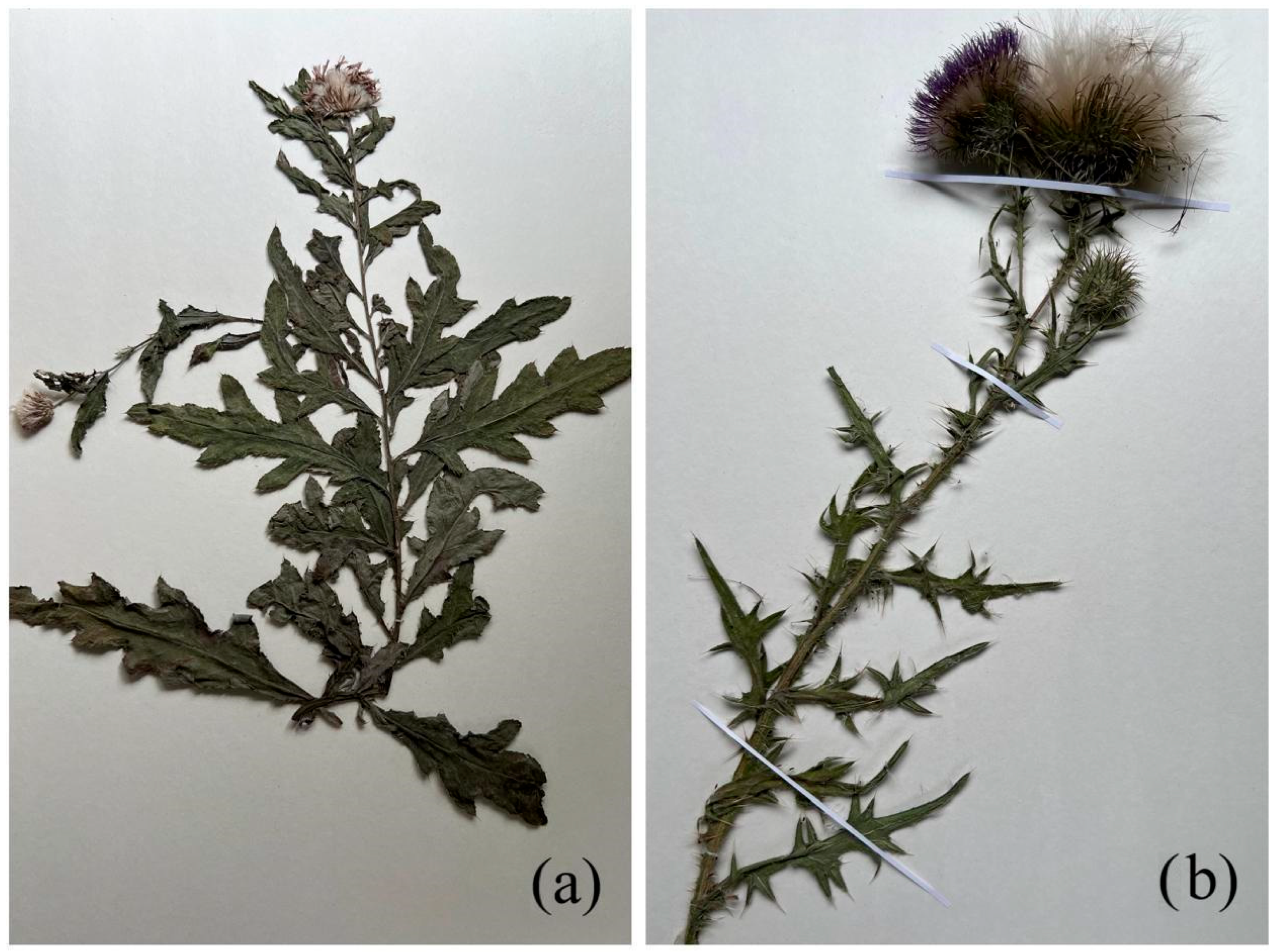
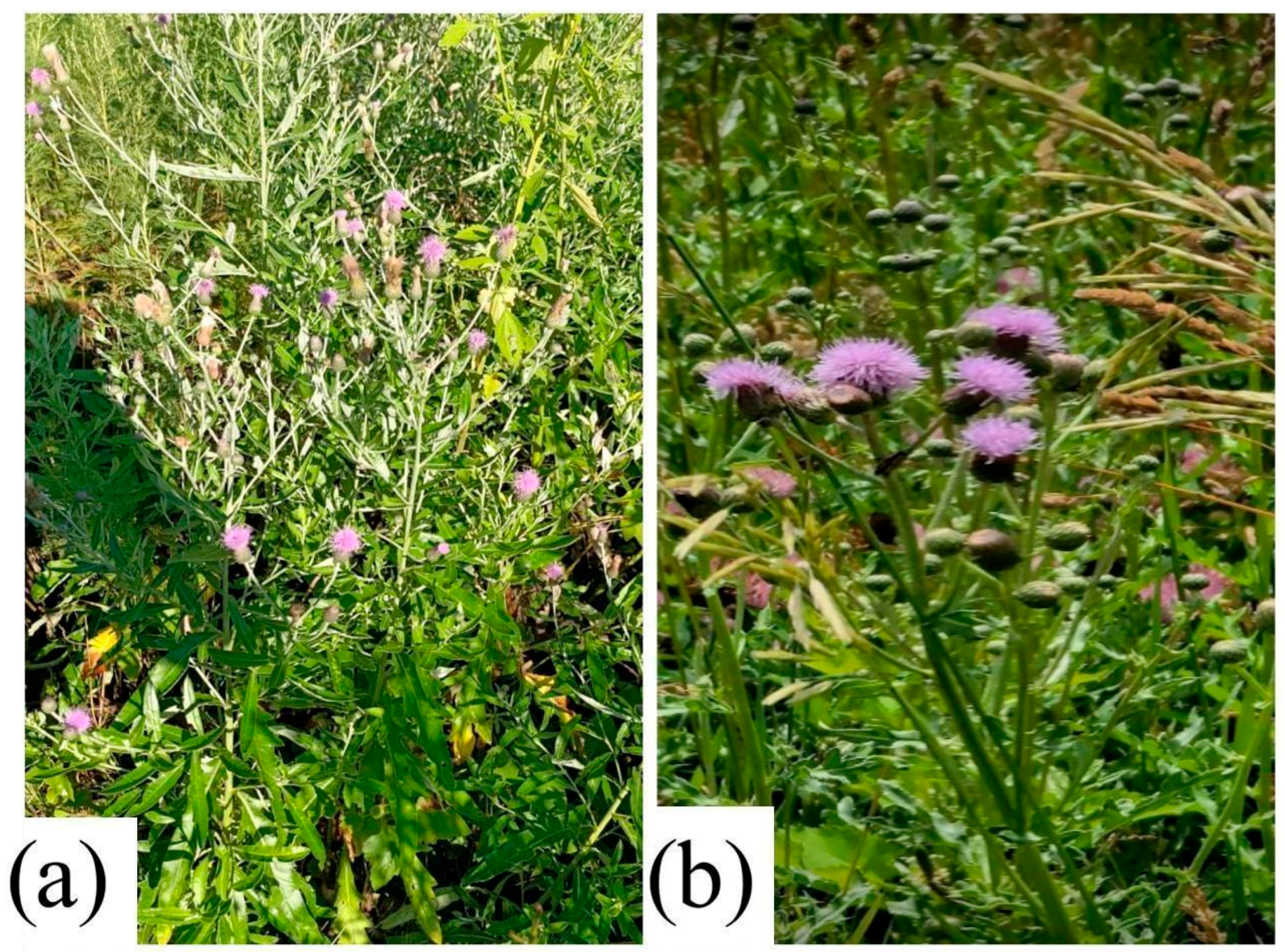
C. arvense—creeping thistle (
Figure 3a).
C. arvense is a perennial herbaceous plant reaching up to 150 cm in height. The root system is strong and creeping, forming numerous underground shoots that facilitate vegetative propagation. The leaves are pinnately lobed with sharp spines along the margins; the stem is erect and branched. The inflorescences are capitula 1–2 cm in diameter, arranged in corymbose panicles, with purple to violet florets.
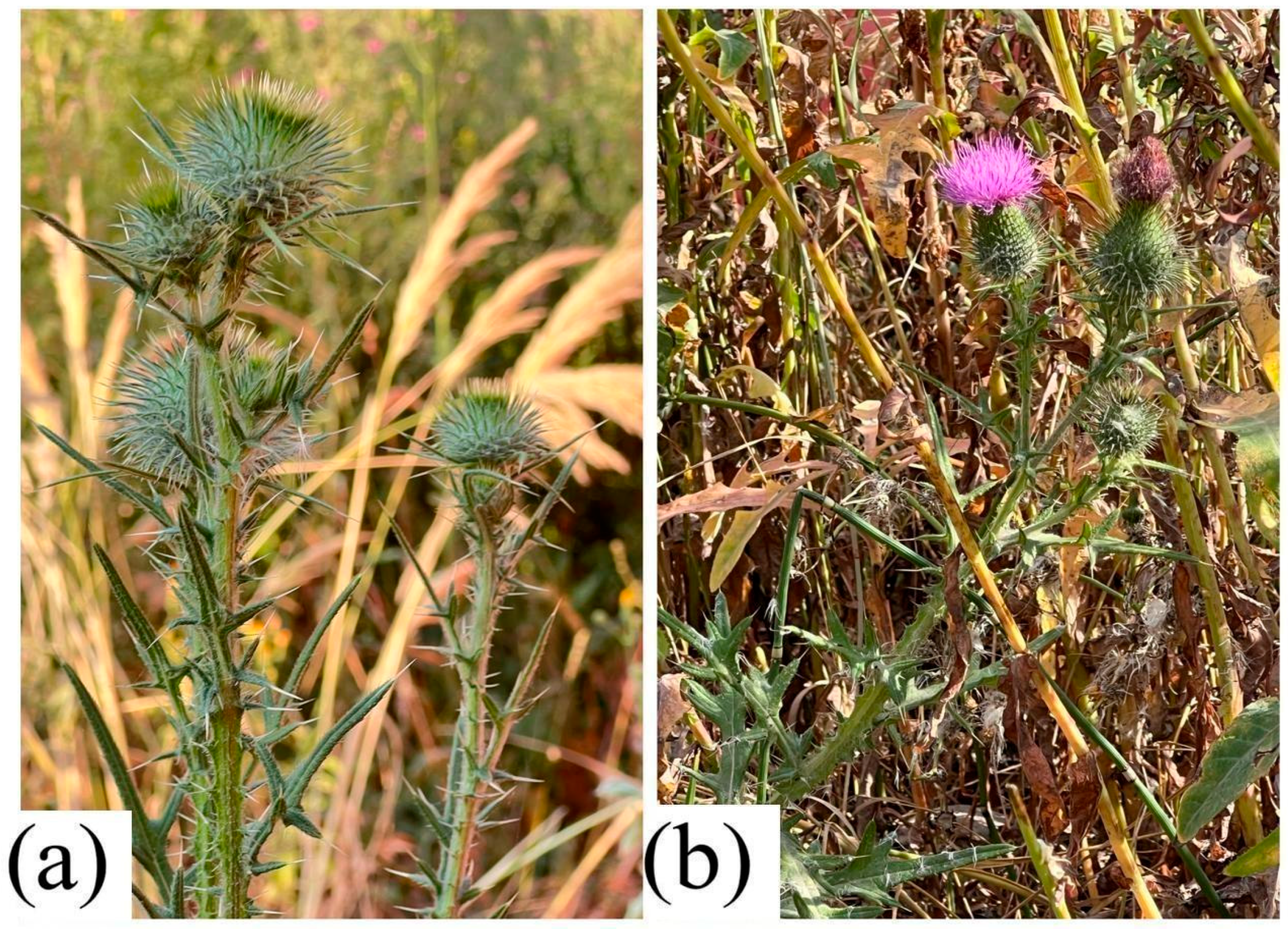
To illustrate the morphological characteristics of
Cirsium arvense (L.) Scop. and
Cirsium vulgare (Savi) Ten., photographs of herbarium specimens deposited in the Herbarium of the Institute of Botany and Phytointroduction (AA), Almaty, Kazakhstan, were used (
Figure 3a,b). Herbarium material enables visual comparison of plants from different sources and supports reliable taxonomic identification, which is particularly important in review studies, where accurate classification directly affects the interpretation of data on biological activity.
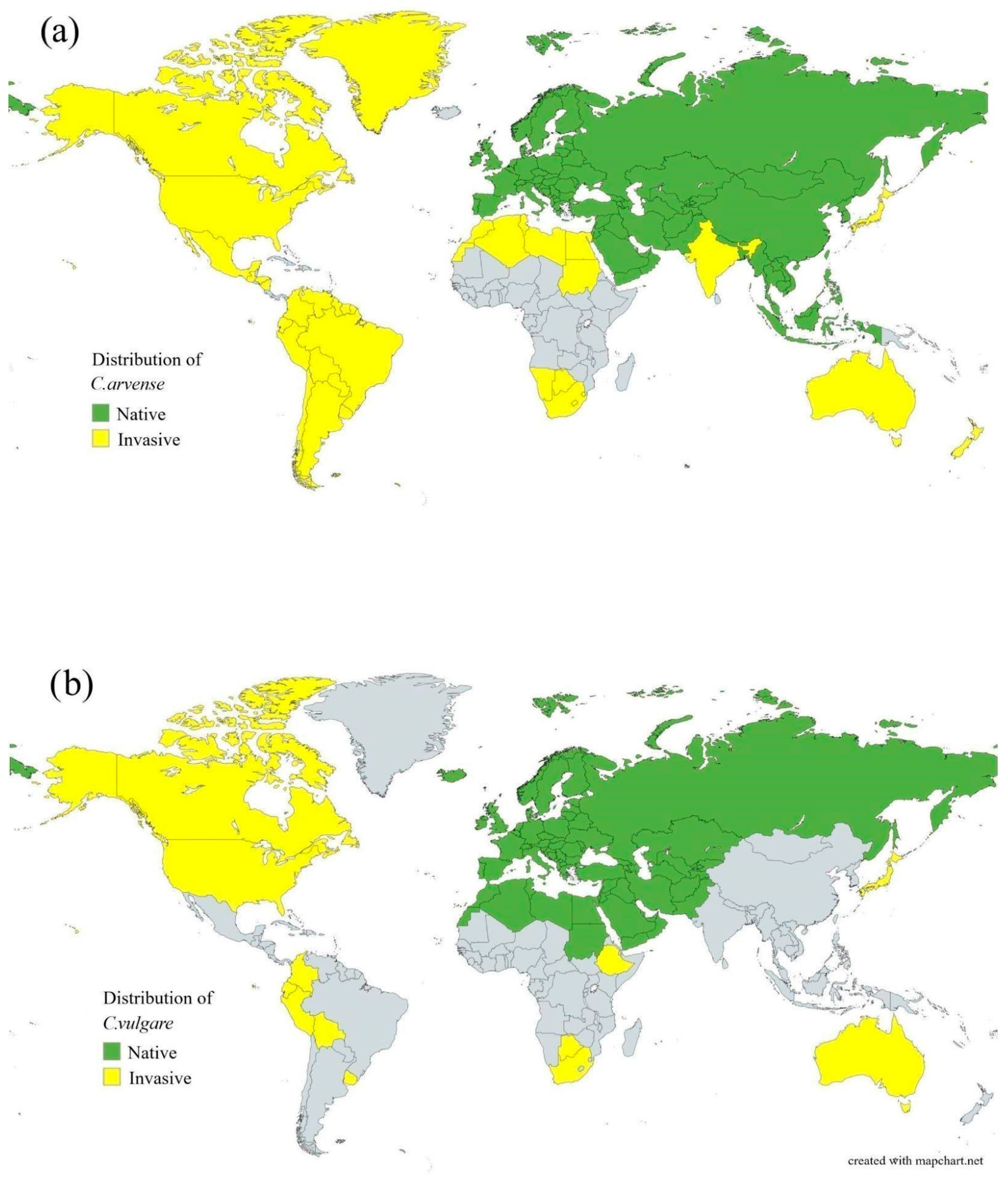
The species is widely distributed across Europe and Asia, and is considered invasive in North America, Japan, the Middle East, India, Australia, South America, New Zealand, and both Southern and Northern Africa (
Figure 4a,b) [
5,
29,
30]. It typically inhabits both cultivated and uncultivated lands.
The
C. vulgare—spear thistle (
Figure 3b).
C. vulgare is a biennial plant that can reach up to 180 cm in height. During the first year, it forms a basal rosette, while in the second year it develops an erect, spiny, and pubescent stem. The leaves are large and rough, with a tomentose underside and long, sharp spines along the veins. The flowers are purplish-pink and arranged in large capitula [
31].
The
C. vulgare is one of the most invasive species within the genus and is widely distributed in Europe, Western Asia, and North Africa. It has also become naturalized in North America, several South American countries, and Australia (
Figure 3b) [
32,
33].
Both species preferentially inhabit disturbed environments, including meadows, pastures, roadsides, and fallow lands. Their high ecological plasticity and pronounced ability for vegetative reproduction contribute to their wide distribution (
Figure 5a,b and
Figure 6a,b).
3.3. Traditional Uses
Medicinal plants are increasingly recognized as sources of new preclinical drugs.
Cirsium species have been used in traditional medicine for hepatoprotective purposes and are also traditionally used to treat gastritis, diabetes, hemorrhoids, and cough [
34].
The
C. arvense is also used in traditional cuisine. Its roots provide inulin and starch, easily digestible carbohydrates. In some regions, the plant is eaten as a vegetable, salad ingredient, or seasoning.
C. arvense also shows notable medicinal properties [
35,
36,
37]. In China, hot infusions have been used to treat rheumatic diseases [
38]. Decoctions have been used to treat bleeding, digestive disorders, hypertension, inflammation, scabies, ulcerative lesions, and skin diseases [
39,
40].
The
C. vulgare has a long history of traditional use. In Poland, it serves as an anxiolytic, and in Polish popular medicine, it is also used as a diuretic, astringent, and anti-inflammatory remedy [
29,
33]. Meanwhile, in traditional Chinese medicine,
C. vulgare is prepared as a decoction to treat inflammation, convulsions, and central nervous system (CNS) disorders [
41].
3.4. Phytochemical Composition of C. arvense and C. vulgare
The
C. arvense and
C. vulgare possess a diverse phytochemical profile, featuring phenolic compounds, flavonoids, phenolic acids, lignans, triterpenes, sterols, and terpenoids [
42,
43]. Although classified within the same genus, the composition and relative abundance of bioactive constituents differ according to the plant part examined, the extraction solvent used, and the phenological stage at harvest [
44]. In both species, phenolic acids—such as chlorogenic acid, caffeic acid, and p-coumaric acid—together with flavonoids like apigenin-7-O-glucoside, luteolin, kaempferol-3-O-glucoside, and quercetin-3-O-glucoside, prevail [
2,
45,
46,
47]. The major phytochemical groups reported in both species are listed in
Table 1.
As summarized in
Table 1, both species contain comparable classes of compounds; however, their relative concentrations diverge.
C. vulgare exhibits elevated levels of phenolic acids and triterpenoids. In several studies, methanolic extracts of
C. vulgare were found to contain substantial quantities of flavonoids and other phenolic constituents.
In contrast, C. arvense shows a higher proportion of triterpenes and phytosterols. Both species contain a complex array of phenolic compounds, flavonoids, triterpenoids, and sterols, although their relative abundances differ between the taxa.
3.4.1. Flavonoids and Phenolic Acids
Flavonoids and phenolic acids are the major classes of phenolic compounds identified in species of the genus
Cirsium.
C. arvense contains phenolic contents of ~25 mg GAE/g of dry extract, which can be considered relatively low to moderate compared to other plant species. The flavonoids were found to have a content of ~22 mg QE/g of the dry extract [
42]. This indicates that the phenolic content may vary depending on environmental conditions, extraction methods, and plant parts. Notably, the identification of individual phenolic compounds revealed the presence of several biologically relevant constituents at relatively low concentrations, while other studies have reported significantly higher total phenolic contents in different extracts of
C. arvense, highlighting considerable variability in phenolic composition.
Building on the overview above, detailed analyses identified several major phenolic compounds in the aerial parts of
C. arvense. The extract contained several compounds, with contents expressed as percentage (
w/
w) of the dry extract: chlorogenic acid (0.15%), kaempferol-3-O-methyl ester (0.18%), quercetin (0.18%), quercetin-3-glucoside (0.14%), luteolin-7-O-β-
d-glucopyranoside (0.2%), hispidulin-7-O-β-
d-glucopyranoside (0.18%), luteolin (0.36%), apigenin (0.37%), and kaempferol (0.18%). Other flavonoids and phenolic acids appeared at lower concentrations [
48].
In relation to the chemical composition described, Polish researchers studied five
Cirsium species and observed a strong positive correlation between total phenolic content and antioxidant activity in methanolic extracts (R
2 ≈ 0.95), whereas a lower correlation was found for ethyl acetate fractions (R
2 ≈ 0.8) [
29]. However, the original study does not provide details on the statistical model used for the correlation analysis or the exact number of samples used in the calculation.
The
C. vulgare has a diverse profile of phenolic acids—neochlorogenic, ferulic, vanillic, chlorogenic, caffeic, and p-coumaric acids are notable, while gallic, ellagic, rosmarinic, protocatechuic, syringic, gentisic, and hydroxybenzoic acids are present at lower levels [
33,
49,
50,
51,
52]. It also contains flavonoids, predominantly luteolin, kaempferol, and quercetin, along with their glycosides: apigenin-7-O-glucoside, luteolin-7-O-glucoside, kaempferol-3-O-glucoside, and quercetin-3-O-glucoside.
The highest concentration of phenolic compounds was observed in extracts obtained from leaves collected at the end of the dormancy period, with concentrations ranging from 102.5 to 146.3 mg/g dry weight for chlorogenic acid, while apigenin-7-O-glucoside ranged from 6.9 to 27.6 mg/g [
53].
3.4.2. Terpenoids, Triterpenes, and Volatile Components
The genus Cirsium is characterized by a diverse profile of terpenoid compounds, including non-volatile triterpenes, sterols, and volatile constituents identified by GC–MS analysis.
In
C. arvense, GC–MS analysis of the methanolic extract identified several major triterpenoid and sterol compounds, including olean-12-en-3-ol acetate (3β) (63.87%), lanosta-8,24-dien-3-ol acetate (3β) (12.12%), β-amyrin (6.19%), γ-sitosterol (6.09%), α-amyrin (5.24%), stigmasterol (3.29%), and carbonic acid 2-ethylhexyl heptadecyl ester (3.16%). Additional constituents reported in
C. arvense include triterpenoids (α- and β-amyrin), phytosterols such as stigmasterol and γ-sitosterol, and saponins, alkaloids, and choline [
54,
55].
In
C. vulgare, lupeol and its derivatives are the predominant triterpenoids [
51,
52,
56]. Gas chromatographic analysis of the hexane extract revealed that 52% of its composition consists of terpenoids, predominantly triterpenes and their esters. The most abundant compounds are lup-20(29)-en-3-yl acetate (29.9%), lupeol (13.2%), and norolean-12-ene (5.2%). Analysis of both species shows a complex triterpenoid composition, with differences in the types of compounds and their relative abundances [
57,
58].
Volatile constituents in
Cirsium species have also been characterized. A study conducted in Kazakhstan investigated the aerial parts of
C. arvense. Specifically, GC-MS analysis of the extracts revealed that the volatile fraction consisted mainly of hydrocarbons, terpenes, sesquiterpenes, aldehydes, and organic acids and their esters [
59]. Similarly, in
C. vulgare, 24 volatile compounds have been identified, including tridecanoic acid, docosahexaenoic acid, methyl tetradecanoate, citronellol, and 2,3,5,6-tetramethylphenol [
60,
61]. The essential oil contains volatile terpenes and fatty acids, which are also present in the seeds of this plant and in other
Cirsium species [
62].
Further GC–MS analysis of the hexane extract of
C. vulgare revealed the presence of 41 bioactive constituents, with terpenoids accounting for 52.89% of the total extract. The most abundant compounds were lup-20(29)-en-3-yl acetate (29.9%), lupeol (13.2%), linolenic acid ethyl ester (6.4%), norolean-12-ene (5.2%), 1-nonadecene (4.2%), 9,12-octadecadien-1-ol (4.9%), hexadecanoic acid (3.2%), 1-tricosene (2.9%), and cycloeicosane (2.6%) [
43]. The majority of these constituents belong to ketones, aldehydes, fatty acids, and aliphatic hydrocarbons, reflecting the plant’s essential oil and volatile fraction.
Overall, C. arvense and C. vulgare exhibit a complex and chemically diverse terpenoid profile. C. arvense is characterized by a higher diversity of triterpenoids and steroidal compounds, whereas C. vulgare shows a greater contribution of triterpenes and volatile constituents. These differences highlight the chemical diversity of the two species and may contribute to their distinct biological activities, as discussed in the following section.
3.5. Structure–Activity Relationships of Major Bioactive Compounds
The pharmacological activities of flavonoids and triterpenes depend on specific structural features. These features modulate how the compounds interact with biological targets. For flavonoids, antioxidant and related effects depend on the arrangement and number of hydroxyl groups, conjugation, and electron-delocalizing substituents. A conjugated C2–C3 double bond with a 4-oxo function in the C ring, and an ortho-dihydroxy (catechol) group in the B ring, supports electron delocalization. This stabilizes flavonoid radicals during free-radical scavenging and enhances antioxidant activity. Substitutions at C5 and C7 on the A ring can also facilitate hydrogen atom transfer and increase activity. Methoxy substitution may modulate anti-inflammatory effects. Many studies have established these structure–activity relationships and their influence on free-radical scavenging both in vitro and in biological systems [
63].
In Cirsium species, this is observed in flavonoids such as luteolin, apigenin, and kaempferol, as well as their glycosides, which share many of these structural features and contribute to antioxidant and cytoprotective activities.
Additionally, triterpenoids such as lupeol and taraxasterol are another major class of bioactive compounds in
Cirsium. These pentacyclic structures have anti-inflammatory, antioxidant, and antineoplastic activity. Hydroxyl (–OH) and carboxyl (–COOH) groups in oleanane and ursane triterpenoids are critical for their interactions with pro-inflammatory mediators and signaling pathways [
64,
65].
3.6. Influence of Extraction Methods
The yield and composition of phenolic compounds in
Cirsium species are strongly influenced by the extraction method. For
C. vulgare, ultrasound-assisted extraction with 50% ethanol is optimal, yielding the highest levels of apigenin-7-O-glucoside and chlorogenic acid. Similarly, another study found that 50% ethanol was the most effective for extracting phenolics from
C. vulgare leaves [
66,
67]. While these compounds are not unique to
Cirsium, their abundance and consistency in
C. vulgare extracts make them useful markers for phytochemical characterization and quality control of this species.
A study on the antioxidant activity of five Cirsium species conducted in Poland reported high antioxidant activity in extracts rich in phenolic compounds, suggesting a possible relationship between phenolic content and antioxidant effects.
In
C. arvense, antioxidant content was highest with methanol and butanol extraction [
68]. In
C. vulgare, major phenolic compounds such as chlorogenic acid and apigenin-7-O-glucoside peaked during budding and flowering, highlighting the importance of the vegetative stage for standardization [
69].
The highest total flavonoid content (25.73 mg CE/g) was found in methanolic extracts [
34,
38]. Alcohols like methanol and ethanol are effective due to the polarity of phenolic compounds. Methanol extracts polar phenolics well, while diethyl ether is best for volatile oils and lipophilic flavonoids, often in combination with other solvents [
70,
71]. However, the high toxicity of methanol and diethyl ether encourages the use of safer alternatives such as ethanol, water, or their mixtures. Ethanol is less toxic but mainly used for specific compound classes rather than as a general extraction solvent [
72].
Extraction parameters, such as temperature and duration, are important. Ultrasound-assisted extraction improves solvent penetration, allowing for lower temperatures and shorter times. Most phenolic compounds (except chlorogenic acid) are extracted within 30 min of ultrasonication, whereas maceration at room temperature can take up to 48 h to yield apigenin-7-O-glucoside [
3,
34,
67].
C. arvense is expected to follow similar patterns due to its phenolic and solubility profiles.
3.7. Activities of Cirsium Species: Biological and Pharmacological
The biological and pharmacological activity of representatives of the genus
Cirsium is closely associated with their rich phytochemical composition. The principal biological effects include antioxidant, antimicrobial, antitumor, anti-inflammatory, hepatoprotective, and gastroprotective activities [
69,
73,
74]. The main pharmacological activities, as well as other biological activities such as antioxidant effects, reported for both species are discussed below.
3.7.1. Antioxidant Activity
Antioxidant activity represents one of the most extensively studied aspects of the genus
Cirsium. Extracts of
C. arvense have demonstrated a high capacity for scavenging DPPH and ABTS radicals, as well as significant reducing power in the FRAP assay [
38]. The highest activity was observed in the methanolic and ethanolic extracts of leaves and flowers, which correlate with elevated levels of chlorogenic acid and luteolin-7-O-glucoside, compounds also characteristic of
C. vulgare [
2,
75]. Similar results have been reported for
C. vulgare. Methanolic leaf extracts show strong antioxidant activity. They reach 86.4% inhibition at 0.5 mg/mL [
76]. Leaves generally exhibit higher antioxidant capacity than stems or inflorescences. This is due to differences in phenolic content [
77]. Extracts from leaves collected at the end of the dormant phenological stage showed the highest antioxidant activity.
In addition,
C. vulgare extracts significantly inhibit lipid peroxidation in hydrogen peroxide–induced models, suggesting a potential role in protecting cellular membranes from oxidative damage [
78]. In another study, the antioxidant activity of a hydroalcoholic extract of
C. arvense was assessed using the DPPH assay. The extract showed IC
50 values of 436.4 µg/mL after 30 min and 750.2 µg/mL after 24 h of incubation. Under the same conditions, ascorbic acid was used as the reference antioxidant. It exhibited IC
50 values of 143.72 and 187.4 µg/mL, respectively [
43].
3.7.2. Antimicrobial Activity
Several studies report antimicrobial activity of extracts from
C. arvense and
C. vulgare against both Gram-positive and Gram-negative microorganisms. A key finding is the bacteriostatic effect observed against strains such as
Staphylococcus aureus and
Bacillus subtilis [
79].
Extracts of
C. arvense inhibited the growth of
S. aureus,
B. subtilis,
Escherichia coli, and
Candida albicans, with inhibition zone diameters ranging from 8 to 19 mm [
80]. Furthermore,
C. arvense has also been shown to act as an adjuvant to antibiotics. Specifically, when combined with cefixime, extracts of
C. arvense showed increased antibacterial activity against resistant strains, including MRSA,
Acinetobacter baumannii, and
E. coli. Synergistic effects were confirmed using checkerboard assays and time-kill kinetics. Additionally, protein-leakage analysis suggested that the combination may enhance bacterial membrane disruption [
81].
For
C. vulgare, pronounced activity has been reported against
S. aureus,
E. coli, and
Klebsiella pneumoniae, with inhibition zones reaching up to 22 mm at 1 mg/mL [
82]. Studies of non-polar fractions of
C. vulgare have demonstrated significant content of terpenoids, sterols and fatty acids, which contribute to pronounced antimicrobial activity. Petroleum ether extracts exhibited inhibitory effects against
E. coli and
S. aureus, supporting the potential of this species as a source of natural antiseptic agents [
34].
Antimicrobial activity was observed for ethanolic extracts against S. aureus, Staphylococcus epidermidis, Pseudomonas aeruginosa, Proteus vulgaris, and C. albicans, with minimum inhibitory concentrations (MICs) ranging from 8.35 to 16.7 mg/mL. These MIC values indicate relatively weak antimicrobial activity, suggesting limited potency of the extracts. In comparison, other extracts reported in this subsection exhibited inhibition zones ranging from 8 to 22 mm, reflecting varying degrees of antibacterial efficacy.
Additionally, apigenin-7-O-glucoside has demonstrated antibacterial activity, particularly against
S. aureus and
Enterococcus faecalis [
27,
67,
83].
In comparative analyses, aqueous and alcoholic extracts were evaluated, and the results revealed that alcoholic extracts are more effective against Gram-positive bacteria, whereas aqueous extracts generally exhibit weaker antimicrobial activity [
84].
3.7.3. Antitumor Activity
Both in vitro and in vivo studies have demonstrated cytotoxic activity of
Cirsium extracts against several cancer cell lines [
85].
In a recent study by Griškevičienė et al. (2025) [
86], dry extracts from various plant parts of
C. vulgare at different growth stages exhibited cytotoxicity against gastric cancer (KATO III) and colorectal cancer (HT-29) cell lines. The highest activity was observed for extracts derived from inflorescences and roots, with IC
50 values of approximately 0.19 mg/mL and 0.35 mg/mL, respectively. In addition, these extracts significantly inhibited cell migration at 0.2 mg/mL and reduced spheroid viability by approximately 77–81%. Although these values indicate measurable anticancer potential, they remain relatively high compared with those typically reported for purified anticancer agents and therefore suggest moderate cytotoxicity of the crude extracts [
86].
Dose-dependent cytotoxic effects of
C. vulgare extracts have also been reported against breast carcinoma (MCF-7), colorectal carcinoma (HT-29), and hepatocellular carcinoma (HepG2) cell lines [
87]. Similar antiproliferative activity of
C. arvense extracts has also been reported against several cancer cell lines, including HeLa and C6 cells. In BrdU-ELISA assays, different solvent fractions inhibited cell proliferation, with the strongest effect observed in HeLa cells [
88].
3.7.4. Anti-Inflammatory Activity
The anti-inflammatory effects of
C. arvense and
C. vulgare extracts are mainly attributed to their flavonoid- and phenolic-rich composition. Experimental studies on other
Cirsium species have demonstrated inhibition of nitric oxide production and modulation of inflammatory pathways involving COX and LOX enzymes [
89].
In experimental models,
C. arvense extract administered at a dose of 200 mg/kg reduced carrageenan-induced paw edema in rats by 49% [
90]. Studies on
C. vulgare have demonstrated suppression of nitric oxide and prostaglandin production in RAW 264.7 macrophages. Furthermore,
C. vulgare extracts reduced nitric oxide levels and the production of pro-inflammatory cytokines in lipopolysaccharide-activated macrophages, indicating inhibition of the NF-κB signaling pathway and, consequently, pronounced anti-inflammatory activity [
91].
3.7.5. Hepatoprotective and Gastroprotective Activities
Extracts of
C. vulgare exhibit pronounced hepatoprotective properties. In an experimental model of carbon tetrachloride (CCl4)-induced hepatitis, administration of
C. vulgare extract at 200 mg/kg significantly reduced serum ALT and AST levels and restored liver histology. Hepatoprotective effects have also been reported for nonpolar (hexane) extracts of
C. vulgare inflorescences in rat models of acute liver injury. These effects have been associated with phenolic compounds such as chlorogenic acid and luteolin, as well as triterpenoids including lupeol derivatives [
61,
92].
Moderate hepatoprotective activity has also been reported for
C. arvense; however, available data are limited primarily to animal models [
93]. Gastroprotective effects of
C. vulgare have also been reported. Extracts reduced ethanol-induced gastric ulcer formation, likely due to increased secretion of the gastric mucus barrier [
94].
3.7.6. Other Pharmacological Activities
Both species have been reported to exhibit diuretic, hypoglycemic, and neuroprotective effects [
95]. Administration of
C. vulgare extract significantly reduced blood glucose levels in rats with alloxan-induced diabetes [
96]. Anticoagulant activity has also been reported for
C. arvense extracts [
97].
Based on the available literature data on the phytochemical composition of
C. arvense and
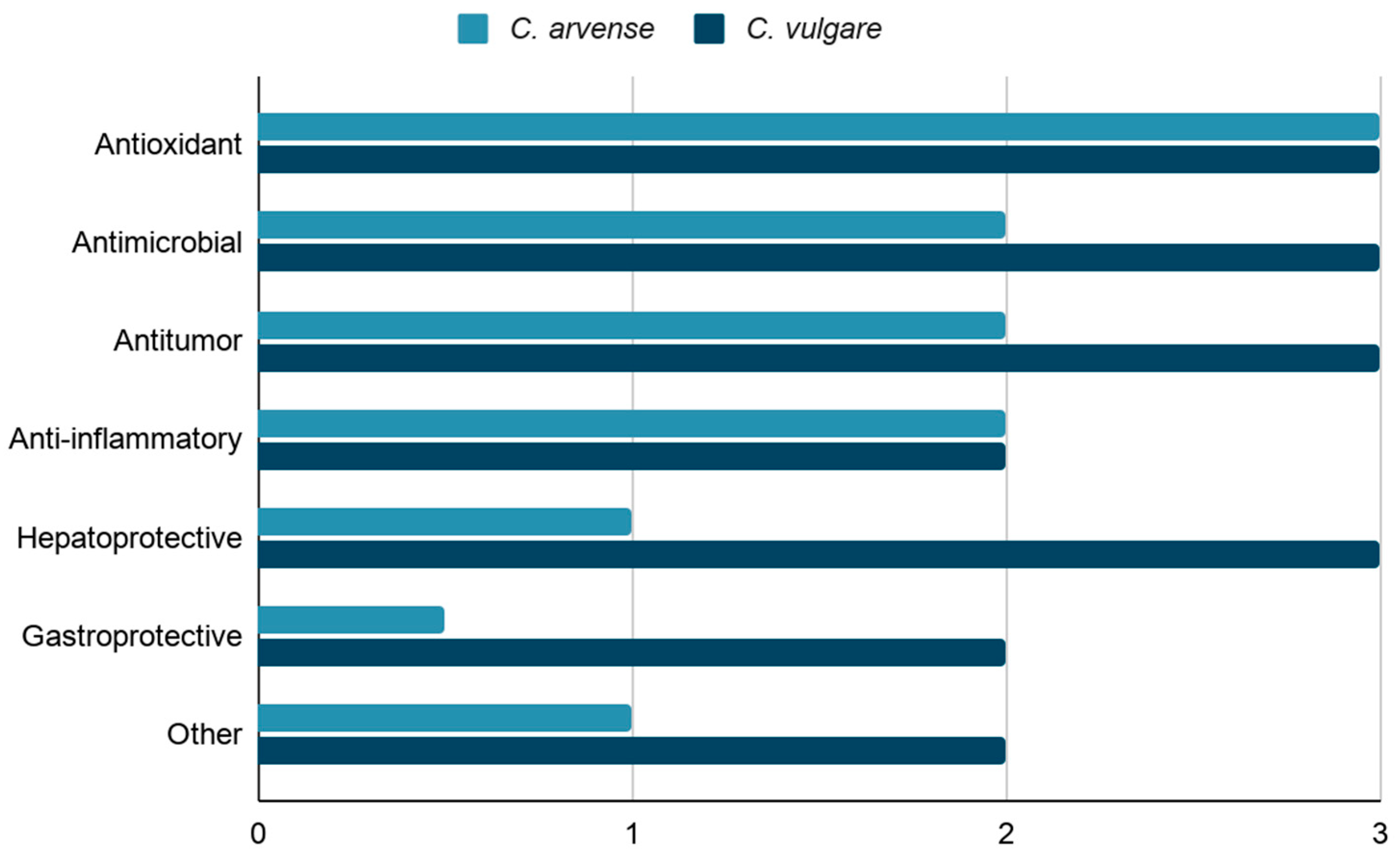
C. vulgare, a comparative diagram of their reported pharmacological activities was constructed (
Figure 7). The diagram summarizes the main biological effects associated with the major groups of bioactive compounds identified in both species. The relative activity levels shown in the figure were assigned using a semi-quantitative literature-based scoring approach. The scores reflect the relative degree of published support for each activity, considering the number of studies, consistency of findings, and the occurrence of bioactive compounds associated with the corresponding effects. In this scale, 1 indicates low, 2 moderate, and 3 high relative support in the literature.
Overall, C. vulgare exhibits a broader and more pronounced spectrum of biological activities, whereas C. arvense shows a narrower but well-defined profile, with particularly strong antioxidant properties.
3.7.7. Toxicological and Pharmacokinetic Aspects
Limited toxicological data are available for
C. arvense and
C. vulgare. One recent study found that ethanol extracts of
C. arvense aerial parts were toxic to brine shrimp (
Artemia salina) with an LC
50 of 51 μg/mL, showing cytotoxicity at high in vitro concentrations [
98]. In vitro studies show that
C. vulgare flower extracts are usually more bioactive than leaf extracts. Methanol-water-trifluoroacetic acid (50:50:0.1) extracts of
C. oleraceum (flowers) and
C. vulgare (flowers and leaves) showed low cytotoxicity at 1.25 mg/mL, with cell viabilities of 92.6 ± 8.9%, 82.2 ± 13.1%, and 87.5 ± 7.9%, respectively [
99]. No comprehensive studies have assessed acute, subchronic, or chronic effects, reproductive effects, or genotoxic effects in animal models, and clinical safety data are lacking. Pharmacokinetic data for
C. arvense and
C. vulgare extracts are also lacking. Most available data come from related species, such as
Cirsium japonicum, in which flavonoids were quantified in rat plasma after oral administration, providing preliminary insights into absorption and systemic exposure [
100].
3.7.8. Nanoparticles
Both species are also being explored as potential candidates for the biosynthesis of metal nanoparticles. For example, plant extracts of
C. arvense have been used for the green synthesis of silver nanoparticles, which demonstrated antibacterial activity against
Escherichia coli [
101,
102]. In addition, copper nanoparticles synthesized using
C. arvense extracts have been reported to exhibit photocatalytic activity and antibacterial effects against
Staphylococcus aureus and
E. coli, with inhibition zones of approximately 18 and 21 mm, respectively [
103,
104]. Extracts of
C. vulgare have also been used to biosynthesize cobalt oxide nanoparticles with promising electrocatalytic properties [
105].
4. Comparative Analysis and Discussion
The C. arvense and C. vulgare share broadly similar phytochemical profiles and biological properties. Both species contain phenolic compounds, such as chlorogenic and caffeic acids, as well as flavonoids, including luteolin, apigenin, kaempferol, and quercetin, and their glycosides. These compounds are considered major contributors to the antioxidant activity reported for Cirsium species.
A critical factor influencing experimental outcomes is the methodology used for preparing plant material. The composition of extracts and the magnitude of biological activity depend strongly on the plant part analyzed, the phenological stage at harvest, the solvent type, and the extraction technique used (e.g., maceration, ultrasound-assisted extraction, or reflux extraction). This methodological variability complicates the direct comparison of results across different studies.
Despite these shared features, the two species differ markedly in the dominant classes of compounds and in the extent of their pharmacological investigation. C. vulgare is characterized by higher concentrations of phenolic acids, particularly chlorogenic acid and apigenin-7-O-glucoside. In contrast, C. arvense contains higher levels of triterpenes and sterols, including α- and β-amyrin, taraxasterol, and stigmasterol. Although both species have been investigated for various biological and pharmacological activities, more pharmacological studies have been reported for C. vulgare than for C. arvense.
Some relationship between phytochemical composition and biological activity can also be considered. Phenolic acids and flavonoids reported in Cirsium species, such as chlorogenic acid, luteolin, and apigenin derivatives, are commonly associated with antioxidant and anti-inflammatory activities. In contrast, triterpenoid constituents, including lupeol and amyrin derivatives, are more often discussed in relation to hepatoprotective and cytotoxic effects observed in experimental models. Regional and phenological variability also differ between the species. For C. vulgare, a clear dependence of marker compound content on geographic origin and developmental stage has been demonstrated, creating favorable conditions for standardizing plant raw materials. Comparable data for C. arvense remain scarce and less detailed. From a practical perspective, these differences suggest that C. vulgare, owing to its high lupeol and chlorogenic acid content, may be a promising candidate for hepatoprotective applications, whereas C. arvense, characterized by the pronounced antimicrobial activity of specific fractions, may be a potential source of antibacterial compounds and natural antiseptics. Recent studies also suggest that the Cirsium species may represent promising biological sources for the green synthesis of metal nanoparticles, although this field remains at an early experimental stage.
4.1. Limitations of Current Research
Contemporary research highlights several critical knowledge gaps. In addition, the overall quality of the available evidence varies considerably. Many studies rely mainly on in vitro assays, while well-controlled in vivo investigations remain relatively limited. Differences in extract preparation, plant material origin, and experimental models further complicate direct comparison between studies. Moreover, the absence of standardized extracts and consistent dose reporting often restricts the interpretation and translational relevance of the reported biological effects.
The most prominent limitation is the lack of standardized extraction protocols: key parameters, such as plant-to-solvent ratio, extraction temperature, and extraction time, are often insufficiently reported, severely limiting data comparability. The volume of preclinical research remains limited, and only a small number of studies provide detailed pharmacodynamic data for Cirsium extracts, while information on pharmacokinetics and bioavailability is largely lacking. Although phenolic compounds commonly reported in Cirsium extracts, such as chlorogenic acid, luteolin, and apigenin derivatives, are known to undergo rapid metabolism, specific pharmacokinetic studies evaluating these metabolites in extracts of C. arvense or C. vulgare in animal models or humans have not yet been reported. Most available studies focus primarily on in vitro biological activity and phytochemical profiling, whereas data on absorption, metabolism, and systemic availability of the main constituents remain scarce.
Comprehensive toxicological evaluations, including acute, chronic, and reproductive toxicity, are largely absent. Furthermore, these species are considered invasive weeds and are therefore frequently treated with herbicides. The possible presence of pesticide residues in wild-collected plant material represents an additional safety concern and may limit their use in pharmaceutical applications. Moreover, molecular mechanisms of action remain insufficiently elucidated; the involvement of key signaling pathways, such as MAPK, NF-κB, Nrf2, and annexin A2, has been addressed only sporadically. Clinical trials (Phases I–III) are entirely lacking, precluding any robust assessment of the efficacy and safety of Cirsium-based herbal preparations. Additionally, regional data—particularly from Central Asia—remain scarce, despite the wide distribution of both species in this region.
The present review has several limitations related to the review process. No meta-analysis was conducted due to methodological heterogeneity, and a formal risk of bias assessment was not performed. In addition, the synthesis was narrative in nature, which may introduce interpretative subjectivity.
4.2. Future Research Perspectives
Promising directions for future research include standardizing and validating extraction methodologies, identifying and implementing reliable chemical markers (e.g., chlorogenic acid and apigenin-7-O-glucoside for C. vulgare and α-amyrin for C. arvense), and conducting comprehensive preclinical studies that incorporate pharmacodynamic, pharmacokinetic, and toxicological profiling. Further investigation into the molecular mechanisms of action of bioactive compounds is also warranted, particularly their effects on key pathways involved in apoptosis, inflammation, and oxidative stress, as well as their interactions with living tissues and mechanisms underlying antimicrobial activity. Additional emphasis should be placed on evaluating the synergistic potential of Cirsium extracts in combination with antibiotics and on initiating pilot clinical studies to assess safety and efficacy for specific preclinical indications. In Central Asian regions, a systematic evaluation of the impact of climatic and geographical factors on marker compound content and raw material quality is an important and timely research objective.
5. Conclusions
Despite a significant number of available publications, most research on C. arvense and C. vulgare remains limited to laboratory studies, and large-scale preclinical and clinical trials are lacking. The main limitations include the lack of standardized extraction and analytical methods and insufficient understanding of the relationships between the content of individual phenolic compounds and specific biological effects. Most data on C. arvense demonstrate primarily antioxidant and antimicrobial activities. C. vulgare, in contrast, has been more extensively investigated in preclinical studies and may have additional hepatoprotective, gastroprotective, and cytotoxic potential. Comprehensive studies combining phytochemical, pharmacological, toxicological, and clinical approaches will be crucial for future research.
Author Contributions
Conceptualization, E.K. (Elmira Kartbayeva); literature search and data collection, G.S., D.S., M.M., E.K. (Elmira Kabdylkanova), A.K.; data analysis and critical interpretation, E.K. (Elmira Kartbayeva), G.S., D.S., M.M., E.K. (Elmira Kabdylkanova), A.K.; writing—original draft preparation, E.K. (Elmira Kartbayeva), M.M., E.K. (Elmira Kabdylkanova); writing—review and editing, G.S., D.S., A.K.; visualization, G.S., D.S., M.M., E.K. (Elmira Kabdylkanova), A.K.; supervision, E.K. (Elmira Kartbayeva); corresponding author—M.M. All authors have read and agreed to the published version of the manuscript.
Funding
This research was funded by the Committee of Science of the Ministry of Science and Higher Education of the Republic of Kazakhstan (Grant No. AP27511639 Development and standardization of pharmaceutical products with anti-inflammatory and antioxidant activity based on domestic plant raw materials).
Institutional Review Board Statement
Not applicable.
Informed Consent Statement
Not applicable.
Data Availability Statement
No new data were created or analyzed in this study. Data sharing is not applicable to this article. All data analyzed in this study are included in the published article.
Conflicts of Interest
The authors declare no conflicts of interest.
Abbreviations
The following abbreviations are used in this manuscript:
| CGA | chlorogenic acid |
| A7G | apigenin-7-O-glucoside |
| ABTS | 2,2′-Azino-bis(3-ethylbenzothiazoline-6-sulfonic acid) |
| DPPH | 2,2-Diphenyl-1-picrylhydrazyl |
| GC–MS | Gas chromatography–mass spectrometry |
| HPLC | High-performance liquid chromatography |
| MRSA | Methicillin-resistant Staphylococcus aureus |
| RP-HPLC-DAD | Reversed-phase high-performance liquid chromatography with diode-array detection |
| MIC | minimum inhibitory concentration |
| COX | cyclooxygenase |
| LOX | lipoxygenase |
| IL-6 | Interleukin-6 |
| TNF-α | Tumor necrosis factor alpha |
| ALT | Alanine aminotransferase |
| AST | Aspartate aminotransferase |
| CCl4 | Carbon tetrachloride |
| MAPK | Mitogen-activated protein kinase |
| NF-κB | Nuclear factor kappa B |
| Nrf2 | Nuclear factor erythroid 2–related factor 2 |
References
- Li, X.; Wang, W. Chinese Materia Medica: Combinations & Applications; Donica Publishing: Lake Arrowhead, CA, USA, 2002. [Google Scholar]
- Luo, W.; Wu, B.; Tang, L.; Li, G.; Chen, H.; Yin, X. Recent research progress of Cirsium medicinal plants in China. J. Ethnopharmacol. 2021, 280, 114475. [Google Scholar] [CrossRef]
- Nazaruk, J.; Czechowska, S.K.; Markiewicz, R.; Borawska, M.H. Polyphenolic compounds and in vitro antimicrobial and antioxidant activity of aqueous extracts from leaves of some Cirsium species. Nat. Prod. Res. 2008, 22, 1583–1588. [Google Scholar] [CrossRef]
- Phaniendra, A.; Jestadi, D.B.; Periyasamy, L. Free radicals: Properties, sources, targets, and their implication in various diseases. Indian J. Clin. Biochem. 2015, 30, 11–26. [Google Scholar] [CrossRef]
- Ashmita, P.; Singh, L.; Kumar, D.; Antil, R.; Dahiya, P. Cirsium arvense: A multi-potent weed. Ann. Biol. 2020, 36, 442–447. [Google Scholar]
- Müller, E.; Nentwig, W. Plant pathogens as biocontrol agents of Cirsium arvense—An overestimated approach? NeoBiota 2011, 11, 1–24. [Google Scholar] [CrossRef]
- Tiley, G.E.D. Biological flora of the British Isles: Cirsium arvense (L.) Scop. J. Ecol. 2010, 98, 938–983. [Google Scholar] [CrossRef]
- Klinkhamer, P.G.L.; de Jong, T.J. Cirsium vulgare (Savi) Ten. J. Ecol. 1993, 81, 177–191. [Google Scholar] [CrossRef]
- Bullock, J.M.; Hill, B.C.; Silvertown, J. Demography of Cirsium vulgare in a grazing experiment. J. Ecol. 1994, 82, 101–111. [Google Scholar] [CrossRef]
- Klinkhamer, P.G.L.; de Jong, T.J.; Meelis, E. Delay of flowering in the “biennial” Cirsium vulgare: Size effects and devernalization. Oikos 1987, 49, 303–308. [Google Scholar] [CrossRef]
- de Jong, T.J.; Klinkhamer, P.G.L.; Nell, H.W.; Troelstra, S.R. Growth and nutrient accumulation of the biennials Cirsium vulgare and Cynoglossum officinale under nutrient-rich conditions. Oikos 1987, 48, 62–72. [Google Scholar] [CrossRef]
- van der Meijden, E.; Wijn, M.; Verkaar, H.J. Defence and regrowth: Alternative plant strategies in the struggle against herbivores. Oikos 1988, 51, 355–363. [Google Scholar] [CrossRef]
- Wesselingh, R.A.; Klinkhamer, P.G.L.; de Jong, T.J.; Schlatmann, E.G.M. A latitudinal cline in vernalization requirement in Cirsium vulgare. Ecography 1994, 17, 272–277. Available online: https://www.jstor.org/stable/3683053 (accessed on 20 December 2025). [CrossRef]
- Akhtar, N.; Mirza, B. Phytochemical analysis and comprehensive evaluation of antimicrobial and antioxidant properties of 61 medicinal plant species. Arab. J. Chem. 2018, 11, 1223–1235. [Google Scholar] [CrossRef]
- Zhao, Z.W.; Chang, H.C.; Ching, H.; Lien, J.C.; Huang, H.C.; Wu, C.R. Antioxidant Effects and Phytochemical Properties of Seven Taiwanese Cirsium Species Extracts. Molecules 2021, 26, 3935. [Google Scholar] [CrossRef]
- Marmitt, D.J.; Shahrajabian, M.H. Plant species used in Brazil and Asia regions with toxic properties. Phytother. Res. 2021, 35, 4703–4726. [Google Scholar] [CrossRef] [PubMed]
- Plants of the World Online. Cirsium Mill. Available online: http://www.plantsoftheworldonline.org/taxon/urn:lsid:ipni.org:names:30001899-2 (accessed on 25 December 2025).
- Mabberley, D.J. Mabberley’s Plant-Book: A Portable Dictionary of Plants, Their Classifications and Uses, 3rd ed.; Cambridge University Press: Cambridge, UK, 2008. [Google Scholar]
- Bureš, P.; Wang, Y.-F.; Horová, L.; Suda, J. Genome size variation in Central European species of Cirsium (Compositae) and their natural hybrids. Ann. Bot. 2004, 94, 353–363. [Google Scholar] [CrossRef] [PubMed]
- Kadota, Y. Species diversification of genus Cirsium (Asteraceae) in Japan. Korean J. Plant Taxon. 2007, 37, 335–349. [Google Scholar] [CrossRef]
- Karthikeyan, S.M.; Sanjappa, S.; Moorthy, S. Flowering Plants of India. In Dicotyledons; BSI: Kolkata, India, 2009. [Google Scholar]
- Bohm, B.A.; Stuessy, T.F. Flavonoids of the Sunflower Family (Asteraceae); Springer: Wien, Austria, 2001. [Google Scholar]
- Venner, L. Common Name: Bull Thistle (Common Thistle, Spear Thistle, Scotch Thistle, Black Thistle, Plume Thistle). Available online: https://www.laurajeanchecki.com/curriculum-vitae/research/bull-thistle-investigation/ (accessed on 22 December 2025).
- Jordon-Thaden, I.E.; Louda, S.M. Chemistry of Cirsium and Carduus: A role in ecological risk assessment for biological control of weeds? Biochem. Syst. Ecol. 2003, 31, 1353–1396. [Google Scholar] [CrossRef]
- Kaul, M.K. Medicinal Plants of Kashmir & Ladakh, Temperate & Cold Arid Himalaya; Indus Publishing Company: New Delhi, India, 1997. [Google Scholar]
- Doucet, C.; Cavers, P.B. Induced dormancy and colour polymorphism in seeds of the bull thistle Cirsium vulgare (Savi) Ten. Seed Sci. Res. 1997, 7, 399–407. [Google Scholar] [CrossRef]
- Román, J.F.C.; Hernández-Lambraño, R.E.; Rodríguez de la Cruz, D.; Agudo, J.A.S. Analysis of the adaptive strategy of Cirsium vulgare (Savi) Ten. in the colonization of new territories. Sustainability 2021, 13, 2384. [Google Scholar] [CrossRef]
- Del Guacchio, E.; Bernardo, L.; Caputo, P.; Carucci, F.; Domina, G.; Iamonico, D. Nomenclatural Synopsis of Cirsium Sect. Eriolepis (Asteraceae) in Italy. Plants 2021, 10, 223. [Google Scholar] [CrossRef]
- Nazaruk, J. Antioxidant activity and total phenolic content in Cirsium five species from north-east region of Poland. Fitoterapia 2008, 79, 194–196. [Google Scholar] [CrossRef]
- Nadkarni, K.M. Indian Materia Medica, 3rd ed.; Popular Prakashan: Mumbai, India, 1996. [Google Scholar]
- Gammerman, A.F.; Krylov, G.V. Lekarstvennye Rasteniya SSSR; Nauka: Moscow, Russia, 1976. [Google Scholar]
- Li, T.S.C. Chinese and Related North American Herbs: Phytopharmacology and Therapeutic Values, 2nd ed.; CRC Press: Boca Raton, FL, USA, 2009. [Google Scholar]
- Kozyra, M.; Głowniak, K. Phenolic acids in extracts obtained from the flowering herbs of Cirsium vulgare (Savi) Ten. growing in Poland. Acta Soc. Bot. Pol. 2013, 82, 325–329. [Google Scholar] [CrossRef]
- Aydın Kurç, M.; Orak, H.H.; Gülen, D.; Caliskan, H.; Argon, M.; Sabudak, T. Antimicrobial and antioxidant efficacy of the lipophilic extract of Cirsium vulgare. Molecules 2023, 28, 7177. [Google Scholar] [CrossRef]
- Ullah, S.; Shakir, L.; Ullah, R. Morphological and phytochemical study of Cirsium arvense from district Mardan Pakistan. J. Bioinform. Biotechnol. Res. 2023, 1, 1–7. [Google Scholar] [CrossRef]
- Khan, A.; Amin, A.; Khan, M.A.; Ali, I. In vitro screening of Cirsium arvense for potential antibacterial and antifungal activities. Pak. J. Pharm. Sci. 2011, 24, 519–522. [Google Scholar]
- Travlos, I.; Roussis, I.E.; Karampasis, N.; Tabaxi, I.; Papadimitriou, D.; Katsenios, N.; Bilalis, D. Thistles of Greece and their potential value as medicinal crops: Study on their first growth. Bull. UASVM Hortic. 2016, 73, 1–2. [Google Scholar] [CrossRef] [PubMed][Green Version]
- Khan, H.U.Z.; Khan, S.; Chen, Y.; Wan, P. In vitro antimicrobial activity of the chemical constituents of Cirsium arvense (L.) Scop. J. Med. Plants Res. 2013, 7, 1894–1898. [Google Scholar] [CrossRef]
- Moerman, D.E. Native American Medicinal Plants: An Ethnobotanical Dictionary; Timber Press: Portland, OR, USA, 2009. [Google Scholar]
- Vardhana, R. Medicinal and the Economic Plants; Shree Publishers and Distributors: New Delhi, India, 2013; Volume 3. [Google Scholar]
- Abdanipour, A.; Noori-Zadeh, A.; Mesbah-Namin, S.A.; Bakhtiyari, S.; Nejatbakhsh, R.; Anarkooli, I.J. Di-(2-ethylhexyl) phthalate-induced hippocampus-derived neural stem cells proliferation. Cell J. 2017, 19, 166–172. [Google Scholar] [CrossRef] [PubMed]
- Hossain, M.L.; Monjur-Al-Hossain, A.S.M.; Sadhu, S.K. HPLC profiling and evaluation of in vitro antioxidant activity of Cirsium arvense L. J. Pharmacogn. Phytochem. 2016, 5, 272–277. [Google Scholar]
- Ferdosi, M.F.; Khan, I.H.; Javaid, A. GC–MS examination of methanolic extract of Cirsium arvense flower. Pak. J. Weed Sci. Res. 2021, 27, 173–180. [Google Scholar] [CrossRef]
- Banaras, S.; Javaid, A.; Shoaib, A.; Ahmed, E. Antifungal activity of Cirsium arvense extracts against phytopathogenic fungus Macrophomina phaseolina. Planta Daninha 2017, 35, e017001. [Google Scholar] [CrossRef]
- Kozyra, M.; Skalicka-Woźniak, K. Quantitative analysis of flavonoids and phenolic acids from inflorescences and aerial parts of selected Cirsium species using accelerated solvent extraction (ASE). Acta Pol. Pharm.–Drug Res. 2014, 71, 877–881. [Google Scholar]
- Sezen Karaoğlan, E.; Hancı, H.; Koca, M.; Kazaz, C. Some bioactivities of isolated apigenin-7-O-glucoside and luteolin-7-O-glucoside. Appl. Sci. 2023, 13, 1503. [Google Scholar] [CrossRef]
- Griskeviciene, U.; Dambrauskiene, J.; Marksa, M.; Mazeliene, Z.; Vainoriene, R.; Ivanauskas, L. Effect of the phenological stage on the phenolic composition, and antioxidant and antimicrobial properties of Cirsium vulgare (Savi) Ten. extracts. Life 2024, 14, 1191. [Google Scholar] [CrossRef]
- Popova, Y.V. Pharmacognostic Study of Cirsium arvense (L.) Scop. and C. vulgare (Savi) Ten. Doctoral Thesis, Zaporizhzhia State Medical University, Zaporizhzhia, Ukraine, 2020. [Google Scholar]
- Hawrył, A.; Ziobro, A.; Świeboda, R.; Hawrył, M.; Waksmundzka-Hajnos, M. TLC profiles of selected Cirsium species with chemometrics in construction of their fingerprints. J. Chromatogr. Sci. 2016, 54, 1096–1104. [Google Scholar] [CrossRef]
- Kozyra, M.; Biernasiuk, A.; Malm, A.; Chowaniec, M. Chemical compositions and antibacterial activity of extracts obtained from the inflorescences of Cirsium canum (L.) all. Nat. Prod. Res. 2015, 29, 2059–2063. [Google Scholar] [CrossRef]
- Aggarwal, G.; Kaur, G.; Bhardwaj, G.; Mutreja, V.; Sohal, H.S.; Nayik, G.A.; Bhardwaj, A.; Sharma, A. Traditional Uses, Phytochemical Composition, Pharmacological Properties, and the Biodiscovery Potential of the Genus Cirsium. Chemistry 2022, 4, 1161–1192. [Google Scholar] [CrossRef]
- Nazaruk, J.; Chłędzik, S.; Strawa, J.; Bazydło, K.; Wajs-Bonikowska, A. Chemical composition and antioxidant activity of Cirsium vulgare inflorescences. Nat. Prod. Commun. 2017, 12, 519–522. Available online: https://pubmed.ncbi.nlm.nih.gov/30520586/ (accessed on 25 December 2025). [CrossRef]
- Li, W.; Zhao, Z.; Zhang, Y. Variation of phenolic acids in Cirsium vulgare during vegetative development. Plants 2022, 11, 405. [Google Scholar] [CrossRef]
- Ferdosi, M.F.; Khan, I.H. GC–MS profiling of triterpenoids from Cirsium arvense root extract. Pak. J. Bot. 2020, 52, 1281–1288. [Google Scholar]
- Zohaib, K.A.; Bashir, U.; Khan, I.H.; Javaid, A.; Anwar, W. Synergistic effect of plant growth promoting rhizobacteria and Cirsium arvense against black scurf disease of potato. Sains Malays. 2024, 53, 3071–3083. [Google Scholar] [CrossRef]
- Basatinya, A.M.; Sajedianfard, J.; Nazifi, S.; Hosseinzadeh, S.; Kamrani Mehni, M.; Farahi, A.; Rahimi, K.; Derakhshanfar, A.; Salavati, S. Effects of ethanolic extracts of Quercus, Cirsium vulgare, and Falcaria vulgaris on gastric ulcer, antioxidant and inflammatory indices, and gene expression in rats. Physiol. Rep. 2021, 9, e14954. [Google Scholar] [CrossRef]
- Dutta, C.P.; Lala, P.K.R.; Roy, D.N. Taraxasterol and its derivatives from Cirsium arvense. Phytochemistry 1972, 11, 2267–2269. [Google Scholar] [CrossRef]
- Fernández-Martínez, E.; Díaz-Espinoza, R.; Villavicencio-Nieto, M.A.; Pérez-Escandón, B.E.; Pérez-Hernández, N.; Macías, A.; Ortíz, M.I.; Ponce-Monter, H.A. Preliminary phytochemical and biological study of Cirsium ehrenbergii. Proc. West Pharmacol. Soc. 2007, 50, 162–164. [Google Scholar]
- Mukhitdin, M.B.; Kartbayeva, E.B.; Kalykova, A.S.; Turgumbayeva, A.A. Phytochemical analysis of ethanol extracts of field tobacco (Cirsium arvense) and its pharmacological potential. Farmaciâ Kazahstana 2025, 4, 55–70. [Google Scholar] [CrossRef]
- Ferdosi, M.F.; Javaid, A. Comparative evaluation of extraction solvents for phenolic yield and antioxidant potential of Cirsium arvense. Pak. J. Weed Sci. Res. 2020, 26, 195–204. [Google Scholar]
- Kozyra, M.; Łoś, R.; Mardarowicz, M.; Głowniak, K.; Malm, A.; Szłapak, A. GC/MS analysis of the essential oil isolated from the herb of Cirsium vulgare (Savi) Ten. and its antimicrobial activity. Ann. Univ. Mariae Curie-Skłodowska Sect. DDD Pharm. 2009, 22, 149–154. [Google Scholar] [CrossRef]
- Fernández-Martínez, E.; Jiménez-Santana, M.; Centeno-Álvarez, M.; Torres-Valencia, J.M.; Shibayama, M.; Cariño-Cortés, R. Hepatoprotective effects of nonpolar extracts from inflorescences of thistles Cirsium vulgare and Cirsium ehrenbergii on acute liver damage in rat. Pharmacogn. Mag. 2018, 13, S860–S867. [Google Scholar] [CrossRef]
- Preet, G.; Haj Hasan, A.; Ramlagan, P.; Fawdar, S.; Boulle, F.; Jaspars, M. Anti-Neurodegenerating Activity: Structure–Activity Relationship Analysis of Flavonoids. Molecules 2023, 28, 7188. [Google Scholar] [CrossRef] [PubMed]
- Goddard, Z.R.; Searcey, M.; Osbourn, A. Advances in triterpene drug discovery. Trends Pharmacol. Sci. 2024, 45, 964–968. [Google Scholar] [CrossRef] [PubMed]
- Saleem, M. Lupeol, a novel anti-inflammatory and anti-cancer dietary triterpene. Cancer Lett. 2009, 285, 109–115. [Google Scholar] [CrossRef]
- Griškevičienė, U.; Marksa, M.; Ževžikovienė, A.; Ževžikovas, A.; Ivanauskas, L. Optimisation of extraction conditions for phenolic compounds from Cirsium vulgare leaves. In Proceedings of the 15th International Scientific Conference “The Vital Nature Sign”, Kaunas, Lithuania, 20–21 May 2021; Available online: https://hdl.handle.net/20.500.12512/111071 (accessed on 25 December 2025).
- Griškevičienė, U.; Marksa, M.; Ževžikovienė, A.; Kazlauskienė, D.; Vainorienė, R.; Ževžikovas, A.; Ivanauskas, L. Cirsium vulgare leaves: Isolation and identification of phenolic compounds. Chemija 2021, 32, 92–99. [Google Scholar] [CrossRef]
- Khan, Z.U.H.; Ali, F.; Khan, S.U.; Ali, I. Phytochemical study on the constituents from Cirsium arvense. Mediterr. J. Chem. 2011, 2, 64–69. Available online: https://www.medjchem.com/index.php/medjchem/article/view/131 (accessed on 25 December 2025). [CrossRef]
- Nalewajko-Sieliwoniuk, E.; Malejko, J.; Twarowska, P.; Timoszuk, M.; Nazaruk, J. Post-column determination of polyphenolic antioxidants in Cirsium vulgare (Savi) Ten. extracts. J. Sep. Sci. 2017, 40, 3830–3838. [Google Scholar] [CrossRef]
- Sabudak, T.; Orak, H.H.; Gülen, D.; Caliskan, H.; Özer, M.; Çalışkan, H.; Bahrisefit, İ.; Cabi, E. Investigation of some antibacterial and antioxidant properties of wild Cirsium vulgare from Turkey. Indian J. Pharm. Educ. Res. 2017, 51, 48. [Google Scholar] [CrossRef]
- Assouguem, A.; Annemer, S.; Kara, M.; Lazraq, A. Innovative approaches in the extraction, identification, and application of secondary metabolites from plants. Phyton—Int. J. Exp. Bot. 2025, 94, 1631–1668. [Google Scholar] [CrossRef]
- Venkatesan, K.; Sundarababu, J.; Anandan, S.S. The recent developments of green and sustainable chemistry in multidimensional way: Current trends and challenges. Green Chem. Lett. Rev. 2024, 17, 2312848. [Google Scholar] [CrossRef]
- Hussain, M.; Khan, Z.U.H.; Mirza, B. Comparative antioxidant activity of Cirsium arvense and Cirsium vulgare extracts. Pak. J. Bot. 2018, 50, 563–570. [Google Scholar]
- Kenny, O.; Smyth, T.J.; Walsh, D.; Kelleher, C.T.; Hewage, C.M.; Brunton, N.P. Investigating the potential of under-utilised plants from the Asteraceae family as a source of natural antimicrobial and antioxidant extracts. Food Chem. 2014, 161, 79–86. [Google Scholar] [CrossRef] [PubMed]
- Griškevičienė, U.; Marksa, M.; Vainorienė, R.; Ivanauskas, L. Biennial plant Cirsium vulgare savi Ten.: Comparison of chemical composition and antioxidant activity during two years of growth. In Proceedings of the 3rd International Electronic Conference on Plant Sciences, 15–17 January 2024; MDPI: Basel, Switzerland, 2024. [Google Scholar]
- Rahman, M.A.; Siddique, M.H. Antioxidant and radical scavenging activity of Cirsium vulgare methanolic extract. Bangladesh J. Pharmacol. 2020, 15, 77–85. [Google Scholar]
- Zheng, F.; Zhan, C.; Yang, K.; Li, Q.; Wang, Z.; Xu, G.; Clements, D.R.; Yao, B.; Jin, G.; Yang, S.; et al. Allelopathic Potential of Newly Emerged Invasive Plant Cirsium vulgare (Asteraceae) in Yunnan Province of China. Plants 2026, 15, 513. [Google Scholar] [CrossRef]
- Ferdosi, M.F.; Khan, I.H.; Javaid, A. Antioxidant activity of methanolic extract of Cirsium arvense leaves and flowers. Pak. J. Weed Sci. Res. 2018, 24, 363–370. [Google Scholar]
- Tang, X.M.; Xie, M.X.; Gou, J.L.; Chen, L.; Tian, J.L.; Zhang, X.; Lu, Y.Y.; Wang, H.Q. Antibacterial activity of plants in Cirsium: A comprehensive review. Chin. J. Integr. Med. 2024, 30, 835–841. [Google Scholar] [CrossRef]
- Shoaib, A.; Javaid, A. Antifungal potential of Cirsium arvense extracts against Alternaria alternata. Mycopath 2016, 14, 23–27. [Google Scholar]
- Zahid, Z.; Kyyaly, A.; Jubrail, J. Potentiation of antibacterial activity of cefixime in synergy with Cirsium arvense (L.) Scop. against resistant bacterial isolates. Med. Sci. Forum 2025, 35, 9. [Google Scholar] [CrossRef]
- Ahmad, S.; Saeed, R. Evaluation of antimicrobial and cytotoxic activity of Cirsium vulgare. Iran. J. Pharm. Res. 2021, 20, 112–121. [Google Scholar]
- Chepel, V.; Lisun, V.; Skrypnik, L. Changes in the content of some groups of phenolic compounds and biological activity of extracts of various parts of heather (Calluna vulgaris (L.) Hull) at different growth stages. Plants 2020, 9, 926. [Google Scholar] [CrossRef]
- Arora, S.; Kaur, S. Comparative evaluation of methanolic extracts of Cirsium arvense and Cirsium vulgare for antioxidant and antimicrobial activity. Int. J. Pharmacogn. Phytochem. Res. 2019, 11, 22–30. [Google Scholar]
- Ferdosi, M.F.; Shoaib, A. Cytotoxic potential of Cirsium vulgare hexane fraction against human cancer cell lines. Biomed. Pharmacother. 2021, 142, 112050. [Google Scholar] [CrossRef]
- Griškevičienė, U.; Ivanauskas, L.; Petrikaitė, V. Anticancer properties of Cirsium vulgare (Savi) Ten. dry extracts from different plant parts and phenological stages of raw material collection. Sci. Rep. 2025, 15, 12105. [Google Scholar] [CrossRef] [PubMed]
- Vélez, M.D.; Pedroza-Díaz, J.; Santa-González, G.A. Data on the cytotoxicity of chlorogenic acid in 3D cultures of HT-29 cells. Data Brief 2023, 50, 109527. [Google Scholar] [CrossRef] [PubMed]
- Demirtas, I.; Tufekci, A.R.; Yaglioglu, A.S.; Elmastas, M. Studies on the Antioxidant and Antiproliferative Potentials of Cirsium arvense subsp. vestitum. J. Food Biochem. 2017, 41, e12299. [Google Scholar] [CrossRef]
- Naveed, M.; Malak, N.; Ullah, Z.; Ullah, S.; Amin, N.; Ahmad, I.; Khan, M.A.; Said, M.B.; Belkahia, H.; Giantsis, I.A.; et al. In vitro and in silico study and pharmacokinetic analysis of the acaricidal effectiveness of Cersium arvense extract against Rhipicephalus microplus. Sci. Rep. 2025, 15, 25717. [Google Scholar] [CrossRef]
- Rehman, M.; Khan, I.H.; Ahmed, E. Anti-inflammatory and analgesic activity of Cirsium arvense in experimental animals. Pak. Vet. J. 2020, 40, 175–182. [Google Scholar]
- Zaman, R.; Sattar, F. Inhibition of nitric oxide and cytokine production by Cirsium vulgare extract in LPS-stimulated macrophages. Phytother. Res. 2022, 36, 1521–1530. [Google Scholar] [CrossRef]
- Chen, Z.; Yang, Y.; Mi, S.; Fan, Q.; Sun, X.; Deng, B.; Wu, G.; Li, Y.; Zhou, Q.; Ruan, Z. Hepatoprotective effect of chlorogenic acid against chronic liver injury in inflammatory rats. J. Funct. Foods 2019, 62, 103540. [Google Scholar] [CrossRef]
- Kim, J.H.; Lee, S. Hepatoprotective potential of Cirsium arvense extract in Wistar rats. Korean J. Pharmacogn. 2019, 50, 15–23. [Google Scholar]
- Rahman, A.; Ahmed, S. Gastroprotective activity of Cirsium vulgare ethanolic extract against ethanol-induced gastric ulcers in rats. J. Ethnopharmacol. 2020, 248, 112325. [Google Scholar] [CrossRef]
- Zahir, M.; Siddique, M.H. Diuretic and hypoglycemic activity of Cirsium vulgare extract in albino rats. Bangladesh J. Pharmacol. 2020, 15, 155–161. [Google Scholar]
- Mirza, B.; Akhtar, N. Hypoglycemic and neuroprotective effects of Cirsium vulgare extract in diabetic rat model. Biomed. Pharmacother. 2017, 95, 1540–1548. [Google Scholar] [CrossRef]
- Shivani; Prakash, D.; Devi, B. A Review Article On Crisium arvense. Int. J. Pharm. Sci. 2024, 2, 1793–1808. [Google Scholar] [CrossRef]
- Balkrishna, A.; Sharma, H.; Kukreti, A.; Kumari, A.; Saini, P.; Arya, V.; Kumar, A. Traditional uses and phytopharmacology of Cirsium arvense: Bioprospecting potential of a weed from temperate biome. J. Appl. Pharm. Sci. 2024, 14, 30–37. [Google Scholar] [CrossRef]
- Borawska, M.H.; Czechowska, S.K.; Markiewicz, R.; Socha, K.; Nazaruk, J. Enhancement of antibacterial effects of extracts from Cirsium species using sodium picolinate and estimation of their toxicity. Nat. Prod. Res. 2010, 24, 554–561. [Google Scholar] [CrossRef]
- Zhang, Z.; Jia, P.; Zhang, X.; Zhang, Q.; Yang, H.; Shi, H.; Zhang, L. LC–MS/MS determination and pharmacokinetic study of seven flavonoids in rat plasma after oral administration of Cirsium japonicum DC. extract. J. Ethnopharmacol. 2014, 158, 66–75. [Google Scholar] [CrossRef]
- Barbinta-Patrascu, M.E.; Ungureanu, C.; Besliu, D.; Lazea-Stoyanova, A.; Iosif, L. Bio-active nanomaterials phyto-generated from weed herb Cirsium arvense. Optoelectron. Adv. Mater. Rapid Commun. 2020, 14, 459–465. [Google Scholar]
- Tahir, K.; Nazir, S.; Li, B.; Khan, A.U.; Khan, Z.U.H.; Ahmad, A.; Khan, Q.U.; Zhao, Y. Enhanced visible light photocatalytic inactivation of Escherichia coli using silver nanoparticles as photocatalyst. J. Photochem. Photobiol. B Biol. 2015, 153, 261–266. [Google Scholar] [CrossRef] [PubMed]
- Khan, Z.U.H.; Khan, A.; Shah, A.; Wan, P.; Chen, Y.; Khan, G.M.; Khan, A.U.; Tahir, K.; Muhammad, N.; Khan, H.U. Enhanced photocatalytic and electrocatalytic applications of green synthesized silver nanoparticles. J. Mol. Liq. 2016, 220, 248–257. [Google Scholar] [CrossRef]
- Rehman, K.U.; Khan, A.U.; Tahir, K.; Nazir, S.; Albalawi, K.; Hassan, H.M.; Alabbad, E.A.; Refat, M.S.; Al-Shehri, H.S.; Aldawsari, A.M. Facile synthesis of copper oxide nanoparticles (CuONPs) using green method to promote photocatalytic and biocidal applications. J. Mol. Liq. 2022, 360, 119453. [Google Scholar] [CrossRef]
- Fallahi, M.; Norouzi, B. Synthesis of cobalt oxide nanoparticles using Cirsium vulgare leaves extract and evaluation of electrocatalytic effects on oxidation of l-cysteine. Ionics 2020, 26, 1951–1961. [Google Scholar] [CrossRef]
| Disclaimer/Publisher’s Note: The statements, opinions and data contained in all publications are solely those of the individual author(s) and contributor(s) and not of MDPI and/or the editor(s). MDPI and/or the editor(s) disclaim responsibility for any injury to people or property resulting from any ideas, methods, instructions or products referred to in the content. |




 ,
,