Natural Alkaloids as Antimicrobial Agents: Mechanisms, Potentials and Challenges


Abstract
1. Introduction
2. Overview of Alkaloids
3. Antimicrobial Effects of Alkaloids
3.1. Antibacterial Activity of Alkaloids
3.1.1. Examples of Alkaloids Exhibiting Antibacterial Activity
3.1.2. Mechanisms of Action Against Bacterial Pathogens
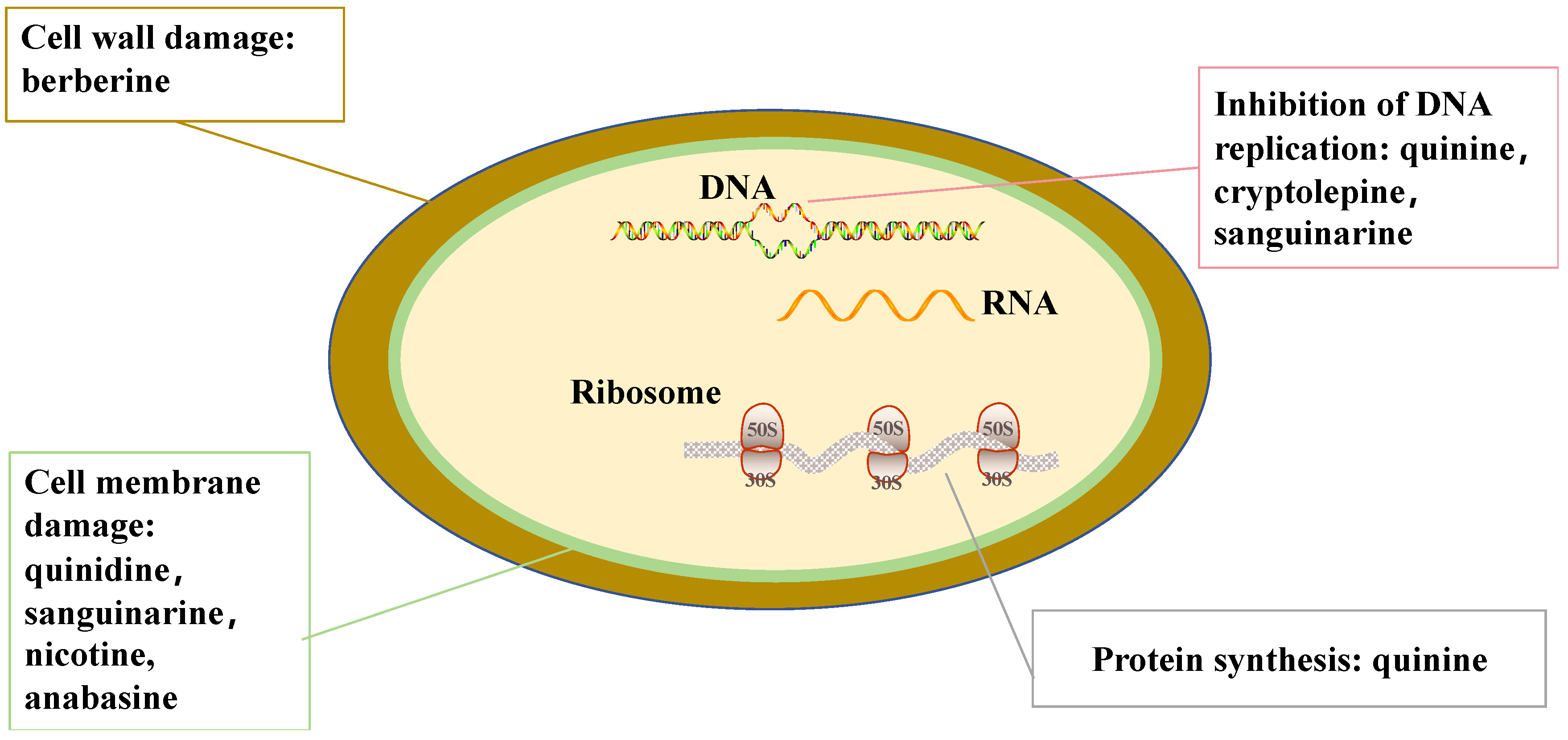
Disruption of Bacterial Cell Walls and Membranes
Interference with Protein Synthesis
Inhibition of DNA Replication
3.2. Antifungal Activity of Alkaloids
3.2.1. Examples of Alkaloids with Antifungal Activity
3.2.2. Mechanisms of Action Against Fungi
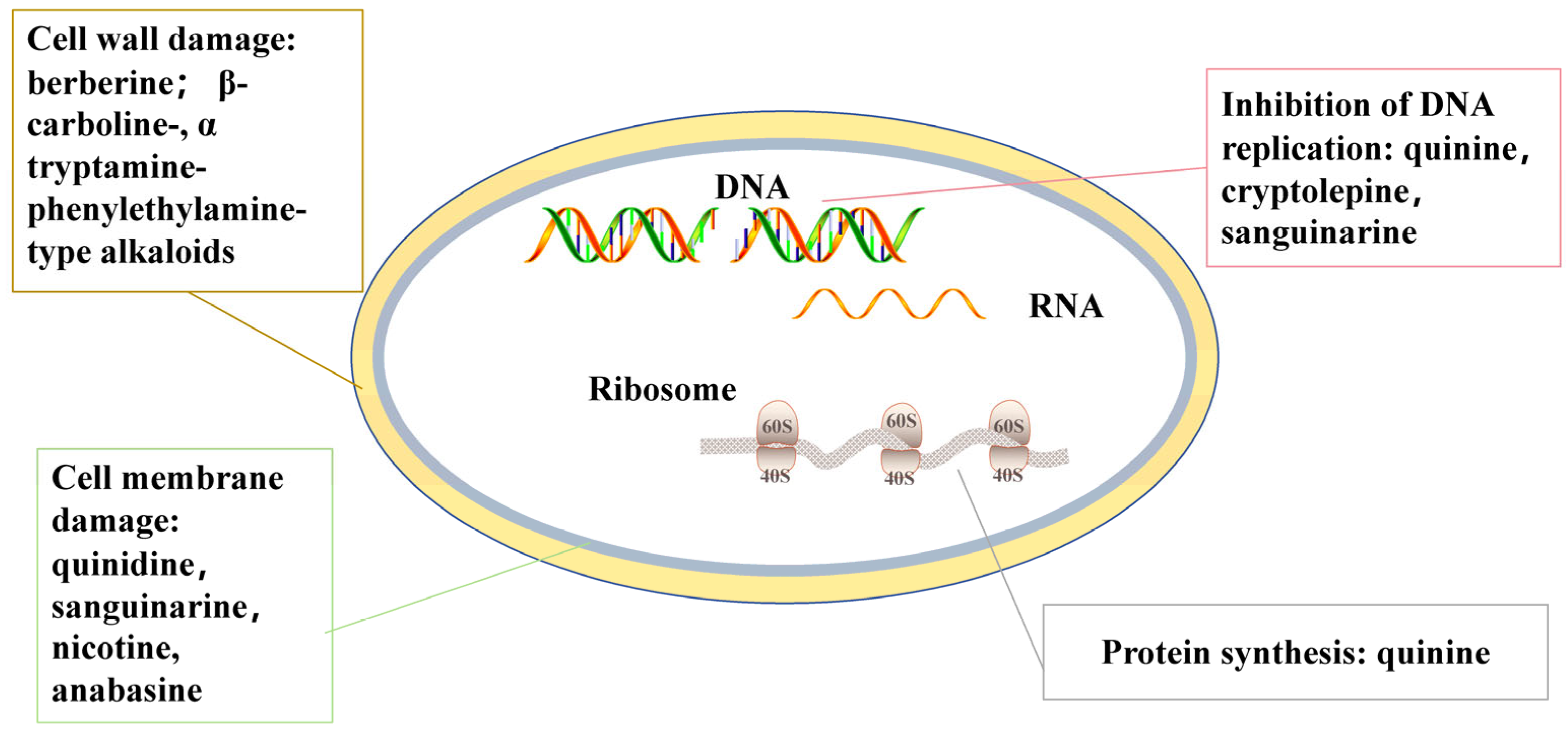
Destruction of Fungal Cell Walls
Inhibition of Fungal Growth
Inhibition of Fungal Spore Germination
3.3. Activity of Alkaloids Against Virus
3.3.1. Examples of Alkaloids with Antiviral Activity
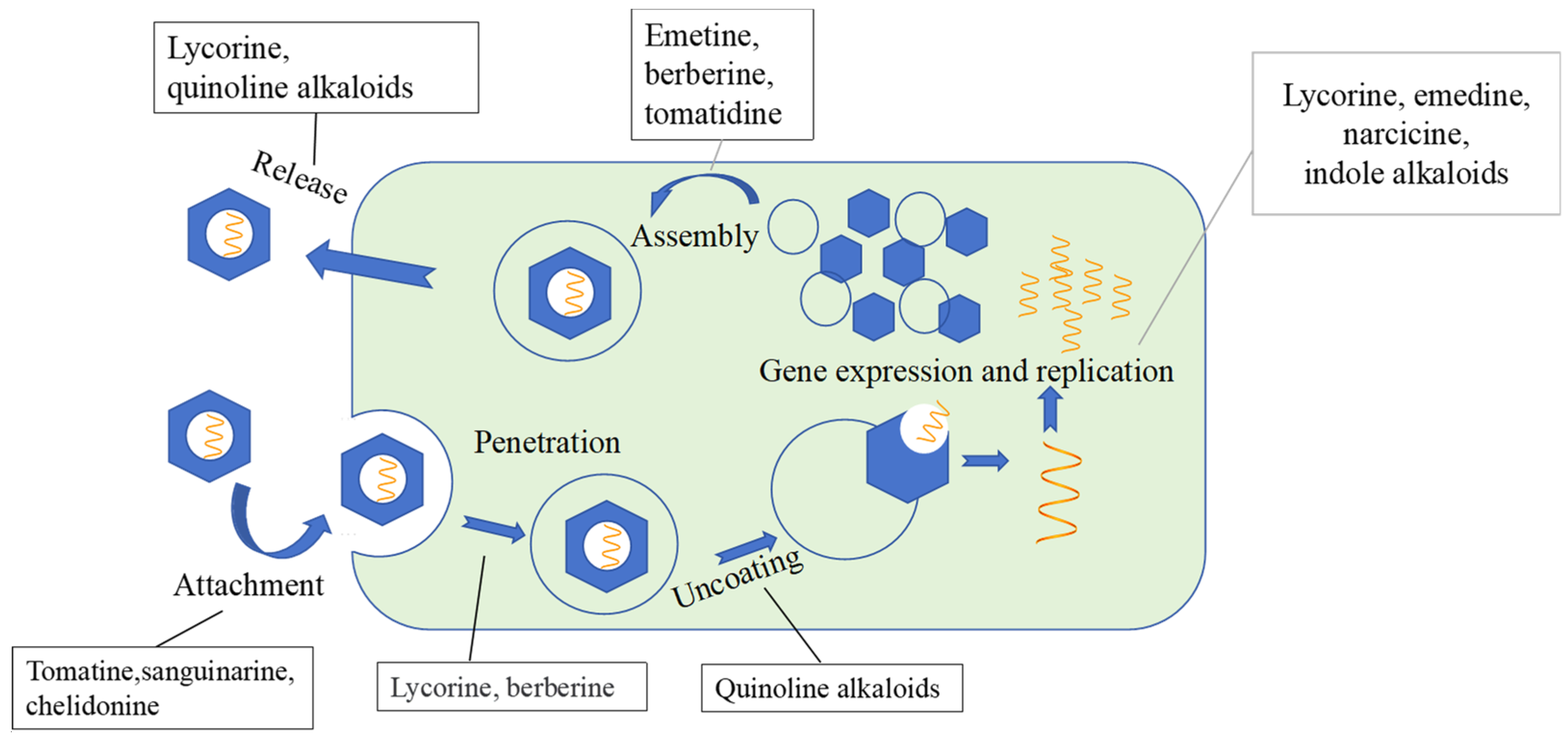
3.3.2. Mechanisms of Action Against Virus
Inhibiting Virus Replication
Inhibiting Viral Particle Assembly
4. Synergistic Effects of Alkaloids with Conventional Antimicrobial Agents
4.1. Overview of Studies Demonstrating the Synergistic Effects of Alkaloids with Antibiotics
4.2. Examples of Alkaloids Exhibiting Synergistic Antimicrobial Effects
4.3. Potential Use of Alkaloids as Adjuvants to Enhance Antimicrobial Efficacy
5. Future Research Directions
5.1. Identification and Isolation of New Natural Alkaloids with Antimicrobial Activity
5.2. Structure-Activity Relationship Studies and Optimization of Natural Alkaloids
5.3. Structure–Activity–Toxicity Relationships of Natural Alkaloids
5.4. Evaluation of the Safety and Efficacy of Natural Alkaloids in Clinical Trials
5.5. Developing Combination Therapy
5.6. Alkaloids as Resistance-Modifying Agents Against Drug-Resistant Pathogens
6. Conclusions
Author Contributions
Funding
Institutional Review Board Statement
Informed Consent Statement
Data Availability Statement
Conflicts of Interest
References
- Regional Committee for the Western Pacific. Antimicrobial Resistance; WHO Regional Office for the Western Pacific: Manila, Philippines, 2019. [Google Scholar]
- World Health Organization. Control of antibiotic-resistant bacteria: Memorandum from a WHO Meeting. Bull. World Health Organ. 1983, 61, 423–433. [Google Scholar]
- Gow, N.A.R.; Johnson, C.; Berman, J.; Coste, A.T.; Cuomo, C.A.; Perlin, D.S.; Bicanic, T.; Harrison, T.S.; Wiederhold, N.; Bromley, M.; et al. The importance of antimicrobial resistance in medical mycology. Nat. Commun. 2022, 13, 5352. [Google Scholar] [CrossRef]
- Pattnaik, D.; Panda, S.; Singh, N.; Sahoo, S.; Mohapatra, I.; Jena, J. Multidrug resistant, extensively drug resistant and pan drug resistant gram negative bacteria at a tertiary care centre in Bhubaneswar. Int. J. Community Med. Public Health 2019, 6, 567–572. [Google Scholar] [CrossRef]
- Williams, M.A.; Wyner, S.N. Superbugs: An Arms Race Against Bacteria. Am. J. Public Health 2019, 109, 521–522. [Google Scholar] [CrossRef]
- Woolhouse, M.; Farrar, J. Policy: An intergovernmental panel on antimicrobial resistance. Nature 2014, 509, 555–557. [Google Scholar] [CrossRef] [PubMed]
- Xiao, Y.H. Antimicrobial Stewardship in China: Systems, Actions and Future Strategies. Clin. Infect. Dis. 2018, 67, S135–S141. [Google Scholar] [CrossRef]
- World Health Organization. Global Action Plan on Antimicrobial Resistance; World Health Organization: Geneva, Switzerland, 2015.
- Yan, Y.M.; Li, X.; Zhang, C.H.; Lv, L.J.; Gao, B.; Li, M.H. Research Progress on Antibacterial Activities and Mechanisms of Natural Alkaloids: A Review. Antibiotics 2021, 10, 318. [Google Scholar] [CrossRef]
- Song, F.; Li, Z.; Bian, Y.; Huo, X.; Fang, J.; Shao, L.; Zhou, M. Indole/isatin-containing hybrids as potential antibacterial agents. Arch. Pharm. 2020, 353, e2000143. [Google Scholar] [CrossRef]
- Yuan, W.J.; Ma, J.R.; Liu, X.L.; Zi, C.T.; Xi, Y.K.; Shen, X.J.; Li, G.D.; Sheng, J.; Wang, X.J. Steroidal Alkaloids from the Roots of Veratrum mengtzeanum Loes. with Their Anti-Inflammatory Activities. Molecules 2023, 28, 7116. [Google Scholar] [CrossRef]
- Olofinsan, K.; Abrahamse, H.; George, B.P. Therapeutic Role of Alkaloids and Alkaloid Derivatives in Cancer Management. Molecules 2023, 28, 5578. [Google Scholar] [CrossRef]
- Nair, J.J.; van Staden, J. Antiviral alkaloid principles of the plant family Amaryllidaceae. Phytomedicine 2023, 108, 18. [Google Scholar] [CrossRef]
- Bhardwaj, K.; Bhargav, R.; Patocka, J.; Sharma, R.; Navratilova, Z.; Oleksak, P.; Kuca, K. Dendrobine: A neuroprotective Sesquiterpenic Alkaloid for the Prevention and Treatment of Diseases: A Review. Mini-Rev. Med. Chem. 2024, 24, 1395–1408. [Google Scholar] [CrossRef] [PubMed]
- Silva, L.R.; Alves, A.F.; Cavalcante-Silva, L.H.A.; Braga, R.M.; de Almeida, R.N.; Barbosa-Filho, J.M.; Piuvezam, M.R. Milonine, a Morphinandienone Alkaloid, Has Anti-Inflammatory and Analgesic Effects by Inhibiting TNF-α and IL-1β Production. Inflammation 2017, 40, 2074–2085. [Google Scholar] [CrossRef]
- O’ Donovan, D.H.; Aillard, P.; Berger, M.; de la Torre, A.; Petkova, D.; Knittl-Frank, C.; Geerdink, D.; Kaiser, M.; Maulide, N. C−H Activation Enables a Concise Total Synthesis of Quinine and Analogues with Enhanced Antimalarial Activity. Angew. Chem. Int. Ed. 2018, 57, 10737–10741. [Google Scholar] [CrossRef]
- Mishra, S.K.; Tripathi, G.; Kishore, N.; Singh, R.K.; Singh, A.; Tiwari, V.K. Drug development against tuberculosis: Impact of alkaloids. Eur. J. Med. Chem. 2017, 137, 504–544. [Google Scholar] [CrossRef]
- Zheng, X.; Wu, F.; Lin, X.; Shen, L.; Feng, Y. Developments in drug delivery of bioactive alkaloids derived from traditional Chinese medicine. Drug Deliv. 2018, 25, 398–416. [Google Scholar] [CrossRef]
- Li, X.; Zuo, S.Y.; Wang, B.; Zhang, K.Y.; Wang, Y. Antimicrobial Mechanisms and Clinical Application Prospects of Antimicrobial Peptides. Molecules 2022, 27, 2675. [Google Scholar] [CrossRef]
- Hooper, D.C. Mechanisms of Action of Antimicrobials: Focus on Fluoroquinolones. Clin. Infect. Dis. 2001, 32, S9–S15. [Google Scholar] [CrossRef]
- Admane, N.; Kothandan, R.; Syed, S.; Biswas, S. A quinoline alkaloid potentially modulates the amyloidogenic structural transitions of the biofilm scaffolding small basic protein. J. Biomol. Struct. Dyn. 2023, 41, 1366–1377. [Google Scholar] [CrossRef] [PubMed]
- Martins, T.F.; Vasconcelos, I.M.; Silva, R.G.G.; Silva, F.D.A.; Souza, P.F.N.; Varela, A.L.N.; Albuquerque, L.M.; Oliveira, J.T.A. A Bowman–Birk Inhibitor from the Seeds of Luetzelburgia auriculata Inhibits Staphylococcus aureus Growth by Promoting Severe Cell Membrane Damage. J. Nat. Prod. 2018, 81, 1497–1507. [Google Scholar] [CrossRef] [PubMed]
- Lindell, A.E.; Zimmermann-Kogadeeva, M.; Patil, K.R. Multimodal interactions of drugs, natural compounds and pollutants with the gut microbiota. Nat. Rev. Microbiol. 2022, 20, 431–443. [Google Scholar] [CrossRef] [PubMed]
- Drobnik, J.; Drobnik, E. Timeline and bibliography of early isolations of plant metabolites (1770–1820) and their impact to pharmacy: A critical study. Fitoterapia 2016, 115, 155–164. [Google Scholar] [CrossRef]
- Granström, K.O. Ocular complications of some older drugs: A historical glimpse. Acta Ophthalmol. 1966, 44, 279–281. [Google Scholar] [CrossRef]
- Shang, X.F.; Morris-Natschke, S.L.; Liu, Y.Q.; Guo, X.; Xu, X.S.; Goto, M.; Li, J.C.; Yang, G.Z.; Lee, K.H. Biologically active quinoline and quinazoline alkaloids part I. Med. Res. Rev. 2018, 38, 775–828. [Google Scholar] [CrossRef]
- Li, Y.; Yip, M.; Ning, Y.; Chung, J.; Toh, A.; Leow, C.; Liu, N.; Ting, D.; Schmetterer, L.; Saw, S.-M.; et al. Topical Atropine for Childhood Myopia Control: The Atropine Treatment Long-Term Assessment Study. JAMA Ophthalmol. 2024, 142, 15–23. [Google Scholar] [CrossRef]
- Zheng, Q.G.; Mu, X.Y.; Pan, S.B.; Luan, R.Q.; Zhao, P. Ephedrae herba: A comprehensive review of its traditional uses, phytochemistry, pharmacology, and toxicology. J. Ethnopharmacol. 2023, 307, 23. [Google Scholar] [CrossRef]
- Xu, Y.-Z.; Wen, Q.-L.; Sha, F.; Li, Q.; Wu, X.-Y. Total synthesis of acronycine and noracronycine: An aryne amination approach. Tetrahedron 2021, 92, 132273. [Google Scholar] [CrossRef]
- Ratnayake, W.M.K.M.; Suresh, T.S.; Abeysekera, A.M.; Salim, N.; Chandrika, U.G. Acute anti-inflammatory and anti-nociceptive activities of crude extracts, alkaloid fraction and evolitrine from Acronychia pedunculata leaves. J. Ethnopharmacol. 2019, 238, 111827. [Google Scholar] [CrossRef]
- Zhang, C.-W.; Huang, D.-Y.; Rajoka, M.S.; Wu, Y.; He, Z.-D.; Ye, L.; Wang, Y.; Song, X. The Antifungal Effects of Berberine and Its Proposed Mechanism of Action Through CYP51 Inhibition, as Predicted by Molecular Docking and Binding Analysis. Molecules 2024, 29, 5079. [Google Scholar] [CrossRef] [PubMed]
- Zhao, D.; Hamilton, J.P.; Pham, G.M.; Crisovan, E.; Wiegert-Rininger, K.; Vaillancourt, B.; DellaPenna, D.; Buell, C.R. De novo genome assembly of Camptotheca acuminata, a natural source of the anti-cancer compound camptothecin. GigaScience 2017, 6, gix065. [Google Scholar] [CrossRef] [PubMed]
- Cho, E.A.-O.; Acosta, K.A.-O.; Henkin, J.; Abzalimov, R.; Raskin, I. Synergistic antifungal effects of botanical extracts against Candida albicans. PLoS ONE 2026, 21, e0340665. [Google Scholar] [CrossRef] [PubMed]
- Hu, X.; Li, W.; Yuan, M.; Li, C.; Liu, S.; Jiang, C.; Wu, Y.; Cai, K.; Liu, Y. Homoharringtonine production by endophytic fungus isolated from Cephalotaxus hainanensis Li. World J. Microbiol. Biotechnol. 2016, 32, 110. [Google Scholar] [CrossRef] [PubMed]
- Dubey, K.K.; Kumar, P.; Labrou, N.E.; Shukla, P. Biotherapeutic potential and mechanisms of action of colchicine. Crit. Rev. Biotechnol. 2017, 37, 1038–1047. [Google Scholar] [CrossRef]
- Dasgeb, B.; Kornreich, D.; McGuinn, K.; Okon, L.; Brownell, I.; Sackett, D.L. Colchicine: An ancient drug with novel applications. Br. J. Dermatol. 2018, 178, 350–356. [Google Scholar] [CrossRef]
- Shin, Y.K.; Hsieh, Y.S.; Han, A.Y.; Lee, K.W.; Seol, G.H. Beneficial effects of Codonopsis lanceolata extract on systolic blood pressure levels in prehypertensive adults: A double-blind, randomized controlled trial. Phytother. Res. 2020, 34, 340–348. [Google Scholar] [CrossRef]
- Ishida, S.; Okasaka, M.; Ramos, F.; Kashiwada, Y.; Takaishi, Y.; Kodzhimatov, O.K.; Ashurmetov, O. New alkaloid from the aerial parts of Codonopsis clematidea. J. Nat. Med. 2008, 62, 236–238. [Google Scholar] [CrossRef]
- Munikishore, R.; Liu, R.; Zhang, S.; Zhao, Q.-S.; Nian, Y.; Zuo, Z. Structurally modified Cyclovirobuxine-D Buxus alkaloids as effective analgesic agents through Cav3.2 T-Type calcium channel inhibition. Bioorg. Chem. 2023, 135, 106493. [Google Scholar] [CrossRef]
- Song, C.; Ma, J.; Li, G.; Pan, H.; Zhu, Y.; Jin, Q.; Cai, Y.; Han, B. Natural Composition and Biosynthetic Pathways of Alkaloids in Medicinal Dendrobium Species. Front. Plant Sci. 2022, 13, 850949. [Google Scholar] [CrossRef] [PubMed]
- Kratz, J.M.; Mair, C.E.; Oettl, S.K.; Saxena, P.; Scheel, O.; Schuster, D.; Hering, S.; Rollinger, J.M. Pick your poison: hERG-blocking alkaloids in the emetic herbal drug ipecac. Planta Medica 2016, 82, P1060. [Google Scholar] [CrossRef]
- Bleasel, M.D.; Peterson, G.M. Emetine Is Not Ipecac: Considerations for Its Use as Treatment for SARS-CoV2. Pharmaceuticals 2020, 13, 428. [Google Scholar] [CrossRef]
- Cao, Q.; Wang, Q.; Wu, X.Y.; Zhang, Q.; Huang, J.H.; Chen, Y.Q.; You, Y.W.; Qiang, Y.; Huang, X.F.; Qin, R.G.; et al. A literature review: Mechanisms of antitumor pharmacological action of leonurine alkaloid. Front. Pharmacol. 2023, 14, 10. [Google Scholar] [CrossRef]
- Li, Y.Y.; Lin, Y.K.; Liu, X.H.; Wang, L.; Yu, M.; Li, D.J.; Zhu, Y.Z.; Du, M.R. Leonurine: From Gynecologic Medicine to Pleiotropic Agent. Chin. J. Integr. Med. 2020, 26, 152–160. [Google Scholar] [CrossRef]
- Hu, J.Q.; Gu, W.J.; Ma, N.; Fan, X.Y.; Ci, X.X. Leonurine alleviates ferroptosis in cisplatin-induced acute kidney injury by activating the Nrf2 signalling pathway. Br. J. Pharmacol. 2022, 179, 3991–4009. [Google Scholar] [CrossRef]
- Gan, M.L.; Han, L.F.; Wang, R.F.; Yang, Z.C. Bioassay-guided isolation of an antimycobacterial compound from Leonurus japonicus Houtt. S. Afr. J. Bot. 2019, 121, 92–97. [Google Scholar] [CrossRef]
- Sun, Y.; Xu, L.; Cai, Q.; Wang, M.; Wang, X.; Wang, S.; Ni, Z. Research progress on the pharmacological effects of matrine. Front. Neurosci. 2022, 16, 977374. [Google Scholar] [CrossRef]
- You, L.; Yang, C.; Du, Y.; Wang, W.; Sun, M.; Liu, J.; Ma, B.; Pang, L.; Zeng, Y.; Zhang, Z.; et al. A Systematic Review of the Pharmacology, Toxicology and Pharmacokinetics of Matrine. Front. Pharmacol. 2020, 11, 01067. [Google Scholar] [CrossRef] [PubMed]
- Magann, N.L.; Westley, E.; Sowden, M.J.; Gardiner, M.G.; Sherburn, M.S. Total Synthesis of Matrine Alkaloids. J. Am. Chem. Soc. 2022, 144, 19695–19699. [Google Scholar] [CrossRef]
- Chen, J.; Zhang, W. Advances in Antimicrobial, Antibiofilm, and Remineralization Strategies against Oral Streptococcus mutans Found in Natural and Synthetic Agents. J. Biosci. Med. 2025, 13, 16–25. [Google Scholar] [CrossRef]
- Silva, C.d.M.d.; Bolzan, A.A.; Heinzmann, B.M. Alcalóides pirrolizidínicos em espécies do gênero Senecio. Química Nova 2006, 29, 1047–1053. [Google Scholar] [CrossRef]
- Gong, B.; Zhang, S.; Wang, X.; Ran, G.; Zhang, X.; Xi, J.; Gao, Z.; Lei, Y.; Pan, J.; Liu, Y.; et al. Inflammation Intensifies Monocrotaline-Induced Liver Injury. J. Agric. Food Chem. 2023, 71, 3433–3443. [Google Scholar] [CrossRef] [PubMed]
- Jayawickreme, K.; Świstak, D.; Ozimek, E.A.-O.; Reszczyńska, E.; Rysiak, A.; Makuch-Kocka, A.A.-O.X.; Hanaka, A.A.-O. Pyrrolizidine Alkaloids-Pros and Cons for Pharmaceutical and Medical Applications. Int. J. Mol. Sci. 2023, 24, 16972. [Google Scholar] [CrossRef]
- Han, J.; Zhang, S.; He, J.; Li, T. Piperine: Chemistry and Biology. Toxins 2023, 15, 696. [Google Scholar] [CrossRef]
- Iahtisham-Ul, H.; Imran, M.; Nadeem, M.; Tufail, T.; Gondal, T.A.; Mubarak, M.S. Piperine: A review of its biological effects. Phytother. Res. 2021, 35, 680–700. [Google Scholar]
- Alves, F.S.; Cruz, J.N.; de Farias Ramos, I.N.; do Nascimento Brandão, D.L.; Queiroz, R.N.; da Silva, G.V.; da Silva, G.V.; Dolabela, M.F.; da Costa, M.L.; Khayat, A.S.; et al. Evaluation of Antimicrobial Activity and Cytotoxicity Effects of Extracts of Piper nigrum L. and Piperine. Separations 2023, 10, 21. [Google Scholar] [CrossRef]
- Ashrafi, S.; Alam, S.; Sultana, A.; Raj, A.; Emon, N.U.; Richi, F.T.; Sharmin, T.; Moon, M.; Park, M.N.; Kim, B. Papaverine: A Miraculous Alkaloid from Opium and Its Multimedicinal Application. Molecules 2023, 28, 3149. [Google Scholar] [CrossRef] [PubMed]
- Gomes, D.A.; Joubert, A.M.; Visagie, M.H. The Biological Relevance of Papaverine in Cancer Cells. Cells 2022, 11, 3385. [Google Scholar] [CrossRef] [PubMed]
- Jamil, O.K.; Cravens, A.; Payne, J.T.; Kim, C.Y.; Smolke, C.D. Biosynthesis of tetrahydropapaverine and semisynthesis of papaverine in yeast. Proc. Natl. Acad. Sci. USA 2022, 119, e2205848119. [Google Scholar] [CrossRef]
- Glowacka, K.; Wiela-Hojenska, A. Pseudoephedrine-Benefits and Risks. Int. J. Mol. Sci. 2021, 22, 5146. [Google Scholar] [CrossRef]
- Strawbridge, R.; Javed, R.R.; Cave, J.; Jauhar, S.; Young, A.H. The effects of reserpine on depression: A systematic review. J. Psychopharmacol. 2023, 37, 248–260. [Google Scholar] [CrossRef] [PubMed]
- Park, J.; Chen, D.Y.K. A Desymmetrization-Based Total Synthesis of Reserpine. Angew. Chem. Int. Ed. 2018, 57, 16152–16156. [Google Scholar] [CrossRef] [PubMed]
- Renner, U.D.; Oertel, R.; Kirch, W. Pharmacokinetics and pharmacodynamics in clinical use of scopolamine. Ther. Drug Monit. 2005, 27, 655–665. [Google Scholar] [CrossRef]
- Kohnen-Johannsen, K.L.; Kayser, O. Tropane Alkaloids: Chemistry, Pharmacology, Biosynthesis and Production. Molecules 2019, 24, 796. [Google Scholar] [CrossRef]
- Tadayon, N.; Ramazani, A.; Rezazadeh, S.; Nohooji, M.G.; Angourani, H.R. Isolation and investigation of antibacterial activities and cytotoxicity of atropine and scopolamine. Results Chem. 2024, 10, 101732. [Google Scholar] [CrossRef]
- Hou, W.; Lin, H.; Wang, Z.Y.; Banwell, M.G.; Zeng, T.; Sun, P.-H.; Lin, J.; Chen, W.M. Novel bivalent securinine mimetics as topoisomerase I inhibitors. MedChemComm 2017, 8, 320–328. [Google Scholar] [CrossRef]
- Santos, E.; Tadielo, L.; Arruda Schmiedt, J.; Orisio, P.; Brugeff, E.; Possebon, F.; Pereira, M.; Pereira, J.; Bersot, L. Inhibitory effects of piperine and black pepper essential oil on multispecies biofilm formation by Listeria monocytogenes, Salmonella Typhimurium, and Pseudomonas aeruginosa. LWT 2023, 182, 114851. [Google Scholar] [CrossRef]
- Ngamnithiporn, A.; Welin, E.R.; Pototschnig, G.; Stoltz, B.M. Evolution of a Synthetic Strategy toward the Syntheses of Bis-tetrahydroisoquinoline Alkaloids. Acc. Chem. Res. 2024, 57, 1870–1884. [Google Scholar] [CrossRef] [PubMed]
- Rahim, M.I.; Eifler, R.; Rais, B.; Mueller, P.P. Alkalization is responsible for antibacterial effects of corroding magnesium. J. Biomed. Mater. Res. Part A 2015, 103, 3526–3532. [Google Scholar] [CrossRef] [PubMed]
- Michael, J.P. Chapter 31—The quinoline alkaloids. In Second Supplements to the 2nd Edition of Rodd’s Chemistry of Carbon Compounds; Sainsbury, M., Ed.; Elsevier: Amsterdam, The Netherlands, 1991; pp. 423–482. [Google Scholar]
- Liu, J.; Li, C.J.; Ni, L.; Yang, J.Z.; Li, L.; Zang, C.X.; Bao, X.Q.; Zhang, D.; Zhang, D.M. Anti-inflammatory alkaloid glycoside and quinoline alkaloid derivates from the stems of Clausena lansium. RSC Adv. 2015, 5, 80553–80560. [Google Scholar] [CrossRef]
- Kharal, S.A.; Hussain, Q.; Ali, S. Quinine is bactericidal. JPMA J. Pak. Med. Assoc. 2009, 59, 208–212. [Google Scholar]
- Insuasty, D.; Vidal, O.; Bernal, A.; Marquez, E.; Guzman, J.; Insuasty, B.; Quiroga, J.; Svetaz, L.; Zacchino, S.; Puerto, G.; et al. Antimicrobial Activity of Quinoline-Based Hydroxyimidazolium Hybrids. Antibiotics 2019, 8, 239. [Google Scholar] [CrossRef]
- Neag, M.A.; Mocan, A.; Echeverría, J.; Pop, R.M.; Bocsan, C.I.; Crişan, G.; Buzoianu, A.D. Berberine: Botanical Occurrence, Traditional Uses, Extraction Methods, and Relevance in Cardiovascular, Metabolic, Hepatic, and Renal Disorders. Front. Pharmacol. 2018, 9, 557. [Google Scholar] [CrossRef]
- Wu, S.; Yang, K.; Hong, Y.H.; Gong, Y.J.; Ni, J.J.; Yang, N.; Ding, W.J. A New Perspective on the Antimicrobial Mechanism of Berberine Hydrochloride Against Staphylococcus aureus Revealed by Untargeted Metabolomic Studies. Front. Microbiol. 2022, 13, 13. [Google Scholar] [CrossRef]
- Zhang, Q.; Lyu, Y.S.; Huang, J.K.; Zhang, X.D.; Yu, N.; Wen, Z.P.; Chen, S. Antibacterial activity and mechanism of sanguinarine against Providencia rettgeri in vitro. PeerJ 2020, 8, 19. [Google Scholar]
- Pavia, C.S.; Plummer, M.M. Clinical implications of nicotine as an antimicrobial agent and immune modulator. Biomed. Pharmacother. 2020, 129, 4. [Google Scholar] [CrossRef] [PubMed]
- Mukusheva, G.K.; Zhasymbekova, A.R.; Zhumagalieva, Z.Z.; Seidakhmetova, R.B.; Nurkenov, O.A.; Akishina, E.A.; Petkevich, S.K.; Dikusar, E.A.; Potkin, V.I. Synthesis and Biological Activity of N-acyl Anabasine and Cytisine Derivatives with Adamantane, Pyridine and 1,2-Azole Fragments. Molecules 2022, 27, 7387. [Google Scholar] [CrossRef] [PubMed]
- Guo, Y.R.; Liu, Y.; Zhang, Z.H.; Chen, M.H.; Zhang, D.X.; Tian, C.L.; Liu, M.C.; Jiang, G.T. The Antibacterial Activity and Mechanism of Action of Luteolin Against Trueperella pyogenes. Infect. Drug Resist. 2020, 13, 1697–1711. [Google Scholar] [CrossRef]
- Yin, H.G.; Deng, Y.F.; Wang, H.F.; Liu, W.G.; Zhuang, X.Y.; Chu, W.H. Tea polyphenols as an antivirulence compound Disrupt Quorum-Sensing Regulated Pathogenicity of Pseudomonas aeruginosa. Sci. Rep. 2015, 5, 11. [Google Scholar] [CrossRef]
- Sun, T.; Li, X.D.; Hong, J.; Liu, C.; Zhang, X.L.; Zheng, J.P.; Xu, Y.J.; Ou, Z.Y.; Zheng, J.L.; Yu, D.J. Inhibitory Effect of Two Traditional Chinese Medicine Monomers, Berberine and Matrine, on the Quorum Sensing System of Antimicrobial-Resistant Escherichia coli. Front. Microbiol. 2019, 10, 11. [Google Scholar] [CrossRef]
- Gu, Y.Q.; Dong, J.; Li, J.; Luo, Q.M.; Dong, X.L.; Tang, G.W.; Zhang, J.X.; Du, X.; Pu, Q.Q.; He, L.; et al. Antibacterial activity and mechanism of sanguinarine against Staphylococcus aureus by interfering with the permeability of the cell wall and membrane and inducing bacterial ROS production. Front. Vet. Sci. 2023, 10, 11. [Google Scholar] [CrossRef] [PubMed]
- Schär-Zammaretti, P.; Ubbink, J. The cell wall of lactic acid bacteria:: Surface constituents and macromolecular conformations. Biophys. J. 2003, 85, 4076–4092. [Google Scholar] [CrossRef]
- Pawar, G.; Pandey, V.; Saxena, H.O.; Yadav, A.K.; Dabral, A. Holarrhena species: A review of the traditional uses, active constituents and pharmacological properties. Discov. Plants 2024, 1, 52. [Google Scholar] [CrossRef]
- Kavitha, D.; Shilpa, P.N.; Devaraj, S.N. Antibacterial and antidiarrhoeal effects of alkaloids of Holarrhena antidysenterica WALL. Indian J. Exp. Biol. 2004, 42, 589–594. [Google Scholar]
- Liu, Y.; Cui, Y.; Lu, L.Y.; Gong, Y.F.; Han, W.; Piao, G.S. Natural indole-containing alkaloids and their antibacterial activities. Arch. Pharm. 2020, 353, 10. [Google Scholar] [CrossRef]
- Othman, L.; Sleiman, A.; Abdel-Massih, R.M. Antimicrobial Activity of Polyphenols and Alkaloids in Middle Eastern Plants. Front. Microbiol. 2019, 10, 28. [Google Scholar] [CrossRef]
- Schmeller, T.; Latz-Brüning, B.; Wink, M. Biochemical activities of berberine, palmatine and sanguinarine mediating chemical defence against microorganisms and herbivores. Phytochemistry 1997, 44, 257–266. [Google Scholar] [CrossRef]
- Bonjean, K.; De Pauw-Gillet, M.C.; Defresne, M.P.; Colson, P.; Houssier, C.; Dassonneville, L.; Bailly, C.; Greimers, R.; Wright, C.; Quetin-Leclercq, J.; et al. The DNA intercalating alkaloid cryptolepine interferes with topoisomerase II and inhibits primarily DNA synthesis in B16 melanoma cells. Biochemistry 1998, 37, 5136–5146. [Google Scholar] [CrossRef]
- Iwasa, K.; Moriyasu, M.; Yamori, T.; Turuo, T.; Lee, D.U.; Wiegrebe, W. In vitro cytotoxicity of the protoberberine-type alkaloids. J. Nat. Prod. 2001, 64, 896–898. [Google Scholar] [CrossRef] [PubMed]
- Jin, J.L.; Hua, G.Q.; Meng, Z.; Gao, P.G. Antibacterial Mechanisms of Berberine and Reasons for Little Resistance of Bacteria. Chin. Herb. Med. 2011, 3, 27–35. [Google Scholar]
- Zielinska, S.; Wójciak-Kosior, M.; Dziagwa-Becker, M.; Glensk, M.; Sowa, I.; Fijalkowski, K.; Ruranska-Smutnicka, D.; Matkowski, A.; Junka, A. The Activity of Isoquinoline Alkaloids and Extracts from Chelidonium majus against Pathogenic Bacteria and Candida sp. Toxins 2019, 11, 406. [Google Scholar] [CrossRef]
- de Souza, R.C.; Fernandes, J.B.; Vieira, P.C.; da Silva, M.; Godoy, M.F.P.; Pagnocca, F.C.; Bueno, O.C.; Hebling, M.J.A.; Pirani, J.R. A new imidazole alkaloid and other constituents from Pilocarpus grandiflorus and their antifungal activity. Z. Naturforsch. B 2005, 60, 787–791. [Google Scholar] [CrossRef]
- Zhao, Z.M.; Shang, X.F.; Lawoe, R.K.; Liu, Y.Q.; Zhou, R.; Sun, Y.; Yan, Y.F.; Li, J.C.; Yang, G.Z.; Yang, C.J. Anti-phytopathogenic activity and the possible mechanisms of action of isoquinoline alkaloid sanguinarine. Pest. Biochem. Physiol. 2019, 159, 51–58. [Google Scholar] [CrossRef]
- Küçükosmanoglu, A.; Kurucu, S.; Kolak, U.; Topçu, G.; Adou, E.; Kingston, D.G.I. Alkaloids and aromatics of Cyathobasis fruticulosa (Bunge) Aellen. J. Nat. Prod. 2005, 68, 956–958. [Google Scholar] [CrossRef]
- Ferheen, S.; Ahmed, E.; Afza, N.; Malik, A.; Shah, M.R.; Nawaz, S.A.; Choudhary, M.I. Haloxylines A and B, antifungal and cholinesterase inhibiting piperidine alkaloids from Haloxylon salicornicum. Chem. Pharm. Bull. 2005, 53, 570–572. [Google Scholar] [CrossRef] [PubMed]
- Long, S.Y.; Li, C.L.; Hu, J.; Zhao, Q.J.; Chen, D. Indole alkaloids from the aerial parts of Kopsia fruticosa and their cytotoxic, antimicrobial and antifungal activities. Fitoterapia 2018, 129, 145–149. [Google Scholar] [CrossRef]
- Vaca, J.; Salazar, F.; Ortiz, A.; Sansinenea, E. Indole alkaloid derivatives as building blocks of natural products from Bacillus thuringiensis and Bacillus velezensis and their antibacterial and antifungal activity study. J. Antibiot. 2020, 73, 798–802. [Google Scholar] [CrossRef]
- Hassan, W.; Edrada, R.; Ebel, R.; Wray, V.; Berg, A.; van Soest, R.; Wiryowidagdo, S.; Proksch, P. New imidazole alkaloids from the Indonesian sponge Leucetta chagosensis. J. Nat. Prod. 2004, 67, 817–822. [Google Scholar] [CrossRef]
- Singh, U.P.; Sarma, B.K.; Mishra, P.K.; Ray, A.B. Antifungal activity of venenatine, an indole alkaloid isolated from Alstonia venenata. Folia Microbiol. 2000, 45, 173–176. [Google Scholar] [CrossRef]
- Hallock, Y.F.; Manfredi, K.P.; Dai, J.R.; Cardellina, J.H.; Gulakowski, R.J.; McMahon, J.B.; Schaffer, M.; Stahl, M.; Gulden, K.P.; Bringmann, G.; et al. Michellamines D-F, new HIV-inhibitory dimeric naphthylisoquinoline alkaloids, and korupensamine E, a new antimalarial monomer, from Ancistrocladus korupensis. J. Nat. Prod. 1997, 60, 677–683. [Google Scholar] [CrossRef] [PubMed]
- Song, B.A.; Jin, L.H.; Bhadury, P.S. Environment-Friendly Antiviral Agents for Plants; Springer: Berlin/Heidelberg, Germany, 2009; pp. 1–10. [Google Scholar]
- McMahon, J.B.; Currens, M.J.; Gulakowski, R.J.; Buckheit, R.W., Jr.; Lackman-Smith, C.; Hallock, Y.F.; Boyd, M.R. Michellamine B, a novel plant alkaloid, inhibits human immunodeficiency virus-induced cell killing by at least two distinct mechanisms. Antimicrob. Agents Chemother. 1995, 39, 484–488. [Google Scholar] [CrossRef]
- Wang, P.; Li, L.F.; Wang, Q.Y.; Shang, L.Q.; Shi, P.Y.; Yin, Z. Anti-Dengue-Virus Activity and Structure-Activity Relationship Studies of Lycorine Derivatives. ChemMedChem 2014, 9, 1522–1533. [Google Scholar] [CrossRef] [PubMed]
- Valadao, A.L.C.; Abreu, C.M.; Dias, J.Z.; Arantes, P.; Verli, H.; Tanuri, A.; de Aguiar, R.S. Natural Plant Alkaloid (Emetine) Inhibits HIV-1 Replication by Interfering with Reverse Transcriptase Activity. Molecules 2015, 20, 11474–11489. [Google Scholar] [CrossRef]
- Troost, B.; Mulder, L.M.; Diosa-Toro, M.; van de Pol, D.; Rodenhuis-Zybert, I.A.; Smit, J.M. Tomatidine, a natural steroidal alkaloid shows antiviral activity towards chikungunya virus in vitro. Sci. Rep. 2020, 10, 12. [Google Scholar] [CrossRef]
- Du, J.; Wang, X.F.; Zhou, Q.M.; Zhang, T.L.; Lu, Y.Y.; Zhang, H.; Su, S.B. Evodiamine induces apoptosis and inhibits metastasis in MDA-MB-231 human breast cancer cells in vitro and in vivo. Oncol. Rep. 2013, 30, 685–694. [Google Scholar] [CrossRef] [PubMed]
- Wan, J.J.; Brown, R.S.; Kielian, M. Berberine Chloride is an Alphavirus Inhibitor That Targets Nucleocapsid Assembly. mBio 2020, 11, 21. [Google Scholar] [CrossRef]
- Alam, M.; Bano, N.; Ahmad, T.; Sharangi, A.B.; Upadhyay, T.K.; Alraey, Y.; Alabdallah, N.M.; Rauf, M.A.; Saeed, M. Synergistic Role of Plant Extracts and Essential Oils against Multidrug Resistance and Gram-Negative Bacterial Strains Producing Extended-Spectrum β-Lactamases. Antibiotics 2022, 11, 855. [Google Scholar] [CrossRef]
- Tang, D.M.; Wang, X.; Wu, J.F.; Li, Y.M.; Li, C.; Qiao, X.Y.; Fan, L.; Chen, Y.T.; Zhu, H.H.; Zhang, Z.Y.; et al. Cinchonine and cinchonidine alleviate cisplatin-induced ototoxicity by regulating PI3K-AKT signaling. CNS Neurosci. Ther. 2024, 30, 12. [Google Scholar] [CrossRef] [PubMed]
- Achan, J.; Talisuna, A.O.; Erhart, A.; Yeka, A.; Tibenderana, J.K.; Baliraine, F.N.; Rosenthal, P.J.; D’Alessandro, U. Quinine, an old anti-malarial drug in a modern world: Role in the treatment of malaria. Malar. J. 2011, 10, 12. [Google Scholar] [CrossRef] [PubMed]
- Wojtyczka, R.D.; Dziedzic, A.; Kepa, M.; Kubina, R.; Kabala-Dzik, A.; Mularz, T.; Idzik, D. Berberine Enhances the Antibacterial Activity of Selected Antibiotics against Coagulase-Negative Staphylococcus Strains in Vitro. Molecules 2014, 19, 6583–6596. [Google Scholar] [CrossRef]
- Razan, H.; Jurgen, R.; Michael, W. Synergistic Antimicrobial Activity of Combinations of Sanguinarine and EDTA with Vancomycin Against Multidrug Resistant Bacteria. Drug Metab. Lett. 2014, 8, 119–128. [Google Scholar]
- Stavri, M.; Piddock, L.J.V.; Gibbons, S. Bacterial efflux pump inhibitors from natural sources. J. Antimicrob. Chemother. 2006, 59, 1247–1260. [Google Scholar] [CrossRef]
- Khan, I.A.; Mirza, Z.M.; Kumar, A.; Verma, V.; Qazi, G.N. Piperine, a phytochemical potentiator of ciprofloxacin against Staphylococcus aureus. Antimicrob. Agents Chemother. 2006, 50, 810–812. [Google Scholar] [CrossRef] [PubMed]
- Srinivasan, K. Black pepper and its pungent principle-piperine: A review of diverse physiological effects. Crit. Rev. Food Sci. Nutr. 2007, 47, 735–748. [Google Scholar] [CrossRef] [PubMed]
- Silva, F.; Ferreira, S.; Queiroz, J.A.; Domingues, F.C. Coriander (Coriandrum sativum L.) essential oil: Its antibacterial activity and mode of action evaluated by flow cytometry. J. Med. Microbiol. 2011, 60, 1479–1486. [Google Scholar] [CrossRef] [PubMed]
- Marini, E.; Magi, G.; Mingoia, M.; Pugnaloni, A.; Facinelli, B. Antimicrobial and Anti-Virulence Activity of Capsaicin Against Erythromycin-Resistant, Cell-Invasive Group A Streptococci. Front. Microbiol. 2015, 6, 1281. [Google Scholar] [CrossRef]
- Kalia, V.C.; Patel, S.K.S.; Kang, Y.C.; Lee, J.K. Quorum sensing inhibitors as antipathogens: Biotechnological applications. Biotechnol. Adv. 2019, 37, 68–90. [Google Scholar] [CrossRef]
- Mittal, R.P.; Jaitak, V. Plant-Derived Natural Alkaloids as New Antimicrobial and Adjuvant Agents in Existing Antimicrobial Therapy. Curr. Drug Targets 2019, 20, 1409–1433. [Google Scholar] [CrossRef]
- Farhat, N.; Ali, A.; Bonomo, R.A.; Khan, A.U. Efflux pumps as interventions to control infection caused by drug-resistance bacteria. Drug Discov. Today 2020, 25, 2307–2316. [Google Scholar] [CrossRef]
- Yu, H.-H.; Kim, K.-J.; Cha, J.-D.; Kim, H.-K.; Lee, Y.-E.; Choi, N.-Y.; You, Y.-O. Antimicrobial activity of berberine alone and in combination with ampicillin or oxacillin against methicillin-resistant Staphylococcus aureus. J. Med. Food 2005, 8, 454–461. [Google Scholar] [CrossRef]
- Cushnie, T.P.T.; Cushnie, B.; Lamb, A.J. Alkaloids: An overview of their antibacterial, antibiotic-enhancing and antivirulence activities. Int. J. Antimicrob. Agents 2014, 44, 377–386. [Google Scholar] [CrossRef]
- Kaatz, G.W.; Seo, S.M.; Ruble, C.A. Efflux-mediated fluoroquinolone resistance in Staphylococcus aureus. Antimicrob. Agents Chemother. 1993, 37, 1086–1094. [Google Scholar] [CrossRef]
- Zhang, C.W.; Zhong, X.J.; Zhao, Y.S.; Rajoka, M.S.R.; Hashmi, M.H.; Zhai, P.; Song, X. Antifungal natural products and their derivatives: A review of their activity and mechanism of actions. Pharmacol. Res.-Mod. Chin. Med. 2023, 7, 100262. [Google Scholar] [CrossRef]
- Mohammad, B.; Amir Modarresi, C. Alkaloids: The Potential of Their Antimicrobial Activities of Medicinal Plants. In Medicinal Plants; Mozaniel Santana de, O., Eloisa Helena de Aguiar, A., Ravendra, K., Suraj, N.M., Eds.; IntechOpen: Rijeka, Croatia, 2023; Ch. 7. [Google Scholar]
- Newaz, A.; Yong, K.; Yuan, X.; Zhang, Z. Streptoindoles A–D, novel antimicrobial indole alkaloids from the marine-associated actinomycete Streptomyces sp. ZZ1118. Tetrahedron 2021, 104, 132598. [Google Scholar] [CrossRef]
- Kong, F.D.; Zhang, S.L.; Zhou, S.Q.; Ma, Q.Y.; Xie, Q.Y.; Chen, J.P.; Li, J.H.; Zhou, L.M.; Yuan, J.Z.; Hu, Z.; et al. Quinazoline-Containing Indole Alkaloids from the Marine-Derived Fungus Aspergillus sp. HNMF114. J. Nat. Prod. 2019, 82, 3456–3463. [Google Scholar] [CrossRef] [PubMed]
- Berlin, J.; Sasse, F. CHAPTER 20-β-Carbolines and Indole Alkylamines. In Phytochemicals in Plant Cell Cultures; Constabel, F., Vasil, I.K., Eds.; Academic Press: Cambridge, MA, USA, 1988; pp. 357–369. [Google Scholar]
- Peng, J.N.; Kudrimoti, S.; Prasanna, S.; Odde, S.; Doerksen, R.J.; Pennaka, H.K.; Choo, Y.M.; Rao, K.V.; Tekwani, B.L.; Madgula, V.; et al. Structure-Activity Relationship and Mechanism of Action Studies of Manzamine Analogues for the Control of Neuroinflammation and Cerebral Infections. J. Med. Chem. 2010, 53, 61–76. [Google Scholar] [CrossRef]
- Itoh, H.; Inoue, M. Comprehensive Structure-Activity Relationship Studies of Macrocyclic Natural Products Enabled by Their Total Syntheses. Chem. Rev. 2019, 119, 10002–10031. [Google Scholar] [CrossRef] [PubMed]
- Walker, D.K. The use of pharmacokinetic and pharmacodynamic data in the assessment of drug safety in early drug development. Br. J. Clin. Pharmacol. 2004, 58, 601–608. [Google Scholar] [CrossRef]
- Zhang, B.Q.; Li, F.P.; An, J.X.; Ma, L.; Jin, Y.R.; Zhang, Z.J.; Qin, L.L.; Wang, D.T.; Jing, C.X.; Chen, G.S.; et al. Design, synthesis and antimicrobial activity of novel berberine derivatives. Pest Manag. Sci. 2024, 80, 6344–6355. [Google Scholar] [CrossRef]
- Och, A.; Zalewski, D.A.-O.; Komsta, Ł.; Kołodziej, P.A.-O.; Kocki, J.A.-O.; Bogucka-Kocka, A. Cytotoxic and Proapoptotic Activity of Sanguinarine, Berberine, and Extracts of Chelidonium majus L. and Berberis thunbergii DC. toward Hematopoietic Cancer Cell Lines. Toxins 2019, 11, 485. [Google Scholar] [CrossRef]
- Tuzimski, T.; Petruczynik, A.; Kaproń, B.; Makuch-Kocka, A.; Szultka-Młyńska, M.; Misiurek, J.; Szymczak, G.; Buszewski, B. Determination of Cytotoxic Activity of Selected Isoquinoline Alkaloids and Plant Extracts Obtained from Various Parts of Mahonia aquifolium Collected in Various Vegetation Seasons. Molecules 2021, 26, 816. [Google Scholar] [CrossRef]
- Xiang, M.L.; Hu, B.Y.; Qi, Z.H.; Wang, X.N.; Xie, T.Z.; Wang, Z.J.; Ma, D.Y.; Zeng, Q.; Luo, X. Chemistry and bioactivities of natural steroidal alkaloids. Nat. Prod. Bioprospect. 2022, 12, 23. [Google Scholar] [CrossRef]
- Freeling, J.L.; Scholl, J.L.; Eikanger, M.; Knoblich, C.; Potts, R.A.; Anderson, D.J.; Rower, J.E.; Farjoo, M.H.; Zhao, H.T.; Pillatzki, A.; et al. Pre-clinical safety and therapeutic efficacy of a plant-based alkaloid in a human colon cancer xenograft model. Cell Death Discov. 2022, 8, 12. [Google Scholar] [CrossRef] [PubMed]
- Ghosh, T.; Bhadra, K. A mini review on human serum albumin-natural alkaloids interaction and its role as drug carrier. J. Biomol. Struct. Dyn. 2025, 43, 5935–5952. [Google Scholar] [CrossRef] [PubMed]
- Kong, W.; Wei, J.; Abidi, P.; Lin, M.; Inaba, S.; Li, C.; Wang, Y.; Wang, Z.; Si, S.; Pan, H.; et al. Berberine is a novel cholesterol-lowering drug working through a unique mechanism distinct from statins. Nat. Med. 2004, 10, 1344–1351. [Google Scholar] [CrossRef]
- Tardif, J.C.; Kouz, S.; Waters, D.D.; Bertrand, O.F.; Diaz, R.; Maggioni, A.P.; Pinto, F.J.; Ibrahim, R.; Gamra, H.; Kiwan, G.S.; et al. Efficacy and Safety of Low-Dose Colchicine after Myocardial Infarction. N. Engl. J. Med. 2019, 381, 2497–2505. [Google Scholar] [CrossRef]
- Le Jouan, M.; Jullien, V.; Tetanye, E.; Tran, A.; Rey, E.; Tréluyer, J.M.; Tod, M.; Pons, G. Quinine pharmacokinetics and pharmacodynamics in children with malaria caused by Plasmodium falciparum. Antimicrob. Agents Chemother. 2005, 49, 3658–3662. [Google Scholar] [CrossRef]
- Anand, P.; Bley, K. Topical capsaicin for pain management: Therapeutic potential and mechanisms of action of the new high-concentration capsaicin 8% patch. Br. J. Anaesth. 2011, 107, 490–502. [Google Scholar] [CrossRef]
- Lü, S.; Wang, J. Homoharringtonine and omacetaxine for myeloid hematological malignancies. J. Hematol. Oncol. 2014, 7, 2. [Google Scholar] [CrossRef] [PubMed]
- Messerli, F.H.; Bangalore, S.; Julius, S. Risk/benefit assessment of beta-blockers and diuretics precludes their use for first-line therapy in hypertension. Circulation 2008, 117, 2706–2715. [Google Scholar] [CrossRef]
- Gidding, C.E.; Kellie, S.J.; Kamps, W.A.; de Graaf, S.S. Vincristine revisited. Crit. Rev. Oncol. Hematol. 1999, 29, 267–287. [Google Scholar] [CrossRef]
- Casciaro, B.; Mangiardi, L.; Cappiello, F.; Romeo, I.; Loffredo, M.R.; Iazzetti, A.; Calcaterra, A.; Goggiamani, A.; Ghirga, F.; Mangoni, M.L.; et al. Naturally-Occurring Alkaloids of Plant Origin as Potential Antimicrobials against Antibiotic-Resistant Infections. Molecules 2020, 25, 3619. [Google Scholar] [CrossRef]
- Murugaiyan, J.; Kumar, P.A.; Rao, G.S.; Iskandar, K.; Hawser, S.; Hays, J.P.; Mohsen, Y.; Adukkadukkam, S.; Awuah, W.A.; Jose, R.A.M.; et al. Progress in Alternative Strategies to Combat Antimicrobial Resistance: Focus on Antibiotics. Antibiotics 2022, 11, 200. [Google Scholar] [CrossRef]
- Stermitz, F.R.; Lorenz, P.; Tawara, J.N.; Zenewicz, L.A.; Lewis, K. Synergy in a medicinal plant: Antimicrobial action of berberine potentiated by 5′-methoxyhydnocarpin, a multidrug pump inhibitor. Proc. Natl. Acad. Sci. USA 2000, 97, 1433–1437. [Google Scholar] [CrossRef] [PubMed]
- Tegos, G.; Stermitz, F.R.; Lomovskaya, O.; Lewis, K. Multidrug pump inhibitors uncover remarkable activity of plant antimicrobials. Antimicrob. Agents Chemother. 2002, 46, 3133–3141. [Google Scholar] [CrossRef] [PubMed]
- Obiang-Obounou, B.W.; Kang, O.-H.; Choi, J.-G.; Keum, J.-H.; Kim, S.-B.; Mun, S.-H.; Shin, D.-W.; Kim, K.W.; Park, C.-B.; Kim, Y.-G.; et al. The mechanism of action of sanguinarine against methicillin-resistant Staphylococcus aureus. J. Toxicol. Sci. 2011, 36, 277–283. [Google Scholar] [CrossRef] [PubMed]



| Number | Name | Chemical Structure | Sources | Categorization | Biological Activities | Refs. |
|---|---|---|---|---|---|---|
| 1 | Acronycine |  | Acronychia pedunculata L. | Acridone alkaloid | Anticancer; no antimicrobial activities. | [29,30] |
| 2 | Berberine |  | Coptis chinensis Franch. | Quaternary ammonium isoquinoline alkaloid | Berberine exhibited antifungal effects on C. albicans and C. neoformans, with IC50 of 30.92 to 50.93 µg/mL; It also displayed activity against T. mentagrophytes, with an MIC value of 64 µg/mL. | [31] |
| 3 | Camptothecin |  | Camptotheca | Quinoline alkaloid | DNA topoisomerase I inhibitor; Camptothecin inhibits yeast topoisomerases with an IC50 of 17.8 µM. | [32,33] |
| 4 | Cephalotaxine | 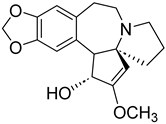 | Cephalotaxus | Cephalotaxus Alkaloid | Anticancer; Cephalotaxine exhibits negligible antimicrobial activity. | [34] |
| 5 | Colchicine | 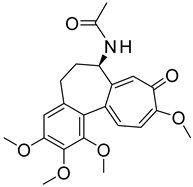 | Colchicum autumnale L. | Zhufenone alkaloid | Antimitotic activity; Anti-Aureobasidium pullulans (MFC:1 μg/mL). | [35,36] |
| 6 | Codonopsine | 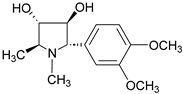 | Codonopsis clematidea (Schrenk) C.B.Clarke | Pyrrolidine alkaloid | Antihypertensive effects (regulates vascular tone); Poor activity against Gram-negative pathogens like Pseudomonas aeruginosa and Klebsiella pneumoniae (MIC ≥ 512 µg/mL). | [37,38] |
| 7 | Cyclovirobuxine-D |  | Buxus sinica L. | Buxus alkaloid | Calcium inhibitor; Cyclovirobuxine D exhibits weak antimicrobial activity. | [39] |
| 8 | Dendrobine |  | Dendrobium | Terpenoid alkaloid | Relieve pain and reduce fever; Dendrobine exhibits weak antimicrobial activities. | [40] |
| 9 | Emetine |  | Rubiaceae | Isoquinoline alkaloid | Antivirals and emetic effects; Anti-Herpesviruses (EC50 ≤ 0.056 μM). | [41,42] |
| 10 | Leonurine |  | Leonurus sibiricus L. | Phenylpropanoid alkaloid | Antitumor, anti-inflammatory, antiapoptotic effects; Anti-Mycobacterium tuberculosis (MIC: 80 μg/mL). | [43,44,45,46] |
| 11 | Matrine |  | Sophora flavescens L. and Radix sophorae tonkinensis L. | Quinolizidine alkaloid | Anti-cancer; Anti-S. mutans (MIC: 10 mg/mL). | [47,48,49,50] |
| 12 | Monocrotaline |  | Crotalaria genus L. | Pyrrolizidine alkaloid | Hepatotoxicity;Anti-T. vaginalis (MIC: 1 mg/mL). | [51,52,53] |
| 13 | Piperine |  | Piper nigrum L. | Piperidine alkaloid | Broad-spectrum anticonvulsant effects; Anti-S. aureus (IC50: 59 µg/mL). | [54,55,56] |
| 14 | Papaverine |  | Papaveraceae | Benzylisoquinoline Alkaloid | Vasodilation;Inactive against E. coli and MRSA. | [57,58,59] |
| 15 | Pseudoephedrine |  | Ephedra | Phenethylamine alkaloid | Sympathomimetic effects; Anti-E. coli (>512 µg/mL, no activity). | [60] |
| 16 | Reserpine |  | Palea steindachneri L. | Indole alkaloid | Antidepressant and antihypertensive effects; Reserpine exhibits weak intrinsic antimicrobial activity (MIC typically > 128 μg/mL). | [61,62] |
| 17 | Scopolamine |  | Atropa belladonna L. | Tropane alkaloid | Nonselective muscarinic antagonist; Anti-Streptococcus pyogenes (MIC: 8 mg/mL); Anti-Shigella dysenteriae (MIC: 2 mg/mL). | [63,64,65] |
| 18 | Securinine |  | Flueggea | Indolizidine alkaloid | Topoisomerase I (Topo I) Inhibitors; Multispecies biofilm (L. monocytogenes, S. Typhimurium, P. aeruginosa) eradication: 78.9–99.8% at 25 mg/mL. | [66,67] |
| 19 | Salsoline |  | Equisetum arvense L. | Isoquinoline alkaloid | Antihypertensive effects; Salsoline itself exhibits negligible antimicrobial activity (MIC typically > 200 μg/mL or inactive). | [68] |
| Alkaloid | Clinical Application | Study Type | Efficacy Outcomes | Safety Profile | Key Findings | Refs. |
|---|---|---|---|---|---|---|
| Berberine | Metabolic disorders, infections | Randomized clinical trials (RCTs) | Improved glycemic control; adjunct antimicrobial effects | Generally well tolerated; mild GI effects | Demonstrates multi-target activity; potential as adjunct therapy | [139] |
| Homoharringtonine | Leukemia (AML, CML) | Phase II/III clinical trials | Significant anti-leukemic efficacy | Hematological toxicity manageable | Approved in some regions; strong clinical validation | [143] |
| Colchicine | Gout, cardiovascular inflammation | Large-scale RCTs | Reduced inflammation and cardiovascular events | Narrow therapeutic index; GI and hematologic toxicity | Well-established drug; dose-dependent toxicity | [140] |
| Reserpine | Hypertension | Clinical use (historical) | Effective blood pressure reduction | CNS side effects (depression, sedation) | Limited modern use due to safety concerns | [144] |
| Quinine | Malaria | Clinical trials and long-term use | Effective antimalarial activity | Cinchonism, cardiotoxicity at high doses | Still used in resistant malaria cases | [141] |
| Vincristine | Cancer (leukemia, lymphoma) | Phase III clinical trials | High efficacy in chemotherapy regimens | Neurotoxicity (dose-limiting) | Widely used in combination therapy | [145] |
| Capsaicin | Neuropathic pain | Clinical trials (topical) | Significant pain reduction | Local irritation; minimal systemic toxicity | Safe for topical application | [142] |
Disclaimer/Publisher’s Note: The statements, opinions and data contained in all publications are solely those of the individual author(s) and contributor(s) and not of MDPI and/or the editor(s). MDPI and/or the editor(s) disclaim responsibility for any injury to people or property resulting from any ideas, methods, instructions or products referred to in the content. |
© 2026 by the authors. Licensee MDPI, Basel, Switzerland. This article is an open access article distributed under the terms and conditions of the Creative Commons Attribution (CC BY) license.
Share and Cite
Zhang, X.-Z.; Chen, M.-X.; Hou, R.; Wang, W.-Q.; He, Z.-D.; You, J.-S.; Song, X. Natural Alkaloids as Antimicrobial Agents: Mechanisms, Potentials and Challenges. Molecules 2026, 31, 1204. https://doi.org/10.3390/molecules31071204
Zhang X-Z, Chen M-X, Hou R, Wang W-Q, He Z-D, You J-S, Song X. Natural Alkaloids as Antimicrobial Agents: Mechanisms, Potentials and Challenges. Molecules. 2026; 31(7):1204. https://doi.org/10.3390/molecules31071204
Chicago/Turabian StyleZhang, Xi-Zhong, Ming-Xia Chen, Rui Hou, Wan-Qin Wang, Zhen-Dan He, Jie-Shu You, and Xun Song. 2026. "Natural Alkaloids as Antimicrobial Agents: Mechanisms, Potentials and Challenges" Molecules 31, no. 7: 1204. https://doi.org/10.3390/molecules31071204
APA StyleZhang, X.-Z., Chen, M.-X., Hou, R., Wang, W.-Q., He, Z.-D., You, J.-S., & Song, X. (2026). Natural Alkaloids as Antimicrobial Agents: Mechanisms, Potentials and Challenges. Molecules, 31(7), 1204. https://doi.org/10.3390/molecules31071204