Chemical Compositions, Traditional Applications, and Biological Activities of Gnaphalium affine D. Don: A Comprehensive Review


Abstract
1. Introduction
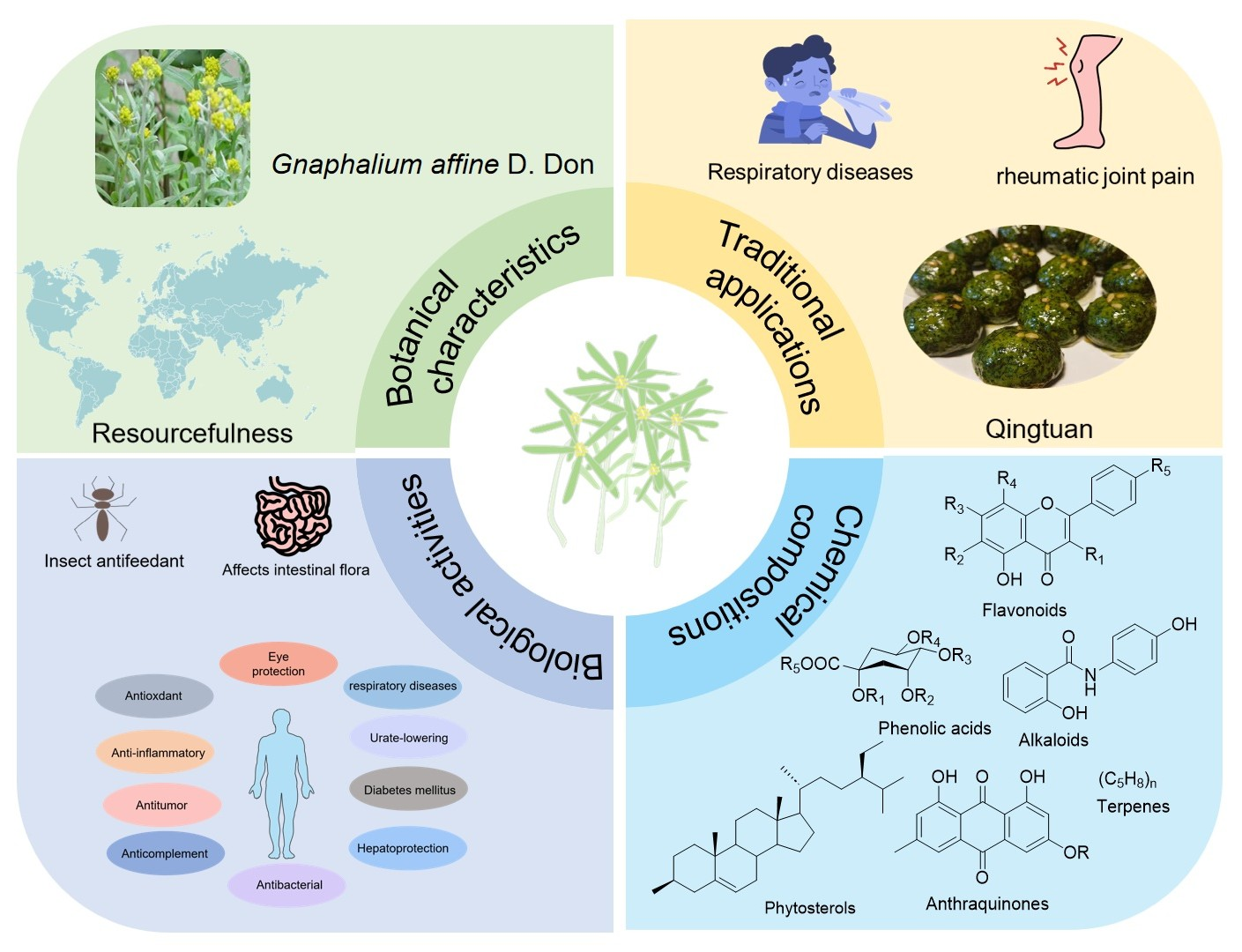
2. Botanical Characteristics
3. Traditional Applications
4. Chemical Compositions
4.1. Nutritional Components
4.2. Chemical Constituents
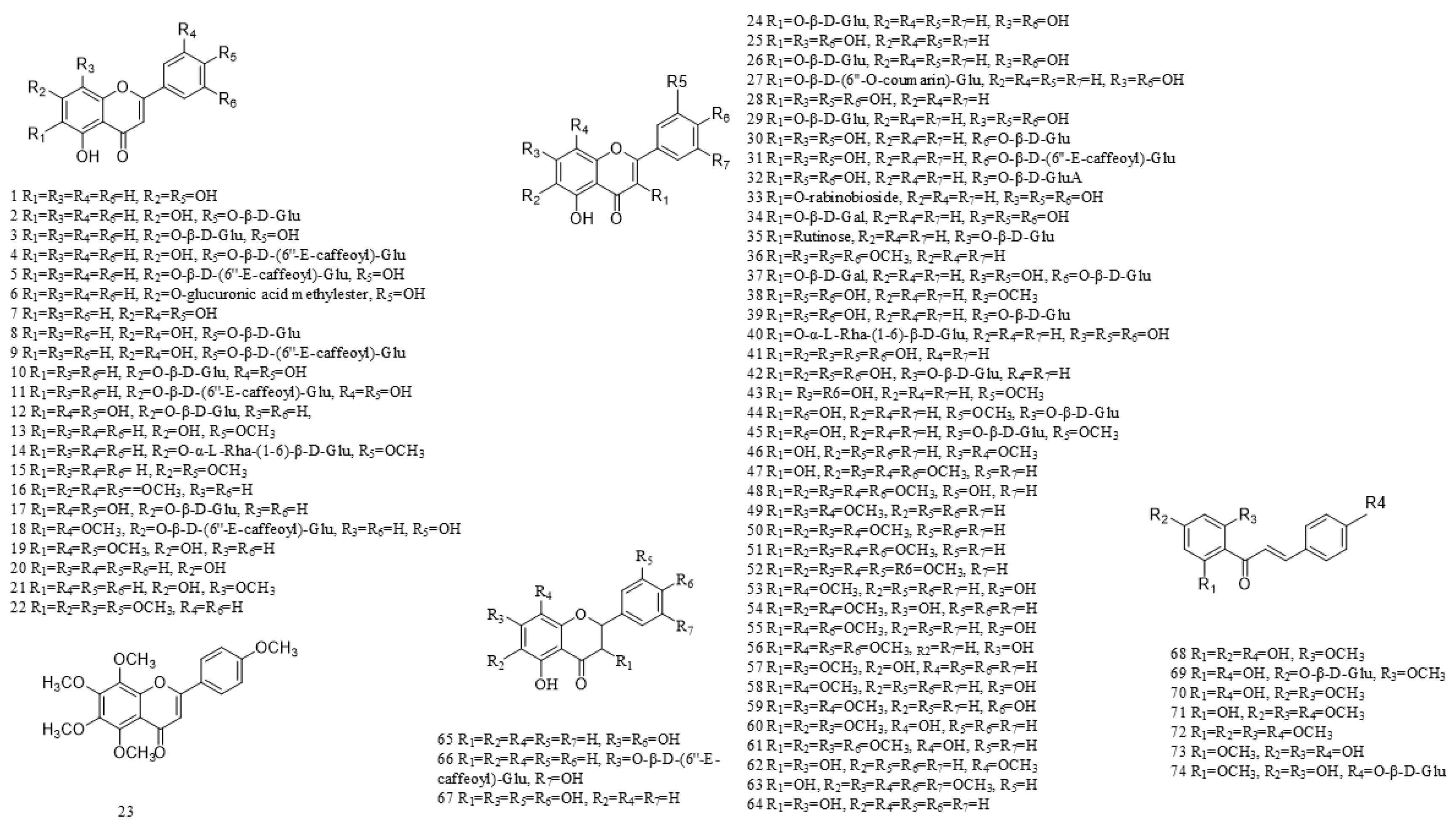
4.2.1. Flavonoids
4.2.2. Terpenes
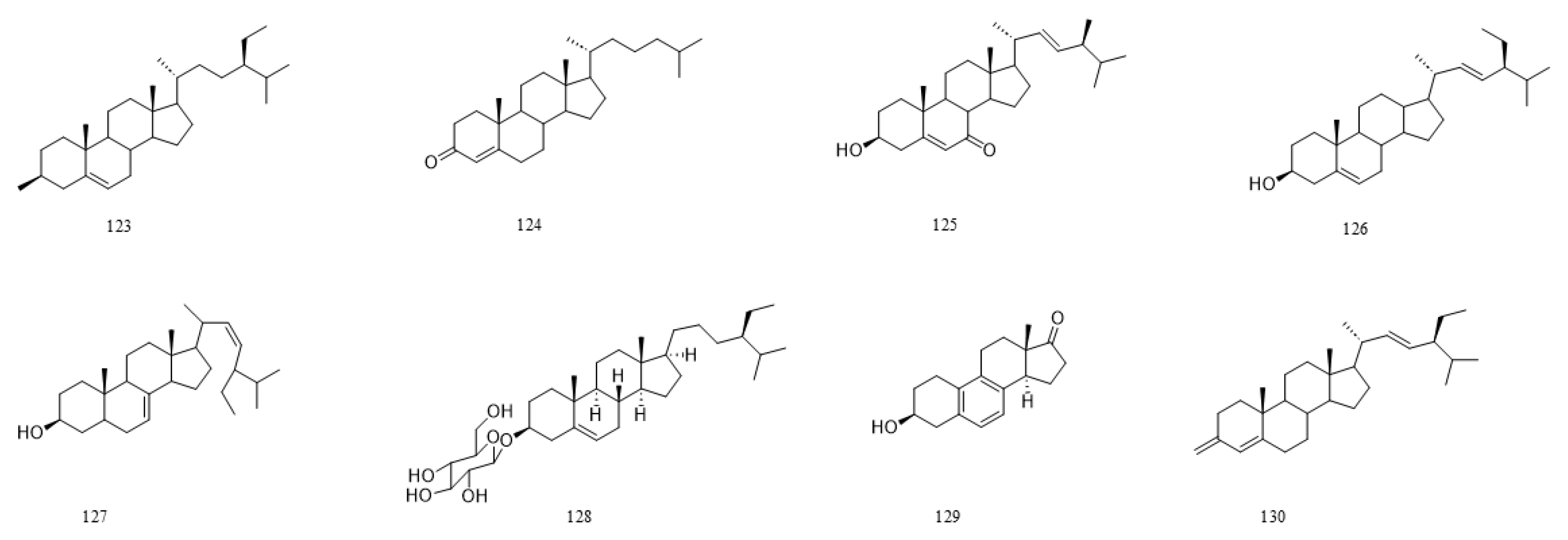
4.2.3. Phytosterols
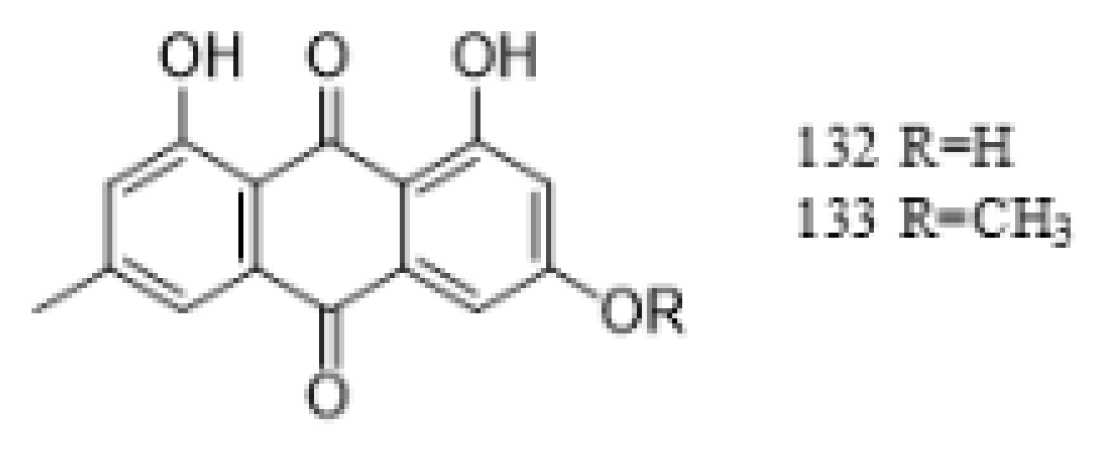
4.2.4. Anthraquinones
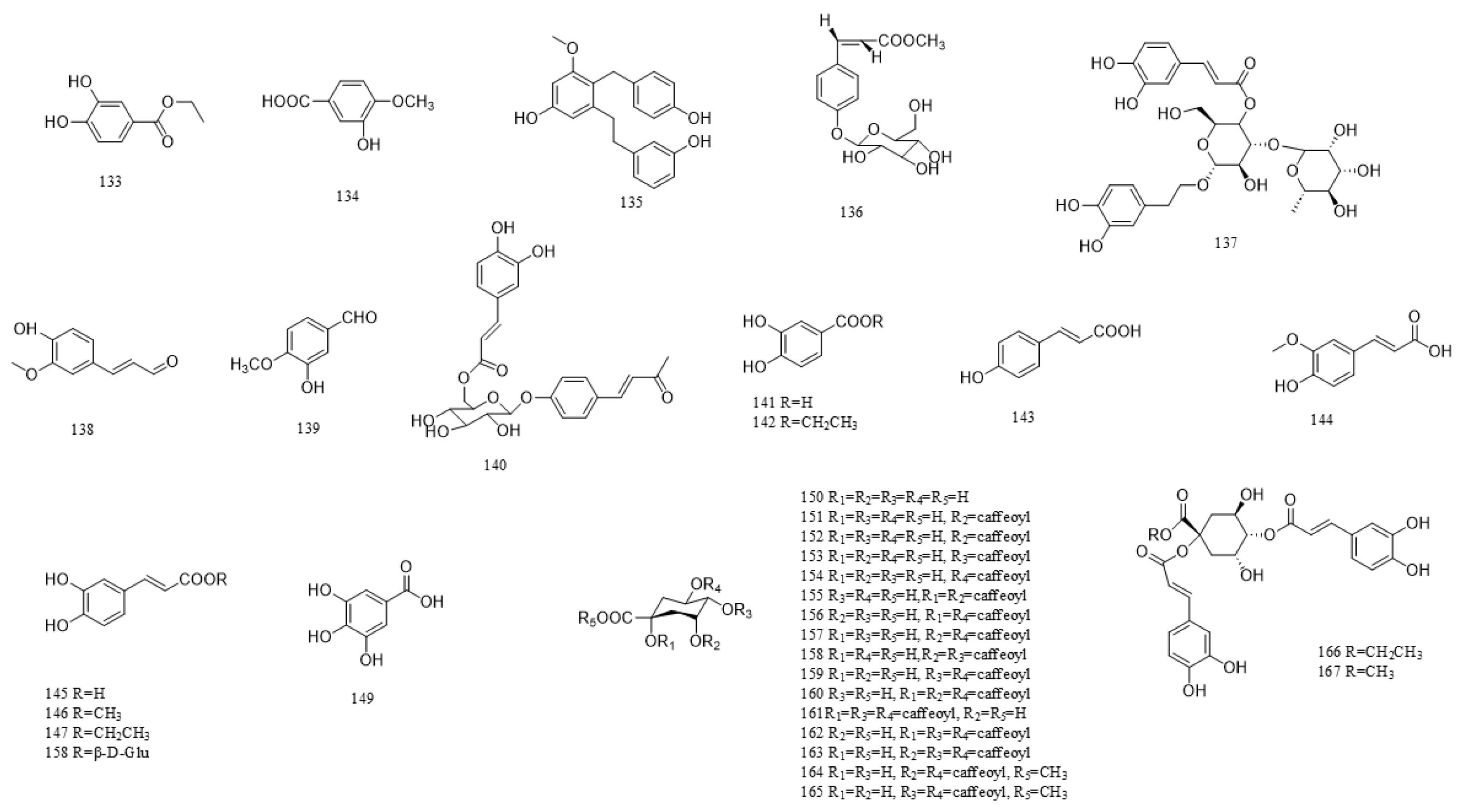
4.2.5. Phenolic Acids
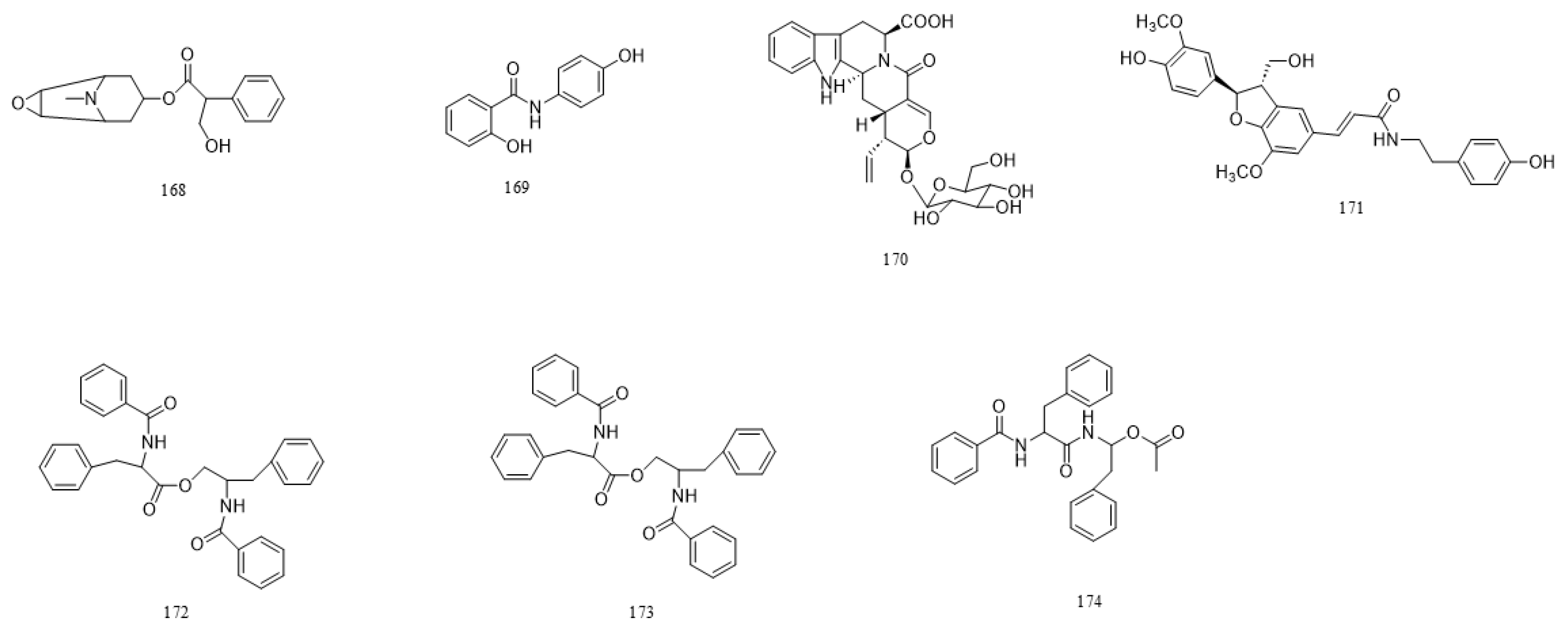
4.2.6. Alkaloids
4.2.7. Others
5. Biological Activities
5.1. Antibacterial
5.2. Respiratory Diseases
5.3. An-Inflammation
5.4. Antioxidant
5.5. Diabetes Mellitus
5.6. Lowering UA
5.7. Hepatoprotection
5.8. Antitumor
5.9. Eye Protection
5.10. Other Bioactivities
5.11. Comparative Analysis with Other Medicinal and Edible Plants
6. Safety
7. Conclusions and Future Prospects
Author Contributions
Funding
Institutional Review Board Statement
Informed Consent Statement
Data Availability Statement
Acknowledgments
Conflicts of Interest
Abbreviations
| AKT | protein kinase B |
| ALT | alanine aminotransferase |
| APAP | acetaminophen |
| BBR | benzbromarone |
| Bcl-2 | B-cell lymphoma 2 |
| CAT | catalase |
| CD | cluster of differentiation |
| CECs | corneal epithelial cells |
| CHOP | C/EBP homologous protein |
| COPD | chronic obstructive pulmonary disease |
| DNA | deoxyribo nucleic acid |
| DPPH | 2,2-diphenyl-1-picrylhydrazyl |
| eIF2α | eukaryotic initiation factor 2α |
| GA | gouty arthritis |
| GSH | glutathione |
| GSH-Px | glutathione peroxidase |
| GSK-3β | glycogen synthase kinase-3β |
| GST | glutathione s-transferase |
| HIRI | hepatic ischemia–reperfusion injury |
| HO-1 | heme oxygenase-1 |
| HUA | hyperuricemia |
| IL-1β | interleukin-1β |
| IL-6 | interleukin-6 |
| keap1 | Kelch-like ECH-associated protein 1 |
| LDH | lactate dehydrogenase |
| MBC | minimum bactericidal concentration |
| MDA | malondialdehyde |
| MIC | minimum inhibitory concentration |
| NALP3 | NACHT-LRR-PYD-containing protein-3 |
| NF-κB | nuclear factor κB |
| Nrf2 | nuclear factor erythroid 2-related factor 2 |
| p65 | nuclear factor of kappa light polypeptide gene enhancer in B-Cells 3 |
| PERK | protein kinase r-like endoplasmic reticulum kinase |
| PGE2 | prostaglandin E2 |
| PI3K | phosphatidylinositol 3-Kinase |
| ROS | reactive oxygen species |
| SOD | super oxide dismutase |
| TNF-α | tumor necrosis factor-α |
| UA | uric acid |
| XOD | xanthine oxidase |
References
- Wang, L.; Zhu, X.; Liu, H.; Sun, B. Medicine and Food Homology Substances: A Review of Bioactive Ingredients, Pharmacological Effects and Applications. Food Chem. 2025, 463, 141111. [Google Scholar] [CrossRef] [Scilit]
- Li, Z. Systematics of Gnaphalieae in China. Master’s Thesis, Zhengzhou University, Zhengzhou, China, 2024. [Google Scholar]
- Xi, Z.; Wang, Y.; Liu, B.; Sun, L. Research Progress on Chemical Constituents and Pharmacological Effects of Gnaphalium Plants. Her. Med. 2010, 29, 1462–1466. [Google Scholar] [CrossRef]
- Wang, S.; Pan, M.; Ren, L. A Wild Vegetable with Great Development Prospect-Gnaphalium affine D. Don. Food Res. Dev. 2005, 26, 95–98. [Google Scholar] [CrossRef]
- Xiong, J.; Bo, Z.; Chang, H.; Zhou, W.; Zhu, J. Effects of the Extract of Gnaphalium Affine on the Oxidation and Structure of Myofibrillar Protein Induced by ·OH. Sci. Technol. Food Ind. 2022, 43, 72–80. [Google Scholar] [CrossRef]
- Gao, H.; Xue, F.; He, Q.; Sun, Q.; Zeng, W. Inhibition and Mechanism of Gnaphalium affine Extract on the Oxidation of Edible Oil during Storage. Sci. Technol. Food Ind. 2017, 38, 148–151, 157. [Google Scholar] [CrossRef]
- Zhang, H.; Sun, Y.; Rao, X. Research Progress on Chemical Constituents and Pharmacological Effects of Medicinal Plants of Gnaphalium. Chin. J. Ethnomedicine Ethnopharmacy 2012, 21, 61–63. [Google Scholar] [CrossRef]
- Hou, X.; Gong, J.; Gao, A.; Chen, L.; Cao, M.; Yang, W.; Zhang, X.; Ni, S.; Li, W. Research Overview of Medicinal Plants of Gnaphalium. J. Shandong Univ. Tradit. Chin. Med. 2011, 35, 372–373. [Google Scholar] [CrossRef]
- Chen, J.; Li, G.; Chen, X.; Wang, L.; Chen, G. Nutritional Evaluation and Antioxidant Activity Analysis of Gnaphalium affine, the Raw Material of “Haocaibaba” from Xiangxi Region. Food Ferment. Ind. 2021, 47, 165–174. [Google Scholar] [CrossRef]
- Liao, J.; Zhe, Z.; Li, F.; Shi, K. Effects of Compound Fo’ Ercao Mixture on TLR4/MyD88/NF⁃κB Signaling Pathway in a Rat Model of Chronic Obstructive Pulmonary Disease. Chin. Tradit. Pat. Med. 2024, 46, 811–816. [Google Scholar]
- Zhang, Q.; Yan, S.; Luo, Y.; Meng, Z.; Yu, Z.; Zhao, J.; Wu, X.; Tian, Y.; Cui, G.; Chen, Z.; et al. Probiotics Fermentation Enhanced the Bioactive Properties of Gnaphalium affine Water Extract and Improved Regulation Ability of Gut Microbiota. Food Chem. X 2025, 25, 102106. [Google Scholar] [CrossRef] [Scilit]
- Jian, M.; Zhou, X.; Yu, H. Zhu Plant Community Characteristics and the Enrichment of Heavy Metals Copper, Lead and Cadmium in the Dominant Plant Species Grown in the Wetland of Lean River and Poyang Lake. Guihaia 2015, 35, 295–302, 324. [Google Scholar] [CrossRef]
- Wang, S.; Pan, M.; Ren, L. Analysis of Amino Acids in Chaphalium affine D. Don and Its Nutritional Evaluation. Amino Acids Biot. Resour. 2005, 27, 37–39. [Google Scholar] [CrossRef]
- Chen, J. Nutrition Composition, Bacteriostatic and Antioxidant Effects of Gnaphalium affine D. Don and Artemisia princeps Pamp. of the Raw Materials of “Haocaibaba” from Xiangxi Region. Master’s Thesis, Jishou University, Jishou, China, 2022. [Google Scholar]
- Zheng, X.; Wang, W.; Piao, H.; Xu, W.; Shi, H.; Zhao, C. The Genus Gnaphalium L. (Compositae): Phytochemical and Pharmacological Characteristics. Molecules 2013, 18, 8298–8318. [Google Scholar] [CrossRef] [Scilit]
- Cao, C.; Zhang, J.; Zhao, Z.; Shen, Q.; Qi, S.; Liu, W.; Zhang, L. Quantitative Analysis of Multi-Components in Gnaphalium affine Based on UPLC-Q-Exactive Orbitrap MS. Chin. J. Exp. Tradit. Med. Formulae 2024, 30, 148–155. [Google Scholar] [CrossRef]
- Wang, X.; Liu, D.; Xiong, L.; Dunzhu, B.; Zhang, L.; Chen, W.; Yang, Y.; Xiao, Y.; Sun, L. Ethnopharmacology, Phytochemistry, Bioactivities and Quality Control of the Gnaphalium Genus: An Updated Review. Med. Plant Biol. 2024, 3, e005. [Google Scholar] [CrossRef] [Scilit]
- Li, Y.; Li, Q.; Liu, D.; Wu, Z.; Sun, L.; Chen, W.; Xiao, Y. Identification of Putative Genes for Caffeoylated Flavonoid Glycoside Biosynthesis in Pseudognaphalium affine. Plant Physiol. Biochem. 2024, 217, 109233. [Google Scholar] [CrossRef] [Scilit]
- Li, S. Chemical Constituents from Gnaphalium affine. Chin. Tradit. Herb. Drugs 2014, 45, 1373–1377. [Google Scholar] [CrossRef]
- Xie, J.; Wang, H.; Lin, W. Chemical Constituents of Gnaphalium affine. Chin. Tradit. Pat. Med. 2015, 37, 553–555. [Google Scholar] [CrossRef]
- Bai, L.; Gao, H.; Ma, Y.; Zhang, W.; Zhang, S. Study on Chemical Constituents from Gnaphalium affine and Their Anti-Oxidative Activities. Chin. Tradit. Herb. Drugs 2016, 47, 549–553. [Google Scholar] [CrossRef]
- Morimoto, M.; Kumeda, S.; Komai, K. Insect Antifeedant Flavonoids from Gnaphalium affine D. Don. J. Agric. Food Chem. 2000, 48, 1888–1891. [Google Scholar] [CrossRef] [Scilit] [PubMed]
- Lin, W.; Xie, J.; Wu, X.; Yang, L.; Wang, H. Inhibition of Xanthine Oxidase Activity by Gnaphalium affine Extract. Chin. Med. Sci. J. 2014, 29, 225–230. [Google Scholar] [CrossRef] [Scilit] [PubMed]
- Shi, Q.; Li, R.; Li, S.; Jiang, Z. Identification of Flavonoids from A Wild Vegetable, Gnaphalium affine by LC-ESI-MS/MS Coupled with Standard Comparison Method. Food Res. Dev. 2021, 42, 154–159. [Google Scholar] [CrossRef]
- Su, Y.; Li, H.; Chu, K.; Wu, W.; Ye, X. Simultaneous Determination of Five Flavonoids in Gnaphalium affine by UPLC-MS / MS. Fujian J. Tradit. Chin. Med. 2021, 52, 38–41. [Google Scholar] [CrossRef]
- Li, J.; Huang, D.; Chen, W.; Xi, Z.; Chen, C.; Huang, G.; Sun, L. Two New Phenolic Glycosides from Gnaphalium affine D. Don and Their Anti-Complementary Activity. Molecules 2013, 18, 7751–7760. [Google Scholar] [CrossRef] [Scilit]
- Zhang, W. Hypouricemic Components of Gnaphalium affine D. Don. Master’s Thesis, Shanghai Institute of Pharmaceutical Industry, Shanghai, China, 2017. [Google Scholar]
- Huang, D.; Li, J.; Yao, F.; Huang, G.; Xue, D.; Sun, L. Chemical Constituents of Ethyl Acetate Extract Part of Gnaphalium affine II. Chin. J. Exp. Tradit. Med. Formulae 2014, 20, 101–104. [Google Scholar] [CrossRef]
- Gao, H. Study on Chemical Constituents and Bioactivities of Gnaphalium affine D. Don. Master’s Thesis, Qiqihar University, Qiqihar, China, 2016. [Google Scholar]
- Xi, Z.; Wang, Y.; Zhao, G.; Li, X.; Wu, Z.; Sun, L. Chemical Constituents of Petroleum Ether Fractions of Gnaphalium affine D. Don. Acad. J. Second Mil. Med. Univ. 2011, 32, 311–313. [Google Scholar] [CrossRef] [Scilit]
- Liu, W.; Lin, W.; Zhuo, C.; Ye, X.; Li, H. Effective Components and Mechanisms of Gnaphalium affine Against COPD Based on UPLC-QE-MS Integrated with Network Pharmacology. Asia-Pac. Tradit. Med. 2023, 19, 168–175. [Google Scholar]
- Chen, L.; Liu, M.; He, W.; Gong, L.; Liu, P. To Analyse the Essential Oils Constituents from Gnaphalium affine and G.Japonicum with GC-MS. Asia-Pac. Tradit. Med. 2014, 10, 29–31. [Google Scholar]
- Zhou, S.; Huang, D.; Huang, G.; Li, J.; Xi, Z.; Sun, L. Chemical Constituents of Ethyl Acetate Extract Part of Gnaphalium affine. Chin. J. Exp. Tradit. Med. Formulae 2014, 20, 97–99. [Google Scholar] [CrossRef]
- Huang, A.; Lin, G.; Pan, X.; Wang, X. Determination of Chemical Constituents of Gnaphalium affine D∙Don. Strait Pharm. J. 2009, 21, 91–92. [Google Scholar] [CrossRef]
- Gao, J.; Wang, X.; Chen, Y.; Li, J.; Lü, S.; Sun, L. Simultaneous Determination of Seven Constituents in Gnaphalium affine. Chin. Tradit. Pat. Med. 2018, 40, 1116–1119. [Google Scholar] [CrossRef]
- Shao, Q.-J.; Wang, Y.; Yang, X.-J.; Su, K.; Zheng, J.-F.; Yang, L.; Zhou, E.-D.; Yuan, X.-Y.; Chen, R.-X. Profiling, Identification, and Quantification of Antioxidant Components in Gnaphalium affine by HPLC-ECD-MS/MS. Int. J. Food Prop. 2024, 27, 1201–1214. [Google Scholar] [CrossRef] [Scilit]
- Pan, M. Primary Investigation of the Antimicr Obial Effect of Gnaphalium affine D. Don Extract. Sich. Uan Food Ferm Entation 2006, 42, 53–56. [Google Scholar] [CrossRef]
- Liao, P.; Liao, Y.; Wu, F. Antibactrial and Antioxidative Activity of the Flavonoids Extracted from Gnaphalium affine D.Don. FOOD Sci. Technol. 2014, 39, 193–197. [Google Scholar] [CrossRef]
- Lin, H.; Lü, F.; Huang, G. Antibacterial Activity of Gnaphalium affine Flavonoids and Flavonoids-Zn (II) Complex. J. Fujian Agric. For. Univ. Nat. Sci. Ed. 2016, 45, 681–684. [Google Scholar] [CrossRef]
- Lin, H. Study on Preparation and Antioxidantive, Antibacterial Activity of Gnaphalium affine D.Don Flavonoids. Master’s Thesis, Fujian Agriculture and Forestry University, Fuzhou, China, 2016. [Google Scholar]
- Yu, B.; Du, J.; Zhang, Y.; Yao, Z. Experimental Study on Antitussive and Expectorant Effects of Cudweed. J. Zhejiang Chin. Med. Univ. 2006, 30, 352–353. [Google Scholar] [CrossRef]
- Ye, X.; Liao, H.; Li, H. Effect of Ethanol Extract of Gnaphalium affine on Inflammation of Chronic Obstructive Pulmonary Disease Model Rats. Chin. J. Ethnomedicine Ethnopharmacy 2015, 24, 5–7. [Google Scholar] [CrossRef]
- Lin, D.; Ye, X.; Yan, G.; Wang, K.; Zhang, Y.; Li, H. Effects of Alcoholic Extract of Gnaphalium affine on Oxidative Stress and Intestinal Flora in Rats with Chronic Obstructive Pulmonary Disease. China J. Chin. Mater. Medica 2025, 50, 4111–4119. [Google Scholar] [CrossRef] [Scilit]
- Ye, X.; Li, H. Treatment of Chronic Bronchitis with Flavonoids from Gnaphalium affine D. Don. Strait Pharm. J. 2016, 28, 22–24. [Google Scholar] [CrossRef]
- Huang, L.; Yang, Q.; Liu, X.; Wen, W.; Hu, S. Immunoregulatory Effect of Gnaphalium affine D.Don on Adjuvant Arthritis in Rats. J. Hubei Univ. Chin. Med. 2021, 23, 17–21. [Google Scholar]
- Huang, L.; Yang, Q.; Xia, J.; Liu, X. Therapeutic Effect and Mechanism of Gnaphalium affine D.Don on Gouty Arthritis in a Rat Model. Her. Med. 2020, 39, 1477–1481. [Google Scholar]
- Ye, X.; Lin, D.; Liu, W.; Chen, T.; Zhang, Y.; Li, H. Study on Anti-Viral Pneumonia Effect of the Alcohol Extract of Gnaphalium affine D. Don Based on a Zebrafish Model and Molecular Docking. Chin. J. Hosp. Pharm. 2025, 45, 37–46. [Google Scholar] [CrossRef]
- Guo, R.; Ji, C.; Sun, T.; Li, J.; Xiong, M. Gnaphalium affine Extract Improves ACLT-Induced Osteoarthritis in Rats by Inhi Biting PERK/eIF2α/CHOP Pathway. J. Med. Mol. Biol. 2022, 19, 374–380. [Google Scholar] [CrossRef]
- Zhang, H.; Li, L.; Zhou, J.; Yang, Q.; Liu, P.; Xu, P.; Liang, W.; Cheng, L.; Zhang, Y.; Pu, J.; et al. Effects of Gnaphalium affine D. Don on Hyperuricemia and Acute Gouty Arthritis. J. Ethnopharmacol. 2017, 203, 304–311. [Google Scholar] [CrossRef] [Scilit] [PubMed]
- Huang, X.; Li, Y.; Li, J.; Xu, X. Total Flavonoids from Gnaphalium affine D. Don Exert Analgesic Effect via Inhibiting the Production of Pro-Inflammatory Mediators in Mouse Model of Pain. Food Sci. 2014, 35, 241–243. [Google Scholar] [CrossRef]
- Chen, W.; Chen, X.; Zhou, S.; Xie, X.; Wang, H.; Yang, H. Alleviation of Airway Inflammation Induced by Chronic Obstructive Pulmonary Disease in Rats by Total Flavonoids of Gnaphalium affine Combination with Antibiotics. China Anim. Husb. Vet. Med. 2024, 51, 5518–5527. [Google Scholar] [CrossRef]
- Zeng, W.-C.; Zhang, W.-C.; Zhang, W.-H.; He, Q.; Shi, B. The Antioxidant Activity and Active Component of Gnaphalium affine Extract. Food Chem. Toxicol. 2013, 58, 311–317. [Google Scholar] [CrossRef] [Scilit]
- Chen, W.; Ou, X.; Zheng, S.; Lin, Y. Research on the Extraction and Antioxidant Activity of Gnaphalium affine D. Don Polysaccharide. J. Hanshan Teach. Coll. 2012, 33, 73–78. [Google Scholar] [CrossRef]
- Meng, X.; He, C.; Chen, X.; Yang, X.; Liu, C. The Extract of Gnaphalium affine D. Don Protects against H2O2-Induced Apoptosis by Targeting PI3K/AKT/GSK-3β Signaling Pathway in Cardiomyocytes. J. Ethnopharmacol. 2021, 268, 113579. [Google Scholar] [CrossRef] [Scilit]
- Zheng, B.; Xu, Y.; Xu, Q.; Fan, X. Purification of Total Flavonoids from Gnaphalium Affine and Analysis on Its Antioxidant Stress Activity. J. South China Univ. Technol. Nat. Sci. Ed. 2025, 53, 174–182. [Google Scholar] [CrossRef]
- Li, C.; Cui, J.; Zhou, X.; Huang, D. Flavonoids from Gnaphalium affine D. Don. Ameliorate Antioxidant Capacity in Diabetic Mice. Food Sci. 2013, 34. [Google Scholar]
- Shi, Q.; Li, R.; Jiang, Z. Studies on Flavones Extraction from Edible Gnaphalium affine and in Vitro Antioxidant Activities. J. Food Sci. Biotechnol. 2013, 32, 307–312. [Google Scholar] [CrossRef]
- Li, C.; Wang, M. Study on Antioxidant Activity of Total Flavonoids from Gnaphalium affine D. Don. China Food Addit. 2012, 5, 111–115. [Google Scholar] [CrossRef]
- Luangsakul, N.; Kunyanee, K.; Kusumawardani, S.; Ngo, T.V. Intelligent Model and Optimization of Ultrasound-Assisted Extraction of Antioxidants and Amylase Enzyme from Gnaphalium affine D. Don. Ultrason. Sonochem. 2025, 112, 107162. [Google Scholar] [CrossRef] [Scilit]
- Lu, Y.; Deng, L.; Zhu, L.; Li, M. Inhibition Effects of Extract and Its Compositions from Gnaphalium affine D.Don on α-Amylase. J. Hunan Agric. Univ. Nat. Sci. 2015, 41, 412–415. [Google Scholar] [CrossRef]
- Cui, J.; Li, C.; Su, Y.; Zhou, L. Study on Effect of the Total Flavonoids from Gnaphalium affine D.C. on Metabolism of Glucose and Lipids in Diabetic Mice. Sci. Technol. Food Ind. 2013, 34, 324–327. [Google Scholar] [CrossRef]
- He, X. Investigation of the Mechanism of the Effect of Gnaphalium affine D. Don Extract on Rats with Hyperuricemia and the Development of a Solid Drink. Master’s Thesis, Nanchang University, Nanchang, China, 2024. [Google Scholar]
- Zhang, W.; Wu, C.-Z.; Fan, S.-Y. Chemical Constituents from Gnaphalium affine and Their Xanthine Oxidase Inhibitory Activity. Chin. J. Nat. Med. 2018, 16, 347–353. [Google Scholar] [CrossRef] [Scilit]
- Liu, X.; Han, S.; Yang, Q.; Fan, S. Beneficial Herb-Drug Interaction of Gnaphalium affine Extract on Benzbromarone: A Pharmacokinetic and Pharmacodynamic Study in Rats. Phytomedicine 2022, 102, 154203. [Google Scholar] [CrossRef] [Scilit] [PubMed]
- Li, C.; Wang, E.; Elshikh, M.S.; Alwahibi, M.S.; Wang, W.; Wu, G.; Shen, Y.; Abbasi, A.M.; Shan, S. Extraction and Purification of Total Flavonoids from Gnaphalium affine D. Don and Their Evaluation for Free Radicals’ Scavenging and Oxidative Damage Inhabitation Potential in Mice Liver. Arab. J. Chem. 2021, 14, 103006. [Google Scholar] [CrossRef] [Scilit]
- Cai, H.; Chen, Z.; Hu, W.; Tan, W.; Wu, H.; Wang, C. Total Flavonoids of Salvia miltiorrhiza Alleviate Acetaminophen-Induced Acute Liver Injury in Mice by Suppressing Hepatocyte Ferroptosis via Activating the Nrf2/HO-1 Signaling Pathway. J. South. Med. Univ. 2024, 44, 2201–2208. [Google Scholar] [CrossRef]
- Wang, H.; Lin, F.; Lin, W. Study on the Inhibition of Gnaphalium affine Extracts on the Formation of MNU-Induced Bladder Cancer in Rats. WORLD Chin. Med. 2021, 16, 1708–1711. [Google Scholar] [CrossRef]
- Lin, W.; Lin, F.; Wang, H. Study on Inhibition Effect of Gnaphalium affine on the Formation of Lung Cancer in Rats. Pract. Clin. J. Integr. Tradit. Chin. West. Med. 2020, 20, 1–4. [Google Scholar] [CrossRef]
- Oh, J.Y.; Ryu, J.S.; Yoon, C.H.; Jang, H.-J.; Ko, J.H.; Ahn, K.-S.; Oh, S.-R.; Oh, J.-H.; Jung, J.H. 1,5-Dicaffeoylquinic Acid from Pseudognaphalium affine Ameliorates Dry Eye Disease via Suppression of Inflammation and Protection of the Ocular Surface. Invest. Ophthalmol. Vis. Sci. 2023, 64. [Google Scholar] [CrossRef] [Scilit]
- Zeng, W.-C.; Zhu, R.-X.; Jia, L.-R.; Gao, H.; Zheng, Y.; Sun, Q. Chemical Composition, Antimicrobial and Antioxidant Activities of Essential Oil from Gnaphalium affine. Food Chem. Toxicol. 2011, 49, 1322–1328. [Google Scholar] [CrossRef] [Scilit]
- Zhang, W.; Fan, S.; Wu, C. Review on Chemical Constituents and Pharmacological Activities of Gnaphalium affine D. Don. Chin. J. Pharm. 2016, 47, 1057–1064. [Google Scholar] [CrossRef]
- Baechle, J.J.; Chen, N.; Makhijani, P.; Winer, S.; Furman, D.; Winer, D.A. Chronic Inflammation and the Hallmarks of Aging. Mol. Metab. 2023, 74, 101755. [Google Scholar] [CrossRef] [Scilit]
- Huang, D.; Chen, Y.; Chen, W.; Liu, Y.; Yao, F.; Xue, D.; Sun, L. Anti-Inflammatory Effects of the Extract of Gnaphalium affine D. Don in Vivo and in Vitro. J. Ethnopharmacol. 2015, 176, 356–364. [Google Scholar] [CrossRef] [Scilit]
- Nikolaidis, M.G.; Margaritelis, N.V. Free Radicals and Antioxidants: Appealing to Magic. Trends Endocrinol. Metab. 2023, 34, 503–504. [Google Scholar] [CrossRef] [Scilit] [PubMed]
- Chang, H.; Hu, Y.; Shi, Y.; Xiong, J.; Bo, Z. Effects of Gnaphalium affine Extract on the Gel Properties of •OH-Induced Oxidation of Myofibrillar Proteins. Foods 2024, 13, 1447. [Google Scholar] [CrossRef] [Scilit]
- Chen, N.; Hu, M.; Jiang, T.; Xiao, P.; Duan, J. Insights into the Molecular Mechanisms, Structure-Activity Relationships and Application Prospects of Polysaccharides by Regulating Nrf2-Mediated Antioxidant Response. Carbohydr. Polym. 2024, 333, 122003. [Google Scholar] [CrossRef] [Scilit] [PubMed]
- Wardyn, J.D.; Ponsford, A.H.; Sanderson, C.M. Dissecting Molecular Cross-Talk between Nrf2 and NF-κB Response Pathways. Biochem. Soc. Trans. 2015, 43, 621–626. [Google Scholar] [CrossRef] [Scilit] [PubMed]
- Bingham, M. In This Issue of Diabetes Care. Diabetes Care 2023, 46, 2089–2090. [Google Scholar] [CrossRef] [Scilit]
- Alp, M.; Misturini, A.; Sastre, G.; Galvez-Llompart, M. Drug Screening of α-Amylase Inhibitors as Candidates for Treating Diabetes. J. Cell. Mol. Med. 2023, 27, 2249–2260. [Google Scholar] [CrossRef] [Scilit]
- Ullah, Z.; Yue, P.; Mao, G.; Zhang, M.; Liu, P.; Wu, X.; Zhao, T.; Yang, L. A Comprehensive Review on Recent Xanthine Oxidase Inhibitors of Dietary Based Bioactive Substances for the Treatment of Hyperuricemia and Gout: Molecular Mechanisms and Perspective. Int. J. Biol. Macromol. 2024, 278, 134832. [Google Scholar] [CrossRef] [Scilit]
- Bortolotti, M.; Polito, L.; Battelli, M.G.; Bolognesi, A. Xanthine Oxidoreductase: One Enzyme for Multiple Physiological Tasks. Redox Biol. 2021, 41, 101882. [Google Scholar] [CrossRef] [Scilit]
- Shi, C.; Zhou, Z.; Chi, X.; Xiu, S.; Yi, C.; Jiang, Z.; Chen, R.; Zhang, L.; Liu, Z. Recent Advances in Gout Drugs. Eur. J. Med. Chem. 2023, 245, 114890. [Google Scholar] [CrossRef] [Scilit]
- Huang, Z.; Li, H. Research on the Inhibitory Activity to Xanthine Oxidase of Gnaphalium affine and Aloever. J. Lingnan Norm. Univ. 2017, 38, 103–109. [Google Scholar] [CrossRef]
- Lin, Y.; Liu, P.-G.; Liang, W.-Q.; Hu, Y.-J.; Xu, P.; Zhou, J.; Pu, J.-B.; Zhang, H.-J. Luteolin-4’-O-Glucoside and Its Aglycone, Two Major Flavones of Gnaphalium affine D. Don, Resist Hyperuricemia and Acute Gouty Arthritis Activity in Animal Models. Phytomedicine 2018, 41, 54–61. [Google Scholar] [CrossRef] [Scilit] [PubMed]
- Jiang, L.; Piao, J.; Liu, Y.; Ju, G.; Ben, L.; Li, G. Protective Effect of Gnaphalium tranzschelii against Acute Liver Injury in Mice. Lishizhen Med. Mater. Medica Res. 2008, 19, 1901–1902. [Google Scholar] [CrossRef]
- Huang, L.; Yang, Q.; Xia, J.; Liu, X. Protective Effect and Mechanism of Ethanol Extract from Gnaphalium affine D. Don in Liver Ischemiareperfusion Injury in Mice. Front. Pharm. Sci. 2020, 23, 2114–2117, 2122. [Google Scholar] [CrossRef]
- Zeng, L.; Jin, X.; Xiao, Q.-A.; Jiang, W.; Han, S.; Chao, J.; Zhang, D.; Xia, X.; Wang, D. Ferroptosis: Action and Mechanism of Chemical/Drug-Induced Liver Injury. Drug Chem. Toxicol. 2024, 47, 1301–1311. [Google Scholar] [CrossRef] [Scilit]
- Jaeschke, H.; Ramachandran, A. Acetaminophen Hepatotoxicity: Paradigm for Understanding Mechanisms of Drug-Induced Liver Injury. Annu. Rev. Pathol. 2024, 19, 453–478. [Google Scholar] [CrossRef] [Scilit]
- Jaeschke, H.; Adelusi, O.B.; Ramachandran, A. Ferroptosis and Acetaminophen Hepatotoxicity: Are We Going down Another Rabbit Hole? Gene Expr. 2021, 20, 169–178. [Google Scholar] [CrossRef] [Scilit]
- Wu, D.; Zhang, Q.; Meng, Z.; Varier, K.M.; Zhang, A.; Li, C.; Gao, X.; Hua, D.; Tian, Y.; Wu, X.; et al. Dietary Gnaphalium affine Supplementation Prevents Fat Accumulation and Inflammation by Regulating Composition and Metabolism of Gut Microbiota in High Fat Diet Fed Mice. J. Funct. Foods 2024, 116, 106195. [Google Scholar] [CrossRef] [Scilit]
- Xi, Z.; Chen, W.; Wu, Z.; Wang, Y.; Zeng, P.; Zhao, G.; Li, X.; Sun, L. Anti-Complementary Activity of Flavonoids from Gnaphalium affine D. Don. Food Chem. 2012, 130, 165–170. [Google Scholar] [CrossRef] [Scilit]
- Yan, Q.; Xing, Q.; Liu, Z.; Zou, Y.; Liu, X.; Xia, H. The Phytochemical and Pharmacological Profile of Dandelion. Biomed. Pharmacother. 2024, 179, 117334. [Google Scholar] [CrossRef] [Scilit] [PubMed]
- Herrera Vielma, F.; Quinones San Martin, M.; Munoz-Carrasco, N.; Berrocal-Navarrete, F.; Gonzalez, D.R.; Zuniga-Hernandez, J. The Role of Dandelion (Taraxacum officinale) in Liver Health and Hepatoprotective Properties. Pharmaceuticals 2025, 18, 990. [Google Scholar] [CrossRef] [Scilit]
- Zhang, H.; Ge, C.; Fisher, D.; Hien, N.T.T.; Musabaev, E.; Pronyuk, K.; Xia, Y.; Zhu, Z.; Wang, Y.; Dang, Y.; et al. Antiviral Treatment for Viral Pneumonia: Current Drugs and Natural Compounds. Virol. J. 2025, 22, 62. [Google Scholar] [CrossRef] [Scilit]
- Rasheed, I.; Gruber, R. Crude Plant Extracts and Their Anti-Inflammatory Potential in Oral Inflammatory Cell Models: A Systematic Review of In Vitro Studies. Int. J. Mol. Sci. 2025, 26, 11253. [Google Scholar] [CrossRef] [Scilit] [PubMed]
- Xiong, J.; Li, S.; Wang, W.; Hong, Y.; Tang, K.; Luo, Q. Screening and Identification of the Antibacterial Bioactive Compounds from Lonicera japonica Thunb. Leaves. Food Chem. 2013, 138, 327–333. [Google Scholar] [CrossRef] [Scilit]
- Aoshima, Y.; Hasegawa, Y.; Hasegawa, S.; Nagasaka, A.; Kimura, T.; Hashimoto, S.; Torii, Y.; Tsukagoshi, N. Isolation of GnafC, a Polysaccharide Constituent of Gnaphalium affine, and Synergistic Effects of GnafC and Ascorbate on the Phenotypic Expression of Osteoblastic MC3T3-E1 Cells. Biosci. Biotechnol. Biochem. 2003, 67, 2068–2074. [Google Scholar] [CrossRef] [Scilit] [PubMed]
- Lin, W.; Zheng, L.; Huang, J.; Huang, Z. Study on Genetic Toxicity and Subacute Toxicity of Gnaphalium affine. J. Toxicol. 2024, 38, 78–84. [Google Scholar] [CrossRef]




| NO. | Classify | Chemical Compound | Plant Part | Isolation/Analytical Method | Reference |
|---|---|---|---|---|---|
| 1 | Flavonoids | Apigenin | Dried, whole herb | Isolated (silica gel, MCI gel, RP-18, Sephadex LH-20); MS, NMR | [15] |
| 2 | Apigenin 4′-O-β-D-glucopyranoside | Fresh flowers | Isolated (Polyamide, Sephadex LH-20); UV, IR, NMR, acid hydrolysis, TLC | [15] | |
| 3 | Apigenin 7-glucoside | Dried, aerial parts with flowers | Extracted with 70% MeOH; Identified by UPLC-Q-Exactive Orbitrap MS with authentic standard | [16] | |
| 4 | Apigenin 4′-O-β-D-(6′′-E-caffeoyl)-glucopyranoside | Dried, whole herb | Isolated (MCI gel, Sephadex LH-20, RP-18); HRESIMS, IR, 1D NMR, 2D NMR | [15] | |
| 5 | Apigenin 7-O-β-D-(6′′-E-caffeoyl)-glucopyranoside | Dried, whole herb | Isolated (silica gel, MCI gel, RP-18, Sephadex LH-20); MS, NMR, comparison with the literature | [15] | |
| 6 | Apigenin-7-O-β-D-glucuronic acid methylester | Dried, aerial parts | Isolated (silica gel, Sephadex LH-20); 1D NMR, UV | [17] | |
| 7 | Luteolin | Dried, whole herb | Isolated (silica gel, MCI gel, RP-18, Sephadex LH-20); MS, NMR | [15] | |
| 8 | Luteolin 4′-O-β-D-glucopyranoside | Dried, whole herb | Isolated (silica gel, MCI gel, RP-18, Sephadex LH-20); MS, NMR, comparison with the literature | [15] | |
| 9 | Luteolin 4′-O-β-D-(6′′-E-caffeoyl)-glucopyranoside | Dried, whole herb | Isolated (MCI gel, Sephadex LH-20, RP-18); HRESIMS, IR, 1D NMR, 2D NMR | [15] | |
| 10 | luteolin-7-O-glucoside | Whole herb | Synthesized by recombinant PaUGT23 in vitro; identified by LC-MS | [18] | |
| 11 | luteolin-7-O-β-D-glucopyranosyl-(1→6)-[(6′′′-O-caffeoylquinic)-β-D-glucopyranoside] | Whole herb | Isolated (silica gel, macroporous resin, Sephadex LH-20); ESI-MS, 1H NMR, 13C NMR, comparison with the literature | [19] | |
| 12 | 6-Hydroxyluteolin 7-O-β-D-glucopyranoside | Dried, whole herb | Isolated (silica gel, MCI gel, RP-18, Sephadex LH-20); MS, NMR, comparison with the literature | [15] | |
| 13 | Acacetin | n/a | n/a | [17] | |
| 14 | Acacetin 7-O-rutinoside | Dried, whole herb | Isolated (Sephadex LH-20, crystallization); MS, NMR, comparison with the literature | [15] | |
| 15 | 5-Hydroxy-4′,7-dimethoxyflavone | Dried, whole herb | Isolated (silica gel, Sephadex LH-20); MS, NMR, comparison with the literature | [15] | |
| 16 | 5-Hydroxy-6,7,3′,4′-tetramethoxyflavone | Powdered, whole plants | Extracted with 95% EtOH, isolated (silica gel column chromatography, Sephadex LH-20); ESI-MS, 1H NMR, 13C NMR, comparison with the literature | [20] | |
| 17 | 6-Hydroxyluteolin-7-O-β-D-glucopyranoside | Dried, whole herb | Isolated (RP-18, Sephadex LH-20); MS, NMR, comparison with the literature | [17] | |
| 18 | 5,7,4′-Trihydroxy-6,3′-methoxyflavonoid-7-O-β-D-(6′′-O-caffeoyloxy)-glucopyranoside | Dried, aerial parts | Isolated (polyamide, Sephadex LH-20, HPLC); HRESIMS, 1D NMR, 2D NMR | [17] | |
| 19 | Eupatilin | Powdered, whole herb | Extracted with 95% EtOH, isolated (silica gel column chromatography, Sephadex LH-20); ESI-MS, 1H NMR, 13C NMR, comparison with the literature | [20] | |
| 20 | Chrysin | Dried, whole herb | Extracted with 95% EtOH, isolated (silica gel column chromatography, ODS column chromatography); 1H NMR, 13C NMR, comparison with the literature | [21] | |
| 21 | Wogonin | [21] | |||
| 22 | 5-Demethyltangeretin | n/a | Synthesized from tangeretin by selective demethylation; 1H NMR, EIMS | [22] | |
| 23 | Tangeretin | n/a | Isolated from Citrus aurantium peel (hexane extract); 1H NMR, EIMS | [22] | |
| 24 | Flavonols | Astragalus | Dried, aerial parts with flowers | Extracted with 70% MeOH; Identified by UPLC-Q-Exactive Orbitrap MS with authentic standard | [16] |
| 25 | Kaempferol | Dried, whole herb | Isolated (silica gel, MCI gel, RP-18, Sephadex LH-20); MS, NMR | [15] | |
| 26 | Kaempferol-3-O-β-D-glucopyranoside | n/a | n/a | [17] | |
| 27 | Kaempferol 3-O-β-D-(6′′-O-coumarin)-glucopyranosid | n/a | n/a | [17] | |
| 28 | Quercetin | Dried, whole herb | Isolated (silica gel, MCI gel, RP-18, Sephadex LH-20); MS, NMR | [15] | |
| 29 | Quercetin-3-O-β-D-glucopyranoside | Dried, whole herb | Extracted with 95% EtOH, isolated (silica gel column chromatography, Sephadex LH-20, RP-18); 1H NMR, 13C NMR, MS, comparison with the literature | [23] | |
| 30 | Quercetin 4′-O-β-D-glucopyranoside | Dried, whole herb | Isolated (Sephadex LH-20, RP-18); MS, NMR, comparison with the literature | [15] | |
| 31 | Quercetin 4′-O-β-D-(6′′-E-caffeoyl)-glucopyranoside | Dried, whole herb | Isolated (MCI gel, Sephadex LH-20, RP-18); HRESIMS, IR, 1D NMR, 2D NMR | [15] | |
| 32 | Quercetin 7-O-β-D-glucuronide | Dried, whole herb | Isolated (Sephadex LH-20, RP-18); MS, NMR | [15] | |
| 33 | Quercetin 3-O-robinobioside | Whole herb | Extracted with 50% EtOH, purified by AB-8 macroporous resin, identified by LC-ESI-MS/MS, comparison with the literature | [24] | |
| 34 | Hyperoside | Dried stems and leaves | Extracted with 60% EtOH, identified by UPLC-MS/MS with authentic standard | [25] | |
| 35 | Quercetin 3-rutinoside 7-glucoside | Whole herb | Isolated (silica gel, macroporous resin, Sephadex LH-20); 1H NMR, 13C NMR, comparison with the literature | [19] | |
| 36 | tetramethoxyquercetin | n/a | n/a | [22] | |
| 37 | Quercetin 3-O-β-D-galactopyranoside-4′-O-β-D-glucopyranoside | Leaves | Isolated (Sephadex LH-20, HPLC); FABMS, 1D NMR, 2D NMR | [17] | |
| 38 | Rhamnetin | n/a | n/a | [17] | |
| 39 | Quercimeritrin | Dried, whole herb | Isolated (RP-18, Sephadex LH-20); MS, NMR, comparison with the literature | [15] | |
| 40 | Rutin | Powdered whole plants | Extracted with 95% EtOH, isolated (silica gel column chromatography, Sephadex LH-20); ESI-MS, 1H NMR, 13C NMR, comparison with the literature | [20] | |
| 41 | Quercetagetin | Dried, whole herb | Isolated (RP-18, Sephadex LH-20); MS, NMR | [15] | |
| 42 | Quercetagetin 7-O-β-D-glucopyranoside | [15] | |||
| 43 | Isorhamnetin | Dried, whole herb | Isolated (silica gel, MCI gel, RP-18, Sephadex LH-20); MS, NMR | [15] | |
| 44 | isorhamnetin-7-O-β-D-glucopyranoside | Dried, whole herb | Extracted with 80% EtOH, isolated (silica gel, Sephadex LH-20, RP-18); ESI-MS, 1H NMR, 13C NMR, comparison with the literature | [26] | |
| 45 | scutellarein-7-O-β-D-glucoside | [26] | |||
| 46 | Gnaphaliin B | Dried, whole herb | Isolated (silica gel, Sephadex LH-20); MS, NMR, comparison with the literature | [15] | |
| 47 | 3,5-Dihydroxy-6,7,8,4′-tetramethoxyflavone | [15] | |||
| 48 | 5, 3′-Dihydroxy-3, 6, 7, 8, 4′-pentamethoxyflavone | Aerial parts | Extracted with 60% EtOH, isolated (silica gel, RP-18, Sephadex LH-20, preparative HPLC); ESI-MS, 1H NMR, 13C NMR, comparison with the literature | [27] | |
| 49 | 5-Hydroxy-3,7,8-trimethoxyflavone | Dried, whole herb | Isolated (silica gel, Sephadex LH-20); MS, NMR, comparison with the literature | [15] | |
| 50 | 5-Hydroxy-3,6,7,8-tetramethoxyflavone | Fresh, whole herb | Isolated (silica gel, Sephadex LH-20); 1D NMR, EIMS, UV, IR | [15] | |
| 51 | 5-Hydroxy-3,6,7,8,4′-pentamethoxyflavone | Dried, whole herb | Isolated (silica gel, Sephadex LH-20); MS, NMR | [15] | |
| 52 | 5-Hydroxy-3,6,7,8,3′,4′-hexamethoxyflavone | [15] | |||
| 53 | Gnaphaliin A | Dried, whole herb | Isolated (silica gel, Sephadex LH-20); MS, NMR, comparison with the literature | [15] | |
| 54 | 5,7-Dihydroxy-3,6,8-trimethoxyflavone | Dried, whole herb | Isolated (silica gel, Sephadex LH-20); MS, NMR | [15] | |
| 55 | 5,7-Dihydroxy-3,8,4′-trimethoxyflavone | Dried, whole herb | Isolated (silica gel, Sephadex LH-20); MS, NMR, comparison with the literature | [15] | |
| 56 | 5,7-Dihydroxy-3,8,3′,4′-tetramethoxyflavone | [15] | |||
| 57 | 5,6-Dihydroxy-3,7-dimethoxyflavone | Fresh, whole herb | Isolated (silica gel, Sephadex LH-20); 1D NMR, EIMS, UV, IR | [15] | |
| 58 | 5,7-Dihydroxy-3,8 -dimethoxyflavone | Aerial parts | Extracted with 60% EtOH, isolated (silica gel, RP-18, Sephadex LH-20, preparative HPLC); ESI-MS, 1H NMR, 13C NMR, comparison with the literature | [28] | |
| 59 | 5, 4′-Dihydroxy-3, 7,8-trimethoxyflavone | n/a | n/a | [27] | |
| 60 | 5,8-dihydroxy-3,6,7-trimethoxyflavone | Dried, aerial parts | Isolated (silica gel, Sephadex LH-20); HRMS, UV, 1H NMR, chemical derivatization | [17] | |
| 61 | 5,8-Dihydroxy-3,6,7,4′-tetramethoxyflavonoid | n/a | n/a | [17] | |
| 62 | 3, 5,7-Trihydroxy-8-methoxyflavone | n/a | n/a | [27] | |
| 63 | Calycopterin | n/a | n/a | [27] | |
| 64 | Galangin | n/a | n/a | [27] | |
| 65 | Dihydroflavonids | Dihydroapigenin | Dried, aerial parts | Isolated (silica gel, ODS, Sephadex LH-20); 1H NMR, 13C NMR, UV, comparison with the literature | [29] |
| 66 | Naringenin-7-O-β-D-(6′′-E-caffeoyl)-glucopyranoside | n/a | n/a | [17] | |
| 67 | Taxifolin | n/a | n/a | [17] | |
| 68 | Chalcones | 4,4′,6′-Trihydroxy-2′-methoxychalcone | Fresh, whole herb | Isolated (silica gel, Sephadex LH-20); 1D NMR, EIMS, UV, IR | [15] |
| 69 | Gnaphalin | n/a | n/a | [15] | |
| 70 | 2′,4′-Dihydroxy-4,6′-dimethoxychalcone | n/a | n/a | [22] | |
| 71 | 2′-Hydroxy-4,4′,6′-trimethoxychalcone | n/a | n/a | [22] | |
| 72 | 4,2′,4′,6′-Tetramethoxychalcone | n/a | n/a | [22] | |
| 73 | 2′,4,4′-trihydroxy-6′-methoxychalcone | Fresh flowers | Isolated (polyamide column chromatography); UV, 1H NMR, acid hydrolysis, methylation | [17] | |
| 74 | 2′,4,4′-trihydroxy-6′-methoxychalcone-4-glucopyranoside | [17] | |||
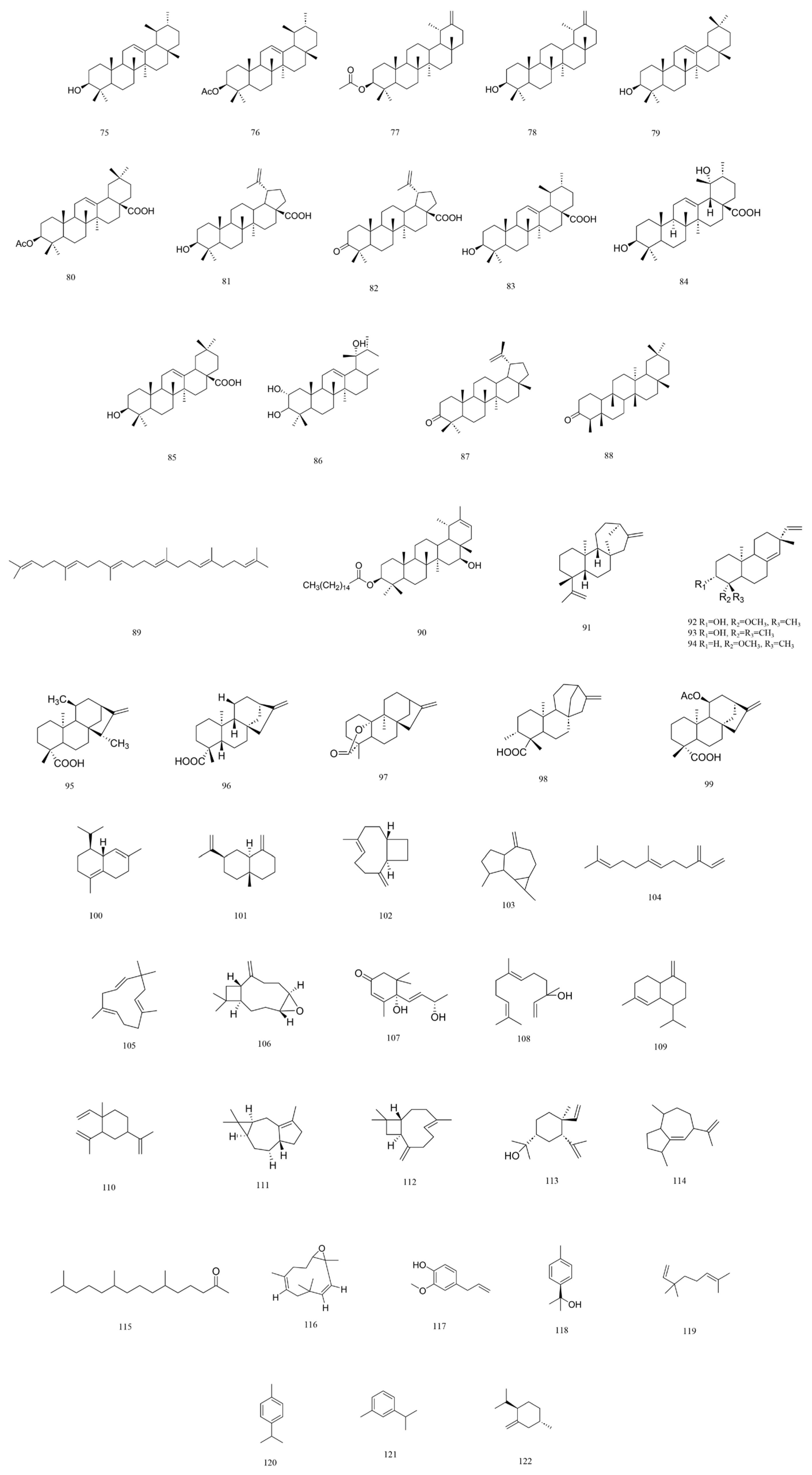
| 75 | Triterpenes | α-Amyrin | Dried, whole herb | Isolated (silica gel column chromatography, Sephadex LH-20); ESI-MS, 1H NMR, 13C NMR, comparison with the literature | [21] |
| 76 | α-Amyrin acetate | Dried, whole herb | Extracted with 95% EtOH, isolated (silica gel column chromatography, ODS column chromatography); 1H NMR, 13C NMR, comparison with the literature | [21] | |
| 77 | Taraxasterol acetate | Dried, whole herb | Isolated (silica gel column chromatography, Sephadex LH-20); ESI-MS, 1H NMR, 13C NMR, comparison with the literature | [29] | |
| 78 | Taraxasterol | n/a | n/a | [29] | |
| 79 | β-Amyrin | Dried, whole herb | Extracted with 95% EtOH, isolated (silica gel column chromatography, ODS column chromatography); 1H NMR, 13C NMR, comparison with the literature | [21] | |
| 80 | β-Amyrin acetate | [21] | |||
| 81 | Betulinic acid | Whole herb | Isolated (silica gel, Sephadex LH-20); MS, NMR | [30] | |
| 82 | Betulonic acid | n/a | n/a | [17] | |
| 83 | Ursolic acid | Dried, whole herb | Extracted with 95% EtOH, isolated (silica gel column chromatography, ODS column chromatography); 1H NMR, 13C NMR, comparison with the literature | [21] | |
| 84 | 19α-Ursolic acid | [21] | |||
| 85 | Oleanolic acid | [21] | |||
| 86 | 2α, 3α, 19α-trihydroxy-28-norurs-12ene | [21] | |||
| 87 | lupeone | n/a | n/a | [29] | |
| 88 | Friedelin | n/a | n/a | [29] | |
| 89 | Squalene | Whole herb | Extracted with MeOH:H2O (4:1), identified by UPLC-QE-MS, comparison with self-built database | [31] | |
| 90 | Faradiol 3-O-palmitate | Whole herb | Isolated (silica gel column chromatography); ESI-MS, 1H NMR, 13C NMR, comparison with the literature | [19] | |
| 91 | Diterpenes | Kaurenoic acid | Whole herb | Extracted with MeOH:H2O (4:1), identified by UPLC-QE-MS, comparison with self-built database | [31] |
| 92 | Ent-pimara-8(14),15-dien-3a,19-diol | Dried, powdered whole herb | Isolated (silica gel, preparative TLC); MS, NMR, comparison with the literature | [17] | |
| 93 | Ent-pimara-8(14),15-dien-3α-ol | Dried, powdered whole herb | Isolated (silica gel, preparative TLC); 1D NMR, 2D NMR, MS, comparison with the literature | [17] | |
| 94 | Ent-pimara-8(14),15-dien-19-ol | Dried, powdered whole herb | Isolated (silica gel, preparative TLC); MS, NMR, comparison with the literature | [17] | |
| 95 | Ent-Kaur-16-en-19-oic acid | Air-dried leaves | Isolated (silica gel column chromatography, crystallization); MS, NMR, comparison with the literature | [17] | |
| 96 | (−)-16-Kaurene-19-oic acid | [17] | |||
| 97 | Zoapatlin | Aerial parts | Extracted with 90% EtOH, identified by UHPLC-Q-TOF/MS, comparison with the literature | [17] | |
| 98 | Ent-3β-hydroxykaur-16-en-19-oic acid | n/a | n/a | [17] | |
| 99 | (−)-11β-Acetoxy-16-kaurene-19-oic acid | Air-dried leaves | Isolated (silica gel column chromatography); MS, NMR, comparison with the literature | [17] | |
| 100 | Sesquiterpenes | δ-Cadinene | Dried, whole herb | Extracted by steam distillation, identified by GC-MS, comparison with NIST library | [32] |
| 101 | β-selinene | [32] | |||
| 102 | Caryophyllene | [32] | |||
| 103 | Aromadendrene | [32] | |||
| 104 | 1,6,10-Dodecatriene | [32] | |||
| 105 | α-Caryophyllene | [32] | |||
| 106 | Caryophyllene oxide | [32] | |||
| 107 | Corchoionol C | Dried, whole herb | Extracted with 80% EtOH, isolated (silica gel, Sephadex LH-20); ESI-MS, 1H NMR, 13C NMR, comparison with the literature | [33] | |
| 108 | Nerolidol | Fresh, whole herb | Extracted by steam distillation, identified by GC-MS, comparison with NIST library | [34] | |
| 109 | γ-Cadinene | Dried, whole herb | Extracted by steam distillation, identified by GC-MS, comparison with NIST library | [17] | |
| 110 | (−)-β-Elemene | Whole herb | Extracted by simultaneous distillation extraction, identified by GC-MS, comparison with NIST/WILEY library | [17] | |
| 111 | α-Gurjunene | [17] | |||
| 112 | Trans-Caryophyllene | n/a | n/a | [17] | |
| 113 | α-elemol | Whole herb | Extracted by simultaneous distillation extraction, identified by GC-MS, comparison with NIST/WILEY library | [17] | |
| 114 | γ-Gurjunene | Fresh, whole herb | Simultaneous distillation extraction (SDE) with diethyl ether, GC-MS analysis, identified by Wiley275 library and literature comparison | [17] | |
| 115 | 6,10,14-trimethyl-2-Pentadecanone | Whole herb | Extracted by steam distillation, identified by GC-MS, comparison with WILEY library | [17] | |
| 116 | 1,5,5,8-Tetramethyl-12-oxabicyclo[9.1.0]dodeca-3,7-diene | [17] | |||
| 117 | Monoterpenes | Eugenol | n/a | n/a | [17] |
| 118 | α-Terpineol | n/a | n/a | [17] | |
| 119 | Linalool | n/a | n/a | [17] | |
| 120 | p-cymene | n/a | n/a | [17] | |
| 121 | m-cymene | Whole herb | Extracted by simultaneous distillation extraction, identified by GC-MS, comparison with WILEY library | [17] | |
| 122 | Pulegone | Whole herb | Extracted by steam distillation, identified by GC-MS, comparison with NIST library | [17] | |
| 123 | Phytosterols | β-Sitosterol | Dried, whole herb | Isolated (silica gel, Sephadex LH-20); TLC with authentic standard | [15] |
| 124 | (20R)-Cholest-4-en-3-one | Dried, whole herb | Isolated (silica gel, Sephadex LH-20); MS, NMR, comparison with the literature | [15] | |
| 125 | 3β-Hydroxy-stigmast-5,22-dien-7-one | [15] | |||
| 126 | Stigmasterol | Dried, whole herb | Extracted with 95% EtOH, isolated (silica gel column chromatography, ODS column chromatography); 1H NMR, 13C NMR, comparison with the literature | [21] | |
| 127 | α-Spinasterol | Dried, aerial parts | Isolated (silica gel, ODS, Sephadex LH-20); 1H NMR, 13C NMR, comparison with the literature | [29] | |
| 128 | Daucosterol | Dried, whole herb | Extracted with 80% EtOH, isolated (silica gel, Sephadex LH-20); ESI-MS, 1H NMR, 13C NMR, comparison with the literature | [33] | |
| 129 | 3β,hydroxy-stigmast-5,22-dien-7-one | Dried, whole herb | Isolated (silica gel column chromatography, Sephadex LH-20); ESI-MS, 1H NMR, 13C NMR, comparison with the literature | [30] | |
| 130 | Stigmasta-4,22-dien-3-one | n/a | n/a | [17] | |
| 131 | Anthraquinones | Emodin | Dried, whole herb | Isolated (silica gel, Sephadex LH-20); MS, NMR, comparison with the literature | [15] |
| 132 | Physcion | [15] | |||
| 133 | Phenolic acids | Ethyl protocate | Dried, whole herb | Isolated (silica gel, MCI gel, Sephadex LH-20, ODS); 1H NMR, 13C NMR, MS | [17] |
| 134 | Isovanillic acid | Dried, whole herb | Isolated (silica gel column chromatography, HPLC); 1H NMR, 13C NMR, MS | [17] | |
| 135 | 3′,5-dihydroxy-2- (4-hydroxybenzyl) -3-methoxybibenzyl | Whole herb | Isolated (silica gel, Sephadex LH-20, preparative TLC); ESI-MS, 1H NMR, 13C NMR, comparison with the literature | [17] | |
| 136 | Methyl p-hydroxycinolinate glucoside | [17] | |||
| 137 | Acteoside | [17] | |||
| 138 | Coniferylaldehyde | [19] | |||
| 139 | Isovanillin | Dried, whole herb | Extracted with 95% EtOH, isolated (silica gel column chromatography, ODS column chromatography); 1H NMR, 13C NMR, comparison with the literature | [21] | |
| 140 | Everlastoside L | Dried, whole herb | Extracted with 80% EtOH, isolated (silica gel, Sephadex LH-20, RP-18); ESI-MS, 1H NMR, 13C NMR, comparison with the literature | [26] | |
| 141 | Protocatechuic acid | Dried, aerial parts | Extracted with 80% MeOH, identified by HPLC with authentic standard | [35] | |
| 142 | Ethyl 3,4-dihydroxybenzoate | Aerial parts | Extracted with 60% EtOH, isolated (silica gel, RP-18, Sephadex LH-20, preparative HPLC); ESI-MS, 1H NMR, 13C NMR, comparison with the literature | [28] | |
| 143 | p-Coumaric acid | [28] | |||
| 144 | ferulic acid | Whole herb | Extracted with 80% MeOH, identified by LC-MS/MS, comparison with the literature | [36] | |
| 145 | caffeic acid | Dried, aerial parts | Extracted with 80% MeOH, identified by HPLC with authentic standard | [35] | |
| 146 | Methyl caffeate | Aerial parts | Extracted with 60% EtOH, isolated (silica gel, RP-18, Sephadex LH-20, preparative HPLC); ESI-MS, 1H NMR, 13C NMR, comparison with the literature | [27] | |
| 147 | Phenethyl caffeate | [28] | |||
| 148 | 1-O-caffeoyl-β-D-glucopyranose | [27] | |||
| 149 | Gallic acid | Dried, Aerial parts with flowers | Extracted with 70% MeOH; Identified by UPLC-Q-Exactive Orbitrap MS with authentic standard | [16] | |
| 150 | quinic acid | [16] | |||
| 151 | Chlorogenic acid | Dried, aerial parts | Extracted with 80% MeOH, identified by HPLC with authentic standard | [35] | |
| 152 | 3-O-caffeoylquinic acid | Whole herb | Extracted with 80% MeOH, identified by LC-MS/MS, comparison with the literature | [36] | |
| 153 | 4-O-caffeoylquinic acid | [36] | |||
| 154 | 5-O-caffeoylquinic acid | [36] | |||
| 155 | 1,3-di-O-Caffeoylquinic acid | Aerial parts | Extracted with 60% EtOH, isolated (silica gel, RP-18, Sephadex LH-20, preparative HPLC); ESI-MS, 1H NMR, 13C NMR, comparison with the literature | [28] | |
| 168 | Alkaloids | Scopolamine | n/a | n/a | [17] |
| 169 | 2-Hydroxy-N-(4-hydroxyphenyl)-benzamide | Dried, aerial parts with flowers | Extracted with 70% MeOH; Identified by UPLC-Q-Exactive Orbitrap MS with authentic standard | [16] | |
| 170 | longumoside A | Whole herb | Isolated (silica gel, Sephadex LH-20, preparative TLC); HR-ESI-MS, 1H NMR, 13C NMR, comparison with the literature | [19] | |
| 171 | grossamide K | Whole herb | Isolated (silica gel, Sephadex LH-20, preparative TLC); ESI-MS, 1H NMR, 13C NMR, comparison with the literature | [19] | |
| 172 | anabellamide | [19] | |||
| 173 | Patriscabratine | Dried, whole herb | Extracted with 95% EtOH, isolated (silica gel column chromatography, Sephadex LH-20); ESI-MS, 1H NMR, 13C NMR, comparison with the literature | [21] | |
| 174 | aurantiamide acetate | Dried, whole herb | Extracted with 95% EtOH, isolated (silica gel column chromatography, ODS column chromatography); 1H NMR, 13C NMR, comparison with the literature | [21] | |
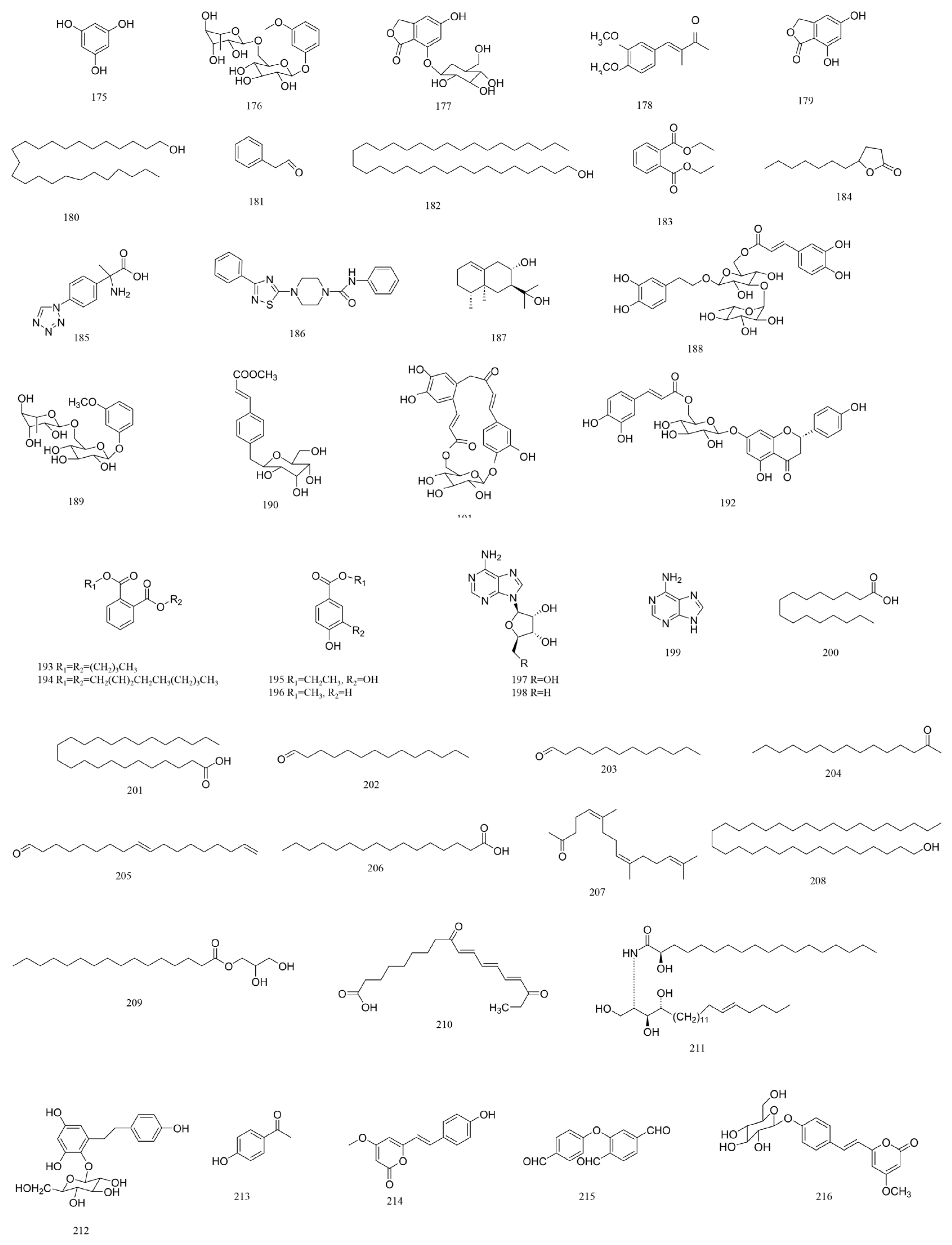
| 175 | Others | Phloroglucinol | Dried, whole herb | Extracted with 80% EtOH, isolated (silica gel, Sephadex LH-20); IR, MS, NMR, comparison with the literature | [17] |
| 176 | 3-methoxyphenol1-O-α-L-rhamnopyranosyl-4- (1→6)-O-β-D-glucopyranoside | Whole herb | Isolated (silica gel, Sephadex LH-20, preparative TLC); ESI-MS, 1H NMR, 13C NMR, comparison with the literature | [17] | |
| 177 | 7-O-(β-D-glucopyranosyl)-5-hydroxyisobenzofuran-1(3H)-one | Aerial parts | Extracted with 95% EtOH, isolated (silica gel column chromatography); ESI-MS, 1H NMR, 13C NMR, comparison with the literature | [17] | |
| 178 | 4-(3′,4′-dimethoxyphenyl)-3-methyl-butyl-3-ene-2-one | [17] | |||
| 179 | 5,7-dihydroxyl-isobenzofuran-1(3H)-one | [17] | |||
| 180 | 1-Hexacosanol | Dried, whole herb | Isolated (silica gel column chromatography, HPLC); 1H NMR, 13C NMR, MS, comparison with the literature | [17] | |
| 181 | Benzeneacetaldehyde | Whole herb | Extracted by simultaneous distillation extraction, identified by GC-MS, comparison with WILEY library | [17] | |
| 182 | 1-Tetratriacontanol | Dried, whole herb | Extracted with 80% EtOH, isolated (silica gel column chromatography, Sephadex LH-20); ESI-MS, 1H NMR, comparison with the literature | [17] | |
| 183 | Diethyl phthalate | Whole herb | Extracted by simultaneous distillation extraction, identified by GC-MS, comparison with WILEY library | [17] | |
| 184 | Myristicin aldehyde | Dried, whole herb | Extracted by steam distillation, identified by GC-MS, comparison with NIST library | [17] | |
| 185 | N-butyl-isobutyl terephthalate | Aerial parts | Extracted with 95% EtOH, isolated (silica gel column chromatography); 1H NMR, 13C NMR, comparison with the literature | [17] | |
| 186 | 2,3,5,4′-tetrahydtoxysilbene-2-O-β-D-glucopyranoside | Dried, whole herb | Extracted with 80% EtOH, isolated (silica gel, Sephadex LH-20, ODS); ESI-MS, 1H NMR, 13C NMR, comparison with the literature | [17] | |
| 187 | valene-1(10)-ene-8, 11-diol | Whole herb | Isolated (silica gel, Sephadex LH-20, preparative TLC); ESI-MS, 1H NMR, 13C NMR, comparison with the literature | [19] | |
| 188 | Isoverbascoside | [19] | |||
| 189 | 3-methoxyphenol-1-O-α-L-rhamnopyranosyl-(1→6)-O-β-D-glucopyranoside | [19] | |||
| 190 | 4-O-D-glucopyranosyl-p-coumaric acid methyl ester | [19] | |||
| 191 | Gnaphaffine A | Dried, whole herb | Extracted with 80% EtOH, isolated (silica gel, Sephadex LH-20, RP-18); ESI-MS, 1H NMR, 13C NMR, comparison with the literature | [26] | |
| 192 | Gnaphaffine B | [26] | |||
| 193 | Dibutyl phthalate | Whole herb | Extracted by steam distillation, identified by GC-MS, comparison with WILEY library | [27] | |
| 194 | 2-Ethylhexyl phthalate | n/a | n/a | [27] | |
| 195 | Ethyl 3, 4-dihydroxybenzoate | Aerial parts | Extracted with 60% EtOH, isolated (silica gel, RP-18, Sephadex LH-20, preparative HPLC); ESI-MS, 1H NMR, 13C NMR, comparison with the literature | [27] | |
| 196 | Methylparaben | [27] | |||
| 197 | Adenosine | n/a | n/a | [27] | |
| 198 | 5′-Deoxy-adenosine | n/a | n/a | [27] | |
| 199 | Adenine | Dried, whole herb | Extracted with 80% EtOH, isolated (silica gel, Sephadex LH-20, RP-18); ESI-MS, 1H NMR, 13C NMR, comparison with the literature | [26] | |
| 200 | Octadecanoic acid | Whole herb | Extracted by steam distillation, identified by GC-MS, comparison with WILEY library | [27] | |
| 201 | n-hexacosanic acid | Dried, whole herb | Isolated (silica gel column chromatography, Sephadex LH-20); ESI-MS, 1H NMR, 13C NMR, comparison with the literature | [30] | |
| 202 | Tetradecanal | Dried, whole herb | Extracted by steam distillation, identified by GC-MS, comparison with NIST library | [32] | |
| 203 | Dodecanal | [32] | |||
| 204 | Pentadecanone | [32] | |||
| 205 | 9,17-Octadecadienal | [32] | |||
| 206 | n-hexadecanoic acid | [32] | |||
| 207 | 6,10,14(Trimethyl-5,9,13-Pentadecatrien-2-one | [32] | |||
| 208 | n-tetratriacontanol | Dried, whole herb | Extracted with 80% EtOH, isolated (silica gel, Sephadex LH-20); ESI-MS, 1H NMR, 13C NMR, comparison with the literature | [33] | |
| 209 | glyceryl monopalmitate | [33] | |||
| 210 | 9,16-dioxo-10,12,14-octadeca-trienoic acid | [33] | |||
| 211 | Tithoniamide B | [33] | |||
| 212 | 2,3,5,4′-Tetrahydroxy stilbene-2-O-β-D-glucoside | [33] | |||
| 213 | 4′-Hydroxyacetophenone | Aerial parts | Extracted with 60% EtOH, isolated (silica gel, RP-18, Sephadex LH-20, preparative HPLC); ESI-MS, 1H NMR, 13C NMR, comparison with the literature | [28] | |
| 214 | 4′-hydroxydehydrokawain | [28] | |||
| 215 | 3-(4′-formylphenoxy)-4-methoxybenzaldehyde | [28] | |||
| 216 | desmethylyangonine-4′-glucopyranoside | [28] |
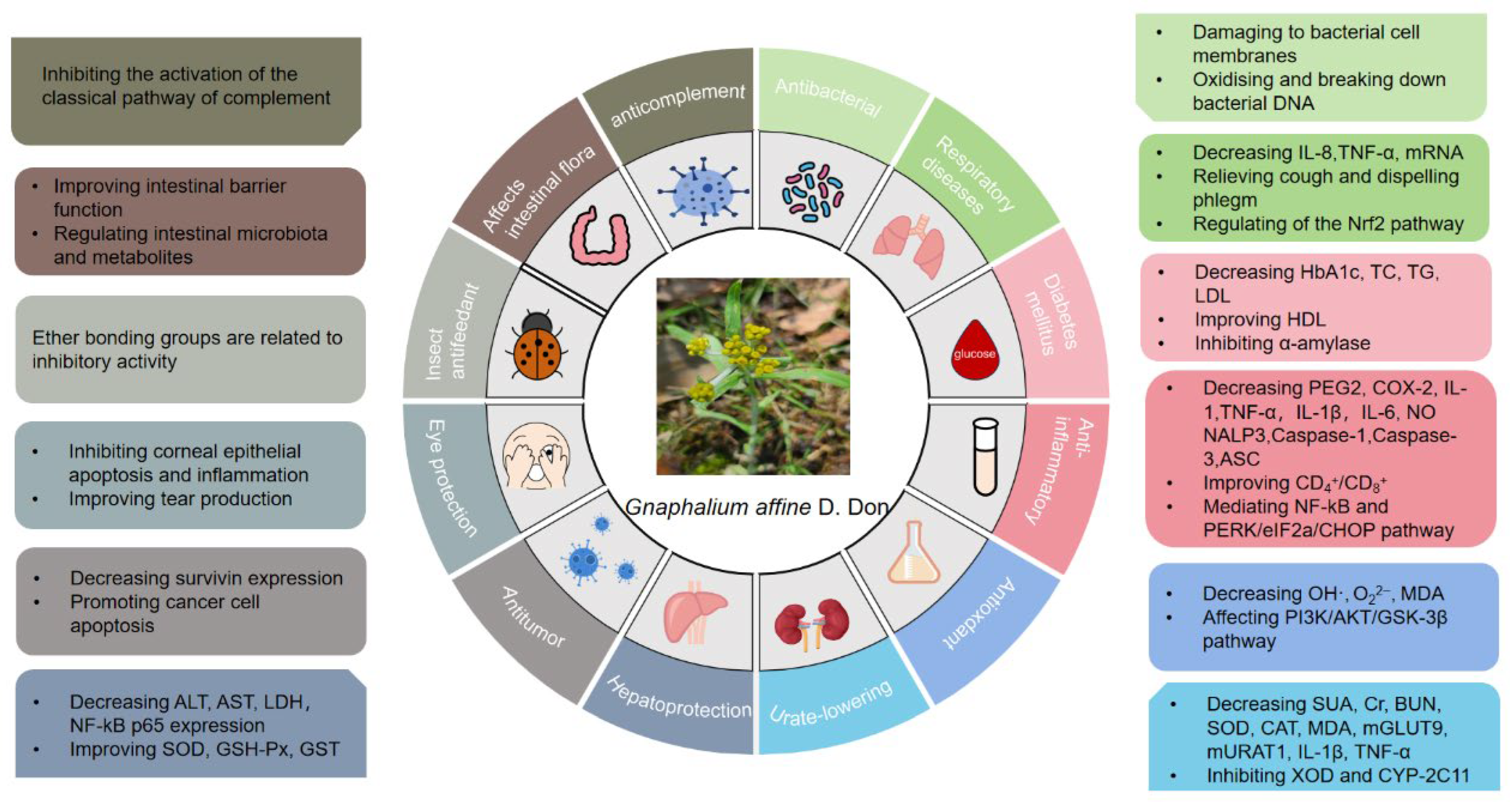
| Biological Activity | Compound | Subject | Parameter | Effects/Mechanisms | References |
|---|---|---|---|---|---|
| Antibacterial | Flavonoids | In vitro, bacterial suspension | 24 h | Antibacterial (S. aureus, Salmonella, B. subtilis, E. coli) | [37] |
| Flavonoids | In vitro, bacterial suspension | 24 h | Antibacterial (E. coli, B. subtilis, S. aureus), concentration dependence | [38] | |
| Flavonoids, Flavonoids -Zn | In vitro, viruses | 24 h | Damage to bacterial cell membranes and oxidative breakdown of bacterial DNA, stronger inhibition against Gram-positive bacteria | [39,40] | |
| Cough expectorant | Water extracts | In vivo, mice, guinea pigs | 0.2 mL/10 g per day for 7 Days | Cough suppressant and expectorant; tracheal phenol red excretion ↑ | [41] |
| Alcohol extracts | In vivo, COPD rat | 0.1 g/100 g per day for 7 Days | Lung inflammatory infiltration ↓; BALF IL-8 ↓, TNF-α ↓; lung IL-8 and TNF-α mRNA ↓ | [42] | |
| Alcohol extracts | In vivo, COPD rat | 0.75, 1.5, 3 g/kg per day for 14 Days | Serum CAT ↑, GSH ↑; lung SOD ↑, MDA ↓; Nrf2, HO-1, NQO1 mRNA ↑ and protein ↑; modulated gut microbiota | [43] | |
| Flavonoids | In vivo, CB mice | 0.2 mL/10 g per day for 7 Days | Relieve cough, resolve phlegm and asthma | [44] | |
| Anti-inflammatory | Alcohol extracts | In vivo, AA rats | 0.4, 0.80, 1.60 g/kg per day for 21 Days | PGE2, IL-1 and TNF-α ↓, CD4+/CD8+ ↑ | [45] |
| Alcohol extracts | In vivo, GA rats | 0.40, 0.80, 1.60 g/kg per day for 8 Days | UA, IL-1β, TNF-α, NALP3, Caspase-1 and ASC ↓, and XOD ↓ | [46] | |
| Alcohol extracts | In vivo, zebrafish viral pneumonia model | 125, 250, 500 µg/ml | Inflammatory infiltration ↓, IL-1β and TNF-α ↓ | [47] | |
| Extracts | In vivo, OA rats | 400, 800, 1600 mg/kg | PERK/eIF2α/CHOP signal pathway ↓ | [48] | |
| Alcohol extracts | In vivo, CIA rats; in vitro, NR8383 cell | 75, 150, 300 mg/kg; 50, 100, 200 µg/mL | Regulate the NF-κB signal pathway, NO, TNF-α, IL-1β, COX-2 ↓ | [49] | |
| Flavonoids | In vivo, mice pain model | 25, 50, 100 mg/kg per day for 7 Days | TNF-α, IL-6, NO ↓ and TNF-α, IL-6, iNOS ↓ | [50] | |
| Flavonoids | In vivo, COPD rats | 50 mg/kg per day for 7 Days | Caspase-3, IL-1β, IL-6 and TNF-α ↓ | [51] | |
| Antioxidant | Quercetin | In vitro, H2O2 induced Caco-2 cell | 10, 20, 30, 40 and 50 µg/mL | ABTS, DPPH, superoxide, hydroxyl radicals scavenging ↑, lipid peroxidation inhibition ↑, Scavenge ·OH and O2− | [52] |
| Polysaccharide | In vitro, hydroxyl and superoxide anion radical scavenging assay | - | Scavenge ·OH and O2−, concentration range 0.4–2.0 mg showed dose-dependent activity | [53] | |
| Polyphenol, flavonoids | In vitro, H2O2 induced H9c2 cell | 50 mg/L | ROS, MDA ↓, SOD ↑, Nrf2 ↑, cleaved-caspase 3 ↓; p-AKT/AKT ↑, PI3K/AKT/GSK-3β ↑ | [54] | |
| Flavonoids | In vitro, H2O2-induced HepG2 cells | 2, 5, 10 μg/mL | ROS ↓, LDH ↓, SOD and CAT ↑, GSH ↑, Nrf2, HO-1, and NQO-1 ↑, and keap1 ↓ | [55] | |
| Flavonoids | In vivo, DM mice | 50, 100 mg/kg per day for 21 Days | Serum and liver: SOD ↑, CAT ↑, GSH-Px ↑(partial), T-AOC ↑, MDA ↓ | [56] | |
| Flavonoids | In vitro, total antioxidant, superoxide anion radical, DPPH radical, hydroxyl radical scavenging assay and Fe 2+ induced yolk lipoprotein peroxidation assay | 0.10, 0.15, 0.20, 0.25, 0.30 mg/mL | Total antioxidant capacity ↑ (dose-dependent); hydroxyl radical scavenging ↑ (stronger than VC); superoxide anion inhibition ↑, DPPH scavenging ↑, Fe2+-induced lipid peroxidation inhibition ↑ | [57] | |
| Flavonoids | In vitro, scavenges DPPH radicals, hydroxyl radicals, nitrite assay | - | DPPH scavenging ↑, hydroxyl radical scavenging ↑, nitrosamine synthesis blocking ↑, NaNO2 scavenging ↑ | [58] | |
| Alcohol extracts | In vitro, ABTS and hydroxyl radical scavenging assay | - | Antioxidant; phenolic and flavonoid ↑ with moderate temperature, time, and power | [59] | |
| Hypoglycemic | Alcohol extracts | In vitro, α-amylase | - | α-amylase ↓ | [60] |
| Flavonoids | In vivo, DM mice | 50 mg/kg per day for 7 Days | glucose tolerance ↑, TC, TG, LDL-C ↓, iglycogen and HDL-C ↑ | [61] | |
| Lowering of uric acid | Flavonoids | In vivo, HUA rats | 100, 300 mg/kg per day for 21 Days | XOD ↓, SUA, Cr, BUN, SOD, CAT and MDA↓ | [62] |
| Extracts | In vitro, XOD | - | XOD ↓ | [63] | |
| Luteolin-4′-O-glucoside | In vivo, HUA mice | 100, 200, 400 mg/kg per day for 7 Days | Affect renal mGLUT9 and mURAT1, XOD ↓, IL-1β and TNF-α ↓ | [63] | |
| Extracts | In vivo, HN rats | 450 mg/kg for 21 Days | CYP2C11 ↓ | [64] | |
| Hepatoprotection | Total flavonoids | In vivo, alcohol-induced liver injury mouse | 75, 150, 300 mg/kg per day for 30 Days | oxidative stress ↓ | [65] |
| Alcohol extracts | In vivo, HIRI rats | 0.40, 0.80, 1.60 g/kg per day for 28 Days | ALT, AST, LDH, NF-κB, p65 ↓, SOD, GSH-Px and GST ↑ | [46] | |
| Total flavonoids | In vivo, APAP-induced ALI mice | 100, 200, 400 mg/kg per day for 14 Days | ALT, AST, TNF-α, IL-6, MDA, ROS, 4-HNE ↓, liver injury ↓, Nrf2, HO-1, SLC7A11 and GPX-4 ↑, keap1 ↓and hepatocyte ferroptosis ↓ | [66] | |
| Antitumor | Water extracts | In vivo, bladder cancer rats | 2, 4, 8 mg/ml | bladder cancer cell death ↑ and survivin in bladder cancer tissues ↓ | [67] |
| Water extracts | In vivo, lung cancer rats | 2, 4, 8 mg/ml | the apoptosis of lung cancer cells ↑ and survivin in lung cancer tissues ↓ | [68] | |
| Eye protection | Dicaffeoylquini-c acids | In vitro, CECs; in vivo, DED mice | 5–500 µg/mL for 7 Days | the corneal epithelial apoptosis ↓, tear production ↑ and inflammation ↓ | [69] |
Disclaimer/Publisher’s Note: The statements, opinions and data contained in all publications are solely those of the individual author(s) and contributor(s) and not of MDPI and/or the editor(s). MDPI and/or the editor(s) disclaim responsibility for any injury to people or property resulting from any ideas, methods, instructions or products referred to in the content. |
© 2026 by the authors. Licensee MDPI, Basel, Switzerland. This article is an open access article distributed under the terms and conditions of the Creative Commons Attribution (CC BY) license.
Share and Cite
Ding, C.; Zhou, Y.; Yang, L.; Zhou, L.; Xiao, Z. Chemical Compositions, Traditional Applications, and Biological Activities of Gnaphalium affine D. Don: A Comprehensive Review. Molecules 2026, 31, 1199. https://doi.org/10.3390/molecules31071199
Ding C, Zhou Y, Yang L, Zhou L, Xiao Z. Chemical Compositions, Traditional Applications, and Biological Activities of Gnaphalium affine D. Don: A Comprehensive Review. Molecules. 2026; 31(7):1199. https://doi.org/10.3390/molecules31071199
Chicago/Turabian StyleDing, Chen, Yimiao Zhou, Lin Yang, Liquan Zhou, and Zuowei Xiao. 2026. "Chemical Compositions, Traditional Applications, and Biological Activities of Gnaphalium affine D. Don: A Comprehensive Review" Molecules 31, no. 7: 1199. https://doi.org/10.3390/molecules31071199
APA StyleDing, C., Zhou, Y., Yang, L., Zhou, L., & Xiao, Z. (2026). Chemical Compositions, Traditional Applications, and Biological Activities of Gnaphalium affine D. Don: A Comprehensive Review. Molecules, 31(7), 1199. https://doi.org/10.3390/molecules31071199