Article

Evidence-Based Management of Sickle Cell Disease: Ethnobotanical Survey and Laboratory Validation of Traditional Herbal Recipes


by
Marguerite Borive Amani
1,2,*,
Mavar Manga Hélène
3,
Mouithys Mickalad Ange
4,
Nsasi Bakiantima Elodie
3,
Ndezu Angirio Rachel
1,
Memvanga Bondo Patrick
5,
Batina Agasa Salomon
6 and
Marini Djang’eing’a Roland
1,2,*
1
Department of Galenic Pharmacy and Drug Analysis, Faculty of Pharmaceutical Sciences, University of Kisangani, Kisangani P.O. Box 2012, Democratic Republic of the Congo
2
Laboratory of Pharmaceutical Analytical Chemistry, Department of Pharmacy, CIRM, University of Liege (ULiège), 4000 Liège, Belgium
3
Department of Pharmacognosy, Faculty of Pharmaceutical Sciences, University of Kisangani, Kisangani P.O. Box 2012, Democratic Republic of the Congo
4
Center for Oxygen Research and Development—CIRM, University of Liege, 4000 Liège, Belgium
5
Centre de Recherche et d’Innovation Technologique en Environnement et en Sciences de la Santé (CRITESS), Faculty of Pharmaceutical Sciences, University of Kinshasa, Kinshasa P.O. Box 212, Democratic Republic of the Congo
6
Department of Internal Medicine, Faculty of Medicine, University of Kisangani, Kisangani P.O. Box 2012, Democratic Republic of the Congo
*
Authors to whom correspondence should be addressed.
Molecules 2026, 31(7), 1192; https://doi.org/10.3390/molecules31071192
Submission received: 13 February 2026 / Revised: 26 March 2026 / Accepted: 28 March 2026 / Published: 3 April 2026
(This article belongs to the Special Issue Biological Activities of Traditional Medicinal Plants, 2nd Edition)

Abstract

In traditional medicine, laboratory tests are essential tools used to evaluate practices in healthcare that use natural products, particularly when there are few established treatments such as in the case of chronic diseases like sickle cell disease (SCD). SCD is a genetic hemoglobin disorder associated with hemolysis, oxidative stress, inflammation, and vaso-occlusive complications. This study aims to document medicinal plants used in the management of SCD and the traditional practices associated with their use, in order to assess their added value in relation to biological activities relevant to SCD. First, this study carried out an ethnobotanical survey at Kisangani, with 384 participants. A total of 201 respondents, 58% of whom were women, identified 45 medicinal plant species from 30 families. They reported the use of sugar, caramel, ash, and lemon juice as additives in traditional remedies. Based on several criteria, Alchornea cordifolia Müll. Arg. and Hibiscus tiliaceus L. were selected for laboratory evaluation. Their leaves were collected from arid and marshy soils and prepared according to the respondents’ descriptions for antioxidant and anti-inflammatory assessments. A. cordifolia showed significantly higher activities than H. tiliaceus regarding antioxidant (p = 0.001) and anti-inflammatory (p = 0.01) properties. Soil type was observed to influence the bioactivity of H. tiliaceus, with better performance in marshy soil samples. Sugar and caramel were found to reduce antioxidant activity, whereas ash and lemon juice preserved it without markedly altering anti-inflammatory effects. These findings are promising for supporting local knowledge about these two plant species.

1. Introduction

The use of traditional medicinal plants requires evidence-based validation, particularly for chronic diseases such as sickle cell disease (SCD). SCD is the most prevalent hemoglobinopathy worldwide and a major cause of morbidity and mortality [1]. This is because it causes the substitution of a single amino acid in the β-globin chain, which leads to hemoglobin polymerization, intravascular hemolysis, and the release of free hemoglobin and heme. These events trigger oxidative stress and inflammation through myeloperoxidase (MPO) activation, reactive oxygen species (ROS) generation, and neutrophil extracellular trap (NET) formation, contributing to vaso-occlusion and organ damage [2,3]. SCD is characterized by chronic anemia, vaso-occlusive crises, acute chest syndrome, stroke, renal impairment, and splenic dysfunction [4,5], resulting in a long-term family burden.
As mentioned, this disease affects millions of people worldwide, with approximately 300,000 new cases per year, predominantly in Sub-Saharan Africa, the Middle East, and India, although migration contributes to its global spread [6]. In Africa, around one thousand children are born daily with SCD, and more than half die before five years of age due to infections and severe anemia [7]. In the Democratic Republic of the Congo (DRC), SCD prevalence is about 2% among newborns, placing the country as the second most affected African country after Nigeria [8], with nearly 50,000 annually affected births and high early mortality [9]. In Kisangani, the homozygous prevalence among newborns is 2.2% while, for heterozygotes, it remains at 21%, which is quite stable [10,11].
The therapeutic strategy for SCD management involves preventing hemoglobin S polymerization by administering agents that induce or increase fetal hemoglobin (HbF) production [12]. Another promising therapeutic strategy involves targeting the gene responsible for the mutation through gene therapy, in order to correct or compensate for the defective β-globin gene [13]. However, the high cost and limited accessibility of these therapeutic strategies in many developing countries often compel patients to rely on conventional medicines or medicinal plants for the management of SCD symptoms [14,15]. The high prevalence of SCD, the difficulties associated with its management, and the social stigma experienced by affected individuals have contributed to its recognition as a neglected tropical disease [16,17].
Several studies have identified African plants commonly used in traditional medicine for the management of SCD [18,19,20,21], for which numerous studies have been carried out to evaluate their biological activities relevant to this condition. These studies have primarily focused on antisickling, anti-inflammatory, and antioxidant activities, investigated using either crude extracts or metabolites isolated from these plants [22,23,24,25,26,27,28].
Several improved traditional medicines from medicinal plants, such as Niprissan, Faca, and Drepanoalpha, have been developed and standardized in some countries to improve SCD management [29,30].
However, most of these studies have focused on crude extracts or isolated metabolites, while relatively little attention has been paid to the traditional practices associated with the use of these plants.
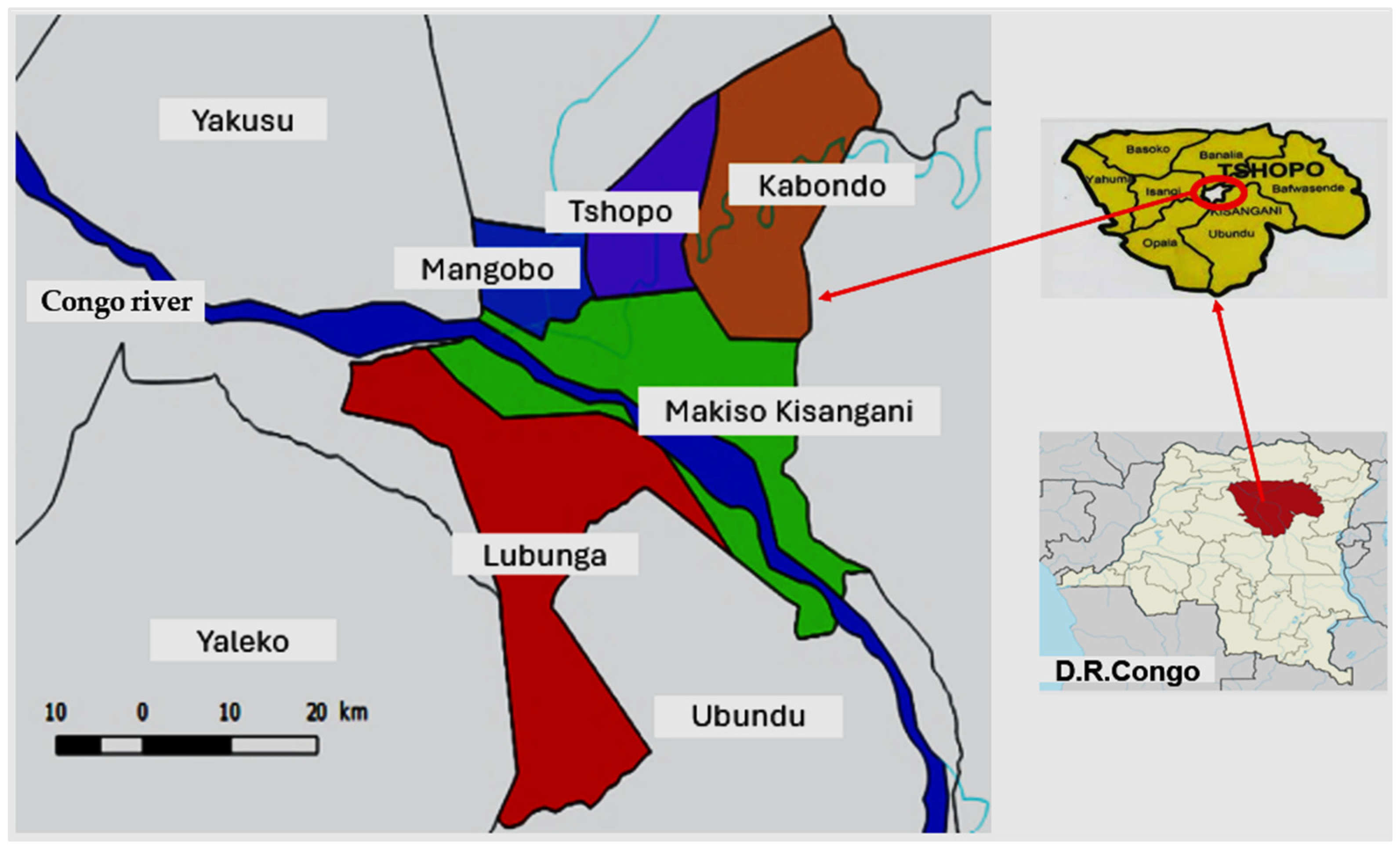
Therefore, given the high prevalence of SCD in Kisangani and the predominant reliance on medicinal plants for its management according to local perceptions and practices, an ethnobotanical survey was conducted in this city (Figure 1) to document the medicinal plants used and their associated modalities of use. Based on these findings, some species were selected and submitted for laboratory investigation to assess the added values of local practices to the biological activities relevant to SCD.

2. Results and Discussions

2.1. Ethnobotanical Survey Outcomes

2.1.1. Characteristics of Respondents

Using a questionnaire developed in accordance with ethical principles, the survey was conducted in the six municipalities of Kisangani through direct interviews. Respondents were approached either at their homes or workplaces or, in some cases, in public places such as streets.
Out of 384 participants, 201 reported using medicinal plants for the management of SCD. Women (58.7%) represented more than half of the respondents, which can be explained by their key role in caregiving and health management, particularly with children with chronic diseases, including SCD. Sociocultural perceptions of such disease often attribute care responsibilities to women.
Another notable fact regarding this survey is that most of the participants were educated, older than 20 years of age, and felt free to claim being affected by SCD, either closely or indirectly, which supports the reliability of their responses. In addition, their free participation and diverse knowledge sources indicate that SCD acceptability and sociocultural perception among people has evolved compared to 2007, when patients were victimized and rejected by society [31].
The main knowledge sources were from friends (39%), family (23%), and school and university (15%). Media and churches were rarely cited, while some participants were not clear about this point.
Respondents were classified into three groups: patients (12.9%) were recruited through the sickle cell patients’ association in Kisangani; healthcare professionals (28.8%) included physicians, pharmacists, and nurses familiar with the use of medicinal plants; and the general population (58.2%) comprised men and women from various occupational backgrounds (Table 1).

2.1.2. Plants Species Cited by Respondents and Their Way of Use

The respondents reported the use of 45 distinct plant species in Kisangani for SCD treatment. As shown in Table 2, 25 species were cited at least thrice by respondents, indicating high usefulness. Seven species were mentioned once by two respondents and, notably, thirteen species were mentioned by a single participant. The participants mentioned that they learned about some plants serendipitously and others by knowledge-sharing with traditional healers, grandparents, or friends. Even if they could not explain the biological mechanism of action of the plant recipes, the participants testified to their favorable results, such as the loss of pain and increases in hemoglobin levels. The plants were identified by their vernacular name and were assigned a deposit number from the Faculty of Science of Kisangani University along with the family.
We also classified the plants according to their use report (UR) number, which includes the number of ways a plant is used. For example, H. tiliaceus had 22 URs, meaning that 42 respondents described 22 ways of using that plant, which is the highest UR value and confirms its importance for SCD management.
Concerning the used parts for all plants, none of the participants could justify their answer. However, we noticed that leaves (fresh) were the most used as they are easily available. In some cases, respondents recommended using leaves that had dried naturally on the tree (e.g., Carica papaya, Musa paradisiaca, Alchornea cordifolia, Theobroma cacao), although the rationale underlying this practice was not clearly explained. Additionally, no participants could justify the requirements concerning the dry or fresh state of used parts, or the harvesting requirements, including the type of soil. Note that Kisangani city mainly has arid or marshy soils, which can influence the recipes’ composition. Some respondents believe that plants grown in marshy soil would be more effective. This was confirmed by riverside communities; specifically, the “Genya”, who live on the Congo river in Kisangani, testified to employing water for spiritual deliverance and healing. Decoction was cited as the most used preparation method, with 108 URs (58.6%), followed by maceration (20.1%).
The oral route was the most frequently cited for administration with 154 URs (83.6%), since it is the easiest controllable route. However, the cutaneous and rectal routes, mentioned 10 and 3 times, respectively, caught our attention as they are little known routes of administration for diseases such as SCD. According to some practitioners, the cutaneous administration route is appropriate because it alludes to a customary purification ceremony, given that SCD is considered a curse. Thus, this deserves further investigation to assess both routes’ therapeutic value.

2.1.3. Frequency of Citation of Additives

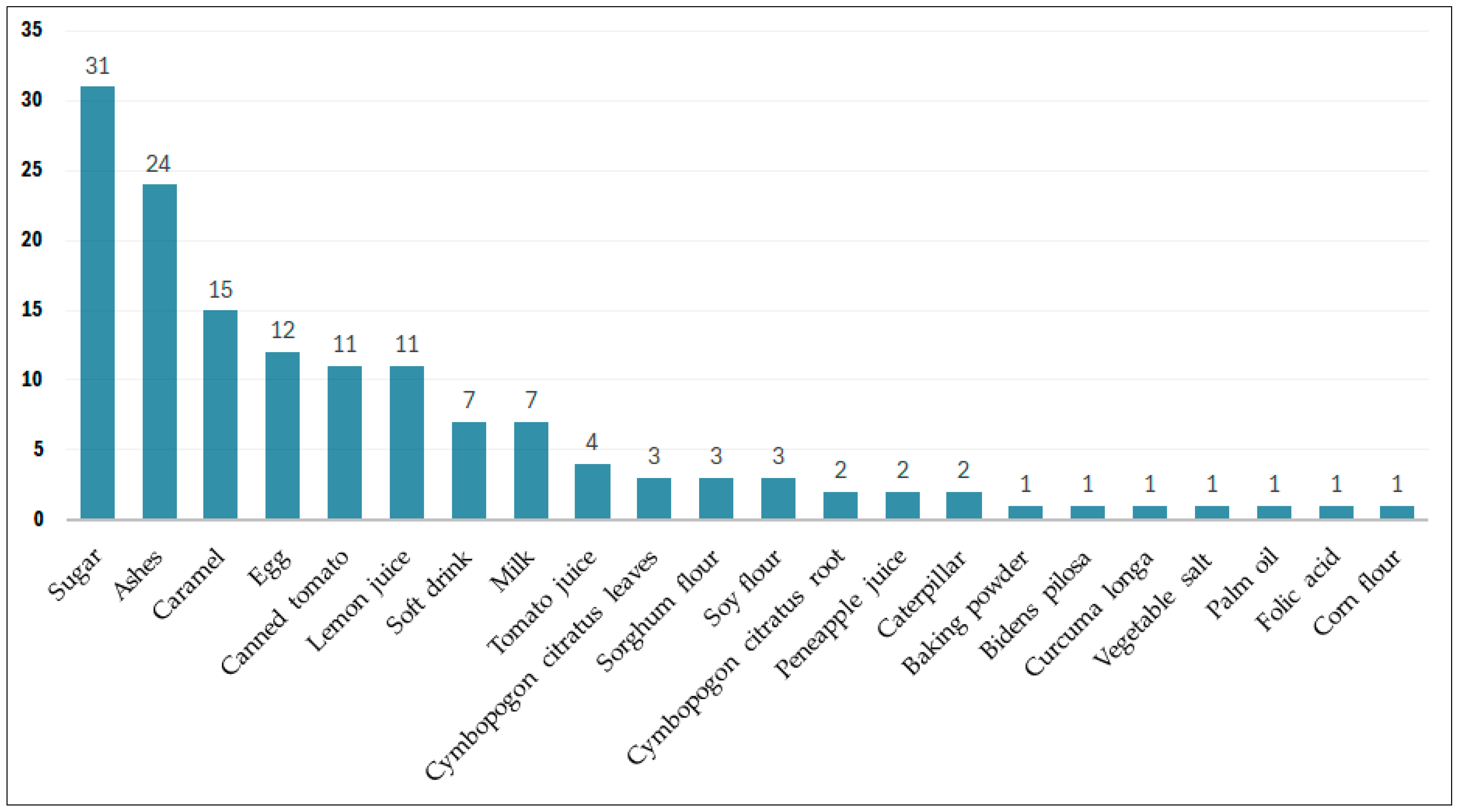
Of the 184 URs, 111 involved a combination of plant extracts with other products (Figure 2). The most frequently associated products included sugar, ash, caramel, canned tomatoes, lemon juice, and eggs. In addition, some participants indicated that additives such as canned tomatoes, milk, and eggs should be used separately from some herbal recipes.
The following additives are typically added during the preparation of herbal remedies: caramel, sugar, lemon juice, and ash. Meanwhile, caterpillars, sorghum, maize, and soya flour are consumed with the meal after the ingestion of the herbal remedy. We found that the key difference was in the pre-treatment of certain additional products before their incorporation into the recipe, as in the case of sugar calcination or C. citratus roots. In other cases—for example, in topical applications—the associated products are consumed orally after external administration of the principal product. Unfortunately, the participants were unable to explain the benefits of such combinations and administration routes. Most responses were limited to describing the organoleptic changes that occur during the preparations after the addition of these products. Other participants claimed that the tonic effects of these additives act against anemia-related fatigue or as appetite stimulants.
Note that, in most African cultures, ash is associated with purification, transition, and renewal, whereas fire denotes destruction, which then allows for regeneration. Its inclusion in remedies therefore symbolizes the transition from illness to healing. Lemon is often seen as a cleansing agent, as a "hunter of evil spirits." Its acidity is perceived as a force capable of fighting disease or removing “impurities” from the body [32,33,34]. Some informants believed that these additives are used for not only their antiseptic and preservative properties but also their ability to alter the taste of the remedy, thus facilitating its administration. From a scientific point of view, the addition of lemon is beneficial because of the ascorbic acid, which may contribute to Fe(III) reduction to Fe(II), facilitating its oral absorption and subsequently increasing hemoglobin levels [35].
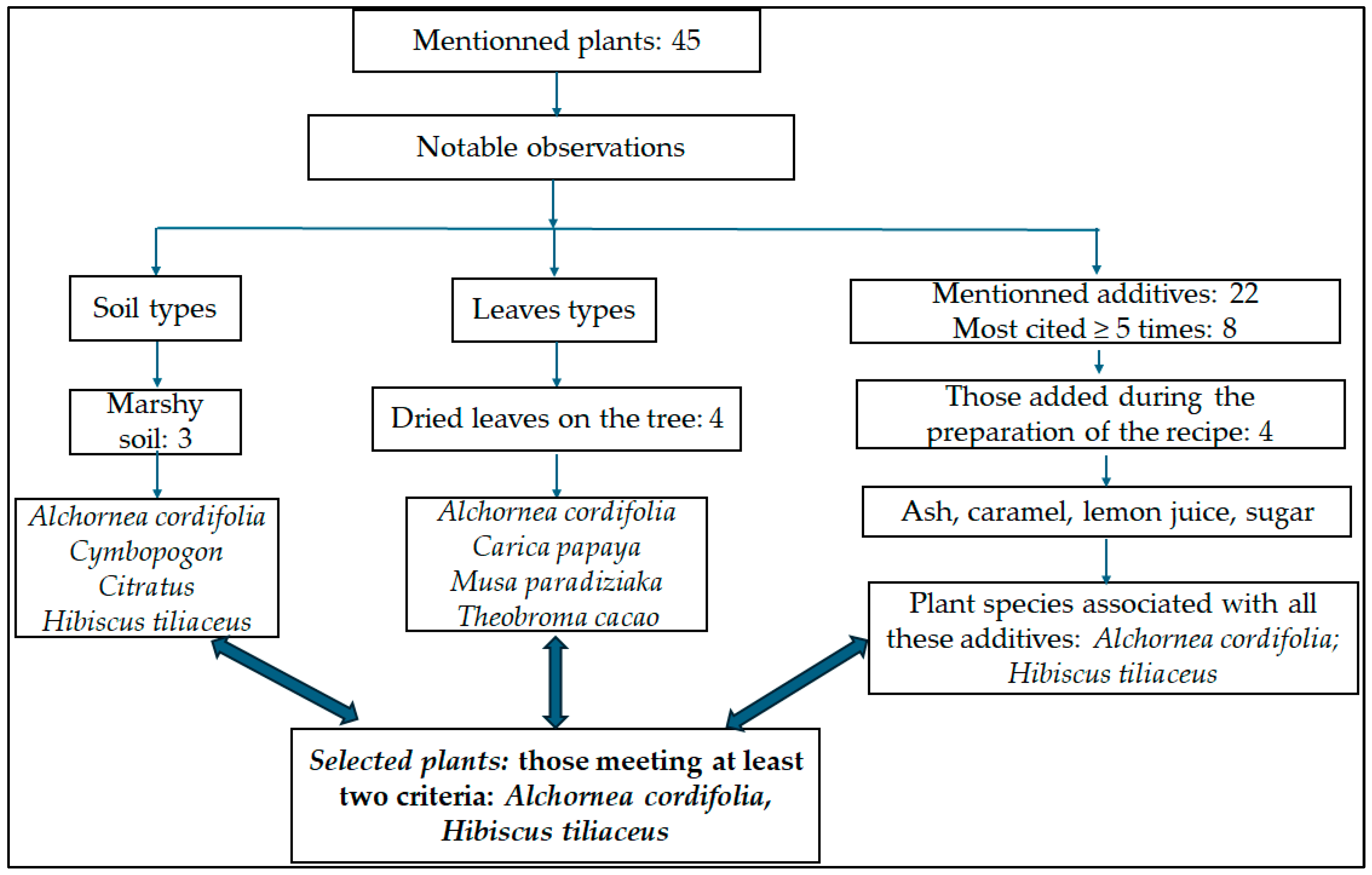
Data obtained from the ethnobotanical survey were used to design the flowchart guiding the selection of plant species for laboratory evaluation. Particular emphasis was placed on the soil type criterion, considering the geographical context of Kisangani, a city located on islands within the Congo River basin and surrounded by equatorial forest ecosystems where vegetation develops under diverse soil conditions, ranging from marshy to relatively dry soils. This context prompted our investigation into the potential influence of soil type on the biological properties of the selected plants.
In addition, special attention was paid to the additives incorporated during the preparation of traditional remedies. These substances may remain in contact with plant metabolites for a certain period of time, potentially inducing chemical transformations that could modify the chemical composition of the extracts and, consequently, their biological activities.

2.2. Laboratory Validation

2.2.1. Plant Selection for Laboratory Assessment

We used the UR value for plant selection. Recall that a high UR for a plant indicates that several variants were mentioned by the participants, either in terms of used parts, preparation methods, or administration routes. In our survey, the top five species most frequently mentioned were H. tiliaceus, P. americana, C. papaya, T. grandis, and C. sulphureus.
However, we considered additional selection criteria such as the local species availability, previous studies related to SCD, the soil type specificity mentioned by the respondents, the administration route, and the types of additives associated with the preparation. Thus, we included only plants for which the most cited additives (sugar, ash, caramel, and lemon juice) were explicitly mentioned at the time of recipe preparation. For example, eggs were not included because they are not incorporated during preparation, but administered sometimes after the remedy has been ingested.
Among the above top five species, P. americana and C. papaya were excluded since they were not mentioned for both soil types, T. grandis was excluded because it is not administered orally, and C. sulphureus did not meet the criterion related to the use of the most reported additives. In addition to the previously described criteria, recommendations regarding the type of leaves to be used were also reported, particularly leaves that had dried naturally on the tree.
Considering the three main criteria (Figure 3), plant species fulfilling at least two of these criteria were selected. As a result, H. tiliaceus and A. cordifolia were obtained for laboratory evaluation. AC is a shrub belonging to the Euphorbiaceae family, commonly found in tropical forests, especially along rivers. HT is a tree from the Malvaceae family, found in tropical regions of Africa, America, and Asia, which is more drought-tolerant and adaptable to different soil types.

2.2.2. Evaluation of Biological Activities

We evaluated the antioxidant and anti-inflammatory effects of the selected plants and the added value of the additives reported by respondents. Oxidative stress plays a prominent role in SCD, which leads to several complications [36,37]. Thus, anti-inflammatory activity was assessed using both the classical myeloperoxidase (MPO) assay and the SIEFED (Specific Immuno-Extraction Followed by Enzymatic Detection) method, given the role of MPO in SCD-related oxidative stress and inflammation. In addition to its peroxidase activity, MPO catalyzes chlorination reactions in the presence of chloride ions [38]. The classical MPO assay evaluates the direct inhibitory effect of plant extracts on enzyme activity in an open system, whereas the SIEFED assay selectively measures the activity of active, bound MPO, minimizing interference from other extract constituents [39,40]. The HT plant was already subjected to chemical characterization in our previous study (41); in this study, antioxidant activity was assessed using ABTS radical cations.
Antioxidant Activity
As shown in Table 3, all AC extracts presented higher and significant antioxidant activity than their corresponding HT extracts, regardless the soil type with or without additives. This indicates that antioxidant activity is species- and concentration-dependent. For AC, we noticed that arid soil had overall higher antioxidant activity than marshy soil. This finding is opposite to that for HT, as marshy soils were more favorable. However, regarding AC extracts and additives, the use of lemon juice was found to be favorable since the antioxidant activity was higher compared to the use of ash, caramel, and sugar additives. In the case of AC extracts, lemon juice and ash were found to be favorable since the antioxidant activity was higher compared to sugar and caramel. These antioxidant activity patterns were confirmed through ABTS tests. Overall, none of these additives significantly improved the antioxidant capacity of the extracts, which might be due to an interference or dilution effect of the phytochemical compounds. The antioxidant activity observed in the total extracts of the two plants supports the satisfaction expressed by recipients, according to survey responses, as well as its use as a complementary strategy of SCD management. Furthermore, the antioxidant activity of AC and HT extracts has been confirmed in previous studies [41,42].
Anti-Inflammatory Activity
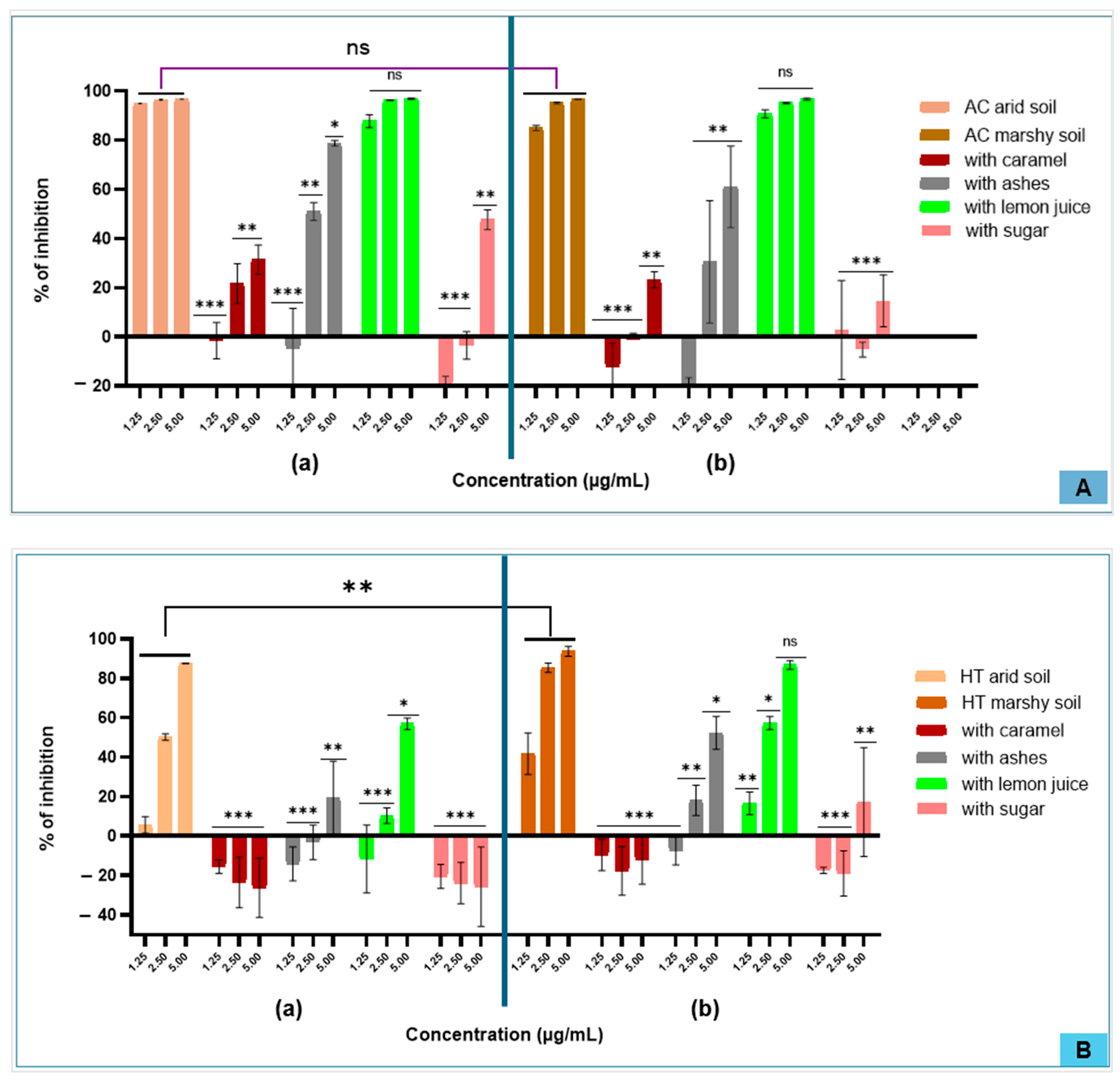
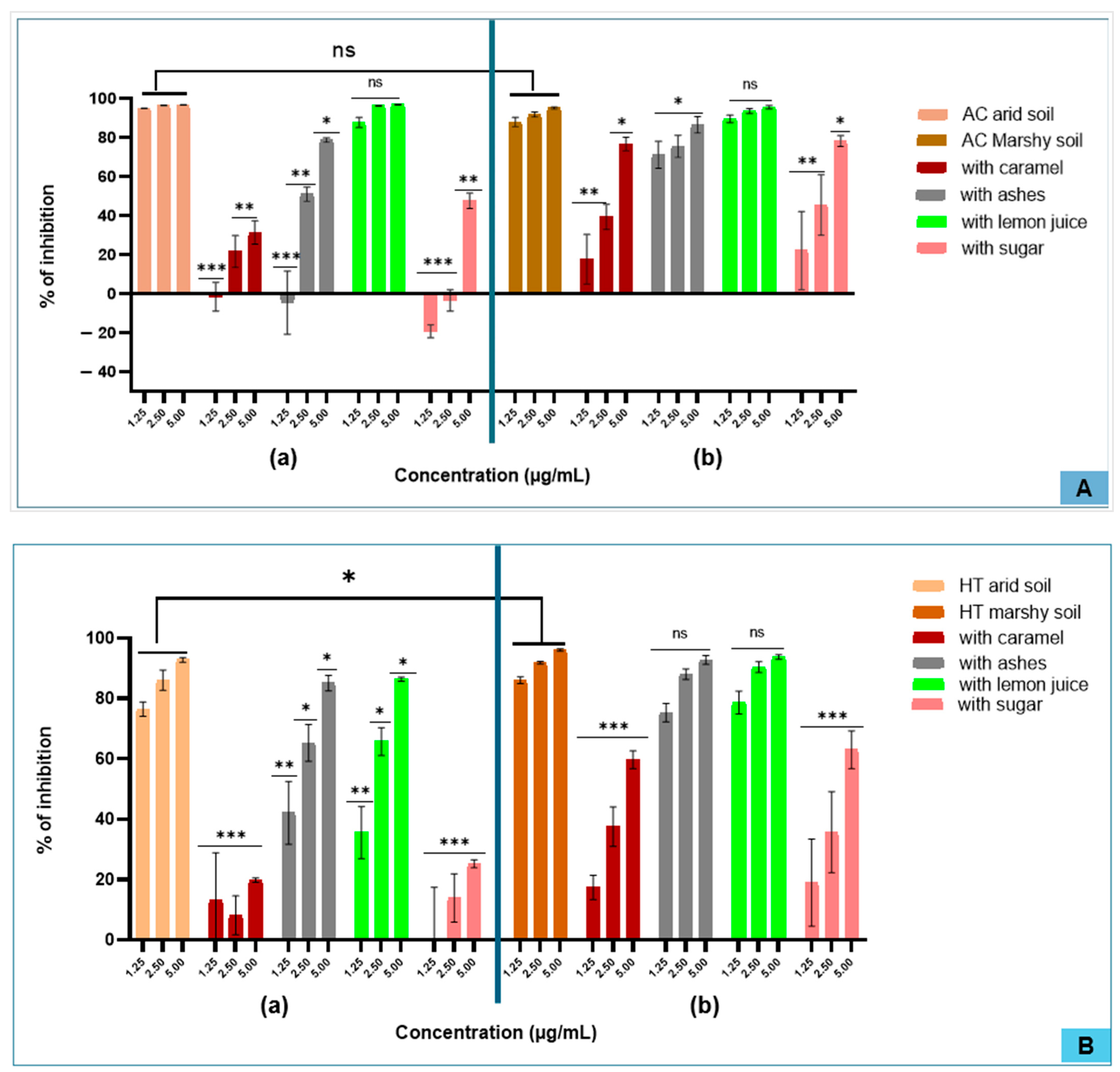
In terms of the inhibition of human MPO activity, the AC extract presented high activity compared to the HT extract. Among the tested additives, only the extract treated with lemon juice exhibited high activity, reaching approximately 90% for AC compared to 60% for HT at a concentration of 5 µg/mL. This level of inhibition is comparable to that of the untreated extract of AC, but remains lower than that observed with the untreated extract of HT. Furthermore, the HT extract from marshy soils showed greater inhibitory activity than that from arid soils. However, for AC, soil type did not appear to significantly influence this activity. A concentration response dependence was observed with HT extracts, whereas AC extracts quickly reached an inhibition plateau at low concentrations, suggesting a saturation effect (Figure 4 and Figure 5).
  • Classical MPO tests
  • SIEFED tests
These results suggest that the extracts tested inhibit MPO activity by preventing the enzyme from interacting with its substrates, particularly hydrogen peroxide (H2O2) and nitrite ion (NO2). This inhibition limits the formation of reactive oxygen species (ROS), which are responsible for oxidative stress and inflammatory lesions [43].
Regarding myeloperoxidase (MPO) inhibition, this study shows that among the four additives tested, the incorporation of ash or lemon juice did not significantly modify the inhibitory activity of extracts from either plant. Inhibition levels ranged from 90 to 100% at 5 µg/mL, with no significant difference compared to untreated extracts. Similarly, soil type exerted a negligible effect on MPO inhibition for both AC and HT. Unlike the classical MPO assay, which primarily measures inhibition through interference with reactive oxygen species (ROS) formation via electron or hydrogen transfer mechanisms, the SIEFED assay specifically assesses the spatial interaction between test molecules and the enzyme’s active site. This approach, which focuses on the molecular arrangement, may explain some of the variations or unexpected results observed in inhibitory activity [39]. The anti-inflammatory activity observed for AC confirms the results reported in previous studies [42,44]. The same is true for HT, whose antioxidant and anti-inflammatory properties are well documented [45]. Several studies have also highlighted the immunomodulatory and thrombolytic effects of HT [46,47] and antibacterial effects of AC [48,49].

2.2.3. Phytochemical Composition of Selected Plant Species

The leaves of A. cordifolia have been reported to contain phenolic acids, including gallic acid and ellagic acid, flavonoids such as vitexin, rutin, quercetin, myricetin, quercitrin, kaempferol, naringenin, and hyperin, alkaloids (e.g., yohimbine and alchorneine) and terpenoids such as friedelin, bisabolol, and linalool [50,51,52]. Similarly, H. tiliaceus leaves have been reported to exhibit a diverse phytochemical composition, including flavonoids such as apigenin, isoquercitrin, astragalin, rutin, transtiliroside, kaempferol, and quercetin, as well as phenolic acids, triterpenoids (e.g., friedelin), alkaloids, tannins, and megastigmanes such as tiliacic acid [45,53,54,55].

3. Materials and Methods

3.1. Material

3.1.1. Survey Area and Period

The survey took place in Kisangani city from June 2023 to December 2024. The city is in the north-east of the DRC, very close to the equatorial line and surrounded by a dense tropical rainforest zone. The climate is equatorial with a short, hot, dry season, mainly in January and February, followed by a warm, oppressive, and overcast rainy season that persists throughout most of the year.

3.1.2. Vegetable Materials and Reagents for Bioassays

Vegetable Materials
The plant materials consisted of leaves from the two plants species selected based on the ethnopharmacological survey. The leaves were harvested from plants growing on marshy and arid soils, and the leaf extracts were prepared following the respondents’ descriptions, with or without the additives mentioned during the survey.
Reagents
All salts used to prepare the buffered solutions and methanol were of analytical grade, obtained from Merck VWR (Leuven, Belgium). 2,2 azino-bis(3-ethylbenzothiazoline)-6-sulfonic acid (ABTS), Amplex Red, sodium nitrite, sodium persulfate, and hydrogen peroxide (H2O2) were purchased from Sigma-Aldrich (Steinheim, Germany). Bovine serum albumin (BSA) was obtained from Roche Diagnostics Gmbh (Mannheim, Germany), and human MPO was purchased from Calbio chem Millipore (Bellirica, Madison, WI, USA). Ash was obtained from the charcoal of equatorial rainforest wood, sugar from sugarcane (Saccharum spp.), and lemon juice from yellow lemons of the Citrus limonia (L.) Osbeck species.

3.2. Methods

3.2.1. Ethnobotanical Survey

The survey team included eight pharmacy students and two assistants from the Department of Pharmacy, Faculty of Medicine and Pharmacy, at the University of Kisangani. An anthropologist was also recruited to ensure full understanding of the responses during the survey. The sample size of respondents (n) was estimated using William Cochran’s formula, as described by Charan J. (Equation (1)) [56,57]:
n = z 2 × p × ( 1 p ) m 2
where z is the confidence level (1.96 at 95%); p is the estimated proportion of the population with the target characteristic; and m is the tolerated margin of error. When set at 5%, m equals 0.05.
Respondents were selected based on two criteria: being at least 18 years old and having resided in Kisangani for a minimum of 3 years. The objectives of the survey were explained to the participants. Their voluntary, free, and informed consent was obtained in accordance with ethical guidelines for research involving human subjects. Data were then collected using a semi-structured questionnaire focusing on knowledge and practices related to SCD management, particularly traditional medical approaches. Information gathered included plant names, the parts used, remedy preparation, administration routes, and specificity and individual perceptions of therapeutic efficacy, including plant combinations. The cited plant species were identified at the Faculty of Science, University of Kisangani, and taxonomically verified using the African Plant Database and World Flora Online.

3.2.2. Laboratory Assessment

Plant Selection and Collection
The plant species were sorted based on the survey data and the following selection criteria: (i) the frequency of citations by respondents; (ii) the leaf type; (iii) the route of administration being limited to oral use; (iv) the harvesting environment, considering both arid and marshy soils for the same species; and (v) and the additives used during recipe preparation, focusing on the four most frequently reported additives associated with each plant. Practical considerations included local availability and evidence from previous studies reporting a link between their medicinal properties and SCD management. The parts used were collected from the selected plants growing on two different soils (marshy and arid environments), then air-dried at room temperature in the laboratory of the Faculty of Medicine and Pharmacy, University of Kisangani. The dried plant material was subsequently ground into powder using a ZM 200 ultra-centrifugal electric grinder (Retsch, Haan, Germany). The resulting powders were packaged in hermetically sealed plastic vials and transported to the University of Liège for further analyses at the Pharmacognosy Laboratory (LPG) and the Oxygen Research and Development Centre (CORD).
Preparation of Plant Extracts
The selected and collected plants were treated with the most cited additives. The untreated raw extracts of each plant from arid soils were used as controls. These were compared with the plant extracts from marshy soils to provide evidence supporting the respondents’ statements.
For each selected plant, 25 g of powder was mixed into 500 mL of water. The mixture was boiled at 100 °C for 15 min and then filtered through glass wool. The quantities of additives to be incorporated were determined based on the proportions reported by the respondents (2.0 g of ash, 2.5 mL of lemon juice, and 10.0 g of sugar per 100 mL of aqueous extract). Regarding caramel, respondents said to add an amount equivalent to 10 g of sugar per 100 mL of extract, but only after the sugar had caramelized prior to mixing with the decoction. In order to reproduce the traditional preparation method described by the respondents, 100 mL of hot aqueous extract was put into separate beakers, and one additive was added to each of them. The resulting mixtures obtained were allowed to cool to room temperature and were then filtered through glass wool and freeze-dried for 48 h. The resulting dry extracts were transferred into glass vials and stored at 6 °C until use in subsequent biological assays.
Biological Activity Assays
  • Antioxidant activity
Antioxidant activity was assessed using the ABTS test to obtain a more comprehensive assessment of the antioxidant capacity of the different samples [58]. The ABTS test is based on the change in the blue-green color of the ABTS radical cation (ABTS•+) solution into its colorless neutral form, as previously described by Re et al. and modified by Widowati et al. [59,60]. To generate ABTS•+ radicals, an aqueous solution of sodium persulfate (2.45 mM) was mixed with ABTS (7 mM) and incubated overnight in the dark to obtain a dark-colored solution. The stock solution of ABTS•+ was then diluted by adding pure methanol (100%) to obtain an absorbance of 0.70 (±0.02) at 734 nm at 25 °C. Assays were performed in multiwell plates (n = 3, N = 2). An aliquot of 2 µL of the tested extract was added to 198 µL of ABTS•+. As a negative control, 2 µL of ultrapure water was added to 198 µL of ABTS•+ solution. To evaluate the absorbance of the different solutions at 734 nm, a microplate reader (Thermo Lab system, Vantaa, Finland) was used and the reducing capacity was determined according to the following formula:
%inhibition = (A control − A sample) ∗ 100/A control
where A is the absorbance.
  • Anti-inflammatory activity
The peroxidase activity of MPO was measured using a classical enzymatic assay and the SIEFED assay, as described by Nyssen et al. [61]. The MPO solution was prepared with purified human MPO in dilution buffer (PBS 20 mM at pH 7.4 with 5 g/L BSA and 0.1% Tween-20). Solutions of each sample, at final concentrations ranging from 1.25 to 5.00 µg/mL, were incubated with human MPO at a final concentration of 5 mU/mL for 10 min before further use. MPO activity was determined by monitoring the enzyme-catalyzed oxidation of Amplex Red in the presence of H2O2 and nitrite in phosphate buffer at pH 7.4.
  • Classical assay of MPO activity
After incubation, mixtures containing 100 µL of each extract or vehicle (ultrapure water) and MPO were placed on a multiwell plate (n = 3, N = 2), and peroxidase activity was measured by adding 10 µL of sodium nitrite solution (4.5 mM, final concentration) and 100 µL of the reaction solution containing 10 µM H2O2 and 40 µM Amplex® Red (AR) in phosphate buffer (50 mM) at pH 7.4. The oxidation of AR to the fluorescent resorufin adduct (excitation = 544 nm; emission = 590 nm) was monitored for 30 min at 37 °C using a fluorescence plate reader (Fluoroskan Ascent, Fisher Scientific, Hampton, NH, USA).
  • SIEFED assay of MPO activity
Samples containing MPO and different concentrations of juglone were prepared and incubated as in the classical assay. Then, 100 µL of each mixture (MPO alone or MPO+ extract) was placed on a SIEFED multiwell plate coated with rabbit polyclonal antibodies (3 g/mL) against human MPO and incubated for 2 h at 37 °C in the dark (n = 3, N = 2). After washing the wells, the activity of the enzyme captured by the antibodies was measured by adding 10 µL of sodium nitrite solution (4.5 mM, final concentration) and 100 µL of a reaction solution containing 10 µM H2O2 and 40 µM Amplex® in phosphate buffer (50 mM) at pH 7.4. The oxidation of Amplex® Red to the fluorescent adduct resorufin (excitation = 544 nm; emission = 590 nm) was monitored for 30 min at 37 °C using a fluorescence plate reader (Fluoroskan Ascent, Fisher Scientific). As for the direct MPO assay, a control assay, set as a relative value of MPO activity, was performed with purified MPO in the presence of PBS instead of the samples. In this SIEFED assay, MPO was bound to the wells by the antibodies, and the test extract was discarded in the wash step before the enzymatic activity was measured. For both MPO assays, the percentage inhibition was calculated using a formula similar to that described above (see Equation (2)).
Statistical Analysis
For data analysis, we performed statistical analysis with the GraphPad Prism 8.0.1 software, developed by GraphPad (San Diego, CA, USA). Two-way ANOVA multiple comparisons and Dunnett’s post-tests were used to test for differences between treatment groups, and results were considered significant at p-values of less than 0.05; i.e., at the 95% confidence level.

4. Conclusions

The management of sickle cell disease (SCD) in Kisangani remains a major public health challenge, leading many families with limited resources to rely on traditional medicine, particularly medicinal plants combined with various additives such as ash, sugar, caramel, and lemon juice. Laboratory evaluation of two frequently used species (A. cordifolia and H. tiliaceus) confirmed their antioxidant and anti-inflammatory activities, which may partly explain the positive experiences reported by users. Notably, the addition of ash and lemon juice reduced antioxidant activity without markedly affecting anti-inflammatory effects, whereas sugar and caramel significantly impaired both activities. In addition, soil type influenced plant bioactivity in a species- and activity-dependent manner. Future in vivo investigations should broaden the evaluation of biological activities and safety parameters to provide stronger evidence-based guidance, while advanced analytical techniques such as HPLC–MS should be utilized to identify and characterize the chemical constituents involved.

Author Contributions

Conceptualization—Methodology—Validation: M.B.A., M.M.H., M.M.A., N.B.E., N.A.R., and M.D.R.; Investigation and data interpretation: M.B.A., M.M.H., N.B.E., and N.A.R.; Resources and local authorization: B.A.S., and M.D.R.; Writing—original draft preparation: M.B.A.; Writing—review and editing: All authors; Supervision: B.A.S., M.B.P., M.D.R., M.M.A., and M.M.H.; Project administration: M.D.R., and M.B.P. All authors have read and agreed to the published version of the manuscript.

Funding

Grant was available for M.B.A.’s PhD scholarship and laboratory access.

Institutional Review Board Statement

This study received the Ethical approval N°ESP/CE/92B/2024 from the Ethical Committee of the Public Health School at the University of Kinshasa, Ministry of Higher and University Education of the Democratic Republic of Congo.

Informed Consent Statement

Not applicable.

Data Availability Statement

The original contributions presented in this study are included in the article. Further inquiries can be directed to the corresponding author(s).

Acknowledgments

The authors kindly acknowledge the ARES-CCD through ULiège-PACODEL for granting scholarship to M.B.A. in the BMOB (Belgium Mobility) for low incomes countries. The authors gratefully acknowledge Enock Abgande, Grodya Musafiri, and Kimoni Kicha for their valuable contributions to the survey.

Conflicts of Interest

The authors declare no conflicts of interest.

References

  1. Onimoe, G.; Rotz, S. Sickle cell disease: Aprimary care update. Cleve. Clin. J. Med. 2020, 87, 19–27. [Google Scholar] [CrossRef] [PubMed]
  2. Ramos-González, E.J.; Bitzer-Quintero, O.K.; Ortiz, G.; Hernández-Cruz, J.J.; Ramírez-Jirano, L.J. Relationship between inflammation and oxidative stress and its effect on multiple sclerosis. Neurología 2024, 39, 292–301. [Google Scholar] [CrossRef] [PubMed]
  3. Piel, F.B.; Steinberg, M.H.; Rees, D.C. Sickle Cell Disease. N. Engl. J. Med. 2017, 376, 1561–1573. [Google Scholar] [CrossRef]
  4. El Hoss, S.; Brousse, V. Considering the spleen in sickle cell disease. Expert Rev. Hematol. 2019, 12, 563–573. [Google Scholar] [CrossRef] [PubMed]
  5. Rees, D.C.; Brousse, V.A.M.; Brewin, J.N. Determinants of severity in sickle cell disease. Blood Rev. 2022, 56, 100983. [Google Scholar] [CrossRef]
  6. Ranque, B.; Kitenge, R.; Ndiaye, D.D.; Ba, M.D.; Adjoumani, L.; Traore, H.; Coulibaly, C.; Guindo, A.; Boidy, K.; Mbuyi, D.; et al. Estimating the risk of child mortality attributable to sickle cell anemia in sub-Saharan Africa: A retrospective, multicenter, case-control study. Lancet Haematol. 2022, 9, e208–e216. [Google Scholar] [CrossRef]
  7. WHO Africa Region. WHO Africa Releases Groundbreaking Guidance to Boost Fight Against Sickle Cell Disease; WHO Africa Region: Luanda, Angola, 2024. [Google Scholar]
  8. Tshilolo, L.; Aissi, L.M.; Lukusa, D.; Kinsiama, C.; Wembonyama, S.; Gulbis, B.; Vertongen, F. Neonatal screening for sickle cell anaemia in the Democratic Republic of the Congo: Experience from a pioneer project on 31 204 newborns. J. Clin. Pathol. 2009, 62, 35–38. [Google Scholar] [CrossRef]
  9. Foundation Pierre Fabre. The DRC Introduces a National Plan to Combat Sickle Cell Disease; Foundation Pierre Fabre: Lavaur, France, 2020. [Google Scholar]
  10. Agasa, B.; Bosunga, K.; Opara, A.; Tshilumba, K.; Dupont, E.; Vertongen, F.; Cotton, F.; Gulbis, B. Prevalence of SCD in a northeastern region of the Democratic Republic of Congo: What impact on transfusion policy? Transfus. Med. 2010, 20, 62–65. [Google Scholar] [CrossRef]
  11. Kasai, E.T.; Gulbis, B.; Ntukamunda, J.K.; Bours, V.; Batina Agasa, S.; Marini Djang’eing’a, R.; Boemer, F.; Katenga Bosunga, G.; Ngbonda Dauly, N.; Sokoni Vutseme, L.J.; et al. Newborn screening for SCD in Kisangani, Democratic Republic of the Congo: An update. Hematology 2023, 28, 2213043. [Google Scholar] [CrossRef]
  12. Ofakunrin, A.O.D.; Oguche, S.; Adekola, K.; Okpe, E.S.; Afolaranmi, T.O.; Diaku-Akinwumi, I.N.; Zoakah, A.I.; Sagay, A.S. Effectiveness Safety of Hydroxyurea in the Treatment of Sickle Cell Anaemia Children in Jos North Central Nigeria. J. Trop. Pediatr. 2020, 66, 290–298. [Google Scholar] [CrossRef]
  13. Bernaudin, F. Why Who When How? Rationale for Considering Allogeneic Stem Cell Transplantation in Children with Sickle Cell Disease. J. Clin. Med. 2019, 8, 1523. [Google Scholar] [CrossRef]
  14. Kambale-Kombi, P.; Marini Djang’eing’a, R.; Alworong’a Opara, J.-P.; Minon, J.-M.; Boemer, F.; Bours, V.; Tonen-Wolyec, S.; Kayembe Tshilumba, C.; Batina-Agasa, S. Management of sickle cell disease: Current practices and challenges in a northeastern region of the Democratic Republic of the Congo. Hematology 2021, 26, 199–205. [Google Scholar] [CrossRef]
  15. Mukinayi, B.M.; Cibeyibeyi, G.K.; Disashi, G.T.; Gulbis, B. Sickle cell disease in the Democratic Republic of Congo: What are the obstacles to treatment with hydroxyurea? Pan Afr. Med. J. 2021, 38, 41. [Google Scholar] [CrossRef]
  16. Tshilolo, L.; Gonzalez, J.-P. Stigmatization of SCD across the Democratic Republic of Congo: A presentation of two cases. Int. Health Trends Perspect. 2024, 4, 181–186. [Google Scholar] [CrossRef]
  17. Ware, R.E. Is Sickle Cell Anemia a Neglected Tropical Disease? PLoS Negl. Trop. Dis. 2013, 7, e2120. [Google Scholar] [CrossRef] [PubMed]
  18. Ngunde-te-Ngunde, S.; Lengbiye, E.M.; Bongo, G.N.; Bolamba, N.B.; Ashande, C.M.; Zoawe, B.G.; Ngbolua, K.N. Ethno-botanical Survey on Medicinal Plants Traditionally Used to Treat Sickle Cell Anemia in Yakoma Territory (Nord-Ubangi, D.R. Congo). Int. J. Plant Sci. Ecol. 2020, 6, 7–13. [Google Scholar]
  19. Ahajumobi, N.E.; Asika, J.C. Afro Medicinal Plants a Promising Remedy for Sickle Cell Anemia. Int. Blood Res. Rev. 2024, 15, 26–37. [Google Scholar] [CrossRef]
  20. Awor, S.; Opee, J.; Ocaya, D.; Ocaya, J.; Abola, B.; Malinga, G.M.; Oryema, C.; Arwenyo, B.; Ongwech, A.; Musoke, D.; et al. “We Cure Sickle Cell Disease with Herbs”: Perspectives of Herbal Medicine Practitioners Treating Sickle Cell Disease in the Acholi Sub-Region. J. Multidiscip. Healthc. 2025, 18, 4267–4277. [Google Scholar] [CrossRef] [PubMed]
  21. Kitadi, J.M.; Mazasa, P.P.; Sha-Tshibey Tshibangu, D.; Kasali, F.M.; Tshilanda, D.D.; Ngbolua, K.T.N.; Mpiana, P.T. Ethnopharmacological Survey and Antisickling Activity of Plants Used in the Management of Sickle Cell Disease in Kikwit City, DR Congo. Evid.-Based Complement. Alternat. Med. 2020, 2020, 1346493. [Google Scholar] [CrossRef]
  22. Nurain, I.O.; Bewaji, C.O.; Johnson, J.S.; Davenport, R.D.; Zhang, Y. Potential of Three Ethnomedicinal Plants as Antisickling Agents. Mol. Pharm. 2017, 14, 172–182. [Google Scholar] [CrossRef]
  23. Sani, I.; Ukwuani-Kwaja, A.N.; Haruna, M. Ethnobotanical Survey In vitro Antisickling Effect of Some Selected Medicinal Plants. Asian J. Res. Biochem. 2021, 9, 1–14. [Google Scholar] [CrossRef]
  24. Yembeau, N.L.; Biapa Nya, P.C.; Pieme, C.A.; Tchouane, K.D.; Kengne Fotsing, C.B.; Nya Nkwikeu, P.J.; Feudjio, A.F.; Telefo, P.B. Ethnopharmacological Study of the Medicinal Plants Used in the Treatment of Sickle Cell Anemia in the West Region of Cameroon. Evid.-Based Complement. Alternat. Med. 2022, 2022, 5098428. [Google Scholar] [CrossRef]
  25. Tshilanda, D.D.; Onyamboko, D.N.; Babady-Bila, P.; Ngbolua Kte, N.; Tshibangu, D.S.; Dia Fita Dibwe, E.; Mpiana, P.T. Anti-sickling Activity of Ursolic Acid Isolated from the Leaves of Ocimum gratissimum, L. (Lamiaceae). Nat. Prod. Bioprospect. 2015, 5, 215–221. [Google Scholar] [CrossRef]
  26. Mpiana, P.T.; Mudogo, V.; Tshibangu, D.S.T.; Kitwa, E.K.; Kanangila, A.B.; Lumbu, J.B.S.; Ngbolua, K.N.; Atibu, E.K.; Kakule, M.K. Antisickling activity of anthocyanins from Bombax pentadrum, Ficus capensis and Ziziphus mucronata: Photodegradation effect. J. Ethnopharmacol. 2008, 120, 413–418. [Google Scholar] [CrossRef]
  27. Mpiana, P.T.; Tshibangu, D.S.T.; Shetonde, O.M.; Ngbolua, K.N. In vitro antidrepanocytary actvity (anti-sickle cell anemia) of some congolese plants. Phytomedicine 2007, 14, 192–195. [Google Scholar] [CrossRef]
  28. Mpiana, P.T.; Ngbolua, K.N.N.; Bokota, M.T.; Kasonga, T.K.; Atibu, E.K.; Tshibangu, D.S.; Mudogo, V. In vitro effects of anthocyanin extracts from Justicia secunda Vahl on the solubility of haemoglobin S and membrane stability of sickle erythrocytes. Blood Transfus. 2010, 8, 248. [Google Scholar] [CrossRef]
  29. Cordeiro, N.J.V.; Oniyangi, O. Phytomedicines (medicines derived from plants) for sickle cell disease. Cochrane Database Syst. Rev. 2004, 3, CD004448. [Google Scholar]
  30. Wambebe, C.O.; Bamgboye, E.A.; Badru, B.O.; Khamofu, H.; Momoh, J.A.; Ekpeyong, M.; Audu, B.S.; Njoku, S.O.; Nasipuri, N.R.; Kunle, O.O.; et al. Efficacy of Niprisan in the prophylactic management of patients with sickle cell disease. Curr. Ther. Res. 2001, 62, 26–34. [Google Scholar] [CrossRef]
  31. Crocq, L.; Dalligand, L.; Villerbu, L.; Tarquinio, C.; Duchet, C.; Coq, J.M.; Chidiac, N.; Vitry, M. Traumatismes Psychiques: Prise en Charge Psychologique des Victimes; Elsevier-Masson: Issy-les-Moulineaux, France, 2007; p. 308. [Google Scholar]
  32. Kgatla, S.T.; Park, J. Healing in Herero culture and Namibian African independent churches. HTS Theol. Stud. 2015, 71, 1–9. [Google Scholar] [CrossRef]
  33. Mutombo, P.N.; Kasilo, O.M.J.; James, P.B.; Wardle, J.; Kunle, O.; Katerere, D.; Wambebe, C.; Matsabisa, M.G.; Rahmatullah, M.; Nikiema, J.-B.; et al. Experiences and challenges of African traditional medicine: Lessons from COVID-19 pandemic. BMJ Glob. Health 2023, 8, e010813. [Google Scholar] [CrossRef] [PubMed]
  34. Shoko, T. Karanga Traditional Medicine and Healing. Afr. J. Tradit. Complement. Altern. Med. 2008, 4, 501. [Google Scholar] [CrossRef] [PubMed]
  35. Cook, J.D.; Reddy, M.B. Effect of ascorbic acid intake on nonheme-iron absorption from a complete diet. Am. J. Clin. Nutr. 2001, 73, 93–98. [Google Scholar] [CrossRef]
  36. Hebbel, R.P. Reconstructing sickle cell disease: Adata-based analysis of the “hyperhaemolysis paradigm” for pulmonary hypertension from the perspective of evidence-based medicine. Am. J. Hematol. 2011, 86, 123–154. [Google Scholar] [CrossRef]
  37. Nur, E.; Biemond, B.J.; Otten, H.M.; Brandjes, D.P.; Schnog, J.J.B.; CURAMA Study Group. Oxidative stress in sickle cell disease pathophysiology potential implications for disease management. Am. J. Hematol. 2011, 86, 484–489. [Google Scholar] [CrossRef]
  38. Zhang, H.; Xu, H.; Weihrauch, D.; Jones, D.W.; Jing, X.; Shi, Y.; Gourlay, D.; Oldham, K.T.; Hillery, C.A.; Pritchard, K.A. Inhibition of myeloperoxidase decreases vascular oxidative stress increases vasodilatation in SCDmice. J. Lipid Res. 2013, 54, 3009–3015. [Google Scholar] [CrossRef]
  39. Degotte, G.; Frederich, M.; Francotte, P.; Franck, T.; Colson, T.; Serteyn, D.; Mouithys-Mickalad, A. Targeting Myeloperoxidase Activity and Neutrophil ROS Production to Modulate Redox Process: Effect of Ellagic Acid and Analogues. Molecules 2023, 28, 4516. [Google Scholar] [CrossRef] [PubMed]
  40. Franck, T.; Grulke, S.; Deby-Dupont, G.; Deby, C.; Duvivier, H.; Peters, F.; Serteyn, D. Development of an Enzyme-Linked Immunosorbent Assay for Specific Equine Neutrophil Myeloperoxidase Measurement in Blood. J. Vet. Diagn. Investig. 2005, 17, 412–419. [Google Scholar] [CrossRef] [PubMed]
  41. Borive Amani, M.; Frederich, M.; Jansen, O.; Bonnet, O.; Ledoux, A.; Memvanga, P.B.; Batina Agasa, S.; Mouithys-Mickalad, A.; Djang’eing’a, R.M. Phytochemical Characterization of Hibiscus tiliaceus, L. Leaves and Evaluation of Their Antisickling, Antioxidant, and Anti-Inflammatory Activities. Molecules 2025, 30, 1765. [Google Scholar] [CrossRef]
  42. Oruka, O.; Achuba, F.I. In vitro Antioxidant Anti-Inflammatory Activities of Aqueous Leaf Extract of Alchornea cordifolia. J. Appl. Sci. Environ. Manag. 2023, 27, 299–304. [Google Scholar] [CrossRef]
  43. Poret, M.; Tran, T.; Villotte, M.; Nüsse, O. Myeloperoxidase: A clever strategist in the fight against pathogen infection. Med. Sci. 2017, 33, 741–743. [Google Scholar] [CrossRef][Green Version]
  44. Manga, H.M.; Brkic, D.; Marie, D.E.P.; Quetin-Leclercq, J. In vivo anti-inflammatory activity of Alchornea cordifolia, (Schumach. & Thonn.) Müll arg (Euphorbiaceae). J. Ethnopharmacol. 2004, 92, 209–214. [Google Scholar] [CrossRef]
  45. Vinh, L.B.; Nguyet, N.T.M.; Thanh, C.D.; Huong, T.T.; Tram, L.H.; Van Thong, N.; Minh, N.H.; Thao, N.P.; Hwang, I.; Yang, S.Y.; et al. Chemical constituents of Vietnamese mangrove Hibiscus tiliaceus with antioxidant and alpha-glucosidase inhibitory activity. Nat. Prod. Res. 2021, 35, 2899–2904. [Google Scholar] [CrossRef] [PubMed]
  46. Rajeswari, G.; Priyanka, B.; Amrutha, R.E.; Rajaram, C.; Kanhere, R.S.; Nelson Kumar, S. Hibiscus tiliaceus: Apossible immunomodulatory agent. J. Pharm. Res. 2013, 6, 742–747. [Google Scholar] [CrossRef]
  47. Surana, A.R.; Kumbhare, M.R.; Gunjal, A.R.; Goswami, S.S.; Ghuge, D.M. Chemical characterization thrombolytic antioxidant activity of Hibiscus tiliaceus, L. leaves. Nat. Prod. Res. 2022, 36, 6106–6110. [Google Scholar] [CrossRef] [PubMed]
  48. Djimeli, M.N.; Fodouop, S.P.C.; Njateng, G.S.S.; Fokunang, C.; Tala, D.S.; Kengni, F.; Gatsing, D. Antibacterial activities and toxicological study of the aqueous extract from leaves of Alchornea cordifolia (Euphorbiaceae). BMC Complement. Altern. Med. 2017, 17, 349. [Google Scholar] [CrossRef] [PubMed][Green Version]
  49. Adounkpe, F.; Ayena, A.C.; Aholoukpe, V.; Dougnon, V.; Klotoe, J.-R.; Medehouenou, M.; Baba-Moussa, L. Use of the leaves of Alchornea cordifolia (Schumach. & Thonn.) Müll (Euphorbiaceae) and prospects for treatment of infections due to multidrug-resistant bacteria. Bull. Natl. Res. Cent. 2022, 46, 132. [Google Scholar] [CrossRef]
  50. Sinan, K.I.; Ak, G.; Etienne, O.K.; Jekő, J.; Cziáky, Z.; Gupcsó, K.; João Rodrigues, M.; Custodio, L.; Mahomoodally, M.F.; Sharmeen, J.B.; et al. Deeper Insights on Alchornea cordifolia (Schumach. & Thonn.) Müll.Arg Extracts: Chemical Profiles, Biological Abilities, Network Analysis and Molecular Docking. Biomolecules 2021, 11, 219. [Google Scholar] [CrossRef]
  51. Koffi, E.N.; N’Guessan, O.H.A.; N’Da, P.K.; Ouattara, I.S.; Konan, S.K.; Adima, A.A. Comparative Study of the Chemical Composition and Antioxidant Capacity of Leaves, Stems and Roots of Alchornea cordifolia (Schumach. & Thonn.) Müll. Arg. Eur. J. Med. Plants 2021, 65–75. [Google Scholar] [CrossRef]
  52. Boniface, P.K.; Ferreira, S.B.; Kaiser, C.R. Recent trends in phytochemistry, ethnobotany and pharmacological significance of Alchornea cordifolia (Schumach. & Thonn.) Muell. Arg. J. Ethnopharmacol. 2016, 191, 216–244. [Google Scholar] [CrossRef]
  53. Zhang, X.P.; Zhang, J.Q.; Pei, Y.H.; Xu, X.D.; Tan, Y.F.; Kang, S.L.; Liu, M.S. Chemical constituents from Hibiscus tiliaceus. Chin. Tradit. Herb. Drugs 2012, 3, 440–443. [Google Scholar]
  54. Suzery, M.; Cahyono, B.; Sirait, M. Isolation and identification of triterpenoid compounds from the N-hexane extract of waru leaves (Hibiscus tiliaceus). AIP Conf. Proc. 2025, 3166, 020054. [Google Scholar] [CrossRef]
  55. Le, H.T.; Tran, T.H.; Nguyen, V.T.; Nguyen, H.M. Flavonoid Glycoside Constituents from the Leaves of Hibiscus tiliaceus. Eng. Technol. Sustain. Dev. 2021, 31, 7–11. [Google Scholar] [CrossRef]
  56. Charan, J.; Biswas, T. How to Calculate Sample Size for Different Study Designs in Medical Research? Indian J. Psychol. Med. 2013, 35, 121–126. [Google Scholar] [CrossRef] [PubMed]
  57. Cochran, W.G. Sampling Techniques, 3rd ed.; John Wiley & Sons, Ltd.: New York, NY, USA, 1977. [Google Scholar]
  58. Thaipong, K.; Boonprakob, U.; Crosby, K.; Cisneros-Zevallos, L.; Hawkins Byrne, D. Comparison of ABTS, DPPH, FRAP, and ORAC assays for estimating antioxidant activity from guava fruit extracts. J. Food Compos. Anal. 2006, 19, 669–675. [Google Scholar] [CrossRef]
  59. Re, R.; Pellegrini, N.; Proteggente, A.; Pannala, A.; Yang, M.; Rice-Evans, C. Antioxidant activity applying an improved ABTS radical cation decolorization assay. Free Radic. Biol. Med. 1999, 26, 1231–1237. [Google Scholar] [CrossRef]
  60. Widowati, W.; Rani, A.P.; Hamzah, R.A.; Arumwardana, S.; Afifah, E.; Kusuma, H.S.W.; Rihibiha, D.D.; Nufus, H.; Amalia, A. Antioxidant and Antiaging Assays of Hibiscus sabdariffa Extract and Its Compounds. Nat. Prod. Sci. 2017, 23, 192. [Google Scholar] [CrossRef]
  61. Nyssen, P.; Mouithys-Mickalad, A.; Minguet, G.; Sauvage, E.; Wouters, J.; Franck, T.; Hoebeke, M. Morphine, a potential inhibitor of myeloperoxidase activity. Biochim. Biophys. Acta (BBA)-Gen. Subj. 2018, 1862, 2236–2244. [Google Scholar] [CrossRef]
Figure 1. Map of Kisangani city crossed by the Congo river.
Molecules 31 01192 g001
Figure 2. Frequency of additive citations.
Molecules 31 01192 g002
Figure 3. Flowchart describing the plant selection process.
Molecules 31 01192 g003
Figure 4. Anti-inflammatory profiles expressed as the percentage inhibition of classical myeloperoxidase (MPO) activity for Alchornea cordifolia (AC) (A) and Hibiscus tiliaceus (HT) (B). Extracts obtained from plants growing in arid soil (A(a),B(a)) and marshy soil (A(b),B(b)) and tested as aqueous extracts alone or in combination with additives, ((ns): p > 0.05; (*): p < 0.05; (**): p < 0.004; (***): p < 0.001).
Molecules 31 01192 g004
Figure 5. Anti-inflammatory profiles expressed as the percentage inhibition of SIEFED activity for Alchornea cordifolia (AC) (A) and Hibiscus tiliaceus (HT) (B). Extracts obtained from plants growing in arid soil (A(a),B(a)) and marshy soil ((A(b),B(b)) and tested as aqueous extracts alone or in combination with additives, ((ns): p > 0.05; (*): p < 0.05; (**): p < 0.004; (***): p < 0.001).
Molecules 31 01192 g005
Table 1. Socio-demographic profile of respondents.
Sample CharacteristicsN (201)%
Age of respondents (years)
18–358944.3
36–508441.8
50 and over2813.9
Gender
Women11858.7
Men8341.3
Respondents’ categorization
Healthcare professionals2612.9
Sickle cell Patients5828.9
General population11758.2
Respondents Hemoglobinic status
AA5828.9
AS2813.9
SS3014.9
Unknown8542.3
Circumstances of knowledge
Church10.5
Family4622.9
School/University3014.9
Friendship7838.8
Media84.0
Hospital3818.9
Table 2. Plants mentioned and use reports of each species cited.
Deposit
Number
Plant NamesVN Cited by
Participants
FamilyUsed PartsPreparation
Method
Administration RouteCombinationFCUR
MBA/01Acmella paniculata (Wall. ex DC) R.K.JansenKekemuAsteraceaeWP, FLDecRectal, Oralnd22
MBA/05Alchornea cordifolia (Schumach.) Müll.Arg.MabanziEuphorbiaceaeFL, DLTInf, Dec, Mac Oral ash, caramel, lemon juice
canned tomato, sugar
173
ndAmaranthus cruentus L. MuchichaAmaranthaceaeFLCookingOral sugar, lemon juice33
ndAnanas comosus (L.) Merr.AnanaBromeliaceaeFruitMac, EJ, Dec Oral canned tomato, soft drink,
sugar, eggs, caramel
76
MBA/25Andasonia digitata L.LigumaMalvaceaeFL, DFDec, Mac Oral sugar, milk, eggs, folic acid,
caramel, milk+ eggs, eggs+ sugar
86
MBA/35Anisopappus chinensis
Hook.& Arn.
Nzete ya makilaAsteraceaeFL, FlowerMac, Dec Oral,
Cutaneous
ash54
MBA/28Annona reticulata L.BizabibuAnnonaceaeFLDecOral ash11
ndAnnonidium manii (Oliv.) Nzete ya bombiAnnonaceaeFL, BarkDecOral,
Cutaneous
nd42
MBA/6Bidens pilosa L.PoliceAsteraceaeWPDecOral nd11
MBA/20Bridelia atroviridis Müll.Arg.MgiangangePhyllanthaceaeFLDecOral nd11
MBA/07Carica papaya L.PayipayiCaricaceaeFL,
DLT
Dec, MacOral,
Cutaneous
C.citratus root, ash, caramel, pineapple juice, sugar, canned tomato, soy flour, caterpillar1413
MBA/23Catharanthus roseus (L.) G. Don ApocynaceaeFlowerDecOralsugar11
MBA/11Cocos nucifera L.CocotiArecaceaeJuice, FLMixt, DecOralsoft drink, sugar 33
MBA/29Coffea robusta L. LindenKaféRubiaceaeFL, SeedDec, Mac, GrindingOralC. citratus, sugar, milk,
eggs, caramel, ash
45
MBA/22Cosmos sulphureus Cav.MalotiAsteraceaeFlower, leaves, rootMac, EJ, Dec Grinding Oralash, sugar109
ndCucurbita pepo L.Kasa ya maboke, djurubiCucurbitaceaeFLEJ, Dec, MacOralsugar, ash, caramel66
MBA/21Cymbopogon citratus (DC.) StapfNyasiPoaceaeFL, RootInf, DecOralB. pilosa +sugar, C. longa33
MBA/16Elaeis guineensis Jacq.Ngasi, Nzete ya litoArecaceaeFruitMacRectalnd11
ndFagara zanthoxyloides (Lam.) B. Zepernick & Timler-RutaceaeFLMac, DecOralsorghum powder 32
ndFicus mucuso Welw. Ex FicalhoApendanyokaMoraceaeFLDecOralnd11
MBA/13Harungana madagascariensis Lam.ex Poir.BotondolondoHypericaceaeFLDecOralsugar22
MBA/33Hibiscus sabdariffa L.Ngai-ngaiMalvaceaeFLDec, CookingOralC. citratus leaves,
sugar
75
MBA/30Hibiscus tiliaceus L.Kasa ya makilaMalvaceaeFLDec, EJ, Mac, InfOral,
Cutaneous
ash, sugar, soy flour, milk
corn flour, tomato juice,
soft drink, lemon juice,
caterpillar, C. citratus, caramel,
4222
MBA/26Ipomoea batata (L.) Lam.MatembelaConvolvulaceaeFLMacOraltomato juice, eggs,
sugar, milk
22
MBA/04Laportea canadensis Wedd.Ibenja, KatoliaUrticaceaeWPDecRectal, Oralnd32
MBA/19Macaranga spinosa Müll.Arg.-EuphorbiaceaeFLDecOralnd11
MBA/17Macaranga stipulosa Müll. Arg.-EuphorbiaceaeFLDecOralnd11
MBA/34Mangifera indica L.MangaAnacardiaceaeFLDecOraleggs11
ndManihot esculenta CrantzSombe, MwinjaEuphorbiaceaeFLDec, Inf, Mac, CookingOrallemon juice, milk87
MBA/10Morinda morindoides (Baker) Milne-Redh.Kongo bololoRubiaceaeFLInf Oralnd12
MBA/08Moringa oleifera Lam.MoringaMoringaceaeFLMac, Dec, InfOralsugar84
MBA/24Musa paradisiaca L.MakembaMusaceaeDLTDecCutaneous, Oralash, sugar43
MBA/09Myrianthus arboreus P. Beauv.BokomuMoraceaeFLDec, MixtCutaneous, Oralash 43
ndOryza sativa L.LosoPoaceaeSeedGrinding, calcinedOralcaramel, sugar44
MBA/12Passiflora edulis SimsMarakujaPassifloraceae Fruit, FLEJ, DecOralsoft drink, sugar 24
MBA/18Persea americana Mill.Avocati,
Isandu
LauraceaeFL, Fruit, Pit, BarkDec, MacOral,
Cutaneous
Citratus leaves, sugar milk,
tomato juice, caramel, ash,
soft drink, eggs, sugar,
baking powder
2117
MBA/14Ricinus communis L.MbalikaEuphorbiaceaeFLHeatingCutaneous nd11
MBA/03Senna alata (L.) Roxb.FoleleFabaceaeFLDecOralSugar12
MBA/02Sida acuta Burm.f. Omongo,
Uende ukamuita mama
MalvaceaeStem, RootGrinding and calcined, DecOralvegetable salt
palm oil
ash
22
ndSolanum betaceum Cav.DamudamuSolanaceaeFL, FruitDec, EJOralSugar, eggs22
ndSolanum lycopersicum L.TomateSolanaceaeFruitMixtOralSoft drink23
MBA/32Tectona grandis L.f.TecVerbenaceaeFLMac, DecCutaneous Tomato juice, eggs, sugar
soft drink, sorghum flour,
caramel,
2012
MBA/15Terminalia catapa L.MadaméCombretaceaeFLDecCutaneouscaramel43
MBA/27Theobroma cacao L. CacaoMalvaceaeFL, DLTDecOralash, sugar43
MBA/31Zingiber officinal RoscoeTangawisiZingiberaceaeRootInf Oralnd13
Legend: Dec (Decoction), DF (Dried fruit), DLT (Dried leaves on the tree), EJ (Expression of juice), FC (Frequency of citation), FL (Fresh leaves), Inf (Infusion), Mac (Maceration), nd (not defined), Soft drink (Coca cola), Sugar milk (Nestlé), VN (vernacular name); WP (whole plant)
Table 3. IC50 of samples for antioxidant test.
SampleAntioxidant Expressed as IC50 (in µg/mL)
Mean ± Standard Deviation (n = 3), IC = 95%
Alchornea cordifolia (Schumach.) Müll.Arg.
AC arid soil1.76 ± 0.17
 with caramelnd
 with ashes12.46 ± 4.51
 with lemon juice2.89 ± 0.26
 with sugarnd
AC marsh soil 3.11 ± 0.10
 with caramelnd
 with ashes36.04 ± 25.15
 with lemon juice4.99 ± 3.59
 with sugarnd
Hibiscus tiliaceus L.
HT arid soil 18.71± 11.78
 with caramelnd
 with ashesnd
 with lemon juicend
 with sugarnd
HT marsh soil4.85 ± 0. 86
 with caramelnd
 with ash26.22 ± 10.02
 with lemon juice12.24 ± 3.51
 with sugarnd
Disclaimer/Publisher’s Note: The statements, opinions and data contained in all publications are solely those of the individual author(s) and contributor(s) and not of MDPI and/or the editor(s). MDPI and/or the editor(s) disclaim responsibility for any injury to people or property resulting from any ideas, methods, instructions or products referred to in the content.