Phytochemical Profiles and Antimicrobial Activity of Alnus glutinosa (L.) Gaertn. Leaves Growing in Kazakhstan

 , , , and
Abstract
1. Introduction
2. Results and Discussion
2.1. Quantitative and Qualitative Analyses
2.2. Mineral Composition Analysis
2.3. Determination of Phytochemicals by GC-MS
2.4. Analysis of Selected Polyphenolic Compounds by Means of HPLC
2.5. Antimicrobial Activity
3. Materials and Methods
3.1. Plant Material
3.2. Reagents and Equipment
3.3. Quantitative and Qualitative Analyses
3.4. Mineral Composition Analysis
3.5. GC-MS Analysis of Ethanolic Extract of A. glutinosa
3.6. Analysis of Polyphenolic Compounds Through HPLC
3.7. Antimicrobial Activity
3.8. Statistical Analysis
4. Conclusions
Author Contributions
Funding
Institutional Review Board Statement
Informed Consent Statement
Data Availability Statement
Conflicts of Interest
References
- Nurtaza, A.; Dyussembekova, D.; Shevtsov, A.; Islamova, S.; Samatova, I.; Koblanova, S.; Borodulina, O.; Kakimzhanova, A. Assessing Genetic Variability and Population Structure of Alnus glutinosa (Black Alder) in Kazakhstan Using SSR Markers. Plants 2024, 13, 3032. [Google Scholar] [CrossRef]
- Hrdlička, P.; Kula, E. Element contents and their seasonal dynamics in leaves of alder Alnus glutinosa (L.) Gaertn. Environ. Monit. Assess. 2024, 196, 224. [Google Scholar] [CrossRef]
- Bazargaliyeva, A.; Kurmanbayeva, M.; Admanova, G.; Sarzhigitova, A.; Koblanova, S.; Utaubayeva, A.; Gataulina, G.; Kaisagaliyeva, G.; Bissenov, U.; Alzhanova, B. Geobotanical characteristics of plant communities with participation of rare species Alnus glutinosa (L.) Gaertn. Braz. J. Biol. 2024, 84, e281672. [Google Scholar] [CrossRef] [PubMed]
- Sati, S.; Sati, N.; Sati, O. Bioactive constituents and medicinal importance of genus Alnus. Pharmacogn. Rev. 2011, 5, 174–183. [Google Scholar] [CrossRef]
- Dahija, S.; Cakarb, J.; Vidic, D.; Maksimovic, M.; Paric, A. Total phenolic and flavonoid contents, antioxidant and antimicrobial activities of Alnus glutinosa (L.) Gaertn., Alnus incana (L.) Moench and Alnus viridis (Chaix) DC. Extracts. Nat. Prod. Res. 2014, 28, 2317–2320. [Google Scholar] [CrossRef] [PubMed]
- Altınyay, Ç.; Süntar, I.; Altun, L.; Keleş, H.; Akkol, E.K. Phytochemical and biological studies on Alnus glutinosa subsp. glutinosa, A. orientalis var. orientalis and A. orientalis var. pubescens leaves. J. Ethnopharmacol. 2016, 192, 148–160. [Google Scholar] [CrossRef] [PubMed]
- Mushkina, V. Effect of wound healing in gels containing tinctures of Alnus glutinosa (L) leaves. Clin. Phytoscience 2021, 7, 62. [Google Scholar] [CrossRef]
- Lauberts, M.; Pals, M. Antioxidant Activity of Different Extracts from Black Alder (Alnus glutinosa) Bark with Greener Extraction Alternative. Plants 2021, 10, 2531. [Google Scholar] [CrossRef]
- Sukhikh, S.; Ivanova, S.; Skrypnik, L.; Bakhtiyarova, A.; Larina, V.; Krol, O.; Prosekov, A.; Frolov, A.; Povydysh, M.; Babich, O. Study of the Antioxidant Properties of Filipendula ulmaria and Alnus glutinosa. Plants 2022, 11, 2415. [Google Scholar] [CrossRef]
- Nawirska-Olszanska, A.; Zaczynska, E.; Czarny, A.; Kolniak-Ostek, J. Chemical Characteristics of Ethanol and Water Extracts of Black Alder (Alnus glutinosa L.) Acorns and Their Antibacterial, Anti-Fungal and Antitumor Properties. Molecules 2022, 27, 2804. [Google Scholar] [CrossRef]
- Smeriglio, A.; D’Angelo, V.; Cacciola, A.; Ingegneri, M.; Raimondo, F.M.; Trombetta, D.; Germanò, M.P. New Insights on Phytochemical Features and Biological Properties of Alnus glutinosa Stem Bark. Plants 2022, 11, 2499. [Google Scholar] [CrossRef] [PubMed]
- Baiseitova, A.; Lee, G.; Shah, A.; Yoon, S.; Kim, J.; Lee, Y.; Park, K. New dihydrobenzoxanthone derivatives with bacterial neuraminidase inhibitory activity isolated from Artocarpus elasticus. Bioorganic Chem. 2022, 127, 105978. [Google Scholar] [CrossRef] [PubMed]
- Darme, P.; Escotte-Binet, S.; Cordonnier, J.; Remy, S.; Hubert, J.; Sayagh, C.; Borie, N.; Villena, I.; Voutquenne-Nazabadioko, L.; Dauchez, M.; et al. Anti-Toxoplasma gondii effect of lupane-type triterpenes from the bark of black alder (Alnus glutinosa) and identification of a potential target by reverse docking. Parasite 2022, 29, 7. [Google Scholar] [PubMed]
- Novaković, M.; Stanković, M.; Vučković, I.; Todorović, N.; Trifunović, S.; Tešević, V.; Vajs, V.; Milosavljević, S. Diarylheptanoids from Alnus glutinosa Bark and Their Chemoprotective Effect on Human Lymphocytes DNA. Planta Med. 2013, 79, 499–505. [Google Scholar] [CrossRef]
- Ilic-Tomic, T.; Sokovic, M.; Vojnovic, S.; Ciric, A.; Veljic, M.; Nikodinovic-Runic, J.; Novakovic, M. Diarylheptanoids from Alnus viridis ssp. viridis and Alnus glutinosa: Modulation of Quorum Sensing Activity in Pseudomonas aeruginosa. Planta Med. 2017, 83, 117–125. [Google Scholar] [CrossRef]
- Dinic, J.; Novakovic, M.; Podolski-Renic, A.; Vajs, V.; Tesevic, V.; Isakovic, A.; Pesic, M. Structural differences in diarylheptanoids analogues from Alnus viridis and Alnus glutinosa influence their activity and selectivity towards cancer cells. Chem.-Biol. Interact. 2016, 249, 36–45. [Google Scholar] [CrossRef]
- Bikiaris, N.D.; Balla, E.; Varitimidou, D.; Koronaiou, L.A.; Nikolaidis, N. From Plant to Skin: Exploring Alnus glutinosa Extracts for Cosmeceutical Applications. Antioxidants 2025, 14, 1275. [Google Scholar] [CrossRef]
- Ren, X.; He, T.; Chang, Y.; Zhao, Y.; Chen, X.; Bai, S.; Wang, L.; Shen, M.; She, G. The Genus Alnus, a Comprehensive Outline of Its Chemical Constituents and Biological Activities. Molecules 2017, 22, 1383. [Google Scholar] [CrossRef]
- Fedchenkova, Y.A.; Khvorost, O.P. The Research of Organic Acids in Black Alder (Alnus glutinosa (L.) Gaertn.) Buds and Leaves. News Pharm. 2014, 3, 51–53. [Google Scholar] [CrossRef]
- Lorenc-Plucińska, G.; Walentynowicz, M.; Niewiadomska, A. Capabilities of Alders (Alnus incana and A. glutinosa) to Grow in Metal-Contaminated Soil. Ecol. Eng. 2013, 58, 214–227. [Google Scholar] [CrossRef]
- Parzych, A.; Jonczak, J. Bioaccumulation of Macro- and Microelements in Herbaceous Plants in the River Valley. J. Ecol. Eng. 2018, 19, 170–177. [Google Scholar] [CrossRef]
- Vares, A.; Lõhmus, K.; Truu, M.; Truu, J.; Tullus, H.; Kanal, A. Productivity of Black Alder (Alnus glutinosa (L.) Gaertn.) Plantations on Reclaimed Oil-Shale Mining Detritus and Mineral Soils in Relation to Rhizosphere Conditions. Oil Shale 2004, 21, 43–58. [Google Scholar] [CrossRef]
- Felföldi-Gáva, A.; Szarka, S.; Simándi, B.; Blazics, B.; Simon, B.; Kéry, Á. Supercritical Fluid Extraction of Alnus glutinosa (L.) Gaertn. J. Supercrit. Fluids 2012, 61, 55–61. [Google Scholar] [CrossRef]
- Vaysi, R.; Yousefi, F. Study on the Possibility of Identification and Comparison of Chemical Components in Wood Alnus subcordata and Alnus Glutinosa GC-MS Methods. Iran. J. Wood Pap. Sci. Res. 2018, 33, 1–11. [Google Scholar] [CrossRef]
- Chen, G.; Pan, F.; Gao, Y.; Li, H.; Qin, X.; Jiang, Y.; Qi, J.; Xie, J.; Jia, S. Analysis of Components and Properties of Extractives from Alnus cremastogyne Pods from Different Provenances. Molecules 2022, 27, 7802. [Google Scholar] [CrossRef] [PubMed]
- Amirbekov, A.; Vrchovecka, S.; Riha, J.; Petrik, I.; Friedecky, D.; Novak, O.; Cernik, M.; Hrabak, P.; Sevcu, A. Assessing HCH Isomer Uptake in Alnus glutinosa: Implications for Phytoremediation and Microbial Response. Sci. Rep. 2024, 14, 4187. [Google Scholar] [CrossRef]
- Bikovens, O.; Roze, L.; Pranovich, A.; Reunanen, M.; Telysheva, G. Chemical composition of lipophilic extractives from grey alder (Alnus incana). Bioresources 2013, 8, 350–357. [Google Scholar] [CrossRef]
- Hesham, W.; Elzayat, E.M.; Hosney, M.; Abo-Elghiet, F. Chemical Profiling and Anticancer Activity of Alnus incana Dichloromethane Fraction on HeLa Cells via Cell Cycle Arrest and Apoptosis. BMC Complement. Med. Ther. 2025, 25, 189. [Google Scholar] [CrossRef]
- Shaukat, U.; Ahemad, S.; Wang, M.; Khan, S.I.; Ali, Z.; Tousif, M.I.; Abdallah, H.H.; Khan, I.A.; Saleem, M.; Mahomoodally, M.F. Phenolic Contents, Chemical Profiling, in Silico and in Vitro Anti-Inflammatory and Anticancer Properties of Alnus nitida (Spach) Endl. S. Afr. J. Bot. 2021, 138, 148–155. [Google Scholar] [CrossRef]
- Ponomarenko, J.; Pals, M.; Lauberts, M.; Arshanitsa, A. Characterization of Obtained Extracts and Bark Residues from Black Alder (Alnus glutinosa) and Pine (Pinus sylvestris) after Microwave-Assisted Water Extraction under Different Conditions. Chem. Mater. Sci. 2023; preprint. [CrossRef]
- Fuller, E.; Germaine, K.J.; Rathore, D.S. The Good, the Bad, and the Useable Microbes within the Common Alder (Alnus glutinosa) Microbiome—Potential Bio-Agents to Combat Alder Dieback. Microorganisms 2023, 11, 2187. [Google Scholar] [CrossRef]
- Smeriglio, A.; DAngelo, V.; Denaro, M.; Trombetta, D.; Raimondo, F.M.; Germanò, M.P. Polyphenol Characterization, Antioxidant and Skin Whitening Properties of Alnus cordata Stem Bark. Chem. Biodivers. 2019, 16, e1900314. [Google Scholar] [CrossRef]
- Hong, S.; Pangloli, P.; Perumal, R.; Cox, S.; Noronha, L.E.; Dia, V.P.; Smolensky, D. A Comparative Study on Phenolic Content, Antioxidant Activity and Anti-Inflammatory Capacity of Aqueous and Ethanolic Extracts of Sorghum in Lipopolysaccharide-Induced RAW 264.7 Macrophages. Antioxidants 2020, 9, 1297. [Google Scholar] [CrossRef] [PubMed]
- Wang, S.Q.; Chang, Y.; Xu, J.J.; Zhao, C.R.; Song, Y.; Liu, M.C.; Tian, C.L. Comparative study of anti-inflammatory, antioxidant and antibacterial activities of epigallocatechin gallate, epigallocatechin, epicatechin gallate and epicatechin in vitro. Pharmacol. Res. Mod. Chin. Med. 2025, 15, 100599. [Google Scholar] [CrossRef]
- Khan, J.; Deb, P.K.; Priya, S.; Medina, K.D.; Devi, R.; Walode, S.G.; Rudrapal, M. Dietary Flavonoids: Cardioprotective Potential with Antioxidant Effects and Their Pharmacokinetic, Toxicological and Therapeutic Concerns. Molecules 2021, 26, 4021. [Google Scholar] [CrossRef] [PubMed]
- Najjar, R.S.; Feresin, R.G. Protective Role of Polyphenols in Heart Failure: Molecular Targets and Cellular Mechanisms Underlying Their Therapeutic Potential. Int. J. Mol. Sci. 2021, 22, 1668. [Google Scholar] [CrossRef]
- Yang, F.; Chen, C.; Ni, D.; Yang, Y.; Tian, J.; Li, Y.; Chen, S.; Ye, X.; Wang, L. Effects of Fermentation on Bioactivity and the Composition of Polyphenols Contained in Polyphenol-Rich Foods: A Review. Foods 2023, 12, 3315. [Google Scholar] [CrossRef]
- Szwed-Georgiou, A.; Płociński, P.; Włodarczyk, M.; Tomaszewska, A.; Okła, E.; Zadylak, J.; Koeman, J.; Krupa, A.; Williams, M.K.; Rudnicka, K. Integrated safety and microbiota profiling of fulvic acid formulations across in vitro and in vivo models. Sci. Rep. 2026, 16, 6166. [Google Scholar] [CrossRef]
- Lund, P.A.; De Biase, D.; Liran, O.; Scheler, O.; Mira, N.P.; Cetecioglu, Z.; Noriega Fernández, E.; Bover-Cid, S.; Hall, R.; Sauer, M.; et al. Understanding How Microorganisms Respond to Acid pH Is Central to Their Control and Successful Exploitation. Front. Microbiol. 2020, 11, 556140. [Google Scholar] [CrossRef]
- Hussain, A.; Bose, A.; Wang, J.-H.; Yadav, M.K.; Mahajan, G.B.; Kim, H. Fermentation, a feasible strategy for enhancing bioactivity of herbal medicines. Food Res. Int. 2016, 81, 1–16. [Google Scholar] [CrossRef]
- Korulkin, D.Y.; Abilov, Z.A. Qualitative and Quantitative Analysis of the Main Groups of BASes in Medicinal Raw Materials and Phytopreparations; Kazakh University: Almaty, Kazakhstan, 2004. [Google Scholar]
- Jenis, J. Chemistry of Natural Compounds (For Scientific Research and Laboratory Works); Kazakh University: Almaty, Kazakhstan, 2021; p. 249. ISBN 978-601-04-4952-7. [Google Scholar]
- Musinov, S.R.; Tulegenova, A.U. State Pharmacopoeia of the Republic of Kazakhstan, 2nd ed.; Publishing House “Zhibek Zholy”: Almaty, Kazakhstan, 2009; ISBN 978-601-7152-43-7. [Google Scholar]
- Musinov, S.R.; Tulegenova, A.U. State Pharmacopoeia of the Republic of Kazakhstan, 3rd ed.; Publishing House “Zhibek Zholy”: Almaty, Kazakhstan, 2014; ISBN 978-601-294-214-9. [Google Scholar]




| No | Composition of A. glutinosa Leaves | Content, % |
|---|---|---|
| 1 | Ash contents | 6.740 ± 0.023 |
| 2 | Moisture | 5.000 ± 0.012 |
| 3 | Polysaccharides | 0.421 ± 0.004 |
| 4 | Tannins | 7.439 ± 0.011 |
| 5 | Alkaloids | 0.205 ± 0.002 |
| 6 | Coumarins | 0.257 ± 0.002 |
| 7 | Extractive substances | 17.684 ± 0.245 |
| 8 | Organic acids | 0.388 ± 0.005 |
| 9 | Flavonoids | 0.322 ± 0.003 |
| No | Elements | Conc. in Ash, mg/g |
|---|---|---|
| 1 | Cu | 0.4121 ± 0.002 |
| 2 | Fe | 1.2266 ± 0.011 |
| 3 | Zn | 0.8870 ± 0.012 |
| 4 | Ni | 0.2167 ± 0.005 |
| 5 | Mn | 0.8141 ± 0.002 |
| 6 | Pb | - |
| 7 | Cd | 0.0170 ± 0.004 |
| 8 | Ca | 75.2989 ± 0.605 |
| 9 | Mg | 97.1287 ± 0.453 |
| 10 | K | 11.4330 ± 0.152 |
| 11 | Na | 72.4091 ± 0.212 |
| No | RT | Compound Name | MF | MW (g/mol) | Content (%) |
|---|---|---|---|---|---|
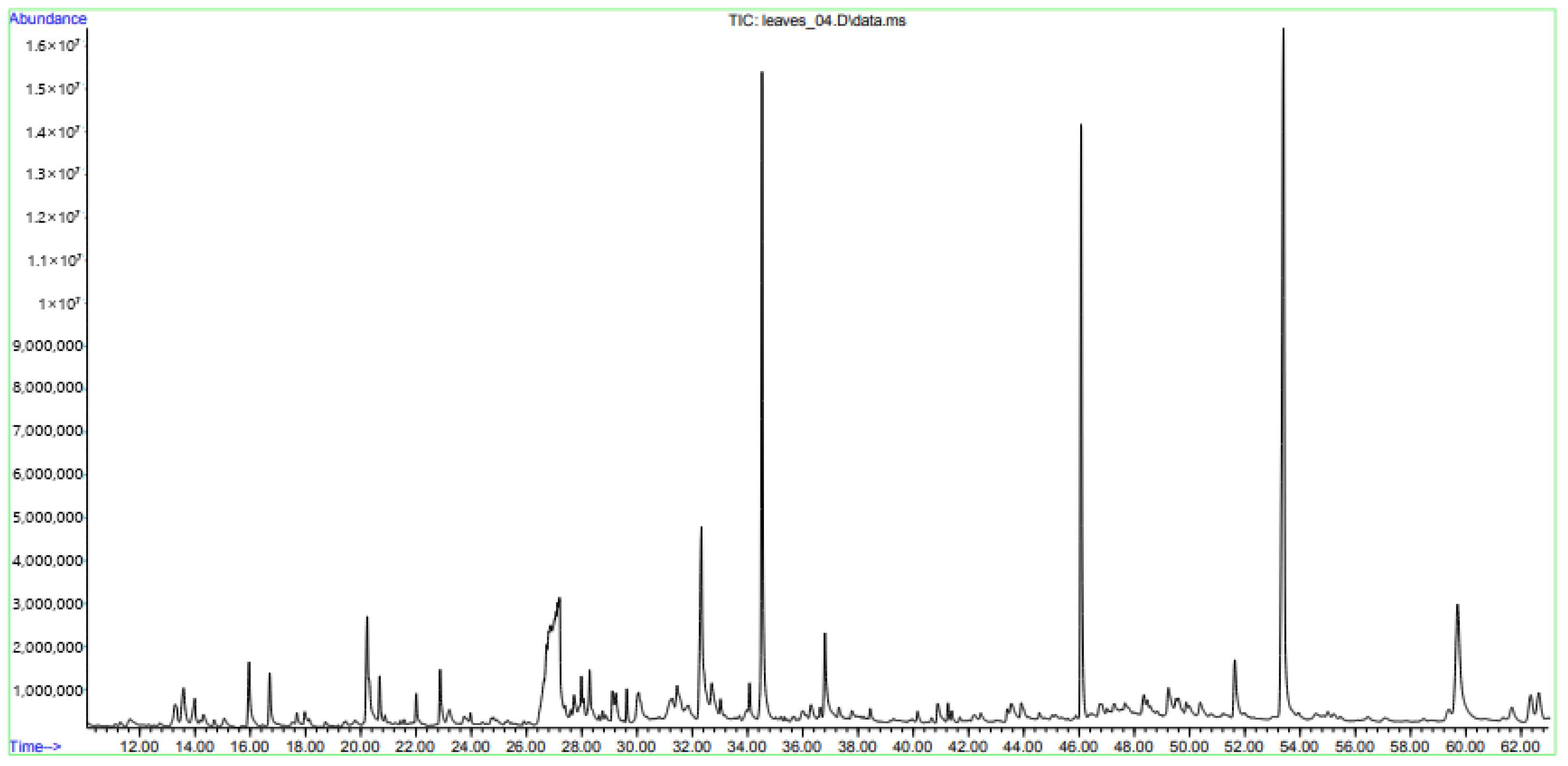
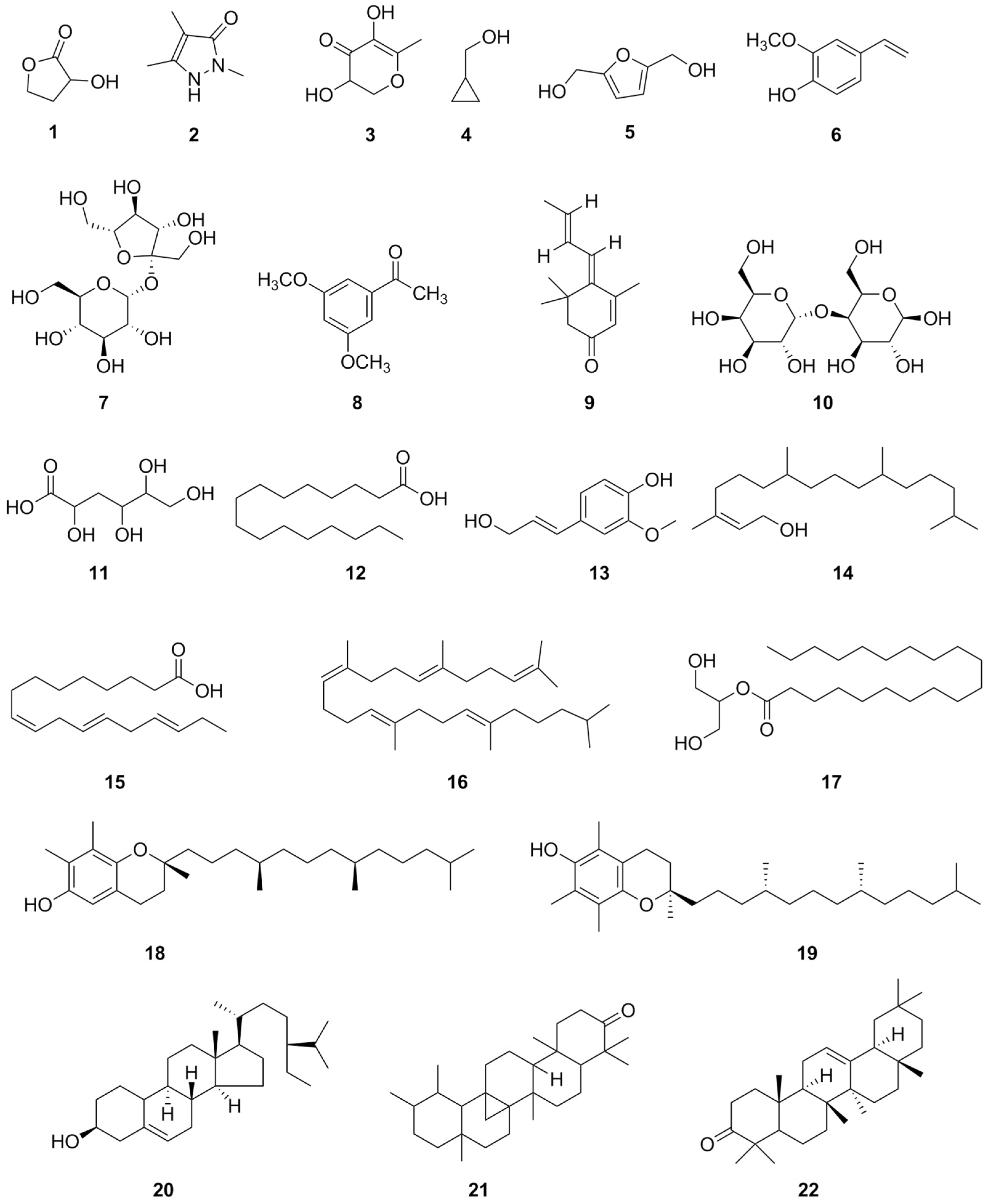
| 1 | 13.59 | 2-Hydroxy-gamma-butyrolactone | C4H6O3 | 102.09 | 1.68 |
| 2 | 13.99 | 3H-Pyrazol-3-one, 2,4-dihydro-2,4,5-trimethyl- | C6H10N2O | 126.16 | 1.04 |
| 3 | 15.96 | 4H-Pyran-4-one, 2,3-dihydro-3,5-dihydroxy-6-methyl- | C6H8O4 | 144.13 | 1.93 |
| 4 | 16.71 | Cyclopropyl carbinol | C4H8O | 72.11 | 1.25 |
| 5 | 20.24 | 5-Hydroxymethylfurfural | C6H6O3 | 126.11 | 4.19 |
| 6 | 20.69 | 2-Methoxy-4-vinylphenol | C9H10O2 | 150.17 | 1.06 |
| 7 | 27.19 | Sucrose | C12H22O11 | 342.30 | 5.42 |
| 8 | 27.99 | 3′,5′-Dimethoxyacetophenone | C10H12O3 | 180.20 | 1.33 |
| 9 | 28.29 | Megastigmatrienone | C13H18O | 190.28 | 1.89 |
| 10 | 29.24 | β-D-Glucopyranose, 4-O-β-D-galactopyranosyl- | C12H22O11 | 342.30 | 1.04 |
| 11 | 31.27 | 3-Deoxy-d-mannoic lactone | C6H10O5 | 162.14 | 1.31 |
| 12 | 32.33 | Hexadecanoic acid | C16H32O2 | 256.43 | 7.04 |
| 13 | 32.71 | 4-((1E)-3-Hydroxy-1-propenyl)-2-methoxyphenol | C10H12O3 | 180.20 | 1.61 |
| 14 | 34.53 | Phytol | C20H40O | 296.53 | 12.46 |
| 15 | 36.81 | 9,12,15-Octadecatrienoic acid, (Z,Z,Z)- | C18H30O2 | 278.43 | 2.89 |
| 16 | 46.08 | Squalene | C30H50 | 410.73 | 10.29 |
| 17 | 49.24 | Eicosanoic acid, 2-hydroxy-1-(hydroxymethyl)ethyl ester | C23H46O4 | 386.60 | 1.31 |
| 18 | 51.64 | γ-Tocopherol | C28H48O2 | 416.68 | 1.79 |
| 19 | 53.40 | Vitamin E | C29H50O2 | 430.71 | 20.52 |
| 20 | 59.70 | γ-Sitosterol | C29H50O | 414.71 | 7.48 |
| 21 | 62.35 | 13,27-Cycloursan-3-one | C30H48O | 424.70 | 1.27 |
| 22 | 62.64 | Olean-12-en-3-one | C30H48O | 424.70 | 1.29 |
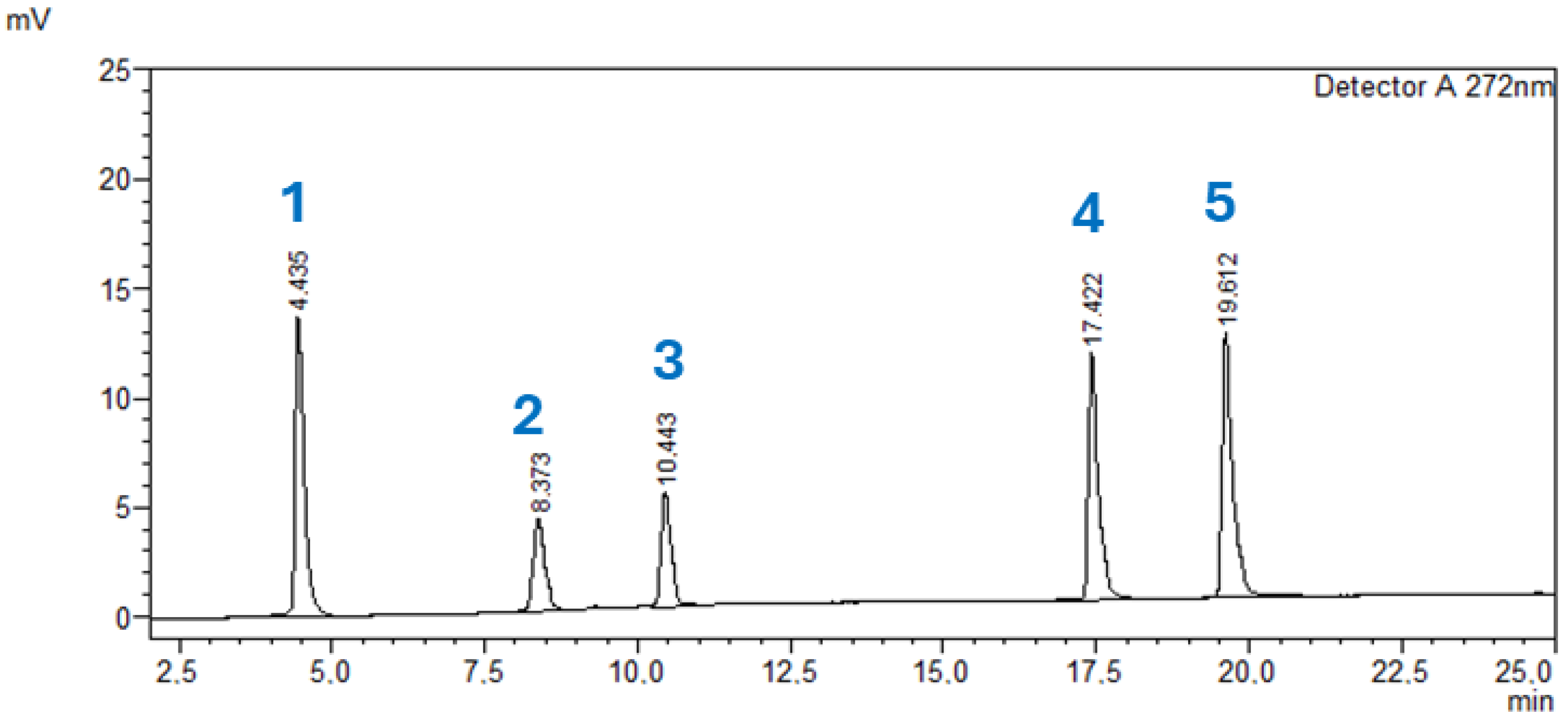
| Retention Time (min) | Square | Height | Concentration (mg/L) | R2 | Name |
|---|---|---|---|---|---|
| 4.435 | 206,068 | 14,049 | 65.031 ± 0.121 | 0.9911 | Gallic acid (1) |
| 8.373 | 63,691 | 4214 | 64.828 ± 0.981 | 0.9987 | Catechin (2) |
| 10.443 | 71,059 | 5162 | 64.272 ± 1.105 | 0.9990 | Epicatechin (3) |
| 17.422 | 132,983 | 11,244 | 34.313 ± 0.762 | 0.9991 | Naringin (4) |
| 19.612 | 149,135 | 12,075 | 64.180 ± 1.213 | 0.9985 | Phloridzin (5) |
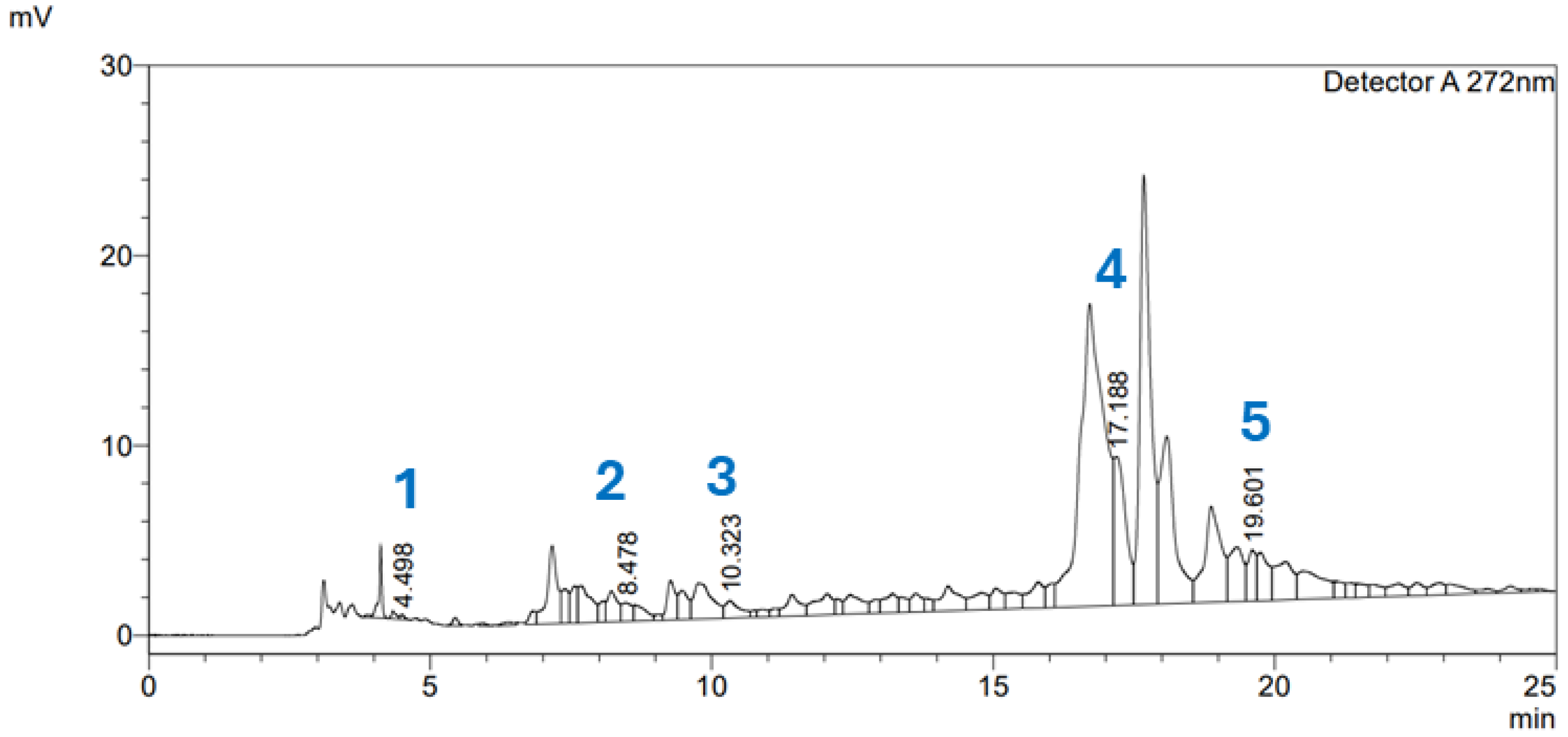
| Retention Time (min) | Square | Height | Concentration (mg/L) | R2 | Name |
|---|---|---|---|---|---|
| 4498 | 1274 | 248 | 0.402 ± 0.044 | 0.9911 | Gallic acid (1) |
| 8478 | 12,266 | 966 | 12.485 ± 0.435 | 0.9987 | Catechin (2) |
| 10,323 | 16,719 | 913 | 15.123 ± 0.765 | 0.9990 | Epicatechin (3) |
| 17,188 | 116,665 | 7831 | 56.421 ± 1.523 | 0.9991 | Naringin (4) |
| 19,601 | 2763 | 268 | 11.800 ± 0.921 | 0.9985 | Phloridzin (5) |
| Sample No | Diameter of the Zone of Inhibition of Growth of the Studied Microorganisms, mm | ||||
|---|---|---|---|---|---|
| Dilution | S. aureus 6538 | S. abony NTCC 6017 | E. coli NTCC 8439 | K. pneumonia 700603 | |
| 1 | Initial | 21.5 ± 0.3 | 10.8 ± 0.1 | 10.5 ± 0.4 | 10.6 ± 0.1 |
| 1:1 | 16.7 ± 0.2 | 0 | 0 | 0 | |
| 1:2 | 11.5 ± 0.4 | 0 | 0 | 0 | |
| 1:3 | 0 | 0 | 0 | 0 | |
| 2 | Initial | 18.7 ± 0.1 | 17.6 ± 0.2 | 16.2 ± 0.4 | 16.5 ± 0.3 |
| 1:1 | 12.5 ± 0.3 | 12.8 ± 0.4 | 10.9 ± 0.1 | 10.5 ± 0.2 | |
| 1:2 | 0 | 0 | 0 | 0 | |
| 1:3 | 0 | 0 | 0 | 0 | |
| 3 | Initial | 18.6 ± 0.1 | 18.5 ± 0.3 | 20.8 ± 0.1 | 15.4 ± 0.2 |
| 1:1 | 12.3 ± 0.2 | 10.3 ± 0.1 | 10.8 ± 0.3 | 10.6 ± 0.4 | |
| 1:2 | 0 | 0 | 0 | 0 | |
| 1:3 | 0 | 0 | 0 | 0 | |
| 4 | Initial | 18.2 ± 0.4 | 16.3 ± 0.2 | 17.8 ± 0.1 | 15.3 ± 0.3 |
| 1:1 | 12.0 (bacterio-static) ± 0.3 | 12.6 ± 0.1 | 12.0 (bacterio-static) ± 0.2 | 10.0 (bacterio-static) ± 0.1 | |
| 1:2 | 0 | 0 | 0 | 0 | |
| 1:3 | 0 | 0 | 0 | 0 | |
| Gentamicin (10 µg/mL) | - | 24.3 ± 0.2 | 22.8 ± 0.3 | 25.1 ± 0.1 | 23.6 ± 0.2 |
Disclaimer/Publisher’s Note: The statements, opinions and data contained in all publications are solely those of the individual author(s) and contributor(s) and not of MDPI and/or the editor(s). MDPI and/or the editor(s) disclaim responsibility for any injury to people or property resulting from any ideas, methods, instructions or products referred to in the content. |
© 2026 by the authors. Licensee MDPI, Basel, Switzerland. This article is an open access article distributed under the terms and conditions of the Creative Commons Attribution (CC BY) license.
Share and Cite
Bazargaliyeva, A.; Jenis, J.; Shybyray, Y.; Admanova, G.; Kuanbay, Z.; Duzelbayeva, S.; Sarimbayeva, B.; Kaisagaliyeva, G.; Alzhanova, B.; Kozhagaliyeva, R. Phytochemical Profiles and Antimicrobial Activity of Alnus glutinosa (L.) Gaertn. Leaves Growing in Kazakhstan. Molecules 2026, 31, 1189. https://doi.org/10.3390/molecules31071189
Bazargaliyeva A, Jenis J, Shybyray Y, Admanova G, Kuanbay Z, Duzelbayeva S, Sarimbayeva B, Kaisagaliyeva G, Alzhanova B, Kozhagaliyeva R. Phytochemical Profiles and Antimicrobial Activity of Alnus glutinosa (L.) Gaertn. Leaves Growing in Kazakhstan. Molecules. 2026; 31(7):1189. https://doi.org/10.3390/molecules31071189
Chicago/Turabian StyleBazargaliyeva, Aliya, Janar Jenis, Yergazy Shybyray, Gulnur Admanova, Zhaidargul Kuanbay, Samal Duzelbayeva, Balzat Sarimbayeva, Gulzhakhan Kaisagaliyeva, Bagdagul Alzhanova, and Rima Kozhagaliyeva. 2026. "Phytochemical Profiles and Antimicrobial Activity of Alnus glutinosa (L.) Gaertn. Leaves Growing in Kazakhstan" Molecules 31, no. 7: 1189. https://doi.org/10.3390/molecules31071189
APA StyleBazargaliyeva, A., Jenis, J., Shybyray, Y., Admanova, G., Kuanbay, Z., Duzelbayeva, S., Sarimbayeva, B., Kaisagaliyeva, G., Alzhanova, B., & Kozhagaliyeva, R. (2026). Phytochemical Profiles and Antimicrobial Activity of Alnus glutinosa (L.) Gaertn. Leaves Growing in Kazakhstan. Molecules, 31(7), 1189. https://doi.org/10.3390/molecules31071189