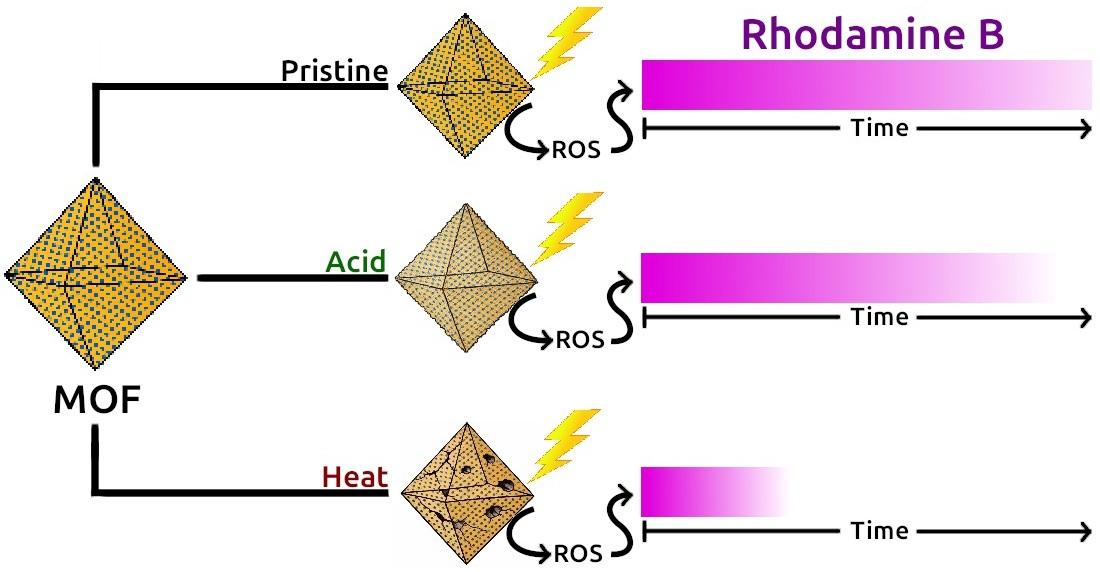
Defect Engineering in Zr (IV)- and Ti (IV)-Based Metal–Organic Frameworks to Enhance Photocatalytic Properties


Abstract
1. Introduction
2. Results and Discussion
2.1. PXRD Characterization
2.2. FTIR Characterization
2.3. Defect Analysis
2.4. Bandgap Analysis
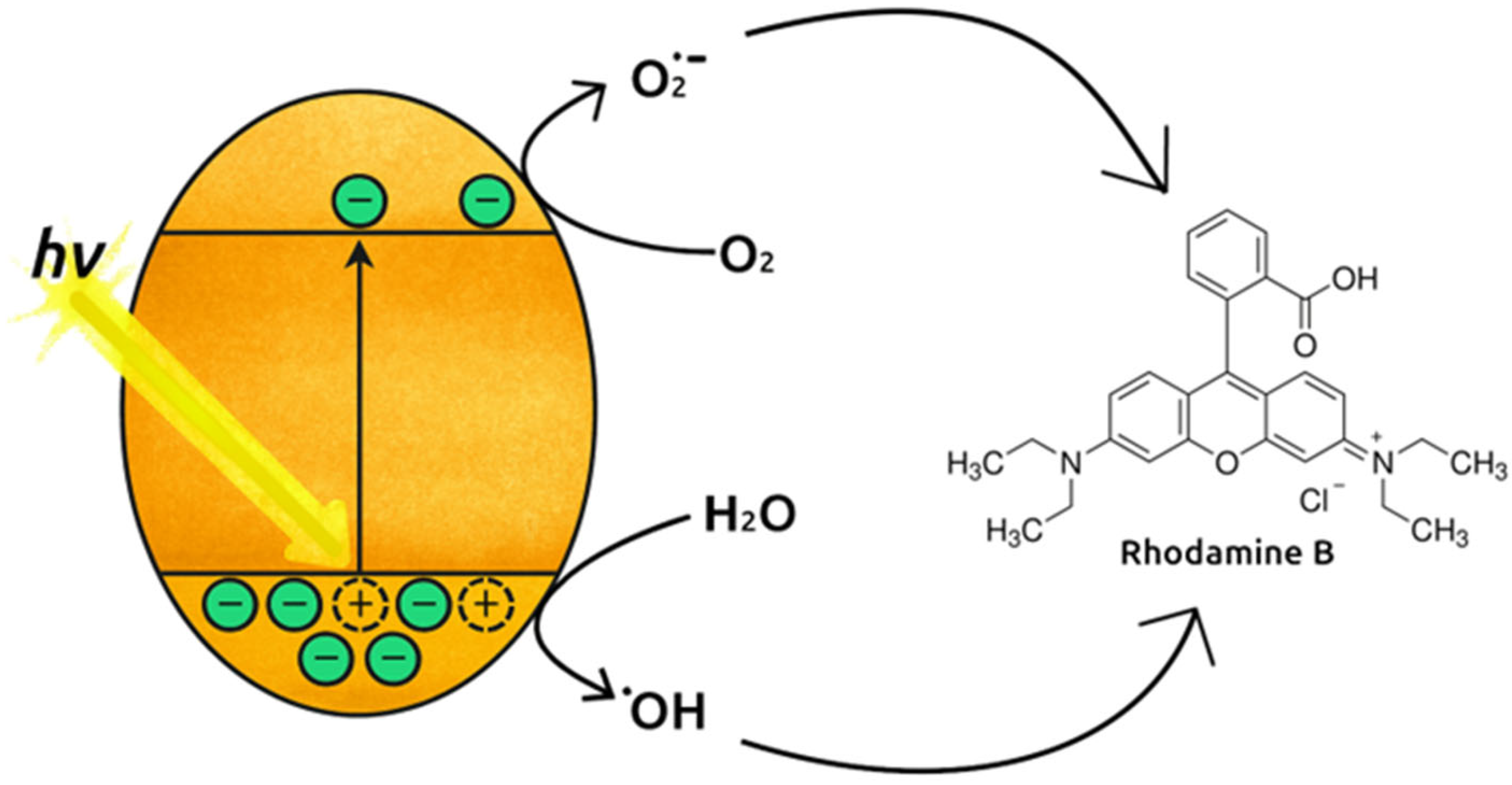
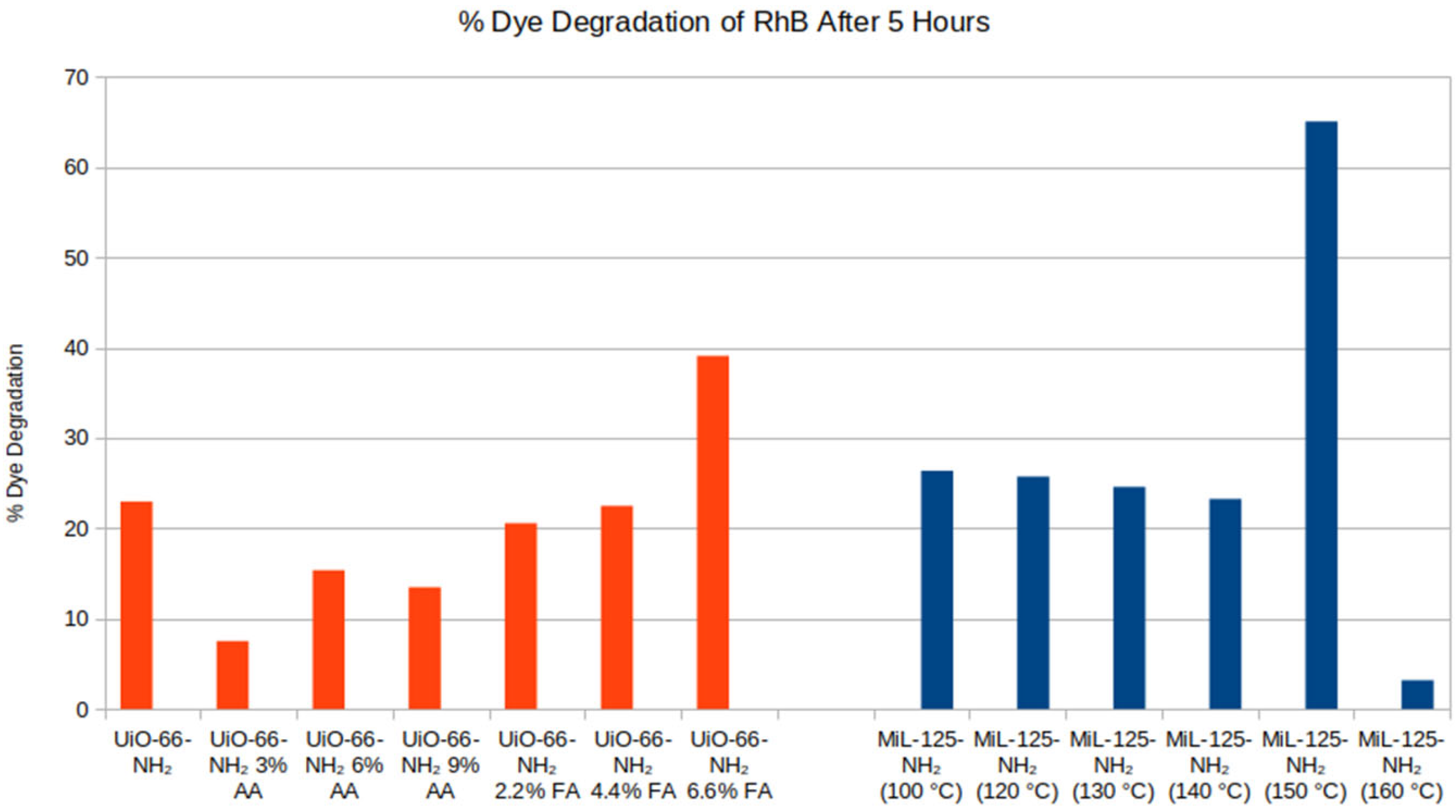
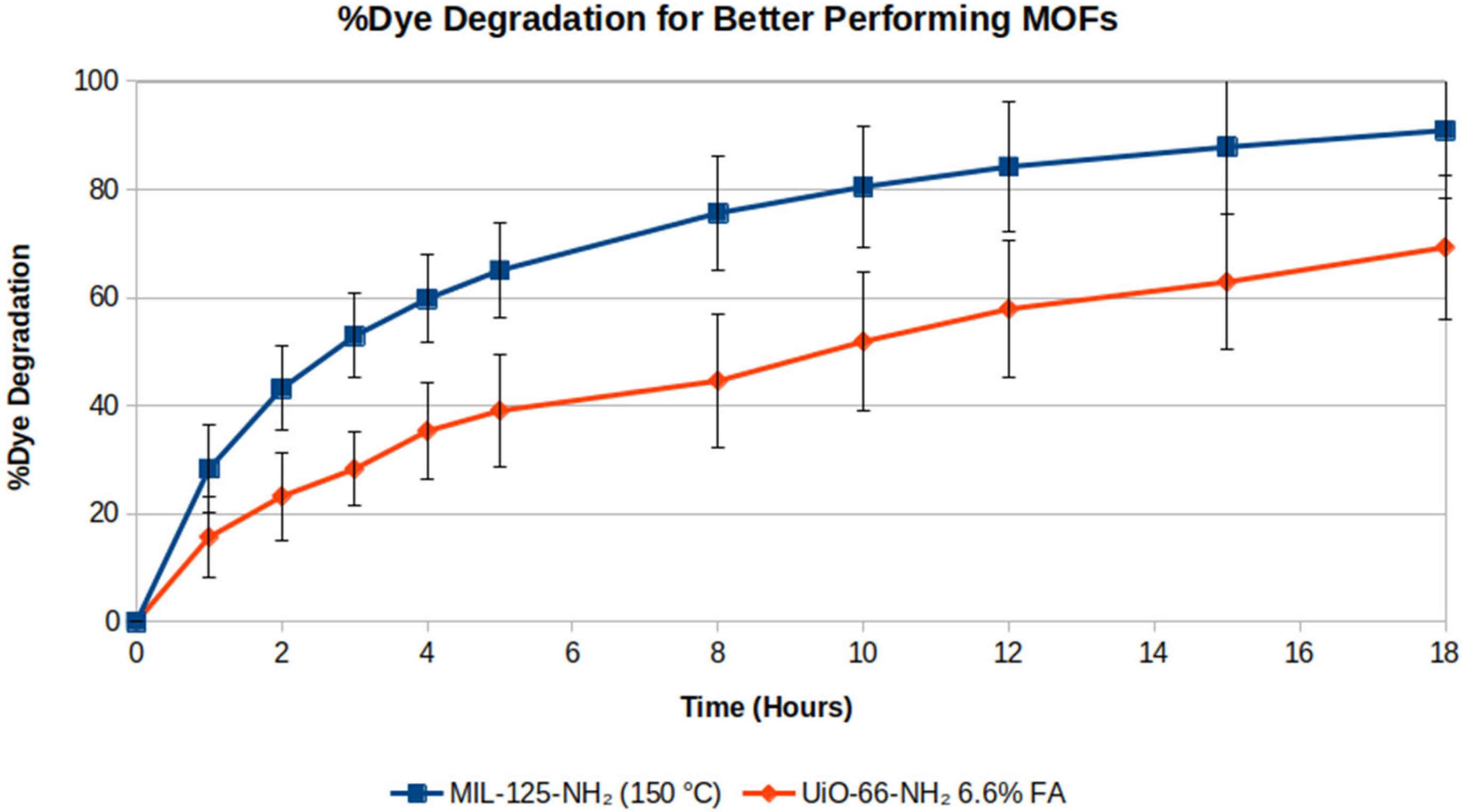
2.5. Photodegradation
2.6. Adsorption Capacity and Adsorption Kinetics
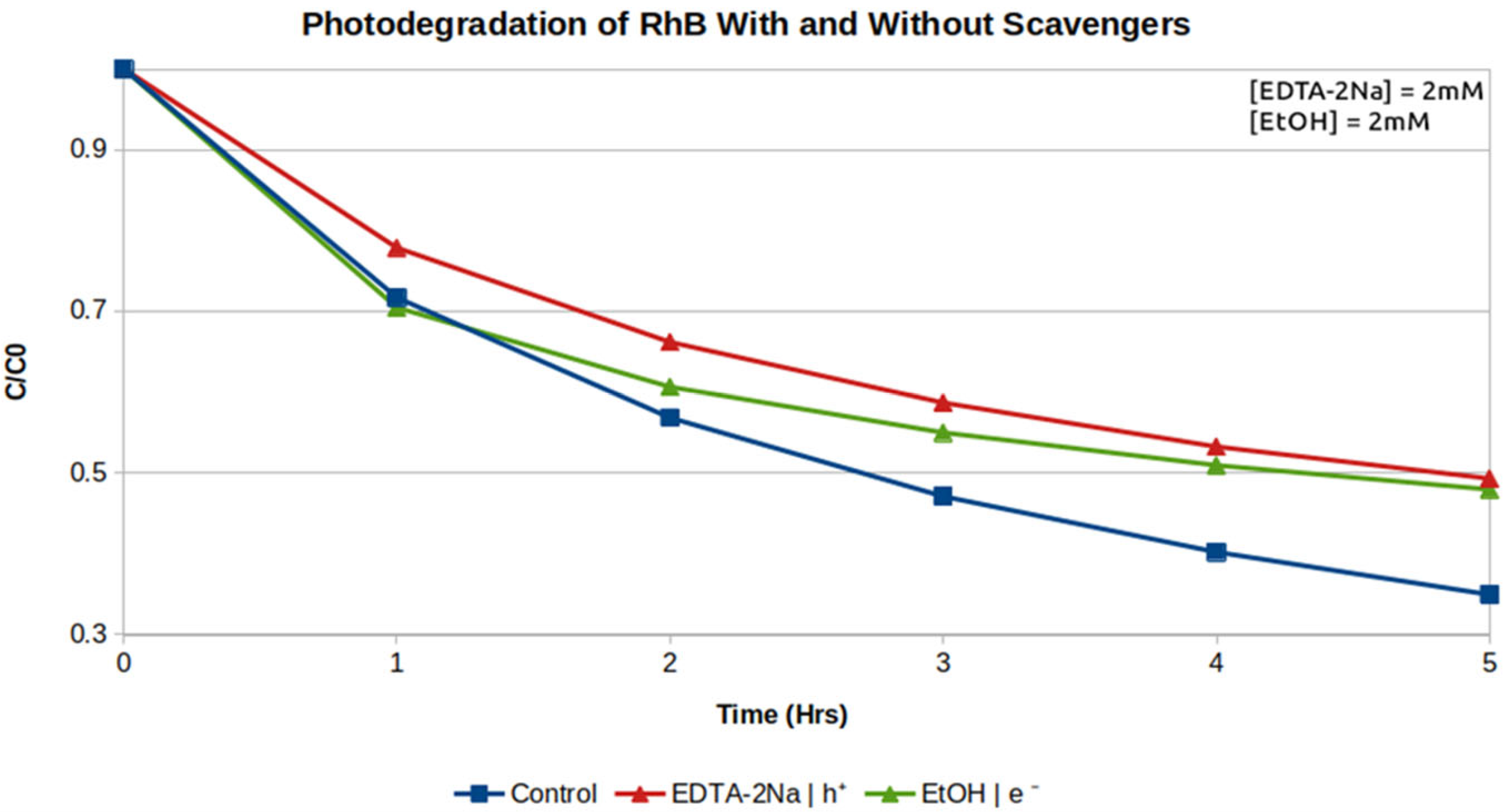
2.7. Scavenger Experiments
2.8. Crystallinity Test

| MOF | % Crystallinity (0 h) | % Crystallinity (24 h) | Percent Difference | Relative Loss (C/C24h × 100) |
|---|---|---|---|---|
| MIL-125-NH2 120 °C | 33.55% | 31.44% | 2.11% | 6.28 |
| MIL-125-NH2 150 °C | 5.86% | 5.52% | 0.34% | 5.8 |
| Pristine UiO-66-NH2 | 30.19% | 29.73% | 0.46% | 1.52 |
| UiO-66-NH2 6.6% FA | 31.23% | 25.22% | 6.01% | 19.24 |
3. Materials and Methods
3.1. Synthesis of UiO-66-NH2 MOFs
3.2. Synthesis of MIL-125-NH2 MOFs
3.3. Rhodamine B Photodegradation
3.4. Scavenging Experiments
3.5. Crystallinity Retention Experiments
3.6. Physical Adsorption Kinetics
4. Conclusions
Supplementary Materials
Author Contributions
Funding
Institutional Review Board Statement
Informed Consent Statement
Data Availability Statement
Acknowledgments
Conflicts of Interest
Abbreviations
| AA | acetic acid |
| FA | formic acid |
References
- Ma, W.; Yu, L.; Kang, P.; Chu, Z.; Li, Y. Modifications and applications of metal-organic-framework-based materials for photocatalysis. Molecules 2024, 29, 5834. [Google Scholar] [CrossRef] [PubMed]
- Shen, H.; Wei, T.; Ding, J.; Liu, X. Copper Phosphide Nanowires as High-Performance Catalysts for Urea-Assisted Hydrogen Evolution in Alkaline Medium. Materials 2023, 16, 4169. [Google Scholar] [CrossRef] [PubMed]
- Bakuru, V.R.; DMello, M.E.; Kalidindi, S.B. Metal-Organic Frameworks for Hydrogen Energy Applications: Advances and Challenges. ChemPhysChem 2019, 20, 1177–1215. [Google Scholar] [CrossRef] [PubMed]
- Wang, X.; Yang, L.; Xing, C.; Han, X.; Du, R.; He, R.; Guardia, P.; Arbiol, J.; Cabot, A. MOF-Derived Ultrathin Cobalt Molybdenum Phosphide Nanosheets for Efficient Electro-chemical Overall Water Splitting. Nanomaterials 2022, 12, 1098. [Google Scholar] [CrossRef]
- Zhu, B.; Zou, R.; Xu, Q. Metal–Organic Framework Based Catalysts for Hydrogen Evolution. Adv. Energy Mater. 2018, 8, 1801193. [Google Scholar] [CrossRef]
- He, J.; Li, N.; Li, Z.; Zhong, M.; Fu, Z.; Liu, M.; Yin, J.; Shen, Z.; Li, W.; Zhang, J.; et al. Strategic defect engineering of metal–organic frameworks for optimizing the fabrication of single-atom catalysts. Adv. Funct. Mater. 2021, 31, 2103597. [Google Scholar] [CrossRef]
- Alfonso-Herrera, L.A.; Torres-Martinez, L.M.; Mora-Hernandez, J.M. Novel strategies to tailor the photocatalytic activity of metal–organic frameworks for hydrogen generation: A mini-review. Front. Energy 2022, 16, 734–746. [Google Scholar] [CrossRef]
- Ma, Z.; Guan, B.; Guo, J.; Wu, X.; Chen, Y.; Zhang, J.; Jiang, X.; Bao, S.; Chen, L.; Shu, K.; et al. State of the art and prospectives of heterogeneous photocatalysts based on metal–organic frameworks (MOFs): Design, modification strategies, and their applications and mechanisms in photodegradation, water splitting, and CO2 reduction. Catal. Sci. Technol. 2023, 13, 4285–4347. [Google Scholar] [CrossRef]
- Yang, Z.; Guo, Z.; Zhang, J.; Hu, Y. The Development and Application of Metal-Organic Frameworks in the Field of Photocatalysis. Res. Chem. Intermed. 2021, 47, 325–343. [Google Scholar] [CrossRef]
- Wu, H.; Chua, Y.S.; Krungleviciute, V.; Tyagi, M.; Chen, P.; Yildirim, T.; Zhou, W. Un-usual and Highly Tunable Missing-Linker Defects in Zirconium Metal–Organic Framework UiO-66 and Their Important Effects on Gas Adsorption. J. Am. Chem. Soc. 2013, 135, 10525–10532. [Google Scholar] [CrossRef]
- Makuła, P.; Pacia, M.; Macyk, W. How To Correctly Determine the Band Gap Energy of Modified Semiconductor Photocatalysts Based on UV–Vis Spectra. J. Phys. Chem. Lett. 2018, 9, 6814–6817. [Google Scholar] [CrossRef]
- Fu, Y.; Kang, Z.; Yin, J.; Cao, W.; Tu, Y.; Wang, Q.; Kong, X. The Duet of Acetate and Water at the Defects of Metal-Organic Frameworks. Nano Lett. 2019, 19, 1618–1624. [Google Scholar] [CrossRef]
- Łuczak, J.; Kroczewska, M.; Baluk, M.; Sowik, J.; Mazierski, P.; Zaleska-Medynska, A. Morphology Control through the Synthesis of Metal-Organic Frameworks. Adv. Colloid Interface Sci. 2023, 314, 102864. [Google Scholar] [CrossRef]
- Trickett, C.A.; Gagnon, K.J.; Lee, S.; Gándara, F.; Bürgi, H.-B.; Yaghi, O.M. Definitive Molecular Level Characterization of Defects in UiO-66 Crystals. Angew. Chem. 2015, 127, 11314–11319. [Google Scholar] [CrossRef]
- Shearer, G.C.; Chavan, S.; Bordiga, S.; Svelle, S.; Olsbye, U.; Lillerud, K.P. Defect Engineering: Tuning the Porosity and Composition of the Metal–Organic Framework UiO-66 via Modulated Synthesis. Chem. Mater. 2016, 28, 3749–3761. [Google Scholar] [CrossRef]
- Xiang, W.; Zhang, Y.; Chen, Y.; Liu, C.; Tu, X. Synthesis, Characterization and Application of Defective Metal–Organic Frameworks: Current Status and Perspectives. J. Mater. Chem. A 2020, 8, 21526–21546. [Google Scholar] [CrossRef]
- Bennett, T.D.; Cheetham, A.K.; Fuchs, A.H.; Coudert, F. Interplay between Defects, Disorder and Flexibility in Metal-Organic Frameworks. Nat. Chem. 2017, 9, 11–16. [Google Scholar] [CrossRef]
- Gutov, O.V.; Hevia, M.G.; Escudero-Adán, E.C.; Shafir, A. Metal–Organic Framework (MOF) Defects under Control: Insights into the Missing Linker Sites and Their Implication in the Reactivity of Zirconium-Based Frameworks. Inorg. Chem. 2015, 54, 8396–8400. [Google Scholar] [CrossRef]
- Taylor, J.M.; Dekura, S.; Ikeda, R.; Kitagawa, H. Defect Control to Enhance Proton Conductivity in a Metal–Organic Framework. Chem. Mater. 2015, 27, 2286–2289. [Google Scholar] [CrossRef]
- Thornton, A.W.; Babarao, R.; Jain, A.; Trousselet, F.; Coudert, F.-X. Defects in Metal-Organic Frameworks: A Compromise between Adsorption and Stability? Dalton Trans. 2016, 45, 4352–4359. [Google Scholar] [CrossRef]
- Sholl, D.S.; Lively, R.P. Defects in Metal–Organic Frameworks: Challenge or Opportunity? J. Phys. Chem. Lett. 2015, 6, 3437–3444. [Google Scholar] [CrossRef] [PubMed]
- Shan, Y.; Zhang, G.; Shi, Y.; Pang, H. Synthesis and Catalytic Application of Defective MOF Materials. Cell Rep. Phys. Sci. 2023, 4, 101301. [Google Scholar] [CrossRef]
- Pukdeejorhor, L.; Wannapaiboon, S.; Berger, J.; Rodewald, K.; Thongratkaew, S.; Impeng, S.; Warnan, J.; Bureekaew, S.; Fischer, R.A. Defect Engineering in MIL-125-(Ti)-NH2 for Enhanced Photocatalytic H2 Generation. J. Mater. Chem. A 2023, 11, 9143–9151. [Google Scholar] [CrossRef]
- Fu, Y.; Wu, J.; Du, R.; Guo, K.; Ma, R.; Zhang, F.; Zhu, W.; Fan, M. Temperature modulation of defects in NH2-UiO-66(ZR) for Photocatalytic CO2 Reduction. RSC Adv. 2019, 9, 37733–37738. [Google Scholar] [CrossRef]
- Pettinari, C.; Tombesi, A. Metal–organic frameworks for chemical conversion of carbon dioxide. MRS Energy Sustain. 2020, 7, 31. [Google Scholar] [CrossRef]
- Ardila-Suárez, C.; Molina V., D.R.; Alem, H.; Baldovino-Medrano, V.G.; Ramírez-Caballero, G.E. Synthesis of ordered microporous/macroporous MOF-808 through modulator-induced defect-formation, and surfactant self-assembly strategies. Phys. Chem. Chem. Phys. 2020, 22, 12753–12763. [Google Scholar] [CrossRef]
- Ganesan, A.; Leisen, J.; Thyagarajan, R.; Sholl, D.S.; Nair, S. Hierarchical ZIF-8 Materials via Acid Gas-Induced Defect Sites: Synthesis, Characterization, and Functional Properties. ACS Appl. Mater. Interfaces 2023, 15, 40623–40632. [Google Scholar] [CrossRef]
- Vermoortele, F.; Bueken, B.; Le Bars, G.; Van De Voorde, B.; Vandichel, M.; Houthoofd, K.; Vimont, A.; Daturi, M.; Waroquier, M.; Van Speybroeck, V.; et al. Synthesis modulation as a tool to increase the catalytic activity of metal–organic frameworks: The unique case of UiO-66(Zr). J. Am. Chem. Soc. 2013, 135, 11465–11468. [Google Scholar] [CrossRef]
- Ali-Ahmad, A.; Hamieh, T.; Roques-Carmes, T.; Hmadeh, M.; Toufaily, J. Effect of Modulation and Functionalization of UiO-66 Type MOFs on Their Surface Thermodynamic Properties and Lewis Acid–Base Behavior. Catalysts 2023, 13, 205. [Google Scholar] [CrossRef]
- Sannes, D.K.; Øien-Ødegaard, S.; Aunan, E.; Nova, A.; Olsbye, U. Quantification of Linker Defects in UiO-Type Metal–Organic Frameworks. Chem. Mater. 2023, 35, 3793–3800. [Google Scholar] [CrossRef]
- Tsai, C.-W.; Langner, E.H.G. The Effect of Synthesis Temperature on the Particle Size of Nano-ZIF-8. Microporous Mesoporous Mater. 2016, 221, 8–13. [Google Scholar] [CrossRef]
- Wu, Y.; Li, Y.; Gao, J.; Zhang, Q. Recent Advances in Vacancy Engineering of Metal-organic Frameworks and Their Derivatives for Electrocatalysis. SusMat 2021, 1, 66–87. [Google Scholar] [CrossRef]
- Fang, Z.; Bueken, B.; De Vos, D.E.; Fischer, R.A. Defect-Engineered Metal–Organic Frameworks. Angew. Chem. Int. Ed. 2015, 54, 7234–7254. [Google Scholar] [CrossRef] [PubMed]
- Nadol, A.; Venel, F.; Giovine, R.; Leloire, M.; Volkringer, C.; Loiseau, T.; Gervais, C.; Mellot-Draznieks, C.; Doumert, B.; Trébosc, J.; et al. Probing the water adsorption and stability under steam flow of Zr-based metal–organic frameworks using 91Zr solid-state NMR spectroscopy. Chem. Sci. 2025, 16, 69–82. [Google Scholar] [CrossRef]
- Evans, T.G.; Salinger, J.L.; Bingel, L.W.; Walton, K.S. Determining Surface Areas and Pore Volumes of Metal-Organic Frameworks. J. Vis. Exp. 2024, 205, 65716. [Google Scholar] [CrossRef]
- Piciorus, M.; Popa, A.; Ianasi, C.; Szerb, E.I.; Cretu, C. Zr (IV) mofs based on terephtalic acid and acetic acid modulator. Sci. Tech. Bull. Ser. Chem. Food Sci. Eng. 2020, 17, 33–41. [Google Scholar]
- Zhu, J.; Meng, X.; Liu, W.; Qi, Y.; Jin, S.; Huo, S. Regulated synthesis of ZR-metal–organic frameworks with variable hole size and its influence on the performance of novel MOF-based heterogeneous amino acid–thiourea catalysts. RSC Adv. 2022, 12, 21574–21581. [Google Scholar] [CrossRef]
- Taddei, M.; Schukraft, G.M.; Warwick, M.E.; Tiana, D.; McPherson, M.J.; Jones, D.R.; Petit, C. Band gap modulation in zirconium-based metal–organic frameworks by defect engineering. J. Mater. Chem. A 2019, 7, 23781–23786. [Google Scholar] [CrossRef]
- Ngan Tran, T.K.; Ho, H.L.; Nguyen, H.V.; Tran, B.T.; Nguyen, T.T.; Thi Bui, P.Q.; Bach, L.G. Photocatalytic degradation of rhodamine B in aqueous phase by bimetallic metal-organic framework M/Fe-MOF (M = Co, Cu, and Mg). Open Chem. 2022, 20, 52–60. [Google Scholar] [CrossRef]
- Nguyen Thi, H.-T.; Tran Thi, K.-N.; Hoang, N.B.; Tran, B.T.; Do, T.S.; Phung, C.S.; Nguyen Thi, K.-O. Enhanced degradation of rhodamine B by metallic organic frameworks based on NH2-mil-125(TI) under Visible light. Materials 2021, 14, 7741. [Google Scholar] [CrossRef]
- Mahoney, M. Percent Crystallinity by the XRD Integration Method. Materials Characterization Lab. 18 March 2022. Available online: https://mcl.mse.utah.edu/xrd-crystallinity-by-integration/ (accessed on 26 January 2026).




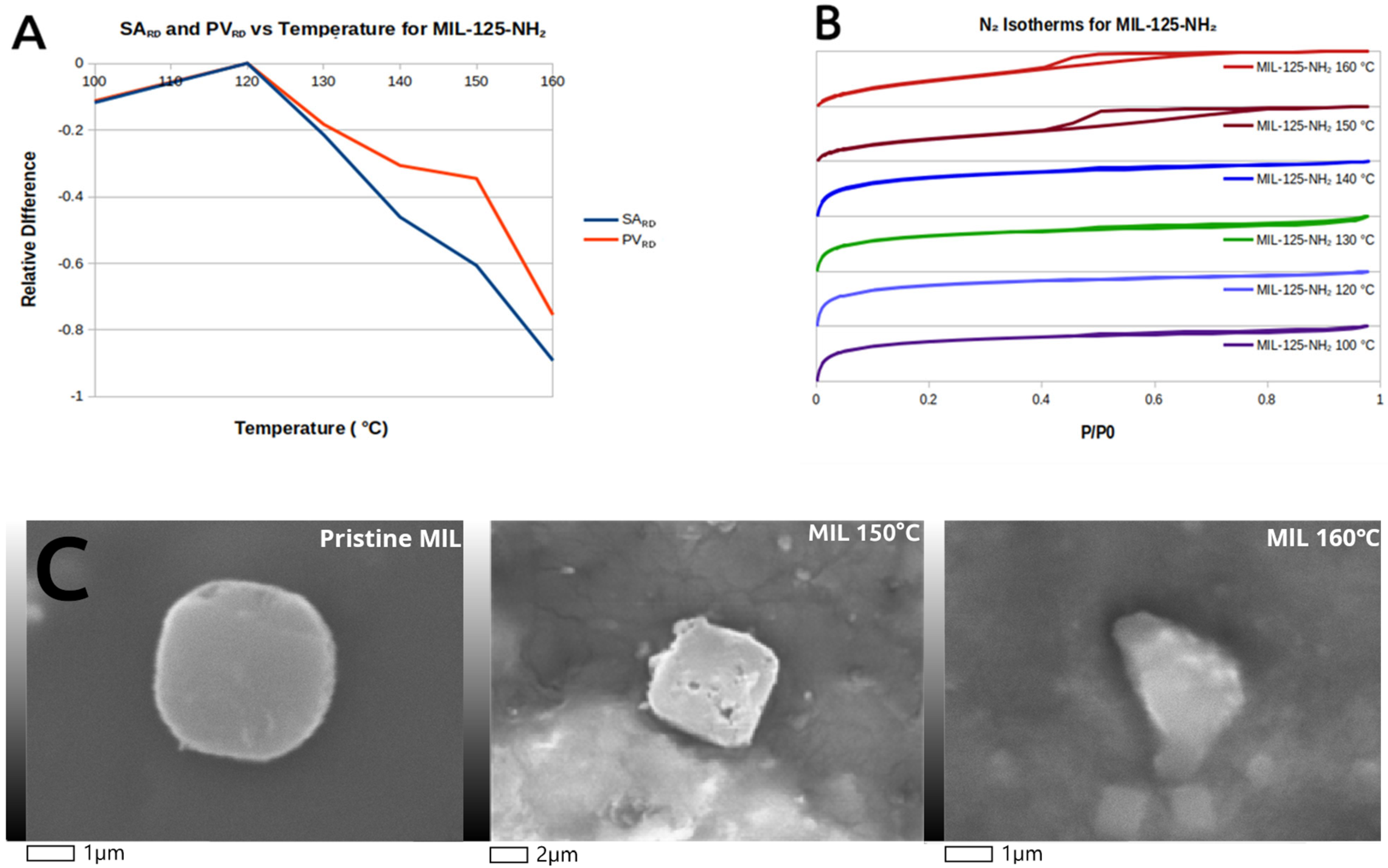
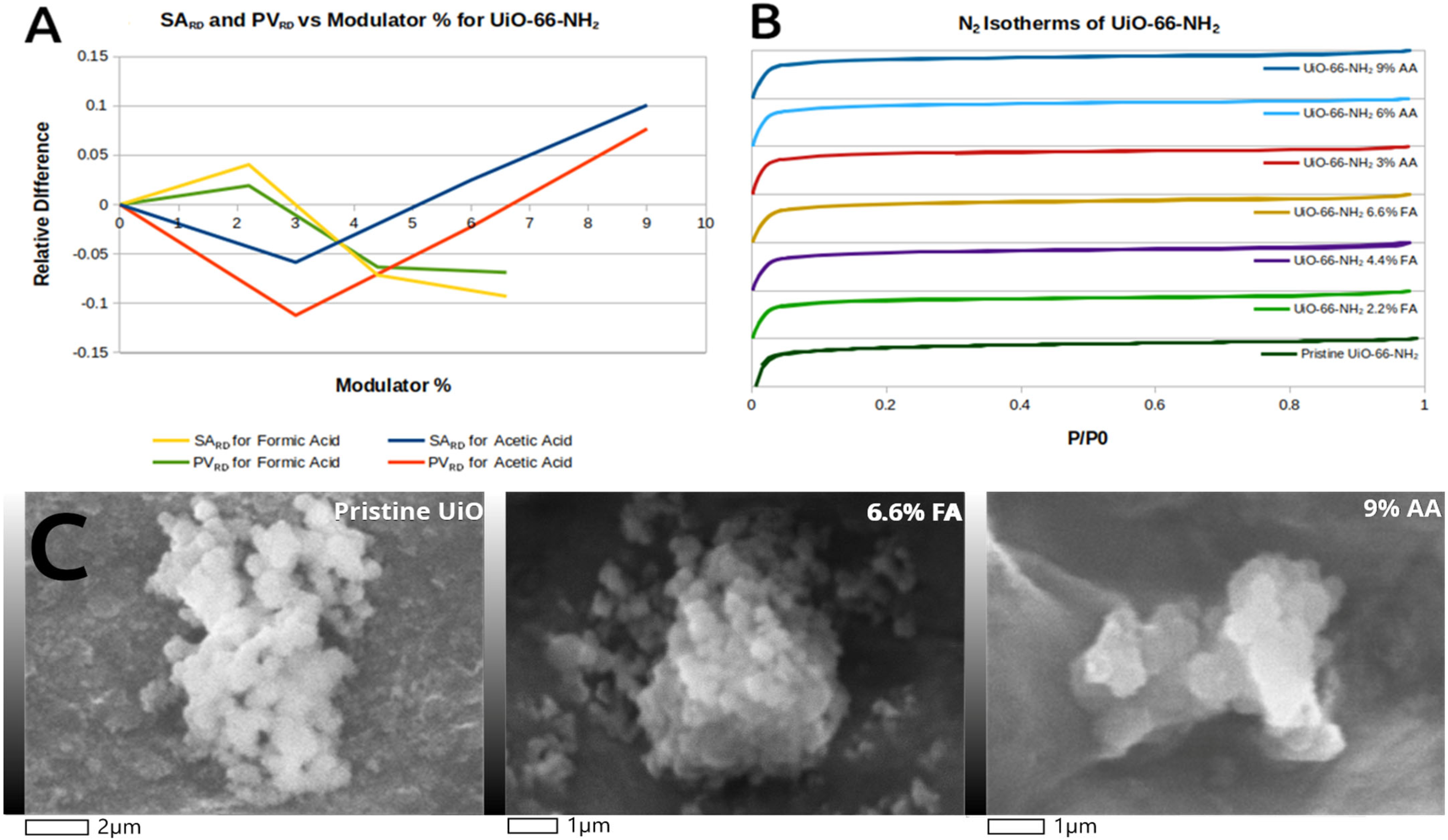
| MOF | Bandgap (eV) |
|---|---|
| UiO-66-NH2 | 2.76 |
| UiO-66-NH2 3% AA | 2.85 |
| UiO-66-NH2 6% AA | 2.82 |
| UiO-66-NH2 9% AA | 2.85 |
| UiO-66-NH2 2.2% FA | 2.87 |
| UiO-66-NH2 4.4% FA | 2.85 |
| UiO-66-NH2 6.6% FA | 2.85 |
| MIL-125-NH2 100 °C | 2.74 |
| MIL-125-NH2 120 °C | 2.76 |
| MIL-125-NH2 130 °C | 2.70 |
| MIL-125-NH2 140 °C | 2.61 |
| MIL-125-NH2 150 °C | 2.39 |
| MIL-125-NH2 160 °C | 1.38 |
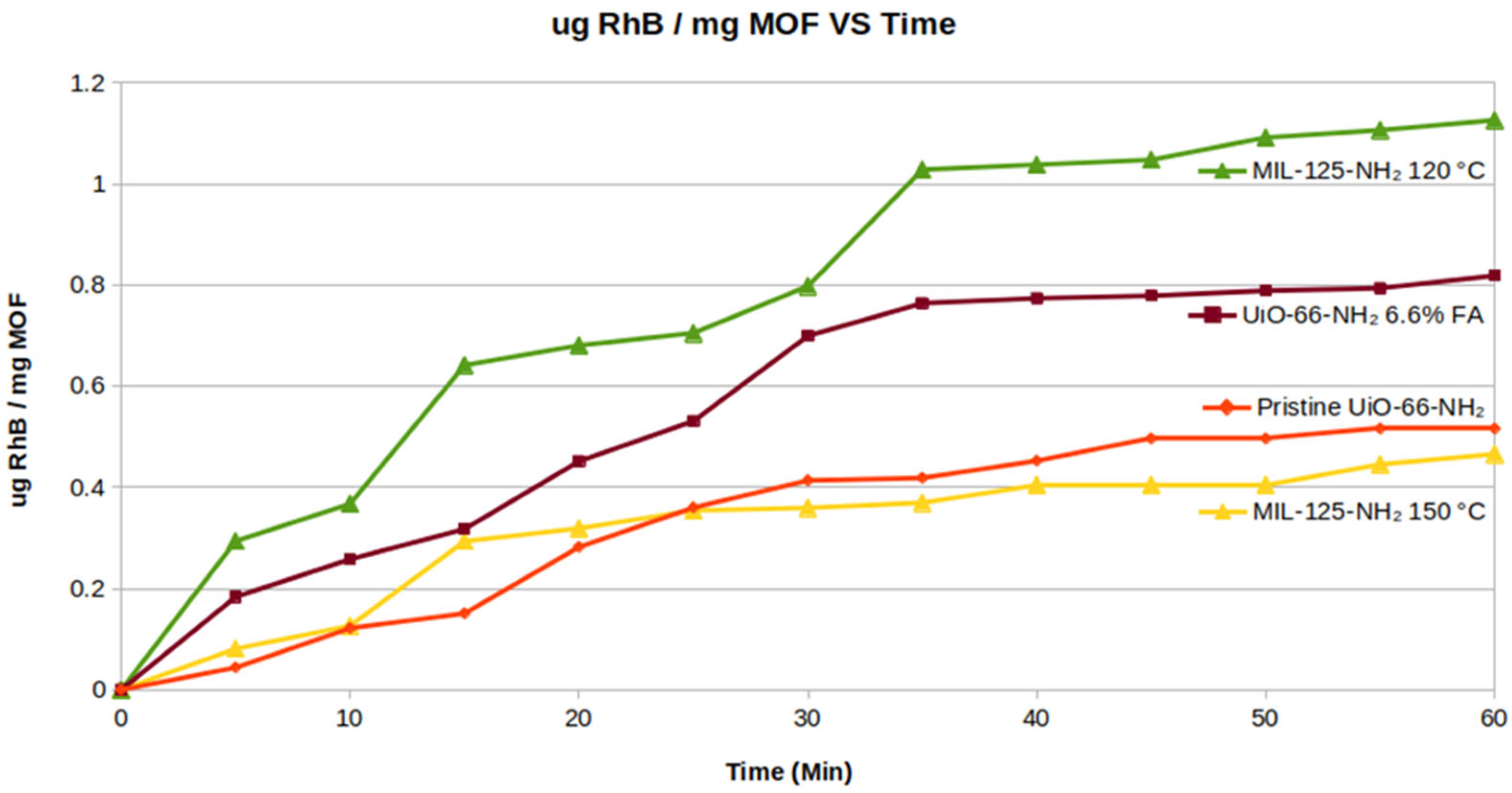
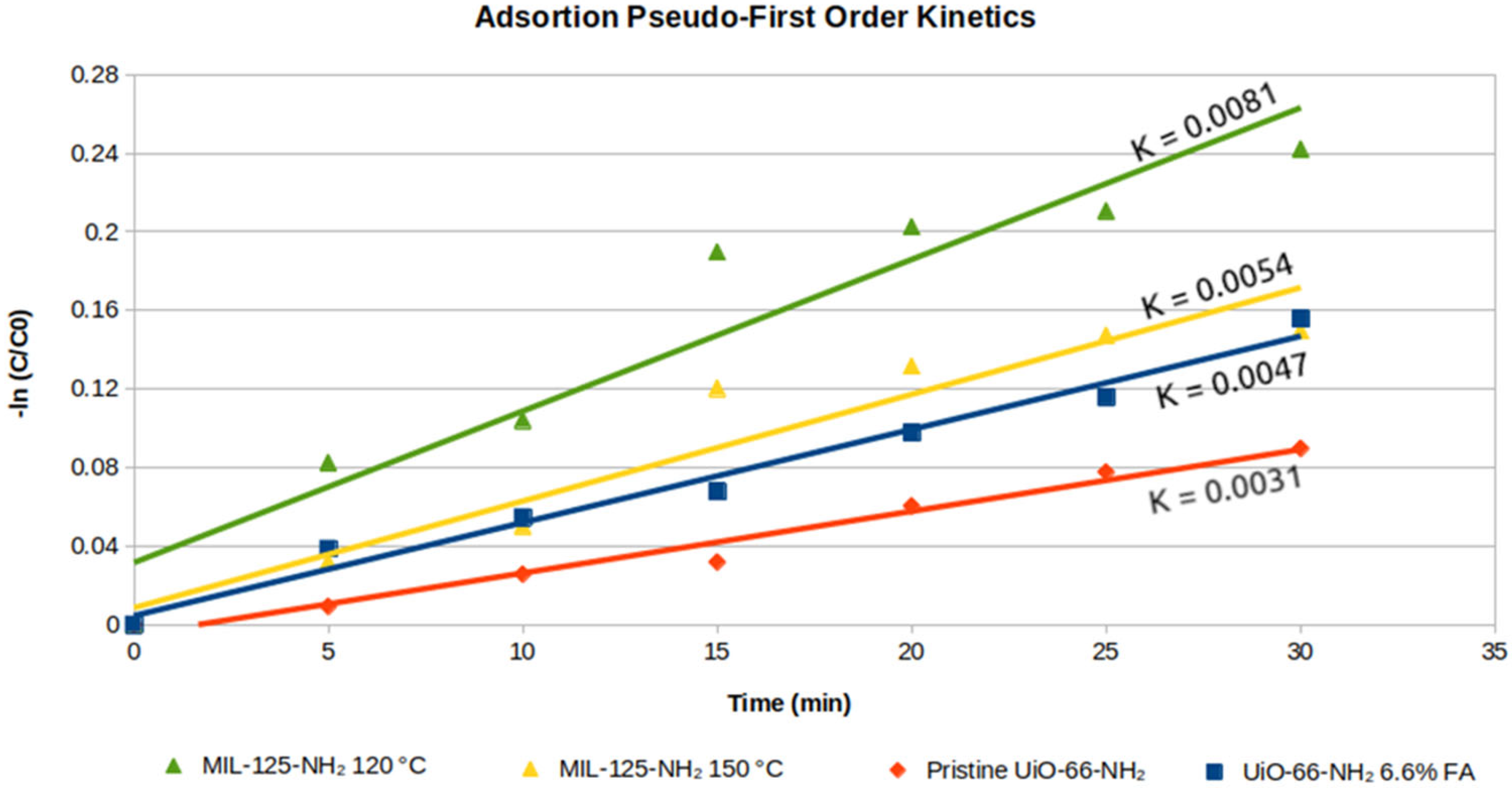
| MOF | Surface Area (m2/g) | Pore Volume (cc/g) | Adsorption Capacity (µg RhB/mg MOF) |
|---|---|---|---|
| MIL-125-NH2 120 °C | 1584 | 0.58 | 1.12 |
| MIL-125-NH2 150 °C | 623 | 0.38 | 0.46 |
| Pristine UiO-66-NH2 | 1163 | 0.44 | 0.51 |
| UiO-66-NH2 6.6% FA | 1055 | 0.41 | 0.81 |
Disclaimer/Publisher’s Note: The statements, opinions and data contained in all publications are solely those of the individual author(s) and contributor(s) and not of MDPI and/or the editor(s). MDPI and/or the editor(s) disclaim responsibility for any injury to people or property resulting from any ideas, methods, instructions or products referred to in the content. |
© 2026 by the authors. Licensee MDPI, Basel, Switzerland. This article is an open access article distributed under the terms and conditions of the Creative Commons Attribution (CC BY) license.
Share and Cite
Martinez, A.; Pearce, E.; Kurowski, J.; Kissel, D.S. Defect Engineering in Zr (IV)- and Ti (IV)-Based Metal–Organic Frameworks to Enhance Photocatalytic Properties. Molecules 2026, 31, 1080. https://doi.org/10.3390/molecules31071080
Martinez A, Pearce E, Kurowski J, Kissel DS. Defect Engineering in Zr (IV)- and Ti (IV)-Based Metal–Organic Frameworks to Enhance Photocatalytic Properties. Molecules. 2026; 31(7):1080. https://doi.org/10.3390/molecules31071080
Chicago/Turabian StyleMartinez, Adan, Emily Pearce, John Kurowski, and Daniel S. Kissel. 2026. "Defect Engineering in Zr (IV)- and Ti (IV)-Based Metal–Organic Frameworks to Enhance Photocatalytic Properties" Molecules 31, no. 7: 1080. https://doi.org/10.3390/molecules31071080
APA StyleMartinez, A., Pearce, E., Kurowski, J., & Kissel, D. S. (2026). Defect Engineering in Zr (IV)- and Ti (IV)-Based Metal–Organic Frameworks to Enhance Photocatalytic Properties. Molecules, 31(7), 1080. https://doi.org/10.3390/molecules31071080