Boron’s Double Edge—Antibiotics, Toxins, and the Fine Line Between Them

 ,
,  ,
, 
Abstract
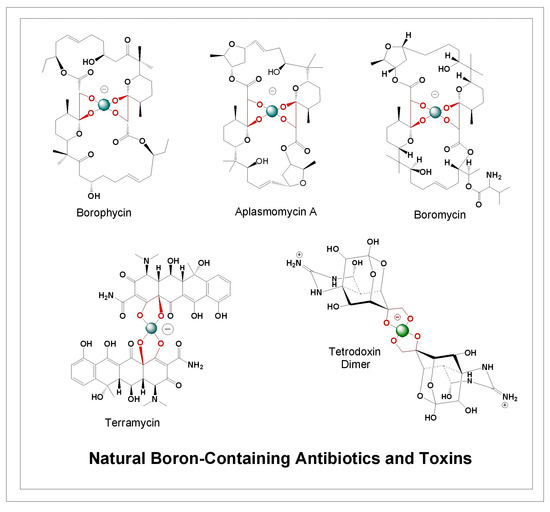
1. Introduction
2. Boron-Containing Antibiotics
3. Boron-Containing Polyketide Antibiotics
3.1. Structural Features, Formation, and Biological Activity of Boron-Containing Polyketide Antibiotics
3.1.1. Possible Formation Mechanisms
3.1.2. Structure–Activity Relationships
3.1.3. Boron as a Functional Amplifier
3.1.4. Evolutionary and Ecological Implications
4. Polyene Macrolide Antibiotics
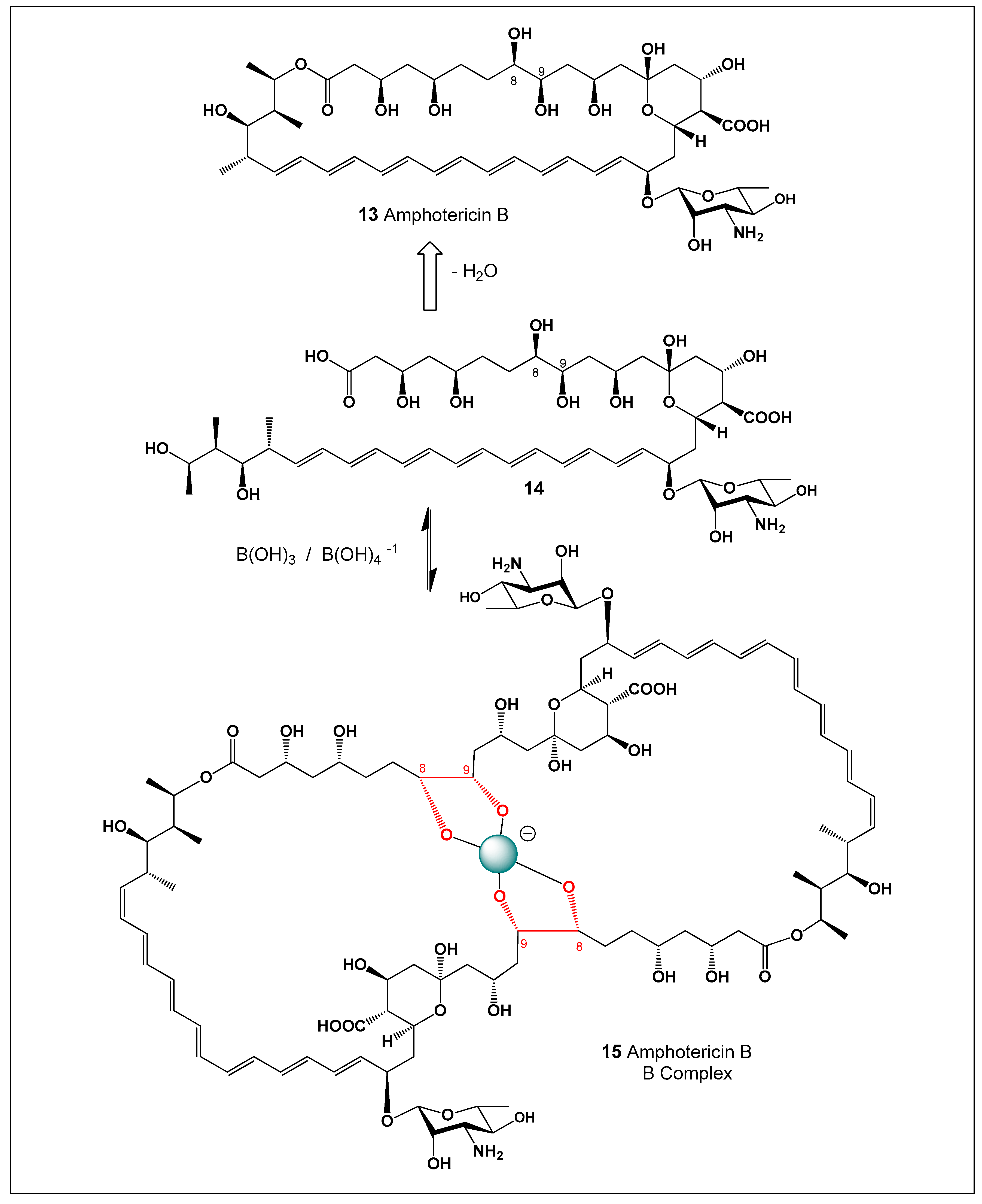
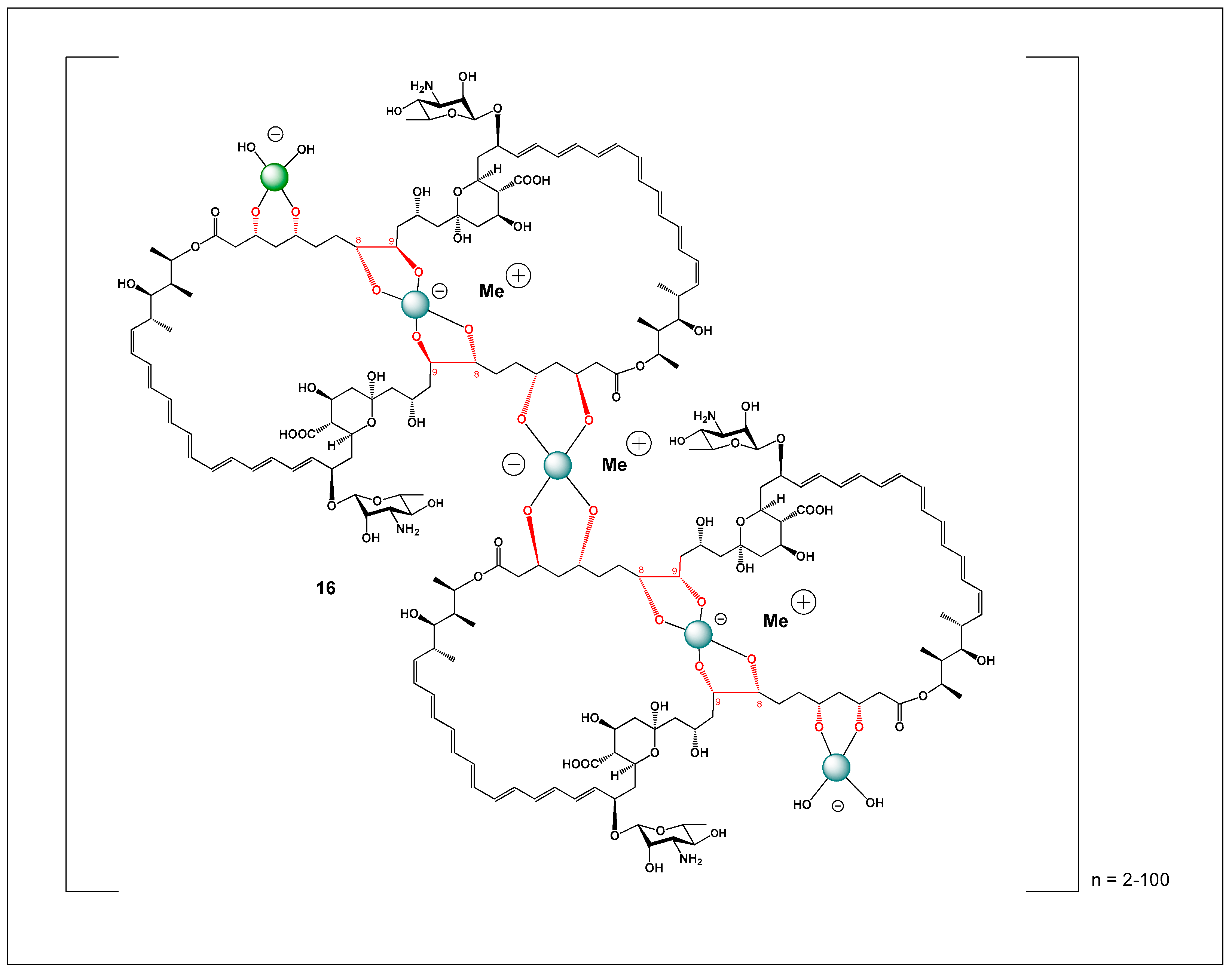
Amphotericin B and Its Boron Complexes
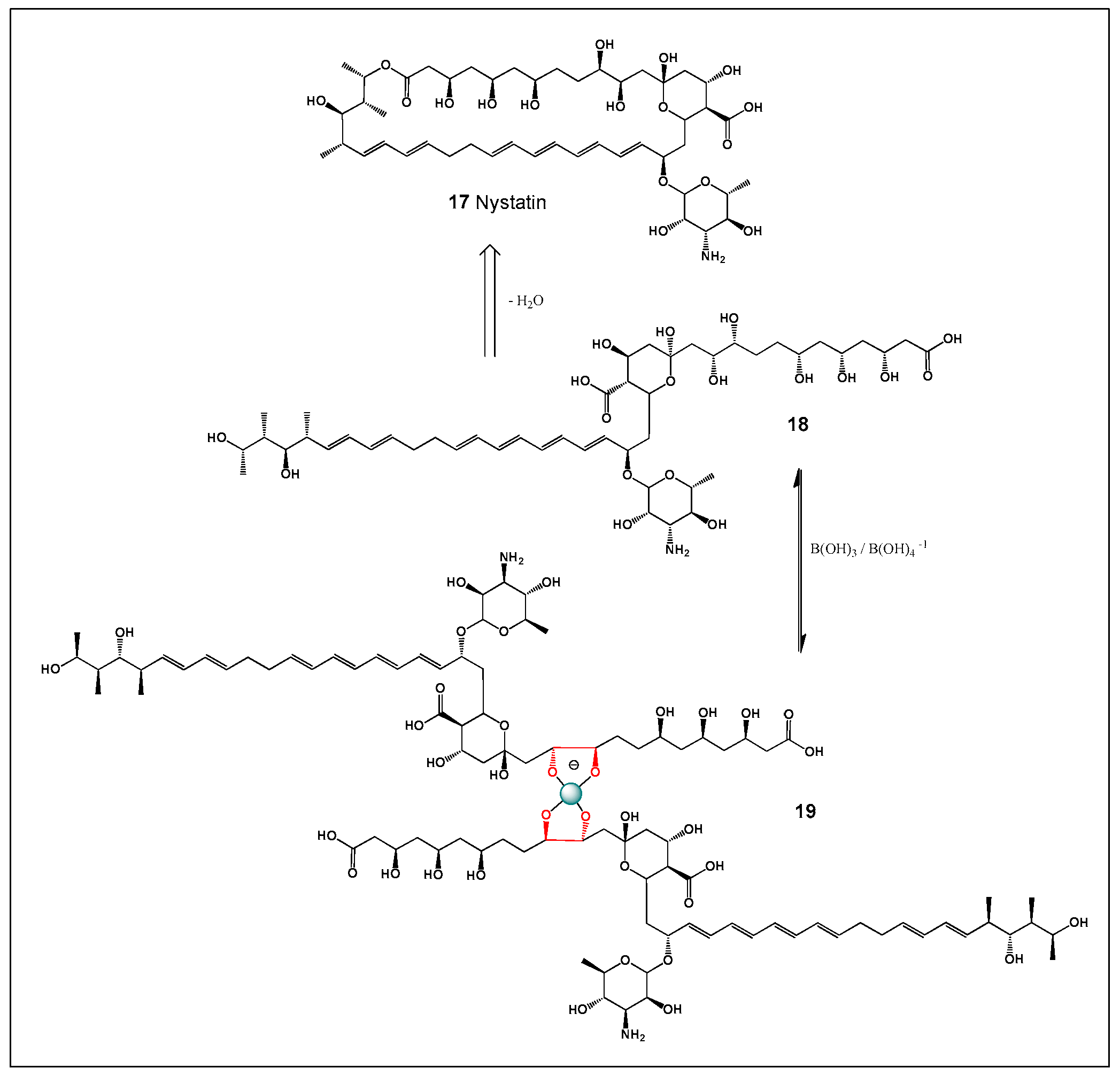
5. Nystatin and Its Boron Complexes
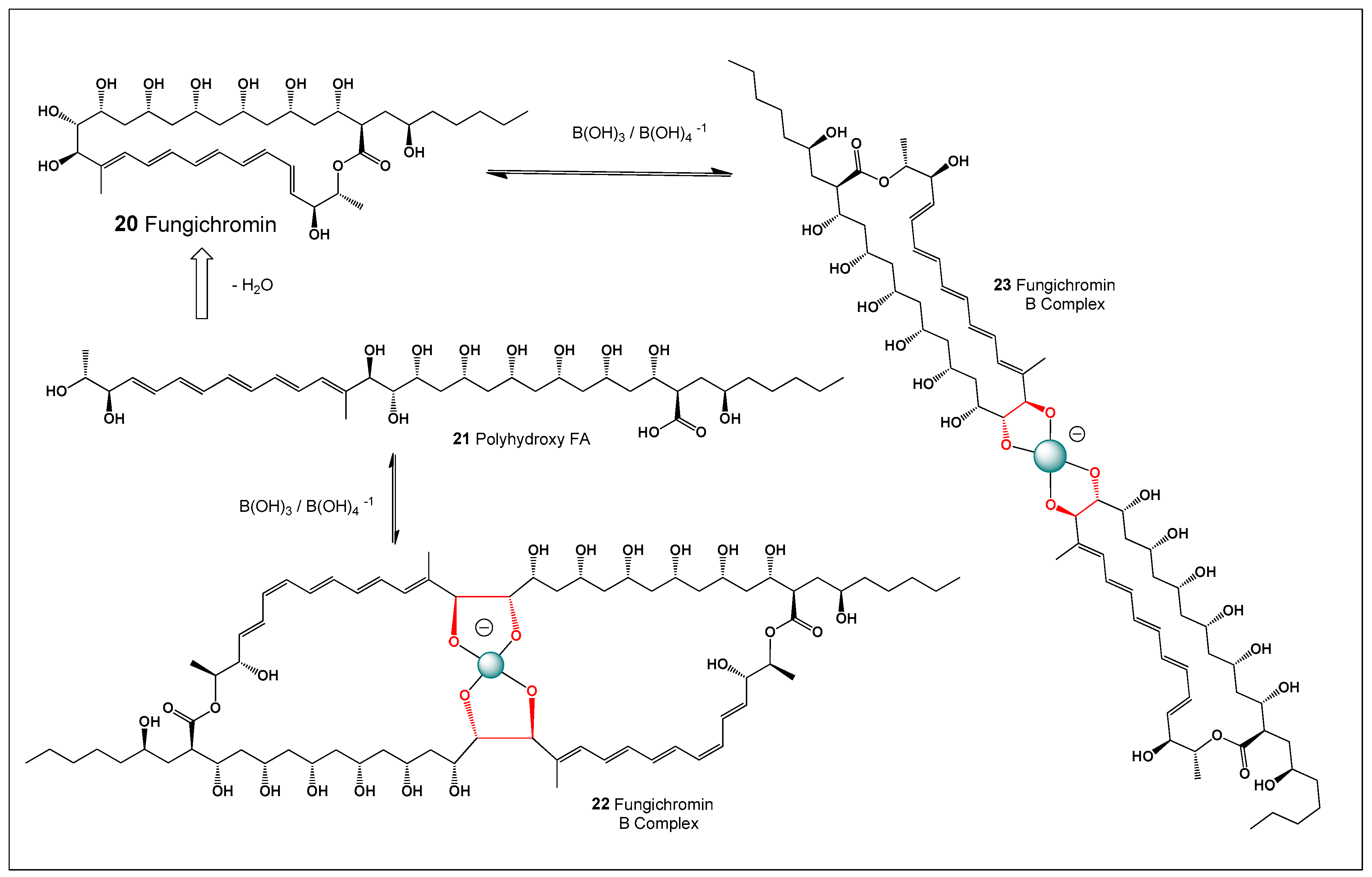
6. Fungichromin and Its Boron Complexes
Comparison of Fungichromin–Borate and Amphotericin B–Borate Complexes
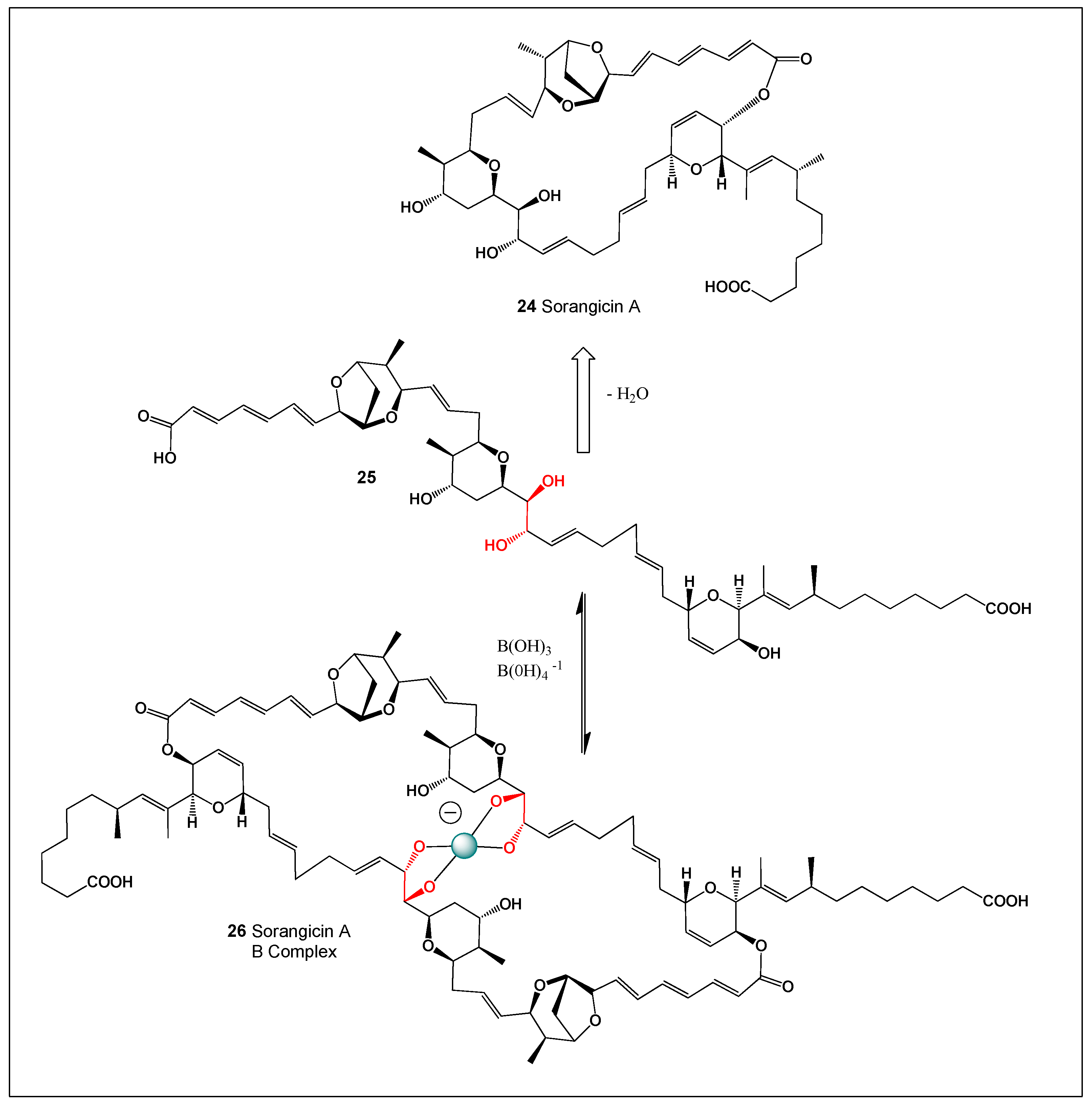
7. Sorangicin A and Its Boron Complex
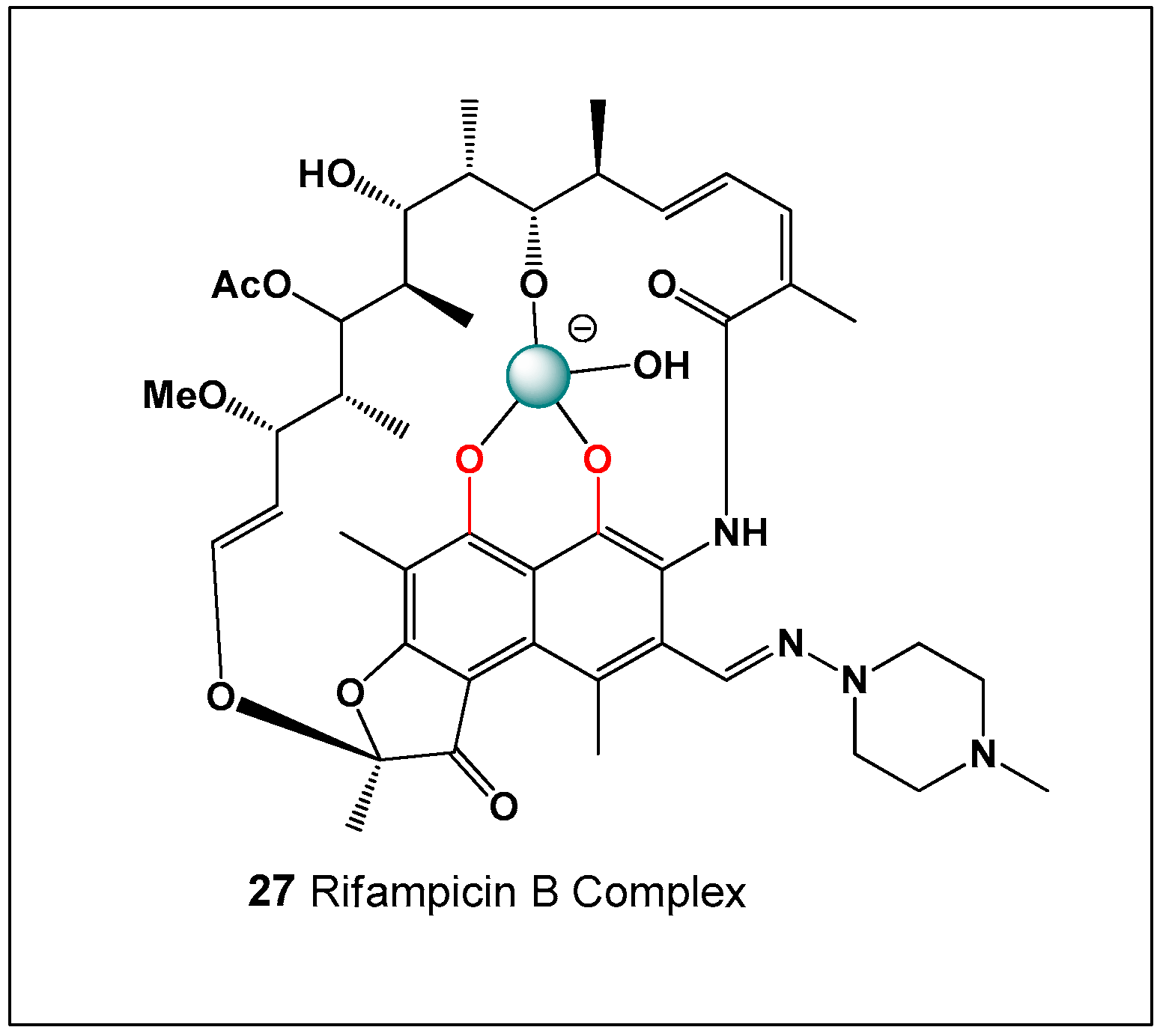
7.1. Comparison of SorA with Rifampicin: Binding Site and Resistance Profile
7.2. Comparative Analysis of Rifamycin–Borate and Sorangicin A–Borate Complexes
7.2.1. Binding Site Overlap and RNAP Inhibition
7.2.2. Resistance Profiles
7.2.3. Selectivity and Spectrum of Activity
7.2.4. Conceptual Implications
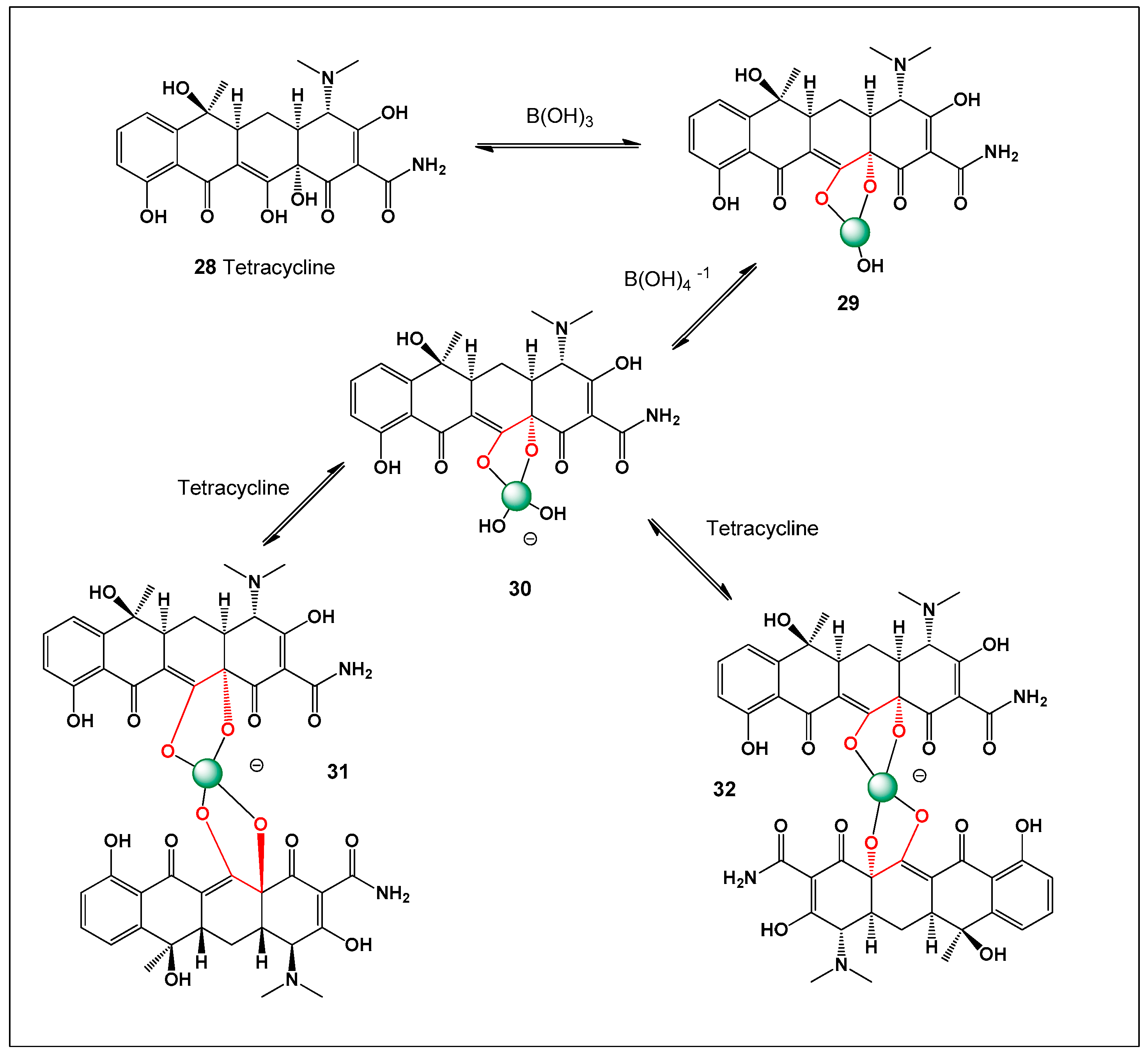
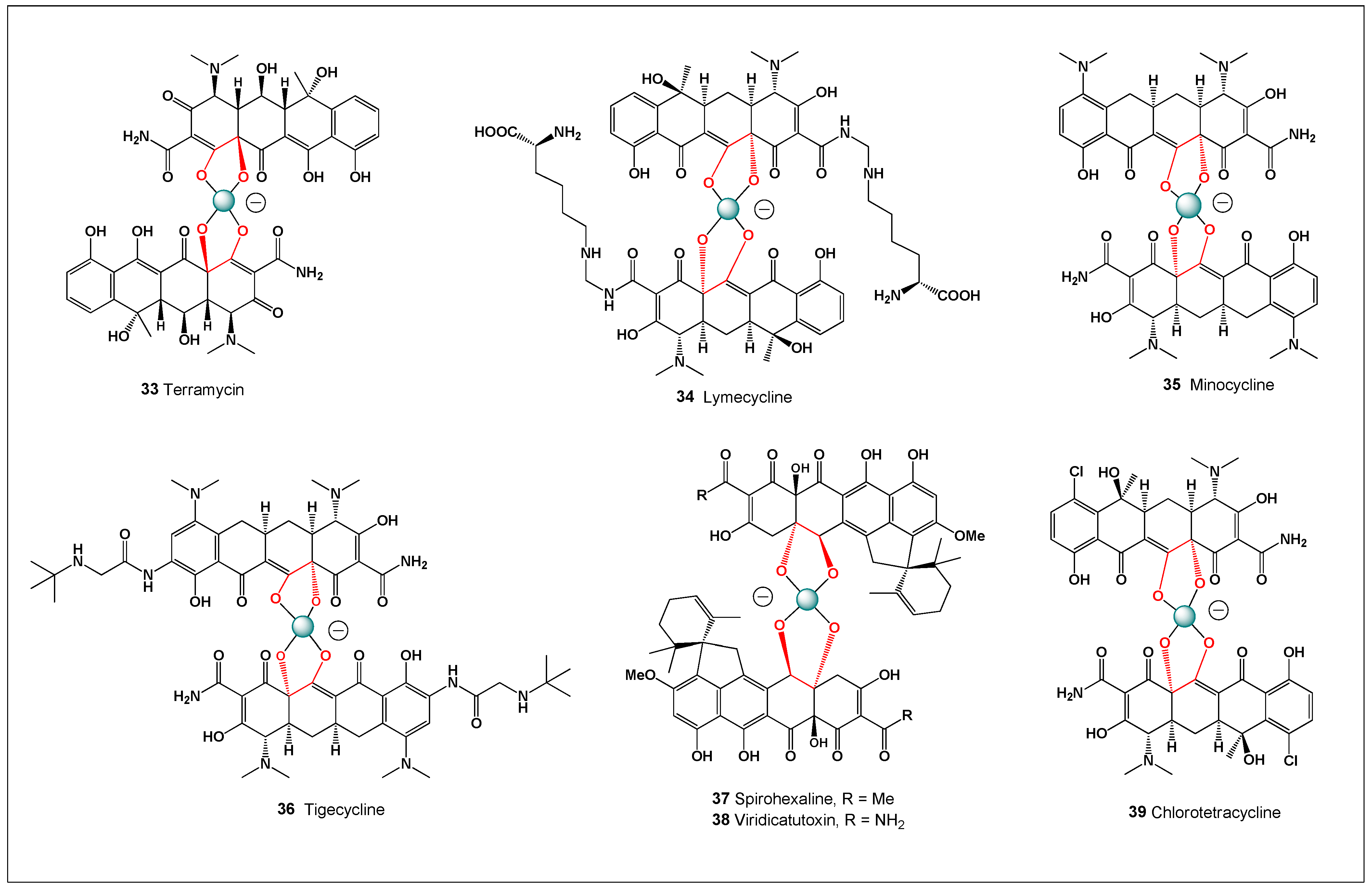
8. Tetracycline Antibiotics and Their Boron Complexes
Biological Consequences of Tetracycline–Boron Complexation: Antibiotic Enhancement Versus Toxicity
9. Toxins and Their Boron Complexes
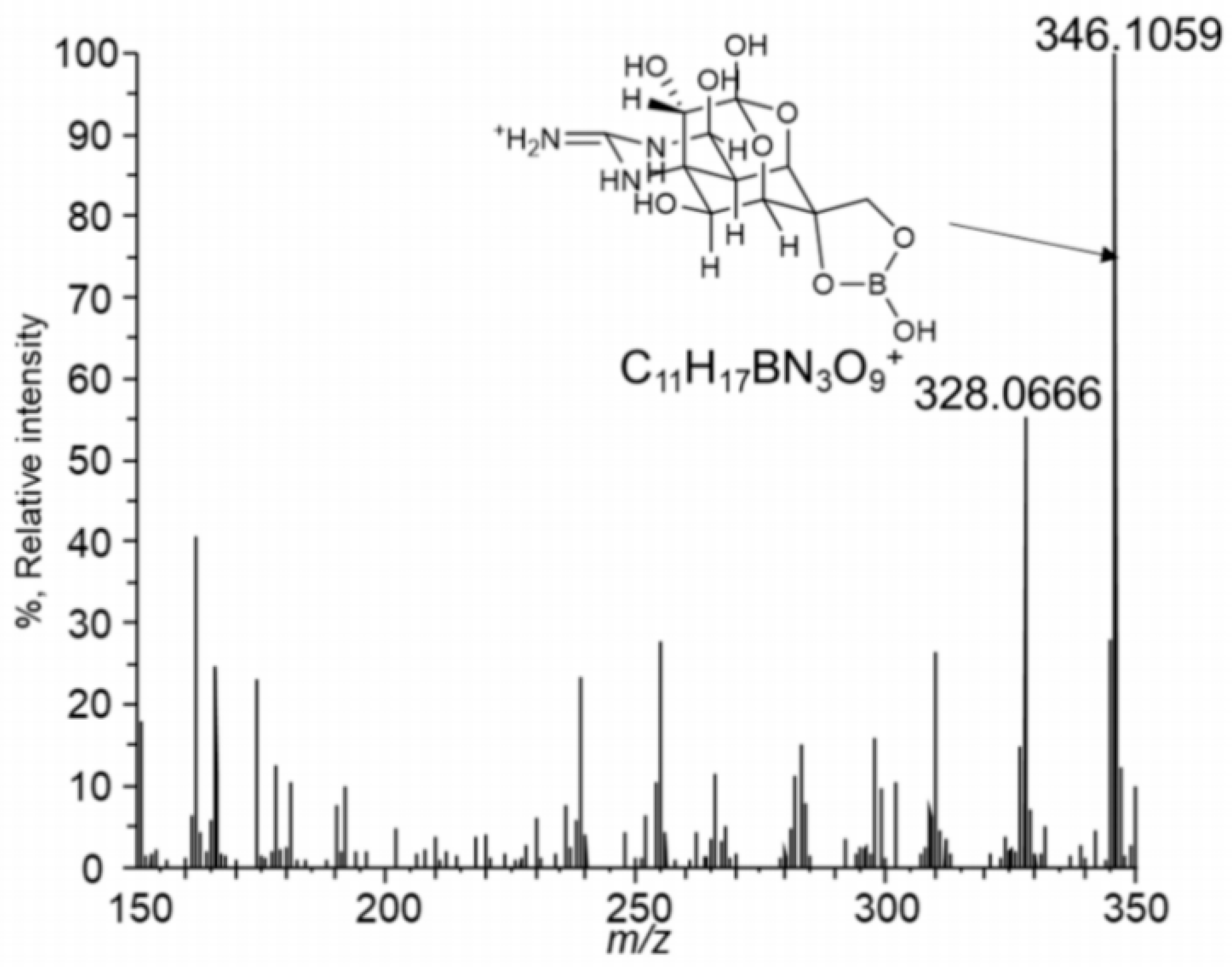
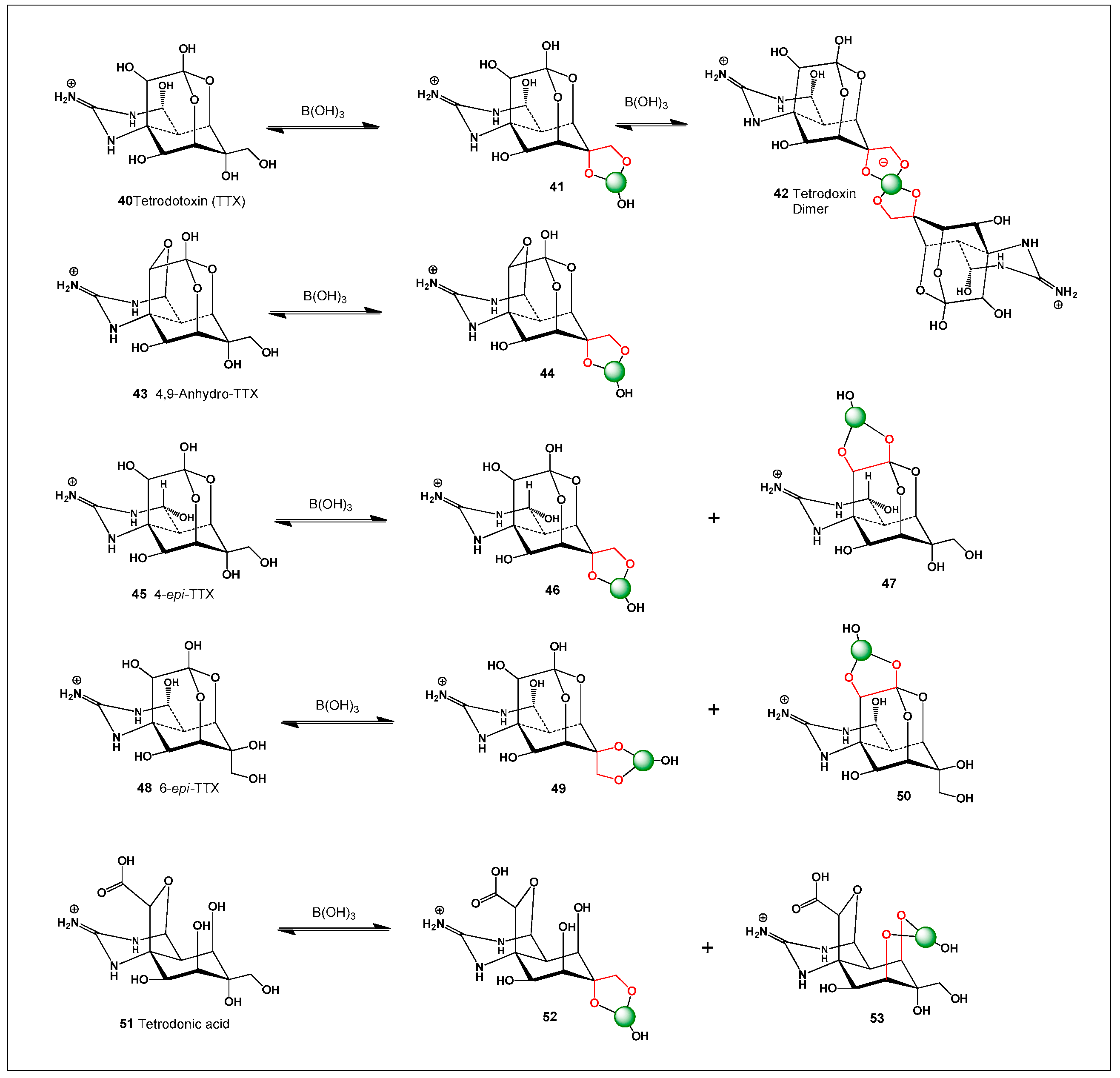
10. Tetrodotoxins and Their Boron Complexes
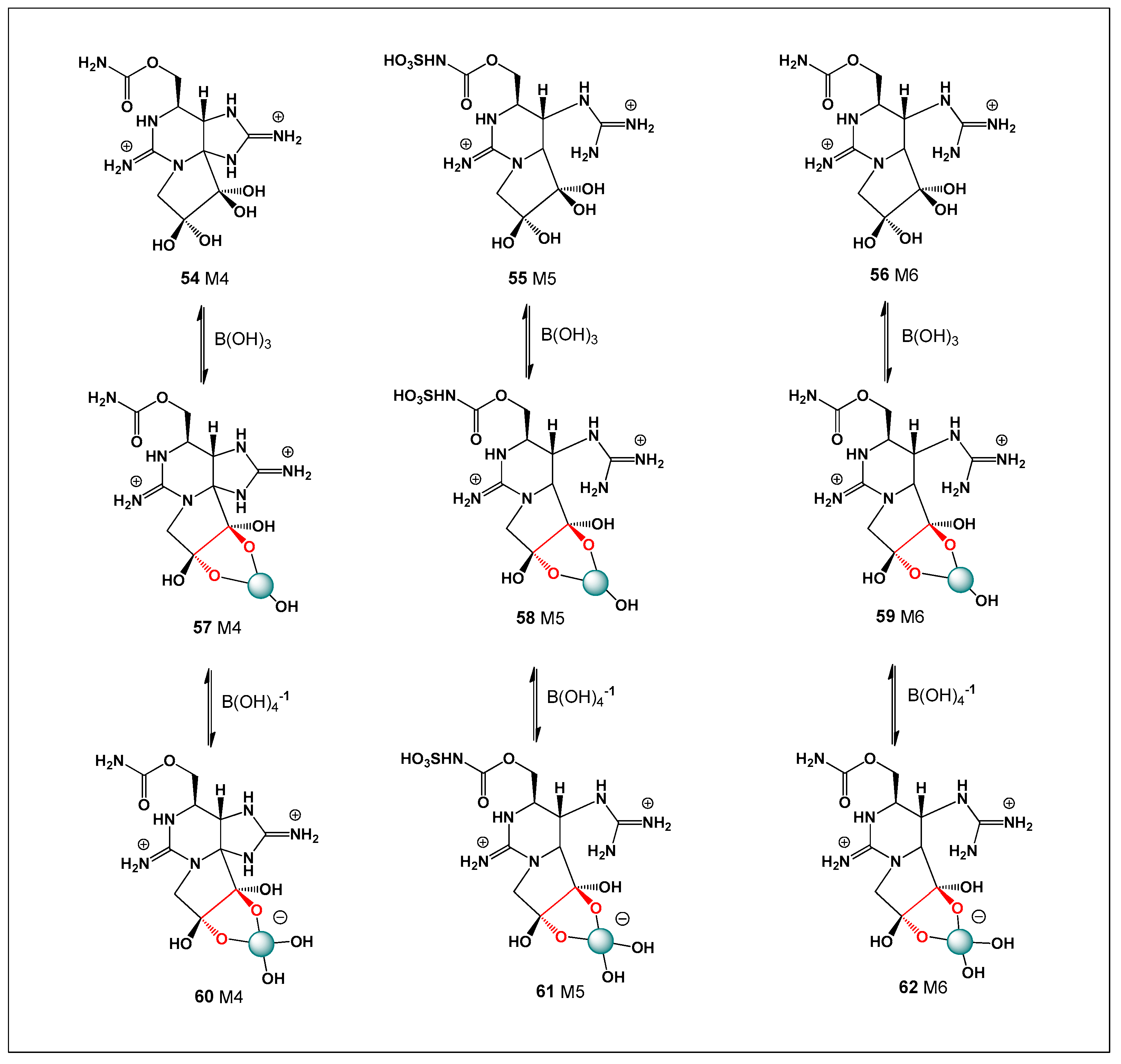
11. Saxitoxins and Their Boron Complexes
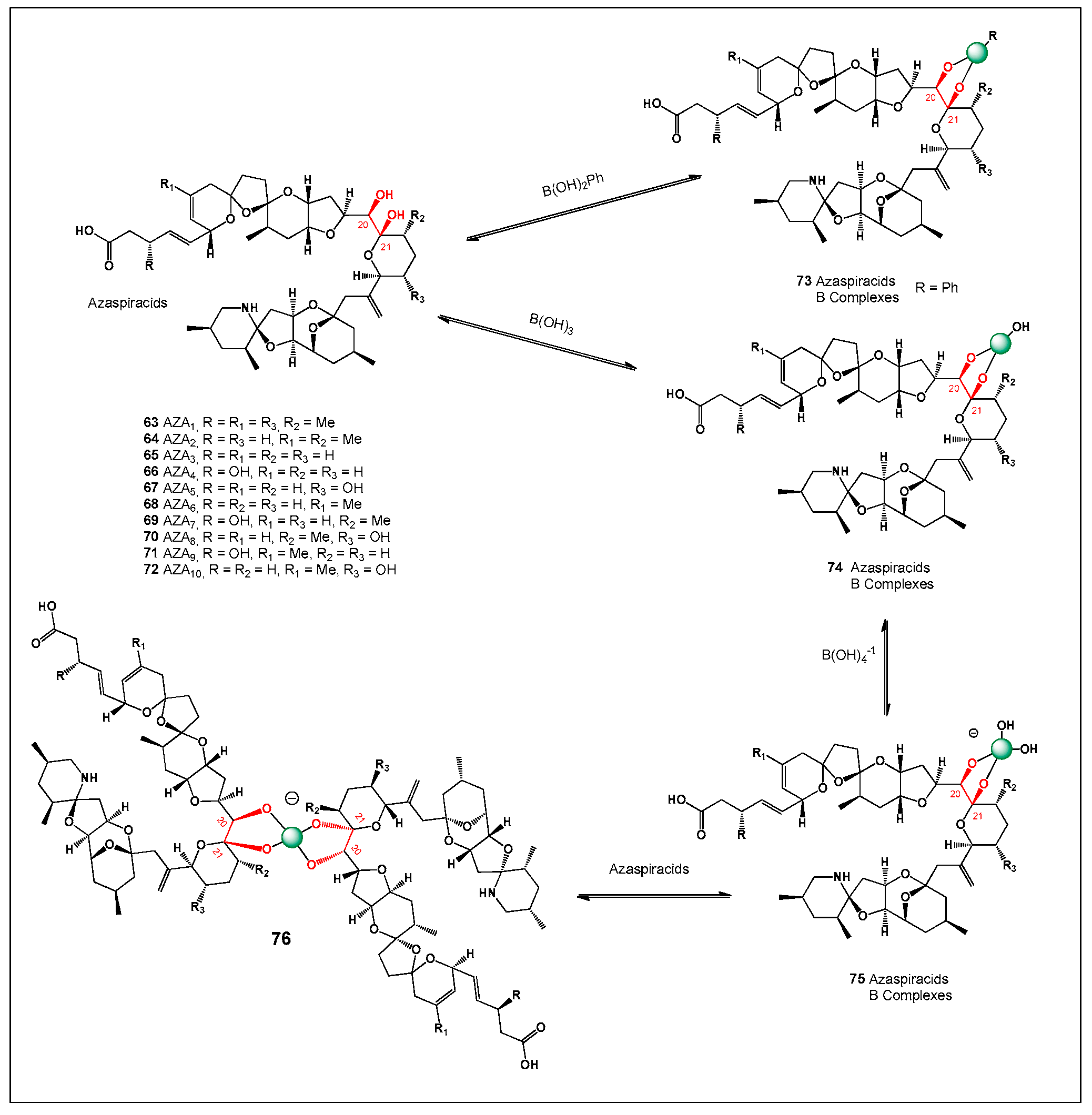
12. Azaspiracid Toxins and Their Boron Complexes
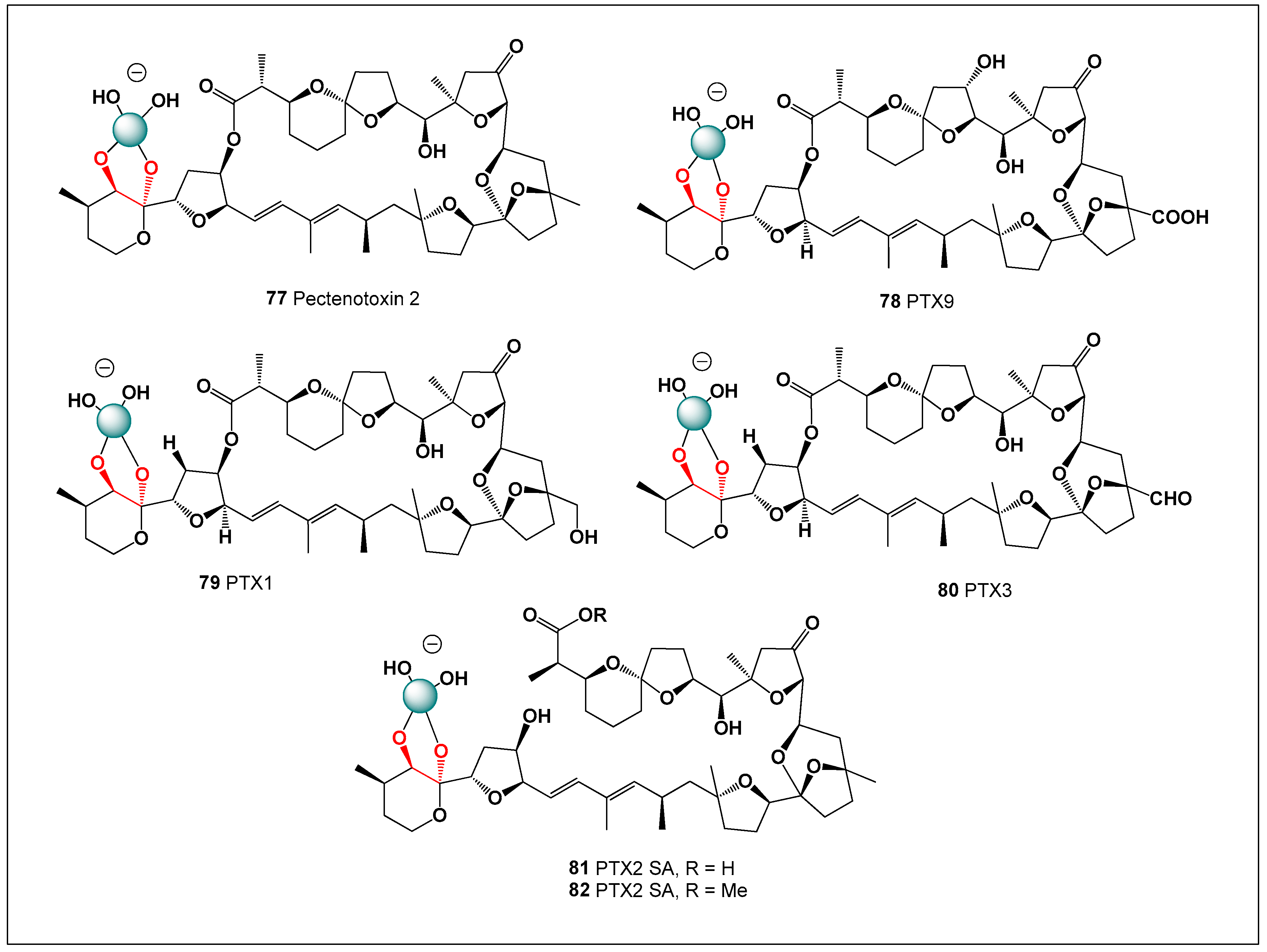
13. Pectenotoxins and Their Boron Complexes
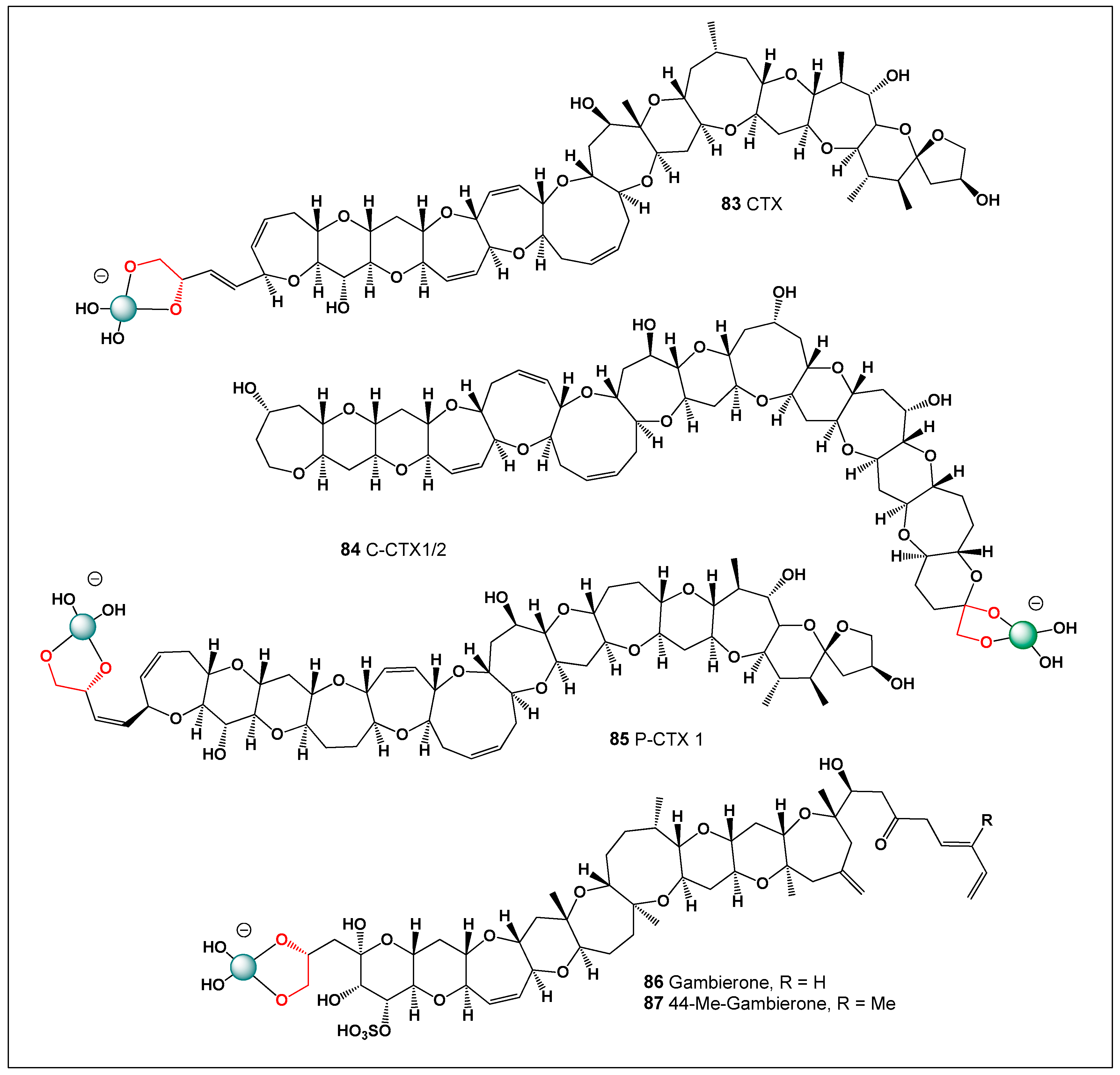
14. CTXs and Gambierones and Their Boron Complexes
15. Natural Toxins Featuring 1,3-Diol Structural Motifs
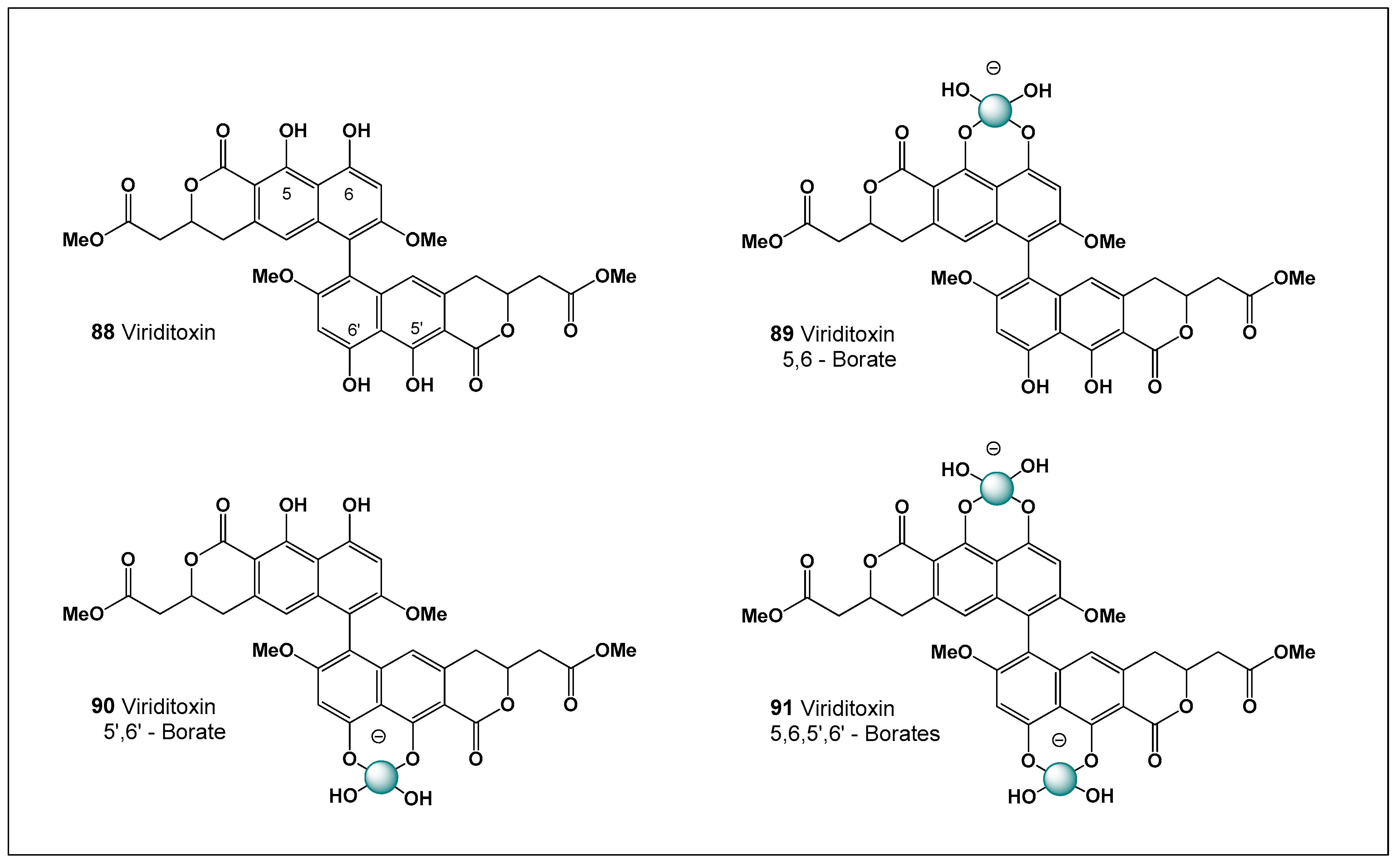
15.1. Viriditoxin and Its Boron Complexes
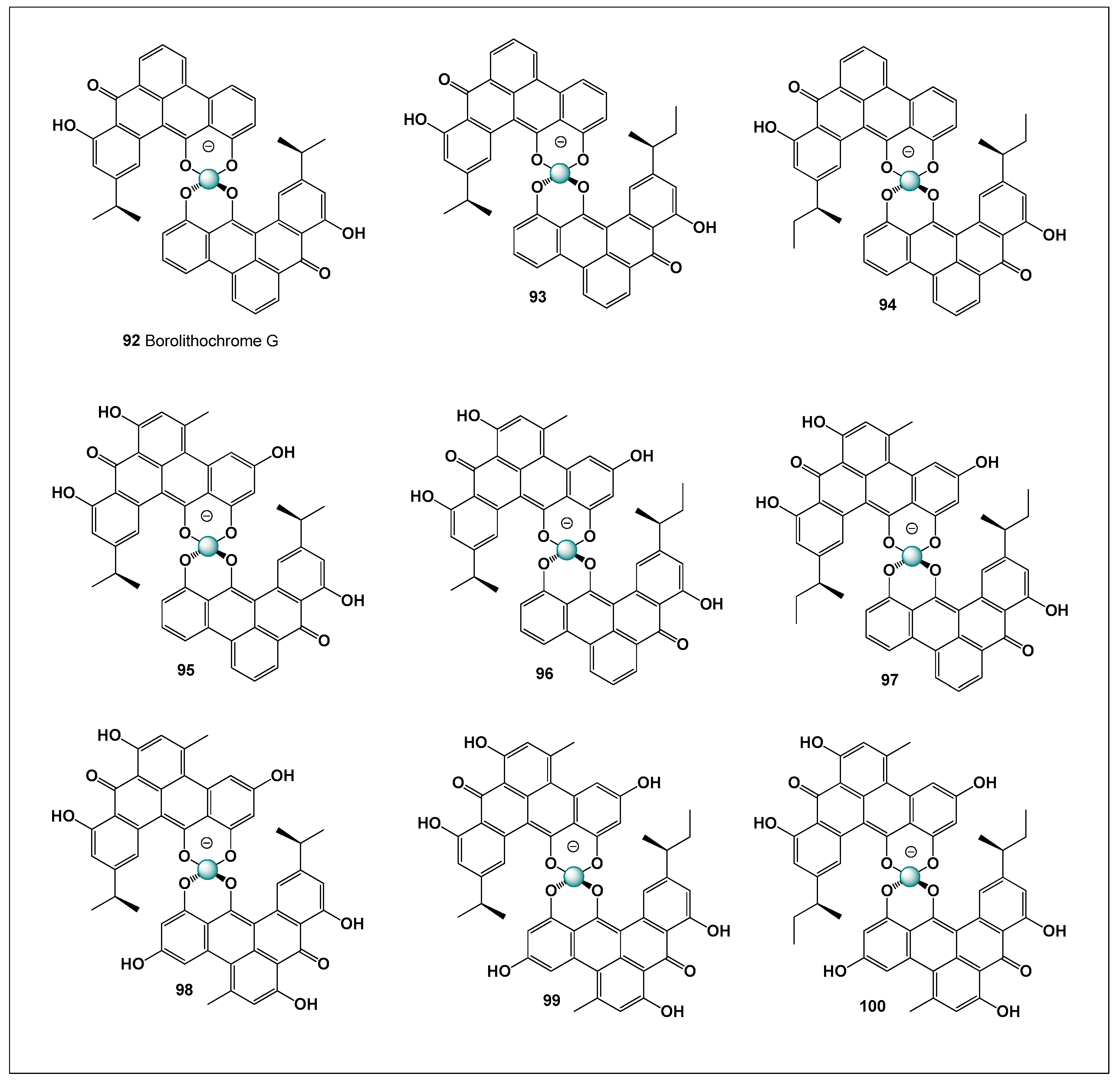
15.2. Natural Borolithochrome Complexes
16. Conclusions
Author Contributions
Funding
Data Availability Statement
Conflicts of Interest
References
- Smoum, R.; Rubinstein, A.; Dembitsky, V.M.; Srebnik, M. Boron containing compounds as protease inhibitors. Chem. Rev. 2012, 112, 4156–4220. [Google Scholar] [CrossRef]
- Ali, H.A.; Dembitsky, V.M.; Srebnik, M. Contemporary Aspects of Boron: Chemistry and Biological Applications; Elsevier: Amsterdam, The Netherlands, 2005; p. 662. [Google Scholar]
- Ali, F.; S Hosmane, N.; Zhu, Y. Boron chemistry for medical applications. Molecules 2020, 25, 828. [Google Scholar] [CrossRef]
- Dembitsky, V.M.; Ali, H.A.; Srebnik, M. Recent chemistry of the diboron compounds-IV Concluding remarks. Adv. Organometal. Chem. 2004, 51, 244–245. [Google Scholar]
- Guo, Y.M.; Cui, Y.; Yang, L.; Wang, X.Q. Recent development of boron-containing small-molecule anticancer agents. ACS Pharmacol. Transl. Sci. 2025, 8, 2384–2400. [Google Scholar] [CrossRef]
- Davy, H. Electro-chemical researches, on the decomposition of the earths; with observations on the metals obtained from the alkaline earths, and on the amalgam procured from ammonia. Philos. Trans. R. Soc. Lond. 1808, 98, 333–370. [Google Scholar] [CrossRef]
- Gay-Lussac, J.-L.; Thénard, L.-J. Sur la décomposition et la recomposition de l’acide boracique. Ann. Chim. Phys. 1808, 68, 167–174. [Google Scholar]
- Dembitsky, V.M. Boronolipids. Vietnam J. Chem. 2024, 63, 373–384. [Google Scholar]
- Dembitsky, V.M.; Zanfira, V.M.; Rozenberg, G.S. The Evolutionary Pathway to the Biomembrane: The Role of Low Molecular Weight Polyols in the Formation of the Protomembrane; Editorial & Publishing Department IEVRB RAS: Lethbridge, AB, Canada; Moscow, Russia; Togliatti, Russia, 2023; p. 128. [Google Scholar]
- Scorei, R. Is boron a prebiotic element? A mini-review of the essentiality of boron for the appearance of life on Earth. Orig. Life Evol. Biosph. 2012, 42, 3–17. [Google Scholar]
- Franco, A.; da Silva, J.A.L. Boron in prebiological evolution. Angew. Chem. 2021, 133, 10550–10560. [Google Scholar] [CrossRef]
- Wang, Y.; Wang, H.; Wang, S.; Fang, Y. Carbon- and nitrogen-based complexes as photocatalysts for prebiotic and oxygen chemistry during Earth evolution. Angew. Chem. Int. Ed. 2024, 63, e202413768. [Google Scholar]
- Franco, A.; Neves, M.O.; da Silva, J.A. Boron as a hypothetical participant in prebiological enantiomeric enrichment. Astrobiology 2023, 23, 605–615. [Google Scholar] [CrossRef]
- Pratt, B.R. The origin, biota and evolution of deep-water mud-mounds. In Carbonate Mud-Mounds: Their Origin and Evolution; International Association of Sedimentologists Special Publication 23; IAS: Oxford, UK, 1995; pp. 49–123. [Google Scholar]
- Schulte, M. The emergence of life on Earth. Oceanography 2007, 20, 42–49. [Google Scholar] [CrossRef]
- Nisbet, E.G.; Sleep, N.H. The habitat and nature of early life. Nature 2001, 409, 1083–1091. [Google Scholar] [CrossRef] [PubMed]
- Dembitsky, V.M.; Terent’ev, A.O.; Baranin, S.V. Life with boron: Microbial boron-binding siderophores, adaptation, and function. Microbiol. Res. 2026, 17, 57. [Google Scholar] [CrossRef]
- Du, M.; Peng, X.; Zhang, H.; Ye, C.; Dasgupta, S.; Li, J.; Ta, K. Geology, environment, and life in the deepest part of the world’s oceans. Innovation 2021, 2, 100109. [Google Scholar] [CrossRef] [PubMed]
- Ghaffar, S.; Tang, Y.; Naikoo, G.A. Challenges of Hydrogen Evolution in Seawater Electrolysis: The Role of Chlorine Evolution. Electrochem. Energy Rev. 2026, 9, 2. [Google Scholar] [CrossRef]
- Zhu, S.; Khan, M.S.; Xiao, K.; Chang, C.M.; Zhao, Q.; Chung, T.S.; Chen, S.B. Brick-and-cement structured polyamide membranes enabling to selectively separate boron from brackish water and real seawater permeate. J. Membr. Sci. 2026, 744, 125198. [Google Scholar] [CrossRef]
- Worsfold, P.J.; Lohan, M.C.; Ussher, S.J.; Bowie, A.R. Determination of dissolved iron in seawater: A historical review. Mar. Chem. 2014, 166, 25–35. [Google Scholar] [CrossRef]
- Achterberg, E.P.; Holland, T.W.; Bowie, A.R.; Mantoura, R.F.C.; Worsfold, P.J. Determination of iron in seawater. Anal. Chim. Acta 2001, 442, 1–14. [Google Scholar] [CrossRef]
- Ma, J.; Zhi, Q.; Gong, L.; Shen, Y.; Sun, D.; Guo, Y.; Xia, Z. A universal descriptor based on pz-orbitals for the catalytic activity of multi-doped carbon bifunctional catalysts for oxygen reduction and evolution. Nanoscale 2020, 12, 19375–19382. [Google Scholar] [CrossRef]
- Zhang, D.; Gao, B.; Ouyang, Y.; Xu, S.; Tian, Q.; Wu, W.; Xu, Q. Introduction of the –B(OH)2 group into a graphene motif for pz orbital removal and ferromagnetic modulation. Chem. Sci. 2024, 15, 15804–15810. [Google Scholar] [CrossRef]
- Dembitsky, V.M.; Terent’ev, A.O.; Baranin, S.V.; Gursky, M.E. Aromatic compounds and their fascinating boron complexes as potential quorum sensing molecules. Vietnam J. Chem. 2025, 63, 883–911. [Google Scholar]
- Lopalco, A.; Lopedota, A.A.; Laquintana, V.; Denora, N.; Stella, V.J. Boric acid, a Lewis acid with unique and unusual properties: Formulation implications. J. Pharm. Sci. 2020, 109, 2375–2386. [Google Scholar] [CrossRef] [PubMed]
- Vaghetto, R.; Childs, M.; Kee, E.; Hassan, Y.A. Observations and measurements of boric acid precipitation scenarios. Prog. Nucl. Energy 2016, 91, 302–309. [Google Scholar] [CrossRef]
- Zumreoglu-Karan, B.; Kose, D.A. Boric acid: A simple molecule of physiologic, therapeutic and prebiotic significance. Pure Appl. Chem. 2015, 87, 155–162. [Google Scholar] [CrossRef]
- Carrano, C.J.; Schellenberg, S.; Amin, S.A.; Green, D.H.; Küpper, F.C. Boron and marine life: A new look at an enigmatic bioelement. Mar. Biotechnol. 2009, 11, 431–440. [Google Scholar] [CrossRef] [PubMed]
- Kochkodan, V.; Darwish, N.B.; Hilal, N. The chemistry of boron in water. In Boron Separation Processes; Elsevier: Amsterdam, The Netherlands, 2015; pp. 35–63. [Google Scholar]
- Dembitsky, V.M.; Terent’ev, A.O.; Gursky, M.E.; Baranin, S.V. Fascinating and intriguing biomolecules: The chemistry of boron complexes with carbohydrates, glycolipids, and steroids. Vietnam J. Chem. 2025, 63, 1028. [Google Scholar] [CrossRef]
- Scorei, R.I.; Popa, R. Sugar–borate esters—Potential chemical agents in prostate cancer chemoprevention. Anti-Cancer Agents Med. Chem. 2013, 13, 901–909. [Google Scholar] [CrossRef]
- Hunter, J.M.; Nemzer, B.V.; Rangavajla, N.; Biţă, A.; Rogoveanu, O.C.; Neamţu, J.; Mogoşanu, G.D. The fructoborates: Part of a family of naturally occurring sugar–borate complexes—Biochemistry, physiology, and impact on human health: A review. Biol. Trace Elem. Res. 2019, 188, 11–25. [Google Scholar] [CrossRef]
- Scorei, R.I.; Rotaru, P. Calcium fructoborate—Potential anti-inflammatory agent. Biol. Trace Elem. Res. 2011, 143, 1223–1238. [Google Scholar] [CrossRef]
- Muteeb, G.; Rehman, M.T.; Shahwan, M.; Aatif, M. Origin of antibiotics and antibiotic resistance, and their impacts on drug development: A narrative review. Pharmaceuticals 2023, 16, 1615. [Google Scholar] [CrossRef] [PubMed]
- Cook, M.A.; Wright, G.D. The past, present, and future of antibiotics. Sci. Transl. Med. 2022, 14, eabo7793. [Google Scholar] [CrossRef]
- Guedes, B.N.; Krambeck, K.; Durazzo, A.; Lucarini, M.; Santini, A.; Oliveira, M.B.P.P.; Fathi, F.; Souto, E.B. Natural antibiotics against antimicrobial resistance: Sources and bioinspired delivery systems. Braz. J. Microbiol. 2024, 55, 2753–2766. [Google Scholar] [CrossRef] [PubMed]
- Marshall, C.F. Salvarsan (“606”). Br. Med. J. 1911, 1, 401. [Google Scholar] [CrossRef]
- Zaffiri, L.; Gardner, J.; Toledo-Pereyra, L.H. History of antibiotics: From salvarsan to cephalosporins. J. Investig. Surg. 2012, 25, 67–77. [Google Scholar] [CrossRef]
- Wright, A.J. The penicillins. Mayo Clin. Proc. 1999, 74, 290–307. [Google Scholar] [CrossRef] [PubMed]
- Barza, M.; Weinstein, L. Pharmacokinetics of the penicillins in man. Clin. Pharmacokinet. 1976, 1, 297–308. [Google Scholar] [CrossRef]
- Eagan, S.M.; Marble, S. From gonorrhea to gangrene: The real story behind penicillin allocation during World War II. Mil. Med. 2026, 191, e1–e3. [Google Scholar] [CrossRef]
- Kourkouta, L.; Koukourikos, K.; Iliadis, C.; Plati, P.; Dimitriadou, A. History of antibiotics. Sumerian J. Med. Healthc. 2018, 1, 51–54. [Google Scholar]
- Waksman, S.A. What is an antibiotic or an antibiotic substance? Mycologia 1947, 39, 565–569. [Google Scholar] [CrossRef]
- Waksman, S.A. Antibiotics—20 years later. Bull. N. Y. Acad. Med. 1961, 37, 202–217. [Google Scholar] [PubMed]
- Waksman, S.A. Antibiotics and chemotherapy. Calif. Med. 1953, 78, 417–423. [Google Scholar]
- Spellberg, B. The future of antibiotics. Crit. Care 2014, 18, 228. [Google Scholar] [CrossRef]
- Khardori, N. Antibiotics—Past, present, and future. Med. Clin. N. Am. 2006, 90, 1049–1076. [Google Scholar] [CrossRef]
- Dembitsky, V.M.; Smoum, R.; Al-Quntar, A.A.; Ali, H.A.; Pergament, I.; Srebnik, M. Natural occurrence of boron-containing compounds in plants, algae and microorganisms. Plant Sci. 2002, 163, 931–942. [Google Scholar] [CrossRef]
- Dembitsky, V.M.; Al Quntar, A.A.A.; Srebnik, M. Natural and synthetic small boron-containing molecules as potential inhibitors of bacterial and fungal quorum sensing. Chem. Rev. 2011, 111, 209–237. [Google Scholar] [CrossRef]
- Dembitsky, V.M.; Gloriozova, T.A. Naturally occurring boron-containing compounds and their biological activities. J. Nat. Prod. Resour. 2017, 3, 147–154. [Google Scholar]
- Stroe, M.C.; Gao, J.; Pitz, M.; Fischer, R. Complexity of fungal polyketide biosynthesis and function. Mol. Microbiol. 2024, 121, 18–25. [Google Scholar] [CrossRef] [PubMed]
- Khosla, C. Structures and mechanisms of polyketide synthases. J. Org. Chem. 2009, 74, 6416–6420. [Google Scholar] [CrossRef]
- Li, S.; Yang, B.; Tan, G.Y.; Ouyang, L.M.; Qiu, S.; Wang, W.; Zhang, L. Polyketide pesticides from actinomycetes. Curr. Opin. Biotechnol. 2021, 69, 299–307. [Google Scholar] [CrossRef] [PubMed]
- Paulsel, T.Q.; Williams, G.J. Current state-of-the-art toward chemoenzymatic synthesis of polyketide natural products. ChemBioChem 2023, 24, e202300386. [Google Scholar] [CrossRef] [PubMed]
- McDaniel, R.; Welch, M.; Hutchinson, C.R. Genetic approaches to polyketide antibiotics. 1. Chem. Rev. 2005, 105, 543–558. [Google Scholar] [CrossRef] [PubMed]
- Katz, L.; Donadio, S. Polyketide synthesis: Prospects for hybrid antibiotics. Annu. Rev. Microbiol. 1993, 47, 875–912. [Google Scholar] [CrossRef]
- Hütter, R.; Keller-Schierlein, W.; Knüsel, F.; Prelog, V.; Rodgers, G.C., Jr.; Suter, P.; Zähner, H. Stoffwechselprodukte von Mikroorganismen. 57. Mitteilung. Boromycin. Helv. Chim. Acta 1967, 50, 1533–1539. [Google Scholar] [CrossRef]
- Dunitz, J.D.; Hawley, D.M.; Mikloš, D.; White, D.N.J.; Berlin, Y.; Marušić, R.; Prelog, V. Structure of boromycin. Helv. Chim. Acta 1971, 54, 1709–1713. [Google Scholar] [CrossRef]
- Chen, T.S.; Chang, C.J.; Floss, H.G. Biosynthesis of boromycin. J. Org. Chem. 1981, 46, 2661–2665. [Google Scholar] [CrossRef]
- Davamani, V.; Arulmani, S.; Poornima, R.; Premalatha, R.P.; Deepasri, M.; Kalaiselvi, P.; Gopalakrishnan, M.; Moon, C.J.; Theerthagiri, J.; Choi, M.Y. From Utility to Toxicity: Managing Metalloid Pollution Through Innovative Remediation Technologies. Chem. Rec. 2025, 25, e202500191. [Google Scholar] [CrossRef]
- Hanessian, S.; Tyler, P.C.; Demailly, G.; Chapleur, Y. Total synthesis and stereochemical identity of the C18H32O5 degradation product from boromycin. J. Am. Chem. Soc. 1981, 103, 6243–6246. [Google Scholar] [CrossRef]
- Kohno, J.; Kawahata, T.; Otake, T.; Morimoto, M.; Mori, H.; Ueba, N.; Kawashima, K. Boromycin, an anti-HIV antibiotic. Biosci. Biotechnol. Biochem. 1996, 60, 1036–1037. [Google Scholar] [CrossRef] [PubMed]
- de Carvalho, L.P.; Groeger-Otero, S.; Kreidenweiss, A.; Kremsner, P.G.; Mordmüller, B.; Held, J. Boromycin has rapid-onset antibiotic activity against asexual and sexual blood stages of Plasmodium falciparum. Front. Cell. Infect. Microbiol. 2022, 11, 802294. [Google Scholar] [CrossRef]
- Yunusoglu, O.; Kalfa, I.; Demirel, M.E.; Binzet, M.A.; Sevinc, U.Z.; Turel, I.; Kurt, A.H. A comprehensive review of the pharmacological, therapeutic, and toxicological properties of boric acid and other boron-containing compounds: Current landscape and future perspectives. Pharmacy 2025, 13, 202–238. [Google Scholar] [CrossRef]
- Abenoja, J.; Cotto-Rosario, A.; O’Connor, R. Boromycin has potent anti-Toxoplasma and anti-Cryptosporidium activity. Antimicrob. Agents Chemother. 2021, 65, e01128-20. [Google Scholar] [CrossRef]
- Lee, J.J.; Chen, T.S.; Chang, C.J.; Fenselau, C.; Floss, H.G. Components of the boromycin fermentation: N-Acetylboromycin and N-formylboromycin. J. Antibiot. 1985, 38, 1444–1446. [Google Scholar] [CrossRef]
- Konaklieva, M.I.; Plotkin, B.J. Activity of organoboron compounds against biofilm-forming pathogens. Antibiotics 2024, 13, 929. [Google Scholar] [CrossRef] [PubMed]
- Grams, R.J.; Santos, W.L.; Scorei, I.R.; Abad-García, A.; Rosenblum, C.A.; Biţă, A.; Soriano-Ursúa, M.A. The rise of boron-containing compounds: Advancements in synthesis, medicinal chemistry, and emerging pharmacology. Chem. Rev. 2024, 124, 2441–2511. [Google Scholar] [CrossRef] [PubMed]
- Lakatoš, B.; Kaiserova, K.; Orlický, J.; Knézl, V.; Varečka, L. The effect of boromycin on Ca2+ homeostasis. Mol. Cell. Biochem. 2002, 231, 15–22. [Google Scholar] [CrossRef] [PubMed]
- Dziegielewski, J.; Melendy, T.; Beerman, T.A. Bleomycin-induced alterations in DNA replication: Relationship to DNA damage. Biochemistry 2001, 40, 704–711. [Google Scholar] [CrossRef]
- Çelikezen, F.Ç.; Şahin, İ.H. Investigation of antimicrobial and antifungal effects of some boron compounds. Bitlis Eren Univ. J. Sci. Technol. 2023, 12, 591–595. [Google Scholar] [CrossRef]
- Pache, W.; Zähner, H. Metabolic products of microorganisms. 77. Information studies on the mechanism of action of boromycin. Arch. Mikrobiol. 1969, 67, 156–165. [Google Scholar] [CrossRef]
- Engelgeh, T.; Wamp, S.; Rothe, P.; Herrmann, J.; Fischer, M.A.; Müller, R.; Halbedel, S. ClpP2 proteasomes and SpxA1 determine Listeria monocytogenes tartrolon B hyper-resistance. PLoS Genet. 2025, 21, e1011621. [Google Scholar] [CrossRef]
- Bildiren, Ş.; Köseoğlu, S.T.; Doğru, A. Bitkilerde Bor Toksisitesi ve Bor Toleransı. Osman. Korkut Ata Üniversitesi Fen Bilim. Enstitüsü Derg. 2026, 9, 523–543. [Google Scholar] [CrossRef]
- Řezanka, T.; Sigler, K. Biologically active compounds of semi-metals. In Studies in Natural Products Chemistry; Elsevier: Amsterdam, The Netherlands, 2008; Volume 35, pp. 835–921. [Google Scholar]
- Hemscheidt, T.; Puglisi, M.P.; Larsen, L.K.; Patterson, G.M.; Moore, R.E.; Rios, J.L.; Clardy, J. Structure and biosynthesis of borophycin, a new Boeseken complex of boric acid from a marine strain of the blue-green alga Nostoc linckia. J. Org. Chem. 1994, 59, 3467–3471. [Google Scholar] [CrossRef]
- Dembitsky, V.M.; Rezanka, T. Metabolites produced by nitrogen-fixing Nostoc species. Folia Microbiol. 2005, 50, 363–391. [Google Scholar] [CrossRef]
- Temina, M.; Rezankova, H.; Rezanka, T.; Dembitsky, V.M. Diversity of the fatty acids of Nostoc species and their statistical analysis. Microbiol. Res. 2007, 162, 308–321. [Google Scholar] [CrossRef]
- Řezanka, T.; Dor, I.; Prell, A.; Dembitsky, V.M. Fatty acid composition of six freshwater wild cyanobacterial species. Folia Microbiol. 2003, 48, 71–75. [Google Scholar] [CrossRef] [PubMed]
- Okami, Y.; Okazaki, T.; Kitahara, T.; Umezawa, H. Studies on marine microorganisms. V. A new antibiotic, aplasmomycin, produced by a streptomycete isolated from shallow sea mud. J. Antibiot. 1976, 29, 1019–1025. [Google Scholar] [CrossRef]
- Okami, Y. Potential use of marine microorganisms for antibiotics and enzyme production. Pure Appl. Chem. 1982, 54, 1951–1962. [Google Scholar] [CrossRef]
- Sato, K.; Okazaki, T.; Maeda, K.; Okami, Y. New antibiotics, aplasmomycins B and C. J. Antibiot. 1978, 31, 632–635. [Google Scholar] [CrossRef]
- Lee, J.J.; Dewick, P.M.; Gorst-Allman, C.P.; Spreafico, F.; Kowal, C.; Chang, C.J.; Floss, H.G. Further studies on the biosynthesis of the boron-containing antibiotic aplasmomycin. J. Am. Chem. Soc. 1987, 109, 5426–5432. [Google Scholar] [CrossRef]
- Nakamura, H.; Iitaka, Y.; Kitahara, T.; Okazaki, T.; Okami, Y. Structure of aplasmomycin. J. Antibiot. 1977, 30, 714–719. [Google Scholar] [CrossRef]
- Chen, T.S.; Chang, C.J.; Floss, H.G. Biosynthesis of the boron-containing macrodiolide antibiotic aplasmomycin. J. Am. Chem. Soc. 1979, 101, 5826–5827. [Google Scholar] [CrossRef]
- Doshi, G.M.; Aggarwal, G.V.; Martis, E.A.; Shanbhag, P.P. Novel antibiotics from marine sources. Int. J. Pharm. Sci. Nanotechnol. 2011, 4, 1446–1461. [Google Scholar]
- Fenical, W. Chemical studies of marine bacteria: Developing a new resource. Chem. Rev. 1993, 93, 1673–1683. [Google Scholar] [CrossRef]
- Bernan, V.S.; Greenstein, M.; Maiese, W.M. Marine microorganisms as a source of new natural products. Adv. Appl. Microbiol. 1997, 43, 57–90. [Google Scholar]
- Chen, T.S.; Chang, C.J.; Floss, H.G. Biosynthesis of the boron-containing antibiotic aplasmomycin: Nuclear magnetic resonance analysis of aplasmomycin and desboroaplasmomycin. J. Antibiot. 1980, 33, 1316–1322. [Google Scholar] [CrossRef] [PubMed]
- Stout, T.J. Structural Studies of Bioactive Marine Natural Products. Ph.D. Thesis, Cornell University, Ithaca, NY, USA, 1992. [Google Scholar]
- Stout, T.J.; Clardy, J.; Pathirana, I.C.; Fenical, W. Aplasmomycin C: Structural studies of a marine antibiotic. Tetrahedron 1991, 47, 3511–3520. [Google Scholar] [CrossRef]
- Chen, T.S.; Chang, C.J.; Floss, H.G. Biosynthesis of the boron-containing macrolide antibiotic aplasmomycin by Streptomyces griseus. J. Am. Chem. Soc. 1981, 103, 4565–4568. [Google Scholar] [CrossRef]
- White, J.D.; Vedananda, T.R.; Kang, M.C.; Choudhry, S.C. Total synthesis of (+)-aplasmomycin. J. Am. Chem. Soc. 1986, 108, 8105–8107. [Google Scholar] [CrossRef]
- Corey, E.J.; Hua, D.H.; Pan, B.C.; Seitz, S.P. Total synthesis of aplasmomycin. J. Am. Chem. Soc. 1982, 104, 6818–6820. [Google Scholar] [CrossRef]
- Surup, F.; Chauhan, D.; Niggemann, J.; Bartok, E.; Herrmann, J.; Keck, M.; Müller, R. Activation of the NLRP3 inflammasome by hyaboron, a new asymmetric boron-containing macrodiolide from the myxobacterium Hyalangium minutum. ACS Chem. Biol. 2018, 13, 2981–2988. [Google Scholar] [CrossRef]
- Wang, C.Y.; Hu, J.Q.; Wang, D.G.; Li, Y.Z.; Wu, C. Recent advances in discovery and biosynthesis of natural products from myxobacteria: An overview from 2017 to 2023. Nat. Prod. Rep. 2024, 41, 905–934. [Google Scholar] [CrossRef]
- Arnesen, K.K.; Skartsæterhagen, Ø.I. Mathematical induction in education research: A systematic review. Educ. Stud. Math. 2025, 119, 79–100. [Google Scholar] [CrossRef]
- Doornbos, H.; Backhouse, R.; van der Woude, J. A calculational approach to mathematical induction. Theor. Comput. Sci. 1997, 179, 103–135. [Google Scholar] [CrossRef]
- Li, L.; Luo, X.; Song, X. Mathematical guarantees for trust region policy optimization. Inf. Sci. 2026, 740, 123190. [Google Scholar] [CrossRef]
- Gerth, K.; Perlova, O.; Müller, R. Sorangium cellulosum. In Myxobacteria: Multicellularity and Differentiation; Springer: Berlin/Heidelberg, Germany, 2007; pp. 329–348. [Google Scholar]
- Irschik, H.; Schummer, D.; Gerth, K.; Höfle, G.; Reichenbach, H. The tartrolons, new boron-containing antibiotics from a myxobacterium, Sorangium cellulosum. J. Antibiot. 1995, 48, 26–30. [Google Scholar] [CrossRef]
- Mulzer, J.; Berger, M. Total synthesis of the boron-containing ion carrier antibiotic macrodiolide tartrolon B. J. Org. Chem. 2004, 69, 891–898. [Google Scholar] [CrossRef]
- Elshahawi, S.I.; Trindade-Silva, A.E.; Hanora, A.; Han, A.W.; Flores, M.S. Boronated tartrolon antibiotic produced by symbiotic cellulose-degrading bacteria in shipworm gills. Proc. Natl. Acad. Sci. USA 2013, 110, 295–304. [Google Scholar] [CrossRef] [PubMed]
- Qiao, L.; Dong, Y.; Zhou, H.; Cui, H. Effect of post–polyketide synthase modification groups on property and activity of polyene macrolides. Antibiotics 2023, 12, 119. [Google Scholar] [CrossRef]
- Hamilton-Miller, J.M. Chemistry and biology of the polyene macrolide antibiotics. Bacteriol. Rev. 1973, 37, 166–196. [Google Scholar] [CrossRef] [PubMed]
- Haro-Reyes, T.; Díaz-Peralta, L.; Galván-Hernández, A.; Rodríguez-López, A.; Rodríguez-Fragoso, L.; Ortega-Blake, I. Polyene antibiotics: Physical chemistry and their effect on lipid membranes impacting biological processes and medical applications. Membranes 2022, 12, 681. [Google Scholar] [CrossRef] [PubMed]
- Bobek, J.; Filipová, E.; Bergman, N.; Čihák, M.; Petříček, M.; Lara, A.C.; Petříčková, K. Polyenic antibiotics and other antifungal compounds produced by hemolytic Streptomyces species. Int. J. Mol. Sci. 2022, 23, 15045. [Google Scholar] [CrossRef]
- Caffrey, P.; Hogan, M.; Song, Y. New glycosylated polyene macrolides: Refining the ore from genome mining. Antibiotics 2022, 11, 334. [Google Scholar] [CrossRef]
- Belakhov, V.V. Polyfunctional drugs: Search, development, use in medical practice, and environmental aspects of preparation and application (Review). Russ. J. Gen. Chem. 2022, 92, 3030–3055. [Google Scholar] [CrossRef]
- Sternberg, T.H.; Newcomer, V.D.; Reisner, R.M. Current status of griseofulvin and amphotericin B. Med. Clin. N. Am. 1961, 45, 781–803. [Google Scholar] [CrossRef]
- Littman, M.L.; Horowitz, P.L.; Swadey, J.G. Coccidioidomycosis and its treatment with amphotericin B. Am. J. Med. 1958, 24, 568–592. [Google Scholar] [CrossRef]
- Volmer, A.A.; Szpilman, A.M.; Carreira, E.M. Synthesis and biological evaluation of amphotericin B derivatives. Nat. Prod. Rep. 2010, 27, 1329–1349. [Google Scholar] [CrossRef] [PubMed]
- Drutz, D.J.; Spickard, A.; Rogers, D.E.; Koenig, M.G. Treatment of disseminated mycotic infections: A new approach to amphotericin B therapy. Am. J. Med. 1968, 45, 405–418. [Google Scholar] [CrossRef] [PubMed]
- Hing, A.W.; Schaefer, J.; Kobayashi, G.S. Deuterium NMR investigation of an amphotericin B derivative in mechanically aligned lipid bilayers. Biochim. Biophys. Acta Biomembr. 2000, 1463, 323–332. [Google Scholar]
- Cereghetti, D.M.; Carreira, E.M. Amphotericin B: 50 years of chemistry and biochemistry. Synthesis 2006, 2006, 914–942. [Google Scholar] [CrossRef]
- Warnock, D.W. Amphotericin B: An introduction. J. Antimicrob. Chemother. 1991, 28, 27–38. [Google Scholar] [CrossRef]
- Moffat, F.L.; Falk, R.E.; Laing, D.; Ketcham, A.S.; Falk, J.A. Hyperthermia for cancer: A practical perspective. Semin. Surg. Oncol. 1985, 1, 200–219. [Google Scholar] [CrossRef]
- Moffat, E.H.; Giddings, J.C.; Bloom, A.L. The effect of desamino-D-arginine vasopressin (DDAVP) and naloxone infusions on factor VIII and endothelial cell-related activities. Br. J. Haematol. 1984, 57, 651–662. [Google Scholar] [CrossRef] [PubMed]
- Kinsky, S.C. Nystatin binding by protoplasts and a particulate fraction of Neurospora crassa: Basis for selective toxicity of polyene antifungal antibiotics. Proc. Natl. Acad. Sci. USA 1962, 48, 1049–1056. [Google Scholar] [CrossRef] [PubMed]
- Kinsky, S.C. Polyene antibiotics. In Antibiotics, Volume I: Mechanism of Action; Gottlieb, D., Shaw, P.D., Eds.; Springer: Berlin, Germany, 1967; pp. 122–141. [Google Scholar]
- Lampen, J.O. Amphotericin B and other polyenic antifungal antibiotics. Am. J. Clin. Pathol. 1969, 52, 138–146. [Google Scholar] [CrossRef]
- Baginski, M.; Resat, H.; Borowski, E. Comparative molecular dynamics simulations of amphotericin B–cholesterol/ergosterol membrane channels. Biochim. Biophys. Acta Biomembr. 2002, 1567, 63–78. [Google Scholar] [CrossRef]
- Gray, K.C.; Palacios, D.S.; Dailey, I.; Endo, M.M.; Uno, B.E.; Wilcock, B.C.; Burke, M.D. Amphotericin primarily kills yeast by simply binding ergosterol. Proc. Natl. Acad. Sci. USA 2012, 109, 2234–2239. [Google Scholar] [CrossRef] [PubMed]
- Barwicz, J.; Tancrède, P. The effect of aggregation state of amphotericin B on its interactions with cholesterol- or ergosterol-containing phosphatidylcholine monolayers. Chem. Phys. Lipids 1997, 85, 145–155. [Google Scholar] [CrossRef]
- Readio, J.D.; Bittman, R. Equilibrium binding of amphotericin B and its methyl ester and borate complex to sterols. Biochim. Biophys. Acta Biomembr. 1982, 685, 219–224. [Google Scholar] [CrossRef]
- Strauss, G.; Kral, F. Borate complexes of amphotericin B: Polymeric species and aggregates in aqueous solutions. Biopolymers 1982, 21, 459–470. [Google Scholar] [CrossRef]
- Kral, F.; Strauss, G. A biologically active borate derivative of amphotericin B soluble in saline solution. J. Antibiot. 1978, 31, 257–259. [Google Scholar] [CrossRef]
- Ehrenfreund-Kleinman, T.; Azzam, T.; Falk, R.; Polacheck, I.; Golenser, J.; Domb, A.J. Synthesis and characterization of novel water-soluble amphotericin B–arabinogalactan conjugates. Biomaterials 2002, 23, 1327–1335. [Google Scholar]
- Dash, S.K.; Benival, D.; Jindal, A.B. Formulation strategies to overcome amphotericin B-induced toxicity. Mol. Pharm. 2024, 21, 5392–5412. [Google Scholar]
- Kral, F. A Water-Soluble Borate Derivative of Amphotericin B: Properties and Interaction with Cholesterol. Ph.D. Thesis, Rutgers—The State University of New Jersey, New Brunswick, NJ, USA, 1975. [Google Scholar]
- Benincasa, M.; Pacor, S.; Wu, W.; Prato, M.; Bianco, A.; Gennaro, R. Antifungal activity of amphotericin B conjugated to carbon nanotubes. ACS Nano 2011, 5, 199–208. [Google Scholar] [PubMed]
- Swenson, C.E.; Perkins, W.R.; Roberts, P.; Ahmad, I.; Stevens, R.; Stevens, D.A.; Janoff, A.S. In vitro and in vivo antifungal activity of amphotericin B lipid complex: Are phospholipases important? Antimicrob. Agents Chemother. 1998, 42, 767–771. [Google Scholar] [CrossRef] [PubMed]
- Fernandes, D.G.D.S.; Andrade, V.B.; da Silva, J.P.; Ferreira, F.F.; Colussi, F.; Michelin, M.; Garcia, W. Fungicidal efficacy of green-synthesized organosolv lignin-capped silver-based nanoparticles against amphotericin B-resistant Candida tropicalis. Folia Microbiol. 2026, 72, 1–13. [Google Scholar]
- Cohen, B.E. Amphotericin B toxicity and lethality: A tale of two channels. Int. J. Pharm. 1998, 162, 95–106. [Google Scholar] [CrossRef]
- Hartsel, S.C.; Hatch, C.; Ayenew, W. How does amphotericin B work? Studies on model membrane systems. J. Liposome Res. 1993, 3, 377–408. [Google Scholar] [CrossRef]
- Cohen, B.E. Amphotericin B membrane action: Role for two types of ion channels in eliciting cell survival and lethal effects. J. Membr. Biol. 2010, 238, 1–20. [Google Scholar] [CrossRef] [PubMed]
- Klepser, M. The value of amphotericin B in the treatment of invasive fungal infections. J. Crit. Care 2011, 26, 225.e1–225.e10. [Google Scholar] [CrossRef]
- Cavassin, F.B.; Baú-Carneiro, J.L.; Vilas-Boas, R.R.; Queiroz-Telles, F. Sixty years of amphotericin B: An overview of the main antifungal agent used to treat invasive fungal infections. Infect. Dis. Ther. 2021, 10, 115–147. [Google Scholar] [CrossRef]
- Walsh, T.J.; Hiemenz, J.W.; Seibel, N.L.; Perfect, J.R.; Horwith, G.; Lee, L.; Anaissie, E.J. Amphotericin B lipid complex for invasive fungal infections: Analysis of safety and efficacy in 556 cases. Clin. Infect. Dis. 1998, 26, 1383–1396. [Google Scholar] [CrossRef]
- Akinosoglou, K.; Rigopoulos, E.A.; Papageorgiou, D.; Schinas, G.; Polyzou, E.; Dimopoulou, E.; Dimopoulos, G. Amphotericin B in the era of new antifungals: Where will it stand? J. Fungi 2024, 10, 278. [Google Scholar] [CrossRef]
- Alves, L.L.; Freire, M.L.; Troian, I.L.; Morais-Teixeira, E.D.; Cota, G. Local amphotericin B therapy for cutaneous leishmaniasis: A systematic review. PLoS Negl. Trop. Dis. 2024, 18, e0012127. [Google Scholar] [CrossRef]
- Saha, A.K.; Mukherjee, T.; Bhaduri, A. Mechanism of action of amphotericin B on Leishmania donovani promastigotes. Mol. Biochem. Parasitol. 1986, 19, 195–200. [Google Scholar] [CrossRef]
- Wortmann, G.; Zapor, M.; Ressner, R.; Fraser, S.; Hartzell, J.; Pierson, J.; Magill, A. Liposomal amphotericin B for treatment of cutaneous leishmaniasis. Am. J. Trop. Med. Hyg. 2010, 83, 1028–1032. [Google Scholar] [CrossRef] [PubMed]
- Teresa, L.F.M.; Ferreira, V.F.; Adelaide, F.A.; Schreier, S. Effect of aggregation on the kinetics of autoxidation of the polyene antibiotic amphotericin B. J. Pharm. Sci. 1993, 82, 162–166. [Google Scholar] [CrossRef] [PubMed]
- Wang, P. Synthesis and Cross-Coupling of Organoborane Building Blocks Inspired by Amphotericin B. Ph.D. Thesis, University of Illinois at Urbana–Champaign, Urbana, IL, USA, 2014. [Google Scholar]
- Hazen, E.L.; Brown, R. Two antifungal agents produced by a soil actinomycete. Science 1950, 112, 423. [Google Scholar]
- Brautaset, T.; Sekurova, O.N.; Sletta, H.; Ellingsen, T.E.; Strøm, A.R.; Valla, S.; Zotchev, S.B. Biosynthesis of the polyene antifungal antibiotic nystatin in Streptomyces noursei ATCC 11455: Analysis of the gene cluster and deduction of the biosynthetic pathway. Chem. Biol. 2000, 7, 395–403. [Google Scholar] [CrossRef]
- Fjærvik, E.; Zotchev, S.B. Biosynthesis of the polyene macrolide antibiotic nystatin in Streptomyces noursei. Appl. Microbiol. Biotechnol. 2005, 67, 436–443. [Google Scholar] [CrossRef] [PubMed]
- Woods, R.A. Nystatin-resistant mutants of yeast: Alterations in sterol content. J. Bacteriol. 1971, 108, 69–73. [Google Scholar] [CrossRef]
- Coutinho, A.; Silva, L.; Fedorov, A.; Prieto, M. Cholesterol and ergosterol influence nystatin surface aggregation: Relation to pore formation. Biophys. J. 2004, 87, 3264–3276. [Google Scholar] [CrossRef] [PubMed]
- Silva, L.; Coutinho, A.; Fedorov, A.; Prieto, M. Competitive binding of cholesterol and ergosterol to the polyene antibiotic nystatin: A fluorescence study. Biophys. J. 2006, 90, 3625–3631. [Google Scholar] [CrossRef] [PubMed]
- Gil, J.; Solis, M.; Higa, A.; Davis, S.C. Candida albicans infections: A novel porcine wound model to evaluate treatment efficacy. BMC Microbiol. 2022, 22, 45. [Google Scholar] [CrossRef]
- Rai, A.; Misra, S.R.; Panda, S.; Sokolowski, G.; Mishra, L.; Das, R.; Lapinska, B. Nystatin effectiveness in oral candidiasis treatment: A Systematic review & meta-analysis of clinical trials. Life 2022, 12, 1677. [Google Scholar] [CrossRef]
- Chambers, H.F. General principles of antimicrobial therapy. In Goodman & Gilman’s The Pharmacological Basis of Therapeutics; McGraw-Hill: New York, NY, USA, 2006; pp. 1095–1111. [Google Scholar]
- Galgóczy, L. Structural barriers to antifungal drug development. Front. Cell. Infection Microbiol. 2026, 16, 1797104. [Google Scholar] [CrossRef]
- Arikan, S.; Rex, J.H. Nystatin LF (Aronex/Abbott). Curr. Opin. Investig. Drugs 2001, 2, 488–495. [Google Scholar] [PubMed]
- Isaacs, D. Fungal prophylaxis in very low birth weight neonates: Nystatin, fluconazole or nothing? Curr. Opin. Infect. Dis. 2008, 21, 246–250. [Google Scholar] [CrossRef] [PubMed]
- Aparicio, J.F.; Caffrey, P.; Gil, J.A.; Zotchev, S.B. Polyene antibiotic biosynthesis gene clusters. Appl. Microbiol. Biotechnol. 2003, 61, 179–188. [Google Scholar] [CrossRef]
- Caffrey, P.; De Poire, E.; Sheehan, J.; Sweeney, P. Polyene macrolide biosynthesis in streptomycetes and related bacteria: Recent advances from genome sequencing and experimental studies. Appl. Microbiol. Biotechnol. 2016, 100, 3893–3908. [Google Scholar] [CrossRef]
- Zotchev, S.B. Polyene macrolide antibiotics and their applications in human therapy. Curr. Med. Chem. 2003, 10, 211–223. [Google Scholar] [CrossRef]
- Vaishnav, P.; Demain, A.L. Unexpected applications of secondary metabolites. Biotechnol. Adv. 2011, 29, 223–229. [Google Scholar] [CrossRef]
- Jakubiec-Krzesniak, K.; Rajnisz-Mateusiak, A.; Guspiel, A.; Ziemska, J.; Solecka, J. Secondary metabolites of actinomycetes and their antibacterial, antifungal and antiviral properties. Pol. J. Microbiol. 2018, 67, 259–272. [Google Scholar] [CrossRef]
- Donald, L.; Pipite, A.; Subramani, R.; Owen, J.; Keyzers, R.A.; Taufa, T. Streptomyces: Still the biggest producer of new natural secondary metabolites—A current perspective. Microbiol. Res. 2022, 13, 418–465. [Google Scholar] [CrossRef]
- Sánchez, S.; Chávez, A.; Forero, A.; García-Huante, Y.; Romero, A.; Sánchez, M.; Ruiz, B. Carbon source regulation of antibiotic production. J. Antibiot. 2010, 63, 442–459. [Google Scholar] [CrossRef] [PubMed]
- Rahman, S.; Van Nguyen, S.; Icatlo, F.C., Jr.; Umeda, K.; Kodama, Y. Oral passive IgY-based immunotherapeutics: A novel solution for prevention and treatment of alimentary tract diseases. Hum. Vaccines Immunother. 2013, 9, 1039–1048. [Google Scholar] [CrossRef]
- Murarka, V.C.; Kim, J.S.; Lamb, D.C.; Kelly, S.L.; Poulos, T.L.; Follmer, A.H. Crystal structure of cytochrome P450 NysL and the structural basis for stereo-and regio-selective oxidation of antifungal macrolides. J. Biol. Chem. 2025, 301, 108185. [Google Scholar] [CrossRef]
- Krysenko, S. Impact of nitrogen-containing compounds on secondary metabolism in Streptomyces spp.—A source of metabolic engineering strategies. SynBio 2023, 1, 204–225. [Google Scholar] [CrossRef]
- Zielinski, J.; Golik, J.; Pawlak, J.; Borowski, E.; Falkowski, L. The structure of nystatin A3, a component of the nystatin complex. J. Antibiot. 1988, 41, 1289–1291. [Google Scholar] [CrossRef]
- Balakrishnan, B.; Joshi, N.; Thorat, K.; Kaur, S.; Chandan, R.; Banerjee, R. A tumor-responsive self-healing prodrug hydrogel enables synergistic action of doxorubicin and miltefosine for focal combination chemotherapy. J. Mater. Chem. B 2019, 7, 2920–2925. [Google Scholar] [CrossRef]
- Peng, C.; An, D.; Ding, W.X.; Zhu, Y.X.; Ye, L.; Li, J. Fungichromin production by Streptomyces sp. WP-1, an endophyte from Pinus dabeshanensis, and its antifungal activity against Fusarium oxysporum. Appl. Microbiol. Biotechnol. 2020, 104, 10437–10449. [Google Scholar] [CrossRef] [PubMed]
- Moussa, A.Y. Streptomyces endophytes in edible plants: New insights into their chemistry and health benefits. Chem. Biodivers. 2024, 21, e202400888. [Google Scholar] [CrossRef]
- Matio Kemkuignou, B.; Haahr, M.; Maleckis, M.; Ding, L. Discovery and biosynthesis of antifungal microbial secondary metabolites. Microbiol. Mol. Biol. Rev. 2026, e00075-25. [Google Scholar] [CrossRef] [PubMed]
- Chen, J.; Lan, X.; Jia, R.; Hu, L.; Wang, Y. Response surface methodology-mediated optimization of medium components for mycelial growth and metabolite production of Streptomyces alfalfae XN-04. Microorganisms 2022, 10, 1854. [Google Scholar] [CrossRef]
- Wan, M.; Gan, L.; Li, Z.; Wang, M.; Chen, J.; Chen, S.; Li, J. Enhancement of fungichromin production of Streptomyces sp. WP-1 by genetic engineering. Appl. Microbiol. Biotechnol. 2023, 107, 5415–5425. [Google Scholar] [CrossRef] [PubMed]
- Noguchi, H.; Harrison, P.H.; Arai, K.; Nakashima, T.T.; Trimble, L.A.; Vederas, J.C. Biosynthesis and full NMR assignment of fungichromin, a polyene antibiotic from Streptomyces cellulose. J. Am. Chem. Soc. 1988, 110, 2938–2945. [Google Scholar] [CrossRef]
- Irschik, H.; Jansen, R.; Gerth, K.; Höfle, G.; Reichenbach, H. The sorangicins, novel and powerful inhibitors of eubacterial RNA polymerase isolated from myxobacteria. J. Antibiot. 1987, 40, 7–13. [Google Scholar] [CrossRef]
- Jansen, R.; Wray, V.; Irschik, H.; Reichenbach, H.; Höfle, G. Isolation and spectroscopic structure elucidation of sorangicin A, a new type of macrolide–polyether antibiotic from gliding bacteria. Tetrahedron Lett. 1985, 26, 6031–6034. [Google Scholar] [CrossRef]
- Sullivan, J.R.; Yao, J.; Courtine, C.; Lupien, A.; Herrmann, J.; Müller, R.; Behr, M.A. Natural products lysobactin and sorangicin A show in vitro activity against Mycobacterium abscessus complex. Microbiol. Spectr. 2022, 10, e02672-22. [Google Scholar] [CrossRef]
- Jansen, R.; Irschik, H.; Meyer, H.; Reichenbach, H.; Wray, V.; Schomburg, D.; Höfle, G. Antibiotics from gliding bacteria, LXIV. Isolation and structure elucidation of sorangiolides A and B, novel macrocyclic lactone carboxylic acids from Sorangium cellulosum. Liebigs Ann. 1995, 5, 867–872. [Google Scholar] [CrossRef]
- Octaviana, S.; Mozef, T.; Wink, J. Antimicrobial activity of Chondromyces spp. isolated from Indonesian mangrove. In AIP Conference Proceedings; AIP Publishing LLC: Melville, NY, USA, 2023; Volume 2972, p. 050003. [Google Scholar]
- Graspeuntner, S.; Koethke, K.; Scholz, C.; Semmler, L.; Lupatsii, M.; Kirchhoff, L.; Rupp, J. Sorangicin A is active against Chlamydia in cell culture, explanted fallopian tubes, and topical in vivo treatment. Antibiotics 2023, 12, 795. [Google Scholar] [CrossRef]
- Pineschi, M. Boron reagents and catalysts for the functionalization of strained heterocycles. Adv. Synth. Catal. 2021, 363, 2325–2339. [Google Scholar] [CrossRef]
- Campbell, E.A.; Korzheva, N.; Mustaev, A.; Murakami, K.; Nair, S.; Goldfarb, A.; Darst, S.A. Structural mechanism for rifampicin inhibition of bacterial RNA polymerase. Cell 2001, 104, 901–912. [Google Scholar] [CrossRef]
- Mosaei, H.; Zenkin, N. Inhibition of RNA polymerase by rifampicin and rifamycin-like molecules. EcoSal Plus 2020, 9, 10-1128. [Google Scholar] [CrossRef]
- Wehrli, W.; Knüsel, F.; Schmid, K.; Staehelin, M. Interaction of rifamycin with bacterial RNA polymerase. Proc. Natl. Acad. Sci. USA 1968, 61, 667–673. [Google Scholar]
- Ho, M.X.; Hudson, B.P.; Das, K.; Arnold, E.; Ebright, R.H. Structures of RNA polymerase–antibiotic complexes. Curr. Opin. Struct. Biol. 2009, 19, 715–723. [Google Scholar] [CrossRef]
- Goldstein, B.P. Resistance to rifampicin: A review. J. Antibiot. 2014, 67, 625–630. [Google Scholar] [CrossRef]
- Niemi, M.; Backman, J.T.; Fromm, M.F.; Neuvonen, P.J.; Kivistö, K.T. Pharmacokinetic interactions with rifampicin: Clinical relevance. Clin. Pharmacokinet. 2003, 42, 819–850. [Google Scholar] [CrossRef]
- Sharp, V.S.; Risley, D.S.; McCarthy, S.; Huff, B.E.; Strege, M.A. Evaluation of a new macrocyclic antibiotic as a chiral selector for use in capillary electrophoresis. J. Liq. Chromatogr. Relat. Technol. 1997, 20, 887–898. [Google Scholar] [CrossRef]
- Recio, E.; Colinas, A.; Rumbero, A.; Aparicio, J.F.; Martín, J.F. PI factor, a novel quorum-sensing inducer, elicits pimaricin production in Streptomyces natalensis. J. Biol. Chem. 2004, 279, 41586–41593. [Google Scholar]
- Desiderio, C.; Fanali, S. Chiral analysis by capillary electrophoresis using antibiotics as chiral selectors. J. Chromatogr. A 1998, 807, 37–56. [Google Scholar] [CrossRef]
- Dubos, R.J.; Hotchkiss, R.D. The production of bactericidal substances by aerobic sporulating bacilli. J. Exp. Med. 1941, 78, 629–640. [Google Scholar] [CrossRef]
- Waksman, S.A.; Schatz, A.; Reynolds, D.M. Production of antibiotic substances by actinomycetes. Ann. N. Y. Acad. Sci. 1946, 48, 73–85. [Google Scholar]
- Duggar, B.M. Aureomycin: A product of the continuing search for new antibiotics. Ann. N. Y. Acad. Sci. 1948, 51, 177–181. [Google Scholar]
- Finlay, A.C.; Hobby, G.L.; Pan, S.Y.; Regna, P.P.; Routien, J.B.; Seeley, D.B.; Shull, G.M.; Sobin, B.A.; Solomons, I.A.; Vinson, J.W.; et al. Terramycin, a new antibiotic. Science 1950, 111, 85. [Google Scholar] [CrossRef]
- Nelson, M.L.; Levy, S.B. The history of the tetracyclines. Ann. N. Y. Acad. Sci. 2011, 1241, 17–32. [Google Scholar] [PubMed]
- Grossman, T.H. Tetracycline antibiotics and resistance. Cold Spring Harb. Perspect. Med. 2016, 6, a025387. [Google Scholar] [CrossRef] [PubMed]
- Nguyen, F.; Starosta, A.L.; Arenz, S.; Sohmen, D.; Dönhöfer, A.; Wilson, D.N. Tetracycline antibiotics and resistance mechanisms. Biol. Chem. 2014, 395, 559–575. [Google Scholar] [CrossRef] [PubMed]
- Pearson, J.C.; Gillett, E.; Gadri, N.D.; Dionne, B. Tetracyclines, the old and the new: A narrative review. CMI Commun. 2025, 2, 105059. [Google Scholar] [CrossRef]
- Semenova, Y.; Makalkina, L.; Glushkova, N.; Gaipov, A. Tetracyclines in the modern era: Global consumption, antimicrobial resistance, environmental occurrence, and degradation techniques. Antibiotics 2025, 14, 1183. [Google Scholar] [CrossRef]
- Klein, N.C.; Cunha, B.A. Tetracyclines. Med. Clin. N. Am. 1995, 79, 789–801. [Google Scholar]
- Bahrami, F.; Morris, D.L.; Pourgholami, M.H. Tetracyclines: Drugs with huge therapeutic potential. Mini-Rev. Med. Chem. 2012, 12, 44–52. [Google Scholar]
- Cunha, B.A.; Comer, J.B.; Jonas, M. The tetracyclines. Med. Clin. N. Am. 1982, 66, 293–302. [Google Scholar]
- Flurer, C.L. Analysis of antibiotics by capillary electrophoresis. Electrophoresis 1997, 18, 2427–2437. [Google Scholar] [CrossRef] [PubMed]
- Chen, C.L.; Gu, X. Determination of tetracycline residues in bovine milk, serum, and urine by capillary electrophoresis. J. AOAC Int. 1995, 78, 1369–1377. [Google Scholar] [CrossRef]
- Casado-Terrones, S.; Segura-Carretero, A.; Busi, S.; Dinelli, G.; Fernández-Gutiérrez, A. Determination of tetracycline residues in honey by capillary zone electrophoresis with UV detection. Electrophoresis 2007, 28, 2882–2887. [Google Scholar]
- Zhou, J.; Gerhardt, G.C.; Baranski, A.; Cassidy, R. Capillary electrophoresis of tetracycline antibiotics coupled with reductive fast cyclic voltammetric detection. J. Chromatogr. A 1999, 839, 193–201. [Google Scholar] [CrossRef]
- Sedeek, A.M.; Ismail, M.M.; Elsayed, T.R.; Ramadan, M.A. Recent methods for discovering novel bioactive metabolites, specifically antimicrobial agents, from marine-associated microorganisms. Lett. Appl. Microbiol. 2022, 75, 511–525. [Google Scholar] [CrossRef] [PubMed]
- Yarden, O. Fungal association with sessile marine invertebrates. Front. Microbiol. 2014, 5, 228. [Google Scholar] [CrossRef]
- Bayona, L.M.; de Voogd, N.J.; Choi, Y.H. Metabolomics in the study of marine organisms. Metabolomics 2022, 18, 17. [Google Scholar] [CrossRef]
- Zhang, X.; Pan, J.; Zhang, X.; Yang, Q.; Li, Z.; Liu, F. Safety profiles of tetracycline-class drugs: A pharmacovigilance analysis of the FAERS database. Expert Opin. Drug Saf. 2025, 24, 1341–1350. [Google Scholar]
- Malmir, S.; Bahreinian, M.; Zahiri Yeganeh, S.; Mirnejad, R.; Moosazadeh Moghaddam, M.; Saberi, F. Molecular mechanisms of resistance to conventional antibiotics in bacteria. Int. J. Med. Rev. 2018, 5, 118–129. [Google Scholar]
- Xiong, C.Y.; Yang, Y.M.; Zhou, Y.; He, T.S.; Luo, X.W.; Wang, J.; Mao, C.X. Systematic analysis of adverse effects of commonly used clinical tetracycline drugs based on the FAERS database. Expert Opin. Drug Saf. 2025, 24, 949–957. [Google Scholar]
- Lopeman, R.C.; Harrison, J.; Desai, M.; Cox, J.A. Mycobacterium abscessus: Environmental bacterium turned clinical nightmare. Microorganisms 2019, 7, 90. [Google Scholar] [CrossRef]
- Staunton, J.; Weissman, K.J. Polyketide biosynthesis: A millennium review. Nat. Prod. Rep. 2001, 18, 380–416. [Google Scholar] [CrossRef]
- Larsen, E.M.; Wilson, M.R.; Taylor, R.E. Conformation–activity relationships of polyketide natural products. Nat. Prod. Rep. 2015, 32, 1183–1206. [Google Scholar] [CrossRef]
- Zhao, W.; Jiang, H.; Ge, Y.; Zhou, C.; Ma, Y.; Zhou, J.; Wu, B. Antimicrobial spiroketal macrolides and dichloro-diketopiperazine from Micromonospora sp. FIMYZ51. Fitoterapia 2024, 175, 105946. [Google Scholar] [CrossRef]
- Zhao, W.; Zhou, J.; Sun, F.; Jiang, H.; Lin, R.; Zhou, J.; Wu, B. Polyene macrolactams from marine Micromonospora sp. Nat. Prod. J. 2026, 16, E22103155340964. [Google Scholar]
- Pan, C.; Hassan, S.S.U.; Ishaq, M.; Yan, S.; Jin, H. Marine actinomycetes: A hidden treasure trove for antibacterial discovery. Front. Mar. Sci. 2025, 12, 1558320. [Google Scholar] [CrossRef]
- Kabay, N.; Güler, E.; Bryjak, M. Boron in seawater and methods for its separation—A review. Desalination 2010, 261, 212–217. [Google Scholar]
- Spivack, A.J.; Edmond, J.M. Boron isotope exchange between seawater and the oceanic crust. Geochim. Cosmochim. Acta 1987, 51, 1033–1043. [Google Scholar] [CrossRef]
- Goldberg, S. Reactions of boron with soils. Plant Soil 1997, 193, 35–48. [Google Scholar] [CrossRef]
- Berger, K.C. Boron in soils and crops. Adv. Agron. 1949, 1, 321–351. [Google Scholar]
- Ahmad, W.; Zia, M.H.; Malhi, S.S.; Niaz, A.; Ullah, S. Boron deficiency in soils and crops: A review. Crop Plant 2012, 2012, 65–97. [Google Scholar]
- Vera-Maldonado, P.; Aquea, F.; Reyes-Díaz, M.; Cárcamo-Fincheira, P.; Soto-Cerda, B.; Nunes-Nesi, A.; Inostroza-Blancheteau, C. Role of boron and its interaction with other elements in plants. Front. Plant Sci. 2024, 15, 1332459. [Google Scholar]
- Henkel, J.S.; Baldwin, M.R.; Barbieri, J.T. Toxins from bacteria. In Molecular, Clinical and Environmental Toxicology: Volume 2–Clinical Toxicology; Luch, A., Ed.; Birkhäuser: Basel, Switzerland, 2010; pp. 1–29. [Google Scholar]
- Schmitt, C.K.; Meysick, K.C.; O’Brien, A.D. Bacterial toxins: Friends or foes? Emerg. Infect. Dis. 1999, 5, 224. [Google Scholar] [CrossRef]
- Harvey, A.L. Toxins and drug discovery. Toxicon 2014, 92, 193–200. [Google Scholar] [CrossRef]
- Brieger, L. Über die Toxine der Diphtherie und des Tetanus. Dtsch. Med. Wochenschr. 1896, 22, 783–785. [Google Scholar] [CrossRef]
- Narahashi, T. Tetrodotoxin—A brief history. Proc. Jpn. Acad. Ser. B 2008, 84, 147–154. [Google Scholar] [CrossRef]
- Bane, V.; Lehane, M.; Dikshit, M.; O’Riordan, A.; Furey, A. Tetrodotoxin: Chemistry, toxicity, source, distribution and detection. Toxins 2014, 6, 693–755. [Google Scholar] [CrossRef]
- Miyazawa, K.; Noguchi, T. Distribution and origin of tetrodotoxin. J. Toxicol. Toxin Rev. 2001, 20, 11–33. [Google Scholar] [CrossRef]
- Suehiro, M. Historical review on chemical and medical studies of globefish toxin before World War II. Yakushigaku Zasshi 1994, 29, 428–434. [Google Scholar]
- Fuhrman, F.A. Tetrodotoxin. Sci. Am. 1967, 217, 60–71. [Google Scholar] [CrossRef]
- Madejska, A.; Michalski, M.; Osek, J. Marine tetrodotoxin as a risk for human health. J. Vet. Res. 2019, 63, 579. [Google Scholar] [CrossRef]
- Roy, M.L.; Narahashi, T. Differential properties of tetrodotoxin-sensitive and tetrodotoxin-resistant sodium channels in rat dorsal root ganglion neurons. J. Neurosci. 1992, 12, 2104–2111. [Google Scholar]
- Akopian, A.N.; Sivilotti, L.; Wood, J.N. A tetrodotoxin-resistant voltage-gated sodium channel expressed by sensory neurons. Nature 1996, 379, 257–262. [Google Scholar]
- Chen, R.; Chung, S.H. Mechanism of tetrodotoxin block and resistance in sodium channels. Biochem. Biophys. Res. Commun. 2014, 446, 370–374. [Google Scholar] [CrossRef]
- Noguchi, T.; Onuki, K.; Arakawa, O. Tetrodotoxin poisoning due to pufferfish and gastropods, and their intoxication mechanism. ISRN Toxicol. 2011, 2011, 276939. [Google Scholar] [CrossRef]
- Lin, S.J.; Hwang, D.F. Possible source of tetrodotoxin in the starfish Astropecten scoparius. Toxicon 2001, 39, 573–579. [Google Scholar] [CrossRef]
- Bacchiocchi, S.; Siracusa, M.; Diomedi, G.; Mazza, S.; Calandri, E.; Tavoloni, T.; Barchiesi, F. Survey of tetrodotoxins (TTXs) in gastropods, sea urchins, and blue crabs from the Adriatic Sea: First report in Paracentrotus lividus. Foods 2025, 14, 4036. [Google Scholar] [CrossRef]
- Magarlamov, T.Y.; Melnikova, D.I.; Chernyshev, A.V. Tetrodotoxin-producing bacteria: Detection, distribution and migration of the toxin in aquatic systems. Toxins 2017, 9, 166. [Google Scholar] [CrossRef]
- Yasumoto, T.; Yasumura, D.; Yotsu, M.; Michishita, T.; Endo, A.; Kotaki, Y. Bacterial production of tetrodotoxin and anhydrotetrodotoxin. Agric. Biol. Chem. 1986, 50, 793–795. [Google Scholar]
- Yu, C.F.; Yu, P.H.F.; Chan, P.L.; Yan, Q.; Wong, P.K. Two novel species of tetrodotoxin-producing bacteria isolated from toxic marine puffer fishes. Toxicon 2004, 44, 641–647. [Google Scholar] [CrossRef]
- Kogure, K.; Do, H.K.; Thuesen, E.V.; Nanba, K.; Ohwada, K.; Simidu, U. Accumulation of tetrodotoxin in marine sediment. Mar. Ecol. Prog. Ser. 1988, 45, 303–305. [Google Scholar] [CrossRef]
- Do, H.K.; Hamasaki, K.; Ohwada, K.; Simidu, U.; Noguchi, T.; Shida, Y.; Kogure, K. Presence of tetrodotoxin and tetrodotoxin-producing bacteria in freshwater sediments. Appl. Environ. Microbiol. 1993, 59, 3934–3937. [Google Scholar] [CrossRef]
- Hamasaki, K.; Kogure, K.; Noguchi, T.; Shida, Y.; Ohwada, K. Tetrodotoxin in sinking particles from coastal waters. Mar. Biol. 1994, 118, 761–765. [Google Scholar] [CrossRef]
- Kato, A.; Kimura, Y.; Kurita, Y.; Chang, M.H.; Kasai, K.; Fujiwara, T.; Romero, M.F. Seawater fish use an electrogenic boric acid transporter Slc4a11A for boric acid excretion by the kidney. J. Biol. Chem. 2023, 299, 102785. [Google Scholar]
- Kawasue, S.; Kuniyoshi, K.; Uema, M.; Oshiro, N. Tetrodotoxin derivatization with a newly designed boron reagent enables reversed-phase liquid chromatography. Toxins 2024, 16, 260. [Google Scholar]
- Beach, D.; Kerrin, E.; McCarron, P.; Kilcoyne, J.; Giddings, S.; Waaler, T.; Miles, C. Boronate techniques for clean-up and concentration of vicinal-diol-containing tetrodotoxins from shellfish. In Proceedings of the 18th International Conference on Harmful Algae; ISSHA: Nantes, France, 2020; pp. 125–128. [Google Scholar]
- Deng, H.; Shang, X.; Zhu, H.; Huang, N.; Wang, L.; Sun, M. Saxitoxin: A comprehensive review of its history, structure, toxicology, biosynthesis, detection, and preventive implications. Mar. Drugs 2025, 23, 277. [Google Scholar] [CrossRef]
- Llewellyn, L.E. Saxitoxin, a toxic marine natural product that targets a multitude of receptors. Nat. Prod. Rep. 2006, 23, 200–222. [Google Scholar] [CrossRef]
- Thottumkara, A.P.; Parsons, W.H.; Du Bois, J. Saxitoxin. Angew. Chem. Int. Ed. 2014, 53, 5760–5784. [Google Scholar] [CrossRef]
- Wiese, M.; D’Agostino, P.M.; Mihali, T.K.; Moffitt, M.C.; Neilan, B.A. Neurotoxic alkaloids: Saxitoxin and its analogs. Mar. Drugs 2010, 8, 2185–2211. [Google Scholar] [CrossRef]
- Bui, Q.T.N.; Pradhan, B.; Kim, H.S.; Ki, J.S. Environmental factors modulate saxitoxins (STXs) production in toxic dinoflagellate Alexandrium: An updated review of STXs and synthesis gene aspects. Toxins 2024, 16, 210. [Google Scholar] [CrossRef]
- Grattan, L.M.; Holobaugh, S.; Morris, J.G., Jr. Harmful algal blooms and public health. Harmful Algae 2016, 57, 2–8. [Google Scholar] [CrossRef]
- Landsberg, J.H. The effects of harmful algal blooms on aquatic organisms. Rev. Fish. Sci. 2002, 10, 113–390. [Google Scholar] [CrossRef]
- Sellner, K.G.; Doucette, G.J.; Kirkpatrick, G.J. Harmful algal blooms: Causes, impacts and detection. J. Ind. Microbiol. Biotechnol. 2003, 30, 383–406. [Google Scholar] [CrossRef]
- Kovalenko, I.I.; Braun, A.V.; Grigoryev, A.M.; Rybalchenko, I.V.; Fateenkov, V.N. Methods for Determining Saxitoxin and Ricin: A Review. J. Anal. Chem. 2025, 80, 2020–2038. [Google Scholar] [CrossRef]
- Finch, S.C.; Harwood, D.T. Past, current and future techniques for monitoring paralytic shellfish toxins in bivalve molluscs. Toxins 2025, 17, 105. [Google Scholar] [CrossRef]
- Li, W.; Paladugu, S.R.; Liles, J.P.; Karthikeyan, M.; Chase, K.; Raghuraman, S.; Looper, R.E. Macrocycles of saxitoxin: Insights into the structure of zetekitoxin AB. ChemBioChem 2025, 26, e2500170. [Google Scholar] [CrossRef]
- Park, G.; Batoh, C.; Dam, H.G. The ghost of predator past: Interaction of past predator exposure and resource availability on toxin retention and cell growth in a dinoflagellate. Toxins 2025, 17, 290. [Google Scholar] [CrossRef]
- Pérez-Bravo, S.G.; Soriano-Mar, J.; Páramo-García, U.; Aguilera-Vázquez, L.; Martínez-Cárdenas, L.; Dávila-Camacho, C.A.; Castañeda-Chávez, M.D.R. Physicochemical and sediment characterization of El Conejo Lagoon in Altamira, Tamaulipas, Mexico. Earth 2025, 6, 83. [Google Scholar] [CrossRef]
- Wu, P.; Zhao, G.; Lu, Y.; Xiong, L.; Chen, X.; Ja, Z.; Wang, H. Unravelling the toxicity mechanisms of polystyrene nanoplastics on physiological and transcriptomic responses of the marine dinoflagellate Alexandrium minutum. Environ. Pollut. 2025, 385, 127125. [Google Scholar] [CrossRef]
- Laurinavichene, T.V.; Starygina, P.A.; Orlova, T.Y.; Tsygankov, A.A. Phycotoxins of dinoflagellates. Russ. J. Mar. Biol. 2025, 51, 51–60. [Google Scholar] [CrossRef]
- Calbet, A. Why do some dinoflagellates produce toxins, whereas ciliates rarely do? Harmful Algae 2025, 128, 102988. [Google Scholar] [CrossRef]
- Muhammad, B.L.; Kim, H.S.; Bui, Q.T.N.; Ki, J.S. Transcriptomic comparison unveils saxitoxin biosynthesis genes in the marine dinoflagellate Gymnodinium catenatum. Harmful Algae 2025, 127, 102872. [Google Scholar] [CrossRef]
- dos Santos-Silva, R.D.; dos Santos Severiano, J.; Chia, M.A.; Queiroz, T.M.; Cordeiro-Araújo, M.K.; de Lucena Barbosa, J.E. Unveiling the link between Raphidiopsis raciborskii blooms and saxitoxin levels: Evaluating water quality in tropical reservoirs, Brazil. Environ. Pollut. 2024, 344, 123401. [Google Scholar] [CrossRef]
- Ramos, T.K.; Costa, L.D.F.; Yunes, J.S.; Resgalla, C., Jr.; Barufi, J.B.; de Oliveira Bastos, E.; Rörig, L.R. Saxitoxins from the freshwater cyanobacterium Raphidiopsis raciborskii can contaminate marine mussels. Harmful Algae 2021, 103, 102004. [Google Scholar] [CrossRef]
- Velzeboer, R.M.; Baker, P.D.; Rositano, J.; Heresztyn, T.; Codd, G.A.; Raggett, S.L. Geographical patterns of occurrence and composition of saxitoxins in the cyanobacterial genus Anabaena (Nostocales, Cyanophyta) in Australia. Phycologia 2000, 39, 395–407. [Google Scholar] [CrossRef]
- Velzeboer, R.M.; Baker, P.D.; Rositano, J. Saxitoxins associated with the growth of the cyanobacterium Anabaena circinalis (Nostocales, Cyanophyta) under varying sources and concentrations of nitrogen. Phycologia 2001, 40, 305–312. [Google Scholar] [CrossRef]
- Zhou, L.J.; Wang, W.X.; Lv, Y.J.; Mao, Z.G.; Chen, C.; Wu, Q.L. Tissue concentrations, trophic transfer and human risks of antibiotics in a freshwater food web in Lake Taihu, China. Ecotoxicol. Environ. Saf. 2020, 197, 110626. [Google Scholar] [CrossRef]
- Deeds, J.R.; Landsberg, J.H.; Etheridge, S.M.; Pitcher, G.C.; Longan, S.W. Non-traditional vectors for paralytic shellfish poisoning. Mar. Drugs 2008, 6, 308–348. [Google Scholar] [CrossRef]
- Yuan, K.K.; Li, H.Y.; Yang, W.D. Marine algal toxins and public health: Insights from shellfish and fish, the main biological vectors. Mar. Drugs 2024, 22, 510. [Google Scholar] [CrossRef]
- Bricelj, V.M.; Shumway, S.E. Paralytic shellfish toxins in bivalve molluscs: Occurrence, transfer kinetics, and biotransformation. Rev. Fish. Sci. 1998, 6, 315–383. [Google Scholar] [CrossRef]
- Goldberg, S.; Glaubig, R.A. Boron adsorption and silicon release by the clay minerals kaolinite, montmorillonite, and illite. Soil Sci. Soc. Am. J. 1986, 50, 1442–1448. [Google Scholar] [CrossRef]
- Fox, M.A.; Wade, K. Evolving patterns in boron cluster chemistry. Pure Appl. Chem. 2003, 75, 1315–1323. [Google Scholar] [CrossRef]
- Yang, J.; Sun, W.; Sun, M.; Cui, Y.; Wang, L. Current research status of azaspiracids. Mar. Drugs 2024, 22, 79. [Google Scholar] [CrossRef]
- Twiner, M.J.; Rehmann, N.; Hess, P.; Doucette, G.J. Azaspiracid shellfish poisoning: A review on the chemistry, ecology, and toxicology with an emphasis on human health impacts. Mar. Drugs 2008, 6, 39–72. [Google Scholar] [CrossRef]
- Twiner, M.; Hess, P.; Doucette, G.J. Azaspiracids: Toxicology, pharmacology, and risk assessment. In Seafood and Freshwater Toxins; CRC Press: Boca Raton, FL, USA, 2014; pp. 823–855. [Google Scholar]
- Satake, M.; Ofuji, K.; Naoki, H.; James, K.J.; Furey, A.; McMahon, T.; Yasumoto, T. Azaspiracid, a new marine toxin having unique spiro ring assemblies, isolated from Irish mussels Mytilus edulis. J. Am. Chem. Soc. 1998, 120, 9967–9968. [Google Scholar] [CrossRef]
- Krock, B.; Tillmann, U.; John, U.; Cembella, A.D. Characterization of azaspiracids in plankton size fractions and isolation of an azaspiracid-producing dinoflagellate from the North Sea. Harmful Algae 2009, 8, 254–263. [Google Scholar] [CrossRef]
- Giuliani, M.E.; Accoroni, S.; Mezzelani, M.; Lugarini, F.; Bacchiocchi, S.; Siracusa, M.; Gorbi, S. Biological effects of the azaspiracid-producing dinoflagellate Azadinium dexteroporum in Mytilus galloprovincialis from the Mediterranean Sea. Mar. Drugs 2019, 17, 595. [Google Scholar] [CrossRef]
- Tillmann, U.; Wietkamp, S.; Gu, H.; Clarke, D.; Smith, K. qPCR assays for Amphidomataceae: State of the art and new challenges. Harmful Algae 2018, 75, 15–18. [Google Scholar] [CrossRef]
- Dembitsky, V.M. Natural polyether ionophores and their pharmacological profile. Mar. Drugs 2022, 20, 292. [Google Scholar] [CrossRef]
- Gao, X.; Wang, H.; Chen, K.; Guo, Y.; Zhou, J.; Xie, W. Toxicological and pharmacological activities, and potential medical applications, of marine algal toxins. Int. J. Mol. Sci. 2024, 25, 9194. [Google Scholar] [CrossRef]
- Igwaran, A.; Kayode, A.J.; Moloantoa, K.M.; Khetsha, Z.P.; Unuofin, J.O. Cyanobacteria harmful algal blooms: Causes, impacts, and risk management. Water Air Soil Pollut. 2024, 235, 71. [Google Scholar] [CrossRef]
- Luo, Z.; Krock, B.; Mertens, K.N.; Price, A.M.; Turner, R.E.; Rabalais, N.N.; Gu, H. Morphology, molecular phylogeny and azaspiracid profile of Azadinium poporum (Dinophyceae) from the Gulf of Mexico. Harmful Algae 2016, 55, 56–65. [Google Scholar] [CrossRef]
- Gerssen, A.; Pol-Hofstad, I.E.; Poelman, M.; Mulder, P.P.; Van den Top, H.J.; De Boer, J. Marine toxins: Chemistry, toxicity, occurrence and detection, with special reference to the Dutch situation. Toxins 2010, 2, 878–904. [Google Scholar] [CrossRef]
- Cho, K.; Heo, J.; Han, J.; Hong, H.D.; Jeon, H.; Hwang, H.J.; Baek, K. Industrial applications of dinoflagellate phycotoxins based on their modes of action: A review. Toxins 2020, 12, 805. [Google Scholar] [CrossRef]
- Murphy, E.; Salas, R.; Tillmann, U.; Kilcoyne, J.; Krock, B.; Thomas, O.P. Bioaccumulations and biotransformations of azaspiracids from Amphidoma languida in the mussel Mytilus edulis. Chemosphere 2025, 384, 144502. [Google Scholar] [CrossRef]
- Berdalet, E.; Fleming, L.E.; Gowen, R.; Davidson, K.; Hess, P.; Backer, L.C.; Enevoldsen, H. Marine harmful algal blooms, human health and wellbeing: Challenges and opportunities in the 21st century. J. Mar. Biol. Assoc. United Kingd. 2016, 96, 61–91. [Google Scholar] [CrossRef]
- Burgess, V.; Shaw, G. Pectenotoxins—An issue for public health: A review of their comparative toxicology and metabolism. Environ. Int. 2001, 27, 275–283. [Google Scholar] [CrossRef] [PubMed]
- Espiña, B.; Rubiolo, J.A. Marine toxins and the cytoskeleton: Pectenotoxins, unusual macrolides that disrupt actin. FEBS J. 2008, 275, 6082–6088. [Google Scholar] [CrossRef]
- Holmes, M.J.; Lewis, R.J.; Poli, M.A.; Gillespie, N.C. Strain-dependent production of ciguatoxin precursors (gambiertoxins) by Gambierdiscus toxicus (Dinophyceae) in culture. Toxicon 1991, 29, 761–775. [Google Scholar] [CrossRef] [PubMed]
- Wang, D.Z.; Xin, Y.H.; Wang, M.H. Gambierdiscus and its associated toxins: A minireview. Toxins 2022, 14, 485. [Google Scholar] [CrossRef] [PubMed]
- Gago-Martinez, A.; Leão, J.M.; Estevez, P.; Castro, D.; Barrios, C.; Hess, P.; Sibat, M. Characterisation of ciguatoxins. EFSA Support. Publ. 2021, 18, 6649E. [Google Scholar] [CrossRef]
- Pasinszki, T.; Lako, J.; Dennis, T.E. Advances in detecting ciguatoxins in fish. Toxins 2020, 12, 494. [Google Scholar] [CrossRef]
- Lewis, R.J.; Sellin, M. Multiple ciguatoxins in the flesh of fish. Toxicon 1992, 30, 915–919. [Google Scholar] [CrossRef]
- Friedman, M.A.; Fleming, L.E.; Fernandez, M.; Bienfang, P.; Schrank, K.; Dickey, R.; Reich, A. Ciguatera fish poisoning: Treatment, prevention and management. Mar. Drugs 2008, 6, 456–479. [Google Scholar] [CrossRef] [PubMed]
- Skinner, M.P.; Brewer, T.D.; Johnstone, R.; Fleming, L.E.; Lewis, R.J. Ciguatera fish poisoning in the Pacific Islands (1998–2008). PLoS Negl. Trop. Dis. 2011, 5, e1416. [Google Scholar] [CrossRef]
- Yasumoto, T. The chemistry and biological function of natural marine toxins. Chem. Rec. 2001, 1, 228–242. [Google Scholar] [CrossRef]
- Sasaki, M.; Cagide, E.; Louzao, M.C. Gambierol. In Phycotoxins: Chemistry and Biochemistry; Springer: Berlin, Germany, 2007; pp. 1–18. [Google Scholar]
- Tibiriçá, C.E.J.D.A.; Sibat, M.; Fernandes, L.F.; Bilien, G.; Chomérat, N.; Hess, P.; Mafra, L.L., Jr. Diversity and toxicity of the genus Coolia Meunier in Brazil, and detection of 44-methylgambierone in Coolia tropicalis. Toxins 2020, 12, 327. [Google Scholar] [CrossRef]
- Prester, A.; Perbandt, M.; Galchenkova, M.; Oberthuer, D.; Werner, N.; Henkel, A.; Betzel, C. Time-resolved crystallography of boric acid binding to the active-site serine of the β-lactamase CTX-M-14 and subsequent 1,2-diol esterification. Commun. Chem. 2024, 7, 152. [Google Scholar] [CrossRef]
- Celebi, O.; Celebi, D.; Baser, S.; Aydın, E.; Rakıcı, E.; Uğraş, S.; Abd El-Aty, A.M. Antibacterial activity of boron compounds against biofilm-forming pathogens. Biol. Trace Elem. Res. 2024, 202, 346–359. [Google Scholar]
- Rodríguez, I.; Genta-Jouve, G.; Alfonso, C.; Calabro, K.; Alonso, E.; Sánchez, J.A.; Botana, L.M. Gambierone, a ladder-shaped polyether from the dinoflagellate Gambierdiscus belizeanus. Org. Lett. 2015, 17, 2392–2395. [Google Scholar] [CrossRef]
- Murray, J.S.; Finch, S.C.; Puddick, J.; Rhodes, L.L.; Harwood, D.T.; van Ginkel, R.; Prinsep, M.R. Acute toxicity of gambierone and quantitative analysis of gambierones produced by cohabitating benthic dinoflagellates. Toxins 2021, 13, 333. [Google Scholar] [CrossRef] [PubMed]
- Boente-Juncal, A.; Álvarez, M.; Antelo, Á.; Rodríguez, I.; Calabro, K.; Vale, C.; Botana, L.M. Structure elucidation and biological evaluation of maitotoxin-3, a homologue of gambierone, from Gambierdiscus belizeanus. Toxins 2019, 11, 79. [Google Scholar] [CrossRef]
- Yon, T.; Sibat, M.; Robert, E.; Lhaute, K.; Holland, W.C.; Litaker, R.W.; Réveillon, D. Sulfo-gambierones, two new analogs of gambierone produced by Gambierdiscus excentricus. Mar. Drugs 2021, 19, 657. [Google Scholar] [CrossRef] [PubMed]
- Murray, J.S.; Selwood, A.I.; Harwood, D.T.; van Ginkel, R.; Puddick, J.; Rhodes, L.L.; Wilkins, A.L. 44-Methylgambierone, a new gambierone analogue isolated from Gambierdiscus australes. Tetrahedron Lett. 2019, 60, 621–625. [Google Scholar] [CrossRef]
- Mudge, E.M.; Wilkins, A.L.; Murray, J.S.; Rise, F.; Miles, C.O. Investigation of 44-methylgambierone reactivity with periodate: Structural reassignment, solvent instability and formation of a furanoid analogue. Toxicon 2024, 251, 108154. [Google Scholar] [CrossRef] [PubMed]
- Liu, X.; Xu, C.; Wu, J.; Foo, Y.H.; Zhou, J.; Wu, B.; Chan, L.L. Automatic MS/MS data-mining strategy for rapid screening of polyether toxins derived from Gambierdiscus species. Anal. Chem. 2025, 97, 5643–5652. [Google Scholar] [CrossRef]
- Fernández-Herrera, L.J.; Núñez-Vázquez, E.J.; Hernández-Sandoval, F.E.; Ceseña-Ojeda, D.O.; García-Davis, S.; Teles, A.; Tovar-Ramírez, D. Morphological, toxicological, and biochemical characterization of two species of Gambierdiscus from Bahía de La Paz, Gulf of California. Mar. Drugs 2024, 22, 422. [Google Scholar] [CrossRef]
- Weisleder, D.; Lillehoj, E.B. Structure of viriditoxin, a toxic metabolite of Aspergillus viridinutans. Tetrahedron Lett. 1971, 12, 4705–4706. [Google Scholar]
- Gleason, M.L.; Odell, G.V.; Ownby, C.L. Isolation and biological activity of viriditoxin and a viriditoxin variant from Crotalus viridis viridis venoms. J. Toxicol. Toxin Rev. 1983, 2, 235–265. [Google Scholar] [CrossRef]
- Lillehoj, E.B.; Milburn, M.S. Viriditoxin production by Aspergillus viridinutans and related species. Appl. Microbiol. 1973, 26, 202–205. [Google Scholar] [CrossRef]
- Stuhldreier, F.; Schmitt, L.; Lenz, T.; Hinxlage, I.; Zimmermann, M.; Wollnitzke, P.; Schliehe-Diecks, J.; Liu, Y.; Jäger, P.; Geyh, S.; et al. The mycotoxin viriditoxin induces leukemia-and lymphoma-specific apoptosis by targeting mitochondrial metabolism. Cell Death Dis. 2022, 13, 938. [Google Scholar] [CrossRef]
- Wang, J.; Galgoci, A.; Kodali, S.; Herath, K.B.; Jayasuriya, H.; Dorso, K.; Vicente, F.; González, A.; Cully, D.; Bramhill, D.; et al. Discovery of a small molecule that inhibits cell division by blocking FtsZ, a novel therapeutic target of antibiotics. J. Biol. Chem. 2003, 278, 44424–44428. [Google Scholar] [CrossRef] [PubMed]
- Sciò, P.; Scoffone, V.C.; Parisi, A.; Bufano, M.; Caneva, M.; Trespidi, G.; Irudal, S.; Barbieri, G.; Cariani, L.; Orena, B.S.; et al. Identification of a New FtsZ Inhibitor by Virtual Screening, Mechanistic Insights, and Structure–Activity Relationship Analyses. ACS Infect. Dis. 2025, 11, 998–1007. [Google Scholar] [CrossRef]
- Su, M.; Zhao, C.; Li, D.; Cao, J.; Ju, Z.; Kim, E.L.; Jung, Y.-S.; Jung, J.H. Viriditoxin stabilizes microtubule polymers in SK-OV-3 cells and exhibits antimitotic and antimetastatic potential. Mar. Drugs 2020, 18, 445. [Google Scholar] [CrossRef]
- Kundu, S.; Kim, T.H.; Yoon, J.H.; Shin, H.S.; Lee, J.; Jung, J.H.; Kim, H.S. Viriditoxin regulates apoptosis and autophagy via mitotic catastrophe and microtubule formation in human prostate cancer cells. Int. J. Oncol. 2014, 45, 2331–2340. [Google Scholar] [CrossRef]
- Schmitt, L. Elimination of Chemotherapeutic-Resistant Tumors by Natural Product-Induced Cell Death. Ph.D. Thesis, HeinrichHeine-Universität Düsseldorf, Düsseldorf, Germany, 2023. [Google Scholar]
- Sarkar, S. Ecology of coralline red algae and their fossil evidences from India. Thalass. Int. J. Mar. Sci. 2017, 33, 15–28. [Google Scholar] [CrossRef]
- Yang, E.C.; Boo, S.M.; Bhattacharya, D.; Saunders, G.W.; Knoll, A.H.; Fredericq, S.; Graf, L.; Yoon, H.S. Divergence time estimates and the evolution of major lineages in the florideophyte red algae. Sci. Rep. 2016, 6, 21361. [Google Scholar] [CrossRef]
- Flügel, E. (Ed.) Fossil Algae: Recent Results and Developments; Springer Science & Business Media: Berlin, Germany, 2012. [Google Scholar]
- Wang, T.; Shi, W.; Mao, Z.; Xie, W.; Wan, G. Neuroprotective mechanisms of red algae-derived bioactive compounds in Alzheimer’s disease: An overview of novel insights. Mar. Drugs 2025, 23, 274. [Google Scholar] [CrossRef] [PubMed]
- Pozzuoli, E.; Auciello, C.; Avilia, S.; Marra, L.; Iovinella, M.; De Stefano, M.; Papa, S.; Ciniglia, C. Biological and economic advantages of C-Phycocyanin production from red algae (Rhodophyta), yield optimization and sustainability strategies: A systematic review. Eur. Food Res. Technol. 2026, 252, 133. [Google Scholar] [CrossRef]
- Thangaraj, M.; Sundaramanickam, A. Pigments from seaweeds: Green extraction technologies, characterization, and industrial applications. In Marine Molecules from Algae and Cyanobacteria; Elsevier: Amsterdam, The Netherlands, 2025; pp. 169–183. [Google Scholar]
- Dembitsky, V.M. Hydrobiological aspects of fatty acids: Unique, rare, and unusual fatty acids incorporated into linear and cyclic lipopeptides and their biological activity. Hydrobiology 2022, 1, 331–432. [Google Scholar] [CrossRef]
- Dembitsky, V.M. Hydrobiological aspects of saturated, methyl-branched, and cyclic fatty acids derived from aquatic ecosystems: Origin, distribution, and biological activity. Hydrobiology 2022, 1, 89–110. [Google Scholar] [CrossRef]
- Dembitsky, V.M.; Srebnik, M. Natural halogenated fatty acids: Their analogues and derivatives. Prog. Lipid Res. 2002, 41, 315–367. [Google Scholar] [CrossRef] [PubMed]
- Patel, A.K.; Vadrale, A.P.; Singhania, R.R.; Michaud, P.; Pandey, A.; Chen, S.J.; Chen, C.W.; Dong, C.D. Algal polysaccharides: Current status and future prospects. Phytochem. Rev. 2023, 22, 1167–1196. [Google Scholar] [CrossRef]
- Xu, S.Y.; Huang, X.; Cheong, K.L. Recent advances in marine algae polysaccharides: Isolation, structure, and activities. Mar. Drugs 2017, 15, 388. [Google Scholar] [CrossRef] [PubMed]
- de Jesus Raposo, M.F.; De Morais, A.M.B.; De Morais, R.M.S.C. Marine polysaccharides from algae with potential biomedical applications. Mar. Drugs 2015, 13, 2967–3028. [Google Scholar] [CrossRef]
- Barden, H.E.; Behnsen, J.; Bergmann, U.; Leng, M.J.; Manning, P.L.; Withers, P.J.; Wogelius, R.A.; van Dongen, B.E. Geochemical evidence of the seasonality, affinity and pigmenation of Solenopora jurassica. PLoS ONE 2015, 10, e0138305. [Google Scholar] [CrossRef]
- Bucur, I.I.; Hoffmann, M.; Kolodziej, B. Upper Jurassic-Lowermost Cretaceous benthic algae from Tethys and the European platform: A case study from Poland. Rev. Española Micropaleontol. 2005, 37, 105–129. [Google Scholar]
- Wolkenstein, K.; Gross, J.H.; Falk, H. Boron-containing organic pigments from a Jurassic red alga. Proc. Natl. Acad. Sci. USA 2010, 107, 19374–19378. [Google Scholar] [CrossRef]
- Wolkenstein, K.; Sun, H.; Falk, H.; Griesinger, C. Structure and absolute configuration of Jurassic polyketide-derived spiroborate pigments obtained from microgram quantities. J. Am. Chem. Soc. 2015, 137, 13460–13463. [Google Scholar] [CrossRef] [PubMed]
- Wolkenstein, K. Personal account: Heinz Falk’s contributions to geosciences. Monatshefte Chem.-Chem. Mon. 2019, 150, 759–761. [Google Scholar] [CrossRef]


Disclaimer/Publisher’s Note: The statements, opinions and data contained in all publications are solely those of the individual author(s) and contributor(s) and not of MDPI and/or the editor(s). MDPI and/or the editor(s) disclaim responsibility for any injury to people or property resulting from any ideas, methods, instructions or products referred to in the content. |
© 2026 by the authors. Licensee MDPI, Basel, Switzerland. This article is an open access article distributed under the terms and conditions of the Creative Commons Attribution (CC BY) license.
Share and Cite
Dembitsky, V.M.; Terent'ev, A.O.; Baranin, S.V.; Scorei, I.R. Boron’s Double Edge—Antibiotics, Toxins, and the Fine Line Between Them. Molecules 2026, 31, 1021. https://doi.org/10.3390/molecules31061021
Dembitsky VM, Terent'ev AO, Baranin SV, Scorei IR. Boron’s Double Edge—Antibiotics, Toxins, and the Fine Line Between Them. Molecules. 2026; 31(6):1021. https://doi.org/10.3390/molecules31061021
Chicago/Turabian StyleDembitsky, Valery M., Alexander O. Terent'ev, Sergey V. Baranin, and Ion Romulus Scorei. 2026. "Boron’s Double Edge—Antibiotics, Toxins, and the Fine Line Between Them" Molecules 31, no. 6: 1021. https://doi.org/10.3390/molecules31061021
APA StyleDembitsky, V. M., Terent'ev, A. O., Baranin, S. V., & Scorei, I. R. (2026). Boron’s Double Edge—Antibiotics, Toxins, and the Fine Line Between Them. Molecules, 31(6), 1021. https://doi.org/10.3390/molecules31061021