Magnolia officinalis Rehder & E.H.Wilson. Bark Extract and Magnolol Alleviate Allergic Rhinitis via Modulating NF-κB/MAPK Signaling


Abstract
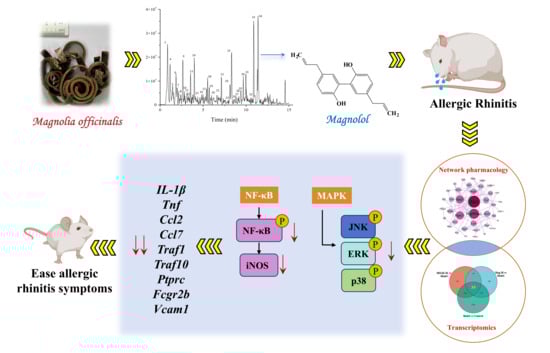
1. Introduction
2. Results
2.1. Chemical Profiling of MOAE
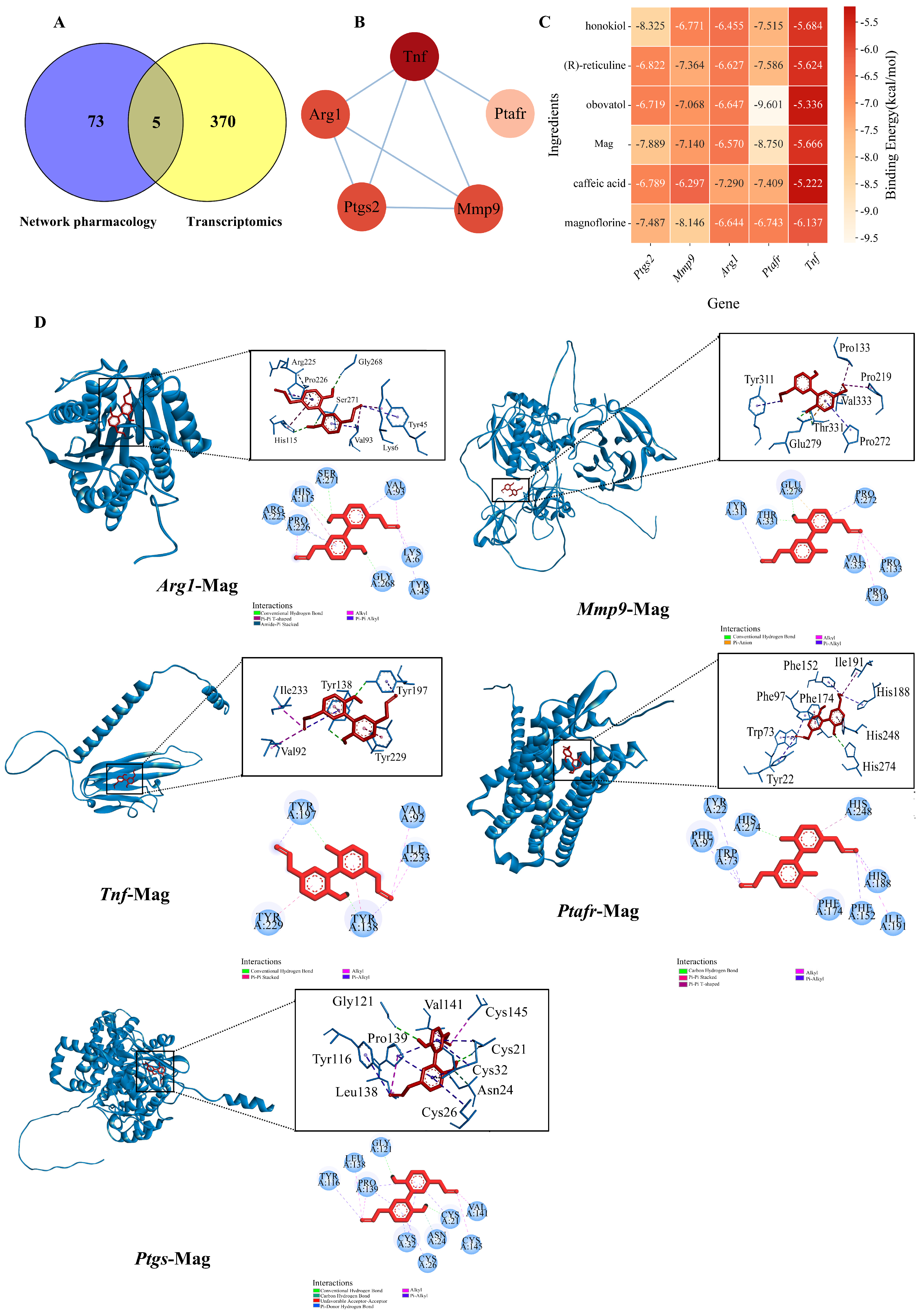
2.2. Bioinformatics Analysis of MOAE in AR Treatment
2.3. MOAE or Mag Relieves OVA-Induced Nasal Allergy Symptom
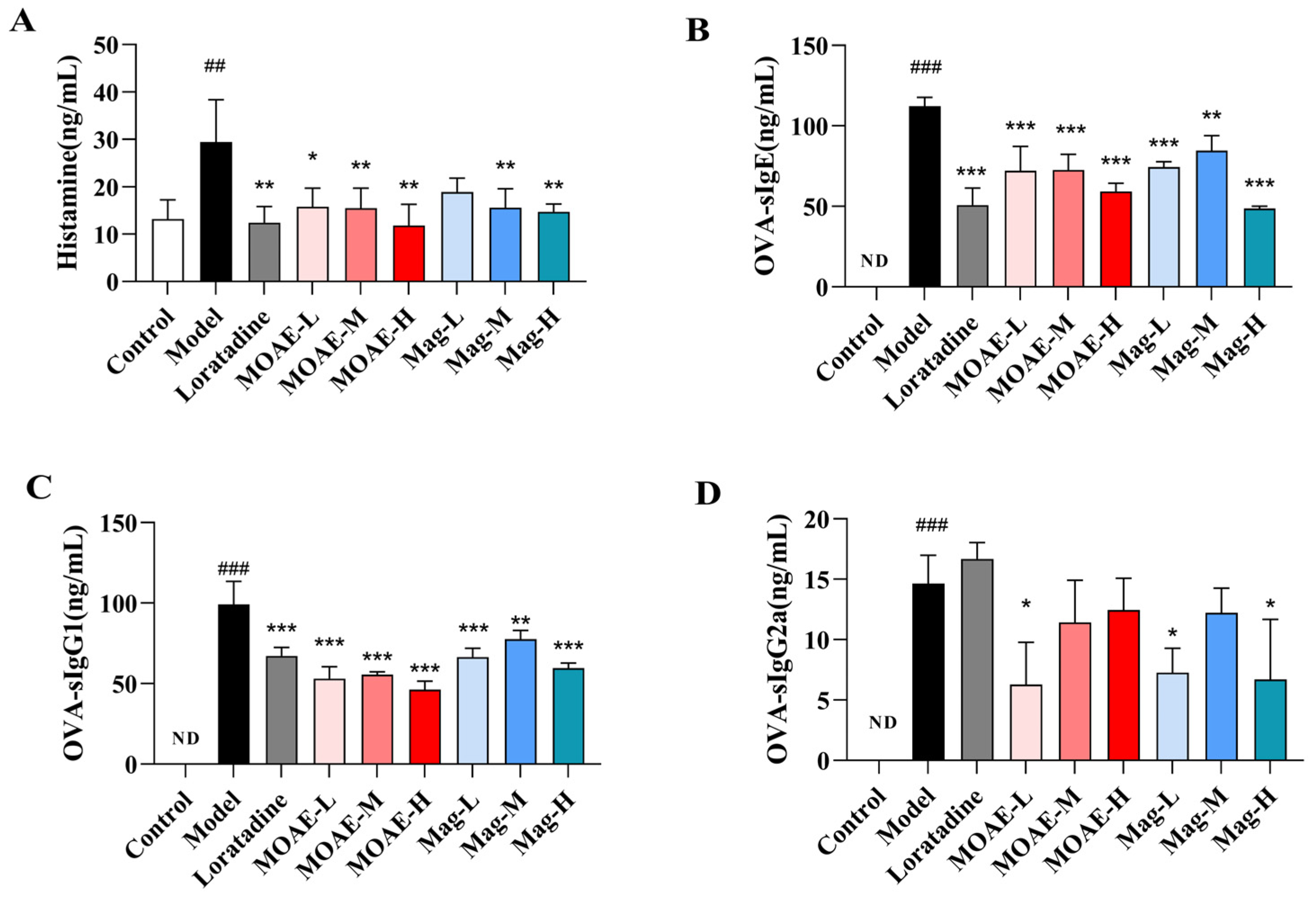
2.4. Effect of MOAE or Mag on the Production of Histamine and OVA-Specific Antibodies in Serum
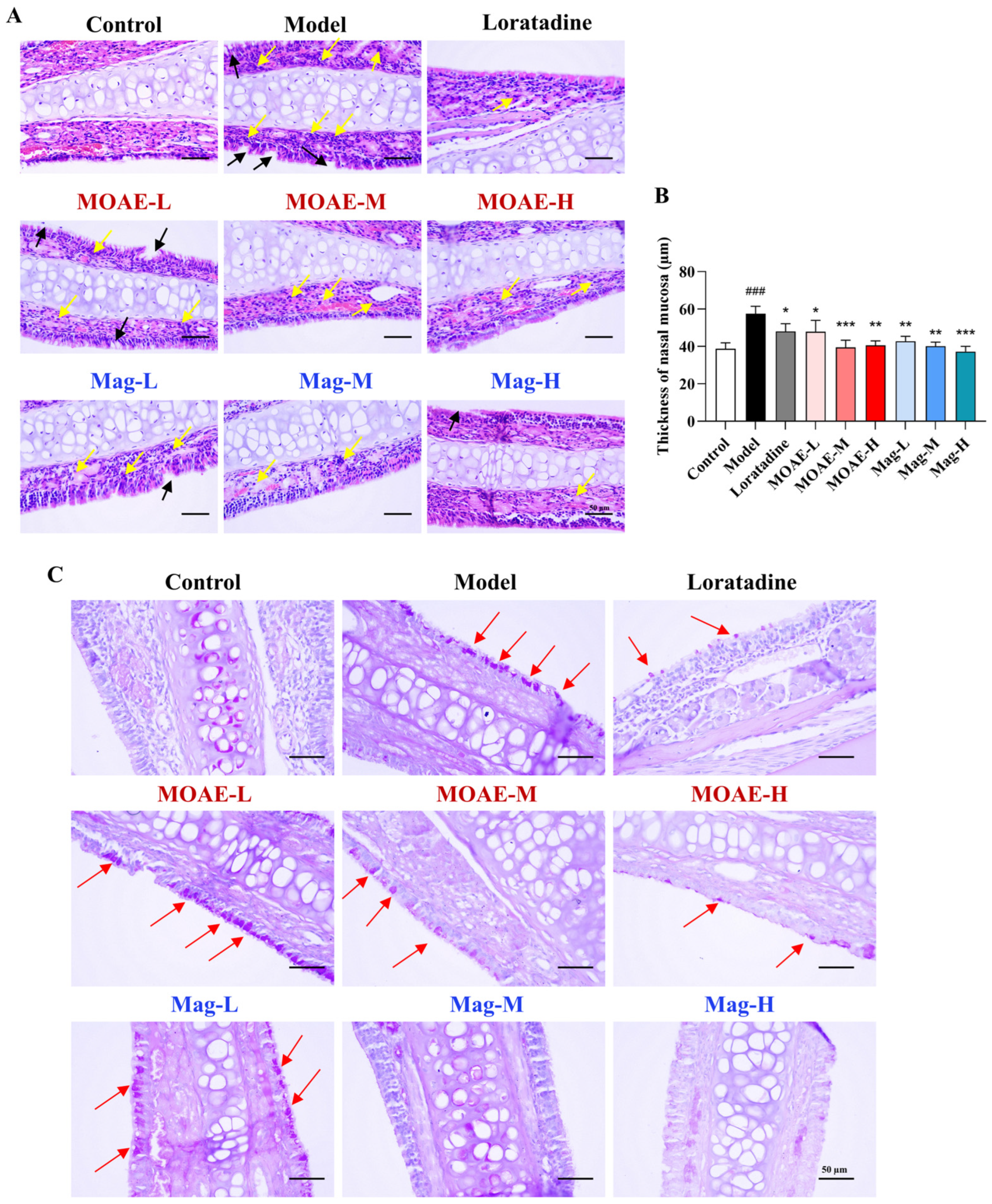
2.5. Effect of MOAE or Mag on Histopathological Alterations in Nasal Mucosa
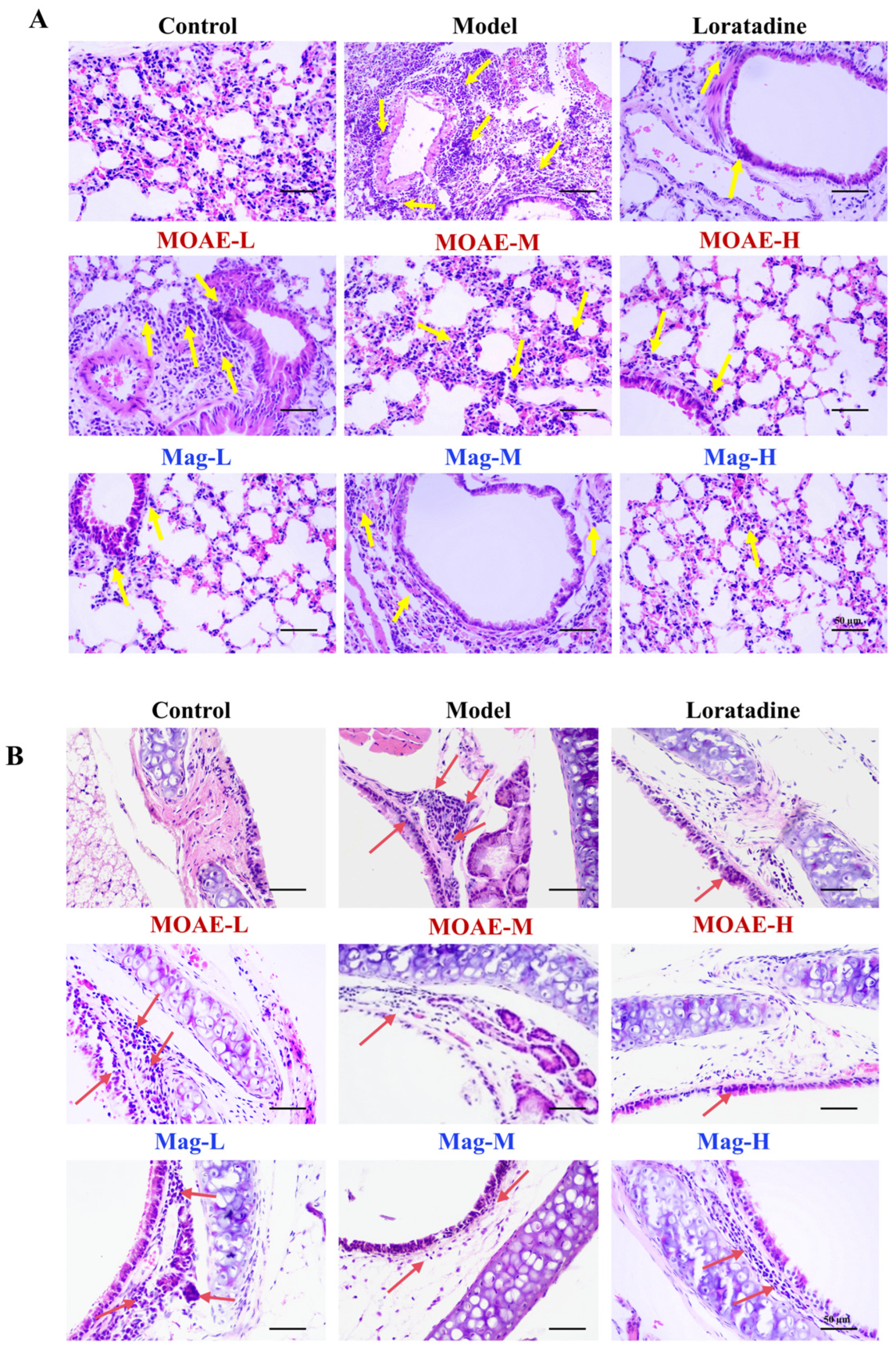
2.6. Impact of MOAE or Mag on Histopathological Alterations in Lung and Tracheal Tissues
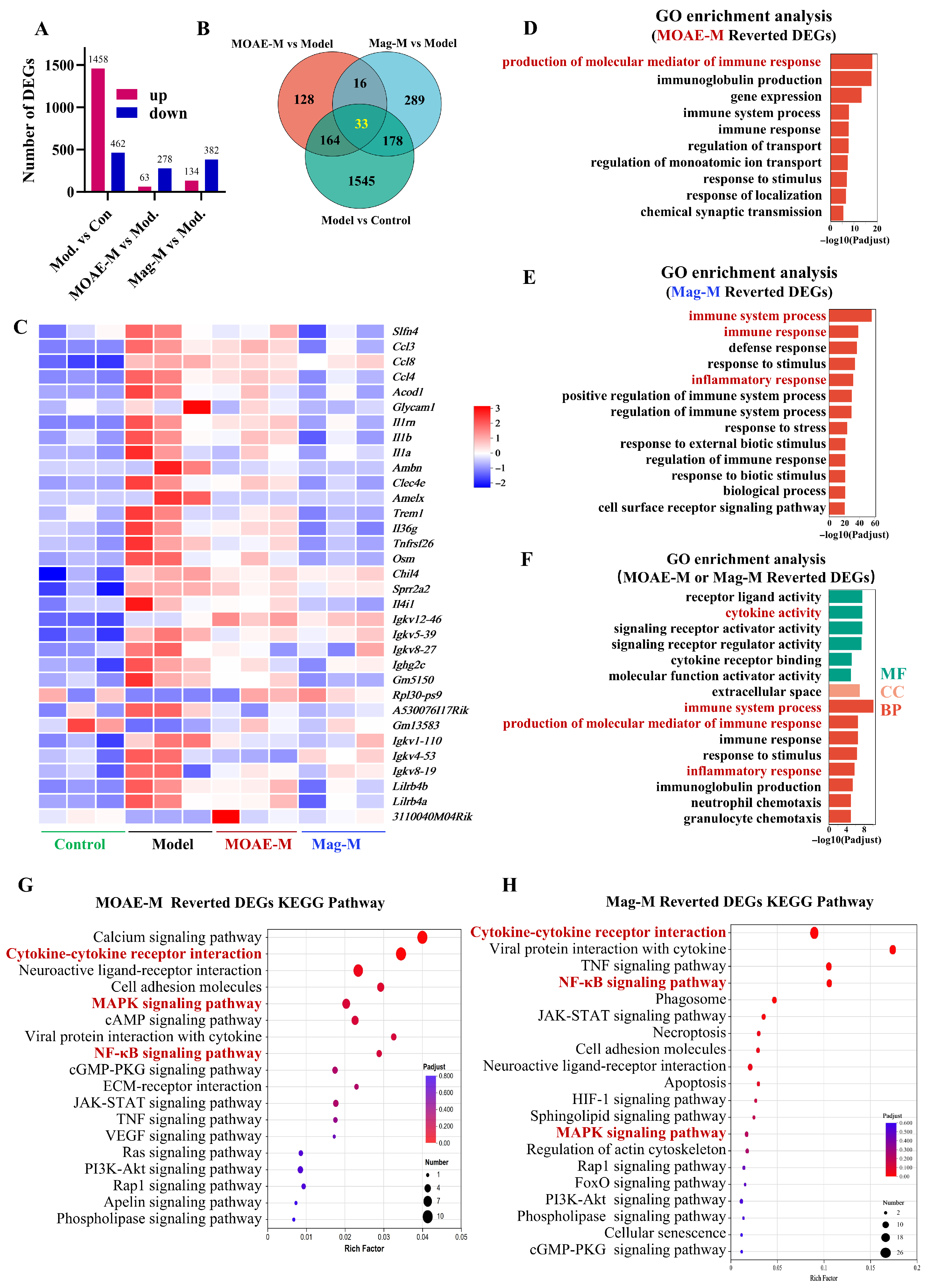
2.7. Transcriptomic Analysis of MOAE or Mag in AR Mice
2.8. Molecular Docking Verification of Key Hub Genes
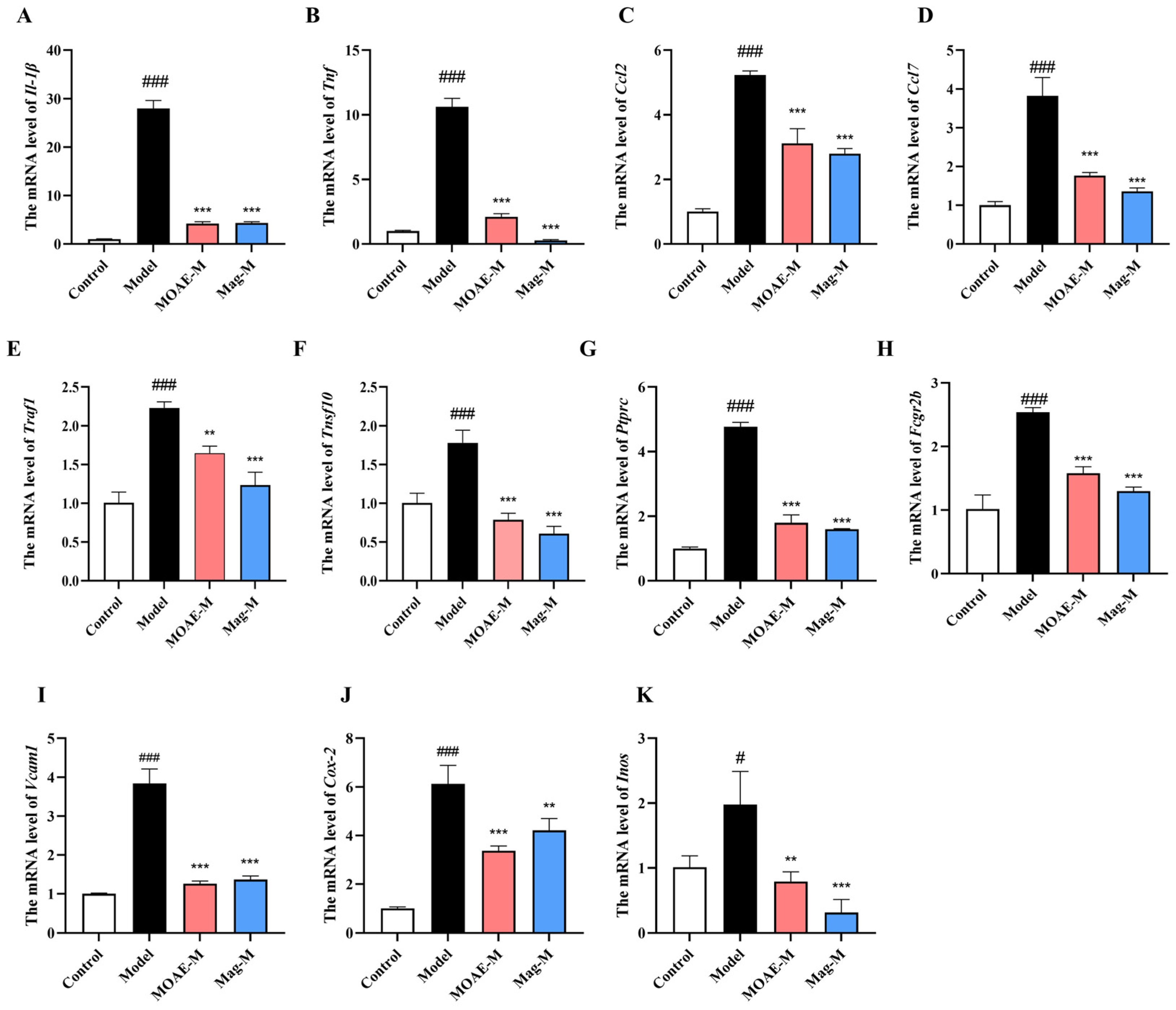
2.9. Verification of Potential Hub Genes by qRT-PCR
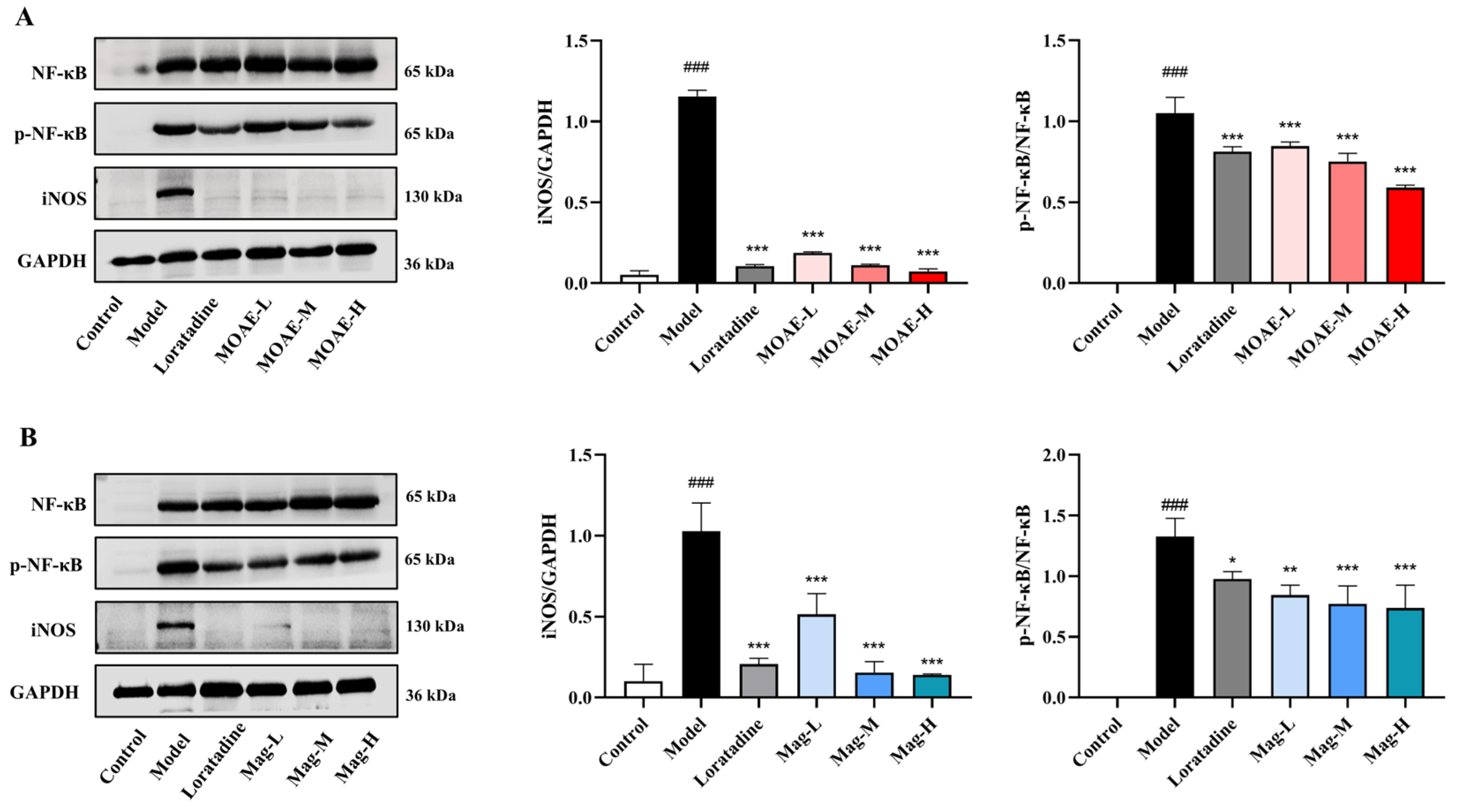
2.10. Inhibition of NF-κB Pathway by MOAE or Mag
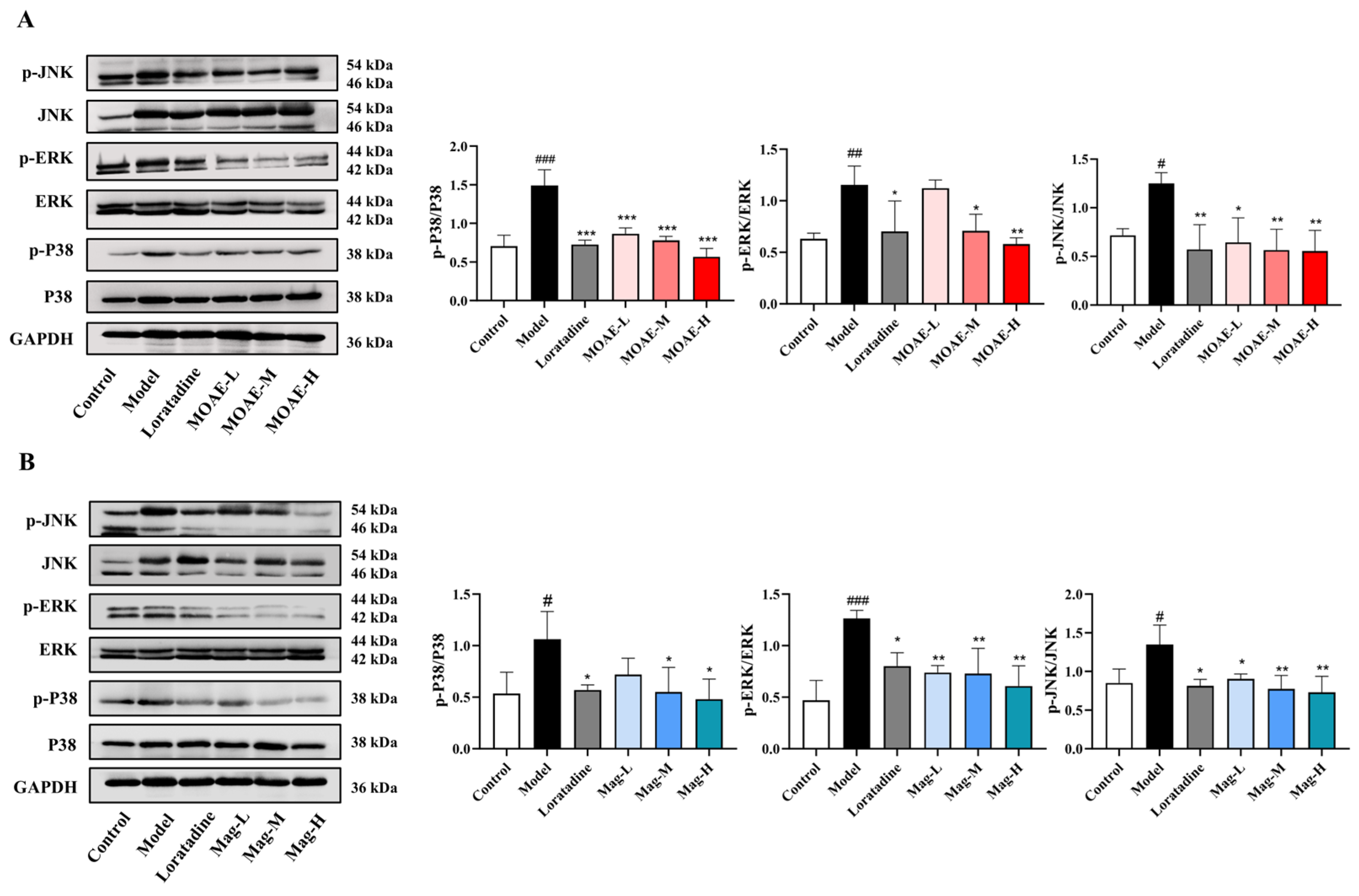
2.11. Inhibition of MAPK Pathway by MOAE or Mag
3. Discussion
4. Materials and Methods
4.1. Preparation of MOAE
4.2. UPLC-Q-TOF-MS Analysis
4.3. Bioinformatics Analysis
4.4. OVA-Induced AR Model
4.5. Nasal Symptoms
4.6. The Measurement of ALT, CRE and AST
4.7. The Measurement of OVA-sIgE, OVA-sIgG1, OVA-sIgG2a and Histamine
4.8. Histopathological Examination
4.9. Transcriptomics Analysis
4.10. Molecular Docking
4.11. qRT-PCR Analysis
4.12. Western Blot
4.13. Statistical Analysis
5. Conclusions
Author Contributions
Funding
Institutional Review Board Statement
Informed Consent Statement
Data Availability Statement
Conflicts of Interest
Abbreviations
| AR | Allergic rhinitis |
| AHR | Airway Hyperresponsiveness |
| ALI | Acute lung injury |
| Arg1 | Arginase-1 |
| BCA | Bicinchoninic acid |
| BP | Biological Process |
| CARAS | Combined Allergic Rhinitis and Asthma Syndrome |
| CC | Cellular Component |
| Ccl | C-C Motif Chemokine Ligand |
| Cox-2 | Cyclooxygenase-2(Ptgs2) |
| DCs | Dendritic cells |
| DEGs | Differentially Expressed Genes |
| ELISA | Enzyme linked immunosorbent assay |
| ERK | Extracellular-signal regulated protein kinase |
| FcεRI | High-affinity immunoglobulin E Fc receptor |
| FC | Fold change |
| Fcgr2b | Fc gamma receptor IIb |
| FDR | False discovery rate |
| GAPDH | Glyceraldehyde-3-phosphatedehydrogenase |
| GO | Gene Ontology |
| H&E staining | Hematoxylin-eosin staining |
| ICAM-1 | Intercellular Adhesion Molecule-1 |
| ILC2s | Type 2 innate lymphoid cells |
| IL | Interleukin |
| IL-1β | Interleukin-1β |
| Inos | Nitric oxide synthase |
| IgE | Immunoglobulin E |
| IgG1 | Immunoglobulin G1 |
| IgG2a | Immunoglobulin G2a |
| JAK-STAT | Janus kinase, signal transducer and activator of transcription |
| JNK | c-Jun N-terminal kinase |
| KEGG | Kyoto Encyclopedia of Genes and Genomes |
| LPS | Lipopolysaccharide |
| LTC4 | Leukotriene C4 |
| Mag | Magnolol |
| MAPK | Mitogen-activated protein kinase |
| MCs | Mast cells |
| MF | Molecular Function |
| Mmp9 | Matrix Metalloproteinase-9 |
| MOAE | Magnolia officinalis Rehder & E.H.Wilson. bark aqueous extract |
| Nasal epithelial cells | NC |
| NF-κB | Nuclear factor-κB |
| NLRP3 | NOD-like receptor family, pyrin domain containing 3 |
| OVA | Ovalbumin |
| PAS | Periodic acid-Schiff |
| PBS | Phosphate-buffered saline |
| PI3K-AKT | Phosphoinositide 3-Kinase- Protein Kinase B |
| P38 | p38 Mitogen-Activated Protein Kinase |
| PPI | Protein–protein interaction |
| Ptafr | Platelet-Activating Factor Receptor |
| Ptprc | Protein Tyrosine Phosphatase Receptor |
| PVDF | Polyvinylidene difluoride |
| PGD2 | Prostaglandin D2 |
| RNA-seq | RNA Sequencing |
| RT-PCR | Real-time polymerase chain reaction |
| SDS-PAGE | Sodium dodecyl sulphate polyacrylamide gel electrophoresis |
| TCM | Traditional Chinese Medicine |
| Th1 | T helper 1 cells |
| Th17 | T helper 17 cells |
| Th2 | T helper 2 cells |
| Treg | Regulatory T cells |
| TNF | Tumor necrosis factor |
| Traf1 | TNF Receptor-Associated Factor 1 |
| UPLC-Q-TOF/MS | Ultra Performance Liquid Chromatography Quadrupole Time of Flight Mass Spectrometry |
| Vcam-1 | Vascular cell adhesion molecule-1 |
References
- Barnes, P.J. Pathophysiology of allergic inflammation. Immunol. Rev. 2011, 242, 31–50. [Google Scholar] [CrossRef]
- Bousquet, J.; Anto, J.M.; Bachert, C.; Baiardini, I.; Bosnic-Anticevich, S.; Walter Canonica, G.; Melén, E.; Palomares, O.; Scadding, G.K.; Togias, A.; et al. Allergic rhinitis. Nat. Rev. Dis. Primers 2020, 6, 95. [Google Scholar] [CrossRef] [PubMed]
- Czech, E.J.; Overholser, A.; Schultz, P. Allergic Rhinitis. Prim. Care 2023, 50, 159–178. [Google Scholar] [CrossRef]
- Brożek, J.L.; Bousquet, J.; Agache, I.; Agarwal, A.; Bachert, C.; Bosnic-Anticevich, S.; Brignardello-Petersen, R.; Canonica, G.W.; Casale, T.; Chavannes, N.H.; et al. Allergic Rhinitis and its Impact on Asthma (ARIA) guidelines-2016 revision. J. Allergy Clin. Immunol. 2017, 140, 950–958. [Google Scholar] [CrossRef]
- Meng, Y.; Wang, C.; Zhang, L. Advances and novel developments in allergic rhinitis. Allergy 2020, 75, 3069–3076. [Google Scholar] [CrossRef] [PubMed]
- Zhou, L.; Huang, L.; He, G.; Li, H.; Liu, M.; Xu, J. Xiao-Qing-Long-Tang alleviates allergic rhinitis by inhibiting M1 macrophage polarization and modulating the TRPV1 channel. Phytomedicine 2025, 150, 157732. [Google Scholar] [CrossRef]
- Guo, Q.; Jin, Y.; Chen, X.; Ye, X.; Shen, X.; Lin, M.; Zeng, C.; Zhou, T.; Zhang, J. NF-κB in biology and targeted therapy: New insights and translational implications. Signal Transduct. Target. Ther. 2024, 9, 53. [Google Scholar] [CrossRef]
- Lawrence, T. The nuclear factor NF-kappaB pathway in inflammation. Cold Spring Harb. Perspect. Biol. 2009, 1, a001651. [Google Scholar] [CrossRef]
- Qin, Z.; Xie, L.; Li, W.; Wang, C.; Li, Y. New Insights into Mechanisms Traditional Chinese Medicine for Allergic Rhinitis by Regulating Inflammatory and Oxidative Stress Pathways. J. Asthma Allergy 2024, 17, 97–112. [Google Scholar] [CrossRef] [PubMed]
- Wang, R.; Yang, T.; Feng, Q.; Jiang, Y.; Yuan, X.; Zhao, L.; Liu, N.; Liu, Z.; Zhang, Y.; Wang, L.; et al. Integration of network pharmacology and proteomics to elucidate the mechanism and targets of traditional Chinese medicine Biyuan Tongqiao granule against allergic rhinitis in an ovalbumin-induced mice model. J. Ethnopharmacol. 2024, 318, 116816. [Google Scholar] [CrossRef]
- Xiang, J.; Yang, Z.; Zhou, Q. Lidocaine relieves murine allergic rhinitis by regulating the NF-κB and p38 MAPK pathways. Exp. Ther. Med. 2022, 23, 193. [Google Scholar] [CrossRef] [PubMed]
- Xu, X.; Wang, L.; Wu, G.; Li, X. Therapeutic effects of chlorogenic acid on allergic rhinitis through TLR4/MAPK/NF-κB pathway modulation. Biomol. Biomed. 2025, 25, 1571–1580. [Google Scholar] [CrossRef] [PubMed]
- Okubo, K.; Kurono, Y.; Ichimura, K.; Enomoto, T.; Okamoto, Y.; Kawauchi, H.; Suzaki, H.; Fujieda, S.; Masuyama, K. Japanese guidelines for allergic rhinitis. Allergol. Int. 2020, 69, 331–345. [Google Scholar]
- Siddiqui, Z.A.; Walker, A.; Pirwani, M.M.; Tahiri, M.; Syed, I. Allergic rhinitis: Diagnosis and management. Br. J. Hosp. Med. 2022, 83, 1–9. [Google Scholar] [CrossRef]
- Pavón-Romero, G.F.; Parra-Vargas, M.I.; Ramírez-Jiménez, F.; Melgoza-Ruiz, E.; Serrano-Pérez, N.H.; Teran, L.M. Allergen Immunotherapy: Current and Future Trends. Cells 2022, 11, 212. [Google Scholar] [CrossRef]
- Lee, Y.J.; Lee, Y.M.; Lee, C.K.; Jung, J.K.; Han, S.B.; Hong, J.T. Therapeutic applications of compounds in the Magnolia family. Pharmacol. Ther. 2011, 130, 157–176. [Google Scholar] [CrossRef]
- Luo, H.; Wu, H.; Yu, X.; Zhang, X.; Lu, Y.; Fan, J.; Tang, L.; Wang, Z. A review of the phytochemistry and pharmacological activities of Magnoliae officinalis cortex. J. Ethnopharmacol. 2019, 236, 412–442. [Google Scholar] [CrossRef] [PubMed]
- Xie, Q.; Li, H.; Ma, R.; Ren, M.; Li, Y.; Li, J.; Chen, H.; Chen, Z.; Gong, D.; Wang, J. Effect of Coptis chinensis franch and Magnolia officinalis on intestinal flora and intestinal barrier in a TNBS-induced ulcerative colitis rats model. Phytomedicine 2022, 97, 153927. [Google Scholar] [CrossRef]
- Hong, P.T.L.; Kim, H.J.; Kim, W.K.; Nam, J.H. Flos magnoliae constituent fargesin has an anti-allergic effect via ORAI1 channel inhibition. Korean J. Physiol. Pharmacol. 2021, 25, 251–258. [Google Scholar] [CrossRef]
- Chunlian, W.; Heyong, W.; Jia, X.; Jie, H.; Xi, C.; Gentao, L. Magnolol inhibits tumor necrosis factor-α-induced ICAM-1 expression via suppressing NF-κB and MAPK signaling pathways in human lung epithelial cells. Inflammation 2014, 37, 1957–1967. [Google Scholar] [CrossRef]
- Ko, C.H.; Chen, H.H.; Lin, Y.R.; Chan, M.H. Inhibition of smooth muscle contraction by magnolol and honokiol in porcine trachea. Planta Med. 2003, 69, 532–536. [Google Scholar] [PubMed]
- Lin, M.H.; Chen, M.C.; Chen, T.H.; Chang, H.Y.; Chou, T.C. Magnolol ameliorates lipopolysaccharide-induced acute lung injury in rats through PPAR-γ-dependent inhibition of NF-kB activation. Int. Immunopharmacol. 2015, 28, 270–278. [Google Scholar] [CrossRef]
- Ni, Y.F.; Jiang, T.; Cheng, Q.S.; Gu, Z.P.; Zhu, Y.F.; Zhang, Z.P.; Wang, J.; Yan, X.L.; Wang, W.P.; Ke, C.K.; et al. Protective effect of magnolol on lipopolysaccharide-induced acute lung injury in mice. Inflammation 2012, 35, 1860–1866. [Google Scholar] [CrossRef] [PubMed]
- Zhao, L.; Xiao, H.T.; Mu, H.X.; Huang, T.; Lin, Z.S.; Zhong, L.L.D.; Zeng, G.Z.; Fan, B.M.; Lin, C.Y.; Bian, Z.X. Magnolol, a Natural Polyphenol, Attenuates Dextran Sulfate Sodium-Induced Colitis in Mice. Molecules 2017, 22, 1218. [Google Scholar] [CrossRef]
- Phan, H.T.L.; Nam, Y.R.; Kim, H.J.; Woo, J.H.; NamKung, W.; Nam, J.H.; Kim, W.K. In-vitro and in-vivo anti-allergic effects of magnolol on allergic rhinitis via inhibition of ORAI1 and ANO1 channels. J. Ethnopharmacol. 2022, 289, 115061. [Google Scholar] [CrossRef] [PubMed]
- Phan, H.T.L.; Nam, Y.R.; Kim, H.J.; Van, N.T.H.; Vo, N.T.; Woo, J.; Kim, J.; Nam, J.H.; Kim, W.K. Polypharmacological effects of honokiol on allergic rhinitis: Modulation of TMEM16A, TRPV1, and calcium signaling. Biomed. Pharmacother. 2025, 191, 118460. [Google Scholar] [CrossRef]
- Nishiyori, T.; Tsuchiya, H.; Inagaki, N.; Nagai, H.; Koda, A. Effect of Saiboku-to, a blended Chinese traditional medicine, on Type I hypersensitivity reactions, particularly on experimentally-caused asthma. Nihon Yakurigaku Zasshi Folia Pharmacol. Jpn. 1985, 85, 7–16. [Google Scholar] [CrossRef]
- Urata, Y.; Yoshida, S.; Irie, Y.; Tanigawa, T.; Amayasu, H.; Nakabayashi, M.; Akahori, K. Treatment of asthma patients with herbal medicine TJ-96: A randomized controlled trial. Respir. Med. 2002, 96, 469–474. [Google Scholar] [CrossRef]
- Lee, S.J.; Cho, Y.H.; Park, K.; Kim, E.J.; Kang, B.S.; Jung, K.H.; Kim, C.H.; Kim, W.J.; Moon, S.K. Inhibitory effects of the aqueous extract of Magnolia officinalis on the responses of human urinary bladder cancer 5637 cells in vitro and mouse urinary bladder tumors induced by N-Butyl-N-(4-hydroxybutyl) nitrosamine in vivo. Phytother. Res. 2009, 23, 20–27. [Google Scholar] [CrossRef]
- Vega-Garcia, A.; Rocha, L.; Guevara-Guzman, R.; Guerra-Araiza, C.; Feria-Romero, I.; Gallardo, J.M.; Neri-Gomez, T.; Suarez-Santiago, J.E.; Orozco-Suarez, S. Magnolia officinalis Reduces Inflammation and Damage Induced by Recurrent Status Epilepticus in Immature Rats. Curr. Pharm. Des. 2020, 26, 1388–1401. [Google Scholar] [CrossRef]
- Chen, J.Y.; Tian, X.Y.; Wei, S.S.; Xu, W.; Pan, R.R.; Chen, L.L.; Chen, L.D.; Nan, L.H.; Yao, L.; Shan, D.; et al. Magnolol as STAT3 inhibitor for treating multiple sclerosis by restricting Th17 cells. Phytomedicine 2023, 117, 154917. [Google Scholar] [CrossRef]
- Cicalau, G.I.P.; Babes, P.A.; Calniceanu, H.; Popa, A.; Ciavoi, G.; Iova, G.M.; Ganea, M.; Scrobota, I. Anti-Inflammatory and Antioxidant Properties of Carvacrol and Magnolol, in Periodontal Disease and Diabetes Mellitus. Molecules 2021, 26, 6899. [Google Scholar] [CrossRef]
- Huang, J.; Zhang, W.; Xiang, R.; Tan, L.; Liu, P.; Tao, Z.; Deng, Y.; Tong, H.; Xu, Y. The early-phase transcriptome and the clinical efficacy analysis in three modes of subcutaneous immunotherapy for allergic rhinitis. World Allergy Organ. J. 2023, 16, 100811. [Google Scholar] [CrossRef]
- Milanese, M.; Ricca, V.; Canonica, G.W.; Ciprandi, G. Eosinophils, specific hyperreactivity and occurrence of late phase reaction in allergic rhinitis. Eur. Ann. Allergy Clin. Immunol. 2005, 37, 7–10. [Google Scholar] [PubMed]
- Udoye, C.C.; Rau, C.N.; Freye, S.M.; Almeida, L.N.; Vera-Cruz, S.; Othmer, K.; Korkmaz, R.; Clauder, A.K.; Lindemann, T.; Niebuhr, M.; et al. B-cell receptor physical properties affect relative IgG1 and IgE responses in mouse egg allergy. Mucosal Immunol. 2022, 15, 1375–1388. [Google Scholar] [CrossRef] [PubMed]
- Zhang, P.; Zhang, D.; Zhou, W.; Wang, L.; Wang, B.; Zhang, T.; Li, S. Network pharmacology: Towards the artificial intelligence-based precision traditional Chinese medicine. Brief. Bioinform. 2023, 25, bbad518. [Google Scholar] [CrossRef]
- Liu, F.L.; Rong, Y.; Zhou, H.; Yu, T.; Liu, L.; Cao, Q.; Qin, Z.; Qu, L.; Liao, X.; Jiang, Q.; et al. Cineole inhibits the biosynthesis of leukotrienes and prostaglandins to alleviate allergic rhinitis: Insights from metabolomics. J. Pharm. Biomed. Anal. 2023, 234, 115574. [Google Scholar] [CrossRef]
- Luo, G.; Gao, M.; Lin, Q. Integration of bioinformatics analysis, molecular docking and animal experiments to study the therapeutic mechanisms of berberine against allergic rhinitis. Sci. Rep. 2024, 14, 11999. [Google Scholar] [CrossRef]
- Zhang, Y.; Shui, J.; Wang, L.; Wang, F. Serum proteomics identifies S100A11 and MMP9 as novel biomarkers for predicting the early efficacy of sublingual immunotherapy in allergic rhinitis. Int. Immunopharmacol. 2023, 124, 110857. [Google Scholar] [CrossRef] [PubMed]
- Orban, N.T.; Jacobson, M.R.; Nouri-Aria, K.T.; Durham, S.R.; Eifan, A.O. Repetitive nasal allergen challenge in allergic rhinitis: Priming and Th2-type inflammation but no evidence of remodelling. Clin. Exp. Allergy 2021, 51, 329–338. [Google Scholar] [CrossRef]
- Xiang, R.; Zhang, Q.P.; Zhang, W.; Kong, Y.G.; Tan, L.; Chen, S.M.; Deng, Y.Q.; Tao, Z.Z.; Xu, Y. Different effects of allergic rhinitis on nasal mucosa remodeling in chronic rhinosinusitis with and without nasal polyps. Eur. Arch. Oto-Rhino-Laryngol. 2019, 276, 115–130. [Google Scholar] [CrossRef] [PubMed]
- Walker, J.M.; Maitra, A.; Walker, J.; Ehrnhoefer-Ressler, M.M.; Inui, T.; Somoza, V. Identification of Magnolia officinalis L. bark extract as the most potent anti-inflammatory of four plant extracts. Am. J. Chin. Med. 2013, 41, 531–544. [Google Scholar] [CrossRef]
- Cho, W.S.; Kim, T.H.; Kim, K.H.; Lee, H.M.; Lee, S.H.; Ju, Y.H.; Park, E.H.; Kim, K.W.; Lee, S.H. Increased expression of arginase I and II in allergic nasal mucosa. Laryngoscope 2011, 121, 236–240. [Google Scholar] [CrossRef] [PubMed]
- Grigg, J. The platelet activating factor receptor: A new anti-infective target in respiratory disease? Thorax 2012, 67, 840–841. [Google Scholar] [CrossRef][Green Version]
- Steelant, B.; Seys, S.F.; Van Gerven, L.; Van Woensel, M.; Farré, R.; Wawrzyniak, P.; Kortekaas Krohn, I.; Bullens, D.M.; Talavera, K.; Raap, U.; et al. Histamine and T helper cytokine-driven epithelial barrier dysfunction in allergic rhinitis. J. Allergy Clin. Immunol. 2018, 141, 951–963.e8. [Google Scholar] [CrossRef]
- Shin, S.H.; Ye, M.K.; Lee, D.W.; Chae, M.H.; Han, B.D. Nasal Epithelial Cells Activated with Alternaria and House Dust Mite Induce Not Only Th2 but Also Th1 Immune Responses. Int. J. Mol. Sci. 2020, 21, 2693. [Google Scholar] [CrossRef]
- Natarajan, K.; Abraham, P.; Kota, R.; Isaac, B. NF-κB-iNOS-COX2-TNF α inflammatory signaling pathway plays an important role in methotrexate induced small intestinal injury in rats. Food Chem. Toxicol. 2018, 118, 766–783. [Google Scholar] [CrossRef]
- Heo, Y.J.; Lee, N.; Choi, S.E.; Jeon, J.Y.; Han, S.J.; Kim, D.J.; Kang, Y.; Lee, K.W.; Kim, H.J. Amphiregulin Induces iNOS and COX-2 Expression through NF-κB and MAPK Signaling in Hepatic Inflammation. Mediat. Inflamm. 2023, 2023, 2364121. [Google Scholar] [CrossRef]
- Jiang, Y.; Nguyen, T.V.; Jin, J.; Yu, Z.N.; Song, C.H.; Chai, O.H. Bergapten ameliorates combined allergic rhinitis and asthma syndrome after PM2.5 exposure by balancing Treg/Th17 expression and suppressing STAT3 and MAPK activation in a mouse model. Biomed. Pharmacother. 2023, 164, 114959. [Google Scholar] [CrossRef]
- Santana, F.P.R.; da Silva, R.C.; Grecco, S.D.S.; Pinheiro, A.; Caperuto, L.C.; Arantes-Costa, F.M.; Claudio, S.R.; Yoshizaki, K.; Macchione, M.; Ribeiro, D.A.; et al. Inhibition of MAPK and STAT3-SOCS3 by Sakuranetin Attenuated Chronic Allergic Airway Inflammation in Mice. Mediat. Inflamm. 2019, 2019, 1356356. [Google Scholar] [CrossRef] [PubMed]
- Dong, J.; Xu, O.; Wang, J.; Shan, C.; Ren, X. Luteolin ameliorates inflammation and Th1/Th2 imbalance via regulating the TLR4/NF-κB pathway in allergic rhinitis rats. Immunopharmacol. Immunotoxicol. 2021, 43, 319–327. [Google Scholar] [CrossRef]
- Kang, C.; Li, X.; Liu, P.; Liu, Y.; Niu, Y.; Zeng, X.; Zhao, H.; Liu, J.; Qiu, S. Tolerogenic dendritic cells and TLR4/IRAK4/NF-κB signaling pathway in allergic rhinitis. Front. Immunol. 2023, 14, 1276512. [Google Scholar] [CrossRef] [PubMed]
- Coleman, J.W. Nitric oxide in immunity and inflammation. Int. Immunopharmacol. 2001, 1, 1397–1406. [Google Scholar] [CrossRef]
- Taylor, E.L.; Megson, I.L.; Haslett, C.; Rossi, A.G. Nitric oxide: A key regulator of myeloid inflammatory cell apoptosis. Cell Death Differ. 2003, 10, 418–430. [Google Scholar] [CrossRef]
- Rauf, A.; Olatunde, A.; Imran, M.; Alhumaydhi, F.A.; Aljohani, A.S.M.; Khan, S.A.; Uddin, M.S.; Mitra, S.; Emran, T.B.; Khayrullin, M.; et al. Honokiol: A review of its pharmacological potential and therapeutic insights. Phytomedicine 2021, 90, 153647. [Google Scholar] [CrossRef] [PubMed]
- Kim, K.R.; Park, K.K.; Chun, K.S.; Chung, W.Y. Honokiol inhibits the progression of collagen-induced arthritis by reducing levels of pro-inflammatory cytokines and matrix metalloproteinases and blocking oxidative tissue damage. J. Pharmacol. Sci. 2010, 114, 69–78. [Google Scholar] [CrossRef]
- Li, N.; Xie, H.; Li, L.; Wang, J.; Fang, M.; Yang, N.; Lin, H. Effects of honokiol on sepsis-induced acute kidney injury in an experimental model of sepsis in rats. Inflammation 2014, 37, 1191–1199. [Google Scholar] [CrossRef] [PubMed]
- Ogulur, I.; Mitamura, Y.; Yazici, D.; Pat, Y.; Ardicli, S.; Li, M.; D’Avino, P.; Beha, C.; Babayev, H.; Zhao, B.; et al. Type 2 immunity in allergic diseases. Cell. Mol. Immunol. 2025, 22, 211–242. [Google Scholar] [CrossRef]
- Huang, Q.; Han, L.; Lv, R.; Ling, L. Magnolol exerts anti-asthmatic effects by regulating Janus kinase-signal transduction and activation of transcription and Notch signaling pathways and modulating Th1/Th2/Th17 cytokines in ovalbumin-sensitized asthmatic mice. Korean J. Physiol. Pharmacol. 2019, 23, 251–261. [Google Scholar] [CrossRef]
- Lata, E.; Fulczyk, A.; Ott, P.G.; Kowalska, T.; Sajewicz, M.; Moricz, A.M. Thin-layer chromatographic quantification of magnolol and honokiol in dietary supplements and selected biological properties of these preparations. J. Chromatogr. A 2020, 1625, 461230. [Google Scholar] [CrossRef]
- Poivre, M.; Duez, P. Biological activity and toxicity of the Chinese herb Magnolia officinalis Rehder & E. Wilson (Houpo) and its constituents. J. Zhejiang Univ. Sci. B 2017, 18, 194–214. [Google Scholar] [PubMed]
- Paiva Ferreira, L.K.D.; Paiva Ferreira, L.A.M.; Monteiro, T.M.; Bezerra, G.C.; Bernardo, L.R.; Piuvezam, M.R. Combined allergic rhinitis and asthma syndrome (CARAS). Int. Immunopharmacol. 2019, 74, 105718. [Google Scholar] [CrossRef] [PubMed]
- Mao, Z.; Ding, Z.; Liu, Z.; Shi, Y.; Zhang, Q. miR-21-5p Modulates Airway Inflammation and Epithelial-Mesenchymal Transition Processes in a Mouse Model of Combined Allergic Rhinitis and Asthma Syndrome. Int. Arch. Allergy Immunol. 2024, 185, 775–785. [Google Scholar] [CrossRef] [PubMed]



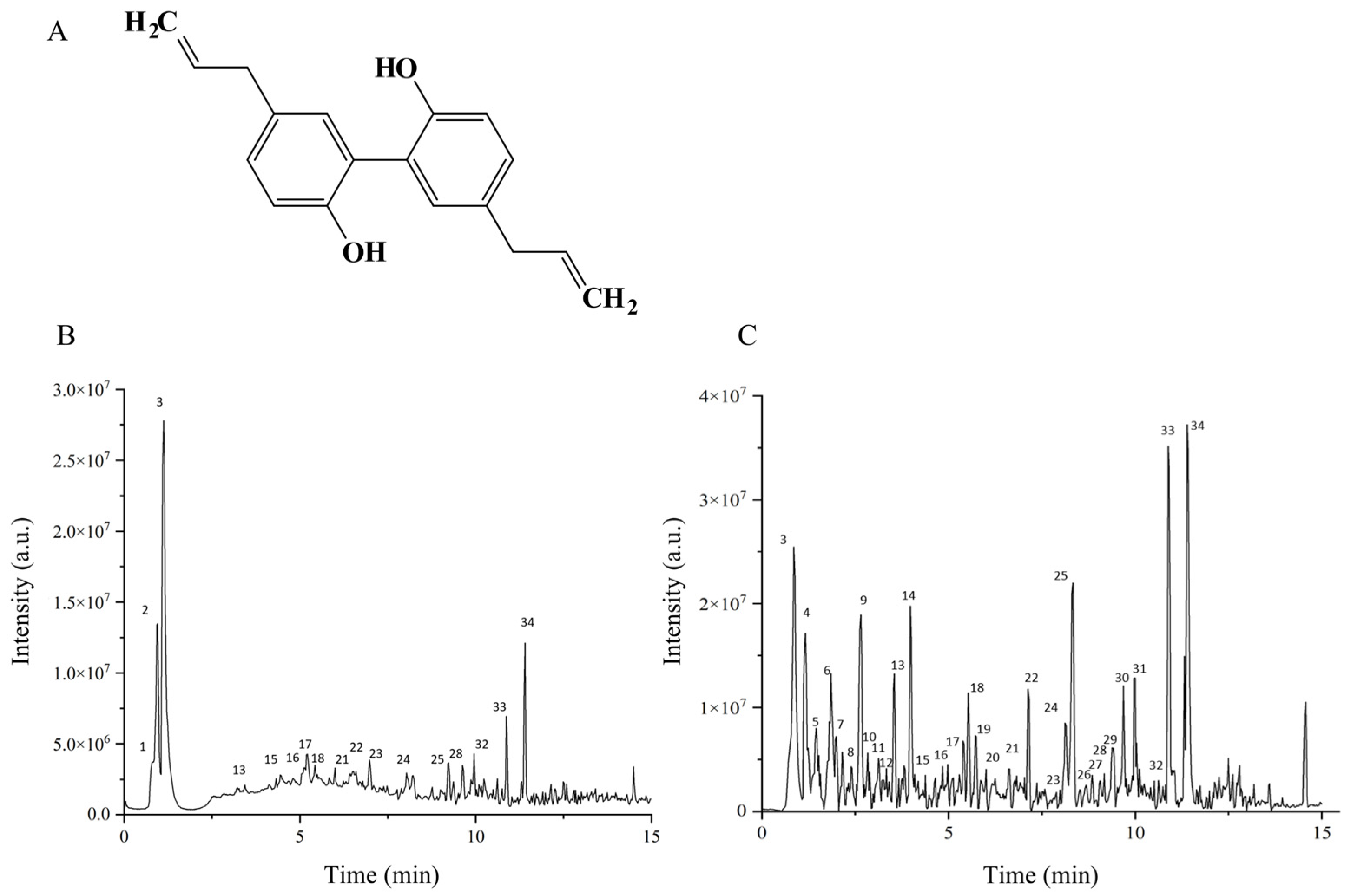
| Peak | tR (min) | Identification | Formula | Quasi Molecular | ppm |
|---|---|---|---|---|---|
| 1 | 0.906 | betaine | C5H11NO2 | 118.0861 [M+H]+ | −1.4 |
| 2 | 0.971 | reticuline | C19H23NO4 | 330.1701 [M+H]+ | 0.4 |
| 3 | 1.123 | magnoflorine | C20H24NO4+ | 343.1731 [M+H]+ | −13.7 |
| 4 | 1.168 | aciculoside | C19H28O12 | 447.1482 [M−H]− | −3.4 |
| 5 | 1.754 | syringic acid 4-O-β-D-glucopyranosyl-(1→5)-α-L-rhamnopyranoside | C21H30O14 | 505.1532 [M−H]− | −3.9 |
| 6 | 1.983 | magnoloside B | C35H46O20 | 785.2455 [M−H]− | 5.6 |
| 7 | 2.179 | kelampayoside A | C20H30O13 | 477.1584 [M−H]− | −3.9 |
| 8 | 2.463 | triphyllin B | C29H38O16 | 641.2046 [M−H]− | −4.7 |
| 9 | 2.508 | caffeic acid | C9H8O4 | 179.0344 [M−H]− | 2.8 |
| 10 | 2.639 | magnoloside A | C29H36O15 | 623.1916 [M−H]− | −8.7 |
| 11 | 2.668 | magnoloside E | C28H34O15 | 609.1793 [M−H]− | −3.4 |
| 12 | 3.541 | magnoloside M | C29H36O15 | 623.1924 [M−H]− | −7.5 |
| 13 | 3.828 | magnoloside L | C28H34O15 | 609.1781 [M−H]− | −5.4 |
| 14 | 3.987 | acteoside | C29H36O15 | 623.1916 [M−H]− | −8.7 |
| 15 | 4.091 | syringaresinol | C22H26O8 | 417.1532 [M−H]− | −2.9 |
| 16 | 5.115 | magnolignan D | C19H22O5 | 331.1543 [M+H]+ | 0.9 |
| 17 | 5.162 | anonaine | C17H15NO2 | 266.118 [M+H]+ | 1.7 |
| 18 | 5.214 | 5-allyl-5′-(1″-hydroxyallyloxy)biphenyl-2,2′-diol | C18H18O4 | 299.1282 [M+H]+ | 1.4 |
| 19 | 5.406 | 4′-methoxymagnaldehyde E | C17H16O3 | 267.1012 [M−H]− | −1.4 |
| 20 | 5.414 | magnoloside B | C18H20O5 | 315.1209 [M−H]− | −5.7 |
| 21 | 5.509 | liriodenine | C17H9NO3 | 276.0656 [M+H]+ | 0.3 |
| 22 | 5.538 | honokitriol | C18H20O5 | 315.1208 [M−H]− | −6.0 |
| 23 | 5.741 | magnolignan A | C18H20O4 | 299.1259 [M−H]− | −6.3 |
| 24 | 7.14 | magnolignan C | C18H20O4 | 299.1254 [M−H]− | −8.0 |
| 25 | 8.231 | randaiol | C15H14O3 | 243.1005 [M+H]+ | −4.4 |
| 26 | 8.322 | magnatriol B | C15H14O3 | 241.0839 [M−H]− | −8.4 |
| 27 | 8.856 | magnaldehyde D | C16H14O3 | 253.0845 [M−H]− | −5.6 |
| 28 | 9.179 | obovatol | C18H18O3 | 281.1162 [M−H]− | −3.6 |
| 29 | 9.432 | magnaldehyde B | C18H16O3 | 279.1005 [M−H]− | −3.8 |
| 30 | 9.685 | magnaldehyde E | C16H14O3 | 253.0842 [M−H]− | −6.8 |
| 31 | 9.979 | randainal | C18H16O3 | 279.0996 [M−H]− | −7.1 |
| 32 | 10.461 | 4′-O-methylhonokiol | C19H20O2 | 279.1377 [M−H]− | −0.9 |
| 33 | 10.906 | honokiol | C18H18O2 | 265.1195 [M−H]− | −3.4 |
| 34 | 11.404 | magnolol | C18H18O2 | 265.1196 [M−H]− | −4.9 |
| Gene | Forward Sequence | Reverse Sequence |
|---|---|---|
| Tnfsf10 | GGAAGACCTCAGAAAGTGGCAG | TTTCCGAGAGGACTCCCAGGAT |
| Traf1 | GAGCAGACAACCTCCATCCTGT | GAAGGAACAGCCAACACCTGCA |
| Fcgr2b | CTACTGTGGACAGCCGTGCTAA | TCACCGTGTCTTCCTTGAGCAC |
| Ccl2 | GCTACAAGAGGATCACCAGCAG | GTCTGGACCCATTCCTTCTTGG |
| Ptprc | CTTCAGTGGTCCCATTGTGGTG | TCAGACACCTCTGTCGCCTTAG |
| Vcam1 | GCTATGAGGATGGAAGACTCTGG | ACTTGTGCAGCCACCTGAGATC |
| Ccl7 | CAGAAGGATCACCAGTAGTCGG | ATAGCCTCCTCGACCCACTTCT |
| Cox-2 | GCGACATACTCAAGCAGGAGCA | AGTGGTAACCGCTCAGGTGTTG |
| Inos | GAGACAGGGAAGTCTGAAGCAC | CCAGCAGTAGTTGCTCCTCTTC |
| Il-1β | TGGACCTTCCAGGATGAGGACA | GTTCATCTCGGAGCCTGTAGTG |
| Tnf | GGTGCCTATGTCTCAGCCTCTT | GCCATAGAACTGATGAGAGGGAG |
| Gapdh | CATCACTGCCACCCAGAAGACTG | ATGCCAGTGAGCTTCCCGTTCAG |
Disclaimer/Publisher’s Note: The statements, opinions and data contained in all publications are solely those of the individual author(s) and contributor(s) and not of MDPI and/or the editor(s). MDPI and/or the editor(s) disclaim responsibility for any injury to people or property resulting from any ideas, methods, instructions or products referred to in the content. |
© 2026 by the authors. Licensee MDPI, Basel, Switzerland. This article is an open access article distributed under the terms and conditions of the Creative Commons Attribution (CC BY) license.
Share and Cite
Huang, L.; Zhou, X.; He, G.; Li, H.; Chen, X.; Xu, J.; Zhou, L. Magnolia officinalis Rehder & E.H.Wilson. Bark Extract and Magnolol Alleviate Allergic Rhinitis via Modulating NF-κB/MAPK Signaling. Molecules 2026, 31, 1009. https://doi.org/10.3390/molecules31061009
Huang L, Zhou X, He G, Li H, Chen X, Xu J, Zhou L. Magnolia officinalis Rehder & E.H.Wilson. Bark Extract and Magnolol Alleviate Allergic Rhinitis via Modulating NF-κB/MAPK Signaling. Molecules. 2026; 31(6):1009. https://doi.org/10.3390/molecules31061009
Chicago/Turabian StyleHuang, Leyuan, Xu Zhou, Guanfeng He, Haixin Li, Xiaoying Chen, Jingwen Xu, and Lei Zhou. 2026. "Magnolia officinalis Rehder & E.H.Wilson. Bark Extract and Magnolol Alleviate Allergic Rhinitis via Modulating NF-κB/MAPK Signaling" Molecules 31, no. 6: 1009. https://doi.org/10.3390/molecules31061009
APA StyleHuang, L., Zhou, X., He, G., Li, H., Chen, X., Xu, J., & Zhou, L. (2026). Magnolia officinalis Rehder & E.H.Wilson. Bark Extract and Magnolol Alleviate Allergic Rhinitis via Modulating NF-κB/MAPK Signaling. Molecules, 31(6), 1009. https://doi.org/10.3390/molecules31061009