Nature-Inspired Enzymatic Cascades: Emerging Strategies for Sustainable Chemistry

 ,
,  ,
, 
Abstract
1. Introduction
2. Origins of Enzymatic Cascades
2.1. Cell Metabolism as a Source of Inspiration for Organic Synthesis
2.2. The Minimal Cell
2.3. Artificial Metabolism
2.4. Benefits and Challenges of Enzymatic Cascades
3. Cascade Design
3.1. Assembly and Nanotechnology-Based Supports
3.2. Thermodynamics, Kinetics and Pathway Balancing
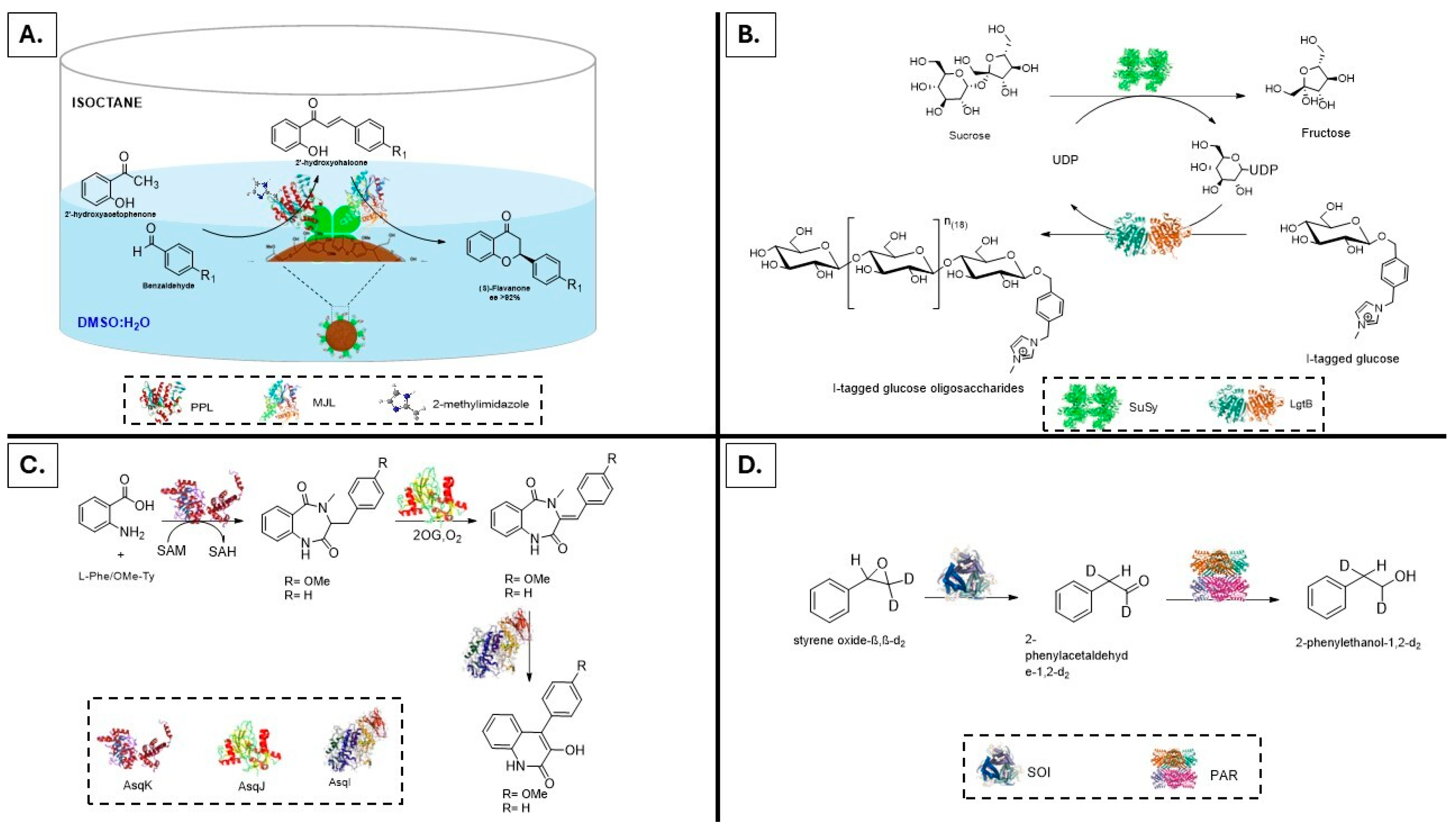
3.3. Enzyme Promiscuity and Noncanonical Reactivities. The Other Side of the Enzymatic Cascade
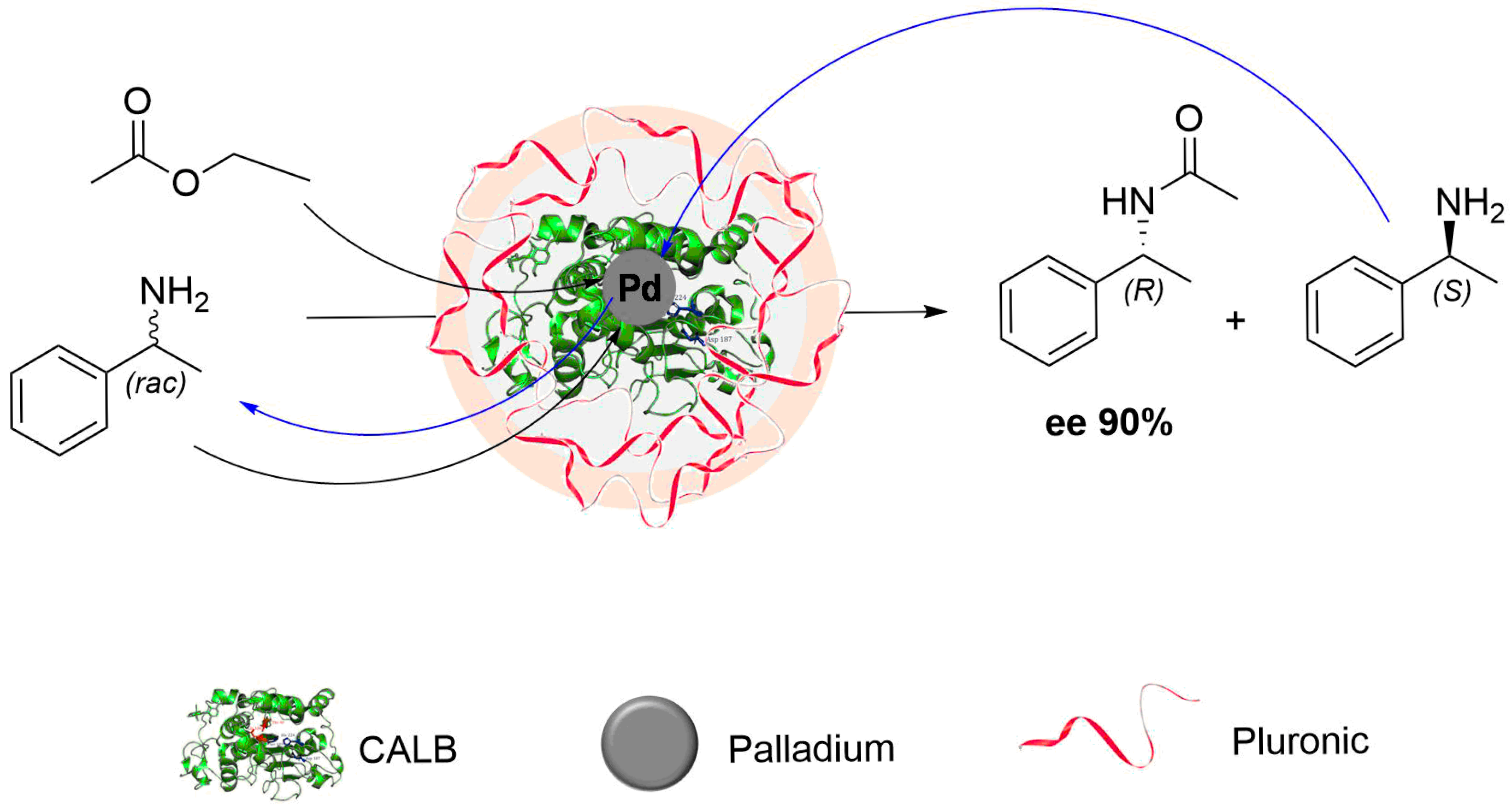
3.4. Chimera Enzymatic Cascades
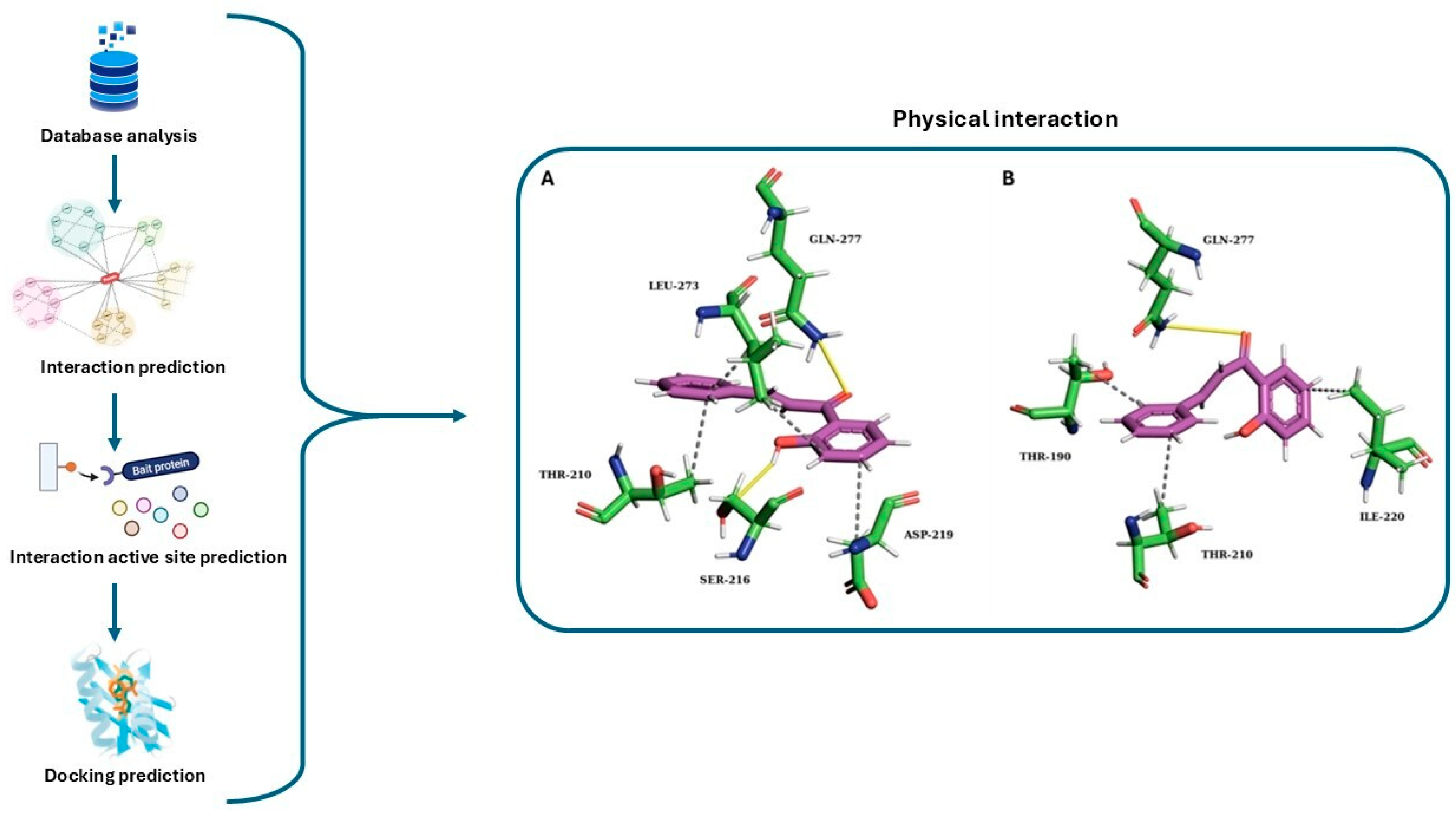
3.5. Analytical, Bioinformatic and AI Tools for Enzymatic Cascades
4. Application of Enzymatic Cascades
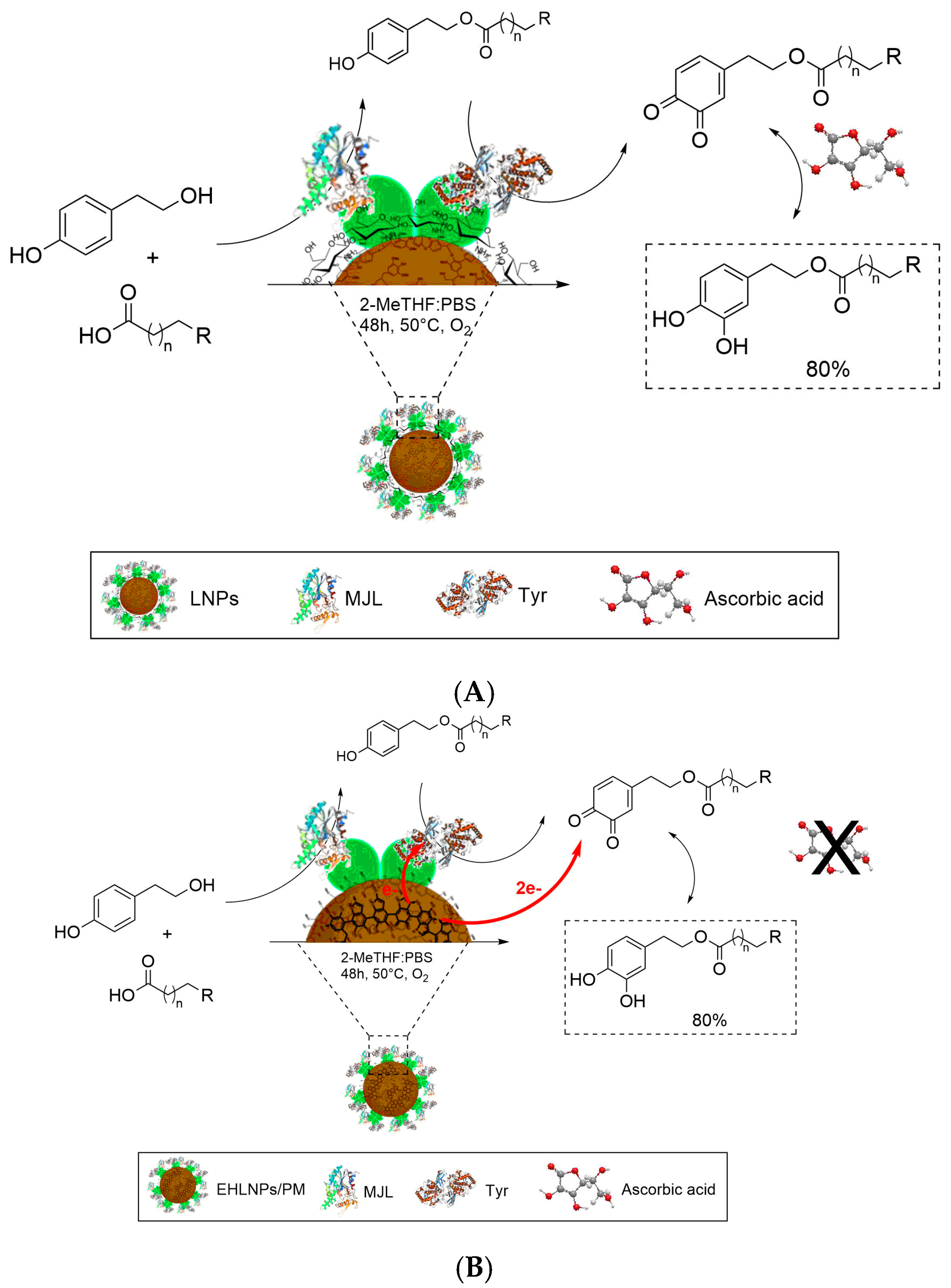
4.1. Redox Cascades
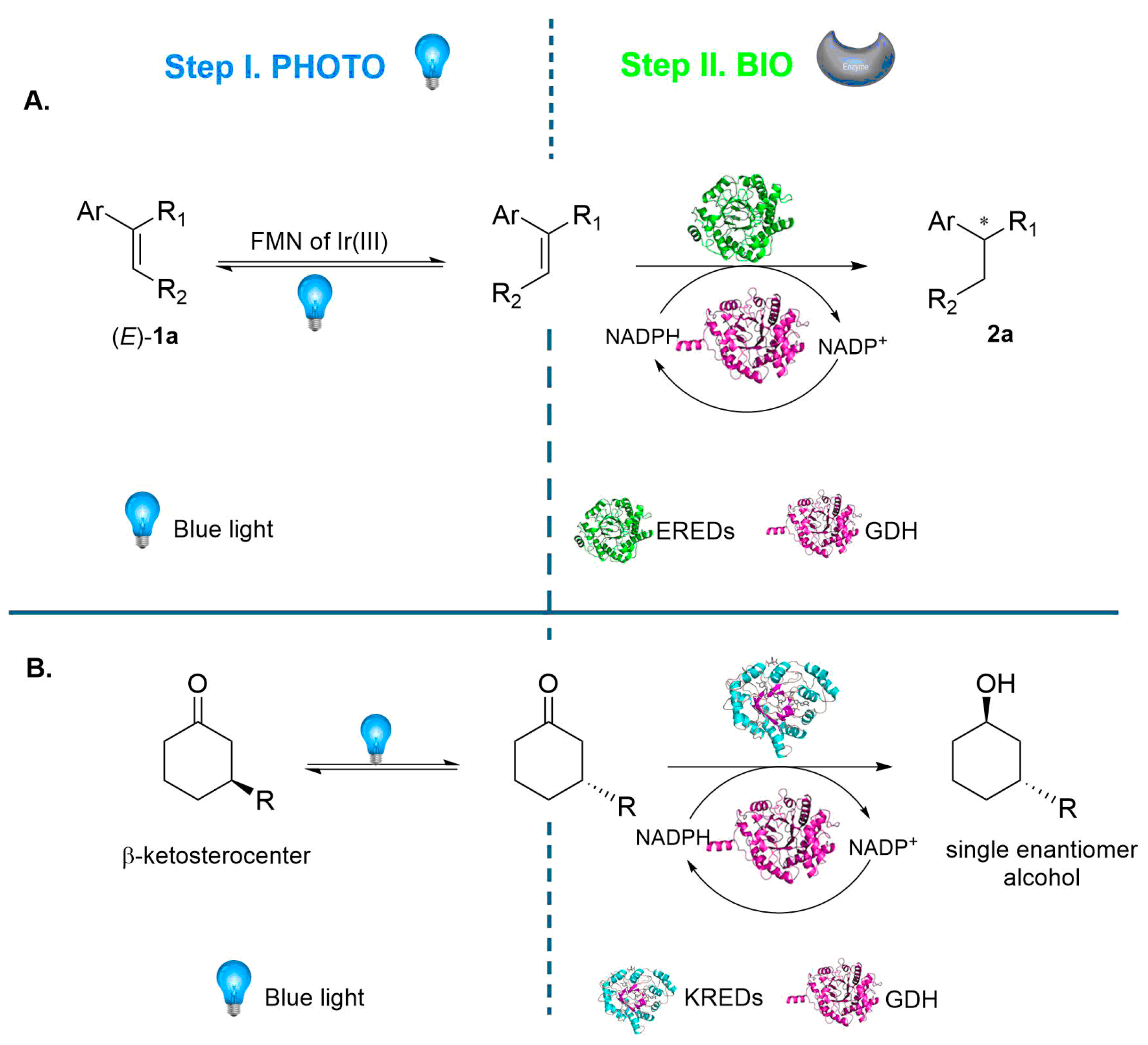
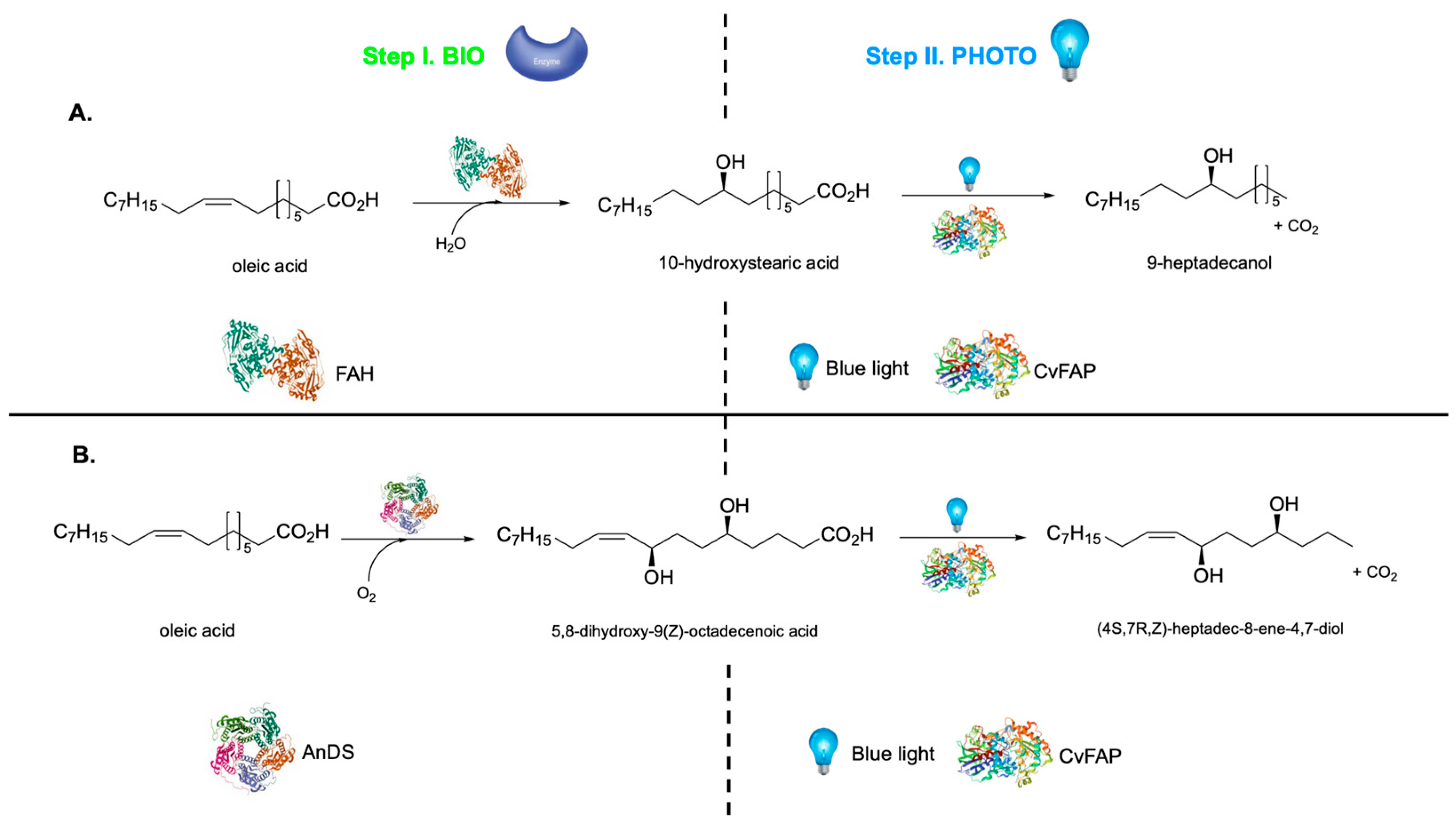
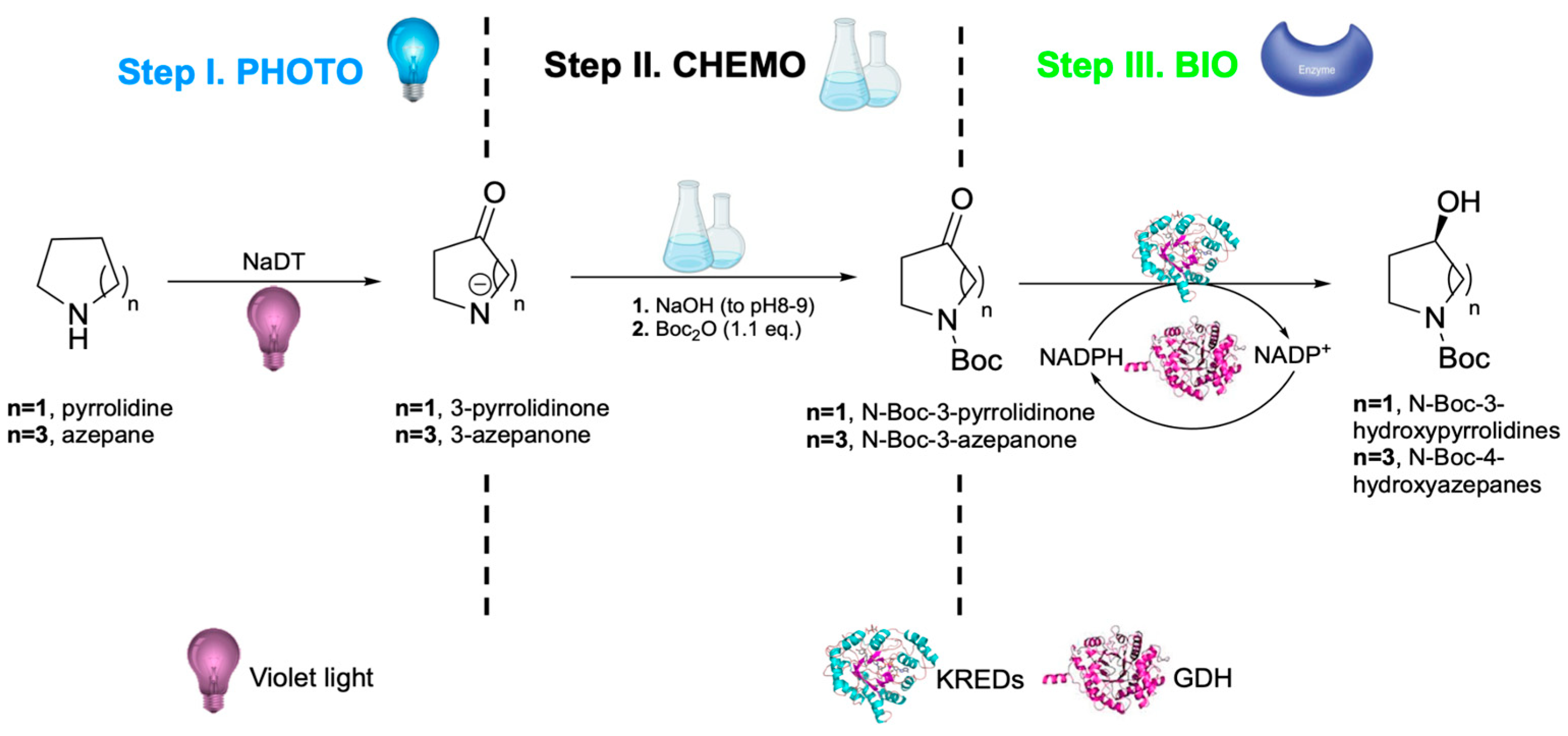
4.2. Photo Biocatalytic Cascades
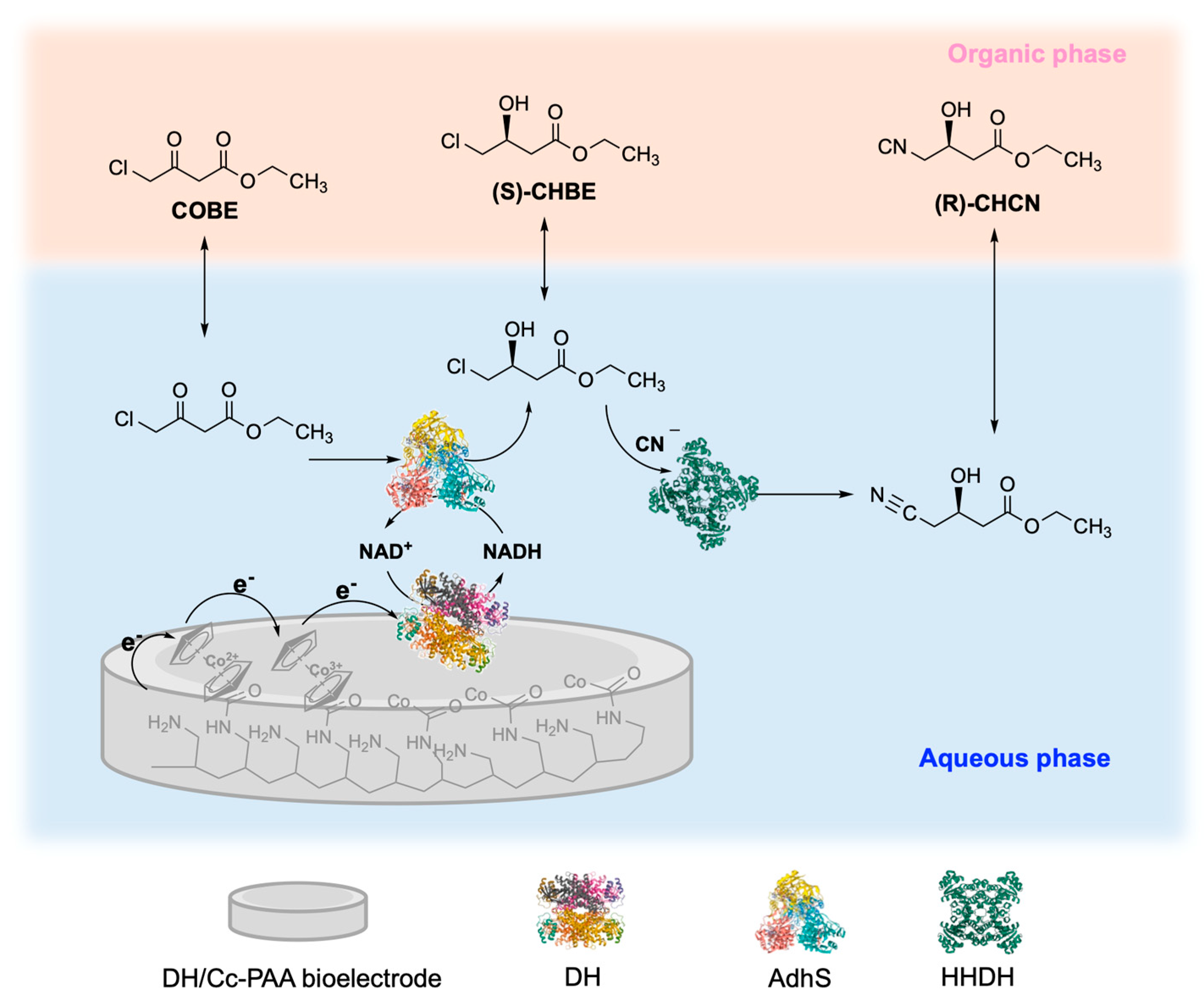
4.3. Electro Biocatalytic Cascades
4.4. Synthesis of Privileged Bioactive Scaffolds
5. Conclusions
Author Contributions
Funding
Institutional Review Board Statement
Informed Consent Statement
Data Availability Statement
Acknowledgments
Conflicts of Interest
References
- Quin, M.B.; Wallin, K.K.; Zhang, G.; Schmidt-Dannert, C. Spatial organization of multi-enzyme biocatalytic cascades. Org. Biomol. Chem. 2017, 15, 4260–4271. [Google Scholar] [CrossRef]
- Yi, J.; Li, Z. Artificial multi-enzyme cascades for natural product synthesis. Curr. Opin. Biotechnol. 2022, 78, 102831. [Google Scholar] [CrossRef]
- Kröll, S.; Niemeye, C.M. Nucleic Acid-based Enzyme Cascades—Current Trends and Future Perspectives. Angew. Chem. Int. Ed. 2024, 63, e202314452. [Google Scholar] [CrossRef]
- Qiao, Y.; Ma, W.; Zhang, S.; Guo, F.; Liu, K.; Jiang, Y.; Wang, Y.; Xin, F.; Zhang, W.; Jiang, M. Artificial multi-enzyme cascades and whole-cell transformation for bioconversion of C1 compounds: Advances, challenge and perspectives. Synth. Syst. Biotechnol. 2023, 8, 578–583. [Google Scholar] [CrossRef]
- Nazor, J.; Liu, J.; Huisman, G. Enzyme evolution for industrial biocatalytic cascades. Curr. Opin. Biotechnol. 2021, 69, 182–190. [Google Scholar] [CrossRef] [PubMed]
- Jiang, C.; Cheng, G.; Xu, F.; Wu, Q. One Pot Enzyme-Catalyzed Cascade Benefit Systems. Mini-Rev. Org. Chem. 2021, 18, 282–295. [Google Scholar] [CrossRef]
- Hwang, E.T.; Lee, S. Multienzymatic Cascade Reactions via Enzyme Complex by Immobilization. ACS Catal. 2019, 9, 4402–4425. [Google Scholar] [CrossRef]
- Ijaz, U.; Nadeem, H.U.; Shafique, A.; Rasheed, A.; Batool, R.; Azeem, F. Rice bran composition and its emerging potential applications. In Green Sustainable Process for Chemical and Environmental Engineering and Science, 1st ed.; Inamuddin, Boddula, R., Asiri, A.M., Eds.; Elsevier: Amsterdam, The Netherlands, 2020; pp. 1–16. [Google Scholar]
- Benítez-Mateos, A.I.; Roura Padrosa, D.; Paradisi, F. Multistep enzyme cascades as a route towards green and sustainable pharmaceutical syntheses. Nat. Chem. 2022, 14, 489–499. [Google Scholar] [CrossRef]
- Kurisu, M.; Imai, M. Concepts of a synthetic minimal cell: Information molecules, metabolic pathways, and vesicle reproduction. Biophys. Physicobiol. 2023, 21, e210002. [Google Scholar] [CrossRef] [PubMed]
- Luisi, P.L.; Ferri, F.; Stano, P. Approaches to semi-synthetic minimal cells: A review. Sci. Nat. 2006, 93, 1–13. [Google Scholar] [CrossRef]
- Wheeldon, I.; Minteer, S.D.; Banta, S.; Barton, S.C.; Atanassov, P.; Sigman, M. Substrate channelling as an approach to cascade reactions. Nat. Chem. 2016, 8, 299–309. [Google Scholar] [CrossRef]
- Alam, M.T.; Olin-Sandoval, V.; Stincone, A.; Keller, M.A.; Zelezniak, A.; Luisi, B.F.; Ralser, M. The self-inhibitory nature of metabolic networks and its alleviation through compartmentalization. Nat. Commun. 2017, 8, 16018. [Google Scholar] [CrossRef]
- Stano, P. Synthetic biology of minimal living cells: Primitive cell models and semi-synthetic cells. Syst. Synth. Biol. 2010, 4, 149–156. [Google Scholar] [CrossRef]
- Kondrat, S.; Von Lieres, E. Mechanisms and Effects of Substrate Channelling in Enzymatic Cascades. Methods Mol. Biol. 2022, 2487, 27–50. [Google Scholar] [CrossRef]
- Ojeda-May, P.; UI Mushtaq, A.; Rogne, P.; Verma, A.; Ovchinnikov, V.; Grundström, C.; Dulko-Smith, B.; Sauer, U.H.; Wolf-Watz, M.; Nam, K. Dynamic Connection between Enzymatic Catalysis and Collective Protein Motions. Biochemistry 2021, 60, 2246–2258. [Google Scholar] [CrossRef] [PubMed]
- Xavier, J.C.; Patil, K.R.; Rocha, I. Systems biology perspectives on minimal and simpler cells. Microbiol. Mol. Biol. Rev. 2014, 78, 487–509. [Google Scholar] [CrossRef] [PubMed]
- Kurisu, M.; Katayama, R.; Sakuma, Y.; Kawakatsu, T.; Walde, P.; Imai, M. Synthesising a minimal cell with artificial metabolic pathways. Commun. Chem. 2023, 6, 56. [Google Scholar] [CrossRef] [PubMed]
- d’Ischia, M.; Manini, P.; Martins, Z.; Remusat, L.; O’D Alexander, C.M.; Puzzarini, C.; Barone, V.; Saladino, R. Insoluble organic matter in chondrites: Archetypal melanin-like PAH-based multifunctionality at the origin of life? Phys. Life Rev. 2021, 37, 65–93. [Google Scholar] [CrossRef]
- Rossetto, D.; Cvjetan, N.; Walde, P.; Mansy, S.S. Protocellular Heme and Iron−Sulfur Clusters. Acc. Chem. Res. 2024, 57, 2293–2302. [Google Scholar] [CrossRef]
- Mason, A.F.; Buddingh’, B.C.; Williams, D.S.; van Hest, J.C.M. Hierarchical Self-Assembly of a Copolymer-Stabilized Coacervate Protocell. J. Am. Chem. Soc. 2017, 139, 17309–17312. [Google Scholar] [CrossRef]
- Tan, H.; Guo, S.; Dinh, N.-D.; Luo, R.; Jin, L.; Chen, C.-H. Heterogeneous multi-compartmental hydrogel particles as synthetic cells for incompatible tandem reactions. ChemCatChem 2023, 15, e202300346. [Google Scholar] [CrossRef]
- Fujiwara, K.; Morita, M.; Kawamata, I.; Kawagishi, Y.; Sakai, A.; Murayama, Y.; Nomura, S.M.; Murata, S.; Takinoue, M.; Yanagisawa, M. DNA cytoskeleton for stabilizing artificial cells. Proc. Natl. Acad. Sci. USA 2017, 114, 7228–7233. [Google Scholar] [CrossRef]
- Newman, J.D.; Marshall, J.; Chang, M.; Nowroozi, F.; Paradise, E.; Pitera, D.; Newman, K.L.; Keasling, J.D. High-level production of amorpha-4,11-diene in a two-phase partitioning bioreactor of metabolically engineered Escherichia coli. Biotechnol. Bioeng. 2006, 95, 684–691. [Google Scholar] [CrossRef]
- Fessner, W.-D.; Walter, C. “Artificial Metabolisms” for the Asymmetric One-Pot Synthesis of Branched-Chain Saccharides. Angew. Chem. Int. Ed. 1992, 31, 614–616. [Google Scholar] [CrossRef]
- Tessaro, D.; Pollegioni, L.; Piubelli, L.; D’Arrigo, P.; Servi, S. Systems Biocatalysis: An Artificial Metabolism for Interconversion of Functional Groups. ACS Catal. 2015, 5, 1604–1608. [Google Scholar] [CrossRef]
- Sutiono, S.; Knoll, M.; Aslan, S.; Richter, M.; Sieber, V. Enabling the Direct Enzymatic Dehydration of D-Glycerate to Pyruvate as the Key Step in Synthetic Enzyme Cascades Used in the Cell-Free Production of Fine Chemicals. ACS Catal. 2020, 10, 13248–13260. [Google Scholar] [CrossRef]
- Mahdi, R.; Guérard-Hélaine, C.; Prévot, V.; de Berardinis, V.; Forano, C.; Lemaire, M. Design of Artificial Metabolisms in Layered Nanomaterials for the Enzymatic Synthesis of Phosphorylated Sugars. ChemCatChem 2015, 7, 3110–3115. [Google Scholar] [CrossRef]
- Lee, H.; DeLoache, W.C.; Dueber, J.E. Spatial organization of enzymes for metabolic engineering. Metab. Eng. 2012, 14, 242–251. [Google Scholar] [CrossRef]
- Qu, J.; Cao, S.; Wei, Q.; Zhang, H.; Wang, R.; Kang, W.; Ma, T.; Zhang, L.; Liu, T.; Au, S.W.-N.; et al. Synthetic Multienzyme Complexes, Catalytic Nanomachineries for Cascade Biosynthesis In Vivo. ACS Nano 2019, 13, 9895–9906. [Google Scholar] [CrossRef]
- Wang, Y.; Liu, M.; Wei, Q.; Wu, W.; He, Y.; Gao, J.; Zhou, R.; Jiang, L.; Qu, J.; Xia, J. Phase-Separated Multienzyme Compartmentalization for Terpene Biosynthesis in a Prokaryote. Angew. Chem. Int. Ed. 2022, 61, e202203909. [Google Scholar] [CrossRef] [PubMed]
- Zhao, E.M.; Suek, N.; Wilson, M.Z.; Dine, E.; Pannucci, N.L.; Gitai, Z.; Avalos, J.L.; Toettcher, J.E. Light-based control of metabolic flux through assembly of synthetic organelles. Nat. Chem. Biol. 2019, 15, 589–597. [Google Scholar] [CrossRef]
- Lukose, V.; Walvoort, M.T.C.; Imperiali, B. Bacterial phosphoglycosyl transferases: Initiators of glycan biosynthesis at the membrane interface. Glycobiology 2017, 27, 820–833. [Google Scholar] [CrossRef]
- Qu, Q.; Zhang, X.; Ravanbakhsh, H.; Tang, G.; Zhang, J.; Deng, Y.; Braeckmans, K.; De Smedt, S.C.; Xiong, R.; Huang, C. Gas-shearing synthesis of core–shell multicompartmental microparticles as cell-like system for enzymatic cascade reaction. Chem. Eng. J. 2022, 428, 132607. [Google Scholar] [CrossRef]
- Aufinger, L.; Simmel, F.C. Establishing Communication between Artificial Cells. Chem. Eur. J. 2018, 24, 7183–7190. [Google Scholar] [CrossRef]
- Buddingh’, B.C.; Elzinga, J.; van Hest, J.C.M. Intercellular communication between artificial cells by allosteric amplification of a molecular signal. Nat. Commun. 2020, 11, 1652. [Google Scholar] [CrossRef] [PubMed]
- André, A.A.M.; Spruijt, E. Toward Design Principles for Biomolecular Condensates for Metabolic Pathways. Adv. Biol. 2025, 9, 2200294. [Google Scholar] [CrossRef] [PubMed]
- Cao, H.; Jiang, J.; Chen, L.; Gao, L. Mimicomes: Mimicking Multienzyme System by Artificial Design. Adv. Healthc. Mater. 2024, 14, 2402372. [Google Scholar] [CrossRef]
- Liu, M.; Wang, Y.; Jiang, H.; Han, Y.; Xia, J. Synthetic Multienzyme Assemblies for Natural Product Biosynthesis. ChemBioChem 2023, 24, e202200518. [Google Scholar] [CrossRef]
- Kang, W.; Ma, T.; Liu, M.; Qu, J.; Liu, Z.; Zhang, H.; Shi, B.; Fu, S.; Ma, J.; Lai, L.T.F.; et al. Modular enzyme assembly for enhanced cascade biocatalysis and metabolic flux. Nat. Commun. 2019, 10, 4248. [Google Scholar] [CrossRef]
- Gao, Y.; Li, F.; Luo, Z.; Deng, Z.; Zhang, Y.; Yuan, Z.; Liu, C.; Rao, Y. Modular assembly of an artificially concise biocatalytic cascade for the manufacture of phenethylisoquinoline alkaloids. Nat. Commun. 2024, 15, 30. [Google Scholar] [CrossRef]
- Wei, X.; Han, P.; You, C. Facilitation of cascade biocatalysis by artificial multi-enzyme complexes—A review. Chin. J. Chem. Eng. 2020, 28, 2799–2809. [Google Scholar] [CrossRef]
- Kracher, D.; Kourist, R. Recent developments in compartmentalization of chemoenzymatic cascade reactions. Curr. Opin. Green Sust. Chem. 2021, 32, 100538. [Google Scholar] [CrossRef]
- Schmidt, S.; Castiglione, K.; Kourist, R. Overcoming the Incompatibility Challenge in Chemoenzymatic and Multi-Catalytic Cascade Reactions. Chem. Eur. J. 2018, 24, 1755–1768. [Google Scholar] [CrossRef]
- Mordhorst, S.; Andexer, J.N. Round, round we go—Strategies for enzymatic cofactor regeneration. Nat. Prod. Rep. 2020, 37, 1081–1109. [Google Scholar] [CrossRef]
- Fracassi, A.; Seoane, A.; Brea, R.J.; Lee, H.-G.; Harjung, A.; Devaraj, N.K. Abiotic lipid metabolism enables membrane plasticity in artificial cells. Nat. Chem. 2025, 17, 799–807. [Google Scholar] [CrossRef]
- Bat-Erdene, U.; Billingsley, J.M.; Turner, W.C.; Lichman, B.R.; Ippoliti, F.M.; O’Connor, S.E.; Tang, Y. Cell-Free Total Biosynthesis of Plant Terpene Natural Products Using an Orthogonal Cofactor Regeneration System. ACS Catal. 2021, 11, 9898−9903. [Google Scholar] [CrossRef] [PubMed]
- Zheng, Y.; Zhang, J.; Meisner, J.; Li, W.; Luo, Y.; Wei, F.; Wen, L. Cofactor-Driven Cascade Reactions Enable the Efficient Preparation of Sugar Nucleotides. Angew. Chem. Int. Ed. 2022, 61, e202115696. [Google Scholar] [CrossRef]
- Fan, X.; Walther, A. pH Feedback Lifecycles Programmed by Enzymatic Logic Gates Using Common Foods as Fuels. Angew. Chem. Int. Ed. 2021, 60, 11398–11405. [Google Scholar] [CrossRef]
- Sharma, C.; Walther, A. Self-Regulating Colloidal Co-Assemblies That Accelerate Their Own Destruction via Chemo-Structural Feedback. Angew. Chem. Int. Ed. 2022, 61, e202201573. [Google Scholar] [CrossRef]
- Kohen, A. Role of Dynamics in Enzyme Catalysis: Substantial versus Semantic Controversies. Acc. Chem. Res. 2014, 48, 466–473. [Google Scholar] [CrossRef] [PubMed]
- Oosterheert, W.; Reis, J.; Gros, P.; Mattevi, A. An Elegant Four-Helical Fold in NOX and STEAP Enzymes Facilitates Electron Transport across Biomembranes—Similar Vehicle, Different Destination. Acc. Chem. Res. 2020, 53, 1969–1980. [Google Scholar] [CrossRef]
- Sheldon, R.A. CLEAs, Combi-CLEAs and ‘Smart’ Magnetic CLEAs: Biocatalysis in a Bio-Based Economy. Catalysts 2019, 9, 261. [Google Scholar] [CrossRef]
- Gao, X.; Yang, S.; Zhao, C.; Ren, Y.; Wei, D. Artificial multienzyme supramolecular device: Highly ordered self-assembly of oligomeric enzymes in vitro and in vivo. Angew. Chem. Int. Ed. Engl. 2014, 53, 14027–14030. [Google Scholar] [CrossRef]
- Zhang, G.; Quin, M.B.; Schmidt-Dannert, C. Self-Assembling Protein Scaffold System for Easy in Vitro Coimmobilization of Biocatalytic Cascade Enzymes. ACS Catal. 2018, 8, 5611–5620. [Google Scholar] [CrossRef]
- Velasco-Lozano, S.; Santiago-Arcos, J.; Mayoral, J.A.; López-Gallego, F. Co-immobilization and Colocalization of Multi-Enzyme Systems for the Cell-Free Biosynthesis of Aminoalcohols. ChemCatChem 2020, 12, 3030–3041. [Google Scholar] [CrossRef]
- Fu, J.; Yang, Y.; Johnson-Buck, A.; Liu, M.; Liu, Y.; Walter, N.G.; Woodbury, N.W.; Yan, H. Multi-enzyme complexes on DNA scaffolds capable of substrate channelling with an artificial swinging arm. Nat. Nanotech. 2014, 9, 531–536. [Google Scholar] [CrossRef]
- Du, C.; Hu, P.; Ren, L. Nucleic acid-based scaffold systems and application in enzyme cascade catalysis. Appl. Microbiol. Biotechnol. 2023, 107, 9–23. [Google Scholar] [CrossRef] [PubMed]
- Jiao, Y.; Wang, H.; Wang, H.; Xie, Y.; Shang, Y.; Wu, Y.; Guo, X.; Yu, S.; Li, N.; Ding, B. A DNA origami–based enzymatic cascade nanoreactor for chemodynamic cancer therapy and activation of antitumor immunity. Sci. Adv. 2025, 11, eadr9196. [Google Scholar] [CrossRef]
- Klein, W.P.; Thomsen, R.P.; Turner, K.B.; Walper, S.A.; Vranish, J.; Kjems, J.; Ancona, M.G.; Medintz, I.L. Enhanced catalysis from multienzyme cascades assembled on a DNA origami triangle. ACS Nano 2019, 13, 13677–13689. [Google Scholar] [CrossRef]
- Kahn, J.S.; Xiong, Y.; Huang, J.; Gang, O. Cascaded Enzyme Reactions over a Three-Dimensional, Wireframe DNA Origami Scaffold. JACS Au 2022, 2, 357–366. [Google Scholar] [CrossRef]
- Fu, J.; Li, T. Spatial Organization of Enzyme Cascade on a DNA Origami Nanostructure. In 3D DNA Nanostructure: Methods and Protocols; Ke, Y., Wang, P., Eds.; Humana Press: New York, NY, USA, 2017; Volume 1500, pp. 153–164. [Google Scholar]
- Zhao, Z.; Fu, J.; Dhakal, S.; Johnson-Buck, A.; Liu, M.; Zhang, T.; Woodbury, N.W.; Liu, Y.; Walter, N.G.; Yan, H. Nanocaged enzymes with enhanced catalytic activity and increased stability against protease digestion. Nat. Commun. 2016, 7, 10619. [Google Scholar] [CrossRef]
- Zhan, P.; Peil, A.; Jiang, Q.; Wang, D.; Mousavi, S.; Xiong, Q.; Shen, Q.; Shang, Y.; Ding, B.; Lin, C.; et al. Recent Advances in DNA Origami-Engineered Nanomaterials and Applications. Chem. Rev. 2023, 123, 3976–4050. [Google Scholar] [CrossRef]
- Wang, X.; Jiang, Y.; Liu, H.; Zhang, X.; Yuan, H.; Huang, D.; Wang, T. In vitro assembly of the trehalose bi-enzyme complex with artificial scaffold protein. Front. Bioeng. Biotechnol. 2023, 11, 1251298. [Google Scholar] [CrossRef]
- Wang, X.; Jiang, Y.; Liu, H.; Yuan, H.; Huang, D.; Wang, T. Research progress of multi-enzyme complexes based on the design of scaffold protein. Bioresour. Bioprocess. 2023, 10, 72. [Google Scholar] [CrossRef]
- Wang, J.; Lu, Y.; Cheng, P.; Zhang, C.; Tang, L.; Du, L.; Li, J.; Ou, Z. Construction of Bi-Enzyme Self-Assembly Clusters Based on SpyCatcher/SpyTag for the Efficient Biosynthesis of (R)-Ethyl 2-hydroxy-4-phenylbutyrate. Biomolecules 2023, 13, 91. [Google Scholar] [CrossRef] [PubMed]
- Xi, Y.; Frank, B.D.; Tatas, A.; Pavlovic, M.; Zeininger, L. Multicompartment calcium alginate microreactors to reduce substrate inhibition in enzyme cascade reactions. Soft Matter 2023, 19, 7541. [Google Scholar] [CrossRef] [PubMed]
- Cai, Y.; Zhang, L.; Cheng, W.; Xu, W.; Yuan, K.; Xiong, R.; Huang, C. Compartmentalized Encapsulated Multienzyme Chitosan-Based Three-Compartment Microspheres Enable Orderly Multienzyme Cascade Reactions and Blood Sugar Control. ACS Sustain. Chem. Eng. 2025, 13, 6824–6836. [Google Scholar] [CrossRef]
- Maghraby, Y.R.; El-Shabasy, R.M.; Ibrahim, A.H.; Azzazy, H.M.E. Enzyme immobilization technologies and industrial applications. ACS Omega 2023, 8, 5184–5196. [Google Scholar] [CrossRef]
- Rathee, P.; Edelstein-Pardo, N.; Koren, G.; Beck, R.; Amir, R.J. Cascade mesophase transitions of multi-enzyme responsive polymeric formulations. Biomacromolecules 2024, 25, 3607–3619. [Google Scholar] [CrossRef]
- Capecchi, E.; Piccinino, D.; Bizzarri, B.M.; Botta, L.; Crucianelli, M.; Saladino, R. Oxidative Bio-Desulfurization by Nanostructured Peroxidase Mediator System. Catalysts 2020, 10, 313. [Google Scholar] [CrossRef]
- Capecchi, E.; Piccinino, D.; Bizzarri, B.M.; Avitabile, D.; Pelosi, C.; Colantonio, C.; Calabrò, G.; Saladino, R. Enzyme-Lignin Nanocapsules Are Sustainable Catalysts and Vehicles for the Preparation of Unique Polyvalent Bioinks. Biomacromolecules 2019, 20, 1975–1988. [Google Scholar] [CrossRef] [PubMed]
- Capecchi, E.; Piccinino, D.; Delfino, I.; Bollella, P.; Antiochia, R.; Saladino, R. Functionalized Tyrosinase-Lignin Nanoparticles as Sustainable Catalysts for the Oxidation of Phenols. Nanomaterials 2018, 8, 438. [Google Scholar] [CrossRef] [PubMed]
- Capecchi, E.; Piccinino, D.; Tomaino, E.; Bizzarri, B.M.; Polli, F.; Antiochia, R.; Mazzei, F.; Saladino, R. Lignin nanoparticles are renewable and functional platforms for the concanavalin A oriented immobilization of glucose oxidase–peroxidase in cascade bio-sensing. RSC Adv. 2020, 10, 29031–29042. [Google Scholar] [CrossRef]
- Wang, C.; Li, X.; Bai, Y.; Li, X.; Jin, Z.; Long, J. Multienzyme cascade coimmobilization on zif-8-coated magnetic nanoparticles for efficient d-allulose synthesis. J. Agric. Food Chem. 2025, 73, 24302–24313. [Google Scholar] [CrossRef]
- Li, D.; Zhang, C.; Xiong, Q.; Liu, W.; Tang, Y.; Liang, L.; Duan, H. Elongated magnetic nanorobots with multi-enzymatic cascades for active in vivo tumor targeting and enhanced chemodynamic therapy. ACS Nano 2025, 19, 15040–15054. [Google Scholar] [CrossRef]
- Zhang, L.; Gao, Y.; Yang, J.; Wan, L.; Li, W.; Luo, H. An intelligent electrochemical multi-enzyme molecular machine for chiral chemical. Chem. Eur. J. 2025, 31, e202404426. [Google Scholar] [CrossRef]
- Zhang, Z.; Gao, L.; Boes, A.; Bajer, B.; Stotz, J.; Apitius, L.; Jakob, F.; Schneider, E.S.; Sperling, E.; Held, M.; et al. An enzymatic continuous-flow reactor based on a pore-size matching nano- and isoporous block copolymer membrane. Nat. Commun. 2024, 15, 3308. [Google Scholar] [CrossRef]
- Morello, G.; Megarity, C.F.; Armstrong, F.A. The power of electrified nanoconfinement for energising, controlling and observing long enzyme cascades. Nat. Commun. 2021, 12, 340. [Google Scholar] [CrossRef]
- Liang, J.; Liang, K. Multi-enzyme cascade reactions in metal-organic frameworks. Chem. Rec. 2020, 20, 1100–1116. [Google Scholar] [CrossRef]
- Fan, W.; Yu, Z.; Appadoo, D.; Liang, K.; Liang, J. Enhancing multi-enzyme cascade activity in metal-organic frameworks via controlled enzyme encapsulation. Small 2025, 21, 2503059. [Google Scholar] [CrossRef]
- Liu, Y.; Chen, Z.; Wang, Z.; Lv, Y. Boosted enzyme activity via encapsulation within metal–organic frameworks with pores matching enzyme size and shape. Adv. Sci. 2024, 11, 2309243. [Google Scholar] [CrossRef]
- Meyer, C.E.; Liu, J.; Craciun, I.; Wu, D.; Wang, H.; Xie, M.; Fussenegger, M.; Palivan, C.G. Segregated nanocompartments containing therapeutic enzymes and imaging compounds within dna-zipped polymersome clusters for advanced nanotheranostic platform. Small 2020, 16, 1906492. [Google Scholar] [CrossRef]
- Maffeis, V.; Heuberger, L.; Nikoletić, A.; Schoenenberger, C.; Palivan, C.G. Synthetic cells revisited: Artificial cell construction using polymeric building blocks. Adv. Sci. 2023, 11, 2305837. [Google Scholar] [CrossRef] [PubMed]
- Maffeis, V.; Belluati, A.; Craciun, I.; Wu, D.; Novak, S.; Schoenenberger, C.-A.; Palivan, C.G. Clustering of catalytic nanocompartments for enhancing an extracellular non-native cascade reaction. Chem. Sci. 2021, 12, 12274–12285. [Google Scholar] [CrossRef] [PubMed]
- Korpidou, M.; Becker, J.; Tarvirdipour, S.; Dinu, I.A.; Becer, C.R.; Palivan, C.G. Glycooligomer-functionalized catalytic nanocompartments co-loaded with enzymes support parallel reactions and promote cell internalization. Biomacromolecules 2024, 25, 4492–4509. [Google Scholar] [CrossRef] [PubMed]
- Houle, F.A.; Agbo, P.; Yano, J. Insights from designing an artificial cascade catalysis system using principles from substrate channeling in enzymes. Chem. Sci. 2025, 16, 13667–13677. [Google Scholar] [CrossRef]
- Zhong, C.; Vyas, A.; Liu, J.; Oostenbrink, C.; Nidetzky, B. Keeping the distance: Activity control in solid-supported sucrose phosphorylase by a rigid α-helical linker of tunable spacer length. ACS Catal. 2024, 14, 17090–17102. [Google Scholar] [CrossRef]
- Xie, W.; Xu, J.; Chen, J.; Wang, H.; Hu, P. Achieving theory–experiment parity for activity and selectivity in heterogeneous catalysis using microkinetic modelling. Acc. Chem. Res. 2022, 55, 1237–1248. [Google Scholar] [CrossRef]
- Jiao, L.; Wang, J.; Jiang, H. Microenvironment modulation in metal–organic framework-based catalysis. Acc. Chem. Res. 2021, 2, 327–339. [Google Scholar] [CrossRef]
- Zhang, M.; Wang, M.; Mi, Y.; Li, T.; Hou, D.; Li, H.; Tong, X.; Zhang, T.; Yi, H.; Yang, H. Enhanced enzyme stability at the interphase of water-oil for continuous-flow olefin epoxidation. Nat. Commun. 2025, 16, 8087. [Google Scholar] [CrossRef]
- Hooe, S.L.; Breger, J.C.; Medintz, I.L. Enhancing enzymatic activity with nanoparticle display—An updated compendium and engineering outlook. Mol. Syst. Des. Eng. 2024, 9, 679–704. [Google Scholar] [CrossRef]
- Aprahamian, I.; Goldup, S.M. Non-equilibrium Steady States in Catalysis, Molecular Motors, and Supramolecular Materials: Why Networks and Language Matter. J. Am. Chem. Soc. 2023, 145, 14169–14183. [Google Scholar] [CrossRef]
- Santiago-Arcos, J.; Velasco-Lozano, S.; Diamanti, E.; Benítez-Mateos, A.I.; Grajales-Hernández, D.; Paradisi, F.; López-Gallego, F. Optimized spatial configuration of heterogeneous biocatalysts maximizes cell-free biosynthesis of ω-hydroxy and ω-amino acids. ACS Sustain. Chem. Eng. 2024, 12, 9474–9489. [Google Scholar] [CrossRef]
- Su, E.; Meng, Y.; Ning, C.; Ma, X.; Deng, S. Magnetic combined cross-linked enzyme aggregates (Combi-CLEAs) for cofactor regeneration in the synthesis of chiral alcohol. J. Biotechnol. 2018, 271, 1–7. [Google Scholar] [CrossRef]
- Sheldon, R.A. Characteristic features and biotechnological applications of cross-linked enzyme aggregates (CLEAs). Appl. Microbiol. Biotechnol. 2011, 92, 467–477. [Google Scholar] [CrossRef]
- Dobovišek, A.; Blaževič, T.; Kralj, S.; Fajmut, A. Enzyme cascade to enzyme complex phase-transition-like transformation studied by the maximum entropy production principle. Cell Rep. Phys. Sci. 2025, 6, 102400. [Google Scholar] [CrossRef]
- Cooney, M.J. Kinetic measurements for enzyme immobilization. Enzym. Stab. Immobil. 2011, 679, 207–225. [Google Scholar] [CrossRef]
- Fu, Z.; Wang, H.; Yang, L.; Ding, Z.; Xie, J. Cascade assembly of metal-organic framework–immobilized enzyme complexes for enhanced catalytic activity and sensing applications. Chem. Eng. J. 2025, 516, 164279. [Google Scholar] [CrossRef]
- Pavlović, M.; Plucinski, A.; Zhang, J.; Antonietti, M.; Zeininger, L.; Schmidt, B.V.K.J. Cascade kinetics in an enzyme-loaded aqueous two-phase system. Langmuir 2020, 36, 1401–1408. [Google Scholar] [CrossRef] [PubMed]
- Milker, S.; Fink, M.J.; Oberleitner, N.; Ressmann, A.K.; Bornscheuer, U.T.; Mihovilovic, M.D.; Rudroff, F. Kinetic modeling of an enzymatic redox cascade in vivo reveals bottlenecks caused by cofactors. ChemCatChem 2017, 9, 3420–3427. [Google Scholar] [CrossRef]
- Sigg, A.; Klimacek, M.; Nidetzky, B. Pushing the boundaries of phosphorylase cascade reaction for cellobiose production I: Kinetic model development. Biotechnol. Bioeng. 2024, 121, 580–592. [Google Scholar] [CrossRef]
- Engel, J.; Bornscheuer, U.T.; Kara, S. Kinetics modeling of a convergent cascade catalyzed by monooxygenase–alcohol dehydrogenase coupled enzymes. Org. Process Res. Dev. 2020, 25, 411–420. [Google Scholar] [CrossRef]
- Bornadel, A.; Hatti-Kaul, R.; Hollmann, F.; Kara, S. Enhancing the productivity of the bi-enzymatic convergent cascade for ɛ-caprolactone synthesis through design of experiments and a biphasic system. Tetrahedron 2016, 72, 7222–7228. [Google Scholar] [CrossRef]
- Sudar, M.; Milčić, N.; Katulić, M.Č.; Szekrenyi, A.; Hernández, K.; Fekete, M.; Wardenga, R.; Elenkov, M.M.; Qi, Y.; Charnock, S.; et al. Cascade enzymatic synthesis of a statin side chain precursor—The role of reaction engineering in process optimization. RSC Adv. 2024, 14, 21158–21173. [Google Scholar] [CrossRef] [PubMed]
- Siedentop, R.; Dziennus, M.; Lütz, S.; Rosenthal, K. Debottlenecking of an in vitro enzyme cascade using a combined model- and experiment-based approach. Chem. Ing. Tech. 2023, 95, 543–548. [Google Scholar] [CrossRef]
- Siedentop, R.; Claaßen, C.; Rother, D.; Lütz, S.; Rosenthal, K. Getting the most out of enzyme cascades: Strategies to optimize in vitro multi-enzymatic reactions. Catalysts 2021, 11, 1183. [Google Scholar] [CrossRef]
- Kari, J.; Olsen, J.P.; Jensen, K.; Badino, S.F.; Krogh, K.B.R.M.; Borch, K.; Westh, P. Sabatier principle for interfacial (heterogeneous) enzyme catalysis. ACS Catal. 2018, 8, 11966–11972. [Google Scholar] [CrossRef]
- Lin, J.-L.; Wheeldon, I. Kinetic enhancements in dna–enzyme nanostructures mimic the sabatier principle. ACS Catal. 2013, 3, 560–564. [Google Scholar] [CrossRef]
- Zhang, Y.; Hess, H. Toward rational design of high-efficiency enzyme cascades. ACS Catal. 2017, 7, 6018–6027. [Google Scholar] [CrossRef]
- Malfoy, T.; Alkım, C.; François, J. Enzyme promiscuity in the field of synthetic biology applied to white biotechnology: Opportunities and weaknesses. BioDesign Res. 2025, 7, 100026. [Google Scholar] [CrossRef]
- Gupta, R.D. Recent advances in enzyme promiscuity. Sustain. Chem. Process. 2016, 4, 2. [Google Scholar] [CrossRef]
- Wang, L.; Wu, Y.; Hu, J.; Yin, D.; Wei, W.; Wen, J.; Chen, X.; Gao, C.; Zhou, Y.; Liu, J.; et al. Unlocking the function promiscuity of old yellow enzyme to catalyze asymmetric morita-baylis-hillman reaction. Nat. Commun. 2024, 15, 5737. [Google Scholar] [CrossRef]
- Miao, Y.; Rahimi, M.; Geertsema, E.M.; Poelarends, G.J. Recent developments in enzyme promiscuity for carbon–carbon bond-forming reactions. Curr. Opin. Chem. Biol. 2015, 25, 115–123. [Google Scholar] [CrossRef]
- Guan, Z.; Li, L.; He, Y. Hydrolase-catalyzed asymmetric carbon–carbon bond formation in organic synthesis. RSC Adv. 2015, 5, 16801–16814. [Google Scholar] [CrossRef]
- Arora, B.; Mukherjee, J.; Gupta, M.N. Enzyme promiscuity: Using the dark side of enzyme specificity in white biotechnology. Sustain. Chem. Process. 2014, 2, 25. [Google Scholar] [CrossRef]
- Liu, W.; Wen, Z.; Li, Q.; Liu, H.; Li, Q.; Deng, S.; Zeng, Z.; Luo, M.; Tang, A.; Liu, Y. New insights into exploring new functional enzymes through the enzyme promiscuity. Int. J. Biol. Macromol. 2025, 304, 140576. [Google Scholar] [CrossRef] [PubMed]
- Carter, N.S.; Nour, M.W.; Fang, C.; Hans, R. Charting the evolution of chemoenzymatic strategies in the syntheses of complex natural products. J. Am. Chem. Soc. 2023, 145, 18161–18181. [Google Scholar] [CrossRef] [PubMed]
- Qiao, S.; Cheng, Z.; Li, F. Chemoenzymatic synthesis of macrocyclic peptides and polyketides via thioesterase-catalyzed macrocyclization. Beilstein J. Org. Chem. 2024, 20, 721–733. [Google Scholar] [CrossRef]
- Ubertini, V.; Capecchi, E.; Tomaino, E.; Piccinino, D.; De Marchi, E.; Bizzarri, B.M.; Carotenuto, G.; Castrignanò, T.; Saladino, R. One-pot synthesis of (S)-flavanones by a double-face promiscuous chemo-enzymatic cascade of lipases. ChemCatChem 2024, 16, e202400974. [Google Scholar] [CrossRef]
- Bulmer, G.S.; Mattey, A.P.; Parmeggiani, F.; Williams, R.; Ledru, H.; Marchesi, A.; Seibt, L.S.; Both, P.; Huang, K.; Galan, M.C.; et al. A promiscuous glycosyltransferase generates poly-β-1,4-glucan derivatives that facilitate mass spectrometry-based detection of cellulolytic enzymes. Org. Biomol. Chem. 2021, 19, 5529–5533. [Google Scholar] [CrossRef]
- Einsiedler, M.; Jamieson, C.S.; Maskeri, M.A.; Houk, K.N.; Gulder, T.A.M. Fungal dioxygenase AsqJ is promiscuous and bimodal: Substrate-directed formation of quinolones versus quinazolinones. Angew. Chem. Int. Ed. 2021, 60, 8297–8302. [Google Scholar] [CrossRef]
- Tang, H.; Tang, Y.; Kurnikov, I.V.; Liao, H.J.; Chan, N.; Kurnikova, M.G.; Guo, Y.; Chang, W. Harnessing the substrate promiscuity of dioxygenase AsqJ and developing efficient chemoenzymatic synthesis for quinolones. ACS Catal. 2021, 11, 7186–7192. [Google Scholar] [CrossRef]
- Xin, R.; See, W.W.L.; Yun, H.; Li, X.; Li, Z. Enzyme-catalyzed meinwald rearrangement with an unusual regioselective and stereospecific 1,2-methyl shift. Angew. Chem. Int. Ed. 2022, 61, e202204889. [Google Scholar] [CrossRef] [PubMed]
- Li, X.; Cao, X.; Xiong, J.; Ge, J. Enzyme–metal hybrid catalysts for chemoenzymatic reactions. Small 2020, 16, 1902751. [Google Scholar] [CrossRef]
- Wang, W.; Tachibana, R.; Zhang, K.; Lau, K.; Pojer, F.; Ward, T.R.; Hu, X. Artificial metalloenzymes with two catalytic cofactors for tandem abiotic transformations. Angew. Chem. Int. Ed. 2025, 64, e202422783. [Google Scholar] [CrossRef] [PubMed]
- González-Granda, S.; Escot, L.; Lavandera, I.; Gotor-Fernández, V. Chemoenzymatic cascades combining biocatalysis and transition metal catalysis for asymmetric synthesis. Angew. Chem. Int. Ed. 2023, 62, e202217713. [Google Scholar] [CrossRef] [PubMed]
- Heckmann, C.M.; Paradisi, F. GPhos ligand enables production of chiral n-arylamines in a telescoped transaminase-buchwald-hartwig amination cascade in the presence of excess amine donor. Chem. Eur. J. 2021, 27, 16616–16620. [Google Scholar] [CrossRef]
- Naapuri, J.M.; Wagner, P.K.; Hollmann, F.; Deska, J. Enzymatic bromocyclization of α- and γ-allenols by chloroperoxidase from curvularia inaequalis. ChemistryOpen 2022, 11, e202100236. [Google Scholar] [CrossRef]
- Cortes-Clerget, M.; Akporji, N.; Zhou, J.; Gao, F.; Guo, P.; Parmentier, M.; Gallou, F.; Berthon, J.-Y.; Lipshutz, B.H. Bridging the gap between transition metal- and bio-catalysis via aqueous micellar catalysis. Nat. Commun. 2019, 10, 2169. [Google Scholar] [CrossRef]
- Andersson, M.; Gallou, F.; Klumphu, P.; Takale, B.S.; Lipshutz, B.H. Structure of nanoparticles derived from designer surfactant tpgs-750-m in water, as used in organic synthesis. Chem. Eur. J. 2018, 24, 6778–6786. [Google Scholar] [CrossRef]
- Singhania, V.; Cortes-Clerget, M.; Dussart-Gautheret, J.; Akkachairin, B.; Yu, J.; Akporji, N.; Gallou, F.; Lipshutz, B.H. Lipase-catalyzed esterification in water enabled by nanomicelles. applications to 1-pot multi-step sequences. Chem. Sci. 2022, 13, 1440–1445. [Google Scholar] [CrossRef]
- Li, X.; Fan, Y.; Liao, Q.; Lu, T.; Ge, J. Efficient enzyme-metal hybrid catalysts constructed with polymer. ChemCatChem 2022, 15, e202201319. [Google Scholar] [CrossRef]
- Browne, L.B.F.; Sudmeier, T.; Landis, M.A.; Allen, C.S.; Vincent, K.A. Controlled Biocatalytic Synthesis of a Metal Nanoparticle-Enzyme Hybrid: Demonstration for Catalytic H2-driven NADH Recycling. Angew. Chem. Int. Ed. 2024, 63, e202404024. [Google Scholar] [CrossRef]
- Xu, X.; Wan, J.; Sun, J.; Wu, L.; Lei, J. Tailored metal-organic framework-based enzyme hybrids: Immobilization strategies, improved performance, and biological applications. Small Sci. 2025, 5, 2500222. [Google Scholar] [CrossRef] [PubMed]
- Wang, Z.J.; Clary, K.; Bergman, R.G.; Raymond, K.N.; Toste, F.D. A supramolecular approach to combining enzymatic and transition metal catalysis. Nat. Chem. 2013, 5, 100–110. [Google Scholar] [CrossRef] [PubMed]
- Li, X.; Cao, Y.; Luo, K.; Sun, Y.; Xiong, J.; Wang, L.; Liu, Z.; Li, J.; Ma, J.; Ge, J.; et al. Highly active enzyme–metal nanohybrids synthesized in protein–polymer conjugates. Nat. Catal. 2019, 2, 718–725. [Google Scholar] [CrossRef]
- Qiao, Y.; Xin, R.; Li, X.; Ge, J. Ultrafast and scalable synthesis of enzyme-metal hybrid catalysts in evaporating microdroplets. Sci. Adv. 2025, 11, eaea0301. [Google Scholar] [CrossRef] [PubMed]
- Heid, E.; Probst, D.; Green, W.H.; Madsen, G.K.H. Enzymemap: Curation, validation and data-driven prediction of enzymatic reactions. Chem. Sci. 2023, 14, 14229–14242. [Google Scholar] [CrossRef] [PubMed]
- Campbell, M.J. Viper: A general model for prediction of enzyme substrates. bioRxiv 2024, 599972. [Google Scholar] [CrossRef]
- Yang, H.; Lin, Y.; Mo, Q.; Li, Z.; Yang, F.; Li, X. Monitoring enzymatic reaction kinetics and activity assays in confined nanospace. Anal. Chem. 2024, 96, 12404–12413. [Google Scholar] [CrossRef]
- Sheng, Y.; Zhou, K.; Liu, L.; Wu, H.-C. A nanopore sensing assay resolves cascade reactions in a multienzyme system. Angew. Chem. Int. Ed. 2022, 61, e202200866. [Google Scholar] [CrossRef] [PubMed]
- Schwaighofer, A.; Akhgar, C.K.; Lendl, B. Broadband laser-based mid-ir spectroscopy for analysis of proteins and monitoring of enzyme activity. Spectrochim. Acta A Mol. Biomol. Spectrosc. 2021, 253, 119563. [Google Scholar] [CrossRef]
- Sidhu, J.; Kaur, N.; Singh, N. Trends in small organic fluorescent scaffolds for detection of oxidoreductase. Biosens. Bioelectron. 2021, 191, 113441. [Google Scholar] [CrossRef] [PubMed]
- Sveshnikova, A.; Oftadeh, O.; Hatzimanikatis, V. Designing pathways for bioproducing complex chemicals by combining tools for pathway extraction and ranking. Nat. Commun. 2025, 16, 4839. [Google Scholar] [CrossRef]
- Xiang, R.; Fernández-López, L.; Robles-Martín, A.; Ferrer, M.; Guallar, V. Ep-pred: A machine learning tool for bioprospecting promiscuous ester hydrolases. Biomolecules 2022, 12, 1529. [Google Scholar] [CrossRef] [PubMed]
- Gisperg, F.; Klausser, R.; Elshazly, M.; Kopp, J.; Brichtová, E.; Spadiut, O. Bayesian optimization in bioprocess engineering—Where do we stand today? Biotechnol. Bioeng. 2025, 122, 1313–1325. [Google Scholar] [CrossRef]
- Khan, M.F.; Khan, M.T. AI-Driven Enzyme Engineering: Emerging Models and Next-Generation Biotechnological Applications. Molecules 2025, 31, 45. [Google Scholar] [CrossRef]
- Siedentop, R.; Siska, M.; Möller, N.; Lanzrath, H.; Lieres, E.v.; Lütz, S.; Rosenthal, K. Bayesian Optimization for an ATP-Regenerating In Vitro Enzyme Cascade. Catalysts 2023, 13, 468. [Google Scholar] [CrossRef]
- Gonzalo, G.; Paul, C.E. Recent trends in synthetic enzymatic cascades promoted by alcohol dehydrogenases. Curr. Opin. Green Sustain. Chem. 2021, 32, 100548. [Google Scholar] [CrossRef]
- Fan, X.; Yuan, Y.; Yao, Y.; Li, W.; Tao, F.; Wang, N. Applications of ene-reductases in the synthesis of flavors and fragrances. J. Agric. Food Chem. 2024, 72, 18305–18320. [Google Scholar] [CrossRef]
- Heath, R.S.; Turner, N.J. Recent advances in oxidase biocatalysts: Enzyme discovery, cascade reactions and scale up. Curr. Opin. Green Sustain. Chem. 2022, 38, 100693. [Google Scholar] [CrossRef]
- Ménil, S.; Petit, J.-L.; Courvoisier-Dezord, E.; Debard, A.; Pellouin, V.; Reignier, T.; Sergent, M.; Deyris, V.; Duquesne, K.; de Berardinis, V.; et al. Tuning of the enzyme ratio in a neutral redox convergent cascade: A key approach for an efficient one-pot/two-step biocatalytic whole-cell system. Biotechnol. Bioeng. 2019, 116, 2852–2863. [Google Scholar] [CrossRef] [PubMed]
- Ma, G.; Zhu, X.; Zhang, D.; Li, H.; Lin, J.; Wei, D. Design of a self-sufficient whole-cell cascade for the production of (R)-citronellal from geraniol. J. Agric. Food Chem. 2024, 72, 26305–26315. [Google Scholar] [CrossRef]
- Ribeaucourt, D.; Höfler, G.T.; Yemloul, M.; Bissaro, B.; Lambert, F.; Berrin, J.-G.; Lafond, M.; Paul, C.E. Tunable production of (R)- or (S)-citronellal from geraniol via a bienzymatic cascade using a copper radical alcohol oxidase and old yellow enzyme. ACS Catal. 2022, 12, 1111–1116. [Google Scholar] [CrossRef]
- Ni, Y.; Fernández-Fueyo, E.; Gomez Baraibar, A.; Ullrich, R.; Hofrichter, M.; Yanase, H.; Alcalde, M.; van Berkel, W.J.H.; Hollmann, F. Peroxygenase-catalyzed oxyfunctionalization reactions promoted by the complete oxidation of methanol. Angew. Chem. Int. Ed. 2015, 55, 798–801. [Google Scholar] [CrossRef]
- Willot, S.J.-P.; Dat Hoang, M.; Paul, C.E.; Alcalde, M.; Arends, I.W.C.E.; Bommarius, A.S.; Bommarius, B.; Hollmann, F. Fox news: Towards methanol-driven biocatalytic oxyfunctionalisation reactions. ChemCatChem 2020, 12, 2713–2716. [Google Scholar] [CrossRef]
- Iqbal, N.; Stewart, J.D.; Macheroux, P.; Rudroff, F.; Mihovilovič, M.D. Novel concurrent redox cascades of (R)- and (S)-carvones enables access to carvo-lactones with distinct regio- and enantioselectivity. Tetrahedron 2018, 74, 7389–7394. [Google Scholar] [CrossRef]
- Ma, Y.; Vernet, G.; Zhang, N.; Kara, S. Exploring DES-Water Mixtures for Improved ADH-CHMO Fusion Enzyme Performance in Linear Cascades. ChemCatChem 2025, 17, e202401792. [Google Scholar] [CrossRef]
- Ramsden, J.I.; Zucoloto da Costa, B.; Heath, R.S.; Marshall, J.R.; Derrington, S.R.; Mangas-Sanchez, J.; Montgomery, S.L.; Mulholland, K.R.; Cosgrove, S.C.; Turner, N.J. Bifunctional imine reductase cascades for the synthesis of saturated n-heterocycles. ACS Catal. 2024, 14, 14703–14710. [Google Scholar] [CrossRef]
- Liu, J.; Wang, A.; Liu, S.; Yang, R.; Wang, L.; Gao, F.; Zhou, H.; Yu, X.; Liu, J.; Chen, C. A titanium nitride nanozyme for pH-responsive and irradiation-enhanced cascade-catalytic tumor therapy. Angew. Chem. Int. Ed. 2021, 60, 25328–25338. [Google Scholar] [CrossRef] [PubMed]
- Wang, R.; Yu, Y.; Gai, M.; Mateos-Maroto, A.; Morsbach, S.; Xia, X.; He, M.; Fan, J.; Peng, X.; Landfester, K.; et al. Liposomal enzyme nanoreactors based on nanoconfinement for efficient antitumor therapy. Angew. Chem. Int. Ed. 2023, 62, e202308761. [Google Scholar] [CrossRef] [PubMed]
- Sang, X. An efficient enzyme cascade bio-platform based on metal-organic frameworks nanozyme for the detection of glucose. J. Chin. Chem. Soc. 2023, 71, 164–173. [Google Scholar] [CrossRef]
- Tomaino, E.; Capecchi, E.; Piccinino, D.; Saladino, R. Lignin nanoparticles support lipase-tyrosinase enzymatic cascade in the synthesis of lipophilic hydroxytyrosol ester derivatives. ChemCatChem 2022, 14, e202200380. [Google Scholar] [CrossRef]
- Piccinino, D.; Ubertini, V.; Capecchi, E.; Tomaino, E.; Gigli, V.; Saladino, R. Synthesis of bioactive hydroxytyrosol esters via multienzyme cascade on electroactive melanin lignin nanoparticles: A one-pot approach without extra reducing agents. ChemCatChem 2023, 15, e202300533. [Google Scholar] [CrossRef]
- Schmermund, L.; Jurkaš, V.; Özgen, F.F.; Barone, G.D.; Büchsenschütz, H.C.; Winkler, C.K.; Schmidt, S.; Kourist, R.; Kroutil, W. Photo-biocatalysis: Biotransformations in the presence of light. ACS Catal. 2019, 9, 4115–4144. [Google Scholar] [CrossRef]
- Emmanuel, M.A.; Bender, S.G.; Bilodeau, C.; Carceller, J.M.; DeHovitz, J.S.; Fu, H.; Liu, Y.; Nicholls, B.T.; Ouyang, Y.; Page, C.G.; et al. Photobiocatalytic strategies for organic synthesis. Chem. Rev. 2023, 123, 5459–5520. [Google Scholar] [CrossRef] [PubMed]
- Harrison, W.; Huang, X.; Zhao, H. Photobiocatalysis for abiological transformations. Acc. Chem. Res. 2022, 55, 1087–1096. [Google Scholar] [CrossRef]
- Fagnoni, M.; Dondi, D.; Ravelli, D.; Albini, A. Photocatalysis for the formation of the C−C bond. Chem. Rev. 2007, 107, 2725–2756. [Google Scholar] [CrossRef] [PubMed]
- Lima, F.; Sharma, U.K.; Grunenberg, L.; Saha, D.; Johannsen, S.; Sedelmeier, J.; Van der Eycken, E.V.; Ley, S.V. A lewis base catalysis approach for the photoredox activation of boronic acids and esters. Angew. Chem. Int. Ed. 2017, 56, 15136–15140. [Google Scholar] [CrossRef]
- Shu, C.; Noble, A.; Aggarwal, V.K. Photoredox-catalyzed cyclobutane synthesis by a deboronative radical addition–polar cyclization cascade. Angew. Chem. Int. Ed. 2019, 58, 3870–3874. [Google Scholar] [CrossRef]
- Ceccotti Vlas, N.; Fosso, F.; De Marchi, E.; Gabellone, S.; Capecchi, E.; Piccinino, D.; Botta, L.; Saladino, R. Blue-led oxidative coupling of amines to n-alkyl imines by metal-free meso-tetraphenyl porphyrin/lignin-nanoparticles. ChemCatChem 2025, 17, e202402097. [Google Scholar] [CrossRef]
- Dai, Z.; Zhang, S.; Hong, X.; Wang, P.; Gong, L. A practical FeCl3/HCl photocatalyst for versatile aliphatic C–H functionalization. Chem. Catal. 2022, 2, 1211–1222. [Google Scholar] [CrossRef]
- Niu, B.; Sachidanandan, K.; Cooke, M.V.; Casey, T.E.; Laulhé, S. Photoinduced C(sp3)–H Chalcogenation of Amide Derivatives and Ethers via Ligand-to-Metal Charge-Transfer. Org. Lett. 2022, 24, 4524–4529. [Google Scholar] [CrossRef] [PubMed]
- Kim, J.; Nguyen, T.V.T.; Kim, Y.H.; Hollmann, F.; Park, C.B. Lignin as a multifunctional photocatalyst for solar-powered biocatalytic oxyfunctionalization of C–H bonds. Nat. Synth. 2022, 1, 217–226. [Google Scholar] [CrossRef]
- De Marchi, E.; Marino, A.; Fosso, F.; Ceccotti Vlas, N.; Piccinino, D.; Capecchi, E.; Botta, L.; Crucianelli, M.; Saladino, R. Photochemistry of resveratrol: Beyond the reactivity of metal-free porphyrins immobilized on lignin. ChemPhotoChem 2025, 9, e202500073. [Google Scholar] [CrossRef]
- Chen, F.; Ma, Z.; Ye, L.; Ma, T.; Zhang, T.; Zhang, Y.; Huang, H. Macroscopic Spontaneous Polarization and Surface Oxygen Vacancies Collaboratively Boosting CO2 Photoreduction on BiOIO3 Single Crystals. Adv. Mat. 2020, 32, 1908350. [Google Scholar] [CrossRef]
- Wang, K.; Hu, Y.; Liu, X.; Li, J.; Liu, B. Visible-light-driven CO2 photoreduction over atomically strained indium sites in ambient air. Nat. Commun. 2025, 16, 2094. [Google Scholar] [CrossRef]
- Ma, Y.; Wang, Y.; Wu, B.; Zhou, J.; Yang, S.; Zhang, F.; Luo, K.; Wang, Y.; Hollmann, F. Photobiocatalysis: More than just an interesting lab curiosity? Chem. Catal. 2024, 4, 101077. [Google Scholar] [CrossRef]
- De Marchi, E.; Hilberath, T.; Zippilli, C.; Wever, R.; Saladino, R.; Hollmann, F.; Botta, L. Synthesis of enantiopure vicinal halohydrins using a sequence of haloperoxidase and lipase. Adv. Synth. Catal. 2024, 366, 3290–3296. [Google Scholar] [CrossRef]
- Özgen, F.F.; Runda, M.E.; Schmidt, S. Photo-biocatalytic cascades: Combining chemical and enzymatic transformations fueled by light. ChemBioChem 2020, 22, 790–806. [Google Scholar] [CrossRef]
- Liu, S.; Shi, J.; Jia, J.; Yang, Y.; Zhang, S.; Yang, D.; Chen, Y.; Li, S.; Jiang, Z. Metal-Free Light-Driven 1,4-NADH Regeneration System from Nitrogen and Sulfur Codoped Carbon Dots. ACS Catal. 2023, 13, 14233–14240. [Google Scholar] [CrossRef]
- Wei, W.; Mazzotta, F.; Lieberwirth, I.; Landfester, K.; Ferguson, C.T.J.; Zhang, K.A.I. Aerobic photobiocatalysis enabled by combining core–shell nanophotoreactors and native enzymes. J. Am. Chem. Soc. 2022, 144, 7320–7326. [Google Scholar] [CrossRef]
- Wang, S.; Wu, X.; Fang, J.; Zhang, F.; Liu, Y.; Liu, H.; He, Y.; Luo, M.; Li, R. Direct Z-Scheme Polymer/Polymer Double-Shell Hollow Nanostructures for Efficient NADH Regeneration and Biocatalytic Artificial Photosynthesis under Visible Light. ACS Catal. 2023, 13, 4433–4443. [Google Scholar] [CrossRef]
- Litman, Z.C.; Wang, Y.; Zhao, H.; Hartwig, J.F. Cooperative asymmetric reactions combining photocatalysis and enzymatic catalysis. Nature 2018, 560, 355–359. [Google Scholar] [CrossRef]
- DeHovitz, J.S.; Yao Loh, Y.; Kautzky, J.A.; Nagao, K.; Meichan, A.J.; Yamauchi, M.; MacMillan, D.W.C.; Hyster, T.K. Static to inducibly dynamic stereocontrol: The convergent use of racemic β-substituted ketones. Science 2020, 369, 1113–1118. [Google Scholar] [CrossRef]
- Zhang, W.; Fernandez Fueyo, E.; Hollmann, F.; Leemans Martin, L.; Pesic, M.; Wardenga, R.; Höhne, M.; Schmidt, S. Combining photo-organo redox- and enzyme catalysis facilitates asymmetric C-H bond functionalization. Eur. J. Org. Chem. 2018, 2019, 80–84. [Google Scholar] [CrossRef]
- Zhang, W.; Lee, J.-H.; Younes, S.H.H.; Tonin, F.; Hagedoorn, P.-L.; Pichler, H.; Baeg, Y.; Park, J.-B.; Kourist, R.; Hollmann, F. Photobiocatalytic synthesis of chiral secondary fatty alcohols from renewable unsaturated fatty acids. Nat. Commun. 2020, 11, 2258. [Google Scholar] [CrossRef] [PubMed]
- Duong, H.T.; Wu, Y.; Sutor, A.; Burek, B.O.; Hollmann, F.; Bloh, J.Z. Intensification of photobiocatalytic decarboxylation of fatty acids for the production of biodiesel. ChemSusChem 2021, 14, 1053–1056. [Google Scholar] [CrossRef] [PubMed]
- Logotheti, M.; Gehres, S.; França, A.S.; Bornscheuer, U.T.; Souza, R.O.M.A.; Höhne, M. Combining photochemical oxyfunctionalization and enzymatic catalysis for the synthesis of chiral pyrrolidines and azepanes. J. Org. Chem. 2025, 90, 1036–1043. [Google Scholar] [CrossRef] [PubMed]
- Hou, M.; Yuan, J.; Dong, X.; Wang, Y.; Yang, S.; Gao, J. Engineering Oxygen-Independent NADH Oxidase Integrated with Electrocatalytic FAD Cofactor Regeneration. JACS Au 2024, 4, 3581–3592. [Google Scholar] [CrossRef]
- Lee, Y.S.; Gerulskis, R.; Minteer, S.D. Advances in electrochemical cofactor regeneration: Enzymatic and non-enzymatic approaches. Curr. Opin. Biotechnol. 2022, 73, 14–21. [Google Scholar] [CrossRef]
- Rabaey, K.; Rozendal, R.A. Microbial electrosynthesis—Revisiting the electrical route for microbial production. Nat. Rev. Microbiol. 2010, 8, 706–716. [Google Scholar] [CrossRef] [PubMed]
- Lim, D.; Paradisi, F. Hybrid catalytic systems: Integrating biocatalysis in the chemical space. ACS Catal. 2025, 15, 16278–16291. [Google Scholar] [CrossRef]
- Mtemeri, L.; Hickey, D.P. Electrifying enzymatic cascades for organic synthesis. Chem. Catal. 2022, 2, 661–663. [Google Scholar] [CrossRef]
- Dong, F.; Chen, H.; Malapit, C.A.; Prater, M.B.; Li, M.; Yuan, M.; Lim, K.; Minteer, S.D. Biphasic bioelectrocatalytic synthesis of chiral β-hydroxy nitriles. J. Am. Chem. Soc. 2020, 142, 8374–8382. [Google Scholar] [CrossRef]
- Chen, H.; Cai, R.; Patel, J.; Dong, F.; Chen, H.; Minteer, S.D. Upgraded Bioelectrocatalytic N2 Fixation: From N2 to Chiral Amine Intermediates. J. Am. Chem. Soc. 2019, 141, 4963–4971. [Google Scholar] [CrossRef]
- Lee, H.; Simai Reginald, S.; Sravan, J.S.; Lee, M.; Chang, I.S. Advanced strategies for enzyme–electrode interfacing in bioelectrocatalytic systems. Trends Biotechnol. 2025, 43, 1328–1355. [Google Scholar] [CrossRef]
- Castañeda-Losada, L.; Adam, D.; Paczia, N.; Buesen, D.; Steffler, F.; Sieber, V.; Erb, T.J.; Richter, M.; Plumeré, N. Bioelectrocatalytic Cofactor Regeneration Coupled to CO2 Fixation in a Redox-Active Hydrogel for Stereoselective C-C Bond Formation. Angew. Chem. Int. Ed. 2021, 60, 12503–12509. [Google Scholar] [CrossRef]
- Siritanaratkul, B.; Megarity, C.F.; Herold, R.A.; Armstrong, F.A. Interactive biocatalysis achieved by driving enzyme cascades inside a porous conducting material. Commun. Chem. 2024, 7, 132. [Google Scholar] [CrossRef]
- Luan, L.; Ji, X.; Guo, B.; Cai, J.; Dong, W.; Huang, Y.; Zhang, S. Bioelectrocatalysis for CO2 reduction: Recent advances and challenges to develop a sustainable system for CO2 utilization. Biotechnol. Adv. 2023, 63, 108098. [Google Scholar] [CrossRef]
- Wu, R.; Li, F.; Cui, X.; Li, Z.; Ma, C.; Jiang, H.; Zhang, L.; Job Zhang, Y.-H.P.; Zhao, T.; Zhang, Y. Enzymatic Electrosynthesis of Glycine from CO2 and NH3. Angew. Chem. Int. Ed. 2023, 62, e202218387. [Google Scholar] [CrossRef]
- Guo, S.; Asset, T.; Atanassov, P. Catalytic Hybrid Electrocatalytic/Biocatalytic Cascades for Carbon Dioxide Reduction and Valorization. ACS Catal. 2021, 11, 5172–5188. [Google Scholar] [CrossRef]
- Sokol, K.P.; Robinson, W.E.; Oliveira, A.R.; Warnan, J.; Nowaczyk, M.M.; Ruff, A.; Pereira, I.A.C.; Reisner, E. Photoreduction of CO2 with a Formate Dehydrogenase Driven by Photosystem II Using a Semi-artificial Z-Scheme Architecture. J. Am. Chem. Soc. 2018, 140, 16418–16422. [Google Scholar] [CrossRef]
- Savile, C.K.; Janey, J.M.; Mundorff, E.C.; Moore, J.C.; Tam, S.; Jarvis, W.R.; Colbeck, J.C.; Krebber, A.; Fleitz, F.J.; Brands, J. Biocatalytic asymmetric synthesis of chiral amines from ketones applied to sitagliptin manufacture. Science 2010, 329, 305–309. [Google Scholar] [CrossRef]
- Naik, K.; Dheeraj, S.; Jeevani, K.; Saravanan, T. Evaluating Multienzyme Cascade Routes for Pharmaceutically Relevant Molecules. Eur. J. Org. Chem. 2024, 27, e202301236. [Google Scholar] [CrossRef]
- Siedentop, R.; Rosenthal, K. Industrially Relevant Enzyme Cascades for Drug Synthesis and Their Ecological Assessment. Int. J. Mol. Sci. 2022, 23, 3605. [Google Scholar] [CrossRef] [PubMed]
- Welsch, M.E.; Snyder, S.A.; Stockwell, B.R. Privileged scaffolds for library design and drug discovery. Curr. Opin. Chem. Biol. 2010, 14, 347–361. [Google Scholar] [CrossRef] [PubMed]
- Sun, S.; Wesolowski, S.S. Biologically active metabolites in drug discovery. Bioorg. Med. Chem. Lett. 2021, 48, 128255. [Google Scholar] [CrossRef]
- Kim, J.; Kim, H.; Park, S.B. Privileged Structures: Efficient Chemical “Navigators” toward Unexplored Biologically Relevant Chemical Spaces. J. Am. Chem. Soc. 2014, 136, 14629–14638. [Google Scholar] [CrossRef]
- De, A.; Shukla, A.; Husain, S.M. One-Pot Multienzyme Cascades for Stereodivergent Synthesis of Tetrahydroquinolines. Angew. Chem. Int. Ed. 2024, 63, e202411561. [Google Scholar] [CrossRef]
- Subrizi, F.; Wang, Y.; Thair, B.; Méndez-Sánchez, D.; Roddan, R.; Cárdenas-Fernández, M.; Siegrist, J.; Richter, M.; Andexer, J.N.J.; Ward, M.; et al. Multienzyme One-Pot Cascades Incorporating Methyltransferases for the Strategic Diversification of Tetrahydroisoquinoline Alkaloids. Angew. Chem. Int. Ed. 2021, 60, 18673–18679. [Google Scholar] [CrossRef] [PubMed]
- Li, F.; Yuan, Z.; Gao, Y.; Deng, Z.; Zhang, Y.; Luo, Z.; Rao, Y. A concise enzyme cascade enables the manufacture of natural and halogenated protoberberine alkaloids. Nat. Commun. 2025, 16, 1904. [Google Scholar] [CrossRef] [PubMed]
- Zhang, H.H.; Zhang, Y.; Zhu, C.; Deng, Z.; Ji, L.; Yin, D.; Liu, C.; Luo, Z.; Yuan, Z.; Rao, Y. Modular Chemoenzymatic Cascade for Highly Diastereo- and Enantioselective Synthesis of 1,3-Disubstituted Tetrahydroisoquinolines. ACS Catal. 2025, 15, 5426–5434. [Google Scholar] [CrossRef]
- Rajput, A.; Manna, T.; Mondal, A.; De, A.; Mondal, J.; Husain, S.M. Biocatalytic Access to Chiral Benzazepines Using Imine Reductases. ACS Catal. 2023, 13, 6185–6194. [Google Scholar] [CrossRef]
- Tomaino, E.; Capecchi, E.; Ubertini, V.; Piccinino, D.; Bizzarri, B.M.; Saladino, R. Synthesis of Benzoxazines by Heterogeneous Multicomponent Biochemo Multienzymes Cascade Reaction. J. Org. Chem. 2024, 89, 2343–2350. [Google Scholar] [CrossRef] [PubMed]
- Capecchi, E.; Tomaino, E.; Bizzarri, B.M.; Saladino, R. One-Pot Synthesis of Tricyclic Benzoxazines and Benzoxazepine by Heterogeneous Biochemo Multienzyme Cascade Reaction. J. Org. Chem. 2025, 90, 5805–5812. [Google Scholar] [CrossRef]



| Features | Natural | In Vitro | Message from Metabolism | Representative Examples |
|---|---|---|---|---|
| Substrate channeling | Multi-enzyme complexes and tunnels ensure direct transfer of intermediates, preventing build-up of unstable species | Diffusion dominates; spatial proximity alone rarely improves molecular flux | Efficiency comes from structural integration, not mere proximity | Pyruvate dehydrogenase complex; tryptophan synthase tunnel [44,45] |
| Compartmentalization | Organelles and metabolons confine reactions, stabilize intermediates, and regulate flux via selective permeability | Enzymes diluted, intermediates unstable, prone to degradation | Metabolic flux control requires selective barriers and confined volumes | Protocells, coacervates, vesicles and phospholipid membrane as confinement analogues [18,46] |
| Cofactor management | Continuous recycling of NAD(P)H, ATP, SAM sustains catalytic turnover | Cofactor depletion rapidly halts cascades | Orthogonal regeneration mimics metabolic cycles | Central carbon metabolism; artificial NAD(P)H regeneration [45] |
| Switch on/off | Feedback inhibition and signaling pathways act as natural on/off switches | Isolated enzymes lack adaptive feedback; stoichiometry fragile | Metabolic regulation relies on feedback loops and temporal programs | Glycolytic feedback loops; enzymatic logic gates, transient pH oscillations [49,50] |
| Protein dynamics | Conformational motions tune binding, transition-state stabilization and release | In vitro conditions destabilize dynamics | Design inspired by conformational landscapes | Dynamics of dihydrofolate reductase as paradigm [51] |
| Electron transfer | Membrane complexes integrate cofactors (heme, FAD) for efficient long-range ET. | Reconstitution outside membranes is difficult and unstable | Precision architecture is essential for sustained redox cascades | NADPH oxidases; STEAP enzymes [52] |
Disclaimer/Publisher’s Note: The statements, opinions and data contained in all publications are solely those of the individual author(s) and contributor(s) and not of MDPI and/or the editor(s). MDPI and/or the editor(s) disclaim responsibility for any injury to people or property resulting from any ideas, methods, instructions or products referred to in the content. |
© 2026 by the authors. Licensee MDPI, Basel, Switzerland. This article is an open access article distributed under the terms and conditions of the Creative Commons Attribution (CC BY) license.
Share and Cite
Capecchi, E.; Tomaino, E.; Onnelli, G.; Ubertini, V.; Saladino, R. Nature-Inspired Enzymatic Cascades: Emerging Strategies for Sustainable Chemistry. Molecules 2026, 31, 603. https://doi.org/10.3390/molecules31040603
Capecchi E, Tomaino E, Onnelli G, Ubertini V, Saladino R. Nature-Inspired Enzymatic Cascades: Emerging Strategies for Sustainable Chemistry. Molecules. 2026; 31(4):603. https://doi.org/10.3390/molecules31040603
Chicago/Turabian StyleCapecchi, Eliana, Elisabetta Tomaino, Giulia Onnelli, Valentina Ubertini, and Raffaele Saladino. 2026. "Nature-Inspired Enzymatic Cascades: Emerging Strategies for Sustainable Chemistry" Molecules 31, no. 4: 603. https://doi.org/10.3390/molecules31040603
APA StyleCapecchi, E., Tomaino, E., Onnelli, G., Ubertini, V., & Saladino, R. (2026). Nature-Inspired Enzymatic Cascades: Emerging Strategies for Sustainable Chemistry. Molecules, 31(4), 603. https://doi.org/10.3390/molecules31040603