Valorization of Lavender Agro-Waste into Functional Carbon Materials via Carbonization and Zn2+ Modification

 , , , and
Abstract
1. Introduction
2. Results and Discussion
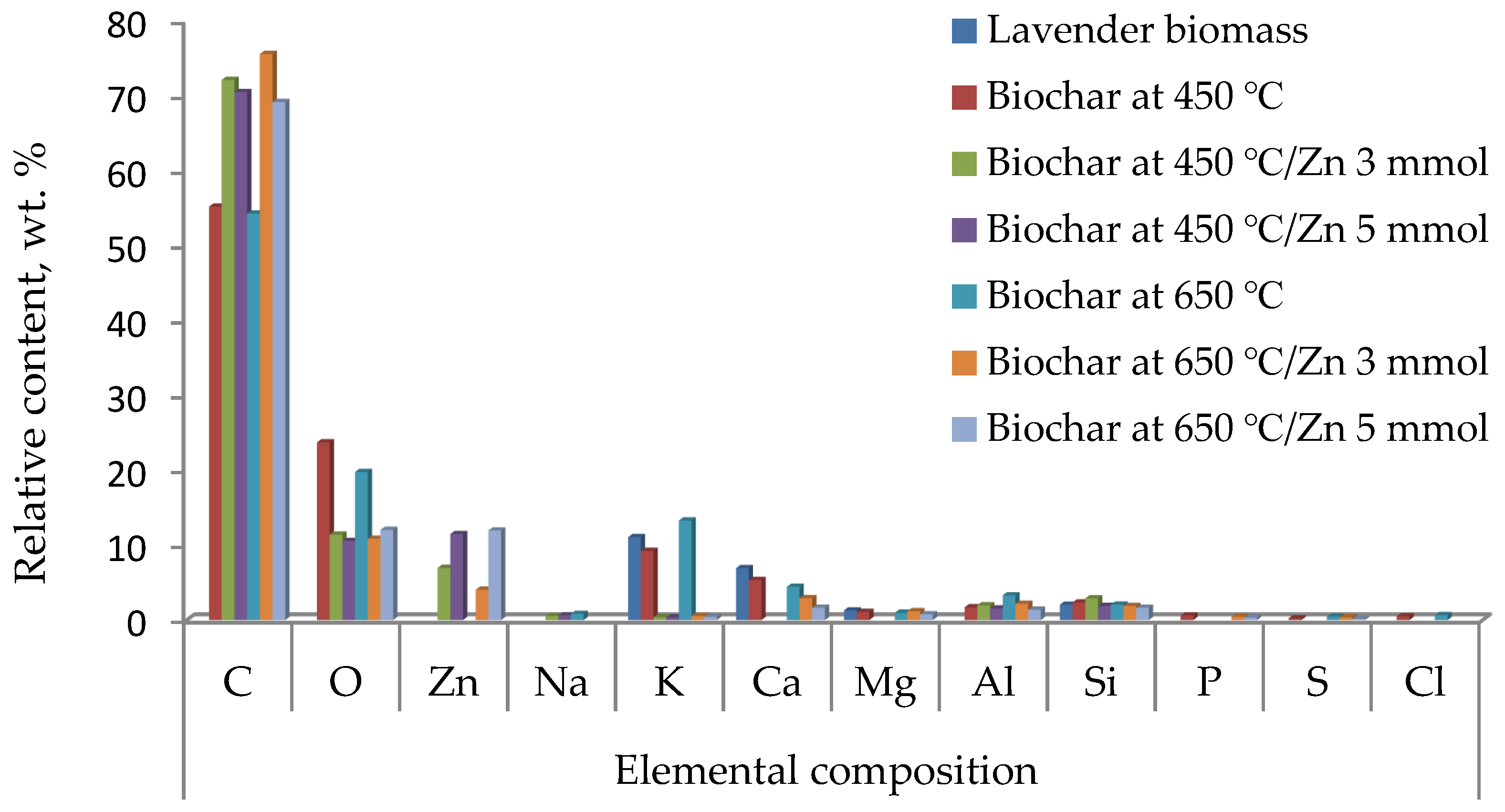
2.1. Effect of Carbonization Temperature on Biochar’s Yield and Chemical Composition
2.2. Effect of Carbonization Temperature and Solvothermal Zn2+ Modification on Biochar’s Chemical Reactivity
2.3. Effect of Carbonization Temperature and Solvothermal Zn2+ Modification on Biochar’s Structure and Morphology
3. Materials and Methods
3.1. Biomass Origin and Characterization
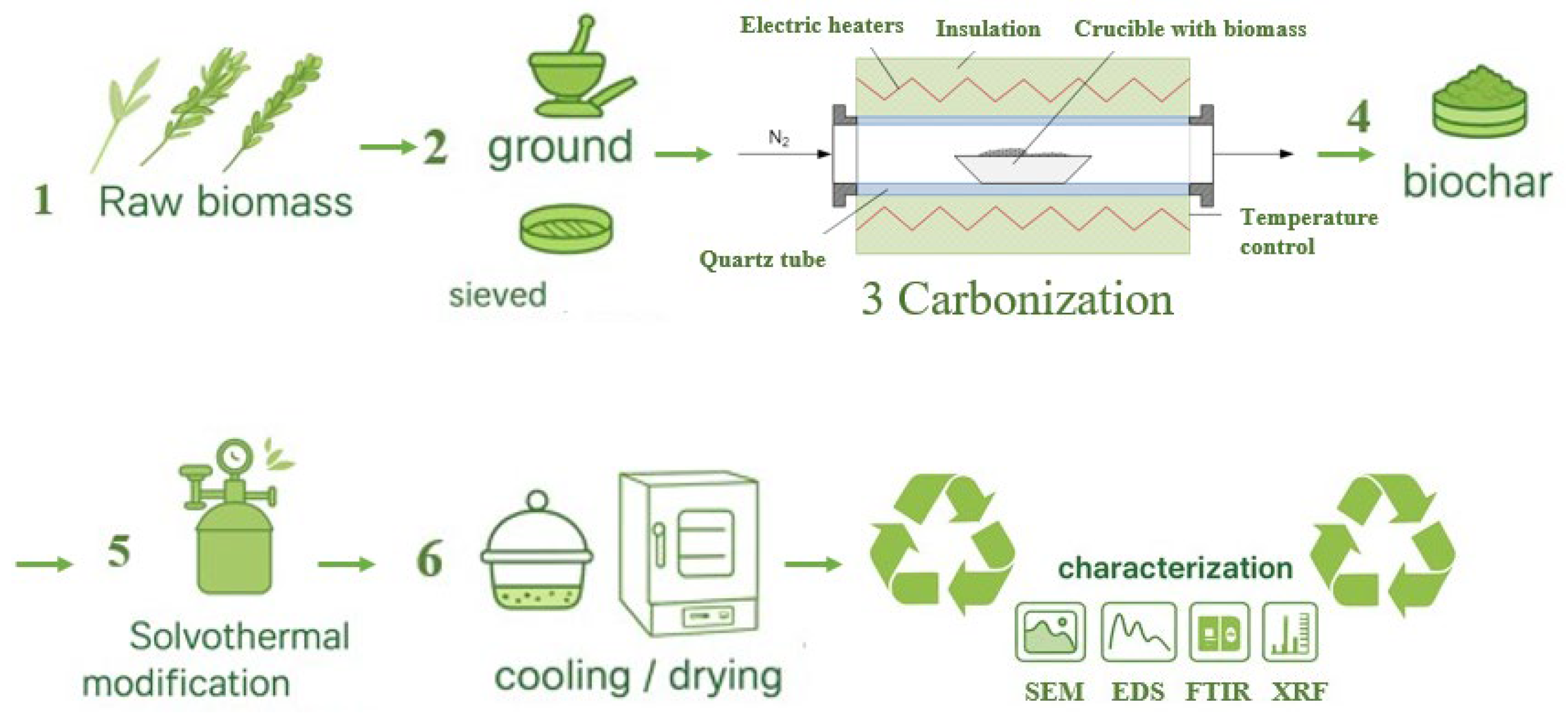
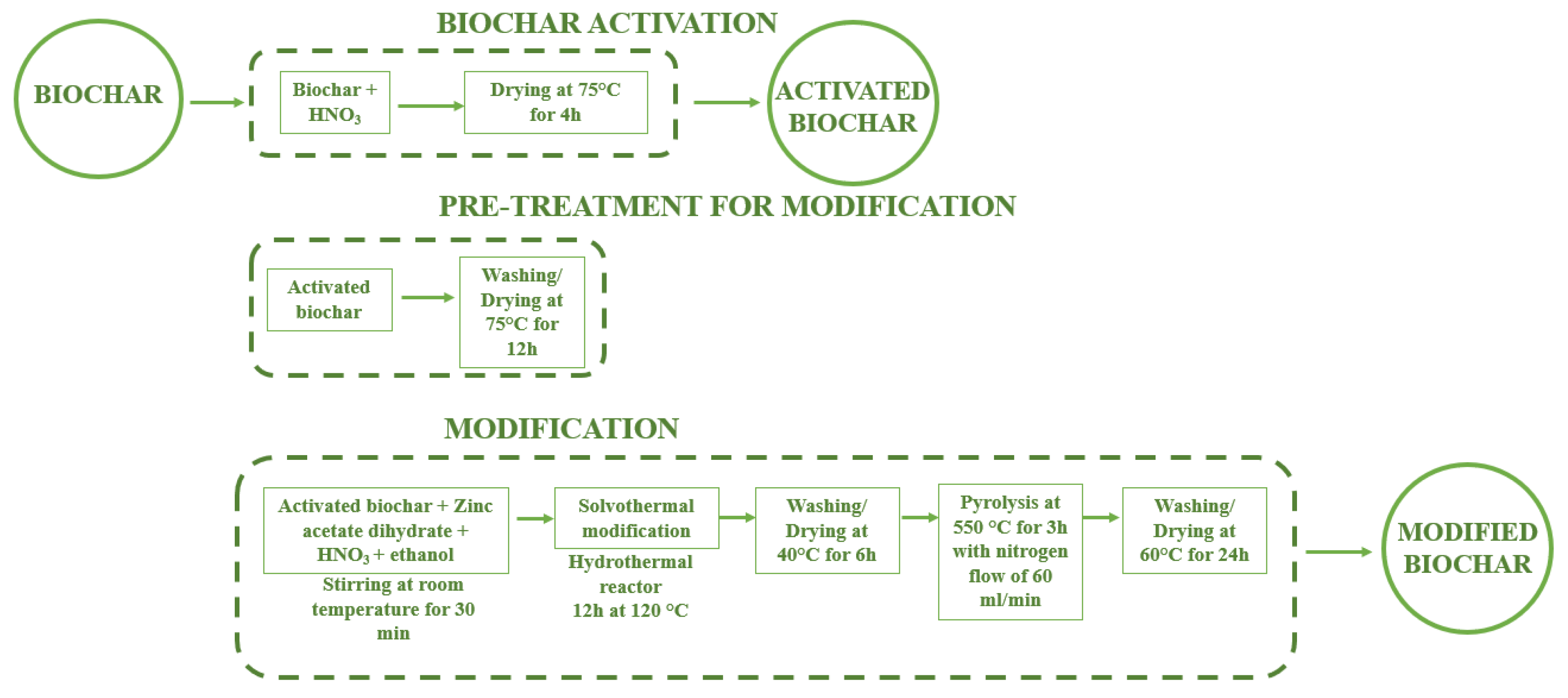
3.2. Biochar Preparation and Modification
3.3. Characterization of the Products Using XRF, FTIR, and SEM/EDS Analyses
4. Conclusions
Author Contributions
Funding
Institutional Review Board Statement
Informed Consent Statement
Data Availability Statement
Acknowledgments
Conflicts of Interest
References
- Van Nguyen, T.T.; Phan, A.N.; Nguyen, T.A.; Nguyen, T.K.; Nguyen, S.T.; Pugazhendhi, A.; Phuong, H.H.K. Valorization of Agriculture Waste Biomass as Biochar: As First-Rate Biosorbent for Remediation of Contaminated Soil. Chemosphere 2022, 307, 135834. [Google Scholar] [CrossRef]
- Slavov, A.M.; Karneva, K.B.; Vasileva, I.N.; Denev, P.N.; Denkova, R.S.; Shikov, V.T.; Ivanova, V.N. Valorization of Lavender Waste—Obtaining and Characteristics of Polyphenol Rich Extracts. Food Sci. Appl. Biotechnol. 2018, 1, 11–18. [Google Scholar] [CrossRef]
- Khiri, S.; Ullah, N.; Boubal, Z.; Janati, W.; Amalich, S.; Lgaz, H.; Elmaaiden, E. Transforming essential oil extraction Wastes: Sustainable valorization approaches for agricultural, industrial, and cosmetic applications. Biomass Bioenergy 2023, 201, 108109. [Google Scholar] [CrossRef]
- Crisan, I.; Ona, A.; Vârban, D.; Muntean, L.; Varban, R.; Stoie, A.; Morea, A. Current trends for lavender (Lavandula angustifolia Mill.) crops and products with emphasis on essential oil quality. Plants 2023, 12, 357. [Google Scholar] [CrossRef]
- Khatri, P.K.; Paolini, M.; Larcher, R.; Ziller, L.; Magdas, D.A.; Marincas, O.; Roncone, A.; Bontempo, L. Validation of gas chromatographic methods for lavender essential oil authentication based on volatile organic compounds and stable isotope ratios. Microchem. J. 2023, 186, 108343. [Google Scholar] [CrossRef]
- Chilev, C.; Simeonov, E.; Dimitrova, B.; Yonkova, V.; Pietsch, S.; Heinrich, S.; Peshev, D. Valorization of waste lavender residue from the essential oil industry for production of rosmarinic acid—A study on the solid-liquid extraction. J. Chem. Technol. Metall. 2022, 57, 522–532. [Google Scholar]
- Pech-Rodríguez, W.J.; Meléndez-González, P.C.; Hernández-López, J.M.; Suarez-Velázquez, G.G.; Sarabia-Castillo, C.R.; Calles-Arriaga, C.A. Pharmaceutical Wastewater and Sludge Valorization: A Review on Innovative Strategies for Energy Recovery and Waste Treatment. Energies 2024, 17, 5043. [Google Scholar] [CrossRef]
- Tang, K.H.D. Valorization of organic waste as biosorbents for wastewater treatment. Water Emerg. Contam. Nanoplastics 2024, 3, 25. [Google Scholar] [CrossRef]
- Ţurcanu, A.A.; Matei, E.; Râpă, M.; Predescu, A.M.; Coman, G.; Predescu, C. Biowaste Valorization Using Hydrothermal Carbonization for Potential Wastewater Treatment Applications. Water 2022, 14, 2344. [Google Scholar] [CrossRef]
- Mukome, F.N.; Six, J.; Parikh, S.J. The effects of walnut shell and wood feedstock biochar amendments on greenhouse gas emissions from a fertile soil. Geoderma 2013, 200, 90–98. [Google Scholar] [CrossRef]
- Alfattani, R.; Shah, M.A.; Siddiqui, M.I.H.; Ali, M.A.; Alnaser, I.A. Bio-char characterization produced from walnut shell biomass through slow pyrolysis: Sustainable for soil amendment and an alternate bio-fuel. Energies 2021, 15, 1. [Google Scholar] [CrossRef]
- Zhang, N.; Xing, J.; Wei, L.; Liu, C.; Zhao, W.; Liu, Z.; Wang, Y.; Liu, E.; Ren, X.; Jia, Z.; et al. The potential of biochar to mitigate soil acidification: A global meta-analysis. Biochar 2025, 7, 49. [Google Scholar] [CrossRef]
- Wang, G.X.; Xia, L.S.; Zhu, X.S.; Wu, J.X.; Liu, X. Study on electrochemical supercapacitor performance of modified lavender biochar. J. Phys. Conf. Ser. 2023, 2639, 012002. [Google Scholar] [CrossRef]
- Li, Y.; Xu, R.; Wang, H.; Xu, W.; Tian, L.; Huang, J.; Liang, C.; Zhang, Y. Recent advances of biochar-based electrochemical sensors and biosensors. Biosensors 2022, 12, 377. [Google Scholar] [CrossRef]
- Hu, H.; Sun, L.; Wang, T.; Lv, C.; Gao, Y.; Zhang, Y.F.; Wu, H.; Chen, X. Nano-ZnO functionalized biochar as a superhydrophobic biosorbent for selective recovery of low-concentration Re (VII) from strong acidic solutions. Miner. Eng. 2019, 142, 105885. [Google Scholar] [CrossRef]
- Vassilev, S.V.; Baxter, D.; Andersen, L.K.; Vassileva, C.G. An overview of the chemical composition of biomass. Fuel 2010, 89, 13–33. [Google Scholar] [CrossRef]
- Semenova, E.; Kurakov, A.V.; Nazarov, V.; Presnyakova, V.; Markelova, N.; Karaseva, E.; Rajput, V.D. Biotransformation of Wastes of Essential Oil Industry by Strains Agaricus bisporus (JE Lange) Imbach, Lentinula edodes (Berk.) Pegler, and Pleurotus ostreatus (Jacq.) P. Kumm. Horticulturae 2022, 9, 450. [Google Scholar] [CrossRef]
- Solomakou, N.; Fotiou, D.; Tsachouridou, E.; Goula, A.M. Valorization of Waste from Lavender Distillation Through Optimized Encapsulation Processes. Foods 2025, 14, 2684. [Google Scholar] [CrossRef]
- Zeidabadi, Z.A.; Bakhtiari, S.; Abbaslou, H.; Ghanizadeh, A. Synthesis Characterization and Evaluation of Biochar from Agricultural Waste Biomass for Use in Building Materials. Constr. Build. Mater. 2018, 181, 301–308. [Google Scholar] [CrossRef]
- Susilawati, A.; Maftuah, E.; Fahmi, A. The Utilization of Agricultural Waste as Biochar for Optimizing Swampland: A Review. IOP Conf. Ser. Mater. Sci. Eng. 2020, 980, 012065. [Google Scholar] [CrossRef]
- Yaashikaa, P.R.; Kumar, P.S.; Varjani, S.; Saravanan, A.A. Critical Review on the Biochar Production Techniques, Characterization, Stability and Applications for Circular Bioeconomy. Biotechnol. Rep. 2020, 28, e00570. [Google Scholar] [CrossRef]
- Cordero, T.; Marquez, F.; Rodriguez-Mirasol, J.; Rodriguez, J.J. Predicting heating values of lignocellulosics and carbonaceous materials from proximate analysis. Fuel 2001, 80, 1567–1571. [Google Scholar] [CrossRef]
- Ronsse, F.; Nachenius, R.W.; Prins, W. Recent Advances in Thermo-Chemical Conversion of Biomass. In Chapter 11—Carbonization of Biomass; Pandey, A., Bhaskar, T., Stöcker, M., Sukumaran, R.K., Eds.; Elsevier: Amsterdam, The Netherlands, 2015; pp. 293–324. ISBN 9780444632890. [Google Scholar] [CrossRef]
- Ferreira, A.F.; Ribau, J.P.; Costa, M. A decision support method for biochars characterization from carbonization of grape pomace. Biomass Bioenergy 2021, 145, 105946. [Google Scholar] [CrossRef]
- Barszcz, W.; Lozynska, M.; Molenda, J. Impact of Pyrolysis Process Conditions on the Structure of Biochar Obtained from Apple Waste. Sci. Rep. 2024, 14, 10501. [Google Scholar] [CrossRef]
- Lee, Y.; Park, J.; Ryu, C.; Gang, K.S.; Yang, W.; Park, Y.K.; Hyun, S. Comparison of Biochar Properties from Biomass Residues Produced by Slow Pyrolysis at 500 °C. Bioresour. Technol. 2013, 148, 196–201. [Google Scholar] [CrossRef] [PubMed]
- Gaskin, J.W.; Steiner, C.; Harris, K.; Das, K.C.; Bibens, B. Effect of Low-Temperature Pyrolysis Conditions on Biochar for Agricultural Use. Trans. ASABE 2008, 51, 2061–2069. [Google Scholar] [CrossRef]
- Luo, Q.; Deng, Y.; Li, Y.; He, Q.; Wu, H.; Fang, X. Effects of Pyrolysis Temperatures on the Structural Properties of Straw Biochar and Its Adsorption of Tris-(1-Chloro-2-Propyl) Phosphate. Sci. Rep. 2024, 14, 25711. [Google Scholar] [CrossRef] [PubMed]
- Liu, X.; Lin, J.; Zhao, Z.; Min, Y.; Song, J.; Li, B.; Huang, J. Advances in functional applications of biomass-derived carbon composites for phase change materials. Microstructures 2025, 5, 2025039. [Google Scholar] [CrossRef]
- Zhang, N.; Ye, X.; Gao, Y.; Liu, G.; Liu, Z.; Zhang, Q.; Zhang, P. Environment and Agricultural Practices Regulate Enhanced Biochar-Induced Soil Carbon Pools and Crop Yield: A Meta-Analysis. Sci. Total Environ. 2023, 905, 167290. [Google Scholar] [CrossRef]
- Naydenova, I.; Radoykova, T.; Petrova, T.; Sandov, O.; Valchev, I. Utilization Perspectives of Lignin Biochar from Industrial Biomass Residue. Molecules 2023, 28, 4842. [Google Scholar] [CrossRef]
- Tadesse, A.W.; Huang, M.; Zhou, T. Biochar for Wastewater Treatment: Preparation, Modification, Characterization, and Its Applications. Molecules 2025, 30, 4288. [Google Scholar] [CrossRef] [PubMed]
- Monga, D.; Shetti, N.P.; Basu, S.; Reddy, K.R.; Badawi, M.; Bonilla-Petriciolet, A.; Aminabhavi, T.M. Engineered biochar: A way forward to environmental remediation. Fuel 2022, 311, 122510. [Google Scholar] [CrossRef]
- Fakhar, A.; Canatoy, R.C.; Galgo, S.J.C.; Rafique, M.; Sarfraz, R. Advancements in modified biochar production techniques and soil application: A critical review. Fuel 2025, 400, 135745. [Google Scholar] [CrossRef]
- Díaz, B.; Sommer-Márquez, A.; Ordoñez, P.E.; Bastardo-González, E.; Ricaurte, M.; Navas-Cárdenas, C. Synthesis Methods, Properties, and Modifications of Biochar-Based Materials for Wastewater Treatment: A Review. Resources 2024, 13, 8. [Google Scholar] [CrossRef]
- Kumari, A.; Yadav, M.; Bhatia, A.; Sharma, M.; Bhateria, R. A review and bibliometric analysis on recent modification of biochar for effective and sustainable remediation of heavy metals in aqueous medium. Discov. Chem. Eng. 2025, 5, 21. [Google Scholar] [CrossRef]
- Wang, X.; Guo, Z.; Hu, Z.; Zhang, J. Recent advances in biochar application for water and wastewater treatment: A review. PeerJ 2020, 8, e9164. [Google Scholar] [CrossRef]
- Nanda, S.; Dalai, A.K.; Berruti, F.; Kozinski, J.A. Biochar as an Exceptional Bioresource for Energy, Agronomy, Carbon Sequestration, Activated Carbon and Specialty Materials. Waste Biomass Valorization 2016, 7, 201–235. [Google Scholar] [CrossRef]
- Han, R.; Gao, Y.; Jia, Y.; Wang, S. Heterogeneous precipitation behavior and mechanism during the adsorption of cationic heavy metals by biochar: Roles of inorganic components. J. Hazard. Mater. 2024, 480, 136322. [Google Scholar] [CrossRef] [PubMed]
- Sizmur, T.; Fresno, T.; Akgül, G.; Frost, H.; Moreno-Jiménez, E. Biochar modification to enhance sorption of inorganics from water. Bioresour. Technol. 2017, 246, 34–47. [Google Scholar] [CrossRef]
- Patwa, D.; Bordoloi, U.; Dubey, A.A.; Ravi, K.; Sekharan, S.; Kalita, P. Energy-efficient biochar production for thermal backfill applications. Sci. Total Environ. 2022, 833, 155253. [Google Scholar] [CrossRef]
- Zhao, F.; Shan, R.; Li, W.; Zhang, Y.; Yuan, H.; Chen, Y. Synthesis, Characterization, and Dye Removal of ZnCl2-Modified Biochar Derived from Pulp and Paper Sludge. ACS Omega 2021, 6, 34712–34723. [Google Scholar] [CrossRef]
- Qian, T.; Wang, Y.; Fan, T.; Fang, G.; Zhou, D. A New Insight into the Immobilization Mechanism of Zn on Biochar: The Role of Anions Dissolved from Ash. Sci. Rep. 2016, 6, 33630. [Google Scholar] [CrossRef] [PubMed]
- Alves, Z.; Ferreira, N.M.; Figueiredo, G.; Mendo, S.; Nunes, C.; Ferreira, P. Electrically Conductive and Antimicrobial Agro-Food Waste Biochar Functionalized with Zinc Oxide Particles. Int. J. Mol. Sci. 2022, 23, 8022. [Google Scholar] [CrossRef] [PubMed]
- Lourenco, M.A.; Zeng, J.; Jagdale, P.; Castellino, M.; Sacco, A.; Farkhondehfa, M.A.; Pirri, C.F. Biochar/Zinc Oxide Composites as Effective Catalysts for Electrochemical CO2 Reduction. ACS Sustain. Chem. Eng. 2021, 9, 5445–5453. [Google Scholar] [CrossRef]
- Bhakta, A.K.; Tang, M.; Snoussi, Y.; Khalil, A.M.; Mascarenhas, R.J.; Mekhalif, Z.; Chehimi, M.M. Sweety, Salty, Sour, and Romantic Biochar-Supported ZnO: Highly Active Composite Catalysts for Environmental Remediation. Emergent Mater. 2023, 8, 2647–2661. [Google Scholar] [CrossRef]
- Liu, Y.; Ji, X.; Wang, Y.; Zhang, Y.; Zhang, Y.; Li, W.; Yuan, J.; Ma, D.; Sun, H.; Duan, J. A Stable Fe-Zn Modified Sludge-Derived Biochar for Diuron Removal: Kinetics, Isotherms, Mechanism, and Practical Research. Molecules 2023, 28, 2868. [Google Scholar] [CrossRef]
- Sayed, M.H.; Dilova, T.; Atanasova, G.; Avdeev, G.; Boshta, M.; Dikovska, A.O.; Gomaa, M.M. Enhanced gas sensing performance of sprayed ZnO–ZnWO4 toward CO gas. Mater. Adv. 2024, 5, 5140–5147. [Google Scholar] [CrossRef]
- Plum, L.M.; Rink, L.; Haase, H. The essential toxin: Impact of zinc on human health. Int. J. Environ. Res. Public Health 2010, 7, 1342–1365. [Google Scholar] [CrossRef] [PubMed]
- Inoue, M. Solvothermal Synthesis. Chapter 2. In Chemical Processing of Ceramics, 2nd ed.; Lee, B., Komarneni, S., Eds.; Taylor & Francis Group, LLC.: Boca Raton, FL, USA, 2005; ISBN 13:978-1-4200-2733-4. [Google Scholar]
- Ye, H.; Chen, J.; Hu, Y.; Li, G.; Fu, X.-Z.; Zhu, P.; Sun, R.; Wong, C.-P. One-pot synthesis of two-dimensional multilayered graphitic carbon nanosheets by low-temperature hydrothermal carbonization using the in situ formed copper as a template and catalyst. Chem. Commun. 2020, 56, 11645–11648. [Google Scholar] [CrossRef]
- Ndlwana, L.; Raleie, N.; Dimpe, K.M.; Ogutu, H.F.; Oseghe, E.O.; Motsa, M.M.; Msagati, T.A.; Mamba, B.B. Sustainable hydrothermal and solvothermal synthesis of advanced carbon materials in multidimensional applications: A review. Materials 2021, 14, 5094. [Google Scholar] [CrossRef]
- Hu, H.; Sun, L.; Gao, Y.; Wang, T.; Huang, Y.; Lv, C.; Wu, H. Synthesis of ZnO nanoparticle-anchored biochar composites for the selective removal of perrhenate, a surrogate for pertechnetate, from radioactive effluents. J. Hazard. Mater. 2020, 387, 121670. [Google Scholar] [CrossRef]
- Dumbrava, A.; Matei, C.; Diacon, A.; Moscalu, F.; Berger, D. Novel ZnO-biochar nanocomposites obtained by hydrothermal method in extracts of Ulva lactuca collected from Black Sea. Ceram. Int. 2023, 49, 10003–10013. [Google Scholar] [CrossRef]
- Petrova, T.; Naydenova, I.; Ribau, J.; Ferreira, A.F. Biochar from Agro-Forest Residue: Application Perspective Based on Decision Support Analysis. Appl. Sci. 2023, 13, 3240. [Google Scholar] [CrossRef]
- Peçanha, D.A.; Freitas, M.S.M.; Cunha, J.M.; Vieira, M.E.; Jesus, A.C. Mineral composition, biomass and essential oil yield of french lavender grown under two sources of increasing potassium fertilization. J. Plant Nutr. 2023, 46, 344–355. [Google Scholar] [CrossRef]
- Fertilizer for Lavender. Available online: https://agrecol.pl/en/produkt/fertilizer-for-lavender-2/ (accessed on 14 January 2026).
- Buss, W.; Wurzer, C.; Manning, D.A.; Rohling, E.J.; Borevitz, J.; Masek, O. Mineral-enriched biochar delivers enhanced nutrient recovery and carbon dioxide removal. Commun. Earth Environ. 2022, 3, 67. [Google Scholar] [CrossRef]
- Grafmüller, J.; Schmidt, H.-P.; Kray, D.; Hagemann, N. Root-Zone Amendments of Biochar-Based Fertilizers: Yield Increases of White Cabbage in Temperate Climate. Horticulturae 2022, 8, 307. [Google Scholar] [CrossRef]
- Puri, L.; Hu, Y.; Naterer, G. Critical Review of the Role of Ash Content and Composition in Biomass Pyrolysis. Front. Fuels 2024, 2, 1378361. [Google Scholar] [CrossRef]
- Luo, S.; Yang, M.; Wu, Y.; Li, J.; Qin, J.; Feng, F. A Low Cost Fe3O4–Activated Biochar Electrode Sensor by Resource Utilization of Excess Sludge for Detecting Tetrabromobisphenol A. Micromachines 2022, 13, 115. [Google Scholar] [CrossRef]
- Zhao, J.; Jiang, Y.; Chen, X.; Wang, C.; Nan, H. Unlocking the Potential of Element-Doped Biochar: From Tailored Synthesis to Multifunctional Applications in Environment and Energy. Biochar 2025, 7, 77. [Google Scholar] [CrossRef]
- Grafmüller, J.; Böhm, A.; Zhuang, Y.; Spahr, S.; Muller, P.; Otto, T.N.; Hagemann, N. Wood Ash as an Additive in Biomass Pyrolysis: Effects on Biochar Yield, Properties, and Agricultural Performance. ACS Sustain. Chem. Eng. 2022, 10, 2720–2729. [Google Scholar] [CrossRef]
- Li, J.; Li, Y.; Wu, Y.; Zheng, M. A comparison of biochars from lignin, cellulose and wood as the sorbent to an aromatic pollutant. J. Hazard. Mater. 2014, 280, 450–457. [Google Scholar] [CrossRef]
- Wang, Y.; Hu, Y.; Zhao, X.; Wang, S.; Xing, G. Comparisons of biochar properties from wood material and crop residues at different temperatures and residence times. Energy Fuel 2013, 27, 5890–5899. [Google Scholar] [CrossRef]
- Alamdari, S.; Sasani Ghamsari, M.; Lee, C.; Han, W.; Park, H.-H.; Tafreshi, M.J.; Afarideh, H.; Ara, M.H.M. Preparation and Characterization of Zinc Oxide Nanoparticles Using Leaf Extract of Sambucus ebulus. Appl. Sci. 2020, 10, 3620. [Google Scholar] [CrossRef]
- Hitkari, G.; Singh, S.; Pandey, G. Structural, optical and photocatalytic study of ZnO and ZnO–ZnS synthesized by chemical method. Nano-Struct. Nano-Objects 2017, 12, 1–9. [Google Scholar] [CrossRef]
- Liu, M.; Ran, B.; Hu, P.; Fang, J.; Sun, J.; Bai, Y.; Duan, H. Room-Temperature Trimethylamine Gas Sensor with Enhanced Performance Using Biomass-Derived Carbon Quantum Dot Modified Biochar. J. Environ. Chem. Eng. 2025, 13, 118427. [Google Scholar] [CrossRef]
- Ngambia, A.; Masek, O.; Erastova, V. Development of Biochar Molecular Models with Controlled Porosity. Biomass Bioenergy 2024, 184, 107199. [Google Scholar] [CrossRef]
- Bayoka, H.; Snoussi, Y.; Bhakta, A.K.; El Garah, M.; Khalil, A.M.; Jouini, M.; Chehimi, M.M. Evidencing the Synergistic Effects of Carbonization Temperature, Surface Composition and Structural Properties on the Catalytic Activity of Biochar/Bimetallic Composite. J. Anal. Appl. Pyrolysis 2023, 173, 106069. [Google Scholar] [CrossRef]
- Zaitun, Z.; Halim, A.; Sa’dah, Y.; Cahyadi, R. Surface Morphology Properties of Biochar Feedstock for Soil Amendment. IOP Conf. Ser. Earth Environ. Sci. 2022, 951, 012034. [Google Scholar] [CrossRef]
- Abyaneh, M.R.; Aliasghar, A.; Bidhendi, G.N.; Zand, A.D.; Moazeni, K. Importance of Pyrolysis Temperature and Particle Size on Physicochemical and Adsorptive Properties of Urban Wood-Derived Biochar. Sustain. Chem. Pharm. 2024, 40, 101631. [Google Scholar] [CrossRef]
- Tshoko, S.; Mulaudzi-Masuku, T.; Iwuoha, E.; Ngece-Ajayi, R.F. Electrochemical and biosensing applications of biochar and biochar-based composites. Front. Sens. 2025, 6, 1552969. [Google Scholar] [CrossRef]
- Saikrithika, S.; Kim, Y.-J. Biochar-Derived Electrochemical Sensors: A Green Route for Trace Heavy Metal Detection. Chemosensors 2025, 13, 278. [Google Scholar] [CrossRef]
- Adamu, N.; Umar, K.; Oh, W.D.; Parveen, T.; Lawal, A. Application of Biochar-Based Metal Catalyst and Their Uses. In Biochar-Based Catalysts: Preparation, Sustainable Materials and Technology; Bhawani, S.A., Umar, K., Mohamad Ibrahim, M.N., Alotaibi, K.M., Eds.; Spinger: Singapore, 2024; pp. 75–107. [Google Scholar] [CrossRef]
- Saif, A.; Rizvi, S.I.; Shaukat, Z.; Saif, M.; Tabassum, S.; Khalid, R.; Javed, F.; Rebouh, N.Y.; Hassan, F.; Zaman, Q.U. Development of composite catalyst containing renewable biochar blended with zinc oxide and copper diphenyl amine for visible light photocatalytic degradation of methylene blue. Front. Sustain. Food Syst. 2025, 9, 1500907. [Google Scholar] [CrossRef]
- Zhang, L.; Zhang, Q.; Wang, Y.; Cui, X.; Liu, Y.; Ruan, R.; Wu, X.; Cao, L.; Zhao, L.; Zheng, H. Preparation and application of metal-modified biochar in the purification of micro-polystyrene polluted aqueous environment. J. Environ. Manag. 2023, 347, 119158. [Google Scholar] [CrossRef] [PubMed]
- Gusiatin, M.Z.; Rouhani, A. Application of Selected Methods to Modify Pyrolyzed Biochar for the Immobilization of Metals in Soil: A Review. Materials 2023, 16, 7342. [Google Scholar] [CrossRef] [PubMed]
- Yan, L.; Liu, Y.; Zhang, Y.; Liu, S.; Wang, C.; Chen, W.; Liu, C.; Chen, Z.; Zhang, Y. ZnCl2 modified biochar derived from aerobic granular sludge for developed microporosity and enhanced adsorption to tetracycline. Bioresour. Technol. 2020, 297, 122381. [Google Scholar] [CrossRef] [PubMed]
- ISO 16559:2022; Solid Biofuels—Terminology, Definitions and Descriptions. International Organization for Standardization: Geneva, Switzerland, 2022.
- ISO 14780:2017; Solid Biofuels—Sample Preparation. International Organization for Standardization: Geneva, Switzerland, 2017.
- ISO 18123:2023; Solid Biofuels—Determination of the Content of Volatile Matter. International Organization for Standardization: Geneva, Switzerland, 2023.
- ISO 18122:2022; Solid Biofuels—Determination of Ash Content. International Organization for Standardization: Geneva, Switzerland, 2022.
- ISO 18134-3:2023; Solid Biofuels—Determination of Moisture Content—Oven Dry Method—Part 3: Moisture in General Analysis Sample. International Organization for Standardization: Geneva, Switzerland, 2023.
- Naydenova, I.I.; Sandov, O.L.; Petrova, T.S. Thermal Analysis and PM Emissions of Lavender Residue. In Proceedings of the 2023 58th International Scientific Conference on Information, Communication and Energy Systems and Technologies (ICEST), Nis, Serbia, 29 June–1 July 2023; pp. 183–186. [Google Scholar] [CrossRef]



| Element | Lavender Residue | Carbonized Lavender at 450 °C | Carbonized Lavender at 650 °C | |||
|---|---|---|---|---|---|---|
| Value ± SD | Unit | Value ± SD | Unit | Value ± SD | Unit | |
| O | 87 ± 0.1 | % | 60 ± 0.1 | % | 58 ± 0.3 | % |
| Na | 2 ± 0.1 | % | 3 ± 0.3 | % | 3 ± 0.5 | % |
| K | 4 ± 0.01 | % | 10 ± 0.02 | % | 16 ± 4.8 | % |
| Ca | 2 ± 0.006 | % | 6 ± 0.02 | % | 6 ± 0.01 | % |
| Si | 2 ± 0.01 | % | 4 ± 0.01 | % | 4 ± 0.002 | % |
| Mg | 9061 ± 0.4 | ppm | 2 ± 0.1 | % | 2 ± 0.04 | % |
| Al | 4652 ± 5.3 | ppm | 1 ± 0.02 | % | 1 ± 0.01 | % |
| P | 3192 ± 3.2 | ppm | 7916 ± 2.3 | ppm | 7816 ± 0.5 | ppm |
| S | 2349 ± 0.8 | ppm | 2046 ± 4.8 | ppm | 2103 ± 1.9 | ppm |
| Cl | 2632 ± 1.7 | ppm | 4644 ± 4.8 | ppm | 5357 ± 8.6 | ppm |
| Fe | 8020 ± 5.1 | ppm | 231,578 ± 19.43 | ppm | 24,208 ± 2.6 | ppm |
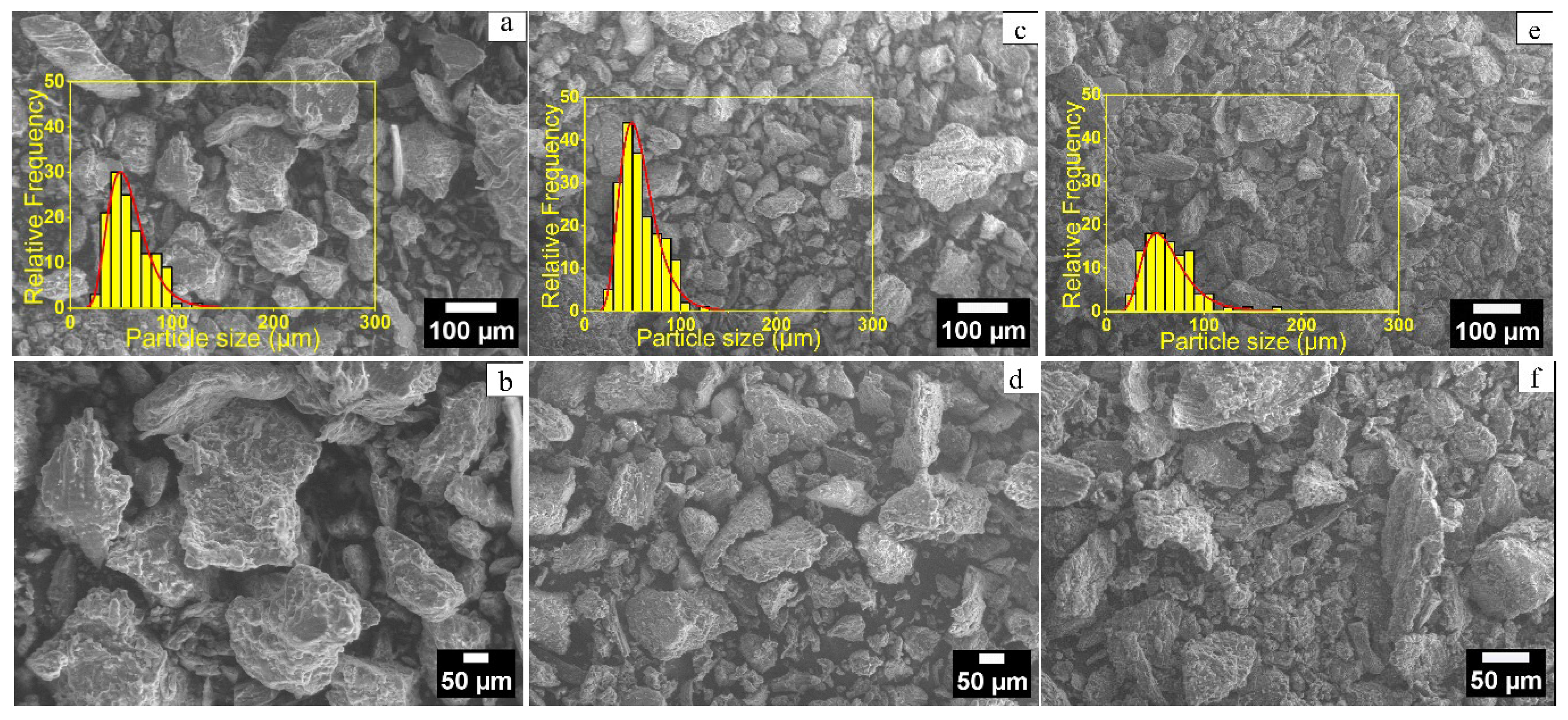
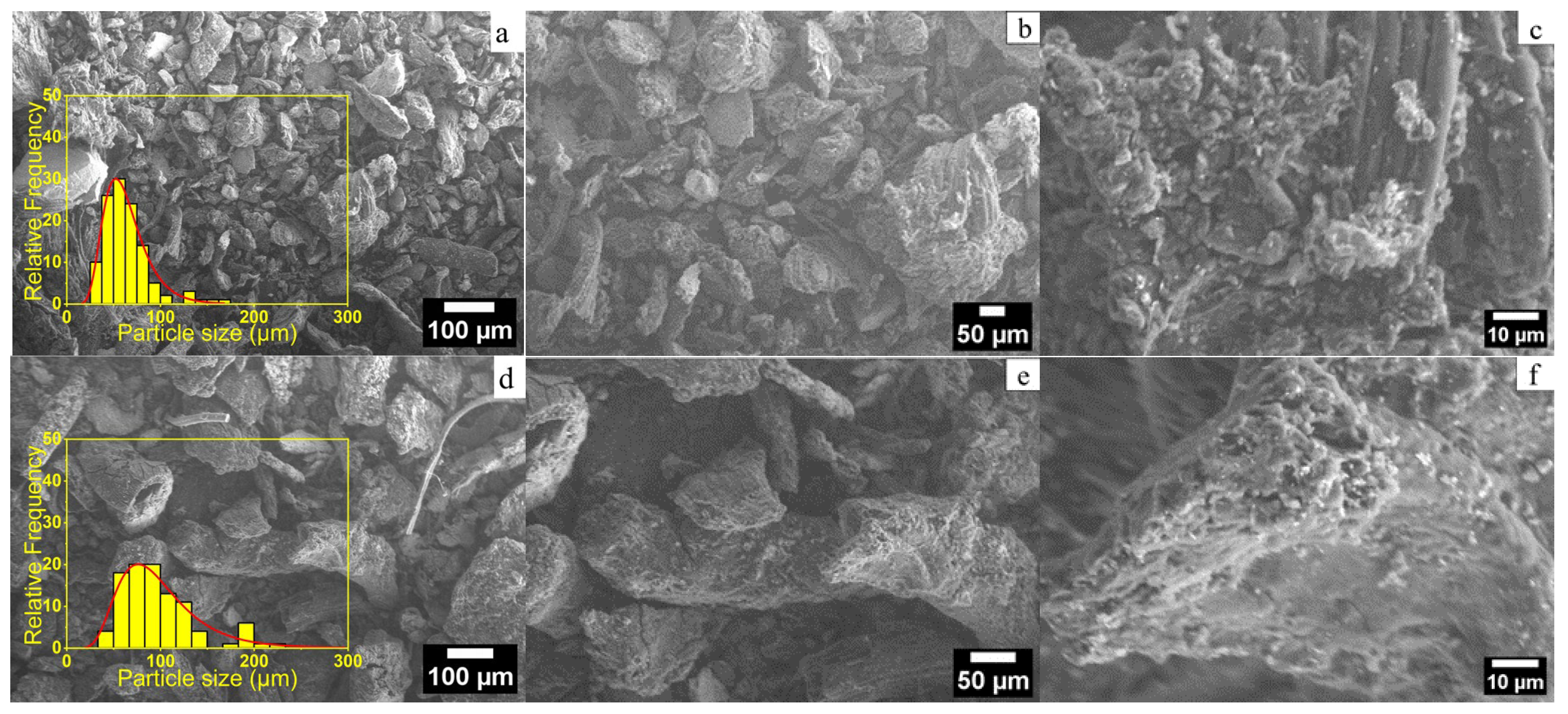
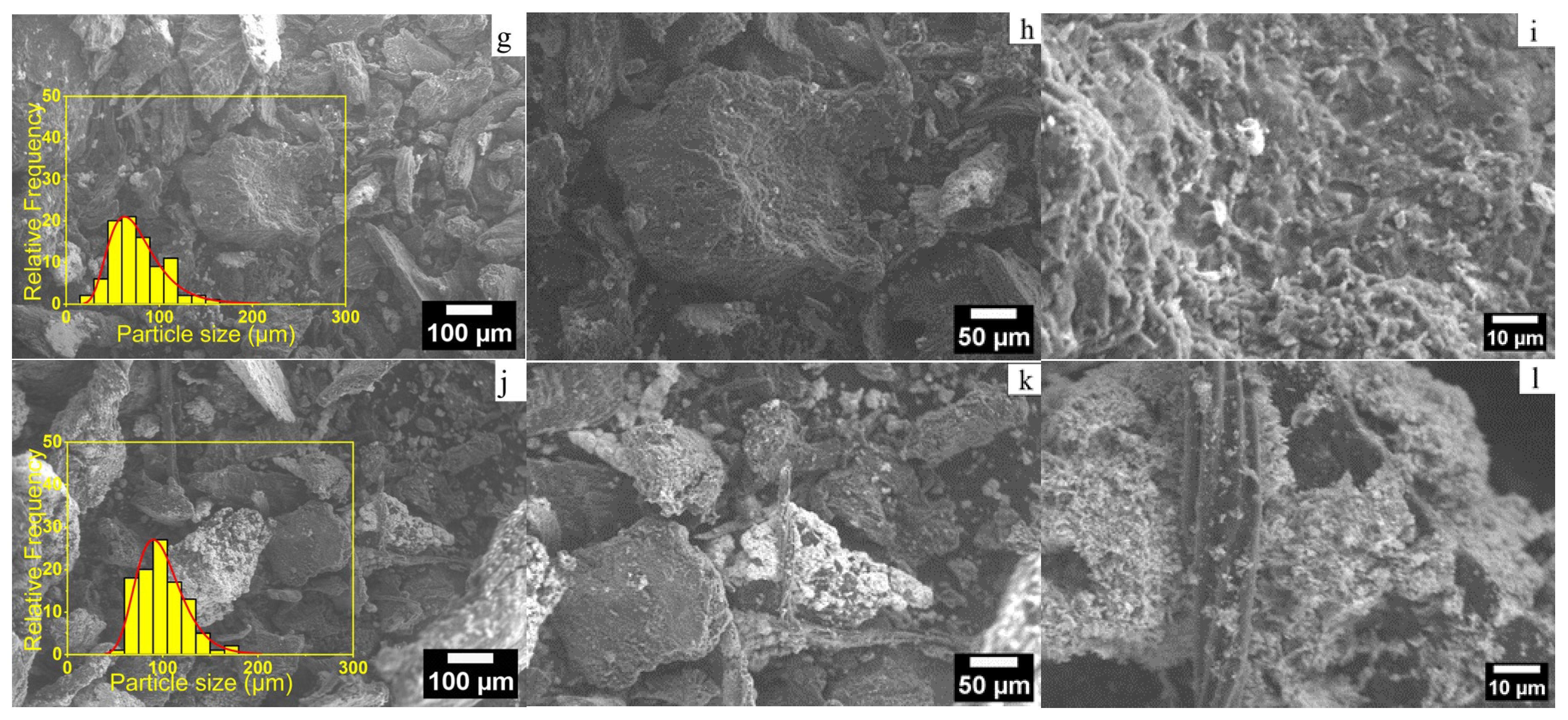
| Biomass Sample | Particle Size * ± SD (µm) |
|---|---|
| Lavender (air-dried solid biomass residue) | 67.2 ± 3.8 |
| Biochar obtained at 450 °C | 60.4 ± 1.9 |
| Biochar obtained at 650 °C | 58.4 ± 1.9 |
| Biochar obtained at 450 °C/Zn2+ 3 mmol | 66.1 ± 2.6 |
| Biochar obtained at 450 °C/Zn2+ 5 mmol | 99.1 ± 4.4 |
| Biochar obtained at 650 °C/Zn2+ 3 mmol | 76.7 ± 2.9 |
| Biochar obtained at 650 °C/Zn 2+ 5 mmol | 99.2 ± 2.5 |
| Proximate Analysis 2, wt. % | Ash Analysis (wt. %, db) | ||
|---|---|---|---|
| Volatiles, db | 68.34 | SiO2 | 8.56 |
| Fixed carbon, db 1 | 11.15 | Al2O3 | 2.60 |
| Moisture, r | 7.15 | Fe2O3 | 1.23 |
| Ash, db | 13.36 | MnO | 0.08 |
| Ultimate analysis 2, wt. %, db | CaO | 14.67 | |
| C | 41.14 | MgO | 3.72 |
| H | 6.17 | BaO | 0.07 |
| N | 1.80 | Na2O | 0.66 |
| S | 2.01 | K2O | 9.50 |
| O 1 | 28.27 | Cr2O3 | 0.01 |
| C/H | 0.56 | TiO2 | 0.26 |
| C/O | 1.94 | ZnO | 0.02 |
| HHV 2, db, MJ/kg | 17.45 | CuO | 0.01 |
| Lignocellulosic analysis 2, wt. %, db | SrO | 0.06 | |
| Cellulose | 28.60 | P2O5 | 1.53 |
| Lignin | 31.70 | Co3O4 | <0.01 |
| Pentosans | 13.10 | PbO | 0.01 |
| Extractives | 3.05 | CdO | <0.01 |
| As2O5 | <0.01 | ||
| Losses on ignition (LOI) | 35.22 | ||
Disclaimer/Publisher’s Note: The statements, opinions and data contained in all publications are solely those of the individual author(s) and contributor(s) and not of MDPI and/or the editor(s). MDPI and/or the editor(s) disclaim responsibility for any injury to people or property resulting from any ideas, methods, instructions or products referred to in the content. |
© 2026 by the authors. Licensee MDPI, Basel, Switzerland. This article is an open access article distributed under the terms and conditions of the Creative Commons Attribution (CC BY) license.
Share and Cite
Sandov, O.; Krasteva, L.; Naydenova, I.; Kralov, I.; Todorov, G.; Petrova, T. Valorization of Lavender Agro-Waste into Functional Carbon Materials via Carbonization and Zn2+ Modification. Molecules 2026, 31, 540. https://doi.org/10.3390/molecules31030540
Sandov O, Krasteva L, Naydenova I, Kralov I, Todorov G, Petrova T. Valorization of Lavender Agro-Waste into Functional Carbon Materials via Carbonization and Zn2+ Modification. Molecules. 2026; 31(3):540. https://doi.org/10.3390/molecules31030540
Chicago/Turabian StyleSandov, Ognyan, Lyudmila Krasteva, Iliyana Naydenova, Ivan Kralov, Georgi Todorov, and Tsvetelina Petrova. 2026. "Valorization of Lavender Agro-Waste into Functional Carbon Materials via Carbonization and Zn2+ Modification" Molecules 31, no. 3: 540. https://doi.org/10.3390/molecules31030540
APA StyleSandov, O., Krasteva, L., Naydenova, I., Kralov, I., Todorov, G., & Petrova, T. (2026). Valorization of Lavender Agro-Waste into Functional Carbon Materials via Carbonization and Zn2+ Modification. Molecules, 31(3), 540. https://doi.org/10.3390/molecules31030540