
Measurements of Radical Reactivity with an Imine, (CF3)2CNH: Rate Constants for Chlorine Atoms and Hydroxyl Radicals and the Global Warming Potential



Abstract
1. Introduction
2. Results
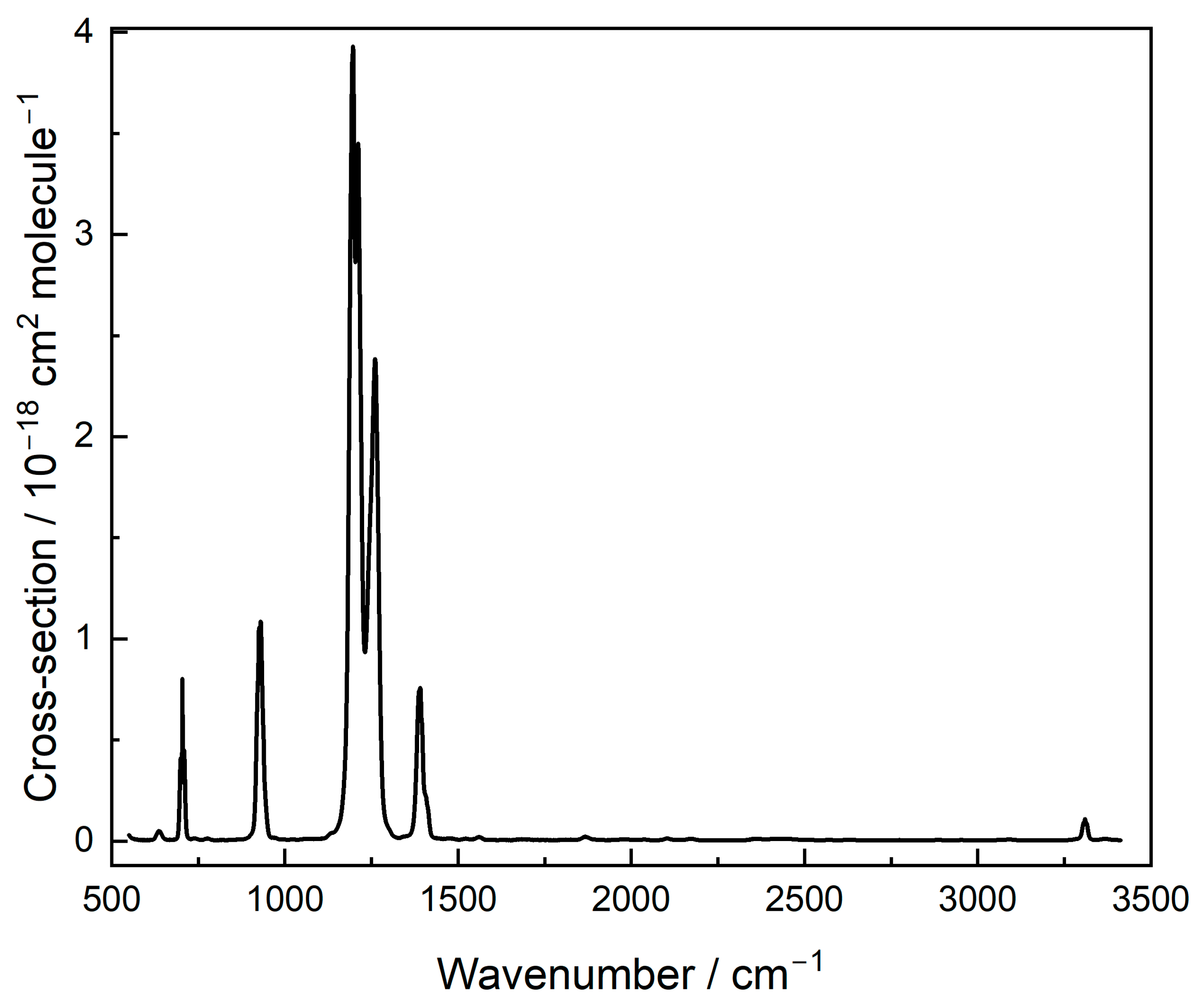
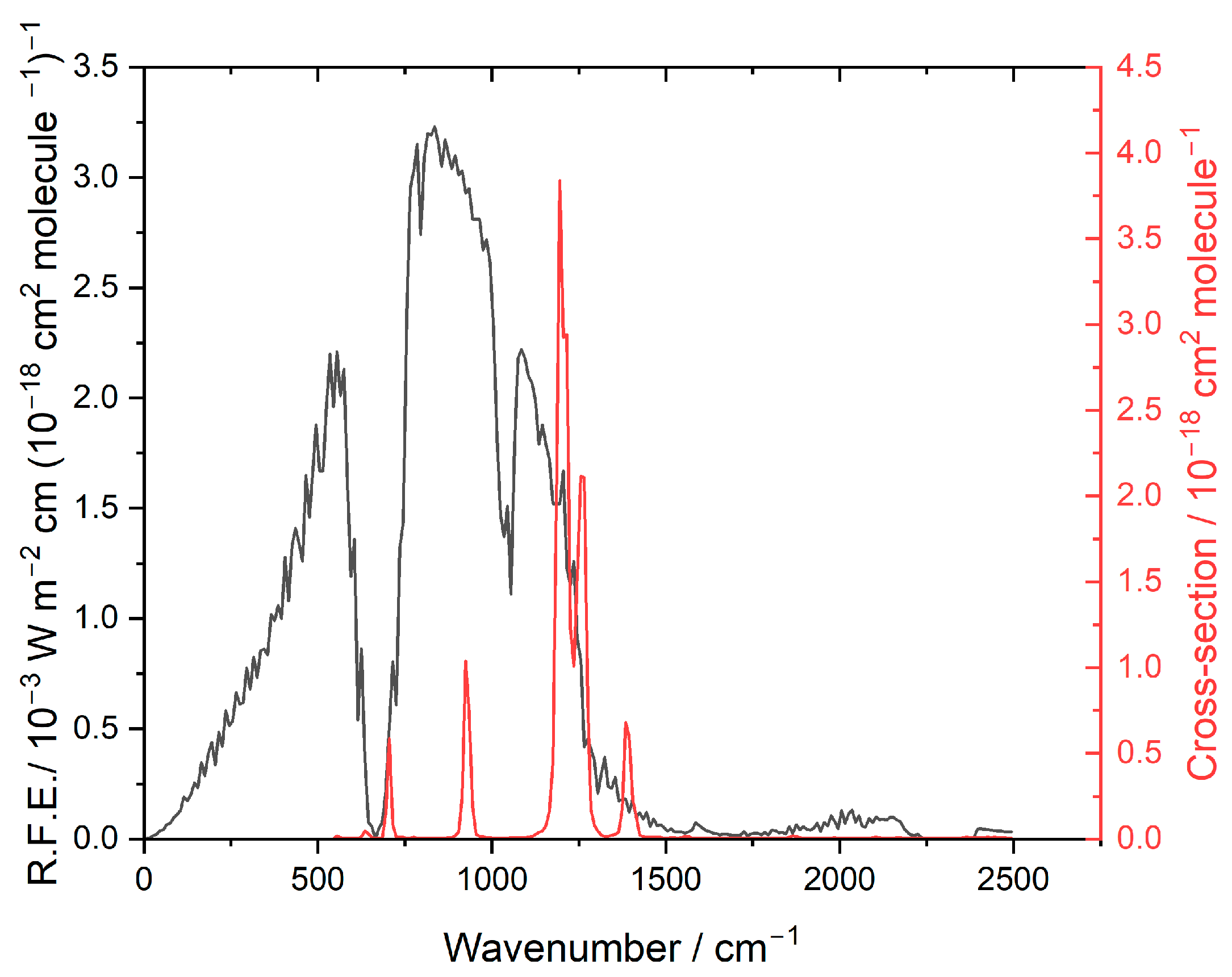
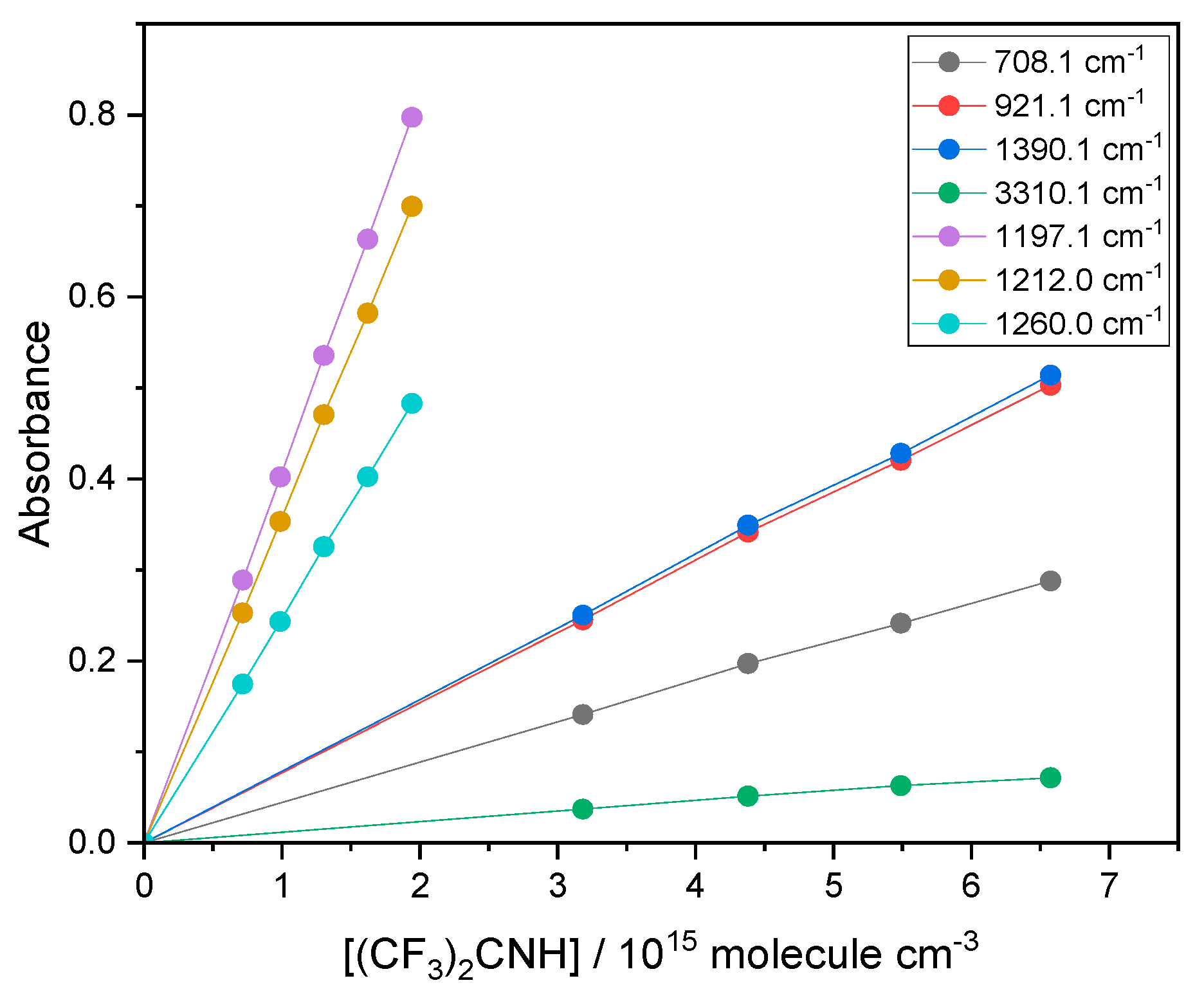
2.1. Infrared Spectrum
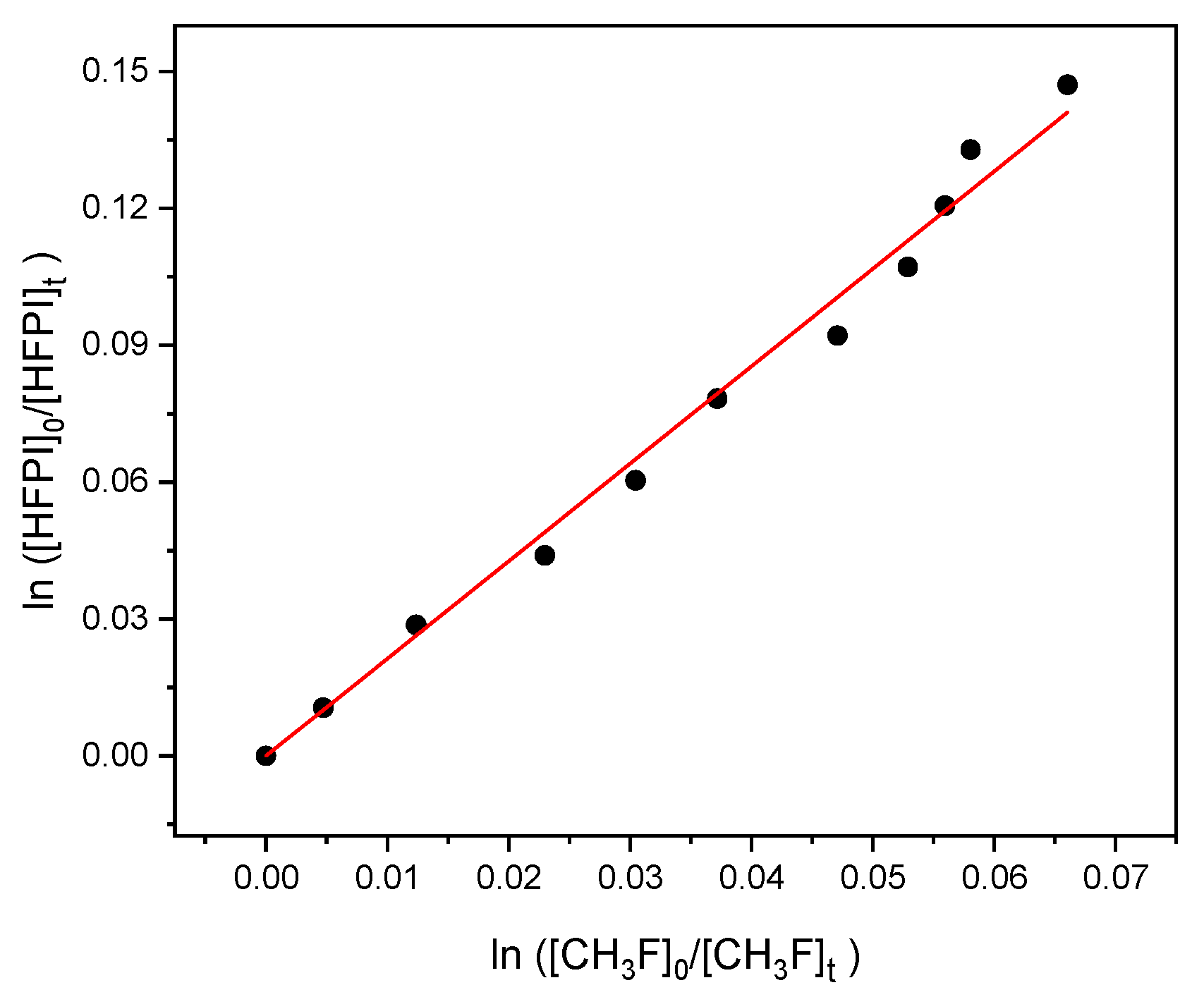
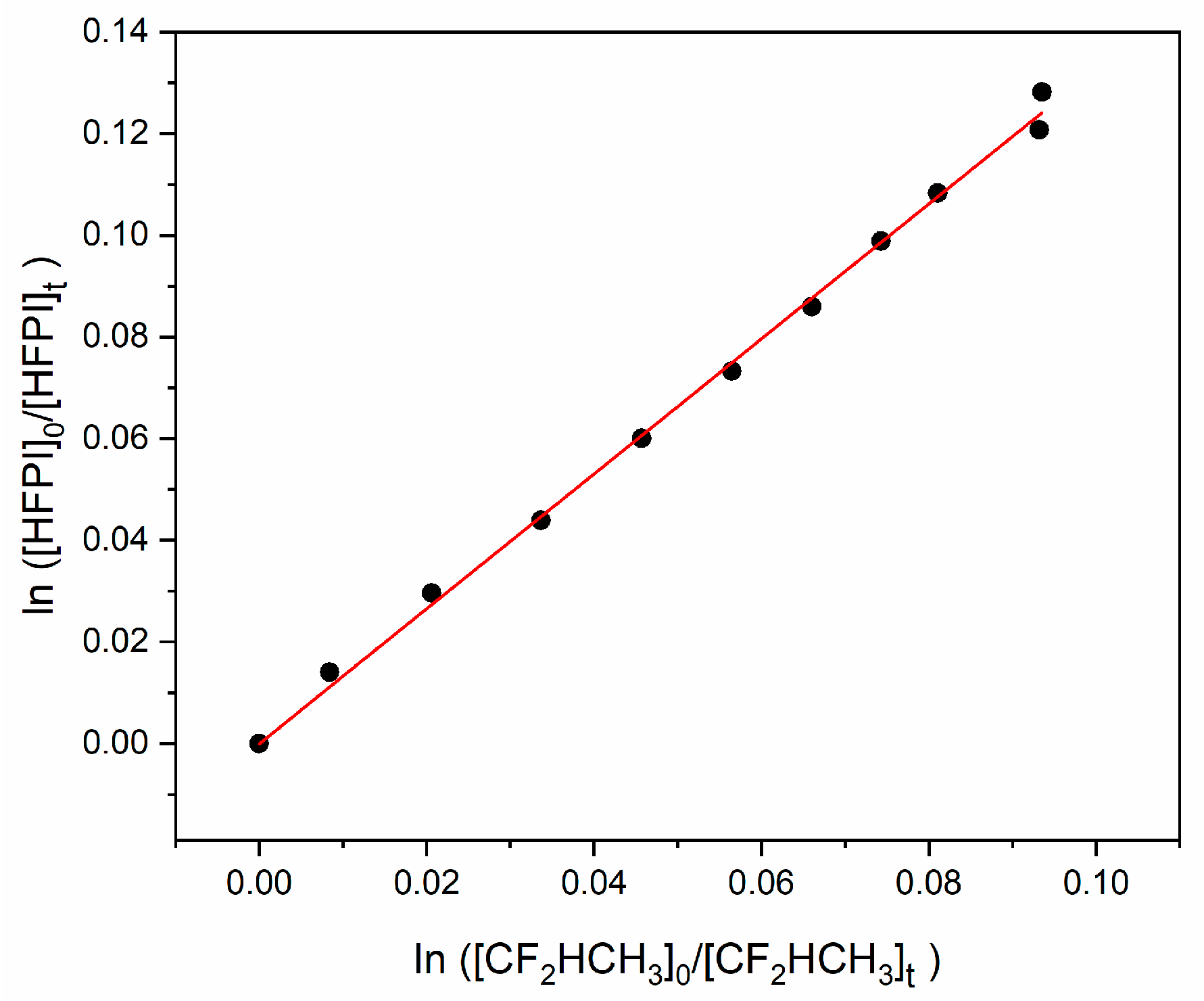
2.2. Reactivity of HFPI with Ozone and Hydroxyl Radicals
2.3. Reactivity of HFPI with Chlorine Atoms
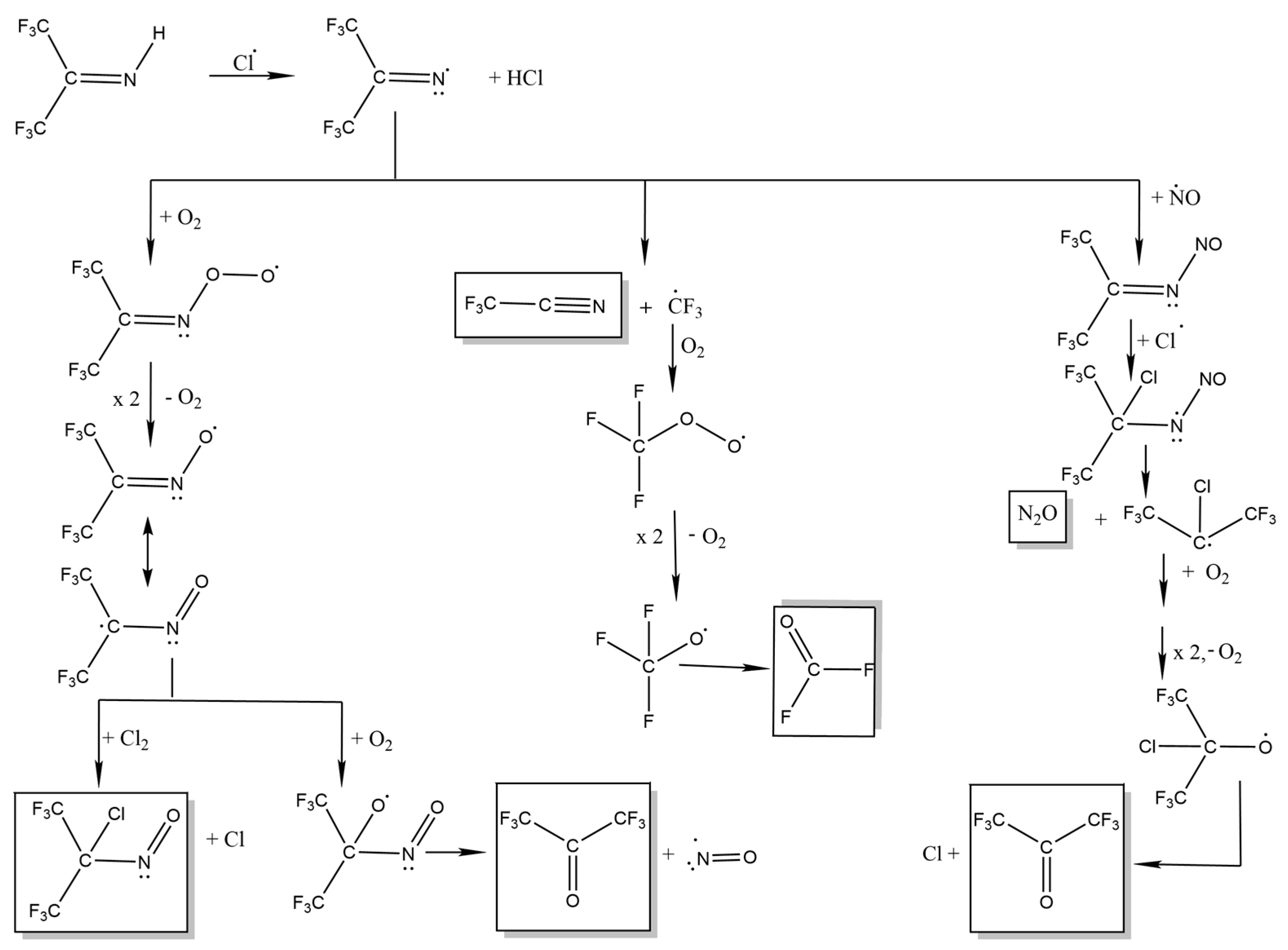
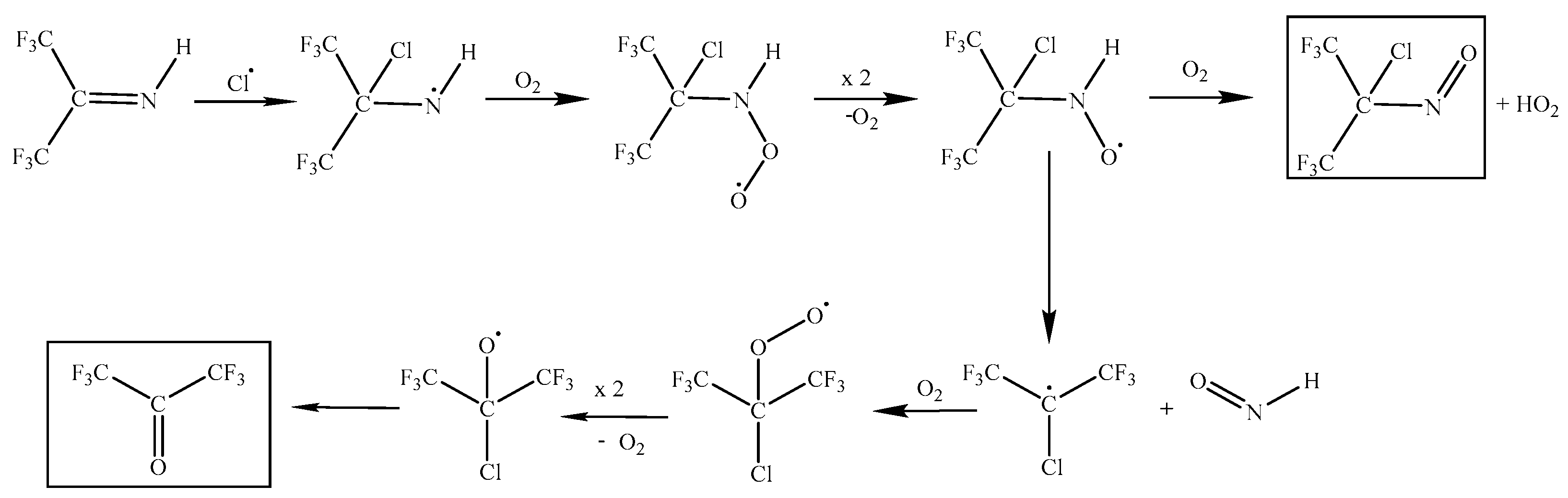
2.4. Products of HFPI Oxidation
3. Discussion
3.1. Comparison with Prior Kinetic Studies
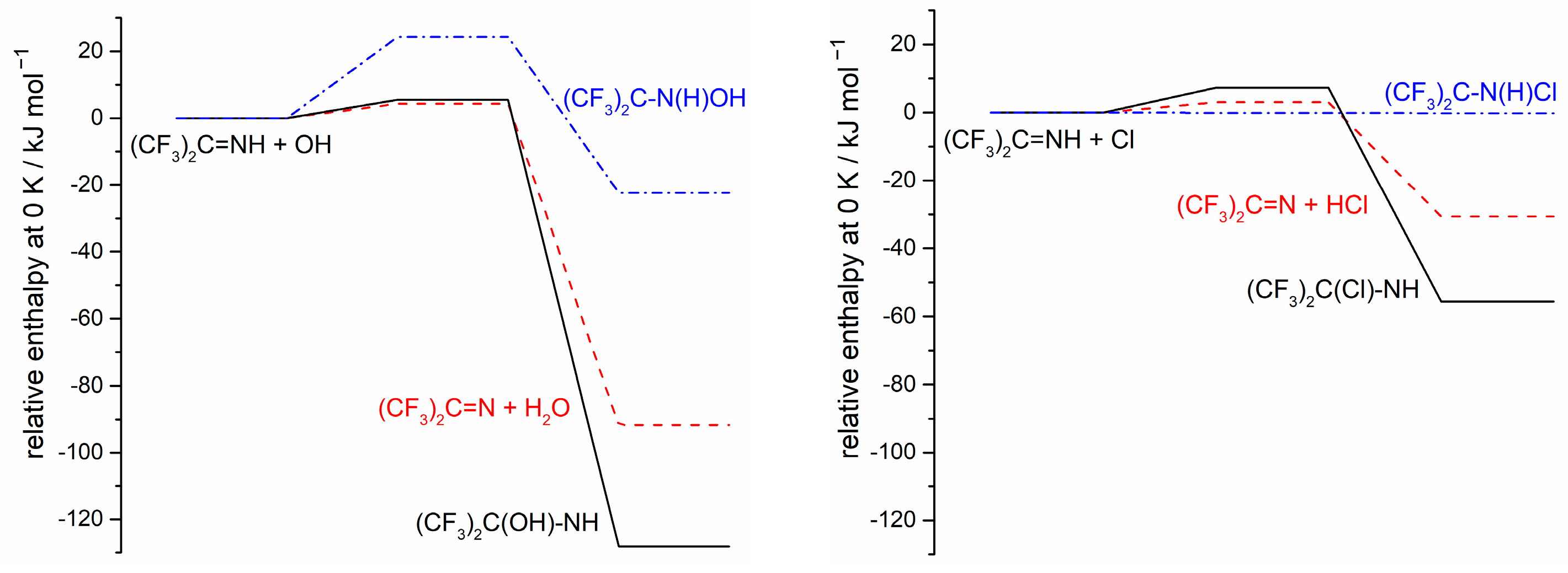
3.2. Mechanistic Interpretation
3.3. Atmospheric Lifetime of HFPI and Its Global Warming Potential
- (i)
- With an upper limit to ozone in the atmosphere of 100 ppb in highly polluted areas, the small rate constant determined in Section 2.2 indicates that consumption of imine by atmospheric ozone, a pathway for some unsaturated VOCs, is entirely negligible for HFPI.
- (ii)
- A second possibility is UV photolysis. The UV absorption spectrum by Toby et al. shows a broad peak centered near 250 nm, which has minor intensity at 300–320 nm [24]. An initial assessment of excited electronic states of HFPI via time-dependent density functional theory confirms that its longest wavelength UV transition is centered at approximately 245 nm, with no unobserved longer wavelength peaks. Thus, the main UV absorption is outside the actinic region of ground-level sunlight, ca. 290–400 nm, and the derived photolysis rate in overhead sunlight is ~10−6 s−1, if every photon absorbed led to dissociation. This implies a lifetime of at least 24 days. The measurements by Toby et al. [24] also showed that, at tropospheric pressures, the quantum yield for dissociation is small, ca. 10−3 or less, so the lifetime with respect to photolysis becomes at least 60 years. Therefore, this process has a negligible influence on the overall atmospheric lifetime of HFPI.
- (iii)
- A third potential removal pathway is via absorption into cloud water droplets and rainout. There is little information available about the water solubility of HFPI. We note that a synthesis of HFPI involves the addition of ammonia to hexafluoro acetone to make a (CF3)2C(OH)NH2 intermediate, followed by dehydration with phosphorous oxychloride to yield HFPI [25]. If this route is readily reversible, then a typical average lifetime for soluble species removed by cloud droplets is transport-controlled and of the order of a week [26]. Shortening the overall atmospheric lifetime by around a factor of 40 in this way would have a similar impact on the GWP, i.e., leading to a GWP100 of around two. Further experiments are needed to evaluate the solubility of HFPI and its possible hydrolysis.
4. Materials and Methods
4.1. Materials
4.2. Experimental Methods
4.3. Computational Methods
5. Conclusions
Supplementary Materials
Author Contributions
Funding
Institutional Review Board Statement
Informed Consent Statement
Data Availability Statement
Conflicts of Interest
References
- Montreal Protocol to Protect the Ozone Layer. Available online: https://ozone.unep.org/sites/default/files/Handbooks/MP-Handbook-2020-English.pdf (accessed on 3 December 2025).
- Hodnebrog, Ø.; Etminan, M.; Fuglestvedt, J.S.; Marston, G.; Myhre, G.; Nielsen, C.J.; Shine, K.P.; Wallington, T.J. Global Warming Potentials and Radiative Efficiencies of Halocarbons and Related Compounds: A Comprehensive Review. Rev. Geophys. 2013, 51, 300–378. [Google Scholar] [CrossRef]
- Son, C.; Stafford, N.; Lee, J.; Jang, H. Etching Gas Mixture and Method of Manufacturing Integrated Circuit Device Using the Same. U.S. Patent 2023/0274943 Al, 31 August 2023. [Google Scholar]
- Linder, D.P.; Duan, X.; Page, M. Thermal rate constants for R + N2H2 → RH + N2H (R = H, OH, NH2) determined from multireference configuration interaction and variational transition state theory calculations. J. Chem. Phys. 1996, 104, 6298–6307. [Google Scholar] [CrossRef]
- Balucani, N.; Bergeat, A.; Cartechini, L.; Volpi, G.G.; Casavecchia, P.; Skouteris, D.; Rosi, M. Combined crossed molecular beam and theoretical studies of the N(2D) + CH4 reaction and implications for atmospheric models of Titan. J. Phys. Chem. A 2009, 113, 11138–11152. [Google Scholar] [CrossRef]
- Diévart, P.; Catoire, L. Contributions of Experimental Data Obtained in Concentrated Mixtures to Kinetic Studies: Application to Monomethylhydrazine Pyrolysis. J. Phys. Chem. A 2020, 124, 6214–6236. [Google Scholar] [CrossRef]
- Ali, M.A.; Barker, J.R. Comparison of three isoelectronic multiple-well reaction systems: OH + CH2O, OH + CH2CH2, and OH + CH2NH. J. Phys. Chem. A 2015, 119, 7578–7592. [Google Scholar] [CrossRef]
- Bunkan, A.J.C.; Tang, Y.; Sellevag, S.R.; Nielsen, C.J. Atmospheric gas phase chemistry of CH2=NH and HNC. A first-principles approach. J. Phys. Chem. A 2014, 118, 5279–5288. [Google Scholar] [CrossRef] [PubMed]
- Marshall, P.; Rawling, G.; Glarborg, P. New reactions of diazene and related species for modeling combustion of amine fuels. Mol. Phys. 2021, 119, e1979674. [Google Scholar] [CrossRef]
- Kobayashi, H.; Hayakawa, A.; Somarathne, K.K.A.; Okafor, E.C. Science and technology of ammonia combustion. Proc. Combust. Inst. 2019, 37, 109–133. [Google Scholar] [CrossRef]
- Valera-Medina, A.; Amer-Hatem, F.; Azad, A.K.; Dedoussi, I.C.; de Joannon, M.; Fernandes, R.X.; Glarborg, P.; Hashemi, H.; He, X.; Mashurk, S.; et al. A review on ammonia as a potential fuel: From synthesis to economics. Energy Fuels 2021, 35, 6964–7029. [Google Scholar] [CrossRef]
- Miller, F.A.; Kiviat, F.E. The infrared and Raman spectra of (CF3)2C=C=O, (CF3)2C=N=N and (CF3)2C=NH. Spectrochim. Acta Part A Mol. Spectrosc. 1969, 25, 1577–1588. [Google Scholar] [CrossRef]
- van Hoomissen, D.; Papadimitriou, V.C.; Burkholder, J.B. Low frequency (<500 cm−1) contribution to greenhouse gas radiative efficiency. Mol. Phys. 2024, 122, e2273412. [Google Scholar] [CrossRef]
- Burkholder, J.B.; Sander, S.P.; Abbatt, J.; Barker, J.R.; Cappa, C.; Crounse, J.D.; Dibble, T.S.; Huie, R.E.; Kolb, C.E.; Kurylo, M.J.; et al. Chemical Kinetics and Photochemical Data for Use in Atmospheric Studies, Evaluation No. 19; Publication 19-5; NASA/JPL: Pasadena, CA, USA, 2019. Available online: http://jpldataeval.jpl.nasa.gov (accessed on 1 September 2025).
- Sulbaek Andersen, M.P.; Ohide, J.; Sølling, T.I.; Nielsen, O.J. Atmospheric chemistry of CF3CN: Kinetics and products of reaction with OH radicals, Cl atoms and O3. Phys. Chem. Chem. Phys. 2022, 24, 2638–2645. [Google Scholar] [CrossRef]
- Brauer, C.S.; Johnson, T.J.; Blake, T.A.; Sharpe, S.W.; Sams, R.L.; Tonkyn, R.G. The Northwest Infrared (NWIR) gas-phase spectral database of industrial and environmental chemicals: Recent updates. In Proceedings of SPIE, Proceedings of the Advanced Environmental, Chemical, and Biological Sensing Technologies XI, Baltimore, MD, USA, 5–6 May 2014; Vo-Dinh, T., Lieberman, R.A., Gauglitz, G.G., Eds.; SPIE: Bellingham, MD, USA, 2014. [Google Scholar]
- Ernsting, N.P.; Pfab, J. The gas phase i.r. spectra of some perhalonitrosomethanes. Spectrochim. Acta Part A 1980, 36, 75–84. [Google Scholar] [CrossRef]
- Bürger, H.; Palwelke, G. Schwingungsspektren und normalkoordinatenanalyse von CF3-Verbindungen-XXI. 2,2-Dihalogen-hexafluorpropane (CF3)2CX2 (X = F, CI, Br, J). Spectrochim. Acta Part A 1979, 35, 525–540. [Google Scholar] [CrossRef]
- Davy, J. On a gaseous compound of carbonic oxide and chlorine. Philos. Trans. R. Soc. Lond. 1812, 102, 144–151. [Google Scholar] [CrossRef]
- Ayscough, P.B.; Steacie, E.W.R. The photolysis of hexafluoroacetone. Proc. R. Soc. Lond. A. Math. Phys. Sci. 1956, 234, 476–488. [Google Scholar] [CrossRef]
- Rivela, C.B.; Tovar, C.M.; Teruel, M.A.; Barnes, I.; Wiesen, P.; Blanco, M.B. CFCs replacements: Reactivity and atmospheric lifetimes of a series of hydrofluoroolefins towards OH radicals and Cl atoms. Chem. Phys. Lett. 2019, 714, 190–196. [Google Scholar] [CrossRef]
- Wang, X.; Jacob, D.J.; Eastham, S.D.; Sulprizio, M.P.; Zhu, L.; Chen, Q.; Alexander, B.; Sherwen, T.; Evans, M.J.; Lee, B.H.; et al. The role of chlorine in global tropospheric chemistry. Atmos. Chem. Phys. 2019, 19, 3981–4003. [Google Scholar] [CrossRef]
- Prinn, R.G.; Weiss, R.F.; Miller, B.R.; Huang, J.; Alyea, F.N.; Cunnold, D.M.; Fraser, P.J.; Hartley, D.E.; Simmonds, P.G. Atmospheric Trends and Lifetime of CH3CCl3 and Global OH Concentrations. Science 1995, 269, 187–192. [Google Scholar] [CrossRef] [PubMed]
- Toby, F.S.; Toby, S.; Pritchard, G.O. Photochemistry of hexafluoroacetone imine. J. Amer. Chem. Soc. 1972, 94, 4441–4445. [Google Scholar] [CrossRef]
- Middleton, W.J.; Carlson, H.D. Hexafluoroacetone imine. Org. Synth. 1970, 50, 81. [Google Scholar] [CrossRef]
- Burkholder, J.B.; Hodnebrog, Ø. Annex to the Scientific Assessment of Ozone Depletion 2022. Available online: https://csl.noaa.gov/assessments/ozone/2022/downloads/Annex_2022OzoneAssessment.pdf (accessed on 5 December 2025).
- Herath, T.N.; Clinch, E.C.; Orozco, I.; Raign, E.L.; Marshall, P. Relative rate and product studies of the reactions of atomic chlorine with tetrafluoroethylene, 1,2-dichloro-1,2-difluoroethylene, 1,1-dichloro-2,2-difluoroethylene, and hexafluoro-1,3-butadiene in the presence of oxygen. J. Phys. Chem. A 2016, 120, 7311–7319. [Google Scholar] [CrossRef] [PubMed]
- Atkinson, R. Kinetics and Mechanisms of the Gas-Phase Reactions of the Hydroxyl Radical with Organic Compounds under Atmospheric Conditions. Chem. Rev. 1985, 85, 69–201. [Google Scholar] [CrossRef]
- Grimme, S. Semiempirical hybrid density functional with perturbative second-order correlation. J. Chem. Phys. 2006, 124, 034108. [Google Scholar] [CrossRef] [PubMed]
- Frisch, M.J.; Trucks, G.W.; Schlegel, H.B.; Scuseria, G.E.; Robb, M.A.; Cheeseman, J.R.; Scalmani, G.; Barone, V.; Petersson, G.A.; Nakatsuji, H.; et al. Gaussian 16 Rev. A.03; Gaussian, Inc.: Wallingford, CT, USA, 2016. [Google Scholar]
- Barone, V.; Biczysko, M.; Bloino, J. Fully anharmonic IR and Raman spectra of medium-size molecular systems: Accuracy and interpretation. Phys. Chem. Chem. Phys. 2014, 16, 1759–1787. [Google Scholar] [CrossRef]
- Biczysko, M.; Panek, P.; Scalmani, G.; Bloino, J.; Barone, V. Harmonic and Anharmonic Vibrational Frequency Calculations with the Double-Hybrid B2PLYP Method: Analytic Second Derivatives and Benchmark Studies. J. Chem. Theory Comput. 2010, 6, 2115–2125. [Google Scholar] [CrossRef]
- Zhao, Y.; Truhlar, D.G. The M06 Suite of Density Functionals for Main Group Thermochemistry, Kinetics, Noncovalent Interactions, Excited States, and Transition Elements: Two New Functionals and Systematic Testing of Four M06 Functionals and Twelve Other Functionals. Theor. Chem. Acc. 2008, 120, 215–241. [Google Scholar] [CrossRef]



| p(HFPI)/torr | p(CH3F)/torr | p(O3)/torr | p(H2)/torr | kHFPI/kCH3F |
|---|---|---|---|---|
| 0.17 | 0.37 | 3.67 | 20.00 | 2.03 ± 0.06 |
| 0.14 | 0.32 | 3.17 | 17.29 | 2.33 ± 0.08 |
| 0.15 | 0.33 | 3.29 | 17.90 | 2.14 ± 0.08 |
| p(HFPI)/torr | p(CF2HCH3)/torr | p(O3)/torr | p(H2)/torr | kHFPI/kCF2HCH3 |
|---|---|---|---|---|
| 0.15 | 0.33 | 2.40 | 19.01 | 1.33 ± 0.02 |
| 0.22 | 0.47 | 2.91 | 22.27 | 1.34 ± 0.02 |
| 0.18 | 0.39 | 2.40 | 18.41 | 1.32 ± 0.04 |
| 0.15 | 0.31 | 1.94 | 14.82 | 1.39 ± 0.04 |
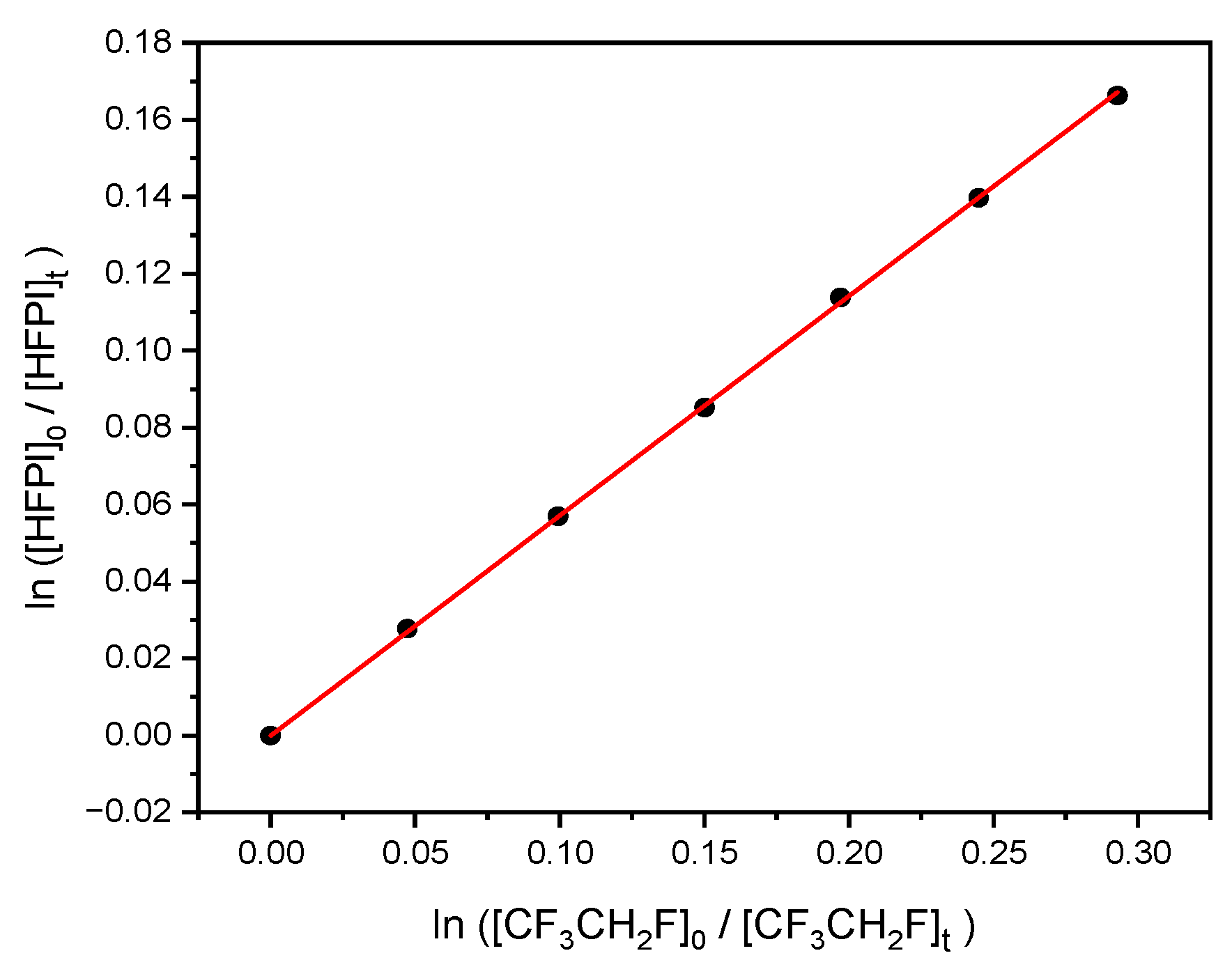
| p(HFPI)/torr | p(CF3CH2F)/torr | p(Cl2)/torr | kHFPI/kCF3CH2F |
|---|---|---|---|
| 0.097 | 0.099 | 3.218 | 0.57 ± 0.01 |
| 0.059 | 0.063 | 2.045 | 0.57 ± 0.01 |
| 0.083 | 0.089 | 2.860 | 0.57 ± 0.01 |
| Time Horizon, Years | GWP a |
|---|---|
| 20 | 234 |
| 50 | 110 |
| 100 | 64 |
| 500 | 18 |
Disclaimer/Publisher’s Note: The statements, opinions and data contained in all publications are solely those of the individual author(s) and contributor(s) and not of MDPI and/or the editor(s). MDPI and/or the editor(s) disclaim responsibility for any injury to people or property resulting from any ideas, methods, instructions or products referred to in the content. |
© 2026 by the authors. Licensee MDPI, Basel, Switzerland. This article is an open access article distributed under the terms and conditions of the Creative Commons Attribution (CC BY) license.
Share and Cite
Savi, S.; Marshall, P. Measurements of Radical Reactivity with an Imine, (CF3)2CNH: Rate Constants for Chlorine Atoms and Hydroxyl Radicals and the Global Warming Potential. Molecules 2026, 31, 424. https://doi.org/10.3390/molecules31030424
Savi S, Marshall P. Measurements of Radical Reactivity with an Imine, (CF3)2CNH: Rate Constants for Chlorine Atoms and Hydroxyl Radicals and the Global Warming Potential. Molecules. 2026; 31(3):424. https://doi.org/10.3390/molecules31030424
Chicago/Turabian StyleSavi, Savi, and Paul Marshall. 2026. "Measurements of Radical Reactivity with an Imine, (CF3)2CNH: Rate Constants for Chlorine Atoms and Hydroxyl Radicals and the Global Warming Potential" Molecules 31, no. 3: 424. https://doi.org/10.3390/molecules31030424
APA StyleSavi, S., & Marshall, P. (2026). Measurements of Radical Reactivity with an Imine, (CF3)2CNH: Rate Constants for Chlorine Atoms and Hydroxyl Radicals and the Global Warming Potential. Molecules, 31(3), 424. https://doi.org/10.3390/molecules31030424