Functional Food-Derived Urolithins: Molecular Mechanisms, Health Effects, and Interactomics with Proteins and Extracellular Vesicles


Abstract
1. Introduction
2. Methodology
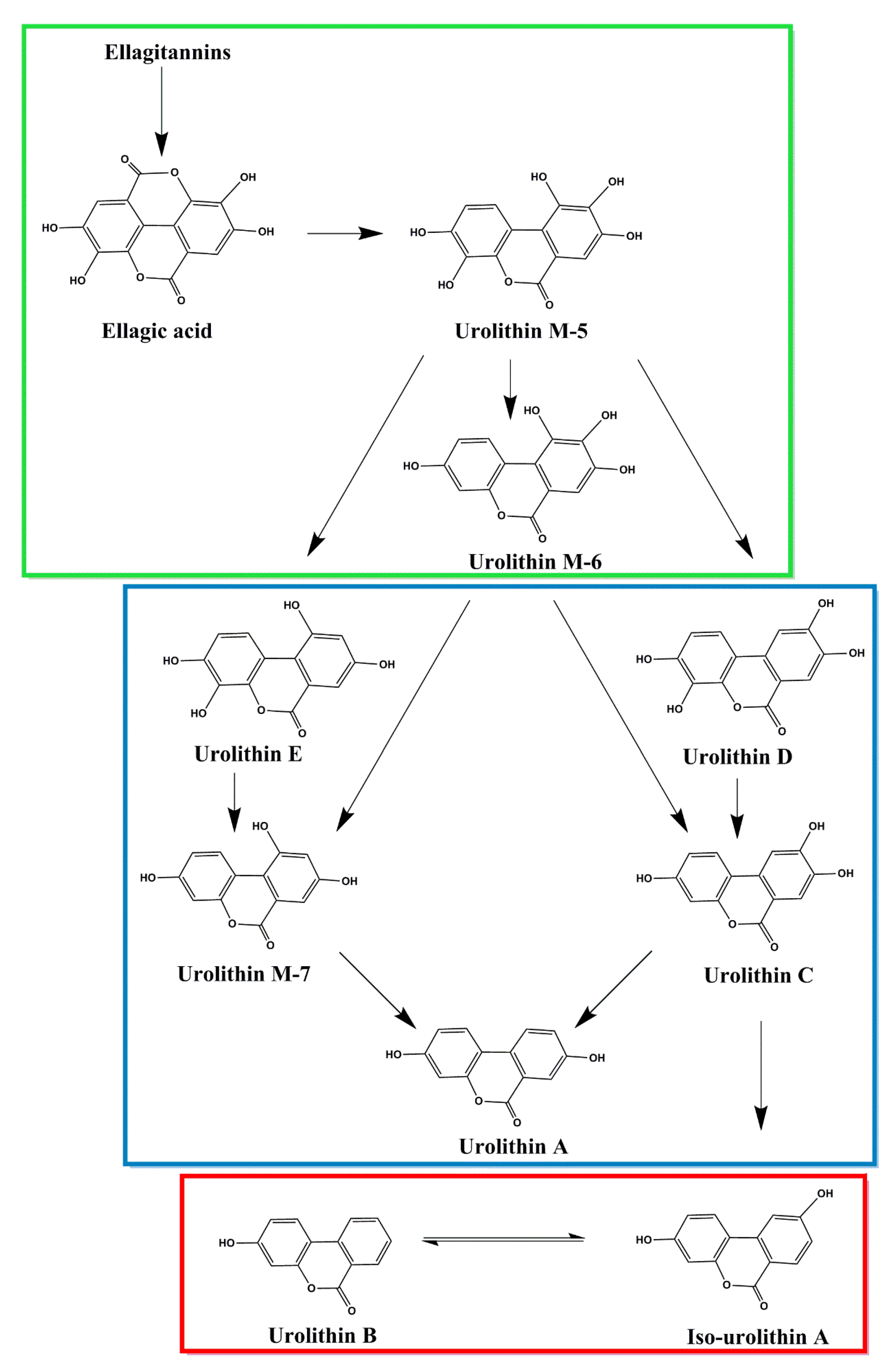
3. Biotransformation of Ellagitannins to URO
4. Role of Gut Microbiota in Urolithin Production
- I.
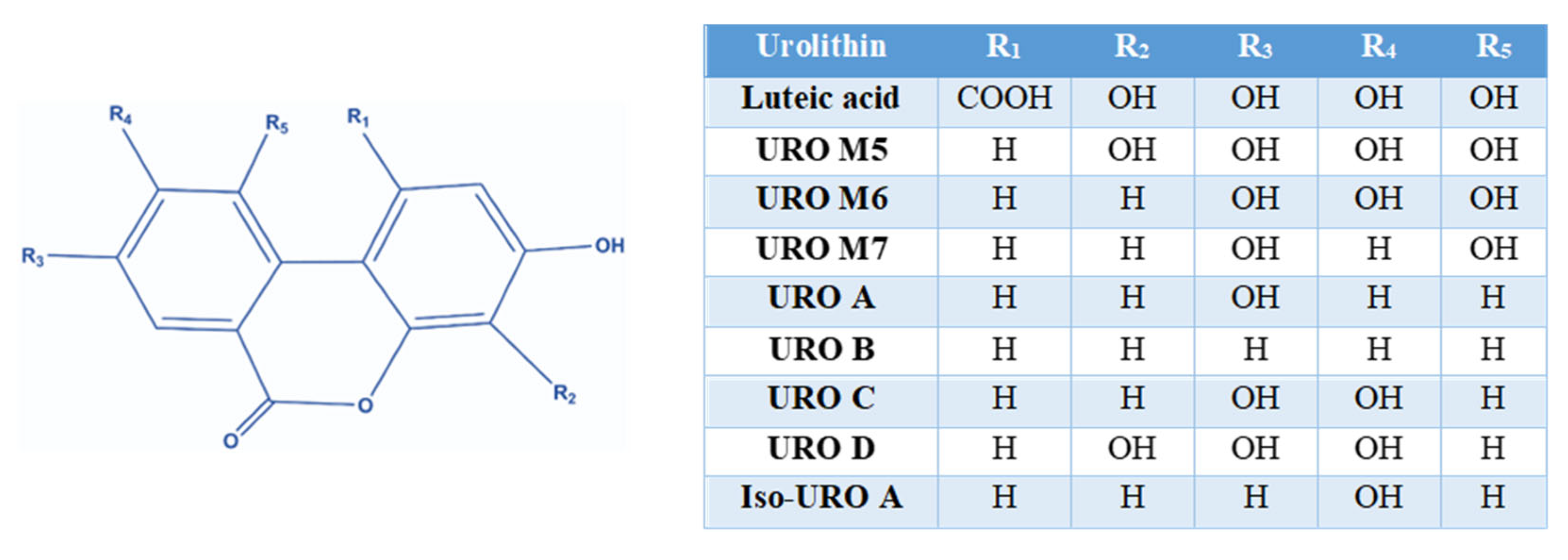
- Metabotype A (UM-A), characterised by producing only URO A as the final metabolite;
- II.
- Metabotype B (UM-B), characterised by the production of URO B and iso-URO A in addition to URO A;
- III.
5. Pharmacokinetics, Bioavailability, and Systemic Distribution of URO
6. SA as Carriers of URO
7. URO as Modulators of Cellular Protein Function
- (a)
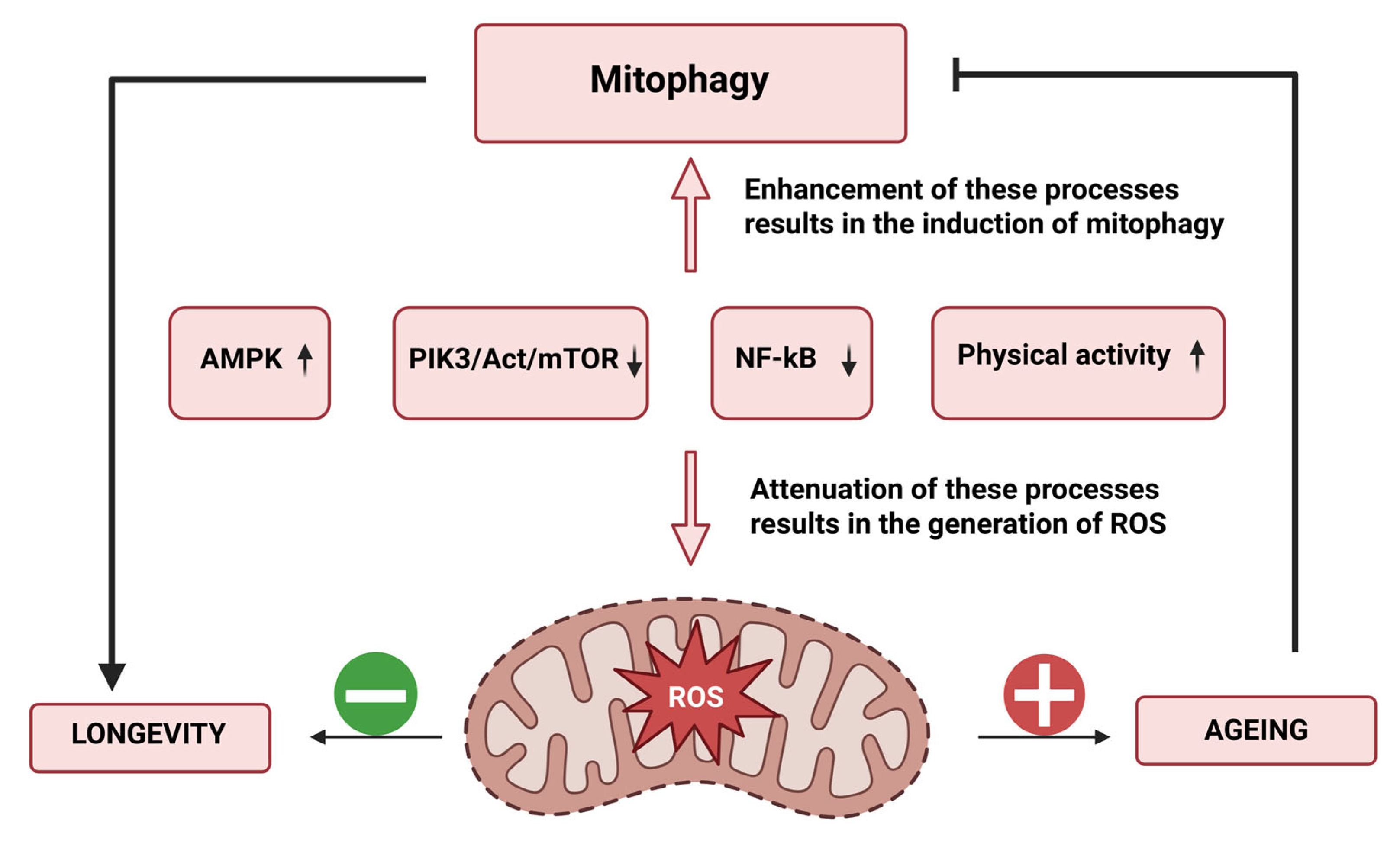
- Activation of Mitophagy by Urolithins
- (b)
- Role of Urolithins in Antioxidant Defense Mechanisms
- (c)
- Urolithins as Modulators of Cell Cycle
8. Biological Effects of URO on Human Health
- (a)
- Anti-aging and myoprotective effects of URO A
- (b)
- Immunomodulatory effect of URO A
- (c)
- Neuroprotective effect of URO A
- (d)
- GUT protection by URO A
- (e)
- Joint protection by URO A
9. Clinical Implications in Chronic Diseases
10. Interactions with EVs
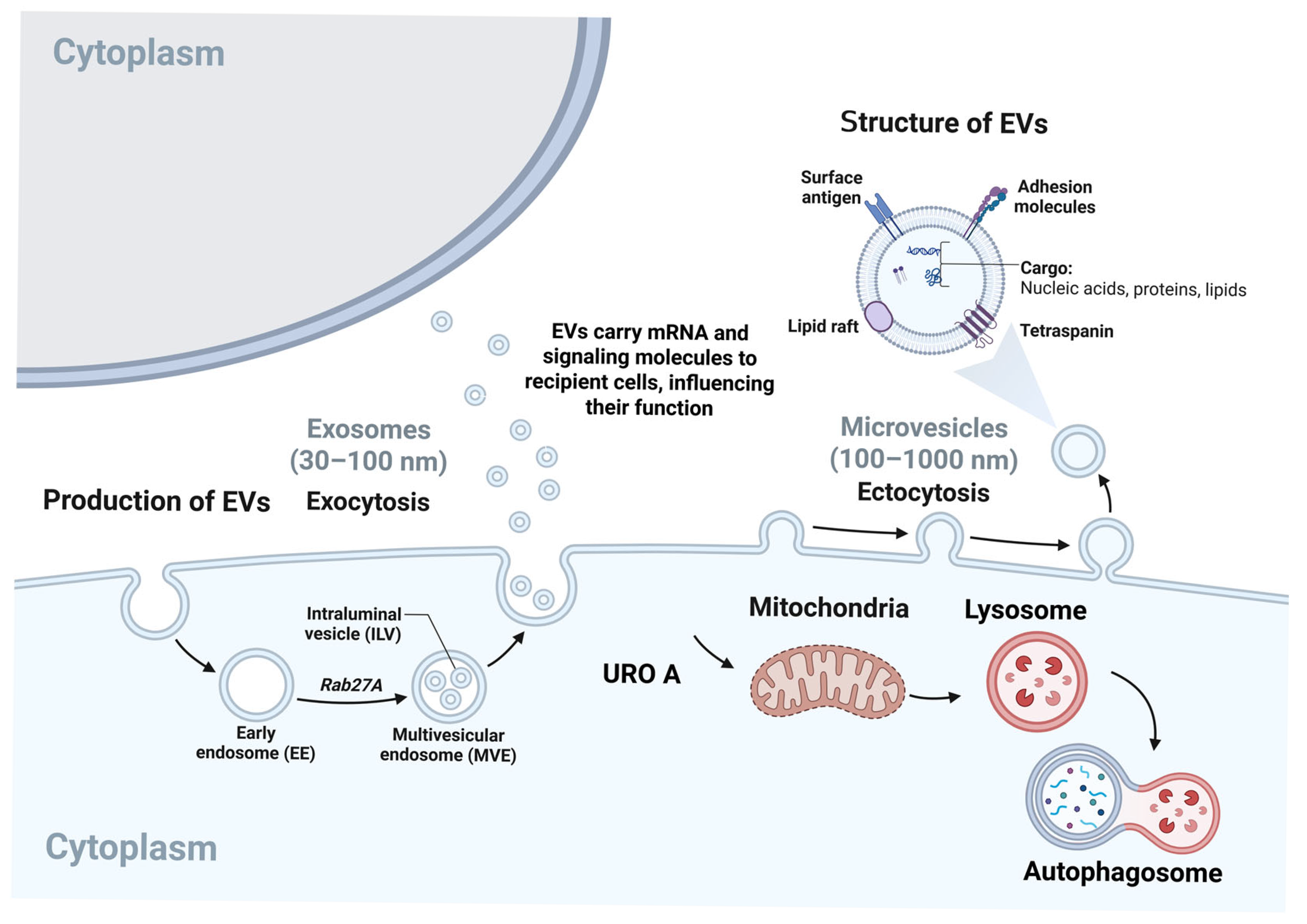
10.1. Influence of UROs on EV Biogenesis and Cargo
10.2. EV-Mediated Delivery of Urolithins and Their Metabolites
10.3. Role of EVs in Systemic Distribution and Cellular Communication
11. Integrative Perspectives and Emerging Therapeutic Potential
11.1. Systems Biology Approaches to Urolithin Action
- Network modelling of signalling axes: inference frameworks connecting Sirt1–AMPK–mTOR mitophagy nodes with NF-κB/MAPK/Akt inflammation and lysosomal cathepsin activity to predict emergent phenotypes and identify combination targets (e.g., proteasome inhibition in MM, lifestyle synergy with exercise) [58,66,67,73].
11.2. Future Directions in Personalised Nutrition and Therapeutics
12. Conclusions
Author Contributions
Funding
Data Availability Statement
Acknowledgments
Conflicts of Interest
Abbreviations
| UROs | Urolithins |
| ETs | Ellagitannins |
| EA | Ellagic acid |
| UM | Urolithin metabotype |
| SA | Serum albumin |
| BSA | Bovine serum albumin |
| HSA | Human serum albumin |
| EV | Extracellular vesicles |
References
- Ishimoto, H.; Shibata, M.; Myojin, Y.; Ito, H.; Sugimoto, Y.; Tai, A.; Hatano, T. In Vivo anti-inflammatory and antioxidant properties of ellagitannin metabolite urolithin A. Bioorganic Med. Chem. Lett. 2011, 21, 5901–5904. [Google Scholar] [CrossRef]
- Cannataro, R.; Fazio, A.; La Torre, C.; Caroleo, M.; Cione, E. Polyphenols in the Mediterranean Diet: From Dietary Sources to microRNA Modulation. Antioxidants 2021, 10, 328. [Google Scholar] [CrossRef]
- Kang, I.; Buckner, T.; Shay, N.F.; Gu, L.; Chung, S. Improvements in metabolic health with consumption of ellagic acid and subsequent conversion into urolithins: Evidence and mechanisms. Adv. Nutr. 2016, 7, 961–972. [Google Scholar] [CrossRef] [PubMed]
- Clifford, M.N.; Scalbert, A. Ellagitannins–nature, occurrence and dietary burden. J. Sci. Food Agric. 2000, 80, 1118–1125. [Google Scholar] [CrossRef]
- Chen, P.; Guo, Z.; Chen, F.; Wu, Y.; Zhou, B. Recent advances and perspectives on the health benefits of urolithin B, a bioactive natural product derived from ellagitannins. Front. Pharmacol. 2022, 13, 917266. [Google Scholar] [CrossRef] [PubMed]
- Djedjibegovic, J.; Marjanovic, A.; Panieri, E.; Saso, L. Ellagic acid-derived urolithins as modulators of oxidative stress. Oxidative Med. Cell. Longev. 2020, 2020, 5194508. [Google Scholar] [CrossRef]
- Espín, J.C.; Larrosa, M.; García-Conesa, M.T.; Tomás-Barberán, F. Biological significance of urolithins, the gut microbial ellagic acid-derived metabolites: The evidence so far. Evid. Based Complement. Alternat. Med. 2013, 2013, 270418. [Google Scholar] [CrossRef]
- García-Villalba, R.; Giménez-Bastida, J.A.; Cortés-Martín, A.; Ávila-Gálvez, M.Á.; Tomás-Barberán, F.A.; Selma, M.V.; Espín, J.C.; González-Sarrías, A. Urolithins: A comprehensive update on their metabolism, bioactivity, and associated gut microbiota. Mol. Nutr. Food Res. 2022, 66, 2101019. [Google Scholar] [CrossRef]
- Raimundo, A.F.; Ferreira, S.; Tomás-Barberán, F.A.; Santos, C.N.; Menezes, R. Urolithins: Diet-derived bioavailable metabolites to tackle diabetes. Nutrients 2021, 13, 4285. [Google Scholar] [CrossRef]
- García-Villalba, R.; Selma, M.V.; Espín, J.C.; Tomás-Barberán, F.A. Identification of novel urolithin metabolites in human feces and urine after the intake of a pomegranate extract. J. Agric. Food Chem. 2019, 67, 11099–11107. [Google Scholar] [CrossRef]
- García-Villalba, R.; Tomás-Barberán, F.A.; Iglesias-Aguirre, C.E.; Giménez-Bastida, J.A.; González-Sarrías, A.; Selma, M.V.; Espín, J.C. Ellagitannins, urolithins, and neuroprotection: Human evidence and the possible link to the gut microbiota. Mol. Asp. Med. 2023, 89, 101109. [Google Scholar] [CrossRef]
- Cortés-Martín, A.; Selma, M.V.; Tomás-Barberán, F.A.; González-Sarrías, A.; Espín, J.C. Where to look into the puzzle of polyphenols and health? The postbiotics and gut microbiota associated with human metabotypes. Mol. Nutr. Food Res. 2020, 64, 1900952. [Google Scholar] [CrossRef]
- Toney, A.M.; Fox, D.; Chaidez, V.; Ramer-Tait, A.E.; Chung, S. Immunomodulatory role of urolithin A on metabolic diseases. Biomedicines 2021, 9, 192. [Google Scholar] [CrossRef] [PubMed]
- Cortés-Martín, A.; García-Villalba, R.; González-Sarrías, A.; Romo-Vaquero, M.; Loria-Kohen, V.; Ramírez-de-Molina, A.; Tomás-Barberán, F.; Selma, M.V.; Espín, J. The gut microbiota urolithin metabotypes revisited: The human metabolism of ellagic acid is mainly determined by aging. Food Funct. 2018, 9, 4100–4106. [Google Scholar] [CrossRef]
- Alqudah, S.; Claesen, J. Mechanisms of gut bacterial metabolism of dietary polyphenols into bioactive compounds. Gut Microbes 2024, 16, 2426614. [Google Scholar] [CrossRef]
- D’Amico, D.; Andreux, P.A.; Valdés, P.; Singh, A.; Rinsch, C.; Auwerx, J. Impact of the natural compound urolithin A on health, disease, and aging. Trends Mol. Med. 2021, 27, 687–699. [Google Scholar] [CrossRef]
- Cerdá, B.; Tomás-Barberán, F.A.; Espín, J.C. Metabolism of antioxidant and chemopreventive ellagitannins from strawberries, raspberries, walnuts, and oak-aged wine in humans: Identification of biomarkers and individual variability. J. Agric. Food Chem. 2005, 53, 227–235. [Google Scholar]
- Yuan, T.; Ma, H.; Liu, W.; Niesen, D.B.; Shah, N.; Crews, R.; Rose, K.N.; Vattem, D.A.; Seeram, N.P. Pomegranate’s neuroprotective effects against Alzheimer’s disease are mediated by urolithins, its ellagitannin-gut microbial derived metabolites. ACS Chem. Neurosci. 2016, 7, 26–33. [Google Scholar] [PubMed]
- Kujawska, M.; Jourdes, M.; Kurpik, M.; Szulc, M.; Szaefer, H.; Chmielarz, P.; Kreiner, G.; Krajka-Kuźniak, V.; Mikołajczak, P.Ł.; Teissedre, P.-L. Neuroprotective effects of pomegranate juice against Parkinson’s disease and presence of ellagitannins-derived metabolite—Urolithin A—In the brain. Int. J. Mol. Sci. 2019, 21, 202. [Google Scholar] [CrossRef]
- Rashtbari, S.; Dehghan, G.; Sadeghi, L.; Sareminia, L.; Iranshahy, M.; Iranshahi, M.; Khataee, A.; Yoon, Y. Interaction of bovine serum albumin with ellagic acid and urolithins A and B: Insights from surface plasmon resonance, fluorescence, and molecular docking techniques. Food Chem. Toxicol. 2022, 162, 112913. [Google Scholar] [CrossRef] [PubMed]
- Lee, P.; Wu, X. Modifications of human serum albumin and their binding effect. Curr. Pharm. Des. 2015, 21, 1862–1865. [Google Scholar] [CrossRef]
- Wang, Y.; Wang, L.; Zhu, M.; Xue, J.; Hua, R.; Li, Q.X. Comparative studies on biophysical interactions between gambogic acid and serum albumin via multispectroscopic approaches and molecular docking. J. Lumin. 2019, 205, 210–218. [Google Scholar]
- de Araújo Motta, A.A.E.; de Castro, M.C.S.; Silva, D.; Cortez, C.M. A mathematical model to estimate binding sites for ligands in HSA and BSA based on spectrofluorimetry. J. Mol. Struct. 2021, 1223, 129224. [Google Scholar] [CrossRef]
- Carvalho, J.R.; Machado, M.V. New insights about albumin and liver disease. Ann. Hepatol. 2018, 17, 547–560. [Google Scholar] [CrossRef]
- Punith, R.; Seetharamappa, J. Spectral characterization of the binding and conformational changes of serum albumins upon interaction with an anticancer drug, anastrozole. Spectrochim. Acta Part A Mol. Biomol. Spectrosc. 2012, 92, 37–41. [Google Scholar] [CrossRef]
- Zelenovic, N.; Kojadinovic, M.; Filipovic, L.; Vucic, V.; Milcic, M.; Arsic, A.; Popovic, M. Interactions of Different Urolithins with Bovine Serum Albumin. Nat. Prod. Commun. 2023, 18, 1–11. [Google Scholar] [CrossRef]
- Xue, P.; Zhang, G.; Zhao, H.; Wang, W.; Zhang, J.; Ren, L. Serum albumin complexed with ellagic acid from pomegranate peel and its metabolite urolithin B. Food Biosci. 2022, 46, 101618. [Google Scholar] [CrossRef]
- Zelenović, N.; Ristić, P.; Polović, N.; Todorović, T.; Kojadinović, M.; Popović, M. A Multi-Spectroscopic and Molecular Docking Analysis of the Biophysical Interaction between Food Polyphenols, Urolithins, and Human Serum Albumin. Molecules 2024, 29, 4474. [Google Scholar] [CrossRef]
- Kojadinovic, M.; Arsic, A.; Petovic-Oggiano, G.; Gavrovic-Jankulovic, M.; Glibetic, M.; Popovic, M. Effect of urolithins on oxidative stress of colorectal adenocarcinomacells-Caco-2. Int. J. Food Sci. Nutr. 2017, 68, 952–959. [Google Scholar] [CrossRef] [PubMed]
- González-Sarrías, A.; Espín, J.C.; Tomás-Barberán, F.A.; García-Conesa, M.T. Gene expression, cell cycle arrest and MAPK signalling regulation in Caco-2 cells exposed to ellagic acid and its metabolites, urolithins. Mol. Nutr. Food Res. 2009, 53, 686–698. [Google Scholar] [PubMed]
- Ryu, D.; Mouchiroud, L.; Andreux, P.A.; Katsyuba, E.; Moullan, N.; Nicolet-dit-Félix, A.A.; Williams, E.G.; Jha, P.; Lo Sasso, G.; Huzard, D. Urolithin A induces mitophagy and prolongs lifespan in C. elegans and increases muscle function in rodents. Nat. Med. 2016, 22, 879–888. [Google Scholar] [CrossRef]
- Fang, E.F.; Hou, Y.; Palikaras, K.; Adriaanse, B.A.; Kerr, J.S.; Yang, B.; Lautrup, S.; Hasan-Olive, M.M.; Caponio, D.; Dan, X. Mitophagy inhibits amyloid-β and tau pathology and reverses cognitive deficits in models of Alzheimer’s disease. Nat. Neurosci. 2019, 22, 401–412. [Google Scholar] [CrossRef]
- Qiu, J.; Chen, Y.; Zhuo, J.; Zhang, L.; Liu, J.; Wang, B.; Sun, D.; Yu, S.; Lou, H. Urolithin A promotes mitophagy and suppresses NLRP3 inflammasome activation in lipopolysaccharide-induced BV2 microglial cells and MPTP-induced Parkinson’s disease model. Neuropharmacology 2022, 207, 108963. [Google Scholar] [PubMed]
- Zhao, H.; Song, G.; Zhu, H.; Qian, H.; Pan, X.; Song, X.; Xie, Y.; Liu, C. Pharmacological effects of urolithin A and its role in muscle health and performance: Current knowledge and prospects. Nutrients 2023, 15, 4441. [Google Scholar] [CrossRef] [PubMed]
- Murphy, M.P. How mitochondria produce reactive oxygen species. Biochem. J. 2009, 417, 1–13. [Google Scholar] [CrossRef] [PubMed]
- D’Autréaux, B.; Toledano, M.B. ROS as signalling molecules: Mechanisms that generate specificity in ROS homeostasis. Nat. Rev. Mol. Cell Biol. 2007, 8, 813–824. [Google Scholar] [CrossRef]
- Denk, D.; Singh, A.; Kasler, H.; Gorol, J.; Verdin, E.; Greten, F. Impact of Urolithin A supplementation, a mitophagy activator on mitochondrial health of immune cells (MitoIMMUNE)-A randomized, double-blind, placebo-controlled trial in healthy adults. J. Immunol. 2024, 212, 1532_4882. [Google Scholar]
- Hou, Y.; Chu, X.; Park, J.H.; Zhu, Q.; Hussain, M.; Li, Z.; Madsen, H.B.; Yang, B.; Wei, Y.; Wang, Y. Urolithin A improves Alzheimer’s disease cognition and restores mitophagy and lysosomal functions. Alzheimer’s Dement. 2024, 20, 4212–4233. [Google Scholar]
- Vicinanza, R.; Zhang, Y.; Henning, S.M.; Heber, D. Pomegranate juice metabolites, ellagic acid and urolithin a, synergistically inhibit androgen-independent prostate cancer cell growth via distinct effects on cell cycle control and apoptosis. Evid. Based Complement. Altern. Med. 2013, 2013, 247504. [Google Scholar]
- Luan, P.; D’Amico, D.; Andreux, P.A.; Laurila, P.-P.; Wohlwend, M.; Li, H.; Imamura de Lima, T.; Place, N.; Rinsch, C.; Zanou, N. Urolithin A improves muscle function by inducing mitophagy in muscular dystrophy. Sci. Transl. Med. 2021, 13, eabb0319. [Google Scholar] [CrossRef]
- Cerdá, B.; Periago, P.; Espín, J.C.; Tomás-Barberán, F.A. Identification of urolithin A as a metabolite produced by human colon microflora from ellagic acid and related compounds. J. Agric. Food Chem. 2005, 53, 5571–5576. [Google Scholar] [CrossRef]
- Ávila-Gálvez, M.; Giménez-Bastida, J.; González-Sarrías, A.; Espín, J. Tissue deconjugation of urolithin A glucuronide to free urolithin A in systemic inflammation. Food Funct. 2019, 10, 3135–3141. [Google Scholar] [CrossRef] [PubMed]
- Ma, S.; Wu, Q.; Wu, W.; Tian, Y.; Zhang, J.; Chen, C.; Sheng, X.; Zhao, F.; Ding, L.; Wang, T. Urolithin A Hijacks ERK1/2-ULK1 Cascade to Improve CD8+ T Cell Fitness for Antitumor Immunity. Adv. Sci. 2024, 11, 2310065. [Google Scholar]
- Totiger, T.M.; Srinivasan, S.; Jala, V.R.; Lamichhane, P.; Dosch, A.R.; Gaidarski, A.A., III; Joshi, C.; Rangappa, S.; Castellanos, J.; Vemula, P.K. Urolithin A, a novel natural compound to target PI3K/AKT/mTOR pathway in pancreatic cancer. Mol. Cancer Ther. 2019, 18, 301–311. [Google Scholar] [PubMed]
- Sun, W.; Luo, R.; Qu, Q.; Yang, J.; Yang, G.; Song, L.; Cao, P.; Li, E. Ellagic Acid and the Metabolite Urolithin A Suppress HSV-1 Infection and Brain Inflammation by Targeting Casein Kinase CK2. J. Agric. Food Chem. 2025, 73, 17014–17023. [Google Scholar] [CrossRef] [PubMed]
- Shen, P.-X.; Li, X.; Deng, S.-Y.; Zhao, L.; Zhang, Y.-Y.; Deng, X.; Han, B.; Yu, J.; Li, Y.; Wang, Z.-Z. Urolithin A ameliorates experimental autoimmune encephalomyelitis by targeting aryl hydrocarbon receptor. EBioMedicine 2021, 64, 103227. [Google Scholar] [CrossRef]
- Mentrup, H.; Ramos, A.; Novak, E.; Ballesteros, S.; Crawford, E.; Flanagan, M.; Mollen, K. Mitochondrial turnover is elevated in response to intestinal inflammation and is amenable to theraputic targeting via urolithin A. Inflamm. Bowel Dis. 2024, 30, S3–S4. [Google Scholar]
- Sands, B.E. Biomarkers of inflammation in inflammatory bowel disease. Gastroenterology 2015, 149, 1275–1285.e2. [Google Scholar] [CrossRef]
- Andreux, P.A.; Blanco-Bose, W.; Ryu, D.; Burdet, F.; Ibberson, M.; Aebischer, P.; Auwerx, J.; Singh, A.; Rinsch, C. The mitophagy activator urolithin A is safe and induces a molecular signature of improved mitochondrial and cellular health in humans. Nat. Metab. 2019, 1, 595–603. [Google Scholar] [CrossRef]
- Vergroesen, P.-P.; Kingma, I.; Emanuel, K.S.; Hoogendoorn, R.J.; Welting, T.J.; van Royen, B.J.; van Dieën, J.H.; Smit, T.H. Mechanics and biology in intervertebral disc degeneration: A vicious circle. Osteoarthritis 2015, 23, 1057–1070. [Google Scholar]
- Liu, H.; Kang, H.; Song, C.; Lei, Z.; Li, L.; Guo, J.; Xu, Y.; Guan, H.; Fang, Z.; Li, F. Urolithin A inhibits the catabolic effect of TNFα on nucleus pulposus cell and alleviates intervertebral disc degeneration in vivo. Front. Pharmacol. 2018, 9, 1043. [Google Scholar] [CrossRef]
- Xue, H.; Zhou, H.; Lou, Q.; Yuan, P.; Feng, Z.; Qiao, L.; Zhang, J.; Xie, H.; Shen, Y.; Ma, Q. Urolithin B reduces cartilage degeneration and alleviates osteoarthritis by inhibiting inflammation. Food Funct. 2024, 15, 3552–3565. [Google Scholar] [CrossRef]
- Lin, J.; Zhuge, J.; Zheng, X.; Wu, Y.; Zhang, Z.; Xu, T.; Meftah, Z.; Xu, H.; Wu, Y.; Tian, N. Urolithin A-induced mitophagy suppresses apoptosis and attenuates intervertebral disc degeneration via the AMPK signaling pathway. Free Radic. Biol. Med. 2020, 150, 109–119. [Google Scholar]
- Singh, A.; Andreux, P.; Blanco-Bose, W.; Ryu, D.; Aebischer, P.; Auwerx, J.; Rinsch, C. Orally administered urolithin A is safe and modulates muscle and mitochondrial biomarkers in elderly. Innov. Aging 2017, 1, 1223–1224. [Google Scholar] [CrossRef][Green Version]
- Kojadinovic, M.; Glibetic, M.; Vucic, V.; Popovic, M.; Vidovic, N.; Debeljak-Martacic, J.; Arsic, A. Short-term consumption of pomegranate juice alleviates some metabolic disturbances in overweight patients with dyslipidemia. J. Med. Food 2021, 24, 925–933. [Google Scholar] [CrossRef]
- Toney, A.M.; Fan, R.; Xian, Y.; Chaidez, V.; Ramer-Tait, A.E.; Chung, S. Urolithin A, a gut metabolite, improves insulin sensitivity through augmentation of mitochondrial function and biogenesis. Obesity 2019, 27, 612–620. [Google Scholar] [CrossRef]
- Xia, B.; Shi, X.C.; Xie, B.C.; Zhu, M.Q.; Chen, Y.; Chu, X.Y.; Cai, G.H.; Liu, M.; Yang, S.Z.; Mitchell, G.A. Urolithin A exerts antiobesity effects through enhancing adipose tissue thermogenesis in mice. PLoS Biol. 2020, 18, e3000688. [Google Scholar] [CrossRef]
- Liu, S.; D’Amico, D.; Shankland, E.; Bhayana, S.; Garcia, J.M.; Aebischer, P.; Rinsch, C.; Singh, A.; Marcinek, D.J. Effect of urolithin A supplementation on muscle endurance and mitochondrial health in older adults: A randomized clinical trial. JAMA Netw. Open 2022, 5, e2144279. [Google Scholar] [CrossRef]
- Singh, A.; D’Amico, D.; Andreux, P.A.; Fouassier, A.M.; Blanco-Bose, W.; Evans, M.; Aebischer, P.; Auwerx, J.; Rinsch, C. Urolithin A improves muscle strength, exercise performance, and biomarkers of mitochondrial health in a randomized trial in middle-aged adults. Cell Rep. Med. 2022, 3, 100633. [Google Scholar] [CrossRef]
- Huang, W.-C.; Liou, C.-J.; Shen, S.-C.; Hu, S.; Chao, J.C.; Hsiao, C.-Y.; Wu, S.-J. Urolithin A inactivation of TLR3/TRIF signaling to block the NF-κB/STAT1 axis reduces inflammation and enhances antioxidant defense in poly (I:C)-induced RAW264. 7 cells. Int. J. Mol. Sci. 2022, 23, 4697. [Google Scholar] [CrossRef] [PubMed]
- Jiménez-Loygorri, J.I.; Viedma-Poyatos, Á.; Gómez-Sintes, R.; Boya, P. Urolithin A promotes p62-dependent lysophagy to prevent acute retinal neurodegeneration. Mol. Neurodegener. 2024, 19, 49. [Google Scholar] [CrossRef] [PubMed]
- Shirihai, O.S.; Song, M.; Dorn, G.W. How mitochondrial dynamism orchestrates mitophagy. Circ. Res. 2015, 116, 1835–1849. [Google Scholar] [CrossRef]
- Wu, X.; Zhu, X.; Zhou, Y. Urolithin a suppress cardiac fibrosis via autophagy pathway in the diabetic cardiomyopathy. Circ. Res. 2019, 125, A531. [Google Scholar] [CrossRef]
- Herrero Martín, J.C.; Salegi Ansa, B.; Álvarez-Rivera, G.; Domínguez-Zorita, S.; Rodríguez-Pombo, P.; Pérez, B.; Calvo, E.; Paradela, A.; Miguez, D.G.; Cifuentes, A. An ETFDH-driven metabolon supports OXPHOS efficiency in skeletal muscle by regulating coenzyme Q homeostasis. Nat. Metab. 2024, 6, 209–225. [Google Scholar] [CrossRef]
- Alli, A.A. Mechanisms of extracellular vesicle biogenesis, cargo loading, and release. In Extracellular Vesicles-Role in Diseases, Pathogenesis and Therapy; IntechOpen: London, UK, 2021. [Google Scholar]
- Tow, W.-K.; Chee, P.-Y.; Sundralingam, U.; Palanisamy, U.D. The therapeutic relevance of urolithins, intestinal metabolites of ellagitannin-rich food: A systematic review of in vivo studies. Nutrients 2022, 14, 3494. [Google Scholar] [CrossRef]
- Xu, J.; Yuan, C.; Wang, G.; Luo, J.; Ma, H.; Xu, L.; Mu, Y.; Li, Y.; Seeram, N.P.; Huang, X. Urolithins attenuate LPS-induced neuroinflammation in BV2Microglia via MAPK, Akt, and NF-κB signaling pathways. J. Agric. Food Chem. 2018, 66, 571–580. [Google Scholar] [CrossRef]
- Gandhi, G.R.; Antony, P.J.; Ceasar, S.A.; Vasconcelos, A.B.S.; Montalvão, M.M.; Farias de Franca, M.N.; Resende, A.d.S.; Sharanya, C.S.; Liu, Y.; Hariharan, G. Health functions and related molecular mechanisms of ellagitannin-derived urolithins. Crit. Rev. Food Sci. Nutr. 2024, 64, 280–310. [Google Scholar]
- Ghodasara, A.; Raza, A.; Wolfram, J.; Salomon, C.; Popat, A. Clinical translation of extracellular vesicles. Adv. Healthc. Mater. 2023, 12, 2301010. [Google Scholar]
- Xue, K.; Mi, B. Engineered extracellular vesicles in chronic kidney diseases: A comprehensive review. Int. J. Nanomed. 2024, 2024, 2377–2393. [Google Scholar] [CrossRef] [PubMed]
- Espín, J.C.; González-Barrio, R.; Cerdá, B.; López-Bote, C.; Rey, A.I.; Tomás-Barberán, F.A. Iberian pig as a model to clarify obscure points in the bioavailability and metabolism of ellagitannins in humans. J. Agric. Food Chem. 2007, 55, 10476–10485. [Google Scholar] [CrossRef]
- Seeram, N.P.; Aronson, W.J.; Zhang, Y.; Henning, S.M.; Moro, A.; Lee, R.-p.; Sartippour, M.; Harris, D.M.; Rettig, M.; Suchard, M.A. Pomegranate ellagitannin-derived metabolites inhibit prostate cancer growth and localize to the mouse prostate gland. J. Agric. Food Chem. 2007, 55, 7732–7737. [Google Scholar] [CrossRef]
- Rodríguez-García, A.; Ancos-Pintado, R.; García-Vicente, R.; Ortiz-Ruiz, A.; Arroyo, A.; Navarro, M.Á.; Morales, M.L.; Guevara-Ramirez, P.; Justo, P.; López-Muñoz, N. Microbiota-derived urolithin A in monoclonal gammopathies and multiple myeloma therapy. Microbiome 2025, 13, 56. [Google Scholar] [CrossRef] [PubMed]
- García-Villalba, R.; Beltrán, D.; Espín, J.C.; Selma, M.V.; Tomás-Barberán, F.A. Time course production of urolithins from ellagic acid by human gut microbiota. J. Agric. Food Chem. 2013, 61, 8797–8806. [Google Scholar] [CrossRef] [PubMed]
- Iglesias-Aguirre, C.; González-Sarrías, A.; Cortés-Martín, A.; Romo-Vaquero, M.; Osuna-Galisteo, L.; Cerón, J.; Espín, J.; Selma, M. In vivo administration of gut bacterial consortia replicates urolithin metabotypes A and B in a non-urolithin-producing rat model. Food Funct. 2023, 14, 2657–2667. [Google Scholar] [PubMed]
- Selma, M.V.; Beltrán, D.; García-Villalba, R.; Espín, J.C.; Tomás-Barberán, F.A. Description of urolithin production capacity from ellagic acid of two human intestinal Gordonibacter species. Food Funct. 2014, 5, 1779–1784. [Google Scholar] [CrossRef]
- Li, F.; Luo, J.; Xie, Q.; He, L.; Li, W.; Yang, R.; Li, M. Differential effects of ellagic acid on non-alcoholic fatty liver disease in mice: Grouped by urolithin A-producing capacity. Food Funct. 2025, 16, 3166–3179. [Google Scholar] [CrossRef] [PubMed]
- Hasheminezhad, S.H.; Boozari, M.; Iranshahi, M.; Yazarlu, O.; Sahebkar, A.; Hasanpour, M.; Iranshahy, M. A mechanistic insight into the biological activities of urolithins as gut microbial metabolites of ellagitannins. Phytother. Res. 2022, 36, 112–146. [Google Scholar] [CrossRef]
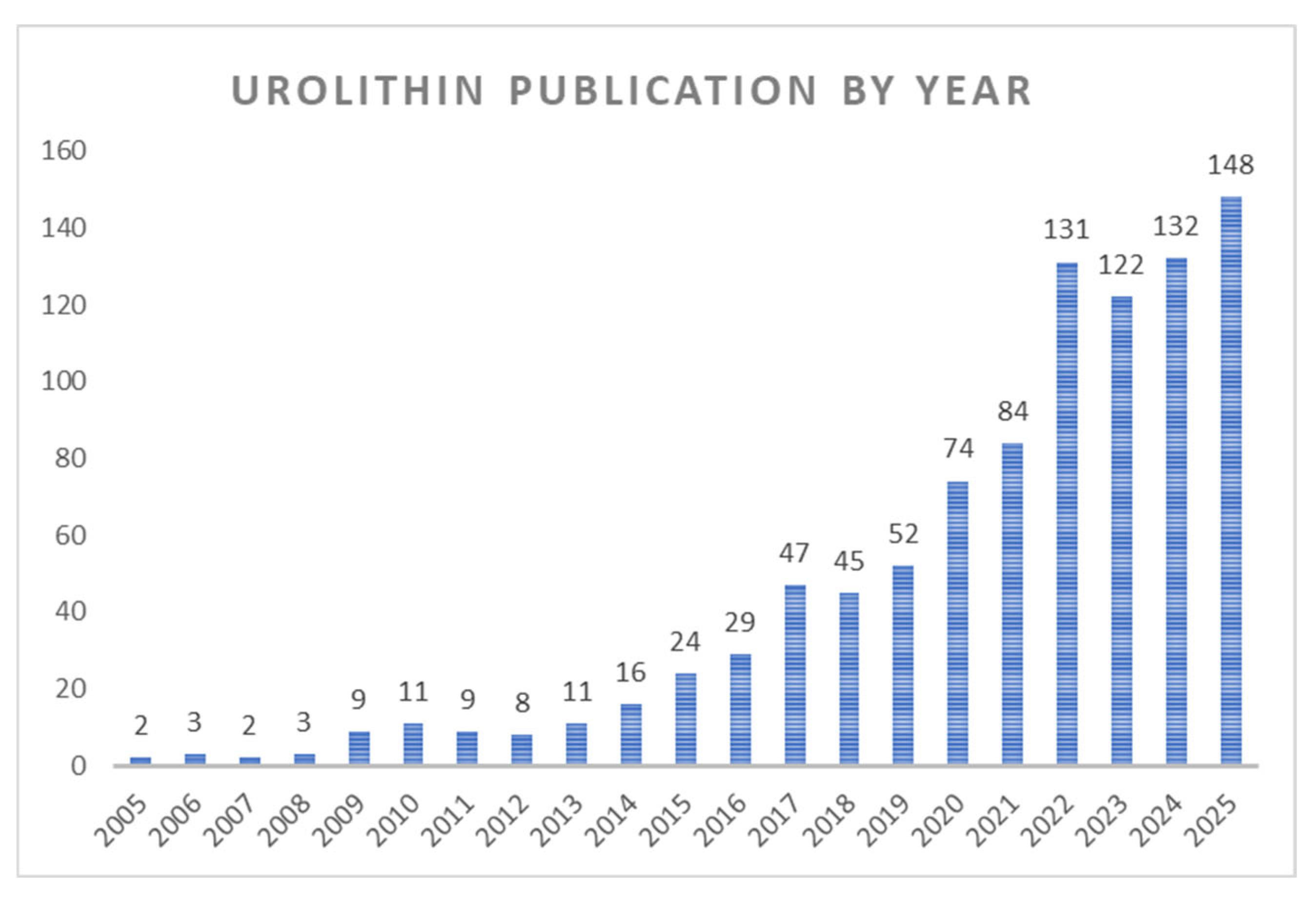


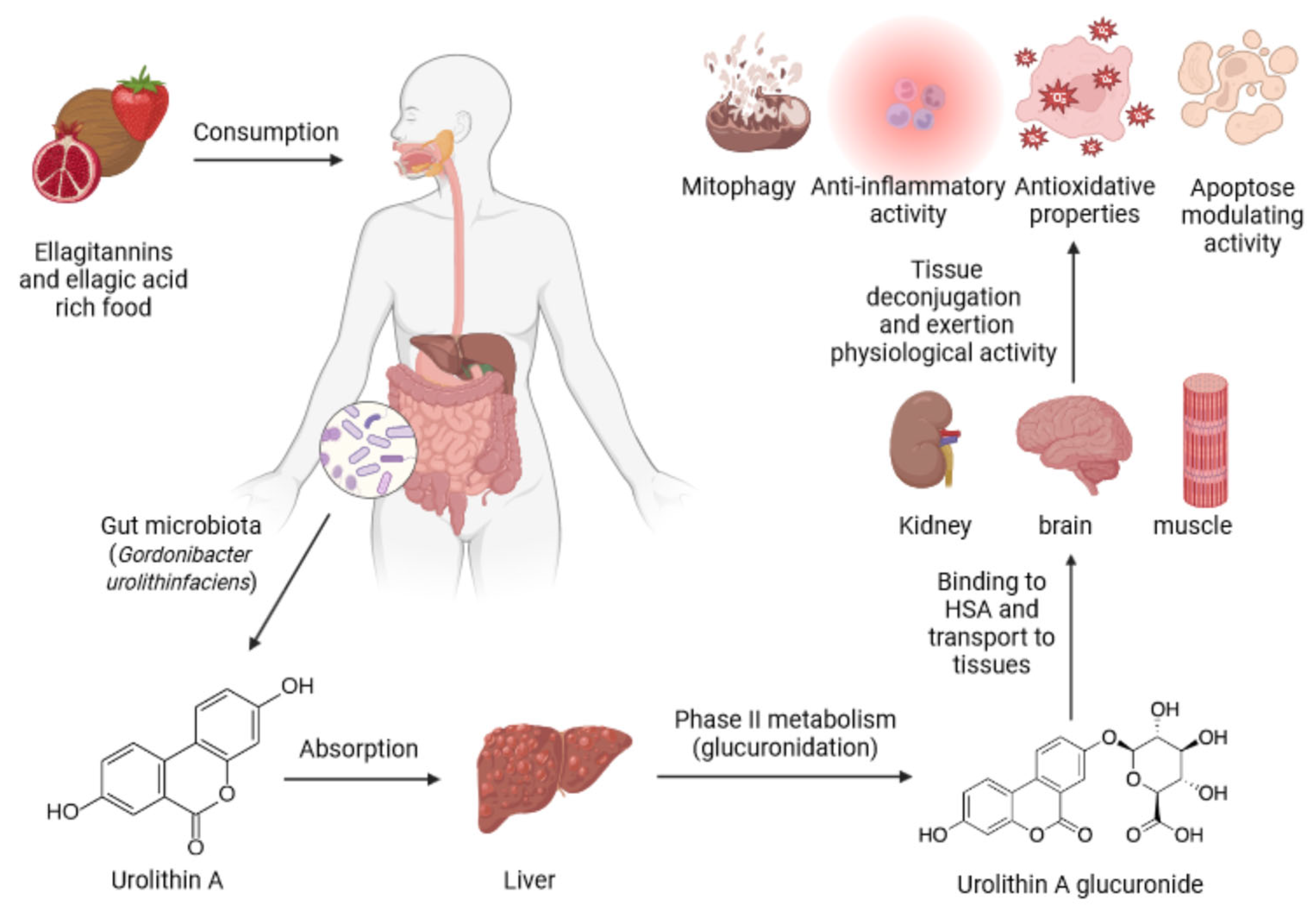

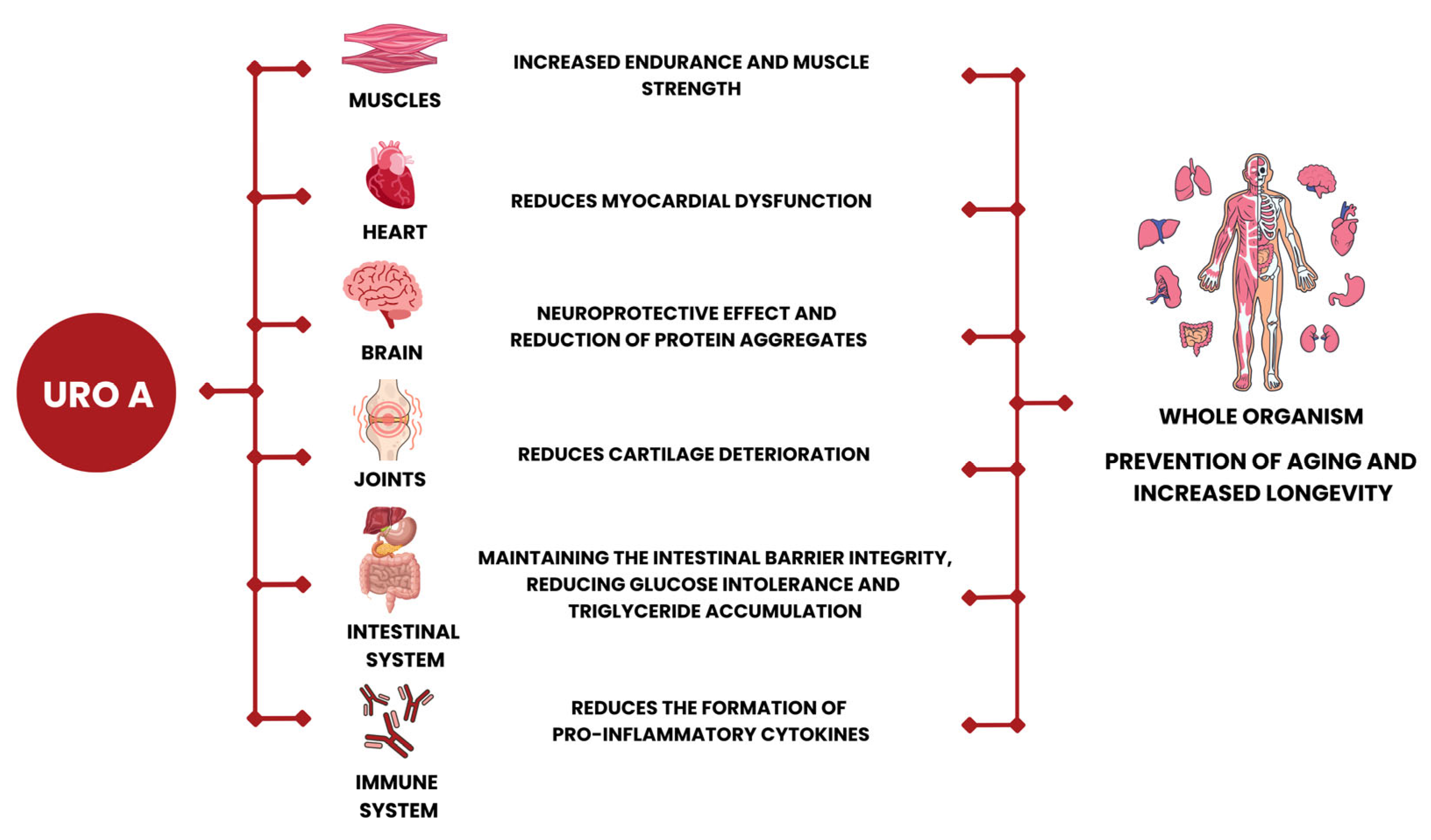


| Step | Description | |
|---|---|---|
| Identification | Databases | PubMed, Google Scholar, Elsevier, Wiley Online Library, MDPI, ResearchGate and Science Direct |
| Selection | Keywords | “urolithins”, “ellagitannins”, “gut microbiota”, “bioavailability”, “health effects” |
| Search period | 2005–2025 | |
| Language | English | |
| Study types | In vitro, in vivo, clinical studies, | |
| Article types | Original research articles, review articles | |
| Exclusion | Criteria | Articles not available in full text, conference abstracts, non-English publications |
| Fruit | Major ETs Identified | EA (mg/100 g Fresh Weight) |
|---|---|---|
| Pomegranate (Punica granatum) | Punicalagin | 2.06 |
| Raspberry (Rubus idaeus) | Sanguiin H-6, Lambertianin C | 1.14 |
| Blackberry (Rubus fruticosus) | Lambertianin C, Sanguiin H-6, Pedunculagin, Casuarictin, Castalagin/Vescalagin, Lambertianin D | 43.67 |
| Strawberry (Fragaria × ananassa) | Agrimoniin, Sanguiin H-6, Casuarictin | 1.24 |
| Walnut (Juglans regia) | Pedunculagin | 28.50 |
| Muscadine grape (Vitis rotundifolia) | Specific names not always clearly defined | 0.90 |
| Study | Population/Species | Intervention | Duration | Key Findings | References |
|---|---|---|---|---|---|
| First-in-human trial | Healthy adults | URO A | Single/multiple doses | Safe, bioavailable; induces mitochondrial gene signature in skeletal muscle; lowers plasma acylcarnitines | [49] |
| Randomized trial | Adults 45–70 years | URO A | 28 days | Reduced systemic inflammation; increased NK cells and mitochondrial mass in CD8+ T cells | [37,43] |
| Middle-aged individuals | Adults 40–64 years | URO A | 4 months | Increased leg strength 10–12%, improved peak VO2, increased 6 min walk distance | [59] |
| Elderly individuals | Adults 65–90 years | URO A | 4 months | Improved resistance to arm and leg fatigue; decreased C-reactive protein (CRP) | [58] |
| Overweight adults | Adults 40–60 years | Pomegranate juice (URO precursor) | 2 weeks | Lowered diastolic BP, LDL cholesterol, aminotransferase, glutathione peroxidase activity | [55] |
| Obese mice | Mice | Intraperitoneal URO A | Short-term | Reduced hepatic triglycerides, total cholesterol, improved insulin sensitivity; no body weight change | [56,57] |
| Neural models | Cell lines RAW264.7/male rats | URO A | Variable | Inactivates TLR3/TRIF, suppresses NF-κB/STAT1 and ERK/MAPK; upregulates antioxidant enzymes; reduces neuroinflammation | [42,60] |
| Pancreatic ductal adenocarcinoma | PDAC cell lines/mice | URO A | Variable | Inhibits PI3K/AKT/mTOR, reduces tumor growth, modulates tumor microenvironment, enhances apoptosis | [44] |
| Cardiomyopathy models | Human/animal | URO A | Variable | Improves systolic and diastolic function; reduces cardiac fibrosis via Drp1-dependent mitophagy | [62,63] |
Disclaimer/Publisher’s Note: The statements, opinions and data contained in all publications are solely those of the individual author(s) and contributor(s) and not of MDPI and/or the editor(s). MDPI and/or the editor(s) disclaim responsibility for any injury to people or property resulting from any ideas, methods, instructions or products referred to in the content. |
© 2026 by the authors. Licensee MDPI, Basel, Switzerland. This article is an open access article distributed under the terms and conditions of the Creative Commons Attribution (CC BY) license.
Share and Cite
Zelenović, N.; Kojadinović, M.; Popović, M. Functional Food-Derived Urolithins: Molecular Mechanisms, Health Effects, and Interactomics with Proteins and Extracellular Vesicles. Molecules 2026, 31, 243. https://doi.org/10.3390/molecules31020243
Zelenović N, Kojadinović M, Popović M. Functional Food-Derived Urolithins: Molecular Mechanisms, Health Effects, and Interactomics with Proteins and Extracellular Vesicles. Molecules. 2026; 31(2):243. https://doi.org/10.3390/molecules31020243
Chicago/Turabian StyleZelenović, Nevena, Milica Kojadinović, and Milica Popović. 2026. "Functional Food-Derived Urolithins: Molecular Mechanisms, Health Effects, and Interactomics with Proteins and Extracellular Vesicles" Molecules 31, no. 2: 243. https://doi.org/10.3390/molecules31020243
APA StyleZelenović, N., Kojadinović, M., & Popović, M. (2026). Functional Food-Derived Urolithins: Molecular Mechanisms, Health Effects, and Interactomics with Proteins and Extracellular Vesicles. Molecules, 31(2), 243. https://doi.org/10.3390/molecules31020243