Article

Single-Atom Ru on N-Heterocyclic Carbene-Functionalized Hypercrosslinked Polymers for N-Formylation of Amines with CO2 and H2


1
Guizhou Provincial Key Laboratory of Green Catalysis and Materials for Resource Conversion, School of Chemistry and Materials Engineering, Liupanshui Normal University, Liupanshui 553004, China
2
College of Environmental and Chemical Engineering, Dalian University, Dalian 116622, China
3
School of Chemical Engineering, Guizhou Institute of Technology, Guiyang 550025, China
4
Guizhou Laboratory of Energy Intelligent Development and Efficient Utilization, Guizhou Research Institute of Coal Mine Design Co., Ltd., Guiyang 550025, China
*
Authors to whom correspondence should be addressed.
Molecules 2026, 31(17), 3054; https://doi.org/10.3390/molecules31173054
Submission received: 9 May 2026 / Revised: 6 June 2026 / Accepted: 10 June 2026 / Published: 31 August 2026
(This article belongs to the Section Applied Chemistry)

Abstract

Catalytic transformation of carbon dioxide (CO2) into high-value-added chemicals represents a promising approach for CO2 emission reduction and utilization. Herein, single-atom ruthenium (Ru) supported on N-heterocyclic carbene (NHC)-functionalized hypercrosslinked polymers were fabricated and applied as recyclable catalysts for the N-formylation of amines using CO2 and H2 as feedstocks. Catalytic evaluations demonstrated that the chemical structure of the NHC ligand had a significant influence on catalytic activity. Specifically, P(PhPy-TPB)-Ru, functionalized with a single pyridine moiety on the NHC ligand, exhibited the optimal catalytic performance, even slightly outperforming its homogeneous counterpart. Furthermore, mechanistic studies indicated that both the base and solvent played pivotal roles in modulating the reaction activity. In particular, the use of methanol as the solvent in the presence of a base significantly enhanced reaction efficiency, which was attributed to the in situ generation of methyl formate as a key intermediate. Notably, the developed catalytic system possessed excellent catalytic efficiency, a broad substrate scope, superior stability, and easy recyclability, allowing the catalyst to be reused for up to eight consecutive cycles without significant loss of catalytic activity.

1. Introduction

The growing accumulation of atmospheric carbon dioxide (CO2) has precipitated severe global environmental challenges, making the development of efficient CO2 capture and conversion strategies a critical research priority in chemistry and environmental sciences [1,2,3]. Catalytic conversion of CO2 into high-value fine chemicals not only reduces greenhouse gas emissions but also facilitates the valorization of this abundant, non-toxic C1 feedstock [4,5], which conforms to the fundamental principles of green and sustainable chemistry. Among various CO2 conversion reactions, the N-formylation of amines to formamides is of particular industrial and academic significance, as formamide derivatives serve as key intermediates in the synthesis of pharmaceuticals, agrochemicals, fine chemicals and functional materials [6,7]. Traditional N-formylation processes typically employ toxic C1 sources such as CO [8], formic acid [9] and formaldehyde [10]. In comparison, the direct N-formylation of amines employing CO2 and molecular hydrogen (H2) as reactants constitutes a more environmentally benign strategy [6,11,12,13,14], which has consequently garnered extensive research interest in recent years.
Heterogeneous catalysis has established itself as an efficient strategy for CO2-mediated N-formylation reactions, owing to the easy separability and recyclable nature of the catalysts [15,16,17,18,19,20,21]. Porous organic polymers (POPs), meanwhile, have emerged as ideal catalyst supports by virtue of their high specific surface area, tunable chemical structures, excellent thermal stability, and designable functional groups [22,23,24]. Phosphorus-containing POPs have been extensively studied for this transformation and have demonstrated promising catalytic performance, as phosphine ligands are capable of efficiently coordinating with metal active sites and regulating their electronic properties [25,26,27,28,29]. Nevertheless, phosphine ligands possess inherent limitations related to poor stability, including facile oxidation under ambient or reaction conditions [30,31]; this phenomenon results in the deactivation of metal active sites and compromises the long-term recyclability of phosphorus-functionalized catalysts. N-heterocyclic carbenes (NHCs), as a class of nitrogen-containing ligands, exhibit superior chemical and thermal stability [32,33,34]. Their strong σ-donating capacity and tunable steric structure facilitate efficient coordination with metal centers to form stable catalytic sites, thereby positioning them as a promising alternative to phosphine ligands for the fabrication of robust heterogeneous catalysts.
Hypercrosslinked polymers (HCPs), a subclass of POPs, possess hierarchical porous structures, high specific surface areas and facile functionalization, which can not only disperse metal active sites uniformly but also facilitate the mass transport of reactants and products during catalysis [35,36]. Single-atom metal catalysts (SACs) maximize atomic utilization efficiency and exhibit unique catalytic activity and selectivity owing to their isolated atomic active sites [37], and the combination of NHC-functionalized HCPs and single-atom metals is expected to fabricate high-performance heterogeneous catalysts for CO2 conversion reactions [38,39,40,41,42]. Nevertheless, systematic investigations on the regulation of NHC ligand structures (e.g., introducing pyridine moieties) to optimize the CO2 adsorption, activation ability and catalytic performance of single-atom metal catalysts for the N-formylation of amines with CO2 and H2 remain scarce [40].
In this work, we designed and synthesized a series of single-atom ruthenium (Ru) catalysts supported on pyridine-modified NHC-functionalized hypercrosslinked polymers via a Friedel–Crafts alkylation and subsequent metal complex grafting strategy. The effect of the number of pyridine moieties on the NHC ligand on the physicochemical properties and catalytic performance of the catalysts was systematically investigated for the CO2/H2-mediated N-formylation of amines. The reaction conditions including solvent, pressure, base dosage and temperature were optimized, and the recyclability and substrate scope of the optimal catalyst were evaluated in detail. Furthermore, the reaction mechanism was elucidated through control experiments, confirming methyl formate as the key intermediate in the reaction system with methanol as the solvent. This study provides a feasible strategy for the rational design of stable, efficient and recyclable nitrogen-functionalized POP-supported single-atom metal catalysts for CO2 valorization reactions.

2. Results and Discussion

2.1. Catalyst Design and Characterization

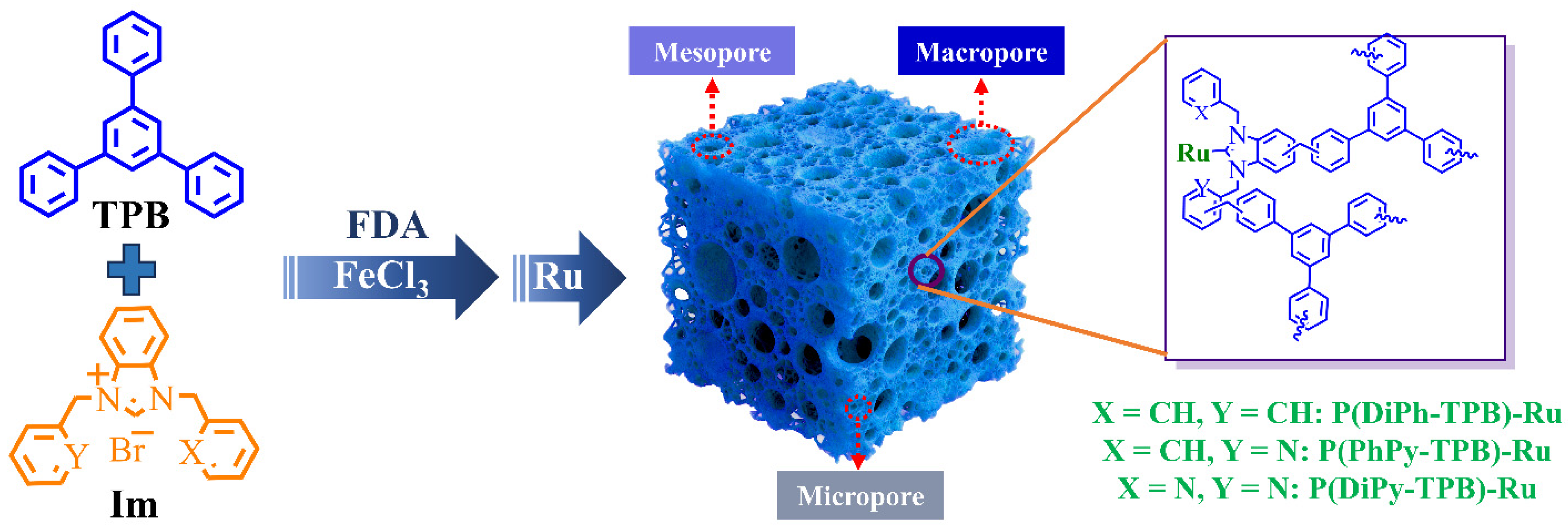
Scheme 1 illustrates the synthesis route of single-atom ruthenium (Ru) supported on N-heterocyclic carbene (NHC)-functionalized hypercrosslinked polymers. As depicted, hypercrosslinked polymer precursors bearing diverse NHC structures were fabricated via Friedel–Crafts alkylation of NHC precursors and triphenylbenzene, using formaldehyde dimethyl acetal as the crosslinker and anhydrous FeCl3 as the catalyst. Considering that pyridine moieties can significantly influence CO2 adsorption, activation capability, and catalytic performance of the resulting catalysts, NHC precursors with different numbers of pyridine functional groups were deliberately used to regulate the catalytic behavior. Subsequently, Ru complexes were immobilized onto the NHC-functionalized POPs by treating [Ru(CO)3Cl2]2 in methanol with triethylamine as the base.
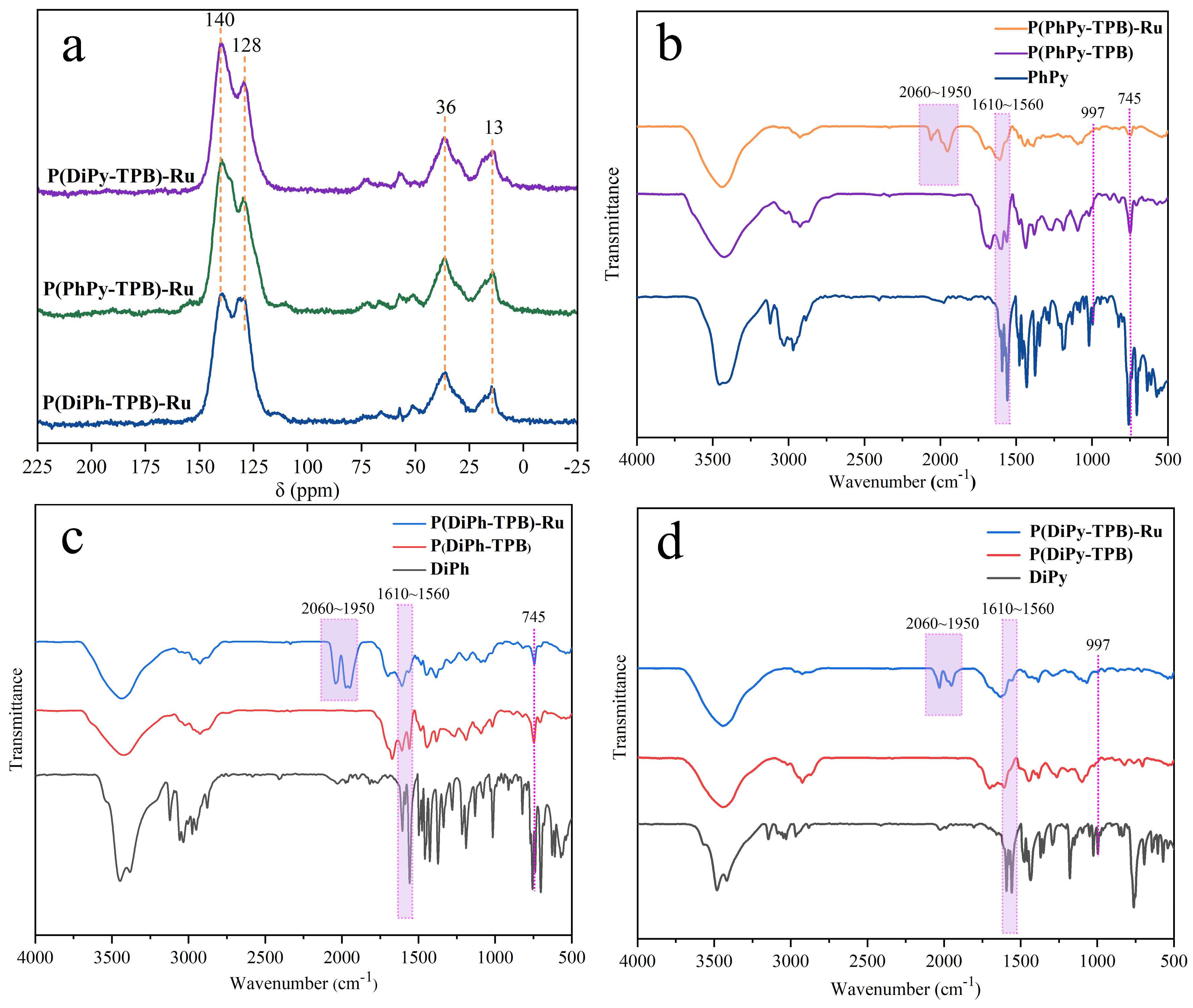
Solid-state 13C CP-MAS NMR spectra (Figure 1a) of the as-synthesized catalysts exhibited two resonance signals at approximately 140 ppm and 128 ppm, corresponding to quaternary aromatic carbons and protonated aromatic carbons, respectively [43]. Meanwhile, the aliphatic carbon signals detected at roughly 36 ppm were attributed to the methylene carbon of the crosslinker (connecting two aromatic rings), which was generated via the Friedel–Crafts reaction [44]. As shown in Figure 1b–d, with respect to the FT-IR spectra of P(PhPy-TPB)-Ru, P(DiPh-TPB)-Ru, and P(DiPy-TPB)-Ru, all samples exhibited characteristic absorption bands in the range of 2060–1950 cm−1, which were assigned to the ν(CO) stretching vibrations of coordinated carbonyl ligands, confirming the successful immobilization of Ru species onto the polymer frameworks [27]. For all samples, the bands at 1610–1561 cm−1 were attributed to the stretching vibrations of C = N and C = C bonds [45]. The characteristic peaks in the 1250–950 cm−1 and 900–600 cm−1 regions were assigned to the out-of-plane bending and in-plane bending vibrations of aromatic C-H bonds, respectively [45]. A characteristic band at 997 cm−1 was observed for P(PhPy TPB)Ru, P(DiPy TPB)Ru, their precursors and corresponding monomers (Figure 1b,d), which is assigned to the ring-breathing vibration of the pyridine rings in the DiPy and PhPy moieties. Meanwhile, the characteristic absorption at 745 cm−1 appeared in P(PhPy TPB)Ru, P(DiPh TPB)Ru, their precursors and monomers (Figure 1b,c), corresponding to the out-of-plane C–H bending vibration of benzene rings in the DiPh and PhPy units. These results confirm the successful incorporation of PhPy, DiPy and DiPh structures into the polymers.
The survey XPS spectra of P(PhPy-TPB)-Ru, P(DiPh-TPB)-Ru, and P(DiPy-TPB)-Ru (Figure S1a, Supporting Information) exhibited distinct characteristic signals assignable to O 1s, Ru 3p, N 1s, C 1s, and Cl 2p, thereby confirming the successful incorporation of O, Ru, N, C, and Cl elements in the as-prepared catalysts. In the high-resolution Ru 3p XPS spectra (Figure S1b), all three samples exhibited two relatively broad characteristic bands, which were assigned to Ru 3p3/2 and Ru 3p1/2 and located at approximately 462.6 eV and 484.7 eV, respectively. These binding energies were consistent with Ru predominantly existing in the Ru(II) oxidation state, which was in line with the expected chemical state of Ru in the NHC-coordinated complexes. ICP-OES measurements were performed to quantify the Ru loadings, and the results showed that the Ru contents in P(PhPy-TPB)-Ru, P(DiPh-TPB)-Ru, and P(DiPy-TPB)-Ru were 4.65 wt%, 4.03 wt%, and 4.63 wt%, respectively. Notably, the Ru loadings of P(PhPy-TPB)-Ru and P(DiPy-TPB)-Ru were slightly higher than that of P(DiPh-TPB)-Ru, which might be attributed to the presence of pyridine moieties that enhanced the coordination between NHC ligands and Ru species. The higher N content in P(DiPy-TPB)-Ru was consistent with the presence of two pyridine moieties per NHC ligand, confirming the successful regulation of NHC ligand structures. Furthermore, elemental (CHN) analysis was conducted to determine the nitrogen contents of the samples, which were found to be 2.18 wt%, 2.01 wt%, and 2.60 wt%, respectively.
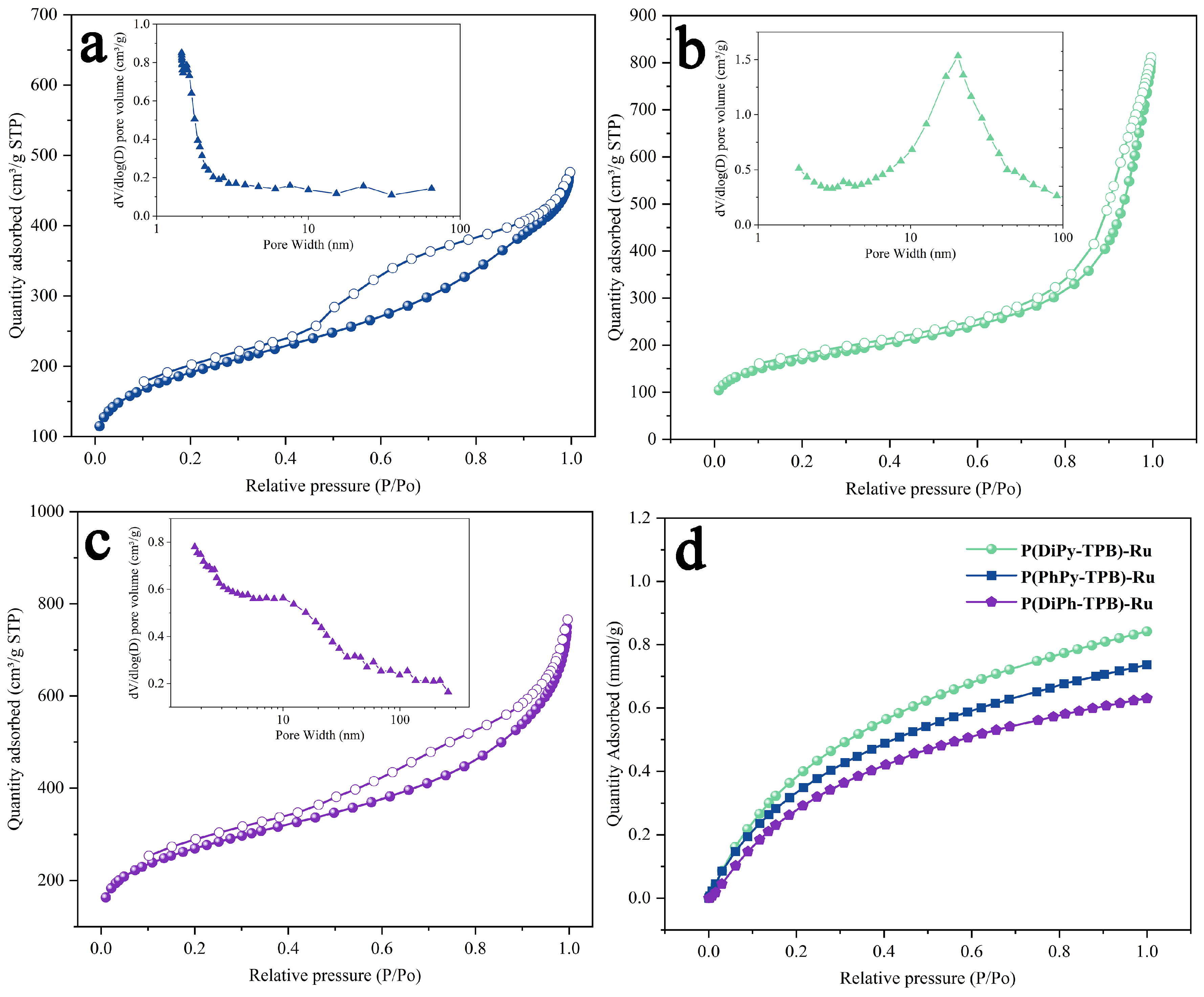
Nitrogen adsorption–desorption experiments were conducted at 77 K to evaluate the textural properties of the obtained materials. As summarized in Table 1, the parent hypercrosslinked polymer supports exhibited considerable porosity, Brunauer–Emmett–Teller (BET) surface areas ranging from 646 m2·g−1 to 816 m2·g−1 and total pore volumes varying from 0.54 cm3·g−1 to 1.35 cm3·g−1 (Table 1, entries 1–3). Upon the incorporation of Ru species, both textural parameters showed a modest decline, which was attributed to the partial occupation of the internal pore space by the immobilized Ru metal complexes. Accordingly, P(PhPy-TPB)-Ru, P(DiPh-TPB)-Ru, and P(DiPy-TPB)-Ru exhibited BET surface areas of 651, 580, and 721 m2·g−1, as well as pore volumes of 0.49, 1.20, and 1.14 cm3·g−1, respectively (Table 1, entries 4–6). The sorption isotherms of the Ru-containing catalysts displayed mixed type I/IV characteristics (Figure 2a–c), which indicated the presence of hierarchical porosity. The uptakes at very low relative pressures (P/P0 < 0.01) evidenced the presence of abundant microporosity, whereas the remarkable increase in adsorption capacity near saturation (P/P0 = 0.9–1.0) pointed to the existence of larger mesopores and macropores. In addition, the distinct hysteresis loops observed at high relative pressures (P/P0 = 0.8–1.0) further supported the contribution of mesopores. These textural features agreed well with the corresponding pore-size distributions (insets in Figure 2a–c), which revealed a broad pore-size distribution spanning the micro-, meso-, and macropore regimes. Such a combination of high BET surface area and hierarchical pore architecture is highly favorable for heterogeneous catalysis, as it can effectively enhance the accessibility of Ru active sites and accelerate the mass transfer and intraparticle diffusion of reactants and products. Figure 2d depicts the CO2 adsorption isotherms of the as-synthesized catalysts recorded at 273 K, which evidenced a strong affinity toward CO2. The measured CO2 uptakes were 0.74 mmol·g−1 for P(PhPy-TPB)-Ru, 0.63 mmol·g−1 for P(DiPh-TPB)-Ru, and 0.84 mmol·g−1 for P(DiPy-TPB)-Ru. This sequence of CO2 uptakes was consistent with the N content trend of the three catalysts, indicating that pyridine moieties (containing N atoms) could enhance CO2 adsorption.
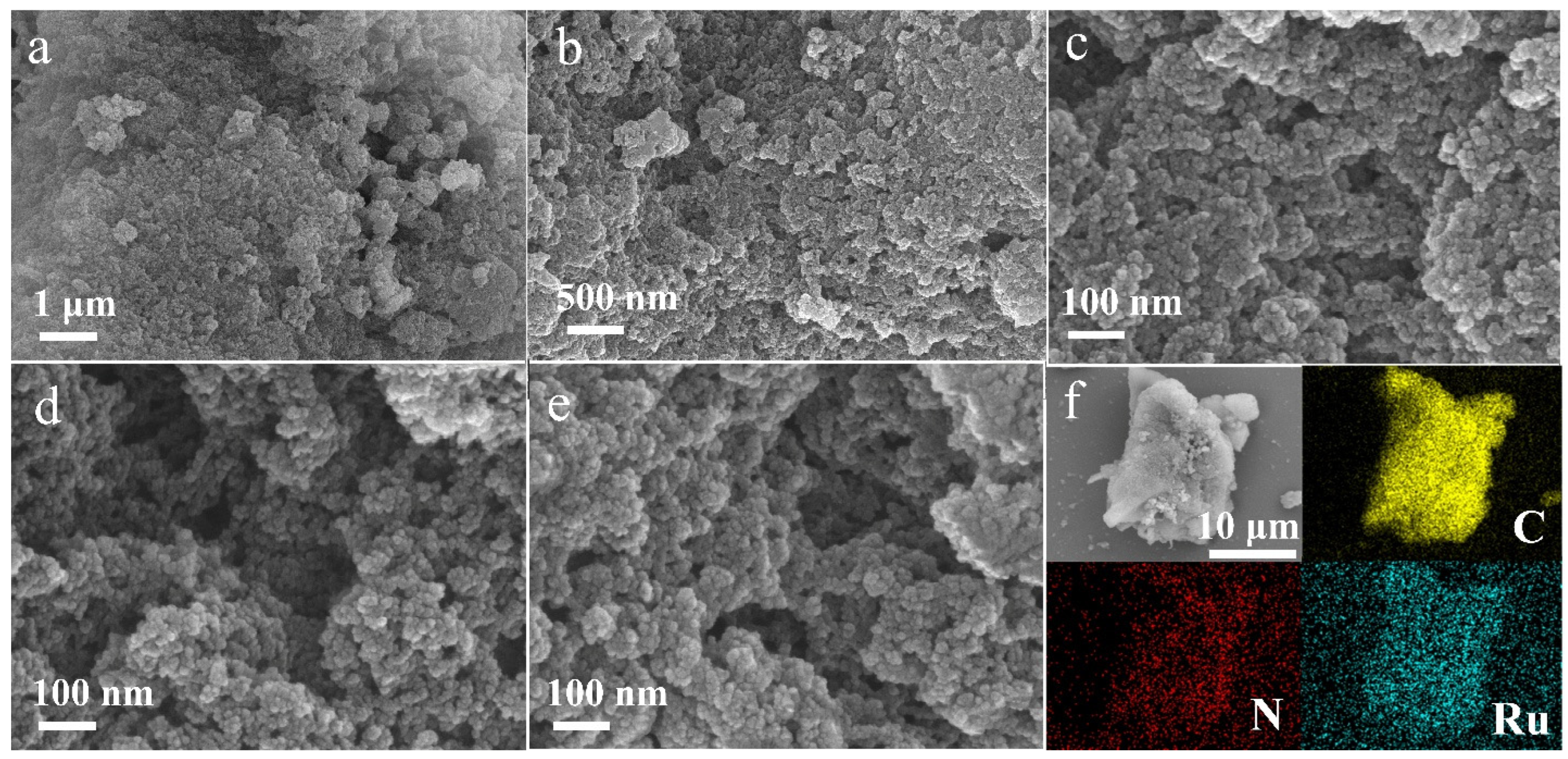
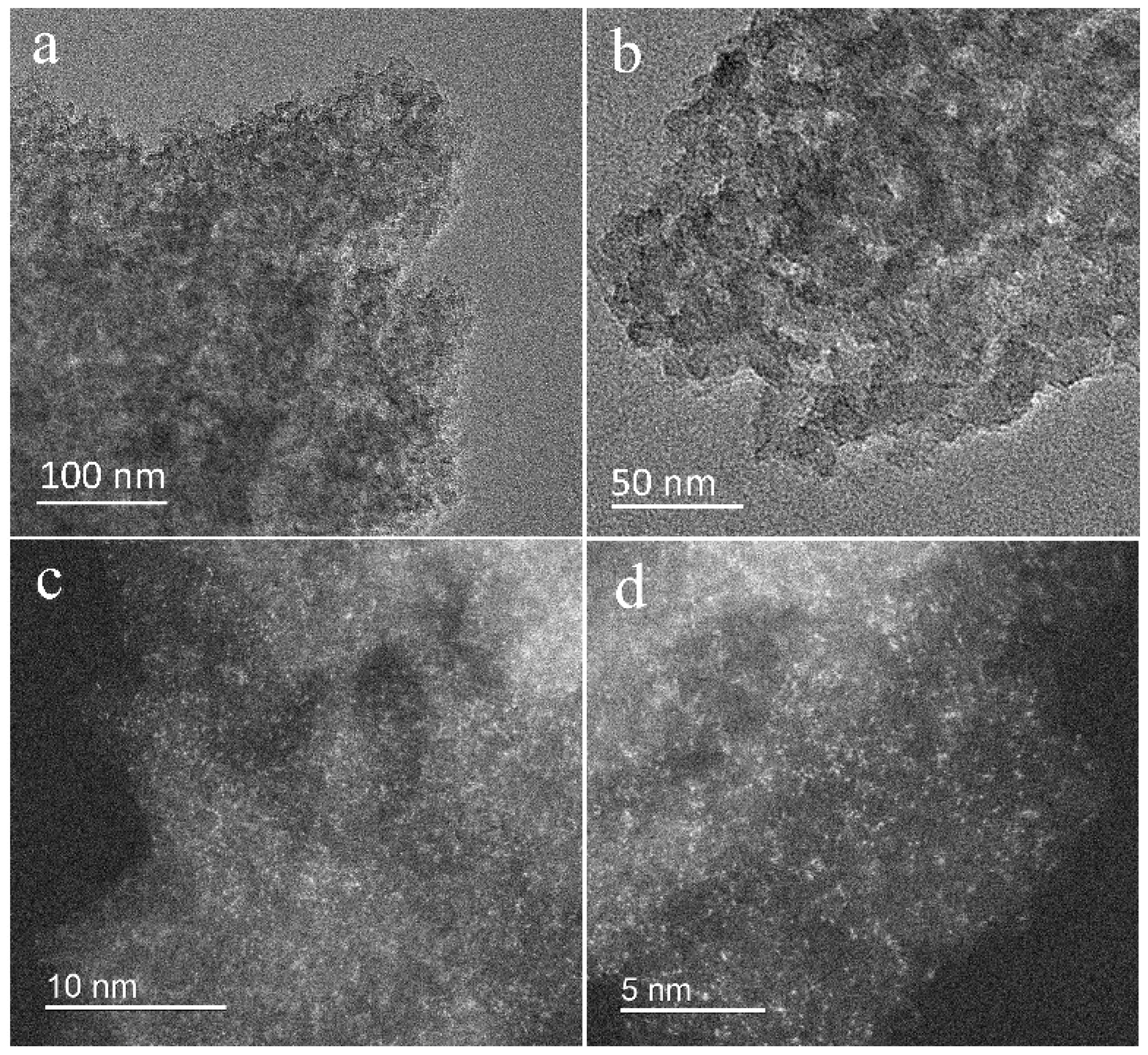
The microstructure and morphology of the as-prepared materials were examined using SEM, SEM-EDS, TEM, and AC-HAADF-STEM. As shown in Figure 3a–e, SEM micrographs of P(PhPy-TPB)-Ru, P(DiPh-TPB)-Ru, and P(DiPy-TPB)-Ru revealed aggregates composed of tightly packed, irregular nanoparticles, with characteristic sizes in the range of several tens of nanometers. Notably, pronounced mesoporous and macroporous voids were observed between the stacked nanoparticles, which was in good agreement with the porosity trends obtained from the N2 adsorption–desorption measurements. Furthermore, SEM-EDS elemental mapping of P(PhPy-TPB)-Ru (Figure 3f) demonstrated a uniform distribution of C, N, and Ru elements throughout the entire sample, which indicated a uniform copolymer composition and highly dispersed Ru active centers. TEM observations (Figure 4a,b) of P(PhPy-TPB)-Ru further corroborated the compact yet porous architecture of the material and, notably, showed no discernible Ru nanoparticles, thereby implying the absence of Ru aggregation at the nanometer scale. To probe the dispersion state of Ru species at the atomic level, AC-HAADF-STEM characterization was employed. As presented in Figure 4c,d, only discrete bright spots were observed in the AC-HAADF-STEM images. These discrete bright spots are typical features of single-atom Ru species, confirming the successful fabrication of single-atom catalysts. In heterogeneous catalysis, such an atomic-level distribution of active Ru sites maximized the fraction of accessible active centers and could thereby significantly improve the overall catalytic activity and stability of the catalysts.
Thermogravimetric analysis (TGA) was performed under nitrogen atmosphere to evaluate the thermal stability of the as-prepared catalysts within the temperature range of 25–800 °C (Figure S2, Supporting Information). The three catalysts displayed nearly identical mass loss profiles, indicating similar thermal degradation behaviors. The minor weight loss observed below 100 °C was attributed to the desorption and removal of physically adsorbed guest molecules, such as trapped solvent and adsorbed water. A pronounced mass loss occurred only when the temperature exceeded approximately 220 °C, which corresponded to the thermal degradation of the polymer framework. Accordingly, the catalysts could be considered thermally stable up to at least 220 °C.

2.2. Catalytic N-Formylation of Amines

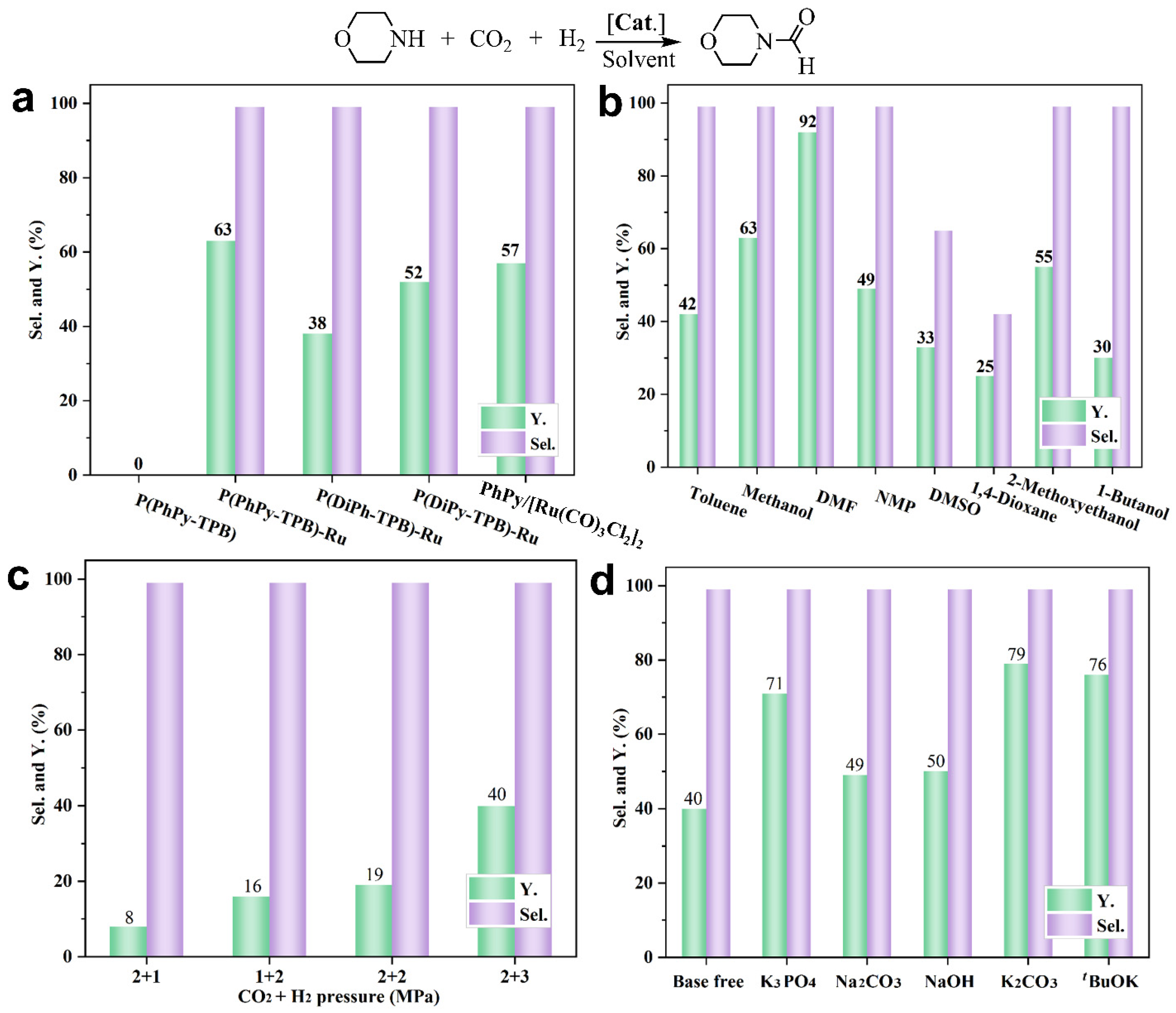
The N-formylation of morpholine was chosen as a model reaction to evaluate the catalytic performance of the as-prepared samples and optimize the reaction conditions. The catalytic activities of various catalysts were first examined at 130 °C. As depicted in Figure 5a, the metal-free P(PhPy-TPB) support showed no detectable catalytic activity for N-formylmorpholine formation, confirming that Ru metal active centers are indispensable for this transformation. After immobilization of the ruthenium complex, the resulting P(PhPy-TPB)-Ru catalyst afforded N-formylmorpholine a 63% yield under identical reaction conditions. To elucidate how the NHC ligand structure affected the catalytic activity of the polymer-supported Ru catalysts, the performances of P(PhPy-TPB)-Ru, P(DiPh-TPB)-Ru, and P(DiPy-TPB)-Ru were compared under identical reaction conditions. P(DiPh-TPB)-Ru, which contained no pyridine moieties on its NHC ligand, gave only a 38% yield of N-formylmorpholine. In contrast, P(PhPy-TPB)-Ru, functionalized with one pyridine group on the NHC ligand, provided the highest yield of 63%. P(DiPy-TPB)-Ru, with two pyridine moieties on its NHC ligand, exhibited lower activity and afforded a 52% yield. Given the identical ruthenium active sites across these catalysts, the disparities in catalytic activity were ascribed to the distinct structural features of their NHC ligands. Polymeric NHC ligands incorporated with pyridine groups can enhance CO2 adsorption and facilitate its conversion into formic acid intermediates. However, the presence of two pyridine moieties may introduce steric hindrance and alter the electronic environment of the Ru center through coordination interactions, which ultimately reduce the catalytic activity. Notably, the heterogeneous P(PhPy-TPB)-Ru catalyst exhibited slightly higher catalytic activity than the homogeneous physical mixture of PhPy and [Ru(CO)3Cl2]2 (PhPy/[Ru(CO)3Cl2]2). After identifying P(PhPy-TPB)-Ru as the optimal catalyst, the effects of reaction parameters (solvent, pressure, base, temperature, and reaction time) were systematically investigated to maximize the catalytic performance. As shown in Figure 5b, the influence of solvent on the reaction was investigated. Among the solvents screened, DMF and methanol gave the best results, with N-formylmorpholine yields of 92% and 63%, respectively. Since DMF could act as an alternative C1 source [46], a control experiment was carried out in DMF under H2- and CO2-free conditions to assess this possibility. A comparable yield of 87% was achieved, demonstrating that the catalyst also efficiently catalyzed the N-formylation reaction when DMF served as the C1 donor. Accordingly, methanol was selected as the optimal solvent for the subsequent studies. Figure 5c illustrates the effects of CO2 and H2 pressures; to better elucidate their influence, the reaction time was shortened to 4 h. The optimal pressures were determined to be 2 MPa for CO2 and 3 MPa for H2, which favored high catalytic activity under moderate total pressure without excessive safety risks. Figure 5d presents the effect of base addition. The results demonstrated that the addition of a base significantly promoted the reaction; specifically, using 0.2 equiv. of K2CO3 as the base, a 79% yield of N-formylmorpholine was achieved after 4 h of reaction.
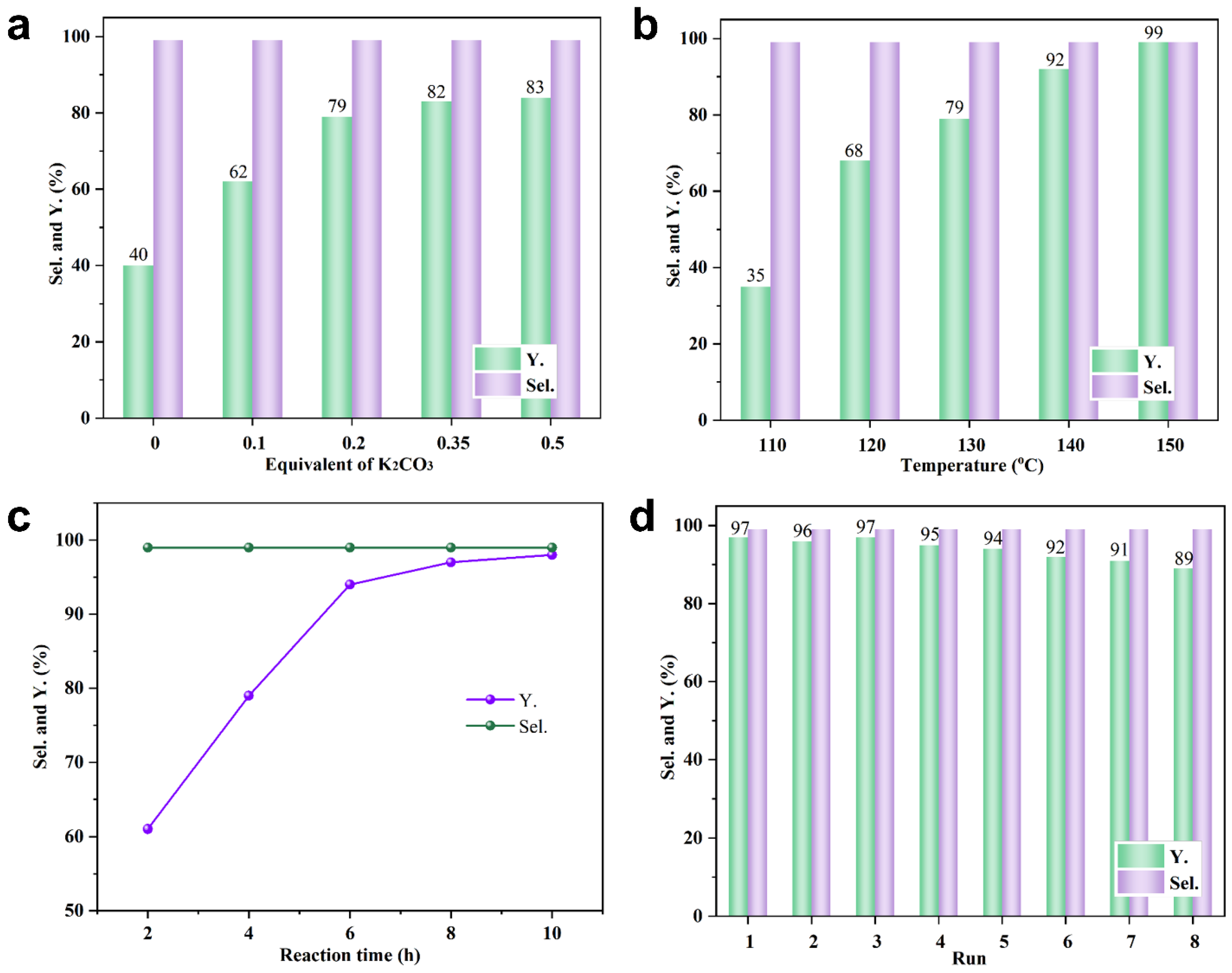
Subsequently, the effect of K2CO3 dosage on the catalytic activity was investigated. As depicted in Figure 6a, when the K2CO3 dosage was increased from 0 to 0.1 equiv. and further to 0.2 equiv., the product yield rose sequentially from 40% to 62% and then to 79%. A further increase in K2CO3 dosage (from 0.2 to 0.5 equiv.) led to only a slight improvement in catalytic activity, which might be due to the saturation of the base-promoting effect. Figure 6b illustrates the influence of reaction temperature on the reaction activity. As the temperature was elevated from 120 °C to 150 °C, the catalytic activity increased gradually, affording a maximum yield of 99% at 150 °C. However, when the reaction temperature rose to 150 °C, the total system pressure reached approximately 8 MPa, which was close to the safety limit of the autoclave (10 MPa) and thus posed potential operational risks. To balance catalytic activity and operational safety, 130 °C was chosen as the optimal reaction temperature for subsequent experiments. The effect of reaction time on the product yield was further investigated at 130 °C, as shown in Figure 6c. After 8 h of reaction, the yield of the target product (N-formylmorpholine) reached as high as 97%, and no significant yield improvement was observed with further extension of reaction time (up to 10 h). Following the optimization of reaction conditions, the recyclability of the P(PhPy-TPB)-Ru catalyst was evaluated to assess its practical application potential. As presented in Figure 6d, the P(PhPy-TPB)-Ru catalyst exhibited excellent recyclability: over eight consecutive catalytic cycles, the yield of N-formylmorpholine remained above 89% with unchanged product selectivity (≥99%), confirming the high structural and catalytic stability of the catalyst during the reaction.
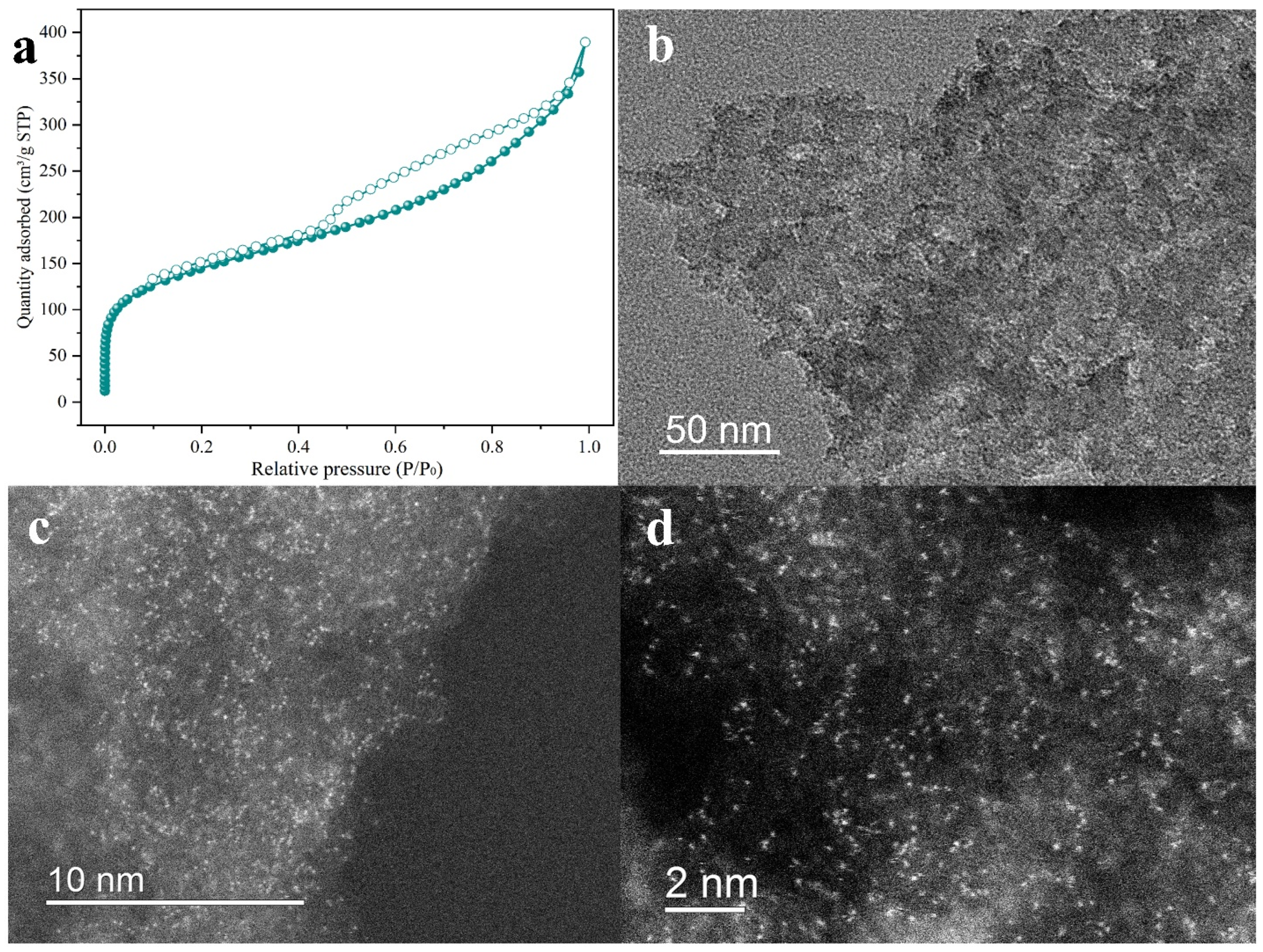
For an in-depth evaluation of the recyclability and durability of P(PhPy-TPB)-Ru, the spent catalyst (after eight cycles) was subjected to a comprehensive set of characterization techniques, including N2 sorption analysis, TEM, AC-HAADF-STEM, and ICP-OES. As shown in Figure 7a, the N2 adsorption–desorption isotherm of the spent catalyst closely resembled that of the fresh sample. The recovered P(PhPy-TPB)-Ru retained a BET specific surface area of 498 m2·g−1 and a total pore volume of 0.65 cm3·g−1 (Table 1, entry 7). The slight decreases in these textural parameters were attributed to partial pore blockage caused by residual reactants/products or minor structural rearrangement during repeated catalytic cycles. TEM analysis (Figure 7b) confirmed the absence of Ru nanoparticles in the spent catalyst, while AC-HAADF-STEM images (Figure 7c,d) further verified that Ru species remained atomically dispersed within the catalyst matrix. ICP-OES quantification results showed that the spent P(PhPy-TPB)-Ru catalyst had a Ru loading of 4.61 wt%, corresponding to a retention rate of more than 99% after eight consecutive catalytic runs. Collectively, these characterization results clearly demonstrated the excellent recycling stability and structural durability of the P(PhPy-TPB)-Ru catalyst, which is crucial for its practical application in heterogeneous catalysis.
To assess the practical applicability of P(PhPy-TPB)-Ru, its catalytic performance was evaluated for the N-formylation of various amines (cyclic, linear aliphatic, and aromatic amines) under the optimized reaction conditions. As shown in Table 2, cyclic amines, including pyrrolidine, azepane and 1,2,3,4-tetrahydroisoquinoline were efficiently converted to the corresponding formamides with high yields under the optimized reaction conditions (Table 2, entries 1–3), demonstrating the excellent adaptability of the catalyst to cyclic amine substrates. For secondary linear amines (diethylamine and dimethylamine), the target formamides were afforded 95% and 92% yields, respectively, after extending the reaction time to 12 h and 16 h. The lower reactivity of secondary linear amines compared with cyclic amines was attributed to the higher steric hindrance effects associated with their linear molecular structures (Table 2, entries 4 and 5). n-Hexylamine, a typical primary linear amine, exhibited high reactivity and afforded N-hexylformamide a 93% yield within 8 h (Table 2, entry 6). In addition, benzylamine showed lower reactivity than cyclic and linear amines; the target formamide achieved a 91% yield only when the reaction time was prolonged to 24 h (Table 2, entry 7). However, the P(PhPy-TPB)-Ru catalyst displayed poor catalytic activity for the N-formylation of aromatic amines (aniline and N-methylaniline), yielding only 57% and 43% of the corresponding formamides, respectively, even after 24 h of reaction at an elevated temperature of 140 °C. This inferior catalytic performance was presumably ascribed to the weak nucleophilicity inherent to these aromatic amines, which hindered their nucleophilic attack on the formic acid derivative intermediate during the reaction process.

2.3. Plausible Reaction Mechanism

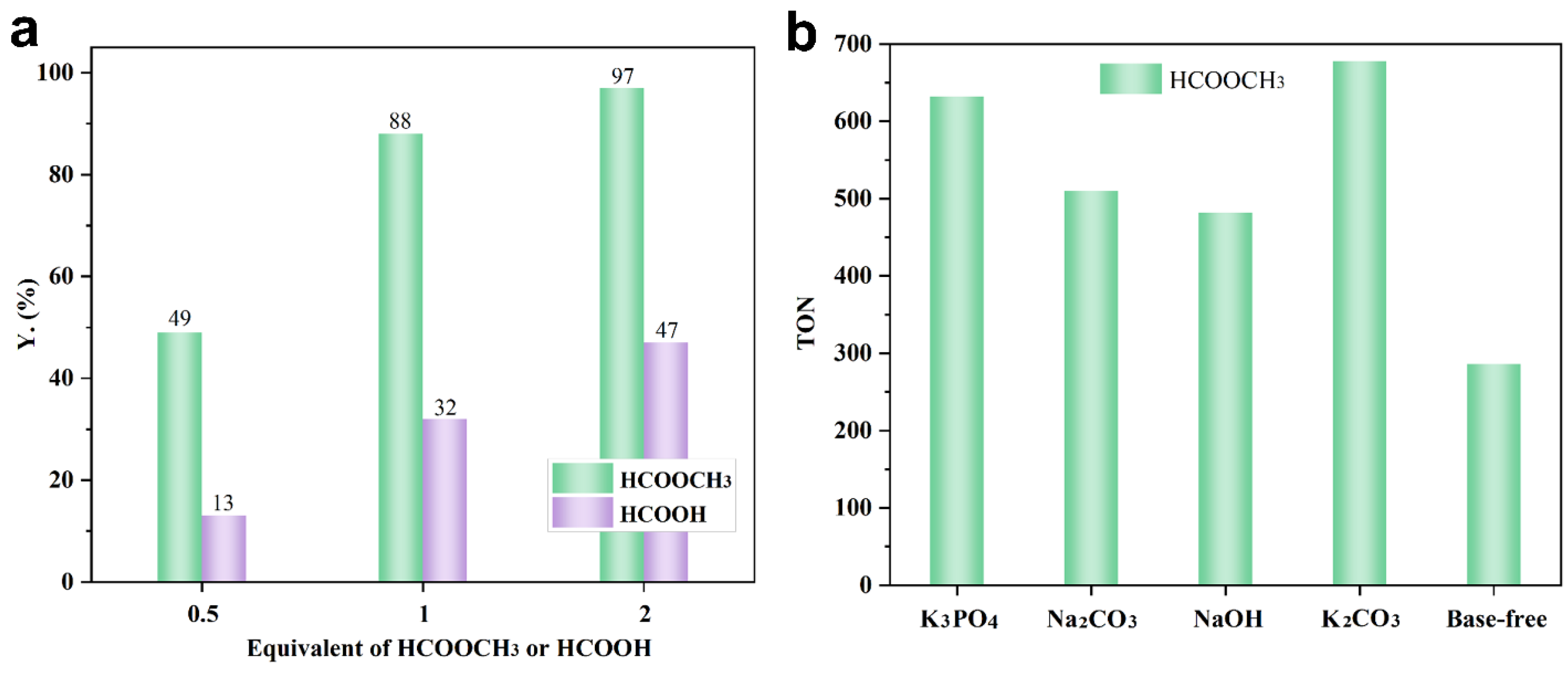
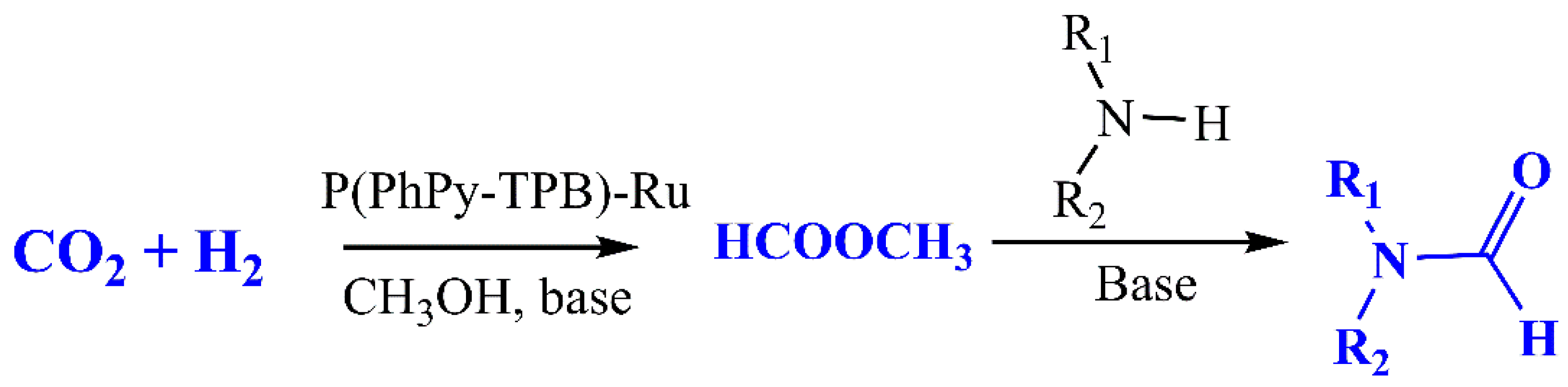
For the N-formylation of amines with CO2 and H2, formic acid is generally regarded as a reaction intermediate in most catalytic systems. However, in the N-formylation of morpholine with CO2 and H2 using methanol as the solvent, we detected a small amount of methyl formate, indicating that methyl formate (HCOOCH3) might serve as a reaction intermediate under such conditions. To gain deeper insights into the reaction mechanism, control experiments were conducted for the N-formylation of morpholine in 1,4-dioxane, using methyl formate (HCOOCH3) or formic acid (HCOOH) as the sole C1 source. As depicted in Figure 8a, the yield of N-formylmorpholine increased gradually with increasing molar amounts of HCOOH or HCOOCH3, indicating a positive correlation between the amount of C1 source and the reaction yield. Notably, at the same molar concentration of the C1 source, HCOOCH3 afforded a significantly higher yield of N-formylmorpholine than HCOOH. When 0.5 equivalent of HCOOCH3 was employed as the C1 source, the yield of N-formylmorpholine reached 49%, whereas only a 13% yield was achieved with 0.5 mmol of HCOOH. In addition, two equivalents of HCOOCH3 were sufficient to obtain a high yield of N-formylmorpholine within 8 h, while the yield obtained with the same molar amount of HCOOH was only 47%. These results indicated that the HCOOCH3-involved pathway was more efficient than the HCOOH-mediated route for the N-formylation reaction. The higher efficiency of the HCOOCH3-mediated pathway could be rationalized by the different reaction pathways between HCOOH and HCOOCH3. In the presence of HCOOH, the amine easily forms a quaternary ammonium salt with HCOOH, which reduces the nucleophilicity of the amine nitrogen center and thereby inhibits its nucleophilic attack on the carbonyl carbon of the formic acid intermediate. In contrast, in the HCOOCH3-mediated system, the amine retains a free lone pair on the nitrogen atom and can directly undergo nucleophilic attack on the carbonyl carbon of the HCOOCH3-derived intermediate, thereby efficiently yielding the target N-formylated product [29,47]. Furthermore, control experiments for CO2 hydrogenation were conducted in the absence of amines to verify the formation of methyl formate. As shown in Figure 8b, a significant amount of methyl formate was detected in the reaction system. The effect of the base on the formation rate of methyl formate was also investigated, and a distinct promoting effect was observed. Importantly, this promoting effect of K2CO3 on methyl formate formation was consistent with its promoting effect on the N-formylation of morpholine, suggesting that methyl formate is a probable intermediate in the reaction pathway.
Based on the above control experiments and catalytic results, a plausible reaction mechanism for the P(PhPy-TPB)-Ru-catalyzed N-formylation of amines with CO2 and H2 is proposed (Scheme 2). Specifically, in the presence of methanol as the solvent and base as the promoter, CO2 was first hydrogenated under the catalytic action of P(PhPy-TPB)-Ru to form the methyl formate (HCOOCH3) intermediate, which was consistent with the earlier detection of methyl formate in the CO2 hydrogenation experiment without amines. Subsequently, the amine substrate, which retained a free lone electron pair on its nitrogen atom (unlike the amine-quaternary ammonium salt formation in the formic acid-mediated pathway), directly underwent nucleophilic attack on the carbonyl carbon of the HCOOCH3 intermediate, followed by the elimination of methanol, to ultimately yield the corresponding N-formylated product. Beyond this methyl formate-mediated route, a competing formate/formic acid-dependent pathway is also chemically feasible and widely documented in the existing literature, which may also contribute to the overall target transformation.

3. Materials and Methods

3.1. Reagents

Benzimidazole (98%), 2-(bromomethyl)pyridine hydrobromide (98%), 1-benzylbenzimidazole (95%), benzyl bromide (99.5%), sodium carbonate (99%), acetonitrile (99.9%), 1,3,5-triphenylbenzene (TPB, 98%), formaldehyde dimethyl acetal (98%, FDA), 1,2-dichloroethane (98%), anhydrous FeCl3 (99.9%), tricarbonyldichlororuthenium (II) dimer (95%), potassium carbonate (99%), methanol (99.5%), N,N-dimethylformamide (DMF, 99.5%), and amines were purchased from Energy Chemical Co., Ltd. (Shanghai, China). and used without further purification. N,N’-Dibenzylbenzimidazolium bromide (DiPh), N-benzyl-N’-picolylbenzimidazolium bromide (PhPy), and N,N’-dipicolylbenzimidazolium bromide (DiPy) were prepared following the procedure reported in the literature [42]; detailed experimental procedures are provided in the Supporting Information.

3.2. Synthesis of P(PhPy-TPB), P(DiPh-TPB), P(DiPy-TPB)

In a 48 mL pressure tube, PhPy (2 mmol), TPB (1 mmol), FDA (18 mmol), and 1,2-dichloroethane (20 mL) were added. The mixture was stirred at room temperature for 15 min. After purging with N2, the reaction solution was stirred at 45 °C for 6 h, and the temperature was then raised to 80 °C for an additional 18 h. After the reaction was completed, the mixture was cooled to room temperature. The resulting solid was washed three times successively with dichloromethane, dimethylformamide, water, and ethanol, and then dried under vacuum at 40 °C for 24 h to afford the polymer P(PhPy-TPB). By replacing 2 mmol of PhPy with 2 mmol of DiPh and 2 mmol of DiPy in turn, while keeping all other reaction conditions identical, P(DiPh-TPB) and P(DiPy-TPB) were synthesized following the same procedure.

3.3. Synthesis of P(PhPy-TPB)-Ru, P(DiPh-TPB)-Ru, P(DiPy-TPB)-Ru

In a 48 mL pressure tube, DMF (15 mL), P(PhPy-TPB) (0.5 g), [Ru(CO)3Cl2]2 (0.125 mmol), and triethylamine (2.5 mmol) were added. The mixture was heated and stirred in an oil bath at 110 °C for 16 h. After completion of the reaction, the mixture was cooled to room temperature. The resulting solid was washed with methanol and then dried under vacuum at 40 °C to afford the product P(PhPy-TPB)-Ru. By replacing 0.5 g of P(PhPy-TPB) with 0.5 g of P(DiPh-TPB) and 0.5 g of P(DiPy-TPB), respectively, while keeping all other reaction conditions unchanged, P(DiPh-TPB)-Ru and P(DiPy-TPB)-Ru were prepared separately.

3.4. N-Formylation of Amines with CO2 and H2

In a 25 mL high-pressure stainless-steel autoclave, amine (3 mmol), Ru catalyst, and solvent (3 mL) were added, and the autoclave was subsequently sealed. The air inside the autoclave was thoroughly purged with CO2, after which the autoclave was pressurized with predetermined pressures of CO2 and H2. The reaction was then carried out under the predetermined reaction conditions for 4–24 h. After the reaction was completed, the autoclave was cooled to room temperature. The resulting mixture was separated via high-speed centrifugation. Selectivity and yields were determined by gas chromatography (GC). For recycling experiments, the solid catalyst was recovered by centrifugation after each catalytic run, washed three times with methanol, centrifuged at 6000 rpm for 5 min, dried under vacuum at 40 °C for 24 h, and then directly reused for the subsequent catalytic reactions.

3.5. Characterization

The synthesized materials were subjected to a comprehensive array of physicochemical characterizations, including Fourier transform infrared (FTIR) spectroscopy, solid-state 13C CP-MAS NMR, X-ray photoelectron spectroscopy (XPS), elemental analysis, inductively coupled plasma-optical emission spectrometry (ICP-OES), scanning electron microscopy (SEM), transmission electron microscopy (TEM), aberration-corrected high-angle annular dark-field scanning transmission electron microscopy (AC-HAADF-STEM), N2 adsorption–desorption analysis, CO2 adsorption analysis, and thermogravimetric analysis. The detailed methodologies of these characterization techniques are available in the Supplemental Files.

4. Conclusions

In summary, a series of single-atom ruthenium (Ru) catalysts supported on pyridine-modified NHC-functionalized hypercrosslinked polymers, featuring high surface areas, hierarchical pore structures, and single-atom Ru dispersion, were successfully prepared. The number of pyridine moieties on the NHC ligand had a significant effect on the CO2 adsorption capacity and catalytic performance of the catalysts. Specifically, P(PhPy-TPB)-Ru, functionalized with a single pyridine moiety appended to the NHC ligand, emerged as the optimal catalyst in the N-formylation of amines with CO2 and H2. Furthermore, a plausible reaction mechanism involving methyl formate as the intermediate is proposed. This heterogeneous catalyst exhibited excellent reusability, retaining high catalytic activity even after eight consecutive reaction cycles. Additionally, several primary and secondary aliphatic amines were efficiently converted into the corresponding formamide products with high yields. This study not only offers an active and reusable solid catalyst for the N-formylation of amines but also furnishes some theoretical and experimental insights for the rational design of high-performance solid catalysts in CO2 hydrogenation reactions.

Supplementary Materials

The following supporting information can be downloaded at: https://www.mdpi.com/article/10.3390/molecules31173054/s1, Section S1. Experiment and Characterization; Section S2. Characterization Results; Section S3. NMR Data. Refs. [48,49] are cited in the Supplementary Materials. Figure S1: XPS analysis. (a) Full spectra, (b) Ru 3p. Figure S2: TGA curves of the prepared catalysts.

Author Contributions

Conceptualization, Y.L. and Y.W.; methodology, Y.L. and L.D.; software, Q.L.; validation, Y.G. and Y.W.; formal analysis, L.D.; investigation, L.D. and Y.G.; resources, L.D.; data curation, L.D.; writing—original draft preparation, L.D.; writing—review and editing, Y.L. and Y.W.; visualization, Y.G.; supervision, Y.L. and Y.W.; project administration, Y.L. and Y.W.; funding acquisition, Y.L., Q.L. and Y.W. All authors have read and agreed to the published version of the manuscript.

Funding

This research was funded by the Natural Science Foundation of Guizhou Province (Qiankehejichu-MS[2026]247, Qiankehejichu-ZK[2024]zhongdian090), Program for High-level Innovative Talents in Guizhou Province (GCC[2023]049), Foundation of Guizhou Institute of Technology (2024XSXM002, 2025GCC014), Guizhou Science and Technology Major Project (Qiankehezhongda[2026]001), Scientific and Technological Innovation Platform Research Project of Guizhou Province (CXPTXM[2025]004), Foundation of Liupanshui Normal University (LPSSY2023KJZDPY01, LPSSYLPY202405), and the Guizhou Province Science and Technology Innovation Talent Team Construction Project (CXTD[2025]017).

Institutional Review Board Statement

Not applicable.

Informed Consent Statement

Not applicable.

Data Availability Statement

The data presented in this study are available on request from the corresponding authors.

Conflicts of Interest

Qingsong Li is an employee of Guizhou Research Institute of Coal Mine Design Co., Ltd. The other authors declare no conflicts of interest. The company had no role in the design of the study; in the collection, analyses, or interpretation of data; in the writing of the manuscript; or in the decision to publish the results.

References

  1. Saeidi, S.; Najari, S.; Hessel, V.; Wilson, K.; Keil, F.J.; Concepción, P.; Suib, S.L.; Rodrigues, A.E. Recent Advances in CO2 Hydrogenation to Value-Added Products—Current Challenges And Future Directions. Prog. Energy Combust. Sci. 2021, 85, 100905. [Google Scholar] [CrossRef] [Scilit]
  2. Jia, S.; Ma, X.; Sun, X.; Han, B. Electrochemical Transformation of CO2 to Value-Added Chemicals and Fuels. CCS Chem. 2022, 4, 3213–3229. [Google Scholar] [CrossRef] [Scilit]
  3. Wang, S.; Wang, L.; Wang, D.; Li, Y. Recent Advances of Single-Atom Catalysts in CO2 Conversion. Energy Environ. Sci. 2023, 16, 2759–2803. [Google Scholar] [CrossRef] [Scilit]
  4. Kamkeng, A.D.N.; Wang, M.; Hu, J.; Du, W.; Qian, F. Transformation Technologies for CO2 Utilisation: Current Status, Challenges And Future Prospects. Chem. Eng. J. 2021, 409, 128138. [Google Scholar] [CrossRef] [Scilit]
  5. Abdelhamid, H.N. Removal of Carbon Dioxide Using Zeolitic Imidazolate Frameworks: Adsorption and Conversion Via Catalysis. Appl. Organomet. Chem. 2022, 36, e6753. [Google Scholar] [CrossRef] [Scilit]
  6. Yuan, Q.; Cai, X.; Ding, W.; Zhu, Y. Recent Advances in N-Formylation Reaction for The Chemical Recycling of Carbon Dioxide. Green Chem. 2024, 26, 11106–11124. [Google Scholar] [CrossRef] [Scilit]
  7. Giovanelli, R.; Bertuzzi, G.; Bandini, M. Metal-Catalyzed Carbonylation Reactions with CO2: An Update. ChemCatChem 2023, 15, e202300827. [Google Scholar] [CrossRef] [Scilit]
  8. Kuai, C.-S.; Yuan, Y.; Wu, X.-F. Emerging Trends in CO Carbonylation. Chem 2025, 11, 102503. [Google Scholar] [CrossRef] [Scilit]
  9. Liang, H.; Zhao, T.; Ou, J.; Liu, J.; Hu, X. Catalyst-Free N-Formylation of Amines Using Formic Acid as a Sustainable C1 Source. ACS Sustain. Chem. Eng. 2023, 11, 14317–14322. [Google Scholar] [CrossRef] [Scilit]
  10. Brenna, E.; Crotti, M.; Gatti, F.G.; Manfredi, A.; Monti, D.; Parmeggiani, F.; Santangelo, S.; Zampieri, D. Enantioselective Synthesis of (R)-2-Arylpropanenitriles Catalysed by Ene-Reductases in Aqueous Media and in Biphasic Ionic Liquid–Water Systems. ChemCatChem 2014, 6, 2425–2431. [Google Scholar] [CrossRef] [Scilit]
  11. Zhang, L.; Han, Z.; Zhao, X.; Wang, Z.; Ding, K. Highly Efficient Ruthenium-Catalyzed N-Formylation of Amines with H2 and CO2. Angew. Chem. Int. Ed. 2015, 54, 6186–6189. [Google Scholar] [CrossRef] [Scilit] [PubMed]
  12. Liu, H.; Mei, Q.; Xu, Q.; Song, J.; Liu, H.; Han, B. Synthesis of Formamides Containing Unsaturated Groups by N-Formylation of Amines Using CO2 with H2. Green Chem. 2017, 19, 196–201. [Google Scholar] [CrossRef] [Scilit]
  13. Yoo, D.K.; Jhung, S.H. N-Formylation of Amines with CO2 by Using Zr-Based Metal-Organic Frameworks: Contribution of Defect Sites of MOFs to N-Formylation. Appl. Catal. A Gen. 2023, 659, 119170. [Google Scholar] [CrossRef] [Scilit]
  14. Bobbink, F.D.; Das, S.; Dyson, P.J. N-Formylation and N-Methylation of Amines Using Metal-Free N-Heterocyclic Carbene Catalysts and CO2 as Carbon Source. Nat. Protoc. 2017, 12, 417–428. [Google Scholar] [CrossRef] [Scilit] [PubMed]
  15. Li, J.; Yun, D.; Yang, J.; Lan, Y.; Liu, Q.; Xu, C.; Liu, J.; Xia, C. Selective N-Formylation of Amines using CO2 and H2 over NiCo Bimetallic Catalysts with Tunable Metal-metal Hydroxide Species. Mol. Catal. 2026, 593, 115770. [Google Scholar] [CrossRef] [Scilit]
  16. Mitsudome, T.; Urayama, T.; Fujita, S.; Maeno, Z.; Mizugaki, T.; Jitsukawa, K.; Kaneda, K. A Titanium Dioxide Supported Gold Nanoparticle Catalyst for the Selective N-Formylation of Functionalized Amines with Carbon Dioxide and Hydrogen. ChemCatChem 2017, 9, 3632–3636. [Google Scholar] [CrossRef] [Scilit]
  17. Luo, X.; Zhang, H.; Ke, Z.; Wu, C.; Guo, S.; Wu, Y.; Yu, B.; Liu, Z. N-Doped Carbon Supported Pd Catalysts for N-Formylation of Amines with CO2/H2. Sci. China Chem. 2018, 61, 725–731. [Google Scholar] [CrossRef] [Scilit]
  18. Zou, Q.; Chen, J.; Wang, Y.; Gu, J.; Liu, F.; Zhao, T. Synthesis of Mesoporous PdxCu1–x/Al2O3-y Bimetallic Catalysts Via Mechanochemistry for Selective N-Formylation of Amines with CO2 and H2. ACS Sustain. Chem. Eng. 2021, 9, 16153–16162. [Google Scholar] [CrossRef] [Scilit]
  19. Cheng, D.; Wang, M.; Yu, S.; Peng, M.; Zhou, W.; Yang, W.; Wang, M.; Ma, D. Reversible Hydrogenation of CO2 to Formamides Using an Atomically Dispersed Ir/C3N4 Catalyst. ACS Catal. 2024, 14, 5109–5115. [Google Scholar] [CrossRef] [Scilit]
  20. Dai, X.; Li, T.; Wang, B.; Kreyenschulte, C.; Bartling, S.; Liu, S.; He, D.; Yuan, H.; Brückner, A.; Shi, F.; et al. Tailoring Active Cu2O/Copper Interface Sites for N-Formylation of Aliphatic Primary Amines with CO2/H2. Angew. Chem. Int. Ed. 2023, 62, e202217380. [Google Scholar] [CrossRef] [Scilit] [PubMed]
  21. Zhang, J.; Li, G.; Xie, J.; Hai, Y.; Wan, W.; Sun, H.; Wang, B.; Wu, X.; Cheng, J.; He, C.; et al. Controllable Active Intermediate in CO2 Hydrogenation Enabling Highly Selective N,N-Dimethylformamide Synthesis via N-Formylation. J. Am. Chem. Soc. 2025, 147, 3152–3160. [Google Scholar] [CrossRef] [Scilit] [PubMed]
  22. Kramer, S.; Bennedsen, N.R.; Kegnæs, S. Porous Organic Polymers Containing Active Metal Centers as Catalysts for Synthetic Organic Chemistry. ACS Catal. 2018, 8, 6961–6982. [Google Scholar] [CrossRef] [Scilit]
  23. Song, K.S.; Fritz, P.W.; Coskun, A. Porous Organic Polymers for CO2 Capture, Separation and Conversion. Chem. Soc. Rev. 2022, 51, 9831–9852. [Google Scholar] [CrossRef] [Scilit] [PubMed]
  24. Hao, Q.; Tao, Y.; Ding, X.; Yang, Y.; Feng, J.; Wang, R.-L.; Chen, X.-M.; Chen, G.-L.; Li, X.; OuYang, H.; et al. Porous Organic Polymers: A Progress Report in China. Sci. China Chem. 2023, 66, 620–682. [Google Scholar] [CrossRef] [Scilit]
  25. Wang, G.; Jiang, M.; Ji, G.; Sun, Z.; Li, C.; Yan, L.; Ding, Y. Bifunctional Heterogeneous Ru/POP Catalyst Embedded with Alkali for the N-Formylation of Amine and CO2. ACS Sustain. Chem. Eng. 2020, 8, 5576–5583. [Google Scholar] [CrossRef] [Scilit]
  26. Zhang, K.; Zong, L.; Jia, X. Bifunctional Ru-loaded Porous Organic Polymers with Pyridine Functionality: Recyclable Catalysts for N-Formylation of Amines with CO2 and H2. Adv. Synth. Catal. 2021, 363, 1335–1340. [Google Scholar] [CrossRef] [Scilit]
  27. Wen, D.; Chen, J.; Zheng, Q.; Yang, S.; Tu, T. Directly Knitted Ruthenium Pincer Complexes with Enhanced Activity as Recyclable Single-Site Catalysts for Hydrogenation of CO2 to Methanol. CCS Chem. 2023, 5, 1602–1611. [Google Scholar] [CrossRef] [Scilit]
  28. Luo, L.; Zhu, B.; Wang, X.; Geng, J.; Hu, X. Ionic Liquid-Assisted N-Formylation of Morpholine with Carbon Dioxide and Hydrogen Catalyzed by N,P-Ruthenium Knitted Aromatic Polymers. Appl. Catal. A Gen. 2025, 701, 120317. [Google Scholar] [CrossRef] [Scilit]
  29. Liao, H.; Zhang, H.; Wei, X.; Zhao, X.; Ding, J.; An, N.; An, P.; Dai, S.; Hou, Z. Switching of the CO2 Hydrogenation Selectivity via Organic Amines Over Ionic Porous Polymer-Supported Ru Single Atom Catalyst. Chem. Eng. J. 2025, 519, 165038. [Google Scholar] [CrossRef] [Scilit]
  30. Grushin, V.V. Mixed Phosphine−Phosphine Oxide Ligands. Chem. Rev. 2004, 104, 1629–1662. [Google Scholar] [CrossRef] [Scilit] [PubMed]
  31. Crabtree, R.H. The Stability of Organometallic Ligands in Oxidation Catalysis. J. Organomet. Chem. 2014, 751, 174–180. [Google Scholar] [CrossRef] [Scilit]
  32. Herrmann, W.A. N-Heterocyclic Carbenes: A New Concept in Organometallic Catalysis. Angew. Chem. Int. Ed. 2002, 41, 1290–1309. [Google Scholar]
  33. Kühl, O. The Chemistry of Functionalised N-Heterocyclic Carbenes. Chem. Soc. Rev. 2007, 36, 592–607. [Google Scholar] [CrossRef] [Scilit] [PubMed]
  34. Bellotti, P.; Koy, M.; Hopkinson, M.N.; Glorius, F. Recent Advances in the Chemistry and Applications of N-Heterocyclic Carbenes. Nat. Rev. Chem. 2021, 5, 711–725. [Google Scholar] [CrossRef] [Scilit] [PubMed]
  35. Tan, L.; Tan, B. Hypercrosslinked Porous Polymer Materials: Design, Synthesis, and Applications. Chem. Soc. Rev. 2017, 46, 3322–3356. [Google Scholar] [CrossRef] [Scilit] [PubMed]
  36. Mohamed, M.G.; El-Mahdy, A.F.M.; Kotp, M.G.; Kuo, S.-W. Advances in Porous Organic Polymers: Syntheses, Structures, and Diverse Applications. Mater. Adv. 2022, 3, 707–733. [Google Scholar] [CrossRef] [Scilit]
  37. Yang, X.-F.; Wang, A.; Qiao, B.; Li, J.; Liu, J.; Zhang, T. Single-Atom Catalysts: A New Frontier in Heterogeneous Catalysis. Acc. Chem. Res. 2013, 46, 1740–1748. [Google Scholar] [CrossRef] [Scilit] [PubMed]
  38. Lv, H.; Wang, W.; Li, F. Porous Organic Polymers with Built-in N-Heterocyclic Carbenes: Selective and Efficient Heterogeneous Catalyst for the Reductive N-Formylation of Amines with CO2. Chem.-A Eur. J. 2018, 24, 16588–16594. [Google Scholar] [CrossRef] [Scilit] [PubMed]
  39. He, C.; Si, D.H.; Han, L.; Xu, Z.N.; Chen, Z.; Cao, R.; Huang, Y.B. A General Base-free Route toward the Building of Metal N-Heterocyclic Carbenes into Covalent Organic Frameworks for CO2 Conversion. ACS Catal. 2024, 14, 3943–3954. [Google Scholar] [CrossRef] [Scilit]
  40. Shen, Y.; Zheng, Q.; Chen, Z.-N.; Wen, D.; Clark, J.H.; Xu, X.; Tu, T. Highly Efficient and Selective N-Formylation of Amines with CO2 and H2 Catalyzed by Porous Organometallic Polymers. Angew. Chem. Int. Ed. 2021, 60, 4125–4132. [Google Scholar] [CrossRef] [Scilit] [PubMed]
  41. Mandal, T.; Kumar, R.; Kumar, S.; Choudhury, J. Single-Site Heterogenized Molecular Catalysts towards CO2 Hydrogenation to Formates, Formamides and Methanol. ChemCatChem 2024, 16, e202400272. [Google Scholar] [CrossRef] [Scilit]
  42. Jahnke, M.C.; Pape, T.; Hahn, F.E. Synthesis and Catalytic Application of Palladium Complexes with Picoline-Functionalized Benzimidazolin-2-ylidene Ligands. Eur. J. Inorg. Chem. 2009, 2009, 1960–1969. [Google Scholar] [CrossRef] [Scilit]
  43. Puthiaraj, P.; Ravi, S.; Yu, K.; Ahn, W.-S. CO2 Adsorption and Conversion into Cyclic Carbonates Over A Porous ZnBr2-Grafted N-Heterocyclic Carbene-Based Aromatic Polymer. Appl. Catal. B Environ. 2019, 251, 195–205. [Google Scholar] [CrossRef] [Scilit]
  44. Li, B.; Gong, R.; Wang, W.; Huang, X.; Zhang, W.; Li, H.; Hu, C.; Tan, B. A New Strategy to Microporous Polymers: Knitting Rigid Aromatic Building Blocks by External Cross-Linker. Macromolecules 2011, 44, 2410–2414. [Google Scholar] [CrossRef] [Scilit]
  45. Xu, S.; Song, K.; Li, T.; Tan, B. Palladium Catalyst Coordinated in Knitting N-Heterocyclic Carbene Porous Polymers for Efficient Suzuki-Miyaura Coupling Reactions. J. Mater. Chem. A 2015, 3, 1272–1278. [Google Scholar] [CrossRef] [Scilit]
  46. Sakaguchi, T.; Nishio, R.; Awata, H.; Tan, J.; Nakata, R.; Sato, H.; Matsumura, Y.; Shimomura, O.; Ohtaka, A. N-Formylation of Secondary Amines and Their Application in the Synthesis of Benzimidazole Derivatives Using DMF as a C1 Source. J. Org. Chem. 2025, 90, 11372–11377. [Google Scholar] [CrossRef] [Scilit] [PubMed]
  47. Wang, Y.; Chen, B.; Liu, S.; Shen, X.; Li, S.; Yang, Y.; Liu, H.; Han, B. Methanol Promoted Palladium-Catalyzed Amine Formylation with CO2 and H2 by the Formation of HCOOCH3. ChemCatChem 2018, 10, 5124–5127. [Google Scholar] [CrossRef] [Scilit]
  48. Rubbiani, R.; Kitanovic, I.; Alborzinia, H.; Can, S.; Kitanovic, A.; Onambele, L.A.; Stefanopoulou, M.; Geldmacher, Y.; Sheldrick, W.S.; Wolber, G.; et al. Benzimidazol-2-ylidene Gold(I) Complexes Are Thioredoxin Reductase Inhibitors with Multiple Antitumor Properties. J. Med. Chem. 2010, 53, 8608–8618. [Google Scholar] [CrossRef] [Scilit] [PubMed]
  49. Liu, X.; Xu, W.; Xiang, D.; Zhang, Z.; Chen, D.; Hu, Y.; Li, Y.; Ouyang, Y.; Lin, H. Palladium immobilized on functionalized hypercrosslinked polymers: A highly active and recyclable catalyst for Suzuki-Miyaura coupling reactions in water. New J. Chem. 2019, 43, 12206–12210. [Google Scholar] [CrossRef] [Scilit]
Scheme 1. Schematic representation for the synthesis of single-atom Ru on N-heterocyclic carbene-functionalized hypercrosslinked polymers.
Molecules 31 03054 sch001
Figure 1. (a) Solid-state 13C CP-MAS NMR spectra; (bd) FTIR spectra.
Molecules 31 03054 g001
Figure 2. Nitrogen adsorption–desorption isotherms and pore-size distribution curves of (a) P(PhPy-TPB)-Ru, (b) P(DiPh-TPB)-Ru, and (c) P(DiPy-TPB)-Ru. (d) CO2 adsorption isotherms up to 1 bar at 273 K.
Molecules 31 03054 g002
Figure 3. SEM images. (ac) P(PhPy-TPB)-Ru, (d) P(DiPh-TPB)-Ru, (e) P(DiPy-TPB)-Ru, (f) SEM-EDS element mapping of P(PhPy-TPB)-Ru.
Molecules 31 03054 g003
Figure 4. (a,b) TEM images of P(PhPy-TPB)-Ru. (c,d) AC-HAADF-STEM images of P(PhPy-TPB)-Ru.
Molecules 31 03054 g004
Figure 5. Optimization of reaction conditions in the N-formylation of morpholine. (a) Activity comparison of different catalysts, Ru 0.2 mol%, morpholine (3 mmol), 130 °C, 8 h, 2.0 MPa CO2, 3.0 MPa H2, 2 mL methanol. (b) Effect of solvent, P(PhPy-TPB)-Ru 0.2 mol%, morpholine (3 mmol), 130 °C, 8 h, 2.0 MPa CO2, 3.0 MPa H2, 2 mL solvent. (c) Effect of pressure, P(PhPy-TPB)-Ru 0.2 mol%, morpholine (3 mmol), 130 °C, 4 h, 1.0–2.0 MPa CO2, 1.0–3.0 MPa H2, 2 mL methanol. (d) Effect of base, P(PhPy-TPB)-Ru 0.2 mol%, morpholine (3 mmol), 130 °C, 4 h, 2.0 MPa CO2, 3.0 MPa H2, 2 mL methanol, base (0.2 equiv., 0.6 mmol).
Molecules 31 03054 g005
Figure 6. (a) Influence of base dosage, P(PhPy-TPB)-Ru 0.2 mol%, morpholine (3 mmol), 130 °C, 4 h, 2.0 MPa CO2, 3.0 MPa H2, 2 mL methanol, K2CO3 (0.1–0.5 equiv.). (b) Influence of reaction temperature, P(PhPy-TPB)-Ru 0.2 mol%, morpholine (3 mmol), 4 h, 2.0 MPa CO2, 3.0 MPa H2, 2 mL methanol, K2CO3 (0.2 equiv.). (c) Influence of reaction time, P(PhPy-TPB)-Ru 0.2 mol%, morpholine (3 mmol), 130 °C, 2–10 h, 2.0 MPa CO2, 3.0 MPa H2, 2 mL methanol, K2CO3 (0.2 equiv., 0.6 mmol). (d) Recyclability of the P(PhPy-TPB)-Ru catalyst, P(PhPy-TPB)-Ru 0.2 mol%, morpholine (3 mmol), 130 °C, 8 h, 2.0 MPa CO2, 3.0 MPa H2, 2 mL methanol, K2CO3 (0.2 equiv., 0.6 mmol).
Molecules 31 03054 g006
Figure 7. Characterization of the spent P(PhPy-TPB)-Ru catalyst after using eight times. (a) Nitrogen adsorption–desorption isotherms; (b) TEM, (c,d) AC-HAADF-STEM.
Molecules 31 03054 g007
Figure 8. (a) N-formylation of morpholine using either methyl formate or formic acid as the C1 source; reaction conditions: P(PhPy-TPB)-Ru 0.2 mol%, morpholine (3 mmol), 130 °C, 8 h, 2 mL 1,4-dioxane, K2CO3 (0.6 mmol). (b) CO2 hydrogenation to methyl formate; reaction conditions: P(PhPy-TPB)-Ru 0.2 mol%, 130 °C, 4 h, 2.0 MPa CO2, 3.0 MPa H2, base (0.6 mmol), 2 mL methanol.
Molecules 31 03054 g008
Scheme 2. Plausible reaction path.
Molecules 31 03054 sch002
Table 1. Textural properties of the prepared catalysts.
EntrySamplesSBET 1 (m2/g)Vp 2 (m3/g)P (nm)
1P(PhPy-TPB)7040.545.44
2P(DiPh-TPB)6461.249.57
3P(DiPy-TPB)8161.355.29
4P(PhPy-TPB)-Ru6510.494.69
5P(DiPh-TPB)-Ru5801.208.48
6P(DiPy-TPB)-Ru7211.145.47
7 3P(PhPy-TPB)-Ru4980.524.76
1 BET surface area. 2 Single point adsorption total pore volume of pores at P/P0 = 0.95. 3 The recovered P(PhPy-TPB)-Ru after using 8 times.
Table 2. N-formylation of other amines using CO2 and H2 1.
EntrySubstrateProductReaction Time (h)Yield (%) 2
1Molecules 31 03054 i001Molecules 31 03054 i002898
2Molecules 31 03054 i003Molecules 31 03054 i004899
3Molecules 31 03054 i005Molecules 31 03054 i006896
4Molecules 31 03054 i007Molecules 31 03054 i0081295
5 3Molecules 31 03054 i009Molecules 31 03054 i0101692
6Molecules 31 03054 i011Molecules 31 03054 i012893
7Molecules 31 03054 i013Molecules 31 03054 i0142491
8 4Molecules 31 03054 i015Molecules 31 03054 i0162457
9 4Molecules 31 03054 i017Molecules 31 03054 i0182443
1 Reaction conditions: amine (3 mmol), P(PhPy-TPB)-Ru (0.2 mol%), CH3OH (2 mL), PH2 (3 MPa), PCO2 (2 MPa), 130 °C, K2CO3 (0.6 mmol). 2 Determined by GC. 3 K2CO3 (3.6 mmol). 4 140 °C.
Disclaimer/Publisher’s Note: The statements, opinions and data contained in all publications are solely those of the individual author(s) and contributor(s) and not of MDPI and/or the editor(s). MDPI and/or the editor(s) disclaim responsibility for any injury to people or property resulting from any ideas, methods, instructions or products referred to in the content.